
Jingu Gaien Ginkgo Avenue: A Classic Benchmark with 146 Ginkgo Trees
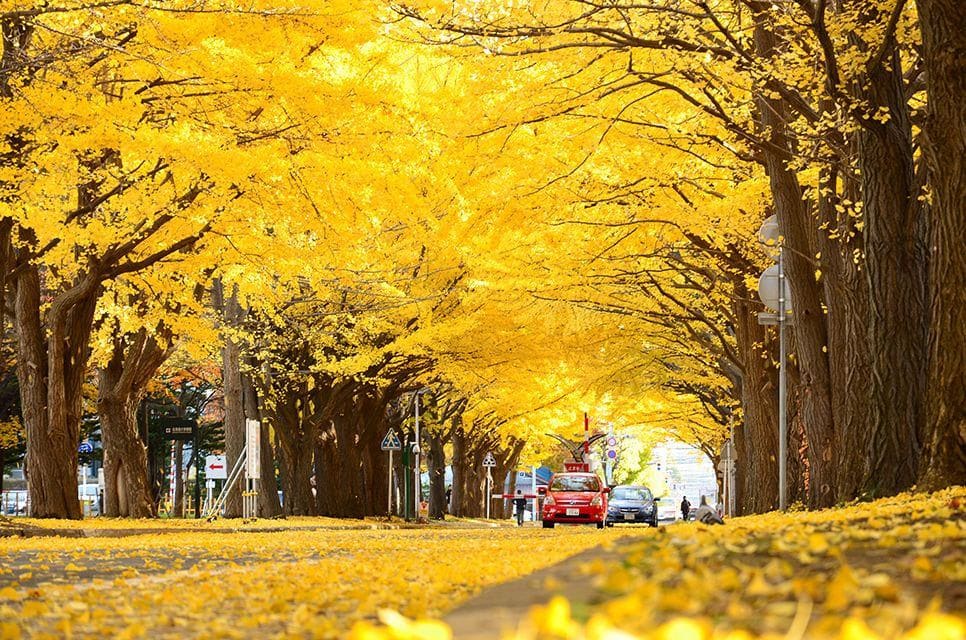
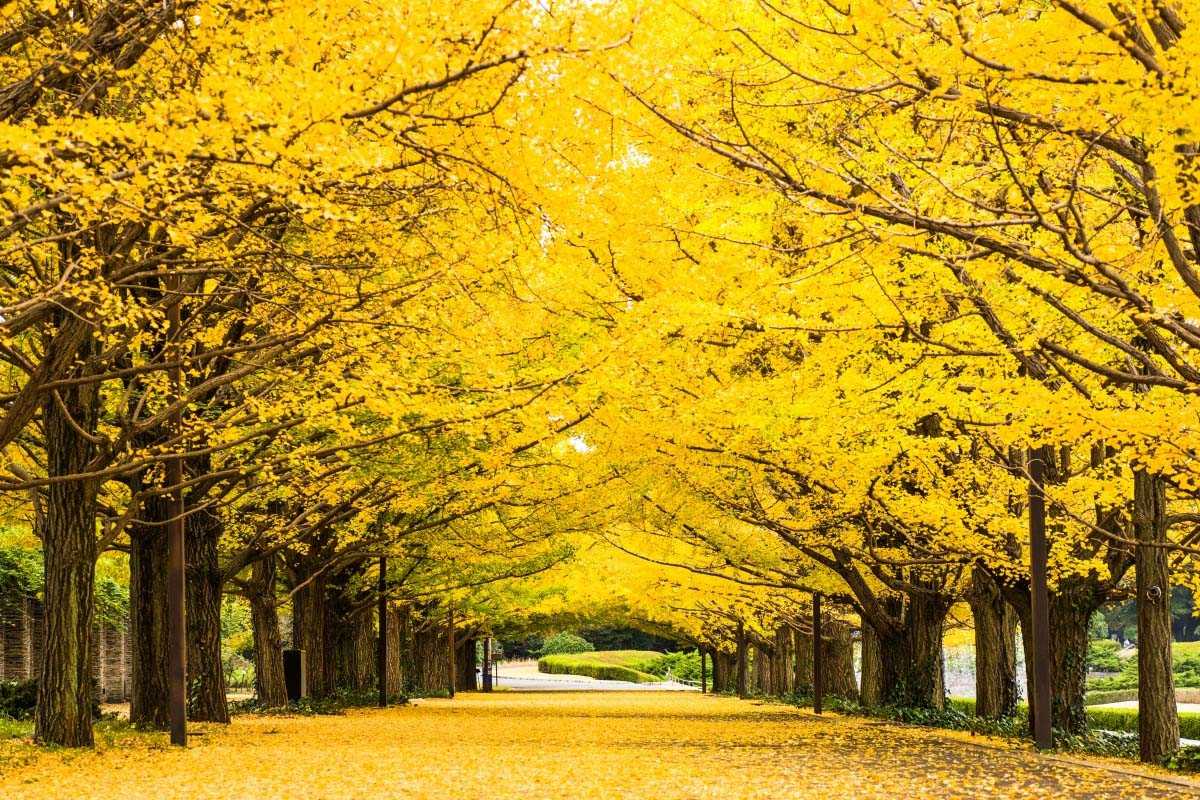
The Jingu Gaien ginkgo avenue runs from Kita-Aoyama 2-chome in Minato City, Tokyo, to the front of the Meiji Memorial Picture Gallery. Along a straight avenue about 300 meters long are 146 ginkgo trees, which usually start turning yellow in mid-November and peak from late November to early December. For dates of events such as the 2026 Ginkgo Festival, please check Jingu Gaien’s official announcements. The other spots in this guide can serve as alternatives if you want to avoid the Gaien crowds.
How to Get to Tokyo’s Ginkgo Spots 2026: City and Suburban Transportation at a Glance
Transportation and One-Day Passes for Tokyo’s Ginkgo Spots
Stations near city spots: Yoyogi Park is near JR Harajuku Station, Ueno Park near Ueno Station, Gyoko-dori near Tokyo Station, and the University of Tokyo Hongo Campus near Hongo-sanchome Station. Suburban spots: Showa Kinen Park is a 2-minute walk from JR Nishi-Tachikawa Station, Kiyotaki cable car station is a 5-minute walk from Keio Takaosanguchi Station, and the ginkgo avenue can be reached from JR Takao Station.
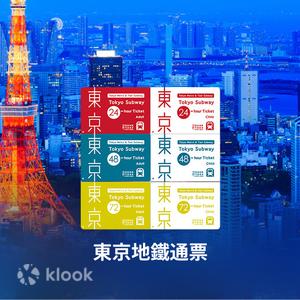
In the city, you can use a subway or Toei Subway one-day pass or the Tokyo Subway Ticket. For the Yamanote Line, you can use the JR Tokunai Pass (¥760). For Mt. Takao, use the Keio discount ticket.

Other Ginkgo Spots in Tokyo Beyond Jingu Gaien: City and Suburban Recommendations
Showa Kinen Park: Tokyo’s Most Spectacular Ginkgo Tunnels Outside the City
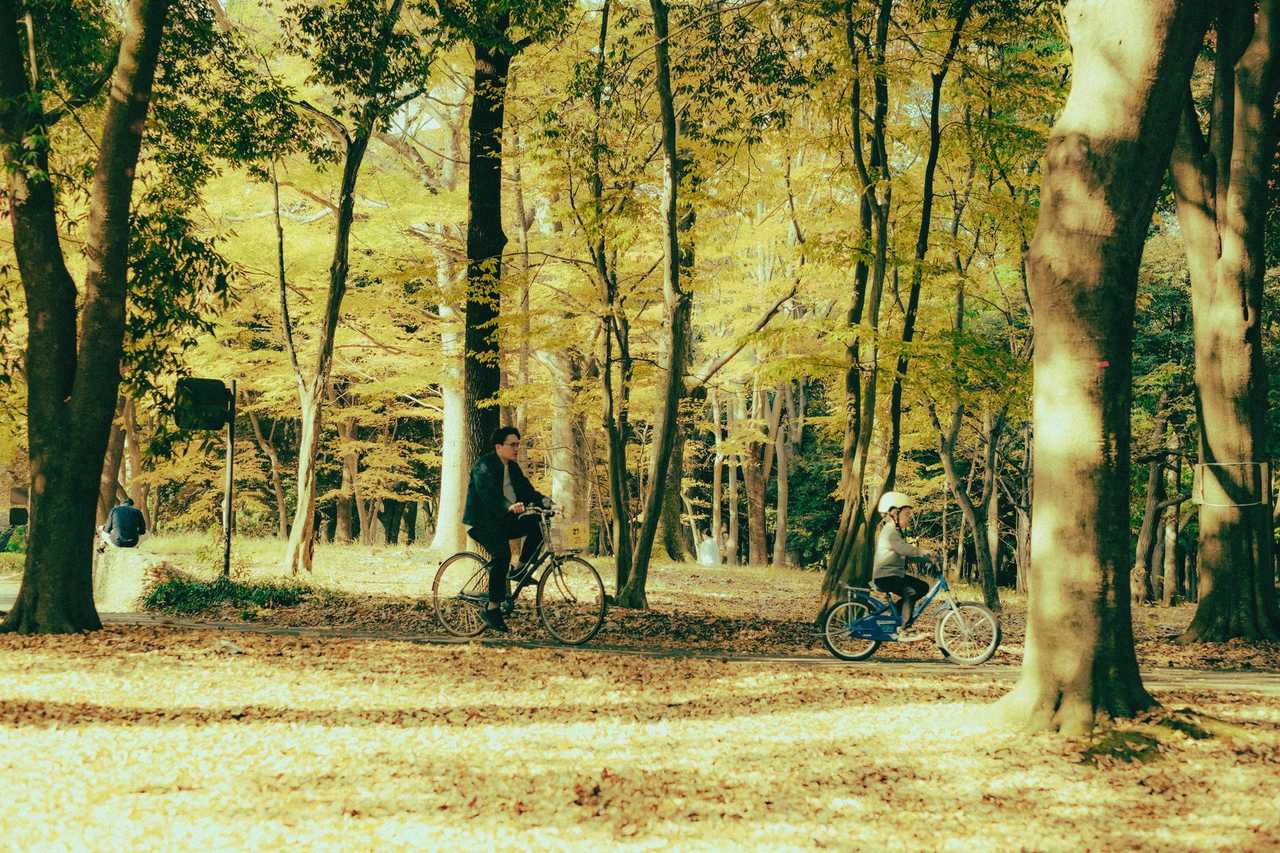
Showa Kinen Park has two classic ginkgo paths: the one along the Tachikawa Gate “Canal”, about 200 meters long, and the “Katarai no Icho Namiki” with 98 trees along about 300 meters. Peak color is roughly early to late November, and because Tachikawa is colder, the trees often change color earlier than in the city. Admission is ¥450 for adults and ¥210 for ages 65 and over, and is free for elementary and junior high school students. You can rent bicycles in the park for viewing the foliage, and the “Kanpu-tei” tea house serves matcha and seasonal Japanese sweets. From October 29 to November 29, the “Autumn Foliage Festival & Autumn Night Walk” illumination event is held; please check the official website for evening opening hours.
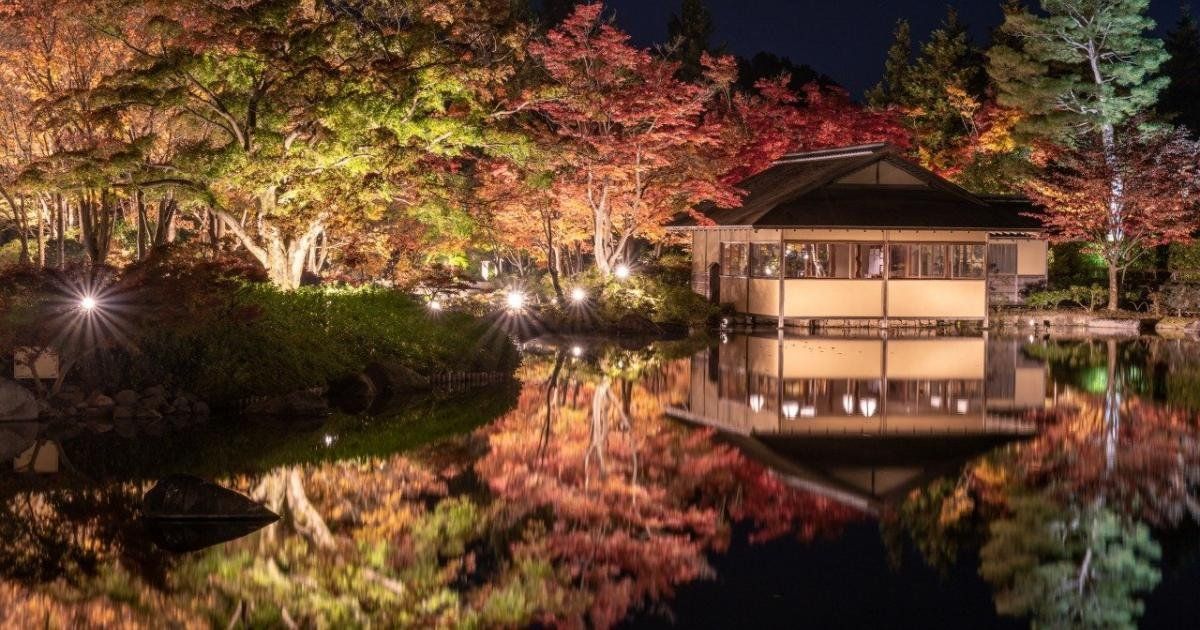

University of Tokyo Hongo Campus: A Century-Old Golden Tunnel in an Academic Landmark
The ginkgo avenue on the Hongo campus runs from the main gate all the way to Yasuda Auditorium, and the ginkgo is also the symbol on the University of Tokyo’s emblem. Peak color is roughly late November to early December, and when the leaves fall the whole avenue is covered in a golden carpet. The campus is the former site of the Kaga Domain’s upper residence in the Edo period, and is also the setting of Natsume Soseki’s novel “Sanshiro”. It is about a 10-minute walk from Hongo-sanchome Station or Todai-mae Station. During exam periods, campus access may be restricted.
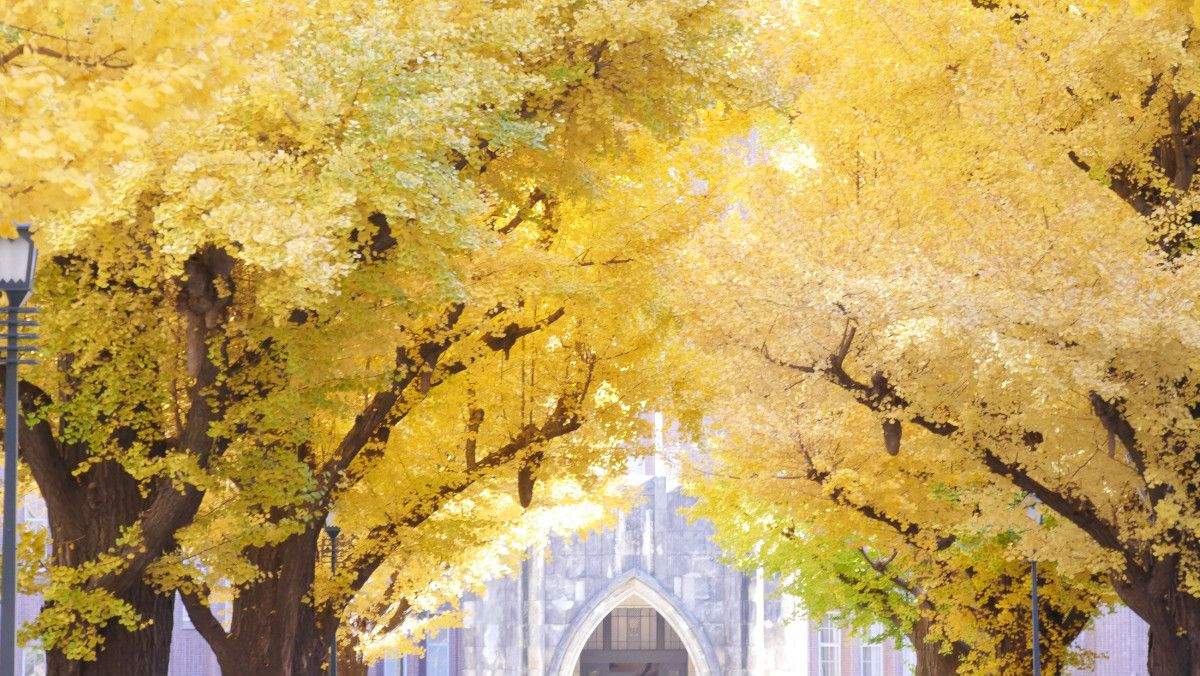
Yoyogi Park: A Golden Ginkgo Grove Beside Harajuku Station
Yoyogi Park has a ginkgo grove of more than 200 trees that turns completely golden in autumn, with peak color roughly late November to early December. The park is right next to Harajuku and Shibuya, only about a 3-minute walk from JR Harajuku Station, and after viewing the ginkgo you can easily visit Meiji Jingu and Omotesando. Admission is free, making it one of the most accessible ginkgo viewing spots in the city.
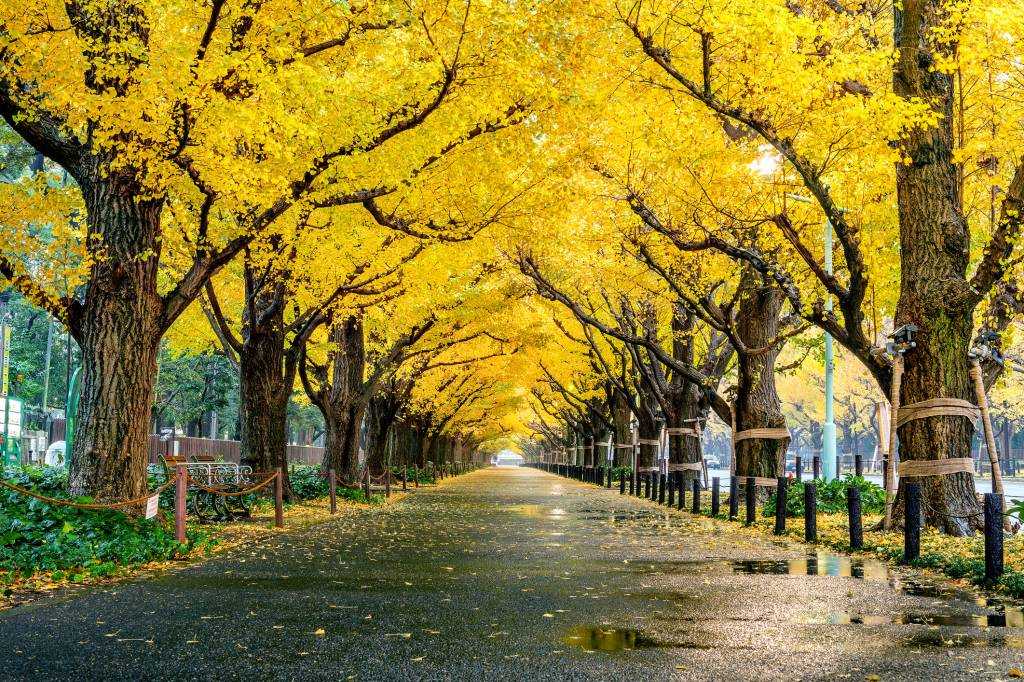
Ueno Onshi Park: Golden Reflections Beside the Museums and Shinobazu Pond
The ginkgo trees in Ueno Onshi Park are mainly along the main avenue and beside Shinobazu Pond, where the golden trees reflected in the water are a popular photo angle, and visitors can rent swan boats or rowboats to enjoy the view from the water. The park is next to the Tokyo National Museum and Ueno Zoo, and Ameyokocho is within walking distance, where you can have an affordable seafood rice bowl for lunch after viewing the ginkgo. Peak color is roughly late November to early December, admission is free, and it is right outside the Park Exit of JR Ueno Station.
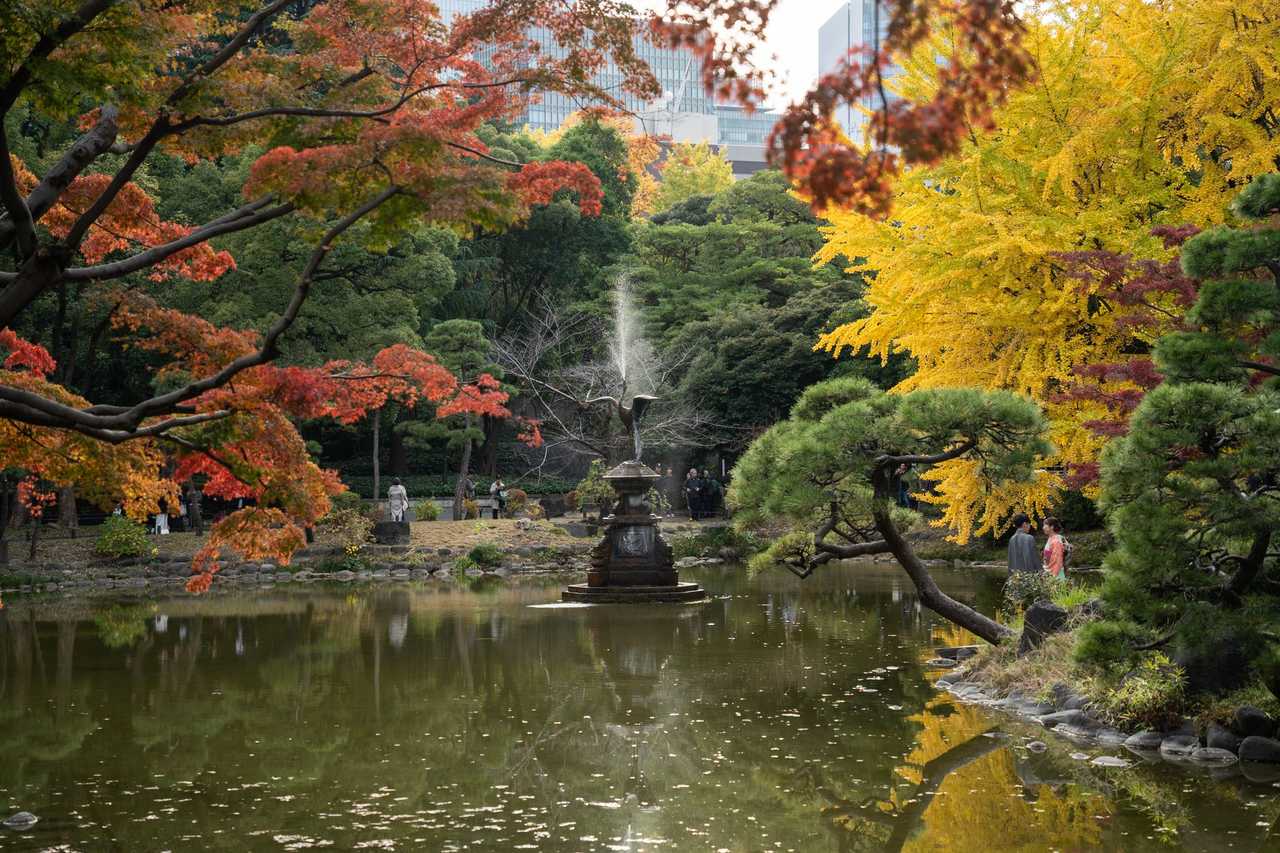
Gyoko-dori: The Golden Avenue Connecting Tokyo Station and the Imperial Palace
Gyoko-dori is a grand avenue about 70 meters wide connecting the Marunouchi Central Exit of Tokyo Station with the Imperial Palace. The ginkgo trees along both sides contrast sharply with the surrounding skyscrapers, making it one of Tokyo’s most iconic urban ginkgo views. Peak color is roughly late November to early December. The avenue is normally a pedestrian space, and from the Imperial Palace side you can look back at the red-brick Marunouchi building of Tokyo Station. We recommend shooting early in the morning to avoid crowds.
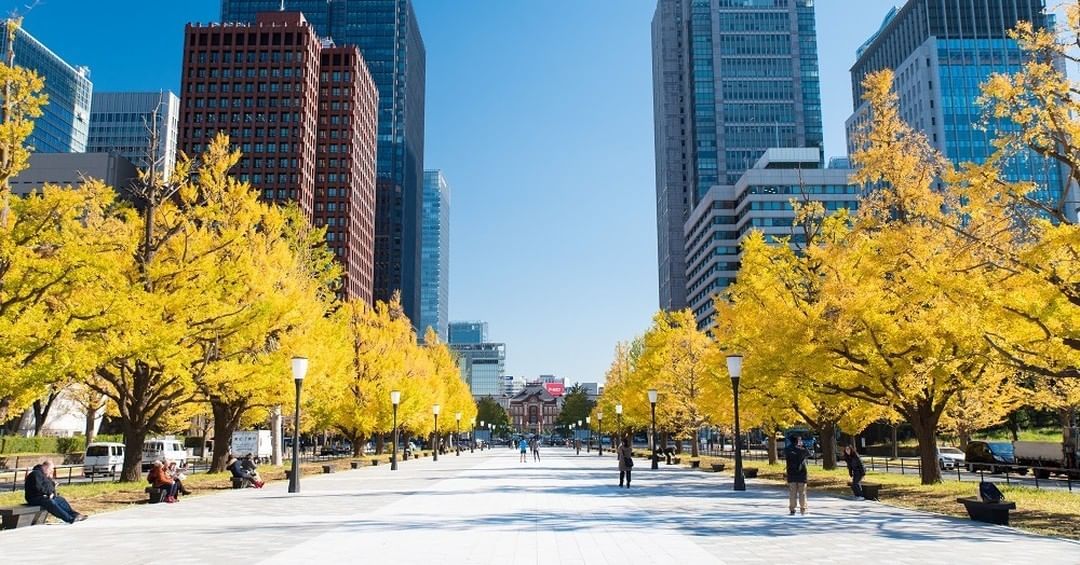
Rikugien: A Symphony of Maples and Ginkgo in an Edo Daimyo Garden
Rikugien is a strolling garden created by Yanagisawa Yoshiyasu in the Edo period. Within it, Togetsukyo Bridge, Fujishiro Pass and other spots from the legendary “88 Views of Rikugien” blend with red maples and ginkgo like a painting, with peak color roughly late November to mid-December. The 2026 special night viewing runs from November 25 to December 6, from 18:00 to 20:30 (last entry 19:30), with advance tickets at ¥1,000 and same-day tickets at ¥1,200. The Fukiage Chaya teahouse by the pond serves hot matcha and limited-edition autumn-leaf wagashi, a soothing moment amid the maple and ginkgo viewing. The main gate is about a 7-minute walk from JR Yamanote Line Komagome Station.
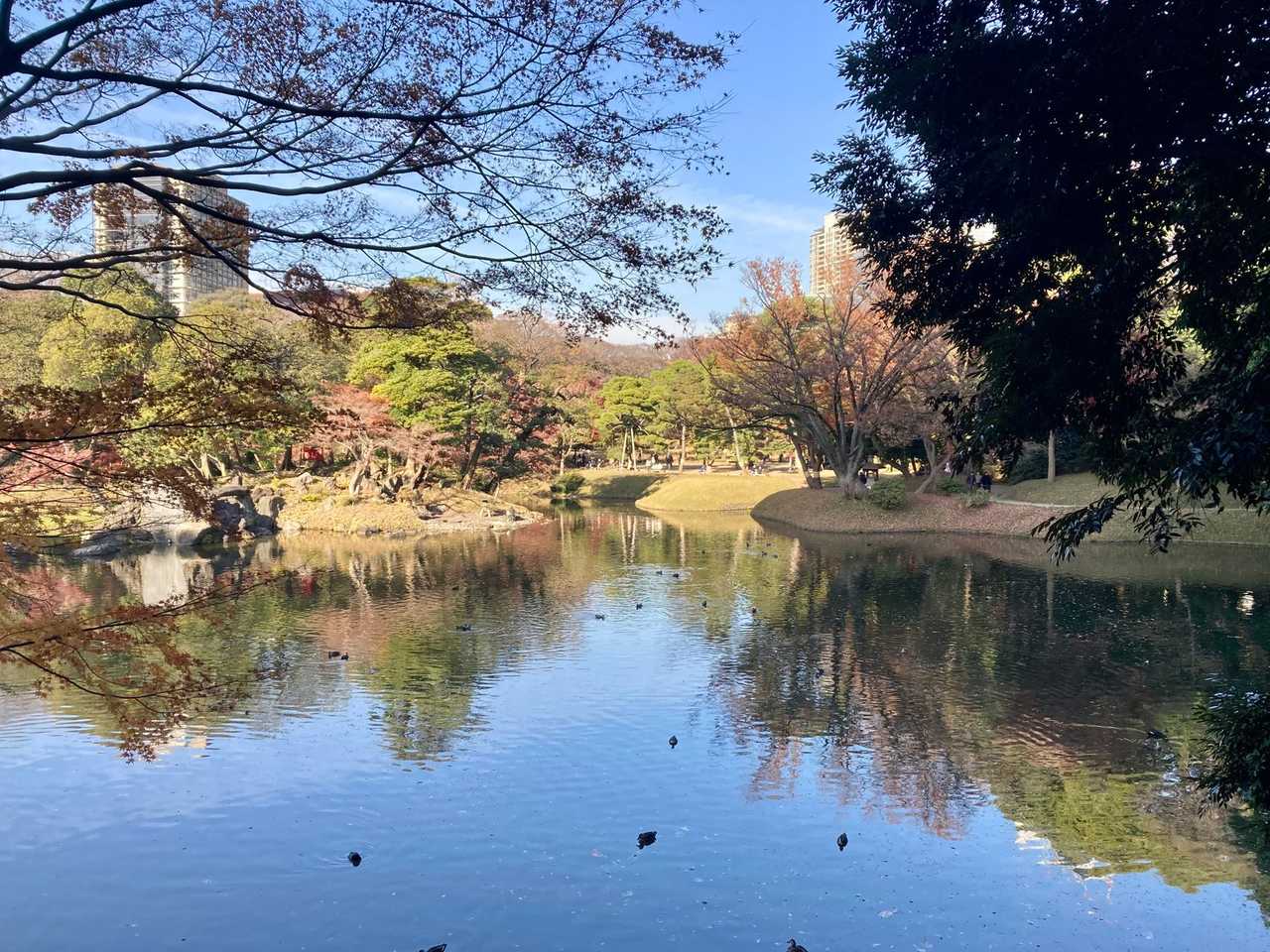
Koishikawa Korakuen: An Mito Domain Garden Where Tsutenkyo Bridge’s Maples and Ginkgo Intertwine
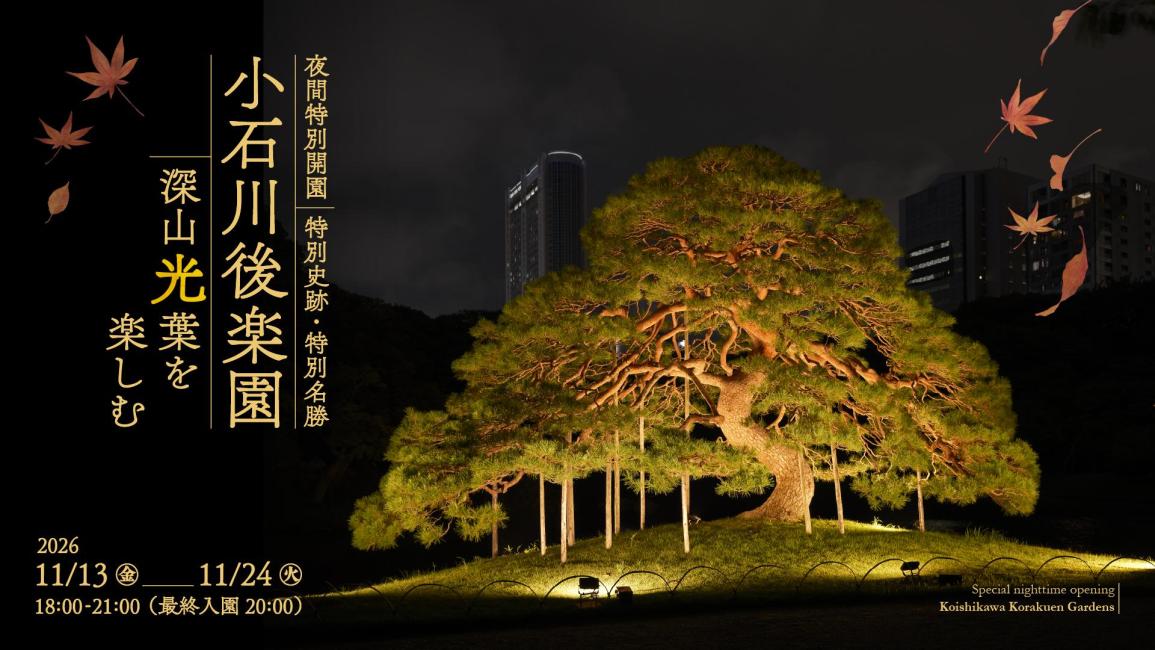
Koishikawa Korakuen is a strolling garden built by the Mito Tokugawa family. The vermilion “Tsutenkyo” bridge and the stone “Engetsukyo” bridge are surrounded by red maples and ginkgo, the garden’s most classic autumn composition. The 2026 special night opening “Miyama Koyo” runs from November 13 to 24, from 18:00 to 21:00 (last entry 20:00), with advance tickets at ¥1,000 and same-day tickets at ¥1,200. It is about a 3-minute walk from Exit C3 of Iidabashi Station on the Toei Oedo Line, and the nearby Tokyo Dome City Ferris wheel is easy to add to your visit.
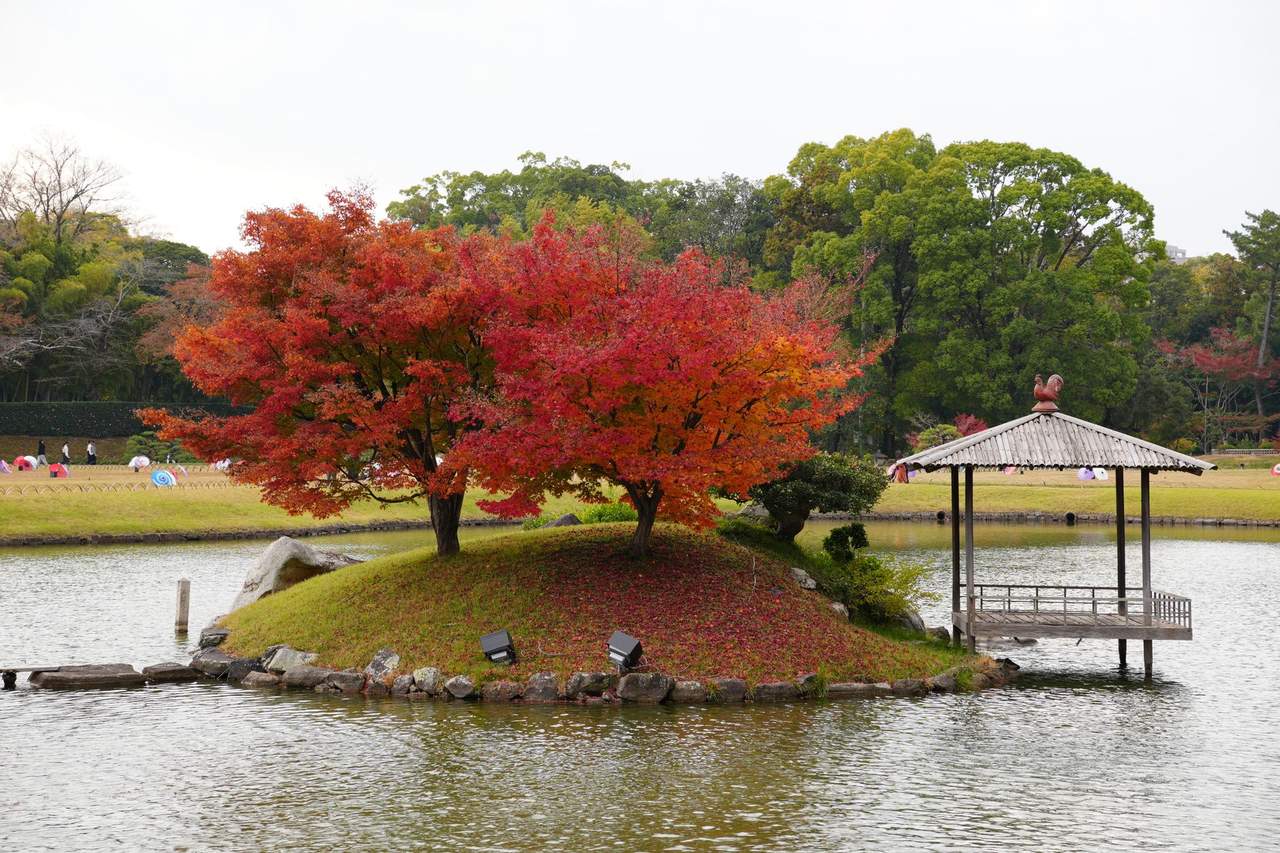

Koishikawa Botanical Garden: Home of the Historic Tree Where Ginkgo Sperm Was Discovered
Koishikawa Botanical Garden is the botanical garden attached to the University of Tokyo Graduate School of Science. The large ginkgo in the garden is the historic tree where the botanist Sakugoro Hirase discovered ginkgo sperm, which is of great significance to botanical research. Admission is ¥500 for high school students and older and ¥150 for elementary and junior high school students. It is open 9:00-16:30 (last entry 16:00) and closed on Mondays. It is within walking distance of Hakusan Station on the Toei Mita Line, and suits travelers who enjoy an academic atmosphere and quiet sightseeing.
Mt. Takao: A Cable Car Up to Autumn Leaf and Ginkgo Views with Mt. Fuji Vistas
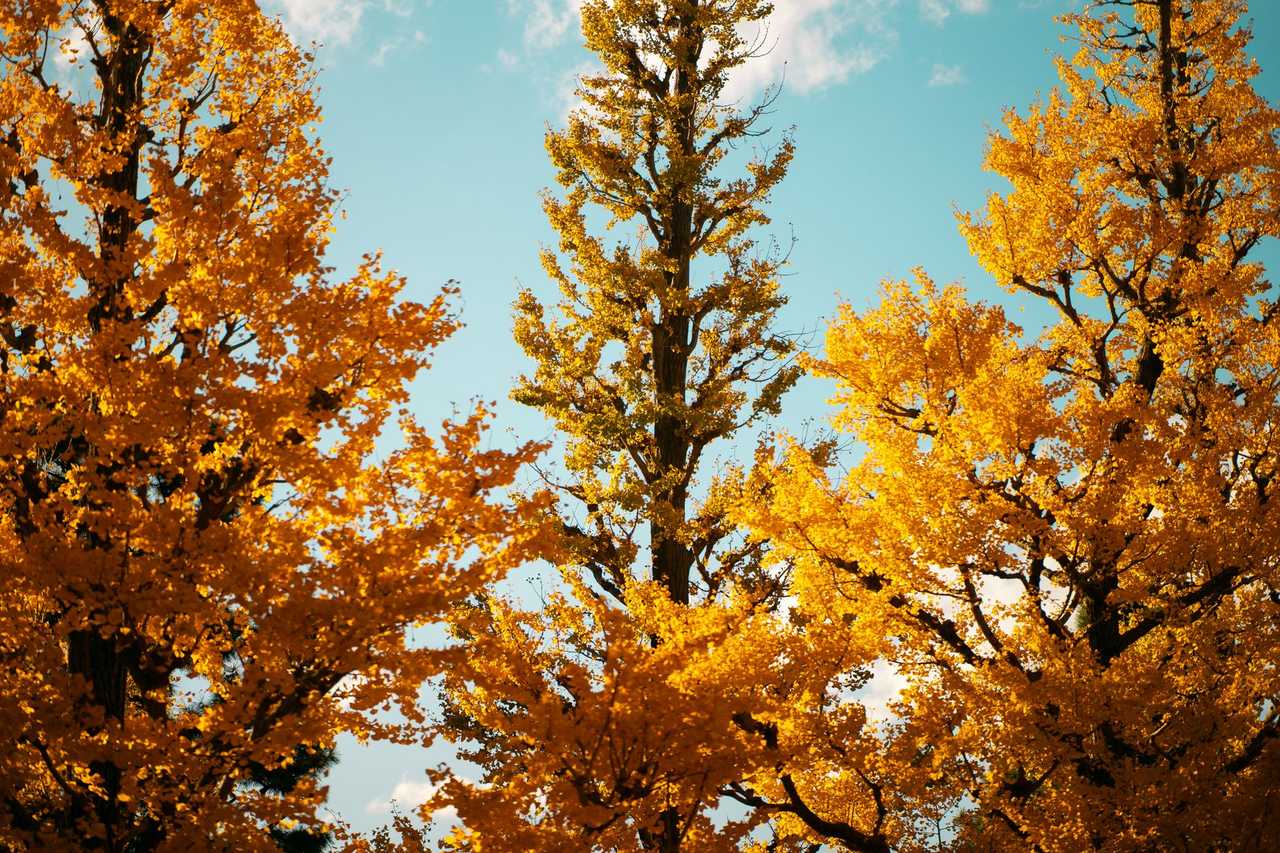
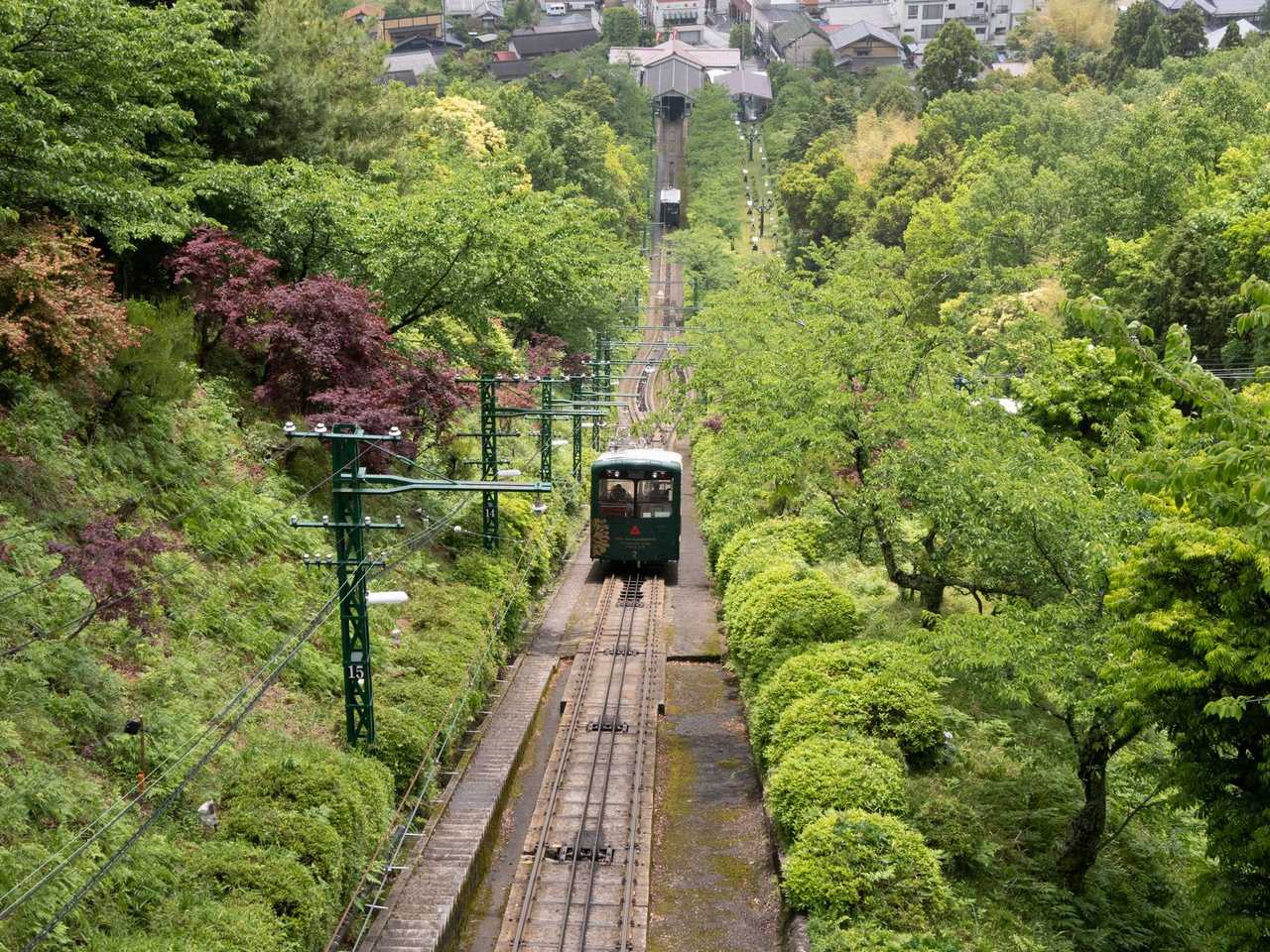
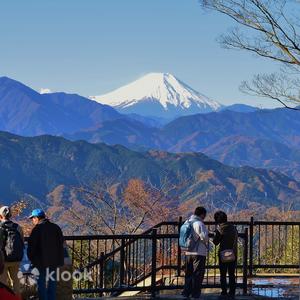
The Mt. Takao cable car has a gradient of up to 31 degrees, making it one of the steepest in Japan, and there is also an open-air single-person chairlift where you can feel the cool breeze and the immersive autumn leaves and ginkgo across the mountain. On clear days you can see Mt. Fuji from the summit observation deck, and Yakuo-in Temple halfway up the mountain is a well-known Shugendo sacred site in the Kanto region, worth a stop to pray. Peak autumn leaves are roughly mid- to late November, and Kiyotaki cable car station is about a 5-minute walk from Keio Line Takaosanguchi Station.
Koshu Kaido Ginkgo Avenue (Hachioji): A 4-Kilometer Golden National Highway
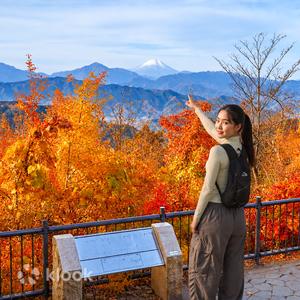
The Koshu Kaido ginkgo avenue runs along National Route 20 from the Oiwake-cho intersection in Hachioji to the Takao Station intersection, about 4 kilometers long with about 770 ginkgo trees. Because Hachioji is colder, peak color comes earlier than in the city, around mid-November. Since 1979, the “Hachioji Icho Matsuri” has been held every year on the Saturday and Sunday of the third week of November (November 15-16 in 2025), and the 2026 dates are subject to official announcements. It is within walking distance of JR Takao Station or Nishi-Hachioji Station.
Yasukuni Shrine: A Golden Carpet Along the 240-Meter Approach
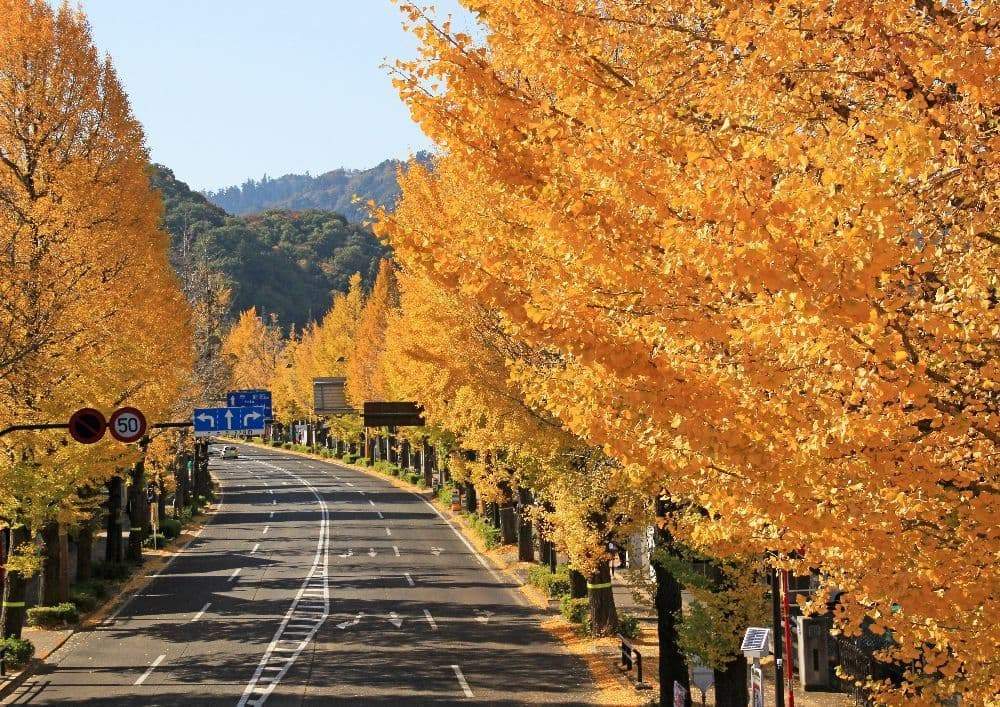
The approach to Yasukuni Shrine runs from the large torii gate to the Shinmon gate, with ginkgo trees and stone lanterns lined up straight along about 240 meters, and fallen leaves covering the ground in a golden carpet. Behind the main hall, the Shinchi garden has maples to view as well, so you get both ginkgo and autumn leaf colors in one visit. Peak color is roughly late November to early December, and there are relatively fewer visitors than at Jingu Gaien. It is about a 5-minute walk from Kudanshita Station on the Tokyo Metro Tozai Line, Hanzomon Line or Toei Shinjuku Line.
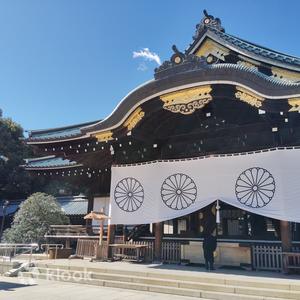
Kitanomaru Park: Century-Old Ginkgo Beside the Budokan
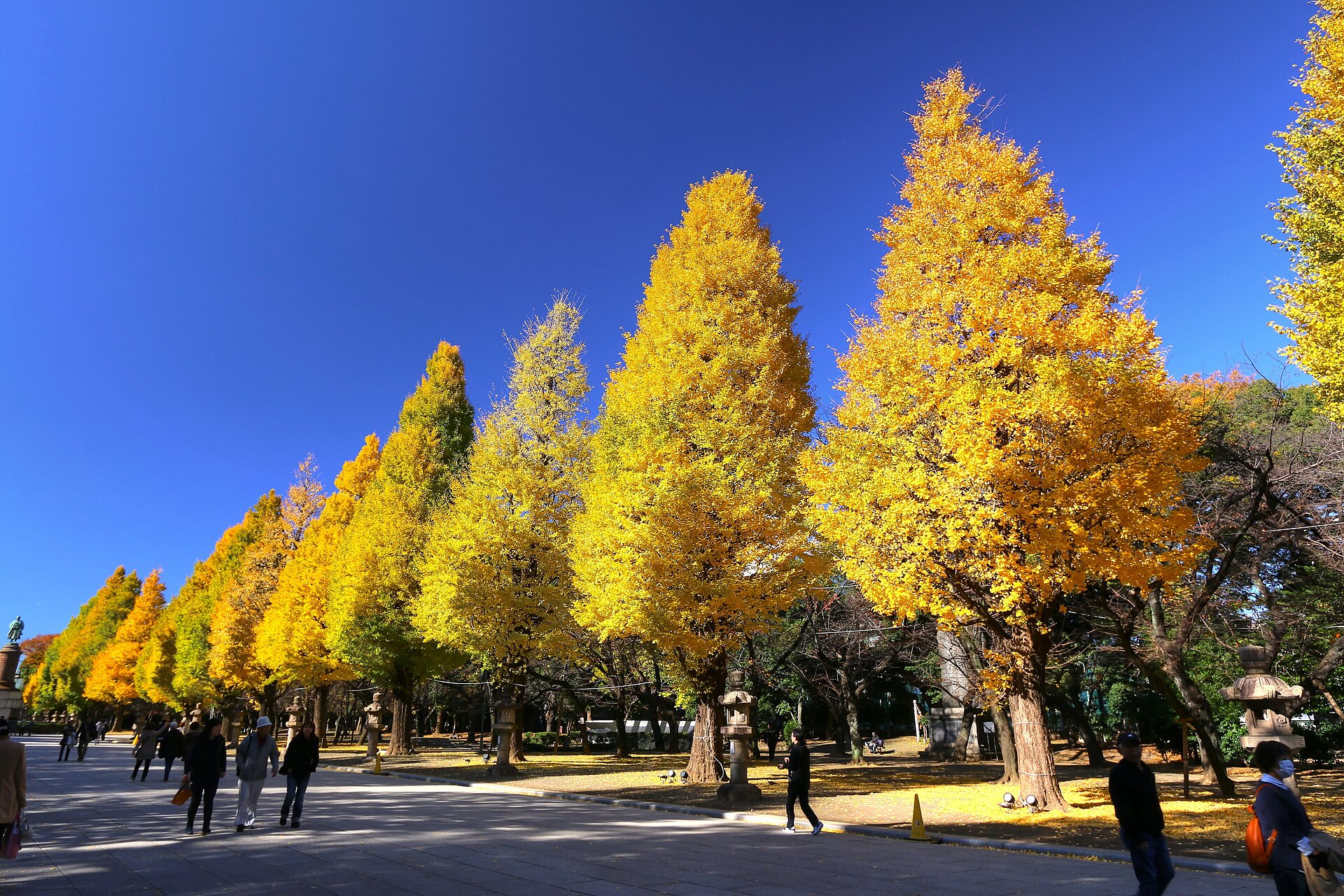
Kitanomaru Park is on the north side of the Imperial Palace, around the Nippon Budokan. It has many deciduous trees such as ginkgo, zelkova and maple, as well as large ginkgo trees that are 200 to 300 years old. The ginkgo near the Budokan turn yellow around late November. It is about a 5-minute walk from Kudanshita Station and a 7-minute walk from Takebashi Station, with free admission, and it can be combined with Yasukuni Shrine.
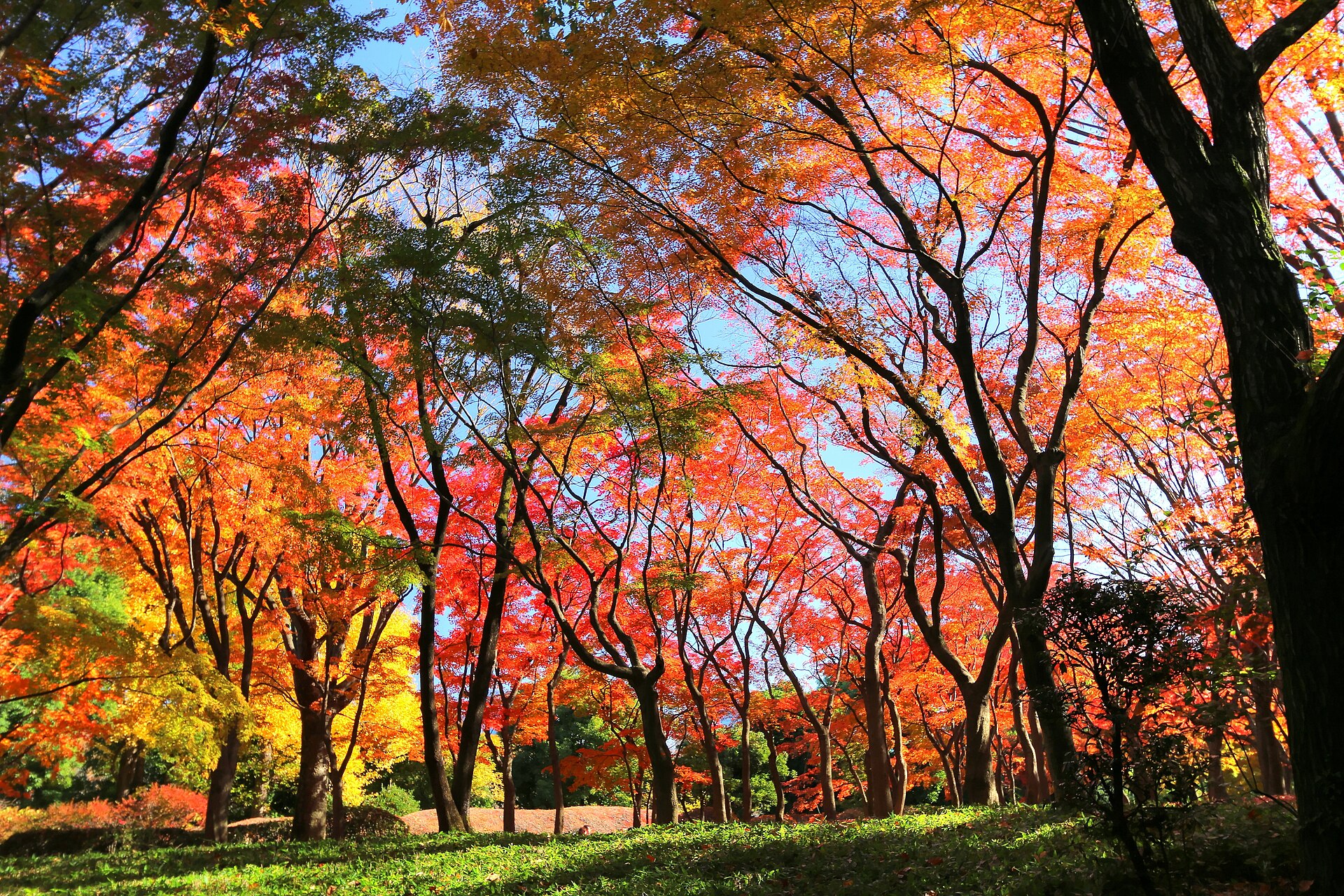
Hikarigaoka Park: A Century-Old Ginkgo Avenue in Nerima
Hikarigaoka Park is in Nerima Ward. The “Fureai no Michi” ginkgo avenue extending from Hikarigaoka Station on the Toei Oedo Line is about 200 meters long, and some of the ginkgo were transplanted from in front of the former Tokyo Metropolitan Government Building in Yurakucho and are more than a hundred years old. Peak color is roughly early November to early December, it is about an 8-minute walk from Hikarigaoka Station, and it is less crowded than the city spots, making it good for a leisurely stroll.
Komazawa Olympic Park: A Morning-Jogging Ginkgo Path at the Site of the 1964 Tokyo Olympics
Komazawa Olympic Park was one of the venues of the 1964 Tokyo Olympics. It has about 670 ginkgo and zelkova trees in total, and the loop path is a daily jogging and walking route for local Tokyo residents, so you can feel local life while viewing the ginkgo. Peak color is roughly mid-November to early December. It is about a 15-minute walk from Komazawa-daigaku Station on the Tokyu Den-en-toshi Line, open free all year, and a good backup for photos with fewer people.
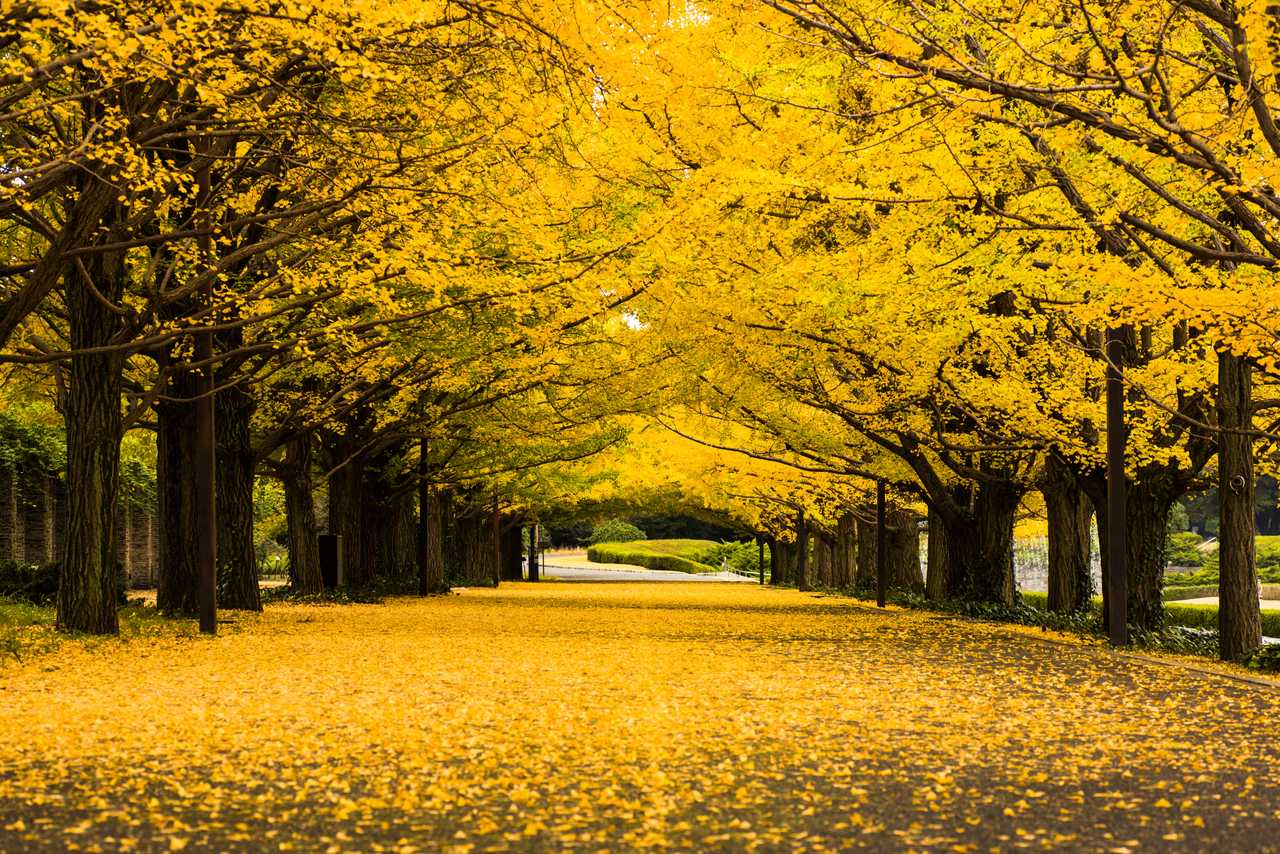
Gotokuji: A Hidden Ginkgo Spot in Setagaya, the Birthplace of the Lucky Cat
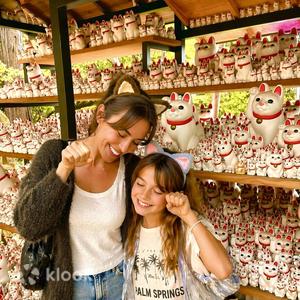
Gotokuji is said to be the birthplace of the lucky cat (maneki-neko), and the temple grounds hold a large number of lucky cat statues. In autumn the red and yellow leaves in the grounds complement each other, making it a quiet autumn spot in Setagaya Ward. It is about a 10-minute walk from Gotokuji Station on the Odakyu Line, with peak color roughly late November to early December, and you can pair it with a walk along the Setagaya Line for a half-day itinerary.
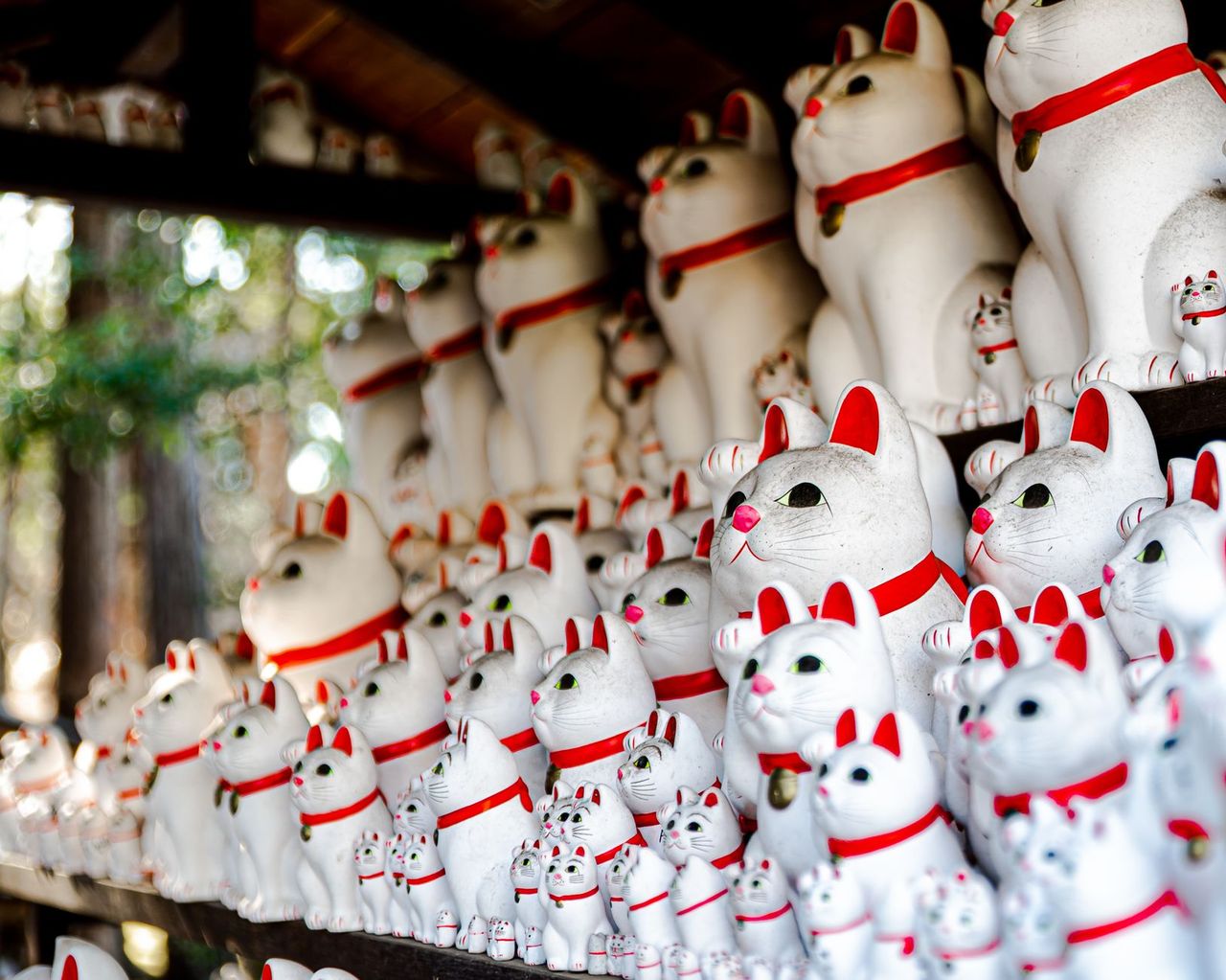
Keio University Hiyoshi Campus: A Hundred-Ginkgo Avenue in Yokohama
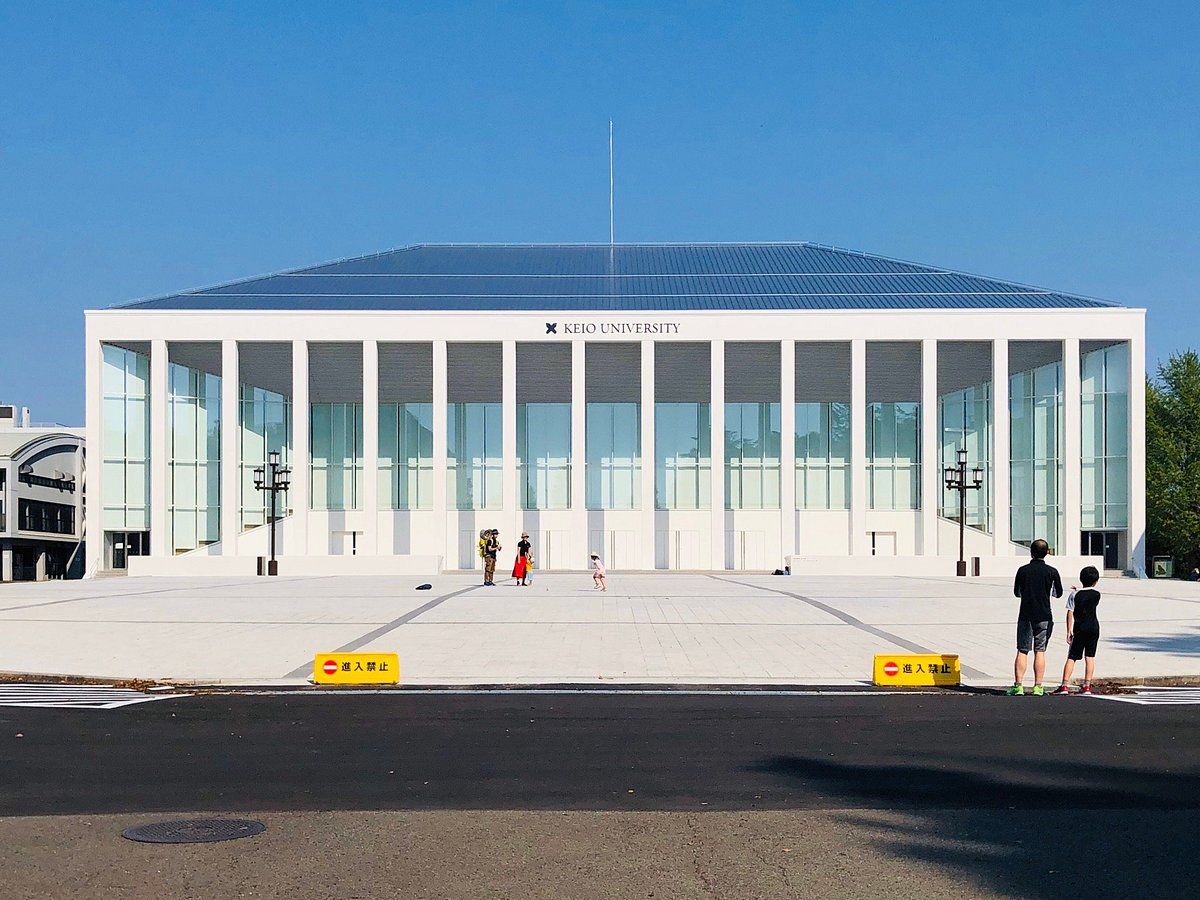
Keio University’s Hiyoshi Campus is in Yokohama, Kanagawa Prefecture. The ginkgo avenue in front of the school gate, about 220 meters long, has about 100 large ginkgo trees planted in 1935 and has received a Yokohama cityscape award. It is about a 1-minute walk from Hiyoshi Station on the Tokyu Toyoko Line / Meguro Line, with peak color roughly mid-November to early December, and you can get there from Shibuya on the Toyoko Line.
How Much Does It Cost to Visit Tokyo’s Ginkgo Spots in 2026? Tickets and Recommended Tours
Showa Kinen Park Admission + Bicycle Rental
Showa Kinen Park admission is ¥450 for adults and ¥210 for ages 65 and over, and free for junior high school students and younger. You can also rent bicycles in the park for a fee, and riding connects the two major ginkgo avenues with much less effort than walking. It is one of the few ginkgo spots in Tokyo that charges admission but has complete facilities.
Mt. Takao Cable Car and Autumn Leaves Day Trip
The Mt. Takao cable car takes about 6 minutes one way from Kiyotaki Station to Takaosan Station, and there is also an open-air chairlift. During the autumn leaf season weekends have long lines, so we recommend going on a weekday morning. If you want to skip arranging transportation yourself, consider a Mt. Takao autumn leaves day trip that includes the cable car.
Rikugien and Koishikawa Korakuen Autumn Night Illuminations
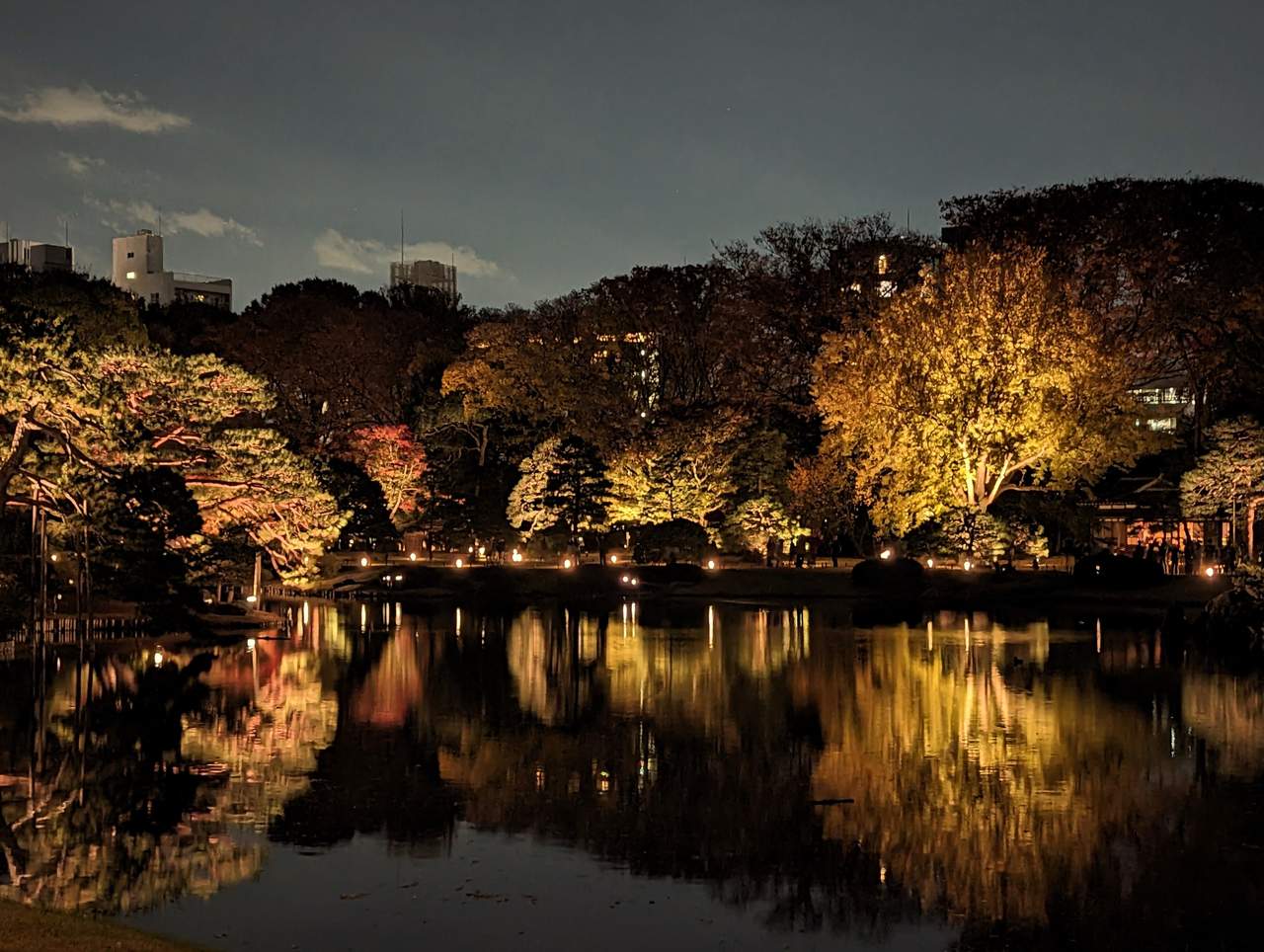
The 2026 Rikugien special night viewing runs from November 25 to December 6, and the Koishikawa Korakuen special night opening runs from November 13 to 24. Advance tickets are ¥1,000 and same-day tickets ¥1,200 for both. Advance tickets for Koishikawa Korakuen can be bought on platforms such as KKday; for details please check the Tokyo Metropolitan Park Association’s official announcements.
Tokyo Metro / Toei Subway One-Day Pass
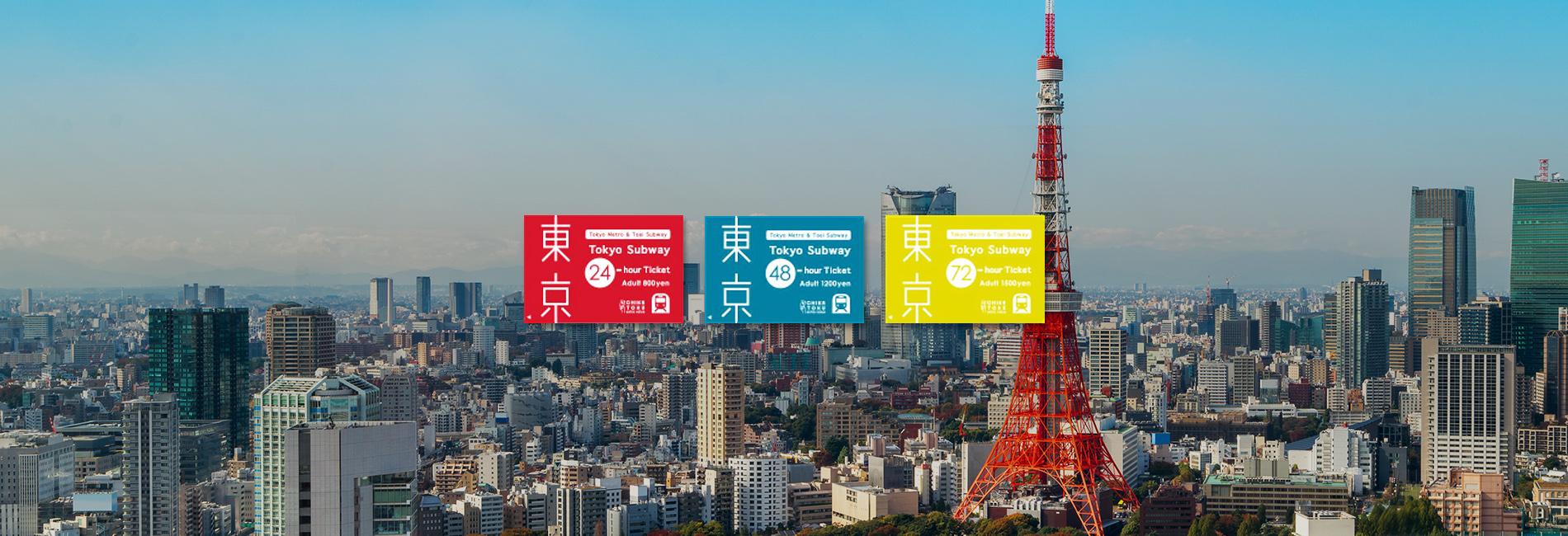
Gives unlimited rides on all Tokyo Metro and Toei Subway lines within the validity period, suited to linking several city ginkgo spots in one day such as Ueno, Hongo at the University of Tokyo, Koishikawa Korakuen and Kudanshita. Foreign visitors can buy the Tokyo Subway Ticket (24 / 48 / 72 hours).
Where to Stay for Tokyo Ginkgo Spots 2026? Hotel Bases Picked by Sightseeing Route

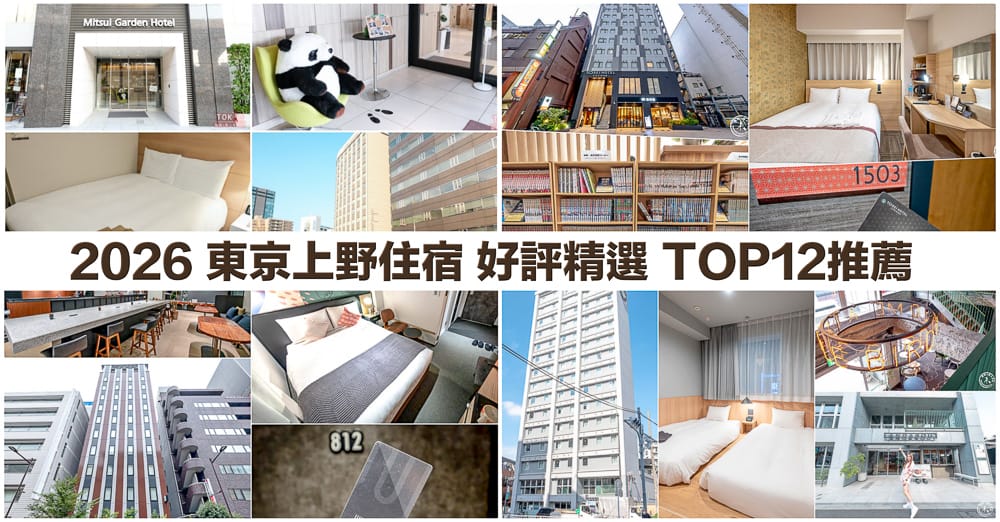
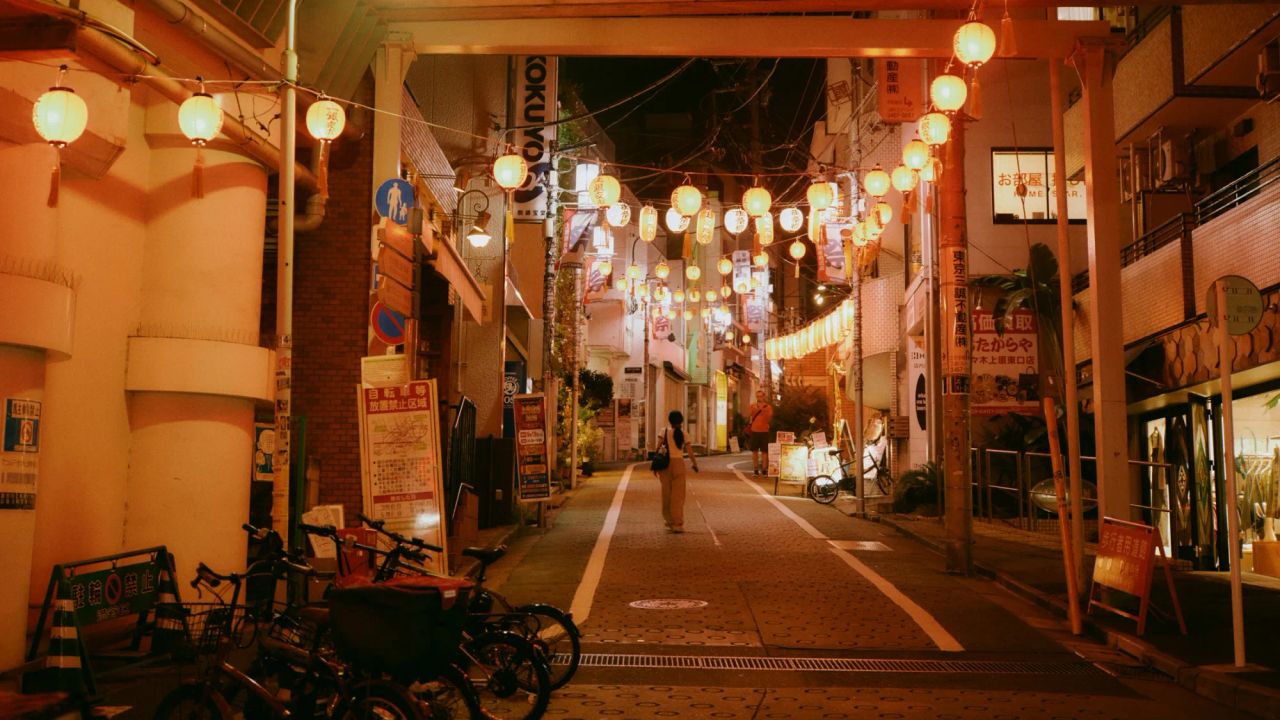
Staying near Tachikawa Station: Close to Showa Kinen Park
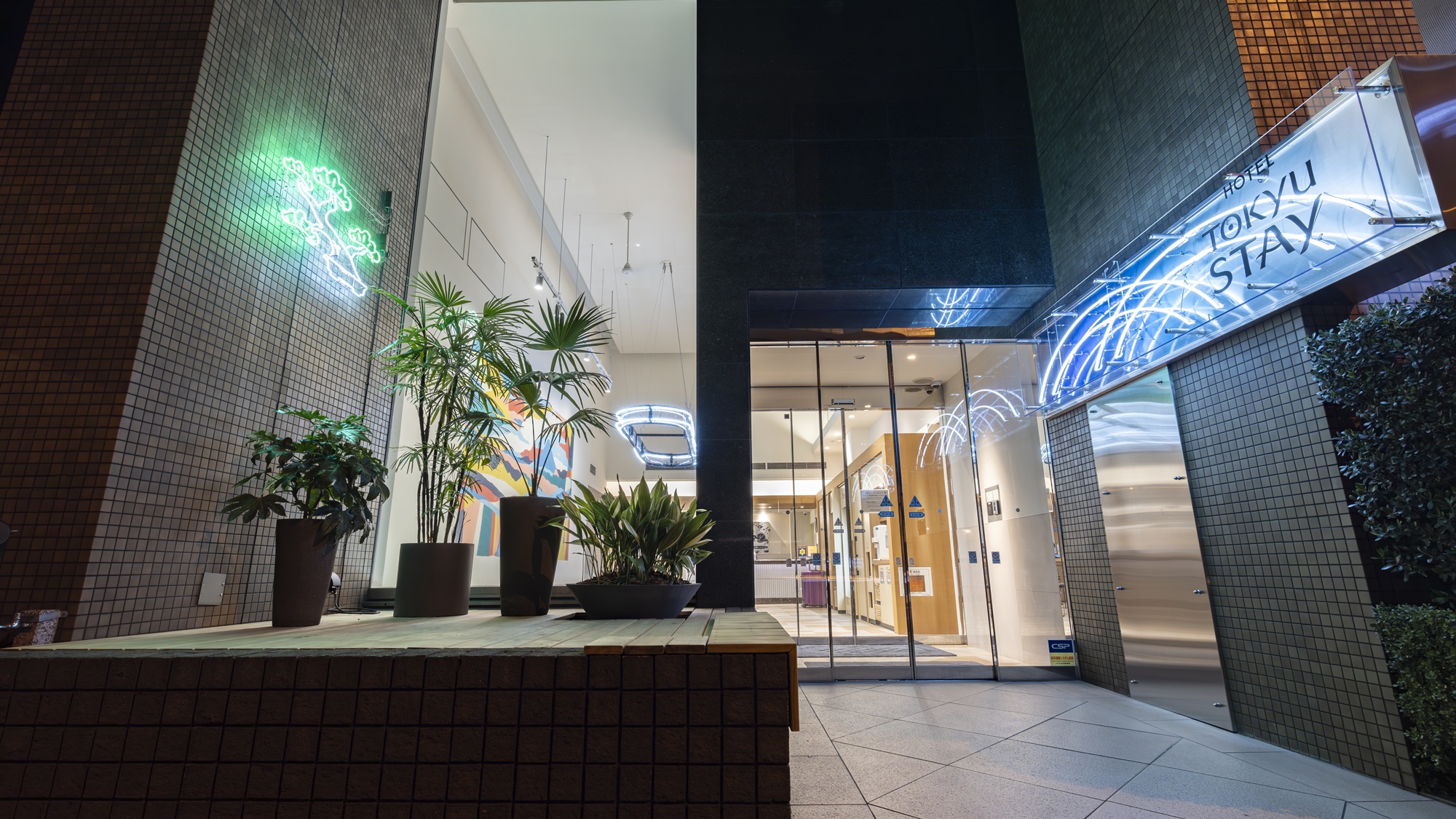
The Tachikawa Gate of Showa Kinen Park is within walking distance of JR Tachikawa Station. The area around the station has a large shopping district and many chain business hotels, which suits travelers who want to get up early and head straight to the ginkgo avenues, and it is also easy to get to Shinjuku on the JR Chuo Line.
Staying near Hachioji Station: Linking the Koshu Kaido and Mt. Takao
There are not many places to stay around Mt. Takao, so a more convenient approach is to stay in a business hotel near Hachioji Station, then take the JR Chuo Line to Nishi-Hachioji Station or Takao Station the next day to link the Koshu Kaido ginkgo avenue and Mt. Takao.
Near Komagome Station / Sugamo Station: An Old Tokyo Neighborhood Close to Rikugien
Rikugien is a 7-minute walk from Komagome Station, and the Sugamo Jizo-dori shopping street near the station keeps an old Tokyo atmosphere. Lodging is mostly small to mid-sized business hotels, suited to travelers who want to stay close to Rikugien’s night illumination and Koishikawa Korakuen.
Near Iidabashi Station: A Base for Both Koishikawa Korakuen and Kitanomaru Park
Koishikawa Korakuen is about a 3-minute walk from Exit C3 of Iidabashi Station, and Yasukuni Shrine and Kitanomaru Park at Kudanshita are not far away. There are many business hotels around the station, making it a good base for linking the city’s ginkgo spots.
Best Ginkgo Spots in Tokyo 2026: FAQ
Q: When is the best time to see ginkgo in Tokyo in 2026?
Tokyo’s 2026 ginkgo peak is expected around November 26, with city spots from late November to early December, and the suburban Showa Kinen Park and Hachioji Koshu Kaido from mid- to late November. We recommend checking the latest conditions a week before you go.
Q: How much is admission to Showa Kinen Park?
Adults ¥450, ages 65 and over ¥210, and free for junior high school students and younger. Bicycles can also be rented in the park for a fee, and it is one of the few ginkgo parks in Tokyo that charges admission.
Q: Where is less crowded than Jingu Gaien?
Kitanomaru Park, Hikarigaoka Park, Gotokuji and Komazawa Olympic Park are all less crowded than Jingu Gaien, and visiting early on a weekday morning helps you avoid the weekend crowds.
Q: When are the ginkgo peak forecasts released?
Weathernews and other forecasters begin releasing autumn leaf and ginkgo peak forecasts from September each year, then update them with temperatures, so check the latest version before you go.
Q: How can I save money on transportation when viewing ginkgo?
Most city spots are along subway lines, so you can use a Tokyo Metro and Toei Subway one-day pass or the Tokyo Subway Ticket. For Mt. Takao, use Keio’s Mt. Takao discount ticket.
Q: Can I enter Rikugien and Koishikawa Korakuen at night?
In 2026, Rikugien’s special night viewing runs from November 25 to December 6 and Koishikawa Korakuen’s from November 13 to 24. Same-day tickets for both are ¥1,200; for details please check the Tokyo Metropolitan Park Association’s official announcements.
Q: What should I watch out for when viewing ginkgo?
In late November the sun sets around 16:30 in Tokyo, so plan your itinerary early and bring a moisture-proof picnic mat, since lawns often have dew in the early morning. On busy holidays, arrive an hour early to take photos.
Best Ginkgo Spots in Tokyo 2026: Ginkgo Viewing Beyond Jingu Gaien, Peak Timing and Transportation
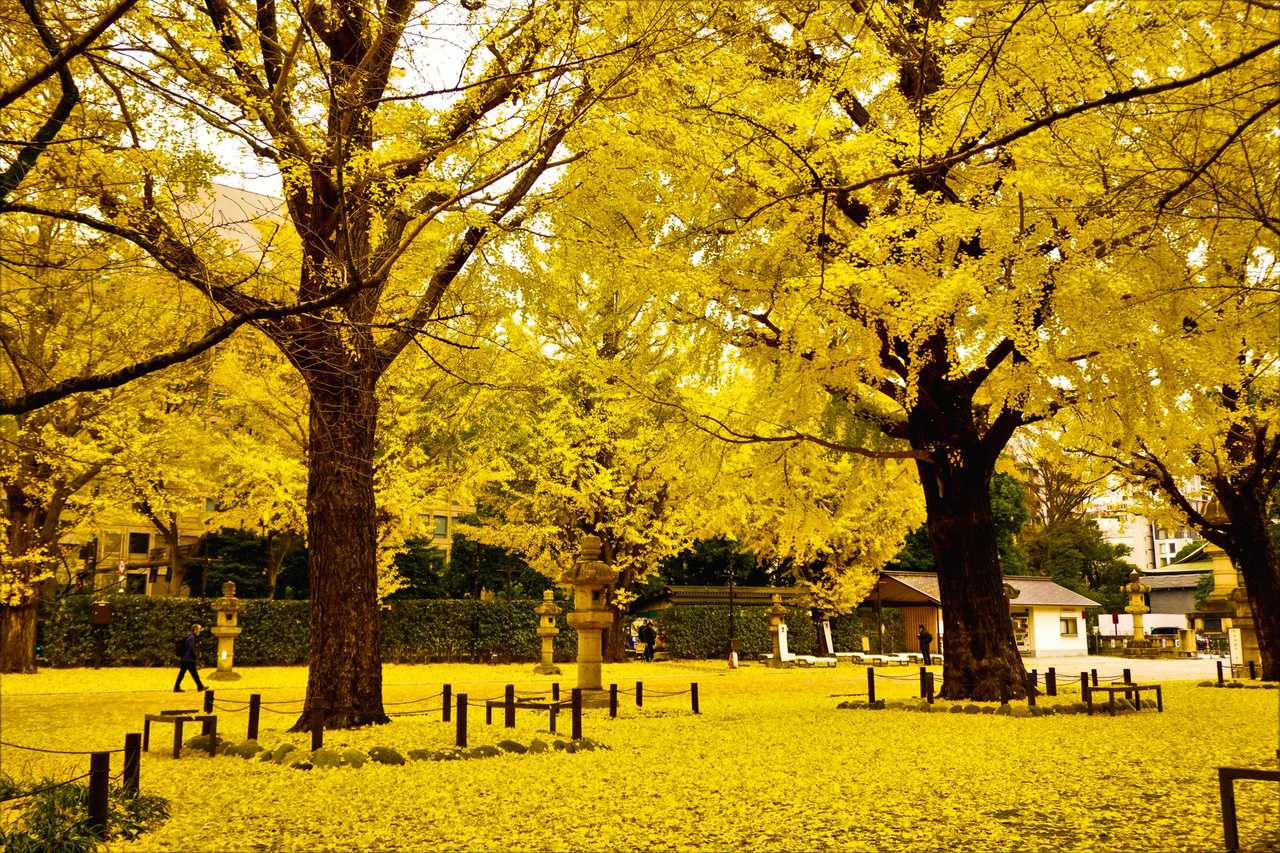
Tokyo ginkgo viewing is not just about Jingu Gaien. The classic city routes and the spectacular suburban routes each have their own appeal, with peak color in 2026 expected from mid-November to early December. This guide picks Tokyo and nearby ginkgo spots beyond Jingu Gaien and lays out peak timing and transportation info.
2026 Tokyo Ginkgo Peak Forecast Summary
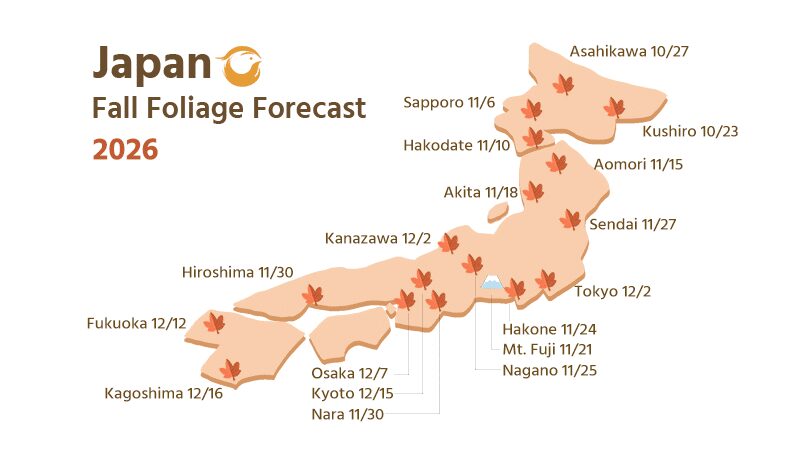
In the second ginkgo peak forecast released by Weathernews on October 1, Tokyo is expected to peak around November 26, and the forecast will be updated with temperatures. You can check the latest color-change progress in each area in real time on Weathernews’ “Ginkgo Front” and tenki.jp. City spots reach their peak from late November to early December, while the suburban spots, which are colder, usually peak 1-2 weeks earlier.
Classic City Ginkgo Routes
Ginkgo spots in central Tokyo are the most convenient to reach. The “classic city” route includes Ueno Onshi Park, Yoyogi Park, Gyoko-dori Avenue and the University of Tokyo Hongo Campus, all reachable directly by subway or JR, within a 5-10 minute walk of the station. They suit a half-day or full-day city walk, and you do not need to plan any long-distance transportation.
Spectacular Suburban Ginkgo Routes
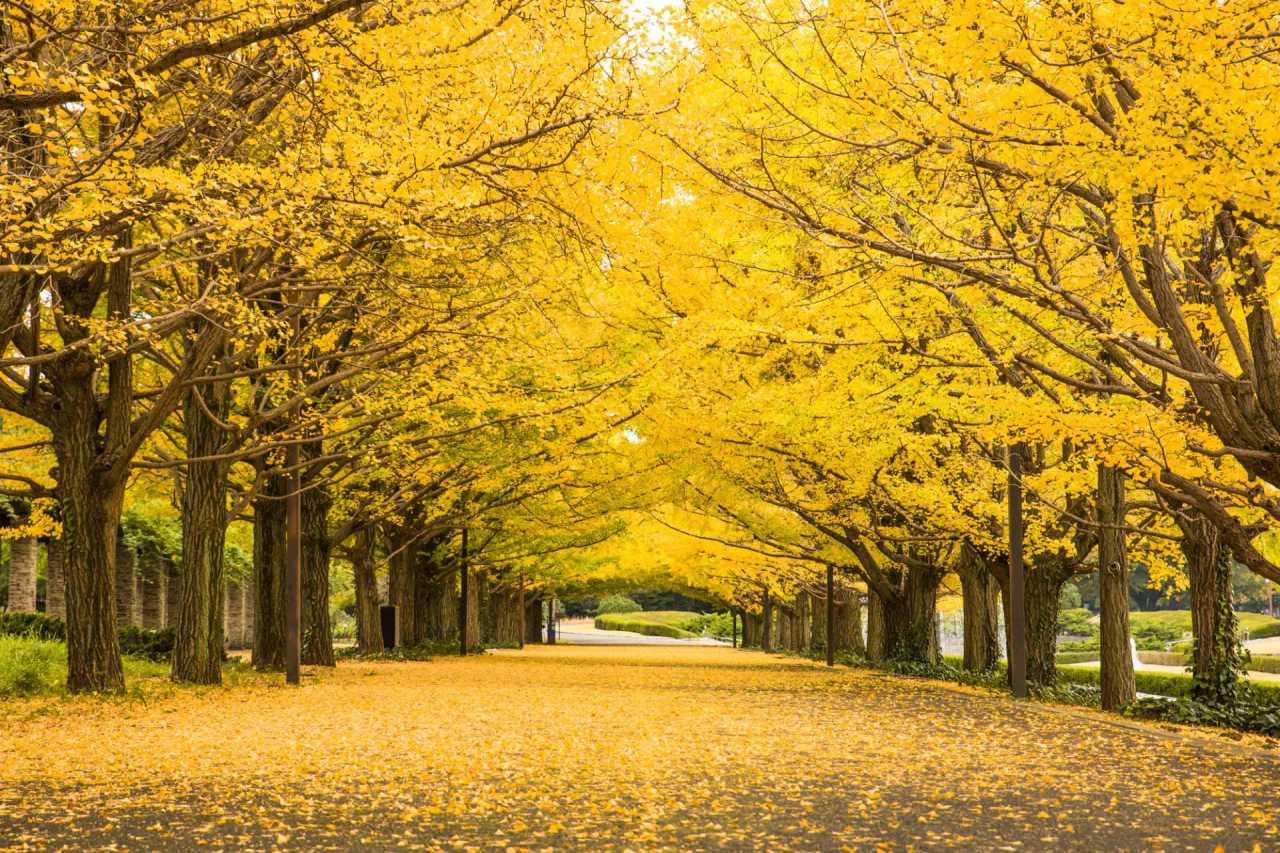
If you want to see larger-scale ginkgo tunnels, plan a “spectacular suburban” route, such as Showa Kinen Park, Mt. Takao and the Koshu Kaido in Hachioji. Because these spots are far from the city center and have larger planted areas, their peak is usually 1-2 weeks earlier than in the city. We recommend pairing them with a train pass and allowing at least half a day for travel and sightseeing.
Ginkgo vs. Maple Peak Timing
Ginkgo trees in central Tokyo mostly turn golden from late November to early December, and maples in gardens mostly peak around late November to early December as well. The two are close in timing, so you can combine them in one trip. In late November the sun sets around 16:30 in Tokyo, so we recommend starting in the morning for front-lit photos and factoring sunset time into your plans.
Jingu Gaien Ginkgo Avenue: A Classic Benchmark with 146 Ginkgo Trees
The Jingu Gaien ginkgo avenue runs from Kita-Aoyama 2-chome in Minato City, Tokyo, to the front of the Meiji Memorial Picture Gallery. Along a straight avenue about 300 meters long are 146 ginkgo trees, which usually start turning yellow in mid-November and peak from late November to early December. For dates of events such as the 2026 Ginkgo Festival, please check Jingu Gaien’s official announcements. The other spots in this guide can serve as alternatives if you want to avoid the Gaien crowds.
How to Get to Tokyo’s Ginkgo Spots 2026: City and Suburban Transportation at a Glance
Transportation and One-Day Passes for Tokyo’s Ginkgo Spots
Stations near city spots: Yoyogi Park is near JR Harajuku Station, Ueno Park near Ueno Station, Gyoko-dori near Tokyo Station, and the University of Tokyo Hongo Campus near Hongo-sanchome Station. Suburban spots: Showa Kinen Park is a 2-minute walk from JR Nishi-Tachikawa Station, Kiyotaki cable car station is a 5-minute walk from Keio Takaosanguchi Station, and the ginkgo avenue can be reached from JR Takao Station.
In the city, you can use a subway or Toei Subway one-day pass or the Tokyo Subway Ticket. For the Yamanote Line, you can use the JR Tokunai Pass (¥760). For Mt. Takao, use the Keio discount ticket.
Other Ginkgo Spots in Tokyo Beyond Jingu Gaien: City and Suburban Recommendations
Showa Kinen Park: Tokyo’s Most Spectacular Ginkgo Tunnels Outside the City
Showa Kinen Park has two classic ginkgo paths: the one along the Tachikawa Gate “Canal”, about 200 meters long, and the “Katarai no Icho Namiki” with 98 trees along about 300 meters. Peak color is roughly early to late November, and because Tachikawa is colder, the trees often change color earlier than in the city. Admission is ¥450 for adults and ¥210 for ages 65 and over, and is free for elementary and junior high school students. You can rent bicycles in the park for viewing the foliage, and the “Kanpu-tei” tea house serves matcha and seasonal Japanese sweets. From October 29 to November 29, the “Autumn Foliage Festival & Autumn Night Walk” illumination event is held; please check the official website for evening opening hours.
University of Tokyo Hongo Campus: A Century-Old Golden Tunnel in an Academic Landmark
The ginkgo avenue on the Hongo campus runs from the main gate all the way to Yasuda Auditorium, and the ginkgo is also the symbol on the University of Tokyo’s emblem. Peak color is roughly late November to early December, and when the leaves fall the whole avenue is covered in a golden carpet. The campus is the former site of the Kaga Domain’s upper residence in the Edo period, and is also the setting of Natsume Soseki’s novel “Sanshiro”. It is about a 10-minute walk from Hongo-sanchome Station or Todai-mae Station. During exam periods, campus access may be restricted.
Yoyogi Park: A Golden Ginkgo Grove Beside Harajuku Station
Yoyogi Park has a ginkgo grove of more than 200 trees that turns completely golden in autumn, with peak color roughly late November to early December. The park is right next to Harajuku and Shibuya, only about a 3-minute walk from JR Harajuku Station, and after viewing the ginkgo you can easily visit Meiji Jingu and Omotesando. Admission is free, making it one of the most accessible ginkgo viewing spots in the city.
Ueno Onshi Park: Golden Reflections Beside the Museums and Shinobazu Pond
The ginkgo trees in Ueno Onshi Park are mainly along the main avenue and beside Shinobazu Pond, where the golden trees reflected in the water are a popular photo angle, and visitors can rent swan boats or rowboats to enjoy the view from the water. The park is next to the Tokyo National Museum and Ueno Zoo, and Ameyokocho is within walking distance, where you can have an affordable seafood rice bowl for lunch after viewing the ginkgo. Peak color is roughly late November to early December, admission is free, and it is right outside the Park Exit of JR Ueno Station.
Gyoko-dori: The Golden Avenue Connecting Tokyo Station and the Imperial Palace
Gyoko-dori is a grand avenue about 70 meters wide connecting the Marunouchi Central Exit of Tokyo Station with the Imperial Palace. The ginkgo trees along both sides contrast sharply with the surrounding skyscrapers, making it one of Tokyo’s most iconic urban ginkgo views. Peak color is roughly late November to early December. The avenue is normally a pedestrian space, and from the Imperial Palace side you can look back at the red-brick Marunouchi building of Tokyo Station. We recommend shooting early in the morning to avoid crowds.
Rikugien: A Symphony of Maples and Ginkgo in an Edo Daimyo Garden
Rikugien is a strolling garden created by Yanagisawa Yoshiyasu in the Edo period. Within it, Togetsukyo Bridge, Fujishiro Pass and other spots from the legendary “88 Views of Rikugien” blend with red maples and ginkgo like a painting, with peak color roughly late November to mid-December. The 2026 special night viewing runs from November 25 to December 6, from 18:00 to 20:30 (last entry 19:30), with advance tickets at ¥1,000 and same-day tickets at ¥1,200. The Fukiage Chaya teahouse by the pond serves hot matcha and limited-edition autumn-leaf wagashi, a soothing moment amid the maple and ginkgo viewing. The main gate is about a 7-minute walk from JR Yamanote Line Komagome Station.
Koishikawa Korakuen: An Mito Domain Garden Where Tsutenkyo Bridge’s Maples and Ginkgo Intertwine
Koishikawa Korakuen is a strolling garden built by the Mito Tokugawa family. The vermilion “Tsutenkyo” bridge and the stone “Engetsukyo” bridge are surrounded by red maples and ginkgo, the garden’s most classic autumn composition. The 2026 special night opening “Miyama Koyo” runs from November 13 to 24, from 18:00 to 21:00 (last entry 20:00), with advance tickets at ¥1,000 and same-day tickets at ¥1,200. It is about a 3-minute walk from Exit C3 of Iidabashi Station on the Toei Oedo Line, and the nearby Tokyo Dome City Ferris wheel is easy to add to your visit.
Koishikawa Botanical Garden: Home of the Historic Tree Where Ginkgo Sperm Was Discovered
Koishikawa Botanical Garden is the botanical garden attached to the University of Tokyo Graduate School of Science. The large ginkgo in the garden is the historic tree where the botanist Sakugoro Hirase discovered ginkgo sperm, which is of great significance to botanical research. Admission is ¥500 for high school students and older and ¥150 for elementary and junior high school students. It is open 9:00-16:30 (last entry 16:00) and closed on Mondays. It is within walking distance of Hakusan Station on the Toei Mita Line, and suits travelers who enjoy an academic atmosphere and quiet sightseeing.
Mt. Takao: A Cable Car Up to Autumn Leaf and Ginkgo Views with Mt. Fuji Vistas
The Mt. Takao cable car has a gradient of up to 31 degrees, making it one of the steepest in Japan, and there is also an open-air single-person chairlift where you can feel the cool breeze and the immersive autumn leaves and ginkgo across the mountain. On clear days you can see Mt. Fuji from the summit observation deck, and Yakuo-in Temple halfway up the mountain is a well-known Shugendo sacred site in the Kanto region, worth a stop to pray. Peak autumn leaves are roughly mid- to late November, and Kiyotaki cable car station is about a 5-minute walk from Keio Line Takaosanguchi Station.
Koshu Kaido Ginkgo Avenue (Hachioji): A 4-Kilometer Golden National Highway
The Koshu Kaido ginkgo avenue runs along National Route 20 from the Oiwake-cho intersection in Hachioji to the Takao Station intersection, about 4 kilometers long with about 770 ginkgo trees. Because Hachioji is colder, peak color comes earlier than in the city, around mid-November. Since 1979, the “Hachioji Icho Matsuri” has been held every year on the Saturday and Sunday of the third week of November (November 15-16 in 2025), and the 2026 dates are subject to official announcements. It is within walking distance of JR Takao Station or Nishi-Hachioji Station.
Yasukuni Shrine: A Golden Carpet Along the 240-Meter Approach
The approach to Yasukuni Shrine runs from the large torii gate to the Shinmon gate, with ginkgo trees and stone lanterns lined up straight along about 240 meters, and fallen leaves covering the ground in a golden carpet. Behind the main hall, the Shinchi garden has maples to view as well, so you get both ginkgo and autumn leaf colors in one visit. Peak color is roughly late November to early December, and there are relatively fewer visitors than at Jingu Gaien. It is about a 5-minute walk from Kudanshita Station on the Tokyo Metro Tozai Line, Hanzomon Line or Toei Shinjuku Line.
Kitanomaru Park: Century-Old Ginkgo Beside the Budokan
Kitanomaru Park is on the north side of the Imperial Palace, around the Nippon Budokan. It has many deciduous trees such as ginkgo, zelkova and maple, as well as large ginkgo trees that are 200 to 300 years old. The ginkgo near the Budokan turn yellow around late November. It is about a 5-minute walk from Kudanshita Station and a 7-minute walk from Takebashi Station, with free admission, and it can be combined with Yasukuni Shrine.
Hikarigaoka Park: A Century-Old Ginkgo Avenue in Nerima
Hikarigaoka Park is in Nerima Ward. The “Fureai no Michi” ginkgo avenue extending from Hikarigaoka Station on the Toei Oedo Line is about 200 meters long, and some of the ginkgo were transplanted from in front of the former Tokyo Metropolitan Government Building in Yurakucho and are more than a hundred years old. Peak color is roughly early November to early December, it is about an 8-minute walk from Hikarigaoka Station, and it is less crowded than the city spots, making it good for a leisurely stroll.
Komazawa Olympic Park: A Morning-Jogging Ginkgo Path at the Site of the 1964 Tokyo Olympics
Komazawa Olympic Park was one of the venues of the 1964 Tokyo Olympics. It has about 670 ginkgo and zelkova trees in total, and the loop path is a daily jogging and walking route for local Tokyo residents, so you can feel local life while viewing the ginkgo. Peak color is roughly mid-November to early December. It is about a 15-minute walk from Komazawa-daigaku Station on the Tokyu Den-en-toshi Line, open free all year, and a good backup for photos with fewer people.
Gotokuji: A Hidden Ginkgo Spot in Setagaya, the Birthplace of the Lucky Cat
Gotokuji is said to be the birthplace of the lucky cat (maneki-neko), and the temple grounds hold a large number of lucky cat statues. In autumn the red and yellow leaves in the grounds complement each other, making it a quiet autumn spot in Setagaya Ward. It is about a 10-minute walk from Gotokuji Station on the Odakyu Line, with peak color roughly late November to early December, and you can pair it with a walk along the Setagaya Line for a half-day itinerary.
Keio University Hiyoshi Campus: A Hundred-Ginkgo Avenue in Yokohama
Keio University’s Hiyoshi Campus is in Yokohama, Kanagawa Prefecture. The ginkgo avenue in front of the school gate, about 220 meters long, has about 100 large ginkgo trees planted in 1935 and has received a Yokohama cityscape award. It is about a 1-minute walk from Hiyoshi Station on the Tokyu Toyoko Line / Meguro Line, with peak color roughly mid-November to early December, and you can get there from Shibuya on the Toyoko Line.
How Much Does It Cost to Visit Tokyo’s Ginkgo Spots in 2026? Tickets and Recommended Tours
Showa Kinen Park Admission + Bicycle Rental
Showa Kinen Park admission is ¥450 for adults and ¥210 for ages 65 and over, and free for junior high school students and younger. You can also rent bicycles in the park for a fee, and riding connects the two major ginkgo avenues with much less effort than walking. It is one of the few ginkgo spots in Tokyo that charges admission but has complete facilities.
Mt. Takao Cable Car and Autumn Leaves Day Trip
The Mt. Takao cable car takes about 6 minutes one way from Kiyotaki Station to Takaosan Station, and there is also an open-air chairlift. During the autumn leaf season weekends have long lines, so we recommend going on a weekday morning. If you want to skip arranging transportation yourself, consider a Mt. Takao autumn leaves day trip that includes the cable car.
Rikugien and Koishikawa Korakuen Autumn Night Illuminations
The 2026 Rikugien special night viewing runs from November 25 to December 6, and the Koishikawa Korakuen special night opening runs from November 13 to 24. Advance tickets are ¥1,000 and same-day tickets ¥1,200 for both. Advance tickets for Koishikawa Korakuen can be bought on platforms such as KKday; for details please check the Tokyo Metropolitan Park Association’s official announcements.
Tokyo Metro / Toei Subway One-Day Pass
Gives unlimited rides on all Tokyo Metro and Toei Subway lines within the validity period, suited to linking several city ginkgo spots in one day such as Ueno, Hongo at the University of Tokyo, Koishikawa Korakuen and Kudanshita. Foreign visitors can buy the Tokyo Subway Ticket (24 / 48 / 72 hours).
Where to Stay for Tokyo Ginkgo Spots 2026? Hotel Bases Picked by Sightseeing Route
Staying near Tachikawa Station: Close to Showa Kinen Park
The Tachikawa Gate of Showa Kinen Park is within walking distance of JR Tachikawa Station. The area around the station has a large shopping district and many chain business hotels, which suits travelers who want to get up early and head straight to the ginkgo avenues, and it is also easy to get to Shinjuku on the JR Chuo Line.
Staying near Hachioji Station: Linking the Koshu Kaido and Mt. Takao
There are not many places to stay around Mt. Takao, so a more convenient approach is to stay in a business hotel near Hachioji Station, then take the JR Chuo Line to Nishi-Hachioji Station or Takao Station the next day to link the Koshu Kaido ginkgo avenue and Mt. Takao.
Near Komagome Station / Sugamo Station: An Old Tokyo Neighborhood Close to Rikugien
Rikugien is a 7-minute walk from Komagome Station, and the Sugamo Jizo-dori shopping street near the station keeps an old Tokyo atmosphere. Lodging is mostly small to mid-sized business hotels, suited to travelers who want to stay close to Rikugien’s night illumination and Koishikawa Korakuen.
Near Iidabashi Station: A Base for Both Koishikawa Korakuen and Kitanomaru Park
Koishikawa Korakuen is about a 3-minute walk from Exit C3 of Iidabashi Station, and Yasukuni Shrine and Kitanomaru Park at Kudanshita are not far away. There are many business hotels around the station, making it a good base for linking the city’s ginkgo spots.
Best Ginkgo Spots in Tokyo 2026: FAQ
Q: When is the best time to see ginkgo in Tokyo in 2026?
Tokyo’s 2026 ginkgo peak is expected around November 26, with city spots from late November to early December, and the suburban Showa Kinen Park and Hachioji Koshu Kaido from mid- to late November. We recommend checking the latest conditions a week before you go.
Q: How much is admission to Showa Kinen Park?
Adults ¥450, ages 65 and over ¥210, and free for junior high school students and younger. Bicycles can also be rented in the park for a fee, and it is one of the few ginkgo parks in Tokyo that charges admission.
Q: Where is less crowded than Jingu Gaien?
Kitanomaru Park, Hikarigaoka Park, Gotokuji and Komazawa Olympic Park are all less crowded than Jingu Gaien, and visiting early on a weekday morning helps you avoid the weekend crowds.
Q: When are the ginkgo peak forecasts released?
Weathernews and other forecasters begin releasing autumn leaf and ginkgo peak forecasts from September each year, then update them with temperatures, so check the latest version before you go.
Q: How can I save money on transportation when viewing ginkgo?
Most city spots are along subway lines, so you can use a Tokyo Metro and Toei Subway one-day pass or the Tokyo Subway Ticket. For Mt. Takao, use Keio’s Mt. Takao discount ticket.
Q: Can I enter Rikugien and Koishikawa Korakuen at night?
In 2026, Rikugien’s special night viewing runs from November 25 to December 6 and Koishikawa Korakuen’s from November 13 to 24. Same-day tickets for both are ¥1,200; for details please check the Tokyo Metropolitan Park Association’s official announcements.
Q: What should I watch out for when viewing ginkgo?
In late November the sun sets around 16:30 in Tokyo, so plan your itinerary early and bring a moisture-proof picnic mat, since lawns often have dew in the early morning. On busy holidays, arrive an hour early to take photos.