
Heian Jingu Shrine Guide 2026: The Great Torii, Shinen Garden and Jidai Matsuri Highlights
Heian Jingu stands in Okazaki, Kyoto, and was built to mark the 1,100th anniversary of the founding of Heian-kyo. Entry to the shrine grounds is free, the Shinen garden costs ¥600, and the site is a major stage for cherry blossoms, autumn leaves and the Jidai Matsuri parade.
The official website is Heian Jingu (heianjingu.or.jp). Please check it for visiting hours and Shinen garden announcements.
How Heian Jingu Came to Be
Heian Jingu was founded in 1895 (Meiji 28) to commemorate the 1,100th anniversary of Emperor Kanmu moving the capital to Heian-kyo. Its halls are built at 5/8 scale after the Chodoin, the main state hall of Heian-kyo, recreating the look of the imperial city from a thousand years ago.
The shrine’s main deity is Emperor Kanmu, who founded Heian-kyo. In 1940 (Showa 15), Emperor Komei, the last emperor to reign in Kyoto at the end of the shogunate, was enshrined alongside him. Together, their reigns mark the beginning and the end of Kyoto’s time as the capital.
Architectural Features
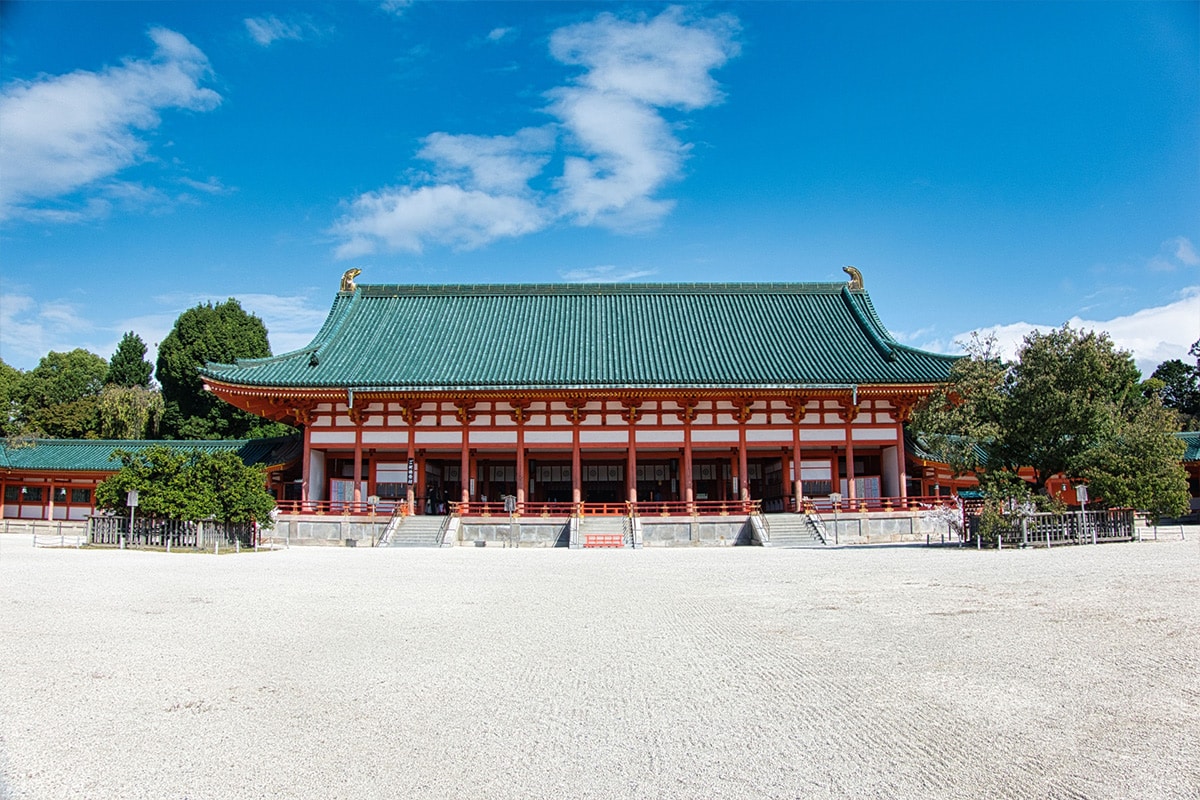
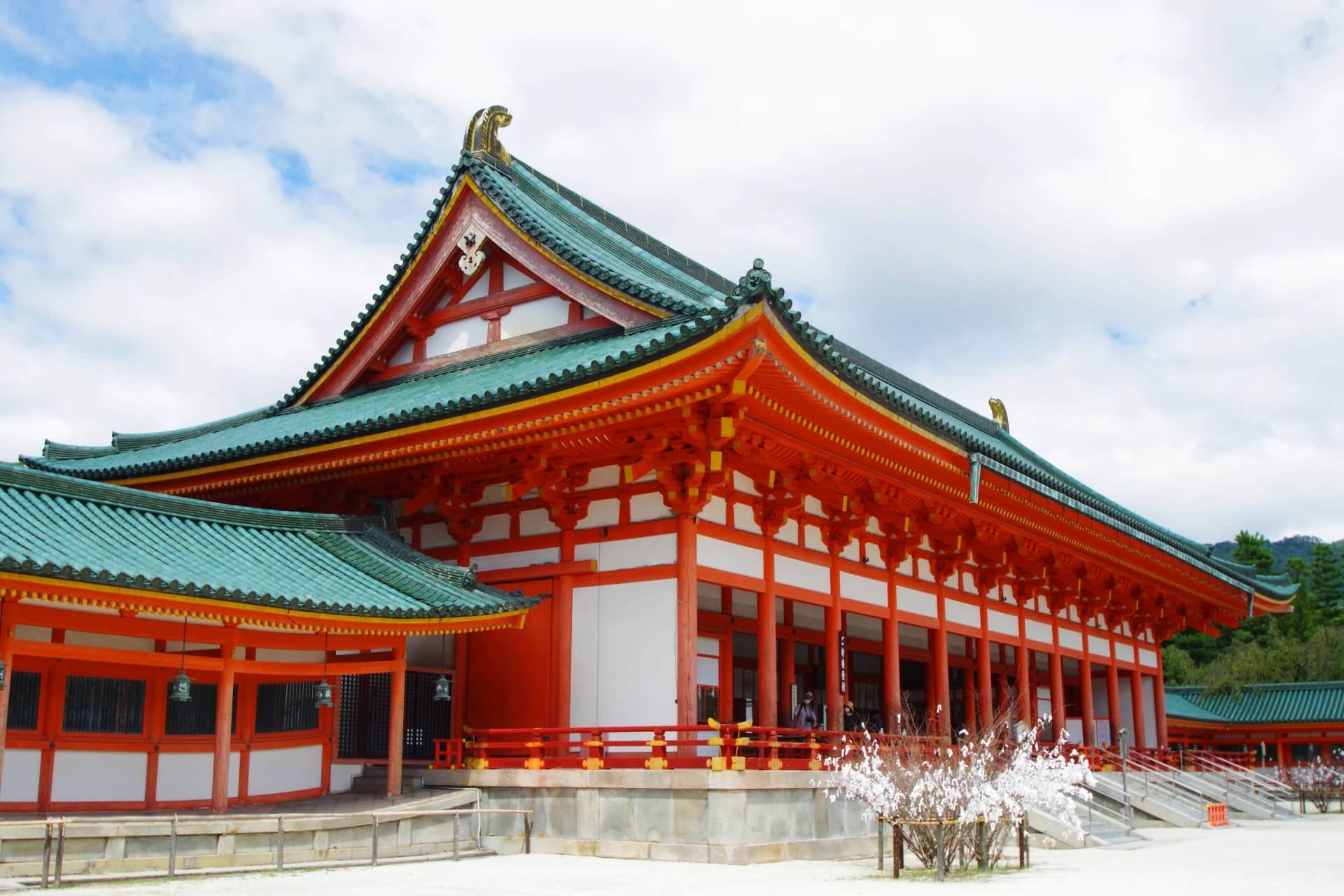
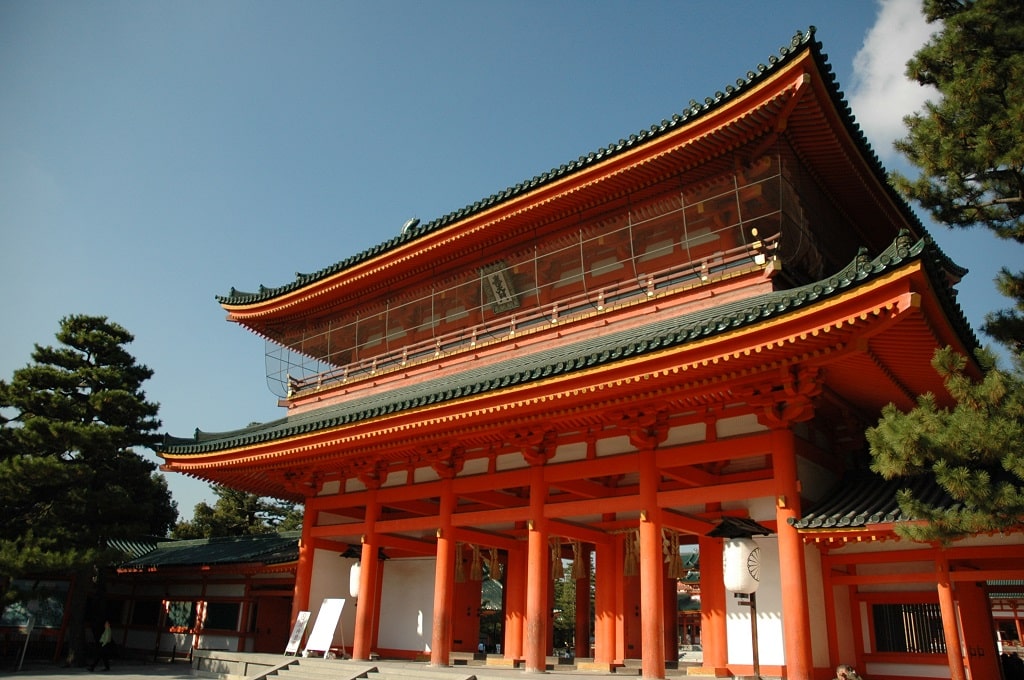
The buildings are dominated by vermilion pillars and beams, green tile roofs and white walls. This is the classic “wayo” style of Heian-period palaces, quite unlike the natural wood tones of most shrines, and visually striking.
The Outenmon Gate, Taikyokuden Hall, Soryuro and Byakkoro towers are all designated Important Cultural Properties. Together they faithfully reproduce the layout of the Heian-kyo Chodoin, making this one of the few places in Kyoto where you can see Heian-era court architecture with your own eyes.
Location and Surroundings
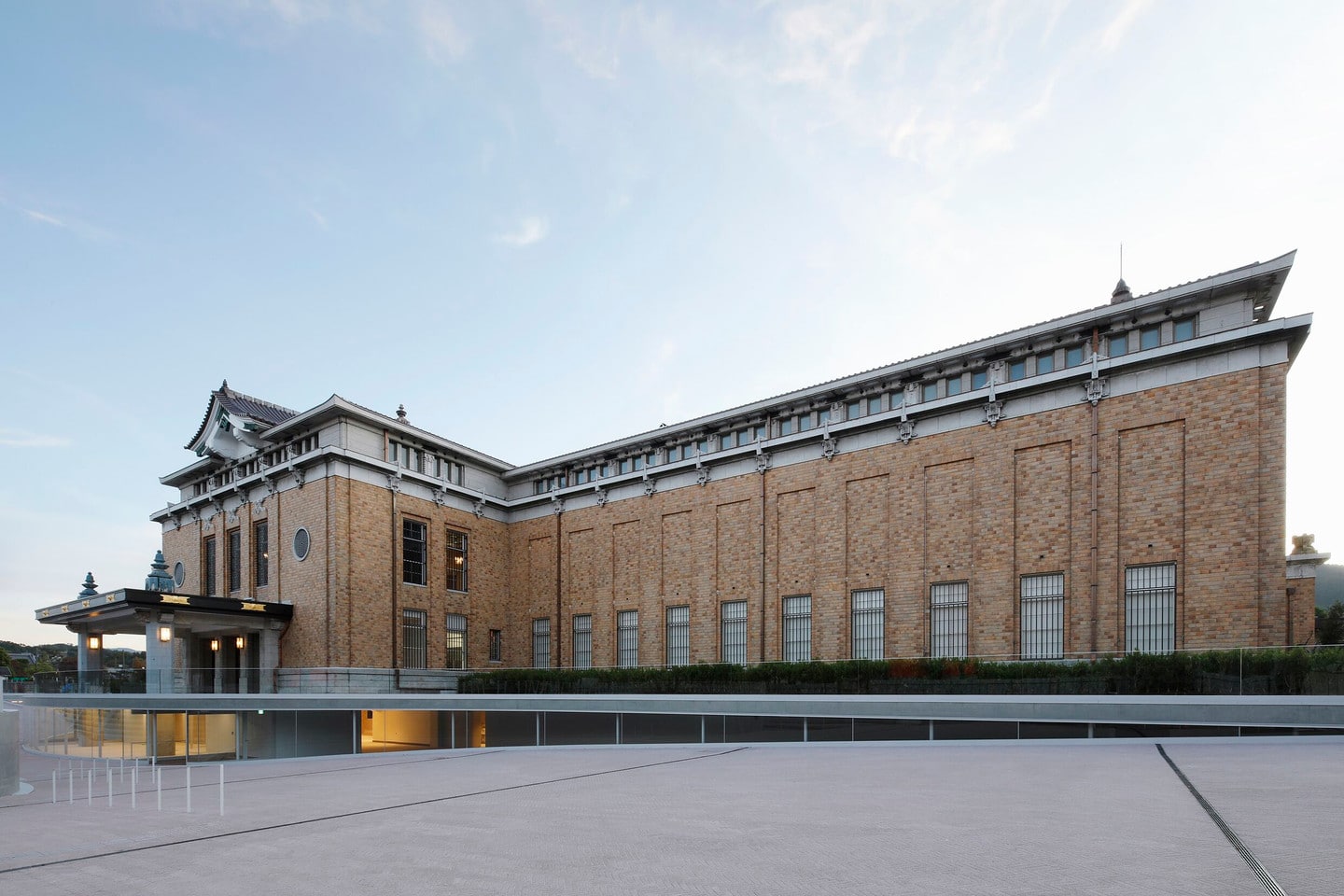
The shrine sits in the Okazaki area of Sakyo Ward, Kyoto, close to the Kyoto City KYOCERA Museum of Art, Kyoto City Zoo and the National Museum of Modern Art, Kyoto. The whole Okazaki Park area has a cultural feel and suits a half-day art walk.
Because it is near the Philosopher’s Path, Nanzen-ji and Ginkaku-ji, many travelers include Heian Jingu in a day route through northern Higashiyama, linking historic sites with natural scenery.
Best Time to Visit
Try to arrive between 9 and 10 a.m., when there are fewer visitors and the soft light is good for photographing the great torii and the vermilion halls. A full visit including the Shinen garden takes about 60 to 90 minutes.
To avoid tour-group crowds, weekday mornings are the best time. In peak cherry blossom and autumn leaf seasons, plan ahead and avoid weekends and national holidays.
Worship and Admission Fees
The main hall and outer worship hall are free to enter all year round. The only paid area is the Shinen garden behind the halls, at ¥600 for adults and ¥300 for children, and it is the part of the grounds most worth savoring.
How to Get to Heian Jingu: 2026 Transport Options and Fares
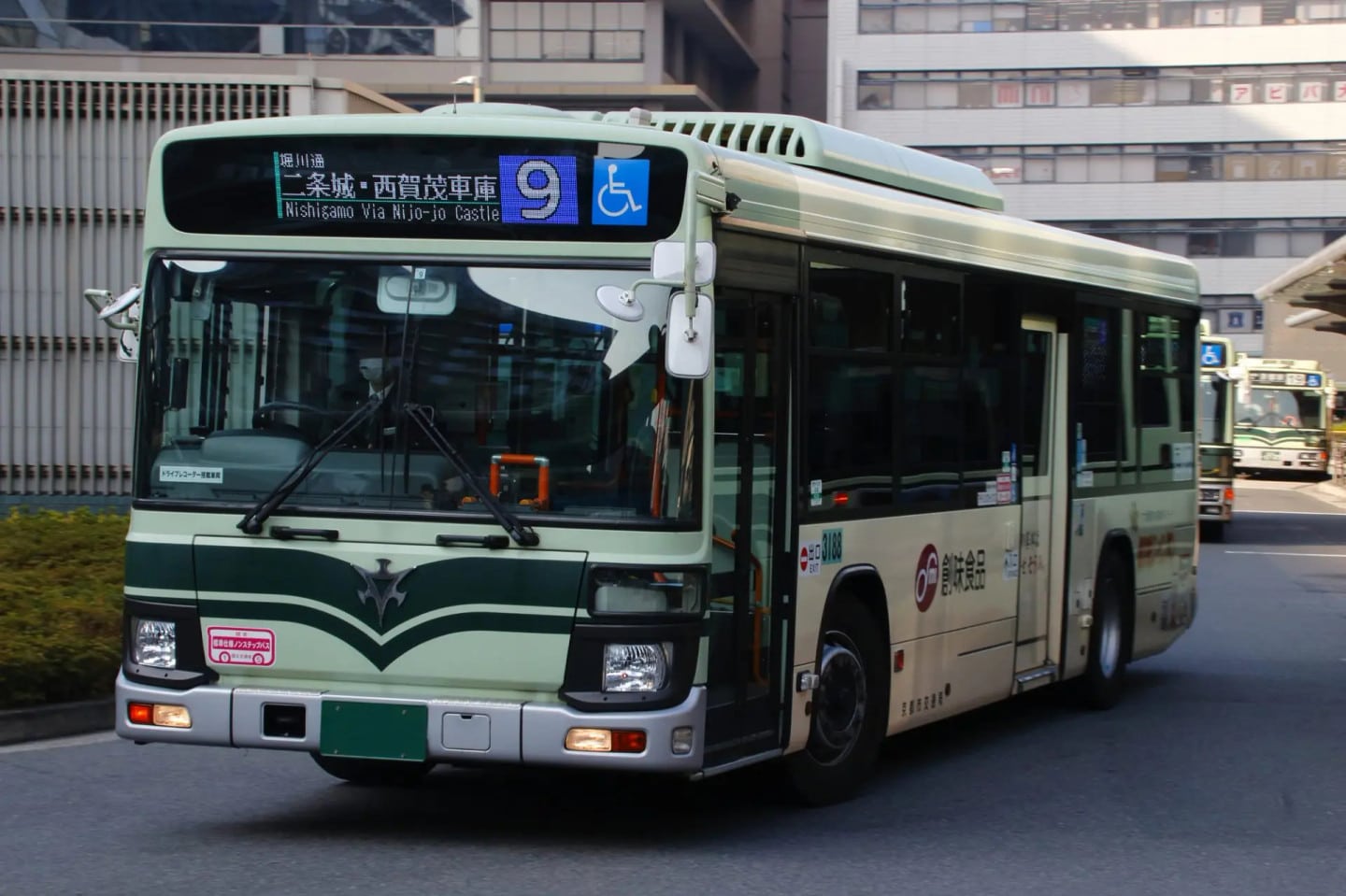
There is no subway station right at Heian Jingu. From Kyoto Station, take city bus route 5, 100 or 110 to the “Okazaki Koen Bijutsukan-Heianjingu-mae” stop, then walk about 3 minutes to the great torii. You can also take the Tozai Line subway to Higashiyama Station and walk about 10 minutes from the exit. The bus costs ¥230 one way and runs frequently, but traffic can be heavy on holidays and in cherry blossom and autumn leaf seasons, so allow plenty of time.
What to See at Heian Jingu: The Great Torii, Shinen Garden and Jidai Matsuri
The highlights of Heian Jingu are the main group of buildings at the front and the Shinen garden behind them, and you can pair a visit with the Jidai Matsuri and seasonal festivals.
Heian Jingu Great Torii (Okazaki Great Torii)
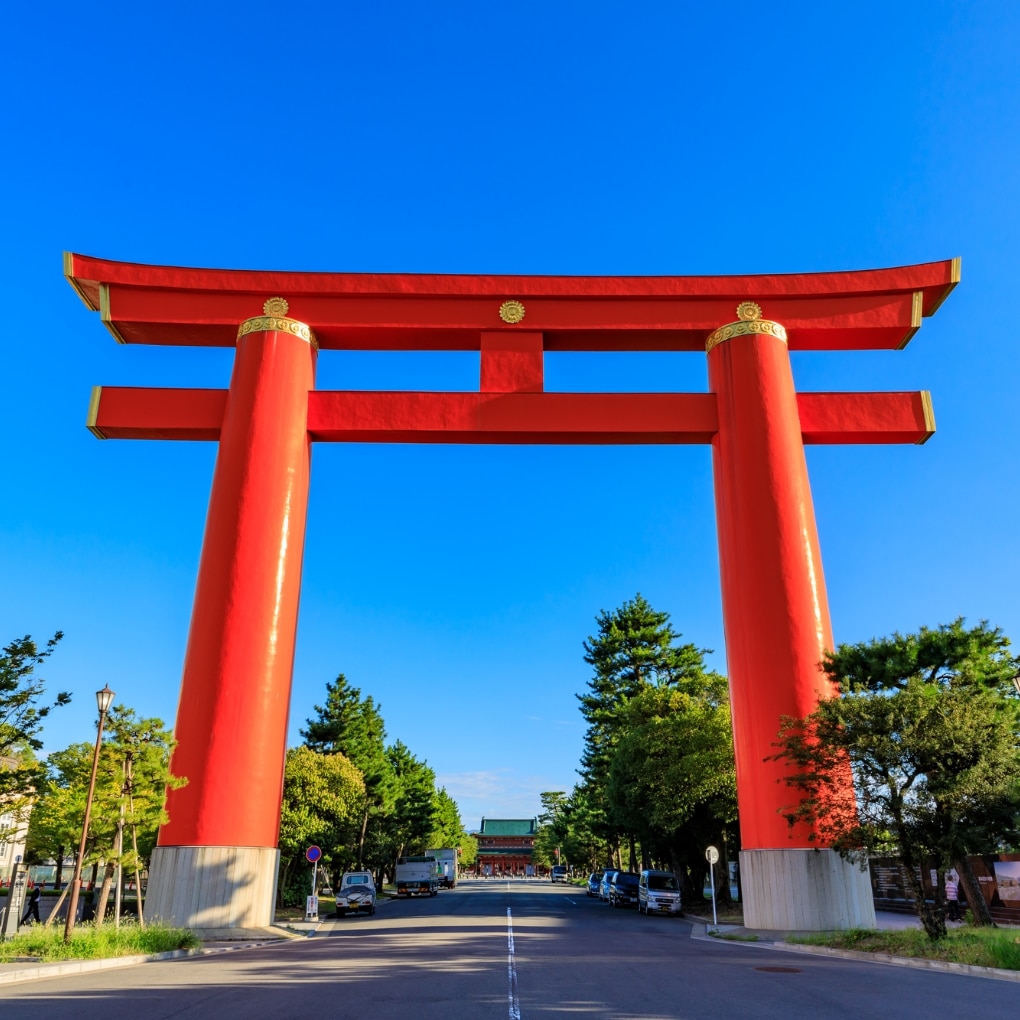
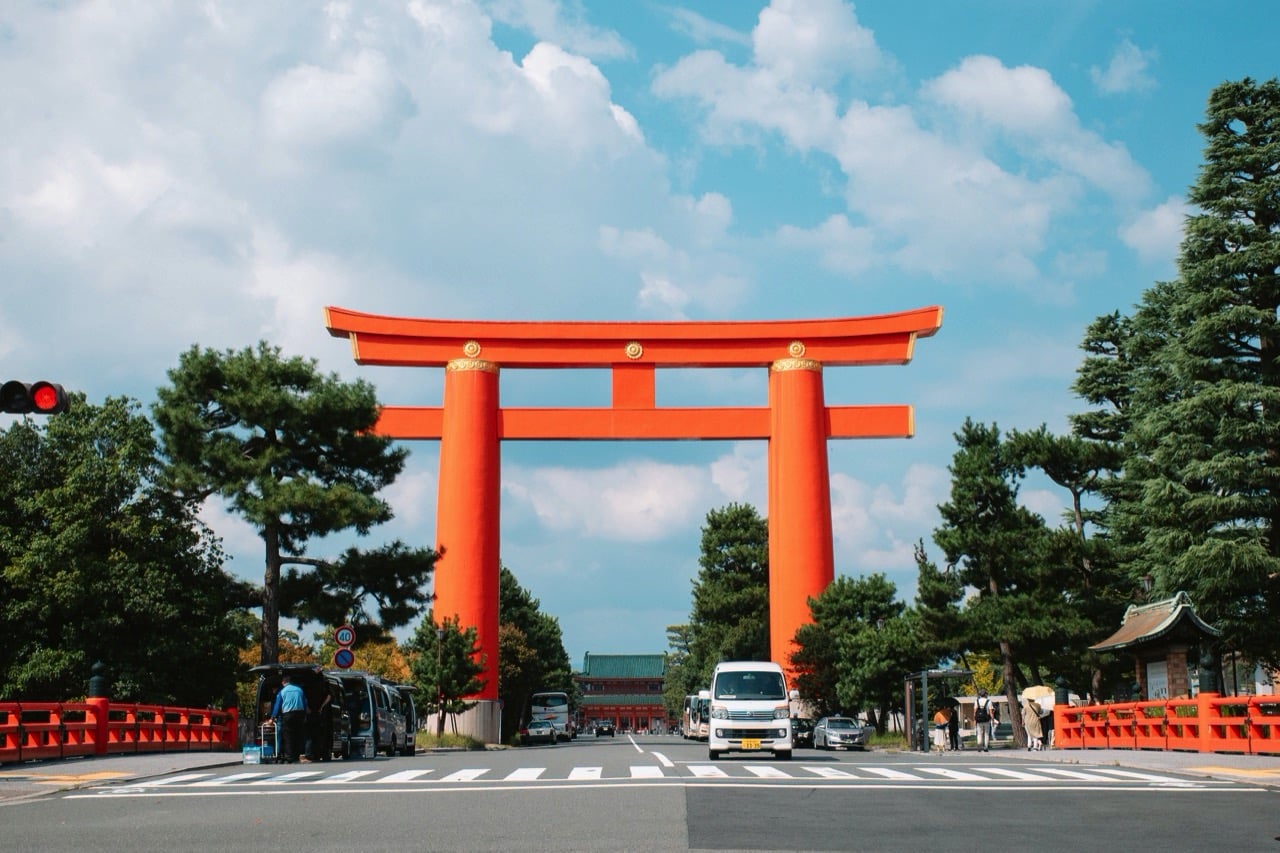
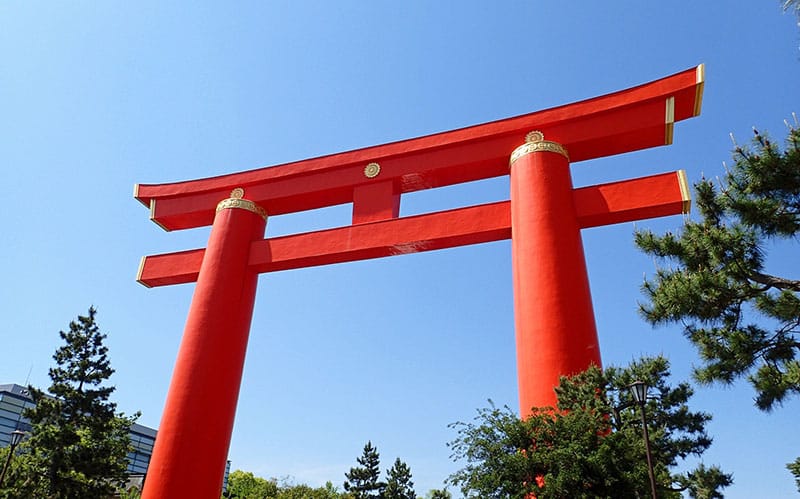
Standing 24.4 meters tall at the entrance to Jingu-michi avenue, this giant vermilion torii is one of the largest in Kyoto and the best-known landmark of the Okazaki area.
For photos, stand on Jingu-michi directly facing the torii. The morning light is the softest.
The great torii was built on the initiative of a citizens’ group, the Heiankosha, to commemorate the enthronement of Emperor Showa. It was completed in 1928 (Showa 3), and its completion ceremony was held in April 1929 (Showa 4). It is a Myojin-style torii of reinforced concrete with partial steel framing, about 24.4 meters high and 18 meters wide. It was the largest torii in Japan when it was finished, and in 2002 it was registered as a Registered Tangible Cultural Property.

Outenmon Gate
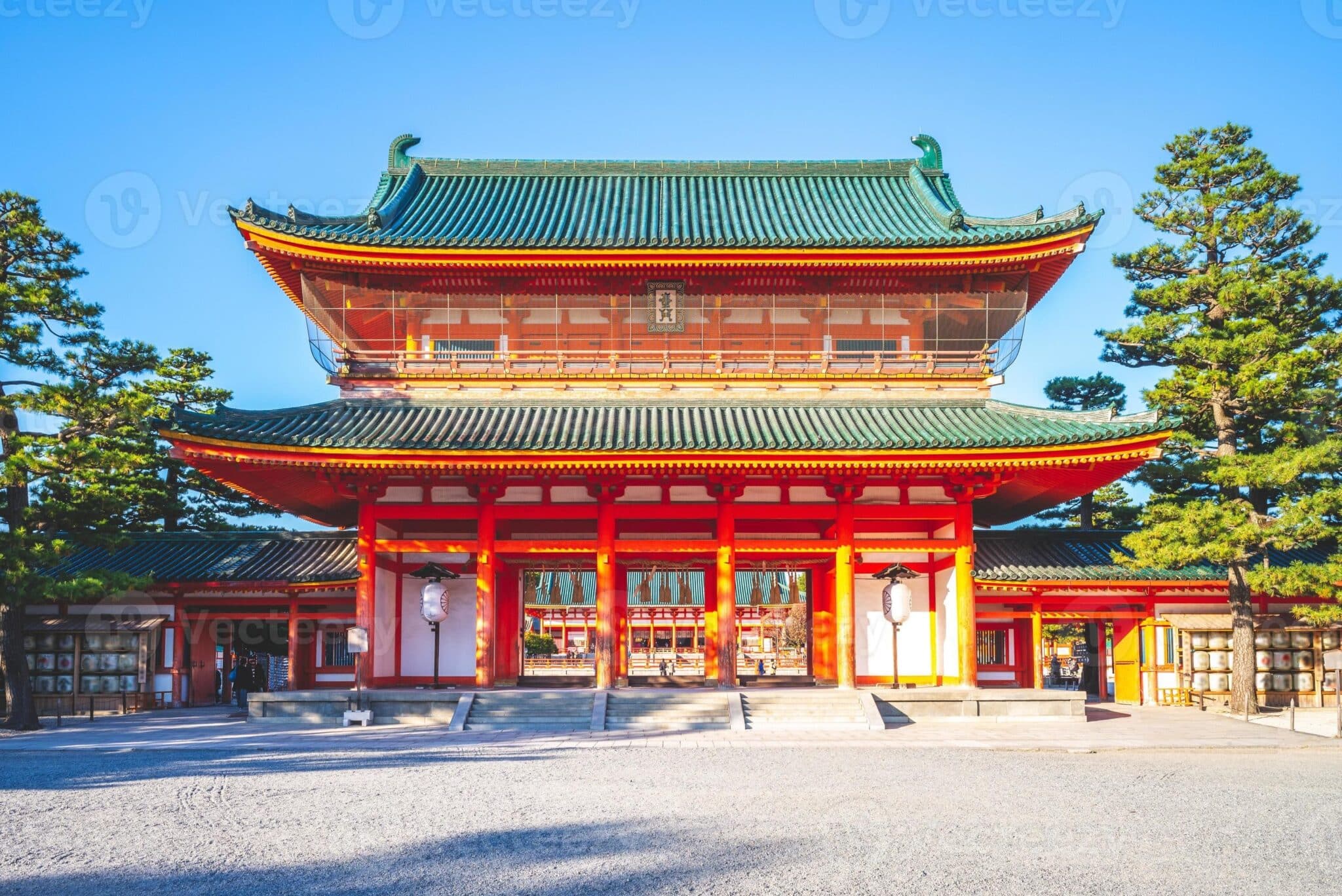
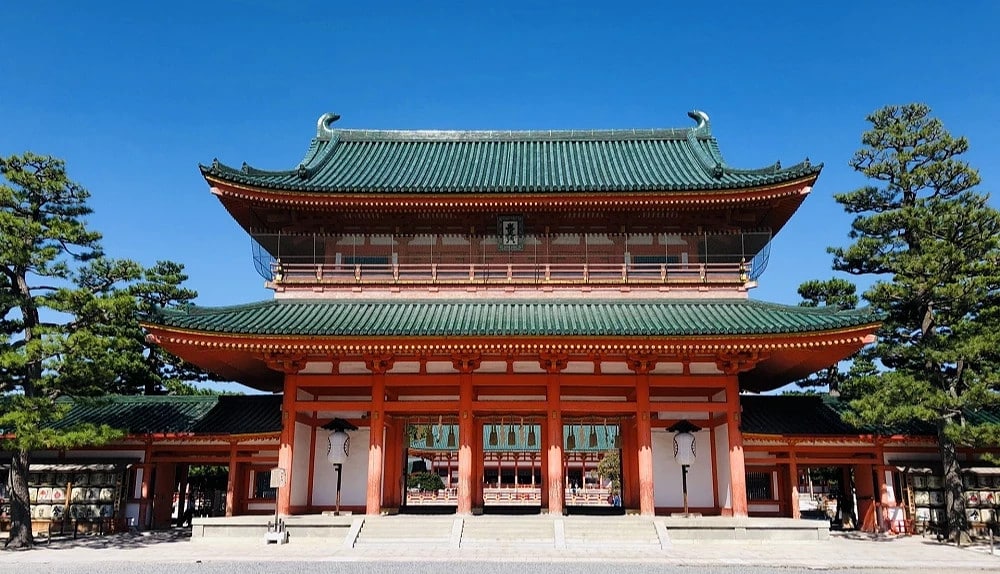
Outenmon is a two-story gate modeled on the main gate of the Heian-kyo Chodoin. It is painted in the same bright vermilion, is designated an Important Cultural Property, and serves as the front entrance to the Heian Jingu grounds.
Walk through the great torii and follow Jingu-michi to the end and you will see this imposing gate. The details of the beams and the patterns on the roof tiles are worth slowing down for.
Outenmon is open to visit free all year, and passing through it brings you into the main worship area outside the Shinen garden.
Taikyokuden Hall
Taikyokuden (also written Daigokuden) is the main hall of Heian Jingu, rebuilt at a reduced scale after the main hall of the Heian-kyo Chodoin. The white-gravel courtyard sets off the vermilion pillars and green tile roof in a strong, dramatic contrast.
The broad white-gravel courtyard in front of the hall is where important festival rites are held, and it is also the best vantage point for photographing the whole hall.
Taikyokuden is open for free worship all year and is the main place visitors pray and take photos after arriving.
Soryuro and Byakkoro Towers
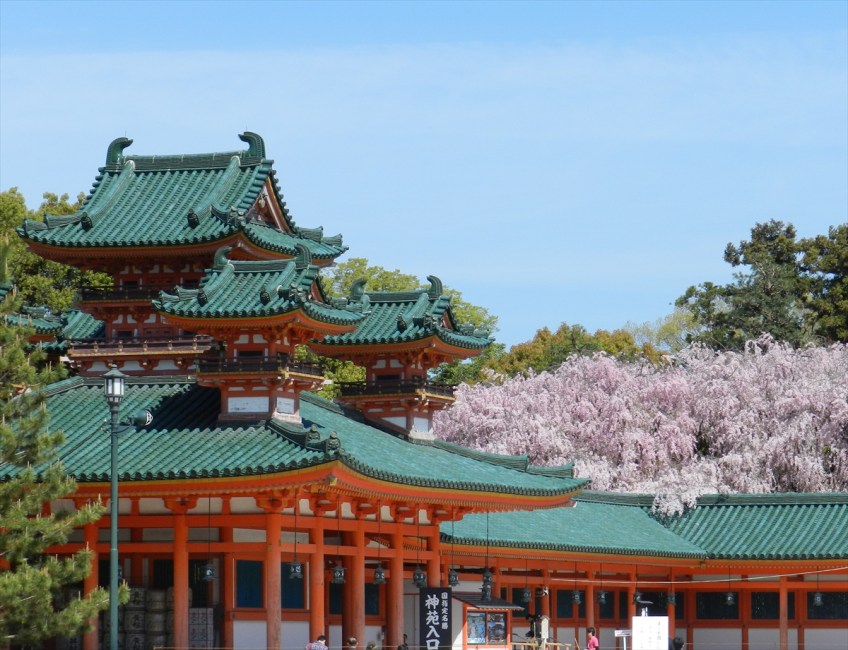
Soryuro and Byakkoro stand on the left and right of Taikyokuden. Their placement follows the Chinese idea of the four guardian deities, symbolizing the divine beasts that protect the east and the west, and they are an important element of the Heian-kyo palace layout.
The two pavilions are symmetrical and elegant, with vermilion pillars set against white walls, and make an excellent backdrop for capturing the whole group of buildings.
Both are in the free area, so you can admire their architectural details and carved decoration after worshipping at the main hall.
Shinen Garden (South, West, Central and East Shinen)
Shinen is a pond-and-stroll garden created by the Meiji-era master gardener Ogawa Jihei. It is divided into four areas, south, west, central and east, and is the only paid area of the grounds: ¥600 for adults and ¥300 for children.
The garden looks completely different in each season. It is the most representative part of Heian Jingu and the part most worth spending time on, so set aside at least 40 minutes to walk the whole garden.
It opens at 8:30 and closes between 17:00 and 18:00 depending on the season, with last entry 30 minutes before closing.


Taiheikaku (Bridge Hall)
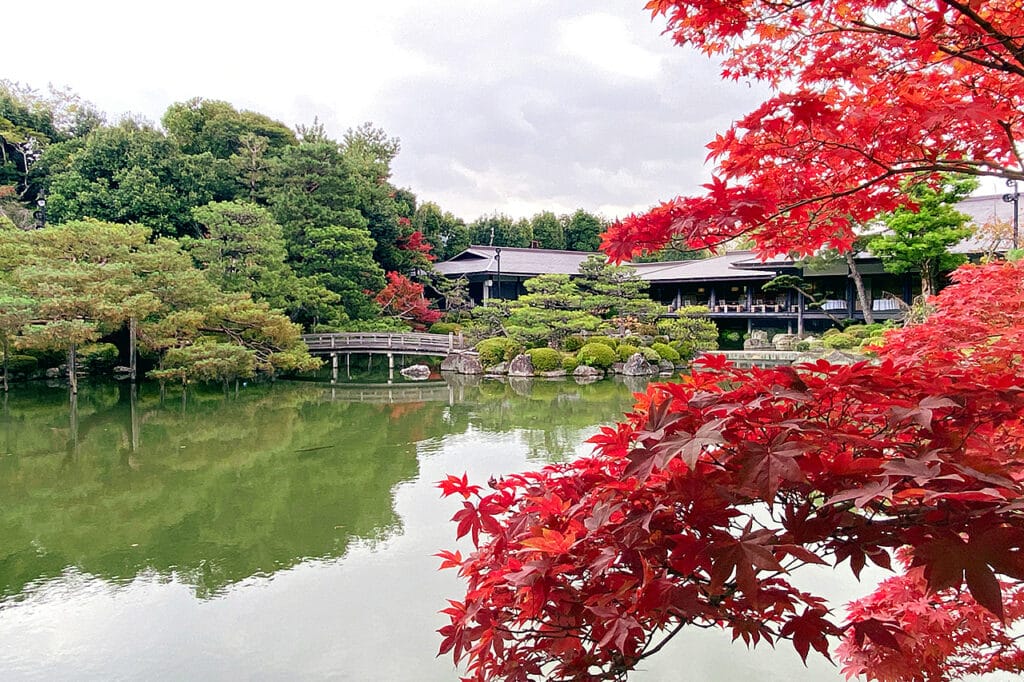
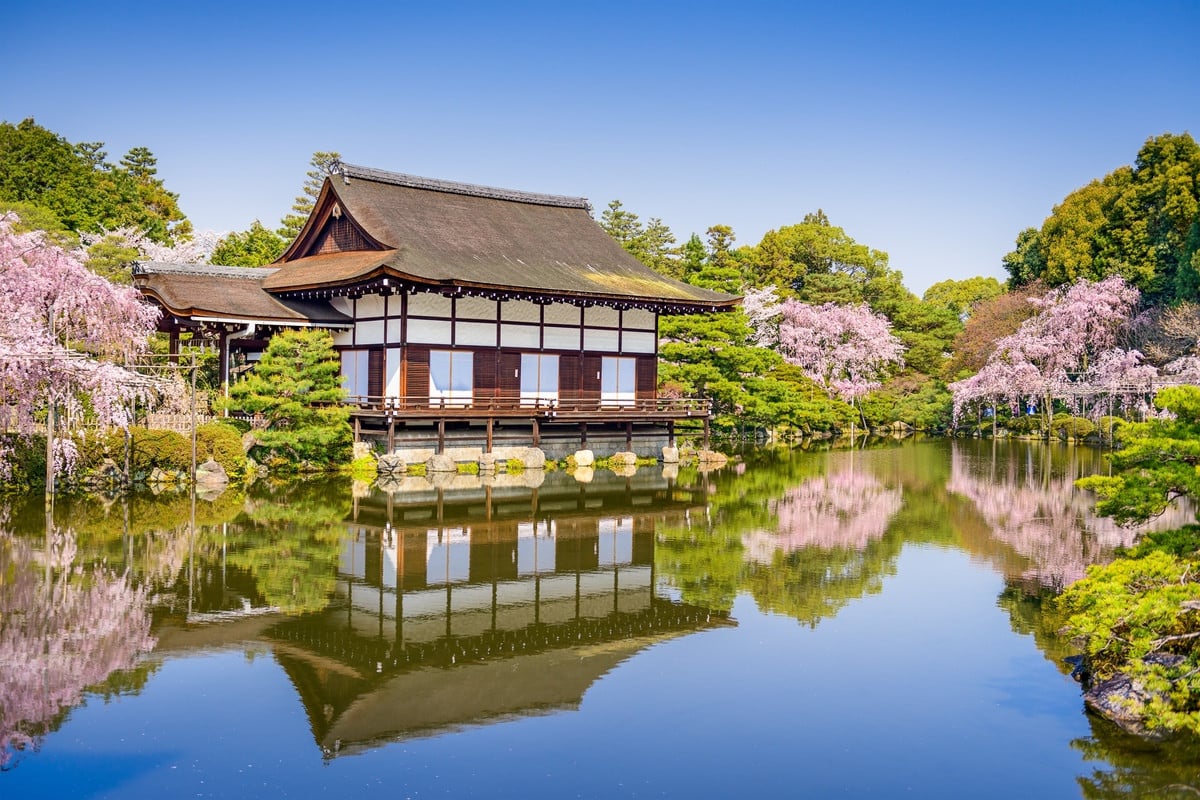
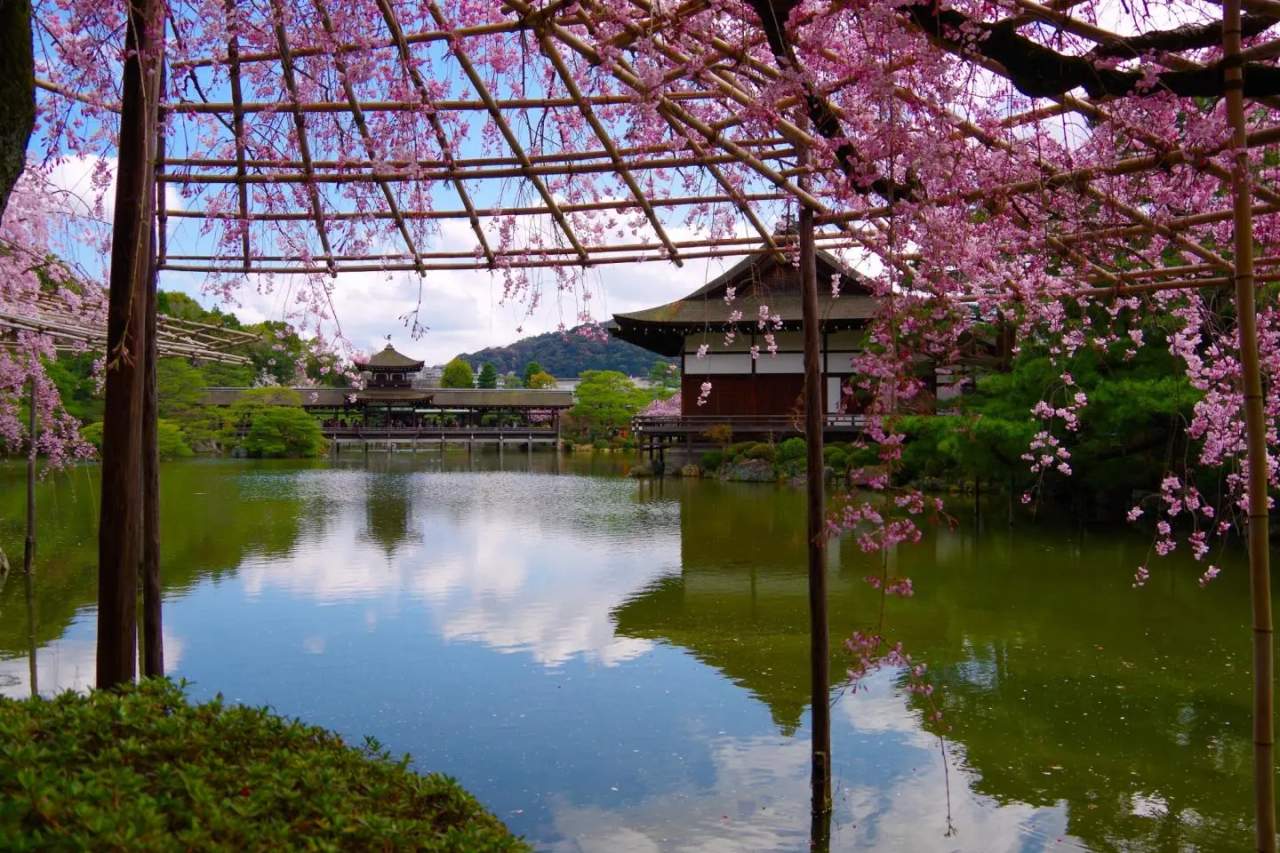
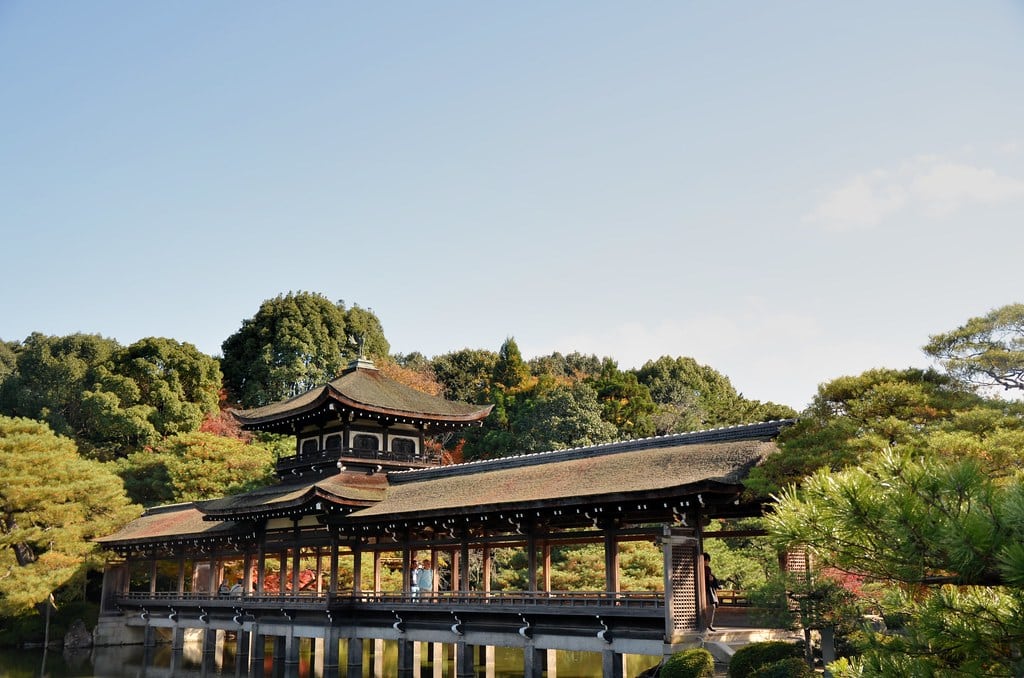
Taiheikaku is an elegant wooden bridge hall over Seihoike Pond in the East Shinen, with a roof of vermilion tiles. It is a superb spot for looking over the whole garden and photographing reflections on the water.
Sitting inside the bridge hall you can look out over the whole pond garden, and when a breeze blows the water sparkles. It is one of the Shinen’s favorite spots among photographers.
Head here toward the end of your garden walk, rest for a while and take in the view before finishing your Shinen visit.
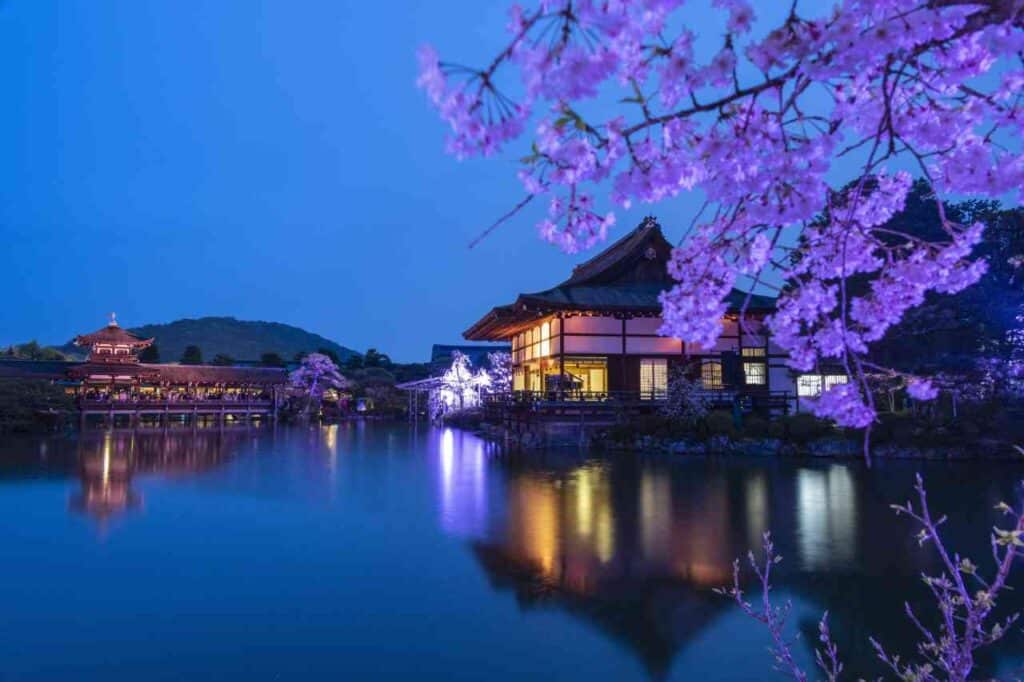
Cherry Blossoms and Night Illumination in the Shinen
From late March to mid-April each year, the double-flowered red weeping cherries in the Shinen bloom, their pink petals drooping over the pond, making it one of Kyoto’s dreamiest cherry blossom spots in spring.
In some years a limited-run night cherry blossom illumination concert is held. The weeping cherries lit up against the vermilion halls make for a romantic atmosphere. Watch the official announcements for event dates and ticket information.
In peak blossom season, arrive an hour early to beat tour groups and photographers so you can enjoy the pink scenery at a relaxed pace.
Autumn Leaves and Winter Snow in the Shinen
From mid-November to early December the maples in the Shinen turn red, playing off the vermilion halls and the reflections in the pond. It is one of the few places in Kyoto famous for autumn leaves where you can enjoy both the foliage and the architecture.
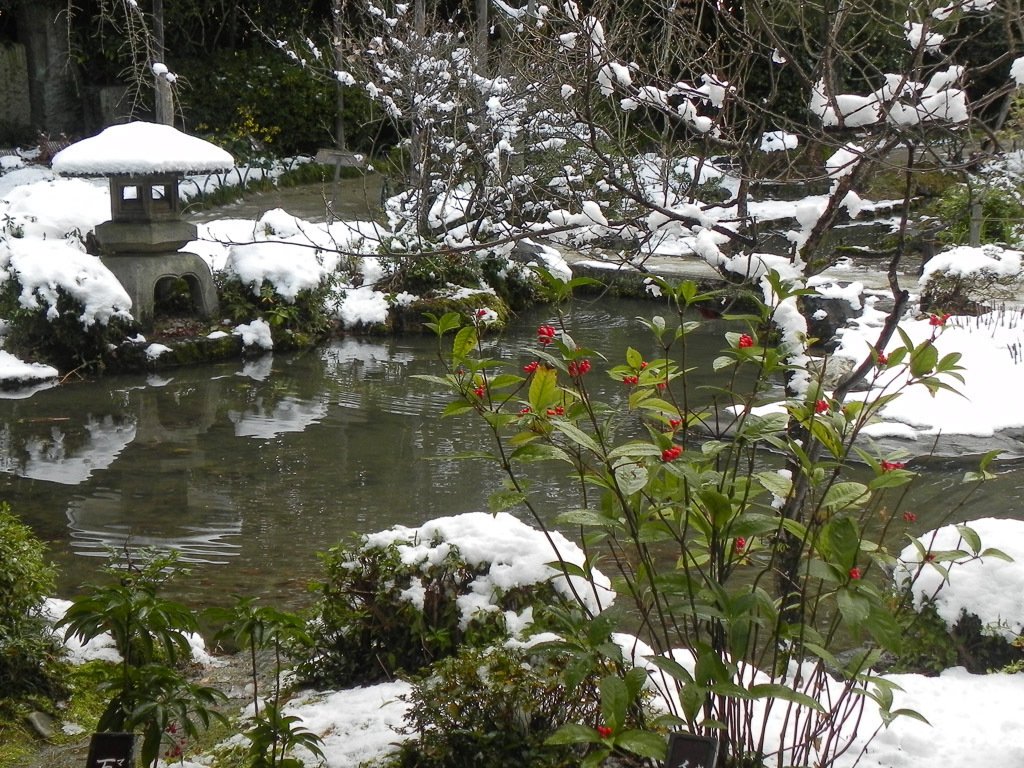
Snow falls occasionally from December to February. White snow on the vermilion halls and the garden’s pines creates a serene, otherworldly scene, and it is a good time to visit for travelers who like photographing in the off-season.
There are relatively fewer visitors in autumn and winter, which makes it the best time to stroll the Shinen unhurried and appreciate the thought behind the garden’s design.
Jidai Matsuri
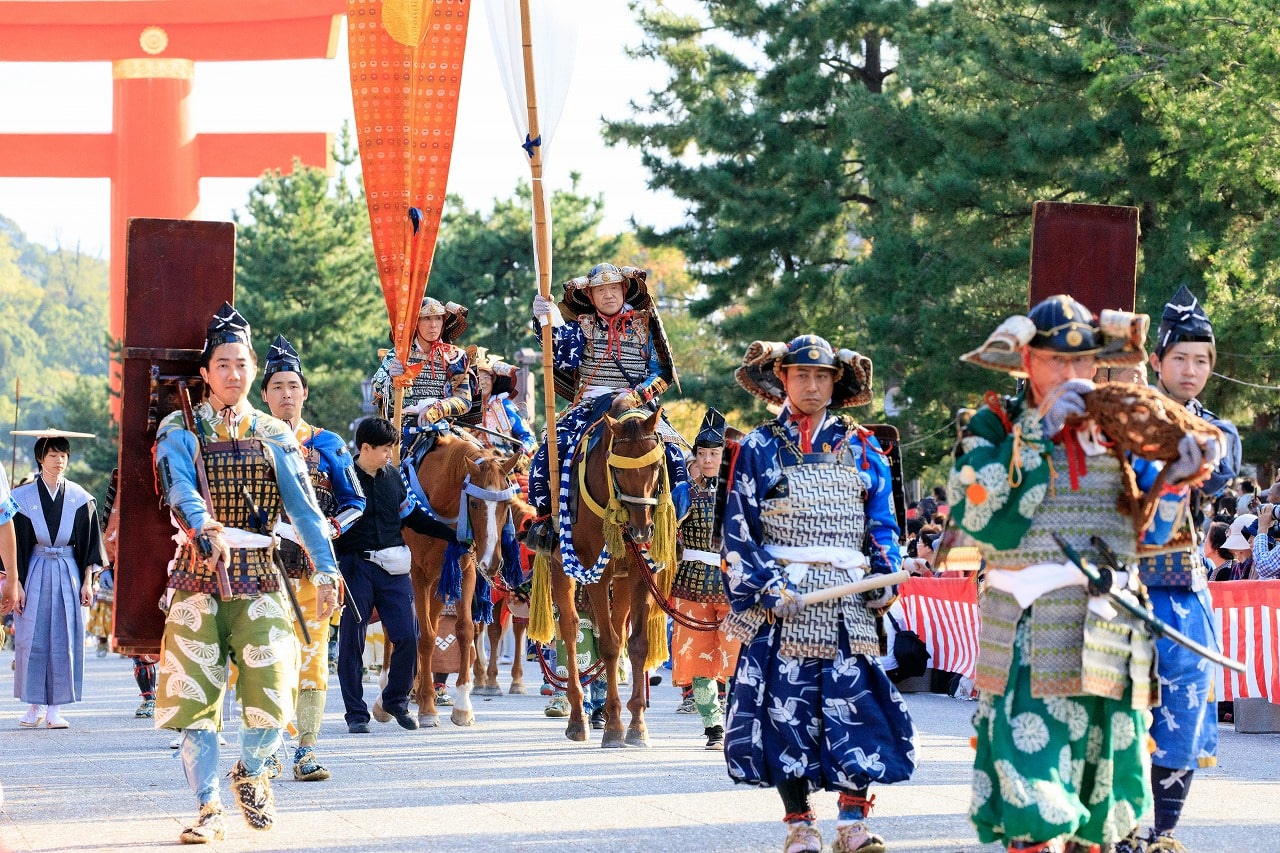
Kyoto’s Jidai Matsuri is held on a fixed date, October 22, in 2026. Together with the Gion Matsuri and the Aoi Matsuri it makes up the “Three Great Festivals of Kyoto,” and it is a large historical procession created to commemorate the founding of Heian-kyo.
Marchers in costumes from the Heian period through the Meiji era set out from the Kyoto Imperial Palace, pass along the city’s main roads and finally arrive at Heian Jingu, showing more than a thousand years of changing dress and culture.
Arrive 1 to 2 hours early to claim a spot along Oike-dori or around Heian Jingu so you can see this splendid costume parade, several kilometers long, clearly.
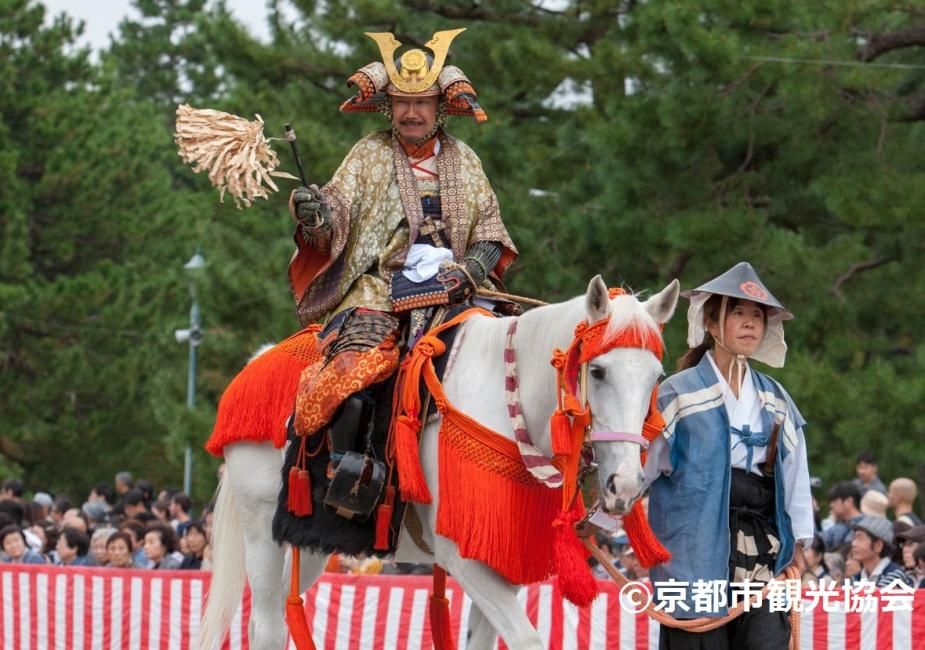
Jidai Matsuri 2026 Guide: Date, Parade Route, Timings and Paid Viewing Seats
This year’s Jidai Matsuri is held on the fixed date of October 22 (Thursday). If it rains it will be postponed to October 23 (decided early that morning), and if it is still raining on the 23rd it will be canceled.
The procession has about 2,000 participants and stretches about 2 kilometers. Costumes run from the Enryaku era up to the Meiji Restoration era, across 8 periods and 20 groups, and the event is run by the Heiankosha, a Kyoto citizens’ organization.
The procession leaves from in front of Kenreimon Gate at the Kyoto Imperial Palace at 12:00 noon. The whole route is about 4.5 kilometers, and it takes about 2 hours to pass any single point.
The estimated times when the head of the procession passes each point, published by the Kyoto City Tourism Association on Kyoto Kankou Navi, are as follows, so you can choose where to watch:
- 12:00 Departs from in front of Kenreimon Gate, Kyoto Imperial Palace → 12:15 Sakaimachi Gomon Gate → 12:30 Karasuma Marutamachi
- 12:50 Karasuma Oike → 13:20 Kawaramachi Oike → 13:30 Kawaramachi Sanjo
- 13:40 Sanjo Ohashi Bridge → 14:10 Sanjo Jingu-michi → 14:30 Arrives at Heian Jingu
If you want to sit and watch properly, you can buy a paid viewing seat from the Kyoto City Tourism Association. In 2026 seats are set up at three locations: Kyoto Gyoen, Oike-dori and Jingu-michi. All seats are reserved and come with an official guidebook. They went on sale on September 8 at 10 a.m. through Ticket Pia (チケットぴあ, membership registration required) online or at 7-Eleven stores. Please check official announcements to see whether any seats remain. Up to 9 tickets can be bought at a time:
- 🎫 General seats: ¥7,500 for the front row, ¥5,000 from the second row back (same prices at all three locations)
- 🎧 Kyoto Gyoen “Manabi seats” (with commentary by a dedicated lecturer, in Japanese): ¥10,500 for the front row, ¥8,500 from the second row back
- ⛩️ Jingu-michi “Outenmon Front Special Seats” (with commentary in Japanese and English): ¥15,500 for the front row, ¥13,500 from the second row back
- ⚠️ Refunds: if the event is postponed, tickets are valid for the 23rd; unless the procession is not held on either the 22nd or the 23rd, no refunds are given
If you want to finish watching early and move on to other sights, choose Kyoto Gyoen, which the procession passes around noon. If you want to see the grand finale of the procession arriving at Heian Jingu, choose Jingu-michi. Note that on October 22 the Shinen garden accepts entry only from 9:30 to 11:30 and closes its gates at 12:00, so visit that morning or come back another day if you want to see the garden.
Tanabata Wind Chime Festival
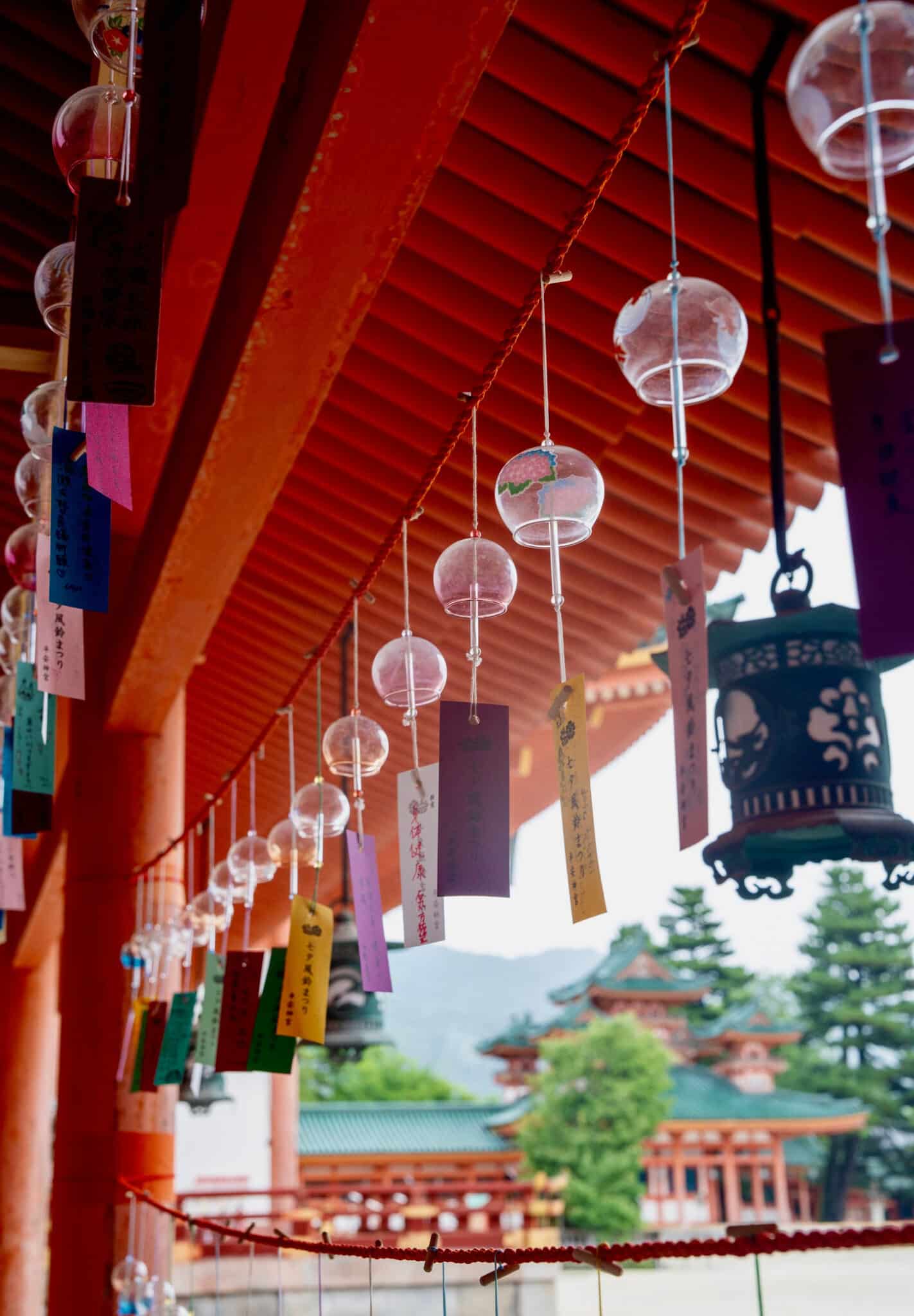
Every summer (June 20 to August 31 in 2026), Heian Jingu holds its Tanabata Wind Chime Festival, with colorful wind chimes hung everywhere that ring softly in the breeze.
During the event, the cool sound of the chimes adds to the atmosphere of a daytime visit, making it a good way to feel the summer festival mood.
The chimes hang mainly inside the Shinen (including at Taiheikaku), and entering the garden requires the ¥600 Shinen admission fee. It is a summer-only sightseeing experience.
Omamori Charms and Goshuin Stamps
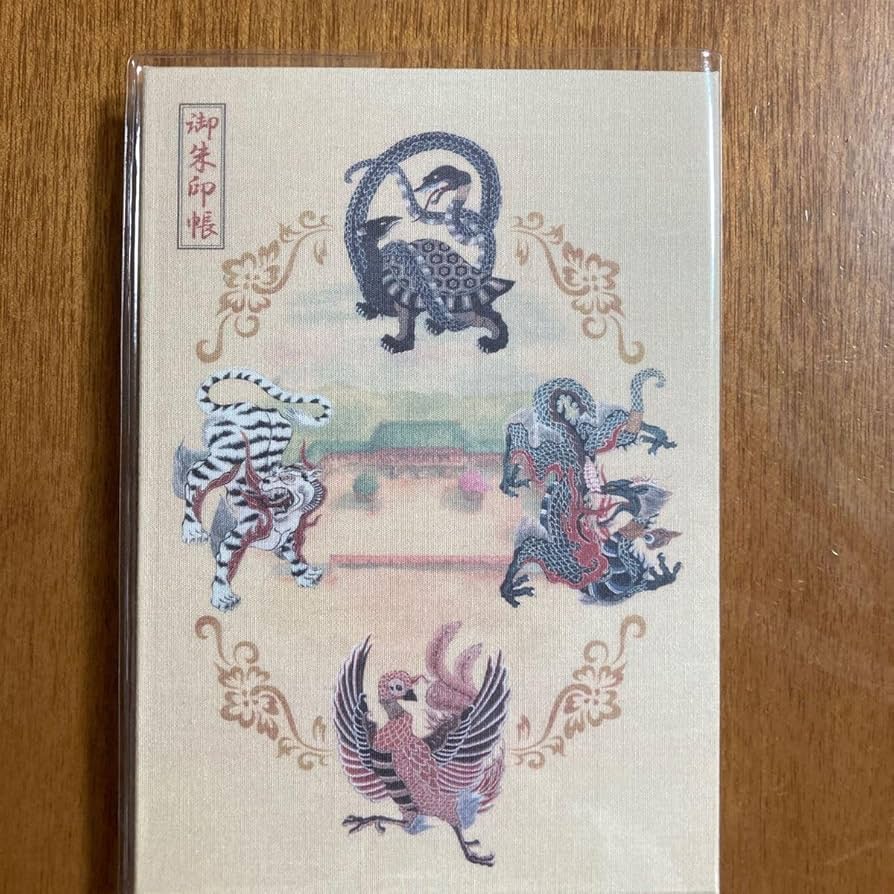
The Heian Jingu amulet office offers many kinds of omamori charms, including good-luck, matchmaking and health charms.
Goshuin shrine stamps are also available on the grounds. You can buy one at the shrine office or bring your own goshuin book to have it written on the spot.
Omamori cost roughly ¥500 to ¥1,000 and a goshuin about ¥500, making them lovely souvenirs and tokens of good wishes to take home.
Recommended Heian Jingu Tickets and Guided Experiences
At Heian Jingu you need a ticket to enter the Shinen garden, while the main shrine buildings are free to visit, so many travelers focus on touring the garden and on in-depth guided walks nearby. Below are some of the most popular tickets and guided experiences, to help you choose the way of visiting that suits your time and budget. Whether you are traveling independently and want to save time and effort, or want to learn more about Kyoto’s culture and history, you should find something that fits.
Heian Jingu Shinen Garden Admission
The main hall and Outenmon Gate of Heian Jingu (97 Okazaki Nishitennocho, Sakyo Ward, Kyoto) are free to visit. Entering the Shinen garden (east, central, west and south gardens) requires a ticket, ¥600 for adults. Opening hours are 8:30 to between 17:00 and 18:00 depending on the season (see the ticket information below). The Shinen is a pond-and-stroll garden designed by Ogawa Jihei in the Meiji era, with different scenery in each season: weeping cherries in spring, and Japanese iris and water lilies in summer.
Set aside 40 minutes to an hour for the Shinen and enjoy the reflections of Taiheikaku (Bridge Hall) on the water, a popular photo spot. The garden is not large and can be visited right after the main hall, with a smooth flow and good value for money.
- ⛩️ Grounds: free. Worship hours are 6:00 to 18:00 from March 1 to September 30, 6:00 to 17:30 in October, and 6:00 to 17:00 from November 1 to the end of February
- 🎫 Shinen admission: adults ¥600, children ¥300; groups of 30 or more ¥550 per adult, groups of 50 or more ¥500; half price with a disability certificate (one accompanying person also half price)
- 🕘 Shinen hours: opens at 8:30; until 18:00 from March 1 to September 30 (last entry 17:30), until 17:30 in October (last entry 17:00), and until 17:00 from November 1 to the end of February (last entry 16:30)
- 🎉 Special days: on October 22, the day of the Jidai Matsuri, the Shinen accepts entry only from 9:30 to 11:30; the garden is open free of charge once on September 19 and once in early June each year
- 📷 Tripods: using a tripod in the Shinen requires paying a fee at the entrance, and tripods are prohibited during cherry blossom season (late March to mid-April) and on free-admission days
- 🔗 Heian Jingu Shinen Official Website
One-Day Kyoto Cultural Tour: Heian Jingu, Kinkaku-ji, Arashiyama and Fushimi Inari Package
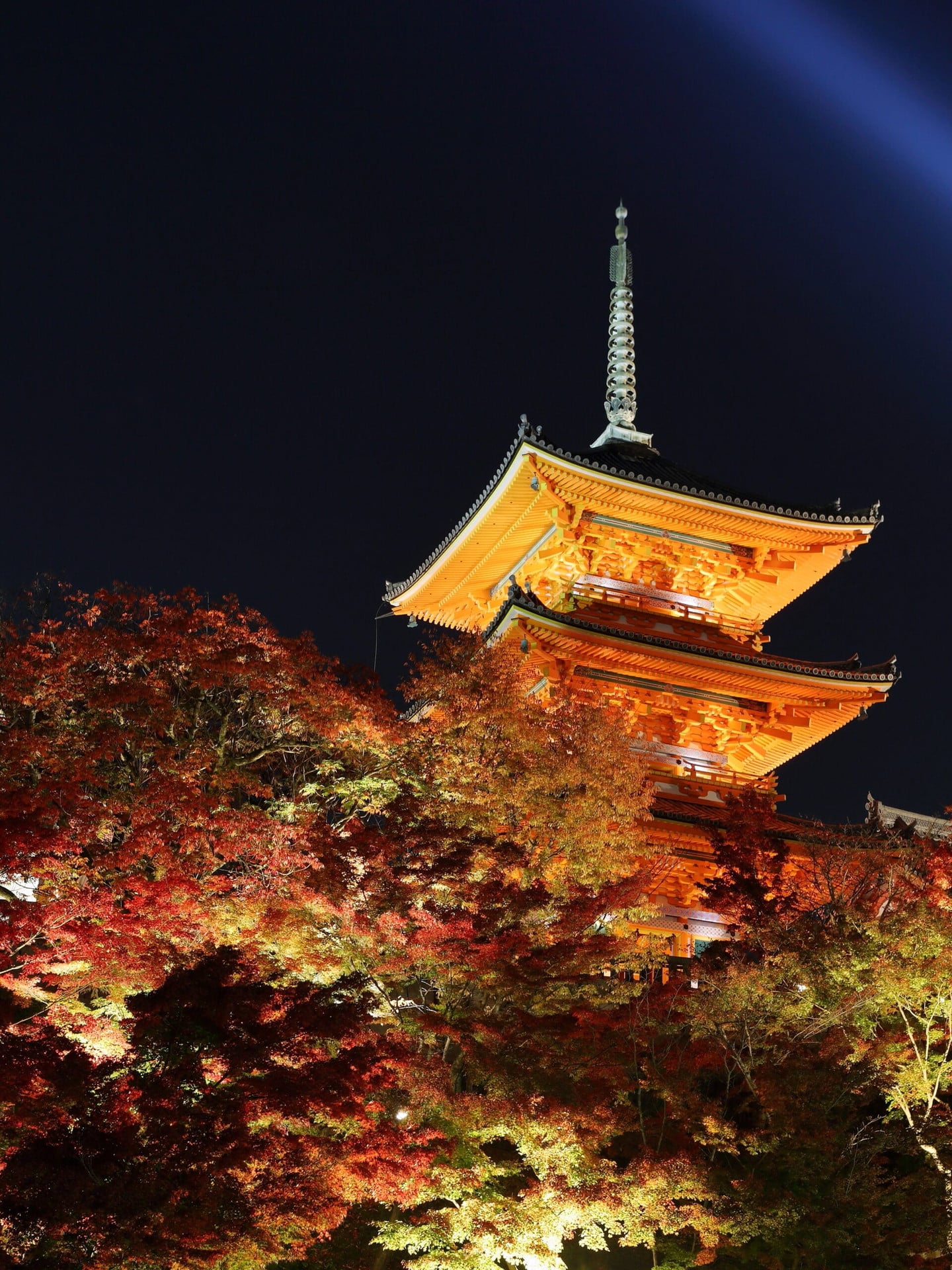
If your time is limited, you can choose a one-day Kyoto package tour that covers Nijo Castle or Heian Jingu, Kinkaku-ji, Arashiyama and Fushimi Inari Taisha in one go. Package tours are sold on platforms such as KKDay and Klook, and prices and contents vary depending on the transport and whether a guide is included, so please check the booking page.
Stops and their order vary by plan, but a common combination is Nijo Castle or Heian Jingu, Kinkaku-ji, Arashiyama and Fushimi Inari Taisha (the Senbon Torii). The whole tour takes about 6 to 8 hours, which suits first-time visitors with limited days and saves you the trouble of planning transport and queuing.
-Klook.jpg)

Kyoto Kimono Experience and a Walk Around Heian Jingu
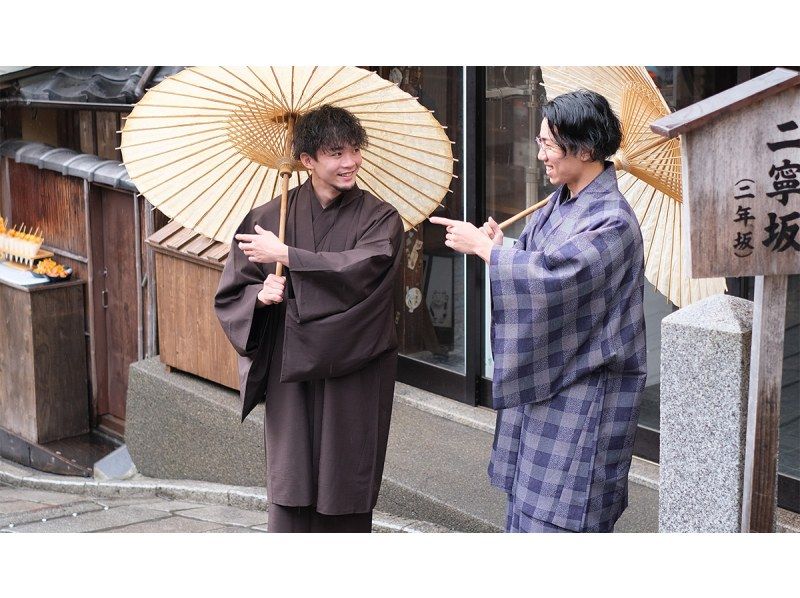
The Okazaki Park area next to Heian Jingu has an elegant atmosphere, and the vermilion Outenmon Gate and great torii are popular spots for kimono photos. Travelers often rent outfits at kimono shops near Kyoto Station or in Gion (about ¥3,000 to ¥6,000 depending on style and hairstyle) and then travel here. Set aside half a day; besides Heian Jingu you can also visit the nearby Kyoto City Museum of Art and the Kyoto Prefectural Library, a cluster of Western-style red-brick buildings that contrast with the shrine and are a hot spot for Japanese-style photography.
Heian Jingu’s grounds are spacious and its approach is straight, so photos of you strolling in a kimono look impressive, and the water features and flowering trees in the Shinen look good even in casual snapshots. Go on a clear morning, when the light is softest.
-Klook.jpg)
Jidai Matsuri Special: Festival Viewing Seats and In-Depth Guided Experiences
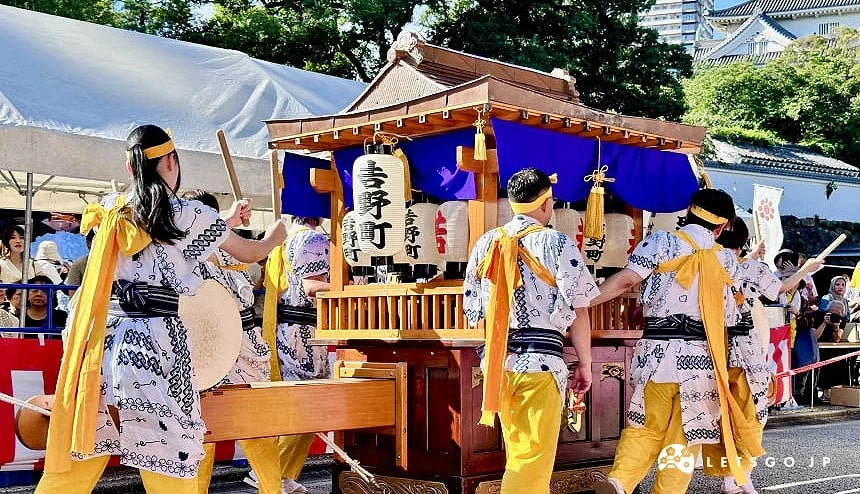
The Jidai Matsuri, held every year on October 22, is one of Kyoto’s three great festivals and the highlight of Heian Jingu’s year. The procession leaves the Kyoto Imperial Palace and follows the city’s main roads to Heian Jingu, recreating each era from the Heian period to the Meiji Restoration. In 2026 the official paid viewing seats are at Kyoto Gyoen, Oike-dori and Jingu-michi, with general seats at ¥5,000 to ¥7,500, available through Ticket Pia or 7-Eleven.
In-depth guided tours include commentary on the Jidai Matsuri, in which the guide explains the stories behind the costumes of the thousand-plus participants from each era, such as the Heian-period junihitoe and Edo-period townspeople’s dress, adding historical and cultural depth.
On the day of the Jidai Matsuri there are many traffic controls and heavy crowds around Heian Jingu. Consider booking viewing seats or a chartered car through a travel agency to save time queuing and finding a spot, so you can focus on enjoying this annual celebration of Kyoto.
Where to Stay Nearby
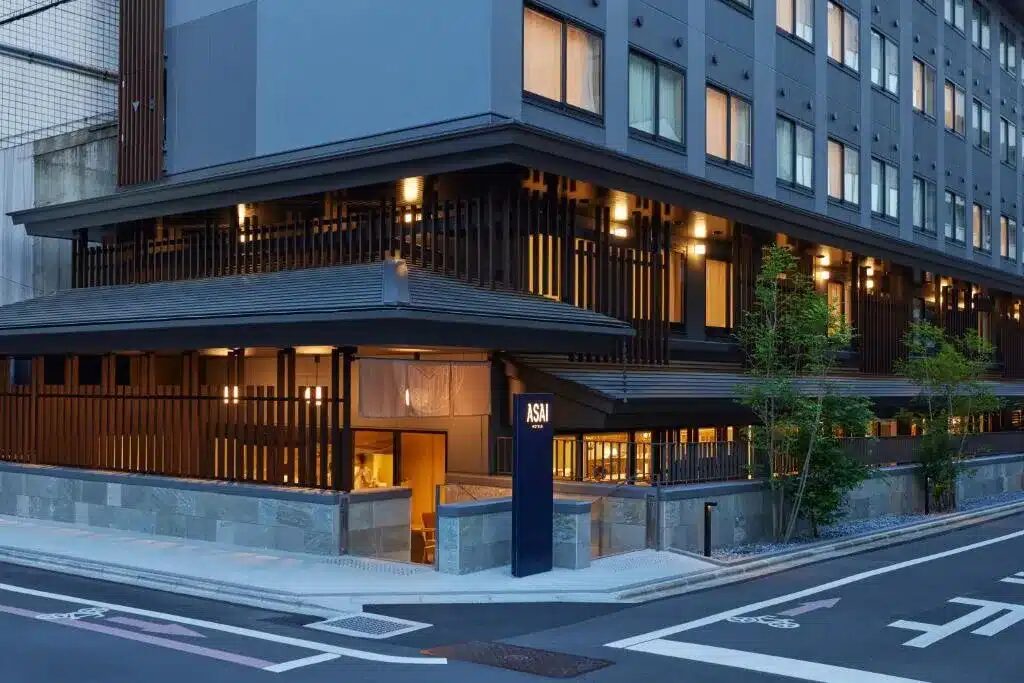
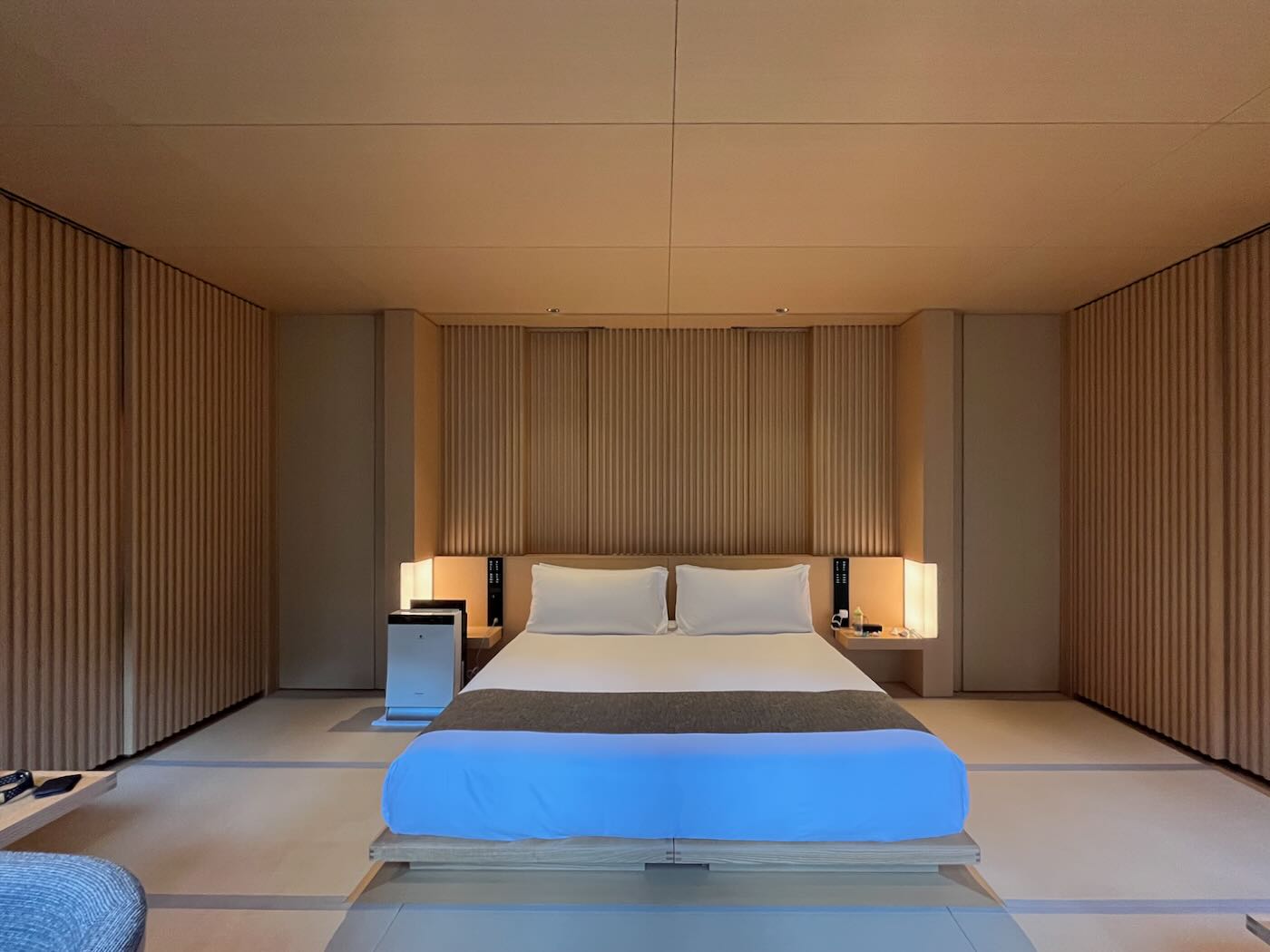
Heian Jingu is in Okazaki, and getting to and from the city center is mainly by city bus and the Tozai Line subway. Most travelers stay around Kawaramachi, Gion or Kyoto Station and travel from there. On the day of the Jidai Matsuri (October 22) there are traffic controls and crowds around the shrine, so book your accommodation as early as possible once your plans are set.

FAQ
Q: How much does it cost to enter Heian Jingu?
The main hall, Outenmon Gate and Taikyokuden Hall are free to visit all year. Only the Shinen garden is paid: ¥600 for adults and ¥300 for children.
Q: What are Heian Jingu’s opening hours?
The grounds open at 6:00 and close at 18:00 from March to September, 17:30 in October and 17:00 from November to February. The Shinen opens at 8:30 and likewise closes between 17:00 and 18:00 depending on the season, with last entry 30 minutes before closing.
Q: What is the easiest way to get to Heian Jingu?
The most convenient way is to take city bus route 5 to the “Okazaki Koen Bijutsukan-Heianjingu-mae” stop and walk about 3 minutes to the great torii.
Q: How long should I stay?
Allow 60 to 90 minutes for a full visit including a stroll through the Shinen, with most of that time spent in the garden.
Q: When is the Jidai Matsuri?
The Jidai Matsuri is held on a fixed date, October 22, every year. In 2026 that is Thursday, October 22. If it rains it is postponed to the 23rd. The procession leaves the Kyoto Imperial Palace at 12:00 and arrives at Heian Jingu at about 14:30.
Q: When is the best time for cherry blossoms and autumn leaves at Heian Jingu?
Cherry blossoms peak from late March to mid-April, and autumn leaves from mid-November to early December. Expect crowds in both seasons.
Q: Is there anything to keep in mind when visiting Heian Jingu?
In the Shinen, please do not walk on the lawns or touch cultural objects. Arrive before 9 a.m. to avoid tour groups, and watch for seasonal closure announcements.