
2026 Osaka Summer Festivals Overview: Tenjin Matsuri vs. Sumiyoshi Matsuri Compared – Naniwa’s Great Summer Festivals at a Glance
Tenjin Matsuri and Sumiyoshi Matsuri are both counted among Naniwa’s three great summer festivals, held July 24-25 and July 30-August 1 respectively. One is a celebration of the City of Water and the other a purification rite, and neither should be missed.
Tenjin Matsuri: A Water City Spectacle and One of Japan’s Three Great Festivals
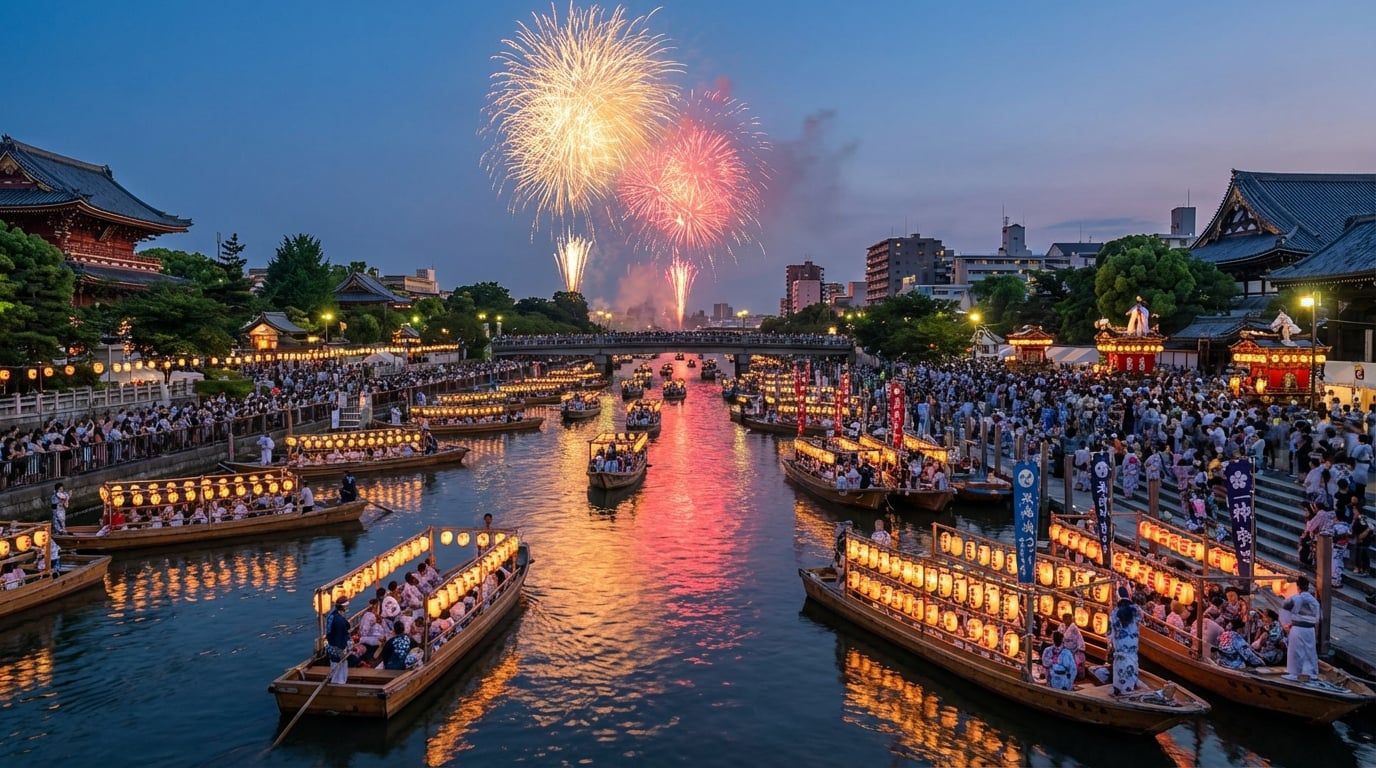
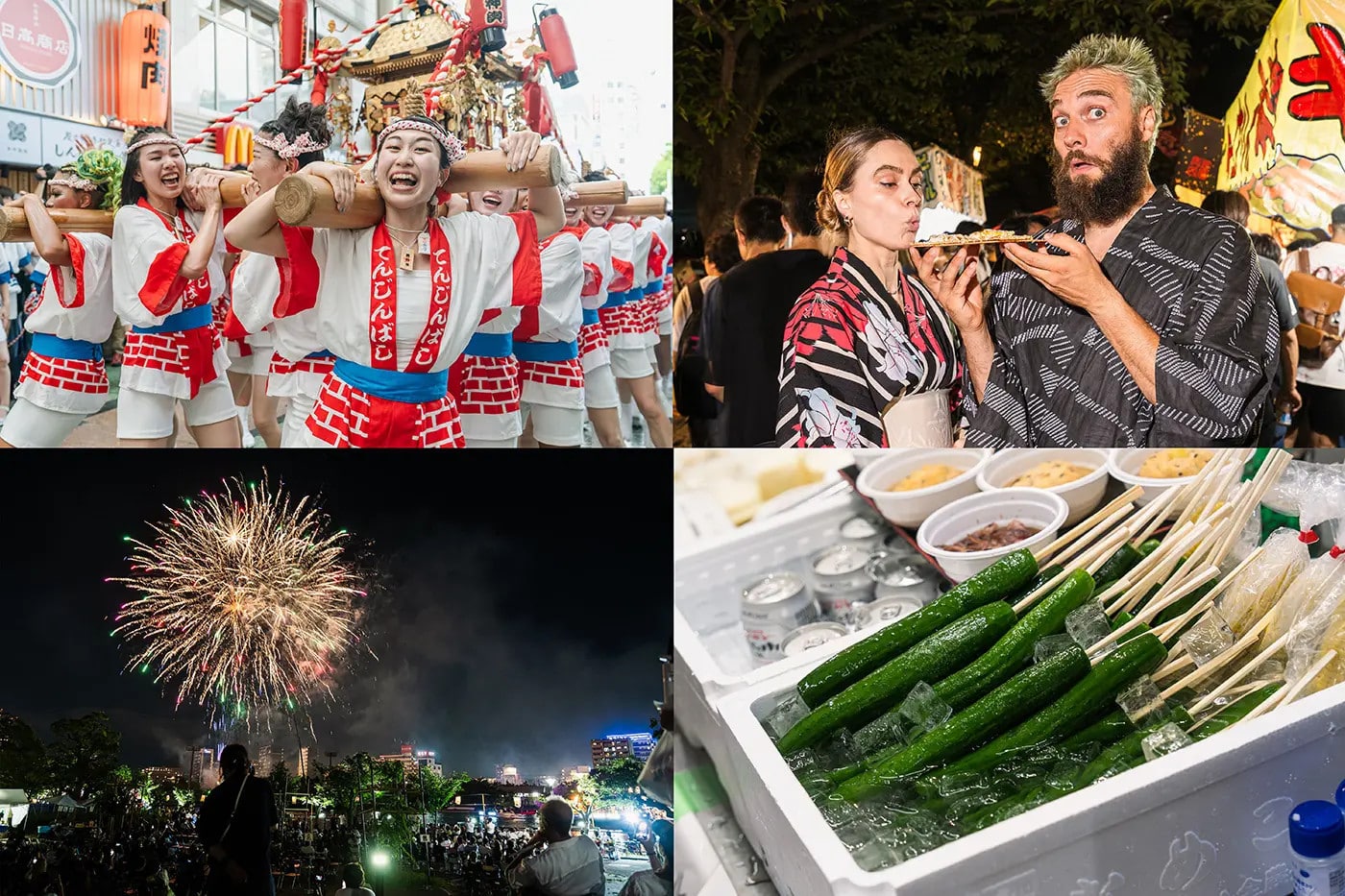
Tenjin Matsuri honors Sugawara no Michizane, the god of learning, and is a thousand-year-old Osaka event centered on Osaka Tenmangu Shrine and the Okawa River. Its hallmark is the blend of water and fire: the Rikutogyo land procession by day, the Funatogyo boat procession at dusk, and the Hono Hanabi fireworks at night.
In 2026, Tenjin Matsuri takes place on July 24 (Yoimiya-sai, the eve festival) and July 25 (Honmiya-sai, the main festival), drawing about 1.3 million visitors each year. It is a highlight of Osaka’s summer tourism season and a prime moment for photographers to capture fireworks and boat lights.
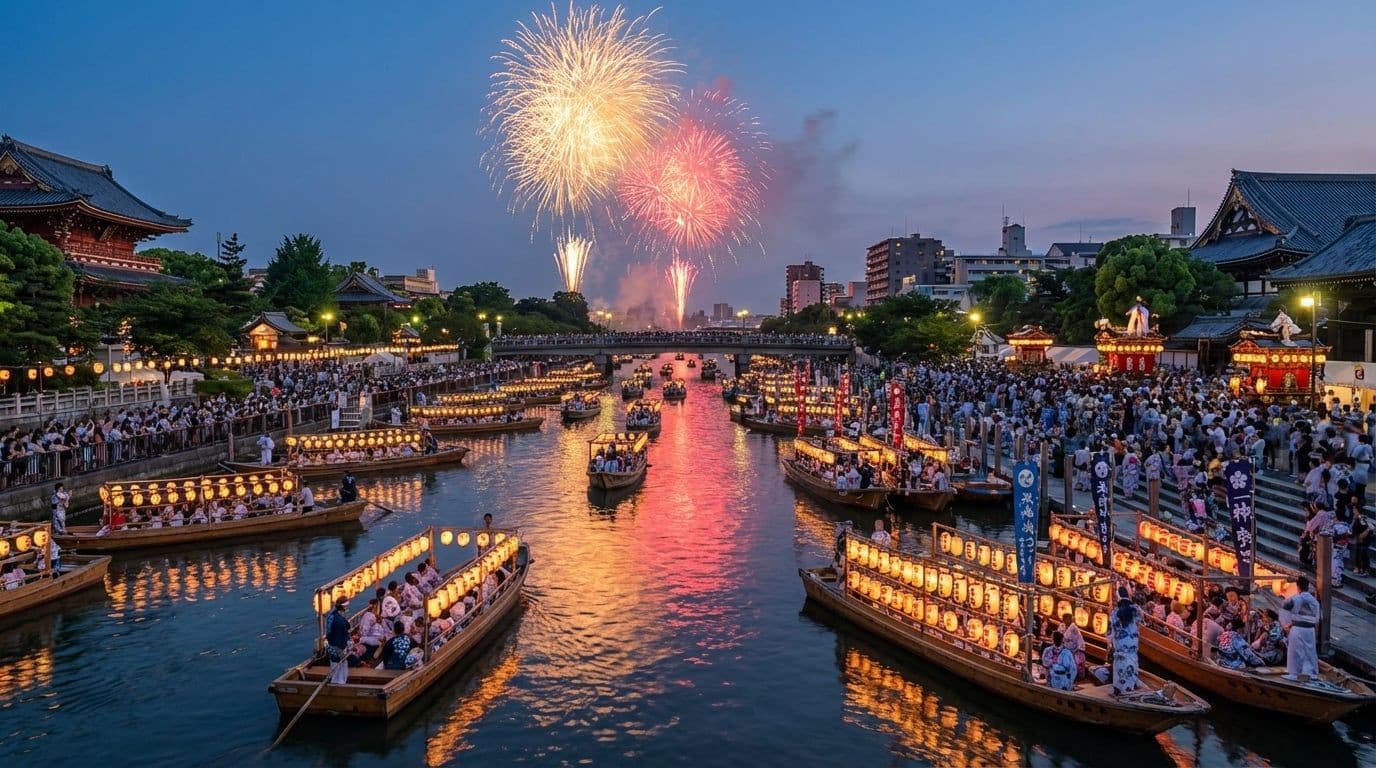
- 🗓 Reiwa 8 (2026) Ritual Schedule: July 24 (Fri) Yoimiya-sai, Hokonagashi Shinji, Anguu Yoimiya-sai; July 25 (Sat) Honmiya-sai, Shinrei Igyo no Gi, Rikutogyo, Funatogyo, Hono Hanabi, Miyairi Kangyo-retsu, Kangyo-sai
- ⚠️ Note: The rituals inside the main hall are for shrine priests and related personnel only. The general public can watch the Rikutogyo procession along its route within the viewing areas.
- 🔗 Osaka Tenmangu official website (Tenjin Matsuri, Reiwa 8)
Sumiyoshi Matsuri: The Finale of Osaka’s Summer Festivals
Sumiyoshi Matsuri, also called the “Oharae Matsuri,” is held every year from July 30 to August 1, with Sumiyoshi Taisha and Shukuin Tonggu as its main venues. As the finale of Osaka’s summer festival season, it symbolizes driving away illness and misfortune through ritual and giving the whole Osaka area a great purification. Its solemn Shinto atmosphere stands in sharp contrast to the flamboyant bustle of Tenjin Matsuri.
Sumiyoshi Matsuri is full of the energy and faith of the people of Osaka, and for locals it is the signal that summer has truly ended. The rites include the Chinowa (reed ring) blessing of the Nagoshi no Harae ritual and the mikoshi procession to Shukuin Tonggu. It is worth setting aside a day for a deep dive into traditional Shinto culture.
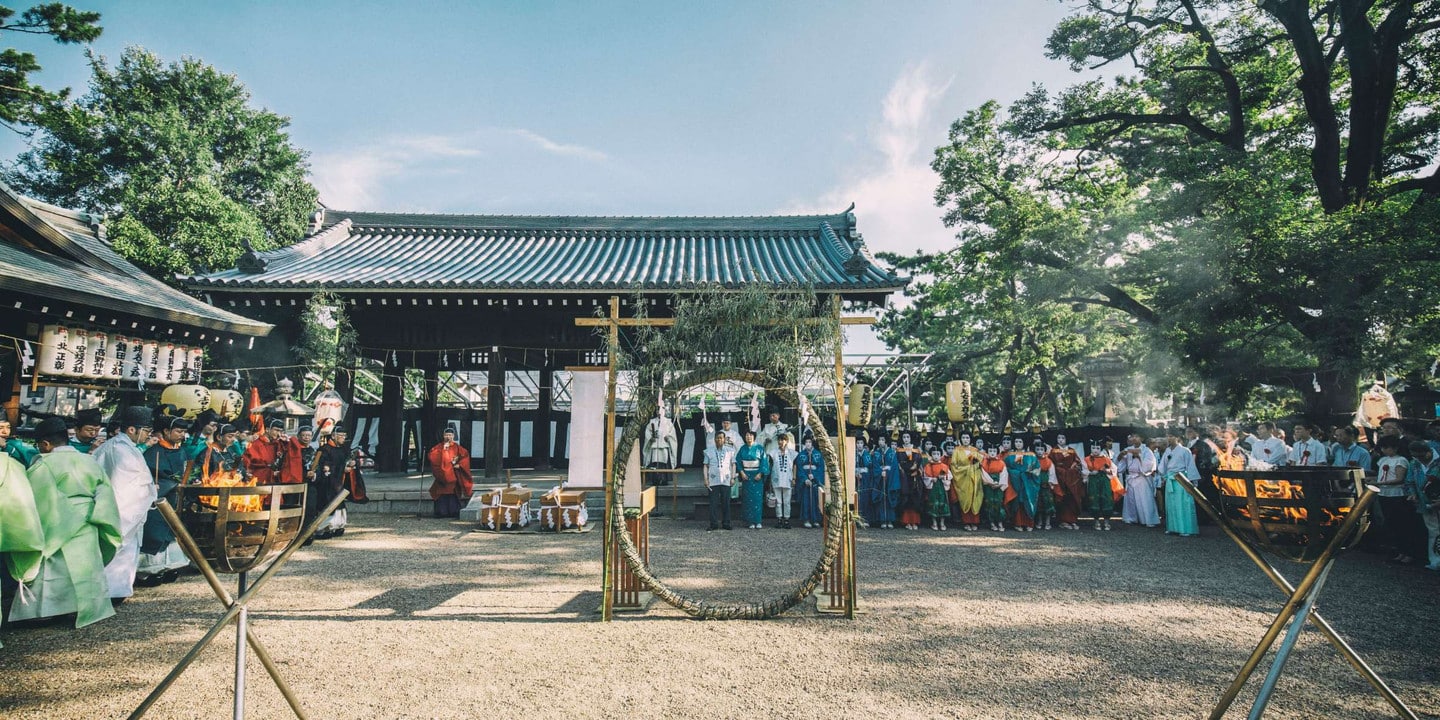
- 🗓 Ritual Schedule: Mikoshi Arai Shinji (from 19:20 on July 20) -> Mikoshi Togyo (from 15:40 on July 26) -> July 30 Yoimiya-sai -> July 31 Reitaisai and Nagoshi no Harae -> August 1 Tonguu-sai and Iihibori Harae
- ⚠️ Note: The date of Mikoshi Arai Shinji moves with Marine Day, so please go by the official website’s announcement each year.
- 🔗 Sumiyoshi Taisha official website (special festivals)
Sumiyoshi Taisha Festival Schedule: From the Mikoshi Procession to Nagoshi no Harae
The main events of the 2026 Sumiyoshi Taisha festival are: Mikoshi Arai Shinji on July 20 (from 19:20, Sumiyoshi Park); Mikoshi Togyo on July 26 (from 15:40, from Sumiyoshi Taisha along the Kishu Kaido road to Shukuin Tonggu); Yoimiya-sai on July 30 (16:00); Nagoshi no Harae and Reitaisai on July 31 (from 17:00); and Tonguu-sai and Iihibori Harae at Shukuin Tonggu on August 1 (from 18:30).
Tenjin Matsuri vs. Sumiyoshi Matsuri: Key Differences
| Item | Tenjin Matsuri | Sumiyoshi Matsuri |
|---|---|---|
| Dates | 7/24-25 | 7/30-8/1 |
| Main venue | Osaka Tenmangu Shrine, Okawa River | Sumiyoshi Taisha, Yamato River |
| Main events | Rikutogyo, Funatogyo, Hono Hanabi | Nagoshi no Harae, great mikoshi procession |
| Character | Flamboyant water city celebration | Solemn purification ritual |
| Estimated crowds | About 1.3 million | Several hundred thousand |
2026 Kansai Summer Festival Calendar
Besides Tenjin Matsuri and Sumiyoshi Matsuri, Kansai has several other major summer festivals you can string into one trip: Kyoto’s Gion Matsuri runs all month (July 1-31), the Hozenji Yokocho Festival is in mid-August, the GANGARA Fire Festival in Ikeda City is held every August 24 (in 2026, a Monday evening from 19:30), and the Naniwa Yodogawa Fireworks Festival has been pushed back to autumn (the 38th edition is set for Saturday, October 17, 2026, 19:00 to 20:00). We suggest linking them by date for a tour of Kansai’s summer festivals.
A special note for readers searching for “Tenjin Tenma Awa Odori 2026”: the executive committee of the Tenjin Tenma Awa Odori, held around the Tenjinbashisuji shopping street, announced on its official website in June 2026 that this year’s event is suspended due to various circumstances, so it will not take place in 2026. The previous edition (the 13th) was held on August 31, 2025. If you want to see Awa Odori in Osaka, please watch the official website for news of a 2027 return.
Tenjin Matsuri Timetable: Yoimiya-sai and Honmiya-sai Schedule
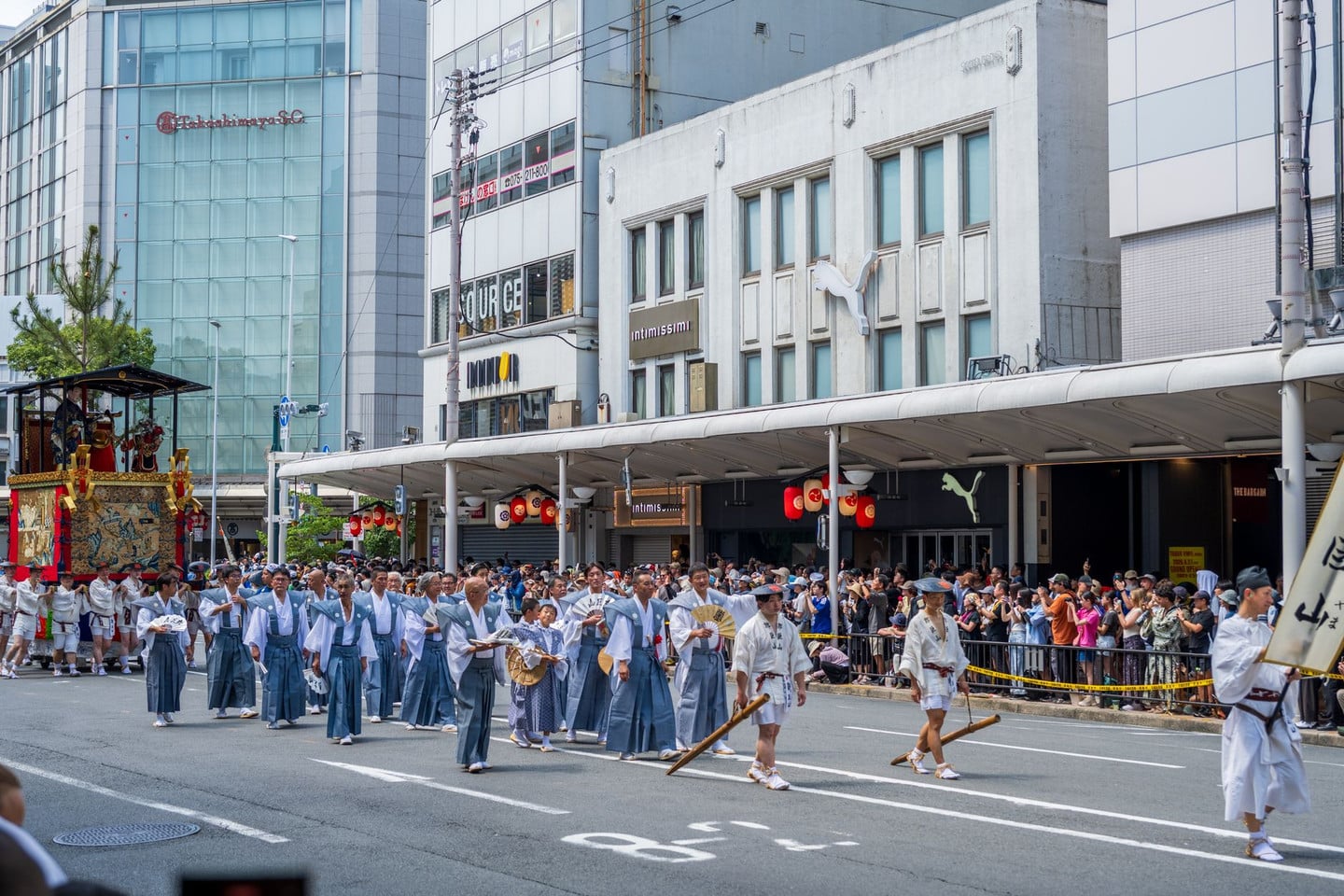
The Tenjin Matsuri timetable below follows official announcements. July 24 (Fri) is Yoimiya-sai, which includes the Hokonagashi Shinji (at the former Wakamatsu-hama, in front of Tenma Police Station) and Anguu Yoimiya-sai. July 25 (Sat) is Honmiya-sai, with Shinrei Igyo no Gi, Rikutogyo, Funatogyo, Hono Hanabi (from about 19:30) and Miyairi Kangyo-retsu in order, ending with Kangyo-sai in the main hall. The rituals inside the main hall are for shrine priests and related personnel only.
How to Get to the 2026 Osaka Summer Festivals? A Complete Guide to Transport and Costs for Tenjin and Sumiyoshi Matsuri
The Tenjin Matsuri and Sumiyoshi Matsuri venues are about 10 km apart and use different transport, so plan each day separately.
Transport to Tenjin Matsuri and Sumiyoshi Matsuri at a glance
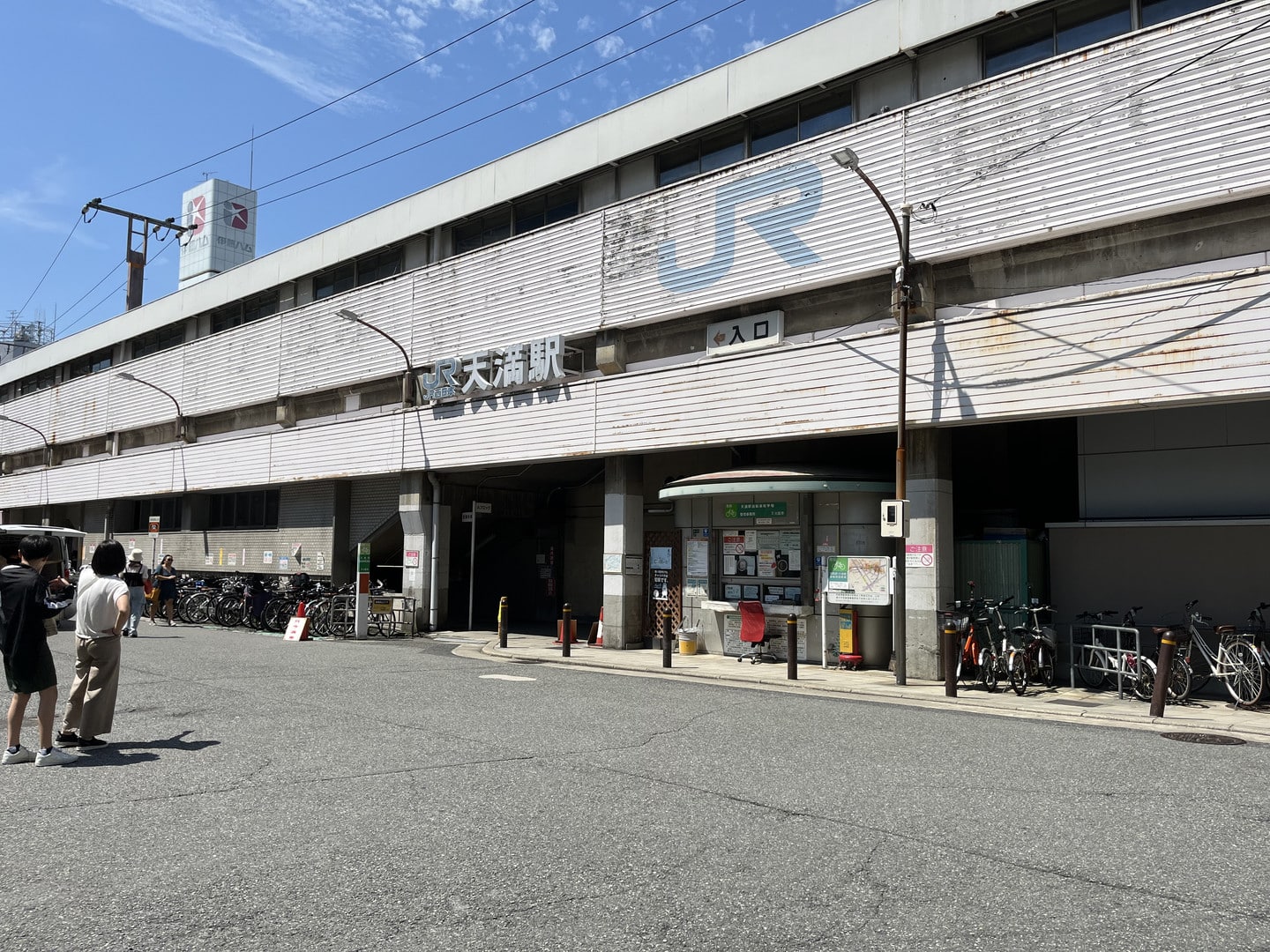
🚃 JR Tenma Station: The closest station to Tenjin Matsuri, 5 minutes on foot to Tenmangu Shrine, fares from about ¥180. After 18:00 is peak crowd time, so avoid it if you can.
🚇 Osaka Metro Minamimorimachi Station: Reachable by the Tanimachi and Sakaisuji lines, 3 minutes on foot to the shrine’s main gate, fares about ¥180-240, and you can tap in with ICOCA.
🚢 Keihan Temmabashi Station / Kitahama Station: A short walk along the Okawa riverbank brings you to the Funatogyo viewing area, fares about ¥170-260. We suggest arriving before 17:00 to claim a spot.
⛩️ Nankai Main Line Sumiyoshitaisha Station: The main entrance for Sumiyoshi Matsuri, about 10 minutes from Namba at ¥230, with frequent trains that suit most travelers.
🚋 Hankai Tramway Sumiyoshi Torii-mae Station: A nostalgic streetcar that goes straight to Sumiyoshi Taisha, fare about ¥230, good for old Osaka atmosphere and photos.


What Are the Must-See Highlights of the 2026 Osaka Summer Festivals? A Deep Look at Tenjin and Sumiyoshi Matsuri
Each of the two festivals has its own signature rites. Here are the highlights and the best times to watch them.
Rikutogyo: A Grand Procession of 3,000 People in Heian and Edo Costume
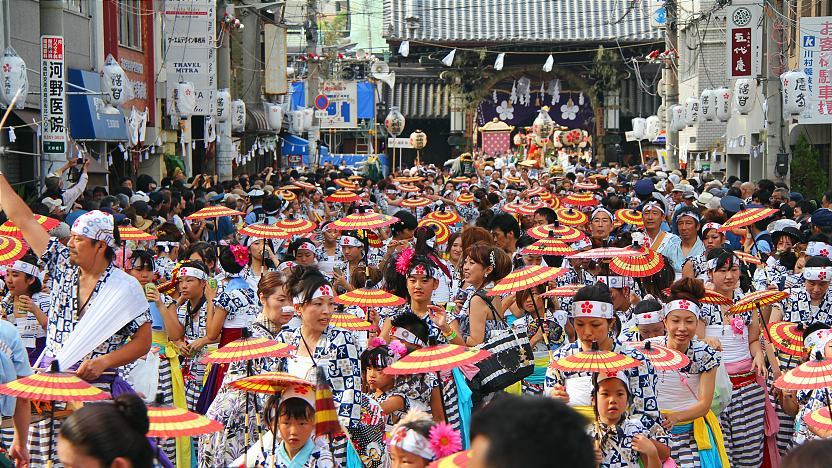
The Rikutogyo begins at 15:30 on July 25. About 3,000 people in traditional Heian- and Edo-period costume, accompanied by the Moyoshi Daiko drum and portable shrines, set out from Osaka Tenmangu Shrine on a grand parade through the city. The procession includes mounted warriors, lion dancers, child attendants and other traditional roles, recreating the splendor of an Edo-period festival parade.
We suggest claiming a spot early along the shopping streets around Tenmangu Shrine. The procession moves slowly and stops to perform along the way, which makes for great close-up photos of the traditional costumes. The whole procession takes about 2 hours and ends at the Okawa boarding point, leading into the Funatogyo.
Funatogyo: A Boat Procession of 100 Boats Crossing the Water
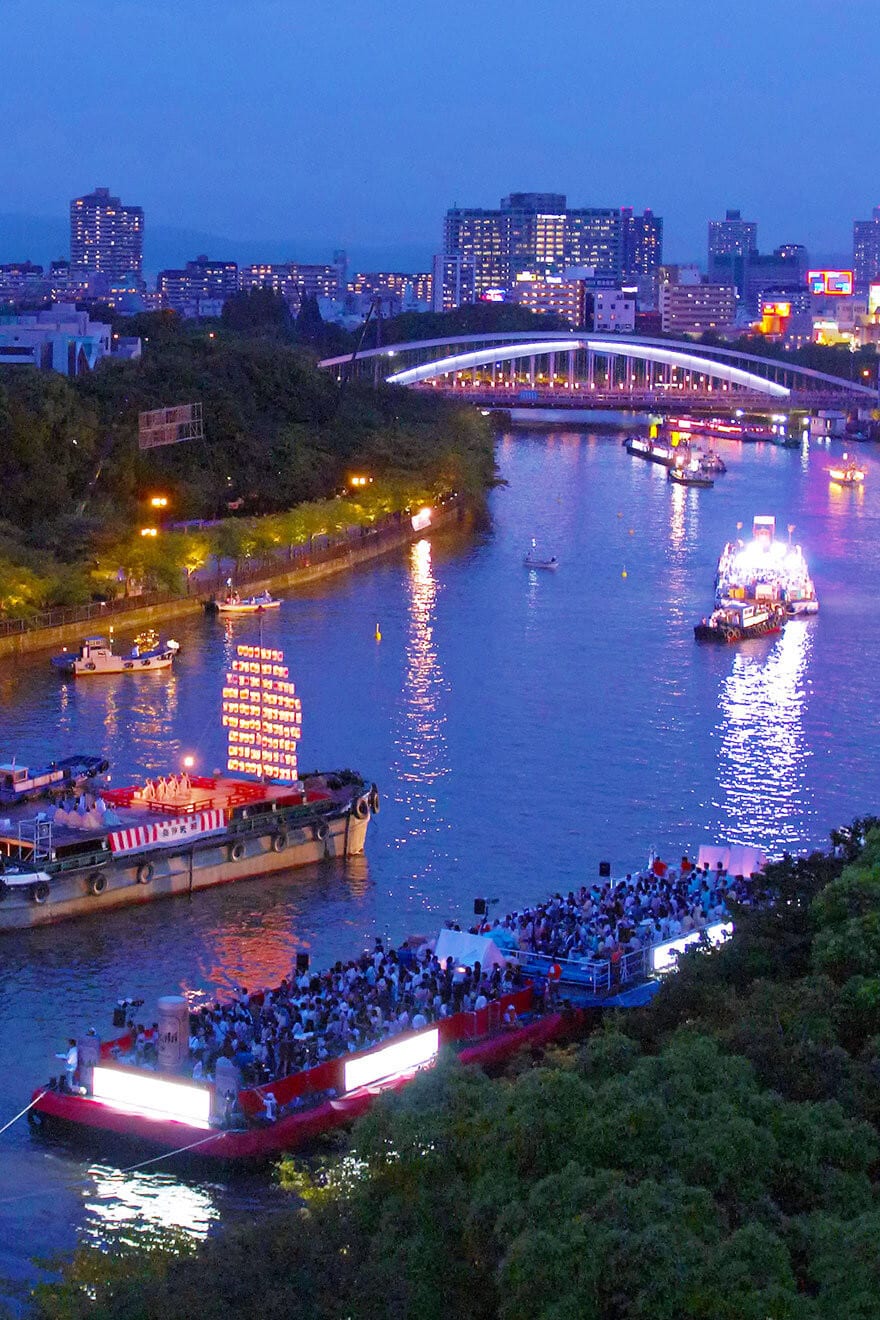
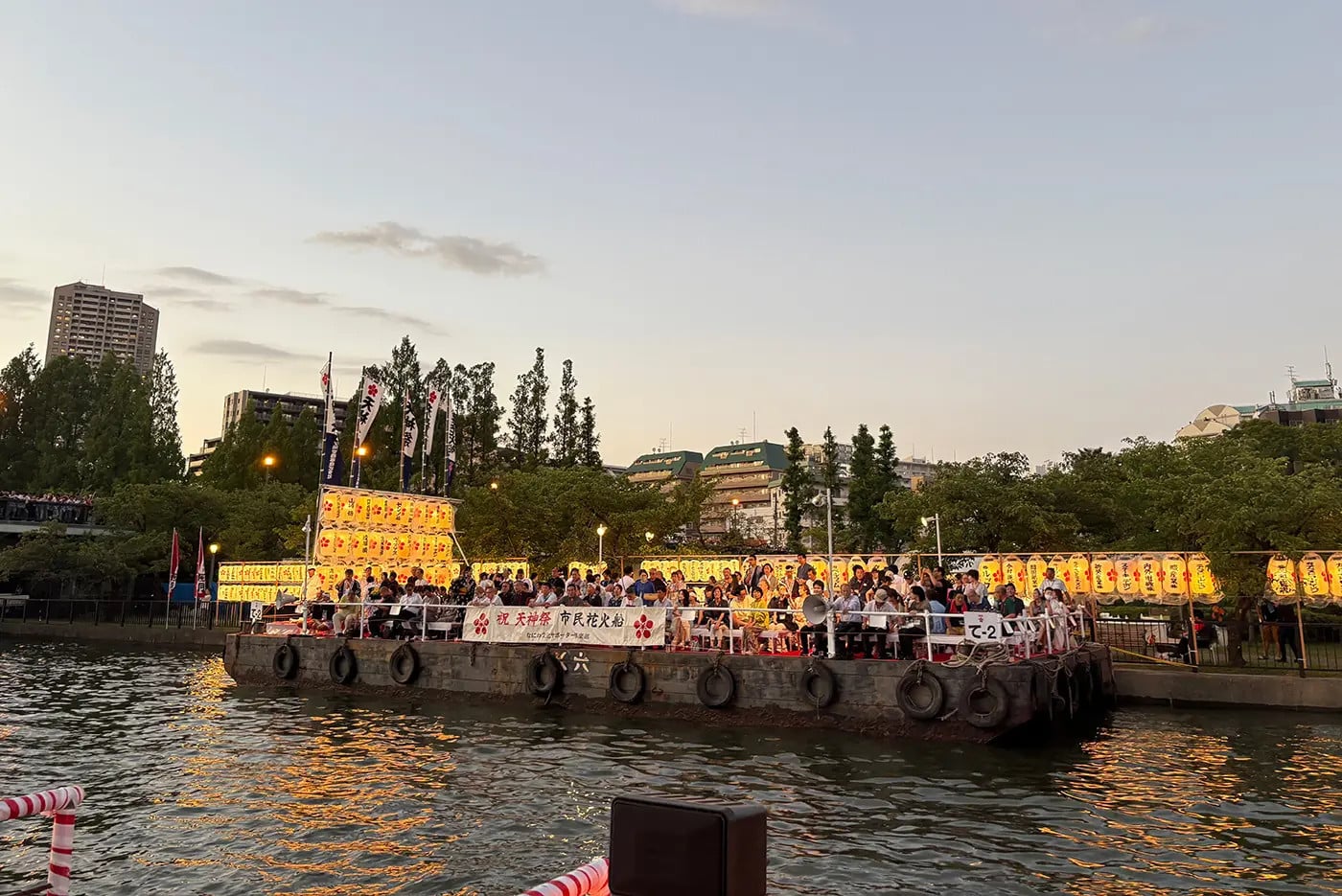
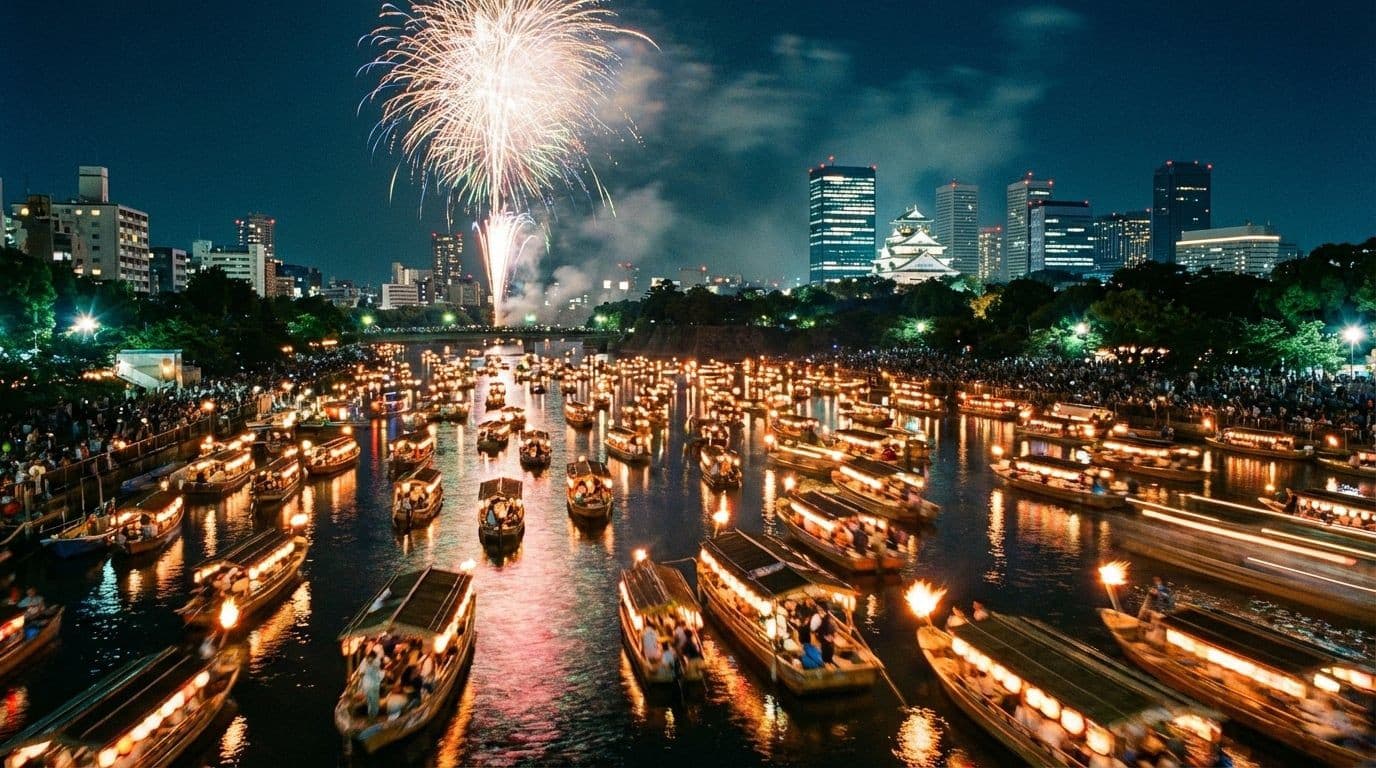
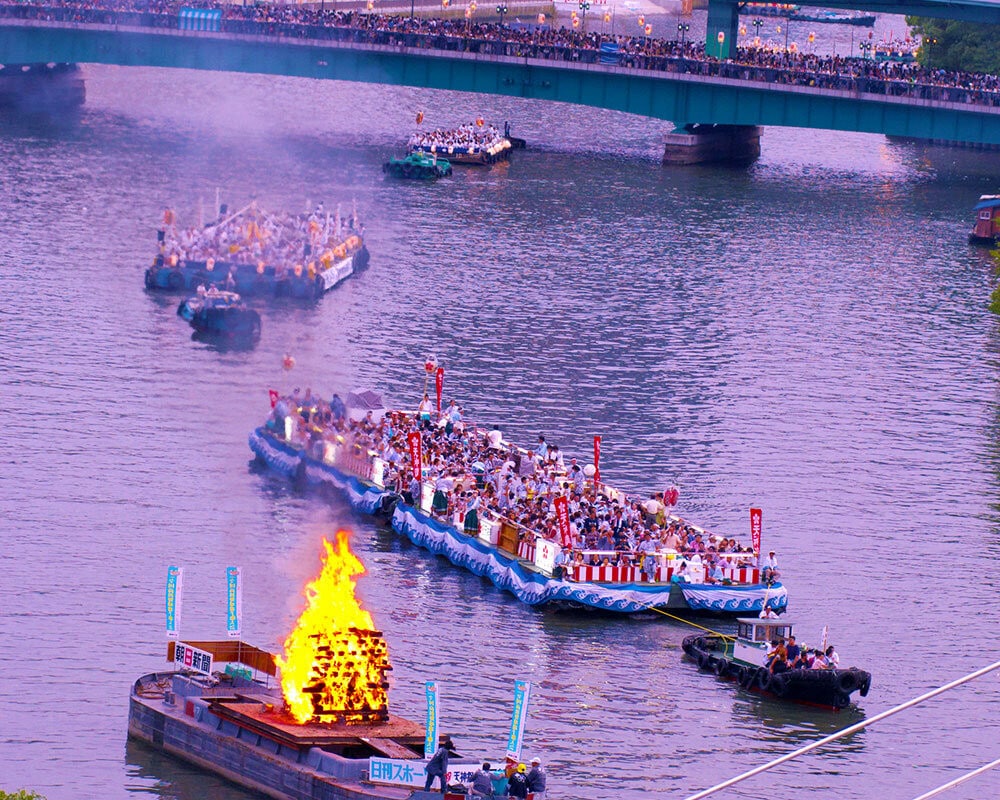
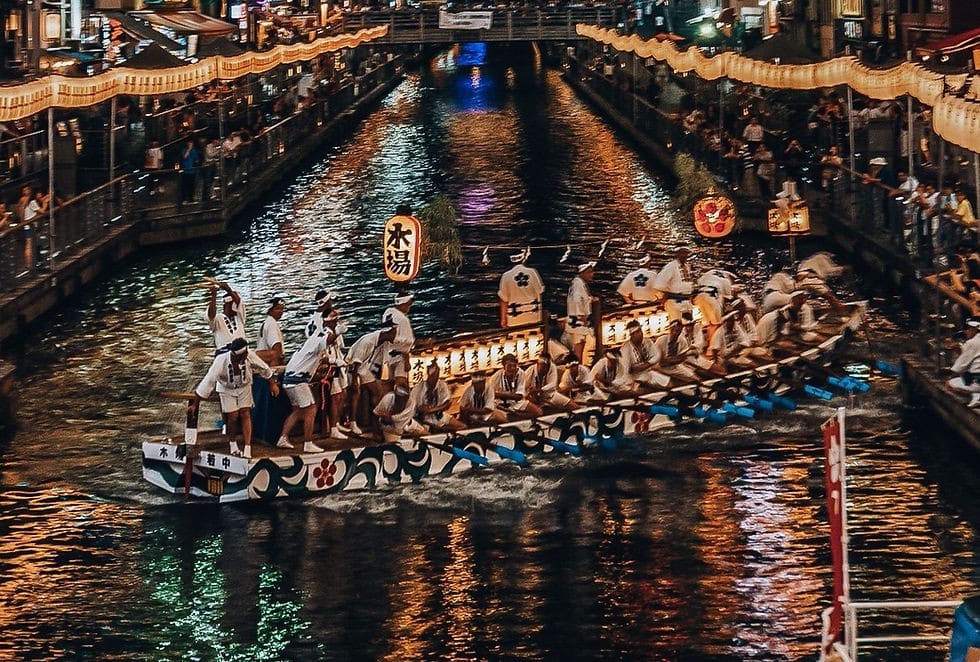
The Funatogyo starts at 18:00 on the Okawa. The procession moves to the Okawa (the old Yodogawa) and boards boats. Hundreds of lantern-lit boats and sacred boats cross back and forth on the river, carrying priests, gagaku musicians and traditional performing arts. The result is a distinctive Kansai festival energy and the core reason Tenjin Matsuri is known as a “water city” festival.
We recommend watching from around Tenmabashi and Kawasaki Bridge on both banks of the Okawa, where you can see the boat lights and their reflections on the river up close. Arrive before 17:00 to claim a spot. The Funatogyo lasts about 2 hours and leads into the evening Hono Hanabi fireworks.
Hono Hanabi: About 3,000 Fireworks Light Up the Okawa
The Hono Hanabi fireworks run from 19:30 to 20:50, with about 3,000 shells launched along the Okawa. Brilliant fireworks in the night sky mingle with the bonfires and boat lights on the river, creating the festival’s classic visual climax and the part that draws the biggest crowds every year.
Because the riverbank fills with people by early evening, we suggest arriving 2-3 hours early to claim a spot, or choosing a quieter downstream stretch of the riverbank with a wide view to avoid crushing crowds. Bringing binoculars lets you catch finer layers of the fireworks.
Hokonagashi Shinji: A Sacred Purification Rite on the Water
The Hokonagashi Shinji is a purification ritual held on the eve of Tenjin Matsuri (July 24). Priests set a wooden sacred spear symbolizing the deity adrift on the river, letting the current carry impurities away from the human world. It is one of the oldest and most sacred rites of Tenjin Matsuri and the moment that formally opens the whole festival.
The ritual takes place at the former Wakamatsu-hama (in front of Tenma Police Station) in a solemn, quiet atmosphere, in contrast to the lively Rikutogyo of the main day. It suits travelers who enjoy deep cultural experiences. Please go by Osaka Tenmangu’s announcements for the actual time.
Mizu-ue Takigi Noh: Noh on a Boat at OAP Port
Mizu-ue Takigi Noh is a Noh performance staged on a stage boat moored at OAP port during the Funatogyo. It combines Noh chanting with reflections on the water, showing the union of Japan’s traditional arts and the image of the water city, and is a lesser-known highlight of Tenjin Matsuri.
Please check Osaka Tenmangu’s official announcements for the actual performance time. It suits travelers who want to find a quiet, elegant corner amid the noisy festival atmosphere and savor traditional culture.
Nagoshi no Harae: Walking Through the Reed Ring Three Times to Cleanse Misfortune
The Nagoshi no Harae is held at 17:00 on July 31. The “Nagoshi-me” women in splendid Muromachi-period costume and shrine priests lead worshippers through the giant reed ring (Chinowa) set up on the grounds of Sumiyoshi Taisha three times, following a set walking direction, symbolizing the cleansing of the heart and the driving out of the impurities built up over the past six months.
The ritual is open to the general public, and staff on site guide you through the correct route and order. We suggest arriving 30 minutes early to line up. Walking through the Chinowa yourself and praying is a precious chance to experience Japan’s traditional Shinto culture of purification.
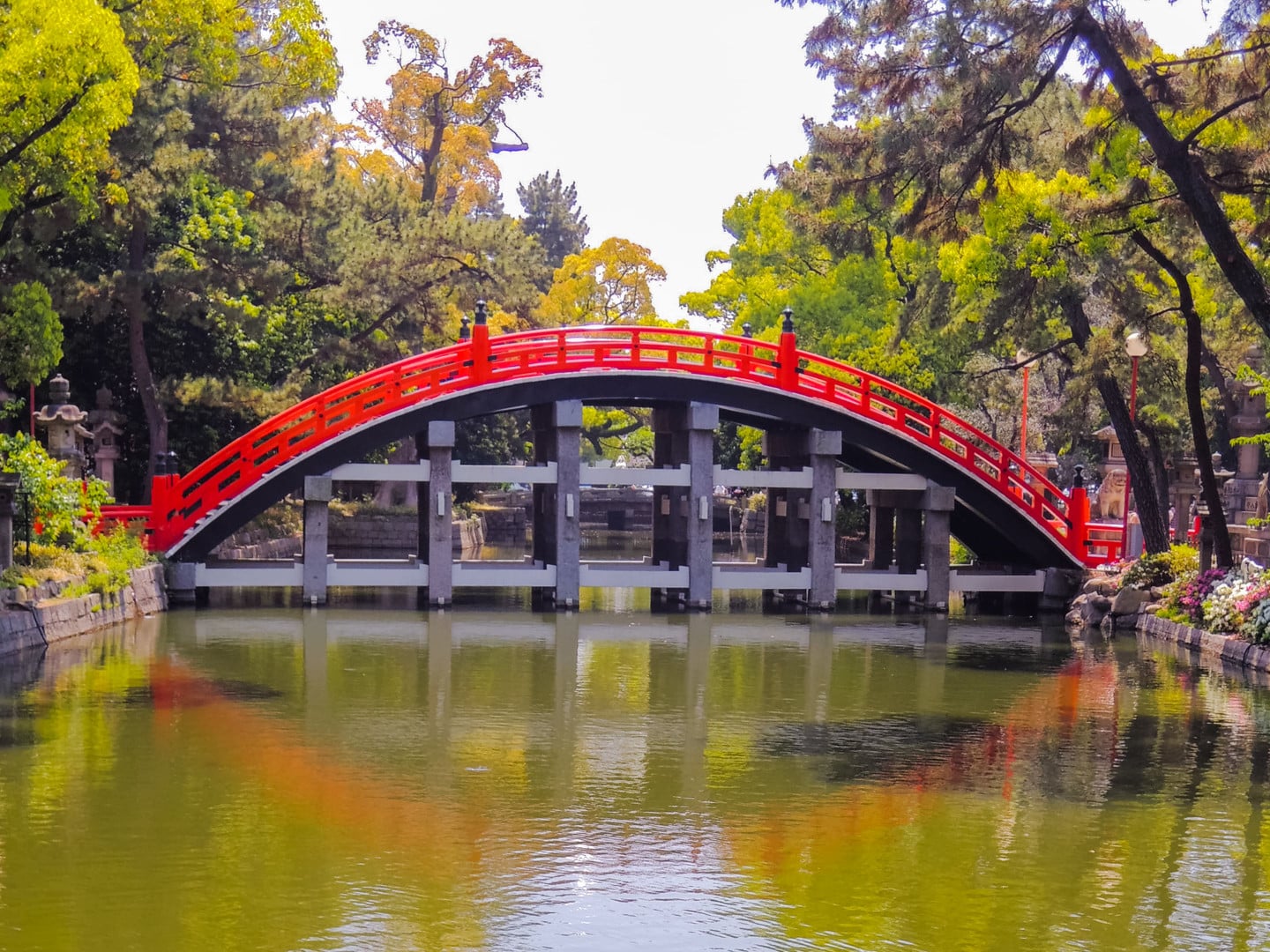
Mikoshi Togyo: The Procession of Sumiyoshi Matsuri
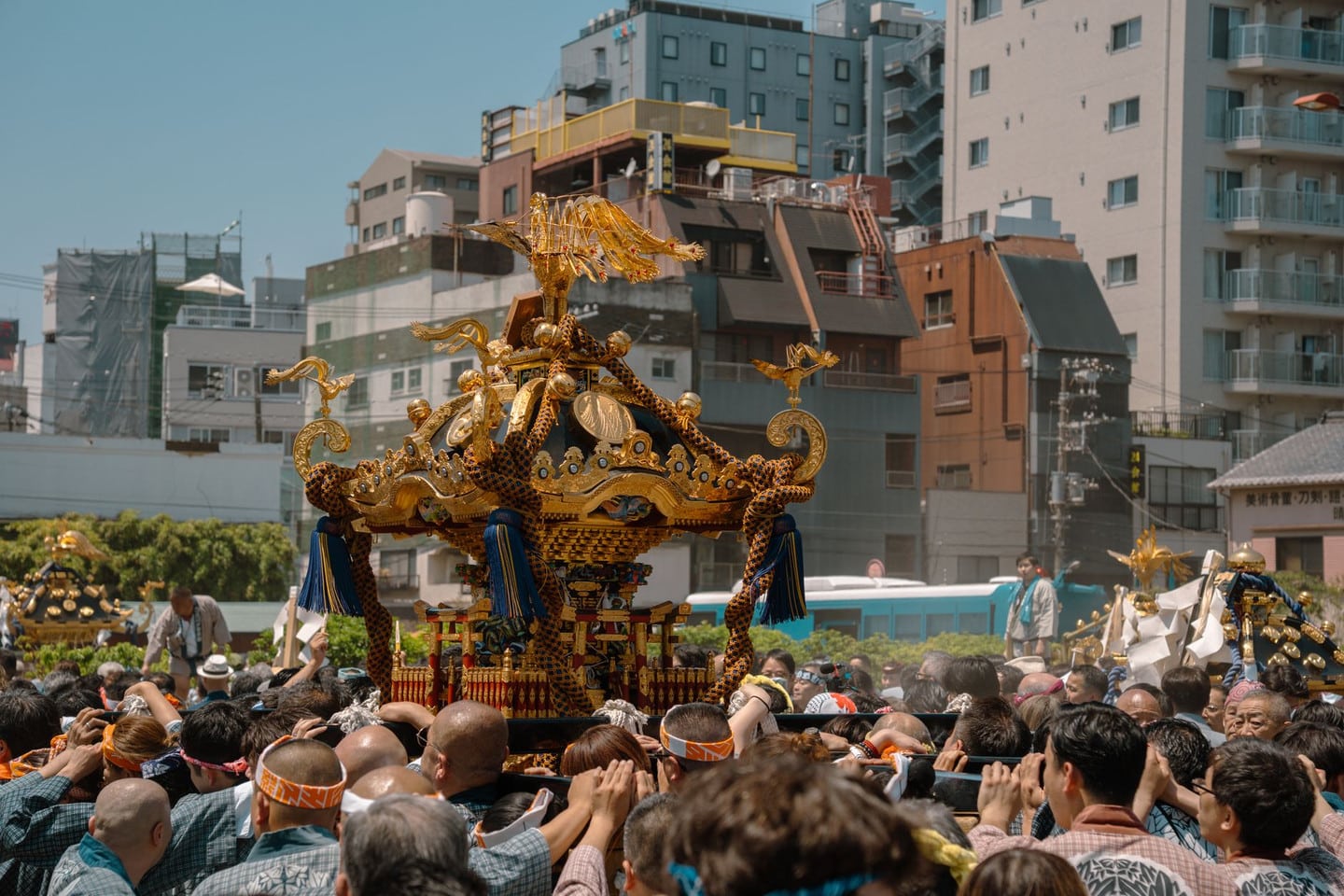
The Mikoshi Togyo starts at 15:40 on July 26 (Sun). The procession leaves Sumiyoshi Taisha and follows the Kishu Kaido road to Shukuin Tonggu in Sakai City, symbolizing the deity’s tour to ward off evil and protect the region. On the evening of August 1, Tonguu-sai and Iihibori Harae are held at Shukuin Tonggu, bringing Sumiyoshi Matsuri to a close.
We suggest claiming a spot early along the Kishu Kaido road. The route is long, so bring your own water and sun protection.
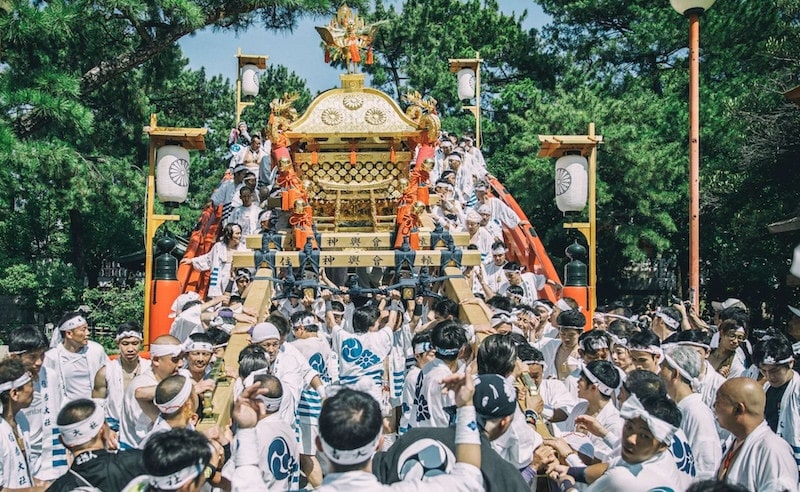
Sakuranomiya Shrine: A Secret Fireworks Viewing Spot
Sakuranomiya Shrine is upriver on the Okawa and is a relatively little-known, quieter fireworks spot. Its wide grounds give a view of the full arc of the Tenjin Matsuri Hono Hanabi rising into the sky, away from the crowds around the main venue, and it suits travelers who bring a picnic mat and want to watch in peace.
Because it is a little farther from the main venue, plan your own transport or walk there. There is plenty of seating space on site, and it also suits families with children who want a roomier setting for the Tenjin Matsuri night atmosphere.
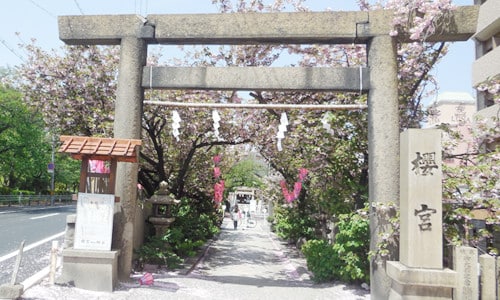

2026 Osaka Summer Festivals: Tickets and Recommended Experience Tours
Tenjin Matsuri and Sumiyoshi Matsuri are free to enter, but if you want the best viewing spot in the crowds, to skip the queues, or to experience traditional culture in more depth, joining a tour designed for overseas visitors or buying a specific ticket makes the whole trip more relaxed. Below are some of the best options for summer 2026, covering boat viewing, a yakatabune dinner cruise, traditional yukata dress-up and a private guided tour, to suit different budgets and needs.
Tenjin Matsuri Hono Hanabi Yakatabune Dinner Cruise: The Ultimate Way to Watch Fireworks from the River
One of the biggest highlights of Tenjin Matsuri is the Hono Hanabi fireworks on the evening of July 25 on the Okawa, when about 3,000 shells light up the sky and mingle with hundreds of boats on the river. With a yakatabune dinner cruise booked through KKday or Klook, you can sit on a traditional wooden houseboat enjoying Osaka-style kaiseki and draft beer while watching the Funatogyo and the fireworks reflected on the water up close, completely avoiding the crowded riverbank.
The actual meeting point, time and price are as shown on the booking platform on the day, and vary by cabin class and meal. Spaces are limited, so we suggest booking 1 to 2 months ahead; boats closest to the launch site are usually the first to sell out.
Sumiyoshi Matsuri Nagoshi no Harae Chinowa-kuguri Cultural Experience Tour: Learn the Purification Rite with a Local
The most spiritually meaningful part of Sumiyoshi Matsuri is the Nagoshi no Harae held on the grounds of Sumiyoshi Taisha in the last week of July. Worshippers walk through a Chinowa several meters across while reciting a purification waka poem three times, symbolizing the cleansing of the bad luck and impurities of the first half of the year. Many travelers do not know Japanese or the ritual steps and can feel lost on site, so cultural experience tours led by a Chinese-speaking guide are especially popular.
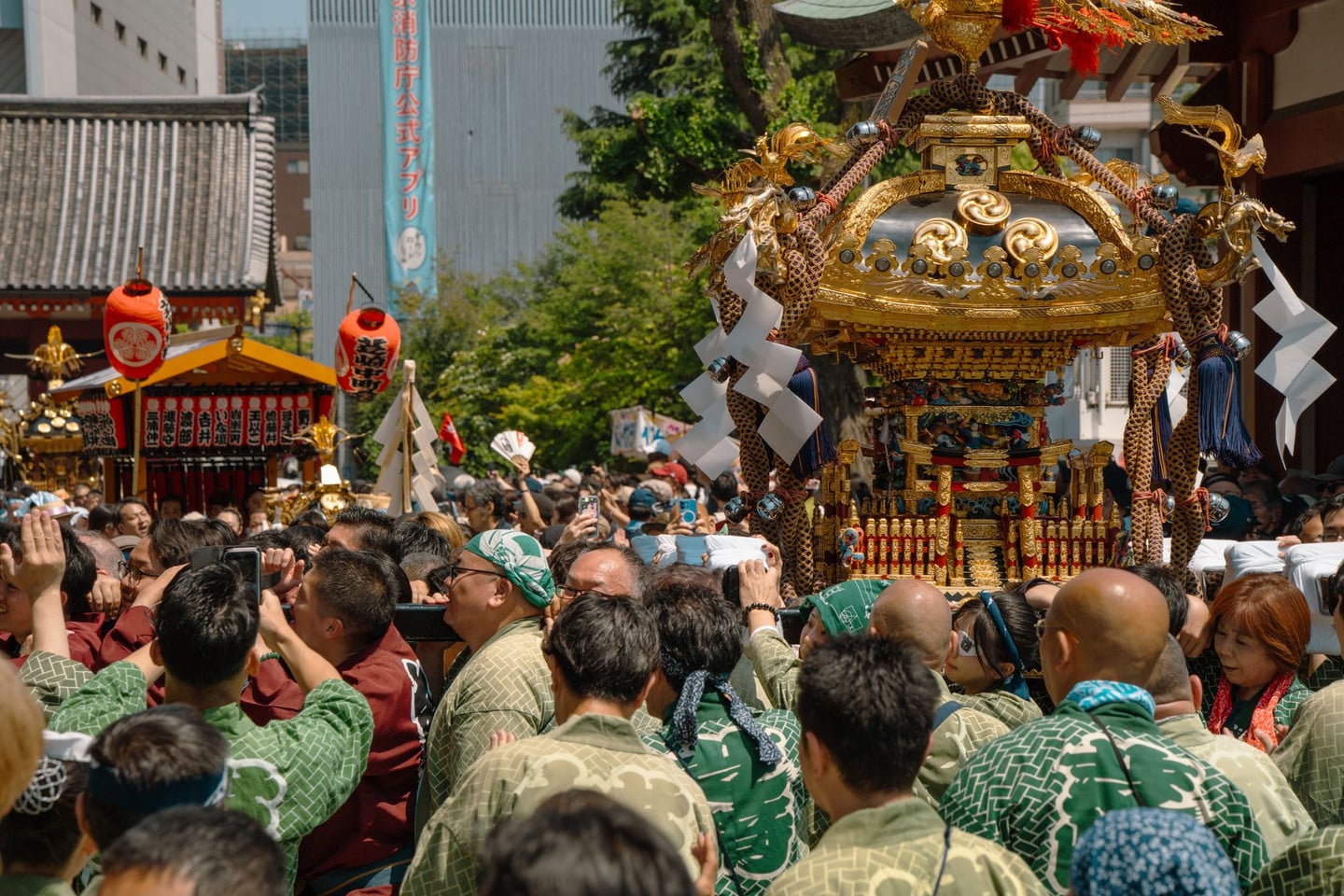
The actual meeting point, time and price are as shown on the booking platform on the day. The guide explains the features of Sumiyoshi-zukuri architecture and the worship order of the four main shrines. It suits travelers interested in Japanese Shinto culture who want to understand the meaning of the rites rather than rush through.
Traditional Yukata Rental in Osaka: Dress the Part for the Festival
At a Japanese summer festival, putting on a yukata is almost a ritual in itself. Around Osaka Castle and Osaka Tenmangu Shrine are yukata rental shops, and most plans include the yukata, obi sash and geta sandals; please go by each shop’s booking page for what is included. It adds festival atmosphere to your photos.
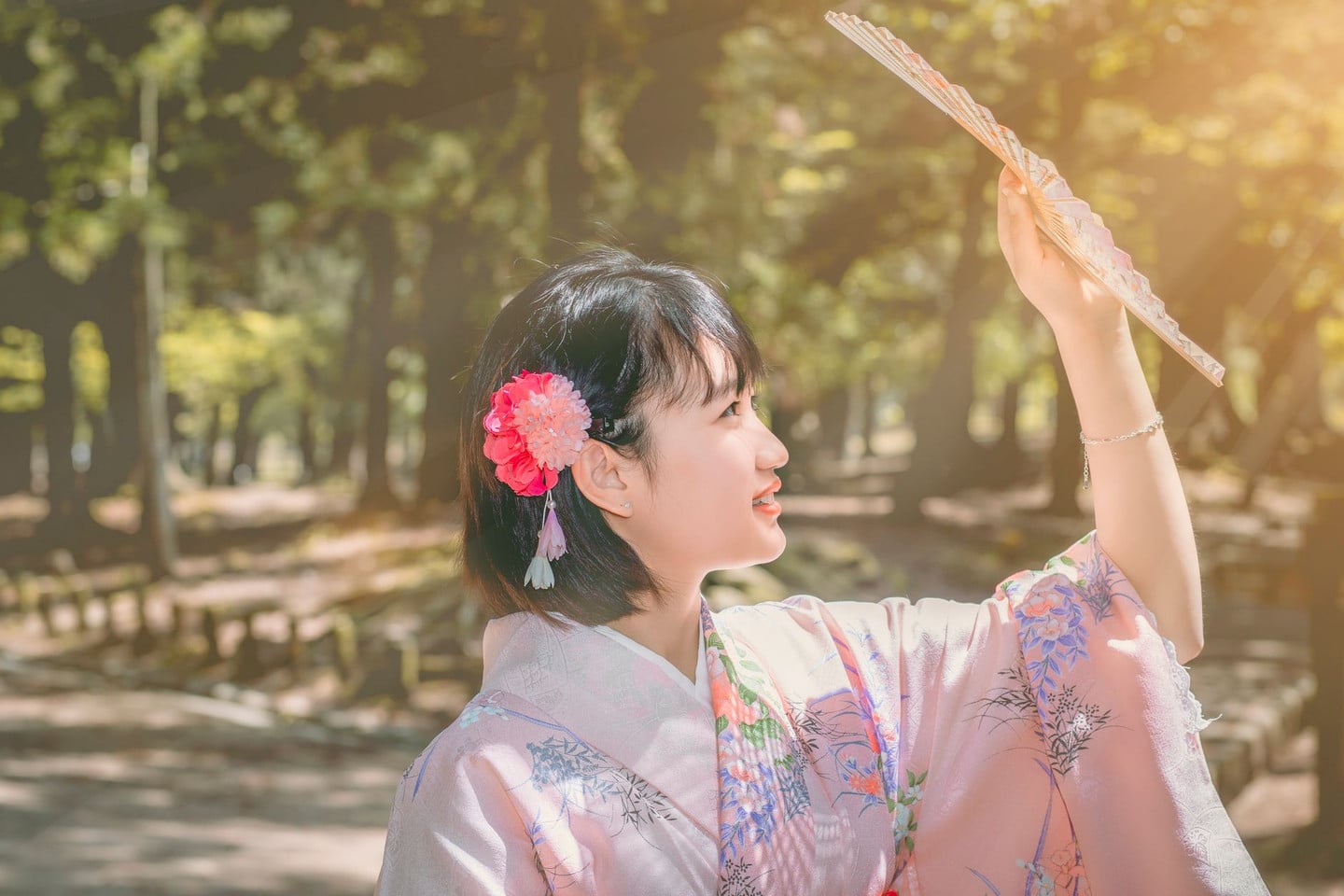
Rental times and prices follow each shop’s booking page. We suggest choosing a slot that covers both the daytime Rikutogyo and the evening Funatogyo, and checking first whether the shop offers luggage storage.
和服租賃美咲-Klook.jpg)
Tenjin Matsuri Rikutogyo and Funatogyo Private Charter Viewing Tour: Save Time and Effort and Understand the Whole Festival
The highlights of Tenjin Matsuri are the Rikutogyo and Funatogyo, with portable shrines, the sacred phoenix palanquin, lion dancers and traditional bands stretching for kilometers. The private charter tour is led by a Chinese-speaking driver-guide who flexibly arranges the best viewing spots to match the procession timetable, such as the Tenmangu main hall, the Okawa riverbank and the area around Kawasaki Bridge.
Tour times and content depend on the booked plan, and viewing spots for the Rikutogyo and Funatogyo can be arranged to the procession timetable. It suits families or older relatives with limited mobility, and the price is as shown on the booking platform on the day (by group size and vehicle). With traffic restrictions during the festival, a charter saves walking and waiting time while balancing comfort with a deeper experience.

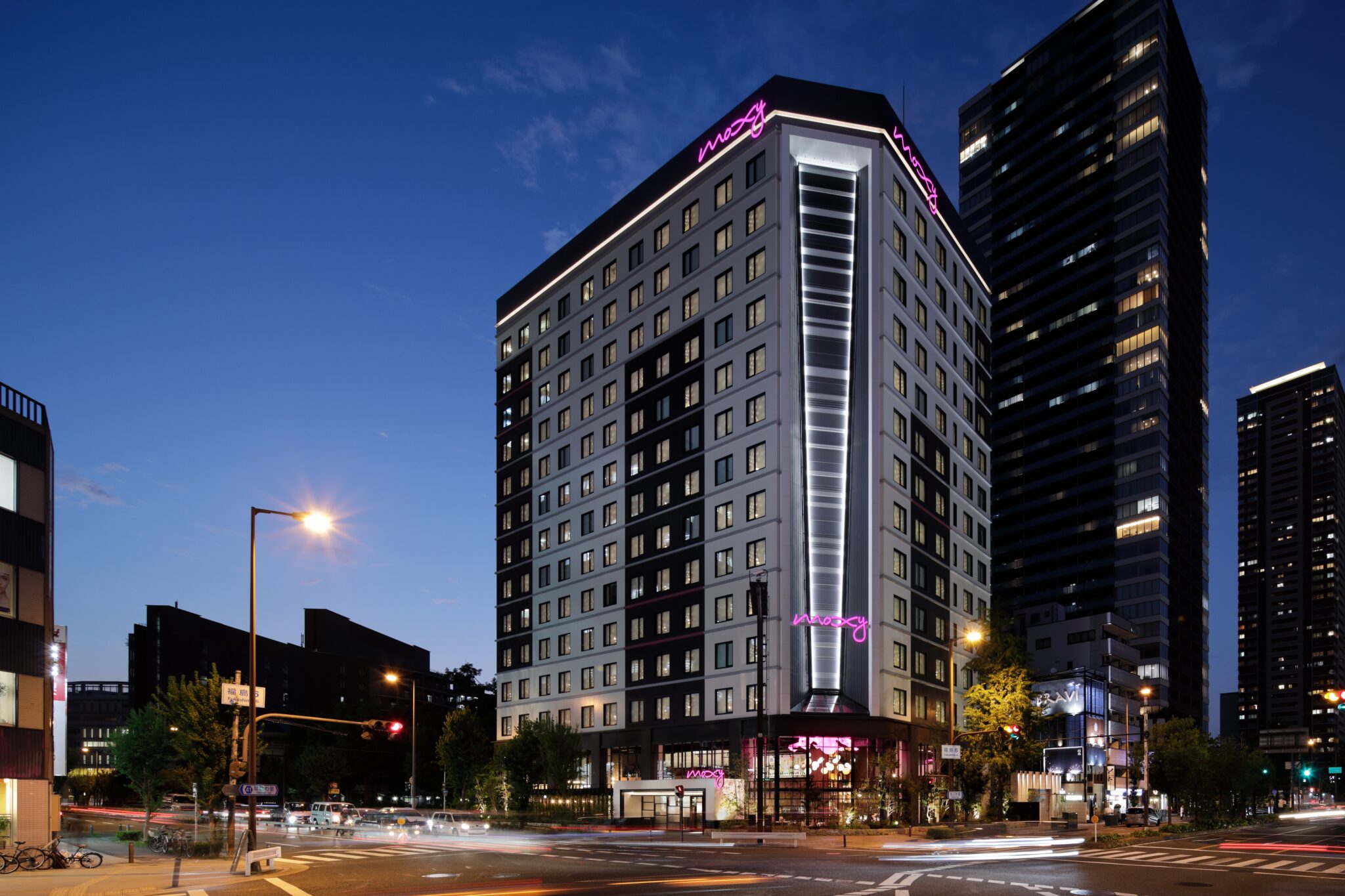
Where to Stay Nearby
Osaka Tenmangu Shrine, the Tenjin Matsuri venue, is about 5 minutes on foot from JR Tenma Station and about 3 minutes from Minamimorimachi Station, so staying in Umeda or the Kita area makes it easy to go back and forth. For Sumiyoshi Matsuri, you can set out from Nankai Sumiyoshitaisha Station, about 10 minutes from Namba. Crowds and traffic restrictions concentrate in the evening of festival days, so we suggest staying along a train or subway line so you can ride straight back after the event.

FAQ: 2026 Osaka Summer Festivals Tenjin Matsuri and Sumiyoshi Matsuri Q&A
Q: Which days is Tenjin Matsuri held in 2026?
Tenjin Matsuri in 2026 is held on July 24 (Yoimiya-sai) and July 25 (Honmiya-sai). The main festival day has three highlights: the Rikutogyo, Funatogyo and Hono Hanabi.
Q: When is Sumiyoshi Matsuri, and how does it differ from Tenjin Matsuri?
Sumiyoshi Matsuri is held from July 30 to August 1 and is more solemn, centered on purification rites. Tenjin Matsuri is held July 24-25 and focuses on the water procession and fireworks, with a lively, flamboyant mood.
Q: Do I need a ticket for Tenjin Matsuri?
Tenjin Matsuri itself is free to watch, but if you want to ride a special viewing boat or sit in a premium seat for the fireworks, you need to buy a ticket separately, with prices varying by seat and plan.
Q: Which are Japan’s three great festivals?
Japan’s three great festivals generally mean Kyoto’s Gion Matsuri, Osaka’s Tenjin Matsuri and Tokyo’s Kanda Matsuri, each representing the best-known traditional festival culture of its city.
Q: Where is the best place to watch the Tenjin Matsuri fireworks?
The Kawasaki Bridge area and the surroundings of Sakuranomiya Shrine are popular spots for the Tenjin Matsuri fireworks. Sakuranomiya Shrine has fewer crowds and suits travelers who want to watch quietly.
Q: Can I pay by credit card at the festival?
Most festival stalls and snack vendors deal in cash, so bring enough small change, especially ¥500 coins. Payment methods differ by stall, so please go by the signs on site.
Q: What should I watch out for when bringing older relatives and children to the festival?
We suggest watching from around Sakuranomiya Shrine where crowds are smaller, arriving 2-3 hours early to claim a spot, and bringing sun protection, water and a folding chair to avoid the peak crowded periods.