
2026 Sumiyoshi Taisha Guide, Osaka: The National Treasure Sumiyoshi-zukuri Halls and Sorihashi Bridge, at Japan’s Oldest Seaside Shrine
Sumiyoshi Taisha is the head shrine of more than 2,000 Sumiyoshi shrines across Japan. Its National Treasure “Sumiyoshi-zukuri” main halls and the vermilion Sorihashi Bridge are the highlights, and the shrine is worth a half-day visit.
Sumiyoshi Taisha: Origin of the Head Shrine of Japan’s Sumiyoshi Shrines
Founded in 211 CE, Sumiyoshi Taisha is one of the oldest shrines in Japan. It is counted among the “Three Great Sumiyoshi” shrines and is the head shrine of more than 2,000 Sumiyoshi shrines nationwide. It enshrines the three Sumiyoshi deities and Empress Jingu, and is the center of a sea-deity faith that protects voyages and purifies bad luck. Locals affectionately call it “Sumiyo-san.”
Standing near what was once the coast of ancient Osaka Bay, Sumiyoshi Taisha was the place where envoys to Tang China prayed for a safe passage before setting sail, from the Nara and Heian periods onward. It holds a special place in Japanese history and maritime culture, and is a key stop for understanding Japan’s early exchanges with the outside world.


Sumiyoshi-zukuri Architecture: National Treasure Halls in Japan’s Oldest Shrine Style
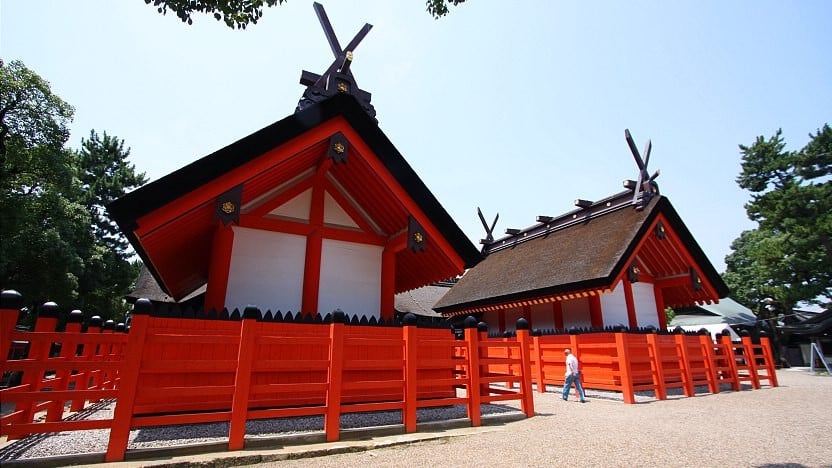
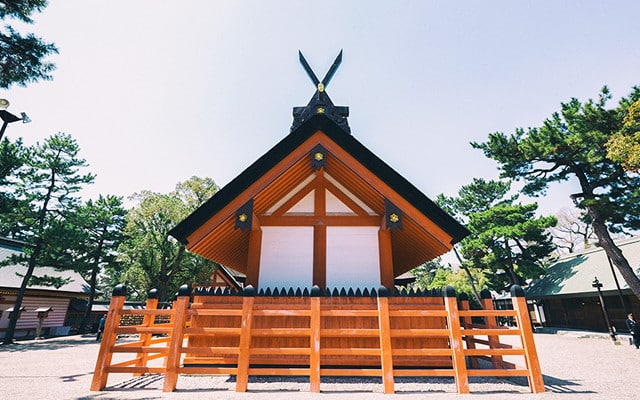
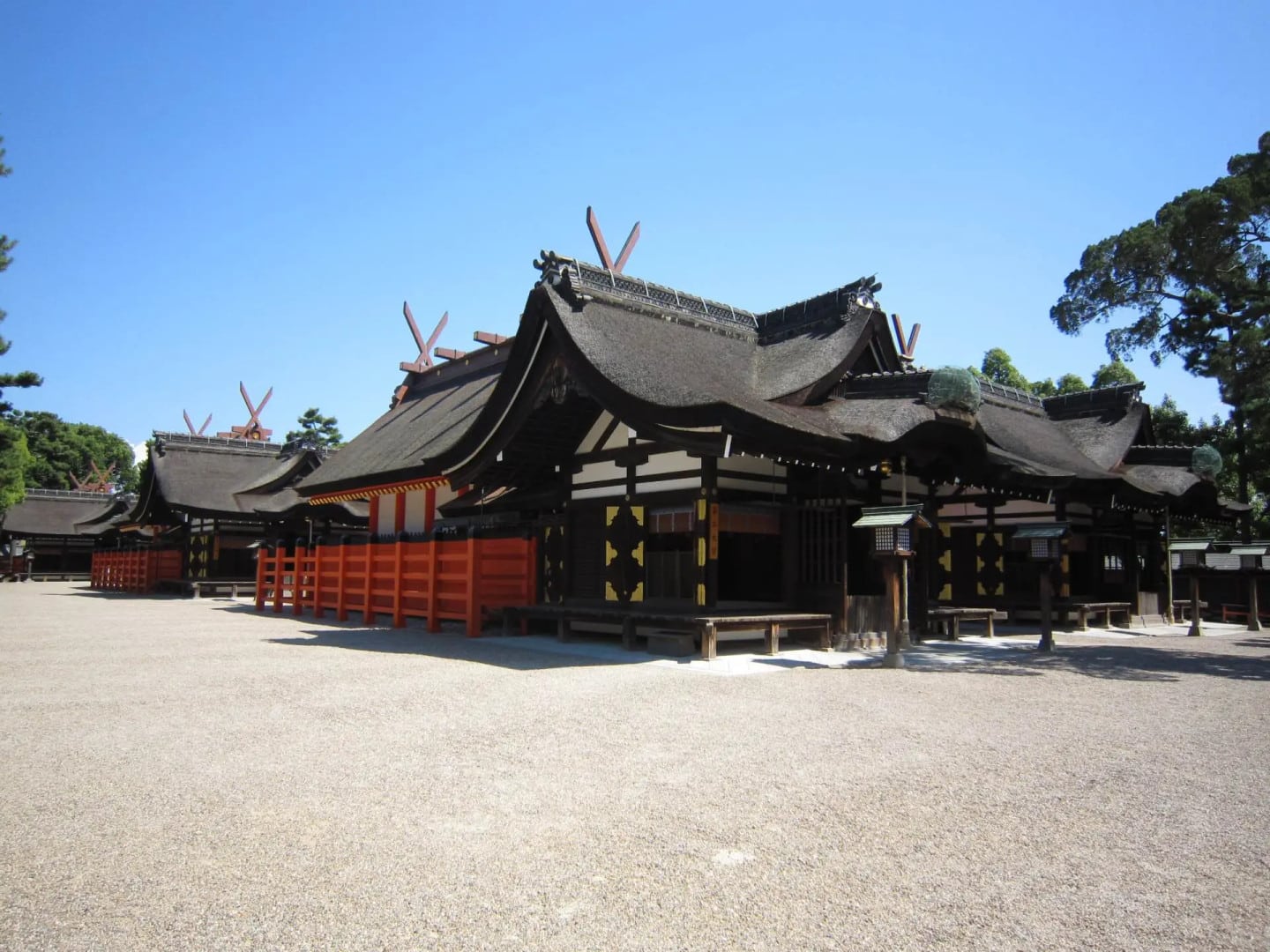
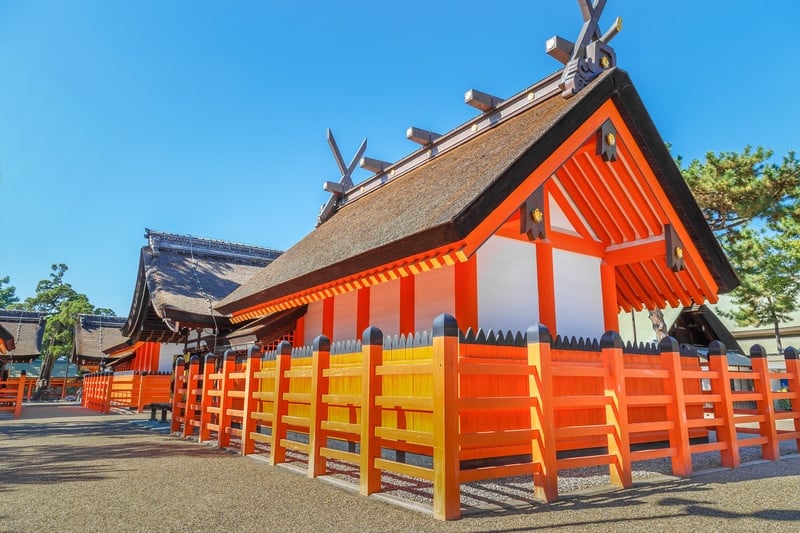
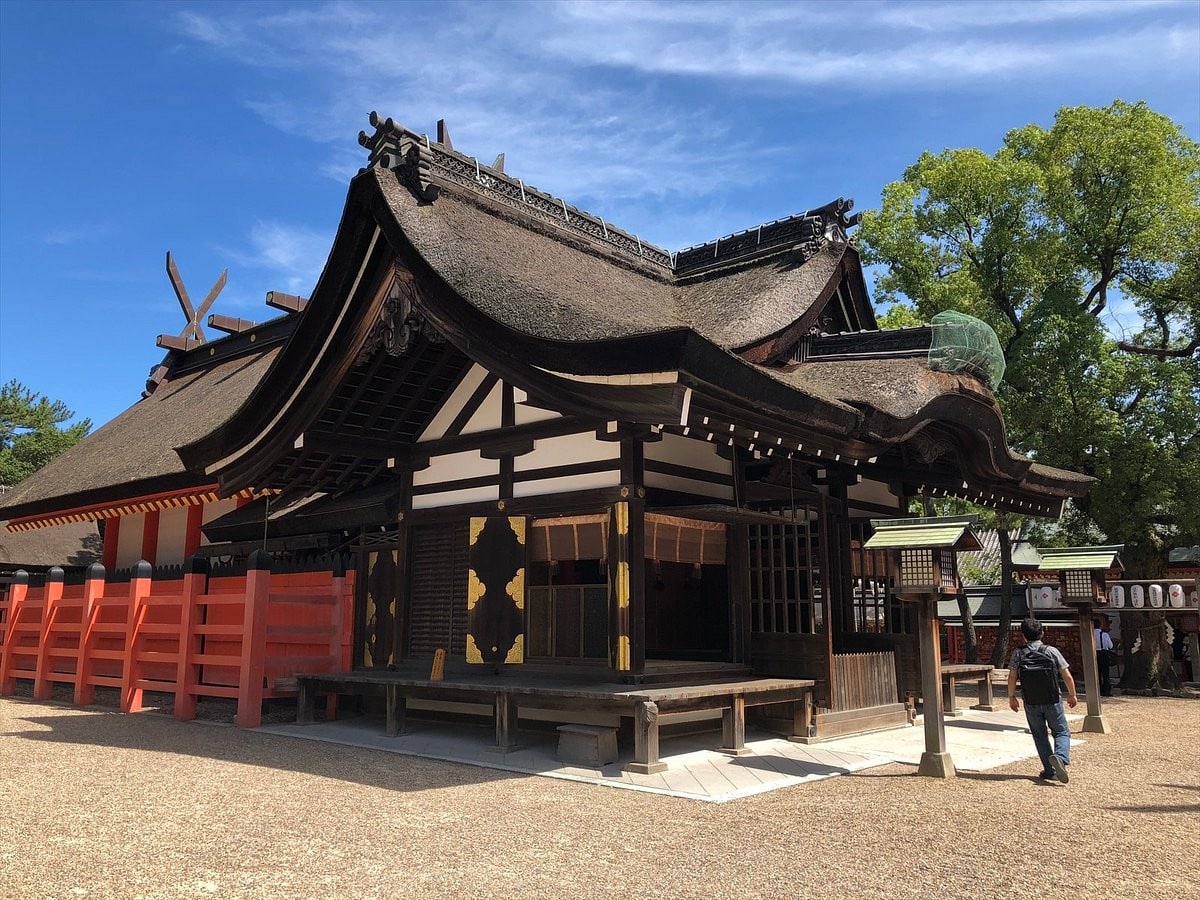
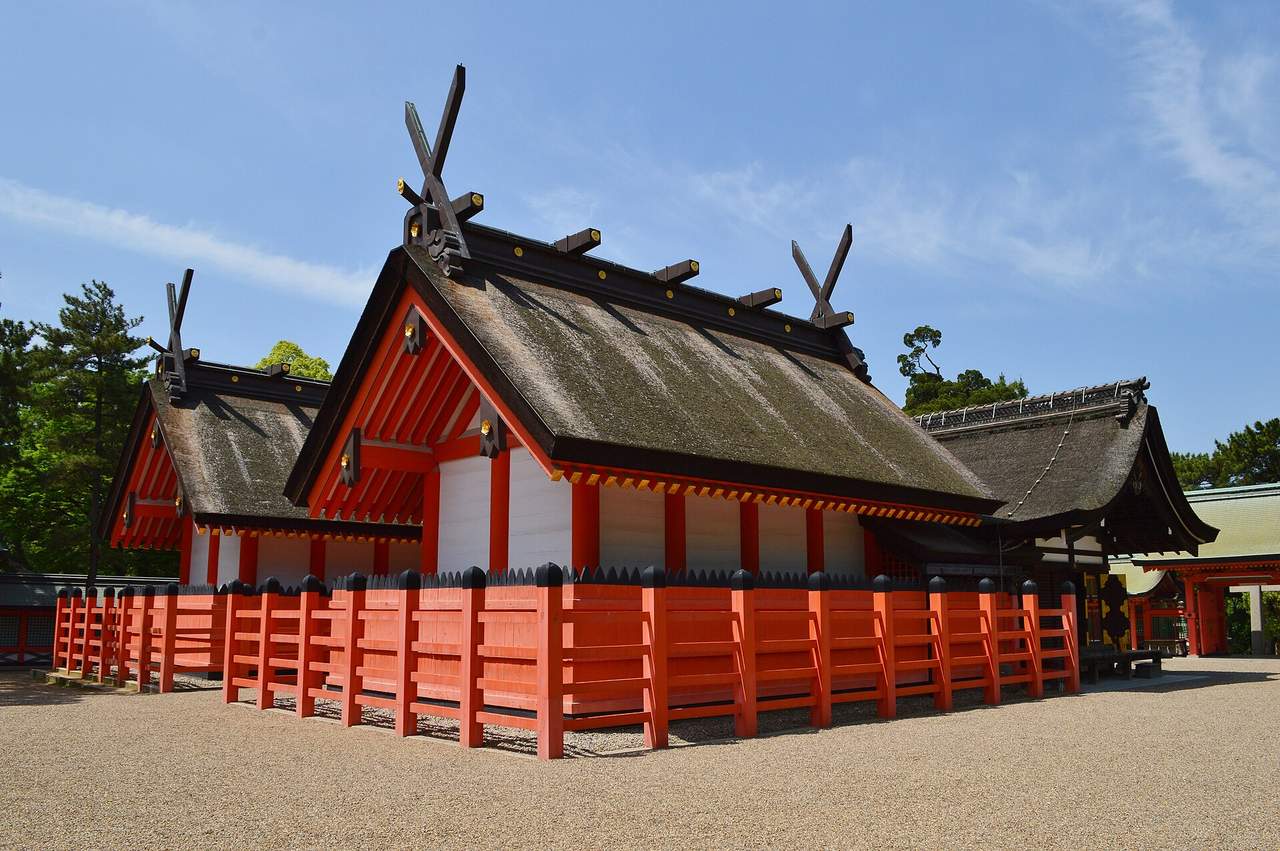
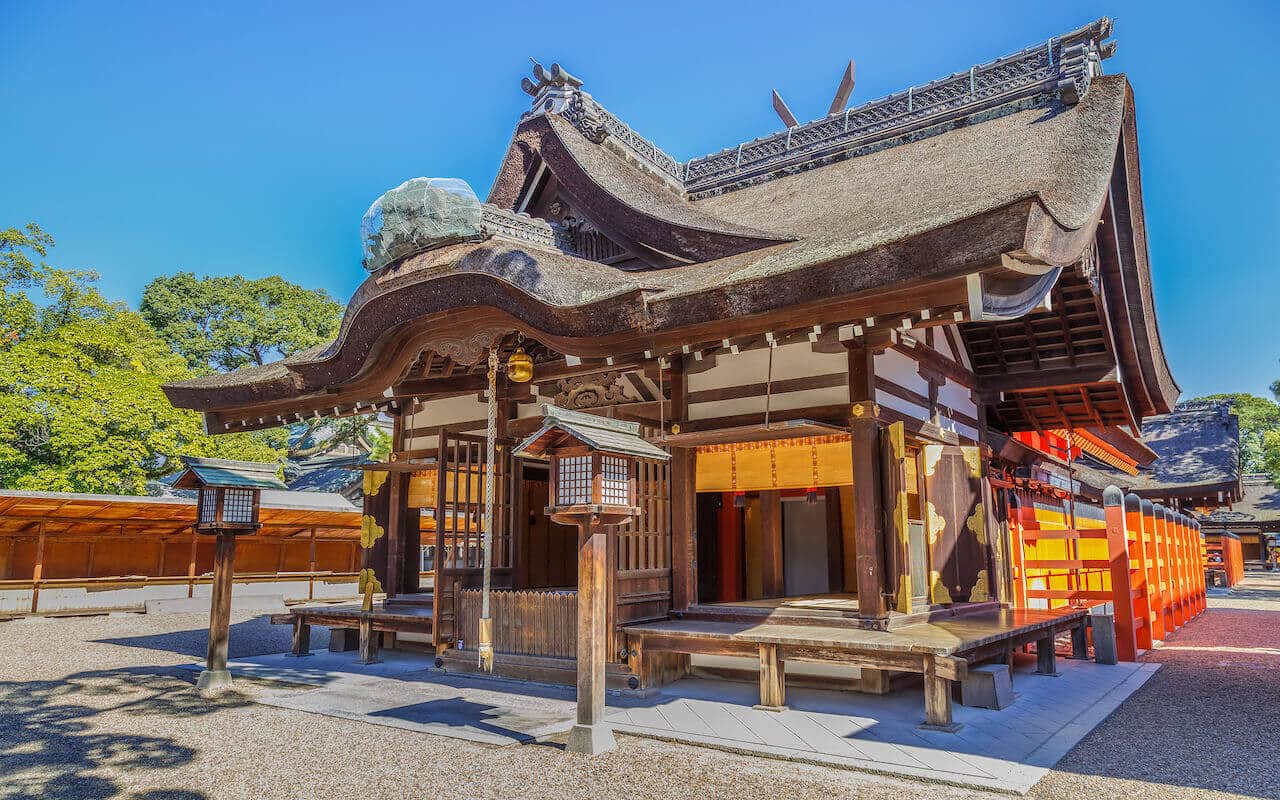
“Sumiyoshi-zukuri” ranks alongside “Taisha-zukuri” and “Ise-zukuri” as one of Japan’s three oldest shrine building styles. It took shape before Buddhism and Chinese architecture arrived, and shows pure early Shinto aesthetics. All four main halls on the grounds are National Treasures. The first to third halls stand in a straight line one behind another, and the fourth stands beside the third. This unusual layout is said to resemble a fleet of ships sailing the sea.
The roofs are gabled and covered with cypress bark, with straight lines and none of the curved, Tang-style sweep seen in later buildings. Pillars, beams and gable boards are painted a vivid vermilion, while the walls are coated in white gofun, creating a strong red-and-white contrast. Inside, wooden boards separate the outer and inner chambers, and the whole is surrounded by paneled walls, giving a solemn, sacred feel. It is a must-see for photographers and architecture lovers.
Sorihashi (Taiko Bridge): The Vermilion Arched Bridge Symbolizing Purification
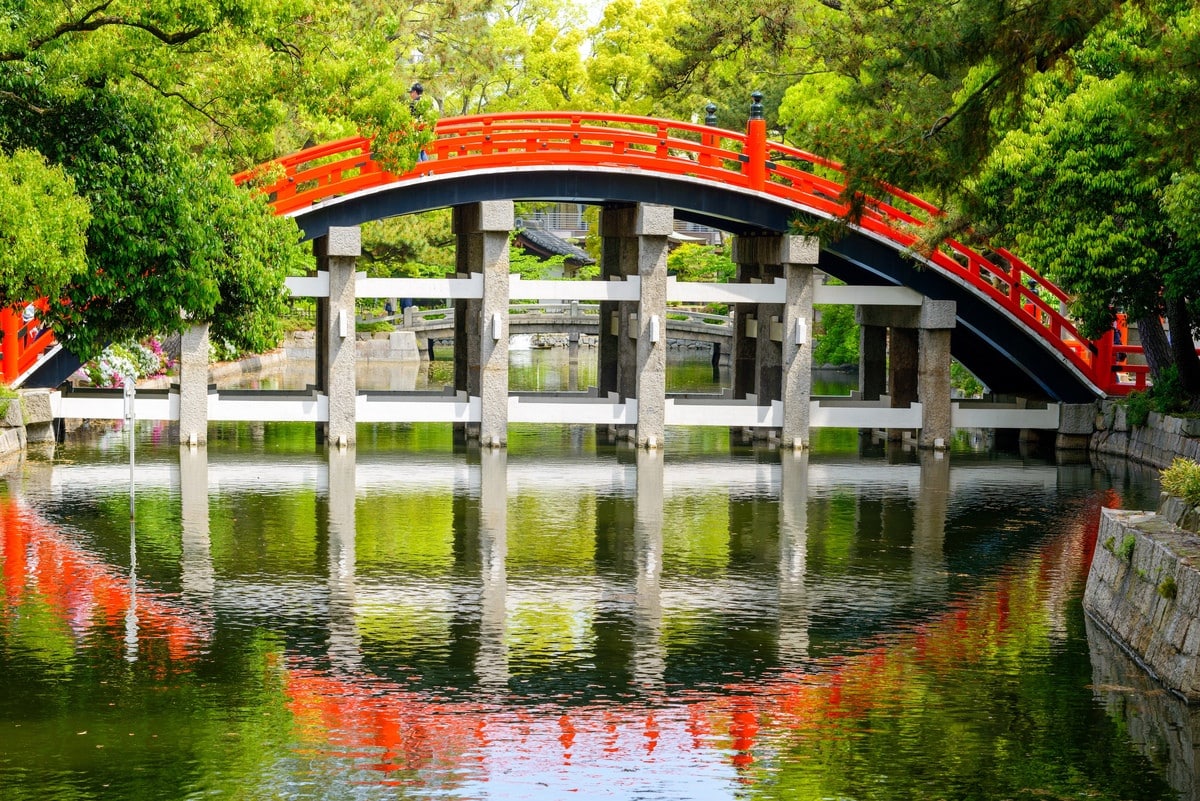
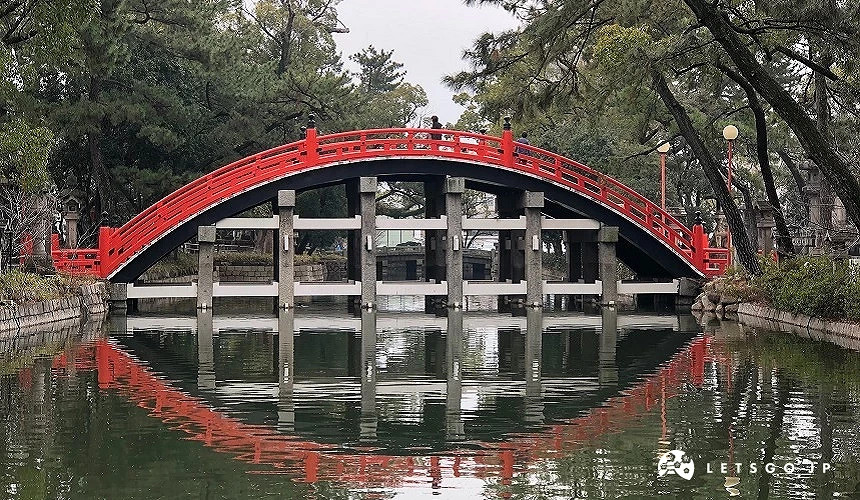
Sorihashi, commonly known as the Taiko Bridge, spans the sacred pond in front of the main halls and is the shrine’s best-known landmark. The bridge is about 20 meters long, about 3.6 meters high and about 5.5 meters wide, and its steepest point reaches a 48-degree slope. According to the Sumiyoshi Taisha official website, the stone piers are said to have been donated during the Keicho era by Yodo-dono, a consort of Toyotomi Hideyoshi, to pray for the growth of her son Toyotomi Hideyori.
In Shinto belief, crossing this arched bridge purges bad luck and purifies body and mind. The vermilion bridge reflects on the water and, together with its arch, forms a full circle, making it a photo hotspot. Modern wooden steps were added in 1955 to make crossing easier. The official site also notes that the early bridge had only footholds cut into it, which made it quite dangerous. When crossing today, hold the handrails on both sides with both hands and go slowly; coming down often needs more care than going up.

Hatsutatsu Mairi: A Pilgrimage to Four Shrines for Business Prosperity
“Hatsutatsu Mairi” is a monthly worship custom unique to Sumiyoshi Taisha. On the first Day of the Dragon (tatsu) each month, worshippers visit four sub-shrines in order: Taneka-sha, Kusuka-sha, Asazawa-sha and Oto-sha. They symbolize a business cycle of borrowing seed, nurturing, beautifying and harvesting, and visiting for 48 consecutive months (4 years) is regarded as completing the vow.
The custom is beloved by Osaka merchants. The lucky-cat collecting at Kusuka-sha especially draws many worshippers back every month, who gradually build up a set of small, medium and large lucky cats. It is an excellent way into Osaka’s business culture and folk belief.
Sumiyoshi Matsuri and Nagoshi no Harae: One of Osaka’s Three Great Festivals
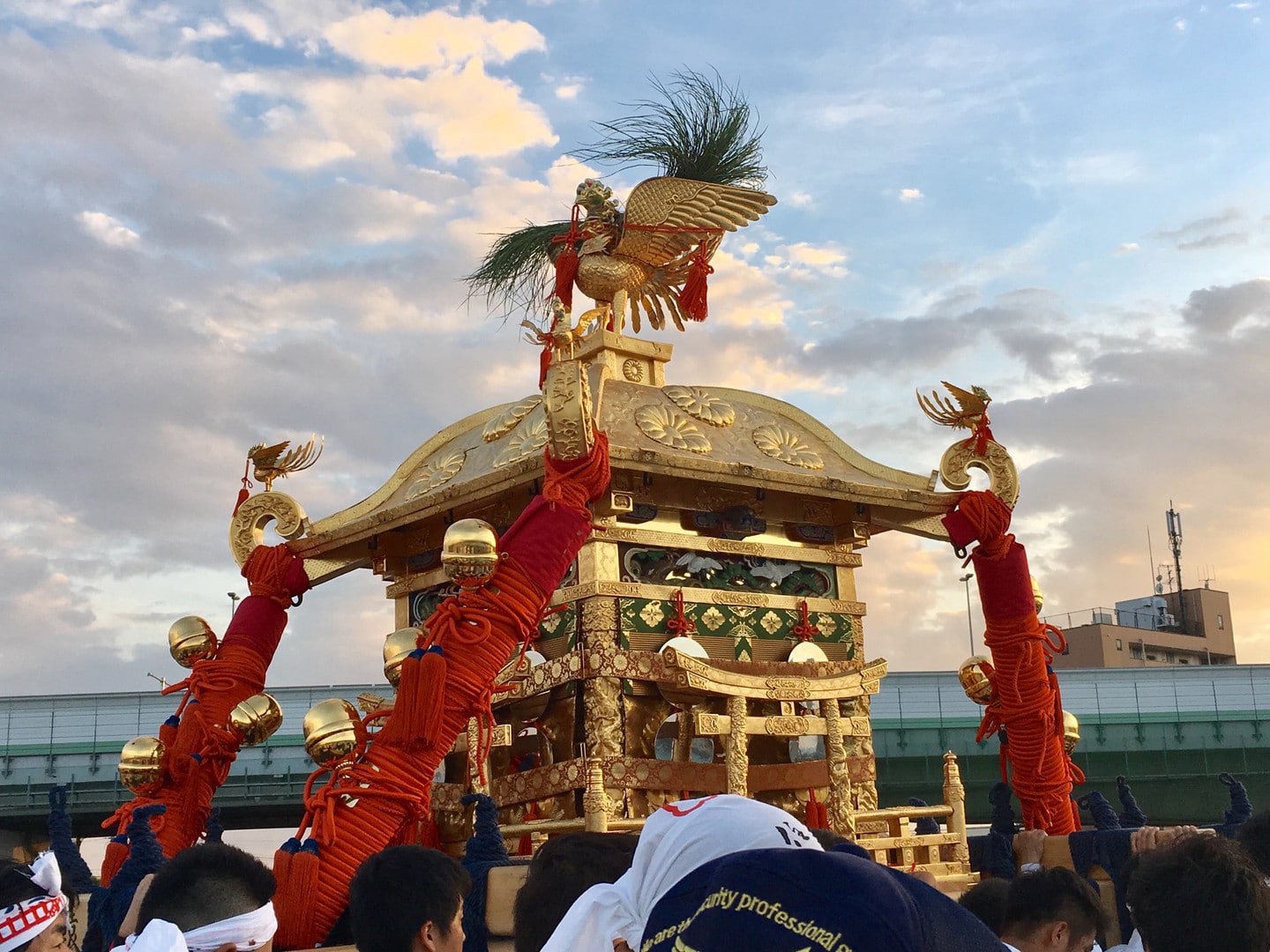
Held in late July each year, the Sumiyoshi Matsuri is one of Osaka’s three great festivals, running from July 30 to August 1. On July 31, the Nagoshi no Harae ritual features a parade of women and children in Muromachi-period costume, symbolizing the washing away of the first half year’s bad luck and a prayer for peace in the second half. Many stalls line the approach during the festival and the atmosphere is lively, making it the best time to experience Osaka’s traditional summer festival culture.
The approach is especially lively during the Sumiyoshi Matsuri, so if your schedule allows, it is worth planning a visit to feel the festive mood.
New Year Visit (Hatsumode): One of the Kansai Region’s Most Popular New Year’s Prayer Spots
Sumiyoshi Taisha draws more than 2 million visitors every New Year (hatsumode), making it one of the most popular hatsumode spots in the Kansai region. From New Year’s Eve into New Year’s Day, the grounds are decorated with lanterns and special prayer rites are held, and the approach fills with stalls and crowds, a very different atmosphere from ordinary days.
To avoid the crowds, go early on a weekday morning after January 4. You can still enjoy the New Year decorations and visit the National Treasure main halls and Sorihashi Bridge at a more relaxed pace, which makes it a worthwhile stop when planning a year-end or early-January Osaka trip.
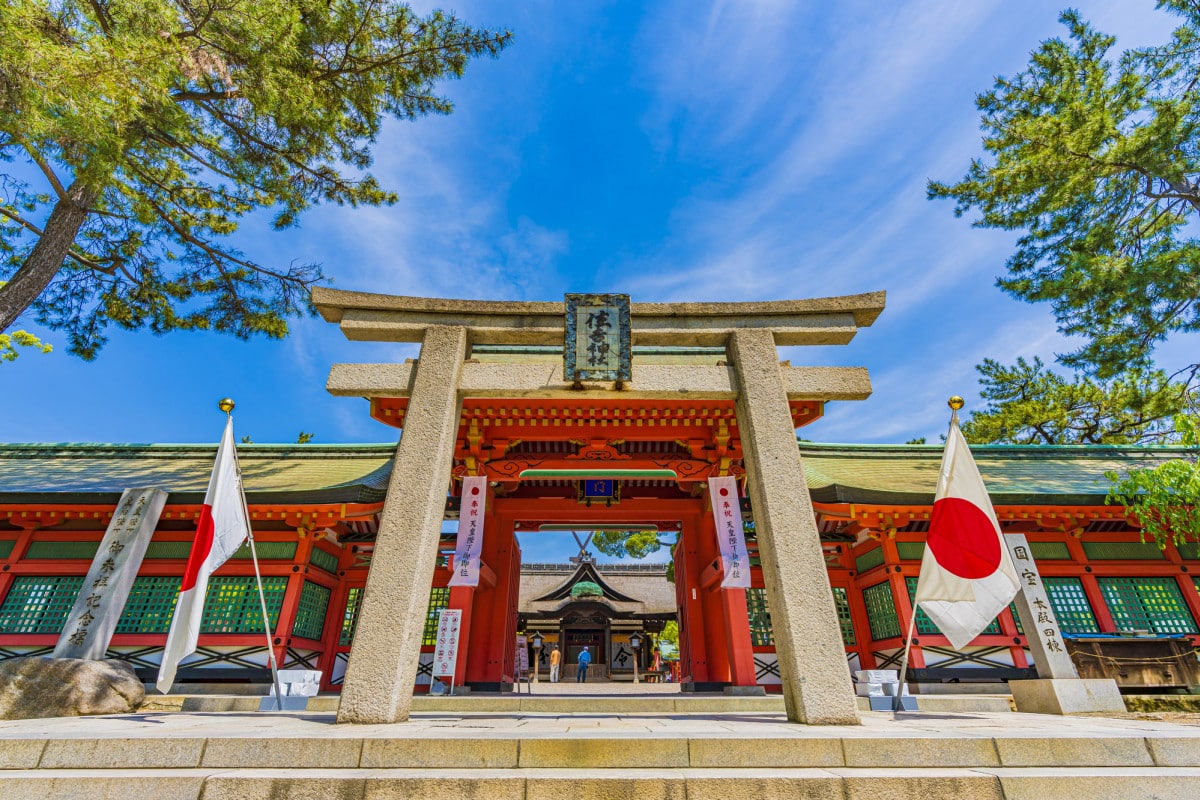
Kusuka-sha Lucky Cats and Local Sweets: A Pleasant Little Surprise After Your Visit
Kusuka-sha on the grounds is known for its lucky cat charms. The cat-shaped items draw many young visitors and cat lovers who come specially, adding a friendly touch to a traditional shrine.
After worshipping, many local bloggers and travelers also drop by “Sumiyoshi Kaan Kikuju,” a long-established wagashi shop near the shrine, to buy its signature dorayaki, which wraps a chestnut filling in chewy raw-sweet-dough, a sweet stop that has become an essential part of the visit and a local hidden delicacy rarely mentioned in traditional guides.
How to Get to Sumiyoshi Taisha: Transportation Options and Costs
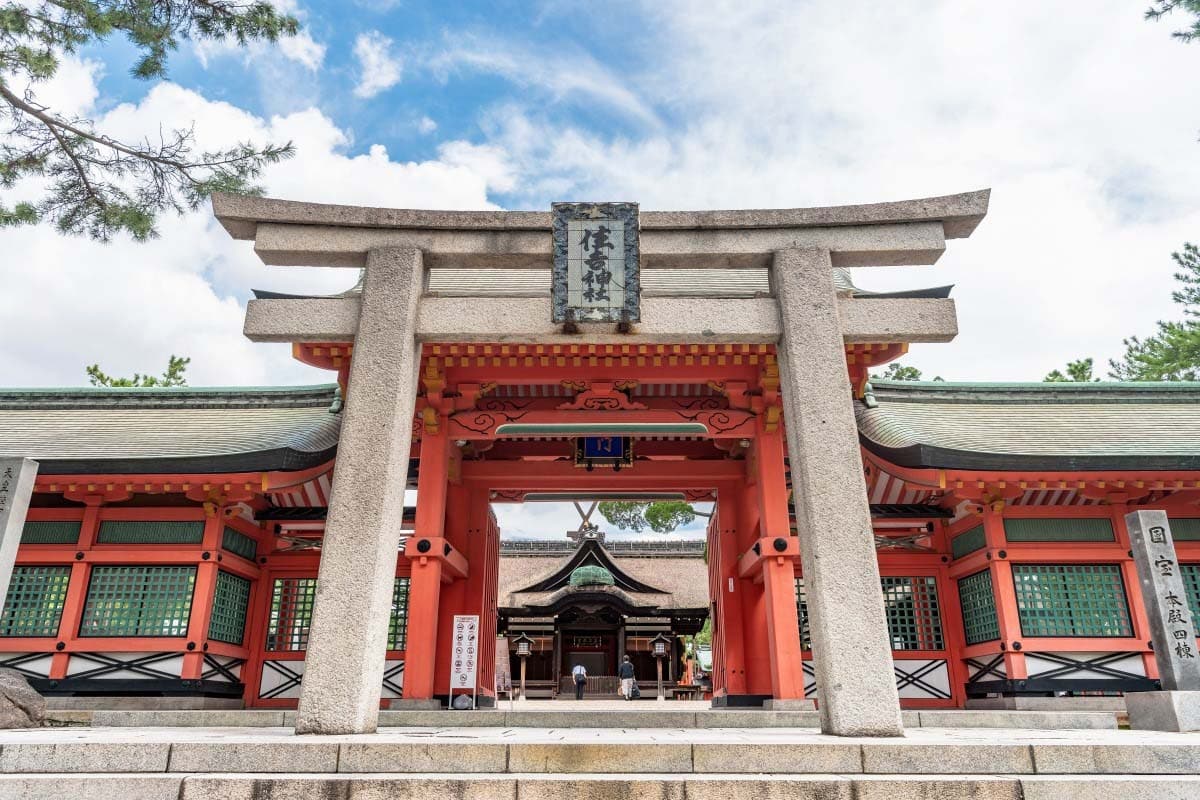
The fastest way from central Osaka to Sumiyoshi Taisha is to take the Nankai Main Line to “Sumiyoshitaisha Station,” then walk about 3 minutes to the shrine’s main gate, the great torii. You can also take the Hankai Tramway to “Sumiyoshi Torimae Station,” which lets you off right at the main gate. Both accept transport IC cards such as ICOCA and Suica, which is very convenient.
Getting to Sumiyoshi Taisha: Nankai Railway, Hankai Tramway and from Kansai Airport
According to the transportation information on the Sumiyoshi Taisha official website, you can choose among the following routes from central Osaka or the airport, depending on where you start:
- 🚃 Nankai Main Line “Sumiyoshitaisha Station”: About a 3-minute walk east from the exit. Note that the Nankai website states only Local trains stop at Sumiyoshitaisha Station, so when boarding at Namba or Shin-Imamiya, take a Local to avoid ending up on a train that passes the station.
- 🚋 Hankai Tramway “Sumiyoshi Torimae Station”: Take the Uemachi Line from in front of Tennoji Station, or the Hankai Line from Ebisucho, and get off right at Sumiyoshi Taisha. The Hankai Tramway has a flat fare on all lines: ¥240 for adults and ¥120 for children.
- 🚉 Nankai Koya Line “Sumiyoshi-higashi Station”: About a 5-minute walk west from the exit.
- 🏙️ From Umeda or Shin-Osaka: Take the Midosuji Subway Line to Namba, then transfer to the Nankai Main Line to Sumiyoshitaisha Station. Or take the JR Osaka Loop Line from Osaka Station to Shin-Imamiya and transfer to the Nankai Main Line.
- ✈️ From Kansai Airport: Take the JR Kansai Airport Rapid Service to Shin-Imamiya and transfer to the Nankai Main Line. Or take the Nankai limited express “Rapi:t β” to Sakai Station and transfer to the Nankai Main Line. The official website specifically notes that “Rapi:t α” does not stop at Sakai Station.
- 🚗 By car: Fees and opening hours for the worshipper parking lot are as announced on the official website. During the New Year period from December 31 to January 3 and during the Sumiyoshi Matsuri, the parking lot cannot be used because of traffic control around the shrine.



What Are the Must-See Spots at Sumiyoshi Taisha? Highlights by Area
Beyond the National Treasure main halls and Sorihashi Bridge, the grounds hold several meaningful sub-shrines (sessha) well worth exploring.
Worship Order at Sumiyoshi Taisha: The Officially Suggested Route
Following the standard route described in the official website’s “How to Walk Around Sumiyoshi-san,” the first step is to cross Sorihashi Bridge (crossing it is said to carry the meaning of purification, or “oharai”). Next, wash your hands and rinse your mouth at the purification fountain, then worship at the first through fourth main halls, which takes about 20 minutes in all. Many sites online say the four main halls must be visited in a set order, but the official site explicitly states there is “no particular order” from the first to the fourth. After the main halls, visit the sub-shrines and auxiliary shrines according to your own wishes.
What to Pray For at Sumiyoshi Taisha: Choose a Route by Your Wish
The Sumiyoshi deities (Sokotsutsunoo, Nakatsutsunoo and Uwatsutsunoo) are known for protection in purification and removal of misfortune (oharai), safe sea voyages, the way of waka poetry and the nurturing of industry, and Empress Jingu, enshrined in the fourth main hall, is regarded as a deity of safe childbirth. The official website lists the following routes by wish:
- 💰 Business prosperity and family safety (about 40 minutes): Taneka-sha (funds, children) → Kusuka-sha (business prosperity, family safety, where lucky cat charms are given) → Asazawa-sha (beauty, performing arts) → Oto-sha (harvest, collecting money). These are the four shrines of Hatsutatsu Mairi.
- ✨ Wishes come true (about 40 minutes): Pick up small stones marked with the characters “five,” “large” and “power” at Gosho-gozen → try the Omokaru stone to divine your wish at the Oto-sha precinct → receive a Godairiki stone amulet pouch at the amulet office (offering ¥500).
- 💕 Matchmaking and marital harmony (about 20 minutes): Receive an “Omoto doll” (matchmaking, offering ¥1,000) or a “Hadaka-bina” (marital harmony, offering ¥2,000), write your name and birthday, then worship at Jishaku-sha, and finally you can draw a love fortune (¥200).
- 👶 Safe childbirth (about 30 minutes): Receive a safe-childbirth prayer at the prayer hall, then worship at the main hall and at the Birth Stone. It is said that picking up a small stone here as an amulet protects a safe delivery.
- ✈️ Safe travels: The sub-shrine Funadama Shrine protects ships at sea, and in recent years many travelers heading abroad by plane also come to pray for safe passage.
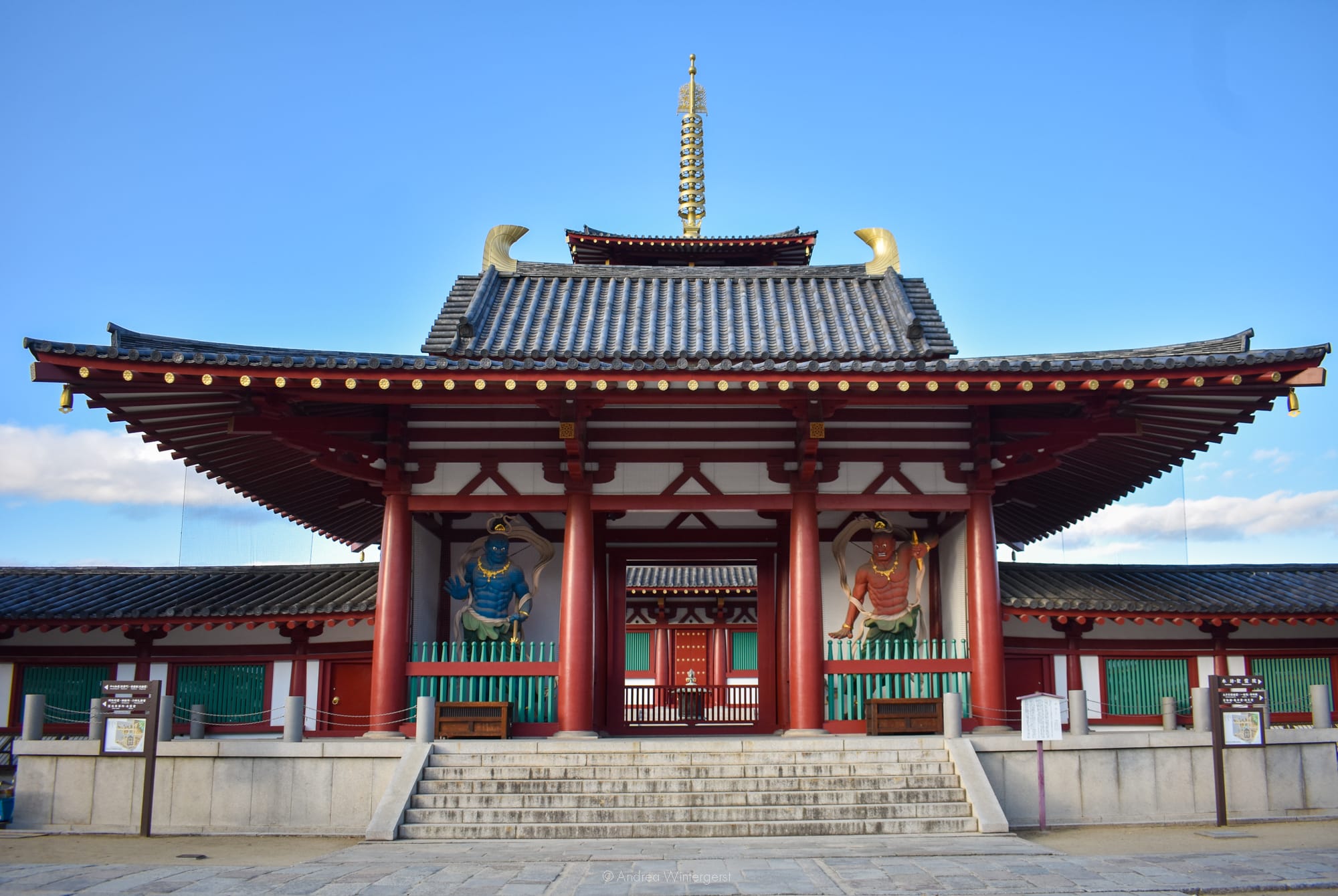
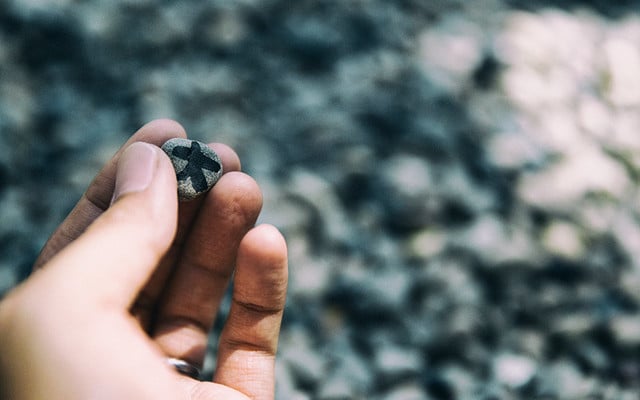
Gosho-gozen: The Origin of Faith and the Search for Godairiki Power Stones
Gosho-gozen is the original sacred ground where the Sumiyoshi deities first descended. A triangular pile of stones surrounded by a jewel fence, it is regarded as the most powerful spiritual core of the grounds. Worshippers look here for one natural stone each engraved with the characters “five,” “large” and “power.” Taken home and kept in the “Godairiki protective pouch” given by the shrine, they are carried as a prayer for the five powers of strength, intellect, wealth, fortune and longevity.
Because the stones are limited in number and take careful searching, many worshippers circle the area several times before finding all three. The search itself is regarded as a kind of practice and prayer ritual. Allow 15 to 20 minutes to look patiently, and take care not to disturb the stones in areas where others are searching.
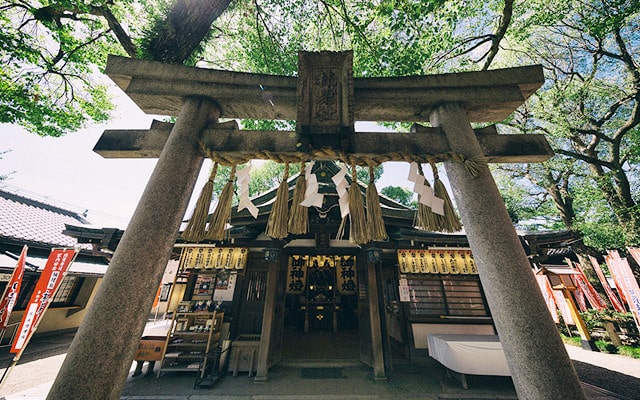
Kusuka-sha: The Lucky Cat Collection Spot and Start of Hatsutatsu Mairi
Kusuka-sha enshrines a sacred thousand-year-old camphor tree and is a popular stop on the Hatsutatsu Mairi route, famous for its “lucky cats” (manekineko). The lucky cat beckons people with its left hand and wealth with its right. According to the custom described on the official website, you ask for a left-handed lucky cat in odd-numbered months and a right-handed one in even-numbered months. Visiting for 48 consecutive months lets you collect 48 small lucky cats to exchange for a medium-sized one, and over a longer period a large one, a tradition among Osaka merchants.
Visitors can also buy a lucky cat as a souvenir. The sight of lucky cats all around the shrine buildings is impressive and a popular photo spot.
Taneka-sha: The Shrine for Seeds of Fortune and Wisdom
Taneka-sha is the first stop on the Hatsutatsu Mairi route and enshrines the Inari deity. It symbolizes borrowing “seed” so that wealth, career and wisdom can sprout and grow. The shrine gives out small “Taneka doll” amulets, which worshippers believe bring a flow of wealth and a thriving business when kept at home, and which people hoping for or expecting a child also treat as a symbol of a safe birth.
Taneka-sha is not large, but as the starting point of the four-shrine Hatsutatsu Mairi, it is highly valued by local shopkeepers and entrepreneurs. Many Osaka shop owners visit regularly each month to pray for good fortune and business in the new month, making it an important window into Osaka’s business faith culture.
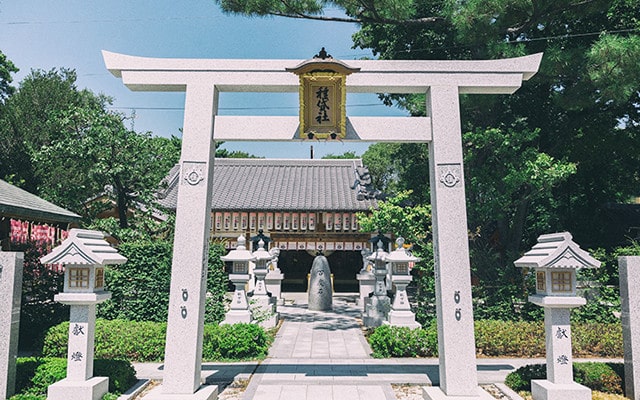
Jishaku-sha: A Popular Shrine for Good Matches and Romance
Jishaku-sha enshrines the husband-and-wife pair who were Sumiyoshi Taisha’s earliest priests, and is a guardian of good matches and marital harmony, loved by singles and newlyweds. The shrine provides ema plaques for visitors to hang with wishes for love, and also offers the distinctive “Hadaka-bina” and “Jishaku doll” amulets. The Hadaka-bina symbolizes an undecided match, and worshippers can dress it, which means adding color to their own romance by hand.
On weekends young couples and people seeking love often come specially to worship, and the ema wall is hung with wooden wish plaques. It is a corner of the grounds full of warmth and stories, suited to travelers who enjoy prayer experiences.
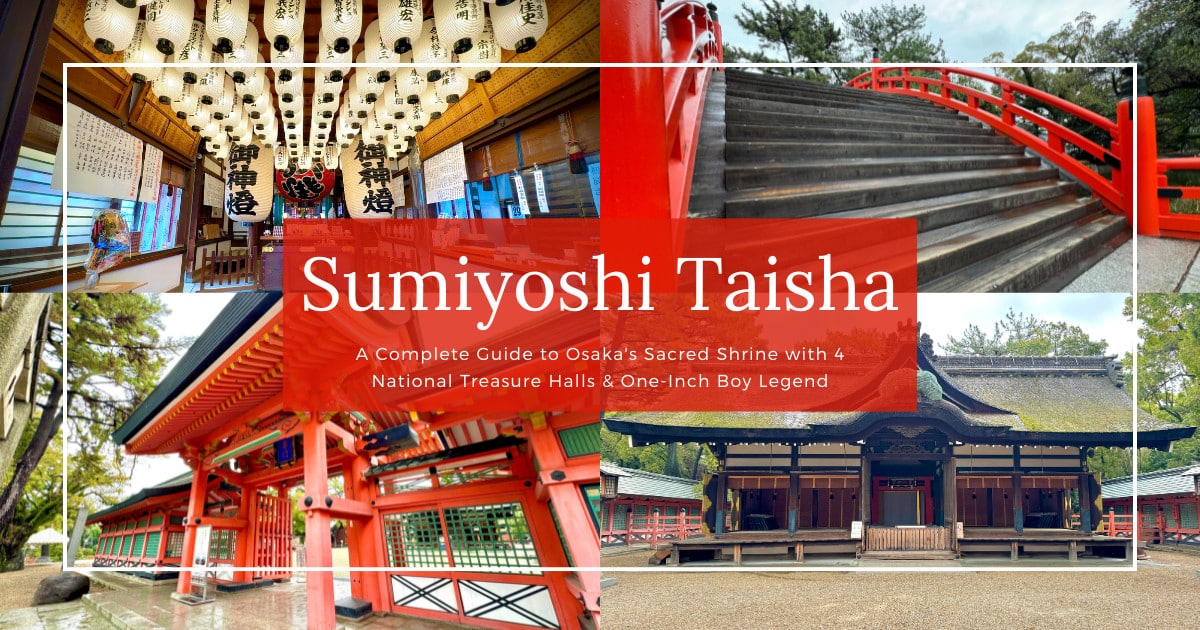
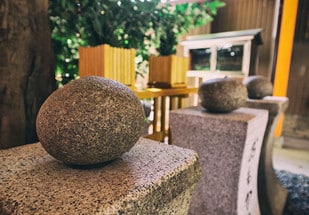
Omokaru Stone: Divining Whether Your Wish Will Come True by Touch
The Omokaru Ishi (“heavy-light stone”) is a traditional divination stone. After making a wish, worshippers first lift the stone to feel its weight, then lift the same stone again while silently reciting the wish. If it feels lighter, the wish is likely to come true; if heavier, it suggests more effort or patience is needed.
This playful way of divining appeals to young visitors and couples. It is relaxed and interactive, one of the few prayer experiences with a game-like quality, and it gets talked about on social media, making it a fun interlude in a shrine visit.
Oumi Shrine: Maritime Faith Protecting Sailors and Fishermen
Oumi Shrine is one of Sumiyoshi Taisha’s sub-shrines, enshrining Toyotamahiko-no-mikoto and Toyotamahime-no-mikoto. Since ancient times it has been an important place for fishermen and sailors to pray for safe voyages and good catches. The building also follows the Sumiyoshi-zukuri style, and although smaller than the main halls, it keeps the same solemn red-and-white contrast. It is an extended stop for understanding the roots of Sumiyoshi Taisha’s connection to the sea.
Because of its quiet location, it sees relatively few visitors, and suits travelers who prefer to avoid crowds and savor architectural details. It is also a lesser-known corner where photographers can capture the lines of Sumiyoshi-zukuri.
Onda: A Sacred Rice Field Where Rites Have Continued for a Thousand Years
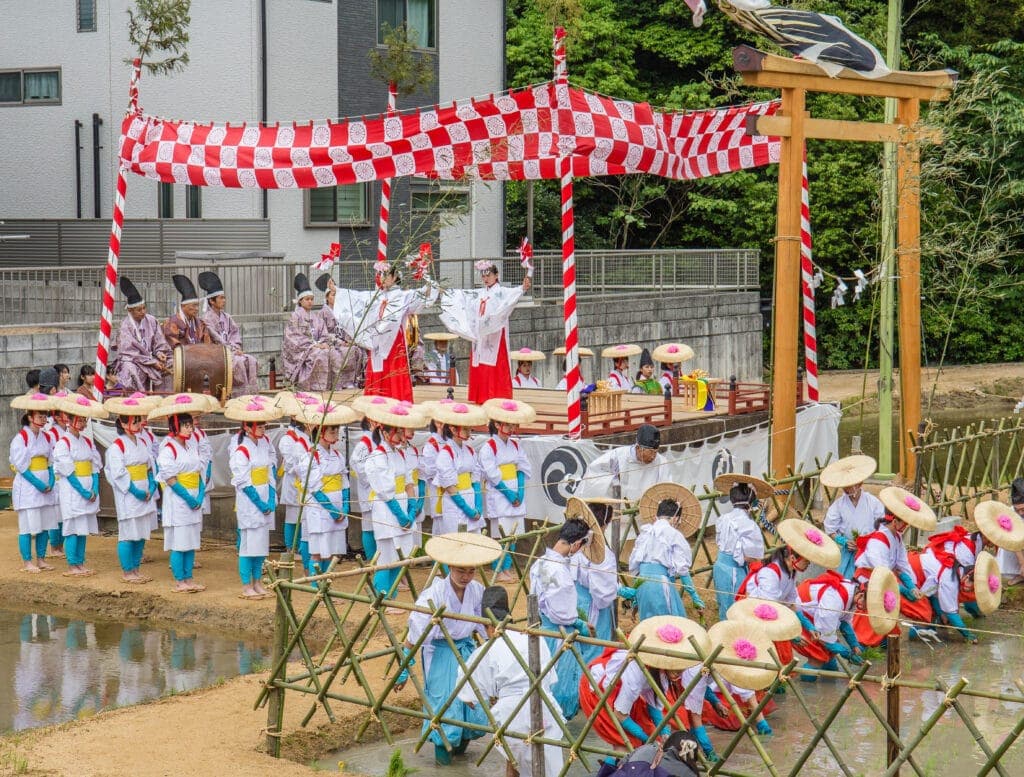
Onda is the sacred rice field within Sumiyoshi Taisha’s grounds, used for the annual Otaue Shinji rice-planting ritual, one of Japan’s Important Intangible Folk Cultural Properties, symbolizing a bountiful harvest and the continuation of agricultural faith. A grand rice-planting ceremony takes place in mid-June each year, in which saotome (young women planters) in traditional dress plant rice ritually, accompanied by bugaku and other performances in a lively yet solemn scene.
Salt-tolerant plants grow around Onda, showing that this area once lay close to the ancient coastline. It is a precious natural and cultural landscape for understanding how Sumiyoshi Taisha’s geography changed and how it merged with farming faith, and is worth noting for travelers interested in history and geography.
Asazawa-sha: An Elegant Shrine for Skill and the Protection of Women
Asazawa-sha is the third stop on the Hatsutatsu Mairi route, enshrining Ichikishimahime-no-mikoto, regarded as a deity of the arts and a protector of women. It draws many worshippers from the performing arts and the beauty industry who come to pray for better skills and beauty. The area around the shrine was once marshland and was full of irises in bloom, so it is also called Osaka’s version of a “kakitsubata famous spot,” and the scenery is especially lovely when the flowers bloom in spring and summer.
For travelers who work in creative or performing fields, or who hope to improve their charm and talent, Asazawa-sha is a meaningful place to pray. The shrine is small, but carries a distinctive culture of faith centered on women.
Oto-sha: The Harvest Shrine for Clearing Debts and Fulfilling Wishes
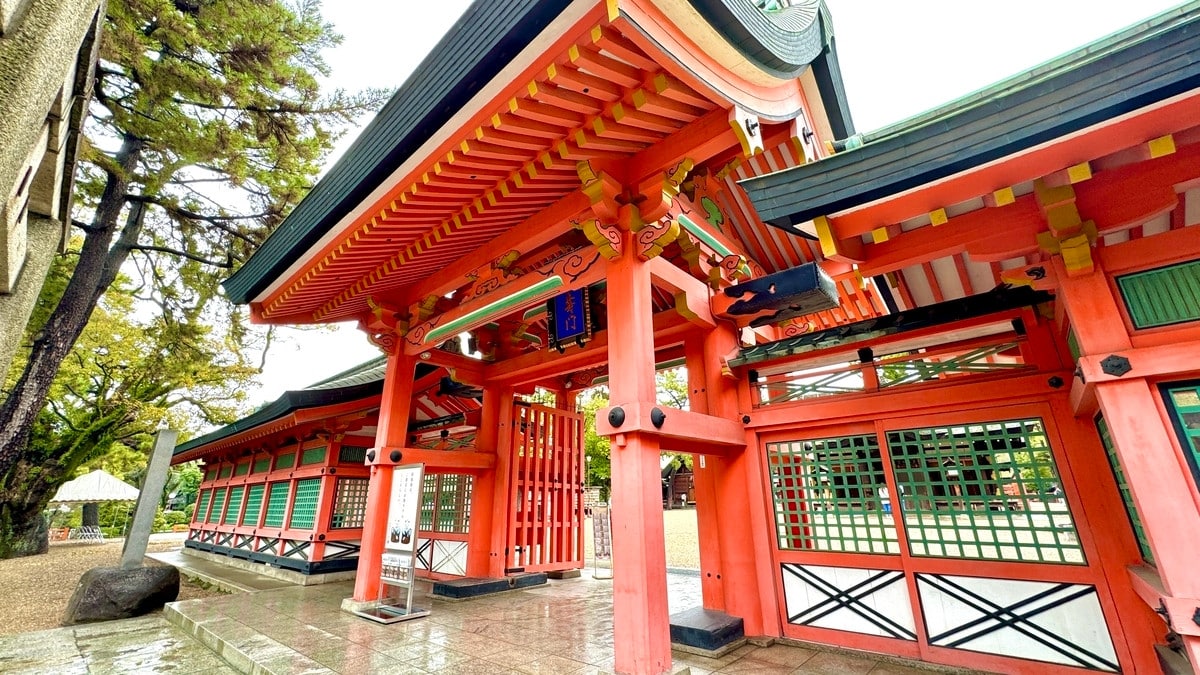
Oto-sha is the final stop on the Hatsutatsu Mairi route, enshrining the deity Otoshi. It symbolizes a bountiful end to the annual business cycle and is especially known for “clearing debts and fulfilling wishes,” drawing people who want to settle their finances or bring a wish to completion. Within the Oto-sha precinct, the “Oitoshiboshi-sha” also has the “Omokaru stone” for divining whether a wish will come true, and there are often long lines on weekends and on hatsutatsu days.
Completing the pilgrimage from Taneka-sha through Kusuka-sha and Asazawa-sha to Oto-sha is regarded as fulfilling the business-cycle prayer, and it is the key final stop for experiencing Sumiyoshi Taisha’s faith culture.
How Much Does a Visit to Sumiyoshi Taisha Cost? Admission, Amulets and Guided Experiences
Visiting Sumiyoshi Taisha itself is completely free. The gates open at 6:00 a.m. from April to September and 6:30 a.m. from October to March, and the inner precinct (mikaki-uchi, the main hall area) closes at 5:00 p.m., which is very friendly for budget travelers. If you want a deeper experience, though, there are costs for amulets, goshuin stamps, limited-edition items and day tours that combine it with central Osaka. Here are the experiences around Sumiyoshi Taisha most worth spending on, so you can plan your budget and itinerary before visiting in 2026.
Sumiyoshi Taisha Ticket Information: Visiting Hours, Facility Hours and Prayer Fees
No admission ticket is needed for Sumiyoshi Taisha, but facilities on the grounds have different opening hours, and arriving in the late afternoon may mean missing Gosho-gozen and the Omokaru stone. The following is based on the Sumiyoshi Taisha official website:
- 🎫 Visiting fee: Visiting the grounds is free and no ticket is required.
- 🕕 Opening time: 6:00 from April to September and 6:30 from October to March (6:00 on the 1st of each month and on hatsutatsu days).
- 🕓 Closing time: Outer gate at 16:00 and inner precinct at 17:00 year-round; hours differ during the New Year period and the Sumiyoshi Matsuri (summer festival).
- 🏮 Facility hours: Amulet office 9:00-17:00; Gosho-gozen and Omokaru stone from opening to 16:00 (Godairiki pouches available from 9:00); Kusuka-sha and Taneka-sha 9:00-16:00.
- 🙏 Prayers: Accepted 9:00-15:50, no reservations, walk-ins only; the fee is ¥10,000 per wish, and “oazukari kito,” where you only pick up a talisman and amulet at the reception desk, is ¥5,000.
Formal Worship at Sumiyoshi Taisha and a Tour of the National Treasure Main Halls: Free Admission and the Most Valuable Experience
The four National Treasure “Sumiyoshi-zukuri” main halls of Sumiyoshi Taisha can be visited for free, which is rare in the Kyoto-Osaka-Kobe region. Visitors can freely view the first through fourth main halls and see up close the straight rooflines and vermilion pillars and beams of one of the oldest surviving shrine styles in Japan.
For a more formal visit, you can apply for a prayer at the prayer reception to the left of the main halls, at ¥10,000 per wish (“oazukari kito” ¥5,000). The official site says no reservations are accepted and prayers are handled on a walk-in basis daily from 9:00 to 15:50. It suits those who love Shinto culture.
Simply visiting Sumiyoshi Taisha for free already conveys a solemn atmosphere and offers excellent value, so it is highly recommended as a top choice on an Osaka itinerary.
Photos and Wishes at Sorihashi (Taiko Bridge): Sumiyoshi Taisha’s Most Iconic Photo Landmark
Sumiyoshi Taisha’s landmark Sorihashi (Taiko Bridge) is a vermilion half-circle that forms a full circle with its reflection, ideal for photography. Crossing is free, but the maximum slope is about 48 degrees, and the official site reminds visitors to hold the handrails on both sides. Non-slip shoes are recommended, and extra care is needed in the rain.
Many visitors line up here for photos, especially those in kimono. If you plan to wear a kimono, check the rental hours and return procedure with the kimono shop beforehand.
Going in the morning avoids the crowds, and the soft light makes it easier to get ideal photos.
Amulets, Goshuin and Limited Items: Bring Sumiyoshi Taisha’s Blessings Home
Sumiyoshi Taisha offers a wide range of amulets, including ones for safe sea travel, business prosperity and the “Hatsutatsu amulet” made specially for Hatsutatsu Mairi, with prices as posted at the amulet office. Hatsutatsu Mairi is a tradition unique to Sumiyoshi Taisha, in which people visit on the first Day of the Dragon each month to pray for business success. Goshuin collectors can also get a goshuin stamp at the amulet office, with the offering likewise as posted on site.
In addition, the lucky cat given at Kusuka-sha, affectionately nicknamed “Hatsutatsu-san,” beckons people with its left hand and wealth with its right, and is a popular souvenir among women and cat lovers. Items whose prices the official site publishes include the Godairiki stone amulet pouch at ¥500, the matchmaking Omoto doll at ¥1,000, the marital-harmony Hadaka-bina at ¥2,000, the Taneka-sha prayer for children (Taneka doll, amulet and ema) at ¥2,000 and the love fortune at ¥200; for other amulets the official site lists no prices, so go by what is posted at the amulet office. At New Year and during major festivals, seasonal limited-edition amulets and ema are also released in limited quantities, so watch for announcements at the amulet office.
A total budget of about ¥1,500 to ¥3,000 is enough to bring home a meaningful prayer keepsake.
Half-Day and Full-Day Guided Tours Including Sumiyoshi Taisha from Central Osaka: A Good Way to See the Surrounding Sights in One Go
For travelers who want to save on transportation and planning time, platforms such as KKday and Klook offer half-day or full-day guided tours of southern Osaka that include Sumiyoshi Taisha. They usually combine nearby Sumiyoshi Park, the shopping streets along the Nankai line, and even sights such as Nintoku Emperor’s tomb in Sakai. Prices vary depending on whether transport, a Chinese-speaking guide or lunch is included, so go by what is shown on the booking page.
The advantage of these tours is that a professional guide explains the history of Sumiyoshi-zukuri architecture and Sumiyoshi Taisha’s literary significance in The Tale of Genji, making the visit deeper and sparing you the trouble of working out transfers yourself. Itineraries differ, and they suit families or groups with older travelers; confirm the meeting point and itinerary details before departure.
Book early on the platform and confirm the meeting point. In peak seasons (such as the New Year hatsumode period), places fill up easily, so plan ahead.
Where to Stay Nearby
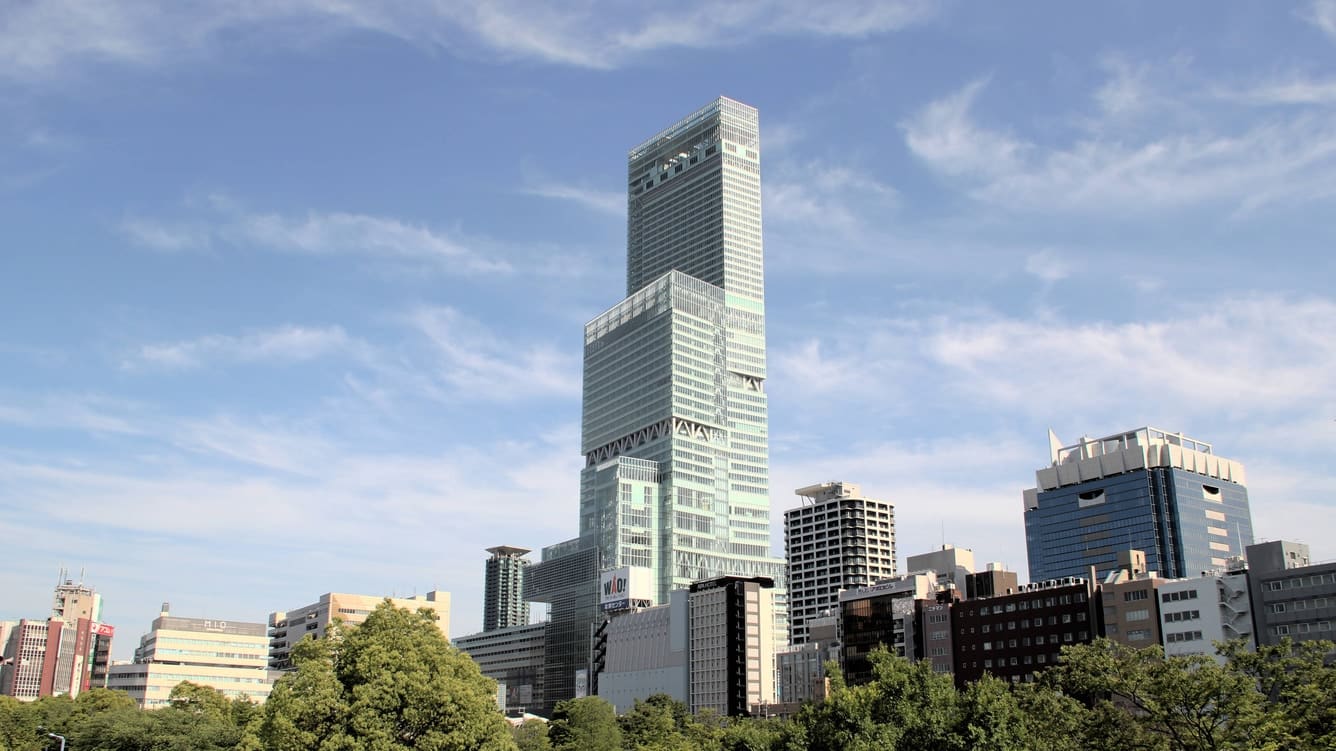
Sumiyoshi Taisha is about a 3-minute walk from Sumiyoshitaisha Station on the Nankai Main Line, and about 10 minutes from Namba by Nankai Railway. It suits staying around Namba, Shinsaibashi or Tennoji: visit the shrine in the morning, then return to the city for the rest of your itinerary.

FAQ
Answers to the questions readers most often search about visiting Sumiyoshi Taisha.
Q: How much is admission to Sumiyoshi Taisha?
Visiting the grounds of Sumiyoshi Taisha is free all year and no ticket is needed. For amulet prices, the official site lists the Godairiki stone amulet pouch at ¥500, the Omoto doll at ¥1,000 and the Hadaka-bina at ¥2,000; for other amulets and goshuin, go by what is posted at the amulet office (9:00-17:00).
Q: What is the easiest way to get to Sumiyoshi Taisha?
The easiest is the Nankai Main Line to “Sumiyoshitaisha Station” and a 3-minute walk, or the Hankai Tramway to “Sumiyoshi Torimae Station,” which puts you right at the main gate.
Q: What are Sumiyoshi Taisha’s opening hours?
According to the official site, the gates open at 6:00 from April to September and 6:30 from October to March (6:00 on the 1st of each month and on hatsutatsu days), and the outer gate closes at 16:00 and the inner precinct at 17:00, the same all year. Hours differ during the New Year period and the Sumiyoshi Matsuri, and the amulet office is open 9:00-17:00.
Q: What is the best season to visit Sumiyoshi Taisha?
Spring and autumn are the most recommended, when the reflection of Sorihashi Bridge with cherry blossoms or autumn leaves is at its most poetic. The Sumiyoshi Matsuri in late July and the New Year hatsumode let you experience the atmosphere of traditional festivals.
Q: Are there any taboos or things to watch out for when visiting Sumiyoshi Taisha?
Cross Sorihashi Bridge slowly and carefully because of its steep slope, keeping to the right, and wear flat, non-slip shoes. When searching for stones at Gosho-gozen, do not disturb the stones in areas where others are searching.
Q: How do I do Hatsutatsu Mairi?
On the first Day of the Dragon each month, visit Taneka-sha, Kusuka-sha, Asazawa-sha and Oto-sha in order. Completing 48 consecutive months is regarded as fulfilling the vow.
Q: How long does a visit to Sumiyoshi Taisha take?
Allow 1 to 1.5 hours for a first visit. To walk all four Hatsutatsu Mairi shrines and search for the Godairiki stones, allow about 2 hours to be comfortable; you can add or drop sub-shrines and time according to your own wishes.