
Iya Valley Guide: A Deep Mountain Gorge Known as One of Japan’s Three Hidden Regions
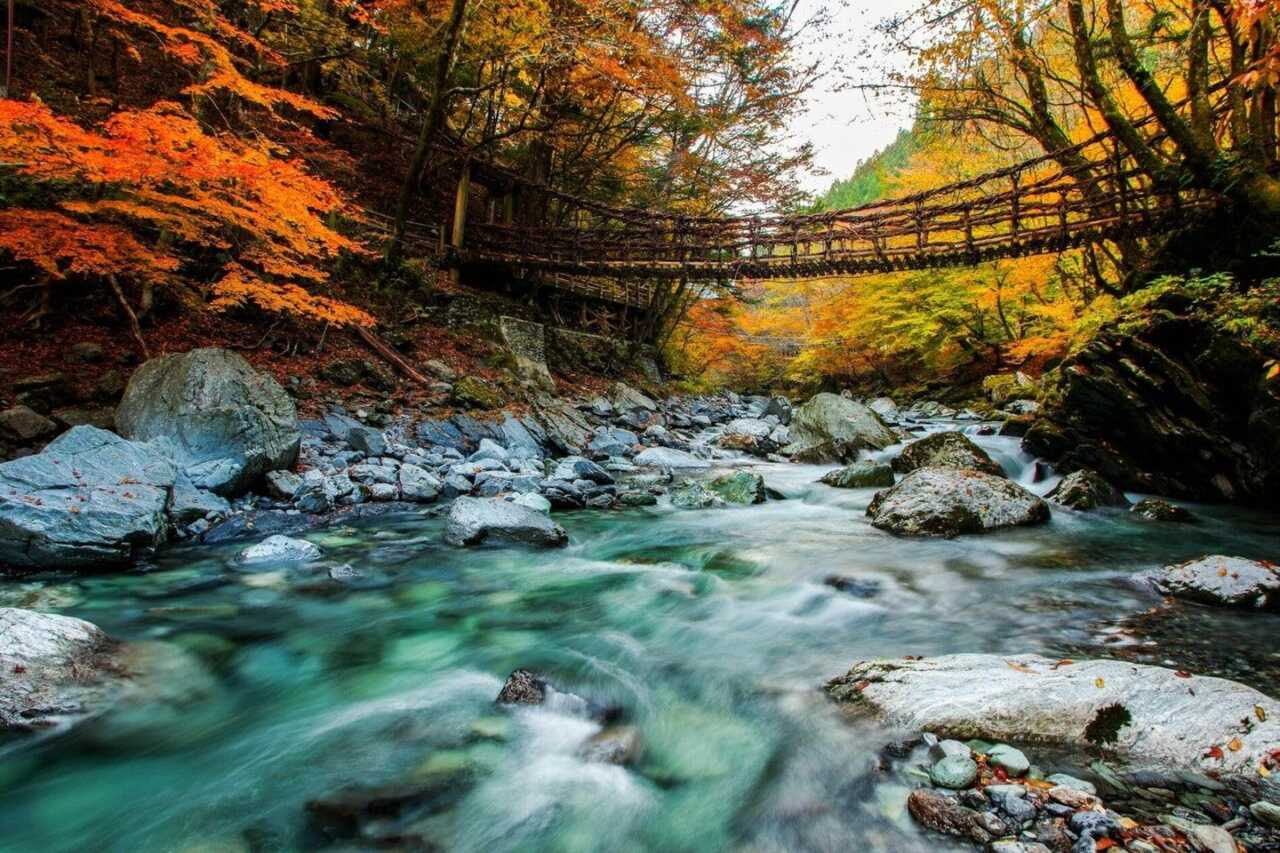
Iya Valley lies in Miyoshi City in western Tokushima Prefecture, a deep gorge carved over the ages by the Iya River, a tributary of the Yoshino River. Here the mountains are high, the valleys deep and the settlements scattered across steep slopes, and its long inaccessibility is why it is ranked alongside Shirakawa-go and Shiiba Village as one of Japan’s three hidden regions.
For travelers, the two most iconic sights in Iya are the Iya Kazurabashi, a swaying bridge woven from wild vines, and the bronze statue of a small boy at the edge of a 200-meter-deep cliff, the Peeing Boy. Farther north on the main Yoshino River are Oboke and Koboke, famous for their V-shaped gorges.
Be prepared: here “hidden region” is not just a figure of speech. Sights are far apart, mountain roads wind, and public transport runs only a few times a day, so an itinerary that is not planned well can easily get stuck. Below we cover transportation, admission, each sight and key cautions in full.
Where is Iya Valley: the mountains of Miyoshi City in western Tokushima
Iya Valley is in Miyoshi City, Tokushima Prefecture, in the center-west of Shikoku. It is far from central Tokushima, and you actually have to cross mountains to reach Takamatsu in Kagawa or Matsuyama in Ehime. The area is divided into Nishi-Iya and Higashi-Iya, and the Kazurabashi that most visitors go to is in Nishi-Iya.
Because the terrain is a deeply cut gorge, roads are mostly carved along cliff walls, with rock on one side and a drop on the other, and some stretches are quite narrow, which is why the area was seen as cut off from the world until recent times.
Although both are in Miyoshi City, driving between Higashi-Iya and Nishi-Iya still takes a while, so when planning, do not treat it as a single “park” but as a valley you move along.
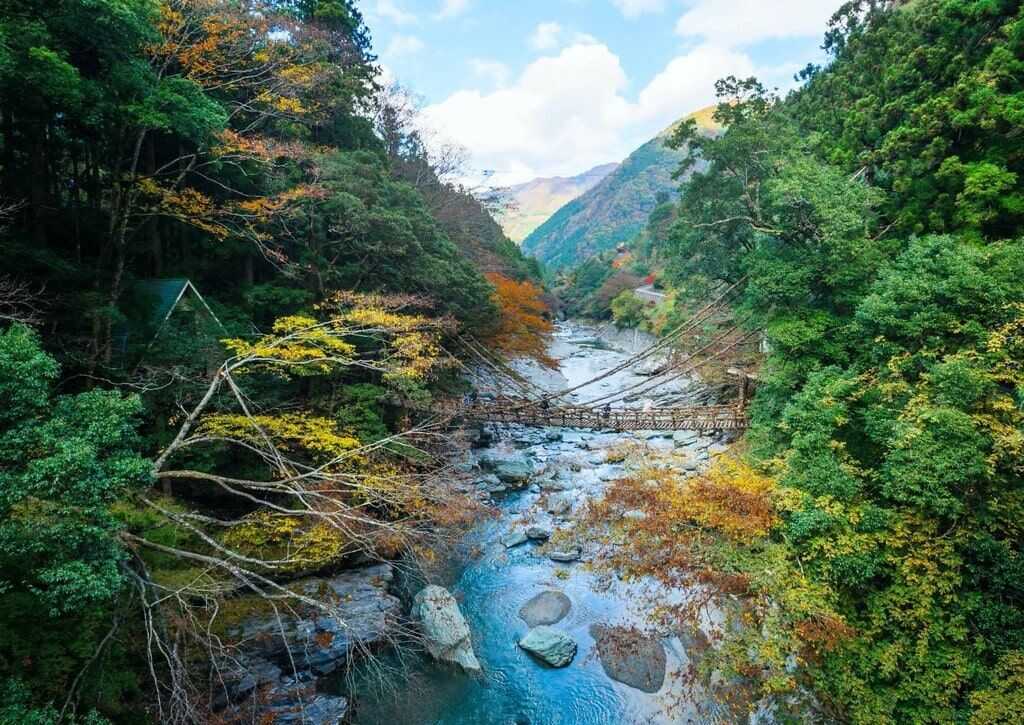
Iya Kazurabashi: one of Japan’s three strange bridges, woven from wild vines
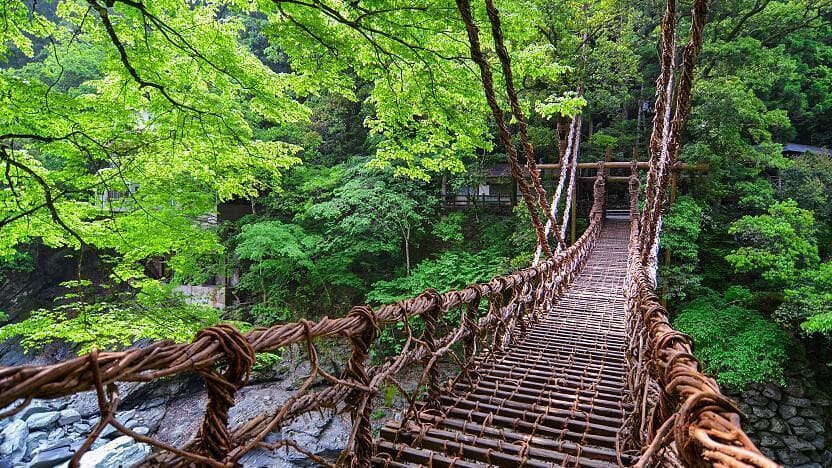
The Iya Kazurabashi is woven from wild vines (shirakuchi-kazura) and spans the Iya River. It is one of Japan’s three strange bridges and a nationally designated Important Tangible Folk Cultural Property, about 45 meters long and more than ten meters above the water.
The deck is made of spaced crosswise planks rather than flat boards, so as you step you can see the rushing stream through the gaps below, and the whole bridge sways as people walk.
The bridge is not an original relic: it is rebuilt every three years with freshly cut vines, so the bridge you see is always “alive,” and this continuing renewal of the traditional technique is itself part of cultural preservation.
The price of a hidden region: only a few buses a day and narrow mountain roads
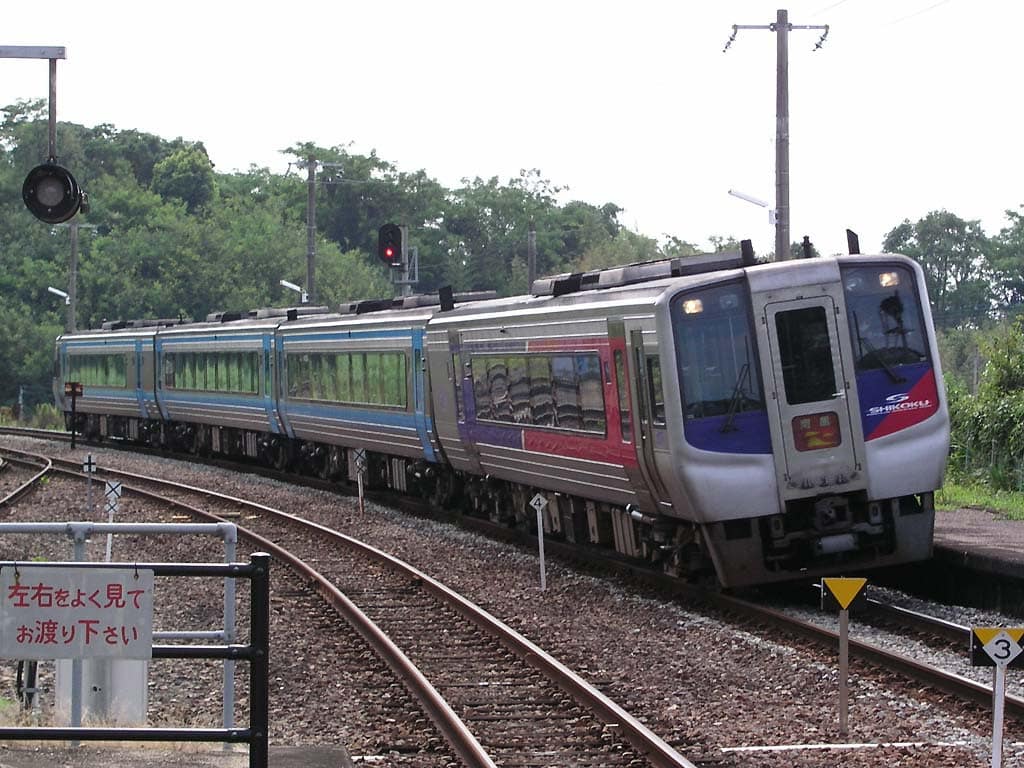
The biggest barrier in Iya is transport. By public transport you first take JR to Oboke Station or Awa-Ikeda Station and then transfer to a local route bus, but there are only a few runs a day, each destination has a different route, and missing one often means a wait of several hours.
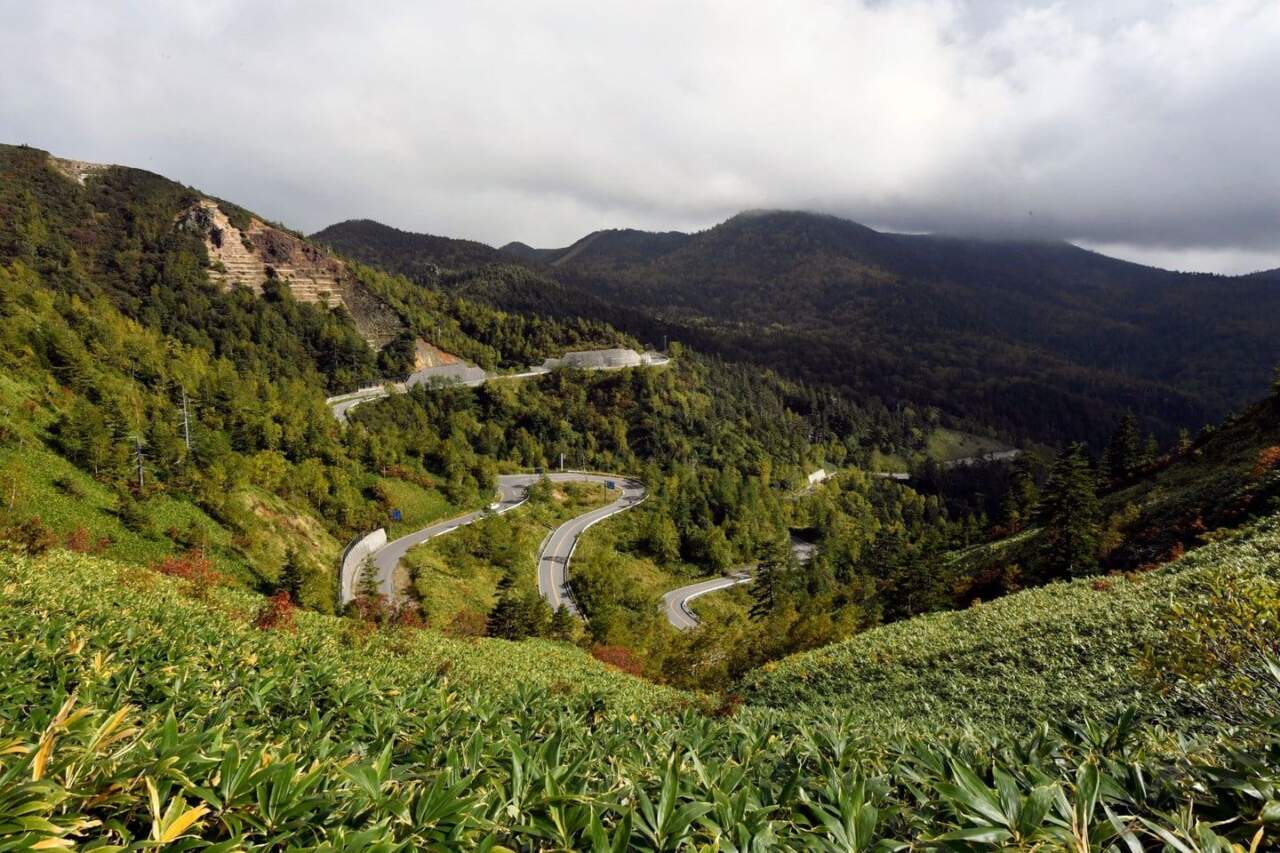
Driving is the most flexible, but the prefectural roads are mostly single-lane, you must back up to a passing bay when meeting oncoming traffic, and with continuous curves and rockfall sections it can be stressful for those unfamiliar with mountain roads.
If you do not want to drive and worry about getting the timetables wrong, joining a regular sightseeing bus or day tour from the local area is the least stressful, though the downside is fixed stop times at each sight.
How to plan: combining the Kazurabashi, the Peeing Boy and Oboke
A classic one-day itinerary: in the morning take a cruise at Oboke to see the gorge, at noon eat Iya soba at the roadside station, in the afternoon walk the Kazurabashi and waterfall, and on the way back stop at the Peeing Boy for a view of Iya Valley. By car this takes about a full day.
If you only have half a day, we suggest focusing on the Kazurabashi area, since it is closest to Oboke Station and has more bus runs; adding the Peeing Boy requires a car. Restaurants in the mountains close early, so plan your meal times ahead.
Stretch it to two days and you can go deeper into Higashi-Iya to see the Nijyu Kazurabashi and the Ochiai village, and stay one night at a gorge hot spring, avoiding a day of constant rushing.
How to get to Iya Valley: JR plus bus, driving and day tours compared
The two transport hubs for Iya Valley are Oboke Station and Awa-Ikeda Station on the JR Dosan Line. The former is closest to the Kazurabashi and Oboke Gorge, while the latter is the start and end point of the bus routes, with more choice of runs.
Wherever you start from, you first have to accept one fact: bus service here is counted in “a few runs a day,” not “one every few minutes.” Here is the real situation for each way of getting there.
From JR Oboke Station: take the Shikoku Kotsu bus to Kazurabashi Yumebutai
The most direct way to the Kazurabashi is to take the JR Dosan Line to Oboke Station, board the Shikoku Kotsu Iya line bus in front of the station, and get off at Kazurabashi Yumebutai stop, then walk about five minutes to the bridge. It is the simplest route by public transport. However, this route has only a few runs a day, and the outbound and return times are lopsided, so you might get there in the morning but be unable to get back in the afternoon. Be sure to check both outbound and return times before you go. Oboke Station is unstaffed or a simple station with few facilities, so for waiting you can choose the nearby roadside station or the cruise boarding point.
-Klook.jpg)

From JR Awa-Ikeda Station: the transfer point with the most bus routes
Awa-Ikeda Station is the main station in central Miyoshi, and the bus terminal beside it is where routes are most concentrated. Buses to Iya run on two lines, via Oboke and via Deai, with only a few runs a day in total.
Reaching the Peeing Boy requires the line via Deai that passes through Iya Valley, which has even fewer runs, so many travelers using public transport give up after just the Kazurabashi. Around the station there are convenience stores and rental car locations, so you can pick up a car in front of the station and drive, saving the fatigue of driving mountain roads from Tokushima or Takamatsu.
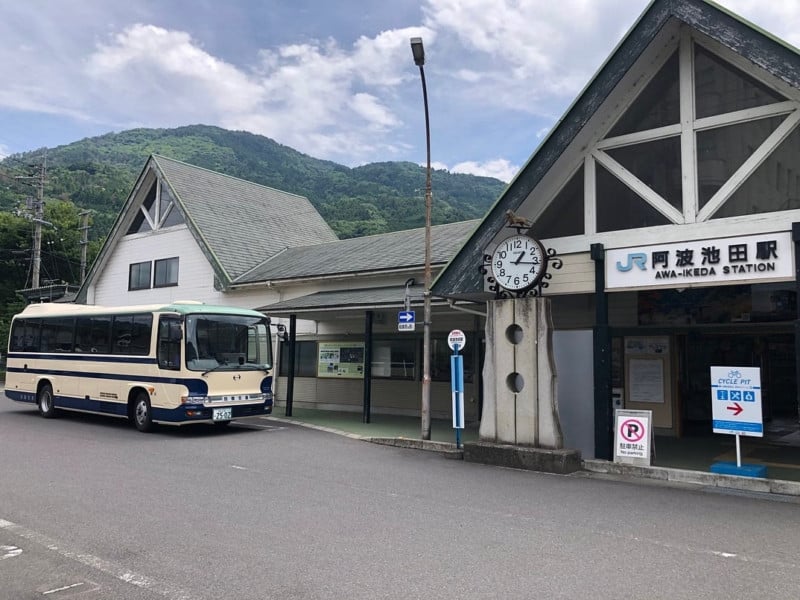
Awa-Ikeda has more lodging and dining choices than Oboke, so if you are exploring Iya by public transport, staying here as a base is more practical.
Driving there: narrow roads, many curves, and don’t blindly trust your GPS
Drive along the Yoshino River on National Route 32, then turn onto a prefectural road toward Iya Valley. It is a little over twenty kilometers to the Peeing Boy area, about 45 minutes by car. It looks close, but because of the continuous curves it actually takes longer than you would expect.
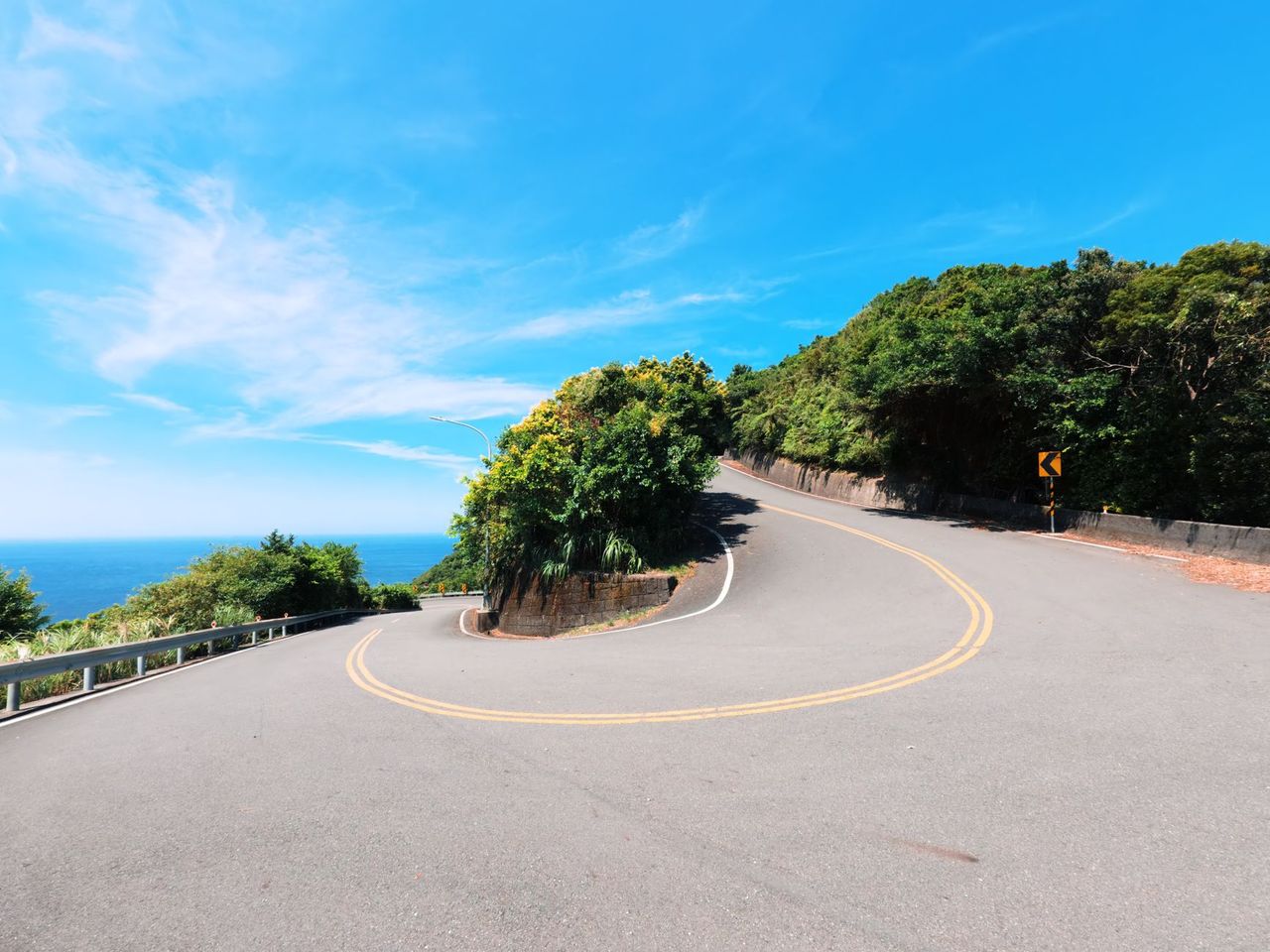
Note that some prefectural and industrial roads are only one lane wide, and when you meet oncoming traffic one side must back up to a passing bay. Your GPS sometimes sends you down even narrower shortcuts, so we suggest sticking to the main prefectural roads and not blindly following the shortest route.
In winter the mountains may have snow or ice, and some sections close; in the rainy season watch for rockfall. Check road condition notices before you set out, and confirm that your rental car has equipment for snow.
The least stressful way: regular sightseeing buses and day tours
For travelers who do not drive and do not want to fight the timetables, there are regular sightseeing buses and various day tours locally. They usually link several highlights such as the Oboke cruise, the Kazurabashi and the Peeing Boy and cover them in one day, with a guide included.
The benefit is that you never have to worry about transfers and are guaranteed to reach spots that buses struggle to reach. The downside is fixed stop times at each stop, so you cannot take a few more photos at the Kazurabashi or sit a while longer by the gorge. Some tours include lunch or tickets separately, so check what is and is not included before signing up, so you are not hit with an unexpected extra cost on the day.
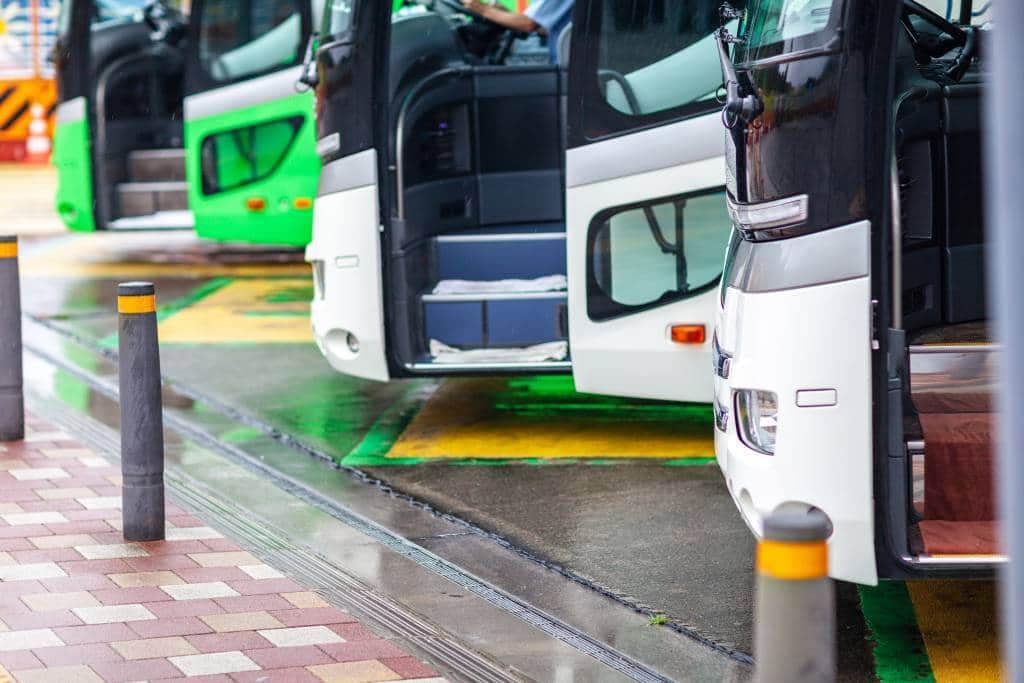
These tours mostly require advance booking, have minimum participant numbers and seasonal suspensions, and in peak season fill up very early. Once you decide on your plans, please confirm the departure date and availability as soon as possible.

From other prefectures: Dosan Line limited express and highway bus options
From Takamatsu in Kagawa, you can take a JR Dosan Line limited express south, reaching Oboke Station in a little over an hour, the smoothest rail route into Iya from other prefectures. Coming north from Kochi also uses the Dosan Line, with a ride of about an hour.
Coming from Kansai, you mostly go to Tokushima or Takamatsu first and then transfer to the Dosan Line; there are also highway buses that go straight to the Awa-Ikeda area, suited to people who do not want many transfers. Either way, leave time to transfer to a local bus. If you plan a same-day round trip, be sure to confirm the last limited express home first, since shuttle buses in the mountains stop earlier than the trains, and if you miss one you can only rely on a taxi.
What to see in Iya Valley: vine bridges, the Peeing Boy, Oboke and Oku-Iya explained
The sights around Iya are spread along two valley lines: the Iya Valley of the Iya River, and Oboke and Koboke on the main Yoshino River. The two have different characters, the former deep and quiet and the latter open and grand.
Below are the most worthwhile places one by one, including admission, experiences and seasonal limits, and marking which are easy to reach only by car.
Walking the Kazurabashi once: the real experience of gaps underfoot and a swaying bridge
The Kazurabashi is one-way. After buying a ticket you walk to the other bank, only a few dozen meters in all, but the gaps between the planks are obvious, the stream is right below you, and when it is crowded the bridge sways, so most people walk very slowly and it feels longer than the actual distance.
We suggest wearing flat shoes, since high heels easily catch in the gaps, and make sure phones, cameras and other items are stowed away or fastened with a strap so they do not fall into the stream. The entrance and exit of the bridge are on opposite banks, so after crossing you need to loop back to the parking lot along the riverside path, and this stretch should also be counted in your time.
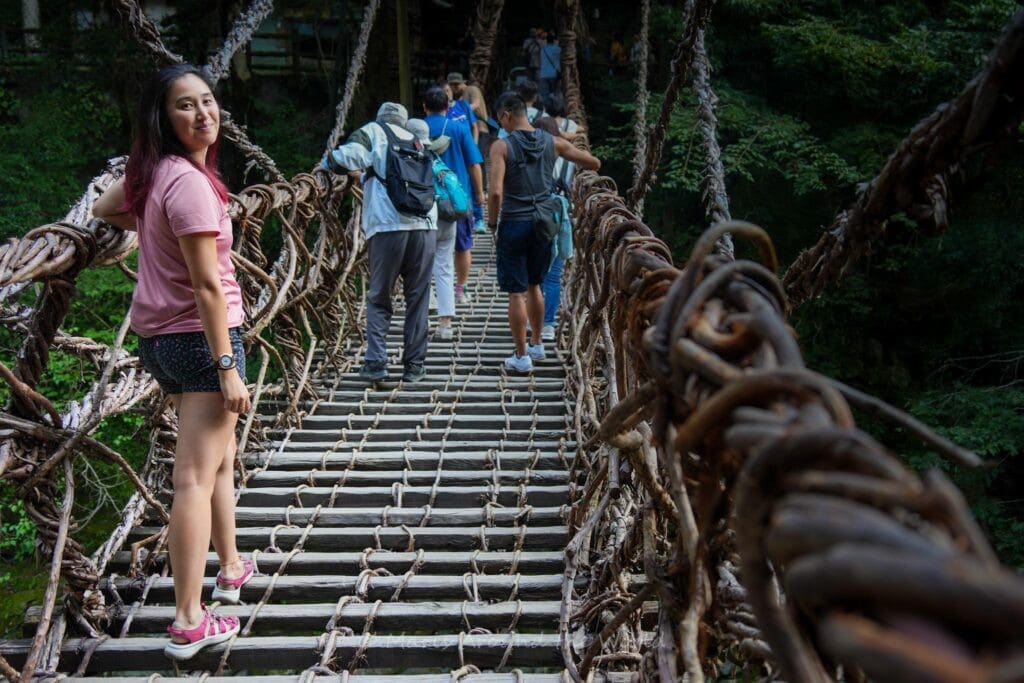
The stream below the bridge is clear and the banks are pristine woods. After crossing you can go to the riverbed and look back at the whole bridge, and from that angle you can sense its structure better than from on the bridge.
Can you walk the Iya Kazurabashi in the rain? A rainy-day backup
The Iya Kazurabashi is open every day of the year and the official notice says it operates as usual in the rain, but it may close temporarily during heavy rain warnings and similar conditions, so check with Kazurabashi Yumebutai or the Miyoshi City tourist information center before you set out. After rain the planks and the riverside path are slippery, so wear non-slip soles and slow down.
If it is closed or you do not want to cross, you can go instead to indoor facilities such as the Yokai and Stone Exhibition Hall at Oboke, or take a cruise, though cruise runs are also adjusted by water level and weather.
Biwa Falls: a cool spot right after the Kazurabashi
A few steps past the Kazurabashi you will see a waterfall dropping from the rock wall. The flow is not huge, but the drop is high enough and the sound of water is clear, and it is wrapped in shade, so in summer you clearly feel the cooling effect beside it, making it a good rest stop.
The name of the falls is said to come from a legend that Heike fugitives played the biwa here, longing for the capital. In fact quite a lot of oral history related to the Heike fugitives is passed down in this area, a very special part of Iya culture. In front of the falls there is a small plaza with benches, the most natural rest stop after crossing the bridge, and in summer many people stay here a while before heading back.
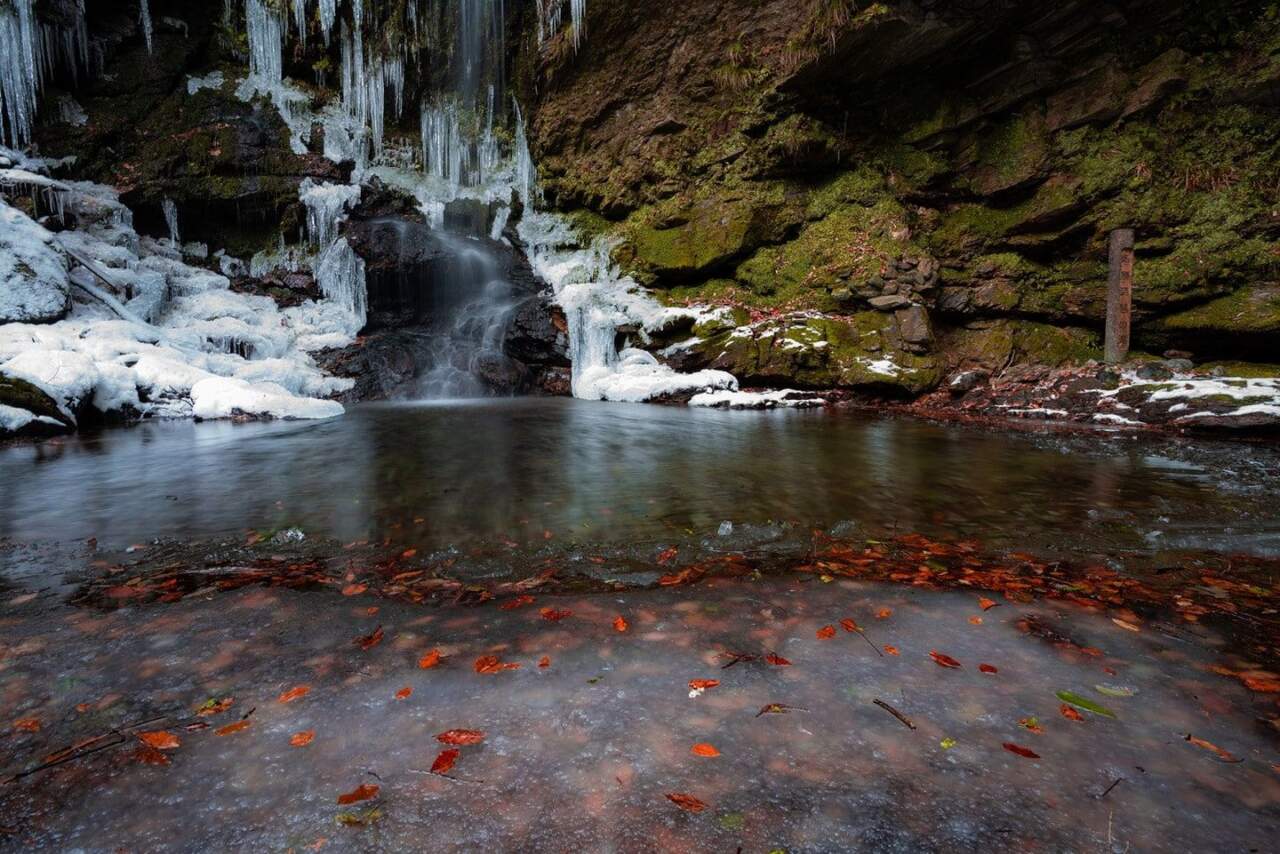
The path to the falls is paved, gently sloped and short, so it is reachable with children or older family members. The stone surfaces are slippery after rain, so watch your step near the water.
Kazurabashi Yumebutai: the hub for parking, dining and souvenirs
The roadside-station-style facility beside the Kazurabashi is the functional center of the area, with a parking lot, restrooms, a shop and dining space, and it is also a bus stop. Drivers mostly park and walk to the bridge.
The shop sells Iya specialties such as soba products, miso and processed mountain vegetables, plus freshly grilled snacks, making it a convenient supply point. In peak season and holidays the parking lot is often full around midday, so come early or toward evening; it is also a bus stop, and bus riders must wait here for the return.
Opening hours and some shops’ closing days change by season, and in winter on weekdays shops may close early, so do not leave your meal too late.
Peeing Boy: the courage-testing bronze statue on a 200-meter cliff edge
Heading east along the prefectural road along Iya Valley, you will see a bronze statue of a small boy on a jutting rock, posed peeing toward the valley floor. Below that rock is a cliff with a vertical drop of about 200 meters, and just standing beside it and looking down makes your legs weak.
The origin of the statue is said to be a memorial to local children or passing travelers who used to test their courage on this rock. It has now become the most recognizable landmark of Iya Valley and the place where the most people stop to take photos on this road. There are no restrooms or shops here and almost no shelter, and stays are usually only ten-odd minutes, so take care of supplies at the Kazurabashi or the roadside station first.
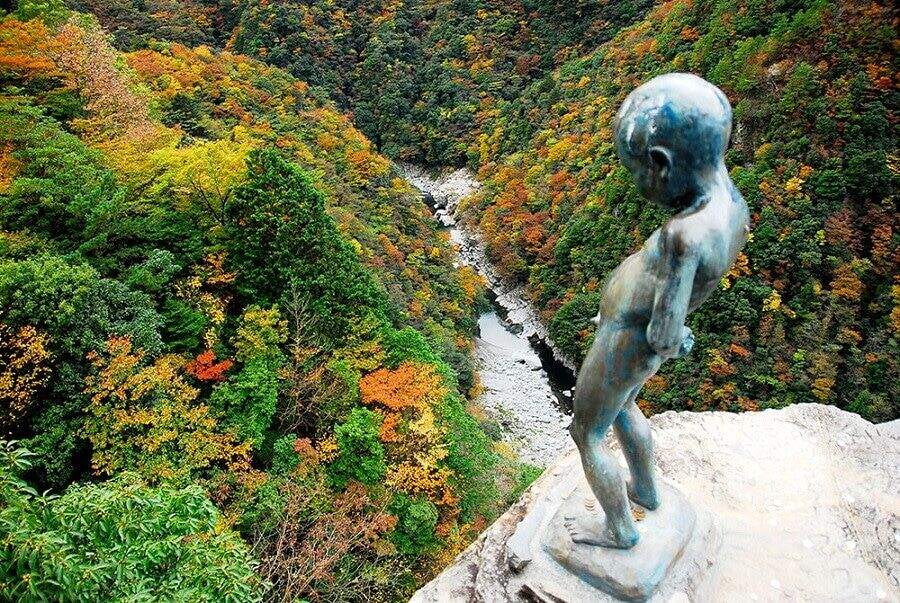
The spot itself is free, but there is very little roadside space to stop, and the road is narrow with many curves, so be careful of traffic when parking and getting out, and do not climb over the guardrail for a photo.
Iya Valley views: the whole prefectural road is a viewing platform
The prefectural road extending from the Peeing Boy area is itself the finest viewing stretch of Iya Valley. The road winds along the cliff wall, sometimes giving views of a bottomless valley and sometimes passing through forest, with several pull-off viewing spaces along the way.
Autumn is the most beautiful time on this stretch, when autumn leaves spread layer upon layer along the valley across the whole slope; spring’s fresh green and summer’s deep green are equally attractive, only with less layered color than autumn. There are also a few small cafes and observation-deck-style rest facilities along the way, where you can stop for a drink when tired from driving and see the valley again from a different height.
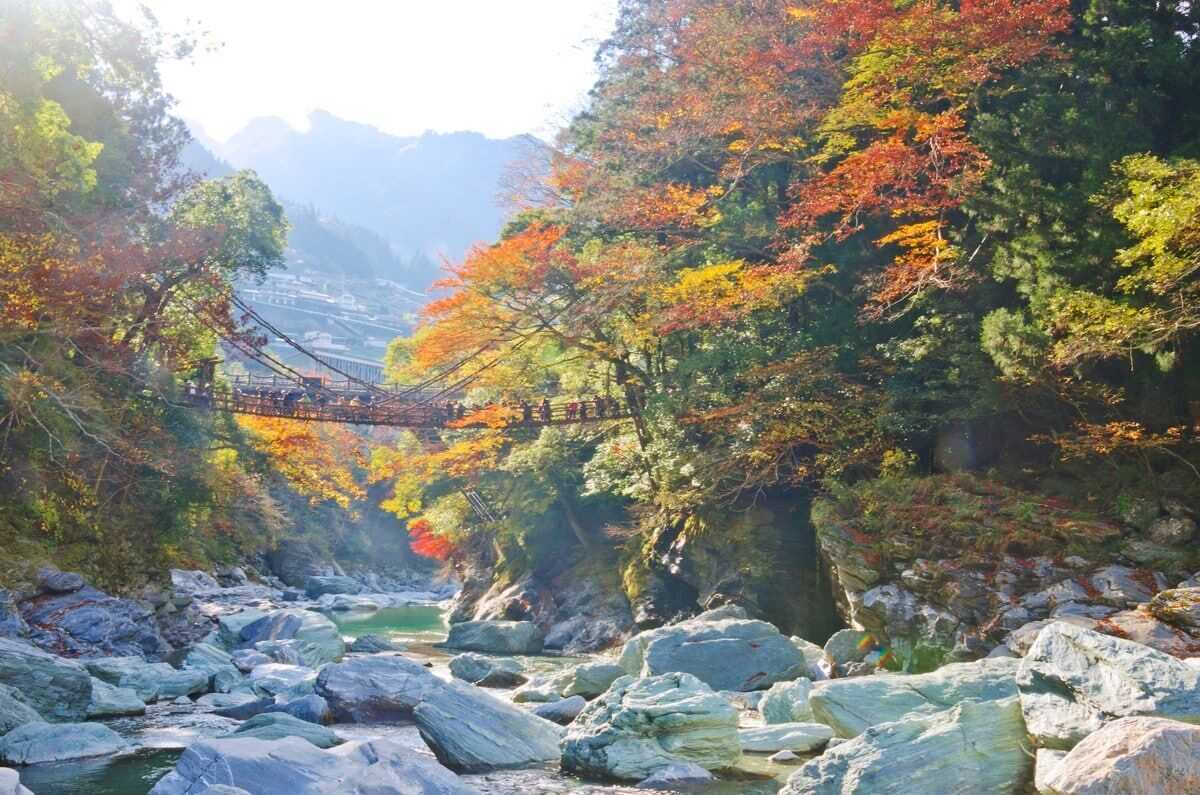
Because the road is narrow, stop only in official parking spaces and not at curves or blind spots. The road may be icy in winter, so check conditions before driving.
Oku-Iya Nijyu Kazurabashi: the hidden pair of male and female bridges side by side
Deep in Higashi-Iya is another set of vine bridges, a male bridge and a female bridge side by side. Because of the remote location there are few visitors, and the atmosphere is quieter and more primitive than the Nishi-Iya Kazurabashi.
There used to be a manual cable car here called Yaen, in which you pulled a rope to cross the stream yourself, but it is now out of service, so check the official notice before you set out. Phone signal is weak here, so we suggest downloading an offline map first and leaving ample time for the round trip to avoid driving the mountain road after dark.
This place is open only in the warm season and closed in winter, and can be reached only by driving a mountain road from Nishi-Iya, so be sure to confirm the opening period and hours for the year before you set out.
Ochiai village: a traditional settlement hanging entirely on a steep slope
Ochiai village in Higashi-Iya is a traditional settlement arranged tier upon tier along a steep mountain slope, designated a nationally important preservation district for groups of traditional buildings. Looking across from the observation point on the opposite hillside, the view of houses and terraced fields climbing the slope is stunning.
The village preserves quite a few old thatched and wooden houses, and some have been renovated for use as lodging, so you can actually stay in an old house on this hillside and experience the most primitive scenes of Iya life. From the opposite observation point to the inside of the village there is still a steep slope, so if you want to walk in, be ready for a climb, and wear comfortable shoes.
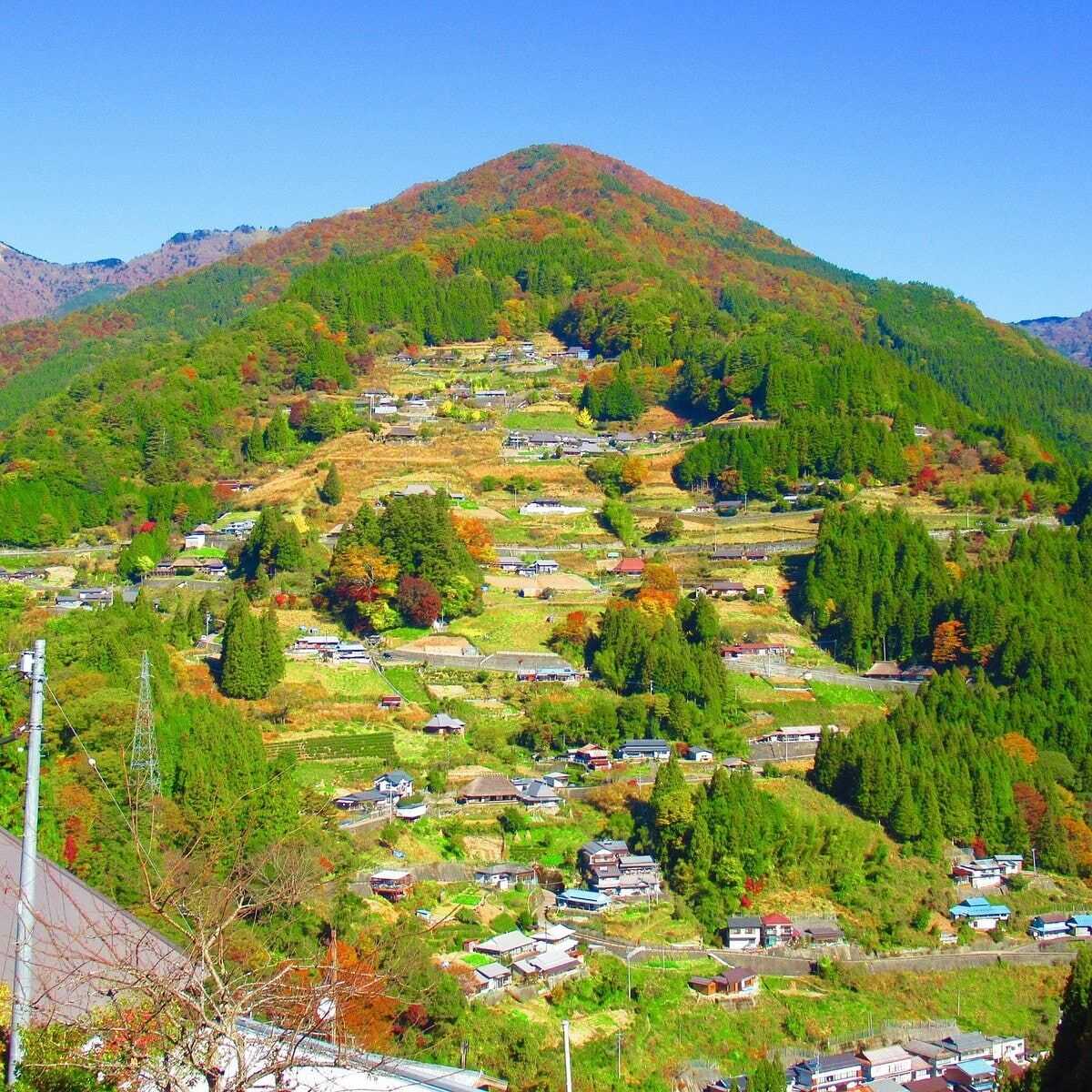
A reminder: this is an inhabited community rather than a scenic site, so when visiting, stay on public roads, avoid entering private yards, and do not photograph residents or the inside of homes.
Oboke cruise: seeing the rock walls of the V-shaped gorge from the water
Oboke is a gorge formed by the long erosion of crystalline schist by the rapids of the Yoshino River, and its rock walls on both banks look as if cut with a knife, the most open and grand scenery in the area. The boarding point is right beside the roadside station, and the cruise takes about thirty minutes, going up the gorge and back for a stretch.
The view from the water is completely different from that on the bridge, and you can clearly see the texture of the rock strata and the shapes polished by water, with commentary on board. Scenery differs greatly through the seasons, with fresh green in spring, autumn leaves in autumn and a different bleakness in winter. Upstairs from the boarding point there is usually a restaurant and a shop, so you can eat while waiting for the boat or after getting off, the most convenient place for supplies on this part of the trip.
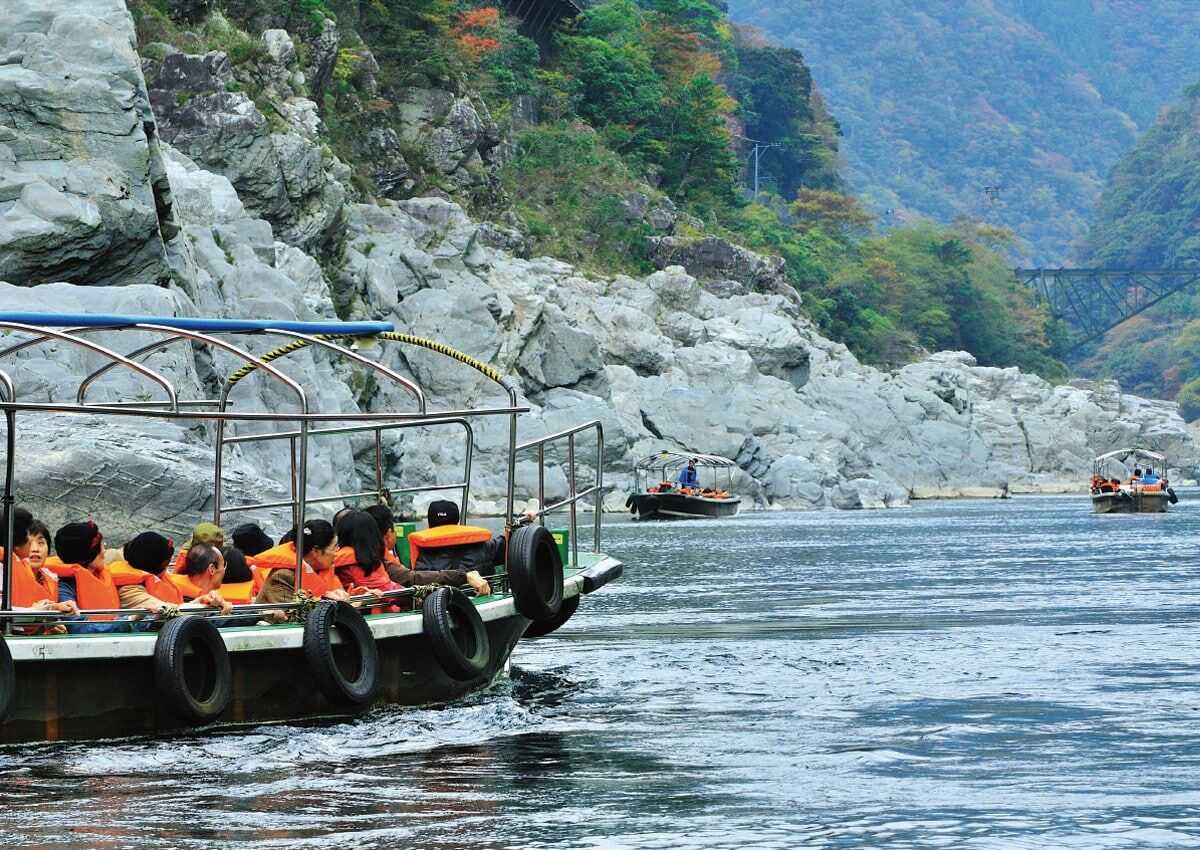
From September 1, 2026, the fare is ¥1,800 for adults and ¥900 for children (previously ¥1,500 and ¥750). Please follow the official announcements for actual amounts and operating status. Sailings are suspended when the water level is too high or the weather is poor.
Koboke: a famous stretch for white-water rafting fans
Koboke, next to Oboke, has a narrower channel, a bigger drop and faster current, and is a well-known rafting spot in Japan, where in summer you often see teams of rubber boats drifting downstream. From the viewpoint beside the national road you can see the entire stretch of rapids.
If you want to get in the water yourself, several local operators offer rafting and canyoning experience tours, mostly needing advance booking, with the water level deciding whether it can go ahead that day. Entry-level routes are available for those without experience. Along the national road there are several viewing spaces where you can park, and looking down from there shows the whole river most clearly, but the shoulder is narrow, so be careful of traffic behind you when you stop.
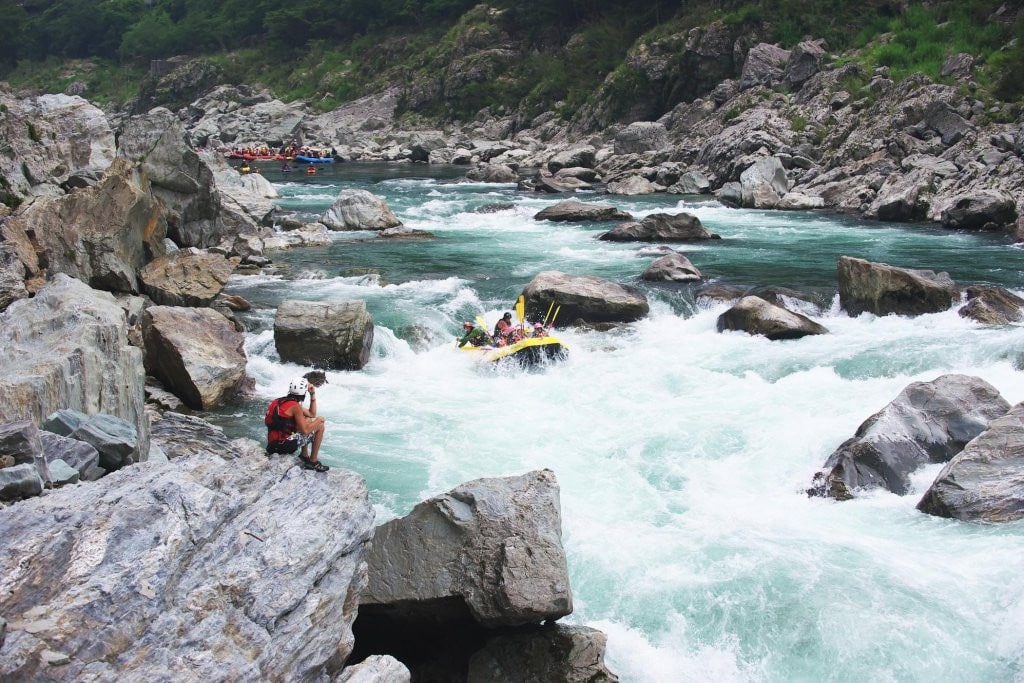
If you do not take part in water activities, simply watching the rapids from the roadside viewpoint is also worthwhile, especially after rain when the water volume is large and the force is quite striking. Please do not climb down to the riverbed by yourself.
Yokai and Stone Exhibition Hall: an indoor rainy-day backup
The roadside station in the Oboke area has exhibits on yokai legends and rock themes. The yokai stories passed down in the Iya mountains mostly relate to the dangers of mountain roads and changing weather, a way for earlier generations to pass on safety knowledge.
Inside there are also specimens of stone such as crystalline schist, so you can learn how the Oboke Gorge strata formed, and we suggest visiting before the cruise to get more out of it. The roadside station has a shop and dining, a fully equipped rest stop on this stretch of national road, suited to long-distance drivers; gas stations and convenience stores are sparse in the mountains, so make use of it for supplies.
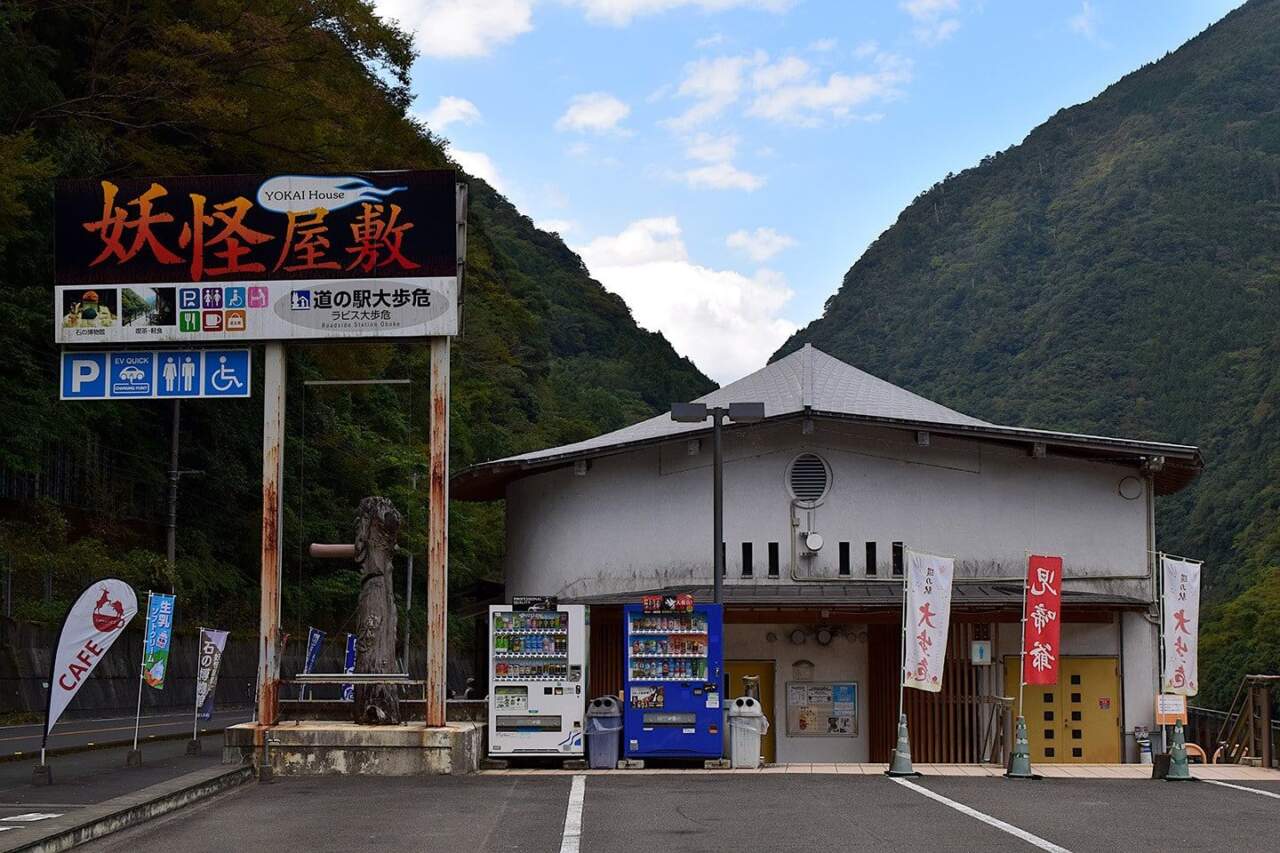
This is an indoor facility and a great backup in rain or when the cruise is suspended. Please follow on-site notices for opening hours and admission.
Iya’s gorge hot spring: ride a cable car down to the valley floor for a soak
Beside Iya Valley there is a hot spring facility famous for its unique way of bathing: from the lodge on the cliff you ride a dedicated inclined cable car straight down to the open-air bath on the valley floor, soaking while listening to the Iya River beside you, one of the most special experiences here.
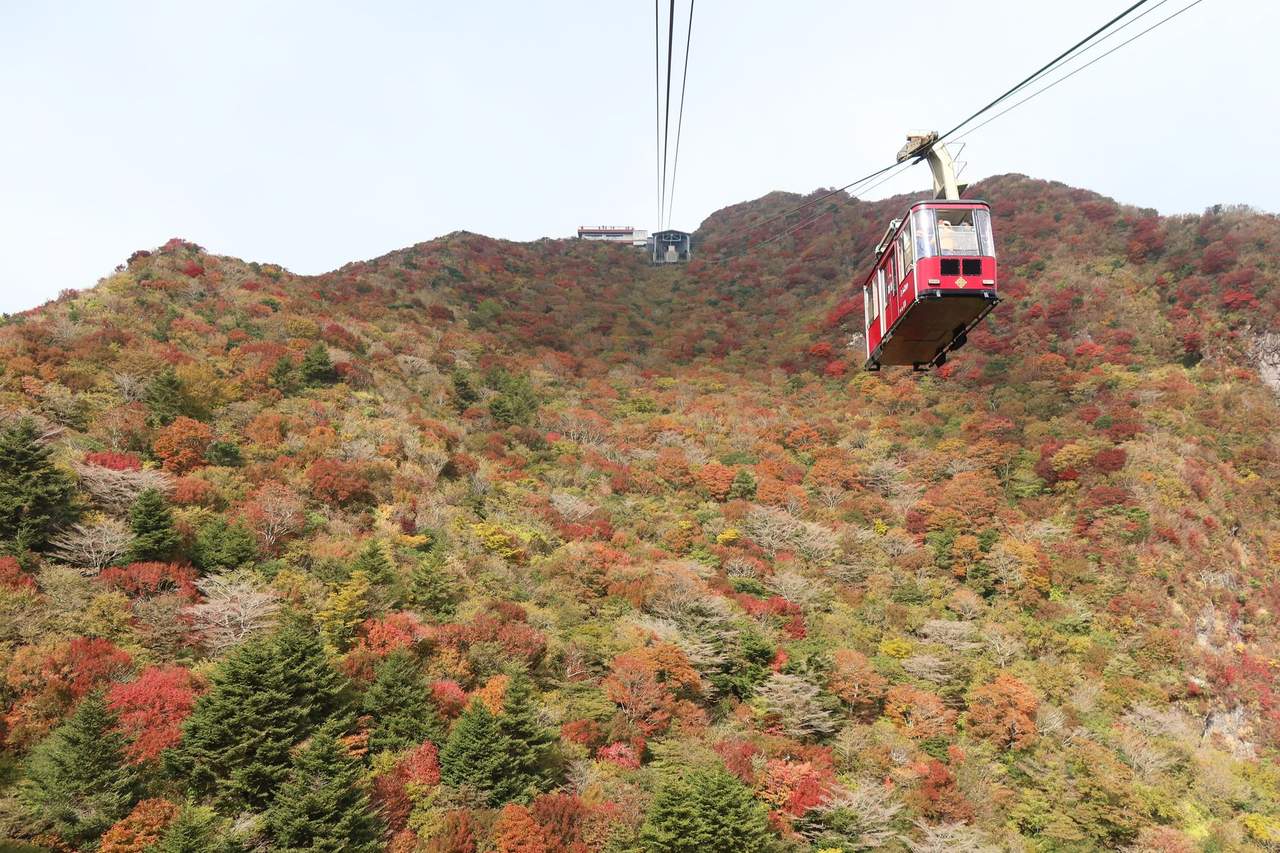
Besides staying guests, it is usually also open to day-use bathing for non-guests, with limited hours and spaces. If your itinerary is tight, you can treat it as a finish after covering the sights. The baths and changing area on the valley floor are not large, so when it is crowded you may have to wait, so allow generous time and do not squeeze it in before the next activity.
Cable car operation and day bathing depend on weather, maintenance and the number of staying guests, so be sure to check with the facility first for day-use hours and fees, and do not just drive over and hope.
Iya soba and miso skewers: flavors grown in the mountains
Iya has little farmland and rice is hard to grow, so Iya soba developed with buckwheat as the staple. Its noodles are thicker, shorter and break more easily than ordinary soba, with a rustic texture and strong buckwheat flavor, and with mountain vegetables and clear broth it makes a bowl with real local character.
Another specialty is skewers of taro, tofu and konjac coated in miso and grilled. The sight of them being turned as they grill is common at tourist spots, and their rich aroma makes them a great snack after crossing the Kazurabashi. Many shops stop serving around three or four in the afternoon, so if your itinerary is in the afternoon, we suggest eating your main meal earlier or buying takeaway skewers and rice balls first.
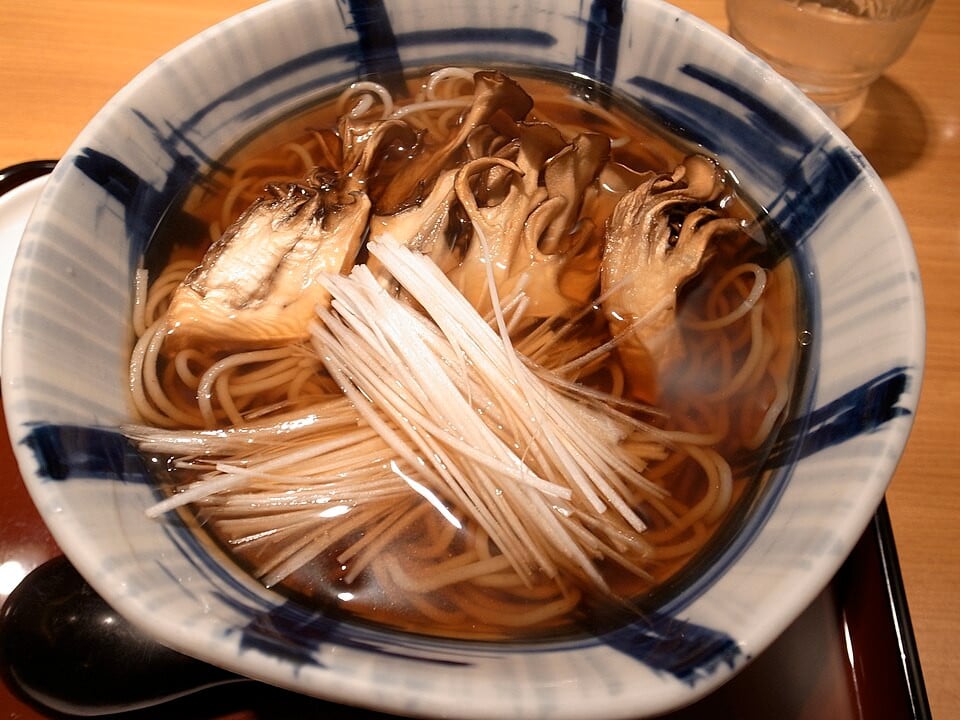
There are also salt-grilled stream fish and Tokushima’s local chicken dishes. Most shops are clustered around the Kazurabashi and Oboke and close very early in the evening, so plan your meal times ahead.
How much does Iya Valley cost? Bridge fees, boat tickets and activity costs
Most Iya sights have low unit prices, and the main spending is admission at a few facilities plus transport. Assuming you drive, one adult can cover the Kazurabashi and the Oboke cruise for a little over ¥2,000.
Below are the common fees. All amounts may change, so please follow each facility’s on-site notices.
Kazurabashi fee: about ¥500 for adults
Crossing the Kazurabashi requires a fee: ¥550 for adults (junior high school age and up), ¥350 for elementary school children (free for infants), bought at the ticket office at the bridge, and one payment covers the one-way crossing.
Opening hours are 8:00 to 18:00 from April to June, 7:30 to 18:30 in July and August, and 8:00 to 17:00 from September to March. The bridge is lit from 19:00 to 21:30 every day, but it is not open for crossing during that period and can only be viewed from outside. The bridge is one-way and the return requires a detour, so allow extra time.
During peak-season holidays there are often queues in front of the bridge and crossing is slow, so we suggest avoiding the midday peak.
Oboke boat ticket: ¥1,800 for adults, a half-hour trip
The sightseeing cruise fare at Oboke Gorge was adjusted from September 1, 2026 to ¥1,800 for adults and ¥900 for children (previously ¥1,500 and ¥750), with a trip of about thirty minutes. The boarding point is inside a facility by the gorge, usually no reservation is needed, and you board in order of that day’s departures.
Sailings are affected by water level and weather and may be suspended after heavy rain or during typhoon season; normally it runs all year with no closing days, departing on demand, with no reservation needed. We suggest confirming that day’s operating status before you set out. Tickets are usually bought on the spot at the counter at the boarding point, and in peak season numbers are issued in order for waiting. If you also plan to walk the Kazurabashi, we suggest confirming the opening hours of both before deciding the order, so you do not run out of time for one of them.
The boat has open seating, so use sun protection in summer and dress warmly in winter; the wind on the river is much colder than on shore, so bring a jacket.
Oku-Iya admission: low cost but seasonal limits
Tickets for the two vine bridges at Oku-Iya are the same as for the Nishi-Iya Kazurabashi, ¥550 for adults and ¥350 for elementary school children, and the manual cable car Yaen by the bridge is currently out of service. It is closed for winter from December to March and open from April to November (9:00 to 17:00 from April to June and September to November, 8:00 to 18:00 in July and August), and people often drive the mountain road specially and arrive to find it closed. The mountain route is long, so we suggest confirming your return time down the mountain and preparing supplies in town first. For the year’s opening dates, hours and fares, check Miyoshi City tourism information or on-site notices.
Hot springs and lodging: day bathing versus a stay with two meals
Hot spring facilities around Iya are mostly attached to inns, with prices in two types: day-use bathing for a soak only, and a stay with two meals including dinner and breakfast. The former usually starts from a little over ¥1,000, while the latter is generally not cheap because of the high cost of supplies in the mountains.
Mountain lodgings have few rooms, and especially in the autumn-leaf season and holidays they fill up very early. If your plans require staying in Iya, we suggest booking several months ahead and confirming whether meals and transport are included. Some mountain inns offer a pickup service from the station, but it mostly needs advance booking with a specified run. Confirming it when you book can save you a not-cheap taxi fare.
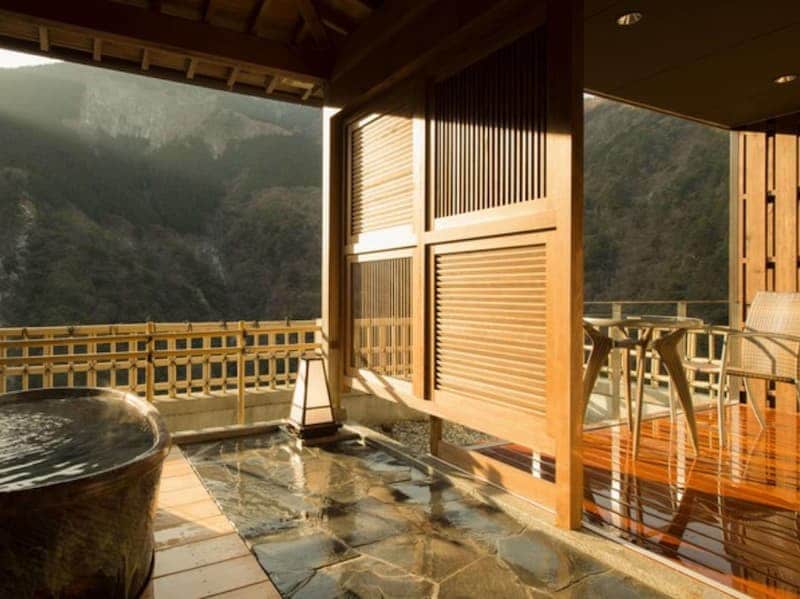
Day bathing hours often change depending on the number of staying guests, so call or check the website before you set out and do not go on the spur of the moment.
Water activities: rafting and canyoning prices
Yoshino River rafting tours come in half-day and full-day versions, priced from several thousand to over ten thousand yen, including equipment, insurance and an instructor. Beginners can choose gentler sections, while experienced paddlers can take on the Koboke rapids section. There are also canyoning tours with gorge climbing and rappelling, which likewise need booking, and all have age and fitness limits, so read the conditions carefully before signing up. Most operators’ meeting points are at bases around Oboke or Koboke rather than at a station, so confirm how to get there first, and bring your own swimsuit, towel and a change of clothes. All water activities depend on that day’s water level and weather to go ahead, cancellation mostly means only rescheduling or a refund, so leave a backup in your plans.
What to watch out for in Iya Valley: lodging suggestions and pre-trip reminders
Iya is the area of a Shikoku trip where it is easiest to go wrong, and the causes are almost all transport and seasonal limits. Below are lodging directions and things you must confirm in advance.

Where to base yourself: the mountains, Awa-Ikeda or Takamatsu each have trade-offs
For a deep Iya trip, staying at a mountain hot spring inn or a traditional-house guesthouse is ideal, letting you have the gorge to yourself without tourists morning and evening, but rooms are few, prices are high, and dinner is mostly only available through the lodging.
For a balance of convenience and price, choose Awa-Ikeda, which has full dining and convenience stores; if continuing to Kagawa, you can stay in Takamatsu and do a day round trip, but watch the drive time. Parking at mountain lodgings is limited, and some traditional-house guesthouses cannot be parked at the door, so confirm the parking arrangement when booking.
Restaurants in the mountains close early, and if you arrive in the evening you may find nothing to eat, so we suggest preparing food in town first.
Must-check before you go: bus times, seasonal closures and road conditions
Before you set out, be sure to confirm three things: that day’s bus timetable (including the last return run), the opening periods of facilities such as Oku-Iya, and whether mountain roads are closed or restricted. Missing any one can ruin your itinerary.
Winter has the highest risk, when snow and ice and facility closures easily happen at the same time; after typhoons and heavy rain, watch for rockfall and road interruptions, and the Miyoshi City tourism information website publishes the situation. During the autumn-leaf season or holidays, roads are narrow and prone to jams, and parking lots tend to fill.
Phone signal drops out on some mountain stretches, so we suggest downloading an offline map first and not relying on a live connection.
Preparation on site: comfortable shoes, warm clothing and securing your belongings
The Kazurabashi planks have gaps, so wear well-covering flat shoes or sneakers and avoid stilettos and sandals; after rain the paths and riverbed stones are slippery, so non-slip soles are especially important. Temperatures vary greatly in the mountains, and mornings, evenings and the valley floor are cool, so bring a light jacket; in summer there are many mosquitoes, so you can bring repellent, and in winter you need protection against cold and slipping. Sunset comes earlier in the mountains than on flat land and darkens even earlier in the deep valley, so finish your itinerary before evening and avoid walking mountain roads in the dark. On the bridge and at viewpoints, secure your phone and camera with a strap, watch your footing and the railings throughout, and hold children’s hands tightly when traveling with them, and do not let children run or jump on the bridge.
Iya Valley FAQ
Below are the questions travelers ask most often, so confirm them all before you set out.
Q: How long should I plan for the Iya Valley area?
If you only do the Kazurabashi and Oboke, it takes about half a day to a day by car. If you also want the Peeing Boy and Higashi-Iya’s Oku-Iya and Ochiai village, plan on two days and stay one night in the mountains, otherwise you will spend the whole day driving.
Q: Can I visit Iya Valley without a car?
Yes, but the range is limited. You can reach the Kazurabashi by bus, while the Peeing Boy is difficult because that route has very few runs. If you do not drive but want to cover all the sights, the most practical option is to join a local regular sightseeing bus or day tour.
Q: Is walking the Kazurabashi dangerous?
The bridge is reinforced inside with steel cables and regularly maintained, so it is structurally safe, and the fear mostly comes from the swaying and the gaps underfoot. The real risks are dropping belongings and wearing the wrong shoes. If you are afraid of heights, we suggest looking ahead and walking slowly, without looking down.
Q: Is it suitable for children or older family members?
Because the Kazurabashi deck has gaps and sways, those with limited mobility and very young children should weigh it carefully, and there is an ordinary alternative bridge next to it for viewing. The Oboke cruise and the roadside station are relatively easy and suit the whole family.
Q: What season is best for Iya Valley?
Autumn leaves are the most beautiful, but it is also the most crowded; summer has lush greenery and cool streams, suited to water activities. Winter scenery is bleak, some facilities are closed and mountain roads may be icy, so unless you have experience we do not recommend it as a first choice.
Q: What is the difference between the Iya Kazurabashi and the Oku-Iya Nijyu Kazurabashi?
The former is in Nishi-Iya, has easier access and more people, and is the best-known of the two; the latter is deeper in Higashi-Iya and consists of two bridges (the manual cable car Yaen by the bridge is currently out of service), with fewer people but open only in the warm season and requiring a mountain drive.
Q: How do I fit Iya together with Takamatsu and Kochi in one trip?
Iya sits in the middle of the Dosan Line, so it suits a travel day between Takamatsu and Kochi. A common approach is to take the limited express south from Takamatsu, spend a day in Iya stopping at Oboke, and continue to Kochi the next day, with luggage sent ahead or stored.