
Kennin-ji Temple Guide 2026: The Wind God and Thunder God Screens and Three Zen Gardens, Kyoto’s Oldest Zen Temple
Kennin-ji is Kyoto’s oldest Zen temple, the head temple of the Rinzai school and the birthplace of Japanese tea and Zen culture. Its National Treasure Fujin Raijin-zu screens and three Zen gardens are the highlights.
About Kennin-ji: Kyoto’s Oldest Zen Temple
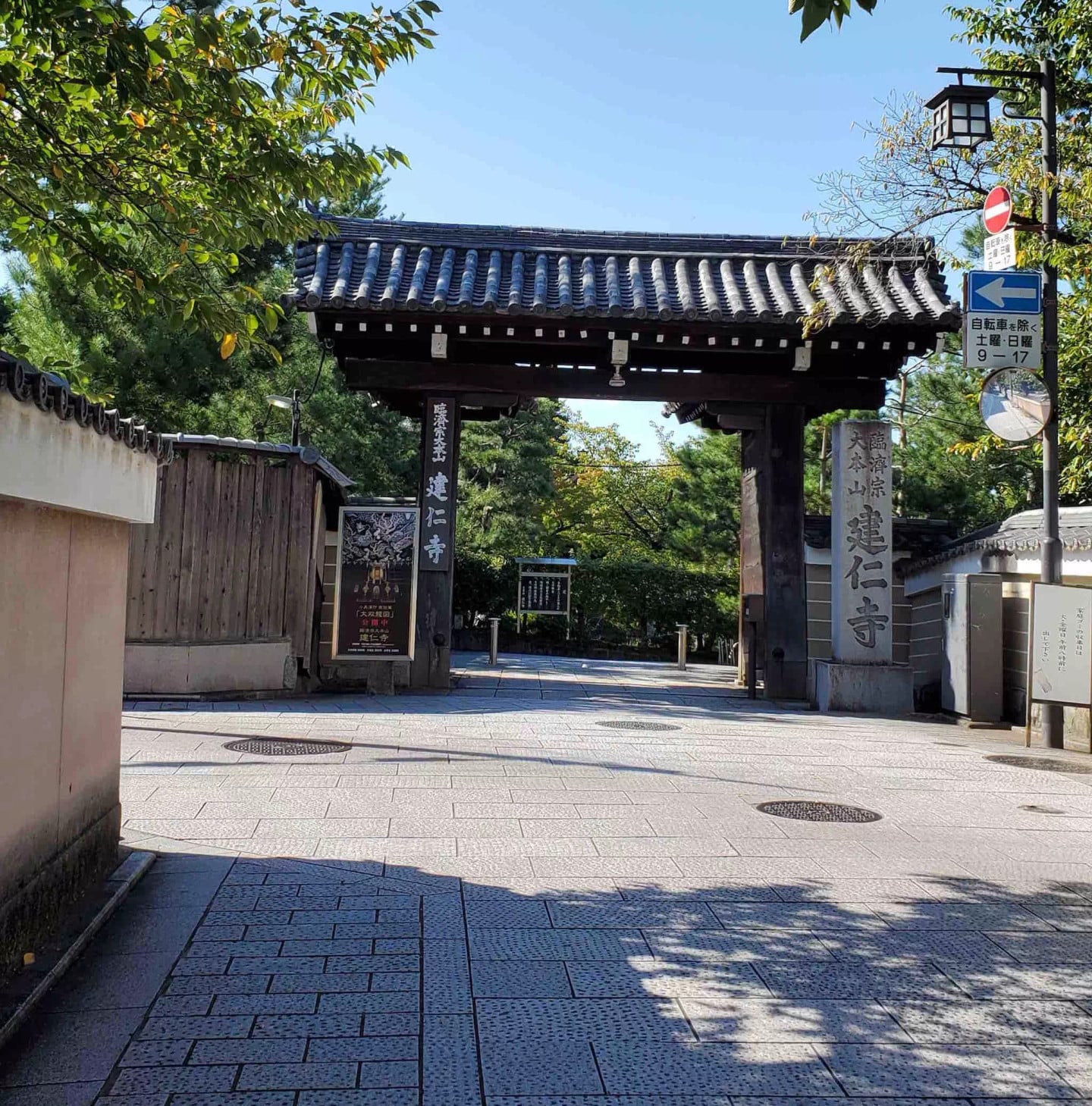
Kennin-ji was founded in 1202 (Kennin 2), making it Kyoto’s oldest Zen temple and the head temple of the Kennin-ji branch of the Rinzai school. It was established by the Zen monk Eisai with the support of Minamoto no Yoriie. The temple takes its name from the era name, marking the beginning of Kamakura-period Zen culture in Kyoto.
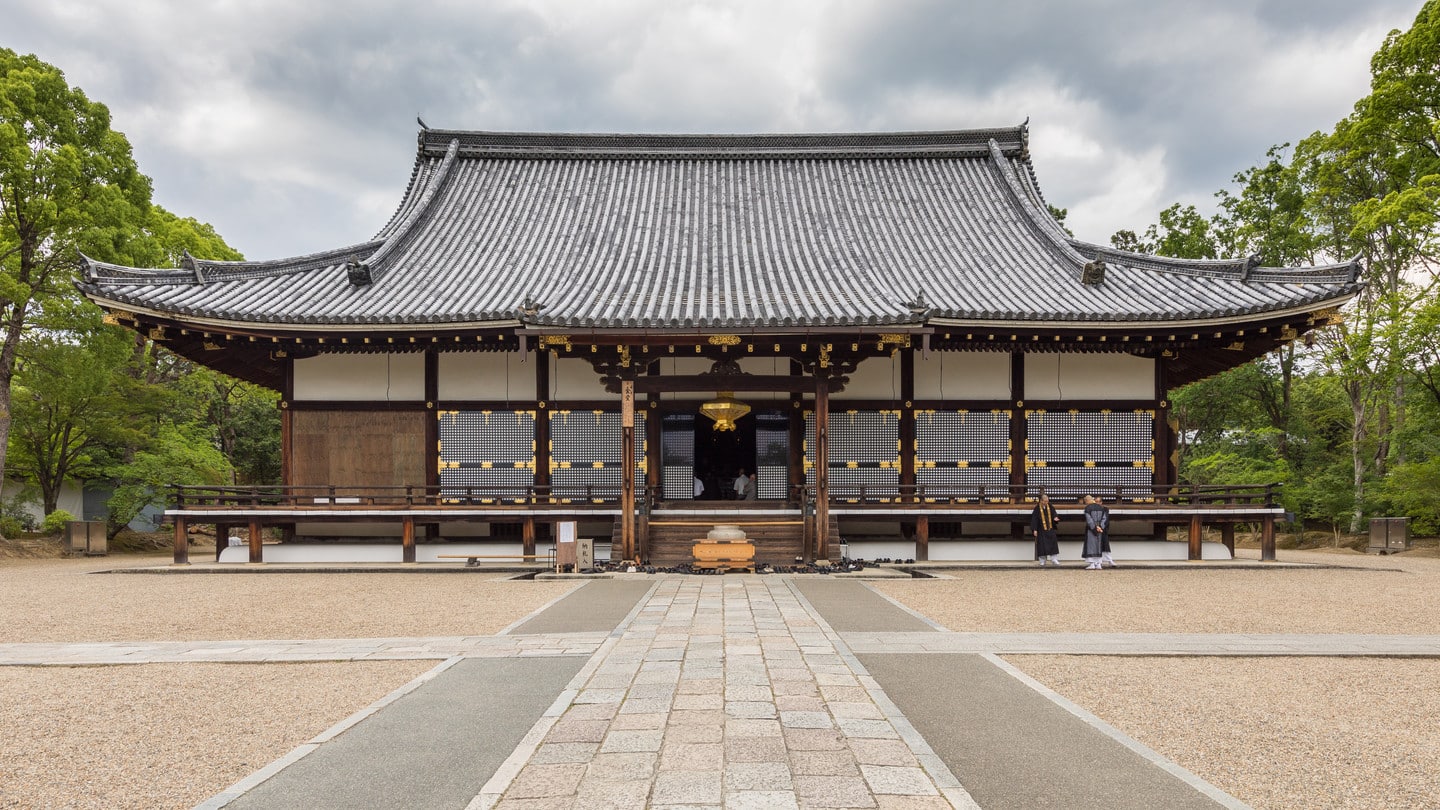
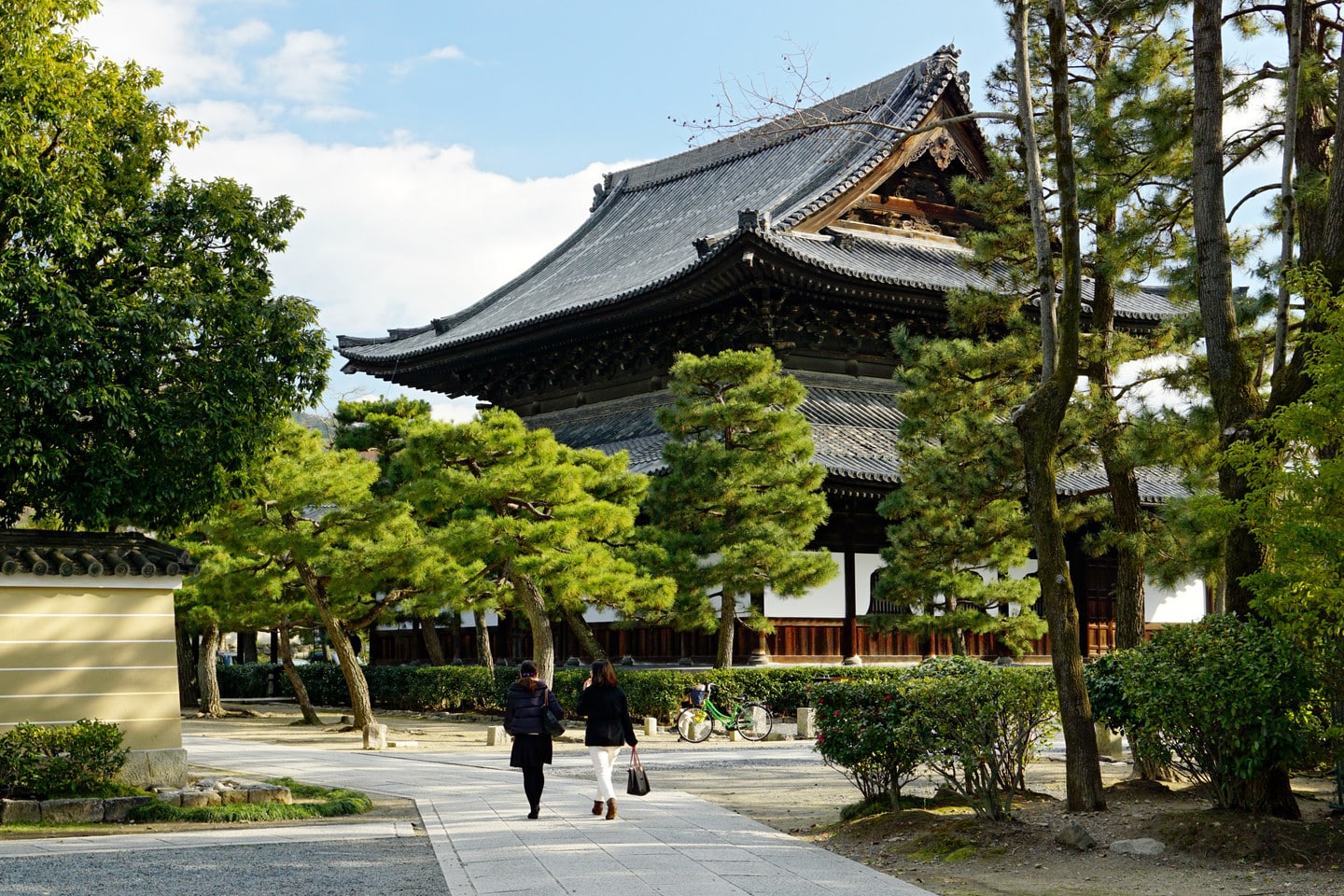
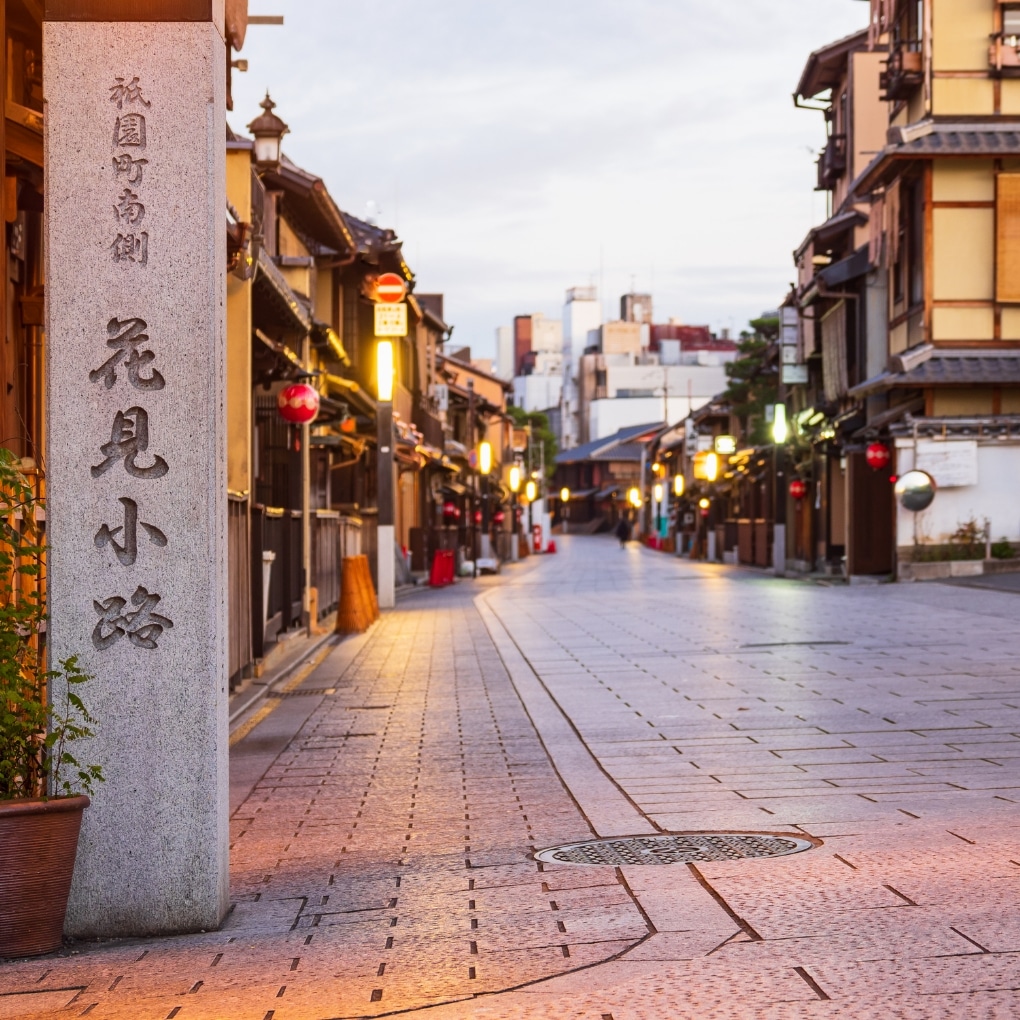
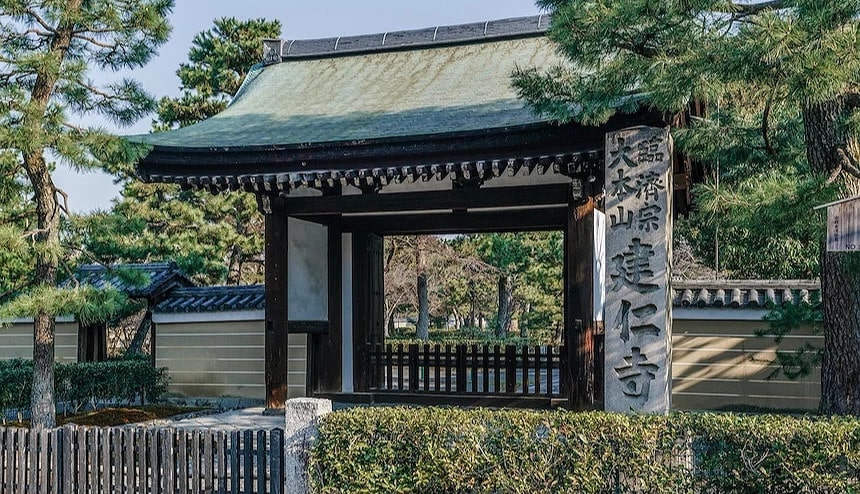
The grounds preserve the traditional Zen temple layout, with the Sanmon gate, Hatto (Dharma Hall), Hojo, Daishoin and Shoshoin, all solemn and quiet. The temple stands at the end of Gion’s Hanamikoji Street, easy to reach and less crowded, making it an excellent place to experience Kyoto’s Zen culture in depth and a good way to escape the crowds.
The Birthplace of Tea and Zen: Eisai’s Legacy
Eisai was not only the founder of Kennin-ji but also a key figure who brought Song-dynasty Chinese Zen and tea drinking to Japan, so Kennin-ji is regarded as the birthplace of Japan’s “tea and Zen” culture. His book Kissa Yojoki (Drinking Tea for Health) is considered Japan’s first book on tea and laid the groundwork for the later development of the tea ceremony.
Today the temple still keeps exhibits and events related to tea culture, and visitors can feel the philosophy of the unity of tea and Zen in a solemn Zen setting. This is what most sets Kennin-ji apart from Kyoto’s other famous temples: it is not only a place for scenery but the sacred site where the tea ceremony began.
Kennin-ji and Its Status as a Rinzai Head Temple
Kennin-ji is the head temple of the Kennin-ji branch of the Rinzai school, overseeing many sub-temples and holding a high place in Japan’s Zen system. The Rinzai school stresses koan practice and seated meditation, seeking enlightenment through master-disciple dialogue and quiet contemplation, and this spirit still lives on in the zazen experience the temple offers to visitors.
As a head temple, Kennin-ji is not only a center of faith but has long been a guardian of culture and the arts. The National Treasure screen painting and the modern ceiling paintings it holds are concrete expressions of where Zen aesthetics and artistic tradition meet.
Kennin-ji’s Location and Surroundings
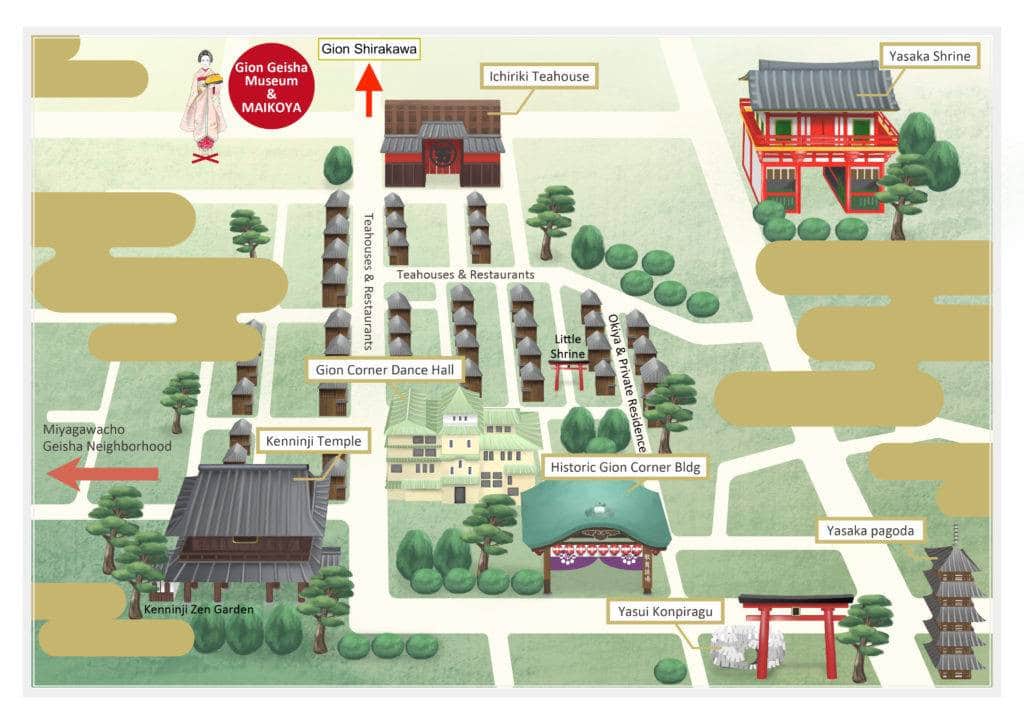
Kennin-ji is at Komatsu-cho, Yamato-oji-dori Shijo-sagaru, Higashiyama Ward, Kyoto, at the southern end of Gion’s Hanamikoji Street, near Yasaka Shrine and the Kiyomizu-dera sightseeing area, and it is a stop not to miss on a Gion stroll. Although it lies in a lively geisha district, the grounds are remarkably calm, a strong contrast of tranquility amid the bustle.
Thanks to its location, Kennin-ji is often included in a “one-day Gion walk”: start at Yasaka Shrine, pass through Hanamikoji and its traditional teahouse streetscape, and end at Kennin-ji, feeling the shift from busy streets to a Zen space.

Kennin-ji Admission and Opening Hours at a Glance
According to Kennin-ji’s official website for 2026, general admission (haikan-ryo) is ¥800 for adults and ¥500 for students (elementary, junior high and high school). Children not yet in elementary school are free, but children below elementary age are not admitted on their own. Holders of a disability certificate enter free (a companion pays). The “haikan-ryo” is in fact a donation for worship, not a commercial ticket. Visiting hours are 10:00 a.m. to 4:30 p.m. (admission ends at 16:30), with the gate closing at 5:00 p.m. Allow at least 1 hour, or 1.5 hours if you include the zazen experience or want to look closely at the wall paintings.
Kennin-ji’s Official 2026 Visiting Hours, Admission Fee and the 2027 Price Increase Announcement
- 🕙 Visiting hours 10:00-16:30 (last admission), gate closes at 17:00.
- 🎫 2026 admission: ¥800 (¥500 for elementary to high school students, free for pre-school children).
- 📢 From 2027: general admission rises to ¥1,000, students stay at ¥500, and pre-school children remain free.
- 👥 Groups: groups of 15 or more must apply by fax or email at least 10 days in advance.
- ☔ Rainy day note: visitors whose clothing is visibly soaked may be refused entry.
- 📷 Photography rules: handheld photos only; video, tripods, selfie sticks and gimbals are prohibited, as is sitting or crouching to take photos, group photos, and shooting in kimono.
How to Get to Kennin-ji: Transport and Parking Guide
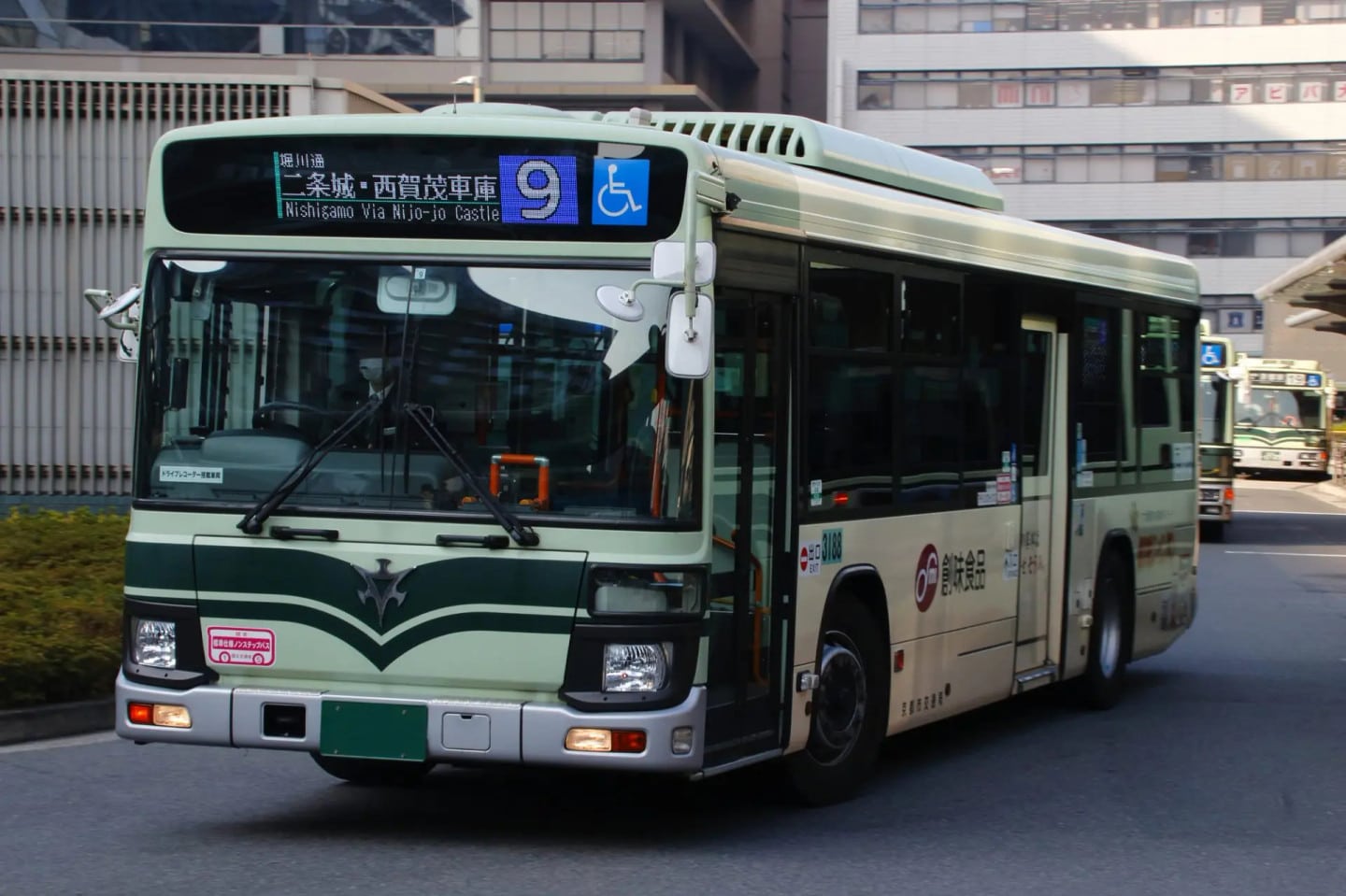
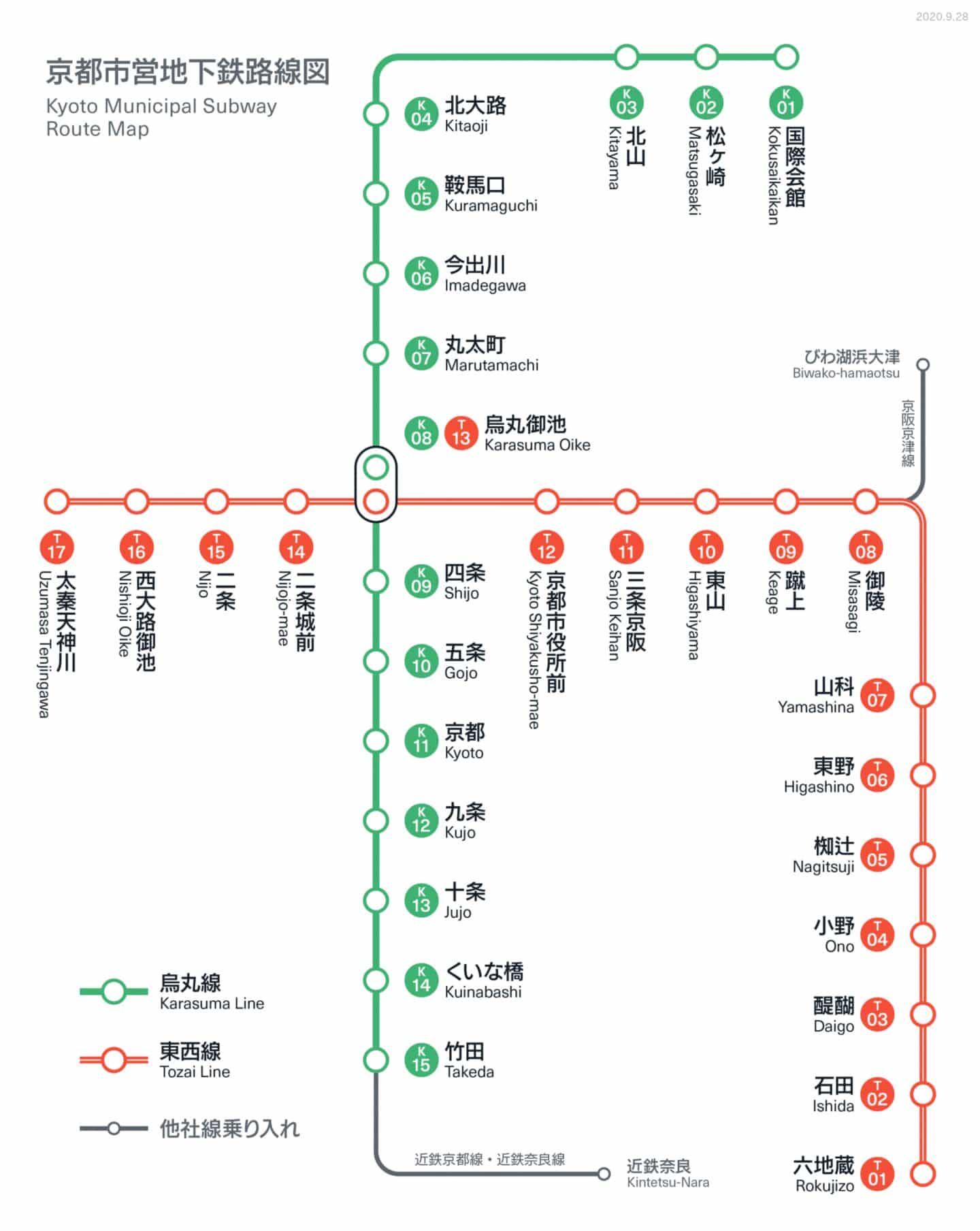
The easiest way to reach Kennin-ji is to take the Keihan Line to Gion-Shijo Station and walk about 7 minutes along Hanamikoji. You can also take the Hankyu Line to Kyoto-Kawaramachi Station and walk about 10 minutes, or take City Bus No. 206 to Higashiyama Yasui and walk about 5 minutes; the City Bus flat fare is ¥230. Drivers can use the paid parking lot near the north gate (cars only, no motorcycles or buses), but spaces are limited, so public transport is recommended.
Kennin-ji Highlights and Experiences: Sub-Temples and Zazen Guide
Fujin Raijin-zu Screens: Tawaraya Sotatsu’s National Treasure
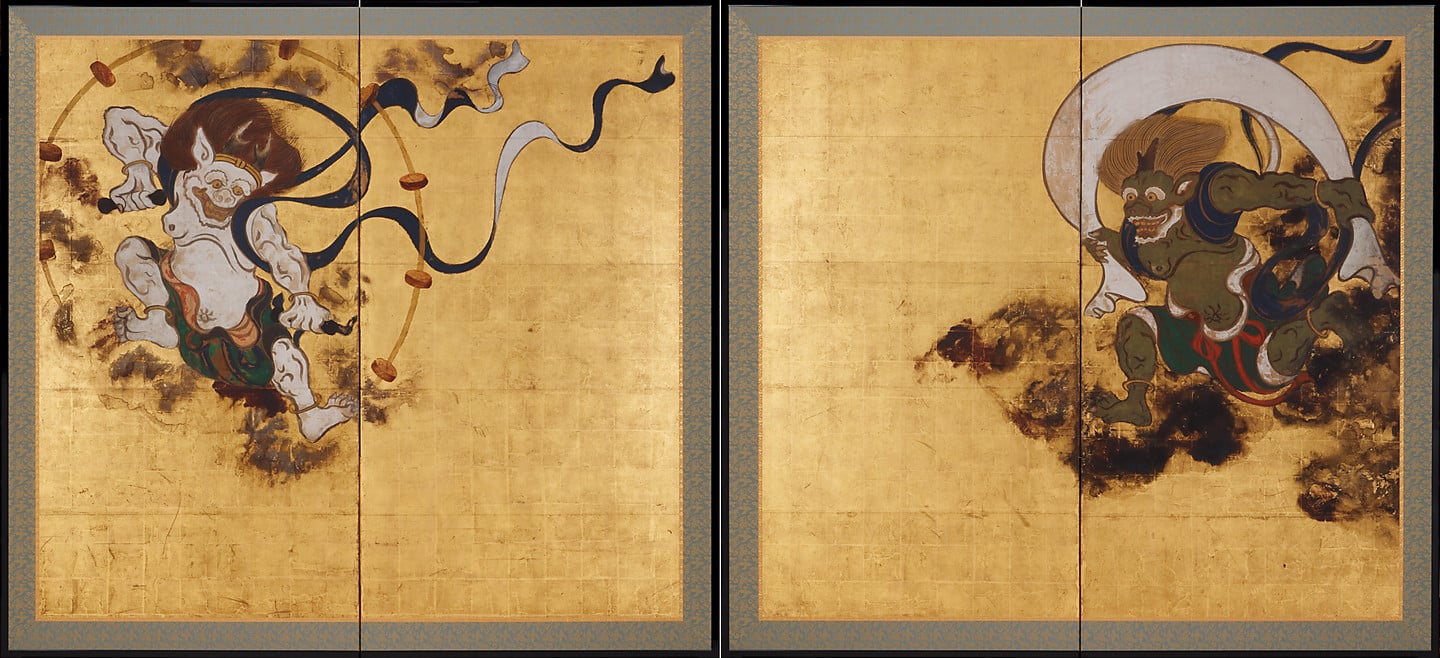
Kennin-ji’s most famous treasure is the Fujin Raijin-zu (Wind God and Thunder God) screens, a late masterpiece by the Edo-period Rinpa master Tawaraya Sotatsu. Against a dazzling gold-leaf background, the green Wind God rides in on clouds on the right, and the white Thunder God holding drumsticks stands on the left. The two face each other, full of dynamic tension, and the work is designated a National Treasure.
What is displayed in the temple today is a high-resolution digital reproduction, while the original is kept in the care of the Kyoto National Museum. The two look almost identical, so visitors can enjoy the details up close without worrying about wear on the cultural property. This painting is also one of the most common images on Kyoto publicity materials and souvenirs.
Dharma Hall Ceiling Painting “Twin Dragons”: Koizumi Junsaku’s Modern Masterpiece
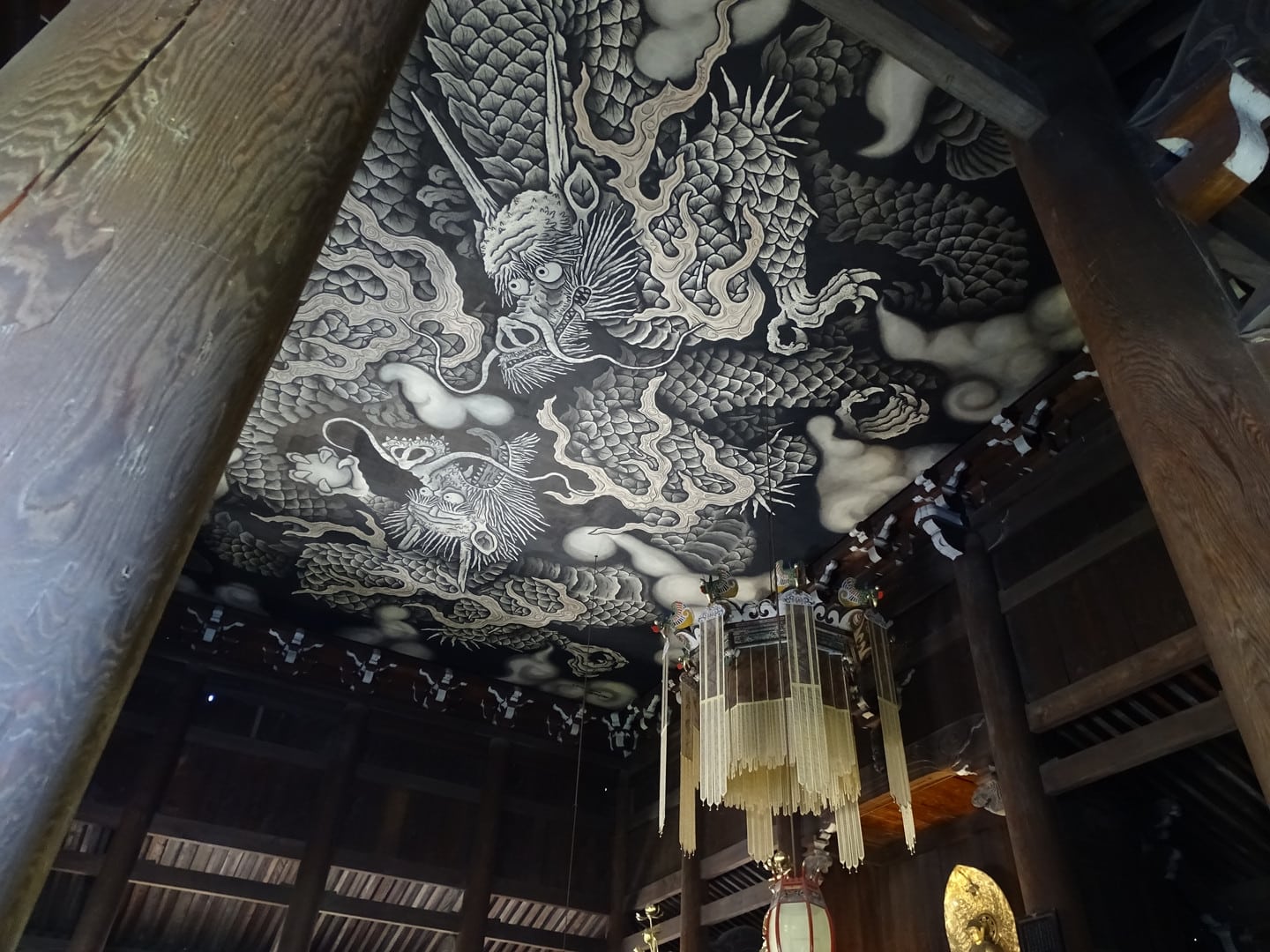
The majestic “Twin Dragons” on the Dharma Hall ceiling was completed in 2002 by the Japanese-style painter Koizumi Junsaku to mark the temple’s 800th anniversary. Two giant dragons coil across the ceiling, in a work spanning a space of about 108 tatami mats, with a powerful impact.
Stand in the middle of the Dharma Hall and look up to feel the full three-dimensional tension and grandeur of the painting.
Kaiho Yusho’s “Cloud Dragon”: An Important Cultural Property from the Momoyama Period
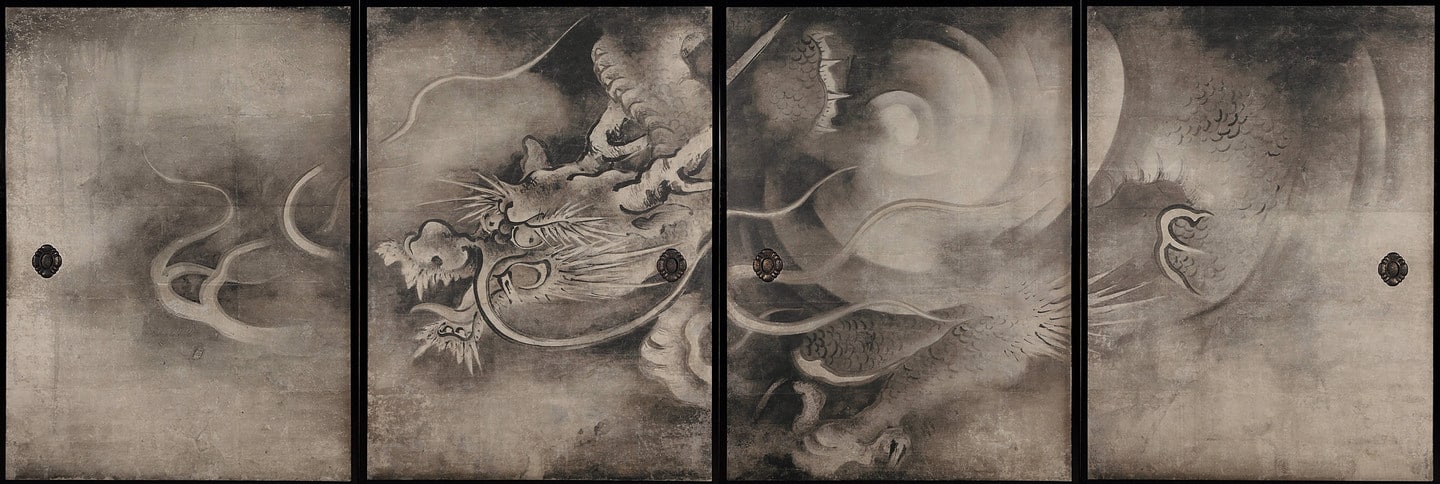
Another major work in the Kennin-ji Hojo is the sliding-door painting “Cloud Dragon” by the Momoyama-period painter Kaiho Yusho. Clouds and mist swirl while a giant dragon comes and goes from view, showing an ink-wash feel very different from Tawaraya Sotatsu, and it is also designated an Important Cultural Property.
This work was originally a set of sliding doors inside the Hojo, and some of the originals are now also kept in museums. The temple displays fine reproductions, so visitors can feel the ink-wash mood of Momoyama art and the beauty of space fully combined within the original room layout.
Daiou-en: The Dry Landscape Zen Garden in Front of the Hojo
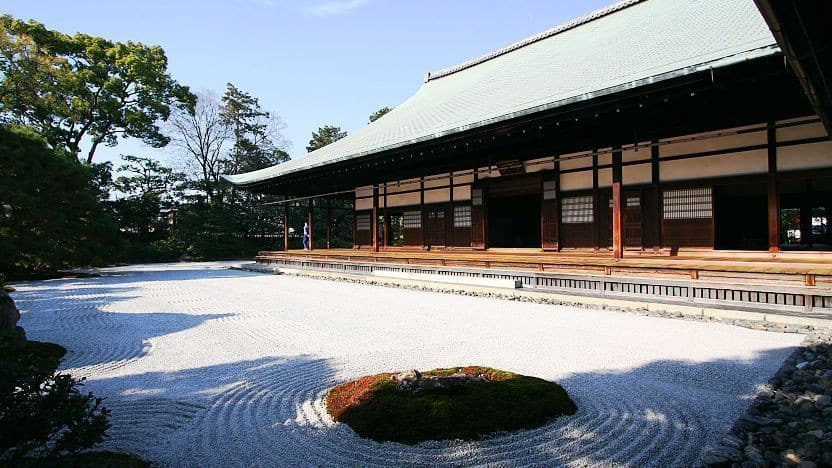
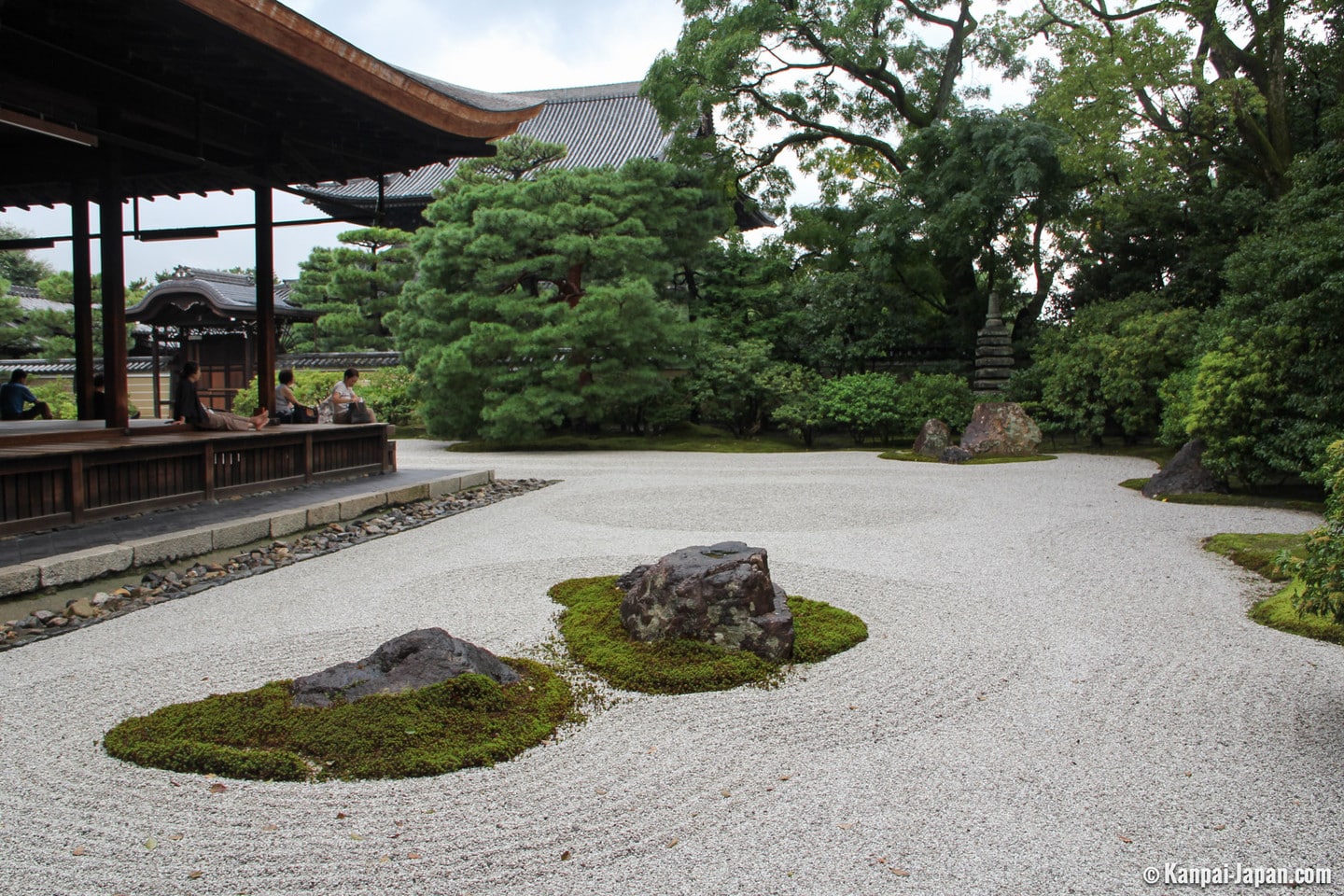
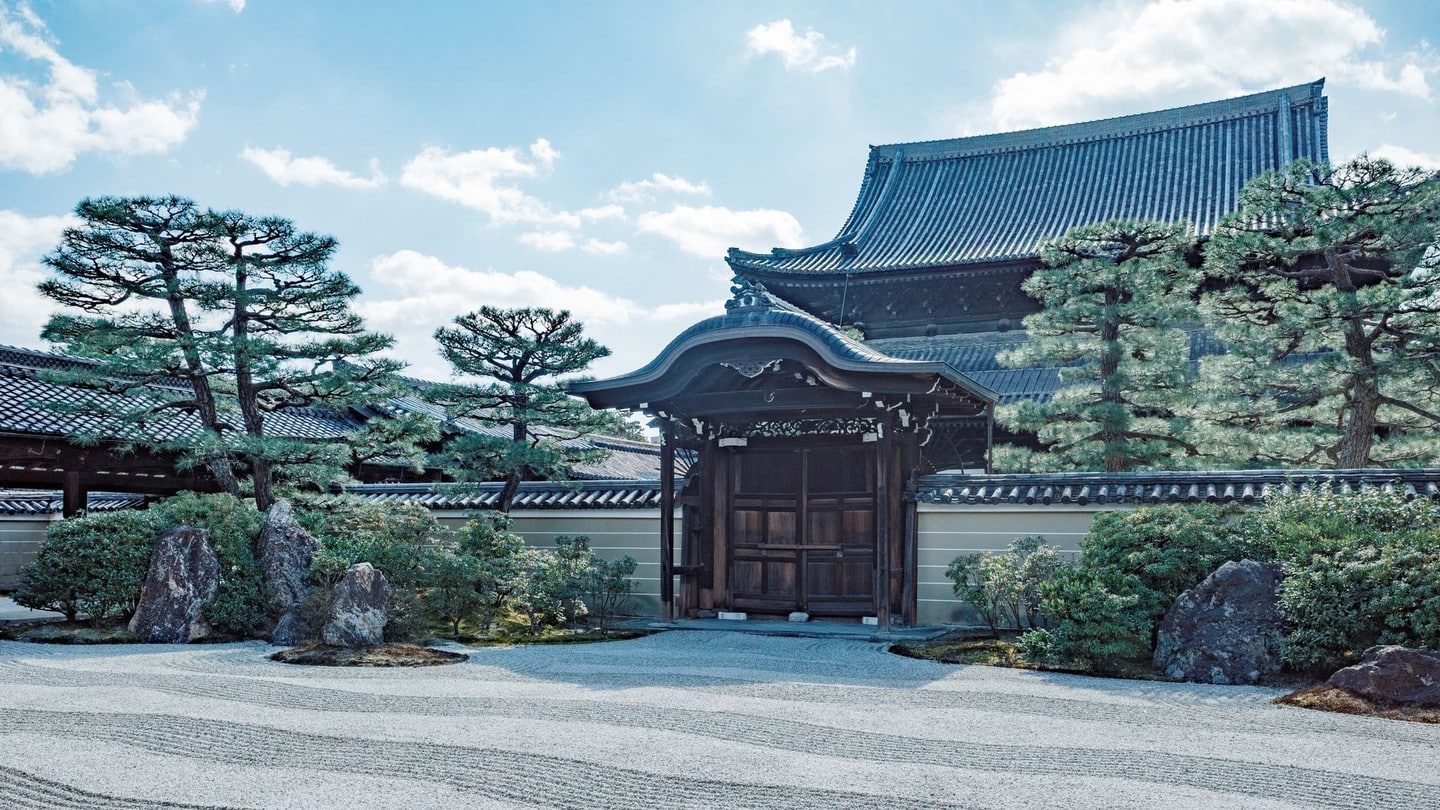
Daiou-en is one of Kennin-ji’s three Zen gardens, in front of the Hojo building. White sand symbolizes a surging sea and large rocks stand for islands and mountains, creating an expansive dry landscape Zen space, the most open view of the three gardens.
Visitors can sit on the wooden veranda of the Hojo and gaze quietly, feeling the dry landscape philosophy of “mastering complexity through simplicity.” In autumn, red maple leaves dot the white sand around the garden, creating a strong contrast, and it is one of the angles photographers recommend most.

Chouon-tei: A Courtyard Zen Space Beautiful from Every Side
Chouon-tei is in the courtyard of the main hall (Honbo) and is a “four-sided” garden that offers a perfectly balanced composition from every direction: east, west, south or north. At its center stands the “Sanzon-seki” trio of stones representing the Buddha and his disciples, surrounded by green moss, with red maples adding color in autumn.
During Kennin-ji’s special night openings, Chouon-tei is lit up, creating a dreamy atmosphere very different from daytime. It has been widely discussed on social media in recent years, and many travelers pick a night session to experience the quiet Zen mood of a lit garden.
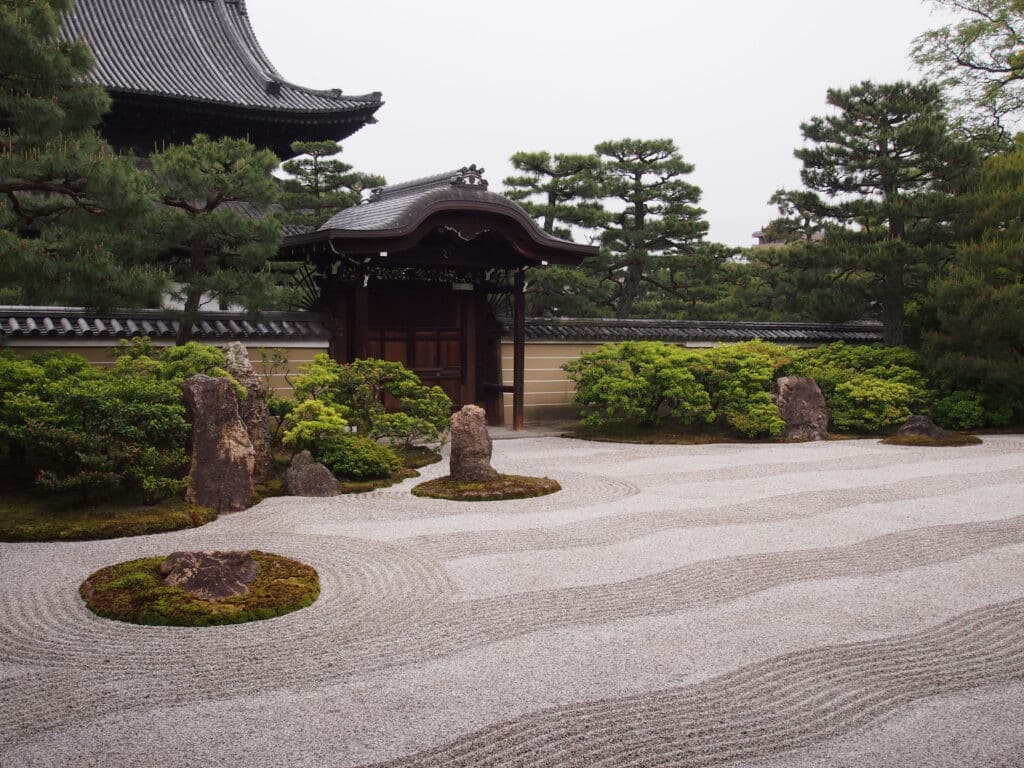
○△□ Garden: A Modern Zen Garden Symbolizing All Things in the Universe
The ○△□ Garden (Maru-Sankaku-Shikaku no Niwa, “Circle, Triangle, Square Garden”) is the most modern-looking of the three Zen gardens. Its name comes from the Zen idea that “all things in the universe are made of three basic shapes: circle, triangle and square.” A square well symbolizes “earth,” a round patch of moss symbolizes “water,” and a triangle of white sand symbolizes “fire.” It is a modern garden designed by Kitayama Yasuo in 2006.
Compared with traditional dry landscape gardens, its geometric composition is simpler and more modern, ideal for travelers who enjoy architecture and minimalist design, and a great introductory garden for understanding the spirit of Kennin-ji’s Zen.
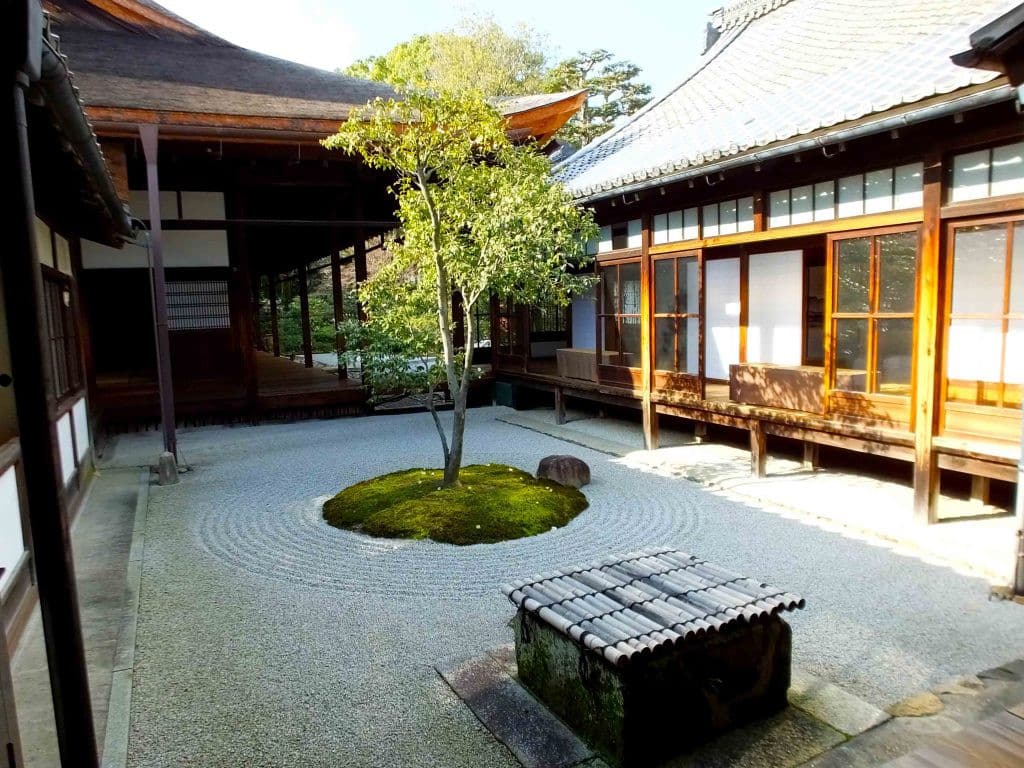
Ryosoku-in: Special Early-Summer Opening for the Hange-sho Garden
Ryosoku-in is one of Kennin-ji’s well-known sub-temples, famous for its early-summer hange-sho garden. It is normally closed to the public and opens only during special viewing periods (May 29 to July 12 in 2026), a hidden flower-viewing spot that only Kyoto insiders know.
During the special opening, the afternoon is general viewing (12:00 to 16:00, ¥1,000 for adults), and there is also a reservation-only limited viewing in the morning. Dates and fees differ each year, so please follow the announcements on the Ryosoku-in official website.
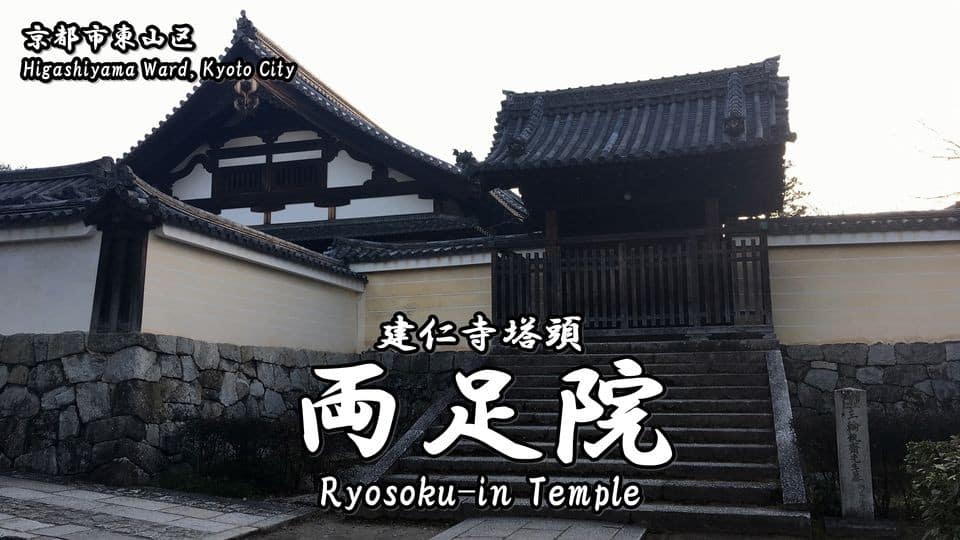
Zenkyo-an: A Distinctive Sub-Temple of Marishiten Worship
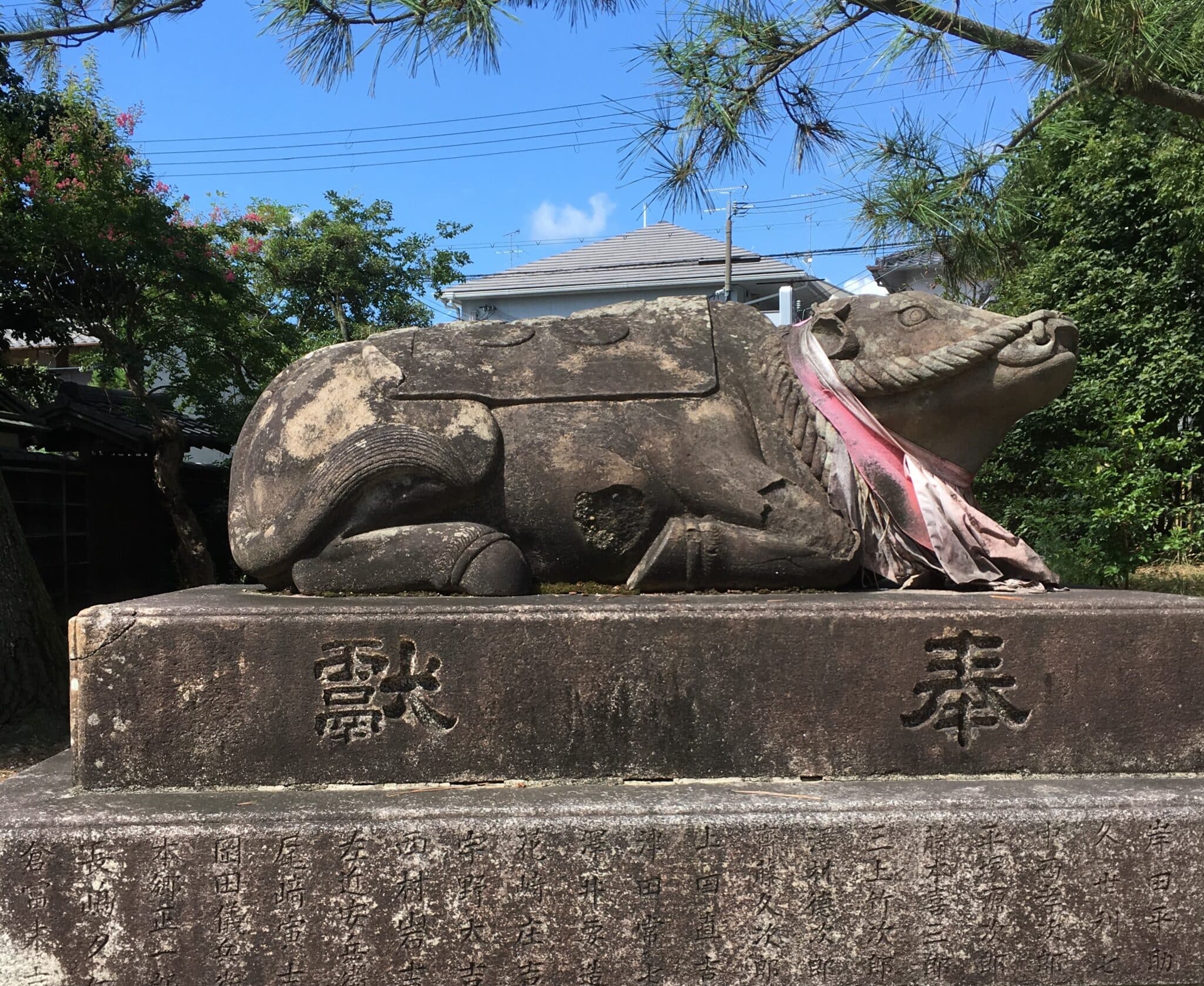
Zenkyo-an is one of Kennin-ji’s sub-temples, enshrining Marishiten, and is known for warding off evil and bringing good fortune. The grounds hold many wild boar stone statues and ema plaques, and it is one of the few temples in Kyoto centered on Marishiten, drawing many worshippers praying for safety and smooth fortunes.
Because Marishiten is closely associated with the boar in folk belief, Zenkyo-an is also called the guardian temple of the “Year of the Boar” (people born under the boar zodiac sign). The boar-shaped omamori charms sold here are very popular, making it a distinctive stop on a sub-temple tour.
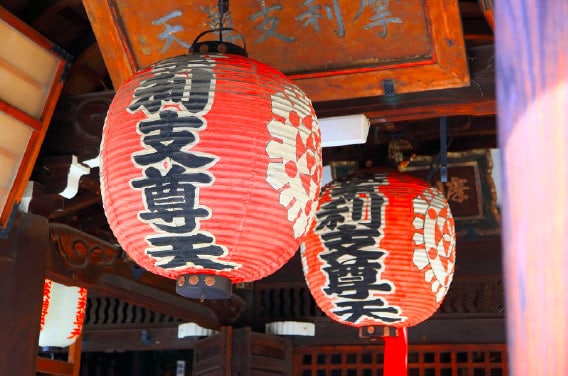
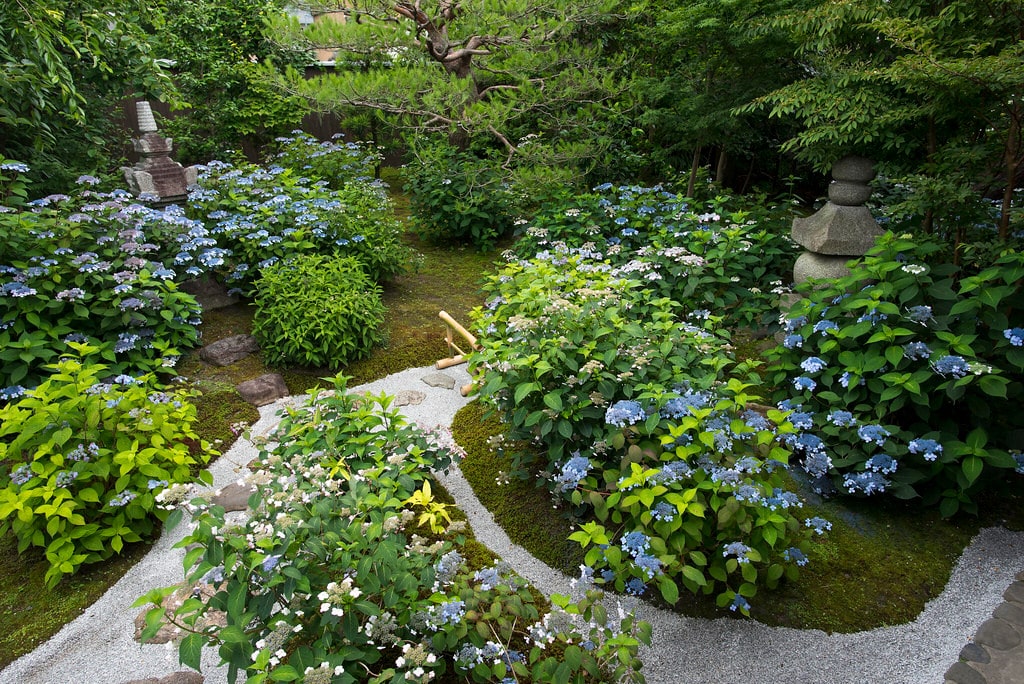
Reigen-in: The Hydrangea-Tea Garden and Special Opening
Reigen-in’s dry landscape garden “鶴鳴九皐” (Kakumei Kyuko) is known for the amacha (sweet hydrangea) flowers that bloom in early June each year, and it has become very popular on social media in recent years. During the special opening (May 16 to June 14 in 2026) you can see small white flowers dotting the stone garden up close in an elegant scene.
The special opening fee for Reigen-in is ¥500 for adults, and amacha tea is served on weekends only (¥500). It is a sub-temple worth adding to your itinerary if you love quiet gardens and want to avoid the crowds.
Sairai-in: A Special “Kyoto Winter Journey” Program
Sairai-in is a Kennin-ji sub-temple founded by Rankei Doryu. The Hojo ceiling is painted with a “White Dragon,” and the south garden “峨眉乘雲” (Gabi Joun) holds a huge rock brought from Mount Emei in China. It has taken part in the “Kyoto Winter Journey” special openings.
Sairai-in is normally closed to the public and can be entered only during special openings. Please check the Kennin-ji official website or Kyoto Travel Navi announcements for opening dates and fees.
Zazen Experience: Zen Meditation Open to Beginners
Kennin-ji holds the “Senkokai” zazen meeting at 7:30 a.m. on the second Sunday of each month. It consists of two 20-minute zazen sessions, sutra chanting and a Dharma talk, ending around 9:30. It is free, requires no reservation, and beginners are welcome. It is suspended in August for Obon, and in July it changes to a Friday-to-Sunday dawn zazen meeting (starting at 6:30).
Before Senkokai begins, gather at the Honbo haikan reception desk, but you cannot tour the Honbo on the same day; groups of 10 or more must apply separately by fax for group zazen.

Sutra Copying: Quietly Writing the Heart Sutra
Kennin-ji offers a sutra-copying experience, using a brush to copy the Heart Sutra, ideal for travelers who want to settle their minds during a trip.

According to the Kennin-ji official website, sutra copying is held on weekdays only (suspended on Saturdays, Sundays, holidays, Obon, Golden Week and the year-end/New Year period, and also when there are temple events or construction). Registration is 10:30-10:45 a.m. and 1:30-1:45 p.m., with 10 people per session on a first-come basis, no reservations, and an offering fee of ¥3,000 (includes a goshuin stamp and a Kennin-ji original folder). Elementary school children and younger cannot take part. Please check the official website for the latest announcements on suspension dates.
Kennin-ji Tickets and Guided Tours: Zazen, Sutra Copying and Night Special Opening Picks
Kennin-ji is at 584 Komatsu-cho, Yamato-oji-dori Shijo-sagaru, Higashiyama Ward, Kyoto. It is Kyoto’s oldest Zen temple and home to Tawaraya Sotatsu’s Fujin Raijin-zu screens and the three dry landscape gardens: the “○△□ Garden,” “Daiou-en” and “Chouon-tei.” General visiting hours run from 10:00 a.m. until admission ends at 4:30 p.m. (gate closes at 5:00 p.m.). General admission is ¥800 for adults, ¥500 for elementary to high school students, and free for pre-school children (rising to ¥1,000 for adults from January 1, 2027). With a ticket you can freely view the Dharma Hall’s “Twin Dragons” ceiling painting and the Hojo garden. Besides self-guided visits, Kennin-ji also offers several in-depth experiences, including zazen, sutra copying, and night special openings held only a few times a year, letting travelers feel the Zen spirit and historical depth of this head temple of the Kennin-ji branch of the Rinzai school from different angles. Below are the four tickets and guided options most worth booking.
Kennin-ji General Admission: The Basic Plan for Freely Viewing the Wind and Thunder Gods and Three Zen Gardens
Kennin-ji general admission tickets can be bought on site at the ticket office within the grounds, with no reservation needed. The ticket covers the Dharma Hall, Hojo and the whole garden area, where you can see Tawaraya Sotatsu’s Fujin Raijin-zu screens (reproduction), Koizumi Junsaku’s “Twin Dragons” ceiling painting, and the “Daiou-en” and “Chouon-tei” gardens. We suggest 60-90 minutes, suited to independent travelers combining it with a half-day in Gion and Hanamikoji. Kennin-ji is only a 10-minute walk from Yasaka Shrine and Hanamikoji; going early in the morning or in the afternoon avoids crowds and lets you enjoy the quiet.
Kennin-ji Zazen Experience: An Authentic Zen Introduction Taught Personally by Monks
Kennin-ji holds the “Senkokai” zazen meeting at 7:30 a.m. on the second Sunday of each month: two 20-minute zazen sessions followed by sutra chanting and a Dharma talk, ending around 9:30, suitable for beginners. Individuals join free with no reservation; just arrive at the Honbo ahead of time. Groups of 10 or more must apply separately for group zazen.
Participants experience the atmosphere of Rinzai practice in the Dharma Hall or Hojo hall in the morning light, and afterward the monks give a talk on the spirit of Zen and its everyday application. It suits travelers who want a deeper experience of Kyoto’s Zen culture and is also a popular featured program.
Sutra Copying: Copying the Heart Sutra with a Brush
Kennin-ji’s sutra copying uses a brush to copy the Heart Sutra. Registration opens on weekdays at 10:30 a.m. and 1:30 p.m., with an offering fee of ¥3,000 (includes a goshuin stamp), limited to 10 people per session with no reservations. You can take the finished copy home as a keepsake.
Elementary school children and younger cannot take part. Please check the Kennin-ji official website for the latest announcements on suspension dates.
Kennin-ji Night Special Opening: A Limited Feast of Lit Gardens and Screen Art
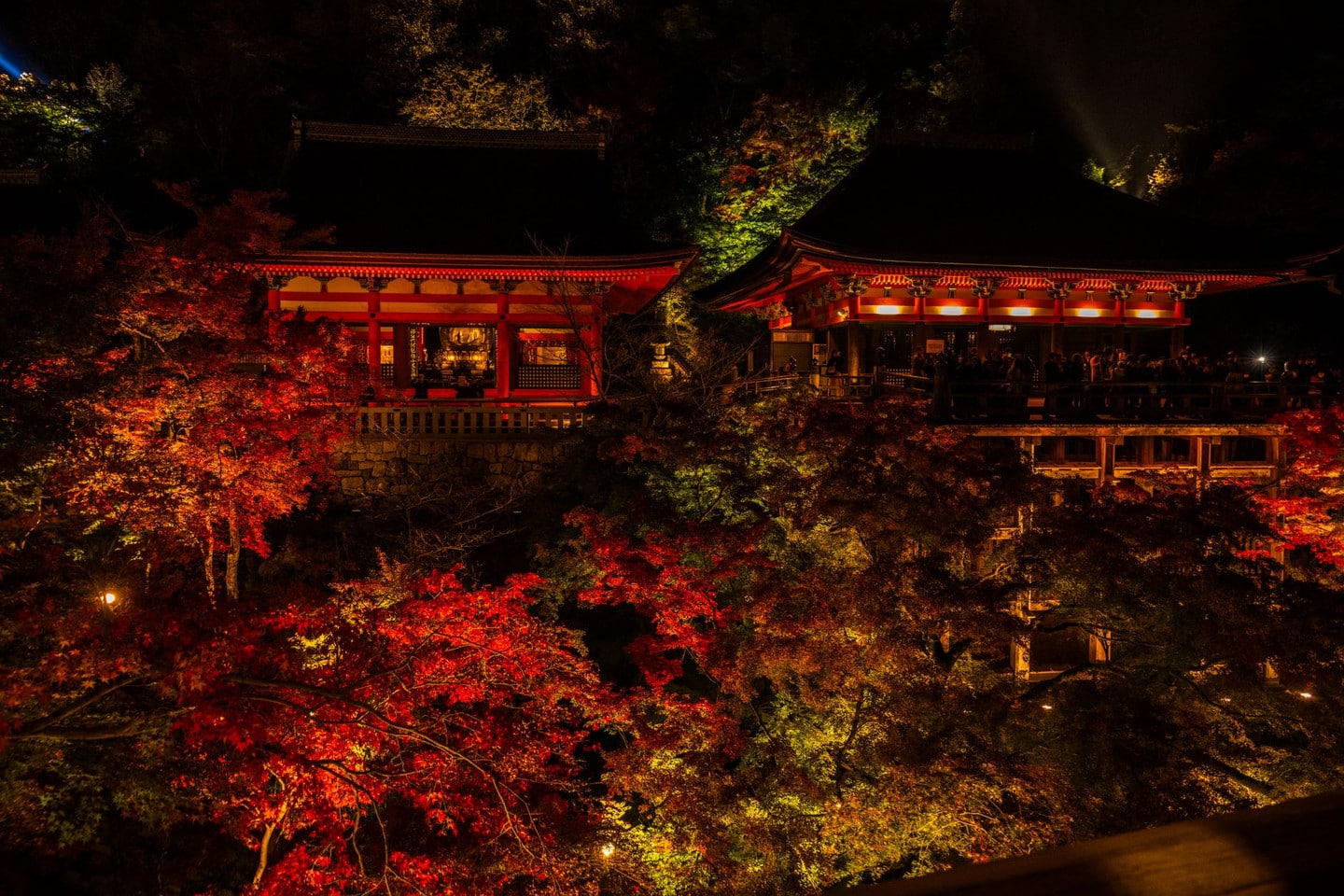
The autumn 2026 night special opening “秋涼の夕べ” (Akisuzu no Yube) runs 5:30 to 7:00 p.m. on Sunday, November 8, requires advance reservation, costs ¥5,000, and is guided by a monk. It includes the Dharma Hall’s “Twin Dragons,” the Fujin Raijin-zu screens (reproduction) and the lit Chouon-tei garden. For other dates, please follow the Kennin-ji official website and Kyoto Travel Navi announcements.
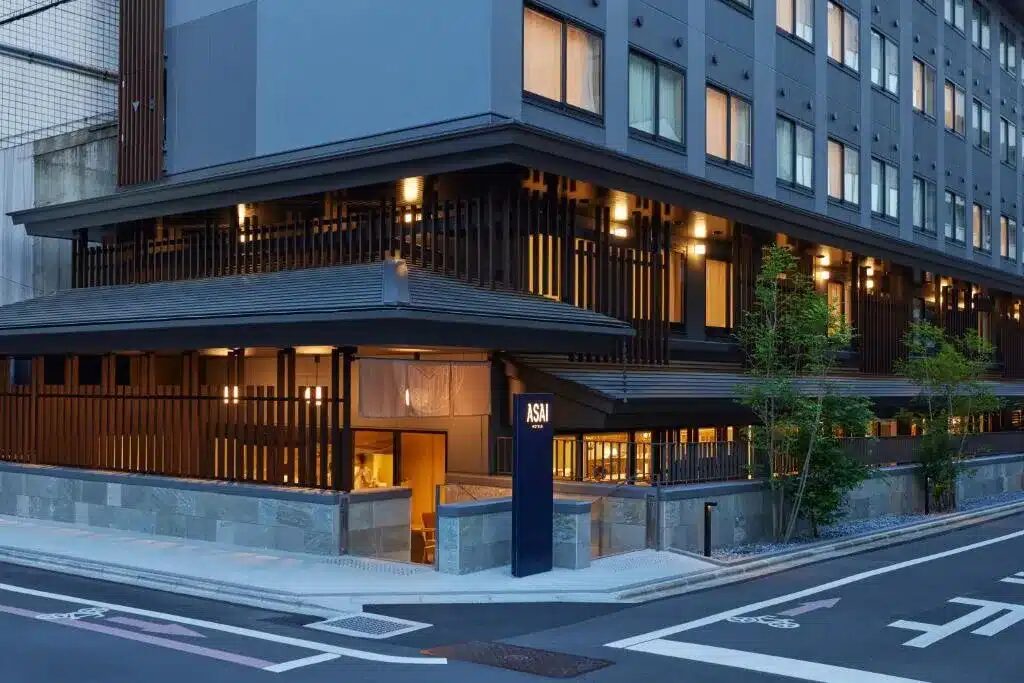
Where to Stay Along the Way
Kennin-ji is at the southern end of Gion’s Hanamikoji Street. Staying around Gion or Kyoto-Kawaramachi puts it about 7 to 10 minutes on foot; both Keihan Gion-Shijo Station and Hankyu Kyoto-Kawaramachi Station are within walking distance, which also makes it easy to join the Senkokai zazen meeting at 7:30 a.m. on the second Sunday of each month.

Kennin-ji Visitor FAQ
Q: How much is admission to Kennin-ji?
According to the Kennin-ji official website, general admission in 2026 is ¥800, with ¥500 for elementary, junior high and high school students and free entry for pre-school children. From January 1, 2027, general admission rises to ¥1,000, while students stay at ¥500.
Q: What is the easiest way to get to Kennin-ji?
Taking the Keihan Line to Gion-Shijo Station and walking 7 minutes is the easiest. You can also take City Bus No. 206 to Higashiyama Yasui and walk about 5 minutes.
Q: Until what time is Kennin-ji open?
Kennin-ji’s official visiting hours are 10:00 a.m. to 4:30 p.m. (last admission), with the gate closing at 5:00 p.m.; hours for sub-temples and night special openings are announced separately.
Q: Are the Fujin Raijin-zu screens the originals?
What is displayed in the temple is a high-resolution digital reproduction. The original is currently kept at the Kyoto National Museum. The two are almost identical in detail, so the viewing experience is unaffected.
Q: Can I visit Kennin-ji in a kimono?
According to the Kennin-ji official website, taking photos while wearing kimono or other traditional dress (wafuku) is prohibited in the grounds, and violators may be refused entry. Video, tripods and selfie sticks are also prohibited.
Q: What is the best season to visit Kennin-ji?
Cherry blossoms in April, hydrangea tea flowers and hange-sho in early June, and autumn leaves in November are all popular seasons, with the autumn foliage season plus the night special opening the most popular.
Q: How long should I plan to stay at Kennin-ji?
Allow about 1 hour to see the Dharma Hall’s twin dragons, the screens and the three gardens; if you add a zazen meeting, sutra copying or a goshuin stamp, 1.5 hours is more comfortable.