
2026 Ryoanji Guide: The Karesansui Rock Garden, Wabi-Sabi Aesthetics and Visiting Highlights Explained
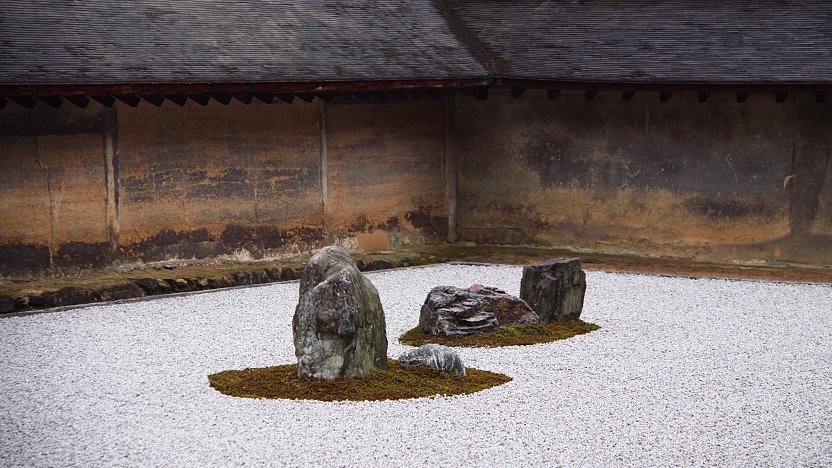
Ryoanji is in Ukyo Ward, Kyoto, and is a World Heritage Site with an admission fee of ¥600. Its greatest highlight is the karesansui rock garden of 15 stones that can never all be seen at once, expressing the minimalist Zen spirit of wabi-sabi aesthetics.
For Ryoanji’s visiting hours and the latest announcements, rely on the official Ryoanji website (ryoanji.jp). Admission tickets are bought on the spot at the ticket office by the main gate, and no reservation is needed.
Ryoanji Basic Information
Ryoanji’s address is 13 Goryoshita-cho, Ryoanji, Ukyo Ward, Kyoto. It is open from 08:00 to 17:00 from March to November and from 08:30 to 16:30 from December to February, and adult admission is ¥600, making it a World Heritage sight not to be missed when visiting Kyoto’s Zen temples.
We suggest a stay of about 60 to 90 minutes. Omamori charms and goshuin stamps are available in the temple, making it an excellent place for a deeper experience of Japanese Zen culture, and for many travelers one of the most representative karesansui gardens in Kyoto.
What Is Karesansui? A Definition
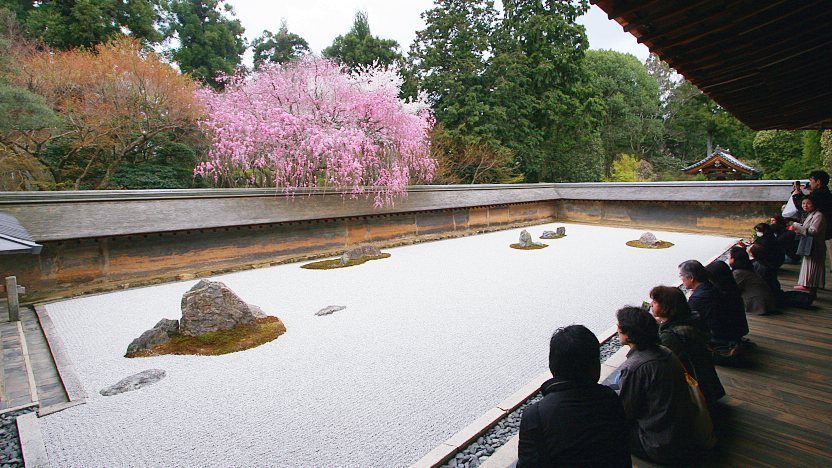
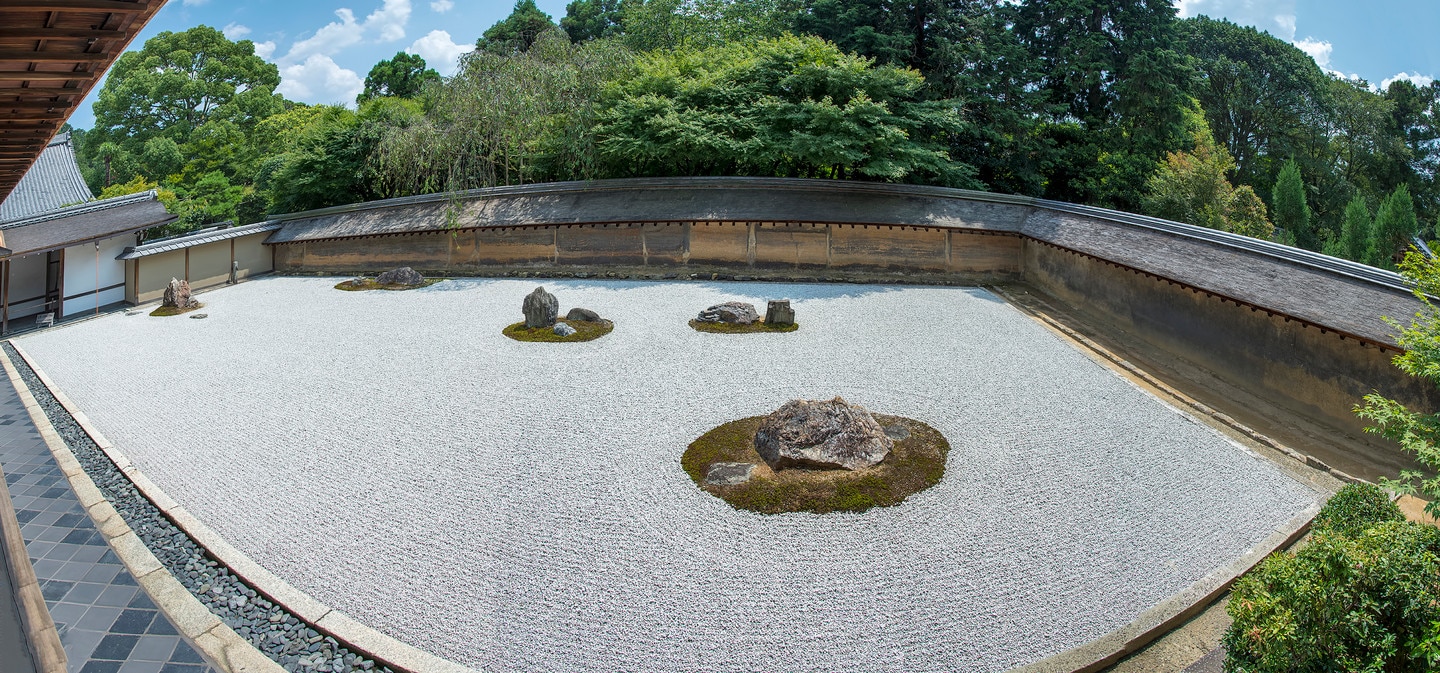
Karesansui is a uniquely Japanese garden style that uses no water, only elements such as stones, white sand and moss to symbolize mountains and flowing water, creating an abstract landscape rich in philosophical meaning, commonly found in Zen temples as a space for meditation.
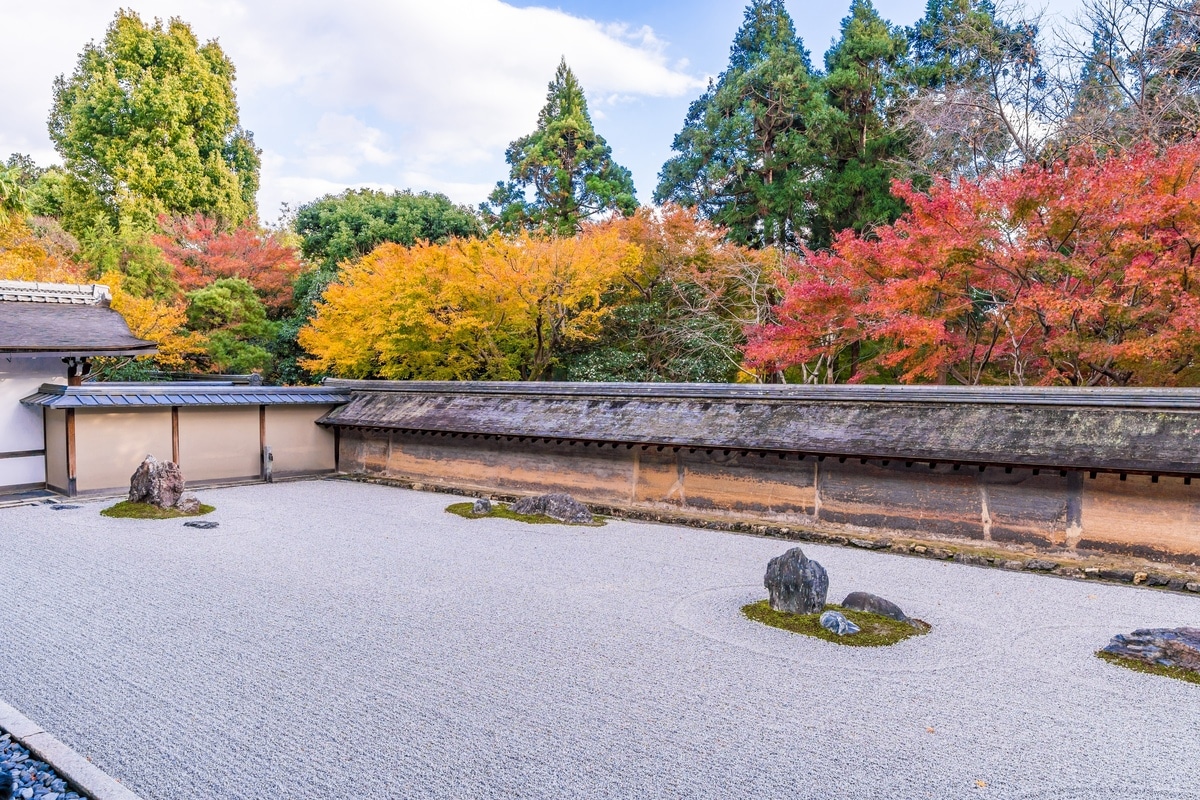
The patterns raked into the white sand symbolize the flow of waves, while the stones represent islands or mountains. By sitting quietly and gazing at them, viewers experience the Zen state of forgetting both self and object, in which all things are empty, the ultimate expression of the spirit of “negative space” in Japanese aesthetics.
The Historical Development of Karesansui
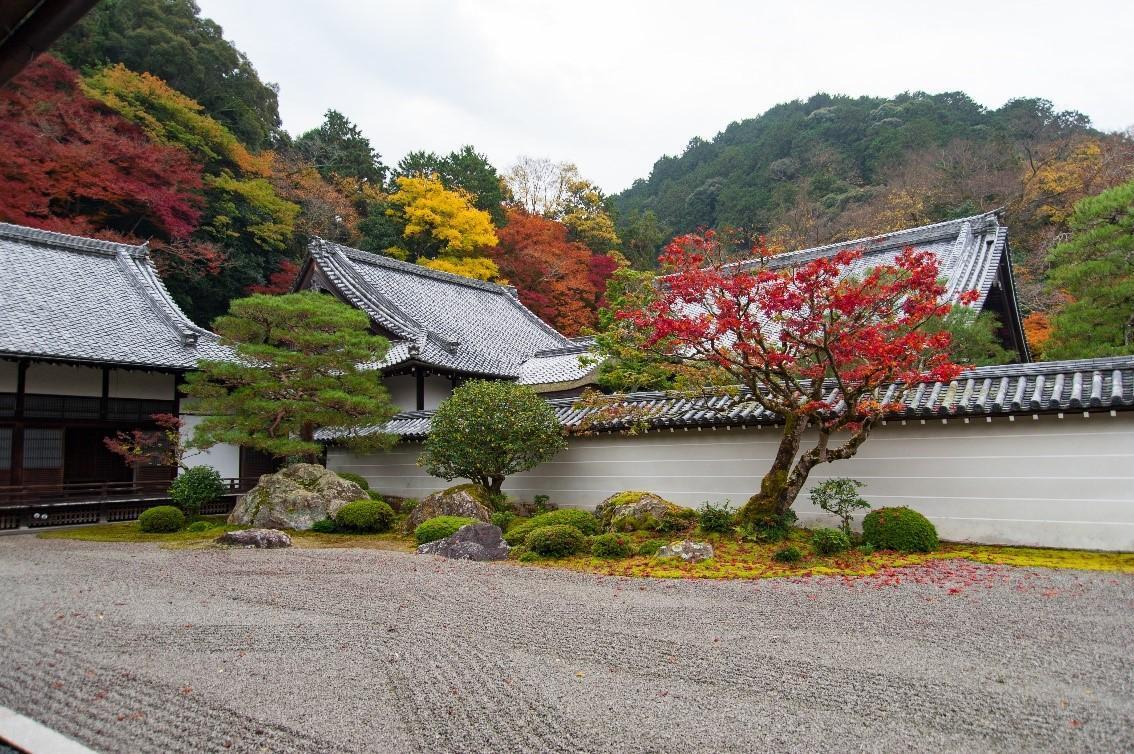
The garden-making techniques of karesansui can be traced back to the “Sakuteiki” of the late Heian period, blending the aesthetics of aristocratic life, yin-yang and five-elements thought and a delicate observation of nature, so that the garden became a poetic space that unfolds with the seasons.
Later, when war destroyed most of Kyoto’s pond gardens, rulers short of funds began building small karesansui gardens and blended in the simple, rustic wabi-sabi aesthetics of Zen, using stones and plants to create abstract natural scenes, which gradually became the signature landscaping of Zen temples after the Muromachi period.
Types of Karesansui and Representative Gardens
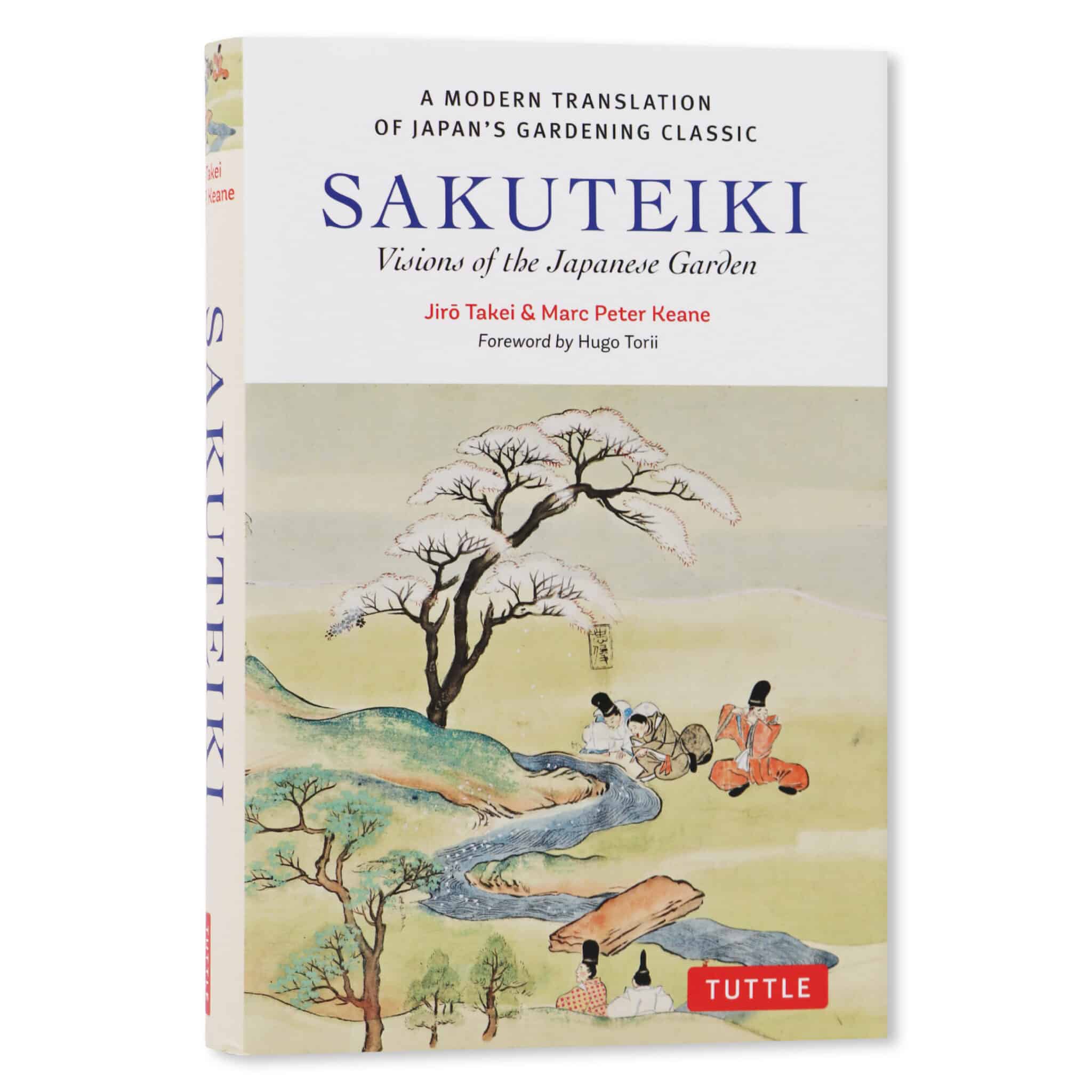
Karesansui can be divided by form into five major categories: flat-garden style, semi-flat-garden style, dry-pond style, dry-stream style and special forms. The flat-garden style is represented by the south garden of the Ryoanji Hojo and by Entsuji, presenting the purest composition of white sand and stone groupings.
Other forms include the dry-pond style, which imitates the outline of a pond, and the dry-stream style, which uses stone groupings to show a winding river; each school shows its garden designers’ distinctive interpretation of nature and Zen, worth visiting and comparing according to your interests.
Ryoanji’s World Heritage Status and Zen Cultural Background
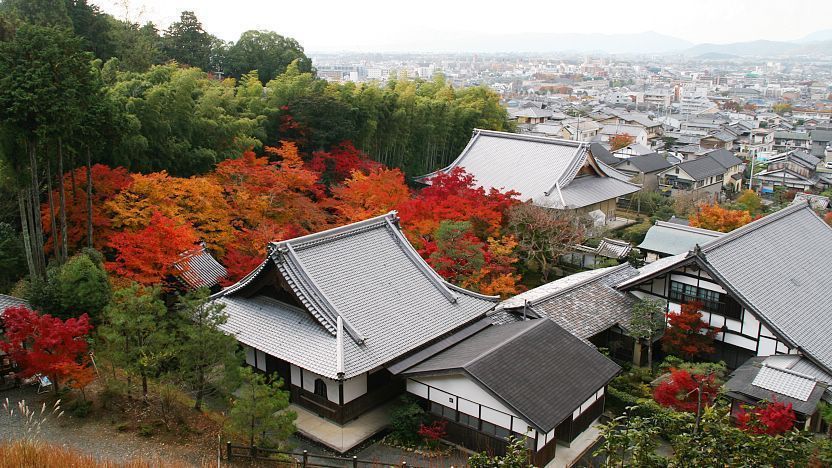
Ryoanji was inscribed as a World Heritage Site in 1994 under the name “Historic Monuments of Ancient Kyoto,” belongs to the Myoshinji school of the Rinzai sect, and was founded in 1450 by Hosokawa Katsumoto, who converted his villa into a temple.
The temple is deeply shaped by the simple spirit of Zen, and the rock garden, as an outdoor meditation room, embodies Zen’s practical, capable philosophy of life, making Ryoanji an important window into Japanese Zen culture and wabi-sabi aesthetics.
How to Get to Ryoanji? A Complete Guide to Transport and Costs
To reach Ryoanji, take Kyoto City Bus No. 59 and get off at the “Ryoanji-mae” stop, about a 1-minute walk to the main gate (if you take No. 50, get off at “Ritsumeikan University-mae” and walk about 7 minutes); you can also take the Randen Kitano Line to “Ryoanji Station” and walk about 7 minutes north. Fares for both are about ¥230 to 250.
What Are Ryoanji’s Must-See Highlights? A Full Guide to Each Area
There are many must-see highlights within and around Ryoanji, described one by one below.
Hojo Garden (Fifteen-Stone Karesansui)
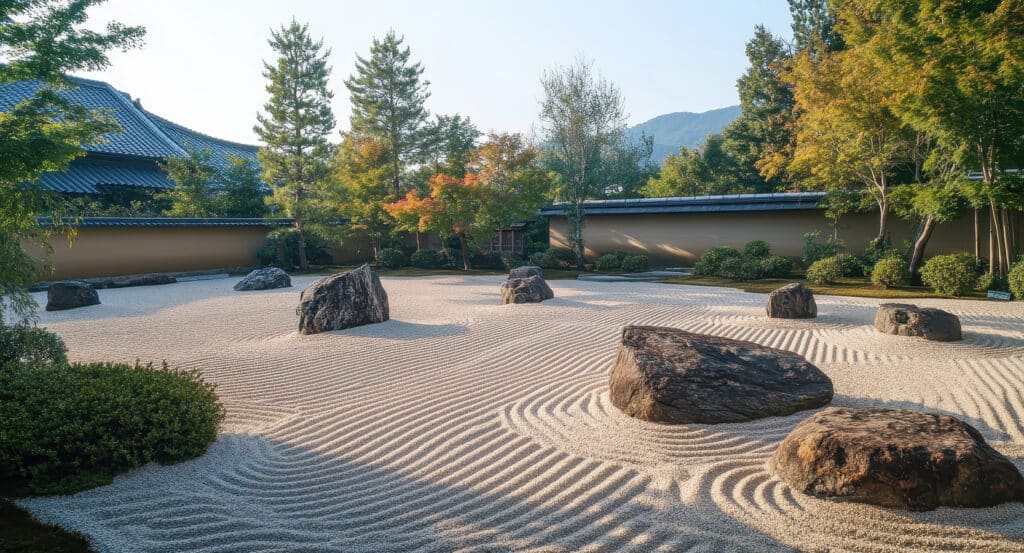
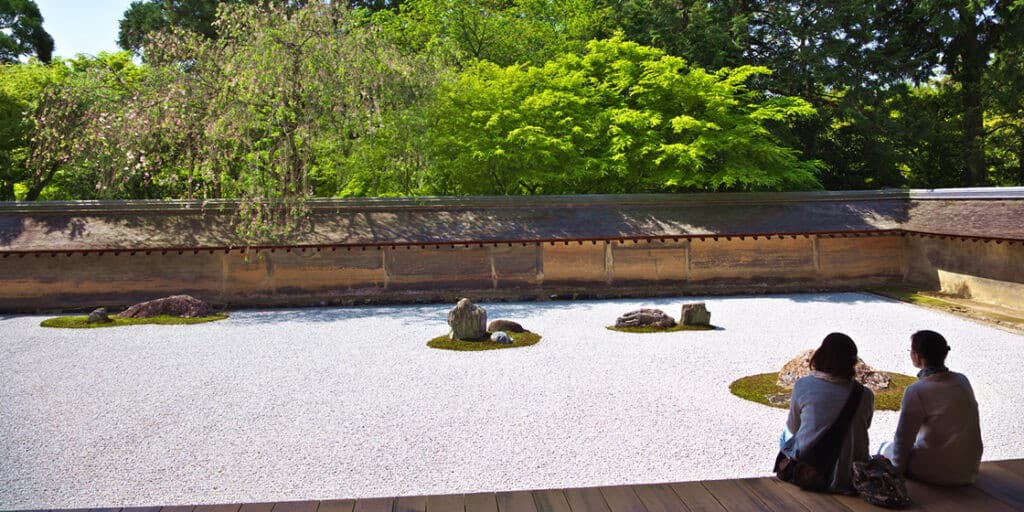
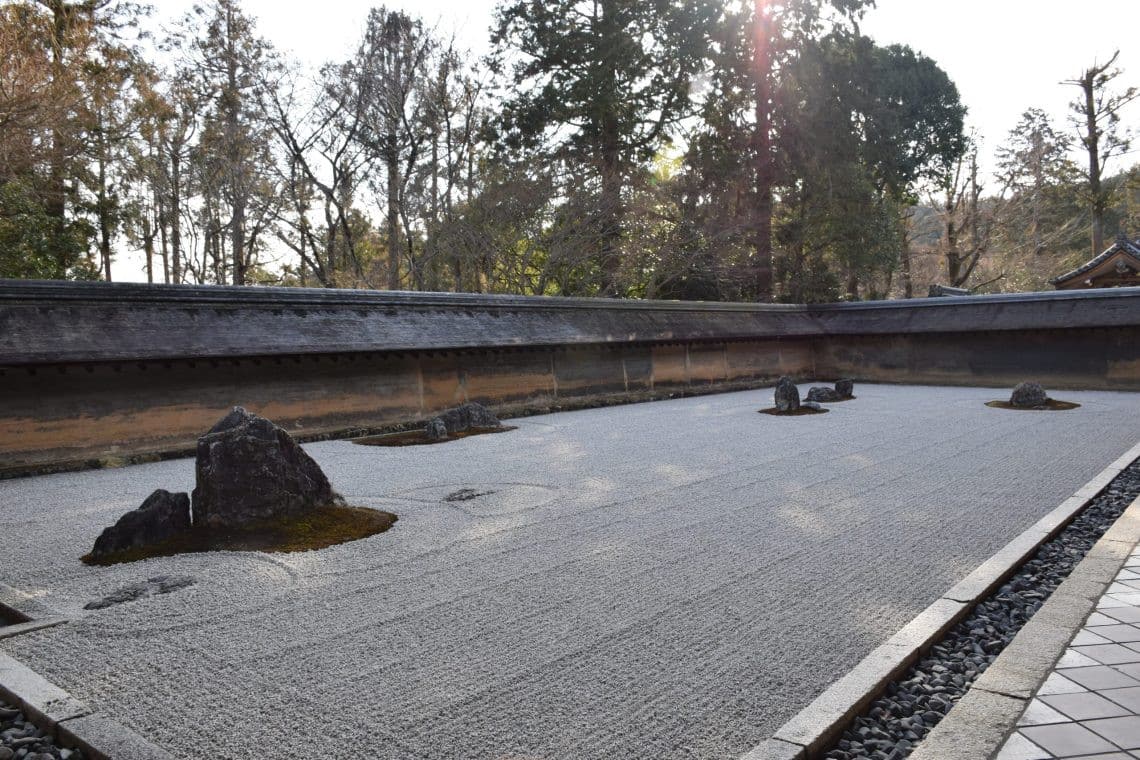
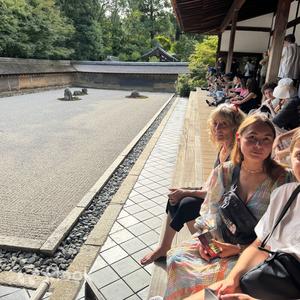
The Ryoanji Hojo south garden measures 25 x 10 meters and is composed of white sand and 15 stones in 5 groups, the representative of wabi-sabi aesthetics and the core World Heritage feature of Ryoanji. The garden was designed with precise visual calculation, so that wherever you view it from, one stone is always hidden, and the naked eye can see at most 14 stones. Traditionally 15 symbolizes completeness, but “one is always out of sight” hints that the world is hard to perfect and that completeness needs inner enlightenment. Historically there are also explanations such as a tiger crossing the sea, or “meaninglessness is the deepest Zen meaning,” and opinions differ. We suggest setting aside at least 20 minutes to sit quietly on the veranda and take it in.


The “Ware Tada Taru Shiru” Tsukubai
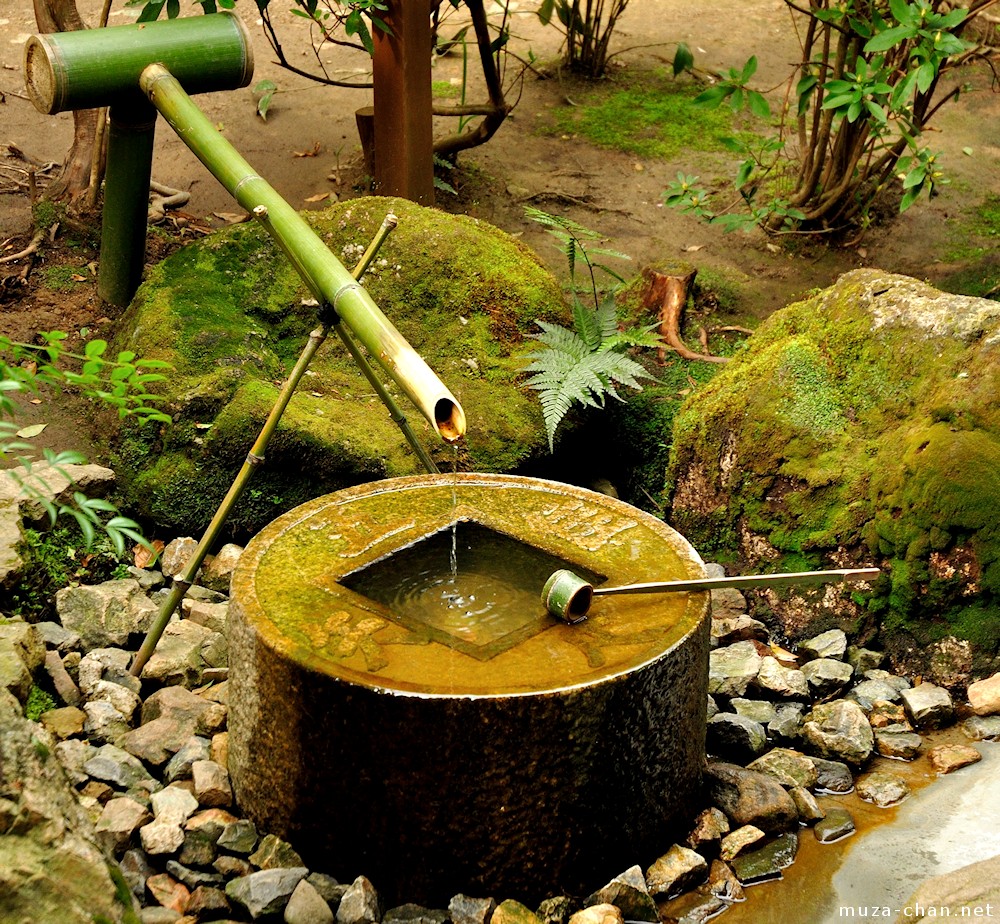
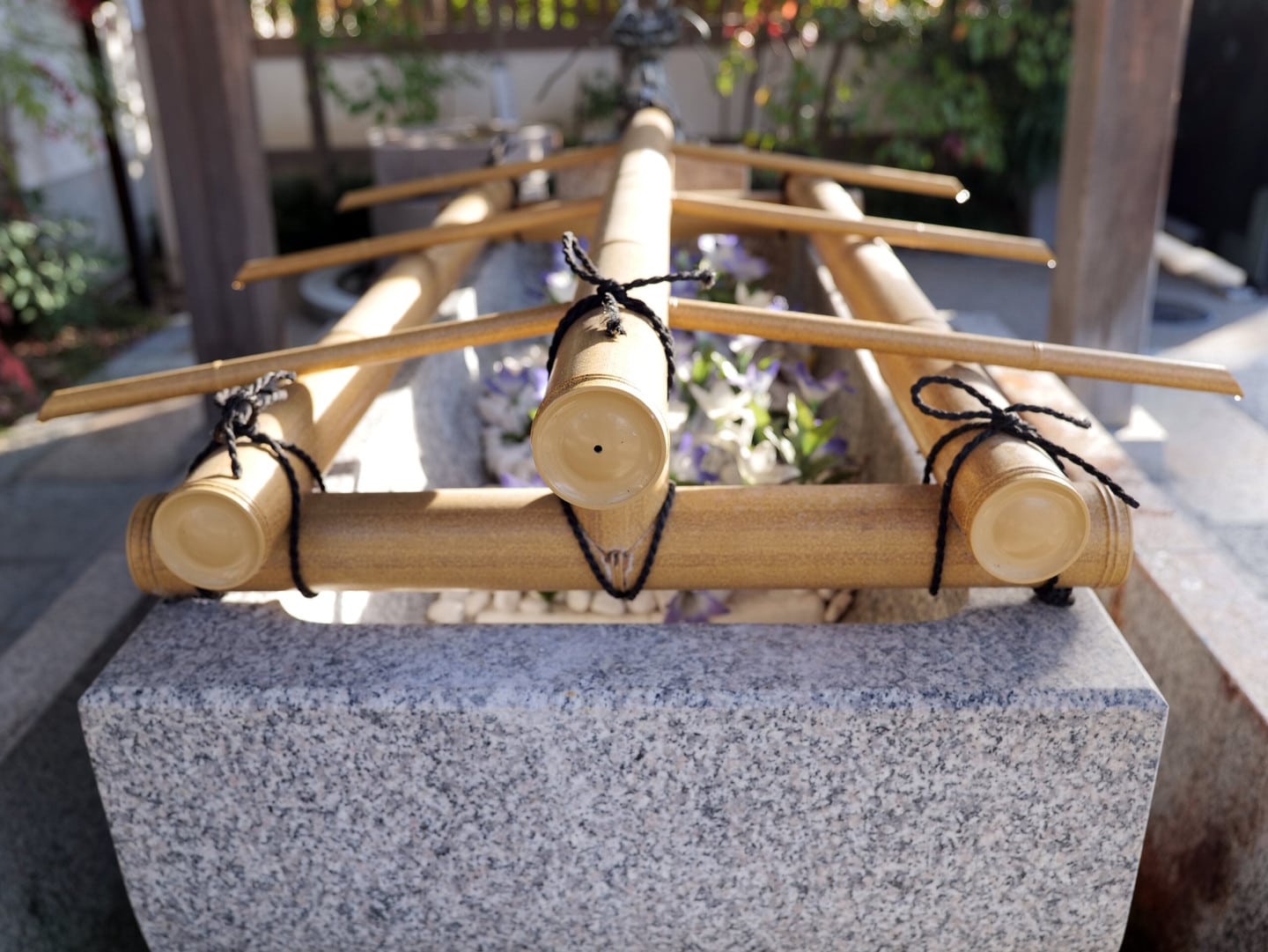
On the north side of Ryoanji is a round stone washbasin whose square hollow in the center stands for the character “mouth” (口), which together with the four surrounding characters “吾, 唯, 知, 足” forms the phrase “ware tada taru wo shiru” (“I only know contentment”), a famous stone craft donated by Mito Komon. The piece conveys contentment as the source of happiness and embodies the Buddhist teaching “one who knows contentment is rich even in poverty, one who does not is poor even in wealth.” When you visit, take time to appreciate the carving and composition of the stone and feel the wisdom of the ancients.
The Hojo Building and Kano School Fusuma Paintings
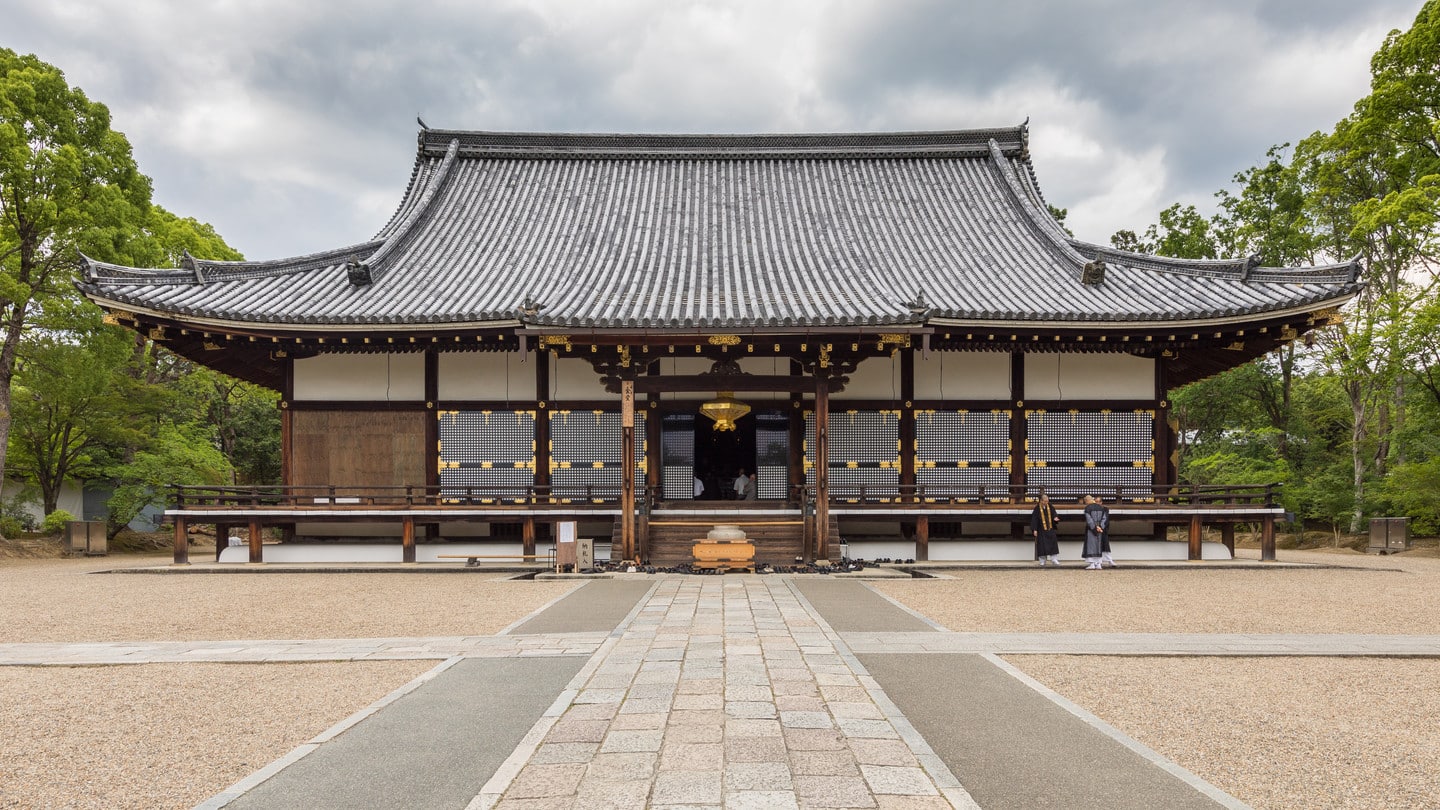
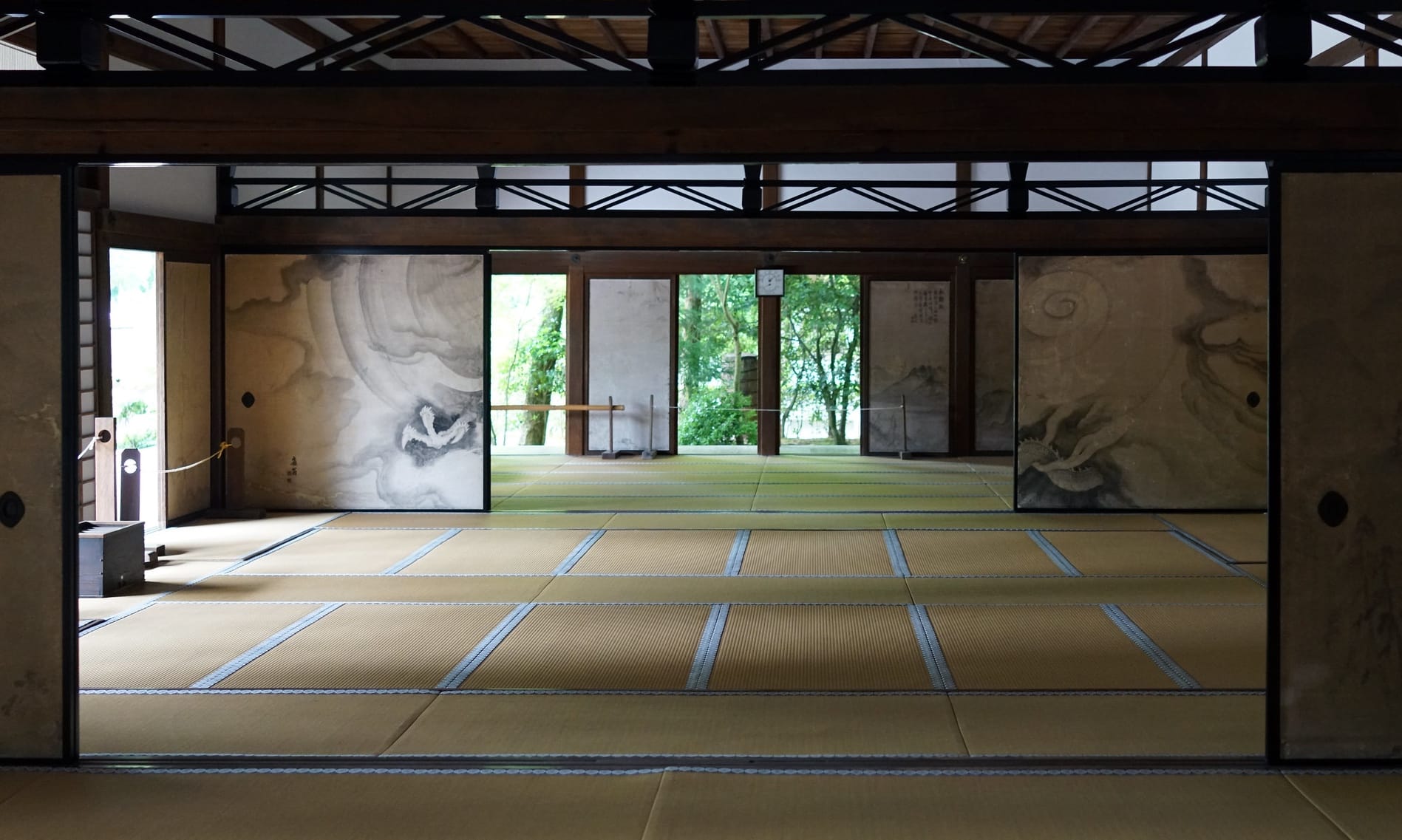
The main Hojo building was rebuilt in 1606, and its interior sliding doors bear fusuma paintings by Kano school artists of four-season landscapes and flowers and birds. The gorgeous painting style of the Momoyama period contrasts visually with the minimalism of the outdoor rock garden, and is a key to understanding Japanese architectural aesthetics. When you visit, compare the intricate colors of the indoor paintings with the negative space of the white sand outside, and experience the aesthetic tension of Ryoanji between stillness and movement, complexity and simplicity; it is also an excellent spot for photography lovers.
Kyoyochi Pond
Kyoyochi Pond is a pond-strolling garden below the Hojo building on the south side of the temple. In the Edo period it was famous for watching mandarin ducks, and its fame once surpassed that of the rock garden. A half-ring path along the shore and three small islands (two of which can be reached) make a graceful lake view.
Strolling along the roughly 500-meter path around the pond, you can enjoy spring cherry blossoms and autumn maples reflected on the water. This is the best hidden highlight inside Ryoanji for a leisurely walk away from the rock garden crowds, and we suggest allowing 20 to 30 minutes.
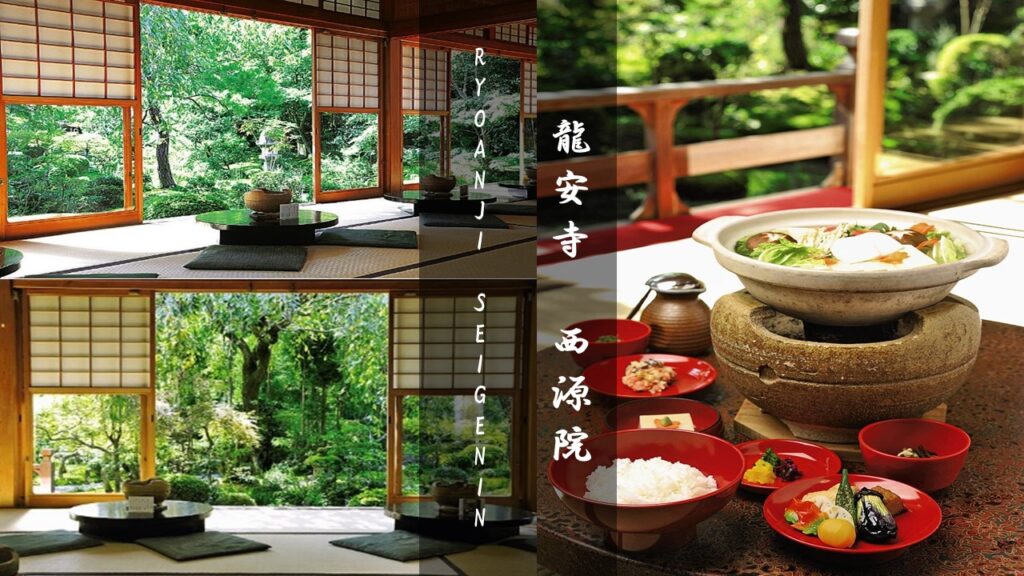
Saigen-in Yudofu
Saigen-in, a tea house within the grounds, serves its signature seven-herb yudofu shojin ryori set, letting you enjoy Kyoto’s famous delicate tofu while looking out over the pond garden. Yudofu costs about ¥1,500 to 1,800 and the shojin ryori set about ¥3,300 to 3,800, an excellent way to experience Zen temple food culture in depth.
The dining setting keeps a traditional tatami-room atmosphere, and eating while looking out at the garden from the veranda lets you feel the beauty of pure temple cuisine all the more. We suggest going for lunch after visiting the rock garden, avoiding the holiday dining rush.
Opening hours are roughly 11:00 to 15:30, so you may want to call ahead to confirm before you set out.
Kinkakuji
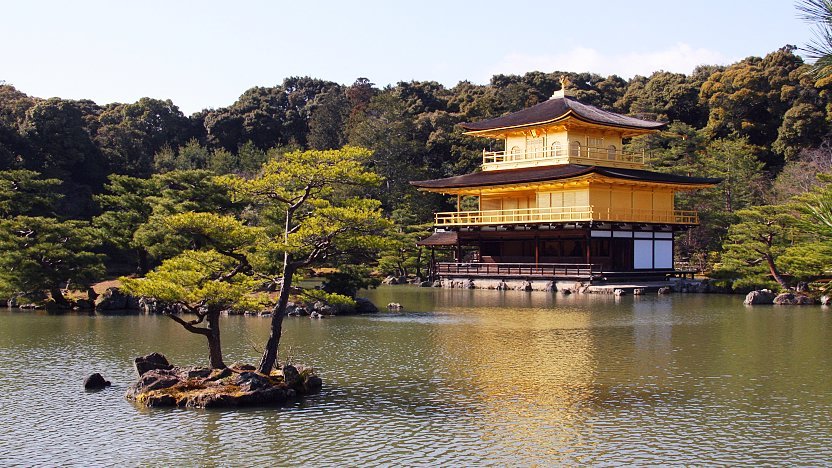
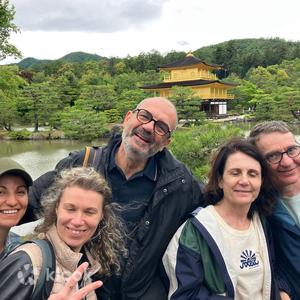
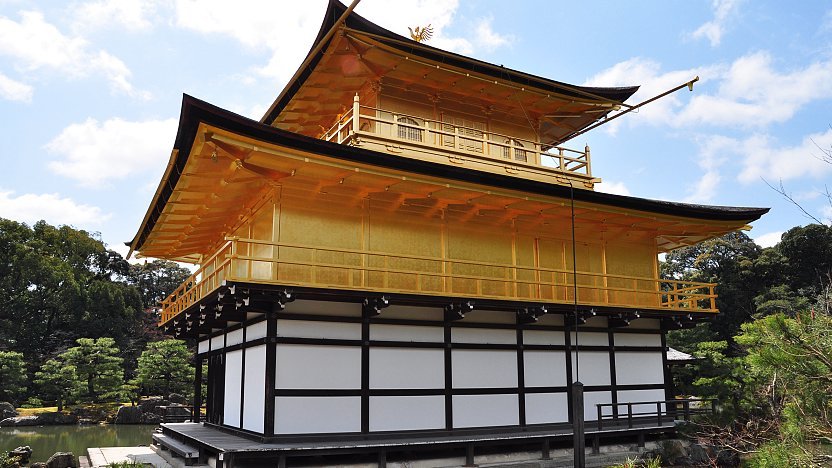
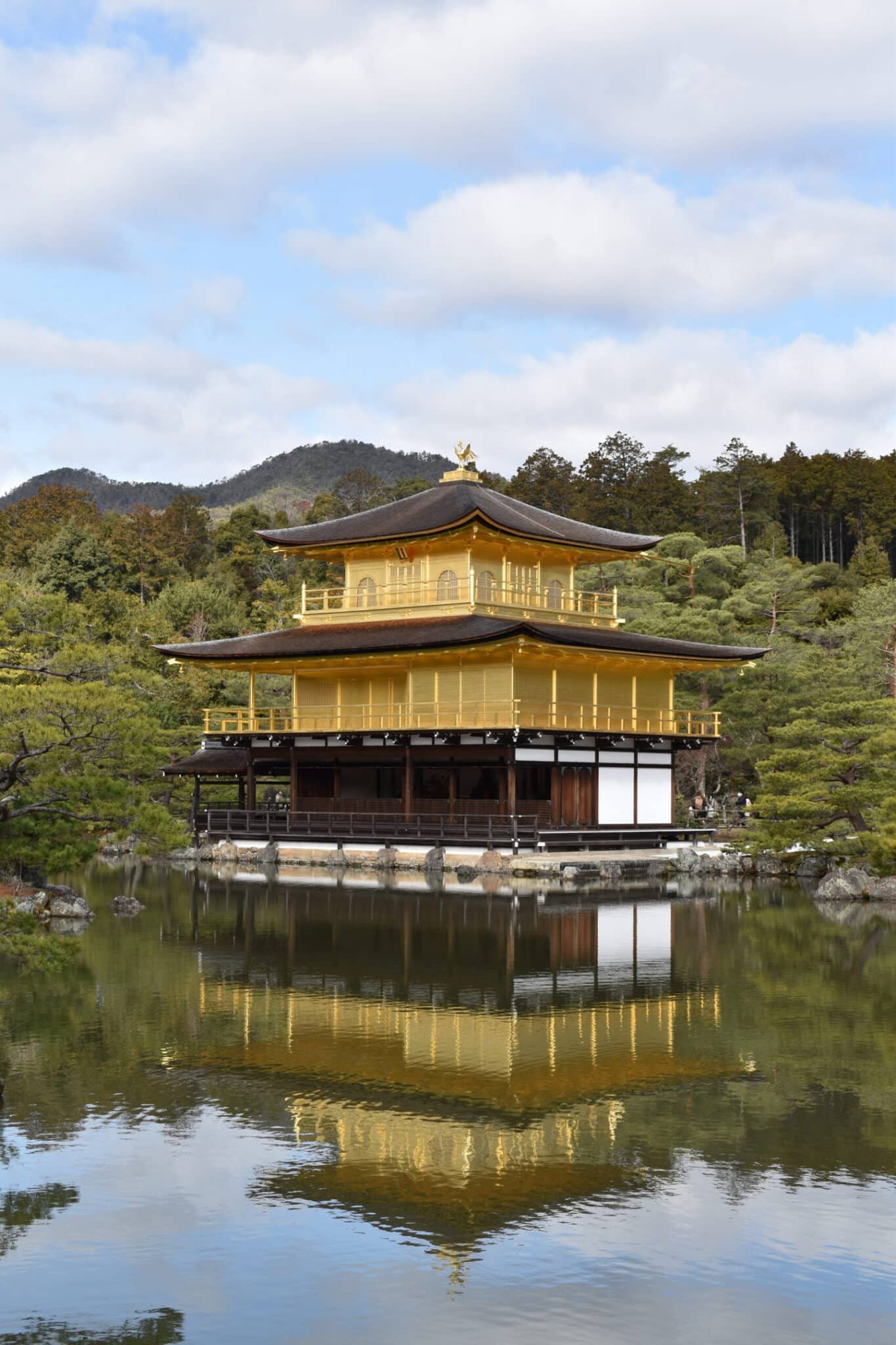
Kinkakuji, officially named Rokuon-ji, is famous worldwide for its gold-leaf-covered Shariden, and is one of Kyoto’s most representative World Heritage sights, with admission of ¥500 and opening hours of 09:00-17:00.
It is about a 20-minute walk from Ryoanji along the Kinukake no Michi or 5 minutes by Bus No. 59, and the sight of the golden pavilion in daylight reflected in Kyoko-chi Pond is spectacular, a golden side trip not to be missed when planning a half-day World Heritage route around Ryoanji.

Ninna-ji
Ninna-ji is the head temple of the Omuro school of the Shingon sect, founded in 888. Its five-story pagoda and Omuro cherry trees are distinctive, and spring cherry-blossom viewing here is one of Kyoto’s late-blooming famous spots, with admission of about ¥500 to ¥800 depending on season and area.
Ninna-ji is also on the Kinukake no Michi, not far from Ryoanji and Kinkakuji, suited to the same day’s itinerary, letting you feel the distinctive architecture and garden aesthetics of Zen temples of different sects.
Toji-in
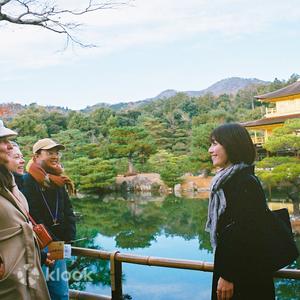
Toji-in is the family temple of the Ashikaga shoguns, housing wooden statues of successive Ashikaga shoguns, with a quiet and elegant pond-strolling garden, and admission of ¥600, a recommended extension for travelers who love Japanese history and culture.
The temple is visited by few tourists, so the atmosphere is especially serene, suited to travelers who like deeper exploration and do not want crowds, to drop in after Ryoanji and feel a different, tranquil Zen temple atmosphere.
Myoshinji
Myoshinji is the head temple of the Myoshinji school of the Rinzai sect, with vast grounds and many sub-temples; the cloud-dragon painting on the Dharma Hall ceiling and the karesansui garden of Taizo-in are both must-see highlights, with admission of about ¥500 to ¥700 depending on the area open.
Myoshinji belongs to the same Rinzai lineage as Ryoanji and is easily reached on foot or by bus, suited to travelers with a deeper interest in Zen architecture and gardens who want to plan a half-day in-depth visit.

How Much Does a Visit to Ryoanji Cost? Admission and Guided Tour Recommendations
Before visiting Ryoanji, what most travelers care about is admission and transport. This World Heritage Site at 13 Goryoshita-cho, Ryoanji, Ukyo Ward, Kyoto is not expensive to enter, but if you want to understand the wabi-sabi aesthetics and Zen thought behind the rock garden, pairing it with a professional guide or a package tour often gives the whole trip more depth. Below are several common ways to visit and their costs, from independent admission tickets to day tours with a guide, so you can plan your own Ryoanji trip flexibly around your budget and time.
Ryoanji Admission Ticket (Independent Visit)
Ryoanji opening hours: March-November 08:00-17:00, December-February 08:30-16:30. Prices: adults ¥600, high school students ¥500, junior high and elementary students ¥300. Buy on site, no reservation needed.
See the karesansui rock garden of the Hojo Garden, presented with 15 stones and raked white sand, symbolizing the Zen idea that “imperfection is perfection” and wabi-sabi aesthetics.
The advantages of an independent visit are flexible timing and low cost, suited to those who want to feel the garden quietly; the drawback is that without some background beforehand, it may be hard to grasp the religious and aesthetic meaning of the rock garden.
![[Kyoto Spring Cherry Blossom Trip] Ryoanji, Ninna-ji, Kinkakuji and Hirano Shrine Night Sakura | Private Car Day Tour](https://travel.williamlion.tw/wp-content/uploads/sites/7/2026/07/image-1797.jpg)
Kyoto World Heritage One-Day Bus Guided Tour (Including Ryoanji, Kinkakuji and Ninna-ji)
KKday and Klook offer guided minibus / coach tours (Chinese- and Japanese-speaking guides) linking the three World Heritage Sites of Ryoanji, Kinkakuji and Ninna-ji, taking about 6-8 hours in all; actual prices are as shown on the booking platform on the day, and admission and transport are included.
The guide explains the karesansui, rock garden and white sand symbolism of the Ryoanji Hojo Garden and the history of Muromachi-period Zen gardens, for a deeper understanding of wabi-sabi aesthetics and Japanese garden art.
Suited to first-time visitors to Kyoto with limited time who want to collect the popular World Heritage Sites at once, and to independent travelers interested in history and culture but without time to research, saving time and giving an in-depth guided experience.
Kyoto Arashiyama, Ryoanji and Kinkakuji Half-Day Custom Private Car Tour
Japanese- or Chinese-speaking private car tours booked through KKday or Klook are usually charged by 6 or 8 hours, with prices depending on vehicle type and number of people, suited to small families or friends of 3-6 sharing the cost, with a flexible itinerary whose order and stop times you can customize. The biggest advantage of a private car is flexibility: you can arrange the Ryoanji Hojo Garden (we suggest allowing at least 40 minutes to take in the karesansui) and nearby sights such as the Ninna-ji Omuro cherry trees and Arashiyama’s Togetsukyo Bridge at your own pace, fulfilling several wishes at once. We suggest agreeing the stop times with the driver or travel agency beforehand to experience the Zen atmosphere in depth.
Kyoto Temple Tour In-Depth Cultural Experience (Including Tea Ceremony and Ryoanji Commentary)
This tour is commonly seen under KKday’s “Kyoto Cultural Experiences,” including a Ryoanji visit, a tea ceremony experience and shojin ryori, taking about 4-5 hours; actual prices are as shown on the booking platform on the day, helping travelers understand wabi-sabi aesthetics through taste.
The tour first visits the Ryoanji rock garden, then goes to a nearby tea room to experience whisking matcha, where the instructor explains how the tea ceremony’s spirit of “ichi-go ichi-e” (once in a lifetime) echoes the negative space of the karesansui garden, both emphasizing the present moment, imperfection and natural beauty.
For those who have already seen the Ryoanji rock garden and want a deeper understanding of Japanese wabi-sabi culture, this experience combining tea ceremony and shojin ryori makes the abstract aesthetic concept concrete and tangible, a recommended add-on.
Accommodation Tips for Your Trip
Ryoanji is in Ukyo Ward, Kyoto, reachable by Keifuku Electric Railroad or city bus, and staying along the Randen line in Arashiyama, Kitano-Hakubaicho or around Shijo-Kawaramachi is convenient; you can arrive for the opening hour in the morning to avoid the crowds.

FAQ
Below are the questions travelers most often search for before visiting Ryoanji.
Q: How much is admission to Ryoanji?
Adult admission to Ryoanji is ¥600, bought on site at the ticket office by the main gate, with no advance online reservation needed; high school students ¥500, junior high and elementary students ¥300.
Q: What are Ryoanji’s opening hours?
From March to November it is open from 08:00 to 17:00, and from December to February from 08:30 to 16:30; we suggest checking the latest opening hours for the month before you set out.
Q: What is the most convenient way to get to Ryoanji?
From Kyoto Station, take Kyoto City Bus No. 50 to “Ritsumeikan University-mae” and walk about 7 minutes, or take the Randen Kitano Line to Ryoanji Station and walk about 7 minutes to the main gate.
Q: When is the best time to visit Ryoanji?
We strongly recommend entering the temple at opening time, 08:00 to 09:00 in the morning, when tour groups have not yet arrived and you can have the ethereal quiet of the rock garden to yourself, the best time for photos and quiet meditation.
Q: Why can only 14 stones be seen in the Ryoanji rock garden?
The 15 stones are deliberately placed in 5 staggered groups with precise visual calculation, so from any angle on the veranda one stone is always hidden by the others, and only 14 can be seen at once, a metaphor for the fact that nothing in life is perfect.
Q: How long does a visit to Ryoanji take?
A general visit to the Ryoanji rock garden, the Hojo building and Kyoyochi Pond takes about 60 to 90 minutes in all; if you want to eat at Saigen-in or stroll around the pond, we suggest allowing at least 2 hours to be comfortable.
Q: Are there any taboos or things to be aware of when visiting Ryoanji?
You must take off your shoes and keep quiet when entering the Hojo building, it is forbidden to step on the white sand or touch the stones in front of the rock garden, and please do not use flash when taking photos, to preserve the solemnity of the garden and the experience of other visitors.