

Highlights and Experiences on Fukuoka Day Trips
Below, grouped by direction, so you can pick the route you want.
Itoshima Sakurai Futamigaura: The White Sea Torii and the Wedded Rocks
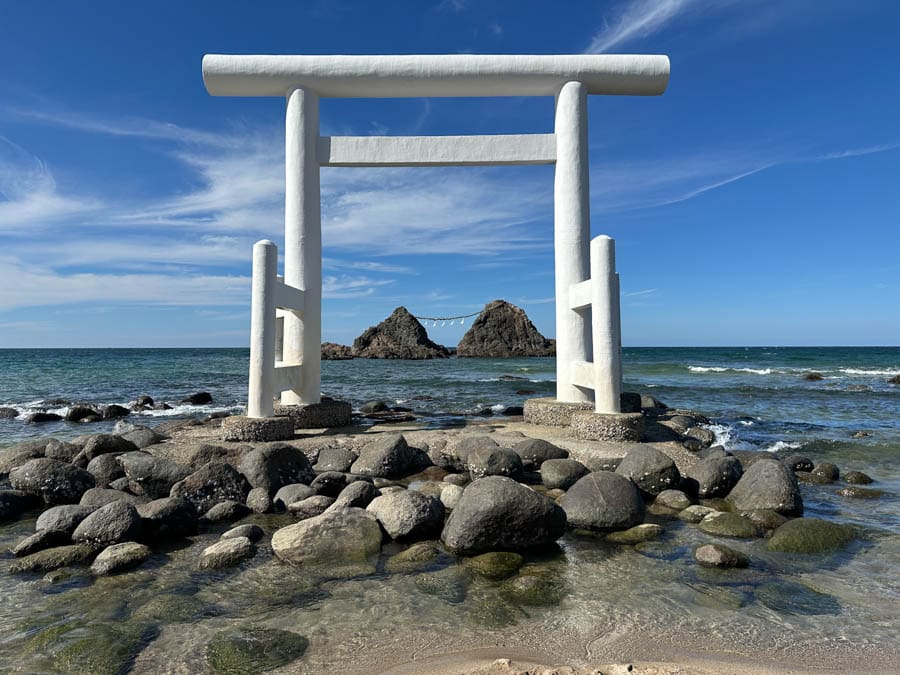
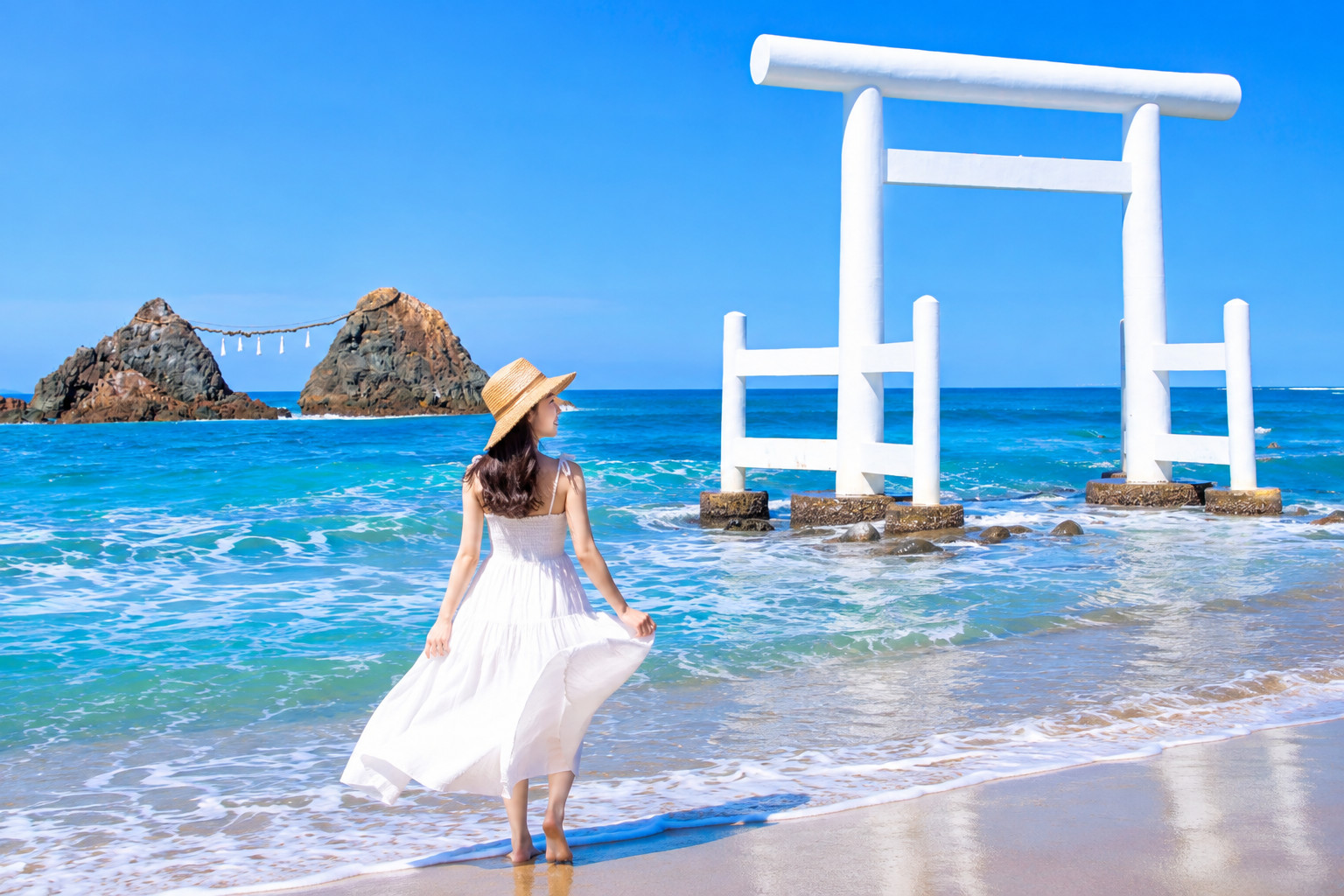
Itoshima’s most iconic scene is the white torii standing in the sea and the two offshore Wedded Rocks (Meoto Iwa) joined by a sacred shimenawa rope. It is an auxiliary shrine of Sakurai Shrine, long regarded as sacred ground, and is the most photogenic stretch of the Genkai Sea coast.
The best time to visit is at dusk; around the summer solstice the sun sets between the two rocks. Entry is free, but parking is limited and fills up on holidays. If you use public transport, note that buses are infrequent, so be sure to check the return time first. After dark it is almost impossible to catch a taxi here, so getting back to the city after watching the sunset is not easy.


Itoshima Palm Tree Swings and the Seaside Cafe Street
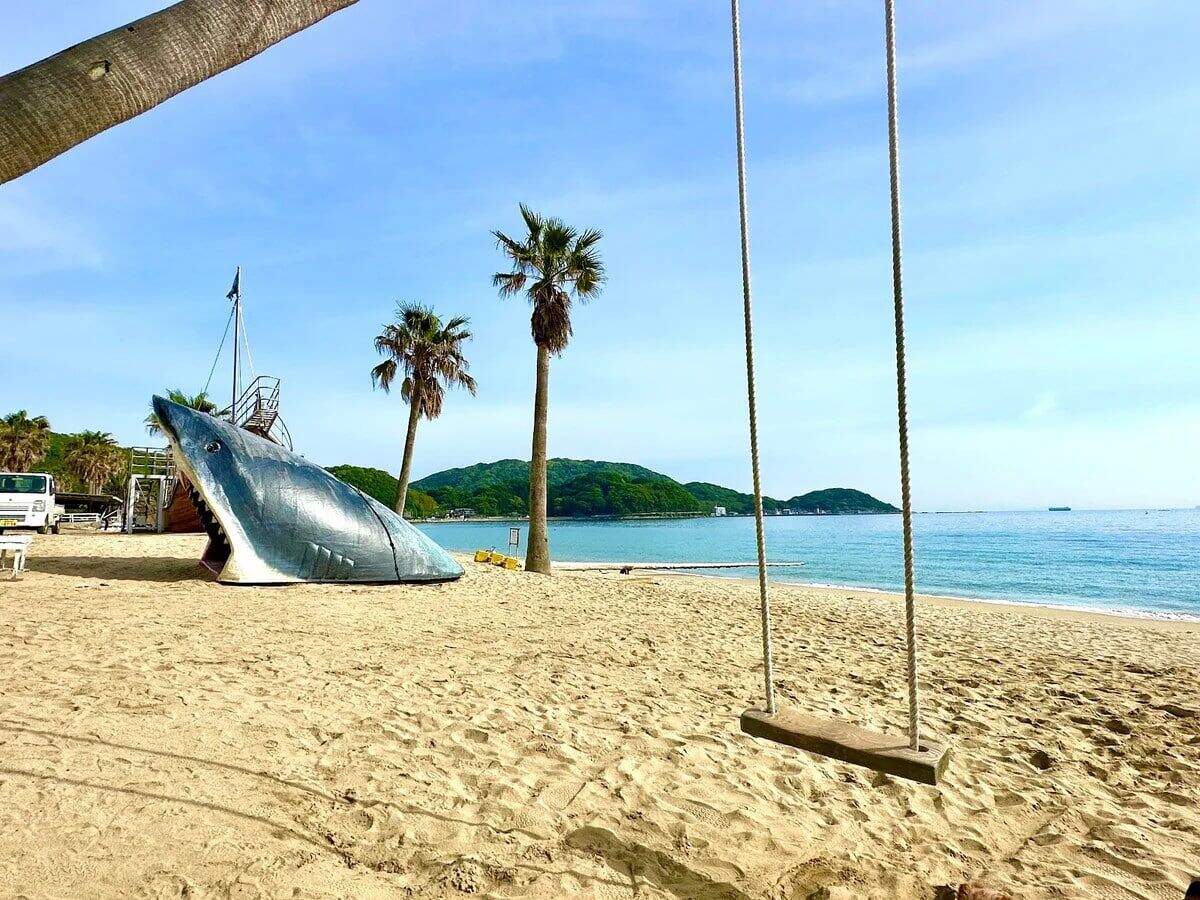
Along the Itoshima coastal road (Sunset Road) are many seaside cafes and general stores. The most famous is the swing hung between palm trees, a must-photograph spot for visitors.
The area has a resort feel and suits unhurried sea-watching, but the shops are spread out and not easy to walk between, so driving or a charter is mostly recommended. If you take the bus, pick just one or two stops, or getting around will eat most of the day. Most shops do not take reservations, and on holidays you often have to queue.
An Add-On for an Itoshima Day Trip: Shiraito Falls
If you want one more stop beyond the coastline on an Itoshima day trip, add Shiraito Falls (白糸の滝) on the mountain side. The falls are in Shiraito, Itoshima City, with free entry and free parking. Hours are 9:00 to 17:00, extended to 18:00 in July and August, and closed on Wednesdays from December to March. In summer the spray is cool, a good side trip after half a day at the beach. We recommend scheduling it on the same day as Sakurai Futamigaura and the palm tree swings, and checking that day’s operating status with the Itoshima City Tourism Association before you go.
Nokonoshima Island Park: Large Fields of Flowers Through the Seasons
Nokonoshima Island Park is the most easily reached flower-field attraction near Fukuoka, with flowers rotating through the seasons: rapeseed blossoms and cherry blossoms in spring, cosmos in autumn, and camellias in winter, with Hakata Bay behind the flower fields for excellent photos.
Admission is charged and opening hours change with the season. The plan is a “ferry + island bus + park” combination that can be done in half a day, good for an in-between slot on an arrival or departure day. Bloom times vary slightly each year, so check the official flower report before you go. Peak bloom usually lasts only two or three weeks, and if you miss it you will see only green lawns.
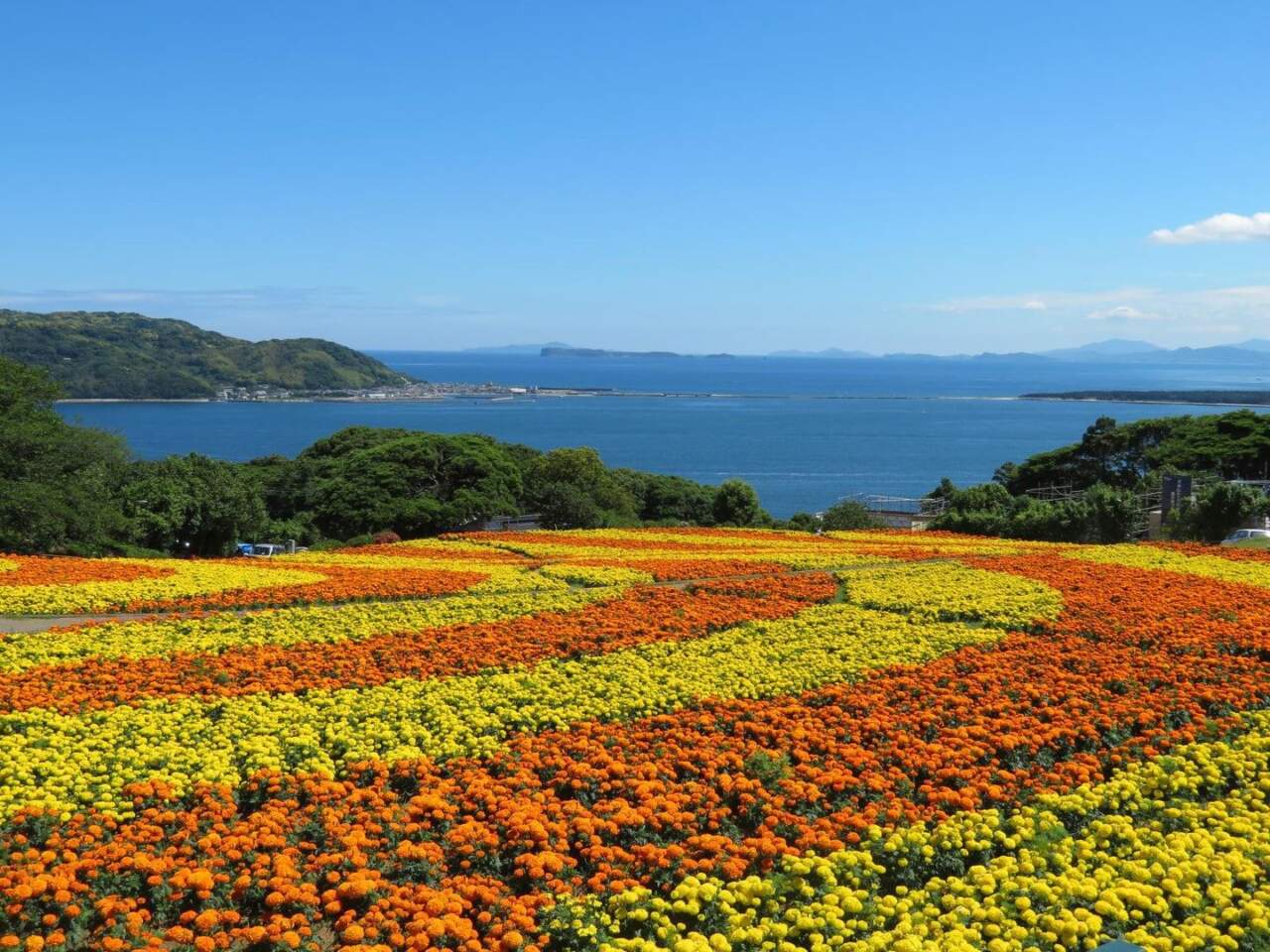
The 10-Minute Nokonoshima Ferry and the Hakata Bay Lookout
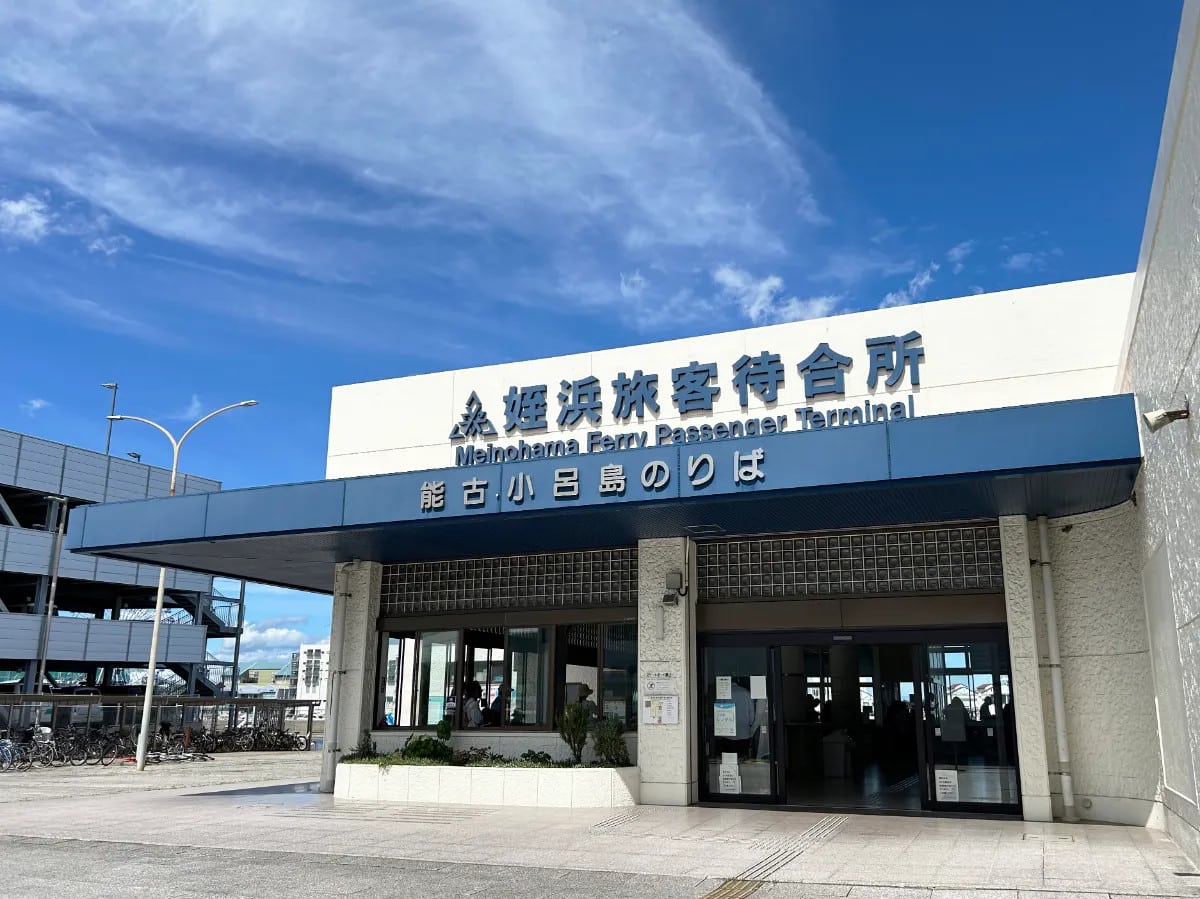
The ferry from “Meinohama Ferry Terminal” to Nokonoshima takes only 10 minutes and runs about once an hour, and the island buses depart in time with the ferries, which is why it is far more public-transport-friendly than the other suburban spots. From the boat you can see Fukuoka’s skyline.
The island has a lookout over Hakata Bay, and in good weather the view stretches all the way to the opposite shore. The island is small; besides the Island Park there are small villages and seaside paths, good for a leisurely half-day walk. Be sure to check the last ferry back, because if you miss it you must wait for the next one, and in winter the last sailing is even earlier, so take care when planning an evening visit.
Yanagawa Moat Boat Ride: The Boatman’s Pole and Songs
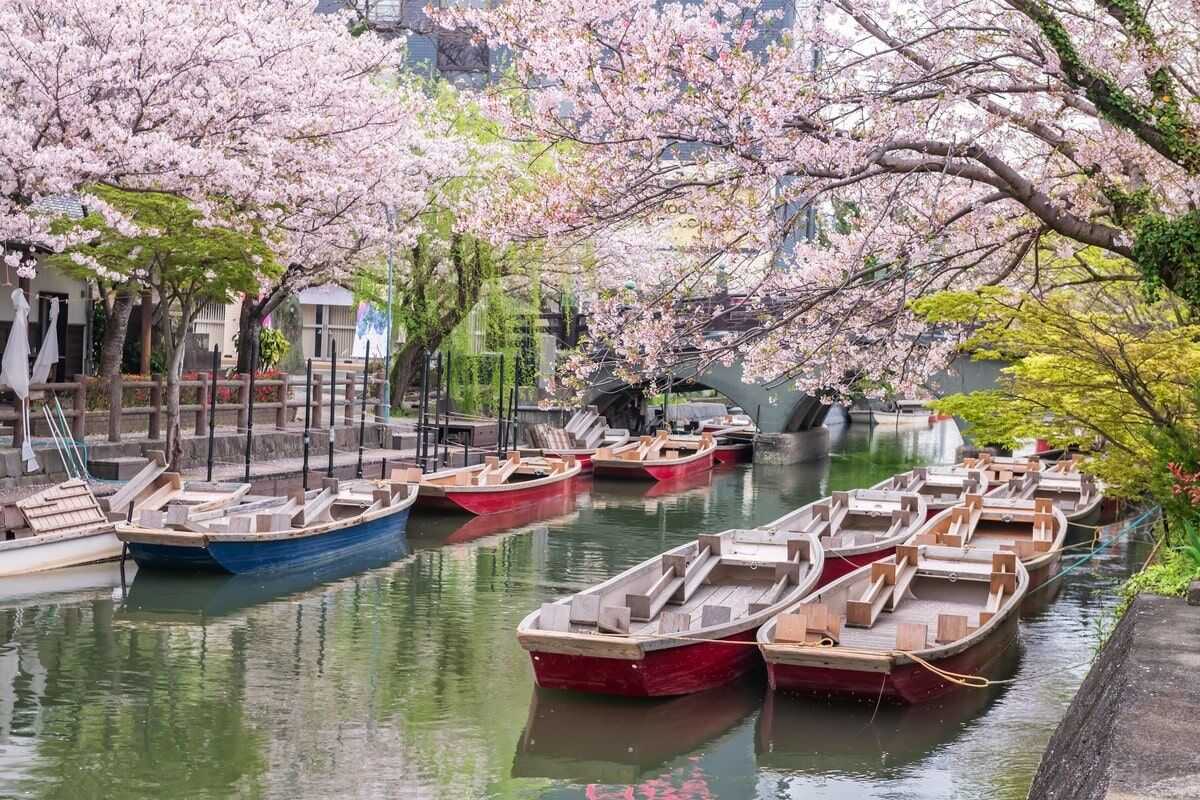
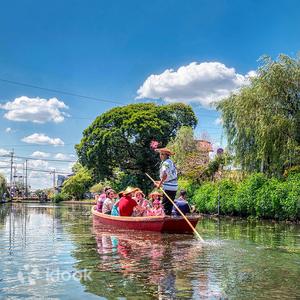
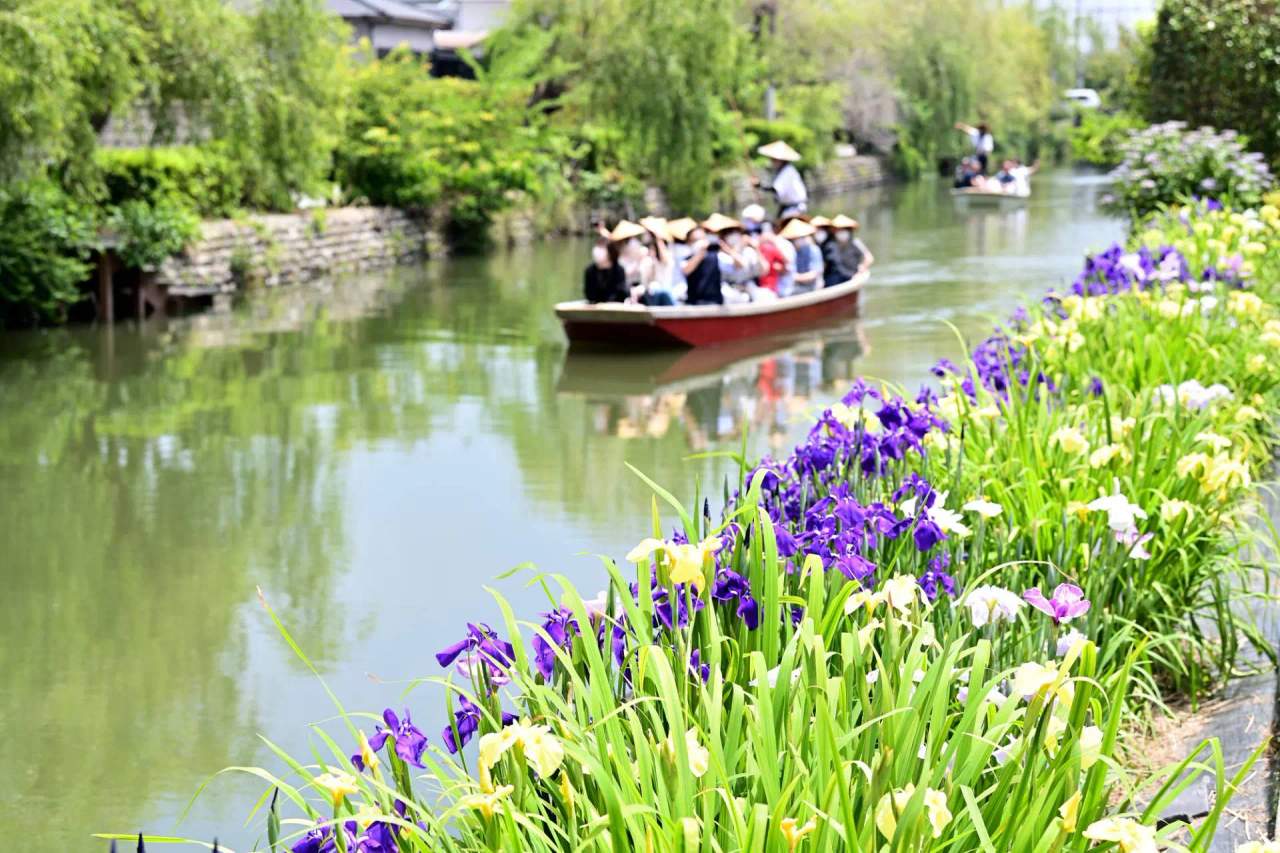
Yanagawa is a true “water town,” with the old castle-town moat network still intact, and the boat ride (kawakudari) is a must. The boatman stands at the stern, poles the boat, explains the history along the way and sings boat songs.
The whole ride takes about sixty to seventy minutes, and in winter the boats have heated kotatsu tables, a Yanagawa winter specialty. Sailings vary by operator and season, mostly with tickets available on the spot, though reserving ahead is advised in peak season. A shuttle bus or a walk connects “Nishitetsu Yanagawa Station” to the boarding point; confirm when you buy tickets. Seats on the boat are tatami-style, and those with limited mobility need help getting on and off, so tell the operator when reserving.
Yanagawa’s Specialty Seiro-mushi Eel Rice and a Castle-Town Stroll
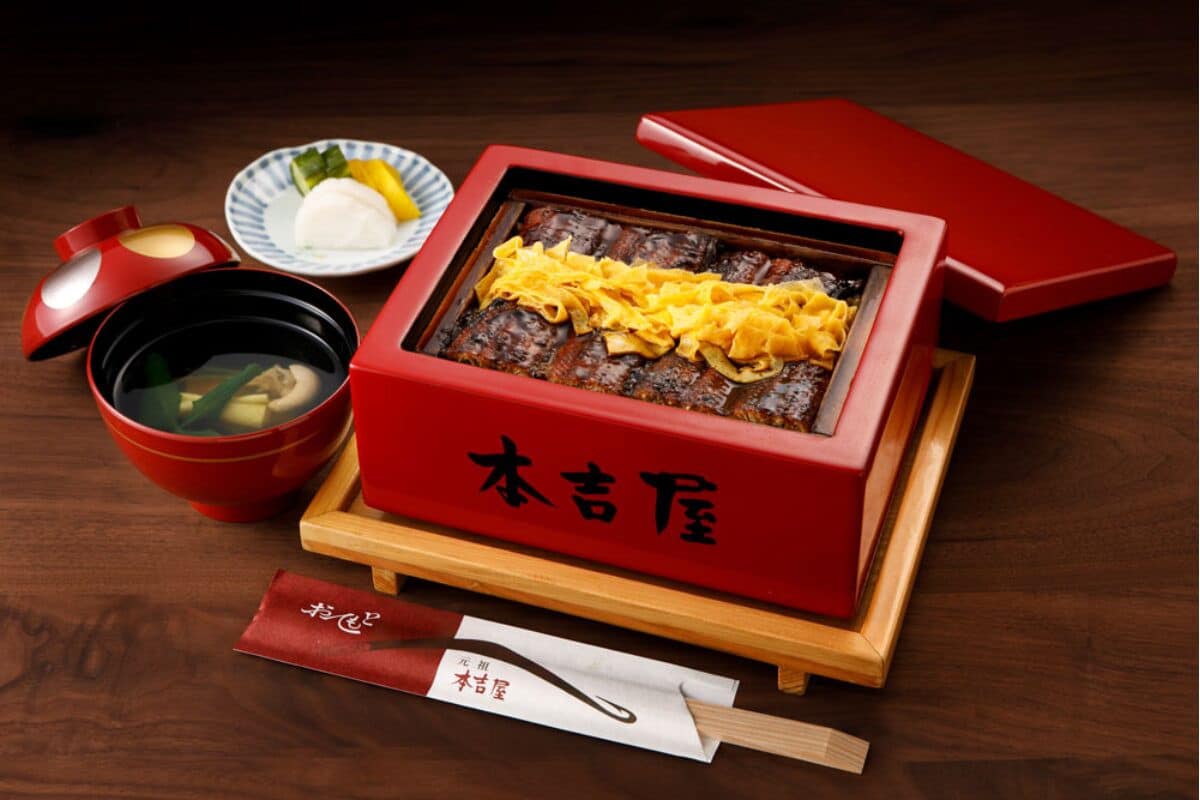
When in Yanagawa, try the century-old specialty “seiro-mushi eel rice,” in which seasoned rice and eel are steamed together so the rice soaks up the sauce and the eel turns tender, a texture quite different from Kanto-style kabayaki. There are several century-old shops in Yanagawa.
The lunch peak is around noon, when the boat-ride crowds arrive at the same time, so eat earlier or later. After the meal, stroll the castle town: the former residence of the poet Kitahara Hakushu and the former residence of the Tachibana family, the old feudal lords, are both within walking distance. The whole outing takes about three to four hours, and slower walkers can pick just one of them.
Mojiko Retro Station and the Taisho-Era Buildings
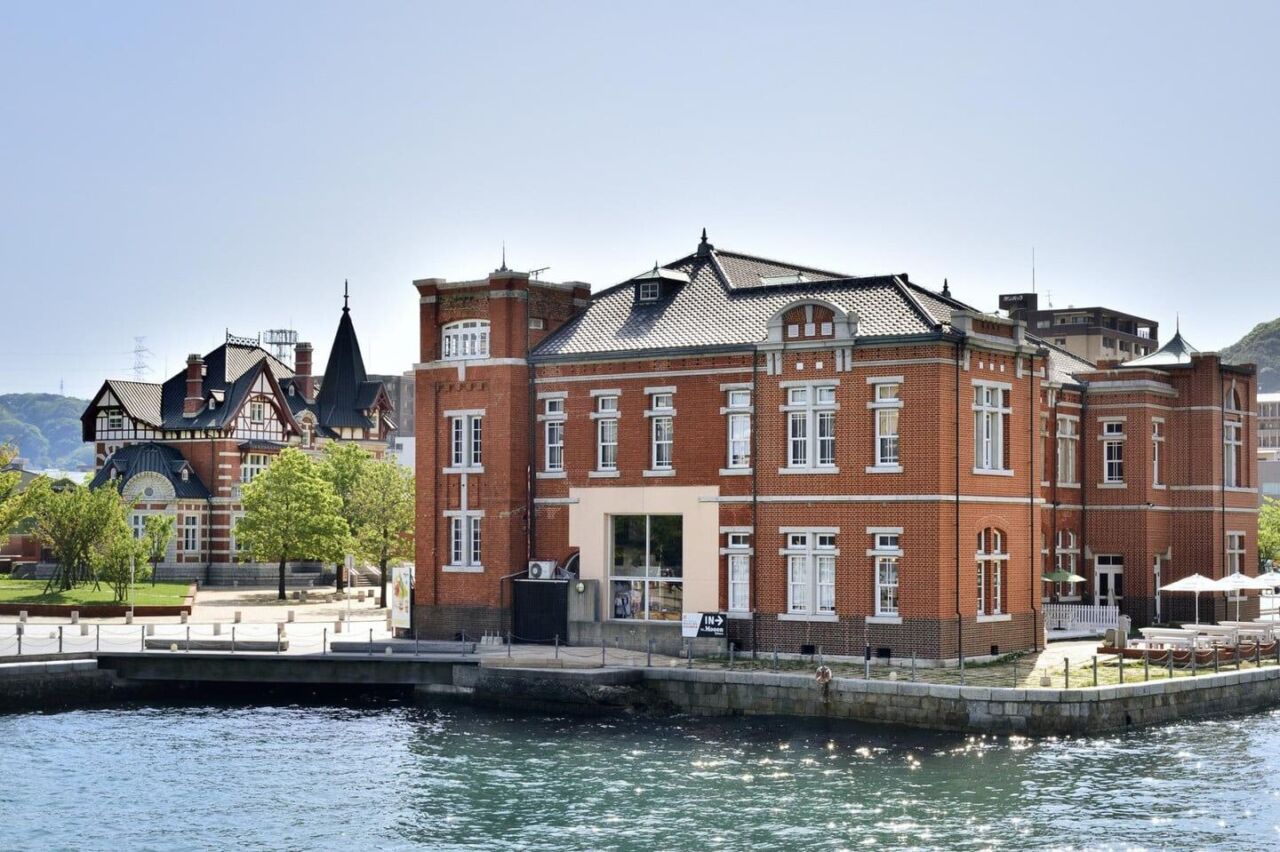
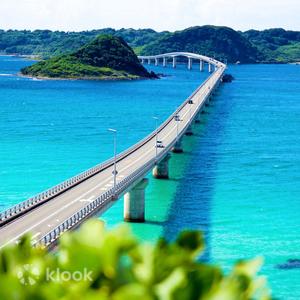
Mojiko was once an important gateway for Japan’s foreign trade and preserves a whole district of Taisho-era Western-style buildings, hence the name “Mojiko Retro.” The station itself is an Important Cultural Property, and its wooden waiting area and ticket windows keep their original look.
The retro district is concentrated within walking distance of the station, with the former Osaka Shosen building and the former Mitsui Club of Moji next to each other, so you can see it all without taking a vehicle. The atmosphere is even better once the lights come on at dusk; stay until after sunset, because the harbor night view and sea breeze are Mojiko’s most charming feature.
-Klook.jpg)
Blue Wing Moji Drawbridge: A Bridge-Lifting Show Several Times a Day
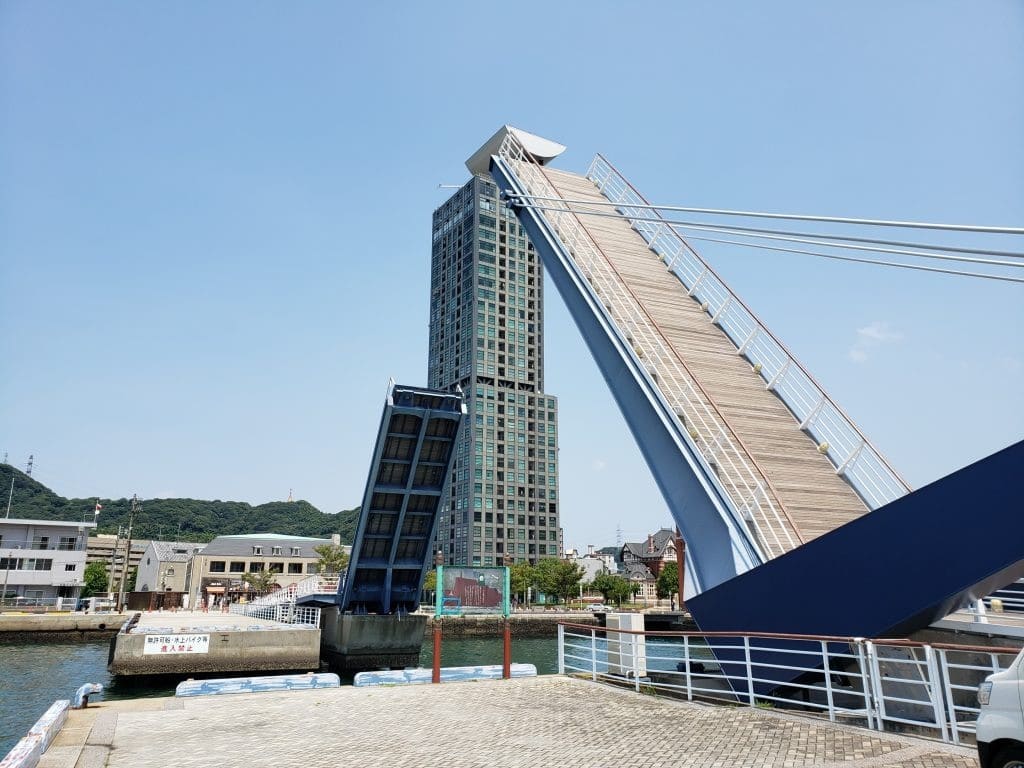
Blue Wing Moji is a pedestrian-only opening drawbridge that slowly rises at set times each day to let ships pass. The bridge rising is one of Mojiko’s most popular sights.
The bridge opens 6 times a day (10:00, 11:00, 13:00, 14:00, 15:00, 16:00). We recommend seeing the buildings first, timing the opening, then having lunch. When the bridge is closed you can walk across; it is said that couples who cross together will be happy. Times may change with the weather or maintenance, so check before you go. The bridge may pause in strong wind, so if you are making a special trip, leave a backup time slot.
Mojiko Yaki Curry and the Boat to Karato Market Across the Strait
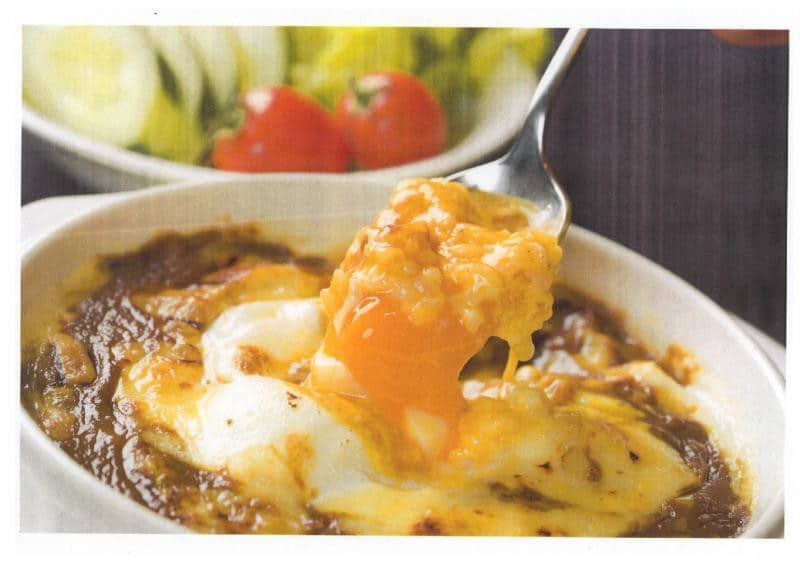
Mojiko’s specialty “yaki curry” is curry rice topped with cheese and baked until fragrant. Dozens of shops in the retro district each have their own recipe, and popular shops often have queues at lunchtime.
Take the Kanmon ferry for about 5 minutes to reach Shimonoseki in Yamaguchi Prefecture on the opposite shore. At Karato Market, sashimi and nigiri sushi are reasonably priced and varied, and it is especially lively on weekends, letting you tick off both Kyushu and Honshu in one trip. The ferry runs frequently, so no advance planning is needed, but most market stalls close in the afternoon, so arrive before noon if you want to eat there.
Munakata Taisha Hetsumiya: A World Heritage Site and the Treasure Hall
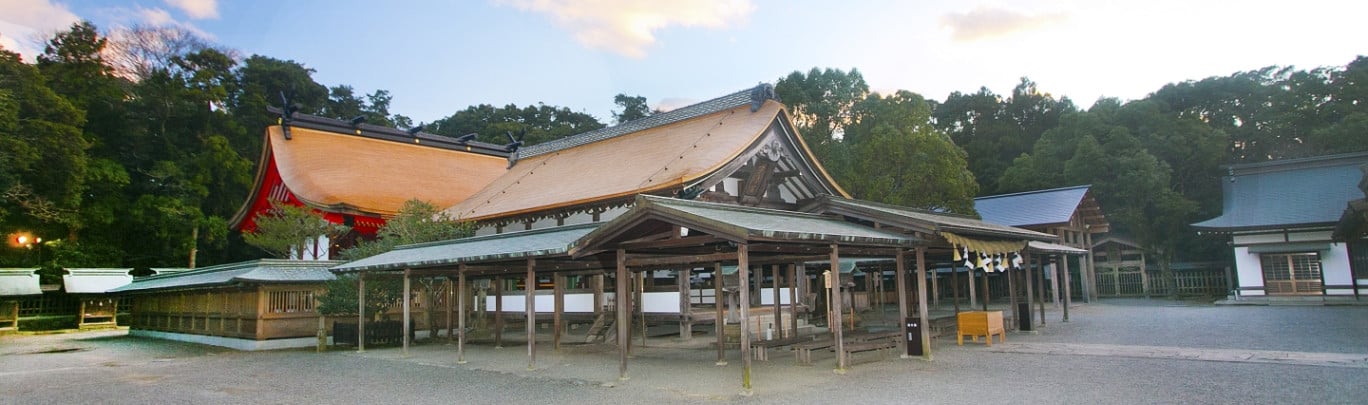
Munakata Taisha is one of Japan’s oldest shrines, enshrining the three Munakata goddesses and famous for prayers for traffic safety and safety at sea. It is also a popular power spot. The Hetsumiya on the mainland is the easiest of the three shrines to visit.
The Shinpokan treasure hall on the grounds houses a large collection of artifacts excavated from Okinoshima and designated National Treasures, key to understanding why the shrine is a World Heritage Site, and worth buying a ticket to see. Worship is free; the treasure hall charges separately. The grounds are spacious and wooded, and the pace is unhurried. Stay at least an hour and a half, and do not just photograph the torii and leave.
Official website: Munakata Taisha (munakata-taisha.or.jp)
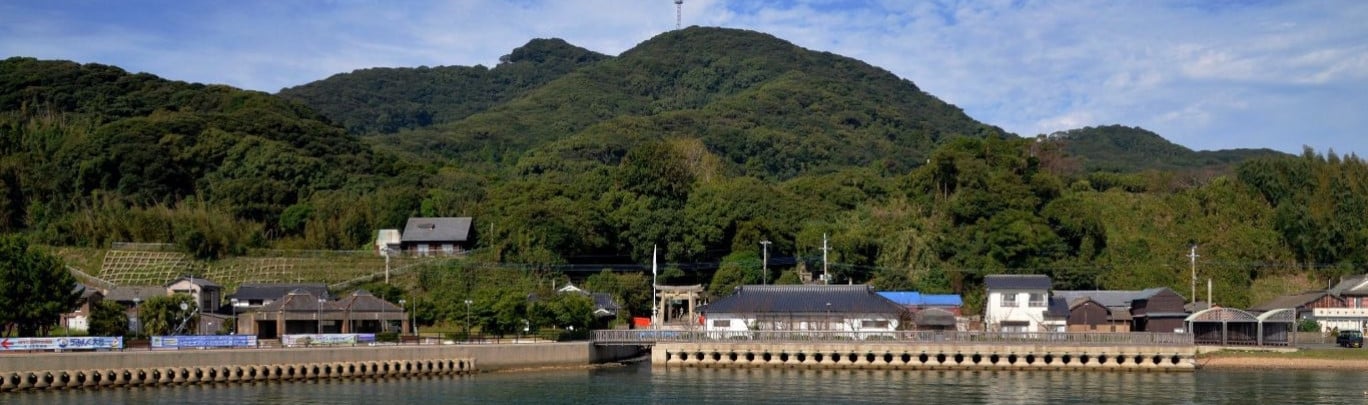
Munakata Oshima: Nakatsumiya and the Okitsumiya Distant Worship Site
Nakatsumiya, one of the three shrines of Munakata Taisha, is on Oshima, reached from Kamiminato Port in about 25 minutes by ferry or about 15 minutes by high-speed boat, ¥570 one way for adults. The island also has the Okitsumiya Yohaisho (distant worship site). Since ordinary visitors are forbidden to land on Okinoshima, this is the only place from which to gaze at that island, and on clear days you can see its outline.
This trip takes commitment: sailings are limited, getting around the island requires a bus or rental car, and it takes almost a whole day. But for those who want to see the World Heritage components in full, the value far exceeds city sightseeing. Be sure to check the sailing times before you go; boats stop running when the seas are rough.

Miyajidake Shrine’s Path of Light and Fukuma Beach
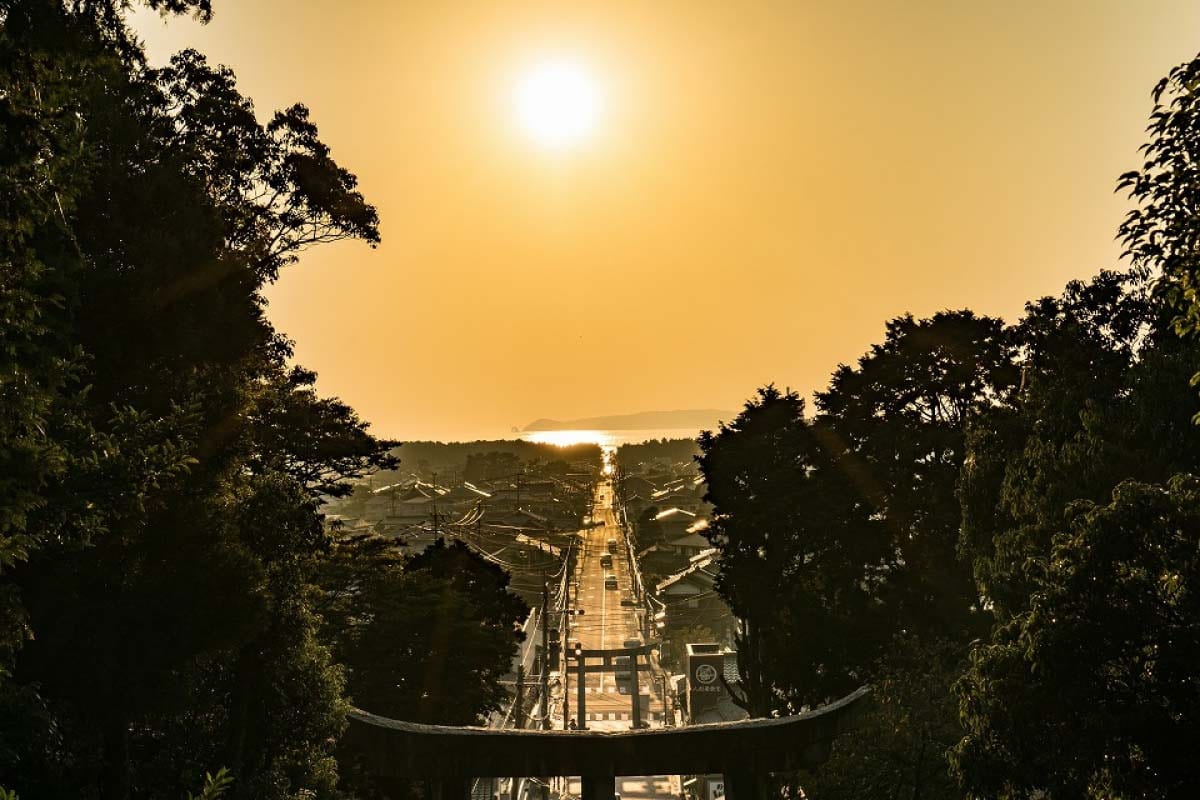
Coming from the Munakata direction, Miyajidake Shrine is a natural next stop, famous for its “Path of Light,” which occurs only twice a year, in February and October. The setting sun falls right in the center of the shrine’s approach, which runs to the sea, creating a golden band of light.
It is worth visiting outside those dates too. The shrine has a giant shimenawa rope and a wide view down the approach, and nearby Fukuma Beach has gained seaside cafes in recent years, a good way to end the day. During the Path of Light period crowds are large and traffic is controlled, so if you are making a special trip, check that year’s dates and entry rules first.
The Dazaifu Direction: The Easiest Pairing with Yanagawa
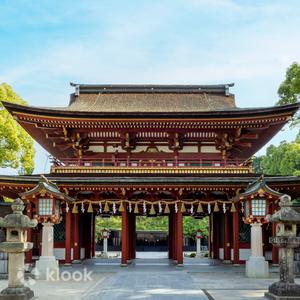
Dazaifu Tenmangu is also south of Fukuoka and shares the Nishitetsu line with Yanagawa, making the classic one-day combination: visit Dazaifu in the morning and head south to Yanagawa for the boat ride in the afternoon. The Nishitetsu set ticket also bundles the two sights. With a consistent direction and simple transfers, it is the route most recommended for travelers who do not drive. This site already has a dedicated article on details such as the Dazaifu visit and umegae mochi. Between the two places you must change trains once at Nishitetsu Futsukaichi, and the actual travel time is longer than most people expect, so allow transfer time; the set ticket already accounts for this section.
Transport Tickets and Boat Tours for Fukuoka Day Trips
Most of the cost of a suburban trip is transport, and choosing the right ticket makes a clear difference.
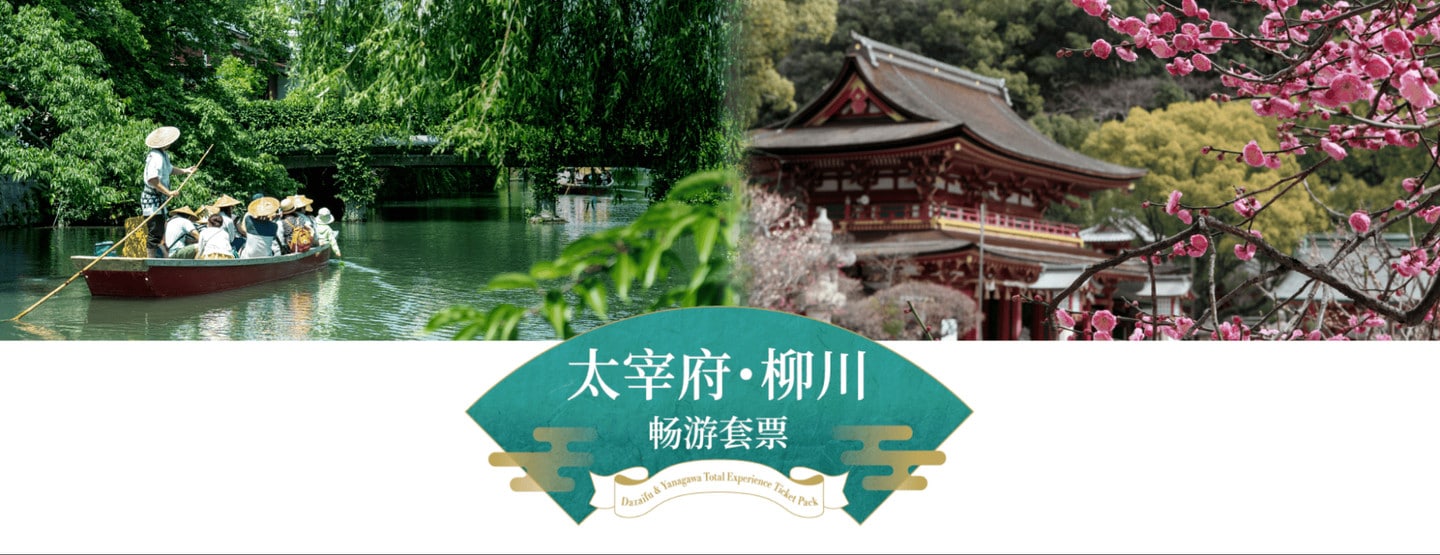
Nishitetsu Special Set Ticket for Dazaifu and Yanagawa
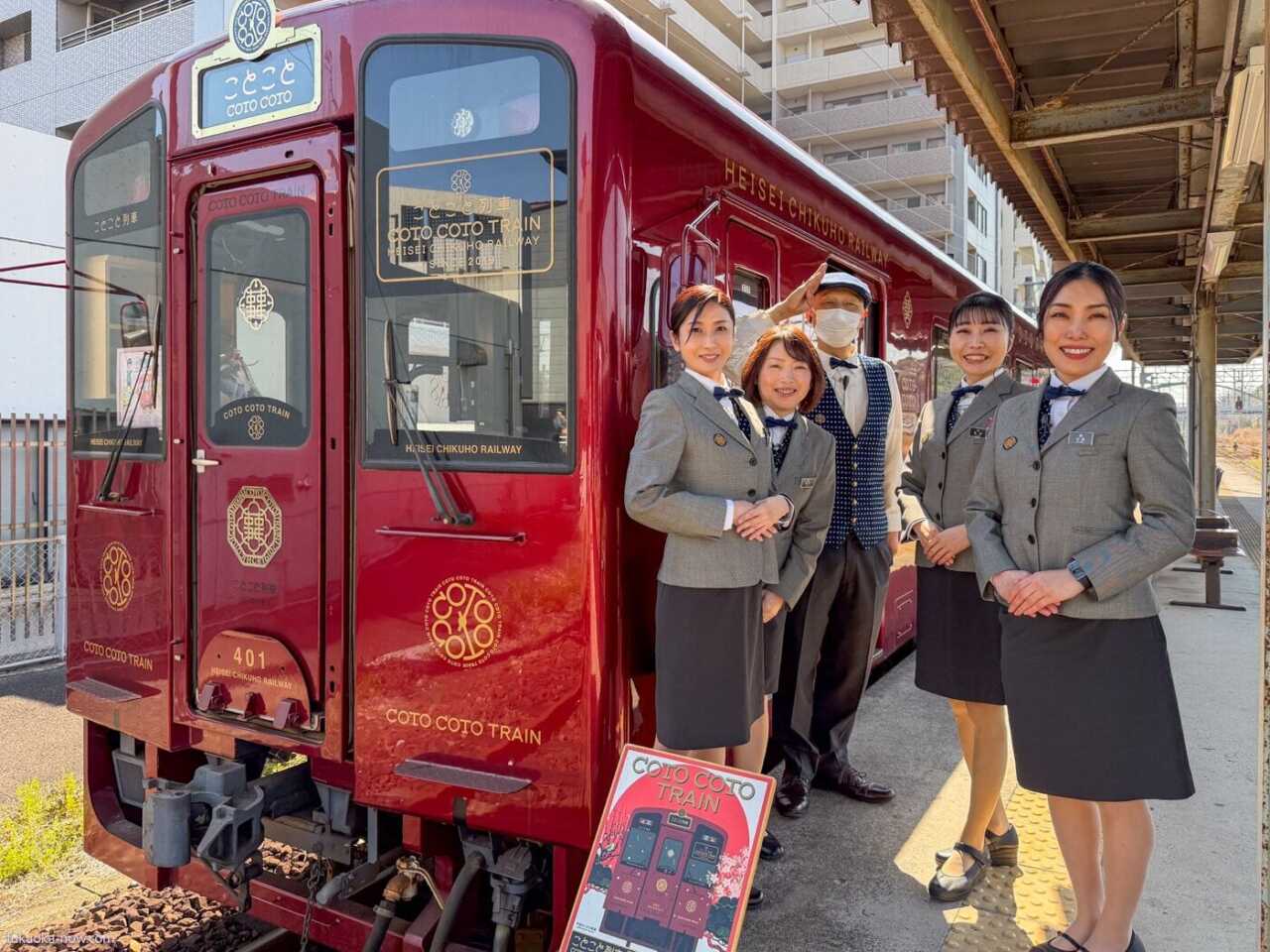
The Nishitetsu “Yanagawa Dazaifu Special Set Ticket” bundles round-trip train fares with the boat ride ticket and is cheaper than buying them separately, the most direct way to save on a South Line day trip. This ticket is issued digitally only and must be bought through Nishitetsu my route or Paymul; station counters do not sell paper versions. After purchase it can be activated within 30 days, and once activated it is valid for 2 days including the day of activation. Pairing it with the sightseeing train “Suito” makes the ride itself an experience, with cars designed around the Yanagawa water-town theme. Contents and prices are adjusted each year, so follow Nishitetsu’s official announcements and confirm which boat operators the ticket covers.
-Klook.jpg)
Nokonoshima Ferry Tickets and Island Park Admission
Nokonoshima has the simplest cost structure: the ferry ticket from Meinohama to the island, the island bus fare, and admission to the Island Park. Added together, it is still among the most affordable of the suburban destinations, well suited to a budget trip.
The ferry and bus are timed to each other, so no separate transfer planning is needed. Check the last return boat before deciding when to go over. Admission and ferry fares follow each operator’s seasonal announcements, and on holidays in peak bloom season crowds rise noticeably.
Practical Tips for Fukuoka Day Trips and Nearby Accommodation

Four Combinations That Genuinely Fit Together
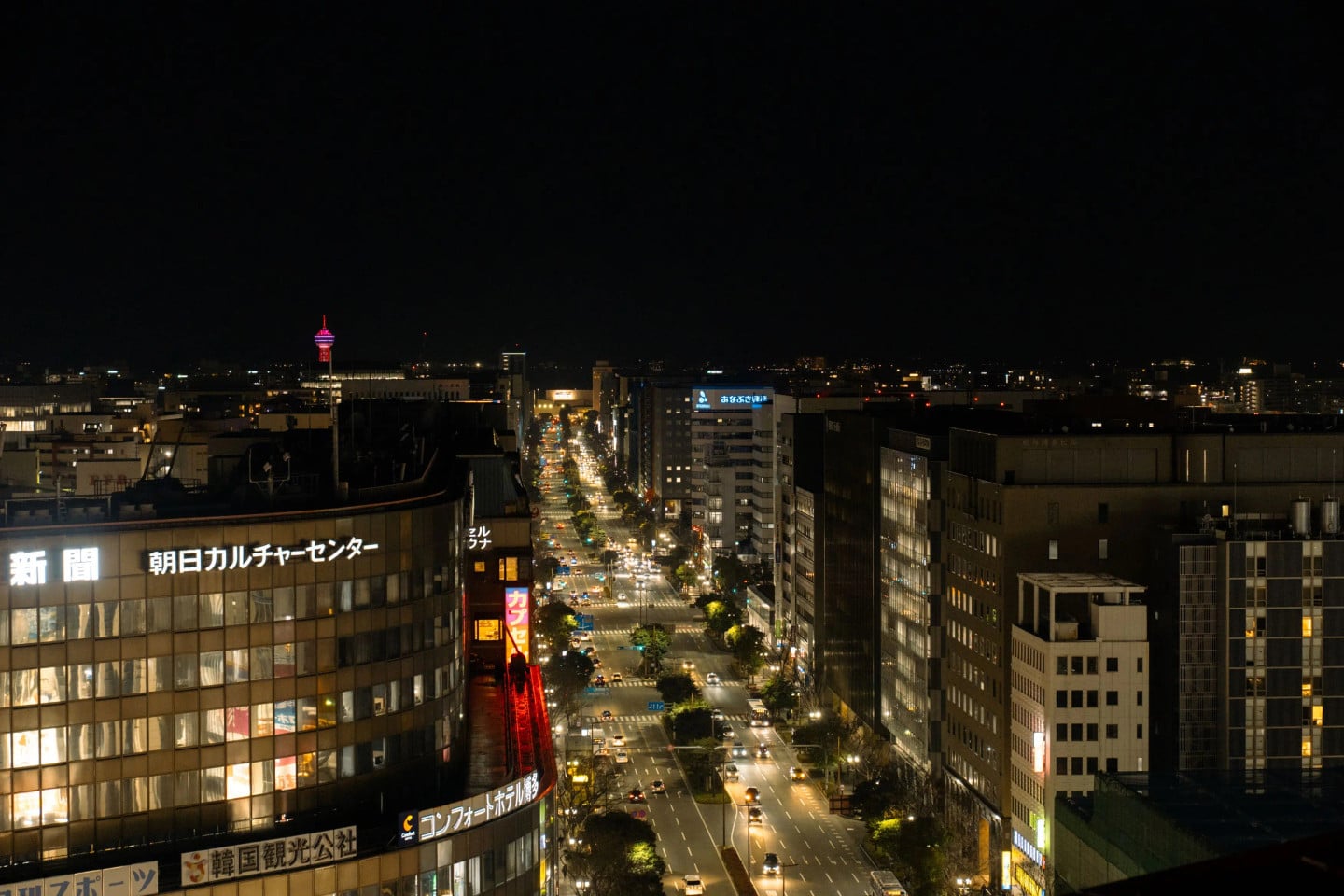
Four routes are the most practical: the seaside route is half a day on Nokonoshima plus Itoshima in the afternoon, though this one is best done by car; the water-town heritage route is Dazaifu in the morning and Yanagawa in the afternoon, doable with the Nishitetsu set ticket; the retro harbor route is Mojiko plus a boat to Shimonoseki across the strait; and the power-spot route is Munakata Taisha plus Miyajidake Shrine or Fukuma Beach.
The four routes lie in mutually exclusive directions, so do not try to merge them. If you have only one day, the best choice for most people is the water-town heritage route, with the simplest transport, the best-value tickets and the richest content. With three or more days, add other directions according to your interests.
The Easiest Trap: Fewer Return Services Than Outbound
Almost all the pitfalls around Fukuoka come on the return trip. Itoshima’s Showa Bus runs about once an hour, buses from Togo Station to Munakata Taisha are limited, and the Nokonoshima ferry has a last sailing time, all easy to overlook in the excitement of the outbound trip.
Build the habit: the first thing on arrival is to photograph the return timetable. If you do miss it, you may not be able to get a taxi in the Itoshima or Munakata directions, and the fare can be considerable. Try to finish your itinerary an hour before the last service to leave a little buffer.
Seasons and Timing: Bloom Periods, Sunsets and Bridge-Opening Times
The experience in each of these directions depends on timing. At Nokonoshima you come for flowers and must match the bloom period; Itoshima’s Futamigaura is most beautiful at sunset; Mojiko’s bridge-opening show happens at only a few times a day; and Miyajidake Shrine’s Path of Light occurs only twice a year.
So the planning order should be reversed: first confirm the one time-limited scene you most want to see, then work backward to build the day’s route. If you simply follow a list of sights, it is easy to arrive and find you have missed it. Times and bloom periods differ each year, so check the current season’s information before you go.
How to Budget: Transport Tickets Are the Biggest Variable
Taking Yanagawa as an example, the one-way fare from Tenjin to Nishitetsu Yanagawa is ¥960, and the round trip plus the boat ride makes up the day’s main expense. For Mojiko, taking the Shinkansen alone puts transport noticeably higher. So the budget difference on suburban trips lies almost entirely in the mode of transport.
The principle is simple: for the South Line, buy the Nishitetsu set ticket; for the Northeast Line, evaluate the JR Kyushu rail pass; for the West Line, consider a rental car to split the cost; for the North Line, just buy single tickets. Fares may change, so check each operator’s current announcements before you go.
Where to Stay: Hakata or Locally?
Most people’s answer is Hakata or Tenjin. These two areas are the shared starting point for all the suburban routes, with trains and buses departing from here, and staying elsewhere actually adds daily travel time while offering the fullest choice of dining and shopping.
The only places worth considering staying locally are Yanagawa and Mojiko: Yanagawa has hot spring inns and riverside lodgings, and the water town is completely different and quiet at night; Mojiko lets you see the night view of the buildings after they are lit. If your trip is longer than four days, picking one night out of town makes the experience richer. Accommodation choices in central Fukuoka are covered in a separate article.
Fukuoka Day Trips FAQ
Q: Can Itoshima, Yanagawa and Mojiko be combined in one day?
No. These three spots are to the west, south and northeast of Fukuoka, in completely opposite directions, and forcing them into one day means spending the whole day in transit. We recommend focusing on one direction per day, or using the four combinations suggested above.
Q: Can I do Fukuoka day trips without renting a car?
Mostly yes. Yanagawa, Mojiko, Munakata Taisha and Nokonoshima all work well by rail plus bus or ferry. The only disadvantage is Itoshima, where sights are spread along the coast and buses run about once an hour; for groups of four or more we recommend renting a car or chartering one.
Q: What is the fastest way from Fukuoka to Yanagawa?
From “Nishitetsu Fukuoka (Tenjin) Station,” take the “Nishitetsu Tenjin Omuta Line (limited express)” direct to “Nishitetsu Yanagawa Station,” about 49 minutes, fare ¥960 (the current fare after the April 1, 2026 revision), with no extra limited-express charge on the regular limited express. From Hakata Station, just transfer at Tenjin first.
Q: How long does a round trip to Mojiko take?
Public transport one way takes about 45 to 85 minutes, depending on whether you take the Shinkansen to Kokura or the limited express Sonic. With local sightseeing, Mojiko is the direction of these that most needs a full day, and we do not recommend it as a half-day trip.
Q: Is Dazaifu Tenmangu worth including in a day-trip plan?
Yes, and since it lies on the same Nishitetsu line as Yanagawa, Dazaifu in the morning and Yanagawa in the afternoon is the classic and most convenient one-day combination, and the Nishitetsu set ticket is designed for this route. This site already has a dedicated article on Dazaifu itself.
Q: Can Munakata Taisha be done in half a day?
Visiting only the mainland Hetsumiya plus the Shinpokan treasure hall can be done in half a day, with about 45 to 60 minutes of travel. But if you take a boat to Oshima to see Nakatsumiya and the Okitsumiya Yohaisho, the ferry takes about 25 minutes and the high-speed passenger boat about 15 minutes, with only 5 ferry and 2 passenger-boat sailings a day, so the whole day goes to this direction.
Fukuoka Day Trips from the City: Five Suburban Destinations in Five Completely Different Directions
The suburban spots most often mentioned around Fukuoka actually lie in five completely different directions.
First, a Clear Warning: These Places Cannot Be Combined in One Day
Itoshima is to the west, Nokonoshima is in Hakata Bay, Yanagawa is to the south, Mojiko is at the northeast end, and Munakata Taisha is to the north. They all lie in different directions from central Fukuoka, with no convenient route linking one to another. Trying to squeeze two or more spots in different directions into one day just means spending the whole day in transit.
A more practical approach is to split them into three or four routes and focus on one direction per day. This guide first gives the actual travel times from Hakata and Tenjin to each spot, then offers a few combinations that genuinely fit together, so you can choose according to the length of your trip instead of forcing every name into the itinerary.
Who Are Fukuoka Day Trips For? The Difference Between a Half Day and a Full Day
Central Fukuoka does not have a high density of sights; two days covers most of them, so heading out to the suburbs from the third day onward is almost inevitable. The good news is that Kyushu’s rail network is solid, and most directions can be done by public transport without renting a car.
But be prepared: “suburban” here does not mean the twenty-minutes-away suburbs of Tokyo. One-way trips of forty minutes to an hour and a half are the norm, and once you add movement between sights locally, most directions take a full day. Only Nokonoshima and part of the Munakata direction work as half-day trips; plan the others as full days.
What This Guide Covers
This guide covers access and actual travel times for five directions, Itoshima, Nokonoshima, Yanagawa, Mojiko and Munakata Taisha, introduces the highlights of each, and offers four day-trip combinations that genuinely fit together.
Travel times and fares are based on public information checked in August 2026. Schedules and fares may change, so check each operator’s latest announcements before you go. Also note that although Dazaifu Tenmangu is another classic Fukuoka day-trip spot, this site already has a dedicated article on it, so it is mentioned here only within route combinations and not covered again in detail.
Fukuoka Day Trip Transport Guide
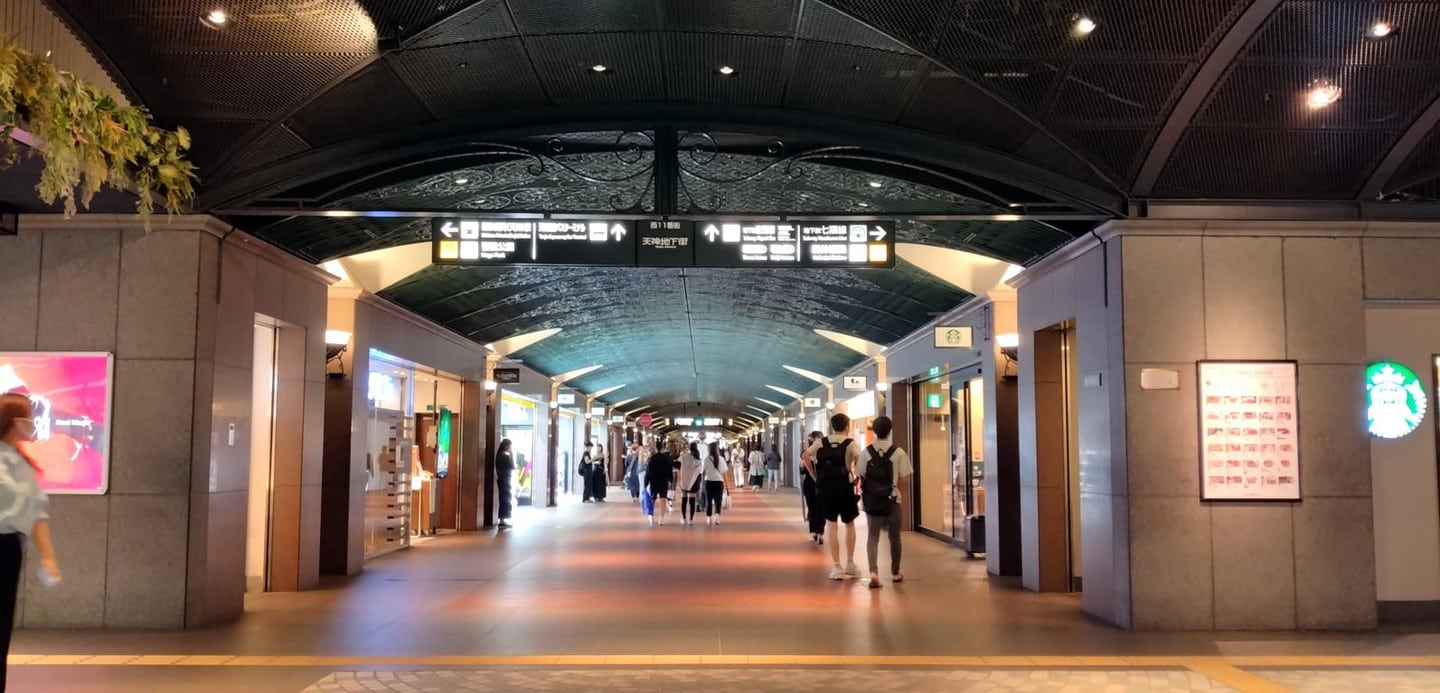
From Hakata and Tenjin, each of the five directions has its own best route.
West: Getting to Itoshima and Nokonoshima
For Itoshima, take the subway Airport Line (running through to the JR Chikuhi Line) to “Chikuzen-Maebaru Station” or “Kyudai Gakkentoshi Station” and transfer to a Showa Bus. Public transport takes about 50 to 70 minutes; driving takes about 30 to 40 minutes. The sights are spread out and buses run about once an hour, which is the biggest pain point.
For Nokonoshima, first go to “Meinohama Ferry Terminal” (by Nishitetsu bus, or subway plus bus), then take the 10-minute ferry to the island. Island buses are timed to the ferries, and the whole trip takes about 45 to 60 minutes. It is the easiest of the five directions by public transport.
South: Yanagawa Is Fastest and Cheapest on Nishitetsu
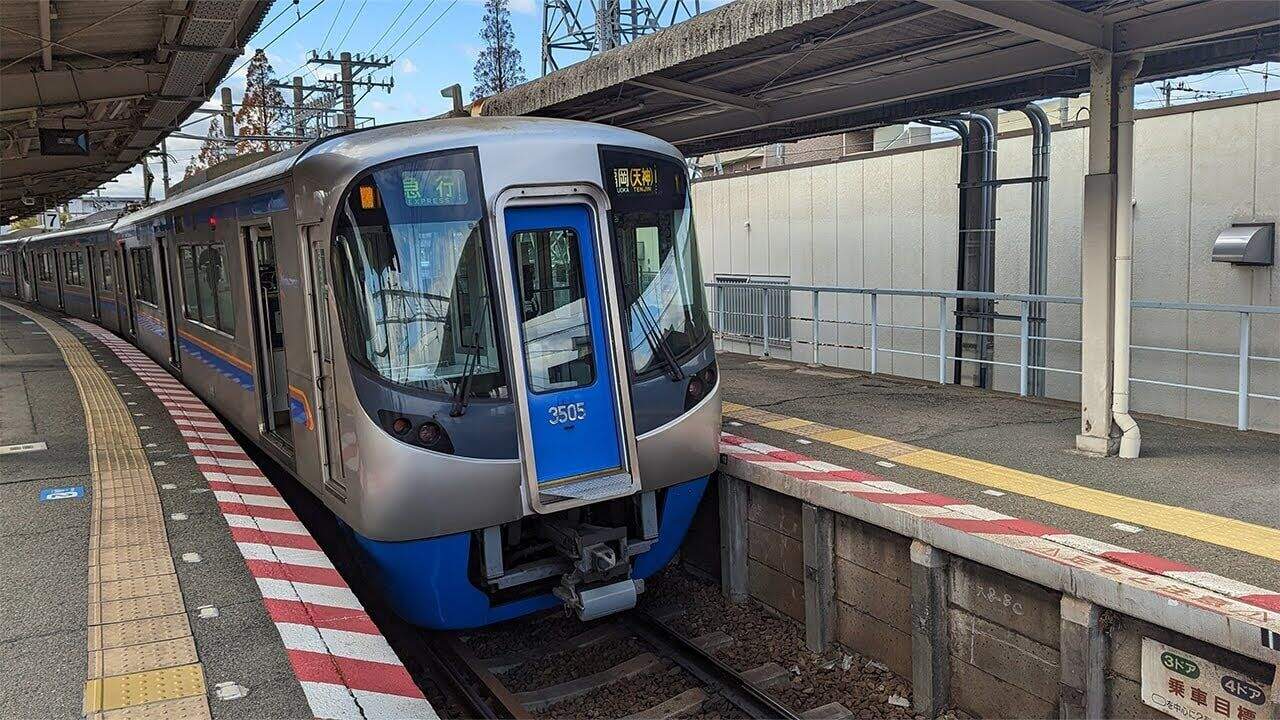
The best way to reach Yanagawa: from “Nishitetsu Fukuoka (Tenjin) Station,” take the “Nishitetsu Tenjin Omuta Line (limited express)” direct to “Nishitetsu Yanagawa Station.” The ride takes about 49 minutes and the fare is ¥960 (raised on April 1, 2026; ¥870 was the old fare). The regular limited express has no extra limited-express charge, which is great value; the paid reserved-seat “N Liner” costs ¥400 more. From Hakata Station or Fukuoka Airport, just transfer at Tenjin (two subway stops from Hakata to Tenjin, or about a 10-minute walk). Yanagawa’s highlights are the boat ride and strolling the castle town. Driving takes about 60 minutes but parking is inconvenient, so we recommend the train.
Northeast: Mojiko by the Fast Route or the Budget Route
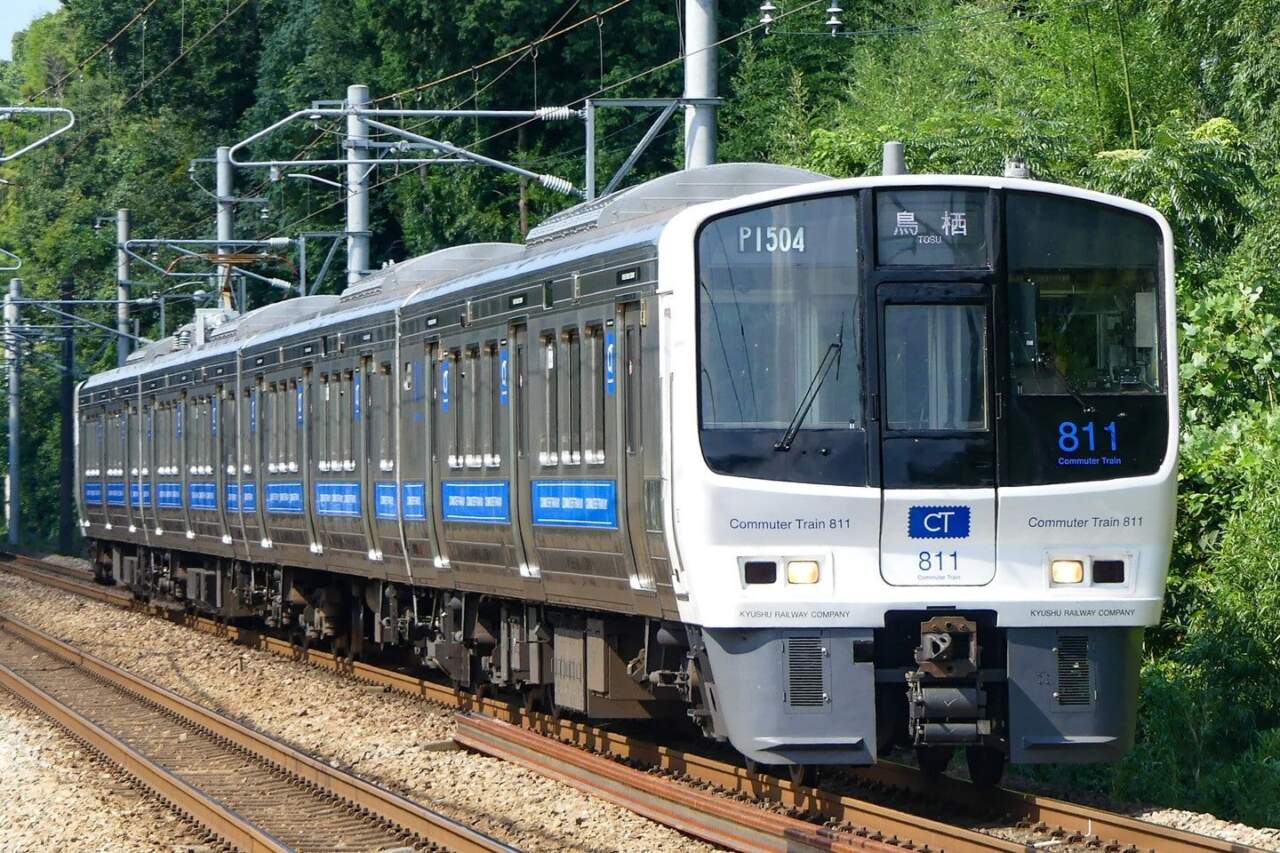
There are two ways to reach Mojiko. The fast route takes the Shinkansen from Hakata to Kokura (about 16 minutes), then the JR Kagoshima Main Line. The budget route takes the JR limited express Sonic to Kokura (about 50 minutes), then the Kagoshima Main Line for about 10 minutes. Total public transport time is about 45 to 85 minutes, the difference being the Shinkansen fare.
Watch out for a ticket trap: the Hakata to Kokura section belongs to the JR West Sanyo Shinkansen, which is not covered by any JR Kyushu rail pass (Northern Kyushu or All Kyushu); using it by mistake means paying a supplement. Pass holders get the best value on the limited express Sonic. Mojiko is the farthest of the five directions, so plan a full day.
North: Munakata Taisha Requires One Bus Transfer
From JR Hakata Station, take the “JR Kagoshima Main Line” to “Togo Station,” then transfer to a Nishitetsu bus bound for Kamiminato Hatoba and get off at “Munakata Taisha-mae.” The whole trip takes about 45 to 60 minutes; driving takes about 45 minutes.
Bus service from Togo Station to Munakata Taisha is limited, so check the return timetable on arrival. If you have time, you can take a boat from Kamiminato Port to Oshima: the ferry takes about 25 minutes and the high-speed boat about 15 minutes, ¥570 one way for adults. Plan the sailings in advance, because the last boat leaves early and missing it means staying a night on the island.

Highlights and Experiences on Fukuoka Day Trips
Below, grouped by direction, so you can pick the route you want.
Itoshima Sakurai Futamigaura: The White Sea Torii and the Wedded Rocks
Itoshima’s most iconic scene is the white torii standing in the sea and the two offshore Wedded Rocks (Meoto Iwa) joined by a sacred shimenawa rope. It is an auxiliary shrine of Sakurai Shrine, long regarded as sacred ground, and is the most photogenic stretch of the Genkai Sea coast.
The best time to visit is at dusk; around the summer solstice the sun sets between the two rocks. Entry is free, but parking is limited and fills up on holidays. If you use public transport, note that buses are infrequent, so be sure to check the return time first. After dark it is almost impossible to catch a taxi here, so getting back to the city after watching the sunset is not easy.
Itoshima Palm Tree Swings and the Seaside Cafe Street
Along the Itoshima coastal road (Sunset Road) are many seaside cafes and general stores. The most famous is the swing hung between palm trees, a must-photograph spot for visitors.
The area has a resort feel and suits unhurried sea-watching, but the shops are spread out and not easy to walk between, so driving or a charter is mostly recommended. If you take the bus, pick just one or two stops, or getting around will eat most of the day. Most shops do not take reservations, and on holidays you often have to queue.
An Add-On for an Itoshima Day Trip: Shiraito Falls
If you want one more stop beyond the coastline on an Itoshima day trip, add Shiraito Falls (白糸の滝) on the mountain side. The falls are in Shiraito, Itoshima City, with free entry and free parking. Hours are 9:00 to 17:00, extended to 18:00 in July and August, and closed on Wednesdays from December to March. In summer the spray is cool, a good side trip after half a day at the beach. We recommend scheduling it on the same day as Sakurai Futamigaura and the palm tree swings, and checking that day’s operating status with the Itoshima City Tourism Association before you go.
Nokonoshima Island Park: Large Fields of Flowers Through the Seasons
Nokonoshima Island Park is the most easily reached flower-field attraction near Fukuoka, with flowers rotating through the seasons: rapeseed blossoms and cherry blossoms in spring, cosmos in autumn, and camellias in winter, with Hakata Bay behind the flower fields for excellent photos.
Admission is charged and opening hours change with the season. The plan is a “ferry + island bus + park” combination that can be done in half a day, good for an in-between slot on an arrival or departure day. Bloom times vary slightly each year, so check the official flower report before you go. Peak bloom usually lasts only two or three weeks, and if you miss it you will see only green lawns.
The 10-Minute Nokonoshima Ferry and the Hakata Bay Lookout
The ferry from “Meinohama Ferry Terminal” to Nokonoshima takes only 10 minutes and runs about once an hour, and the island buses depart in time with the ferries, which is why it is far more public-transport-friendly than the other suburban spots. From the boat you can see Fukuoka’s skyline.
The island has a lookout over Hakata Bay, and in good weather the view stretches all the way to the opposite shore. The island is small; besides the Island Park there are small villages and seaside paths, good for a leisurely half-day walk. Be sure to check the last ferry back, because if you miss it you must wait for the next one, and in winter the last sailing is even earlier, so take care when planning an evening visit.
Yanagawa Moat Boat Ride: The Boatman’s Pole and Songs
Yanagawa is a true “water town,” with the old castle-town moat network still intact, and the boat ride (kawakudari) is a must. The boatman stands at the stern, poles the boat, explains the history along the way and sings boat songs.
The whole ride takes about sixty to seventy minutes, and in winter the boats have heated kotatsu tables, a Yanagawa winter specialty. Sailings vary by operator and season, mostly with tickets available on the spot, though reserving ahead is advised in peak season. A shuttle bus or a walk connects “Nishitetsu Yanagawa Station” to the boarding point; confirm when you buy tickets. Seats on the boat are tatami-style, and those with limited mobility need help getting on and off, so tell the operator when reserving.
Yanagawa’s Specialty Seiro-mushi Eel Rice and a Castle-Town Stroll
When in Yanagawa, try the century-old specialty “seiro-mushi eel rice,” in which seasoned rice and eel are steamed together so the rice soaks up the sauce and the eel turns tender, a texture quite different from Kanto-style kabayaki. There are several century-old shops in Yanagawa.
The lunch peak is around noon, when the boat-ride crowds arrive at the same time, so eat earlier or later. After the meal, stroll the castle town: the former residence of the poet Kitahara Hakushu and the former residence of the Tachibana family, the old feudal lords, are both within walking distance. The whole outing takes about three to four hours, and slower walkers can pick just one of them.
Mojiko Retro Station and the Taisho-Era Buildings
Mojiko was once an important gateway for Japan’s foreign trade and preserves a whole district of Taisho-era Western-style buildings, hence the name “Mojiko Retro.” The station itself is an Important Cultural Property, and its wooden waiting area and ticket windows keep their original look.
The retro district is concentrated within walking distance of the station, with the former Osaka Shosen building and the former Mitsui Club of Moji next to each other, so you can see it all without taking a vehicle. The atmosphere is even better once the lights come on at dusk; stay until after sunset, because the harbor night view and sea breeze are Mojiko’s most charming feature.
Blue Wing Moji Drawbridge: A Bridge-Lifting Show Several Times a Day
Blue Wing Moji is a pedestrian-only opening drawbridge that slowly rises at set times each day to let ships pass. The bridge rising is one of Mojiko’s most popular sights.
The bridge opens 6 times a day (10:00, 11:00, 13:00, 14:00, 15:00, 16:00). We recommend seeing the buildings first, timing the opening, then having lunch. When the bridge is closed you can walk across; it is said that couples who cross together will be happy. Times may change with the weather or maintenance, so check before you go. The bridge may pause in strong wind, so if you are making a special trip, leave a backup time slot.
Mojiko Yaki Curry and the Boat to Karato Market Across the Strait
Mojiko’s specialty “yaki curry” is curry rice topped with cheese and baked until fragrant. Dozens of shops in the retro district each have their own recipe, and popular shops often have queues at lunchtime.
Take the Kanmon ferry for about 5 minutes to reach Shimonoseki in Yamaguchi Prefecture on the opposite shore. At Karato Market, sashimi and nigiri sushi are reasonably priced and varied, and it is especially lively on weekends, letting you tick off both Kyushu and Honshu in one trip. The ferry runs frequently, so no advance planning is needed, but most market stalls close in the afternoon, so arrive before noon if you want to eat there.
Munakata Taisha Hetsumiya: A World Heritage Site and the Treasure Hall
Munakata Taisha is one of Japan’s oldest shrines, enshrining the three Munakata goddesses and famous for prayers for traffic safety and safety at sea. It is also a popular power spot. The Hetsumiya on the mainland is the easiest of the three shrines to visit.
The Shinpokan treasure hall on the grounds houses a large collection of artifacts excavated from Okinoshima and designated National Treasures, key to understanding why the shrine is a World Heritage Site, and worth buying a ticket to see. Worship is free; the treasure hall charges separately. The grounds are spacious and wooded, and the pace is unhurried. Stay at least an hour and a half, and do not just photograph the torii and leave.
Official website: Munakata Taisha (munakata-taisha.or.jp)
Munakata Oshima: Nakatsumiya and the Okitsumiya Distant Worship Site
Nakatsumiya, one of the three shrines of Munakata Taisha, is on Oshima, reached from Kamiminato Port in about 25 minutes by ferry or about 15 minutes by high-speed boat, ¥570 one way for adults. The island also has the Okitsumiya Yohaisho (distant worship site). Since ordinary visitors are forbidden to land on Okinoshima, this is the only place from which to gaze at that island, and on clear days you can see its outline.
This trip takes commitment: sailings are limited, getting around the island requires a bus or rental car, and it takes almost a whole day. But for those who want to see the World Heritage components in full, the value far exceeds city sightseeing. Be sure to check the sailing times before you go; boats stop running when the seas are rough.
Miyajidake Shrine’s Path of Light and Fukuma Beach
Coming from the Munakata direction, Miyajidake Shrine is a natural next stop, famous for its “Path of Light,” which occurs only twice a year, in February and October. The setting sun falls right in the center of the shrine’s approach, which runs to the sea, creating a golden band of light.
It is worth visiting outside those dates too. The shrine has a giant shimenawa rope and a wide view down the approach, and nearby Fukuma Beach has gained seaside cafes in recent years, a good way to end the day. During the Path of Light period crowds are large and traffic is controlled, so if you are making a special trip, check that year’s dates and entry rules first.
The Dazaifu Direction: The Easiest Pairing with Yanagawa
Dazaifu Tenmangu is also south of Fukuoka and shares the Nishitetsu line with Yanagawa, making the classic one-day combination: visit Dazaifu in the morning and head south to Yanagawa for the boat ride in the afternoon. The Nishitetsu set ticket also bundles the two sights. With a consistent direction and simple transfers, it is the route most recommended for travelers who do not drive. This site already has a dedicated article on details such as the Dazaifu visit and umegae mochi. Between the two places you must change trains once at Nishitetsu Futsukaichi, and the actual travel time is longer than most people expect, so allow transfer time; the set ticket already accounts for this section.
Transport Tickets and Boat Tours for Fukuoka Day Trips
Most of the cost of a suburban trip is transport, and choosing the right ticket makes a clear difference.
Nishitetsu Special Set Ticket for Dazaifu and Yanagawa
The Nishitetsu “Yanagawa Dazaifu Special Set Ticket” bundles round-trip train fares with the boat ride ticket and is cheaper than buying them separately, the most direct way to save on a South Line day trip. This ticket is issued digitally only and must be bought through Nishitetsu my route or Paymul; station counters do not sell paper versions. After purchase it can be activated within 30 days, and once activated it is valid for 2 days including the day of activation. Pairing it with the sightseeing train “Suito” makes the ride itself an experience, with cars designed around the Yanagawa water-town theme. Contents and prices are adjusted each year, so follow Nishitetsu’s official announcements and confirm which boat operators the ticket covers.
Nokonoshima Ferry Tickets and Island Park Admission
Nokonoshima has the simplest cost structure: the ferry ticket from Meinohama to the island, the island bus fare, and admission to the Island Park. Added together, it is still among the most affordable of the suburban destinations, well suited to a budget trip.
The ferry and bus are timed to each other, so no separate transfer planning is needed. Check the last return boat before deciding when to go over. Admission and ferry fares follow each operator’s seasonal announcements, and on holidays in peak bloom season crowds rise noticeably.
Practical Tips for Fukuoka Day Trips and Nearby Accommodation
Four Combinations That Genuinely Fit Together
Four routes are the most practical: the seaside route is half a day on Nokonoshima plus Itoshima in the afternoon, though this one is best done by car; the water-town heritage route is Dazaifu in the morning and Yanagawa in the afternoon, doable with the Nishitetsu set ticket; the retro harbor route is Mojiko plus a boat to Shimonoseki across the strait; and the power-spot route is Munakata Taisha plus Miyajidake Shrine or Fukuma Beach.
The four routes lie in mutually exclusive directions, so do not try to merge them. If you have only one day, the best choice for most people is the water-town heritage route, with the simplest transport, the best-value tickets and the richest content. With three or more days, add other directions according to your interests.
The Easiest Trap: Fewer Return Services Than Outbound
Almost all the pitfalls around Fukuoka come on the return trip. Itoshima’s Showa Bus runs about once an hour, buses from Togo Station to Munakata Taisha are limited, and the Nokonoshima ferry has a last sailing time, all easy to overlook in the excitement of the outbound trip.
Build the habit: the first thing on arrival is to photograph the return timetable. If you do miss it, you may not be able to get a taxi in the Itoshima or Munakata directions, and the fare can be considerable. Try to finish your itinerary an hour before the last service to leave a little buffer.
Seasons and Timing: Bloom Periods, Sunsets and Bridge-Opening Times
The experience in each of these directions depends on timing. At Nokonoshima you come for flowers and must match the bloom period; Itoshima’s Futamigaura is most beautiful at sunset; Mojiko’s bridge-opening show happens at only a few times a day; and Miyajidake Shrine’s Path of Light occurs only twice a year.
So the planning order should be reversed: first confirm the one time-limited scene you most want to see, then work backward to build the day’s route. If you simply follow a list of sights, it is easy to arrive and find you have missed it. Times and bloom periods differ each year, so check the current season’s information before you go.
How to Budget: Transport Tickets Are the Biggest Variable
Taking Yanagawa as an example, the one-way fare from Tenjin to Nishitetsu Yanagawa is ¥960, and the round trip plus the boat ride makes up the day’s main expense. For Mojiko, taking the Shinkansen alone puts transport noticeably higher. So the budget difference on suburban trips lies almost entirely in the mode of transport.
The principle is simple: for the South Line, buy the Nishitetsu set ticket; for the Northeast Line, evaluate the JR Kyushu rail pass; for the West Line, consider a rental car to split the cost; for the North Line, just buy single tickets. Fares may change, so check each operator’s current announcements before you go.
Where to Stay: Hakata or Locally?
Most people’s answer is Hakata or Tenjin. These two areas are the shared starting point for all the suburban routes, with trains and buses departing from here, and staying elsewhere actually adds daily travel time while offering the fullest choice of dining and shopping.
The only places worth considering staying locally are Yanagawa and Mojiko: Yanagawa has hot spring inns and riverside lodgings, and the water town is completely different and quiet at night; Mojiko lets you see the night view of the buildings after they are lit. If your trip is longer than four days, picking one night out of town makes the experience richer. Accommodation choices in central Fukuoka are covered in a separate article.
Fukuoka Day Trips FAQ
Q: Can Itoshima, Yanagawa and Mojiko be combined in one day?
No. These three spots are to the west, south and northeast of Fukuoka, in completely opposite directions, and forcing them into one day means spending the whole day in transit. We recommend focusing on one direction per day, or using the four combinations suggested above.
Q: Can I do Fukuoka day trips without renting a car?
Mostly yes. Yanagawa, Mojiko, Munakata Taisha and Nokonoshima all work well by rail plus bus or ferry. The only disadvantage is Itoshima, where sights are spread along the coast and buses run about once an hour; for groups of four or more we recommend renting a car or chartering one.
Q: What is the fastest way from Fukuoka to Yanagawa?
From “Nishitetsu Fukuoka (Tenjin) Station,” take the “Nishitetsu Tenjin Omuta Line (limited express)” direct to “Nishitetsu Yanagawa Station,” about 49 minutes, fare ¥960 (the current fare after the April 1, 2026 revision), with no extra limited-express charge on the regular limited express. From Hakata Station, just transfer at Tenjin first.
Q: How long does a round trip to Mojiko take?
Public transport one way takes about 45 to 85 minutes, depending on whether you take the Shinkansen to Kokura or the limited express Sonic. With local sightseeing, Mojiko is the direction of these that most needs a full day, and we do not recommend it as a half-day trip.
Q: Is Dazaifu Tenmangu worth including in a day-trip plan?
Yes, and since it lies on the same Nishitetsu line as Yanagawa, Dazaifu in the morning and Yanagawa in the afternoon is the classic and most convenient one-day combination, and the Nishitetsu set ticket is designed for this route. This site already has a dedicated article on Dazaifu itself.
Q: Can Munakata Taisha be done in half a day?
Visiting only the mainland Hetsumiya plus the Shinpokan treasure hall can be done in half a day, with about 45 to 60 minutes of travel. But if you take a boat to Oshima to see Nakatsumiya and the Okitsumiya Yohaisho, the ferry takes about 25 minutes and the high-speed passenger boat about 15 minutes, with only 5 ferry and 2 passenger-boat sailings a day, so the whole day goes to this direction.
