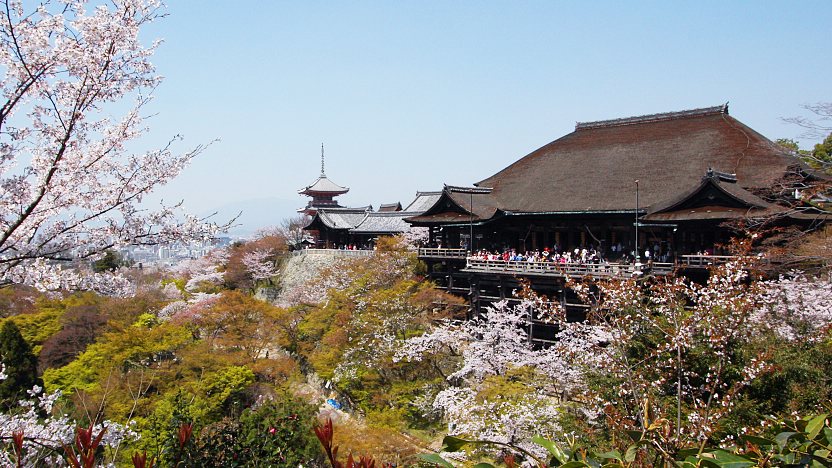

Saihoji (Kokedera) Guide: A World Heritage Moss Garden You Must Reserve in Advance
Saihoji, popularly known as Kokedera (the Moss Temple), sits on the western outskirts of Kyoto. It is a UNESCO World Heritage site that works on a reservation-only basis. There are no tickets sold at the gate, and the visit donation starts at ¥4,000 per person.
How do you make a Saihoji (Kokedera) reservation? Apply online through the official “into Saihoji” site (intosaihoji.com), or send a round-trip postcard. Applications open two months before your visit date, and online requests close at 23:59 the day before. Saihoji tickets cannot be bought on site, so you pay the visit fee when you reserve. There are no open hours in the usual sense: you enter at your reserved time slot, and slots are concentrated in the morning. “Saihoji” (西方寺) is a common mix-up; the correct temple name is Saihoji (西芳寺).
Background on the temple and access information are on the official website, saihoji-kokedera.com, while reservations and announcements are handled on into Saihoji (intosaihoji.com). Both are run by the temple.
- 🎫 Tickets: not sold on site. You must apply in advance online or by round-trip postcard, and visitors must be 13 or older.
- 💰 Cost: ¥4,000 or more per person, plus a ¥110 per person system fee for online applications.
- 🚉 Getting there: take Kyoto Bus No. 73 from Kyoto Station (about 60 minutes) to “Kokedera-Suzumushidera,” then walk about 3 minutes.
- 🚕 Taxi: about 20 minutes and about ¥3,500-4,000 from Kyoto Station; about 12 minutes and about ¥1,500 from Hankyu Katsura Station.
The temple dates back to the Nara period and is said to have begun as a villa of Prince Shotoku. In 1339 the garden master Muso Soseki rebuilt it as a Rinzai Zen temple. What made it world famous are the more than 120 kinds of moss that grow naturally across the garden, and its unusual rule that you must copy a sutra and join the chanting before you are allowed in. It is not a place for a spur-of-the-moment plan, but it is a dream destination for anyone who wants a deeper experience of Japanese gardens and Zen. If you are willing to plan two months ahead and slow down, it may turn out to be the quietest and most memorable hour and a half of your whole Kyoto trip.
Saihoji Is Reservation-Only: A World Heritage Site You Can’t Enter Without Booking
Saihoji is one of the few temples in Kyoto that does not sell tickets on the day. To protect the fragile moss ecosystem and keep the temple peaceful, every visitor must apply in advance through the official online system or by round-trip postcard, and must be at least 13 years old.
The visit donation is ¥4,000 or more per person, and online applications add a ¥110 per person system fee. The online window runs from two months before the visit date until 23:59 the day before. Round-trip postcards must be sent between two months and one month before the visit date (judged by the postmark). Peak-season slots go fast, so apply as soon as your plans are set.
Daily capacity is limited, and the rainy season and the autumn foliage period fill up almost as soon as they open. There is very little chance for a last-minute visit, so treat Saihoji as the first fixed point when you build your Kyoto itinerary.
Sutra Copying: You Copy a Sutra Before Entering the Moss Garden
The biggest difference between Saihoji and other temples is that you cannot go straight to the garden after arriving. All visitors are first led to the main hall, where they join the chanting and copy the “Enmei Jukku Kannon-gyo” sutra, writing down a wish as a prayer.
The temple provides brushes or ink pens, and if you cannot write kanji you can simply trace the characters. The sutra is very short, and the copying takes about 15 minutes. The purpose of the ritual is to quiet body and mind first, so that walking into the moss garden feels completely different.
You can take your copied sutra home as a charm, or hand it to the temple to be offered before the principal image. For many visitors, this quiet time spent writing is more memorable than the moss garden itself, and it is the most fundamental difference between Saihoji and other sightseeing temples. The paper used for the sutra is prayed over with chanting every morning.
120+ Kinds of Moss: A Breathing Green Carpet
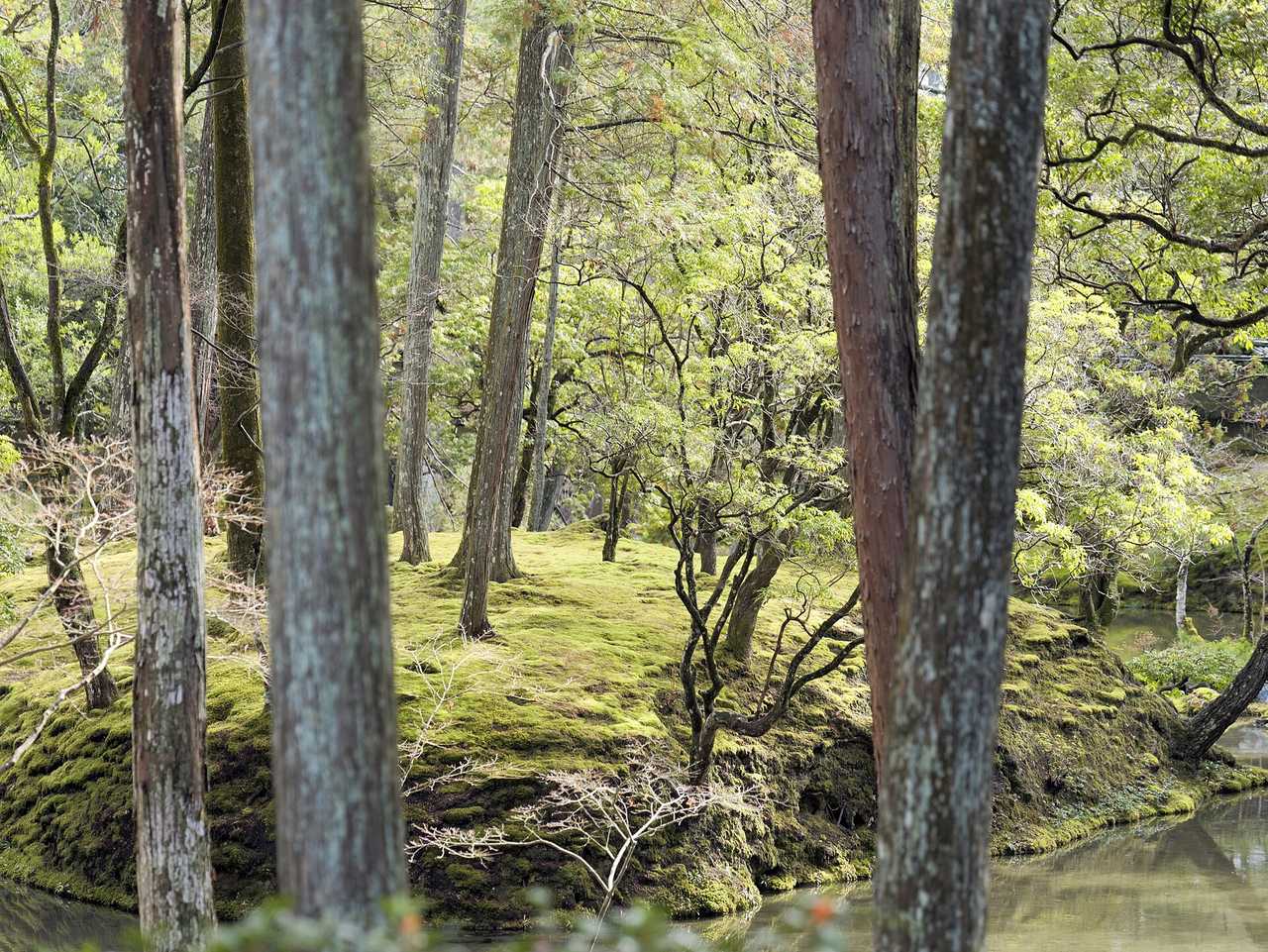
More than 120 kinds of moss grow naturally in the Saihoji garden. The best known include the velvety, thick-textured sugigoke (hair-cap moss), the fluffy shiraga-goke (white hair moss), and the creeping hosoba-oshinobu-type fern moss.
Under the changing light, the different mosses show rich layers of deep green and emerald, and walking among them feels like strolling beside a green carpet that seems to breathe. The best time is the rainy season, when the moss is soaked with water and glows at the highest saturation of the year.
One important reminder: moss is extremely fragile, and a spot that has been stepped on takes years to recover. Stay on the stone paths at all times, and never set up a camera on the moss for a photo. This is the fundamental reason a reservation system is required.

How to Get to Saihoji: Kyoto Bus, Hankyu Train and Taxi Compared
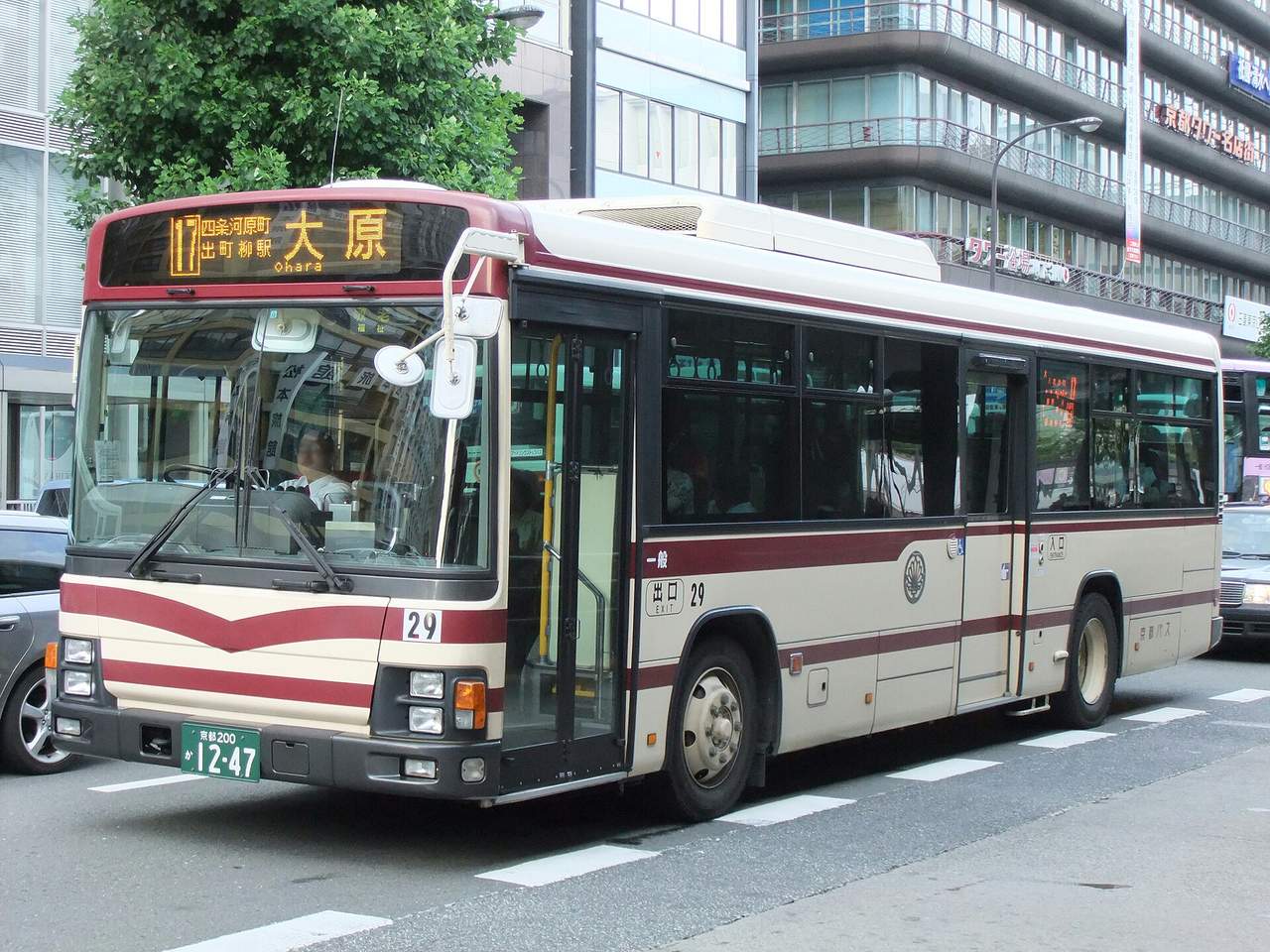
The easiest way is Kyoto Bus No. 73 or 83 from Kyoto Station, straight to the terminal stop “Kokedera-Suzumushidera.” The ride takes about 60 minutes.
| Route | Get off at | Travel time |
|---|---|---|
| Kyoto Station → Kyoto Bus No. 73/83 | Kokedera-Suzumushidera (terminal) | About 60 min + 3-5 min walk |
| Hankyu Arashiyama Line | Matsuo-taisha Station | About 20 min walk |
| Matsuo-taisha Station → taxi | Saihoji-mae | About 5-10 min |
| Kyoto Station → taxi | Saihoji | About 20 min (official site: about ¥3,500-4,000) |
| Hankyu Kyoto Line Katsura Station → taxi | Saihoji | About 12 min (official site: about ¥1,500) |
| Arashiyama → one Hankyu stop → walk | Matsuo-taisha Station | About 30 min |
Kyoto Bus No. 73 or 83 Direct from Kyoto Station (Most Recommended)
The simplest option is to board Kyoto Bus No. 73 or 83 in front of Kyoto Station and ride to the terminal stop “Kokedera-Suzumushidera.” From there it is a 3 to 5 minute walk to the Saihoji gate.
“Kokedera-Suzumushidera” is the last stop, so there is no risk of missing it. Buses are not very frequent and the last return bus leaves fairly early, so check the timetable before you set out. If you plan to visit Suzumushidera as well, the same bus gets you there.
Note that this is Kyoto Bus, not Kyoto City Bus, so some city bus one-day passes are not valid. Check the pass coverage before boarding, or simply pay by cash.


Hankyu Arashiyama Line to Matsuo-taisha Station, Then a 20-Minute Walk
Another option is the Hankyu train. The nearest station listed on the official site is Hankyu Katsura, about 12 minutes by taxi and about ¥1,500. If you are coming from the Arashiyama side, you can also get off at Hankyu Matsuo-taisha Station and walk west for about 20 minutes through quiet residential streets and bamboo groves.
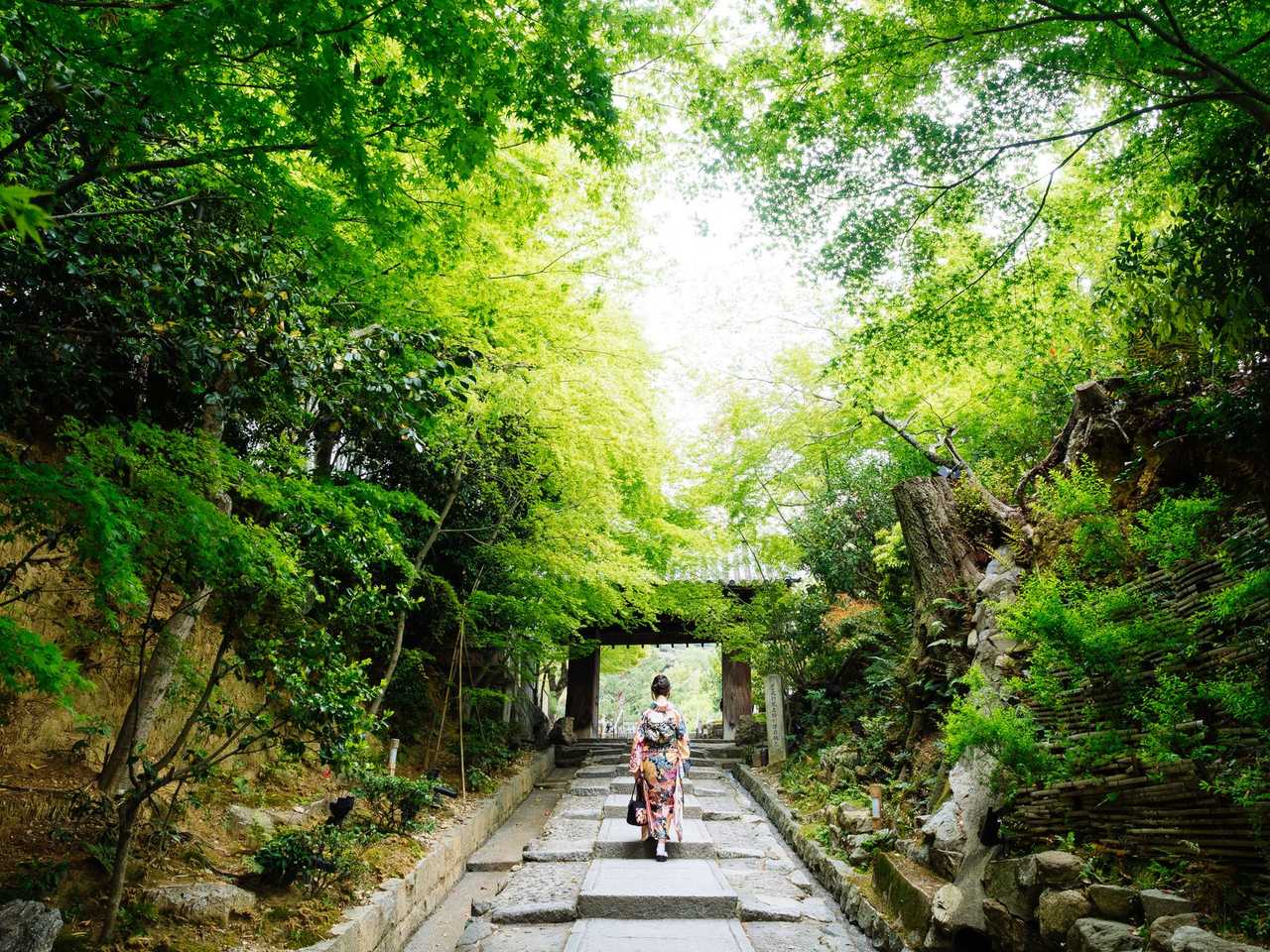
If you are short on time or it is raining, you can also switch to a taxi in front of the station, about 5 to 10 minutes. The advantage of this route is that you can fit in Matsuo-taisha Shrine as well, making a complete half-day in western Kyoto.
There are no obvious tourist signs along the walk, so save the route offline on your phone map first.
The path is gently sloped but almost entirely unshaded, so take sun protection and water in summer. There is a convenience store in front of the station where you can pick up drinks and cash.
Starting from Arashiyama: One Hankyu Stop, Then Transfer or Walk
If you are already in Arashiyama in the morning, take the Hankyu Arashiyama Line one stop south to Matsuo-taisha Station, then walk or take a taxi to Saihoji. The whole trip takes under about 30 minutes.
Taxis around Arashiyama are hard to hail in peak season, so wait at the station taxi stand. Saihoji’s slots are concentrated in the morning, so visiting Saihoji first and heading to Arashiyama in the afternoon is the most sensible arrangement for crowds and energy on a western Kyoto day.
Note that Hankyu’s Arashiyama station is some distance from the JR and Sagano Scenic Railway stations, so make sure which station you are at before transferring, to avoid extra walking that could cut into your reservation time. Hankyu Arashiyama Station is about a ten-minute walk from Togetsukyo Bridge, so include that in your plan to avoid underestimating the total travel time.
After You Arrive: Check-In, Sutra Copying and the Moss Garden Walk Take About 1 Hour
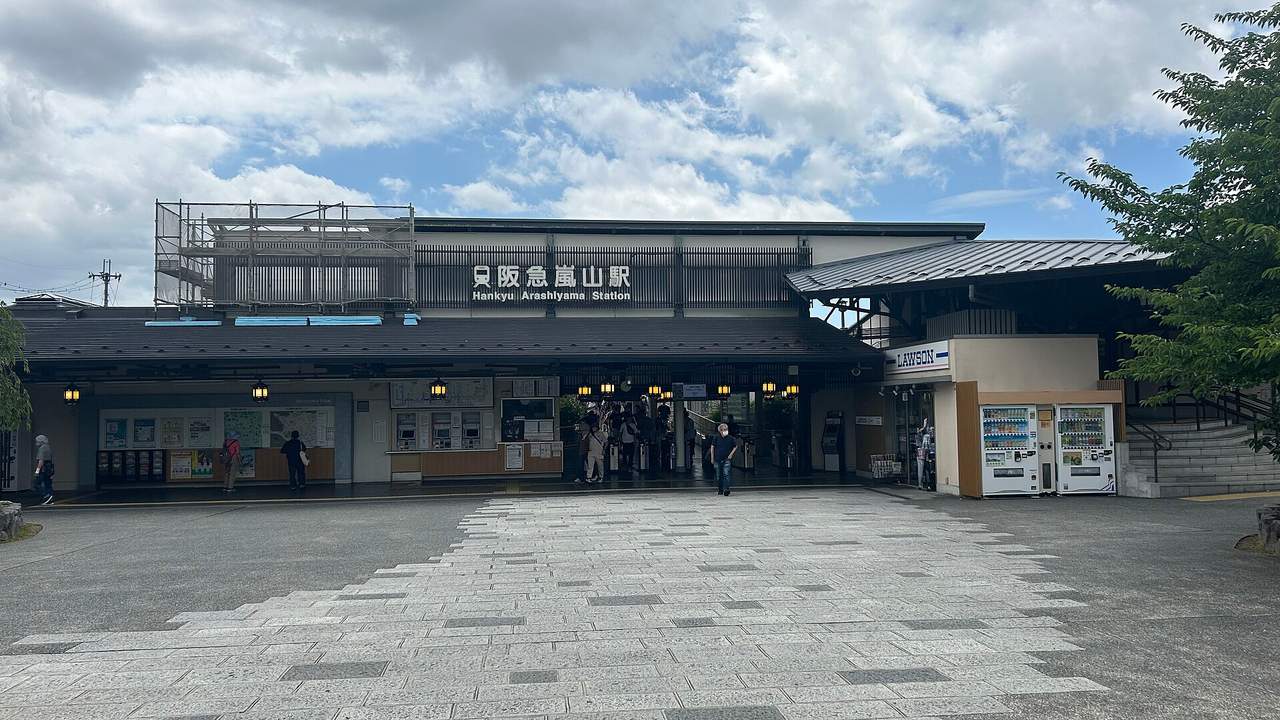
Saihoji admits visitors in groups by reserved slot, with slots concentrated in the morning at 30-minute intervals. At the gate, show your QR code or the physical visit-notice postcard to check in. Postcard reservations must pay the visit fee in cash on site.
You then enter the main hall for chanting and sutra copying, which takes about 15 minutes by itself, and only afterward are you allowed into the moss garden. The official site lists the time required for “main hall worship, sutra copying, then garden viewing” as about 60 minutes. Plan for one to one and a half hours, and arrive 10 to 15 minutes early rather than cutting it close.
You must remove your shoes in the main hall, so wearing shoes that are easy to take on and off makes things much easier.
What Are the Must-See Spots at Saihoji? Golden Pond, the Upper Dry Garden and Nearby Stops
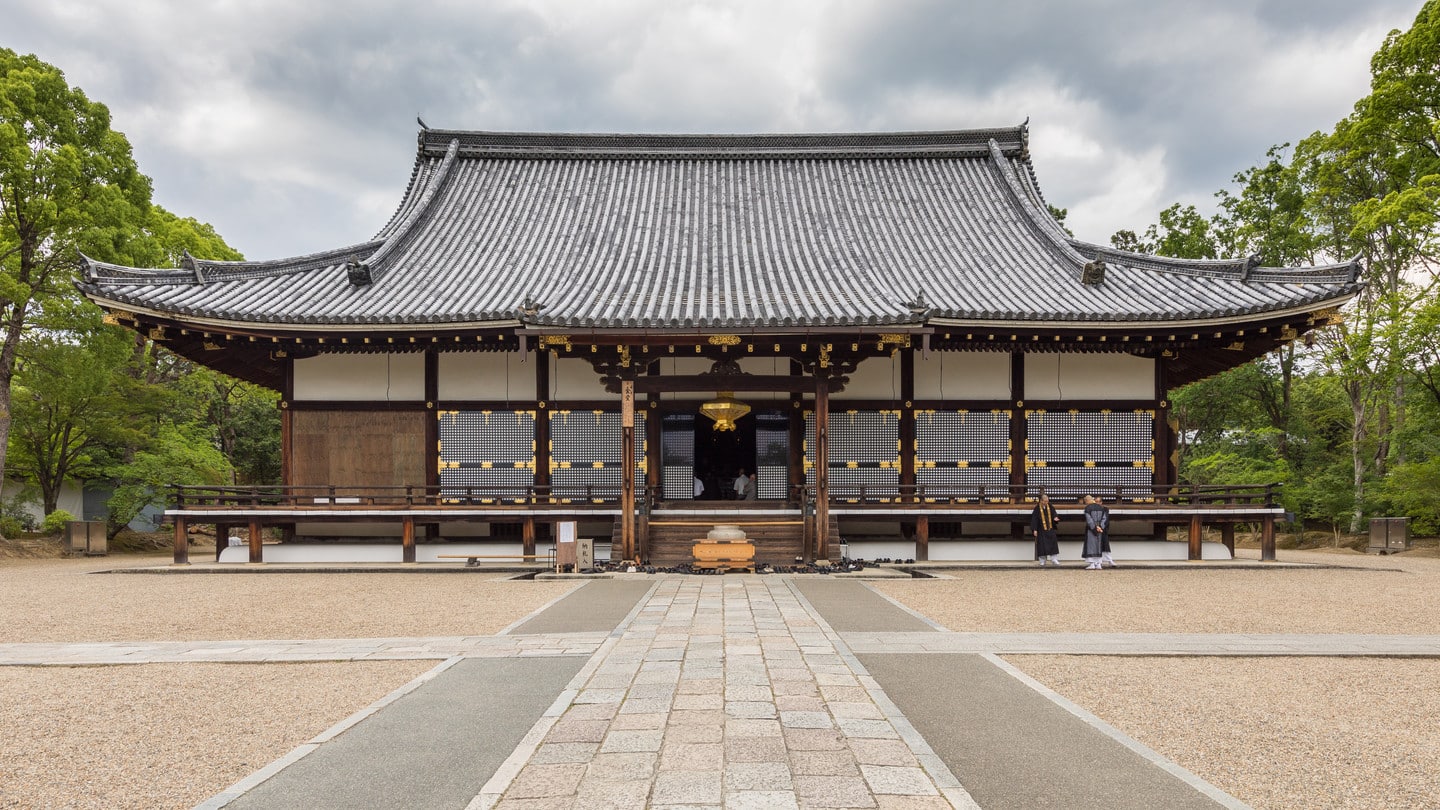
The Saihoji garden has two levels: the lower level is the strolling pond garden around Golden Pond (Ogon-ike), and the upper level holds Japan’s oldest dry landscape rock arrangement.
Golden Pond: The Lower Garden Whose Shoreline Draws the Character for “Heart”
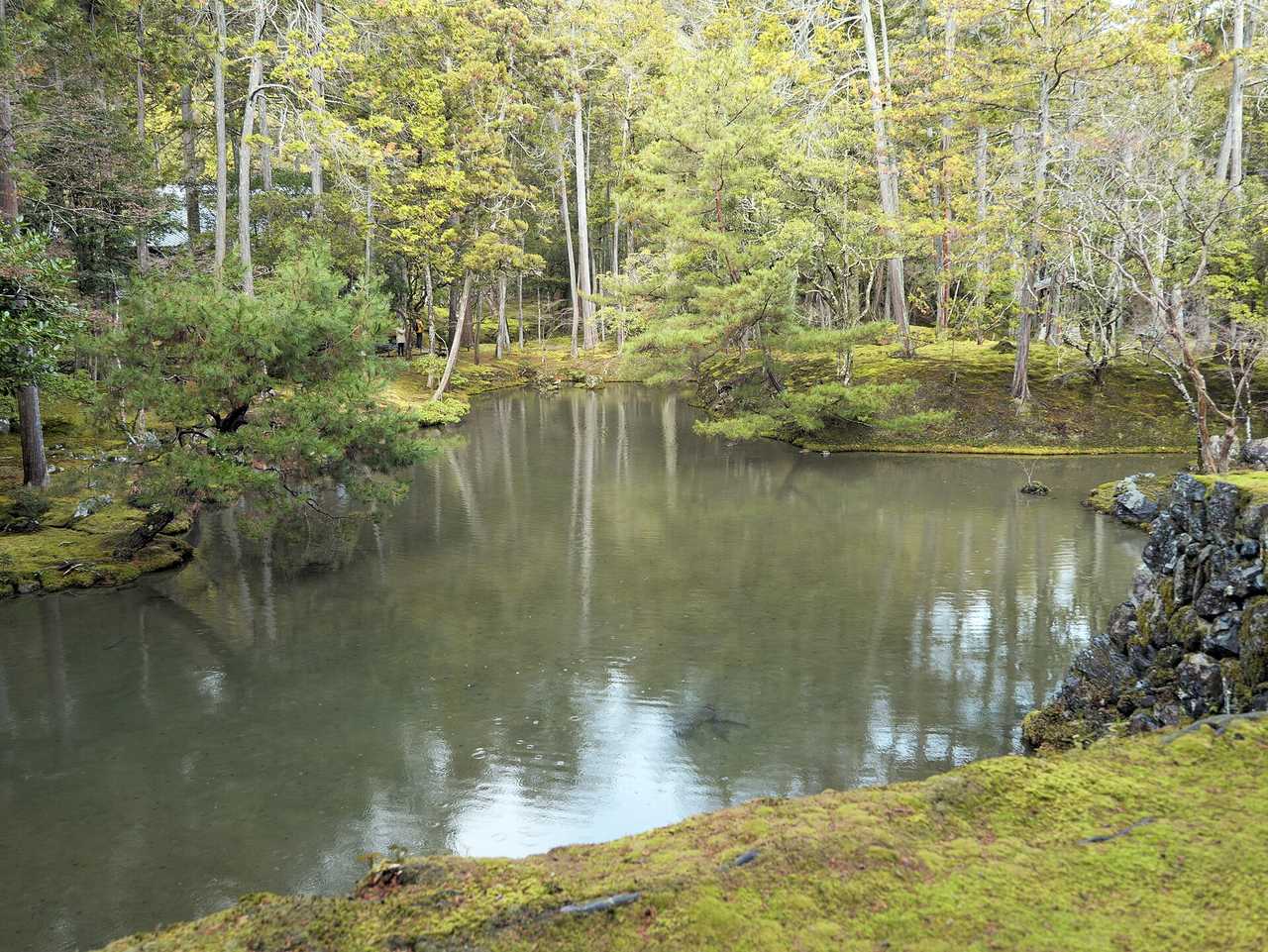
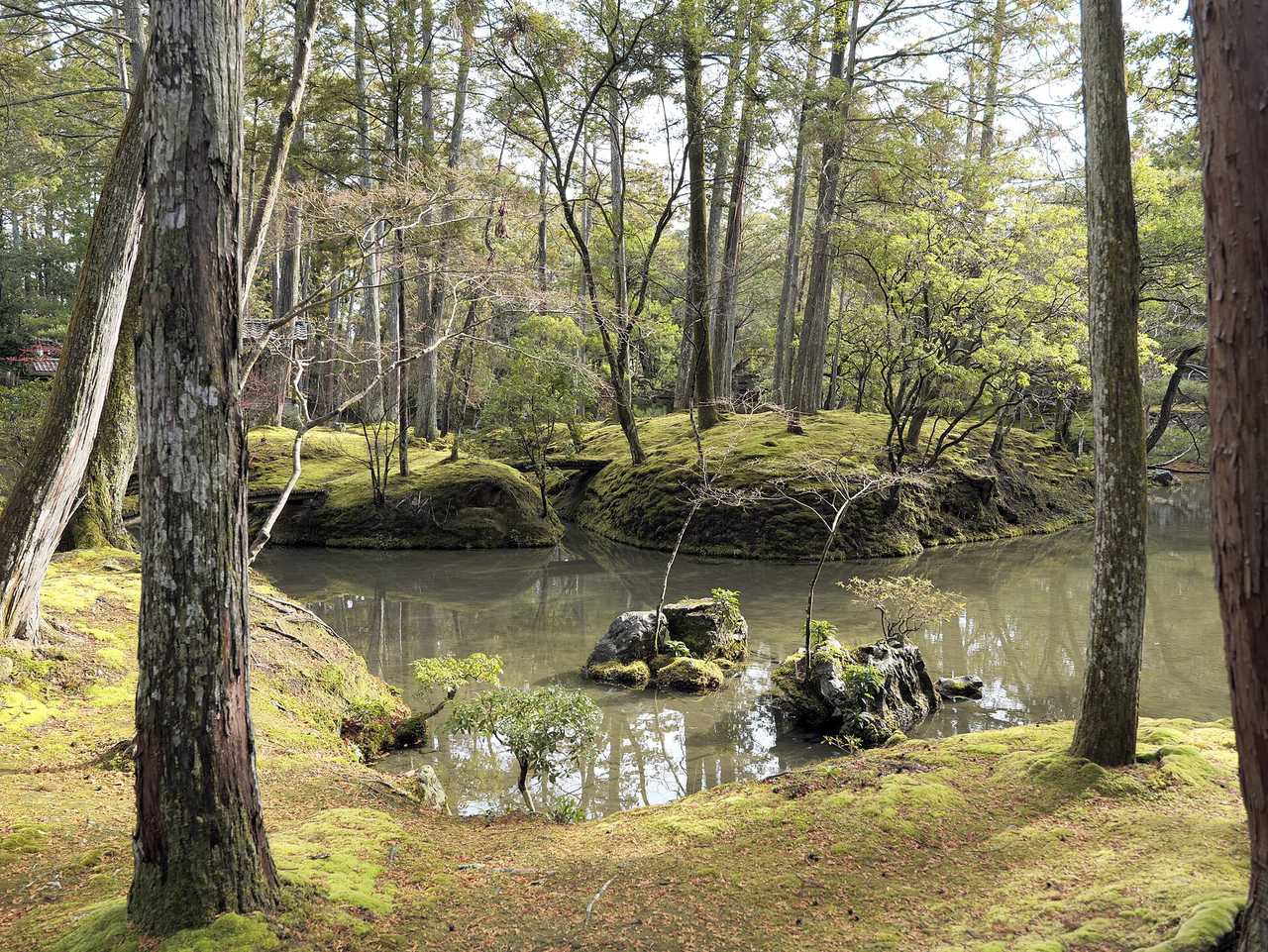
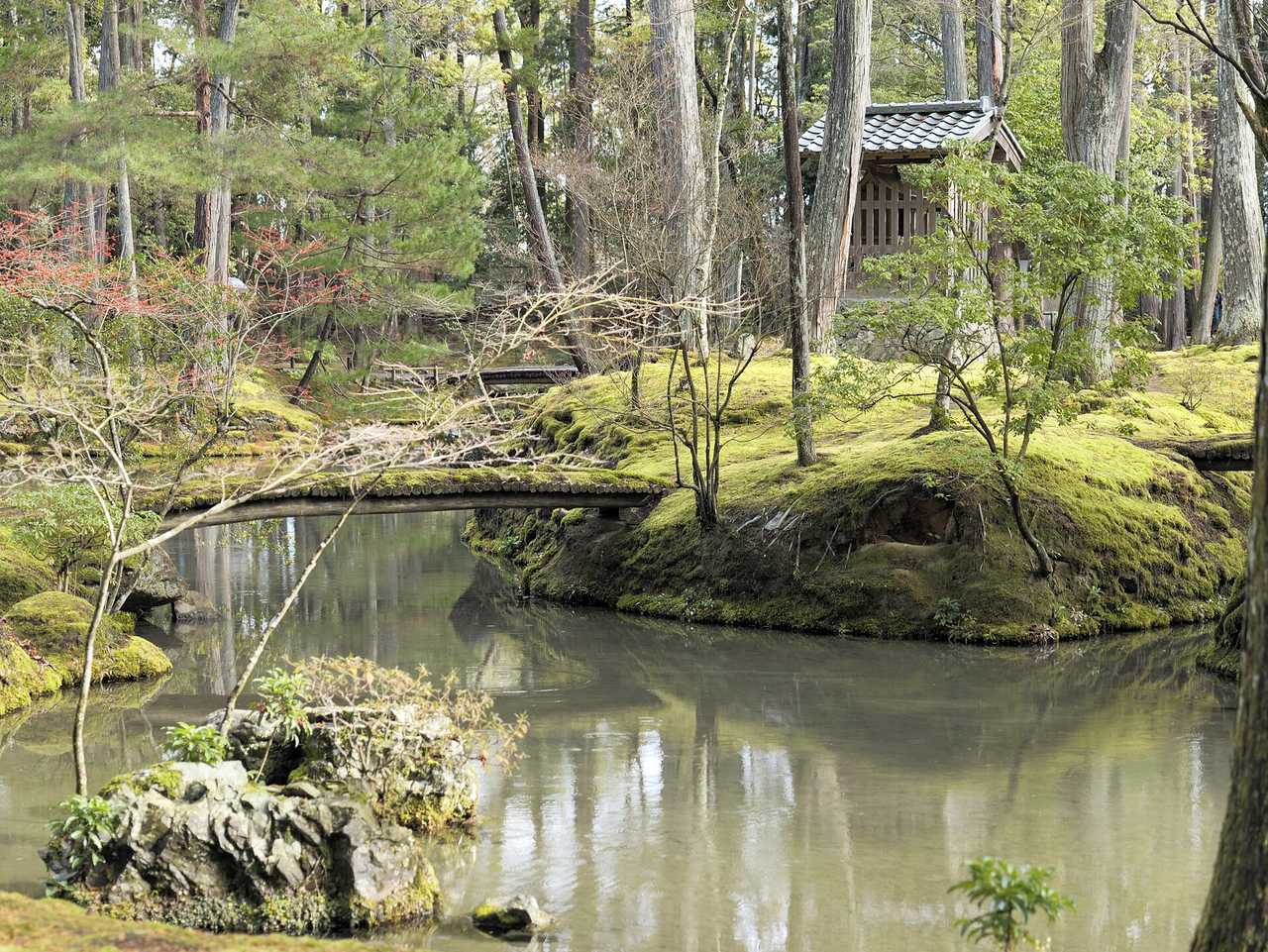
The lower garden is centered on Golden Pond and is a strolling pond-style garden. Its most ingenious feature is the curve of the pond and surrounding land, which, seen from above, traces the Japanese character for “heart” (心), a clever touch left by Muso Soseki.
The pond holds two large islands, Asahi-no-shima (Morning Sun Island) and Yuhi-no-shima (Evening Sun Island), along with countless rock groupings. A small hall on Evening Sun Island enshrines the deity Inari Myojin. As you stroll the shore the scenery keeps changing, a classic example of a view that shifts with every step. The ground here is completely covered in moss, so stay on the designated paths and never step onto the moss to frame a shot.
Because the garden has a one-way route and visitors enter in batches, the crowds never bunch up and you can complete the loop at a relaxed pace. This is the biggest benefit of the reservation system. The best approach is to walk the full loop once, then return to the start and take a slower second look.
Yodomari-ishi: The Moss-Covered “Boats Moored for the Night” Stones
Beside Golden Pond stands a group of stones called the Yodomari-ishi (Night Mooring Stones), which represent a fleet of boats moored in harbor for the night. It is a common motif in Japanese gardens, but one that is rarely preserved as well as it is here.
Today the stones are blanketed in thick moss, and their edges have softened, which only brings them closer to the image of boats resting quietly at anchor. It is also the best example of how Muso Soseki told stories with stone, so be careful not to walk past it.
The stones sit right next to the pond path, and if you are not paying attention it is easy to take them for ordinary garden stones. We suggest noting their approximate location before you enter; seeing them in person feels completely different, and you will appreciate the symbolic technique of the Zen garden more.
Shonantei: The Teahouse by Golden Pond Built by Sen Shoan
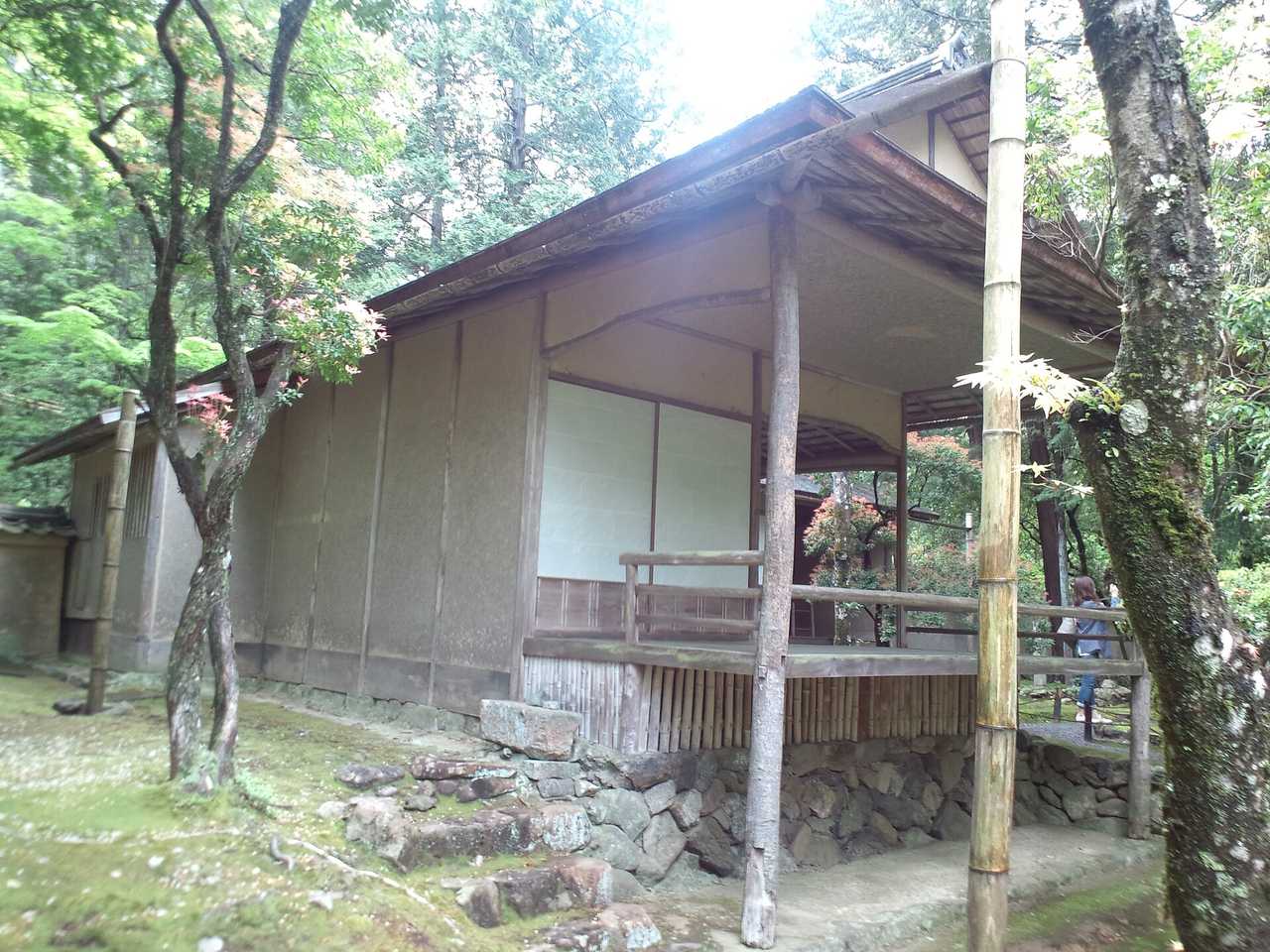
Shonantei, a teahouse on the shore of Golden Pond, is an Important Cultural Property. It was built in the Momoyama period by Sen Shoan, the adopted son of Sen no Rikyu, and stands on the south bank of the pond. Its most distinctive feature is the Tsukimidai (moon-viewing platform) projecting to the north, said to face north on purpose so that visitors could enjoy the moon reflected on the surface of Golden Pond.
During the Meiji Restoration, the statesman Iwakura Tomomi briefly hid here in seclusion, which gave this small teahouse an unexpected place in modern history. The interior is normally closed to visitors, but seen from the pond shore, it forms a classic picture with the water and the color of the moss.
The teahouse is deliberately tucked between tree shadows and islands, appearing and disappearing as you change viewpoints. It is the best demonstration of Muso Soseki’s technique of scenery that shifts with each step, so remember to look back several times as you circle the pond. The teahouse roof uses thatching, and up close you can see its fine layers.
Shitoan and the Upper Garden: A Zen Practice Area Normally Closed to the Public
The upper garden on the hillside is where the concrete pond world gives way to an abstract space for meditation. Shitoan sits within it and is said to be where Muso Soseki practiced zazen. One important reminder: the official site clearly states that the upper garden is normally closed to the public, and the regular “daily visit” does not go there.
The mood shifts noticeably from the watery, mossy green of the lower garden to the dim woodland above, which is exactly what the two-tier design intends. However, the upper garden was originally a place of training and the temple regards it as especially important, so it is opened only for special programs such as the members-only “Oriori Sanpai.”
In other words, if your goal is to see the upper dry landscape with your own eyes, booking the regular daily visit is not enough. Watch the official site for announcements of the “Oriori Sanpai” and its eligibility requirements. What the regular visit reaches is the strolling pond garden around Golden Pond in the lower garden.
Kooin-yama Rock Arrangement: Japan’s Oldest Dry Landscape Garden
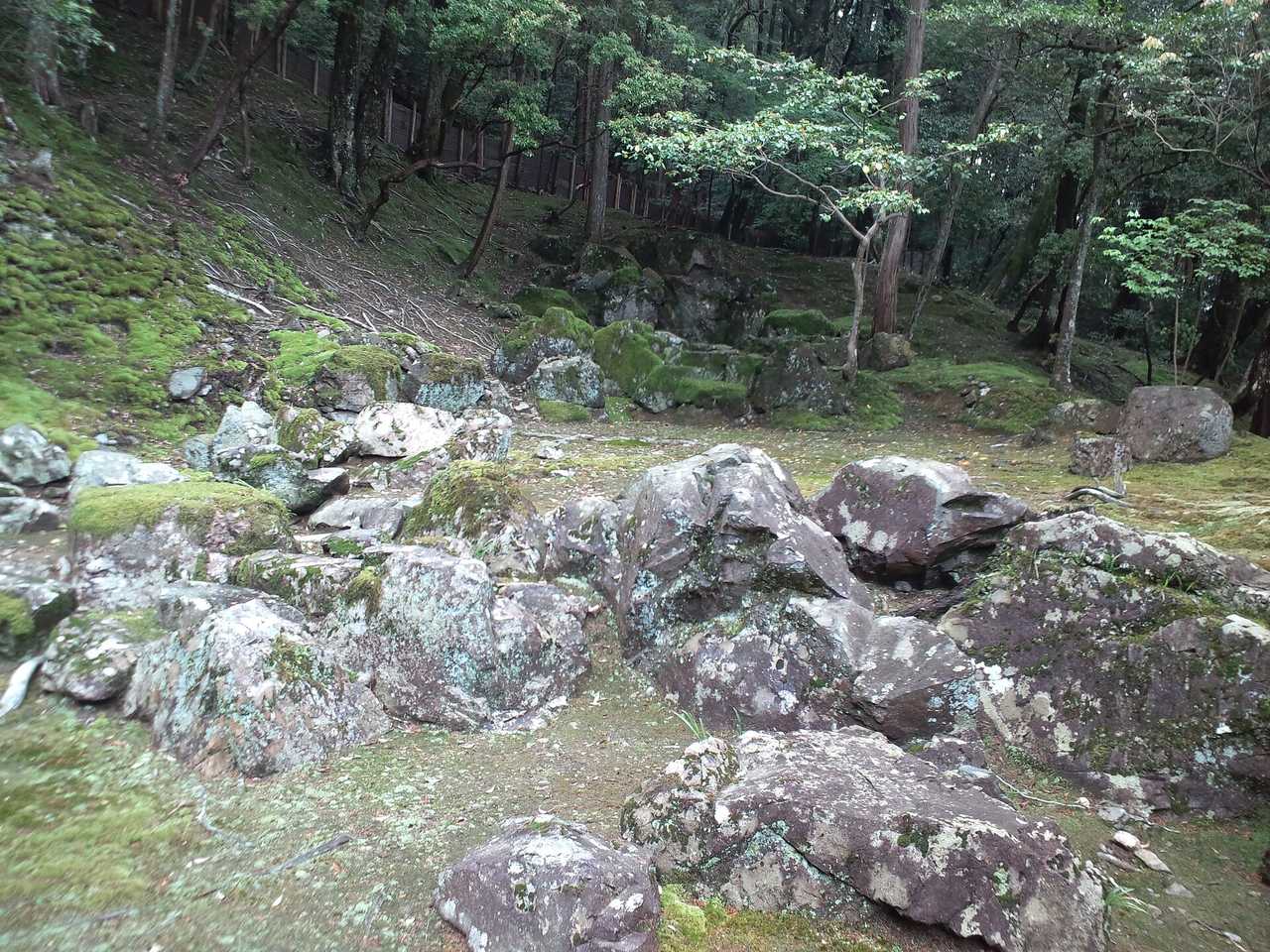
The upper garden holds what is regarded as Japan’s oldest dry landscape rock arrangement, built by Muso Soseki in 1339 and made up of upper, middle and lower waterfall groupings. Unlike the later white-gravel-and-stone style of Ryoanji, here large and small stones are stacked layer upon layer on the hillside to imitate waterfalls and mountains. This area is normally closed to the public.
With no water and no raked patterns, it relies entirely on the mass and arrangement of the stones themselves to express nature, a key step in the Zen garden’s move from realism toward abstraction. This arrangement had a deep influence on the later gardens of Kinkakuji and Ginkakuji.
Because it is very old and covered in moss, the outline of the rocks is not as crisp as in later dry landscape gardens, and you need to slow down and look closely to see the shape of waterfalls and flowing water reduced to abstraction. This is also why it is often called the starting point of Japanese garden history.
Cedar Moss and White Hair Moss: Getting to Know the 120+ Mosses Underfoot
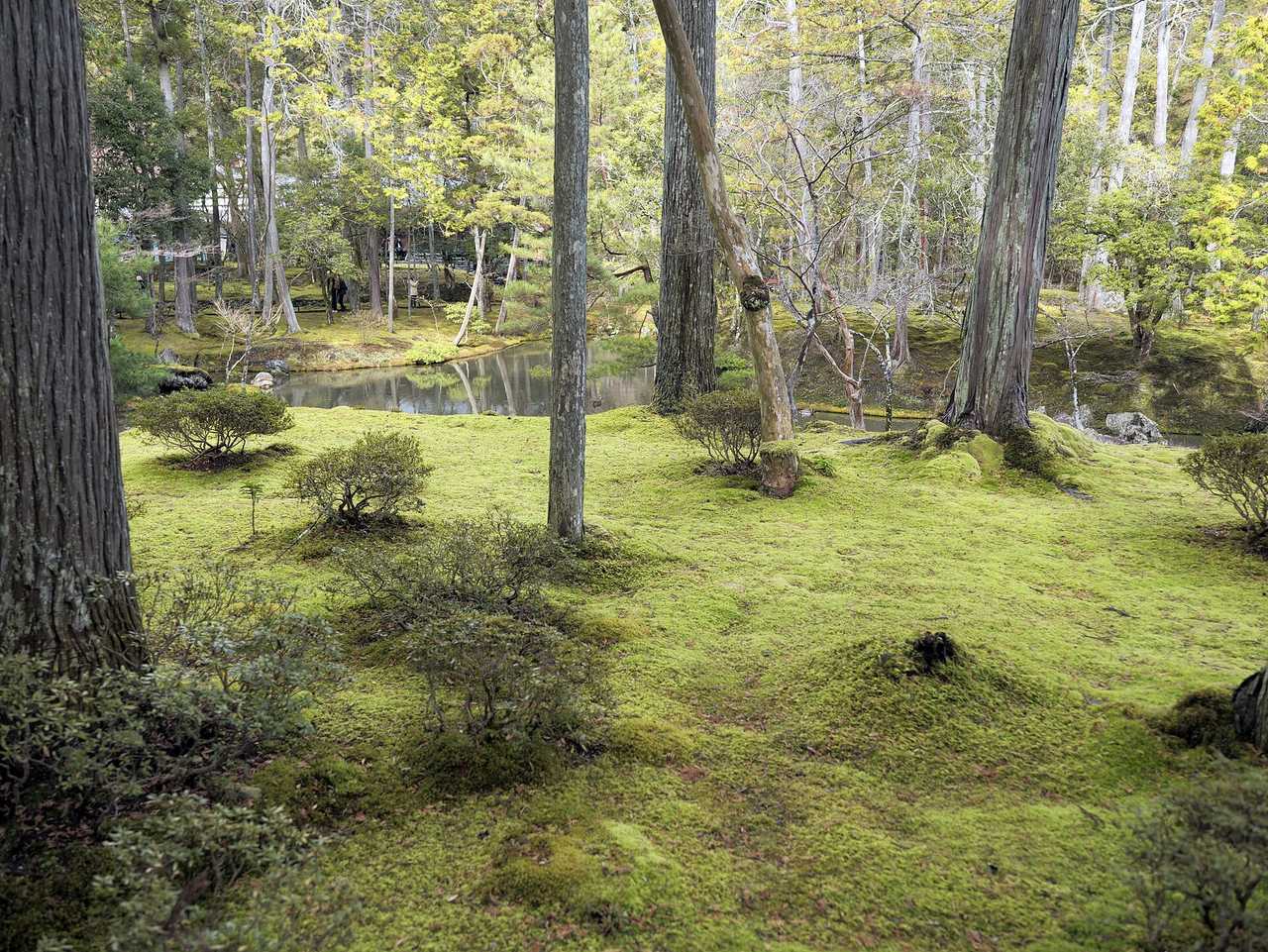
More than 120 kinds of moss grow naturally in the garden. The most common and representative is sugigoke (cedar moss), with long, slender leaves and a thick, carpet-like texture. Another, shiraga-goke (white hair moss), is fluffy and has a silvery sheen from a distance.
There are also creeping varieties such as fern moss, which show layers from deep green to emerald under different light. Crouch down and look closely, and you will see that the whole green carpet is actually a patchwork of many different textures, which is the most charming detail of Kokedera.
The moss changes noticeably with the weather, and the same spot can look completely different after rain than after a run of sunny days, which is why many people return more than once. The temple regularly clears fallen leaves to keep the moss healthy, and if you come across an area where work is under way, follow the on-site instructions and detour around it.
The Main Hall (Sairaido): The Chanting and Sutra-Copying Ritual Before the Garden
The first stop for every visitor after entering is the main hall (Sairaido). Chanting takes place here, and everyone is handed a sheet printed with the “Enmei Jukku Kannon-gyo” sutra to copy character by character. The sutra is short and is copied by tracing the strokes, so overseas visitors who are not used to writing kanji can still complete it.
The hall has tatami flooring and you must remove your shoes. The official site says chair seating is also available in the main hall, but it is limited, cannot be reserved, and you may need to wait if it is full. This chanting and sutra-copying ritual is the core of the Saihoji experience and cannot be skipped. Those who find copying difficult for reasons of faith or physical condition can explain to staff on the day.
If your knees are a problem, tell the temple staff beforehand; they can usually arrange a suitable way of sitting or a seat, so you need not kneel through the whole session. The official site states that photography is prohibited inside all buildings (photos are allowed in the garden, but tripods, monopods and selfie sticks are not). Please also silence your phone so everyone can focus on this quiet time, which is the etiquette Saihoji values most.
Saihoji Goshuin: A Dream Collectible Given Only After Sutra Copying
Saihoji’s goshuin (temple stamp) is normally given only after the sutra copying is finished. Its calligraphy is full of Zen feeling and artistic value, and goshuin collectors regard it as a dream item that is hard to get.
Because the temple is fully reservation-only with a limited number of daily visitors, not many people can get one in the first place, which is why it is so prized. For the fee and how to receive it, follow the guidance on the day.
If you want one, bring your own goshuin book and ask when you check in at the reception desk. Doubling back after entering the garden would disrupt the flow, and the temple may not accept the request. Please check the actual fee in the notice on the day.
The Moss Garden in Rainy Season: The Most Saturated Green of the Year
The ideal viewing period is the rainy season from mid-June to mid-July. Plenty of rain lets the 120+ kinds of moss soak up water every day, producing the richest, most luminous green of the year, a green so vivid it seems to drip.
Many people think they should avoid rainy days, but for Kokedera the opposite is true: humidity is exactly what makes it most beautiful. Competition for reservations is also fiercest in this period, so book the moment slots open. Bring rain gear and wear non-slip shoes that are easy to walk in.
The garden paths get quite slippery in the rain, and the slopes in the upper garden need extra care. When walking with an umbrella, make sure the tip never touches the moss, which is the most common accidental damage. Rainy-day visitors are usually fewer, so you can enjoy the garden more quietly.
Autumn Foliage Season: Red Maple Leaves Against Green Moss
The second-best season is the foliage period from mid to late November. When the garden’s maples turn bright red and drift down onto the thick green moss, the strong red-green contrast creates another kind of ultimate Japanese yugen (profound, subtle beauty).
Compared with the uniform emerald of the rainy season, the autumn moss garden has richer color layers and is better for photos. However, autumn is also one of the hardest times to get a reservation, so apply as soon as your plans are fixed.
If you happen to arrive when the leaves are falling thickly, the distribution of red leaves on the moss is different every day, a sight you can’t count on but may be lucky enough to catch. The peak timing shifts from year to year, so check the latest foliage reports before you go. Foliage-season slots are also snapped up the moment they open, so set a reminder and book on opening day rather than waiting until your itinerary is completely settled.
Suzumushidera (Kegonji): A Lucky Jizo Just a 5-Minute Walk Away
Right next to Saihoji is Suzumushidera, officially named Kegonji, which got its name from the tens of thousands of bell crickets chirping together in the main hall all year round. The temple’s “Happiness Jizo” is said to walk to your home in person to grant your wish, so you must give your full address when making a wish, and each person may make only one wish.
Admission is ¥500, including tea and a sweet, plus about 30 minutes of “bell cricket sermon.” On weekends there is often a queue of an hour or more, so time your visit to avoid your Saihoji slot.
Because visitors enter in batches, waits are long when it is crowded. We suggest fitting it into a gap before your Saihoji slot, or simply arriving before opening to queue. There is also a flight of stone steps in front of the temple, so take care if you have difficulty walking.
Jizoin (Bamboo Temple): The Bamboo-Grove Zen Temple Where Ikkyu Trained as a Boy
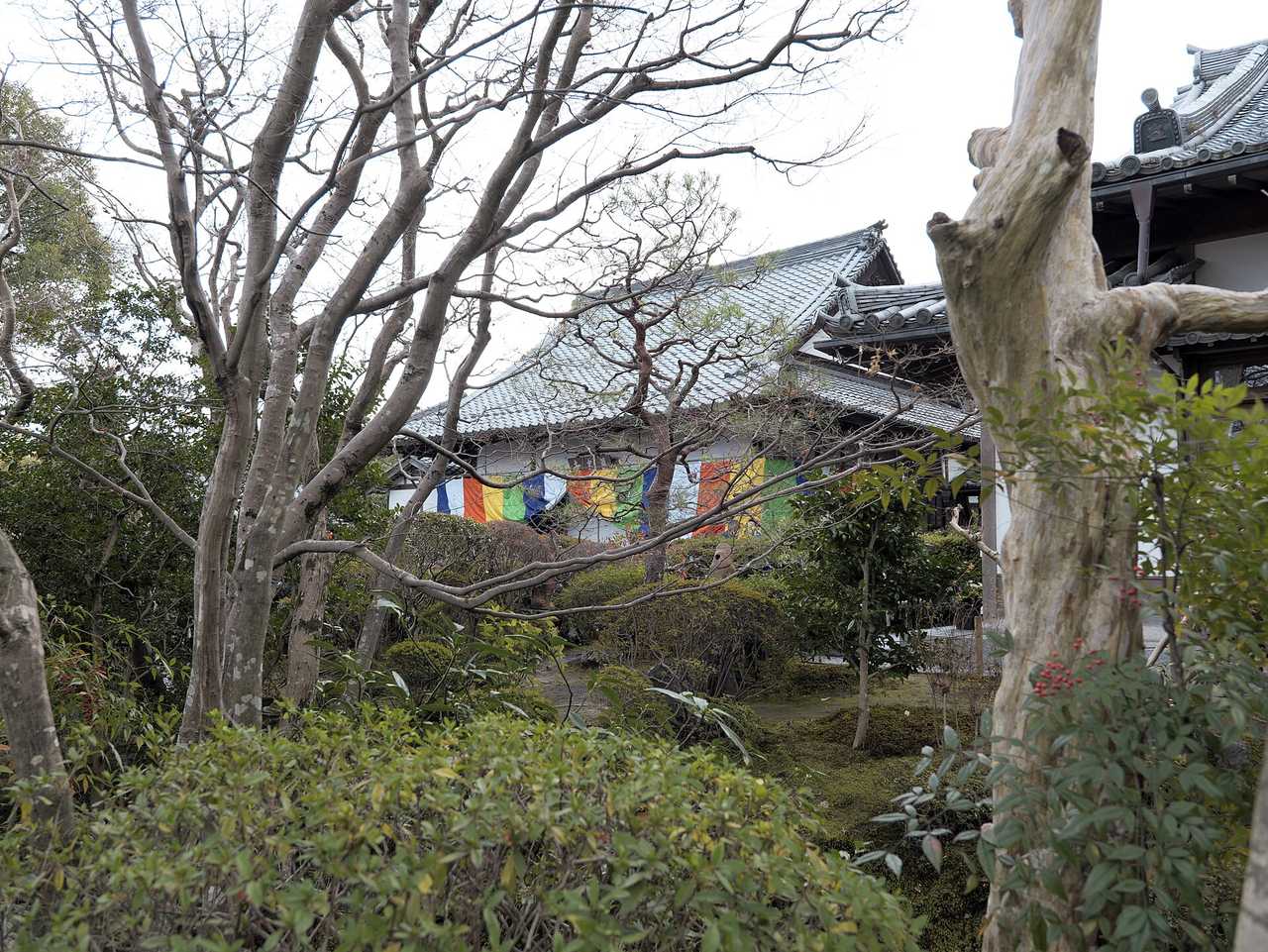
About a 5-minute walk from Saihoji is another temple, Jizoin, known as the “Bamboo Temple” because bamboo surrounds its grounds. It is said to be where the monk Ikkyu trained as a child.
Its Sixteen Arhats Garden uses stone arrangements to depict a gathering of arhats. Small in scale but very quiet, it is a little-known hidden spot in this area. Opening hours and admission fees should be confirmed with the notice on site. It makes a good extension of a Saihoji visit.
The green of the bamboo and the moss green of Saihoji are two completely different shades, and seeing them on the same trip is especially interesting. Because it is not well known, you will hardly meet tour groups here, and it is a place where you can truly sit down in peace. It is small, taking about 30 minutes to see, so it is a good way to fill the gap before your reserved slot.
Matsuo-taisha: Japan’s First Sake-Brewing Deity, Within Walking Distance
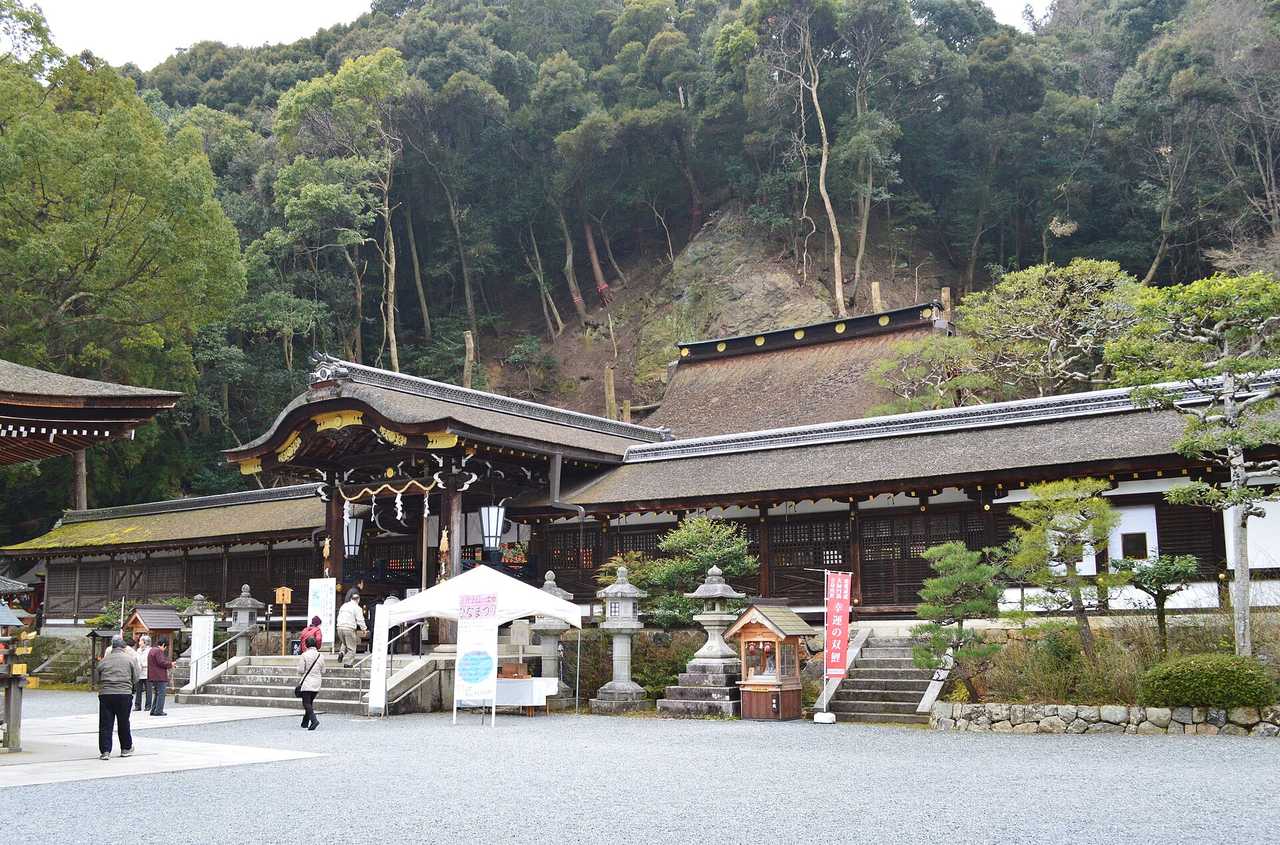
About a 20-minute walk from Saihoji, or a short ride, brings you to Matsuo-taisha, one of Kyoto’s oldest shrines. It is revered as Japan’s foremost deity of sake brewing, and its grounds hold a giant wall of sake barrels dedicated by breweries across the country.
Entry to the shrine grounds is free. To see the three gardens of Matsunoo-en designed by Mirei Shigemori and the Kamigata-kan (deity statue hall), you need to buy a separate ¥500 admission ticket. It is the most convenient place to fill time before or after your Saihoji slot.
The shrine’s amulet counter sells sake-barrel charms made as miniature casks, the most distinctive souvenir in the area. Saihoji’s slots are concentrated in the morning, so visiting Matsuo-taisha in the afternoon after your visit works out well. The garden and statue hall close earlier than a typical temple, so if you want to see them, try to arrive before 4 p.m.
Arashiyama Bamboo Grove: A Classic Sight Just One Train Stop Away
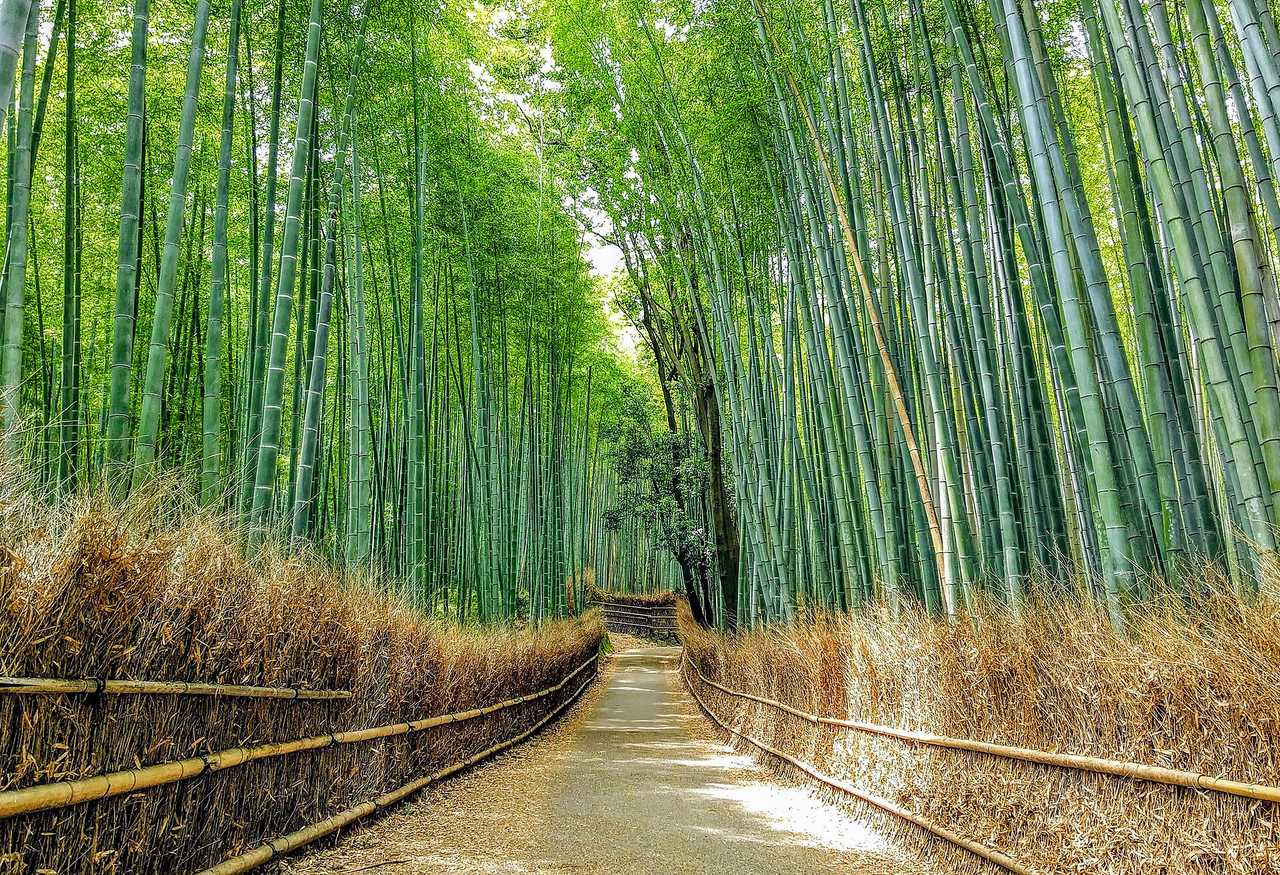
One stop north of Matsuo-taisha Station on the Hankyu Arashiyama Line is Arashiyama, from where you can walk to the famous Bamboo Grove path. Towering moso bamboo forms a green tunnel, one of the most iconic scenes in Kyoto.
The bamboo grove is free and open all day, but crowds pour in quickly after 9 a.m., so arrive before 8 if you want empty shots. Visiting Saihoji in the morning and Arashiyama in the afternoon is the least wasteful way to spend a day in western Kyoto.
The grove itself is short and takes only about ten minutes to walk through, and it is usually combined with Togetsukyo Bridge and Tenryuji. To avoid crowds, early evening after the crowds thin is also good for photos, with softer light. Shops around the grove mostly close before 5 p.m., so don’t leave shopping too late, and dinner options are limited too.
Kinkakuji: The Famous Temple Directly Influenced by Saihoji’s Garden Design
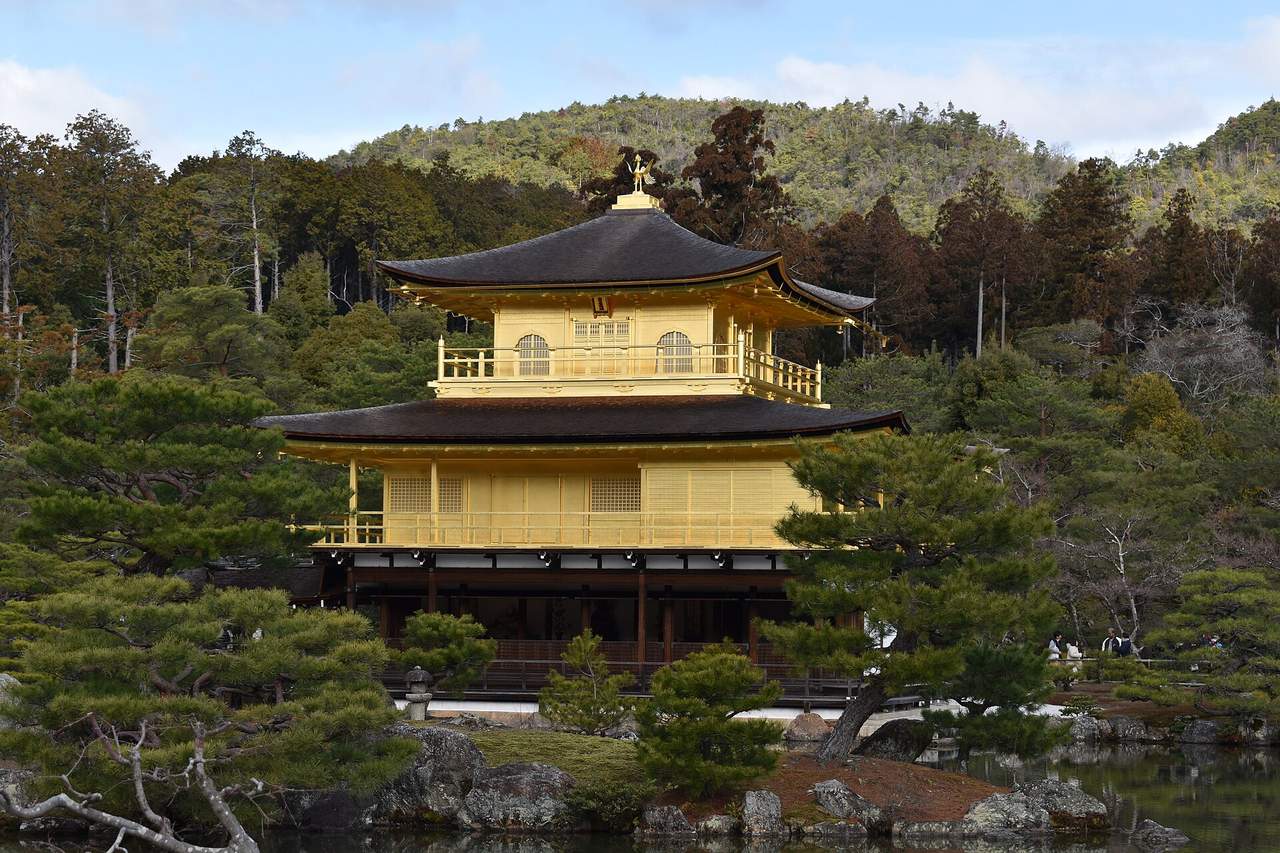
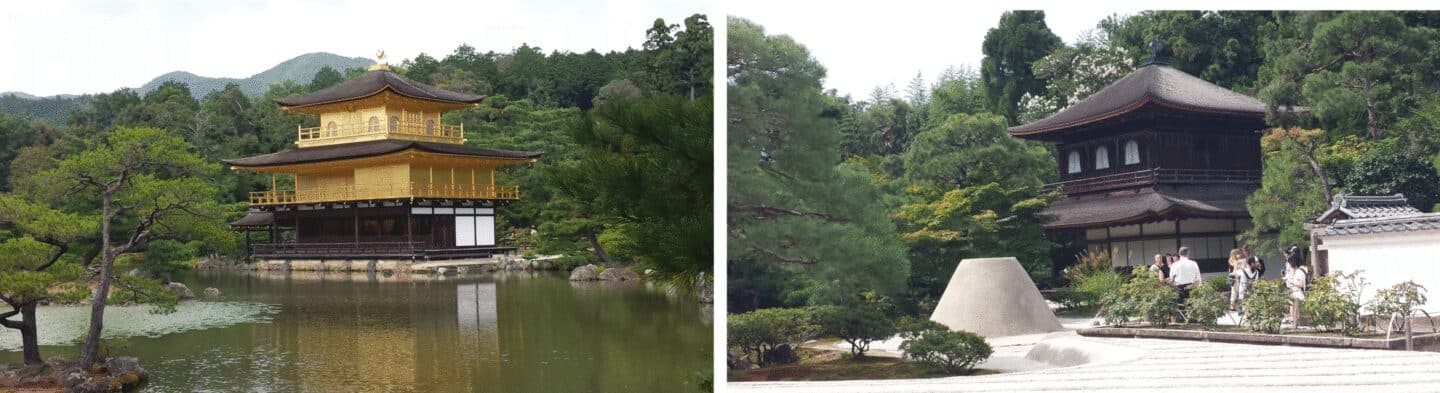
Saihoji’s two-tier garden structure deeply influenced the later Kinkakuji and Ginkakuji. When Ashikaga Yoshimitsu built the Golden Pavilion, he used Muso Soseki’s design at Saihoji as his model, and the relationship between pond and pavilion in the two places is quite similar.
If you are interested in how Japanese gardens evolved, pairing Saihoji and Kinkakuji on the same trip for comparison is very rewarding. Kinkakuji sells tickets on site and needs no reservation; check the official site for opening hours and admission.
Note that Kinkakuji and Saihoji lie in the north and west of Kyoto respectively, and getting between them takes considerable time, so schedule them on different days or link them by taxi for efficiency. Kinkakuji is crowded all year, and to catch the reflection of the pavilion in Kyoko-chi pond, we also recommend going at opening time.
Ginkakuji: Another Higashiyama Temple That Carries on Kokedera’s Aesthetic
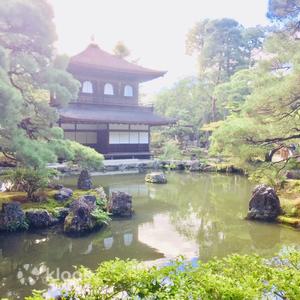
Ginkakuji is likewise seen as an extension of Saihoji’s garden aesthetic. Ashikaga Yoshimasa visited Kokedera repeatedly for inspiration while building his Higashiyama villa, and the grounds still hold a sizable moss garden.
Unlike Saihoji, Ginkakuji sells tickets on site and lets you in at any time, making it a good alternative “if you can’t get into Kokedera.” Comparing the two makes Saihoji’s place in the history of Japanese gardens clearer.
Ginkakuji’s moss garden is smaller than Saihoji’s but just as carefully maintained, and since it needs no reservation and you can simply show up, it works well as a fallback if your Kokedera reservation falls through. The Kogetsudai and the Silver Sand Sea in the grounds are also must-sees, and the view over the city of Kyoto from the viewing point is wide open. A full loop takes about an hour.
How Much Is Saihoji Admission? Tickets and Reservation Methods Compared
Saihoji tickets cannot be bought on site and can only be applied for in advance: the visit donation is ¥4,000 or more per person, and online applications add a ¥110 per person system fee.
| Item | Online application (recommended) | Round-trip postcard |
|---|---|---|
| Application period | 2 months to 1 day before the visit date | 2 months to 1 month before the visit date (by postmark) |
| Visit fee | ¥4,000 or more + ¥110 per person system fee | ¥4,000 (cash on site) |
| People per application | Up to 2 | Up to 2 |
| Age limit | 13 and over | 13 and over |
| Entry proof | QR code on phone | Physical postcard returned by the temple |
Saihoji Online Reservation: From ¥4,110 per Person, Up to 2 People, Closes the Day Before
Online application is the method we recommend most for independent overseas travelers. In the official reservation system, choose a date and an opening time (slots are concentrated in the morning, one every 30 minutes), enter the representative’s details and pay by credit card, and you will receive a confirmation email and a QR code visit pass.
- 💰 The visit donation is ¥4,000 or more per person, plus a ¥110 per person system fee (credit card only).
- 🎫 Up to 2 people per application; you can apply from two months before the visit date until 23:59 the day before.
- 📱 On the day, just show your phone screen at the gate; no printout needed.
- ⚠️ Dates and times cannot be changed, only canceled and rebooked. Cancellation fees start 3 days before the visit (50% from 3 days before to the day before, 100% on the day).
If your party is larger than two, each pair must apply from a separate account, and the system does not guarantee you will get the same slot. The official site also states that groups of 5 or more are not accepted. The postcard route also allows at most 2 people per card and is no easier to get. The system interface offers multiple languages, so it is not difficult to use.
Saihoji Online Reservation Tutorial: 6 Steps to Apply
Saihoji’s online applications are run by the temple’s own organization, the General Incorporated Association Saihokai. The site is called “into Saihoji” (intosaihoji.com), and the pages can be switched to English. Many people mistype the name as “Saihoji (西方寺) reservation” when searching; the correct temple name is Saihoji (西芳寺). Make sure you apply through the official site, to avoid landing on a booking agent or unofficial page. The actual steps are as follows:
- Go to into Saihoji, choose the online application for “日々参拝” (Nichinichi Sanpai, the daily visit), and open the “申込状況カレンダー” (application status calendar).
- Pick a date by the symbols on the calendar: 〇 means you can apply, △ means only a few spots remain, and × means you cannot apply. General visitors should look only at the “一般枠” (general slots); the “会員枠” (member slots) are for Saihokai members only.
- After clicking a date, choose the “開門時間” (opening time) you want, then press “選択した時間でお申込” (apply with the selected time).
- Log in or register an account to continue. Note that old accounts registered before October 2023 no longer work, so you must register again.
- Enter the number of visitors (up to 2 at a time, each must be 13 or older on the day), and pay the visit donation of ¥4,000 or more per person by credit card, plus the ¥110 per person system fee.
- When finished, you can check your reservation on the site’s “マイページ” (My Page). Dates and times cannot be edited directly, only canceled and rebooked: cancellation is free up to 4 days before, 50% from 3 days before to the day before, and 100% on the day. The system fee is never refunded whenever you cancel.
The application window runs from 2 months before the visit date until 23:59 the day before. Parties of 3 or more must apply separately, and the temple does not accept groups of 5 or more. Children 12 and under (including babies and toddlers) cannot accompany you, though the temple holds a few visits a year mainly for children.
Saihoji Opening Hours: Open Only for Your Reserved Morning Slot
Saihoji has no “come any time between X and Y” opening hours like a typical temple; you can enter only at the opening time you reserved. Taking the late-September 2026 application calendar as an example, general slots open at 09:30, 10:00, 10:30 and 11:00, with an extra 11:30 on some days, and the closing time is 12:30 or 13:00 depending on the date. From sutra copying in the main hall to finishing the moss garden, the official site lists the time required as about 60 minutes.
Saihoji is basically a morning outing, leaving the afternoon free for Arashiyama or Suzumushidera. If you apply by round-trip postcard you cannot choose a time, and the temple generally schedules you between about 10 a.m. and noon. Slots and closing times may change by date, so go by what the application calendar shows on the day.
The official site once announced that daily visits were suspended in January and February of 2025 and 2026 for on-grounds maintenance, so check the latest official notice before a winter visit.
Applying by Round-Trip Postcard: The Traditional Route, Up to 2 People, Cash on Site
Visitors who want a traditional touch can apply by round-trip postcard, again for up to 2 people per application. The window runs from two months before the visit date until the postmark deadline one month before (not one week before), so overseas travelers should allow even more lead time for mailing. The postcard the temple sends back is your visit pass, so be sure to bring it on the day.
The mailing address is “〒615-8286 京都府京都市西京区松尾神ヶ谷町56 西芳寺参拝係 宛” (inquiries: 075-391-3631). In your letter, state your desired dates (the temple recommends listing several alternates, and it does not accept requested time slots; it generally schedules between about 10 a.m. and noon), the number of visitors, and the representative’s postal code, address, name, and an email or phone number where you can be reached on the day.
If you do not receive a reply for a long time after posting, it is quite possible that all your alternate dates were full, so leave plenty of buffer time and don’t build your itinerary around the application result.
The ¥4,000 Visit Fee: Paying by Card Online vs. Cash on Site
The visit donation is the same for both routes, ¥4,000 or more per person; the difference is when you pay. Online applications require card payment up front plus the ¥110 per person system fee, while postcard reservations are paid in cash at the temple on the day.
Visitors using the postcard route must have yen cash ready and bring the physical “visit notice postcard” stamped and returned by the temple as proof of entry; if you forget it, you cannot enter. The age limit for visitors is 13 and over.
This price is on the high side for Kyoto temples, but it includes the sutra-copying experience and the garden visit, and daily numbers are strictly controlled. Actual amounts and rules may change, so please go by the official site.
Suzumushidera Admission: ¥500 with Tea, Sweets and the Bell Cricket Sermon
The ¥500 admission at neighboring Suzumushidera already includes tea and a sweet, plus about 30 minutes of the bell cricket sermon. The sermon is given in Japanese only, but the monk’s witty delivery lets visitors who don’t understand Japanese enjoy the atmosphere as well.
After the sermon you can go to the Happiness Jizo outside the temple to make a wish and buy a yellow Happiness amulet. When combining it with Saihoji, we suggest putting Suzumushidera in a gap before your Saihoji slot so the two schedules don’t squeeze each other.
When making a wish you must state your address clearly, because the Jizo is said to need it to find your home, which is the best-known feature of this place. Many people come back to give thanks after their wish comes true. The yellow Happiness amulet is the temple’s signature item, modestly priced and meaningful, and a popular souvenir choice.
Half-Day Guided Tour of Western Kyoto Temples: See the Whole Kokedera Area at Once
A few half-day guided tours of western Kyoto depart from central Kyoto, linking Matsuo-taisha, Suzumushidera and the Jizoin area, with a guide explaining the gardens and Zen history over about 3 to 4 hours.
Note that because Saihoji works on individual reservations, most group tours do not include Kokedera itself, and you usually need to apply separately. Before booking, make sure the tour includes a Saihoji visit.
These tours mostly meet in the morning, so if your Saihoji slot falls in the afternoon, a tour fits neatly as the first half of the day. Because public transport in this area is not very frequent, following a guide saves you a lot of time studying timetables, which is especially friendly to first-time visitors to Kyoto.
Where to Stay Near Saihoji: Hotel Suggestions for the Area
Staying around Arashiyama or Kyoto Station works best with Saihoji’s fixed visit slots.
Where to Stay Near Saihoji? Directions for the Western Kyoto and Arashiyama Areas
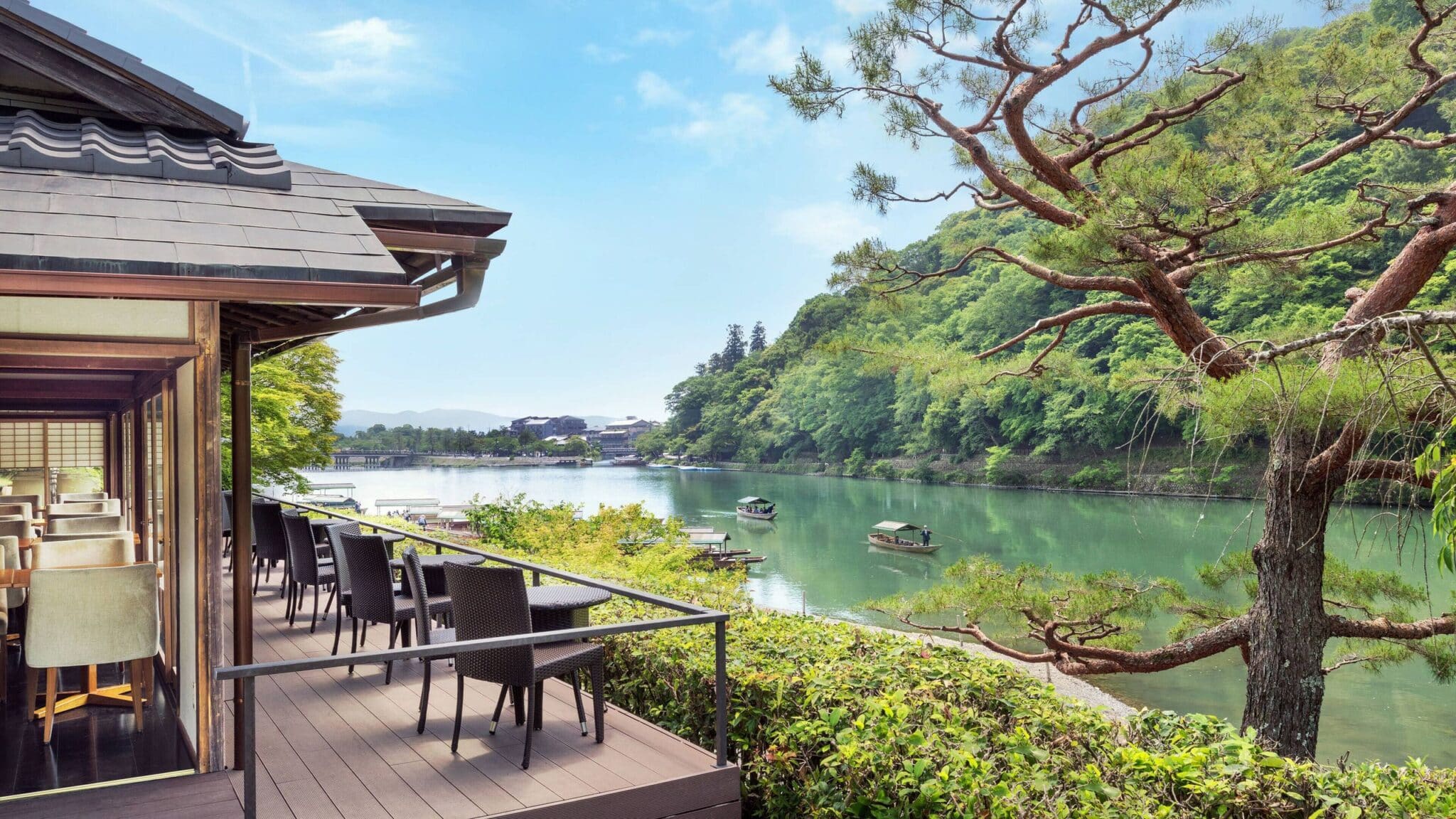
The area around Saihoji is purely residential with almost no lodging, but just north in Arashiyama there is a full range of choices from onsen ryokan to budget guesthouses. The biggest advantage of staying in Arashiyama is having the Bamboo Grove path to yourself before the crowds arrive, then heading to Kokedera’s morning slot at ease the next day.
If your reservation is in the afternoon, staying around Kyoto Station is actually more convenient: Kyoto Bus No. 73 or 83 goes straight to the temple, and luggage storage and dinner options are much better. The area around Hankyu’s Katsura Station is a compromise that balances price and access.
A reminder that bus service in western Kyoto thins out noticeably after evening, so if you stay far away and have an afternoon slot, confirm the last bus for your return in advance.
Saihoji FAQ
Here are the questions travelers search for most about Saihoji (Kokedera).
Q: Can I buy Saihoji tickets on site?
No. Saihoji is fully reservation-only. You must apply in advance through the official online system or by round-trip postcard, you cannot enter if you simply turn up, and visitors must be at least 13 years old.
Q: How much is the Saihoji visit fee?
The donation is ¥4,000 or more per person. Online applications add a ¥110 per person system fee and are paid by credit card; postcard reservations are paid in cash on site on the day of the visit.
Q: When do Saihoji reservations open?
Online applications run from 2 months before the visit date until 23:59 the day before. Round-trip postcards must be sent between 2 months and 1 month before the visit date, judged by postmark, so overseas travelers should allow even more time.
Q: Do I have to copy a sutra at Saihoji?
Yes. After entering you first join the chanting and copy the Enmei Jukku Kannon-gyo in the main hall (the official site lists about 15 minutes), and only then can you enter the moss garden. The official site states clearly that it does not accept “garden-only” visits.
Q: Does Saihoji sell omamori amulets?
Neither the official Saihoji site nor its reservation site publishes any information about selling amulets or other temple goods, so don’t assume you will definitely be able to buy one.
What visitors most often take home is the Saihoji goshuin: a double-page design stamped with the “Saiho Shoja” seal and painted with Daruma; if you want one, ask when you check in at the reception desk.
If you want to collect an amulet, go to Suzumushidera, a few minutes’ walk from the same bus stop, and get the “Happiness Amulet” of the Happiness Jizo. Matsuo-taisha also issues amulets, but it is about a 20-minute walk from Saihoji, near Hankyu Matsuo-taisha Station.
Q: What is the best season to visit Saihoji?
The top choice is the rainy season from mid-June to mid-July, when the moss is at its most saturated; the second best is the foliage period from mid to late November, when red maple leaves contrast beautifully with the green moss.
Q: How do I get to Saihoji from Kyoto Station?
Take Kyoto Bus No. 73 or 83 in front of Kyoto Station to the terminal stop “Kokedera-Suzumushidera,” then walk about 3 to 5 minutes. The ride takes about 60 minutes. A taxi takes about 20 minutes and costs about ¥3,500 to 4,000.
Q: How long does a Saihoji visit take?
The official site lists the time required from main hall worship and sutra copying through the garden visit as about 60 minutes. Plan for one to one and a half hours, and arrive at the gate 10 to 15 minutes early to check in, so you don’t risk missing your entry.