
Dazaifu Tenmangu: Kyushu’s Foremost Shrine to the God of Learning, Enshrined for a Thousand Years
Dazaifu Tenmangu enshrines Sugawara no Michizane, the god of learning. It is the head shrine of about 12,000 Tenmangu shrines across Japan and one of Fukuoka’s signature sights, drawing more than 10 million visitors a year.
Looking for Dazaifu Tenmangu omamori charms? The must-buy is the academic success charm, with a donation from ¥1,000. The plum-fruit charm and dream charm are ¥2,000, and the Golden Uso Happiness Charm is ¥1,500. See “Omamori to Buy” below for the full list of charms and prices.
Origins and Standing of Dazaifu Tenmangu
Dazaifu Tenmangu was founded in 919 and enshrines Sugawara no Michizane, a scholar of the Heian period. Admired for his learning in life, he was deified as “Tenjin” after his death and became the god of scholarship, culture and the arts. The shrine stands on the site where Michizane was laid to rest after he died in exile at Dazaifu, which gives the place deep historical meaning and makes it the heart of the faith.
As the head shrine of roughly 12,000 Tenmangu and Tenjin shrines in Japan, Dazaifu Tenmangu is counted with Kitano Tenmangu in Kyoto and Hofu Tenmangu in Yamaguchi as one of the “Three Great Tenjin Shrines of Japan.” Worshippers have come for more than a thousand years, and every exam season students and parents from Japan and abroad arrive in streams to pray for success.
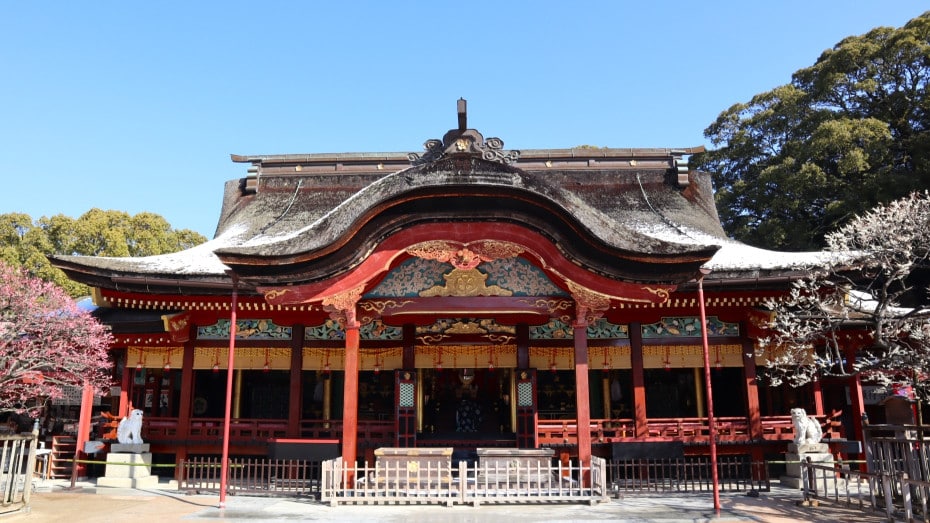
The Flying Plum Legend and Plum Blossom Season
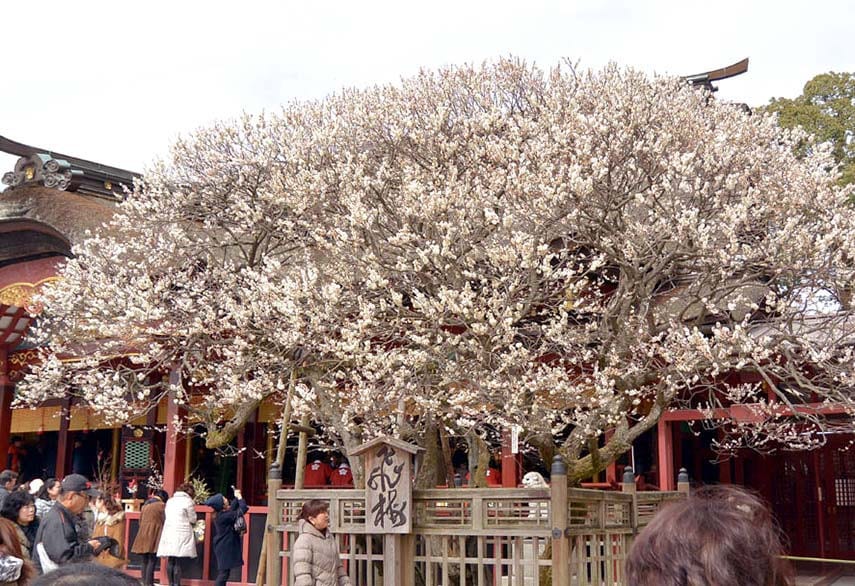
Legend says that when Sugawara no Michizane was banished to Dazaifu, the plum tree in his garden missed its master so much that it flew hundreds of miles overnight to join him. It became known as the “Tobiume” (flying plum), and it still stands to the right of the main hall, the most storied plum tree on the grounds. Plum season runs from late January to early March. The sacred Tobiume tree usually reaches full bloom around February 10, and about 6,000 trees of roughly 200 varieties bloom in turn, a sea of pink and white set against vermilion buildings.
On the first Sunday of March, traditional ceremonies such as the “Kyokusui no En” (winding-stream banquet) are held on the grounds and draw many photographers and visitors. To avoid the crowds, enter as soon as the gates open on a weekday morning, when the light is soft and visitors are few, the best time to photograph the grounds.
Layout of the Grounds and Visiting Route
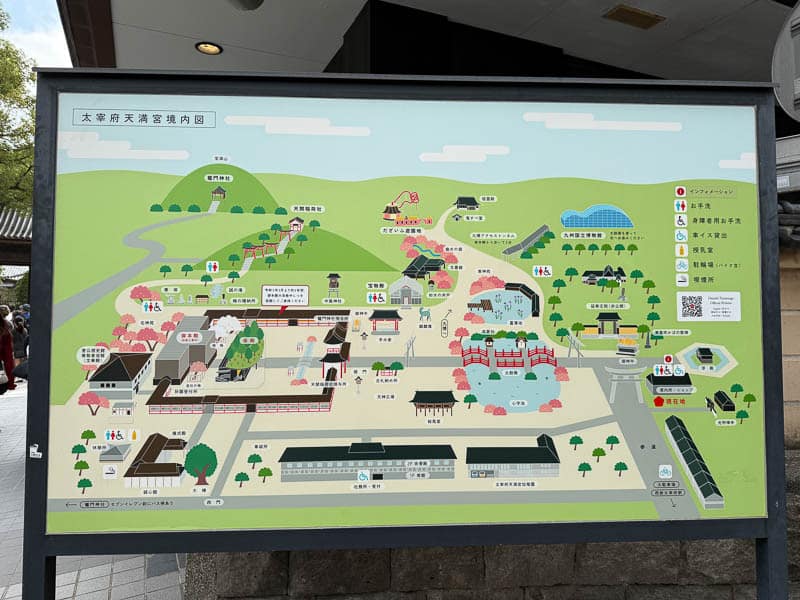
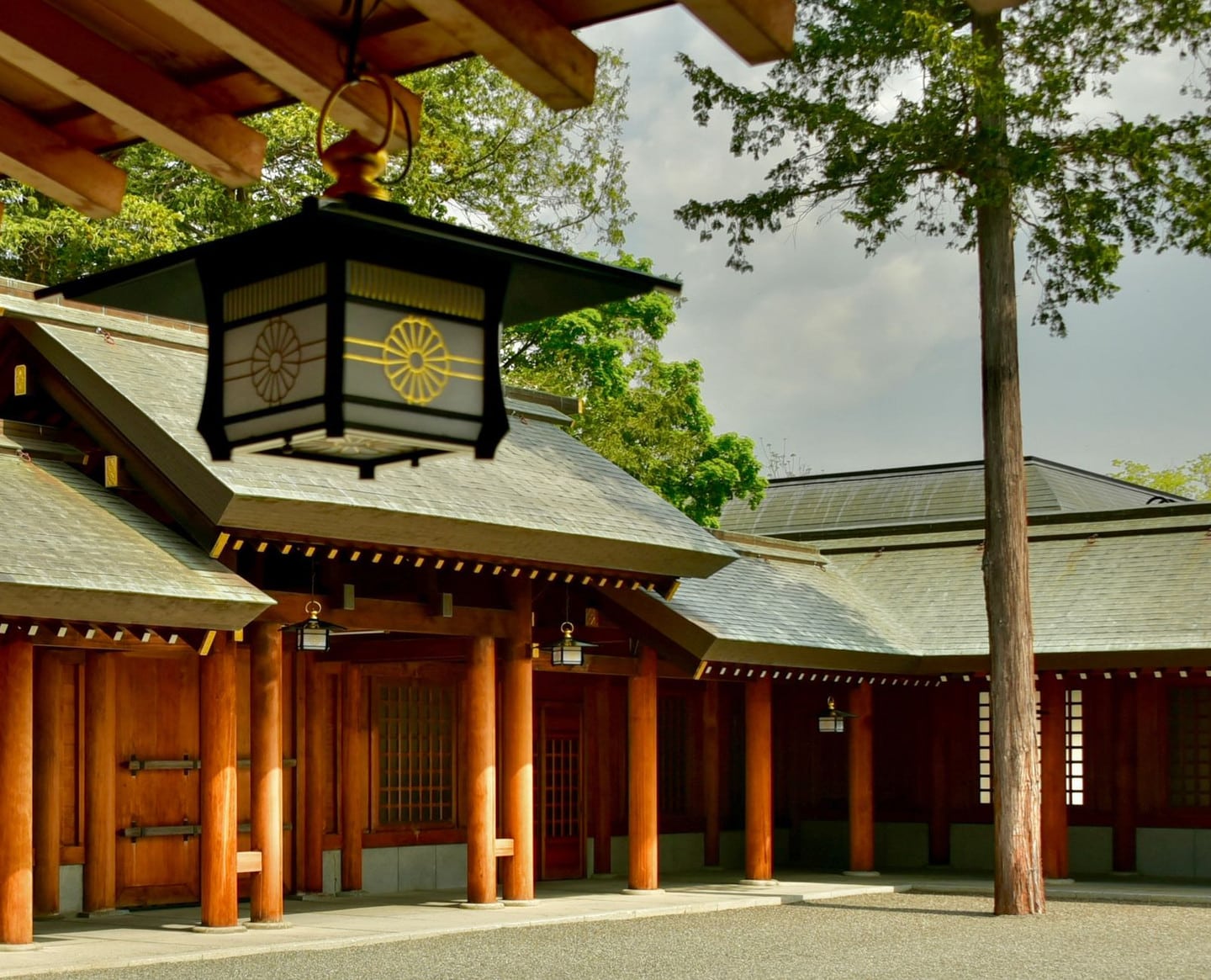
After entering from the approach road in front of Dazaifu Station, you pass the torii gate, the Taiko Bridge and the Romon gate in turn before reaching the main hall. The route is clear and easy to follow, so even first-time visitors are unlikely to get lost. The grounds are spacious: besides the main worship area they include Nakajima Shrine, Tenkai Inari Shrine, the Treasure Hall and a connecting walkway to the Kyushu National Museum, so plan on half a day to a full day.
The suggested order is: torii gate, sacred ox statue, Taiko Bridge and Shinji Pond, Romon gate, temizuya purification fountain, main hall, Nakajima Shrine, Tenkai Inari Shrine, then back along the approach shopping street. This route gives the fullest experience of the shrine along with the food and shopping nearby.
How to Get to Dazaifu Tenmangu: Transport Options and Costs
Dazaifu Tenmangu is in Dazaifu City, Fukuoka Prefecture. Most visitors go by Nishitetsu train, though an airport bus or a rental car also works.
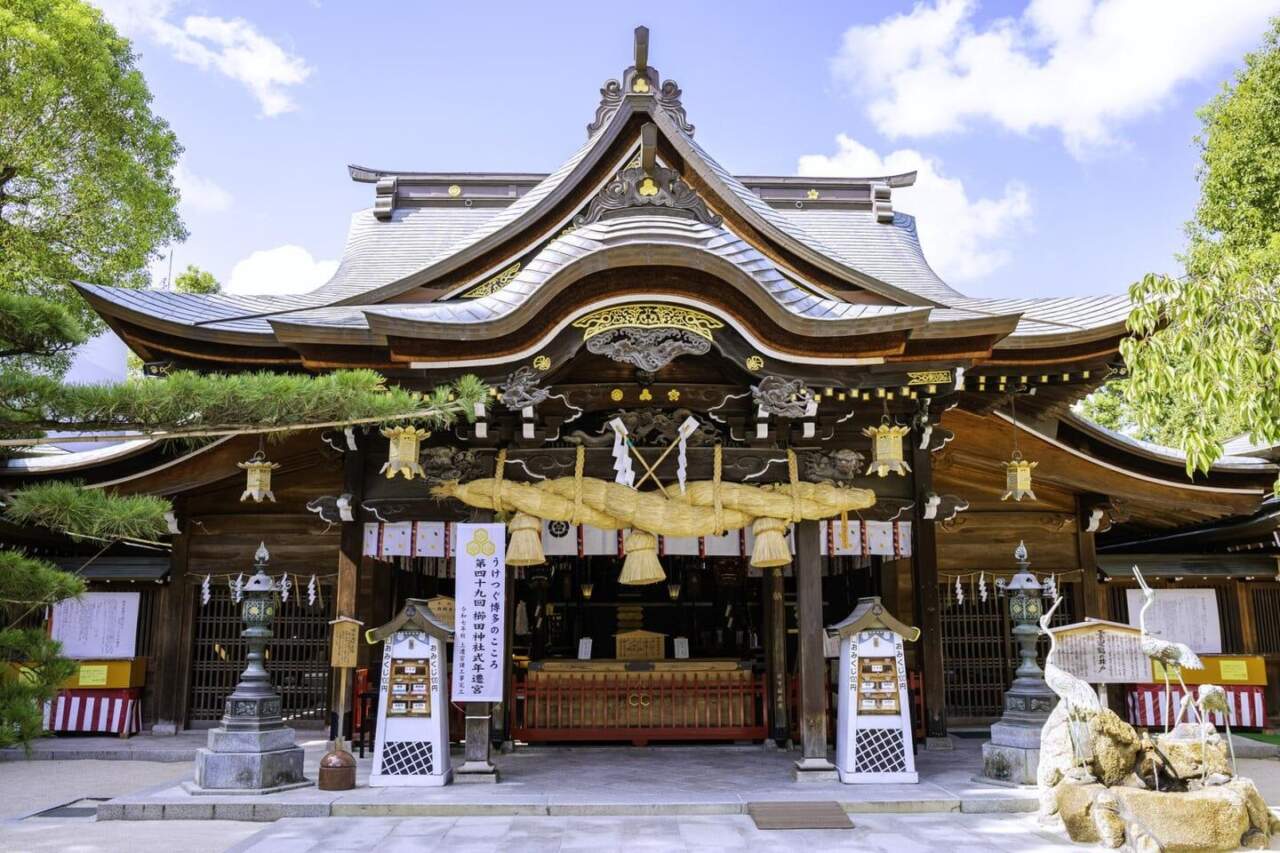
How to Get to Dazaifu Tenmangu at a Glance
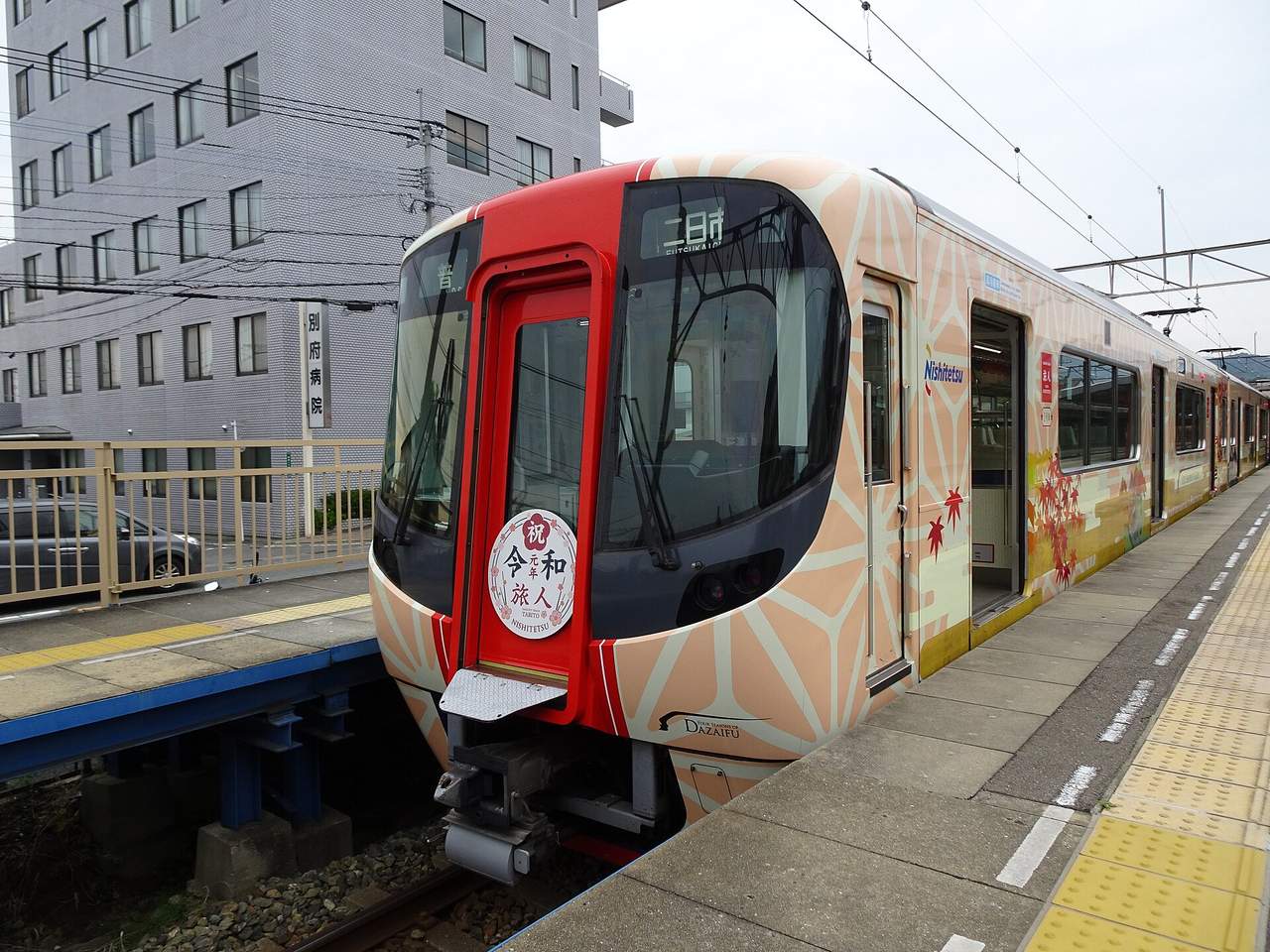
🚃 Nishitetsu train: From Nishitetsu Fukuoka (Tenjin) Station, change at Nishitetsu Futsukaichi Station and ride on to Dazaifu Station, about 30 minutes, fare ¥420. From Hakata Station, take the subway to Tenjin first and then transfer. Frequent service makes this the best value.
🚌 Nishitetsu bus: The Dazaifu Liner bus “Tabito” runs directly from the Fukuoka Airport international terminal in about 25 minutes, fare ¥700 (from Hakata Bus Terminal it takes about 40 minutes, ¥800). From the stop it is about a 5-minute walk to the shrine.
🚗 Driving: Take the Kyushu Expressway to Dazaifu IC in about 30-40 minutes. City-run car parks cost about ¥500-1,000. During cherry blossom and plum seasons, arrive early or switch to public transport.



-Klook.jpg)
Top Sights at Dazaifu Tenmangu: Highlights of Every Area
From the entrance torii gate to the main hall, the grounds hold more than ten highlights worth seeing. Here is a closer look at each.
First Torii Gate (Ichi no Torii)
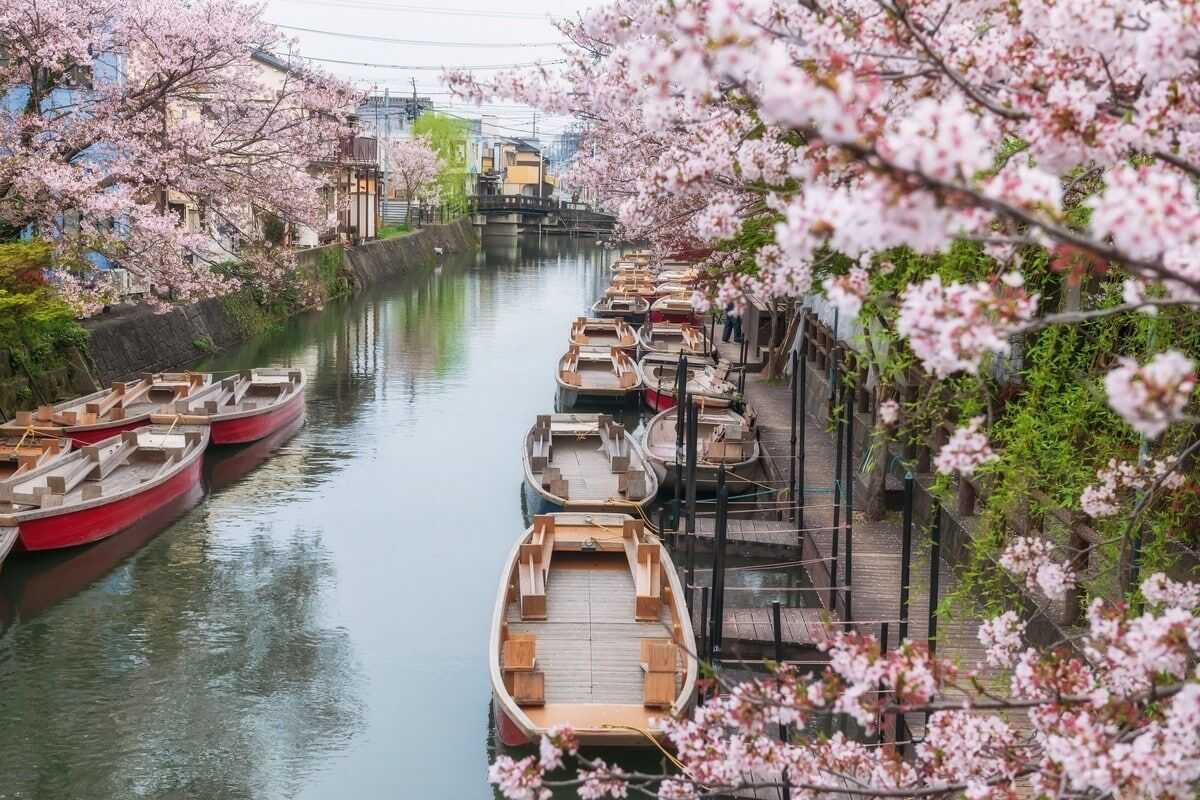
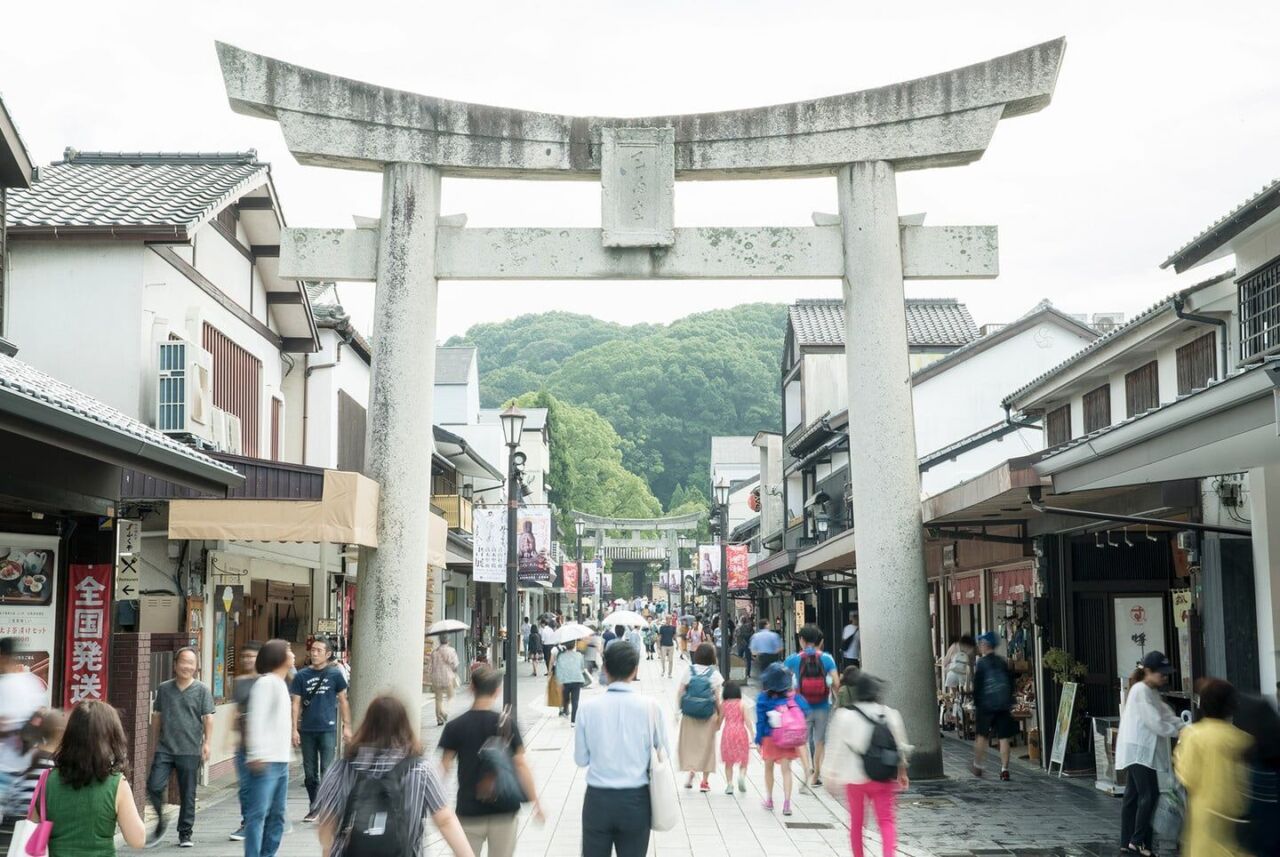
The first torii gate stands at the entrance to the approach road, the symbolic first gateway into the sacred precinct of Dazaifu Tenmangu and the boundary between the everyday world and the sacred realm. The stone gate has been restored many times yet keeps its solemn, ancient look. It is a popular photo spot to start with, and many visitors bow here before stepping onto the approach.
Right around the gate is the start of the lively shopping street, with shops lining both sides. Pause here for a moment after you arrive and feel the shift from the bustle of the market to a quiet, sacred atmosphere, the most ceremonial beginning to the whole visit.

Sacred Ox Statues (Goshingyu)
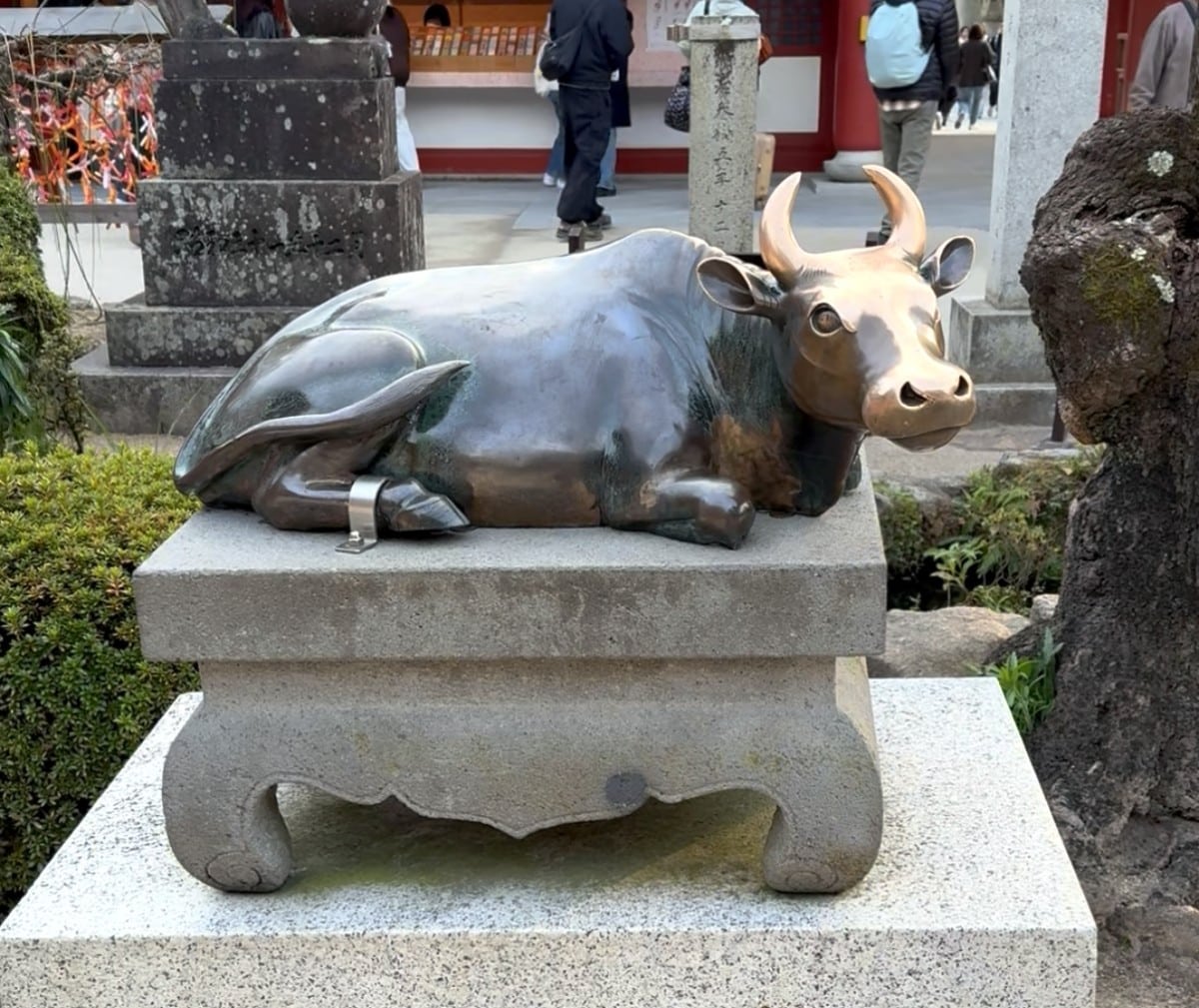
Reclining ox statues, called “Goshingyu,” can be seen all over the grounds. Michizane was born in the Year of the Ox, and when he died the ox pulling his cart reportedly stopped on its own, so the ox is regarded as a messenger of Tenjin. It is said that touching the ox’s head brings wisdom and touching a sore spot on the statue heals the matching ailment, so the heads and horns are always rubbed smooth and shiny. It is a very popular spot for prayer.
There are more than ten sacred ox statues of various sizes along the approach, and the one in front of the main hall is the most popular. Exam candidates often come especially to rub the head and pray for success. Crowds are heaviest in exam season, so avoid weekend mornings at peak hours.
Taiko Bridge and Shinji Pond
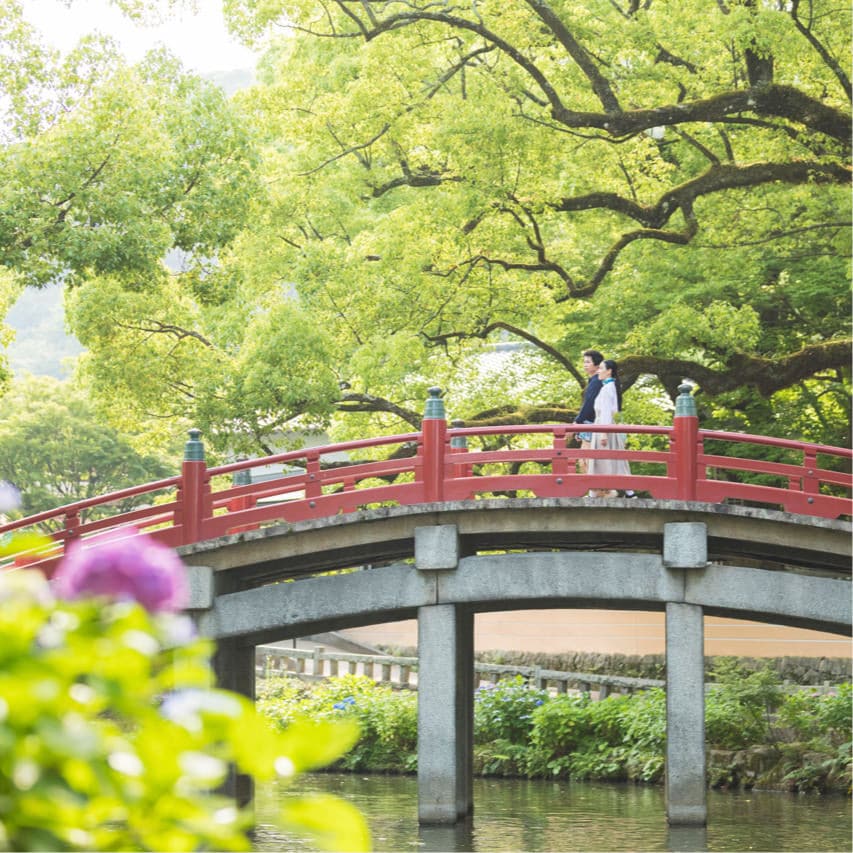
The Taiko Bridge spans Shinji Pond, which takes its name from its shape, said to resemble the kanji for “heart” (shin). The bridge comes in three sections that symbolize the past, present and future, and walking across all three is said to complete a ritual cleansing of the spirit. It is one of the most Buddhist-flavored sights in Dazaifu Tenmangu.
The middle section arches very high and the surface is steep, so watch your step, especially if you are wearing a rented kimono. Koi swim in the pond and seasonal flowers and trees are reflected in the water. Spring cherry blossoms and autumn maples make this a classic scene for photographers, and it is an important landmark you must pass on the way to the Romon gate.
Romon Gate
The Romon is the formal main gate of Dazaifu Tenmangu, a two-story structure that is grand in scale and finely carved. The front and back are designed differently, one of the architectural highlights of the grounds, so it is worth walking around it to take it in.
Passing through the Romon takes you into the core worship area where the main hall stands, and the mood turns solemn at once. Dense trees surround the gate and the scenery changes with every season. In autumn, red leaves against the vermilion pillars are especially striking, making it an excellent photo spot and one of the most memorable points of the whole visit.
Temizuya Purification Fountain
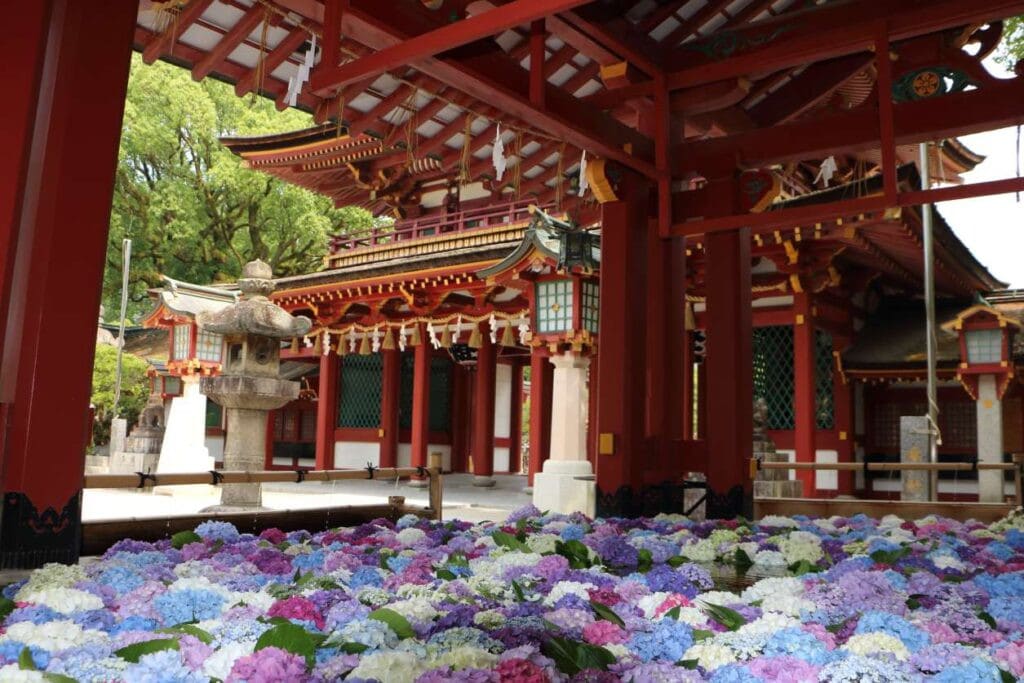
The temizuya is the traditional facility for purifying body and mind before worship. The one at Dazaifu Tenmangu is known for its seasonal flower decorations. In June it has offered a few days of limited-time hydrangea “hana-temizu,” with seasonal blooms filling the basin in colors that look like floral art, and it has become one of the most popular photo spots on social media in recent years.
The proper etiquette is to scoop water with the ladle in your right hand and rinse your left hand, then switch hands and rinse your right. Next, pour water into your right hand to rinse your mouth (never drink straight from the ladle). Finally, tip the ladle upright so the remaining water runs down to clean the handle. The sequence is simple and dignified, and an essential part of experiencing Japanese shrine culture.
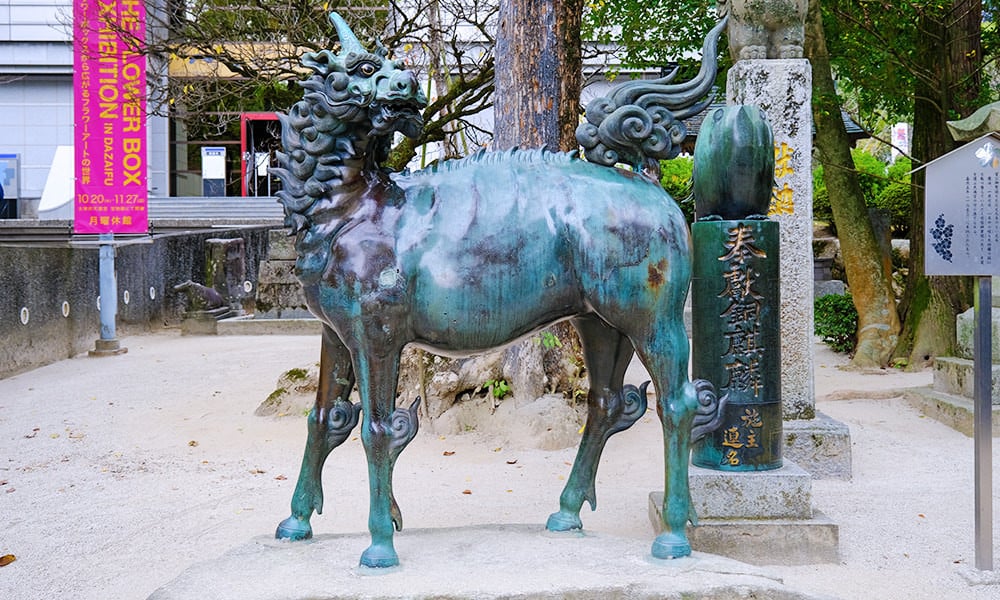
Kirin Statues
The kirin is an auspicious beast from Chinese legend that symbolizes benevolence and an age of peace. Dazaifu Tenmangu has several stone kirin statues in different poses, and the most famous stands near the main hall. Stroking the kirin is said to bring good luck and safety.
Kirin and uso (bullfinch) statues often appear in pairs around the grounds, and many visitors enjoy hunting for them like treasure. Slow down on your way and look closely at the stonework nearby; you will often find unexpected corners that add a sense of discovery to your visit.
Main Hall (Gohonden)
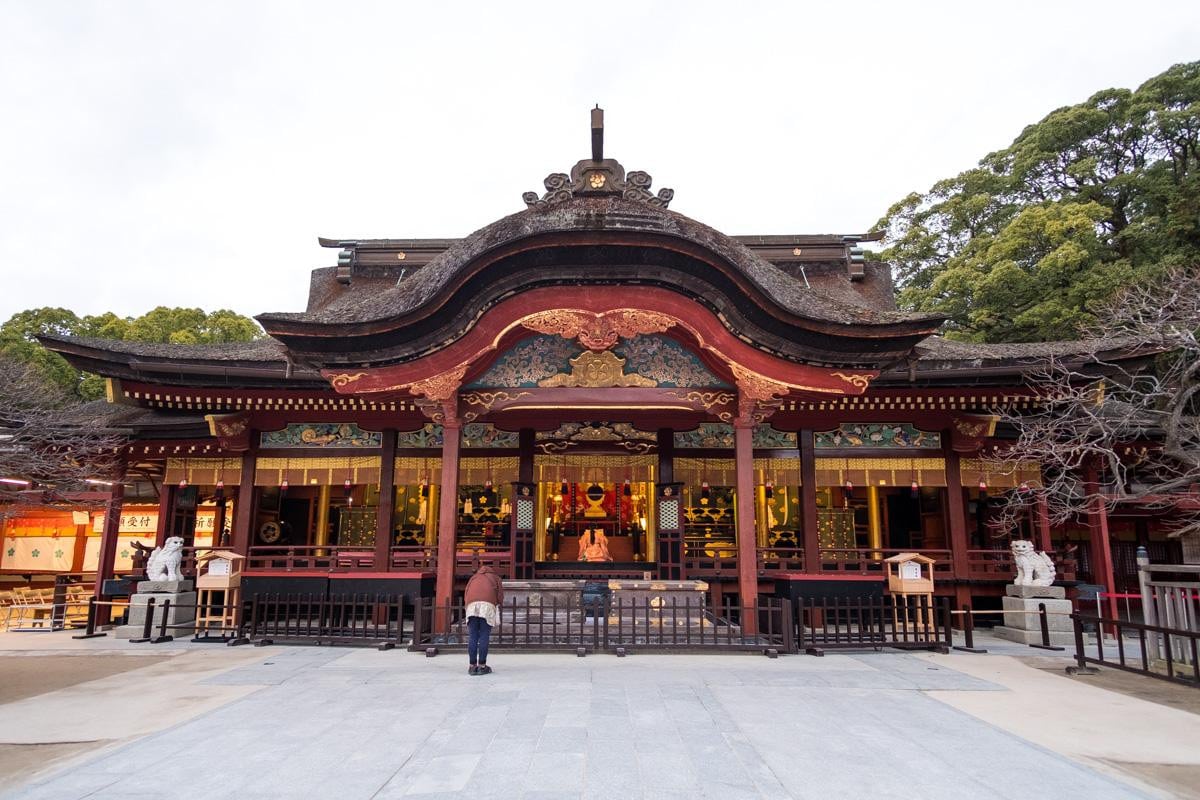
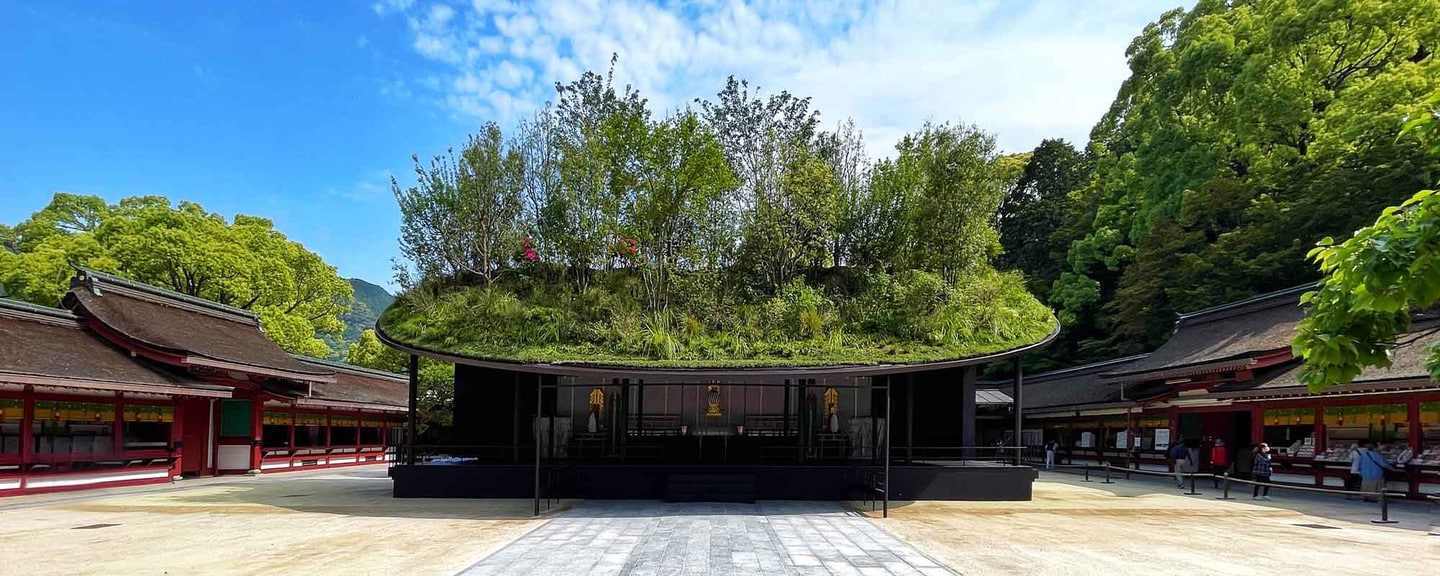
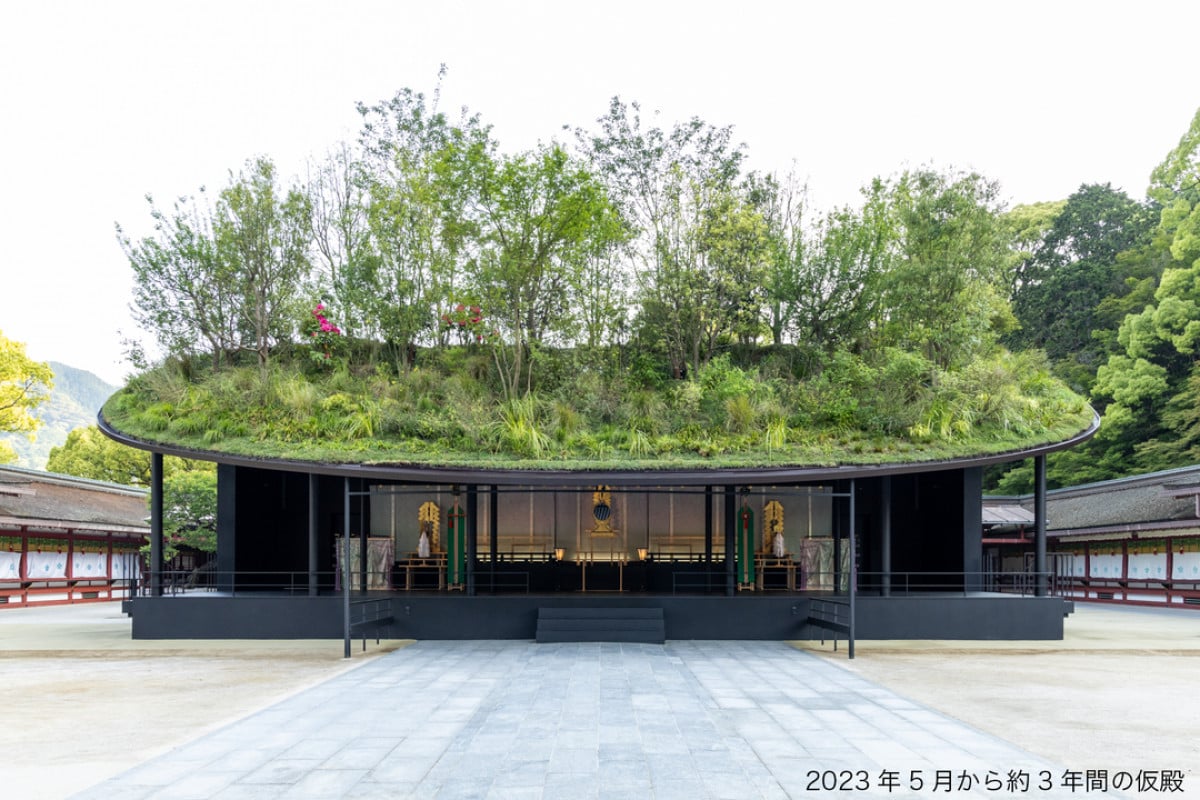
The main hall enshrines the spirit of Sugawara no Michizane and is the most solemn place on the grounds. The present hall was built in 1591 and is designated an Important Cultural Property, showing the lavish carving of the Momoyama period. The hall has been under the “Reiwa Major Restoration” since spring 2023, and frontal worship at the main hall resumed on September 19, 2026.
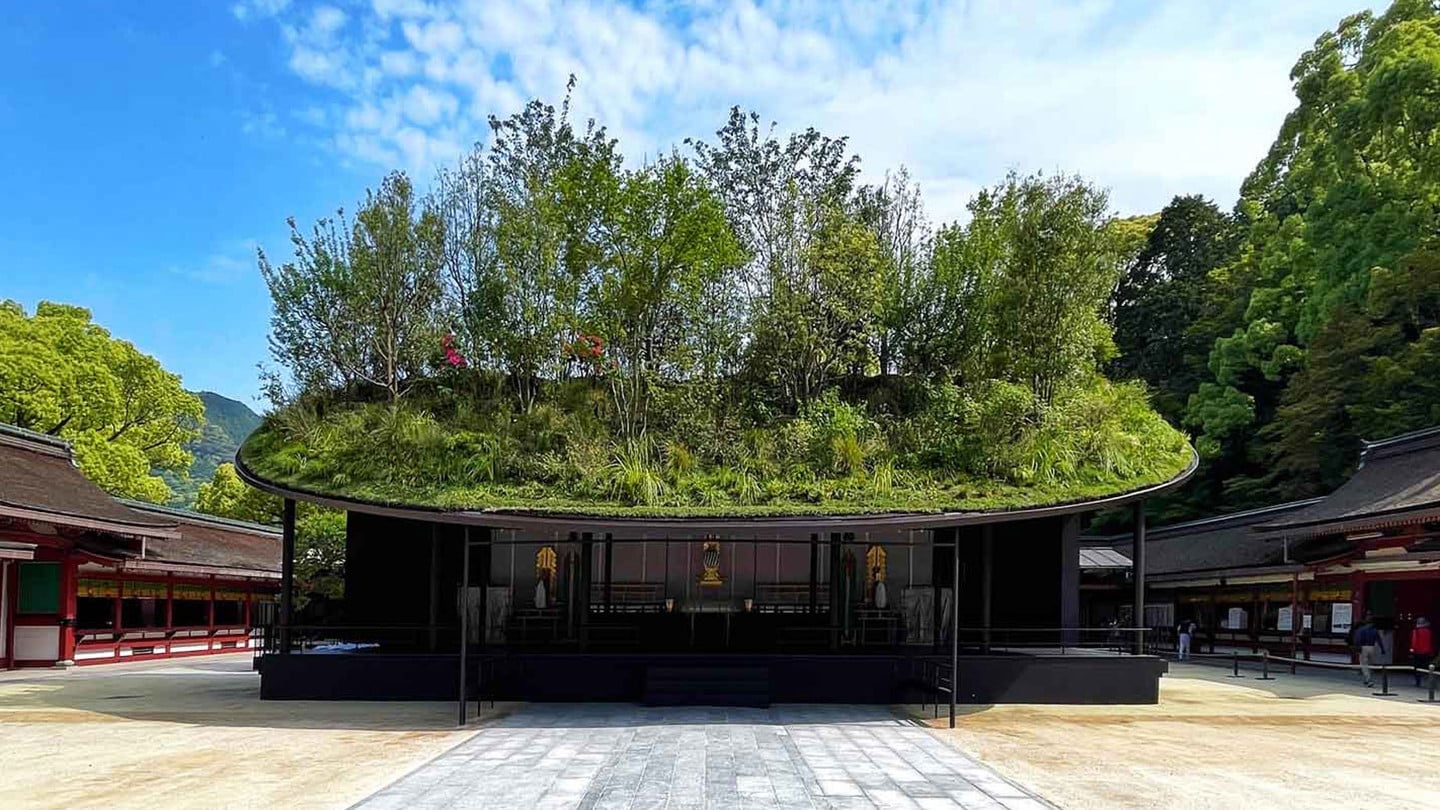
During the restoration a temporary hall designed by architect Sou Fujimoto, symbolizing harmony between people and nature, was in use. Visitors can now worship from the front of the restored main hall. Individual prayer services are held at the Seishinkan ceremony hall from 9:00 to 16:30, with no reservation required.
- 🕘 Opening time: 6:00 from the spring equinox / 6:30 from the autumn equinox
- 🌙 Closing time: April-May and September-November 19:00 / June-August 19:30 / December-March 18:30
- 🚧 Current status: Since September 19, 2026, frontal worship at the main hall has resumed after about three and a half years, so you can worship directly from the front
- 🔗 Dazaifu Tenmangu official website
On-Grounds Art Museum and Treasure Hall
The Treasure Hall holds precious artifacts, old documents and works of art related to Sugawara no Michizane. Admission is ¥500 for adults, and it is open from 9:00 to 16:30 (last entry 16:00; closed Mondays, but open when Monday is a national holiday). It suits visitors interested in history and culture who want to learn more about Michizane’s life.
In recent years Dazaifu Tenmangu has actively promoted its “on-grounds art museum” project, inviting internationally renowned artists to exhibit contemporary works within the shrine precinct. It blends a traditional place of worship with modern art, showing the shrine’s eagerness to innovate and sparking fresh interest in shrine culture among younger generations and overseas travelers.
- 🕘 Opening hours: 9:00-16:30 (last entry 16:00)
- 🎫 Admission: General ¥500 / University and high school students ¥200 / Elementary and junior high students ¥100
- 📅 Closed: Mondays (open when Monday is a national or substitute holiday), plus temporary closures between exhibitions
- 🔗 Dazaifu Tenmangu Treasure Hall official page
Nakajima Shrine
Nakajima Shrine is an auxiliary shrine of Dazaifu Tenmangu, located outside the east corridor of the main hall. Its chief deity is Tajimamori no Mikoto, who according to legend was sent by Emperor Suinin to the Land of Tokoyo and spent ten years bringing back the “tokijiku no kaku no mi” (a tachibana citrus, then the finest of fruits). For this he is revered by Japan’s confectionery industry as the “founder of sweets,” the god of confectionery. The shrine was established in 1954 (Showa 29) at the request of the Kyushu confectionery industry, by transferring the deity from Nakashima Shrine in Toyooka, Hyogo Prefecture. The amulet office inside the Romon also stocks a dedicated “confectionery charm.”
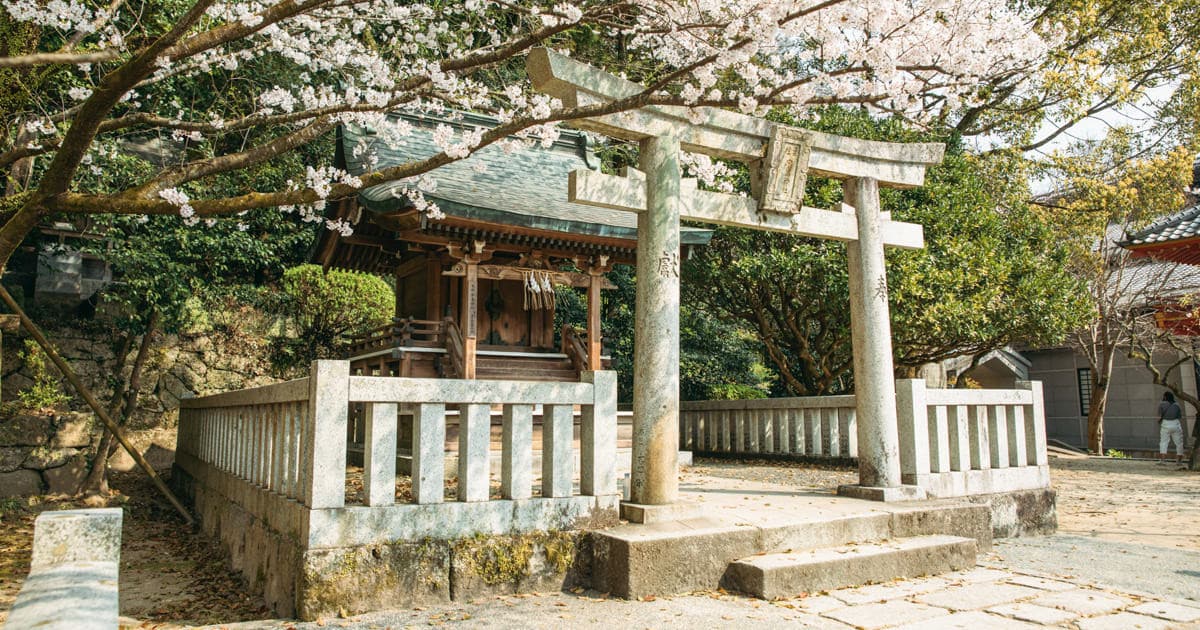
The shrine building is smaller than the main hall, but because it honors the god of sweets it has become a spot that pastry makers and sweet-loving travelers visit on purpose. Afterward, a plum-branch mochi (umegae mochi) back on the approach is especially fitting. One common mix-up is worth flagging: the small shrine beside Shinji Pond and the Taiko Bridge is not Nakajima Shrine but the auxiliary shrine “Shiga Shrine,” whose chief deities are the three Watatsumi sea gods. Its present building dates from 1458 (Choroku 2), the oldest surviving structure on the grounds of Dazaifu Tenmangu, and it is designated an Important Cultural Property.
Tenkai Inari Shrine
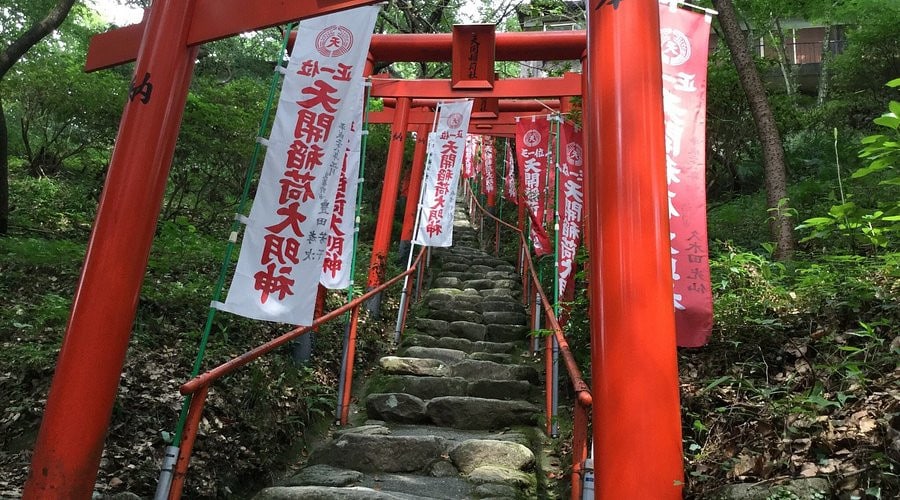
Tenkai Inari Shrine sits on the hill behind Dazaifu Tenmangu, reached by a walk of about 10-15 minutes up stone steps. A tunnel of vermilion torii gates lines the way, a mysterious and impressive scene like a miniature Fushimi Inari Taisha, and an insider spot for visitors who love photography.
The shrine honors the deity Inari, who presides over commercial prosperity and abundant harvests. The hall at the end of the torii tunnel is quiet and simple, and its high position gives views over part of Dazaifu city. Because it is tucked away, it has relatively few visitors, which makes it a good choice for travelers who want to avoid crowds and enjoy a peaceful visit.
How Much Does a Dazaifu Tenmangu Visit Cost? Omamori, Experiences and Excursion Passes
Worshipping at Dazaifu Tenmangu is completely free, and the grounds are open from about 6 a.m. to 7 p.m. (adjusted slightly by season), which sets it apart from many Japanese shrines and temples that charge admission. But if you want a deeper experience of Dazaifu’s culture and nearby sights, including omamori charms, fortune slips, traditional sweet-making experiences, excursion passes and guided tours, these extra costs are a part of your budget you should not overlook. Below are the most recommended spending items, so you can get a rough idea of how much to prepare before you set off.
Academic Charms and Ema Plaques: The Classic Souvenir for Exam Success
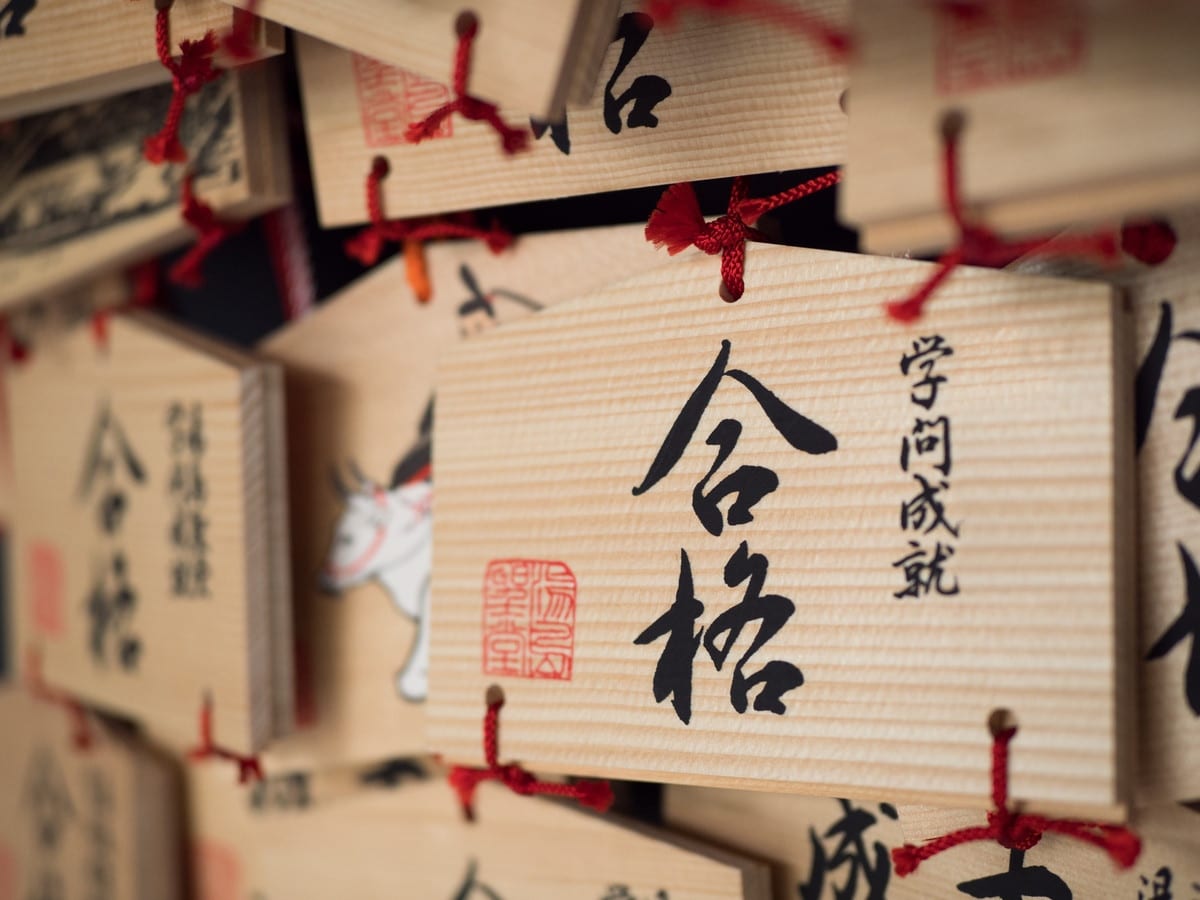
Dazaifu Tenmangu enshrines Sugawara no Michizane, the god of learning, so its omamori focus on academics. The academic success charm starts at a ¥1,000 donation, the academic pencil is ¥1,000, and the wish ema plaque is ¥1,000; write your wish on it and hang it on the ema rack. There are also health, traffic safety and misfortune-warding charms, which make good gifts. The amulet offices keep roughly the same hours as the shrine, and it is best to avoid long holidays and the January-March exam-season peak.
Every year from October 1 to 31 is the “Special Exam Success Prayer Festival” period, during which special ofuda talismans, special charms and special ema plaques are offered, and the main festival is held at the main hall on October 18.
Omamori to Buy at Dazaifu Tenmangu: Academic, Uso Bird and Limited Charms
Types of Dazaifu Tenmangu omamori listed on the official website include academic success, heart charm, dream charm, Golden Uso Happiness Charm, plum-fruit charm, health, career success, work, safe childbirth, recovery from illness, traffic safety, good fortune, misfortune-warding, all-direction protection and disaster-warding charms. The academic success charm is the top pick. The following are the donation amounts posted by the official amulet office; please go by what is posted on site.
- ⛩️ Academic success charm (Gakugyo Mamori): Brocade, Japanese-style and drawstring-pouch charms ¥1,000, steel charm ¥1,500; academic pencil (2B / HB / for mark-sheet exams) ¥1,000
- 🐦 Golden Uso Happiness Charm / wooden uso: Golden Uso Happiness Charm ¥1,500 (a good-luck bullfinch design); the wooden uso is offered at the Uso-kae ritual on January 7, with the price as posted by the amulet office
- 🌸 Plum-fruit charm / Health and Longevity Plum Charm: Plum-fruit charm and Health and Longevity Plum Charm ¥2,000 each, dream charm “Kanaeito” ¥2,000; heart charm, good-fortune charm and work charm ¥1,000
- 🚗 Misfortune-warding, all-direction protection, traffic safety and safe childbirth charms: traffic safety ¥1,000 (fixed type ¥1,500), misfortune-warding ¥1,500, all-direction protection ¥2,000, disaster-warding ¥1,000, safe childbirth and recovery from illness ¥2,000 each
- 📍 Where to get them: Several amulet offices stand from inside the Romon to around the main hall, with hours roughly matching the shrine’s opening and closing times. Exam season (January-March) is busier, so go early
Umegae Mochi Experience: Dazaifu’s Signature Post-Prayer Sweet
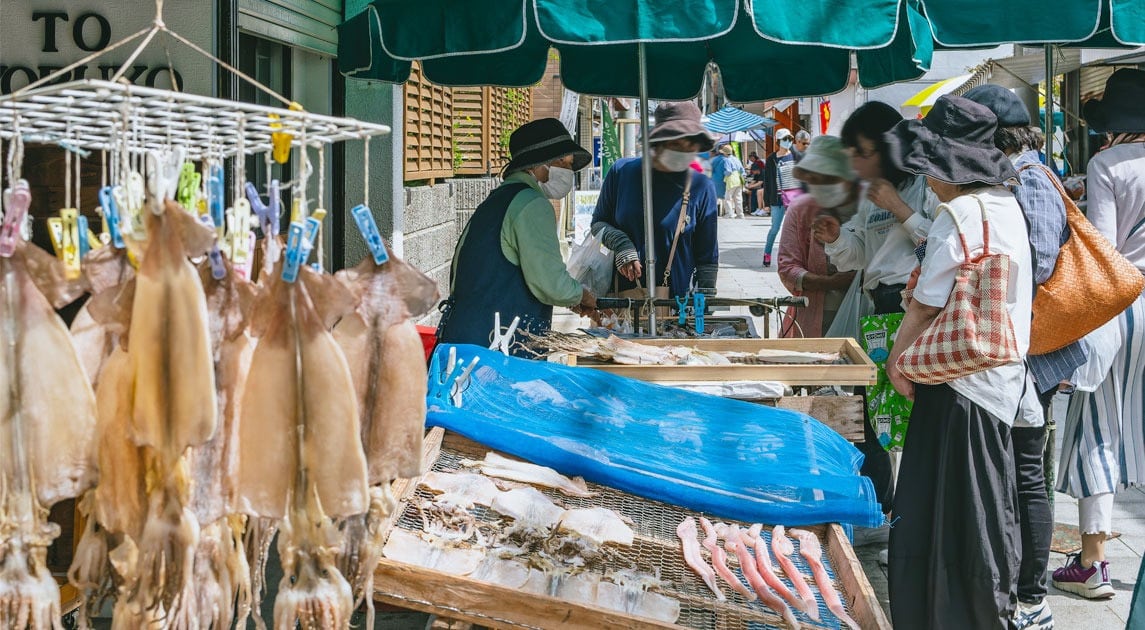
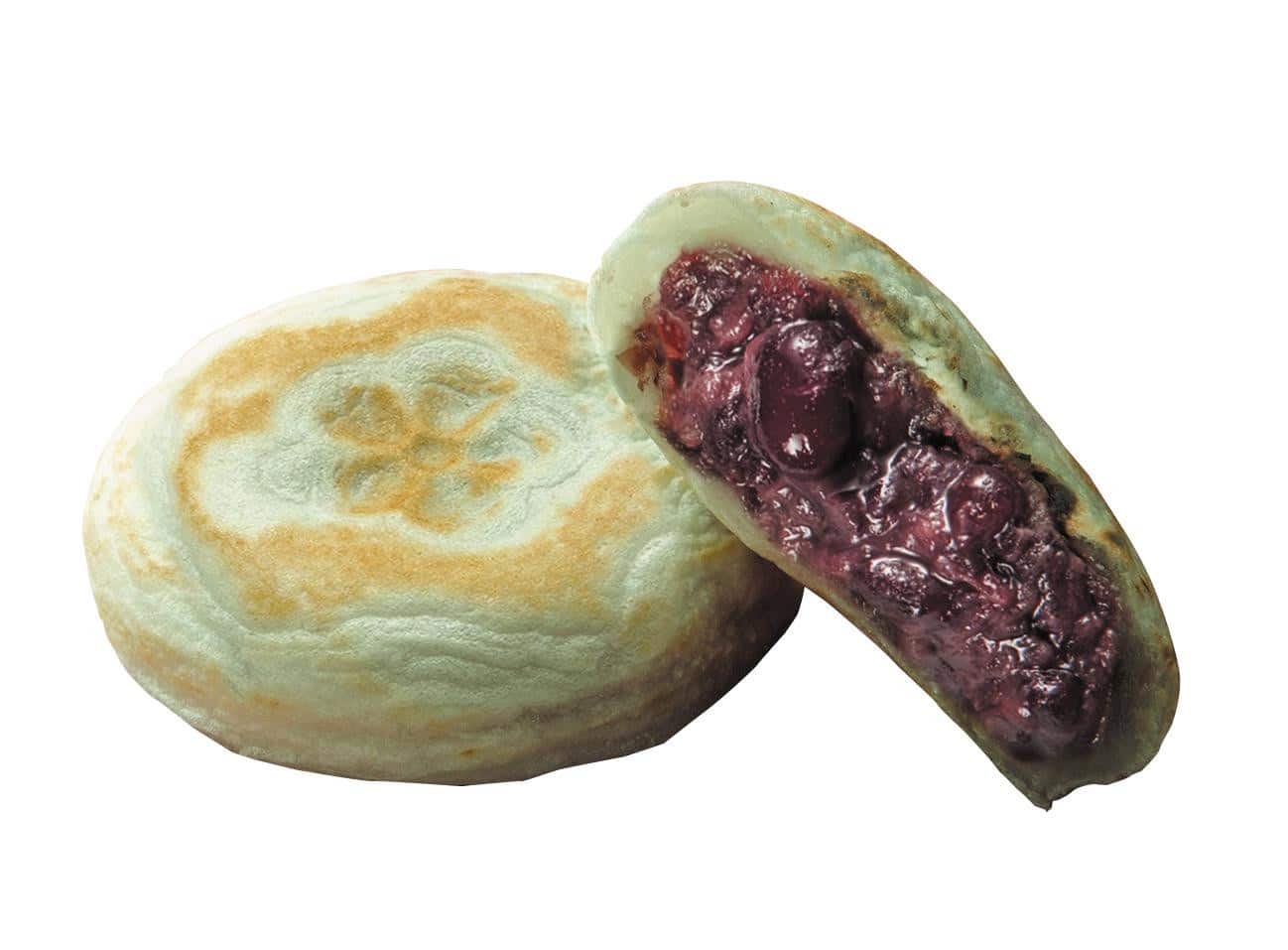
Umegae mochi is the everyday treat you must try at Dazaifu Tenmangu, at about ¥130 each. This grilled cake wraps a mochi skin around sweet red bean paste and is pressed into the shape of a plum blossom. Long-established shops along the approach, such as Kasanoya and Baien Kashidokoro, sell it, with a crisp, fragrant crust and a smooth, sweet filling.
Some shops offer a hands-on umegae mochi-making experience (prices and time slots as posted by each shop), where you work the iron mold yourself and enjoy making a traditional sweet. It suits families and craft lovers and is also a popular social media activity.
-Klook.jpg)
Dazaifu Excursion Pass: A Handy Ticket Linking Hakata, Tenjin and Dazaifu
For trips between central Fukuoka and Dazaifu Tenmangu, we recommend the Nishitetsu “Dazaifu-Yanagawa Sightseeing Ticket” (Kankō Kippu). It includes a round-trip train ticket from Nishitetsu Fukuoka (Tenjin) or Yakuin Station, a Yanagawa boat ride and discount coupons along the route. It is valid for 2 days, and you can buy a digital version in the “my route” app or book it on platforms such as Klook. If you want to see both Dazaifu and Yanagawa, one ticket links the two places. If you prefer buses, choose the “Fukuoka City + Dazaifu Liner Tabito 1-Day Pass,” ¥2,100 for adults, with unlimited rides on city routes in Fukuoka and the “Tabito.”
Half-Day and Full-Day Guided Tours of Dazaifu Tenmangu: A Deeper Look at History and Faith
For travelers who want to understand the history and religious culture of Dazaifu Tenmangu more deeply, many half-day and full-day tours with Chinese- or Japanese-language guides are available. Prices range from ¥3,000 to ¥8,000 depending on what is included, and tours usually feature a professional guide, recommendations for shops on the approach, a combo ticket to the Kyushu National Museum, and even packages that add side trips such as a Yanagawa boat ride or the Yufuin hot springs.
The advantage of these tours is that a guide can explain Michizane’s life story, the origin of the flying plum legend and historical context such as the ruins of the Dazaifu government office, which helps you grasp the cultural depth of this thousand-year-old shrine far better than a quick self-guided walk-through. Book ahead on platforms such as KKday and Klook, and note that meeting points are mostly near Hakata or Tenjin Station, which makes it easy to connect with accommodation in central Fukuoka.
Frequently Asked Questions
Q: What are the opening hours of Dazaifu Tenmangu?
Dazaifu Tenmangu is open every day of the year. According to the official website, the gates open at 6:00 from the spring equinox and 6:30 from the autumn equinox, and close at 19:00 in April-May and September-November, 19:30 in June-August and 18:30 in December-March. The prayer reception office accepts requests from about 8:45 to 17:00. Temporary worship hours are announced separately during special festivals, so check the official website before you go.
Q: How much is admission to Dazaifu Tenmangu?
Worshipping at the main hall is completely free. Only the Treasure Hall requires a separate ticket, ¥500 for adults, with discounted prices for children and students. Other sights on the grounds, such as Nakajima Shrine and Tenkai Inari Shrine, are free to visit.
Q: What is the easiest way to get from Hakata Station to Dazaifu Tenmangu?
We recommend the Dazaifu Liner bus “Tabito,” which runs directly from Hakata Bus Terminal in about 40 minutes for ¥800. Alternatively, take the subway to Tenjin and transfer to the Nishitetsu train, changing at Futsukaichi. The Nishitetsu portion costs ¥420 and the whole trip takes about 50 minutes.
Q: When is the best season to visit Dazaifu Tenmangu?
The plum blossom season from late January to early March is the most recommended time, when about 6,000 plum trees bloom in turn on the grounds. Cherry blossom viewing in April and autumn leaves in November each have their own charm, so choose according to your preference.
Q: Is the restoration of the main hall finished? Can I still worship at the temporary hall?
The “Reiwa Major Restoration” of the main hall began in spring 2023, and frontal worship at the main hall resumed on September 19, 2026, after about three and a half years. The temporary hall (kari-den), designed by architect Sou Fujimoto with a roof covered in plants, is currently being dismantled. Individual prayer services are held at the Seishinkan ceremony hall from 9:00 to 16:30 with no reservation required; sign up at the prayer reception office inside the Romon.
Q: Are there any taboos or etiquette points for visiting Dazaifu Tenmangu?
Purify your body and mind at the temizuya before worship. The center of the torii gate is the path of the deity, so walk to one side. Please do not make loud noise on the grounds, and the sacred ox statues may be touched but not sat on, out of respect for the sacred space.
Q: Are there recommended foods along the Dazaifu Tenmangu approach?
Among the roughly 90 shops on the approach, umegae mochi, Ichiran’s “Goukaku” (exam-success) ramen, the Starbucks designed by Kengo Kuma, the recently talked-about new shop Kayanoya and the popular pork buns (butaman) at Yangtze (Yosuko) are all must-eats recognized by locals and travelers alike.