
Beppu Hells Tour Guide: Where to Start and Why Japan’s Geothermal Wonders Are Worth It
The Beppu Hells Tour (“Jigoku Meguri”) is a circuit of seven geothermal hot-spring wonders in Beppu, Kyushu, suited to travelers who love geothermal scenery, family outings and food souvenirs, and it can be finished in half a day.
The Origin and History of the Beppu Hells
The Beppu Hells tour grew out of the awe local people felt in the Edo period toward geothermal eruptions, boiling mud and sulfurous gas, and the sights were called “jigoku” (hells) because they looked like scenes from Buddhist hell paintings. The tour now covers seven hells in two areas, the “Kannawa Jigoku association” and the “Shibaishi Jigoku association.”
There used to be talk of “eight great hells,” but Yama Jigoku has closed (the official closing date has not been announced), and the current official version is seven. These hells are not for bathing; they are kept in their original erupting state for visitors to view up close, and are among the most representative experiences in Beppu sightseeing.
Japan’s No. 1 Hot Spring Output: The Striking Numbers
Beppu has the highest hot-spring output in Japan, with more than 2,200 registered sources in the city alone, and its annual output accounts for about one tenth of the national total. It has more than ten spring types, covering almost every hot-spring category in Japan, which is why Beppu is also called the “department store of hot springs.”
The geothermal heat used in the Hells tour is a direct display of this enormous underground energy: spring water and steam near 100 degrees Celsius create distinctive visual wonders such as the cobalt blue of Umi Jigoku and the crimson red of Chinoike Jigoku, letting visitors see the geothermal power of this hot-spring country with their own eyes.
How Do the Hell Springs Relate to the Eight Beppu Hot Spring Areas?
The “Beppu Hatto” (Eight Beppu Onsen) are eight distinctive hot-spring areas in Beppu: Beppu Onsen, Hamawaki Onsen, Kankaiji Onsen, Horita Onsen, Myoban Onsen, Kannawa Onsen, Shibaishi Onsen and Kamegawa Onsen, which are areas where you can actually bathe, whereas the “hells” are high-temperature geothermal pools that cannot be bathed in and are used only for viewing and steam cooking.
The seven hells lie mainly within the Kannawa and Shibaishi hot-spring areas. After visiting the hells, you can walk straight into a public bath or ryokan in the Kannawa Onsen street nearby, enjoying geothermal wonders and hot-spring relaxation in one trip.

How to Get to the Beppu Hells: A Complete Guide to Transportation and Ticket Costs
The seven Beppu Hells are spread across two areas, “Kannawa” and “Shibaishi,” about 2 to 6 km from JR Beppu Station, so check which area the hells you want to visit are concentrated in before deciding how to get there. Most travelers focus on the Kannawa group (Umi Jigoku, Oniishibozu Jigoku, Kamado Jigoku, Oniyama Jigoku and Shiraike Jigoku), where bus stops are dense and which makes the most convenient starting point.
The Four Transportation Options at a Glance
The Kamenoi Bus “My Beppu Free” one-day pass costs ¥1,100 for adults and ¥550 for children (two-day pass ¥1,700 / ¥850), covering the Beppu city area and the Kannawa hells area, with discounts on admission tickets (¥200 for adults, ¥100 for children). It is the best value, and we suggest buying it at the Beppu Station counter.
A regular bus from Beppu Station West Exit to Kannawa costs about ¥390; a taxi takes about 15 minutes and costs ¥1,500-2,000; driving via Beppu IC takes about 10 minutes and lets you stop by Yufuin on the way.


What Are the Must-See Sights in the Beppu Hells Guide? The Seven Hells and Nearby Highlights Explained
Below, in order of the Kannawa and Shibaishi areas, we introduce the seven hells and the must-visit highlights nearby.
Umi Jigoku (Sea Hell): Cobalt-Blue Waters and the Largest of the Hells
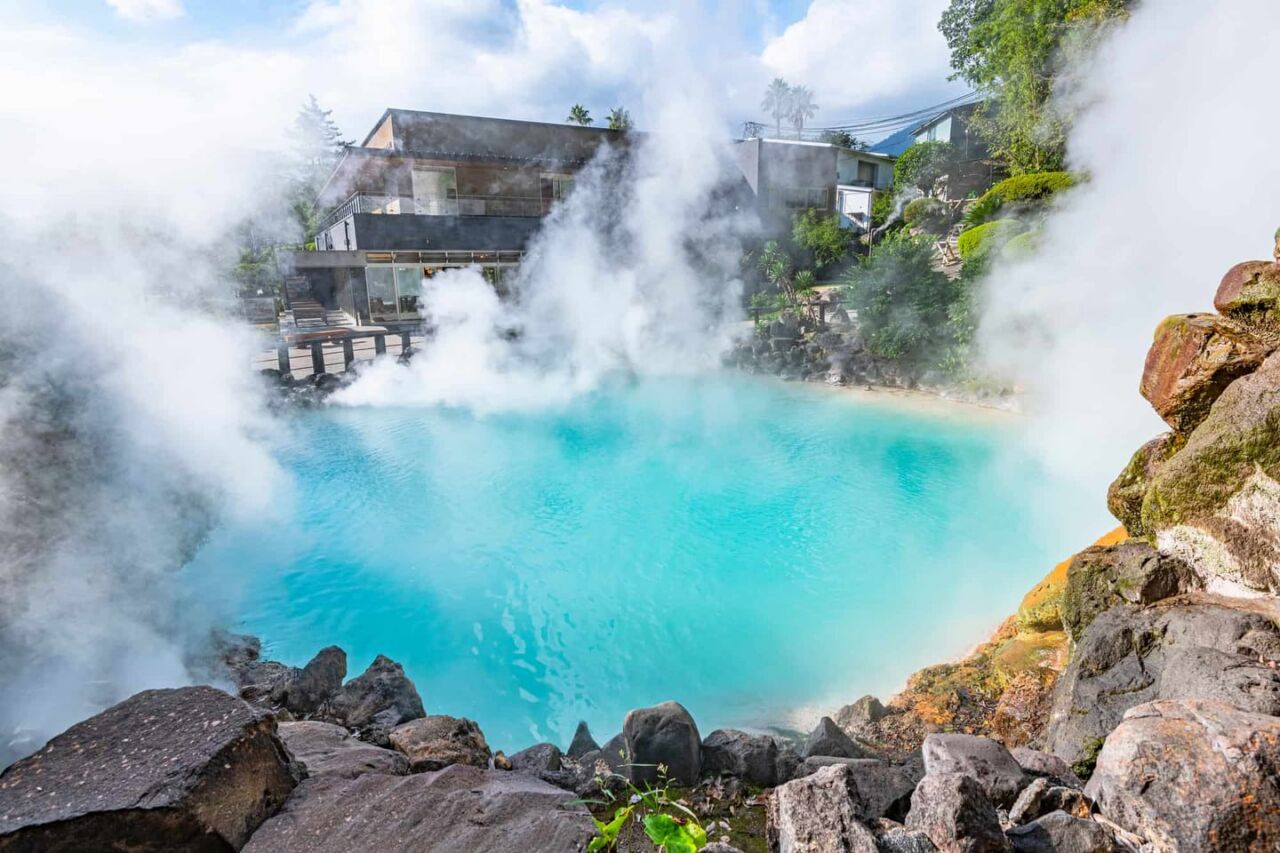
Umi Jigoku is the largest of the Beppu Hells and the must-visit first stop, with a water temperature of 98 degrees; its blue color comes from iron sulfate, and it looks like a dreamy cobalt blue in sunlight. The grounds include a hot-spring water lily greenhouse, a miniature “small Blood Pond” and a free foot bath.
The century-old “Gokuraku Manju” shop in the grounds steams and sells its buns fresh using geothermal steam, and the red bean filling is a popular souvenir. It is open 8:00-17:00 all year, with admission at ¥500 for adults and ¥250 for children, and free parking is available.

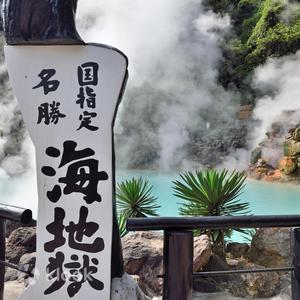
Oniishibozu Jigoku: The Sight of Boiling Gray Hot Mud
Oniishibozu Jigoku is the only one of the seven hells where you can see boiling gray mud bubble and erupt. Gas bubbles keep rising on the mud’s surface because of the high heat, then burst and re-form into round balls that look like a monk’s shaved head, which gave it its name. The mud reaches 99 degrees, and visitors watch the bubbling up close from behind a railing, the most visually striking and most soothing stop.
The site is small and can be seen in about ten minutes on foot. It sits right next to Umi Jigoku and Kamado Jigoku and is good as the second stop of a Kannawa itinerary. It is open all year, and a single-hell ticket costs ¥500 for adults and ¥250 for children.
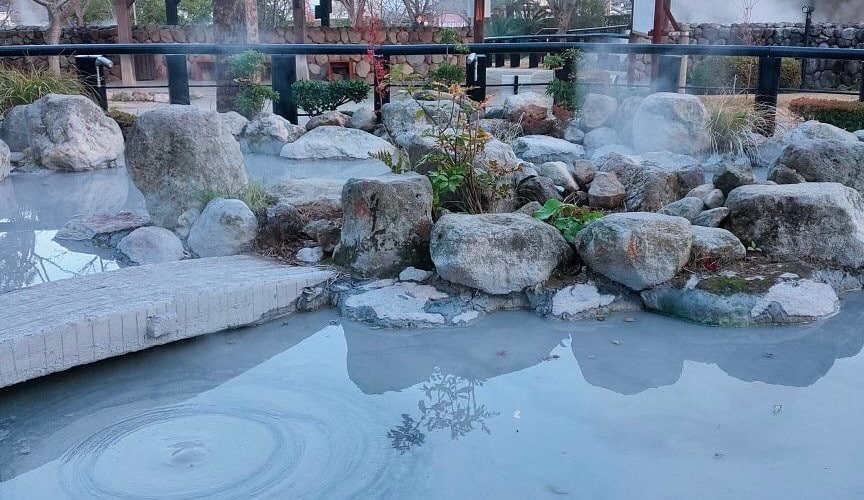
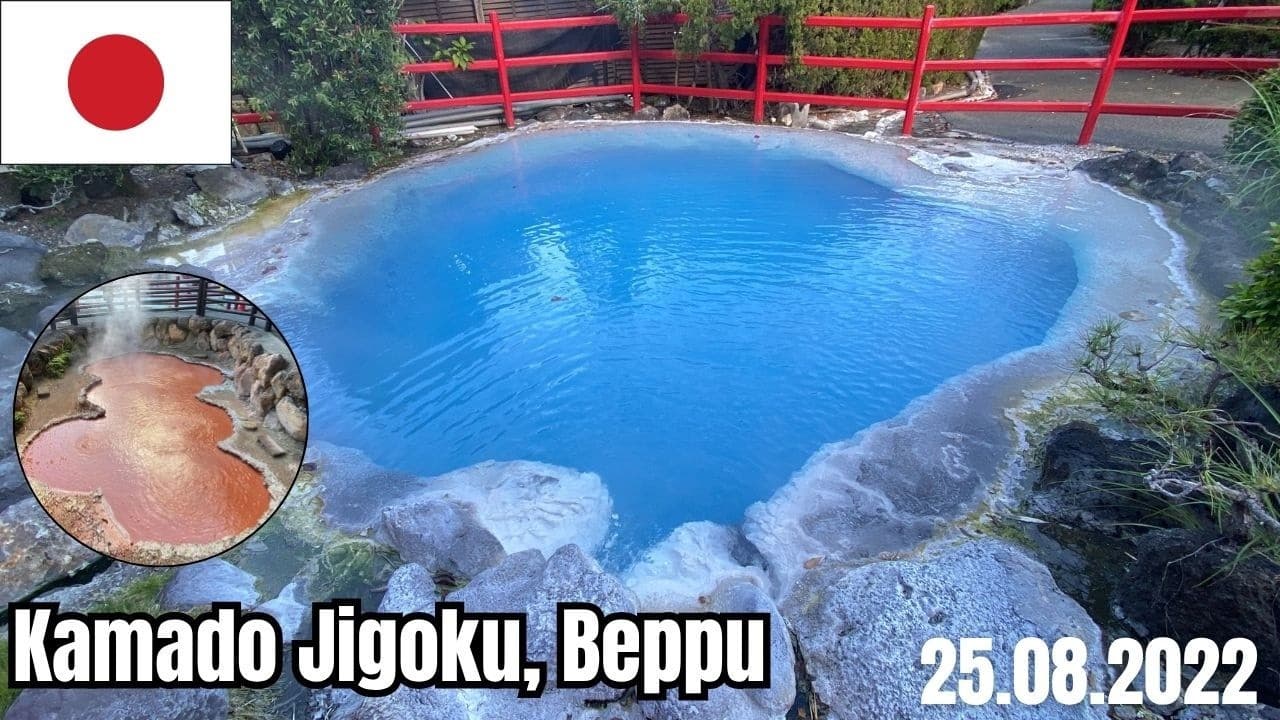
Kamado Jigoku: Multicolored Springs and Plenty of Hands-On Experiences
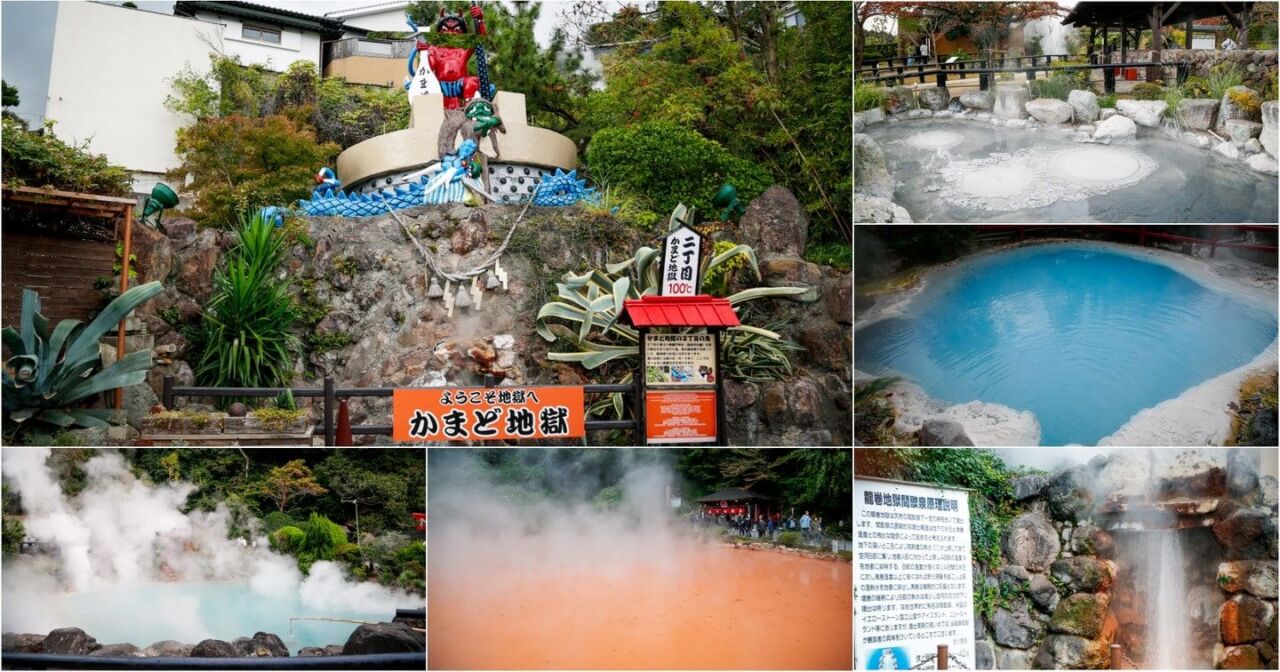
Kamado Jigoku is divided into areas from No. 1 to No. 6, each with a different spring color, from gray-white and cobalt blue to brick red, ideal for photos and geological exploration. There are plenty of hands-on experiences: touch the hot-spring steam, drink the spring water, steam your face for skincare, and buy freshly cooked hot-spring eggs and hot-spring corn.
The giant red-demon statue at the entrance is a popular photo landmark and comes from the old name for this place, “Kamado Jigoku” (hearth hell). It is open 8:00-17:00, with adult admission at ¥500, and we suggest staying 30-40 minutes.
-Klook.jpg)
Oniyama Jigoku: A Paradise Where About 70 Crocodiles Are Raised With Hot-Spring Heat
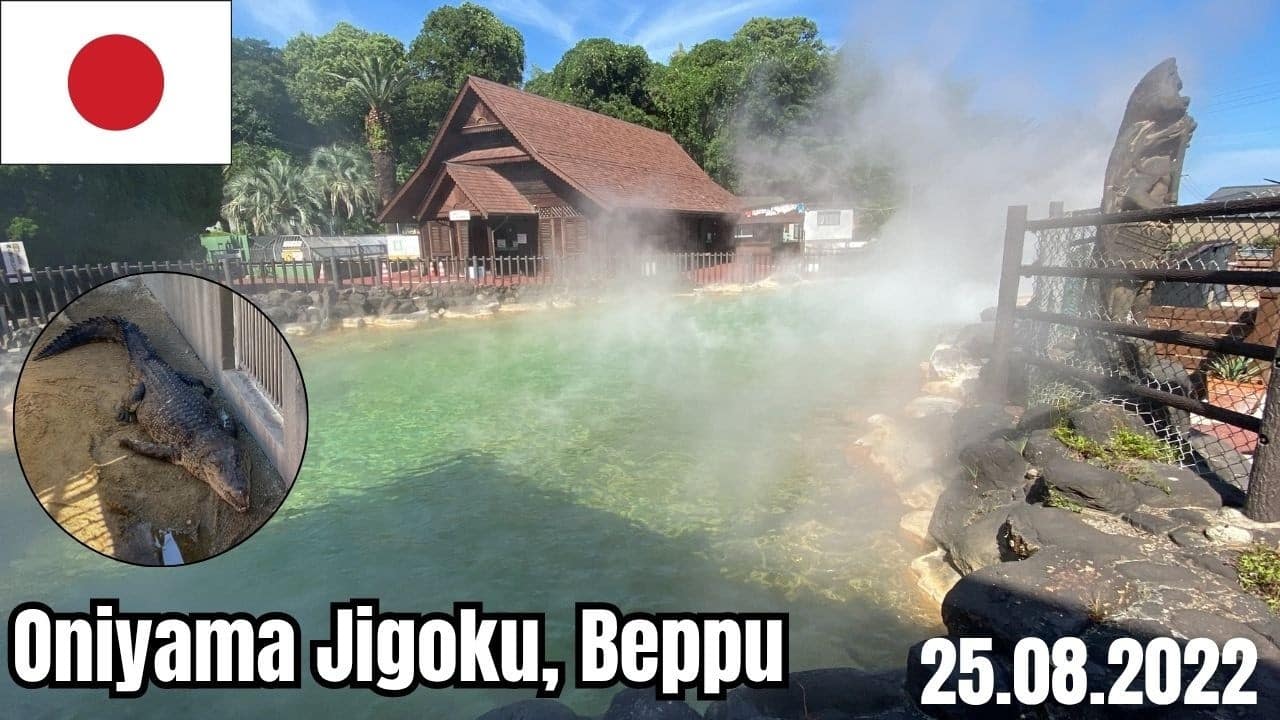
Oniyama Jigoku is the first place in Japan to raise crocodiles using geothermal hot-spring heat. Siamese crocodiles were introduced starting in the Taisho era, and the park now keeps about 70 crocodiles of various species, including Nile crocodiles and American alligators. The imposing crocodile pool is the most popular of the seven hells with families and animal lovers.
A crocodile feeding show is held at 10 a.m. every Saturday and Sunday, with a tense and thrilling atmosphere. The park also has a small crocodile museum, good for educational family fun. It is open 8:00-17:00, a single-hell ticket costs ¥500 for adults, and we suggest staying 20-30 minutes.
Shiraike Jigoku: A Quiet Blue-White Japanese Garden Hideaway
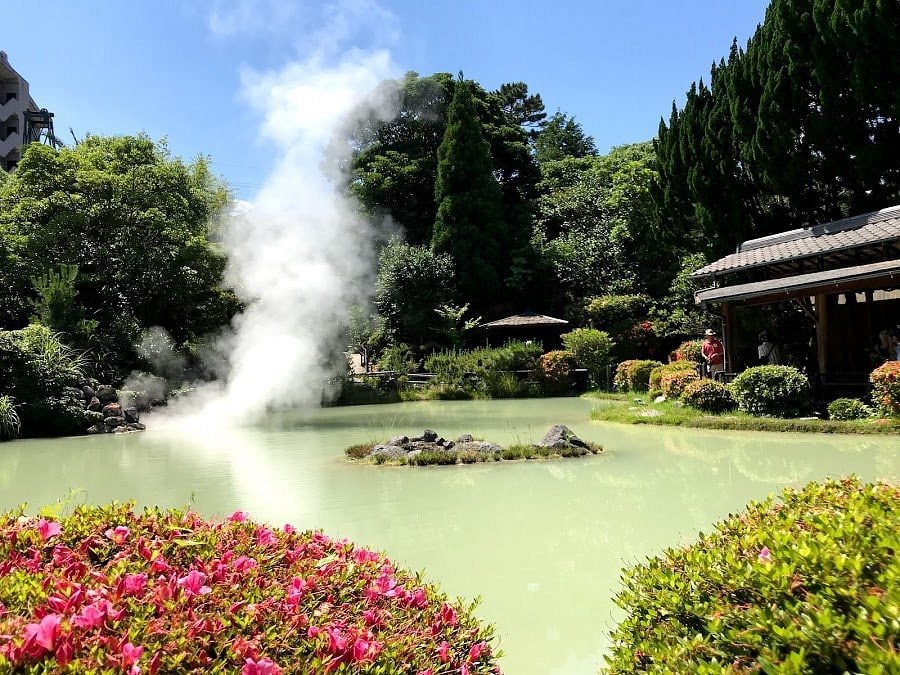
Shiraike Jigoku is known for its tranquil and elegant Japanese garden scenery. The spring water is clear and colorless when it emerges, and as temperature and pressure drop suddenly, silica precipitates, forming a distinctive milky white tinged with blue-green, in sharp contrast with the strong colors of the other hells, for a relatively quiet and relaxing atmosphere.
The grounds have a tropical fish aquarium that raises rare freshwater species such as Amazon arapaima grown with hot-spring heat. Pine trees and stone lanterns around the site give it the charm of a classical Japanese garden. It is open 8:00-17:00, a single-hell ticket costs ¥500 for adults, and we suggest staying 20 minutes.
Chinoike Jigoku (Blood Pond Hell): The Crimson Wonder of Japan’s Oldest Natural Hell
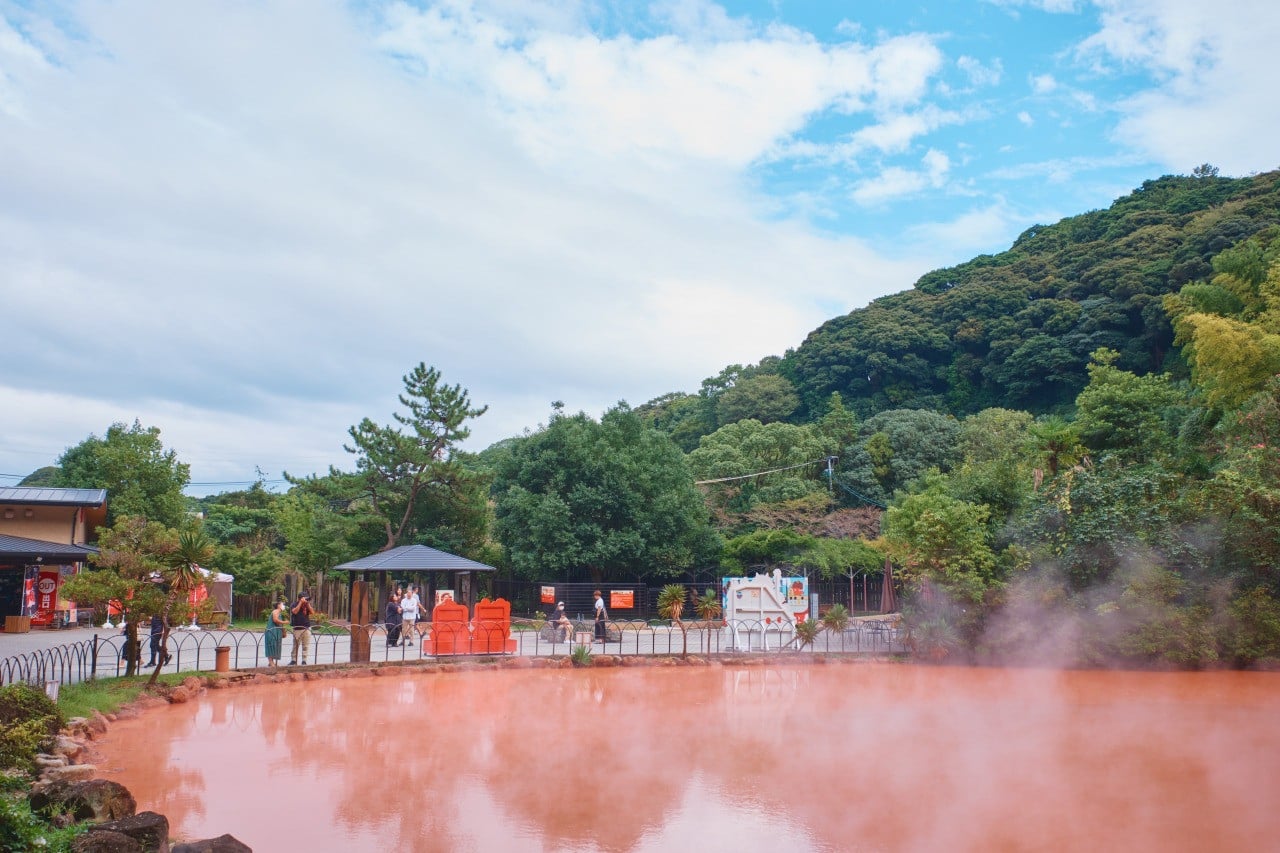
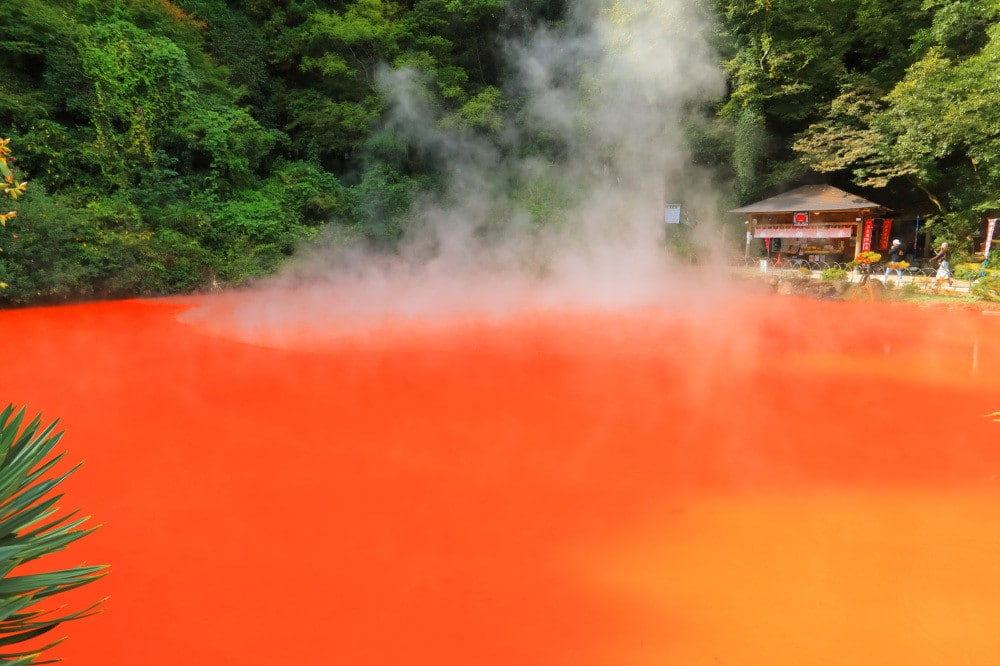
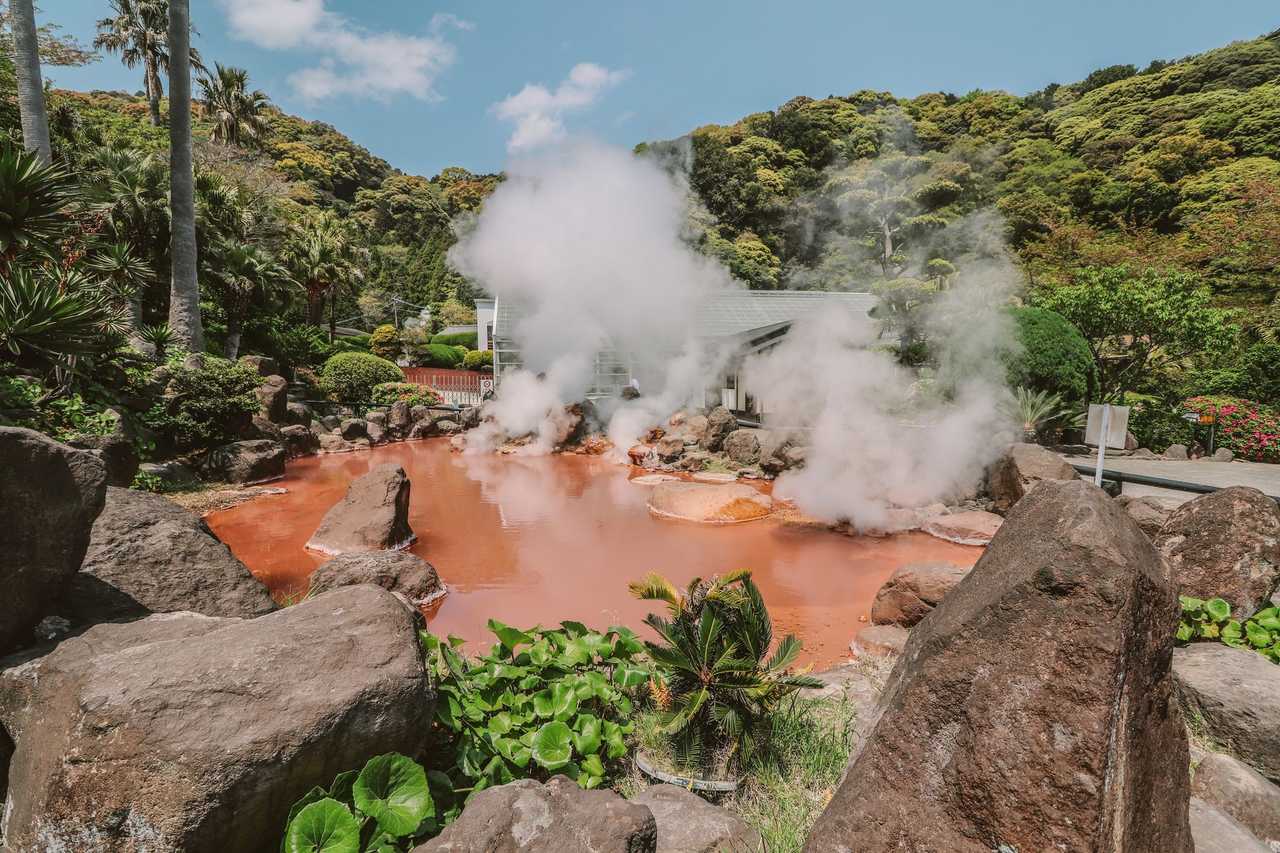
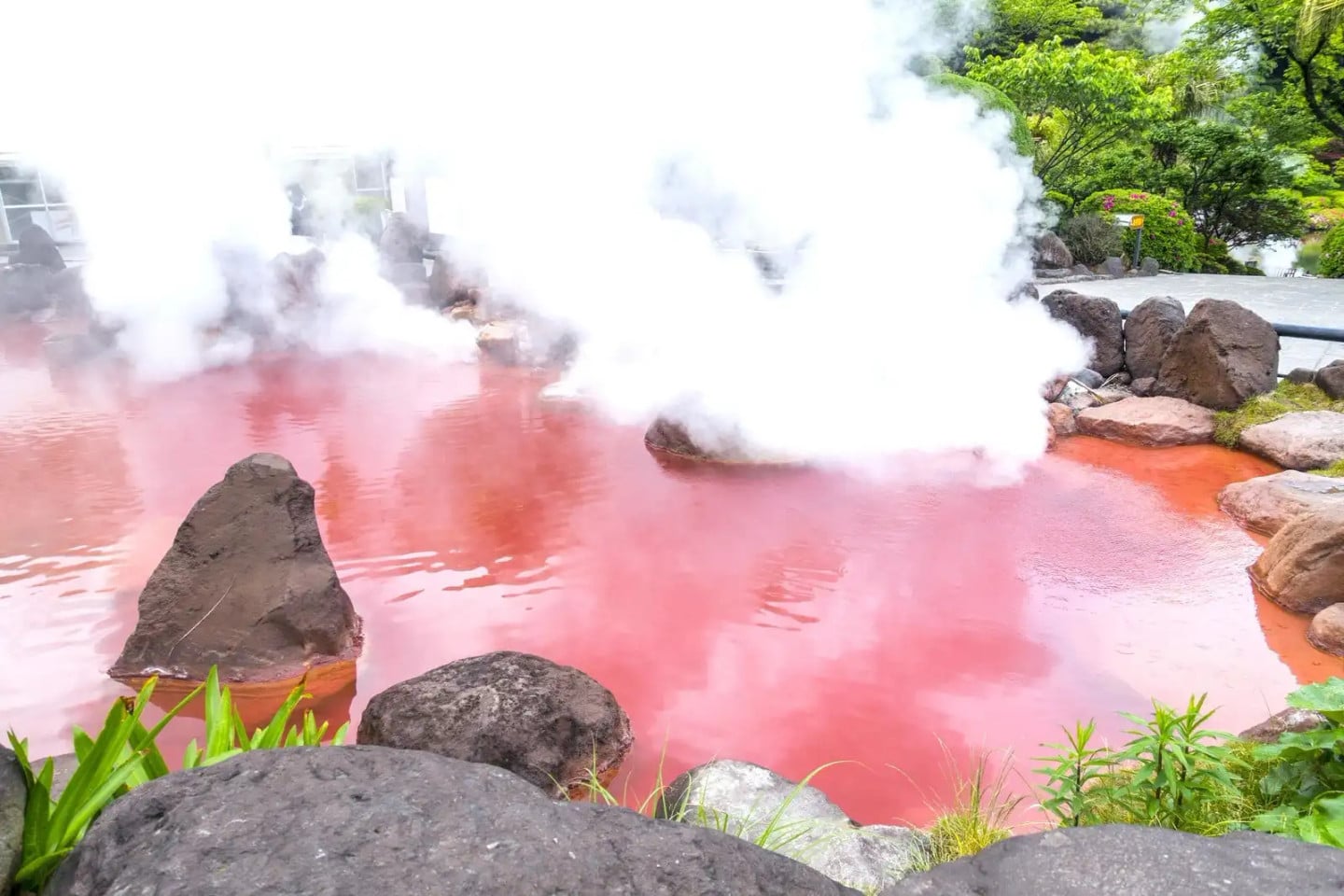
Chinoike Jigoku is the oldest natural hell recorded in Japanese historical documents, already described in the Nara-period “Bungo no Kuni Fudoki.” The water takes on a deep blood-red color because it is rich in iron oxide and magnesium oxide, and steam hangs over the pond all year. It is the most recognizable of the seven hells and is also an officially designated National Place of Scenic Beauty.
The grounds sell “Blood Pond Ointment” made from the pond’s red clay, said to soothe skin problems such as eczema and athlete’s foot, and there is also a limited-edition red soft-serve ice cream from Blood Pond to try. It is open 8:00-17:00, and a single-hell ticket costs ¥500 for adults.
Tatsumaki Jigoku: A Geyser Show Erupting Every 30 to 40 Minutes
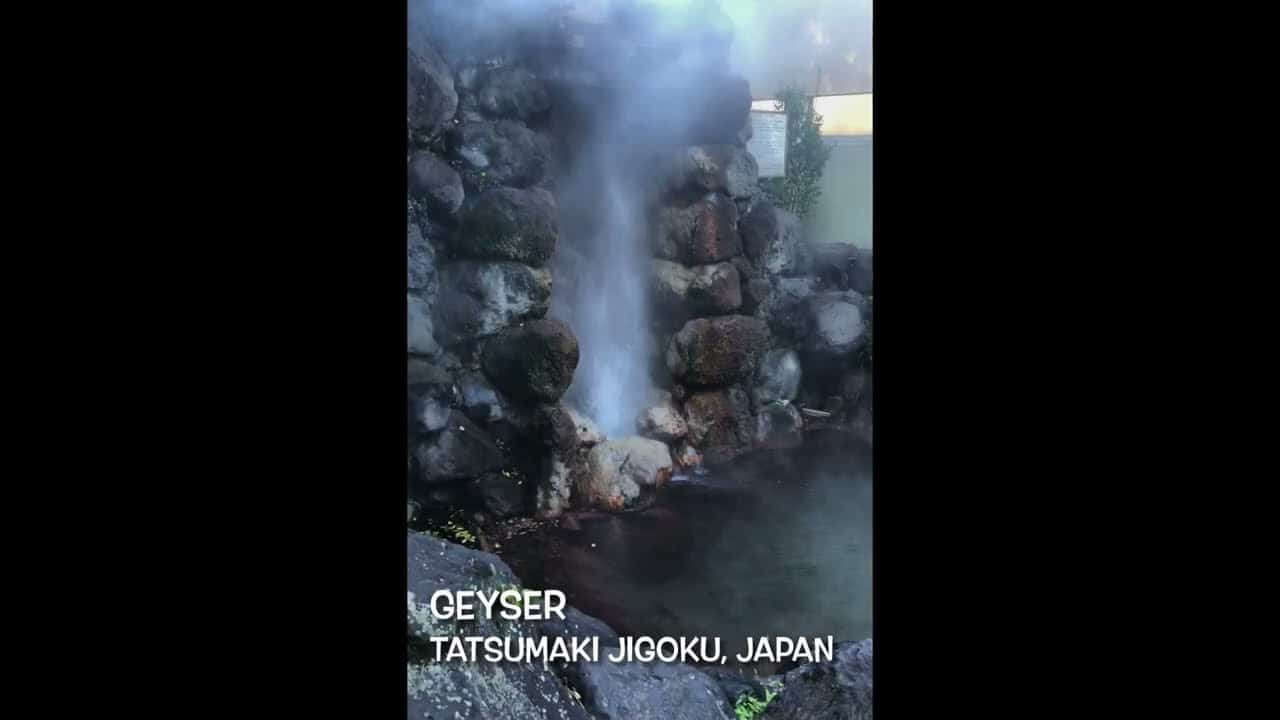
Tatsumaki Jigoku is the only geyser among the seven hells, erupting boiling spring water once every 30 to 40 minutes. The eruption could originally reach tens of meters high, but for safety the park added a stone roof to limit the height, and you can still feel the thundering roar and the shock of the rising water column.
Because eruptions do not happen at any moment, we suggest asking staff for the estimated time of the next eruption when you arrive; if the wait is long, you can walk first to the neighboring Chinoike Jigoku. An eruption lasts about 6 to 10 minutes, and a single-hell ticket costs ¥500 for adults, a fine closing highlight for your trip.
Jigoku-mushi Kobo Kannawa: Try Hell-Steam Cooking Yourself
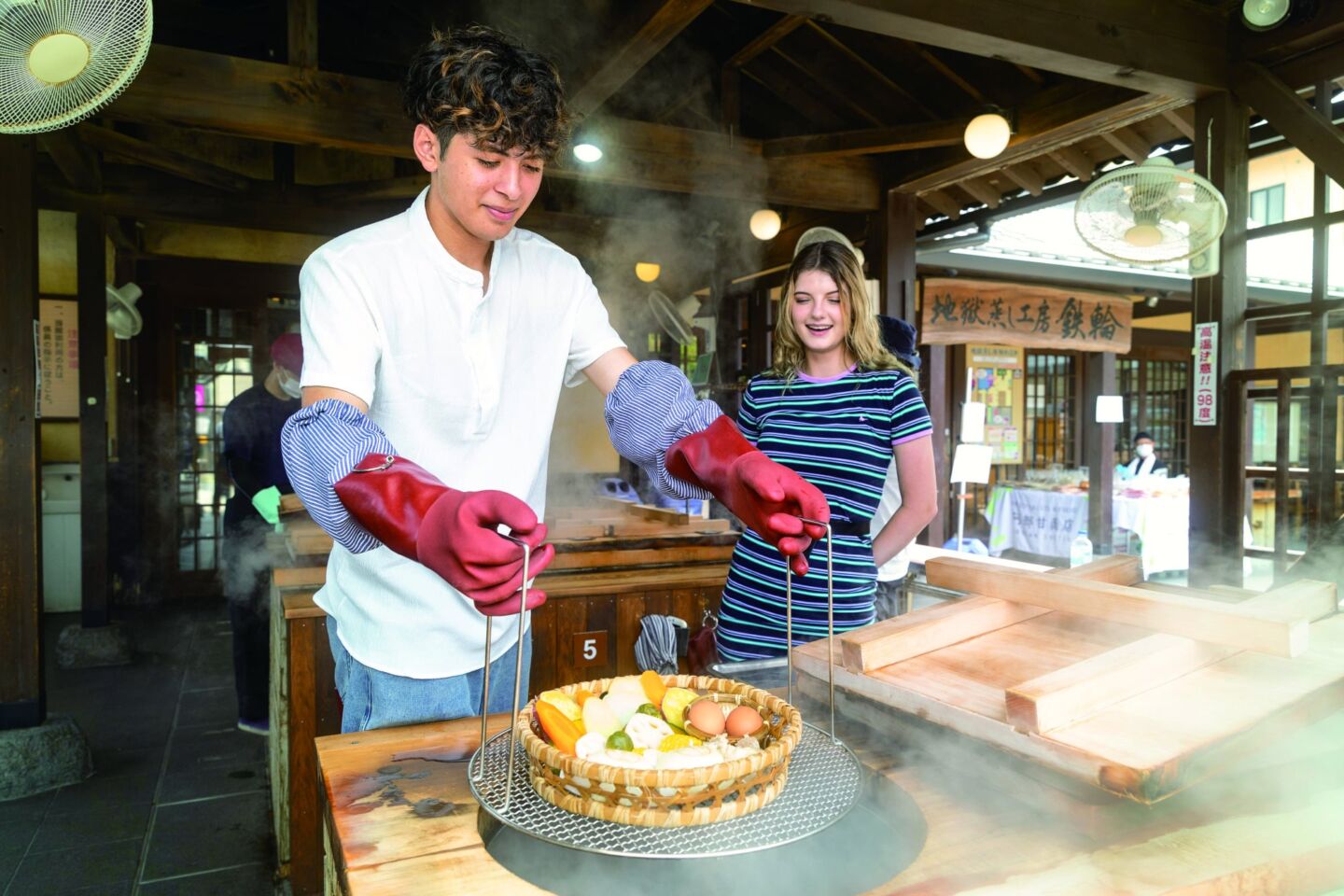
Jigoku-mushi Kobo Kannawa is a hands-on facility that cooks on the spot using geothermal steam from Kannawa Onsen. Visitors buy fresh ingredients such as seafood, vegetables and eggs, and staff put them in the steam oven; the food is ready in about 15 to 20 minutes, locking in the ingredients’ natural sweetness without any added seasoning.
Yuzu-kosho soy sauce is also sold on site for seasoning, and its lightly spicy, refreshing citrus aroma pairs surprisingly well with steamed food. It is open 10:00-19:00 (last steamer acceptance 18:00) and closed on the third Wednesday of each month; the steamer fee is ¥400 for 15 minutes, with ¥200 added for each 10 minutes over.
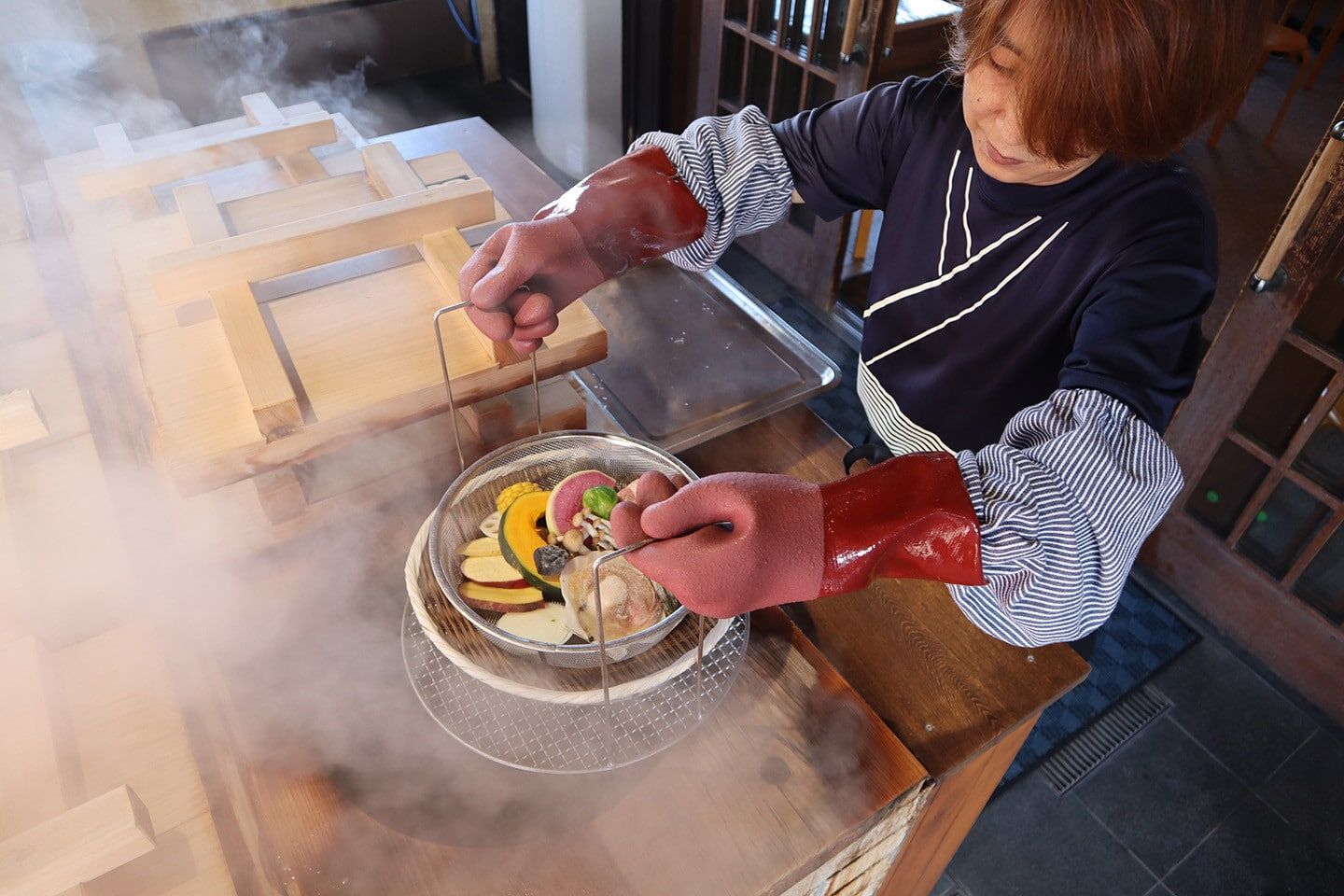
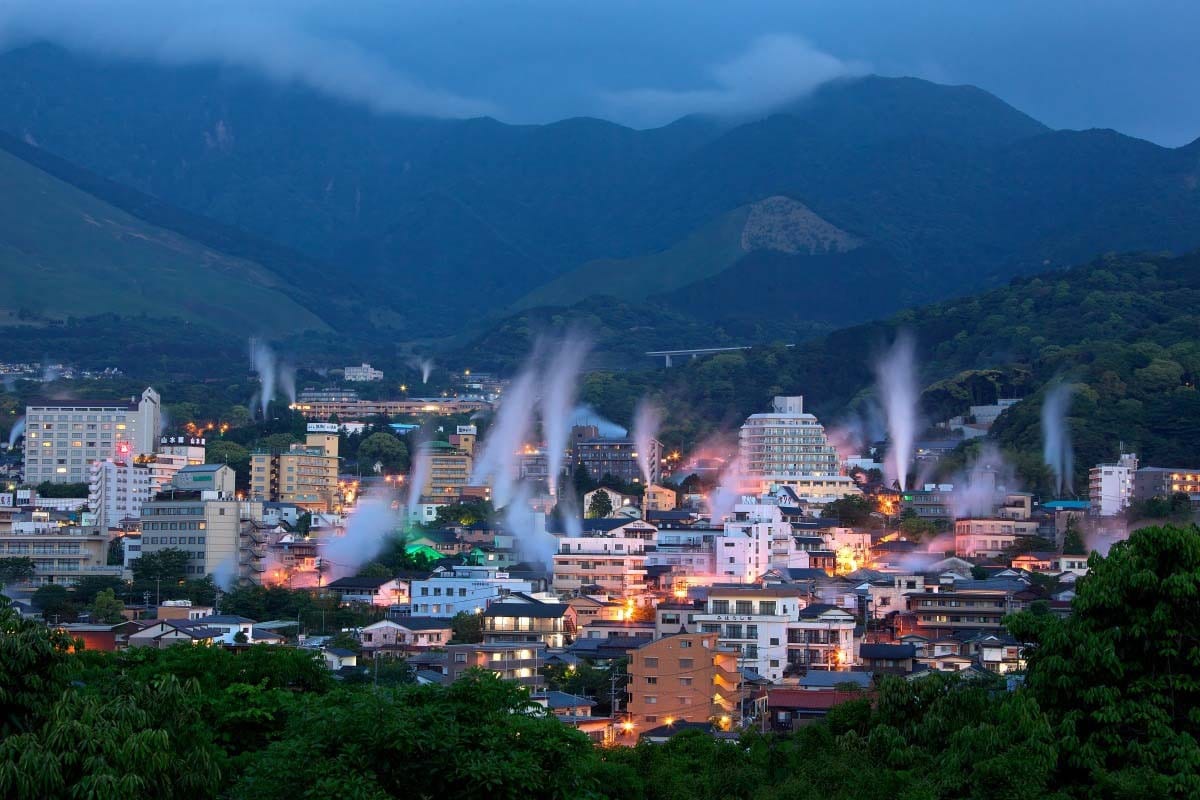
Kannawa Onsen Street: Nostalgic Hot-Spring Town Atmosphere in Drifting Steam
Kannawa Onsen Street is home to five of the Kannawa hells and is one of Beppu’s most hot-spring-town-like old streets, with white wisps of steam rising from drains, eaves and gaps in the ground everywhere along the street, a daily picture of local residents living alongside geothermal heat.
The street is lined with several public bathhouses (“yuya”), mostly priced at around ¥200 per person. Along the way you can also find statues related to “Aburaya Kumahachi,” the founder of Beppu’s tourism industry, who is hailed as the “father of Beppu tourism” and contributed greatly to promoting the Hells tour.
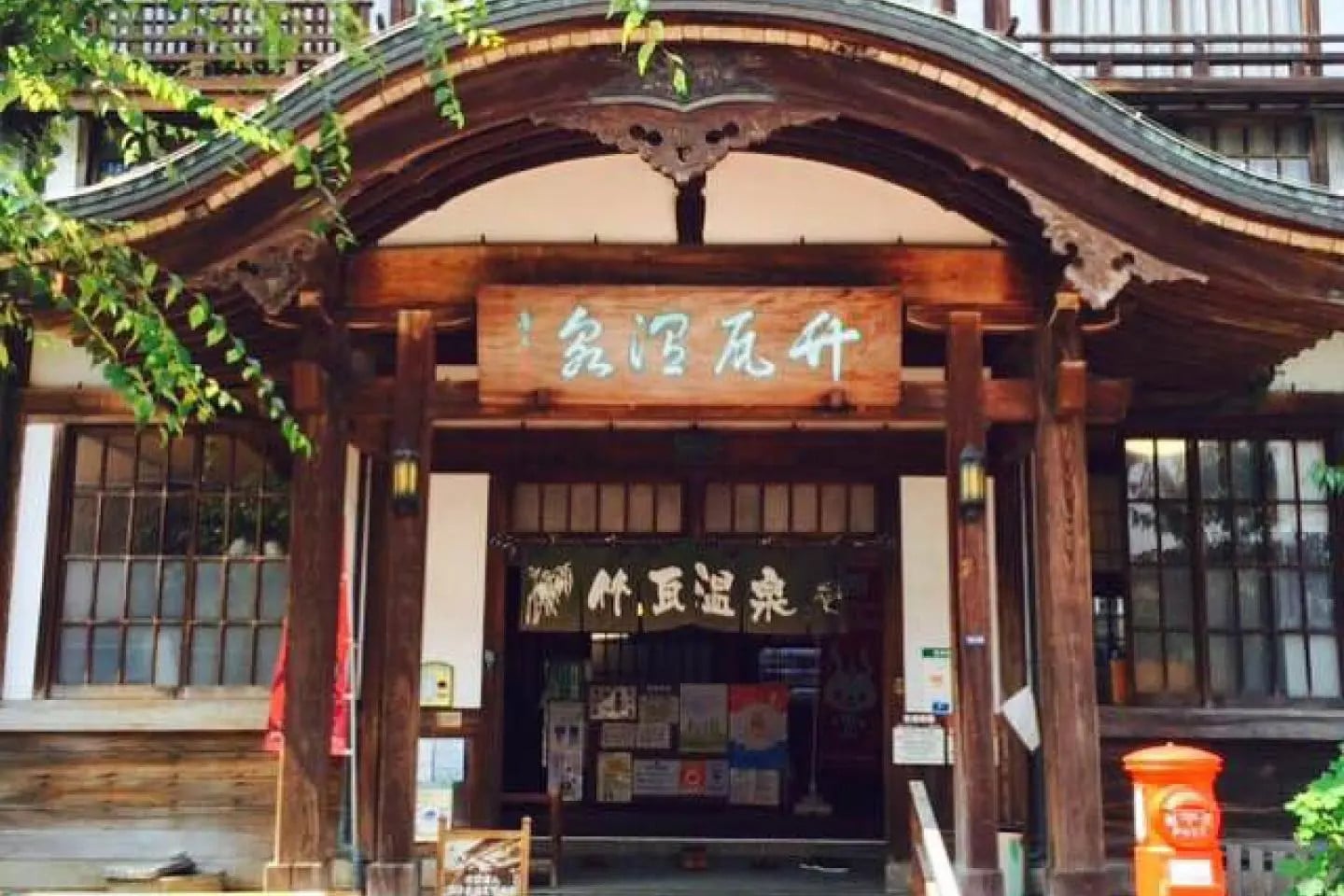
Takegawara Onsen: Beppu’s Most Representative Public Bathhouse
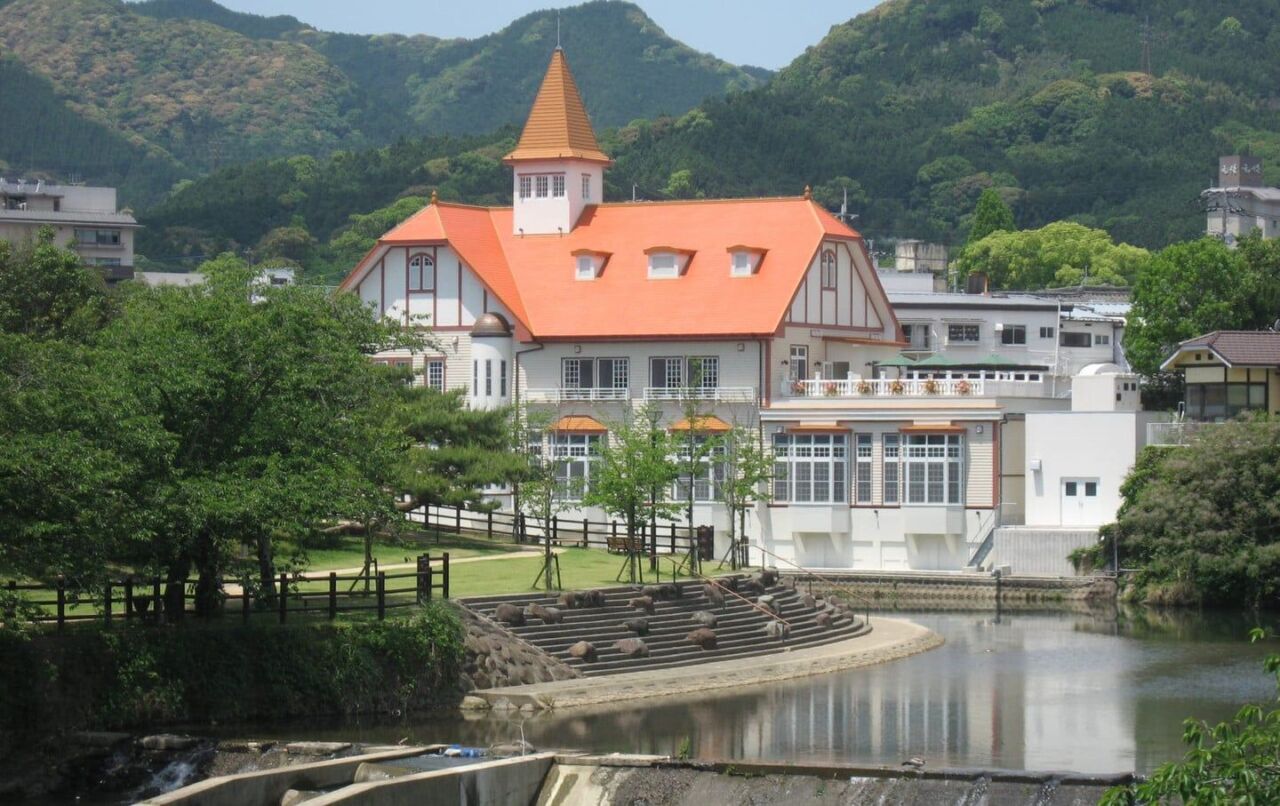
Takegawara Onsen was built in Meiji 12 (1879) and is Beppu’s oldest and most iconic public bathhouse. Its elegant wooden building with a karahafu gable is designated a national tangible cultural property, a landmark that always comes up when introducing Beppu’s hot springs.
Inside it offers ordinary hot-spring bathing (¥300 for adults) and Beppu’s unique “sand bath” experience (¥1,500 for adults), in which you lie in warm sand and an attendant covers you with fine sand for a hot compress with excellent sweating effects. It is open 6:30-22:30 (sand bath 8:00 to 22:30, last admission 21:30; closed on the third Wednesday of each month).
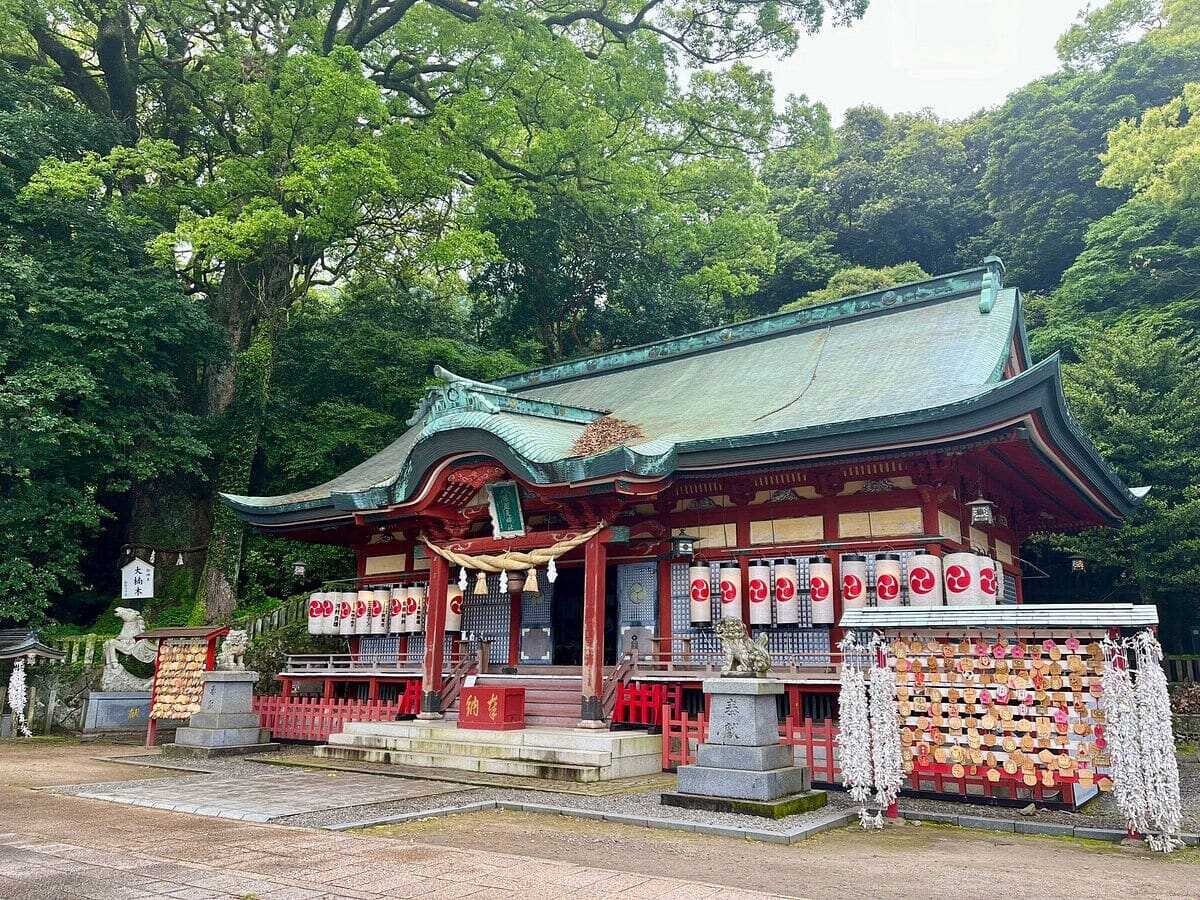
Hachiman Asami Shrine: The Guardian Shrine of Beppu’s Hot-Spring Town
Hachiman Asami Shrine stands in the Asami area near Beppu Station (about 5 km from Kannawa) and is a long-established guardian shrine of the Beppu area. It enshrines Emperor Ojin as its main deity and has long protected local residents and the hot-spring industry, and it is a hidden spot that many travelers deliberately climb the steps to visit.
Stone lanterns and torii line both sides of the approach, and climbing the stone steps you can look out over Beppu city from the grounds. Amulets and goshuin themed on safe hot-spring travel are available; from Beppu Station take a bus to Miyukibashi stop and it is about a 4-minute walk.
Okamotoya Baiten: The Original Home of Jigoku-mushi Pudding in Myoban Onsen
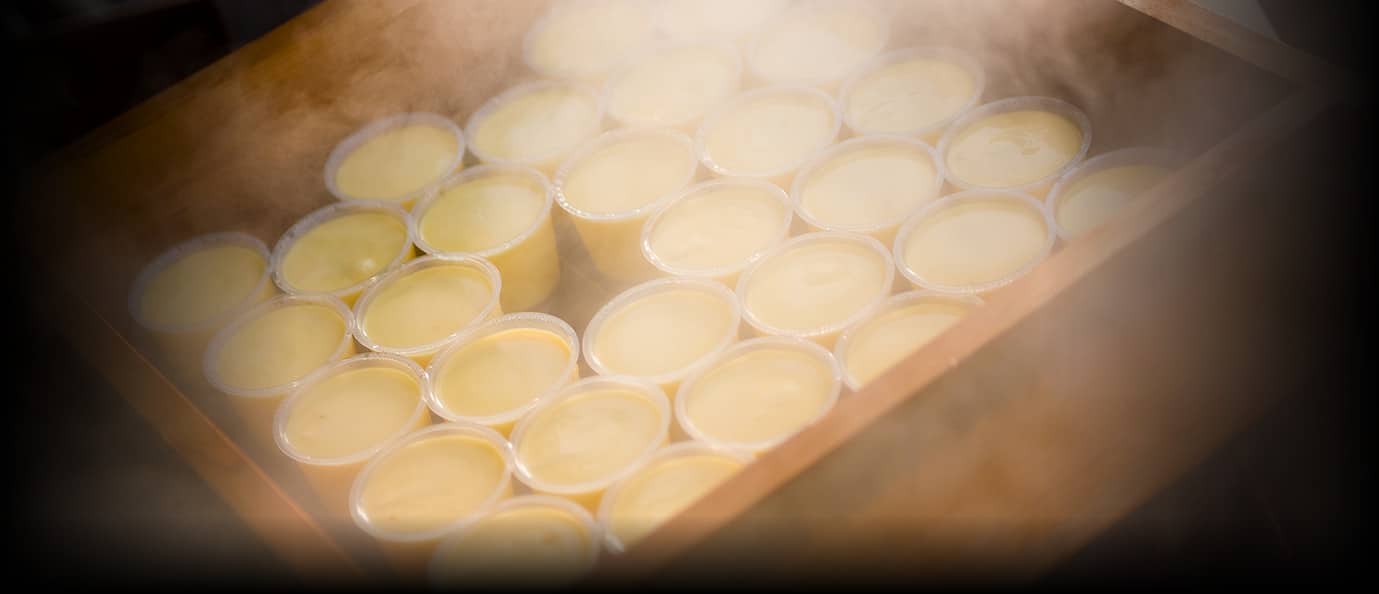
Okamotoya Baiten is in the Myoban Onsen area and is the originator of jigoku-mushi pudding. The pudding is slowly steamed at low temperature with hot-spring steam, giving a smooth, dense texture with a faint caramel aroma, a popular Beppu souvenir you must buy and often voted Beppu’s top representative dessert.
The shop also sells “Yu no Hana” bath salts unique to Myoban Onsen, natural mineral crystal hot-spring powder handed down since the Edo period. You can stop by on the way back to Beppu Station, timed with the bus, and finish on a warm note with freshly made pudding.
How Much Does the Beppu Hells Tour Cost? Admission, Combo Tickets and Guided Tours Summarized
The cost of the Beppu Hells tour is very flexible, from a budget approach of buying your own tickets and taking the bus to a deluxe day trip with a guide, transfers and lunch, depending on whether you want ease and freedom or to save time and effort. Below are the most common ways, including admission prices, bus passes, and the Hells tours that travelers often book on KKday and Klook, so you can mix and match flexibly by time and budget.
Jigoku Meguri Combined Admission Ticket: The Basic Money-Saving Option for Independent Travelers
There are seven Beppu Hells in total: Umi, Oniishibozu, Kamado, Oniyama and Shiraike Jigoku are concentrated in the Kannawa area, while Chinoike and Tatsumaki Jigoku are farther away around the Chinoike Jigoku bus stop. The combined ticket from February 2025 is ¥2,400 for high school students and above and ¥1,200 for junior high and elementary school students, valid for two days, which is better value than ¥500 for a single hell.
With the combined ticket you can set your own visiting order and time at each site, such as staying longer at Umi Jigoku to see the geology or at Chinoike Jigoku to see the red pond water, but the seven sites are spread out, so check the Kamenoi Bus route timetables.
Where to Buy the Beppu Hells Combined Ticket? Validity and Discounts for People With Disabilities
The combined ticket can be bought at any of the seven hells; you don’t have to buy it all at the first stop. It is valid for the purchase day and the next day, 2 days in total. With a disability certificate you get an individual discounted price of ¥1,200 for adults and ¥600 for junior high and elementary school students; groups of 20 or more pay ¥2,000 for adults and ¥1,000 for junior high and elementary students, with group sales only at the Umi Jigoku or Chinoike Jigoku counters. All seven hells are open 8:00 to 17:00 every day of the year.
Kamenoi Bus “Jigoku Meguri” Regular Sightseeing Bus: A Time-Saving Classic Half-Day Route
The Kamenoi Bus “Jigoku Meguri” sightseeing bus takes about 3 hours in total, departing from the Kamenoi Bus terminal at Beppu Station West Exit with Japanese-language commentary, visiting Chinoike Jigoku, Tatsumaki Jigoku and other sights in order. The fare includes the ride and admission: ¥4,500 for adults, ¥3,500 for junior high students and ¥2,300 for elementary school children and under (adjusted slightly by season; confirm on the official website or at the Beppu Station tourist information center before departure), suitable for travelers who don’t drive. There are 2 departures a day; we suggest reserving a seat early, as peak-season weekends often sell out.
Beppu Jigoku Meguri Day-Tour Packages: A Deeper Option for Travelers Departing From Fukuoka or Oita
If you depart from Fukuoka or Hakata, many travelers choose to book a “Beppu Jigoku Meguri day tour” or a “Beppu Hells tour + hot-spring experience from Fukuoka” on KKday or Klook. These usually include a Chinese- or English-speaking guide, round-trip bus transfers and admission to the hells, and some tours add a jigoku-mushi lunch or a bath at Myoban Onsen, taking about 8 to 10 hours in all. Prices vary by content, so follow each platform’s product page.
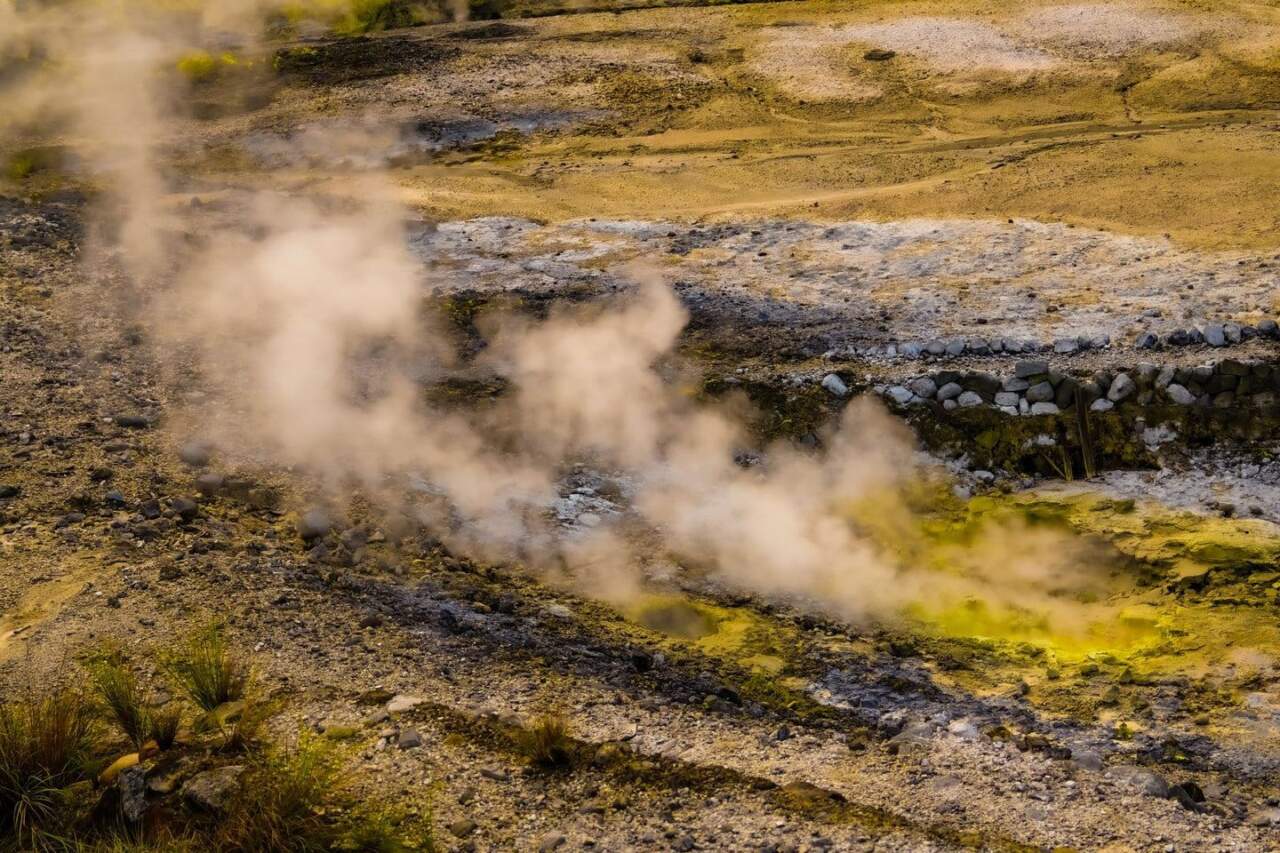
The biggest advantage of these tours is that you don’t need to plan transport or change vehicles yourself, which is especially friendly to first-time visitors to Kyushu with tight schedules, but the stay times are fixed, so they are less flexible than independent travel.
Private Charter or Small-Group Guided Tours: For Travelers Who Want a Deeper, Customized Experience
In recent years some operators have also offered private charters or small-group guided tours of up to 6 people for the Beppu Hells, which can add the Yu no Hana huts of Myoban Onsen, a stroll through Kannawa Onsen Street or artisan experiences, taking about 6 to 8 hours in all, with the cost shared by the number of people, so the more people the better the value.
The advantage of a charter is full customization: the order is adjusted to weather and crowds to avoid the busiest times for photos, suiting those who want a relaxed pace for good pictures; elders or people with limited mobility can be taken right to the entrance of each site, saving walking and transfers, making it the most comfortable but costlier of the four options.

Where to Stay Nearby for the Beppu Hells Guide: Options Around Kannawa and Beppu Station

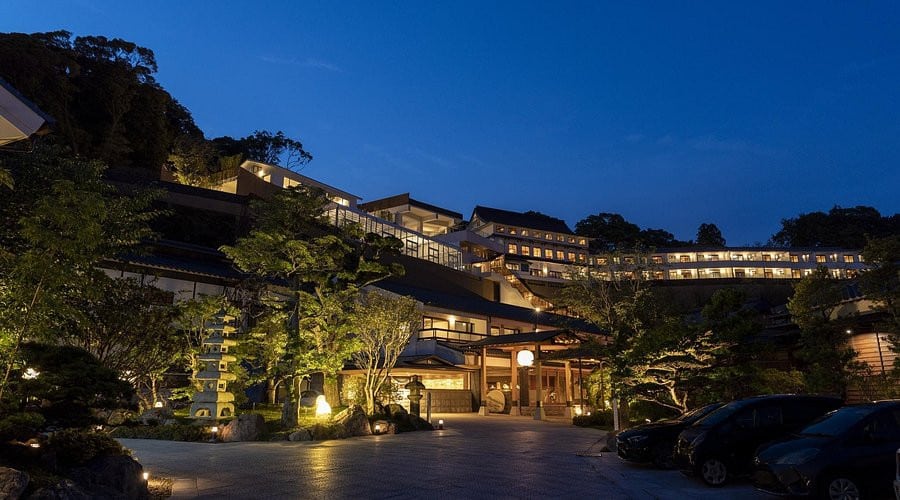
Where to Stay Near the Beppu Hells? Options Around Kannawa and Beppu Station
If you want to combine your Hells tour with a hot-spring stay, focus first on the two areas around “Kannawa Onsen” and “JR Beppu Station.” The Kannawa area is right next to five of the seven hells, within walking distance both ways, and mostly offers traditional Japanese-style inns, and in the evening you can stroll the steamy hot-spring street nearby, suiting travelers who want to deeply feel the hot-spring-town atmosphere.
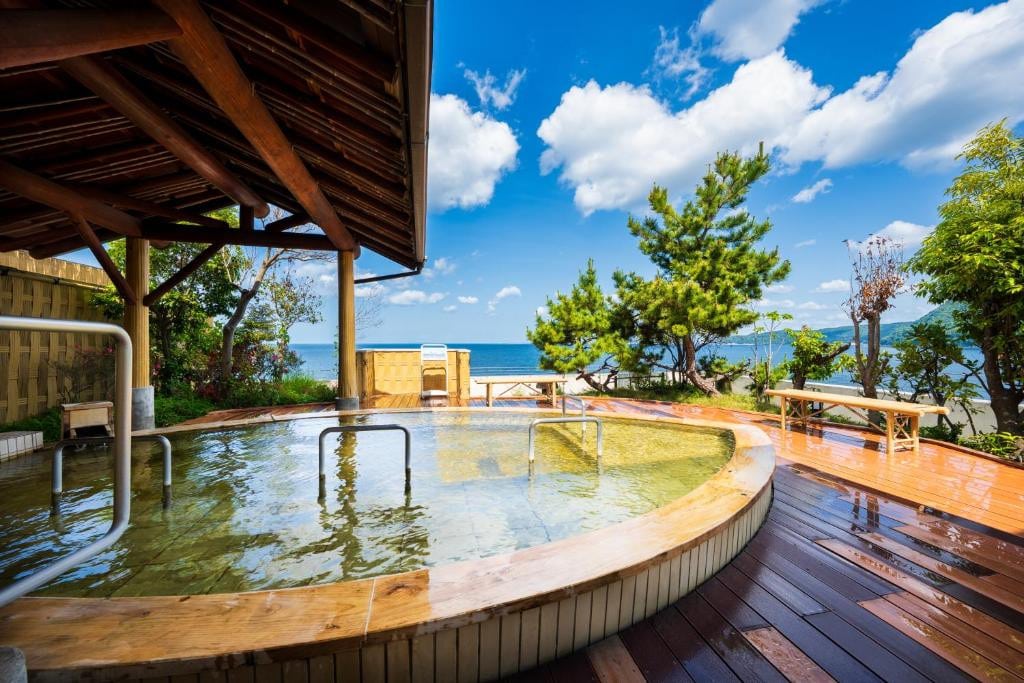
Around Beppu Station there is a concentration of commercial facilities, with more station-direct hotels and chain business hotels and easier transit transfers, suiting travelers with short stays who are continuing to Yufuin or Fukuoka the next day. Wherever you stay, we suggest booking a room with an open-air bath in advance so you can soak right away to relieve tired feet after a day of Hells touring.
Beppu Hells Tour Guide FAQ
Q: How long does the Beppu Hells tour take?
If you buy the combined ticket and want to see all seven hells, plus waiting for buses and foot-bath time, allow 3 to 3.5 hours; picking only 2-3 highlight hells takes about 1.5 hours.
Q: How much is admission to the Beppu Hells?
A single-hell ticket is ¥500 for adults; the combined ticket for the seven hells is ¥2,400 for adults and ¥1,200 for junior high and elementary school students, and the combined ticket is the best value if you plan to visit 5 or more hells.
Q: Can the Beppu Hells combined ticket be used over two days?
Yes, the combined ticket is valid for 2 days, but each hell can be entered only once, so you cannot re-enter on the same day.
Q: How do I get from JR Beppu Station to Umi Jigoku?
From Beppu Station West Exit, take Kamenoi Bus No. 2, 5, 24 or 41 toward Kannawa, about 20 minutes, and get off at “Umi Jigoku-mae”; from Kannawa to Chinoike Jigoku-mae you can take No. 26 (about 7 minutes, ¥140).
Q: When is the best season to visit the Beppu Hells?
They can be visited all year; spring and autumn have the most comfortable weather, and in winter the steam looks thicker and more dramatic, the season recommended for photography fans.
Q: Are the Beppu Hells suitable with elders or a stroller?
Most Kannawa-area hells have flat paths, so strollers and elders can walk without trouble; at the Shibaishi-area Chinoike and Tatsumaki Jigoku some stretches have steps, so assess your stamina before going.
Q: Is there a stamp rally at the Beppu Hells?
Yes, each of the seven hells has its own commemorative stamp, which visitors can collect one by one in a tour booklet, and completing it earns a small souvenir, an interactive program popular with families.