
Japan Fireworks Festivals 2026: Schedule, the Big Three and Must-See Shows at a Glance
Japan’s 2026 fireworks season runs from April to December, with Sumida River, Nagaoka, Omagari and Lake Suwa as the highlights. Here is the schedule and a transport guide.
2026 Fireworks Festival Schedule by Month
Japan’s fireworks festivals run all year, from the Ryukyu Kaien Festival in Okinawa in April to the Atami sea fireworks in December. May brings the Adachi fireworks, July has Sumida River and Tenjin Matsuri, and August is the busiest month of the year with Nagaoka, Omagari, Lake Suwa, Lake Biwa and more. October has the Yodogawa and Kobe Harbor shows, and November closes the season with the Tsuchiura National Fireworks Competition.
Aim for the two competition-level shows in August, Nagaoka and Omagari, then add small and mid-sized festivals by region to plan a fireworks-themed trip covering 2-3 events and experience different scales and styles of fireworks.
2026 Fireworks Festival Quick Guide by Region
In the Kanto region the core shows are Tokyo’s Sumida River, Adachi, Edogawa and Katsushika, all easy to reach. Kansai has Osaka’s Tenjin Matsuri, Lake Biwa and the Yodogawa fireworks, which pair well with a Kyoto-Osaka-Kobe trip. The Tohoku and Koshinetsu area gathers the leading events of Nagaoka, Omagari and Lake Suwa. In Hokkaido, the Lake Toya fireworks are known for being launched every night, so you can see them almost any day for nearly half the year (late April to late October).
Okinawa’s Ryukyu Kaien Festival is held on April 11 at Ginowan Seaside Park, a good choice for an early-spring visit.
Highlights of April 2026 Fireworks Festivals
April is the start of fireworks season. Okinawa’s Ryukyu Kaien Festival takes place on April 11 at Ginowan Seaside Park with about 10,000 shells, and tickets for the free-standing area start at ¥5,000 for a lively atmosphere. The Lake Toya fireworks in Hokkaido are launched every night from April 28 throughout the tourist season, so visitors can enjoy them without fitting around a specific date.
The “Spring Chapter” of Omagari in Akita is held on April 25 on the banks of the Omono River under the theme “New Works Fireworks Collection,” showcasing new works from various pyrotechnicians. It is smaller in scale and a good way to get a taste of the Omagari fireworks atmosphere early.
Highlights of May to August 2026 Fireworks Festivals
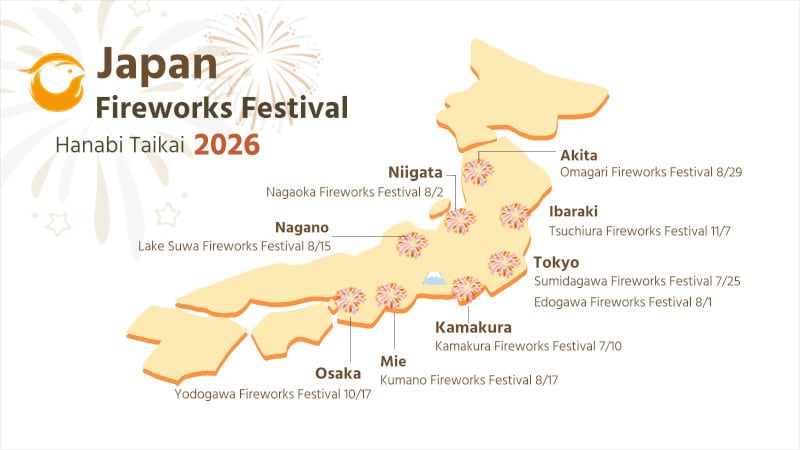
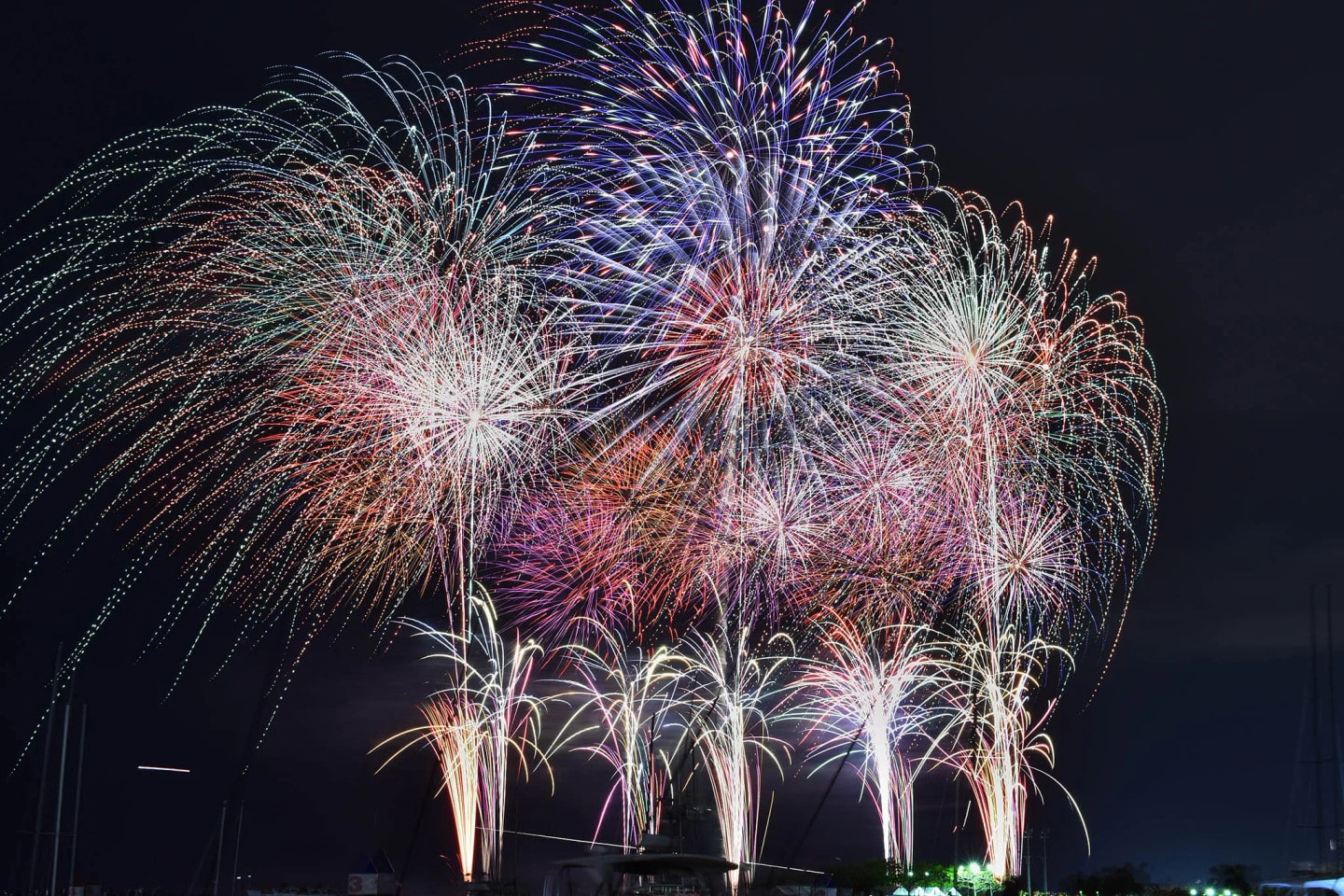
The Adachi Fireworks Festival in Tokyo on May 30 opens the summer season with about 13,000 shells, one of the big early-summer fireworks festivals in Tokyo. On July 25 the Sumida River Fireworks Festival and the Tenjin Matsuri dedicatory fireworks take place on the same day, the summer high points of Tokyo and Osaka respectively.
August is the busiest month of the year: Nagaoka on August 2-3, Lake Suwa’s “Kiss of Fire” on August 15, the Lake Biwa Grand Fireworks Festival on August 6, and the Omagari Fireworks Festival on August 29 follow one after another. Plan your accommodation and transport 1-2 months ahead to avoid being unable to find a room in peak season.
Highlights of October to December 2026 Fireworks Festivals
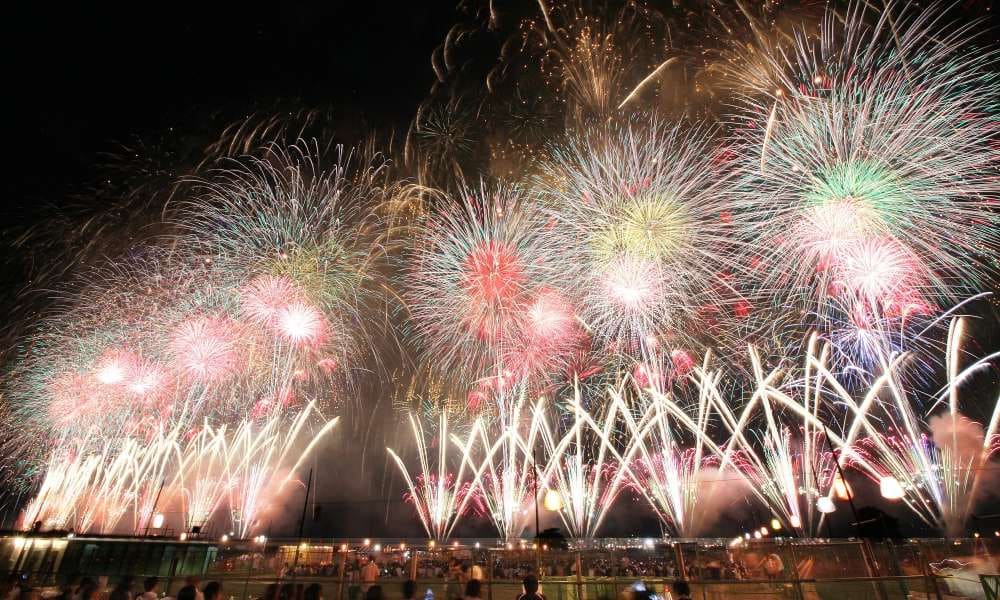
October is the second peak of the fireworks season: the Yodogawa Fireworks Festival on October 17, and Kobe MINATO HANABI on October 19-23, which spreads its shows over five days instead of one big night. On November 7 the Tsuchiura National Fireworks Competition, one of Japan’s Big Three fireworks shows, closes the season.
December has the Atami sea fireworks (December 6 and 25), when the winter air is clear. The Kawaguchiko Winter Fireworks were held on weekends from January 24 to February 23, 2026, with winter Mt. Fuji as the backdrop; please check official announcements for next season’s dates.
How to Get to Japan’s 2026 Fireworks Festivals: Transport, Passes and Leaving the Venue
Most fireworks festivals are held on summer nights, and crowded transport after the show is the biggest challenge. Using passes and leaving early can improve the experience a great deal.
How to Get to the Venue: Transport at a Glance
🎫 JR East Rail Pass: good for linking Tokyo with events in Niigata, Nagano and elsewhere; check the JR East website for prices and the areas covered.
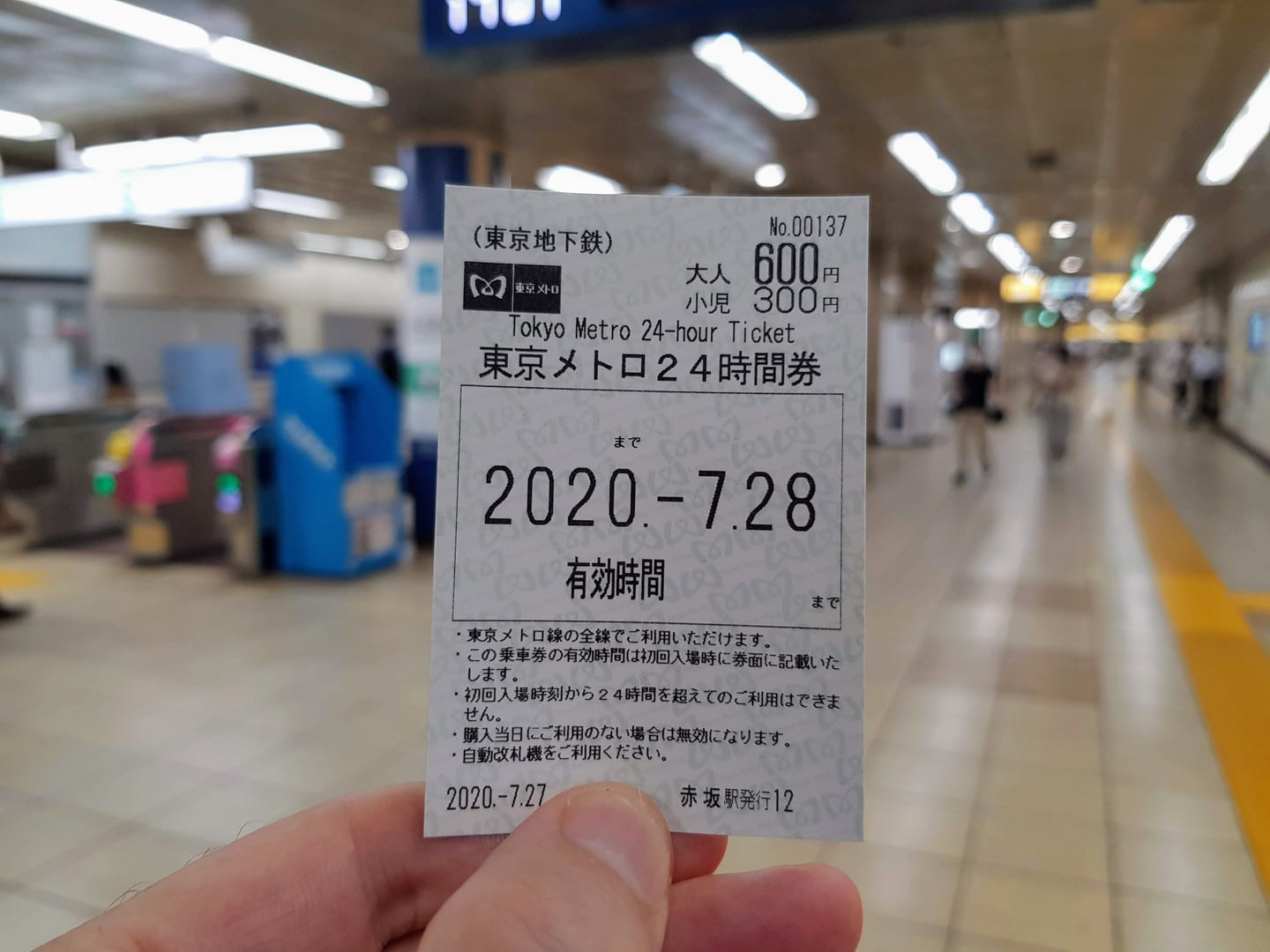
🚇 Toei Subway and Tokyo Metro one-day ticket: ¥900. After Tokyo fireworks shows you can disperse via nearby stations.
🚃 Keisei Kanamachi Line, Shibamata Station: the closest station to the Katsushika fireworks, about 10 minutes on foot; Shin-Shibamata Station on the Hokuso Line is about 15 minutes on foot and less crowded.
🚐 Nagaoka: about 30 minutes on foot from JR Nagaoka Station; every seat in the venue is paid.
🚌 Omagari and Tsuchiura: both are about 30 minutes on foot from JR Omagari Station and the west exit of JR Tsuchiura Station.
⛴️ Lake Suwa: about 10 minutes on foot from JR Kamisuwa Station; parking spaces must be reserved in advance.



Which Fireworks Festivals Are Must-Sees in Japan in 2026? Regional Highlights Explained
From Japan’s Big Three fireworks shows to distinctive local events, here are 12 must-see fireworks festivals nationwide and nearby attractions.
Omagari Fireworks Festival: Akita’s Century-Old Competition at Its Highest Level
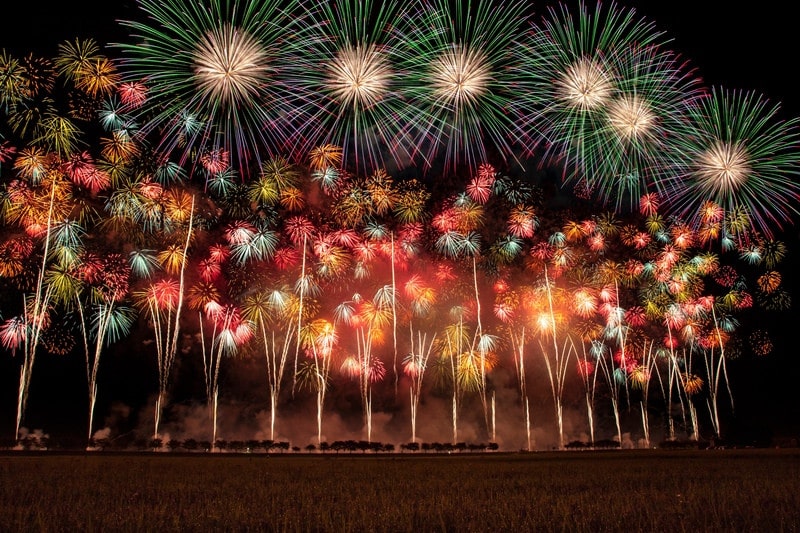
The Omagari Fireworks Festival, held since 1910, is one of Japan’s Big Three fireworks shows and draws about 700,000 people to Akita. The 98th National Fireworks Competition in 2026 is held on August 29, with daytime fireworks from 17:10 and night fireworks from 19:00, about 18,000 shells, and it keeps the rare daytime fireworks category.
Paid seats go on sale first-come, first-served from June 12 through Lawson Ticket and e+. Photographer seats start at ¥13,000 for one person, and the Platinum seat for two is ¥70,000.

![Omagari Fireworks Festival 2-day 1-night sightseeing Shinkansen tour | Includes viewing seat, stay at Yura Onsen Yaotome Ryokan, and Zao Okama sightseeing [departing Tokyo Station]](https://travel.williamlion.tw/wp-content/uploads/sites/7/2026/07/image-1863.jpg)
Tsuchiura National Fireworks Competition: Ibaraki’s Autumn Finale and Technical Peak
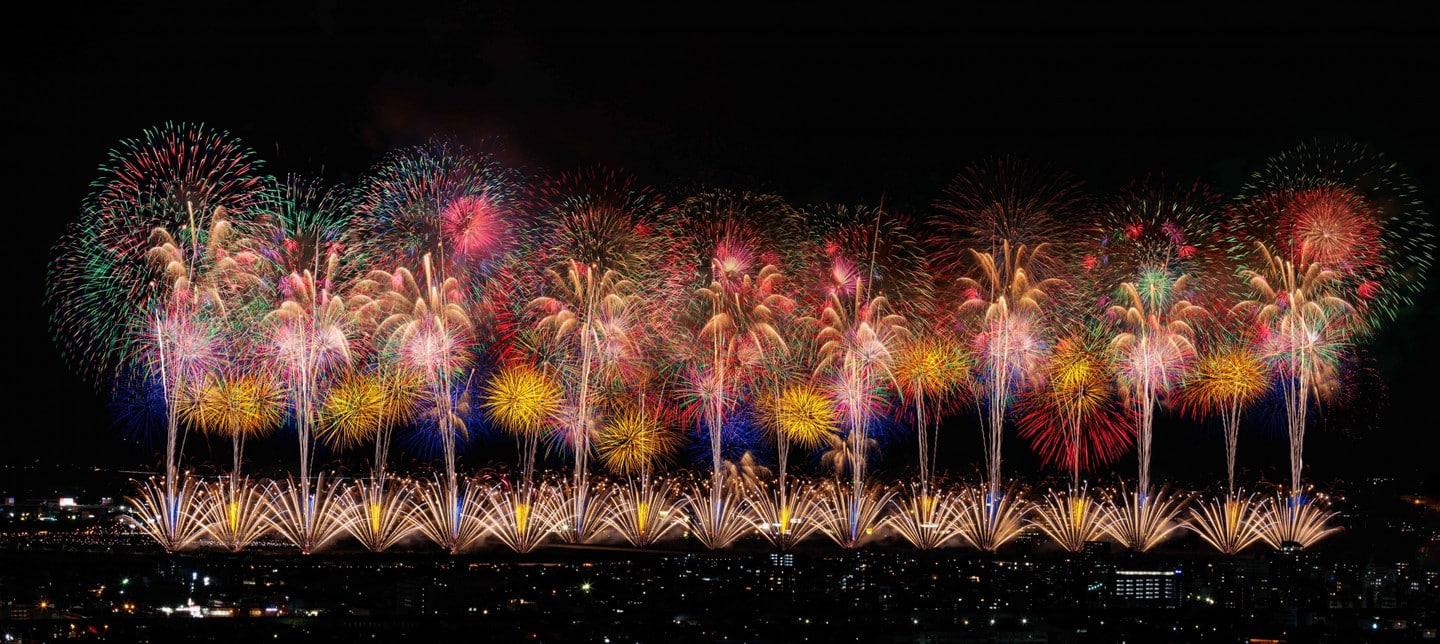
The Tsuchiura National Fireworks Competition is held on November 7 from 17:30 to 20:00 (rain date: November 14) and is the Big Three show scheduled in autumn. It is judged, with pyrotechnicians from across the country competing for honors such as the “Prime Minister’s Award,” and launches about 20,000 shells.
Because of its unusual timing, Tsuchiura attracts many veteran fireworks fans who come specifically for the technical side. The venue is by the Sakuragawa River near Gakuen Ohashi Bridge, about 30 minutes on foot from the west exit of JR Tsuchiura Station, with a paid shuttle bus also available; for how paid seats are sold, see the official announcement from Tsuchiura City.
Nagaoka Fireworks Festival: The Thunderous Shosanshakudama Over 600 Meters Wide
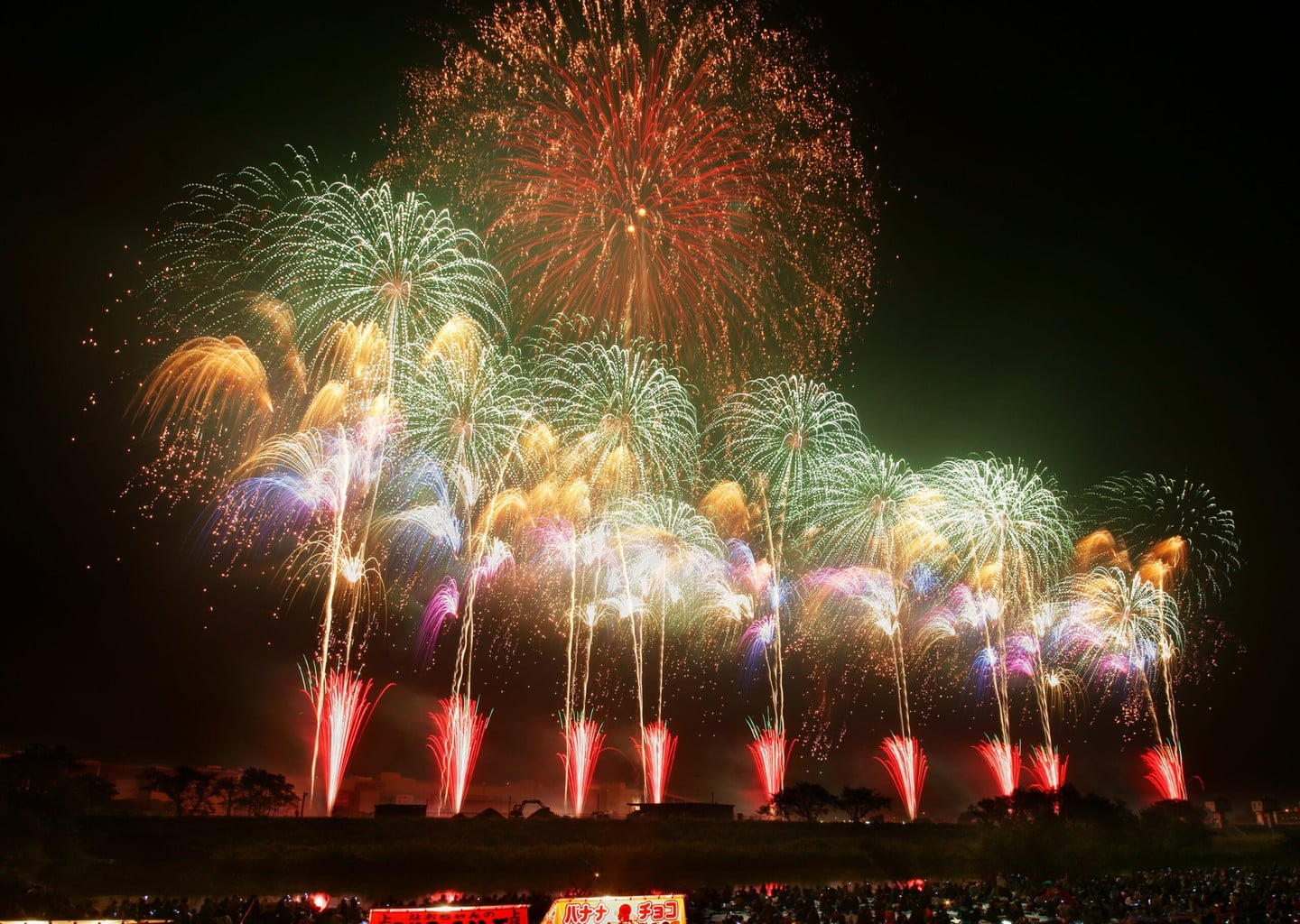
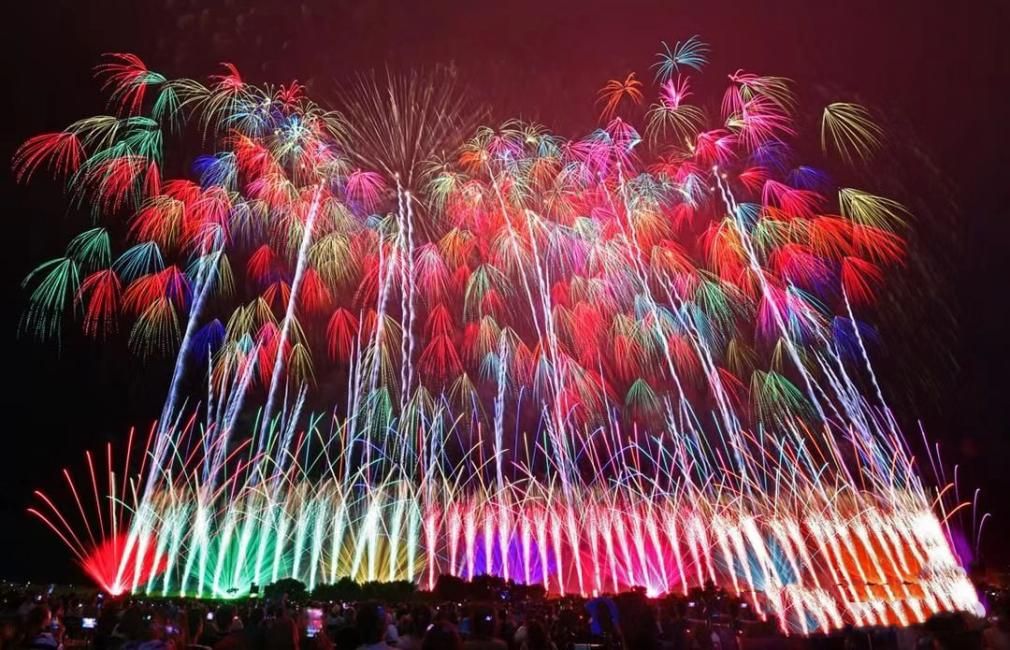
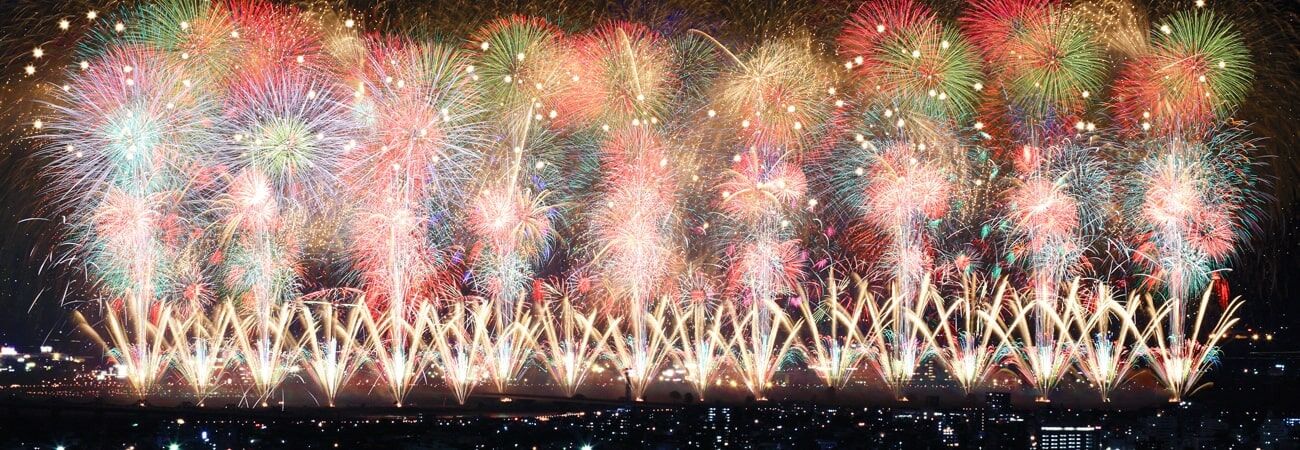
The Nagaoka Fireworks Festival is held on August 2-3 on the banks of the Shinano River in Niigata. It commemorates the victims of the 1945 Nagaoka air raid and prays for peace, so it is both a memorial and a celebration. The signature “Shosanshakudama” is said to reach more than 600 meters in diameter, blooming in the night sky like a giant flower, with the most powerful impact in Japan. The exclusive finale, the “Phoenix Fireworks,” spreads about 2 km across the sky. The festival draws over a million visitors every year; book accommodation 2-3 months ahead. Every seat in the viewing venue is paid, so tickets must be obtained through channels such as the official lottery.
Sumida River Fireworks Festival Viewing Spots: Tokyo’s Classic with Asakusa and Skytree in One Frame
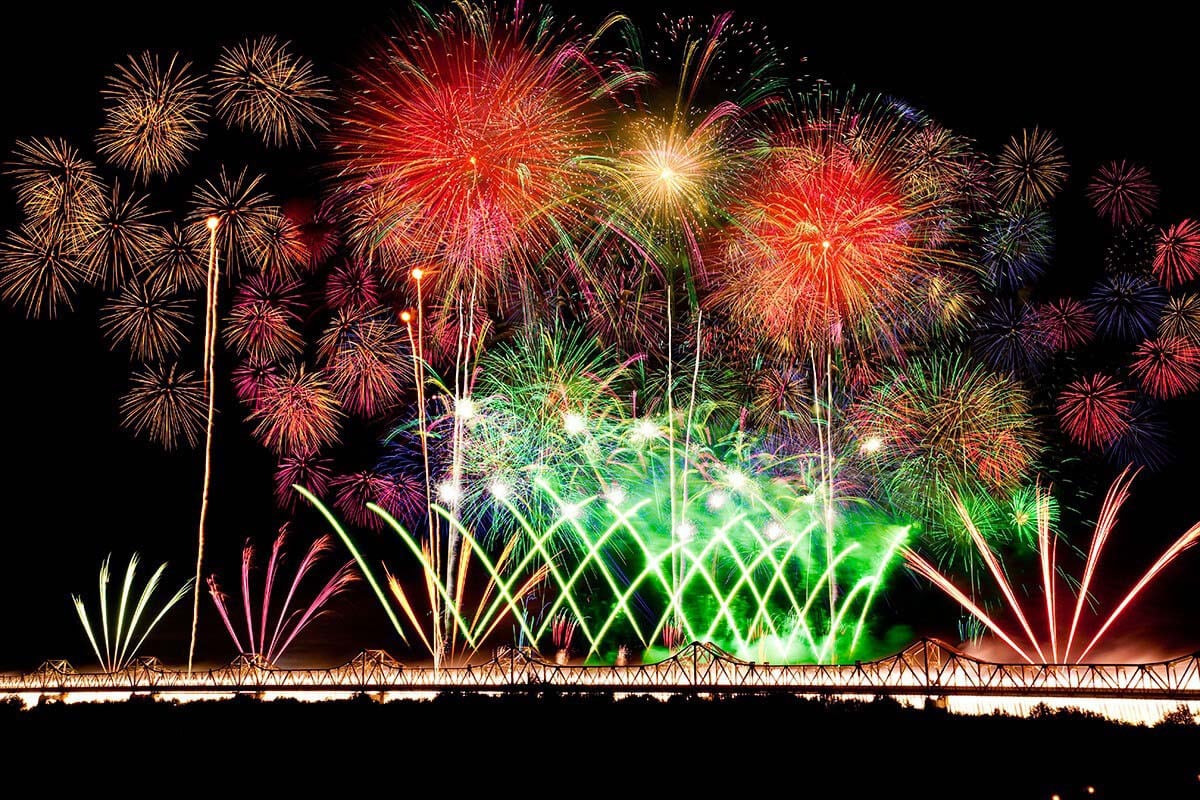
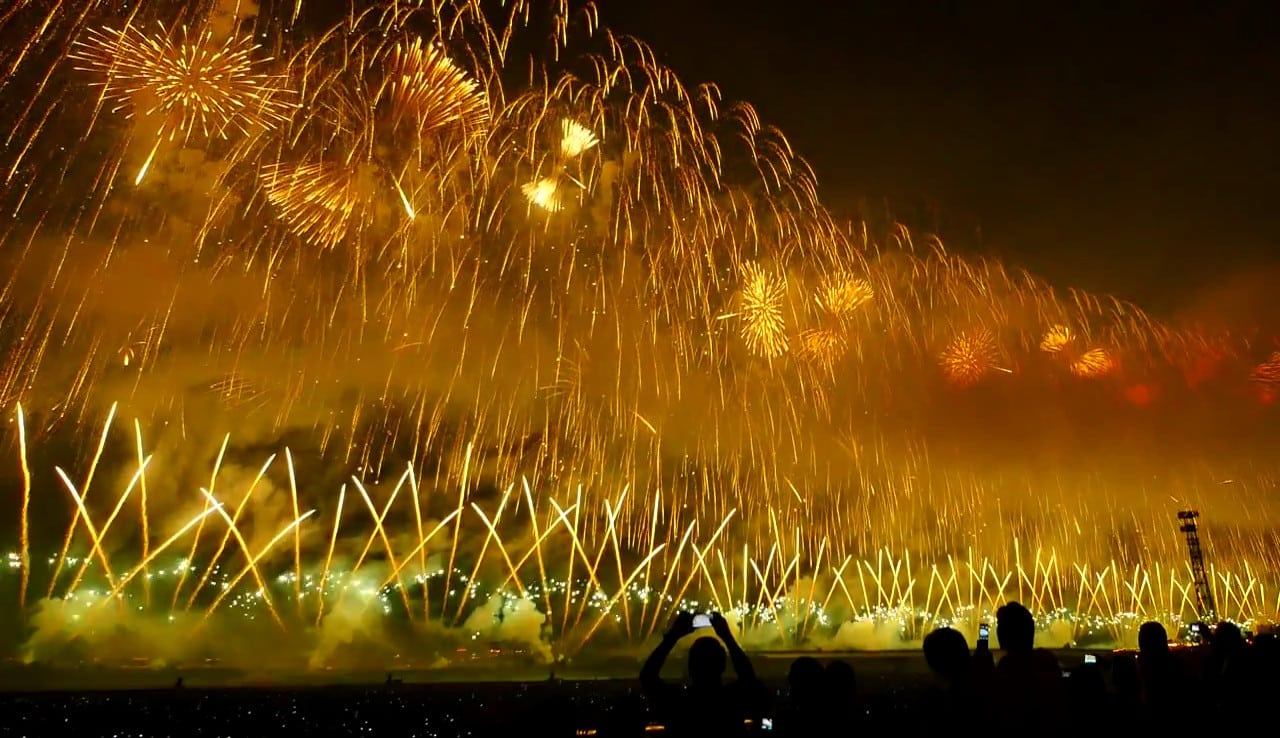
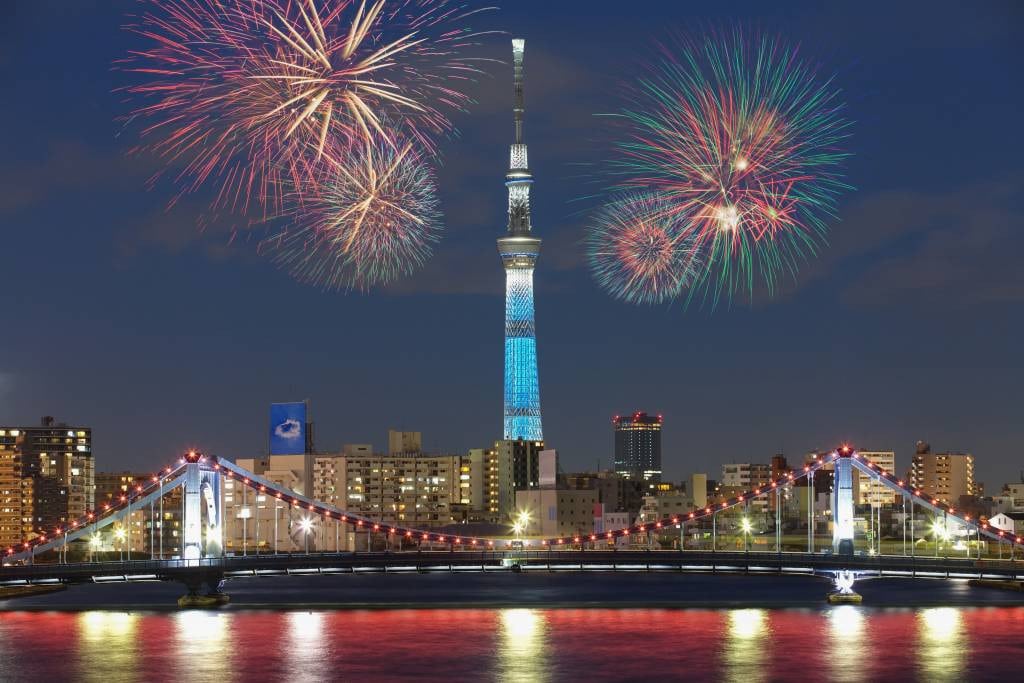
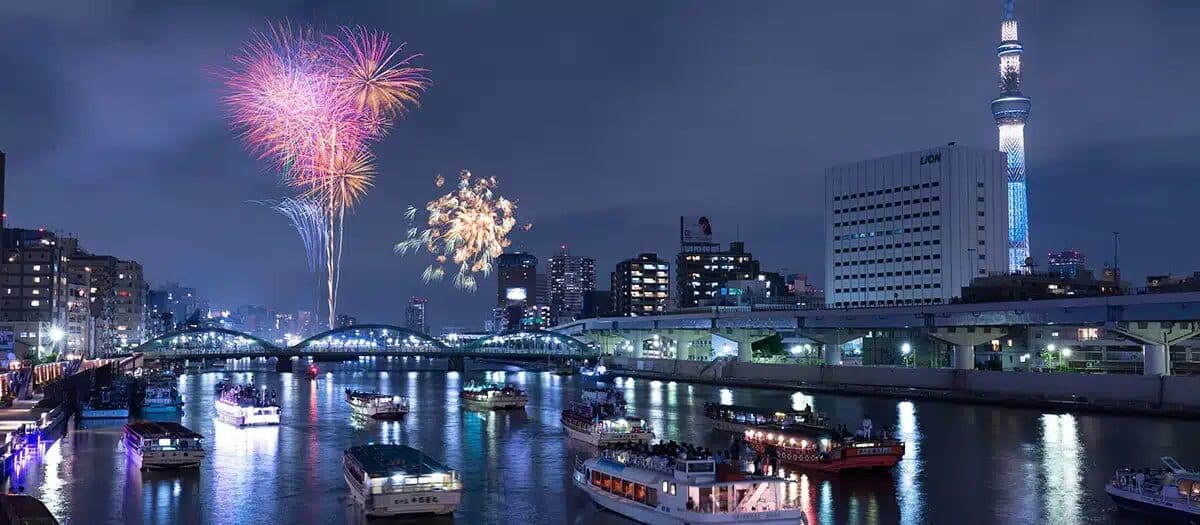
The Sumida River Fireworks Festival is held on July 25. It is Tokyo’s oldest fireworks event, dating back to the Edo period in the 18th century, and is the origin of the “Tamaya” and “Kagiya” cheers. The festival has two venues: the first (Sakura Bridge to Kototoi Bridge) mainly features competition-style fireworks, while the second (Komagata Bridge to Umaya Bridge) launches continuous large fireworks.
A recommended viewing spot is Sumida Park near Asakusa Station, where you can capture both Tokyo Skytree and the fireworks. In 2026 the paid seats are the citizen sponsor seats (online first-come, first-served from May 10); all other areas have no designated seating. Asakusa Station is extremely crowded after the show, so use a different station.
Osaka Tenjin Matsuri Dedicatory Fireworks: A Water Festival Among Japan’s Three Great Festivals
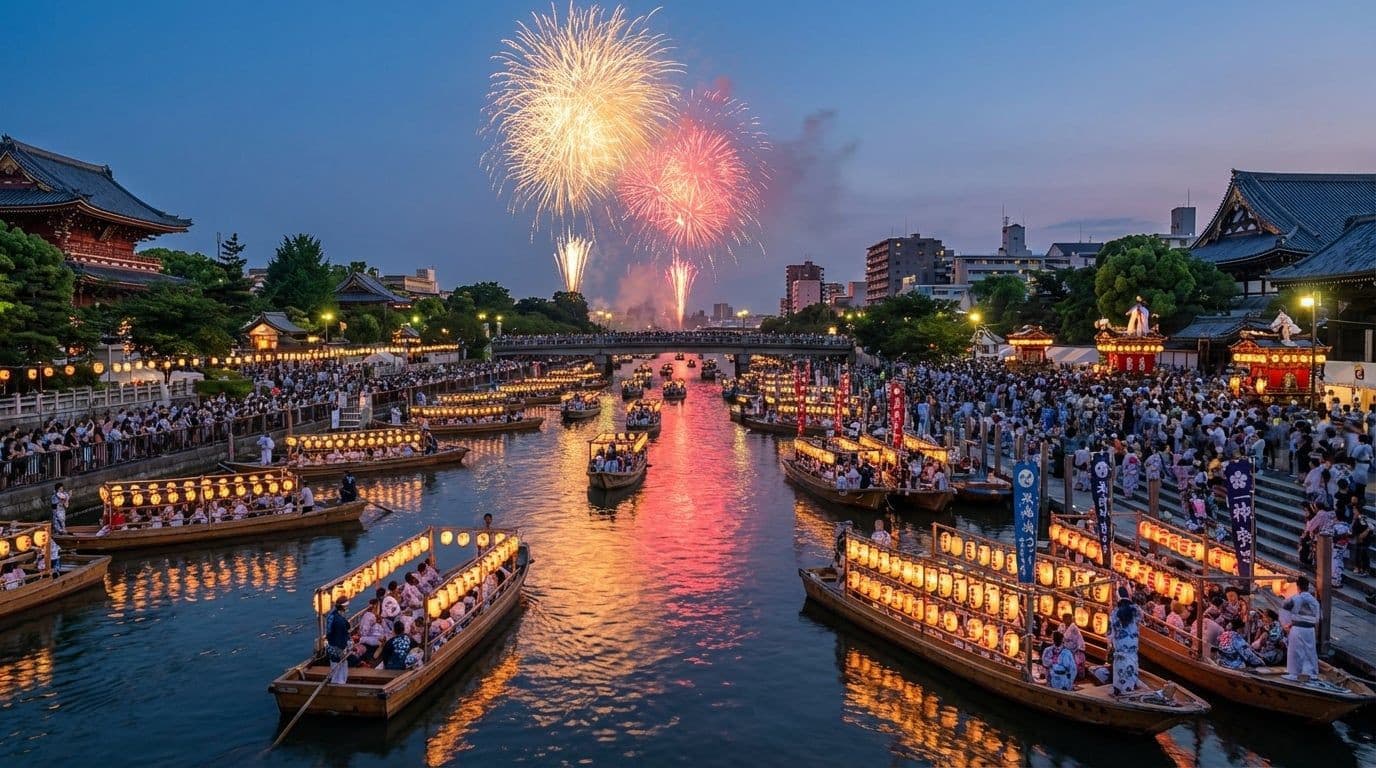
Osaka’s Tenjin Matsuri is held on July 25, the same day as the Sumida River fireworks. It is one of Japan’s three great festivals, a religious festival of Osaka Tenmangu Shrine, and the fireworks are the finale of the whole festival, launched along the Okawa River. About 3,000 shells are launched from two sites, Kawasaki Park and Sakuranomiya Park, on the same night as the “Funatogyo,” when about 100 boats travel on the Okawa River.
During the day there are traditional ceremonies such as the Rikutogyo (land procession), and in the evening come the Funatogyo and the fireworks. Take in the land procession during the day first, then head to the riverbank to claim a spot. Paid viewing seats are also available, but some venues cannot see the Funatogyo, so keep that in mind when choosing a spot.
Lake Suwa Fireworks Festival: 40,000 Shells and the “Kiss of Fire” Finale
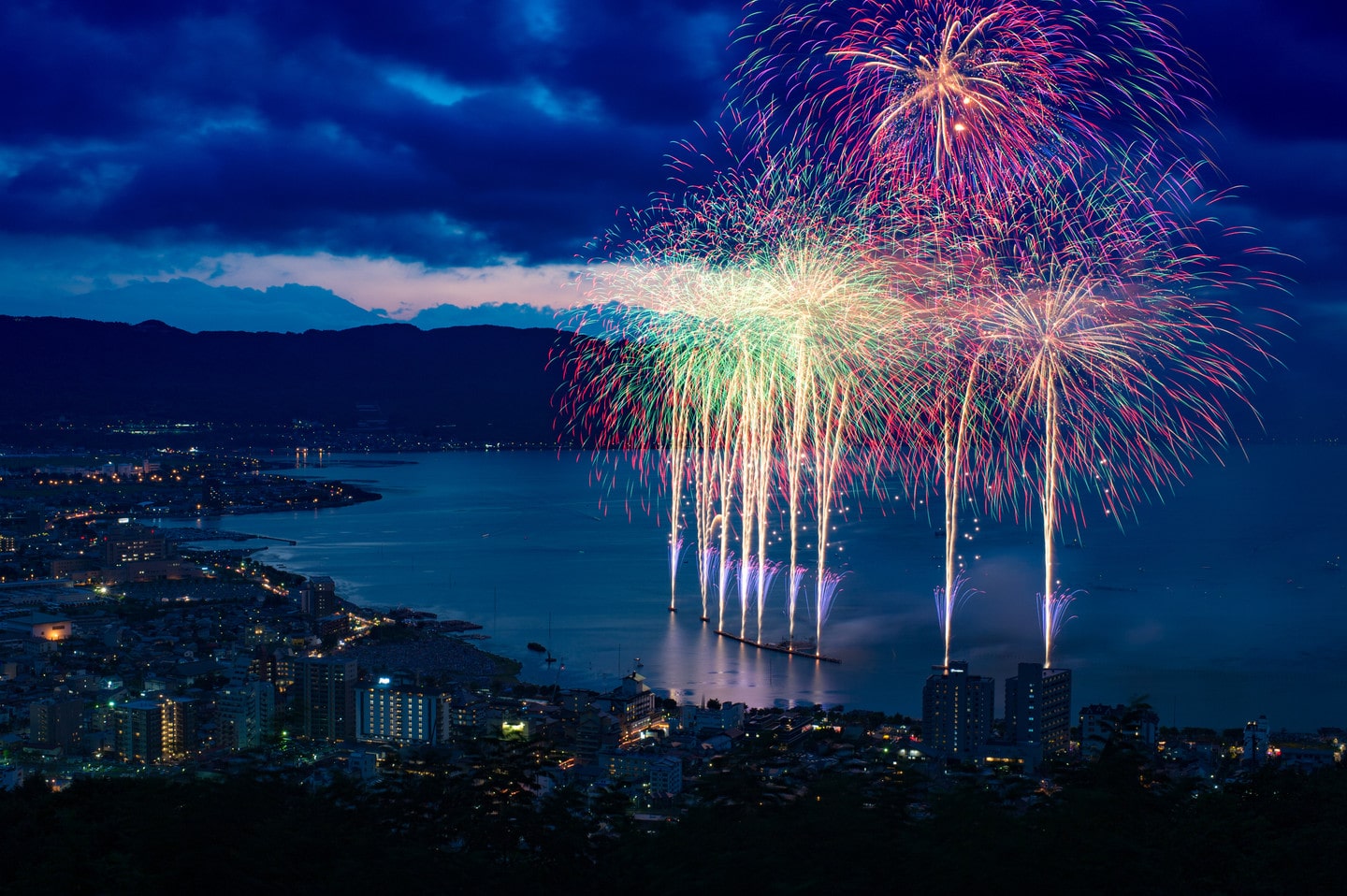
The Lake Suwa Fireworks Festival is held on August 15 and launches about 40,000 shells in one show, one of the largest fireworks festivals in Japan. Because mountains surround Lake Suwa, the sound echoes through the valley to create a unique “surround sound,” so you can feel the power even from farther away.
The signature “Kiss of Fire” is a rapid-fire barrage of large star-rain shells over the water, a highlight alongside the Niagara Falls fireworks about 2 km long. Lake Suwa also has small nightly fireworks from July 24 to August 23, a good way for visitors who cannot fit the main festival date to get a taste of the atmosphere.
Lake Suwa Fireworks Festival 2026 Paid Seats: Seat Types, Prices, Lottery Schedule and Transport
The 78th Lake Suwa Lake Festival Fireworks starts at 19:00 on August 15, 2026. Paid seats cost about ¥3,000 to ¥65,000 depending on the seat type, and in 2026 they are sold by online lottery from June 8 to 21. The venue is on Lake Suwa in front of Kosuiko Park, about 10 minutes on foot from JR Kamisuwa Station, and about 3,000 parking spaces must be reserved in advance. The show goes ahead in the rain, but may be interrupted or cancelled in severe weather; see the official website of the Suwako Matsuri Executive Committee for the latest announcements.
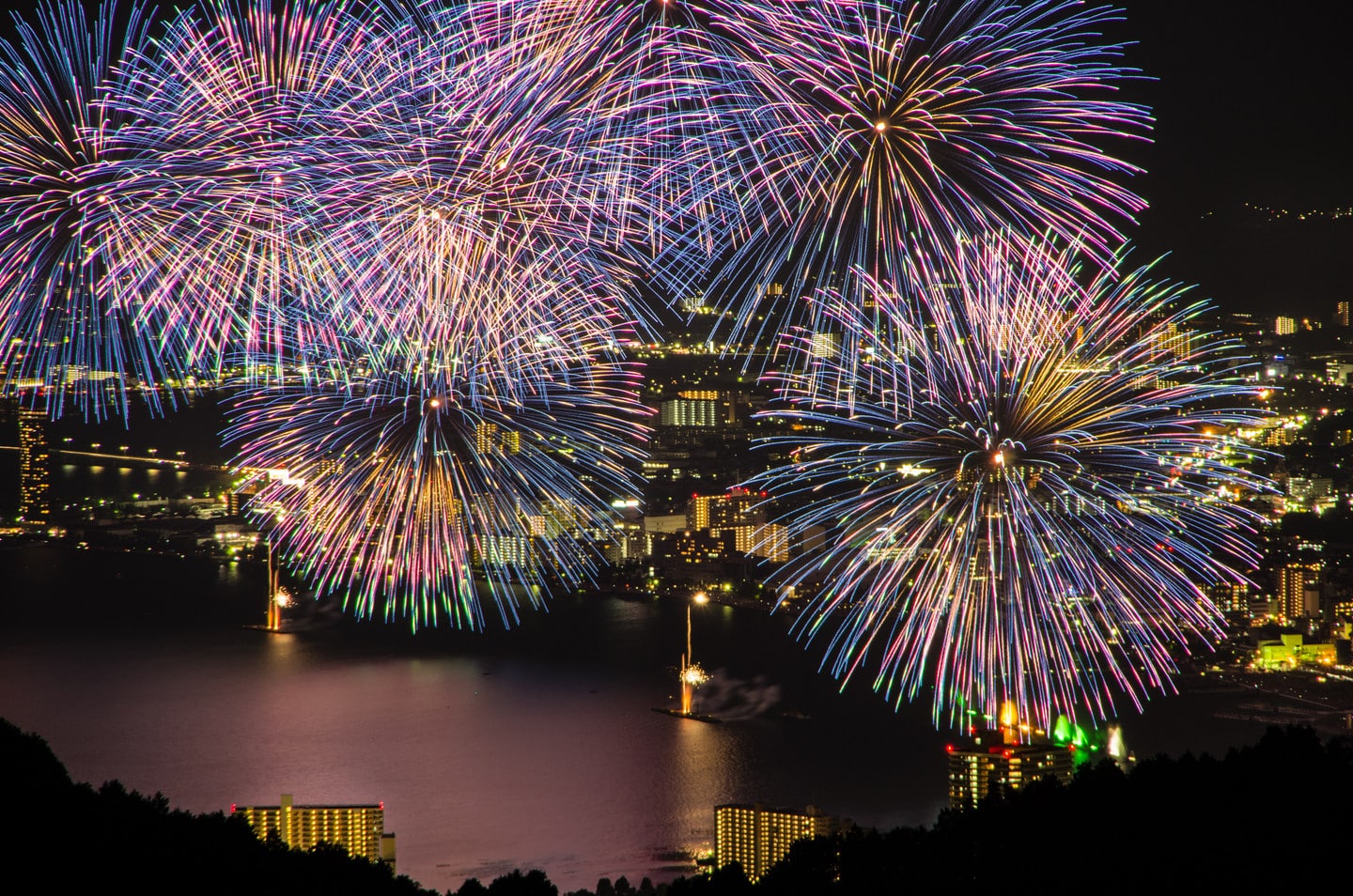
Lake Biwa Grand Fireworks Festival: A Summer Night in Shiga Where the Lake and Fireworks Meet
The Lake Biwa Grand Fireworks Festival is held on August 6 (the 40th anniversary edition in 2026) on the shore of Lake Biwa, Japan’s largest lake. The fireworks are reflected on the water in a dreamy, symmetrical picture, making it one of Kansai’s most representative lakeside fireworks shows. About 12,000 shells are launched, together with the night view of Otsu city, and it fits easily into a Kyoto and Osaka itinerary.
Reserve paid seats in advance: chair seats cost ¥7,500, and Keihan Biwako-hamaotsu Station is about 5 minutes on foot. After the show you can use the Keihan line to disperse the crowds and avoid the peak crush at JR Otsu Station.
Adachi Fireworks Festival: The Opening Bell of Tokyo’s Summer Fireworks Season
The Adachi Fireworks Festival is held on May 30, a big fireworks festival that opens early summer in Tokyo every year. About 13,000 shells are launched on the Arakawa riverbed, and the open venue offers excellent views. Besides paid seats there is a free viewing area, and claiming spots a day in advance is prohibited.
Because it is held early in the season, the temperature is still pleasant, so it suits families with children and older relatives. Bring a picnic mat and arrive at the embankment early. The organizers recommend using Nishiarai Station; the road from Kitasenju Station to the Senju-side venue is especially crowded, about 15-20 minutes on foot.
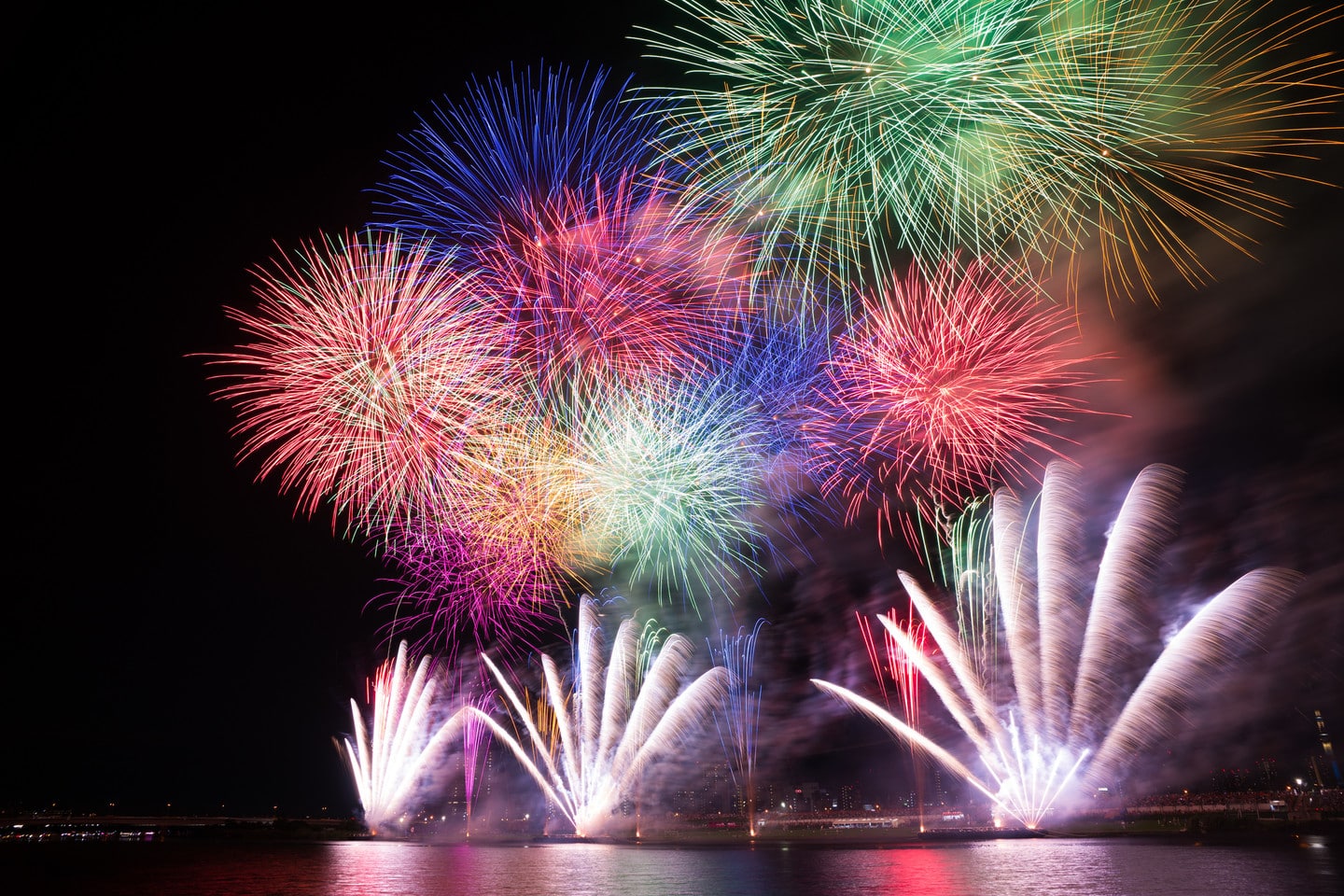
Katsushika Noryo Fireworks Festival: A Ground-Shaking Close-Up Experience
The Katsushika Noryo Fireworks Festival is held on July 28 on the banks of the Edo River around Shibamata in Katsushika Ward. Its biggest feature is that the audience is very close to the launch site, so you can feel the unique sensation of the ground shaking as the fireworks go up. It is one of the few fireworks festivals in Tokyo where you can feel the impact this closely.
About 20,000 shells are launched. The venue is near traditional downtown attractions such as Shibamata Taishakuten, so spend the day exploring the old Shibamata shopping street and trying kusa-dango (mugwort dumplings), then head to the embankment in the evening for the fireworks. The closest station is Shibamata Station on the Keisei Kanamachi Line, about 10 minutes on foot to the venue.
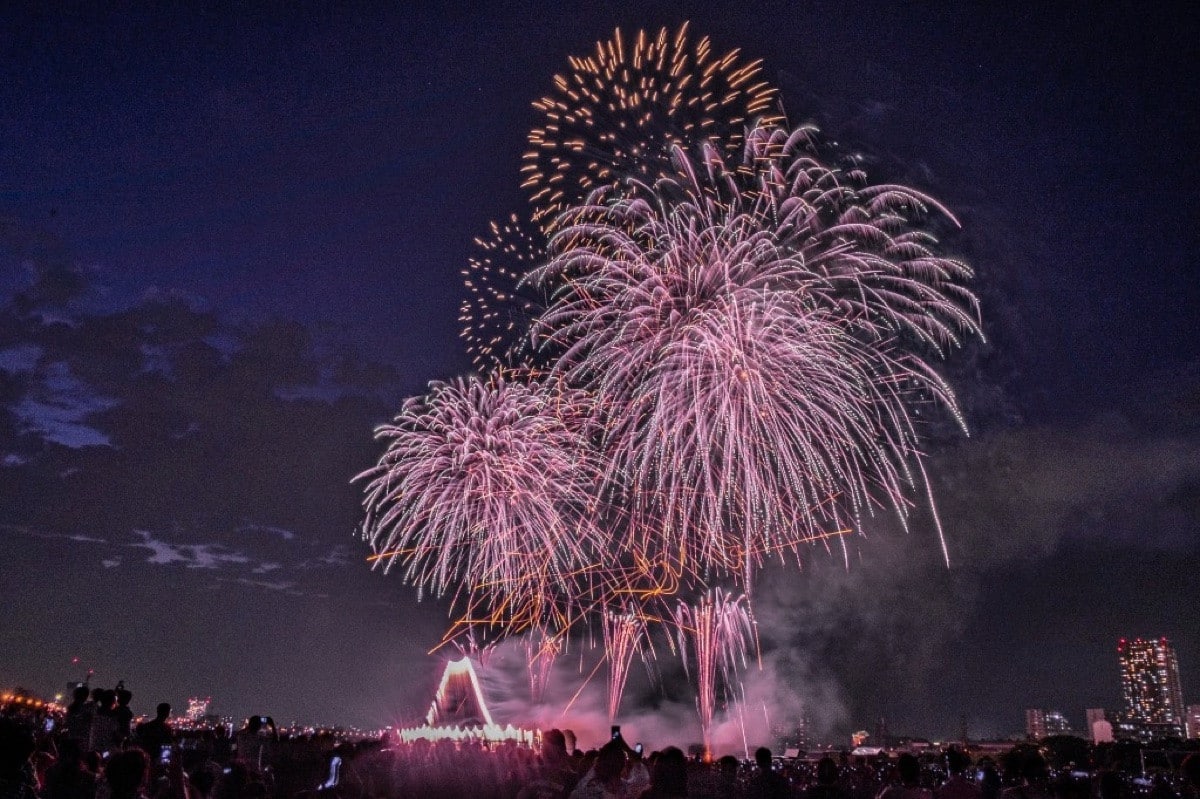
Atami Sea Fireworks Festival: A 15-Show-a-Year Fireworks Destination
The Atami Sea Fireworks Festival holds 15 shows in 2026, across spring, summer, autumn and winter, making it one of the most frequent fireworks destinations in Japan. Because it serves Atami’s hot spring tourism, travel plans are more flexible. The semicircular shape of Atami Bay makes the sound echo, creating a natural concert-hall acoustic that is especially powerful.
The shows are frequent and finely scaled (about 3,000-5,000 shells), and pair well with a stay at a hot spring inn, where you can watch the fireworks from an open-air bath, a representative romantic resort-style fireworks experience. The closest station is JR Atami Station, about 15 minutes on foot to the waterfront.
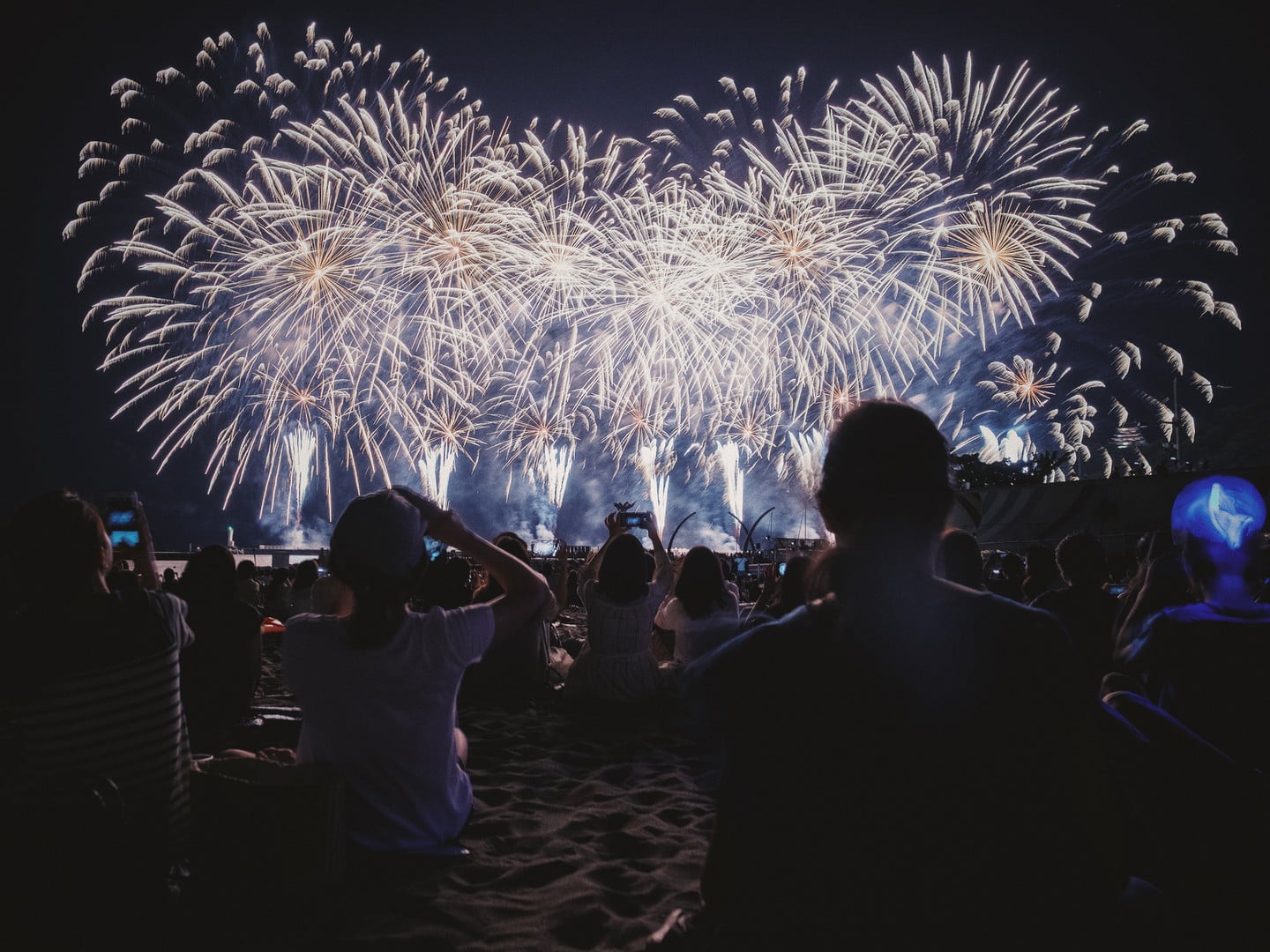
Yodogawa Fireworks Festival: Autumn Fireworks Downstream of the Shin-Midosuji Yodogawa Bridge
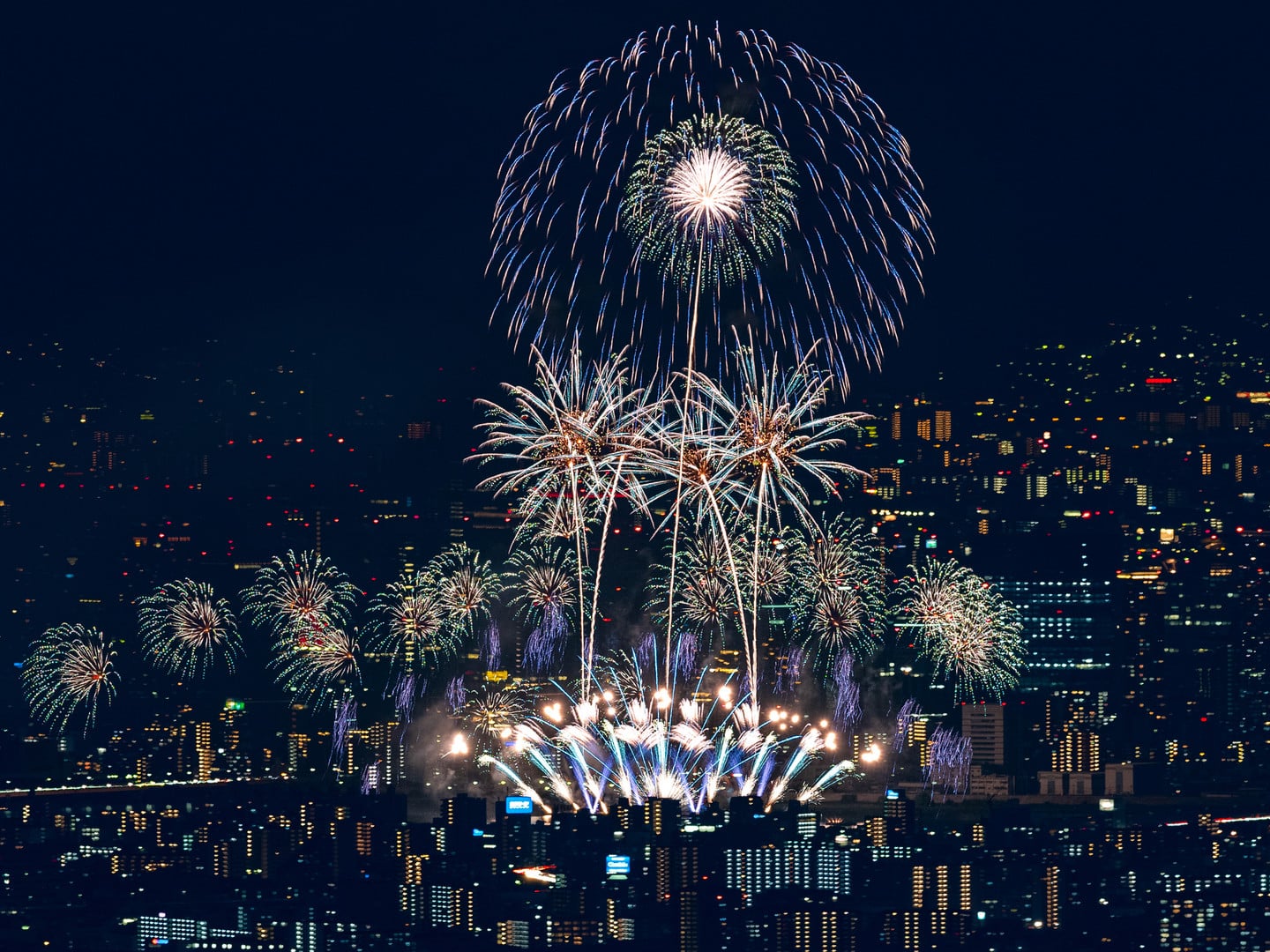
The 38th Naniwa Yodogawa Fireworks Festival is held on October 17 from 19:00 to 20:00, organized by the Naniwa Yodogawa Fireworks Festival General Incorporated Association, and usually draws about 450,000 people. The venue is on the Yodogawa riverbed, and because it is held late in the year the weather is cool, making it a good choice for autumn fireworks viewing.
Because the site is close to the city, transport is relatively convenient. Take Hankyu Juso Station, Hanshin Himejima Station or Osaka Metro Nishinakajima-Minamigata Station (all about 15 minutes on foot). Paid seats at the right-bank Juso venue cost ¥14,000 to 20,000. It gets cooler after sunset, so bring a light jacket.
MINATO HANABI Kobe: Harbor Romance Spread Over Five Days
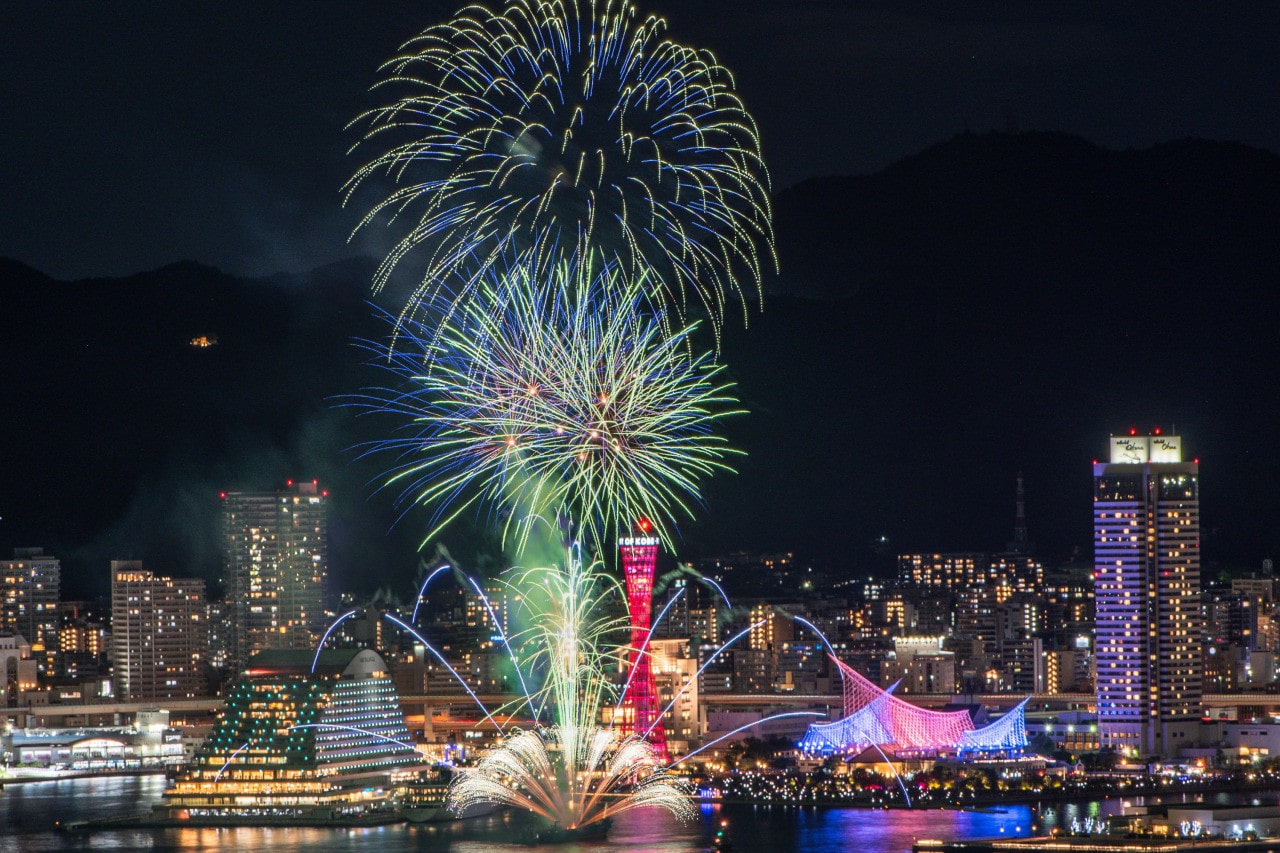
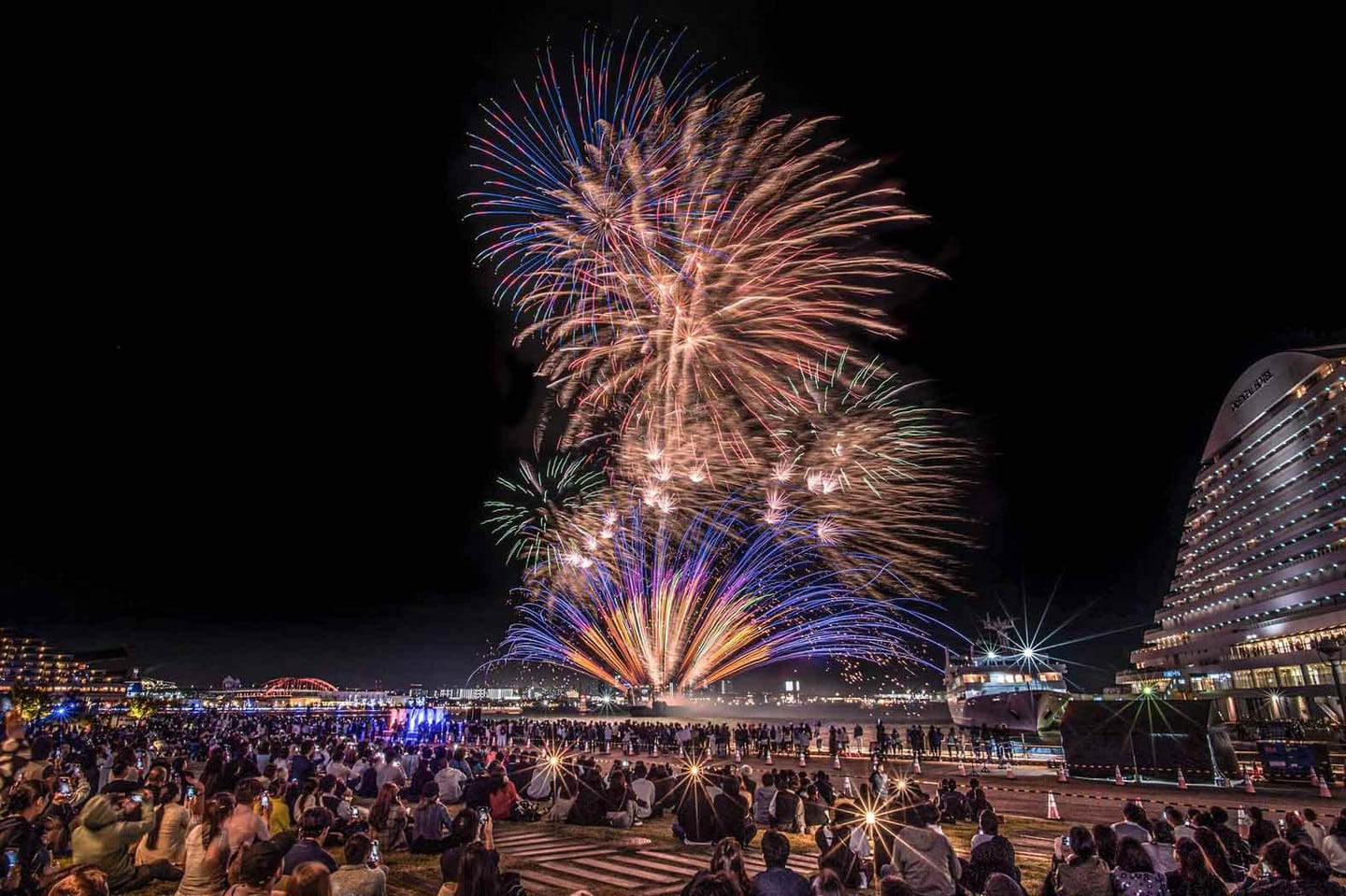
Kobe MINATO HANABI is held for five consecutive days, October 19-23 (Monday to Friday), at Meriken Park. Each night from 18:30 to 18:50 about 20 minutes of fireworks are launched with synchronized music, and viewing inside the park is free.
Spreading the shows over five days reduces the crowd pressure on any one day. The closest station is Minato-Motomachi Station on the Kobe Municipal Subway (about 5 minutes on foot), and JR and Hanshin Motomachi Stations are about 10 minutes on foot. The paid seat at Kobe Shinko Pier No. 1 is ¥2,200.
How Much Does It Cost to Attend Japan’s 2026 Fireworks Festivals? Paid Seats and Experience Tours
Paid seats greatly improve viewing comfort. Here are the fireworks experiences and tour options worth booking.
Nagaoka Fireworks Festival Paid Seat Plans: Reserve Early and Skip the Waiting
Nagaoka’s paid seats include general seats, chair seats and table seats. Every seat in the viewing venue is paid and there is no free viewing area. In 2026 all seats are sold by named-ticket lottery, in this order: a Nagaoka resident lottery first, a general lottery, first-come first-served online sales, and official resales. Prices vary by seat type, so buy tickets according to the Nagaoka Fireworks Foundation announcements. You can also choose a travel-agency package; a package that bundles accommodation and transport usually includes round-trip transfers and designated seats, suits first-timers unfamiliar with the local exit routes, and greatly lowers the risk of queuing and getting lost.
Sumida River Fireworks Yakata-bune Experience: The Top Viewing Angle from the Water
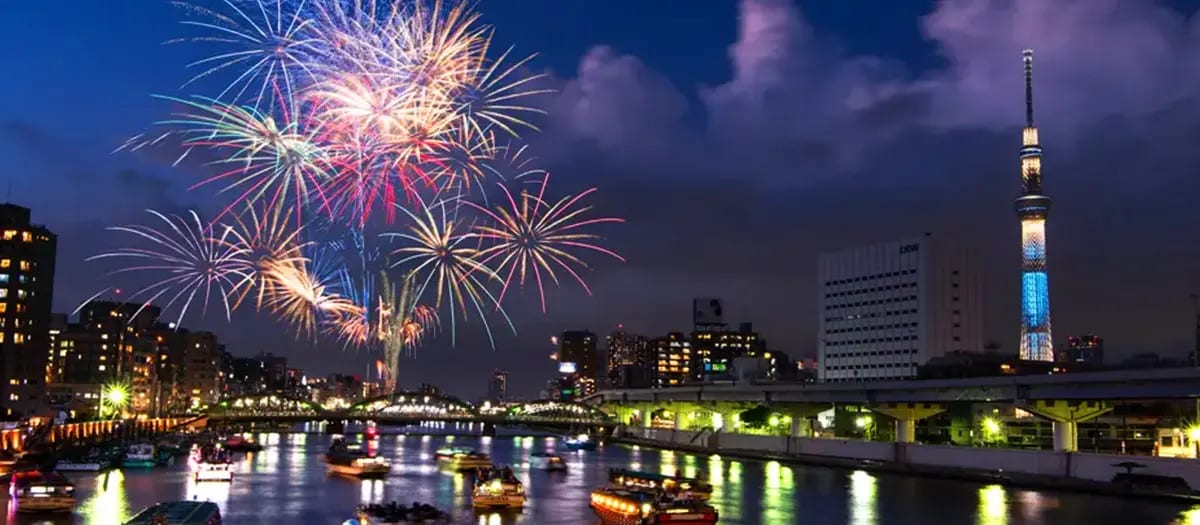
During the Sumida River Fireworks Festival, many yakata-bune (traditional Japanese pleasure boats) on the Sumida River offer tours where you dine while watching the fireworks. Prices vary by boat operator and plan, and most plans include onboard meals and drinks, making this the most distinctive option among Tokyo’s fireworks experiences.
Because boat seats are limited and demand is extremely high, book 1-2 months ahead through a travel agency or platforms such as KKday and Klook. It suits travelers and couples who value privacy and comfort.
Omagari Fireworks Festival Sightseeing Bus Day Tour: An In-Depth Akita Experience Without Driving
Travel agencies offer Omagari Fireworks Festival sightseeing tours every year, most including round-trip transport and a viewing seat. Prices vary by departure point and date, so please check each platform’s page. It suits travelers unfamiliar with Tohoku transport who still want a guaranteed seat.
Tours usually leave early and reach the venue before the fireworks start, then take a dedicated coach back to the meeting point after the show, so you avoid competing with hundreds of thousands of people for the last trains. It is a hassle-free choice that simplifies pre-trip planning so you can focus on the fireworks themselves.
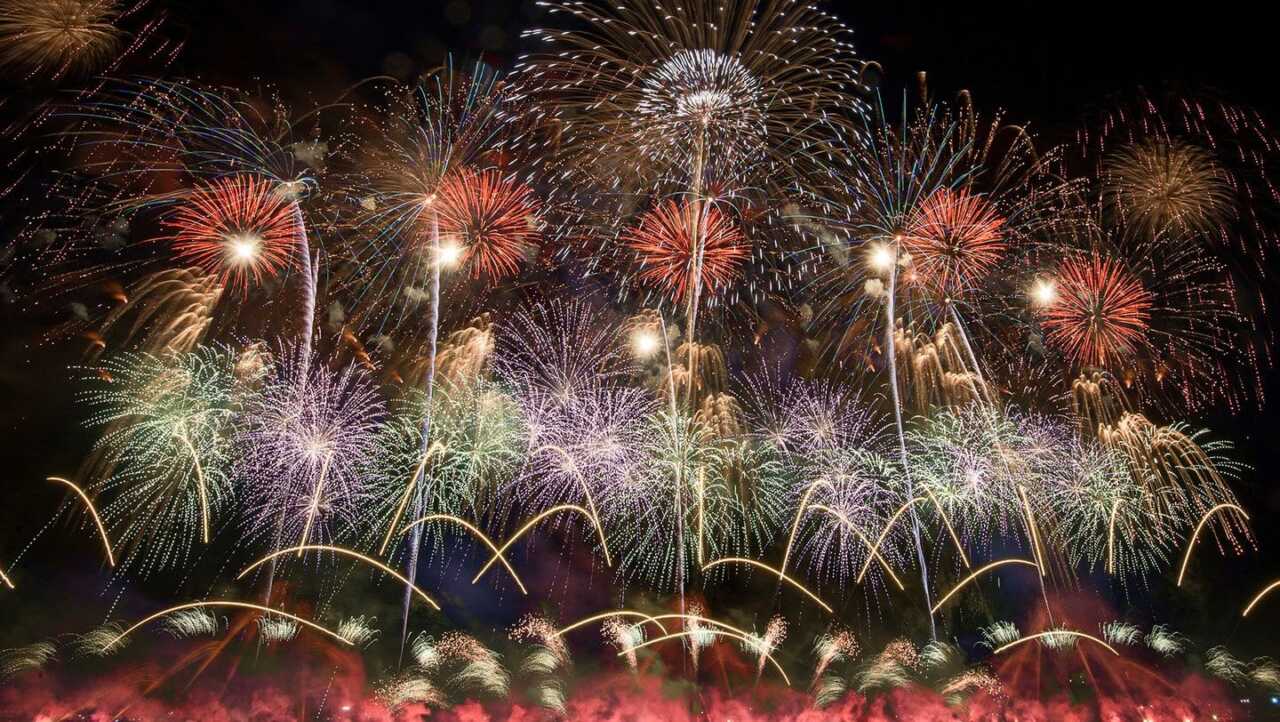
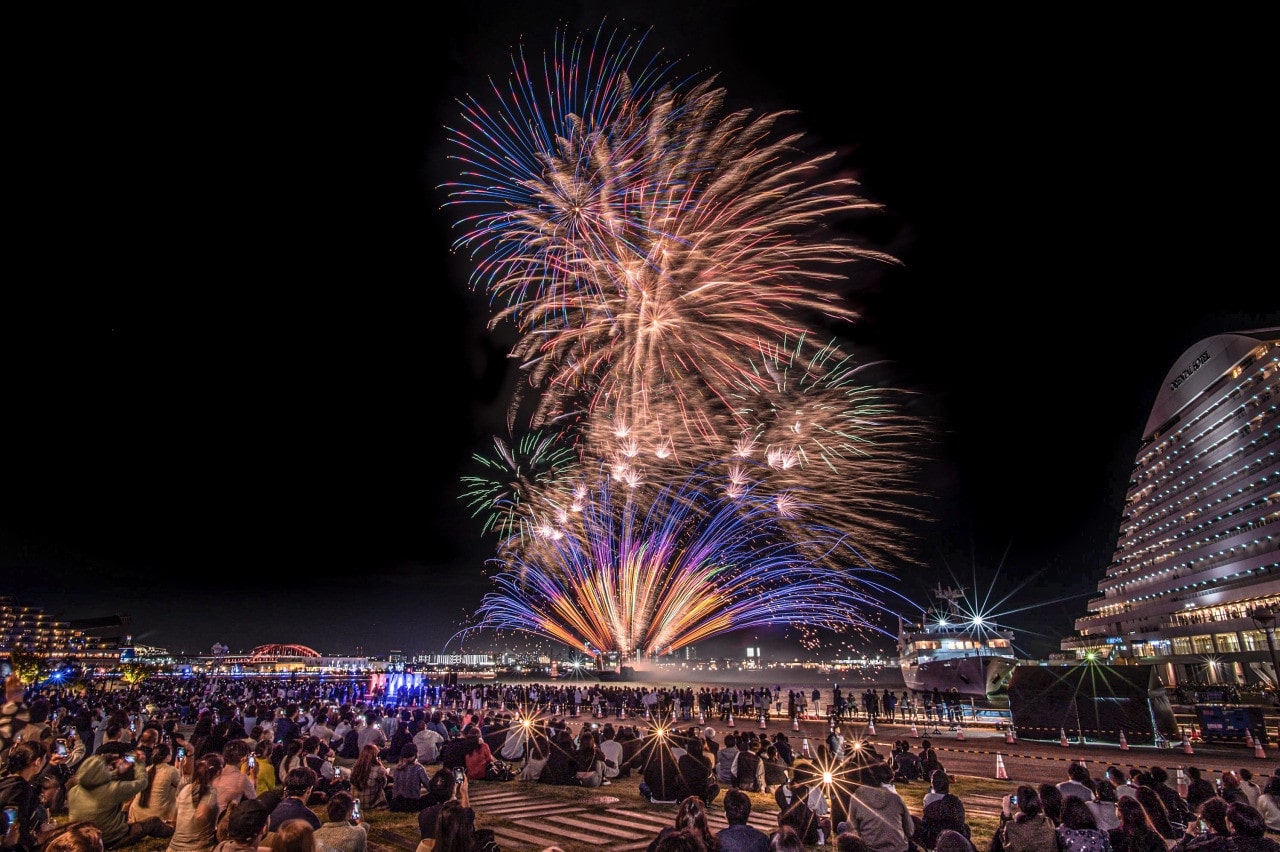
Kobe Harbor MINATO HANABI Night Cruise: Fireworks and Port City Night Views Together
During Kobe Harbor MINATO HANABI, local operators also offer tours combining a harbor cruise with fireworks viewing. Tour content and prices vary by boat company, so please check each platform’s page. They let visitors enjoy the fireworks and the Kobe harbor night view from the sea.
Because MINATO HANABI runs for five consecutive days, October 19-23, there are relatively plenty of tour dates, so you can pick a date to suit your itinerary and enjoy a more relaxed experience.
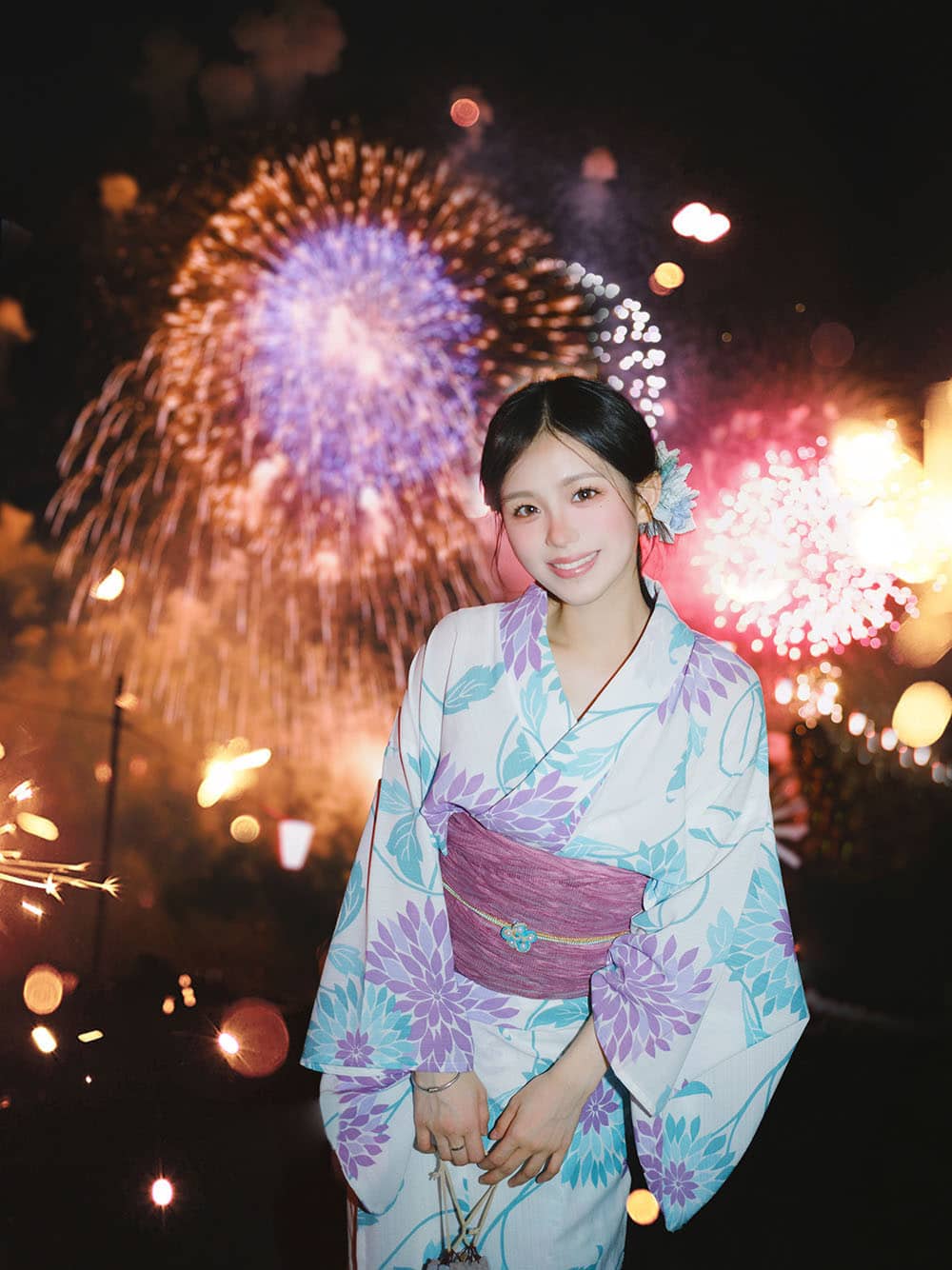
Yukata Rental Experience: The Essential Japanese-Style Ritual for Fireworks Festivals
Renting a yukata to attend a fireworks festival has become a classic Japanese summer experience. Rental prices vary by shop and plan; common plans include the yukata, obi sash and geta sandals, and some shops also offer hairstyling. Most shops are in tourist areas such as Asakusa and Kyoto, and you can rent and return on the same day.
Choose a rental shop near the festival venue and arrive 1-2 hours early to get dressed, so you do not lose viewing time to queues on the day. Some shops also offer multi-day rental plans, suited to travelers who plan to tour several fireworks festivals over consecutive days.
Where to Stay Along the Way
After fireworks shows, stations around the venue are packed. For example, Asakusa Station is extremely crowded after the Sumida River Fireworks Festival, and officials recommend using other stations. If you base yourself in Tokyo, stay around Ueno or Asakusa, from where you can walk back or take one train stop. Local events such as Nagaoka, Omagari and Lake Suwa have concentrated accommodation demand, so book early.


2026 Japan Fireworks Festivals FAQ
Q: How much do tickets to Japan’s 2026 fireworks festivals cost?
Most fireworks festivals can be watched for free. Paid seats vary by type: Lake Suwa from ¥3,000, the Omagari Platinum seat for two ¥70,000, and every seat at Nagaoka is paid.
Q: How do I buy paid seats for fireworks festivals?
You can apply through the official website lottery, join a travel-agency package, or book through platforms such as KKday and Klook. For popular events, book 1-3 months ahead.
Q: What happens if it rains at a fireworks festival?
Rules differ by event: Tsuchiura has a rain date (November 14), while Sumida River and Kobe MINATO HANABI are cancelled outright in severe weather. Check the organizer’s website for the final decision.
Q: How should I plan transport after a fireworks festival?
Leave 30 minutes early and use a nearby station, or choose alternatives such as a chartered car or a cruise, to avoid crowding into the nearest station with tens of thousands of others.
Q: Which three are Japan’s Big Three fireworks festivals?
They are the Omagari Fireworks Festival in Akita, the Tsuchiura National Fireworks Competition in Ibaraki, and the Nagaoka Fireworks Festival in Niigata, all competition-level fireworks events.
Q: Which month is best to see fireworks festivals?
July-August is the peak, with the most and biggest shows, but the April Okinawa show and the October-November Osaka and Ibaraki shows have cooler, more comfortable weather.
Q: What should I bring to a fireworks festival?
Bring a picnic mat, a fan, mosquito repellent, light rain gear and cash. Guard against heat at August shows, and bring a warm jacket for April and December shows.