
Kitano Tenmangu Guide 2026: Worship Tips for the God of Learning, Plum Blossom Festival and Nearby Sights
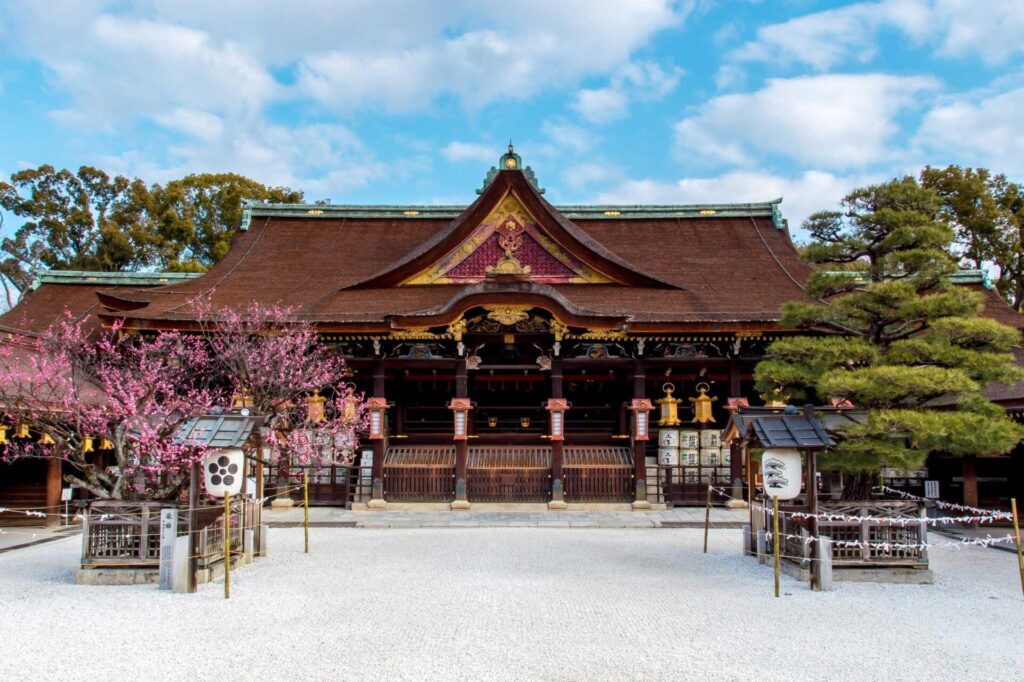
Kitano Tenmangu is the head shrine of about 12,000 Tenmangu shrines across Japan. It enshrines Sugawara no Michizane, the god of learning, and visiting the grounds is free. It is Kyoto’s top spot for plum blossoms and for praying for academic success.
The Origins and Faith of Kitano Tenmangu
Kitano Tenmangu was founded in 947 and enshrines Sugawara no Michizane, a scholar of the Heian period. According to legend, after Michizane died with his name unjustly blackened he became a thunder god, and the imperial court built this shrine to appease his spirit. It gradually became the center of faith for learning and calligraphy.
Today, many students and parents come every year to pray for exam success, and the grounds sell a wide range of study-success amulets, making it one of the busiest shrines in Kyoto.
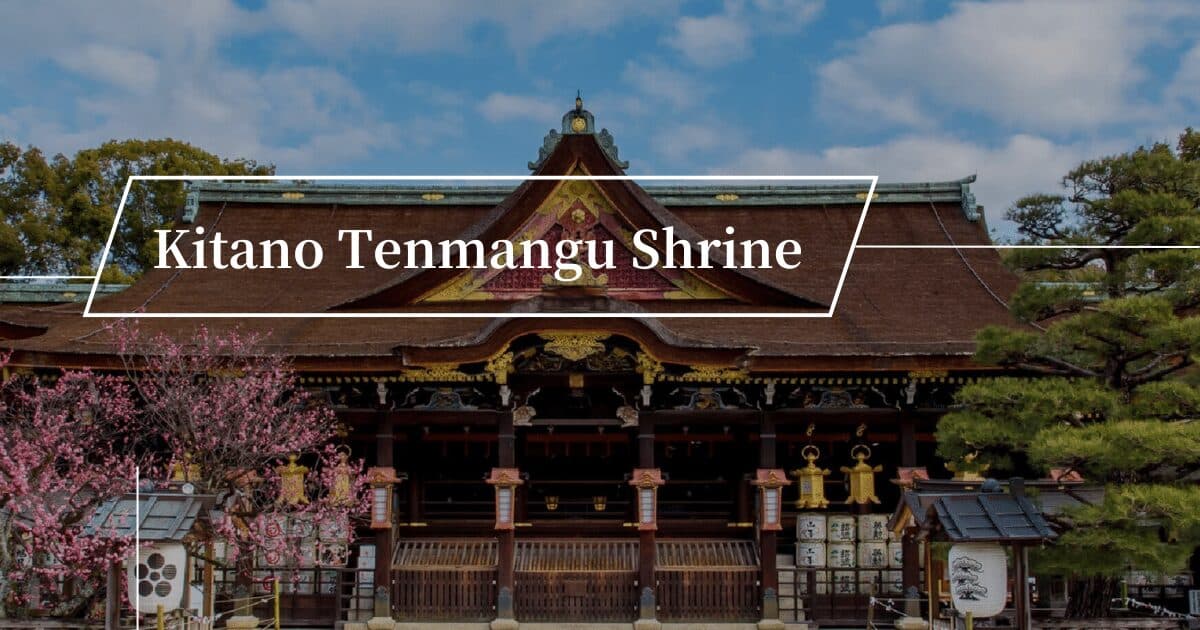
The National Treasure Main Hall
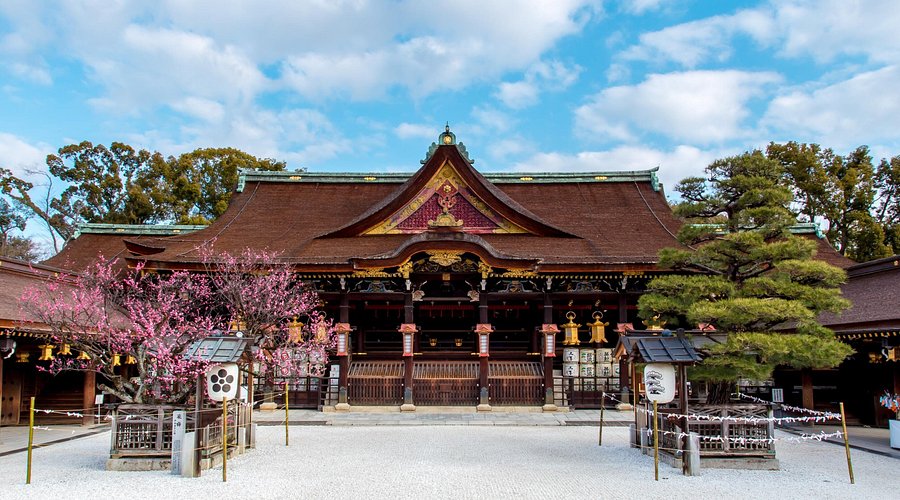
The current main hall was built in 1607, rebuilt with funds from Toyotomi Hideyori, son of Toyotomi Hideyoshi. It uses the hachito-zukuri (“eight-building”) style and is a representative example of Momoyama-period gongen-zukuri architecture, designated a National Treasure of Japan.
The hall is richly carved, painted and gilded, with exquisite openwork carvings and colorful paintings in the details, well worth admiring for the beauty of its historic craftsmanship.

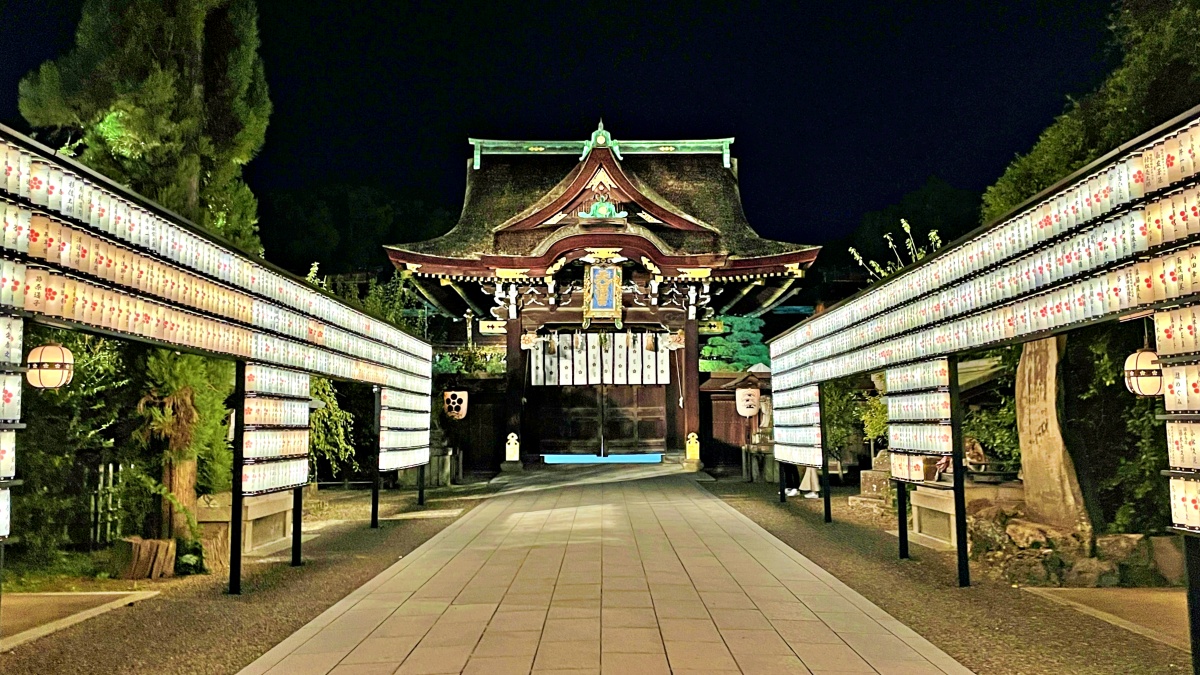
Sanko-mon Gate
Sanko-mon is the middle gate leading to the main hall. Its name means “Gate of Three Lights” for the sun, moon and star motifs said to be carved on its beams. Legend says only the sun and moon are actually carved, and that the North Star once shone directly above the gate, so it is known as the “Gate of Three Lights without a star.”
The gate is an Important Cultural Property with fine craftsmanship, and is one of the landmarks in the grounds that photography lovers will want to shoot.
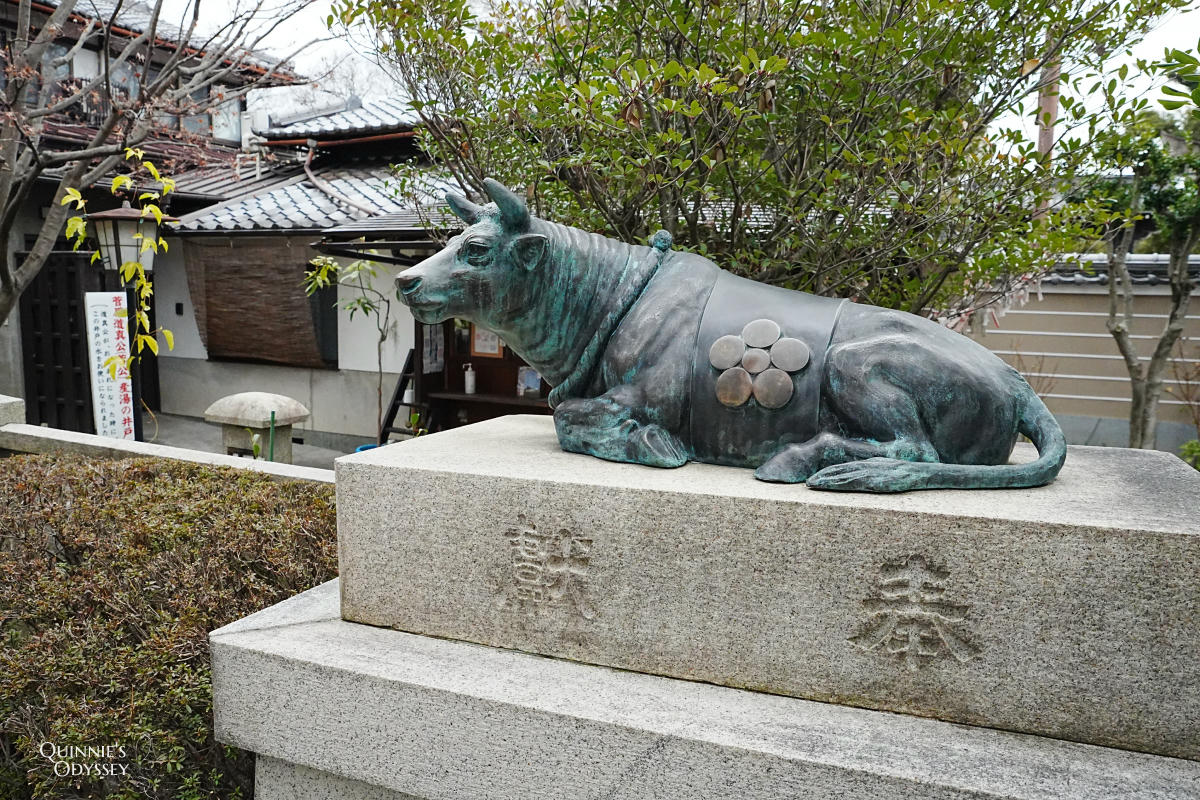
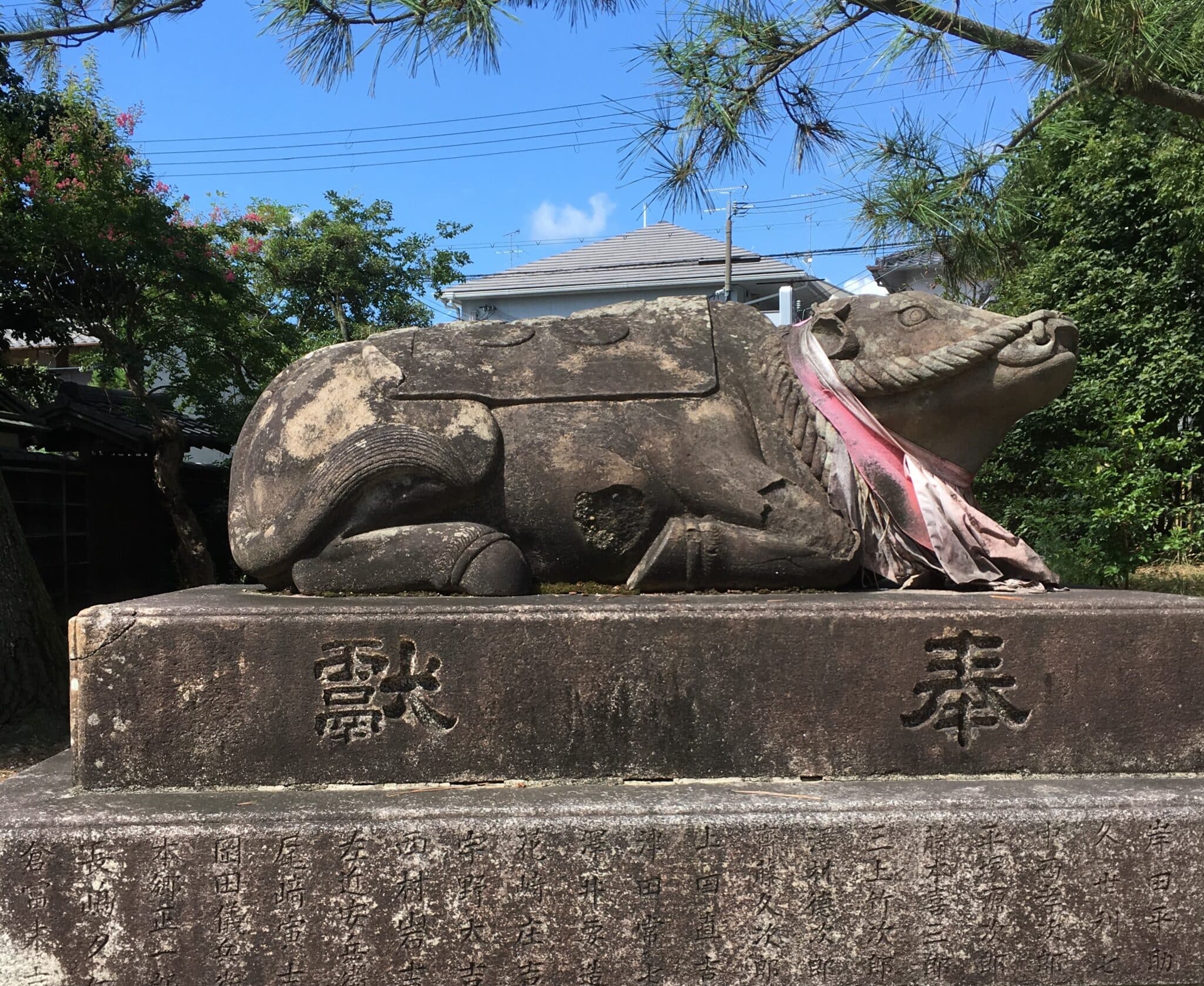
The Stroking Bull, the Shrine’s Divine Messenger
There are many reclining bull stone statues in the grounds. The bull is said to be the divine messenger of Sugawara no Michizane. Rubbing the bull’s head is said to bring wisdom and help with exams, and rubbing any other part is said to protect the matching part of your own body.
Before worshipping, try rubbing the bull’s head and then the part of your body that bothers you. It is one of the most popular rituals at Kitano Tenmangu, loved by visitors from Japan and abroad.
Treasure Hall
The Treasure Hall holds the national treasures and Important Cultural Properties handed down at Kitano Tenmangu, including picture scrolls, swords and items related to Sugawara no Michizane. It opens only on certain dates and during exhibition periods, and the admission fee depends on the exhibition. Please check the official website.
Exhibits change regularly, so visitors who love historical artifacts and Japanese swords should check the opening calendar in advance to avoid a wasted trip.
The Plum Garden and Plum Blossom Spot
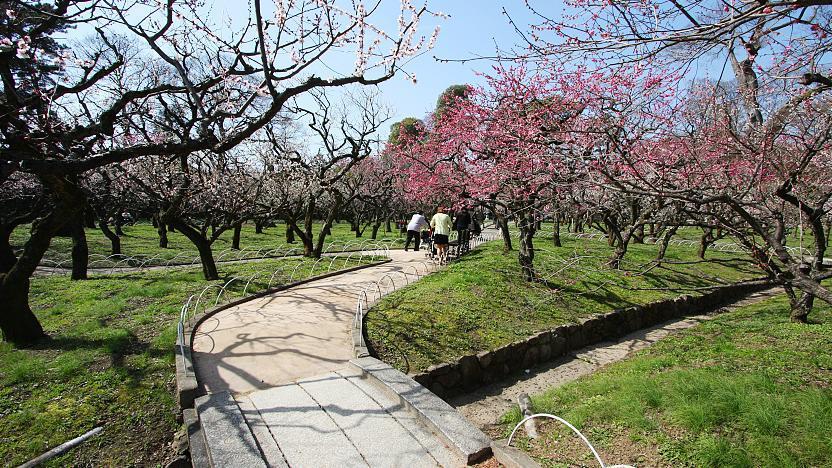
The grounds have about 1,500 plum trees of 50 varieties, with a blooming season of up to two months. It is Kyoto’s most famous plum blossom spot and attracts crowds every year. The Plum Blossom Festival is held every year on February 25.
While the Plum Garden is open you can enjoy white and red plum blossoms side by side, and taste matcha and seasonal Japanese sweets at the tea stand in the garden.
Momiji-en Garden and the Historic Odoi Earthworks
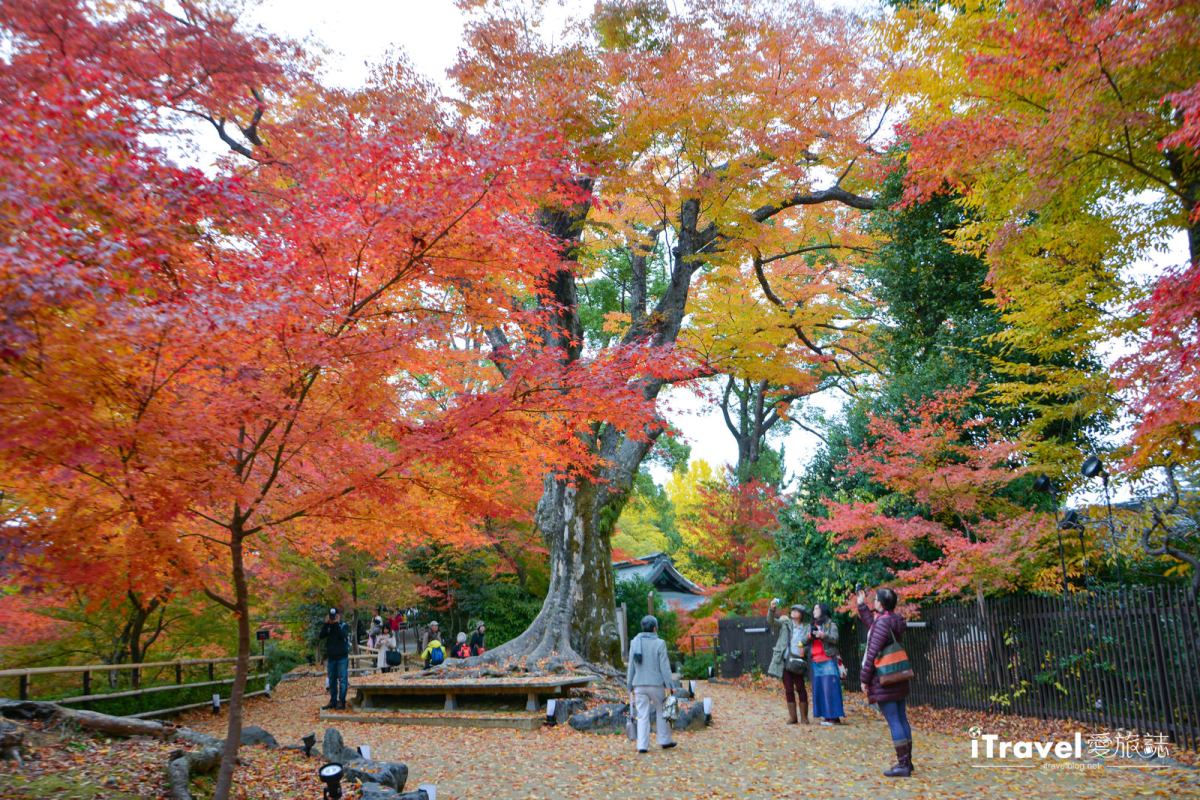
The Odoi Momiji-en maple garden follows the Odoi earthen rampart built by Toyotomi Hideyoshi. The scenery is beautiful when the leaves turn red in autumn, and you can stroll along the Kamiya River to enjoy the maples.
In 2026 it is open from October 31 to December 6. From mid-November it is lit after sunset until 20:00, and the night view of red leaves reflected in the stream is one of Kyoto’s must-see autumn sights.
Tenjin-san Market
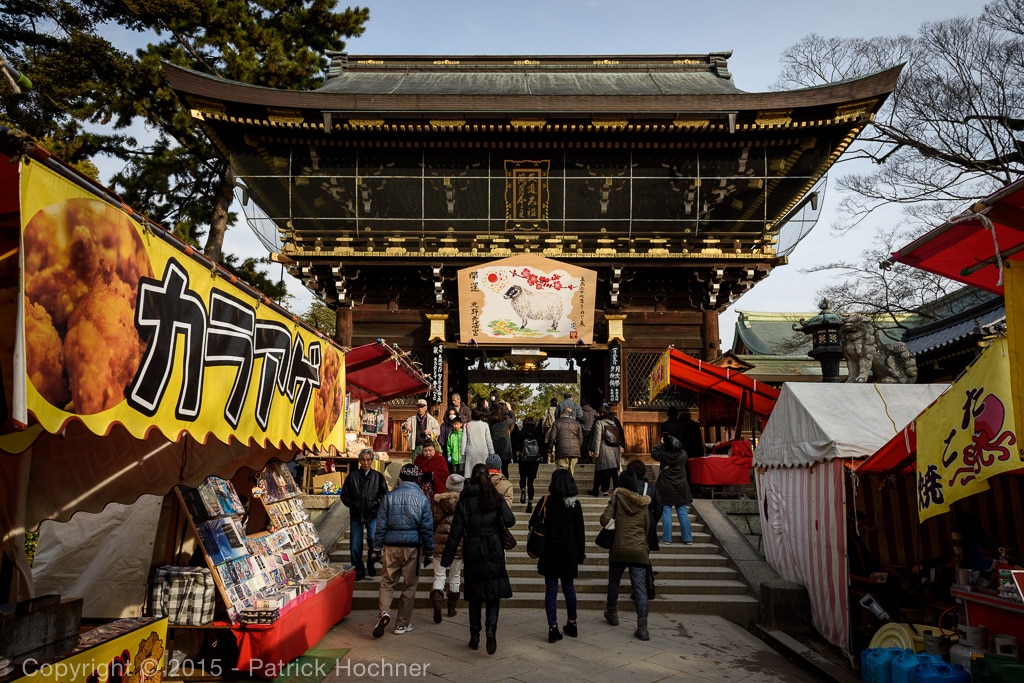
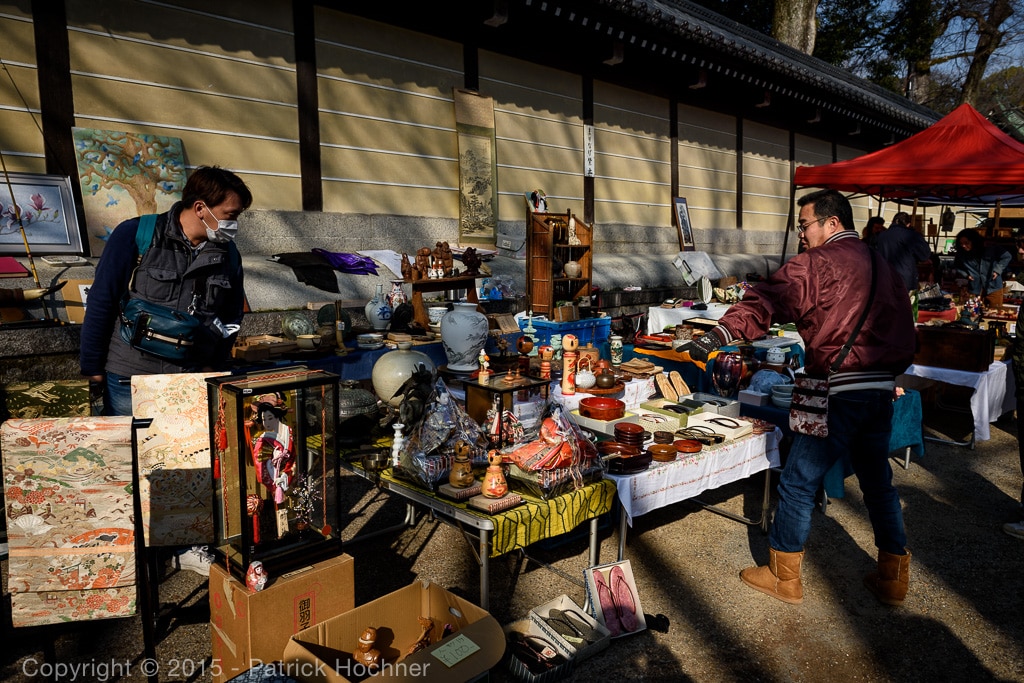
The Tenjin-san market, held on the 25th of every month (the anniversary of Sugawara no Michizane’s death), is one of the largest flea markets in Kyoto. About 1,000 stalls fill the grounds and the area around them, selling antiques, kimono, snacks and handmade goods.
We suggest setting aside half a day for the market and going in the morning, when it is less crowded.
The Kitano Tanabata Festival is also held around August, with Tanabata bamboo decorations in the grounds and evening illuminations.
How to Get to Kitano Tenmangu: Complete Guide to Transport and Fares
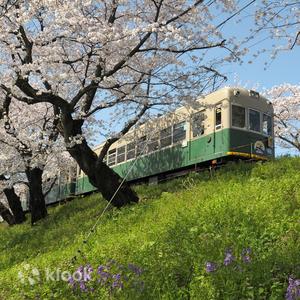
There is no subway line directly to Kitano Tenmangu. We recommend taking Kyoto City Bus No. 50 from Kyoto Station to the “Kitano Tenmangu-mae” stop, about 35 minutes. If you are coming from the Arashiyama direction, take the Randen tram to Kitano-Hakubaicho Station and walk about 5 minutes.
Must-See Spots at Kitano Tenmangu in 2026: Plum Blossom Festival and Nearby Attractions
In 2026 the Kitano Tenmangu Plum Garden hosted a collaborative art exhibition. Together with nearby Kinkaku-ji, Ryoan-ji and Ninna-ji, it forms a prime route for a one-day trip in northwest Kyoto.
Plum Garden Peak Season 2026
The Plum Garden “Hana no Niwa” normally opens from early February to late March. In 2026, because of a collaboration with KYOTO NIPPON FESTIVAL, the opening period was extended from February 1 to May 24. The garden has about 1,500 plum trees of 50 varieties.
Plum Garden tickets in 2026 are priced as the collaboration exhibition: ¥3,000 for adults and ¥1,500 for children on the day, and ¥2,800 for adults and ¥1,400 for children in advance. As of October 2026, the 2027 Plum Garden opening period and ticket prices have not been announced. Please check the official Kitano Tenmangu website.
Please check the garden’s closed days first.
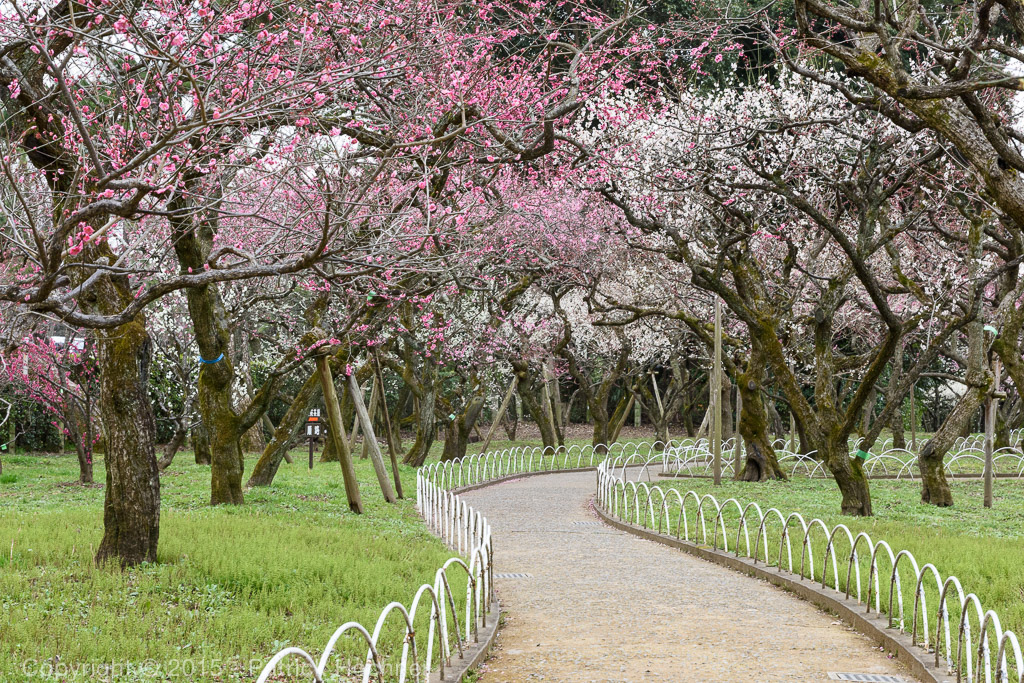


Kitano Tenmangu Plum Blossoms 2026: Bloom Season and Garden Hours
The plum blossoms at Kitano Tenmangu bloom in relay by early, mid and late varieties. Early varieties open first from late January to mid-February, mid-season varieties are in full bloom from mid-February to early March, and late varieties carry the spring on from mid to late March. The best viewing period is late February to early March. During the 2026 collaboration exhibition, the garden was open from 9:00 to 20:30 (last entry 20:00) and lit every night.
Plum Blossom Festival and the Nodate Grand Tea Ceremony
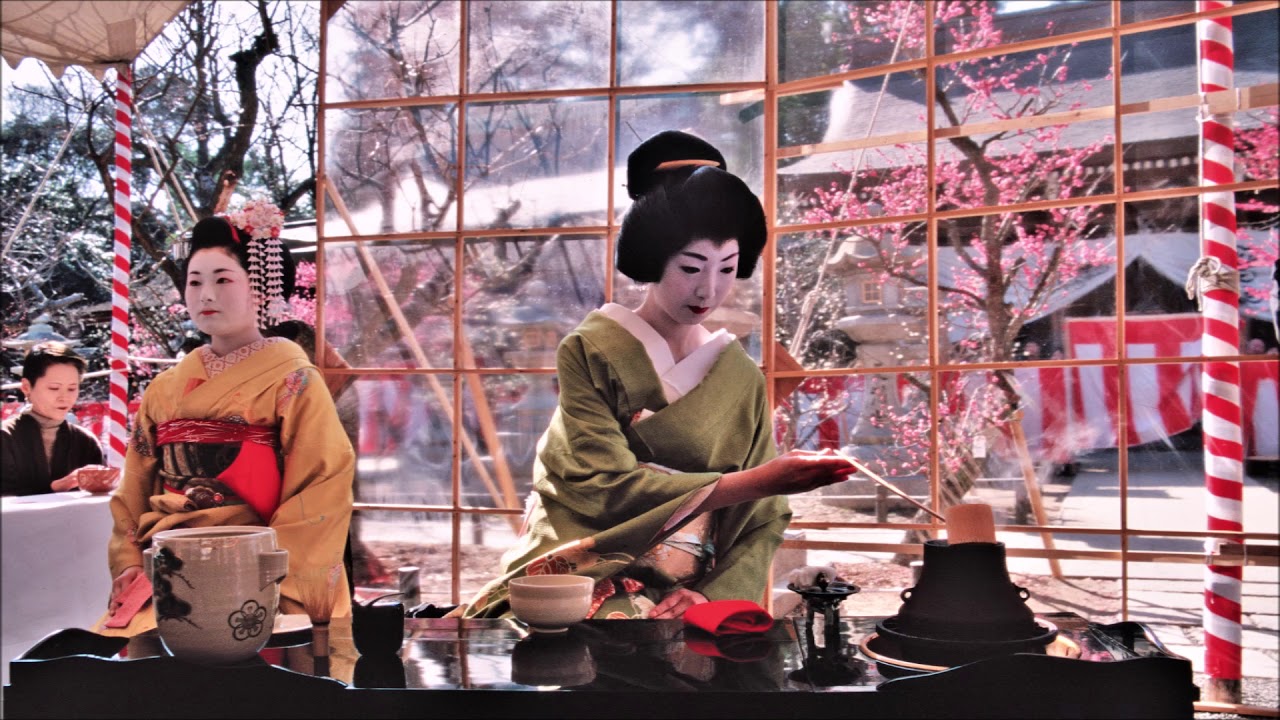
The Plum Blossom Festival is held every year on February 25, the anniversary of Sugawara no Michizane’s death, and is an important festival at Kitano Tenmangu. Open-air tea stands are set up in the grounds for worshippers.
At the Nodate Grand Tea Ceremony, maiko and geiko from Kamishichiken serve tea among the plum trees. In 2026 the tea ceremony ticket (haifuku-ken) cost ¥3,000, with tea stands in the grounds from 10:00 to 15:00. Numbers are limited, so we suggest buying tickets early.
Seats at the tea ceremony are limited. If you miss out, you can still buy a separate ticket to enter the Plum Garden.
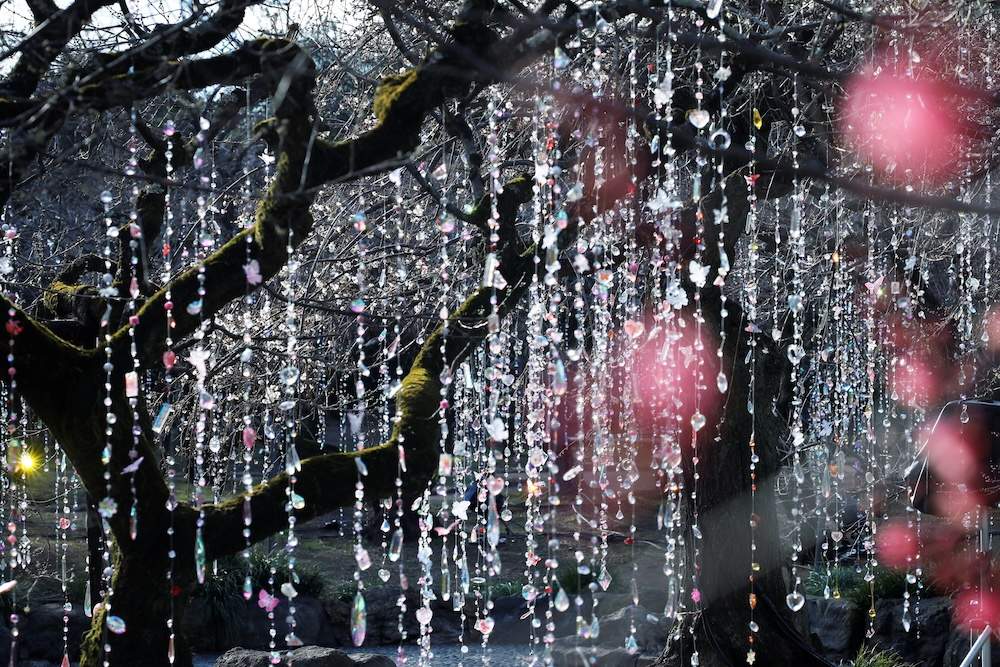
KYOTO NIPPON FESTIVAL Mika Ninagawa Collaboration Exhibition
From February 1 to May 24, 2026, the Plum Garden collaborated with KYOTO NIPPON FESTIVAL. World-renowned artist Mika Ninagawa worked with EiM to decorate the plum grove with about 1,200 crystals and light, creating an immersive, dreamlike sacred space.
During the exhibition, evening opening was extended to 20:30. After dark, lights are projected onto the plum grove for a completely different dreamlike mood, and entering at dusk lets you enjoy both the day and night scenery.
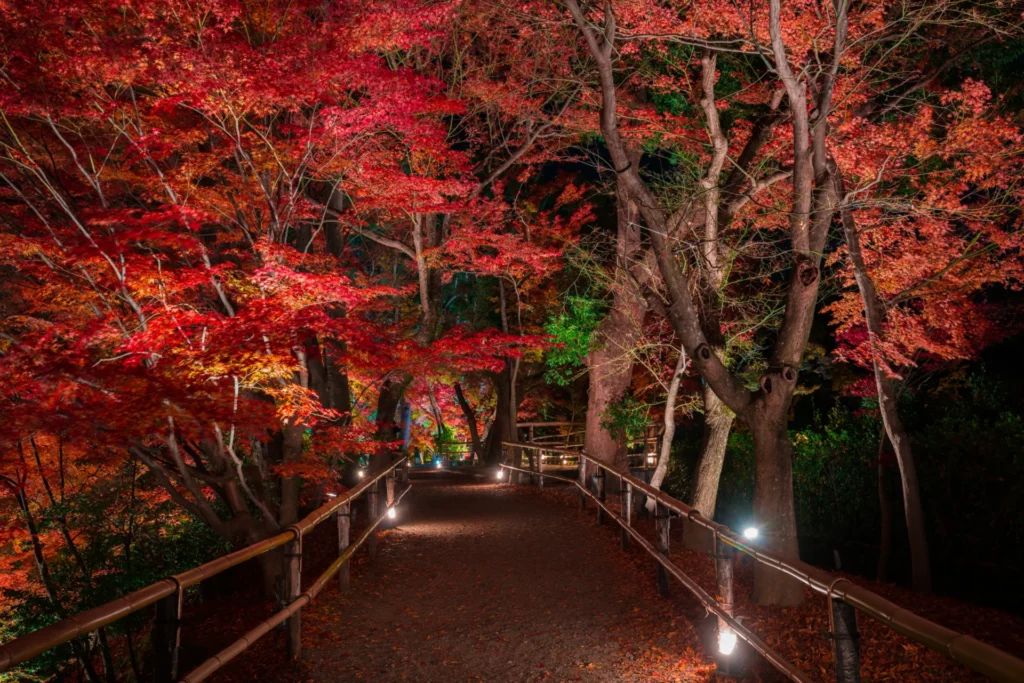
Momiji-en Garden and Odoi Night Maples
In autumn 2026, the Odoi Momiji-en garden is open from October 31 to December 6 (9:00-16:00, lit after sunset until 20:00 from mid-November). It follows the Odoi earthen rampart built by Toyotomi Hideyoshi and has about 350 maple trees. Admission is ¥1,500 for adults and ¥700 for children (with tea and sweets).
Night illuminations are normally planned, with lights reflecting on the red leaves along the Kamiya River. We suggest entering at dusk to enjoy both the twilight and the night maples.
During the day you can stroll the paths and see the remains of the old defensive wall up close, a place of both historical and natural value.
Tenjin-san Market on the 25th of Every Month
The Tenjin-san market held on the 25th of each month (the anniversary of Sugawara no Michizane’s death) is Kyoto’s largest market for antiques and curios. About 1,000 stalls fill the grounds and the area around them, selling kimono, antiques, ceramics, bonsai and all kinds of snacks.
Shimai-Tenjin on December 25 and Hatsu-Tenjin on January 25 are especially crowded and are the two largest markets of the year. Arriving before 8:00 a.m. helps you avoid the crowds and find more distinctive antiques.
We suggest allowing at least 2 hours at the market. There are also many local snack stalls selling wagashi and grilled dango, a great chance to experience everyday Kyoto culture.
Kinkaku-ji (Rokuon-ji)
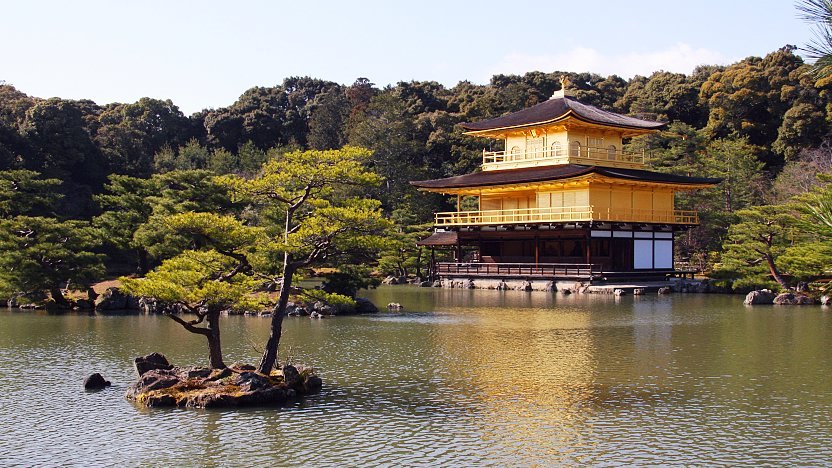
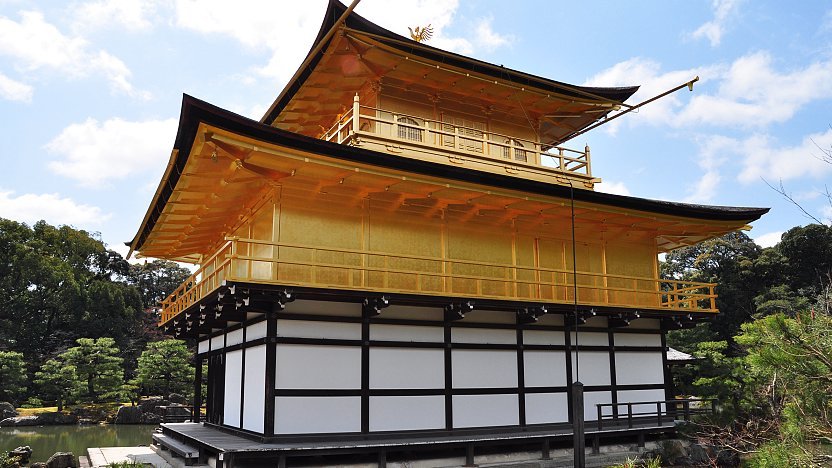
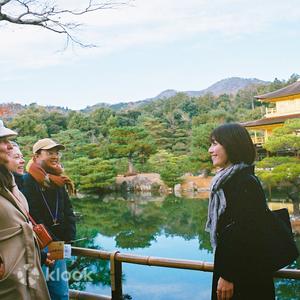
Rokuon-ji (Kinkaku-ji) is a representative World Heritage site of Kyoto, where the gold-leaf Shariden pavilion is reflected in the Kyoko-chi pond, beautiful in every season. It takes about 10-15 minutes by bus from Kitano Tenmangu. Adult admission is ¥500 and it is open 9:00-17:00. We suggest a 40-minute visit. The pond edge is a popular photo spot.
The temple offers omamori charms and goshuin stamps. For those who love Buddhist culture and gardens, we suggest stopping here from the shrine, as the route is smooth.
-Klook.jpg)
Ryoan-ji
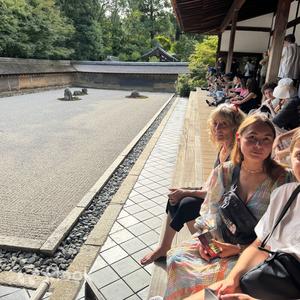
Ryoan-ji is famous for its dry landscape rock garden, made of only 15 stones and white sand, a masterpiece of Japanese karesansui and a World Heritage site. It is close to Kinkaku-ji and easy to reach. Adult admission is ¥600, and it is open 8:00-17:00 from March to November and 8:30-16:30 from December to February. We suggest sitting quietly before the rock garden to savor the beauty of empty space, staying about 30-40 minutes. The temple also has a tea house and the abbot’s garden, suiting travelers who love Zen and Japanese aesthetics.
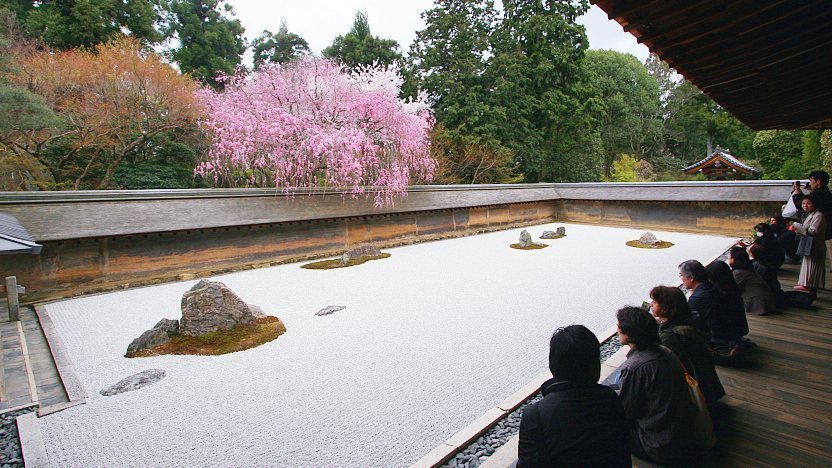
Ninna-ji
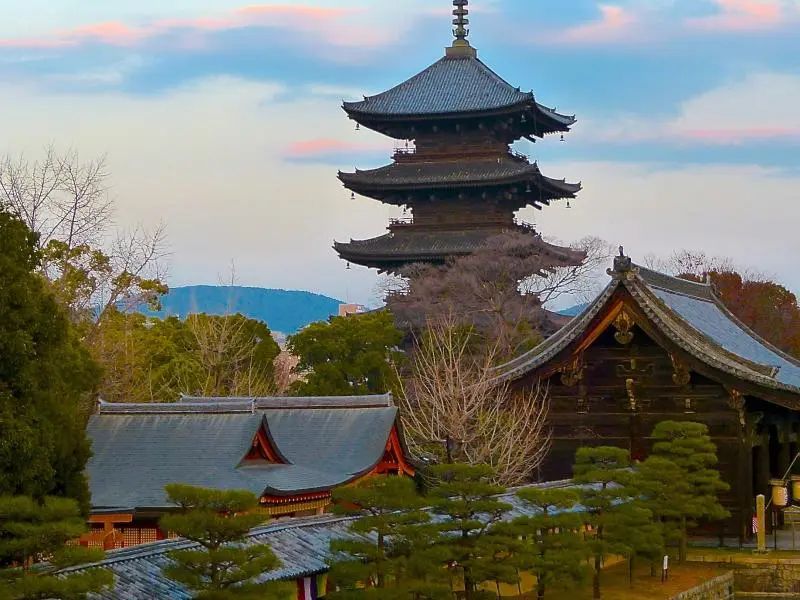
Ninna-ji is the head temple of the Omuro school of Shingon Buddhism and a World Heritage site. It is a famous spring cherry blossom spot, known for its five-story pagoda and Omuro cherry trees. The Goten palace garden shows the elegant style of the imperial family. It is within walking distance of Ryoan-ji. Entry to the grounds is free, and admission to the Goten palace and garden is ¥800 for adults (free for high school students and under). Opening hours are 9:00-17:00 from March to November and 9:00-16:30 from December to February. We suggest combining it with Ryoan-ji and Kinkaku-ji for a half-day visit. The temple offers study-success and traffic-safety omamori charms, and the Goten displays imperial family artifacts, suiting travelers who love historic architecture and imperial culture.
Hirano Shrine
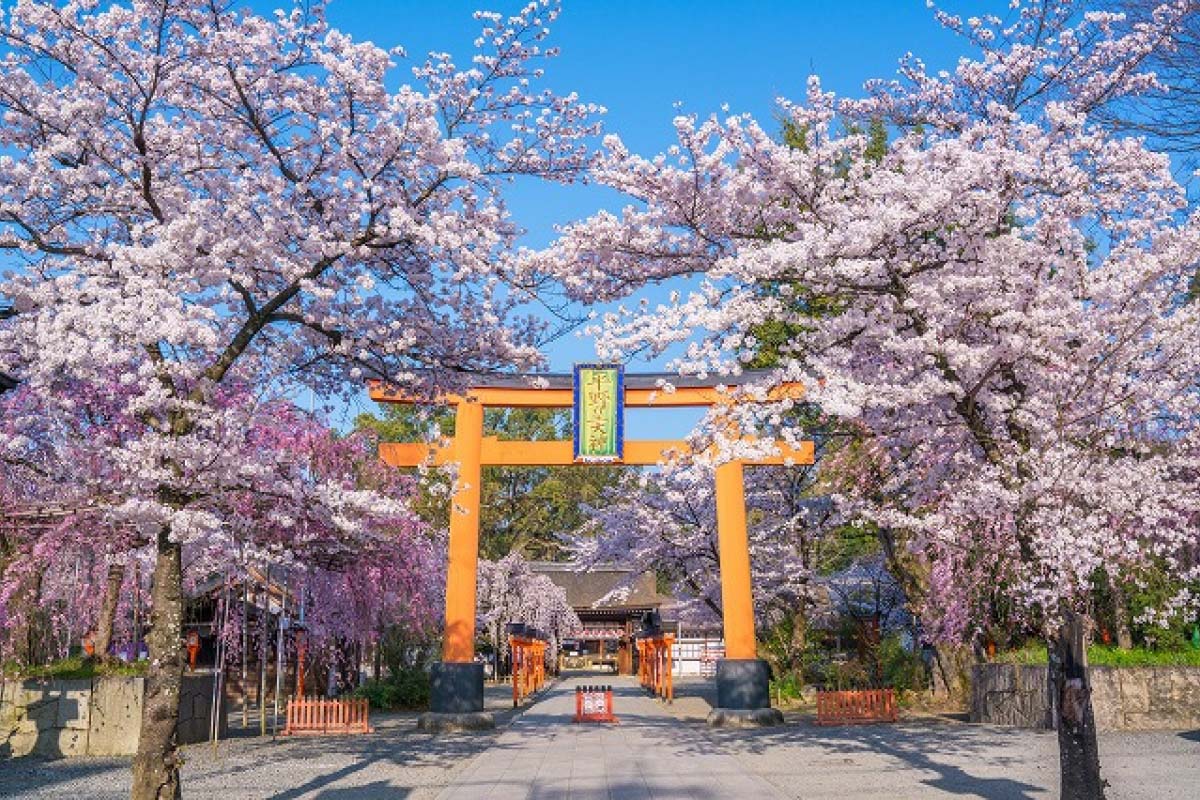
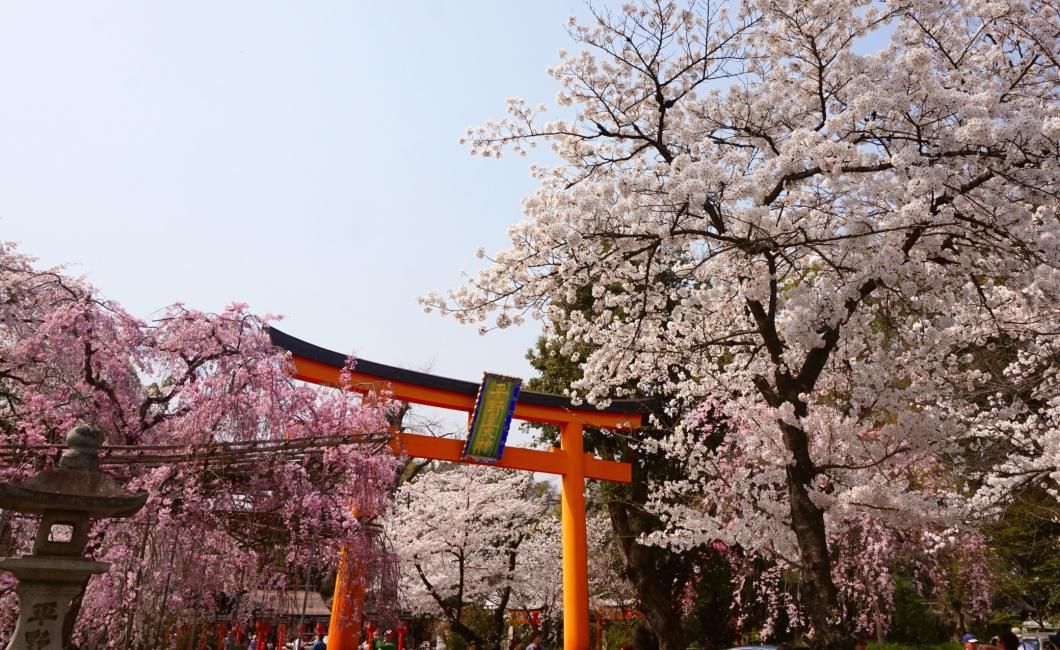
Hirano Shrine is close to Kitano Tenmangu and is a famous cherry blossom spot in Kyoto, with about 400 trees of about 60 varieties. The season runs from March to April, with rich variety and a long bloom period.
The shrine was founded in the Heian period and mainly enshrines four deities including Imaki no Okami, with prayers for good fortune, warding off misfortune and household safety.
In spring, evening cherry blossom viewing events are held with stalls, echoing the plum blossom season at Kitano Tenmangu. It is a good stop at the end of the plum season, to feel Kyoto as the blossom seasons change over.
Normal opening hours are 6:00-17:00, extended to 21:00 during the cherry blossom season.
Strolling the Kamishichiken Geisha District
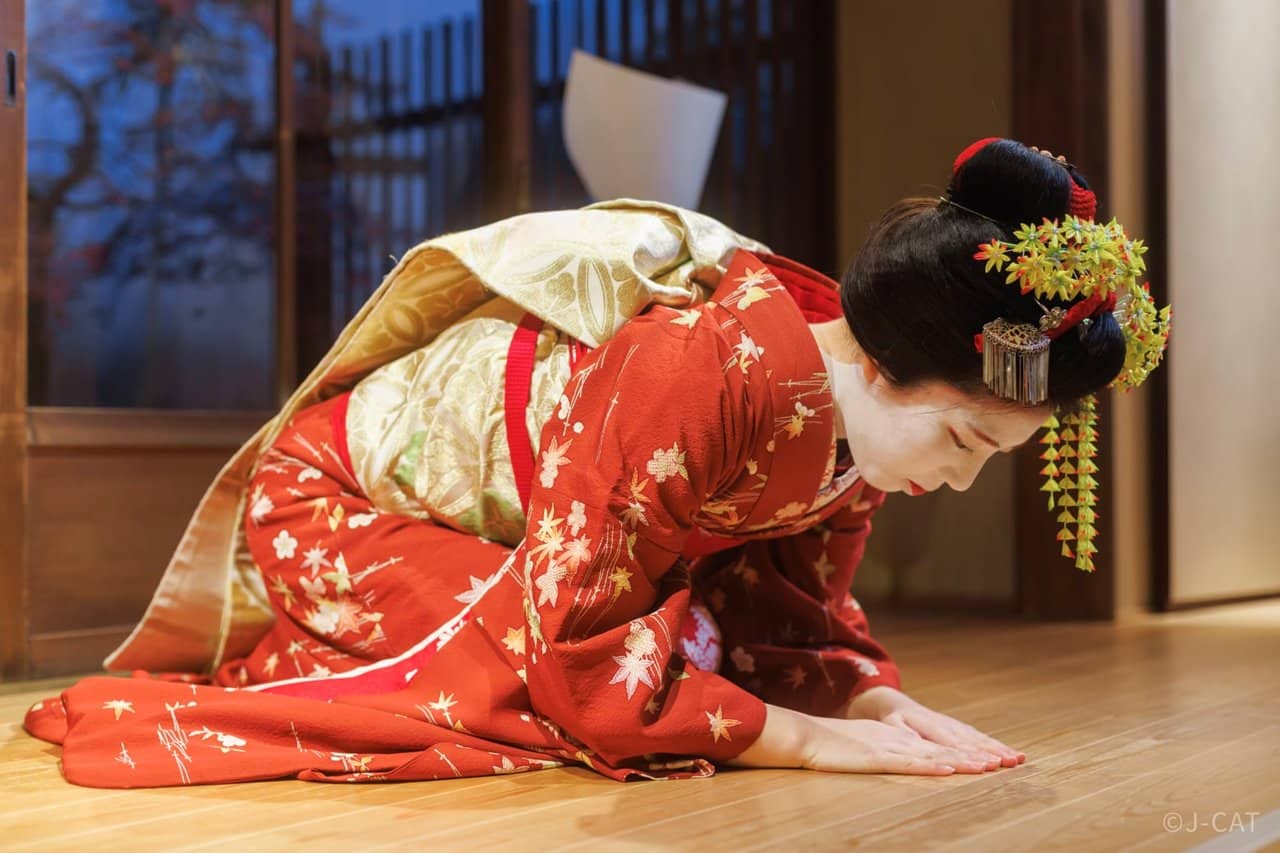
Kamishichiken is Kyoto’s oldest geisha district, just east of Kitano Tenmangu, with traditional teahouse buildings and stone-paved lanes, where geiko and maiko still work today. The district has cafes and restaurants in converted machiya townhouses, good for a walk after worship. The Kitano Odori dance performance is usually held from late March to early April, and in 2026 it ran from March 20 to April 2.
How Much Does Kitano Tenmangu Cost? Tickets, Experiences and Guided Tours
Kitano Tenmangu is in Kamigyo Ward, Kyoto (Bakurocho), and its biggest feature is that worship at the main hall is completely free, one reason it is a must-visit for students and exam takers. There are still a few attractions and experiences that need separate tickets, including the Treasure Hall, the Plum Garden “Hana no Niwa” and special evening visits, with prices from a few hundred yen to over a thousand. To learn more about the life of Sugawara no Michizane and the history of the shrine, we suggest adding a local guided tour or audio guide for a richer visit. Below are the paid items and experiences you may actually use, to help you plan your budget and time.
Main Hall Worship and Free Exploration of the Grounds
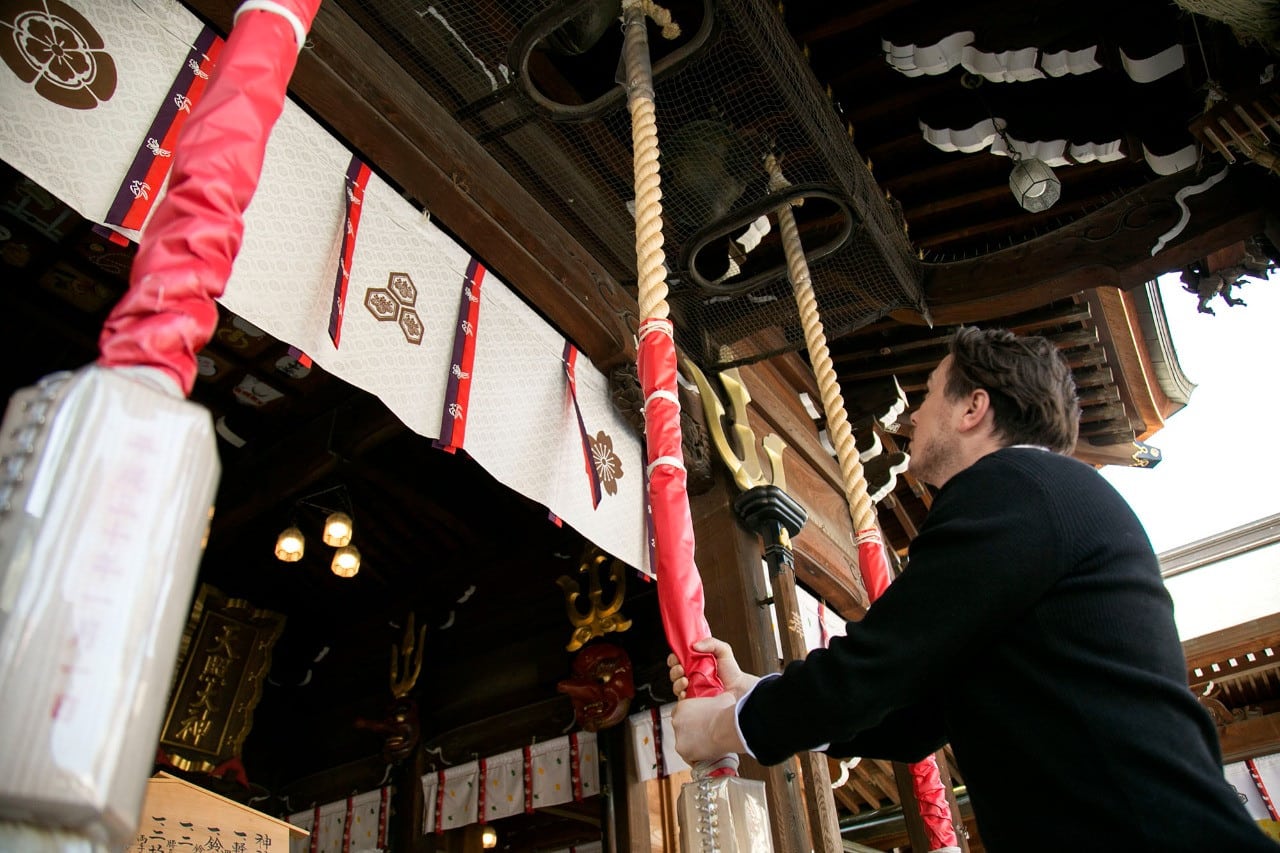
Worship at the main hall of Kitano Tenmangu is free, and it is open 7:00-17:00 year-round. Free sights in the grounds include the main hall, Sanko-mon, the ema hall and the bull statues. We suggest allowing 1 to 1.5 hours. The more than 50 reclining bull statues are the signature feature, and rubbing different parts is said to bring wisdom or cure illness. This free experience is also a popular photo spot.
Compared with the free main hall, many visitors choose paid facilities such as the Treasure Hall and the Plum Garden. Overall, Kitano Tenmangu is a great-value sight in Kyoto, suited to a half-day or longer itinerary.
Visiting the Treasure Hall
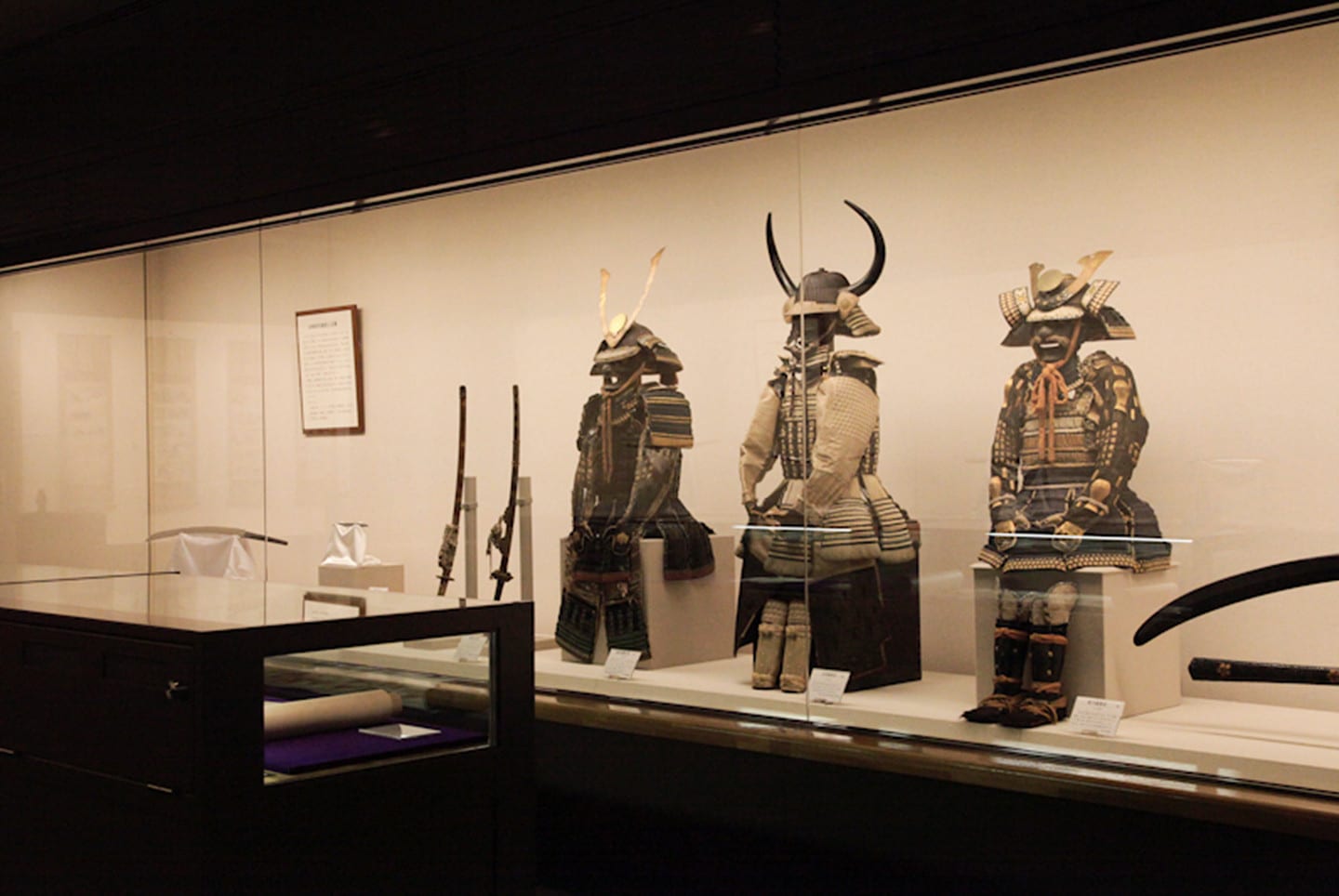
The Treasure Hall houses precious items including the National Treasure Kitano Tenjin Engi Emaki. The admission fee depends on the exhibition, and it is open on the 25th of each month (Tenjin-ichi) and during special exhibition periods. Please check the official website for opening dates and fees first.
The hall displays historical materials and artworks related to Sugawara no Michizane, helping you understand the shrine’s history and the roots of the faith in the god of learning. A visit takes about 30-45 minutes.
Because opening hours are limited, please confirm whether your visit date is an opening day. If there is no special exhibition, you can switch to seasonal spots such as the Plum Garden or Momiji-en.
Plum Garden “Hana no Niwa” and Momiji-en Autumn Leaves
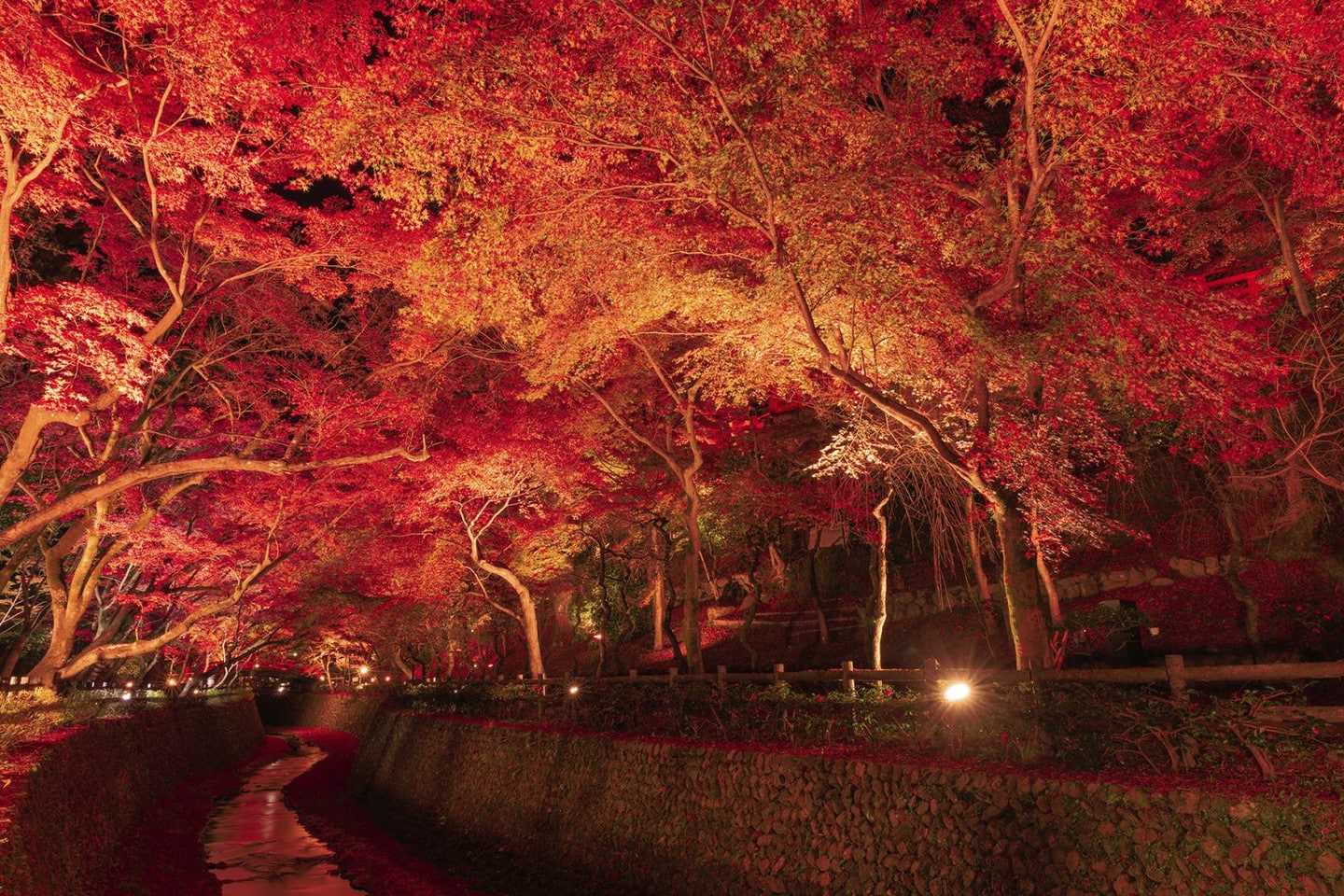
The Kitano Tenmangu Plum Garden “Hana no Niwa” normally opens from early February to late March, and in 2026 it was extended to May 24. Tickets are ¥3,000 for adults and ¥1,500 for children (¥2,800 / ¥1,400 in advance), and the garden has about 1,500 plum trees of 50 varieties, Kyoto’s plum blossom spot. In autumn the “Historic Odoi Momiji-en” is open from October 31 to December 6, 2026, with tickets of ¥1,500 for adults and ¥700 for children (including tea and sweets). Under the night illuminations, the maples with the Uguisu Bridge and Sanko-mon are charming, and we suggest going at dusk to feel the difference between day and night.
One-Day Guided Tour of Kyoto’s Must-Visit God-of-Learning Spots
Don’t want to plan it yourself? In northwest Kyoto (Kitano Tenmangu, Kinkaku-ji, Ryoan-ji and more) there are one-day guided tours with private transfers and a guide (language depends on the plan), bookable on KKday or Klook, with prices as listed on each platform. The guide explains the life of Sugawara no Michizane and the Tenjin faith in detail and links several sights in one day. Exam takers and parents who want to learn more about wish ema, omamori and worship etiquette should choose a guided tour for a fuller experience of the culture of Kitano Tenmangu as the center of faith in the god of learning.
Where to Stay Nearby
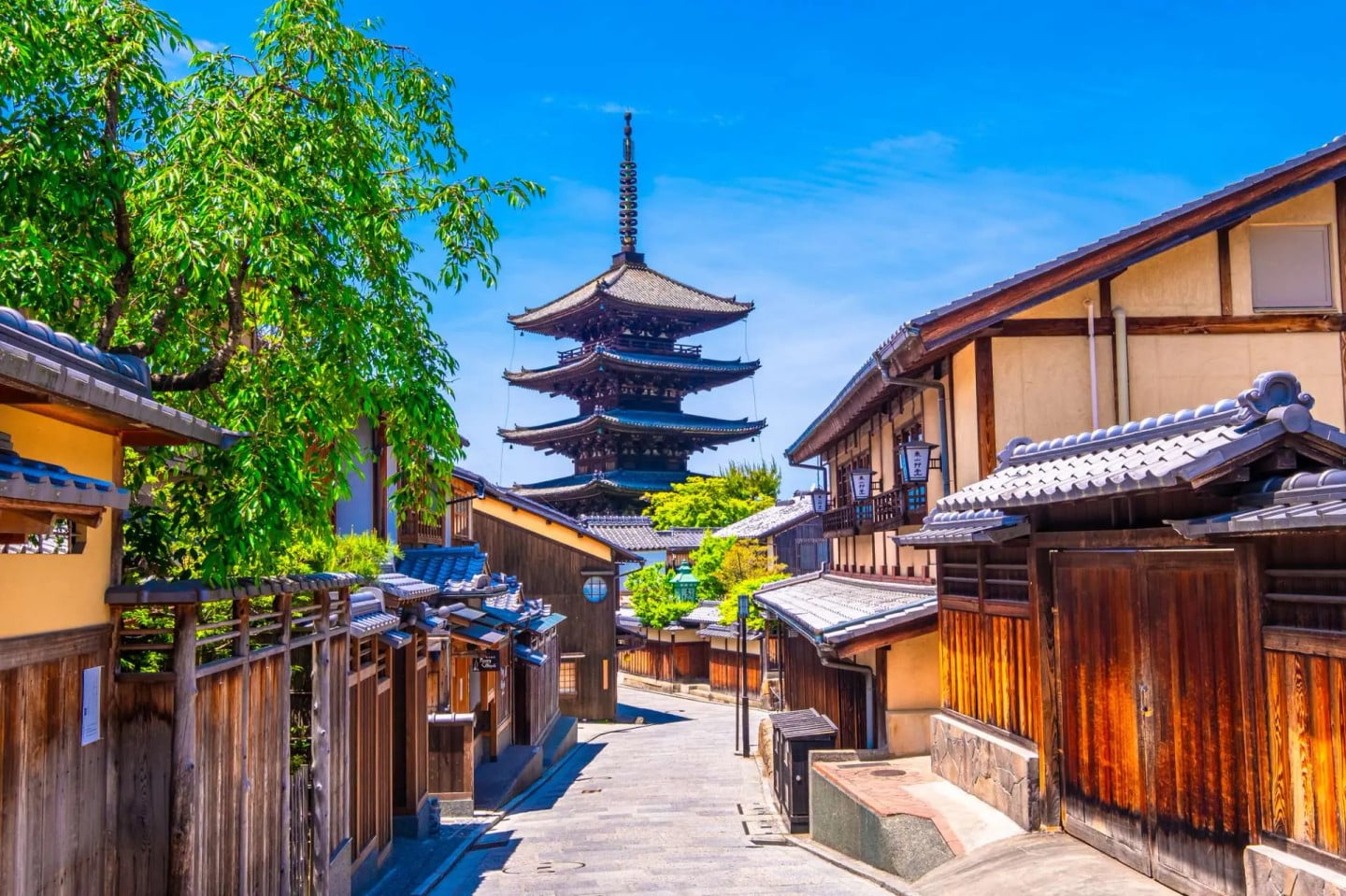
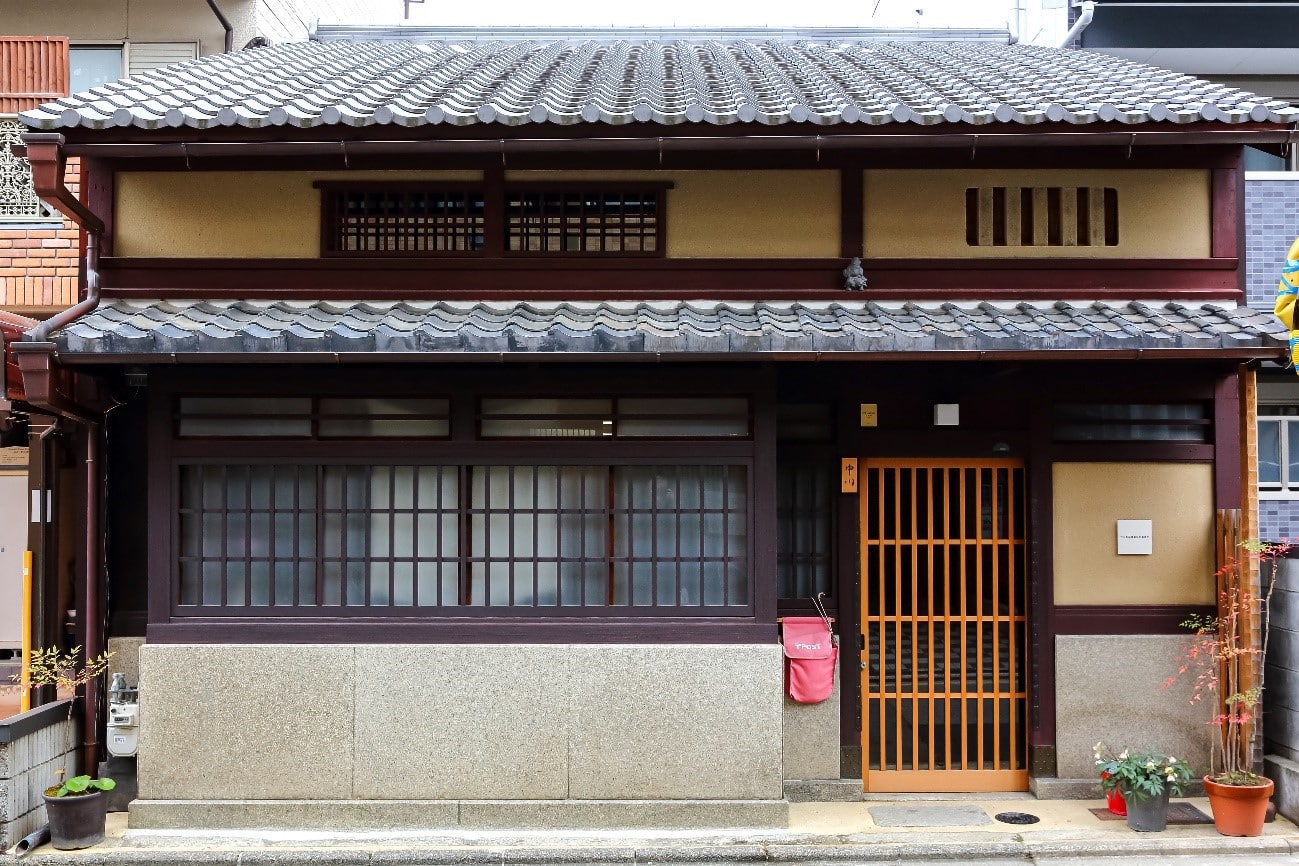
Kitano Tenmangu is in the northwest of Kyoto city. From Kyoto Station, City Bus No. 50 takes about 35 minutes, and it is about a 5-minute walk from Kitano-Hakubaicho Station on the Randen. To visit Kinkaku-ji, Ryoan-ji and Ninna-ji as well, you can stay around Kyoto Station and take buses from there, with convenient transport and dining.


Kitano Tenmangu FAQ
The questions readers search for most about Kitano Tenmangu, to quickly grasp the key points for worship and travel.
Q: Do I need a ticket to visit Kitano Tenmangu?
Worship at the main hall in the grounds is completely free. Only special areas such as the Plum Garden (2026: ¥3,000 for adults on the day) and Momiji-en (2026: ¥1,500 for adults) require a separate ticket.
Please check the official website for the latest information before you go.
Q: What are the opening hours of Kitano Tenmangu?
The gate hours announced on the official website are 7:00-17:00 (amulet office 9:00-16:30). During the 2026 Plum Garden collaboration exhibition, the Plum Garden was open until 20:30.
Q: What is the fastest way to Kitano Tenmangu from Kyoto Station?
We recommend Kyoto City Bus No. 50 to the “Kitano Tenmangu-mae” stop. The ride takes about 35 minutes and costs ¥230.
Q: When are the plum blossoms at Kitano Tenmangu most beautiful?
The best period is full bloom from late February to early March, when white and red plum blossoms together are most spectacular. In 2026 the Plum Garden was open until May 24 because of the collaboration exhibition. As of October 2026, the 2027 Plum Garden schedule has not been announced.
Q: When are the autumn leaves at Kitano Tenmangu most beautiful?
Momiji-en is open from October 31 to December 6 in 2026, with peak color in late November. Night illuminations are often held, with lights reflecting on the stream, and we suggest entering at dusk to enjoy both day and night scenery.
Q: When is the Plum Blossom Festival, and is there an extra charge?
The Plum Blossom Festival is held every year on February 25. The Nodate Grand Tea Ceremony ticket in 2026 had an offering of ¥3,000 per person, requires a separate ticket and has limited numbers.
Q: Are there any taboos or things to be aware of when visiting Kitano Tenmangu?
Before worshipping, we suggest washing your hands and rinsing your mouth at the temizuya, and following the “two bows, two claps, one bow” etiquette. Please do not touch or climb the cultural properties and sacred trees in the grounds, and do not pick flowers in the Plum Garden.