
2026 Kyoto Demachiyanagi Guide: Turtle Stepping Stones at the Kamogawa Delta, Shimogamo Shrine and a Stroll Through the University Town: Everyday Kyoto Where Students and Stepping Stones Meet
Demachiyanagi is the Kyoto neighborhood with the highest density of students, and both the Kamogawa Delta turtle stepping stones and Shimogamo Shrine are within walking distance, making it one of the most authentic walks for a taste of local life.
It helps to lay out how the Demachiyanagi sights relate to one another first, because planning a route becomes much easier:
- Kamogawa Delta and the turtle stepping stones: right beside the exit of Keihan Demachiyanagi Station, and the best-known spot for “turtle hopping” in Kyoto.
- Shimogamo Shrine and Tadasu no Mori: in the forest to the north of the delta, where the Kamo and Takano rivers meet. The shrine’s official signage gives about a 12-minute walk from Keihan Demachiyanagi Station.
- Kamo Ohashi Bridge: carries Imadegawa-dori across the southern tip of the delta and offers a panoramic view of the two rivers joining.
- Demachi Masugata Shopping Street: a local covered arcade around Kawaramachi-Imadegawa, just west across Kamo Ohashi Bridge.
- Hyakumanben and Kyoto University: head east along Imadegawa-dori, where you will find kissaten coffee houses, used bookshops and the handmade market held on the 15th of every month.
Kamogawa Delta: the youthful sandbar where the Takano and Kamo rivers meet
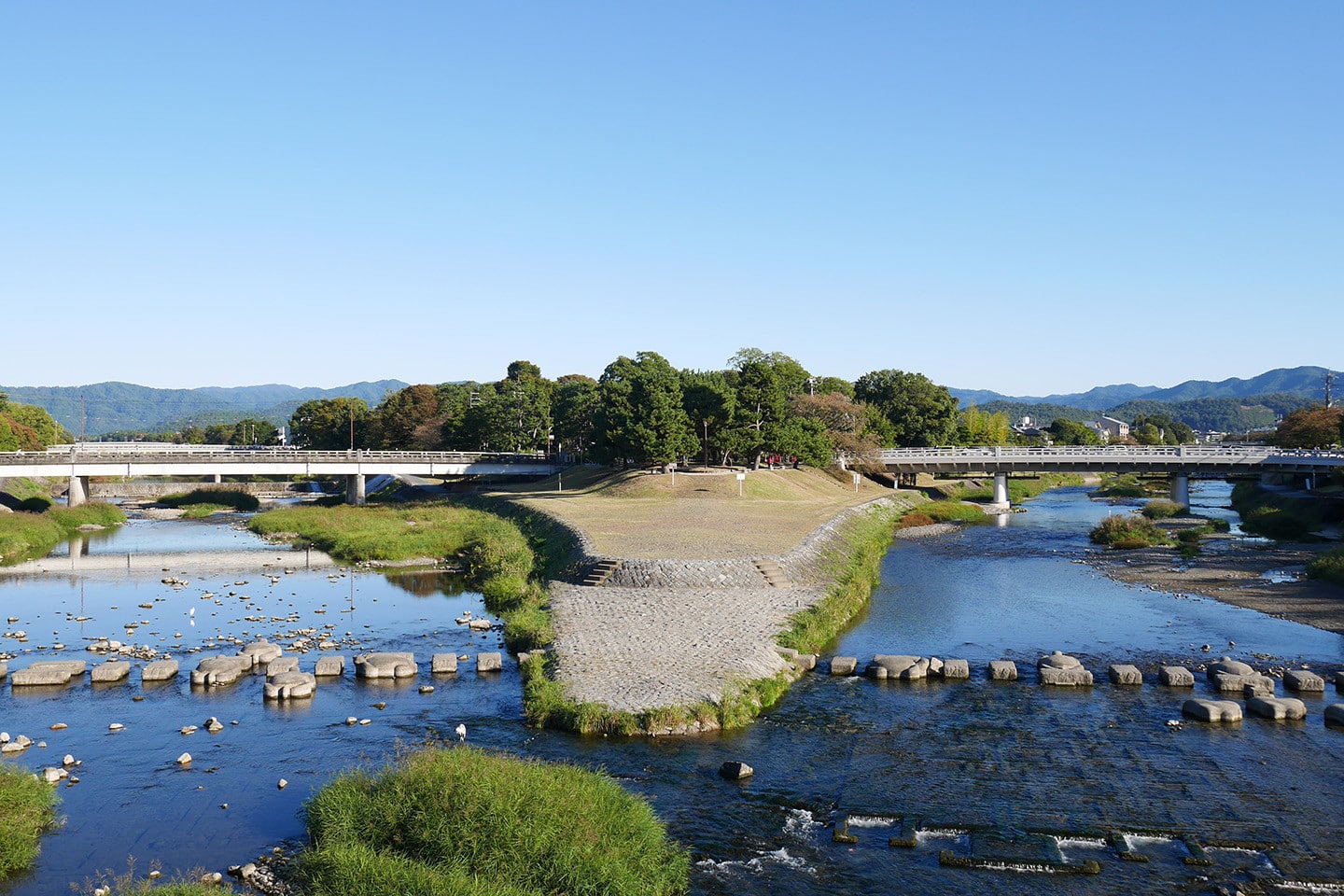
The Kamogawa Delta (鴨川デルタ) is a triangular sandbar formed where the Takano and Kamo rivers join before flowing south into the Kamogawa. It is an everyday gathering spot for students of Kyoto University and Doshisha University, who picnic, play guitar or lie on the grass here. It is also a filming location for Tomihiko Morimi’s novels The Tatami Galaxy and The Eccentric Family, the anime Tamako Market, and the film Tomorrow I Will Date Yesterday’s You, drawing pilgrimages from anime fans.
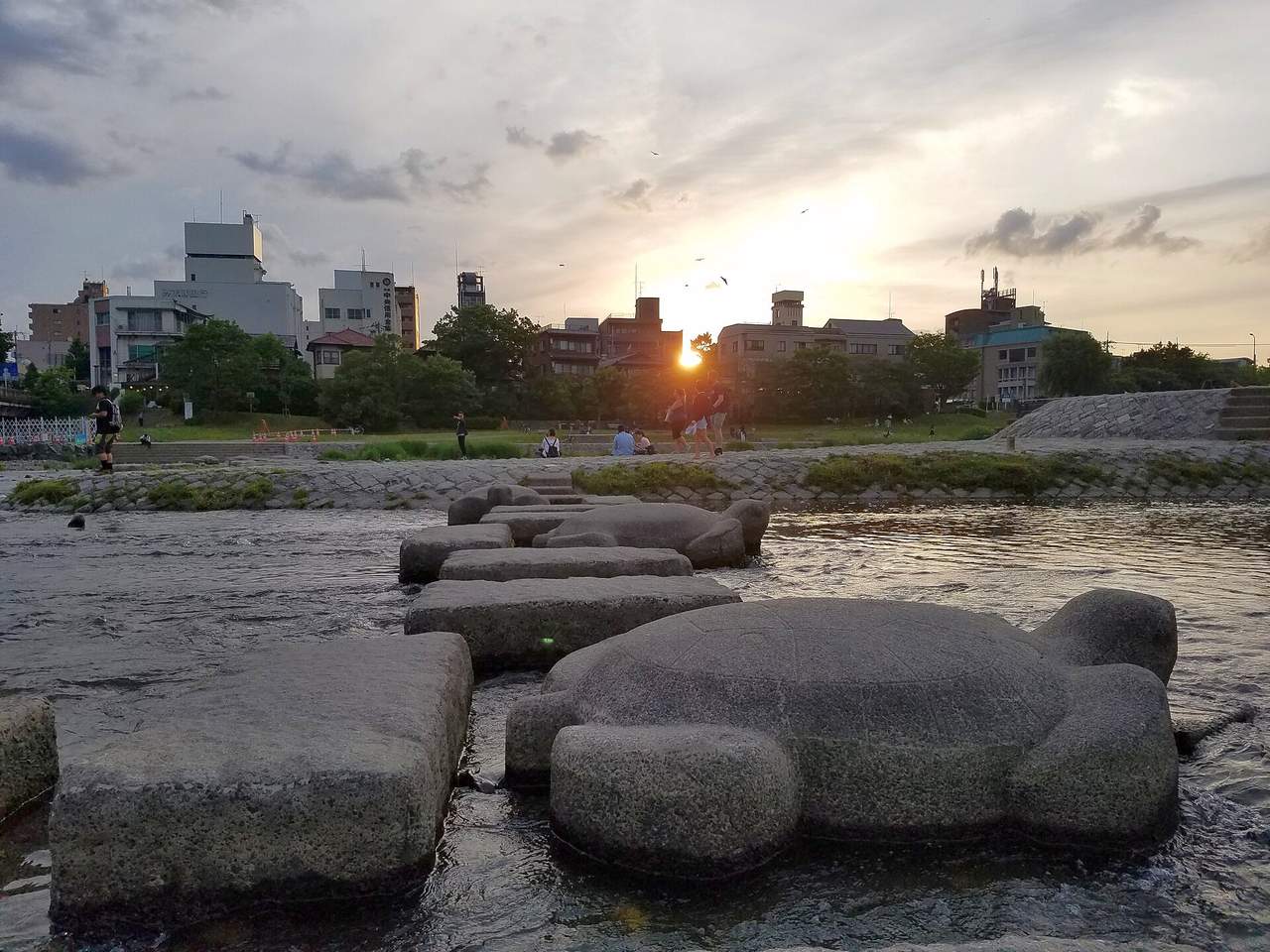
The delta is open year-round and free to visit. Early morning and dusk are the most pleasant times to come, letting you avoid the strong midday sun and enjoy the sunset reflected on the water.
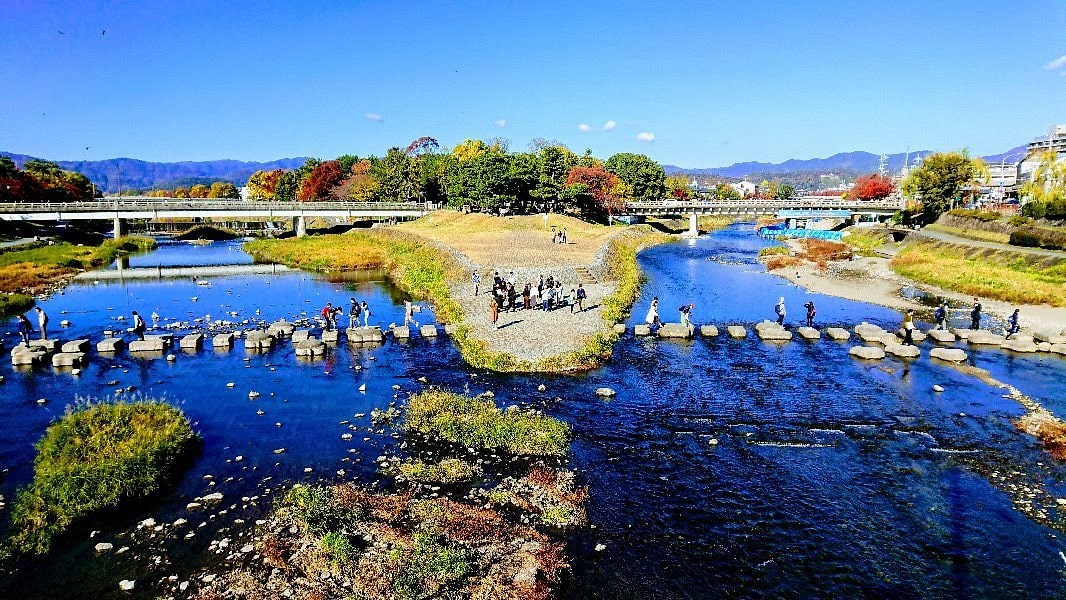

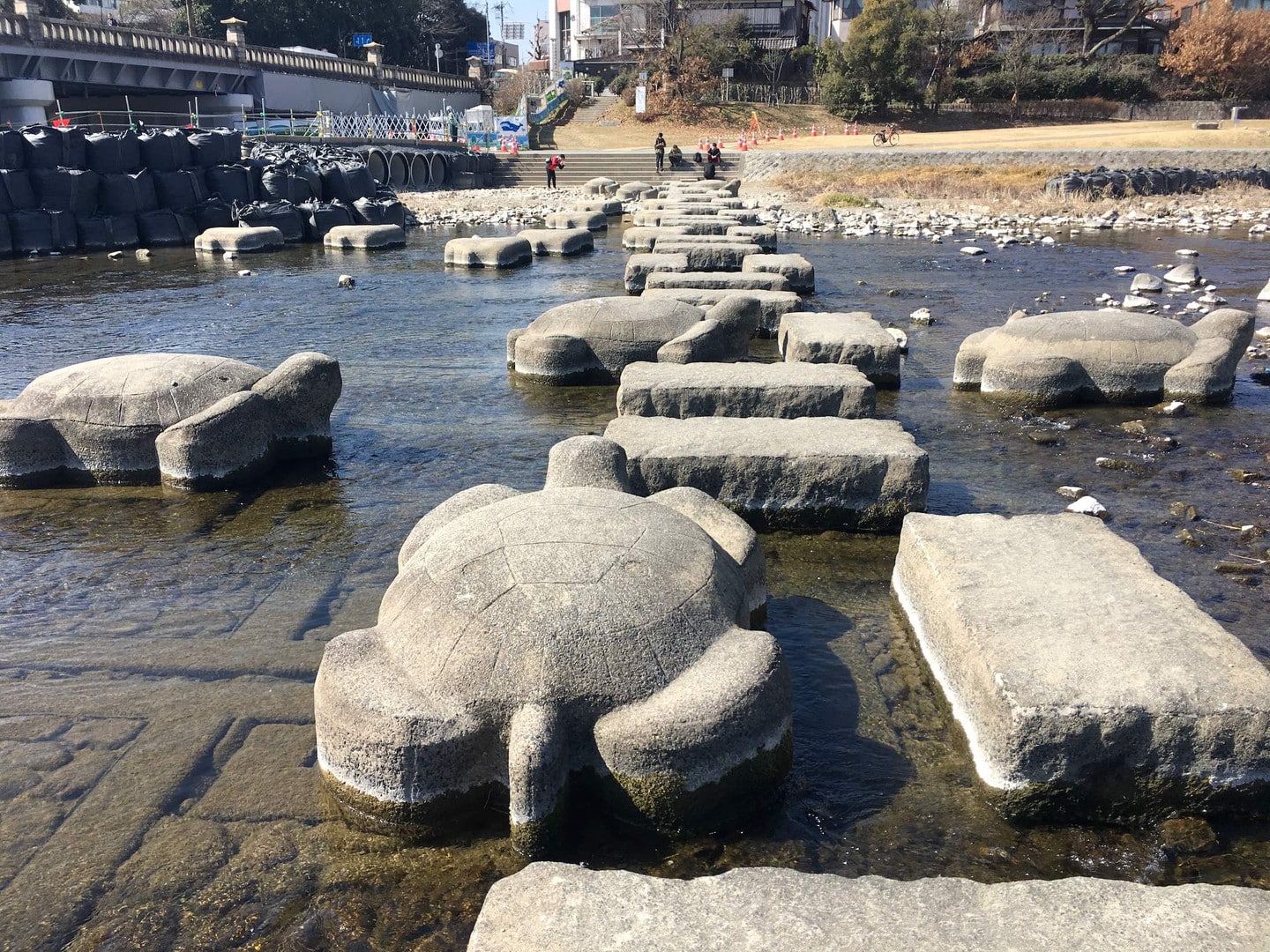
Turtle stepping stones: turtle- and plover-shaped stones across the river
Across the river channel at the tip of the delta lie large stepping stones shaped like turtles and chidori (plovers), the “turtle hopping” activity every visitor wants to try, popular for photos and for playing in the water alike. The stones were originally an artificial structure built to stabilize the riverbed, and over the years they became a distinctive sight symbolizing the Kamogawa. The turtle shape stands for longevity and good fortune, while the plover shape adds a touch of playfulness.
We recommend wearing non-slip shoes. In summer, when the water is higher, the stone surfaces can be slippery and need extra care, and after rain or a typhoon, when the water level rises, you should hold off. Safety always comes before a photo.
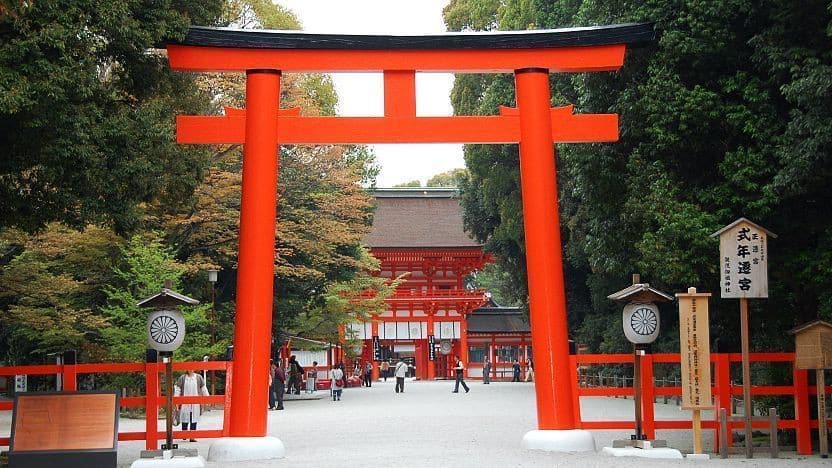
Shimogamo Shrine: one of Kyoto’s oldest shrines and a World Heritage Site
Shimogamo Shrine (Kamomioya Shrine) was founded in ancient times, before the Common Era, making it one of Kyoto’s oldest shrines, and it was inscribed as a UNESCO World Cultural Heritage Site in 1994. It is about a 12-minute walk from Keihan Demachiyanagi Station, along the approach through the primeval forest of Tadasu no Mori. Visiting the shrine is free all year; the area inside the tower gate is open 6:30-17:00 (Kawai Shrine 6:30-16:30), and hours may change during rituals.
Kawai Shrine within the grounds is known for prayers for beauty, and its ema votive plaques are shaped like mirrors, a popular stop for women visitors. Beside the main hall, the Aioi Shrine has a tree with two trunks joined as one, regarded as a shrine for good matches in love, and couples and solo travelers alike come to pray for a good relationship.
![[Guaranteed Departure for 1 Person] Kyoto Day Tour | Nishiki Market & Shimogamo Shrine & Gion & Fushimi Inari Taisha | Food and Ancient Capital Tour (departing Osaka/Kyoto)](https://travel.williamlion.tw/wp-content/uploads/sites/7/2026/07/image-41.jpg)

Shimogamo Shrine and the Kamogawa: location and official information
The often-searched phrase “Shimogamo Shrine Kamogawa” refers to the shrine’s location. According to the shrine’s official explanation, Shimogamo Shrine stands where the Kamo and Takano rivers meet, and below the confluence the river is called the Kamogawa. Because it lies downstream of the Kamo River, it has long been written with the character for “kamo” and is commonly called “Shimogamo” (lower Kamo) Shrine, in contrast to Kamigamo Shrine upstream.
Official website: the official site of Shimogamo Shrine (Kamomioya Shrine) is shimogamo-jinja.or.jp. Opening hours within the grounds and special-viewing information follow the announcements on the official site.
![[Kyoto Day Tour] Daitoku-ji Soken-in, Kamigamo Shrine, Shimogamo Shrine and a Barley Rice with Grated Yam Meal](https://travel.williamlion.tw/wp-content/uploads/sites/7/2026/07/image-40.jpg)
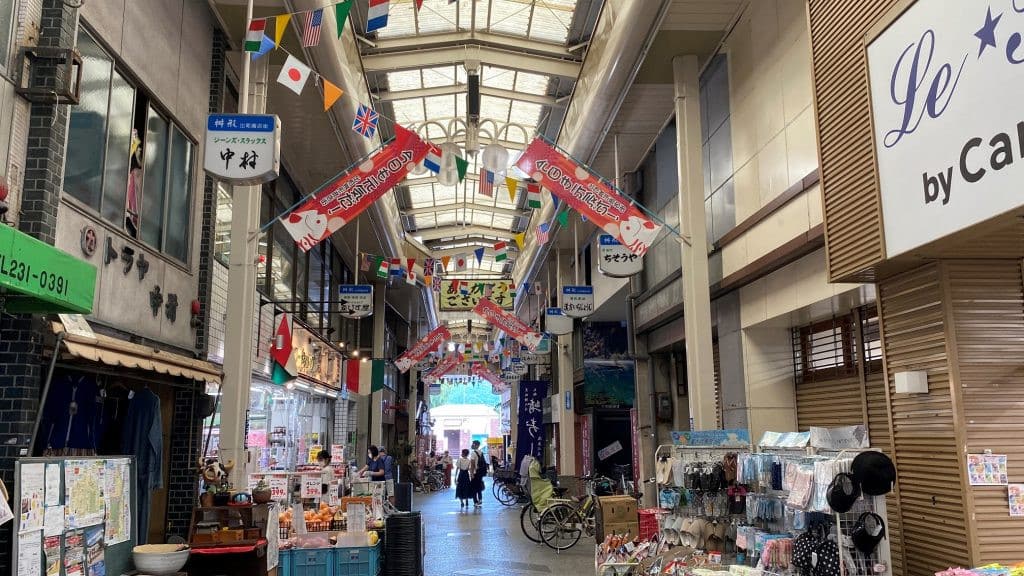
Demachi Masugata Shopping Street: a student-life district with Showa-era nostalgia
Demachi Masugata Shopping Street is a covered arcade full of local life, and the model for the “Usagiyama Shopping Street” in the anime Tamako Market. The arcade sells affordable fruit, vegetables and everyday goods, and is the main place where nearby students living off-campus shop for daily necessities, which makes it one of the most authentic places to see ordinary Kyoto life.
The shopping street connects Demachiyanagi Station and the delta on foot. Along the way, slow down to look at the shop signs and the Showa-era interior details, and feel an everyday Kyoto atmosphere quite different from the tourist districts.
Hyakumanben and the Kyoto University area: hip kissaten and alleys of used bookshops
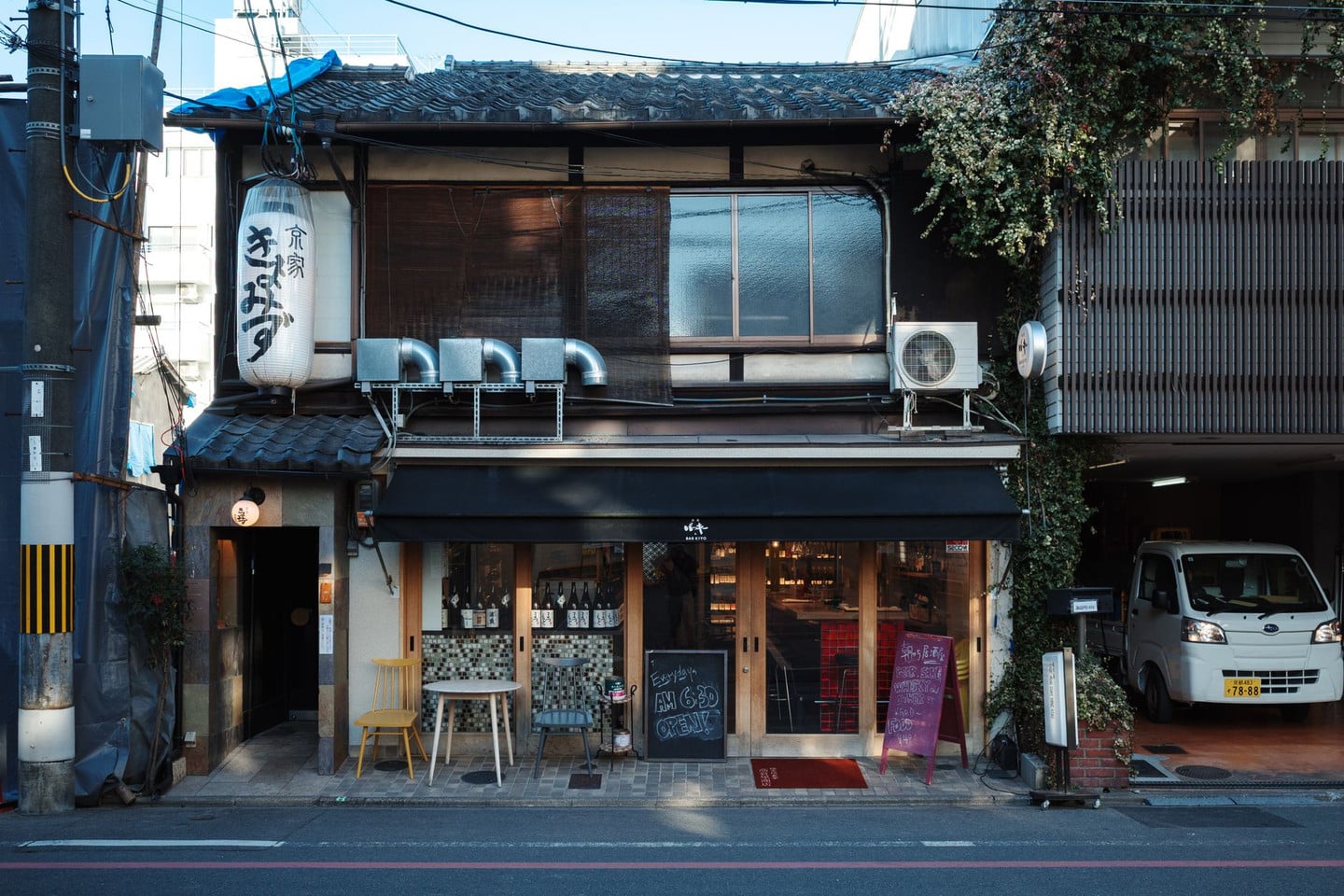
Walking east along Imadegawa-dori from Demachiyanagi for about fifteen minutes brings you to the Hyakumanben intersection near Kyoto University. This is the heart of the Kyodai student scene, dotted with old-style kissaten coffee houses, cheap student canteens with big portions, hidden curry shops and used bookshops, all with a strong literary feel.
If you love anime pilgrimages or want to soak up the bookish Kyodai atmosphere, set aside half a day to explore the alleys slowly. Many shops have no Chinese-language menu, which is exactly what makes it an authentic everyday Kyoto experience.
How to get there: access options and costs for the 2026 Kyoto Demachiyanagi guide (Kamogawa Delta turtle stepping stones, Shimogamo Shrine and the university town stroll)
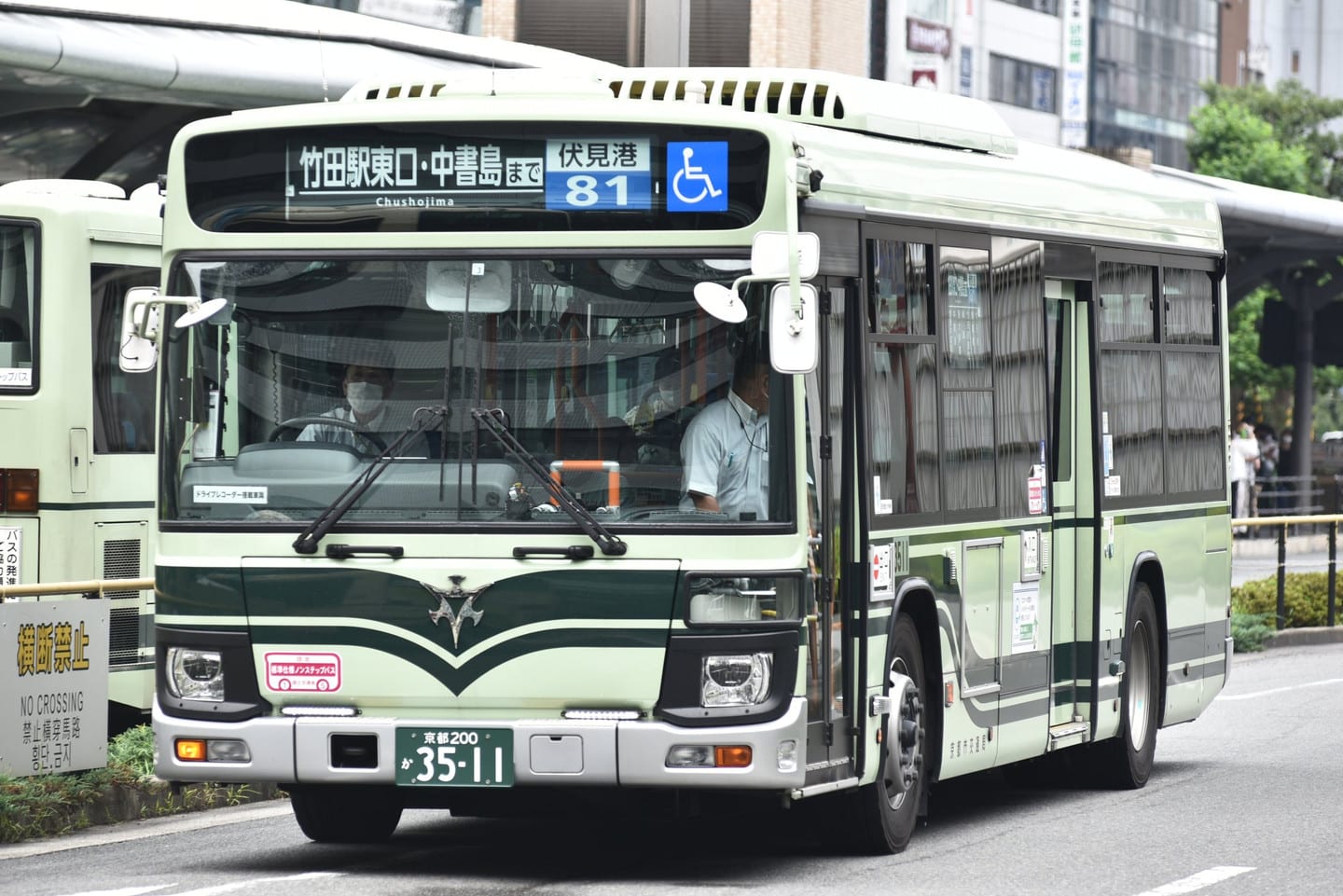
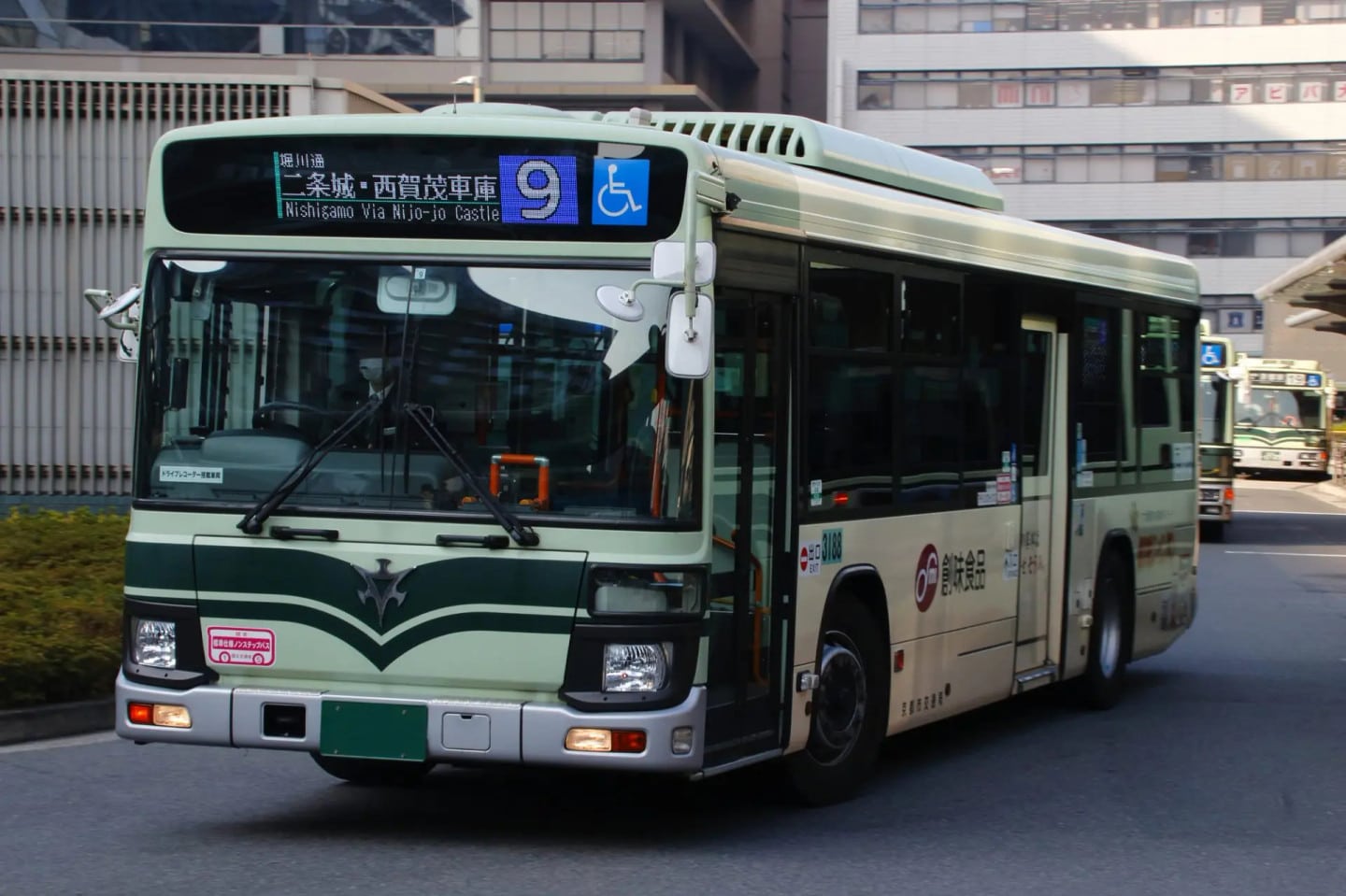
Demachiyanagi is in Sakyo Ward, Kyoto, and is the interchange station of the Keihan Railway and the Eizan Railway, so access is very convenient. Take the Keihan line to Demachiyanagi Station, and the Kamogawa Delta is right outside the exit with no extra walking. From Kyoto Station you can also take City Bus No. 4 or 7 to “Demachiyanagi Ekimae,” or No. 205 to “Kawaramachi Imadegawa” (then walk across Kamo Ohashi Bridge) or “Shimogamo-jinja-mae.” The ride takes around 30 minutes depending on traffic, and the City Bus flat fare is ¥230.
Demachiyanagi on your own: a half-day route on foot from Demachiyanagi Station to Shimogamo Shrine
After leaving Keihan Demachiyanagi Station, walk north along the Kamogawa Delta; the shrine is about a 12-minute walk away (per Shimogamo Shrine’s official signage), and along the way you enter the approach through Tadasu no Mori. On your own, you can first see the turtle stepping stones at the delta, then visit Shimogamo Shrine, and return to Demachiyanagi Station via Demachi Masugata Shopping Street, a trip of about half a day in all. Visiting the grounds is free all year, and opening hours follow the official site’s announcements.
What are the must-see sights in the 2026 Kyoto Demachiyanagi guide (Kamogawa Delta turtle stepping stones, Shimogamo Shrine and the university town stroll)? Highlights by area
The sights around Demachiyanagi are concentrated between the Kamogawa riverbank and Shimogamo Shrine, so you can link them on foot into a half-day stroll.
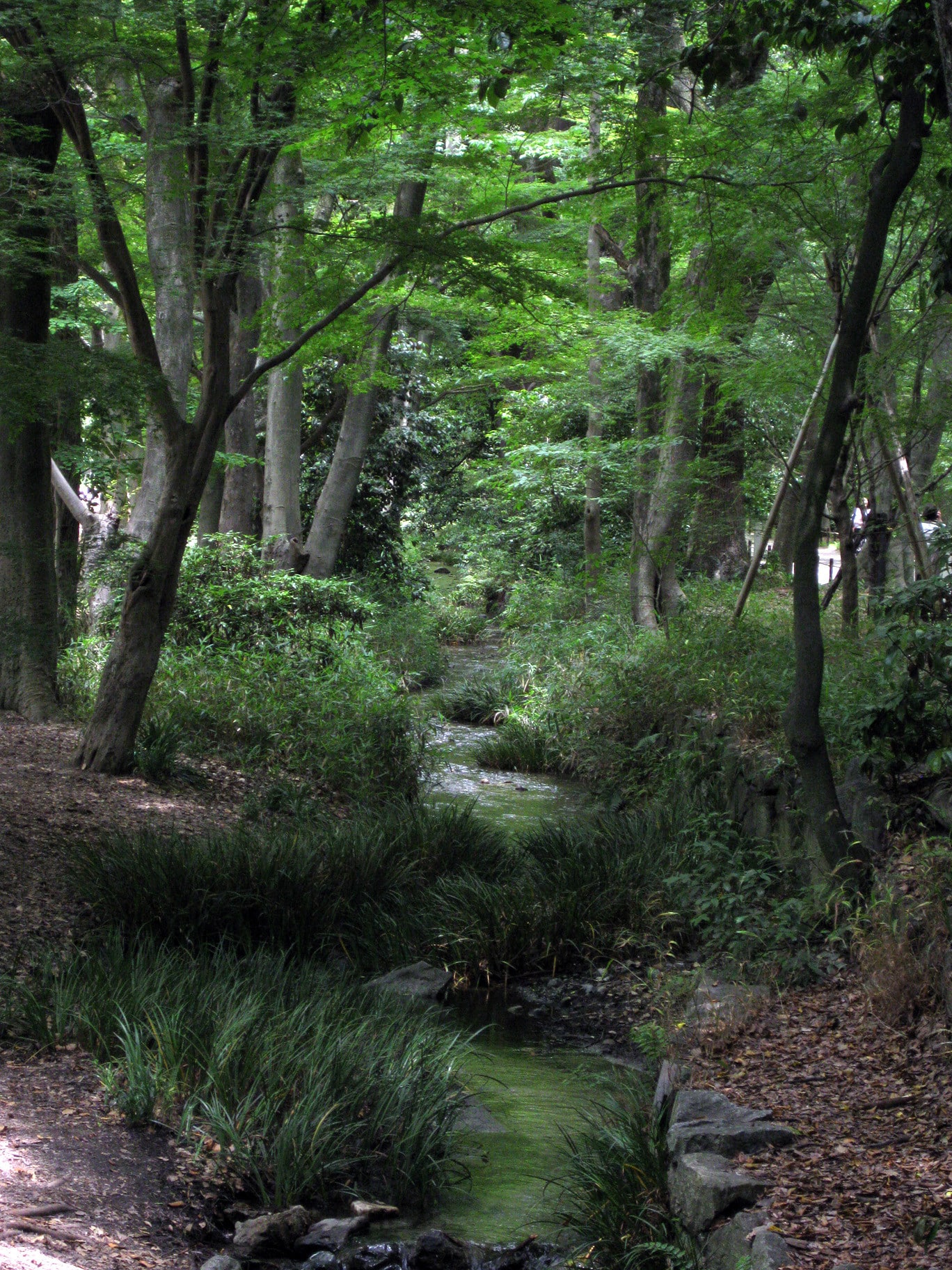
Tadasu no Mori nature walk: the primeval forest in front of Shimogamo Shrine
Tadasu no Mori is primeval forest preserved on both sides of the approach to Shimogamo Shrine, covering about 120,000 square meters. Ancient trees hundreds of years old tower overhead, making it a rare natural conservation area within Kyoto’s urban core. Walking through it, you find lush green and the sound of cicadas in summer, and bare branches catching the morning light in winter. Each season has its own look, and it is a perfect place to get away from the tourist crowds and feel Kyoto’s quiet side.
A wooden boardwalk runs through the forest, and the whole walk takes about 20-30 minutes, passing small sights such as Kawai Shrine and the Semi no Ogawa stream. We recommend fitting it in before or after your visit to Shimogamo Shrine. It is open year-round with free entry, and a morning visit is the most peaceful.
Kamogawa riverside stroll: the riverbank path linking the delta and downtown
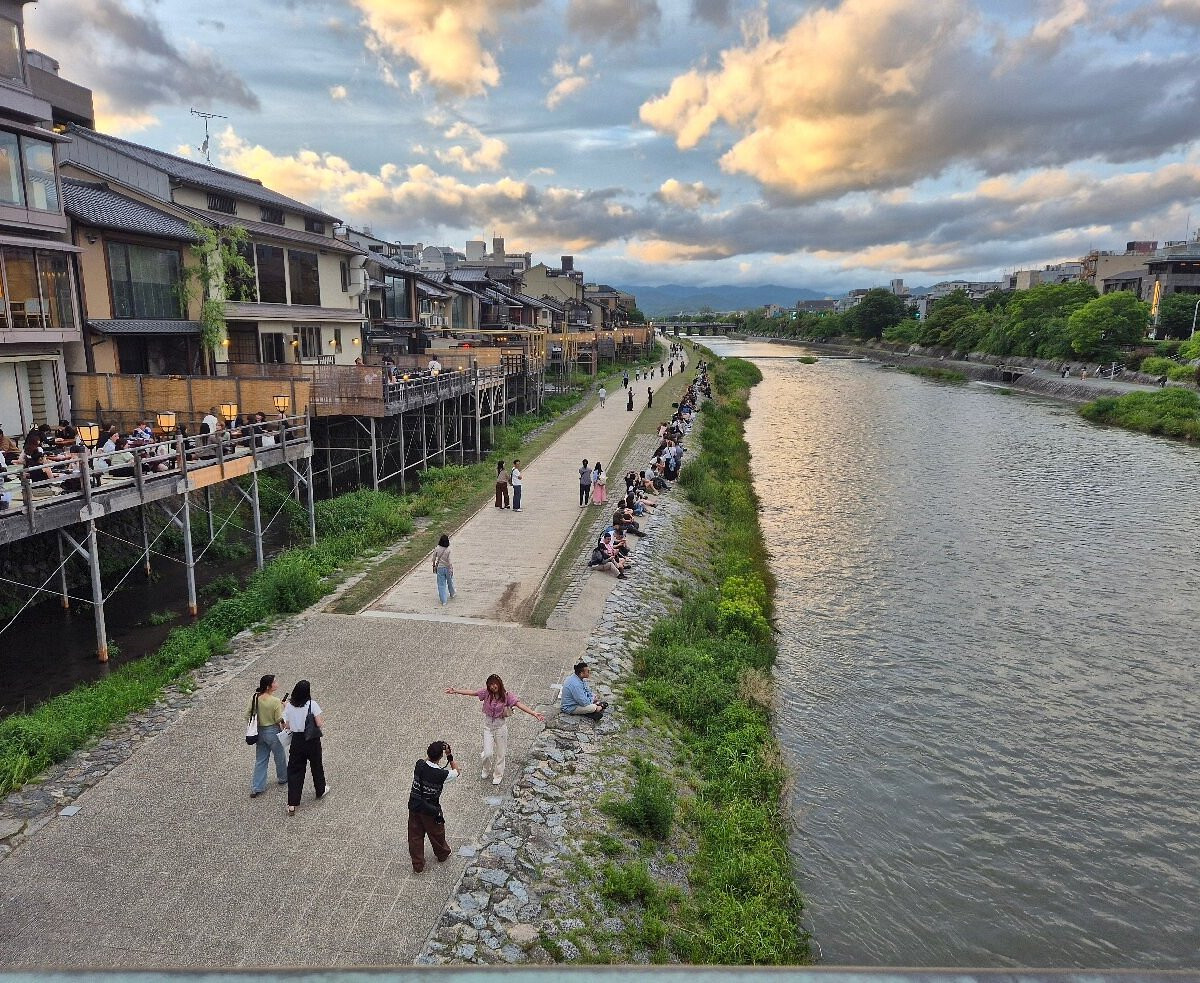
The Kamogawa riverside path runs more than 4 km, from Demachiyanagi all the way to Shijo and Gojo, and is an important space for Kyoto residents to exercise, stroll and go on dates. Stone steps along both banks serve as seats, and on a clear evening you often see couples and students sitting at regular intervals along the bank, forming the amusing urban legend of the “equal spacing rule.”
Starting from the Demachiyanagi section and walking south, you can enjoy the flowing water and views of distant mountains, and following the bank south leads to Shijo-Kawaramachi, passing sights such as Sanjo Ohashi Bridge and Pontocho on the way. It is a walking route that gives you Kyoto’s most local daily rhythm, and comfortable shoes are recommended so you can take your time.
Hyakumanben Handmade Market: a craftspeople’s market held only on the 15th of each month
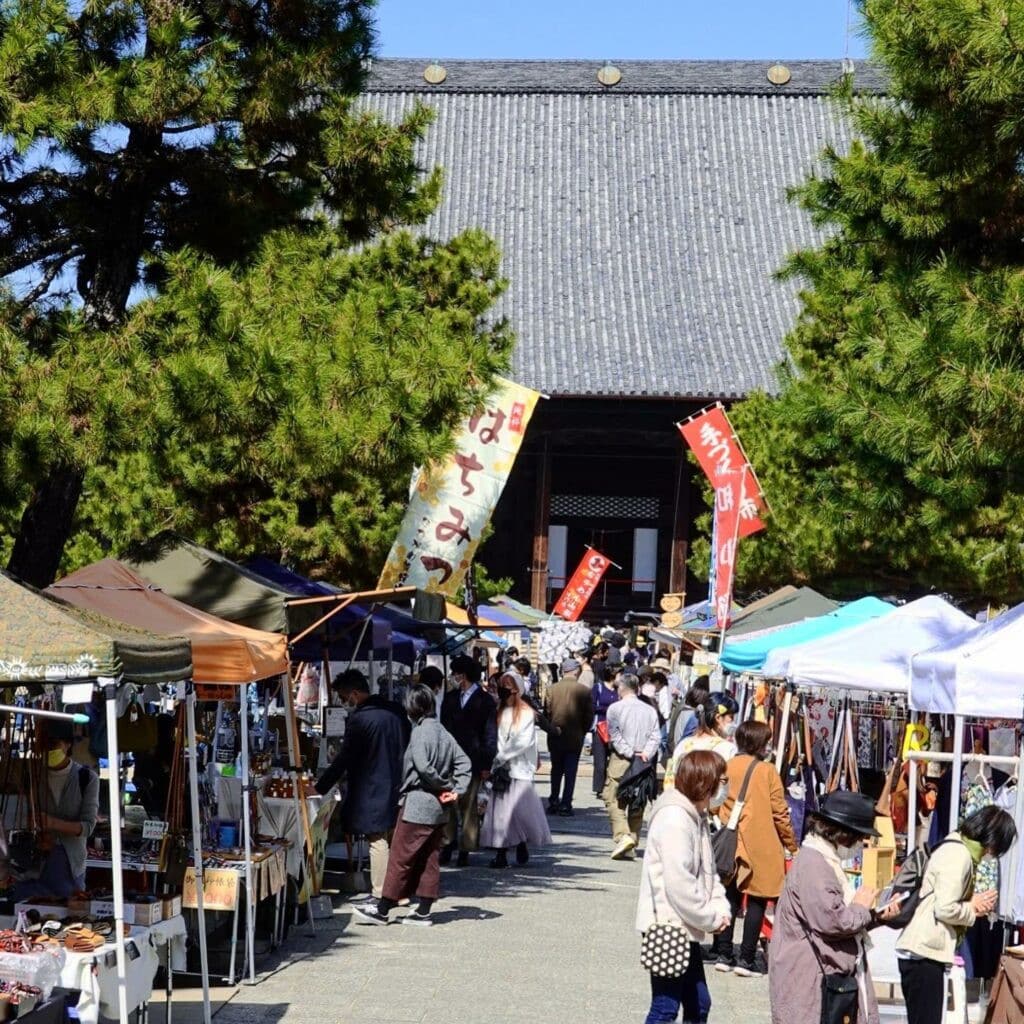
A handmade market is held regularly on the 15th of every month within the grounds of Chion-ji temple in Hyakumanben, gathering about 450 stalls selling ceramics, woodwork, fabric goods, accessories and other crafts. It is a popular market where local Kyoto artisans and travelers meet, and a great way to experience the hip, literary atmosphere of the university town.
The market runs from 8:00 to 16:00 (closed in August). We recommend going earlier in the morning to avoid the crowds and pick out better-quality handmade pieces. If your visit happens to fall on the 15th, we highly recommend working it into your Demachiyanagi stroll, for a feel of daily Kyoto life unlike a typical sightseeing itinerary.
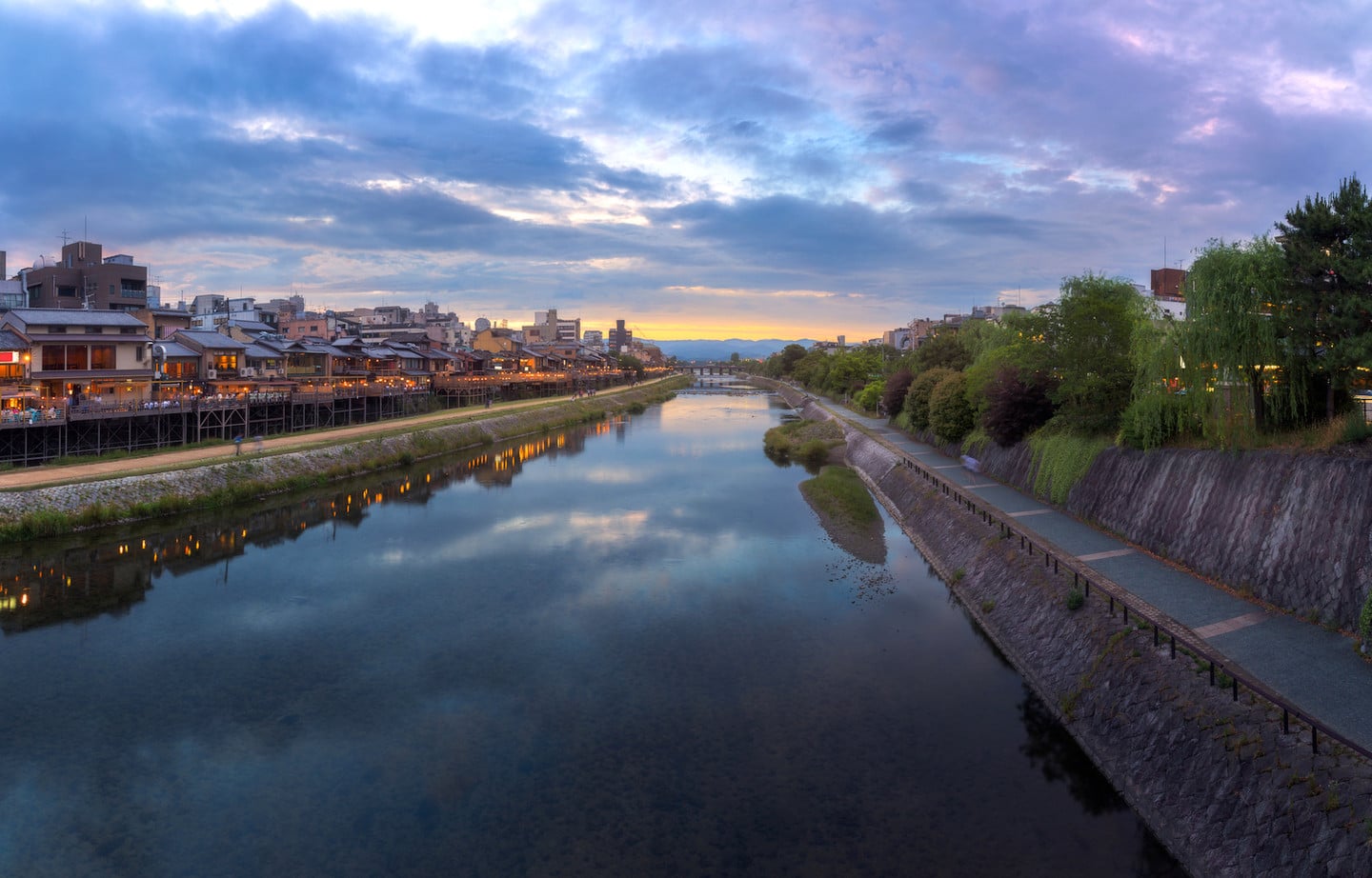
Kamo Ohashi Bridge at sunset: the best angle for a view across the delta
Kamo Ohashi Bridge spans the point where the Takano and Kamo rivers meet and is the best viewpoint for the whole Kamogawa Delta. The open view from the bridge takes in the confluence of the two rivers and the turtle stepping stones in a single frame, an insider’s photo angle widely recognized by photography lovers.
We recommend arriving on the bridge about an hour before sunset, when the evening glow spills over the water and, with the silhouette of Mt. Hiei in the distance, makes one of Kyoto’s most iconic dusk scenes. The sidewalk on the bridge is wide and open to pedestrians all year, and you can stop and take photos freely with no ticket, making it a perfect finishing spot after the turtle stepping stones.
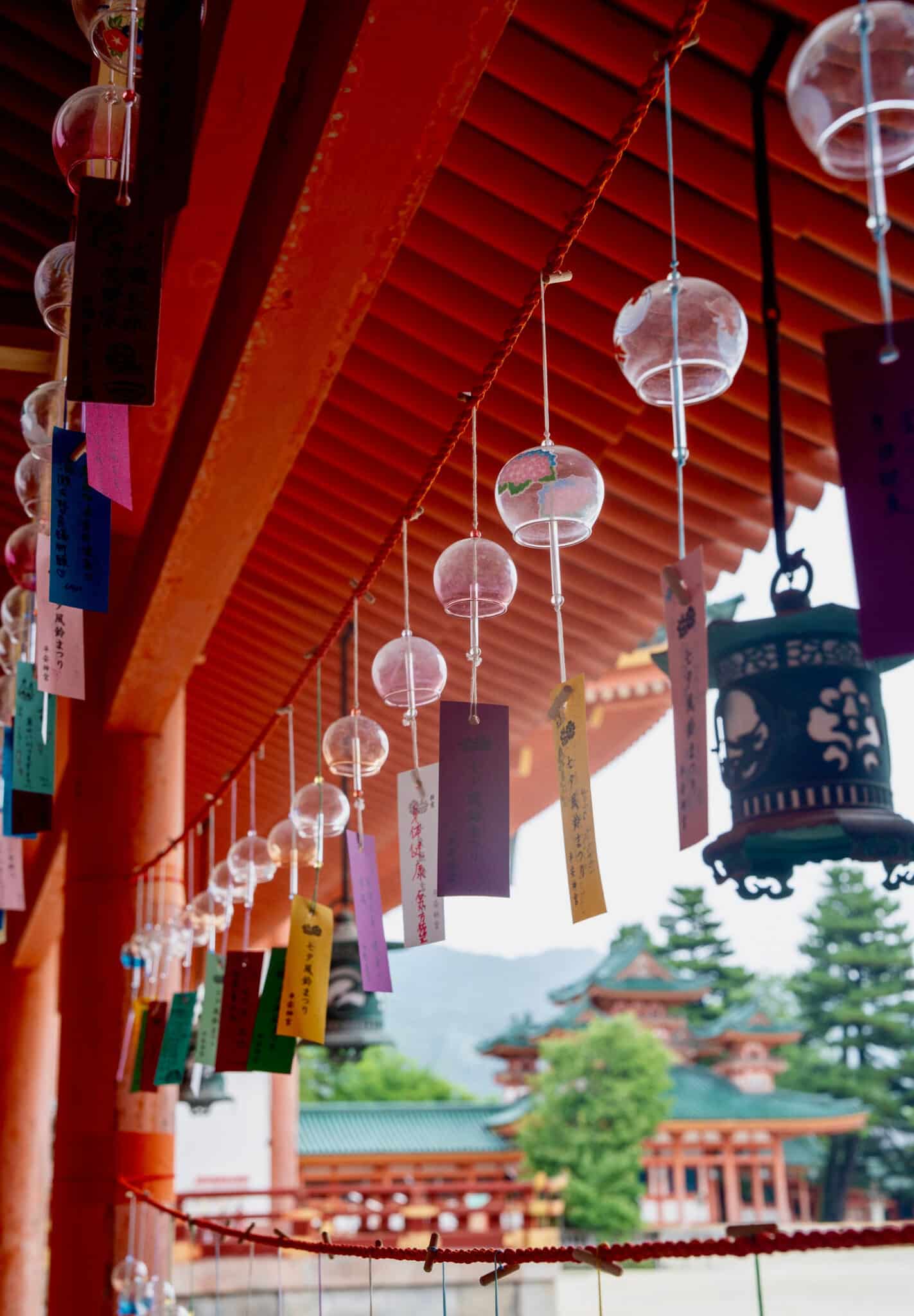
Kyoto Tanabata wind-chime lanterns: a summer-night-only Kamogawa romance
The Kyoto Tanabata festival (Kyo no Tanabata) is held every year in early August along the Kamogawa and at places such as Kitano Tenmangu Shrine. The Kamogawa venue is on the riverbank between Sanjo Ohashi Bridge and Shijo Ohashi Bridge, where wind-chime lanterns chime softly in the breeze after lighting, a scene found only on summer nights. The event usually runs for just 2 days (for example, August 2-3 in 2025), and the venue is about a 20-minute walk along the Kamogawa from Demachiyanagi. The 2026 event was already held in August; for the 2027 dates, please follow the official announcement from the City of Kyoto.
We recommend strolling along the Kamogawa from Demachiyanagi to the Sanjo-Shijo riverside venue in the evening, where you can also enjoy the lively scene of the noryo-yuka riverside terraces.
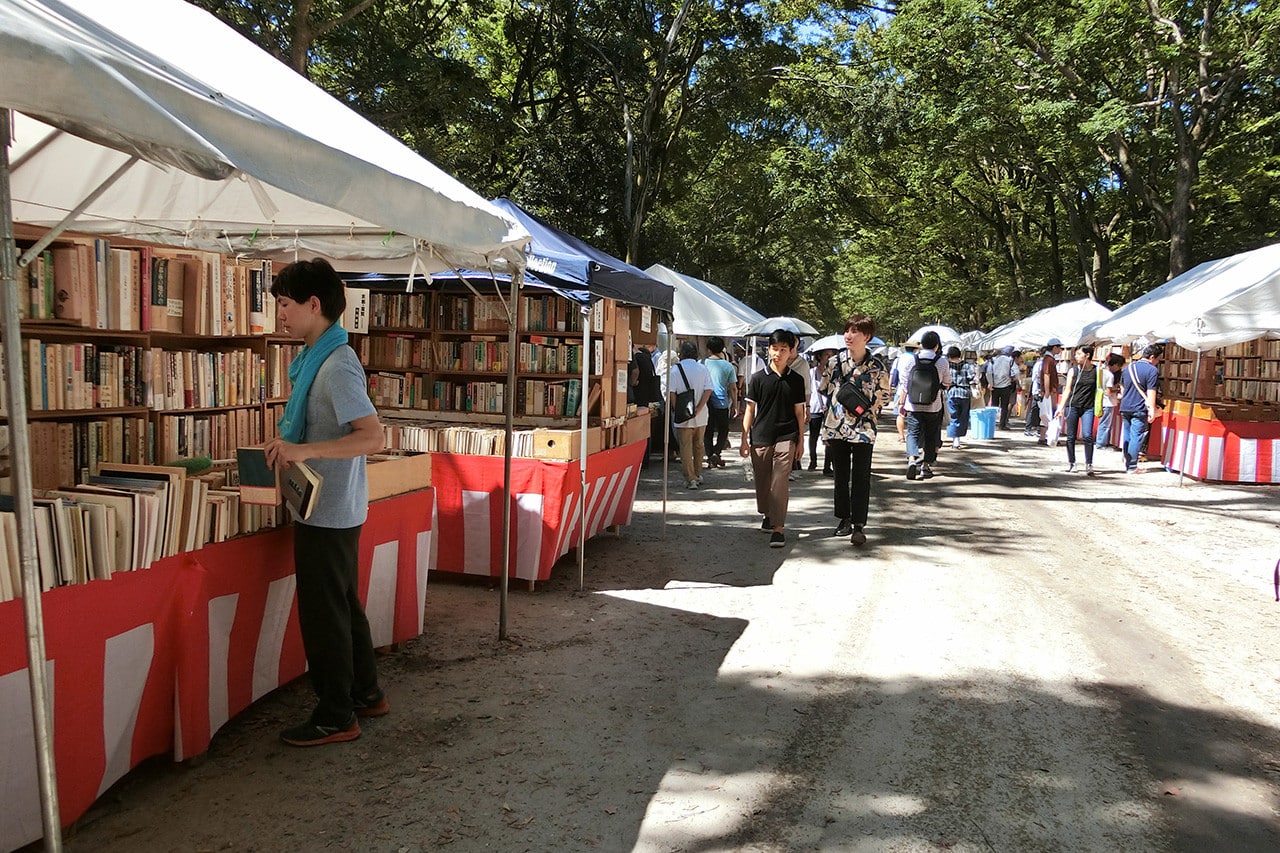
Shimogamo Shrine Used Book Fair: a summer-only used book market
The “Shimogamo Nōryō Furuhon Matsuri” (Shimogamo Summer Cool Used Book Fair) is held every year around mid-August in Tadasu no Mori (the 39th edition in 2026 runs August 11 to 16, 10:00-17:30, closing at 16:00 on the final day). It is one of the largest used book markets in the Kansai region, bringing together secondhand booksellers from around the country selling out-of-print books, old magazines and hand-drawn postcards.
The market is set under the forest shade of Tadasu no Mori and has a quiet atmosphere. Even if you cannot read Japanese books, browsing old covers and soaking up the setting is enjoyable, and we suggest setting aside at least 1-2 hours to hunt for finds.
Cherry blossoms at the Kamogawa Delta: spring-only pink riverbanks
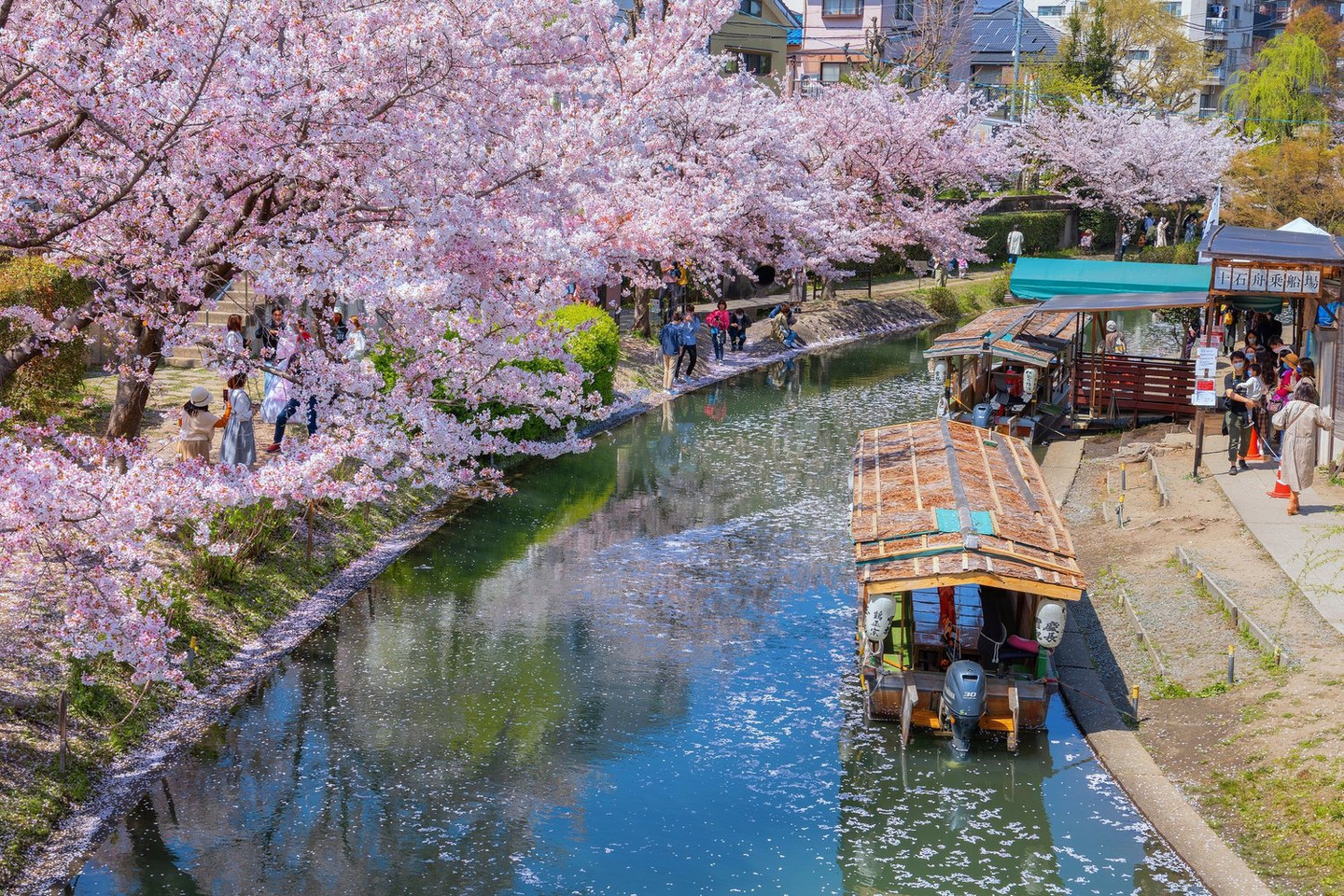
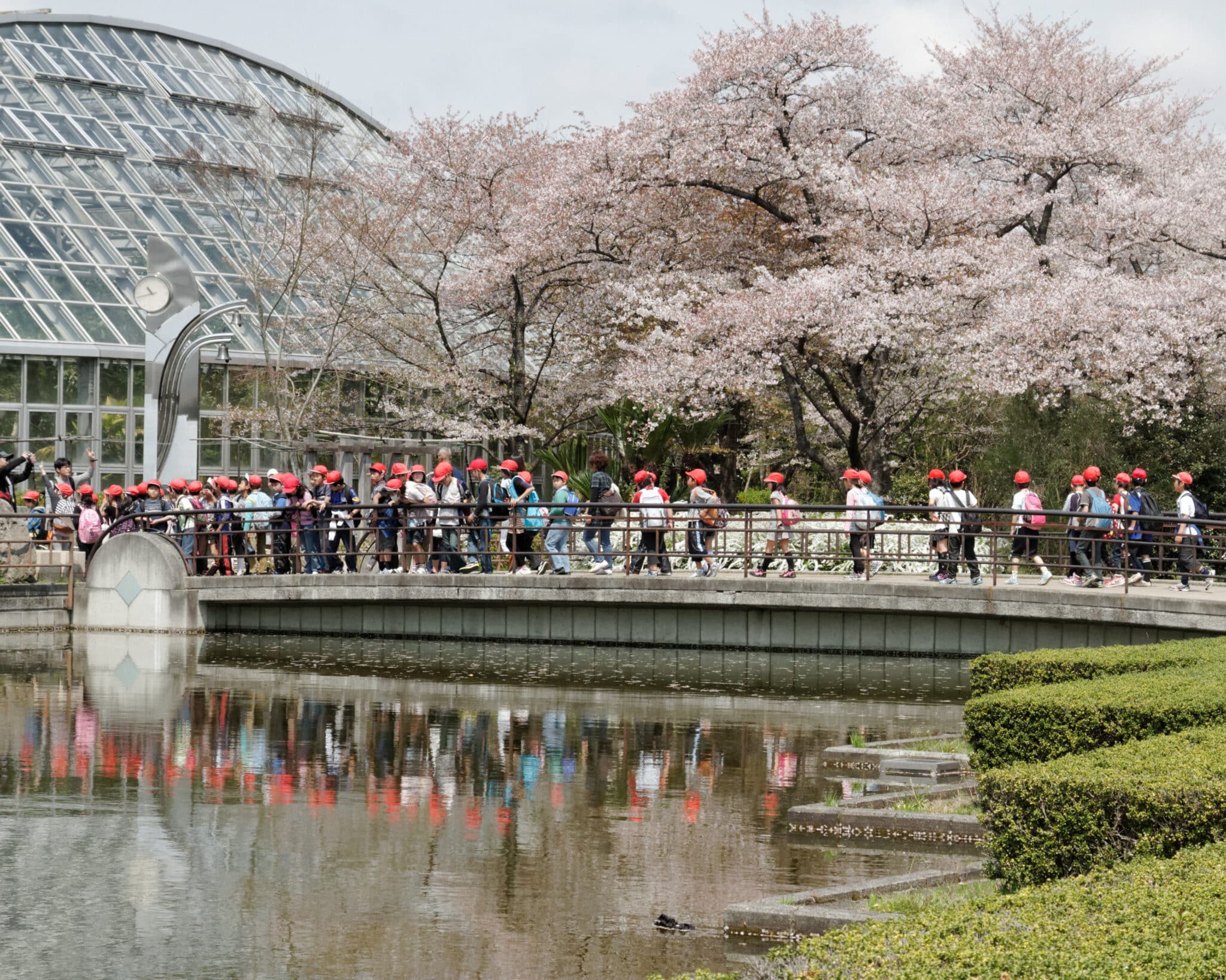
From late March to early April, Somei Yoshino cherry trees planted along the Kamogawa Delta and the embankment of the Kamo River form a cherry-blossom tunnel several kilometers long, a popular insider spot for viewing blossoms in Kyoto in spring. The crowds are usually smaller than at Arashiyama or the Philosopher’s Path, so it suits travelers who like relaxed blossom viewing.
Hanagi no Michi, west of the Kyoto Prefectural Botanical Garden, is even better known for its double-flowered red weeping cherries, which bloom slightly later than Somei Yoshino, and the sight of pink petals drooping over the water is very poetic. For the 2026 blossom season, we recommend going in the morning to avoid the afternoon peak of visitors, and having a picnic under the blossoms at the delta to feel the spring atmosphere of everyday Kyoto student life.
How much does it cost to visit the 2026 Kyoto Demachiyanagi guide (Kamogawa Delta turtle stepping stones, Shimogamo Shrine and the university town stroll)? Tickets and guided tour recommendations
The appeal of the Demachiyanagi area is “lots of free sights and flexible experiences.” The Kamogawa Delta, the approach to Shimogamo Shrine and the university-town streets can be enjoyed almost for free, but if you want to go deeper, save time and understand the local stories, adding a guided tour or pass is still worthwhile. Below are four common paid options, from World Heritage tours and bicycle rental to transport passes, so you can combine them according to your number of days and budget.
Shimogamo Shrine x Tadasu no Mori cultural tour: understand the thousand-year-old shrine and World Heritage Site
Visiting Shimogamo Shrine (officially Kamomioya Shrine) itself is completely free, but the special-viewing area of Oiden, an Important Cultural Property near the main hall, requires a separate fee of ¥1,000 for adults (free for junior high school students and under, 10:00-16:00).
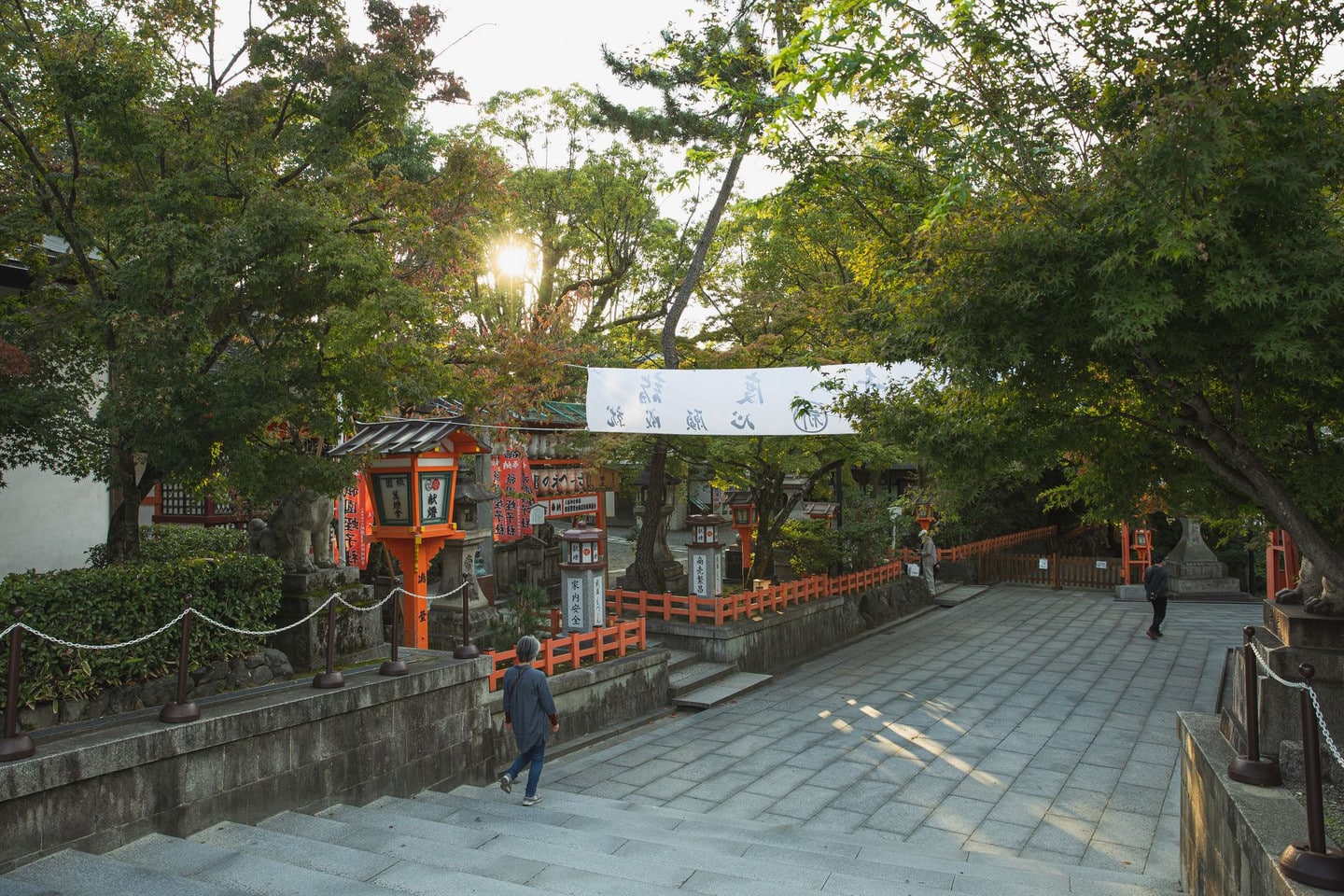
In the grounds, you can see the primeval forest of Tadasu no Mori, Kotosha (the shrine of the zodiac guardians) and the mirror ema of Kawai Shrine, so pay special attention to these spots when listening to a guide.
If you want a guided explanation, search travel platforms for Shimogamo Shrine and Tadasu no Mori tours, and before booking, check the tour language, meeting point and schedule.
Kyoto University and Doshisha University area tour: step into everyday scenes of an academic hub
The Kyoto University Yoshida Campus and the Doshisha University Imadegawa Campus both lie along Imadegawa-dori. Among the red-brick Western-style buildings of the Doshisha Imadegawa Campus, Doshisha University’s Shoeikan and Yushukan are Important Cultural Properties. The campuses are free to walk around, and a paid tour lets you learn more about the historic buildings.
Tours mostly cover old bookshops, student canteens and Showa-era kissaten around the universities, and suit travelers who love Japanese university culture, modern architecture and photography.
This kind of niche tour is rarely listed on large platforms. Try searching keywords such as “Kyoto University architecture tour” (京都大学建築巡り); tour content and fees follow the organizer’s announcements.
Kamogawa Delta turtle stepping stones + riverside bicycle rental: cover the whole riverbank with less effort
The turtle stepping stones at the Kamogawa Delta are free and can be enjoyed at any time. If you want to ride to Nijo Castle, the Kyoto Imperial Palace or Arashiyama, we suggest renting a bicycle near Demachiyanagi Station, at about ¥1,000-1,500 per day, with electric-assist models from about ¥2,000.
There are several bicycle shops within a 5-minute walk of Demachiyanagi Station, and many offer explanations in Chinese and helmets. After renting, you can ride north along the left bank of the Kamogawa to Shimogamo Shrine, or south to Shijo-Kawaramachi. The scenery along the way is lovely and the slope is gentle, which suits families and couples.
In peak seasons (cherry blossom and autumn foliage seasons), we recommend booking ahead, and when renting, please confirm the return location and insurance.
Keihan Railway + Kyoto City Bus day pass: the best-value transport option for linking the Demachiyanagi sights
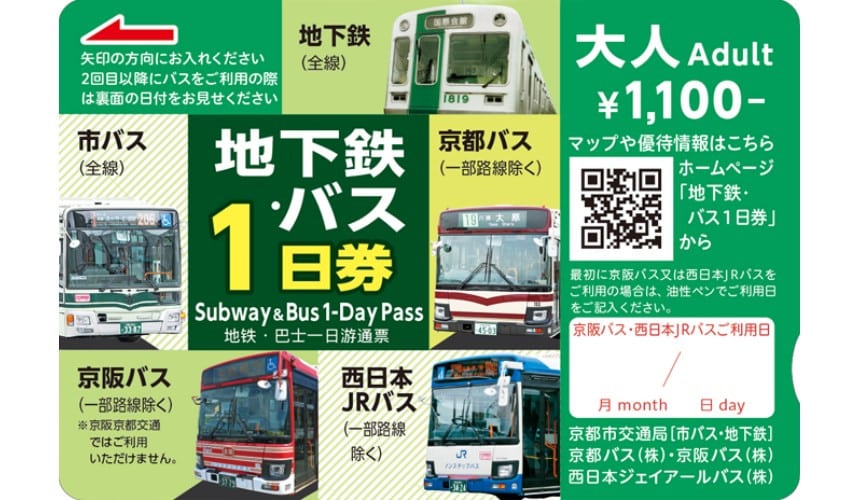
Demachiyanagi Station is the terminus of the Keihan Oto Line and of the Eizan Electric Railway. If you are heading to Kibune, Kurama or Gion-Shijo that day, the “Keihan One-Day Pass” (about ¥700-1,200 depending on the area) is better value. If you also take City Buses to Kiyomizu-dera or Kinkaku-ji, consider the “Subway and Bus One-Day Pass” (adults ¥1,100; the old bus-only day pass was discontinued at the end of September 2023).
Day passes can be bought at ticket machines or counters at Demachiyanagi Station, and some can also be booked and exchanged online through KKday or Klook, saving you the trouble of working out fares and getting change, which suits a day with many stops.
Before you go, confirm whether your itinerary is covered by the Eizan Electric Railway (needed for Kibune and Kurama). Some day passes do not include it, and you would need to buy a separate pass such as the “Eeki Kippu.”
Where to stay nearby
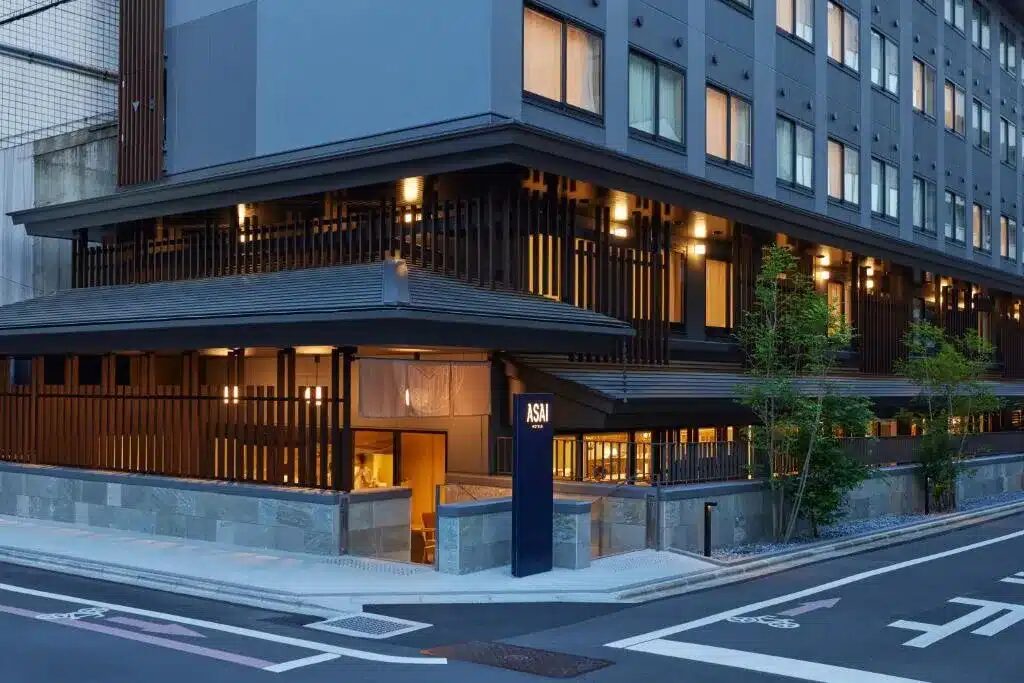
Demachiyanagi Station is the terminus of the Keihan Oto Line, reached directly by Keihan trains from the Gion-Shijo and Sanjo areas. Travelers who want an early start at the Kamogawa Delta and Shimogamo Shrine can stay along the Keihan line around Gion-Shijo, Sanjo or Kawaramachi, and the next-day trip to Demachiyanagi is easy.

FAQ
Q: Do I need a ticket for the turtle stepping stones?
No. The turtle stepping stones at the Kamogawa Delta are free and open all year, and you can try them at any time. Just watch the water level and how slippery the stones are, and wear non-slip shoes to be safe.
Q: Is there usually a queue for the turtle stepping stones?
It is busier on weekend afternoons and you may have to wait a little for your turn. We recommend going on a weekday morning or in the evening, when there are fewer people and you can take photos and enjoy it at ease.
Q: How much is admission to Shimogamo Shrine?
Visiting the grounds of Shimogamo Shrine is free. The area inside the tower gate is open from 6:30 to 17:00 (Kawai Shrine until 16:30), and only the special treasure hall or special public events may charge a separate fee. An ordinary visit is completely free.
Q: What is the easiest way to get to Demachiyanagi from Kyoto Station?
Take City Bus No. 4 or 7 directly to “Demachiyanagi Ekimae,” or No. 205 to “Kawaramachi Imadegawa” and then walk across the bridge. The ride takes around 30 minutes with a flat fare of ¥230. From Gion-Shijo, the Keihan train is fastest, at only about 8 minutes.
Q: What is the best season to visit Demachiyanagi and the Kamogawa Delta?
Late March to early April for cherry blossoms, noryo-yuka riverside terraces from May, and November for the best autumn foliage. It works year-round, but spring and autumn have the most comfortable weather.
Q: Are there any taboos or things to watch for when taking photos at the Kamogawa Delta?
Please do not push or play around on the stepping stones in ways that block others, avoid entering the water when the river is swollen, and be careful not to disturb local residents resting or picnicking on the bank.
Q: How much time should I plan for a Demachiyanagi stroll?
We recommend half a day, covering the turtle stepping stones at the delta, a visit to Shimogamo Shrine and Demachi Masugata Shopping Street. If you add the Hyakumanben bookshop circuit, set aside a full day.