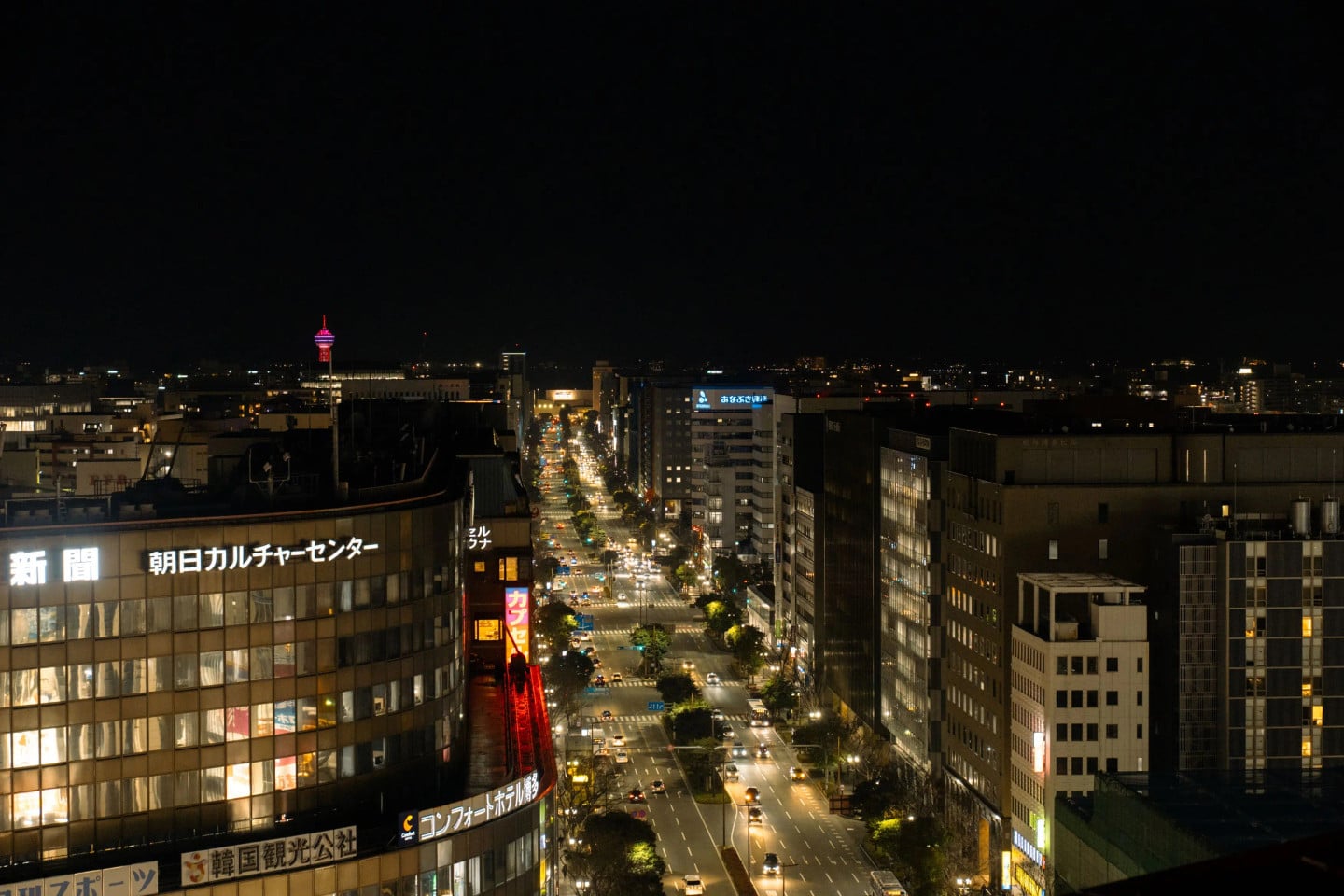

Fukuoka Yatai Food Guide: Japan’s Last Hundred-Stall Street-Side Night Dining Culture
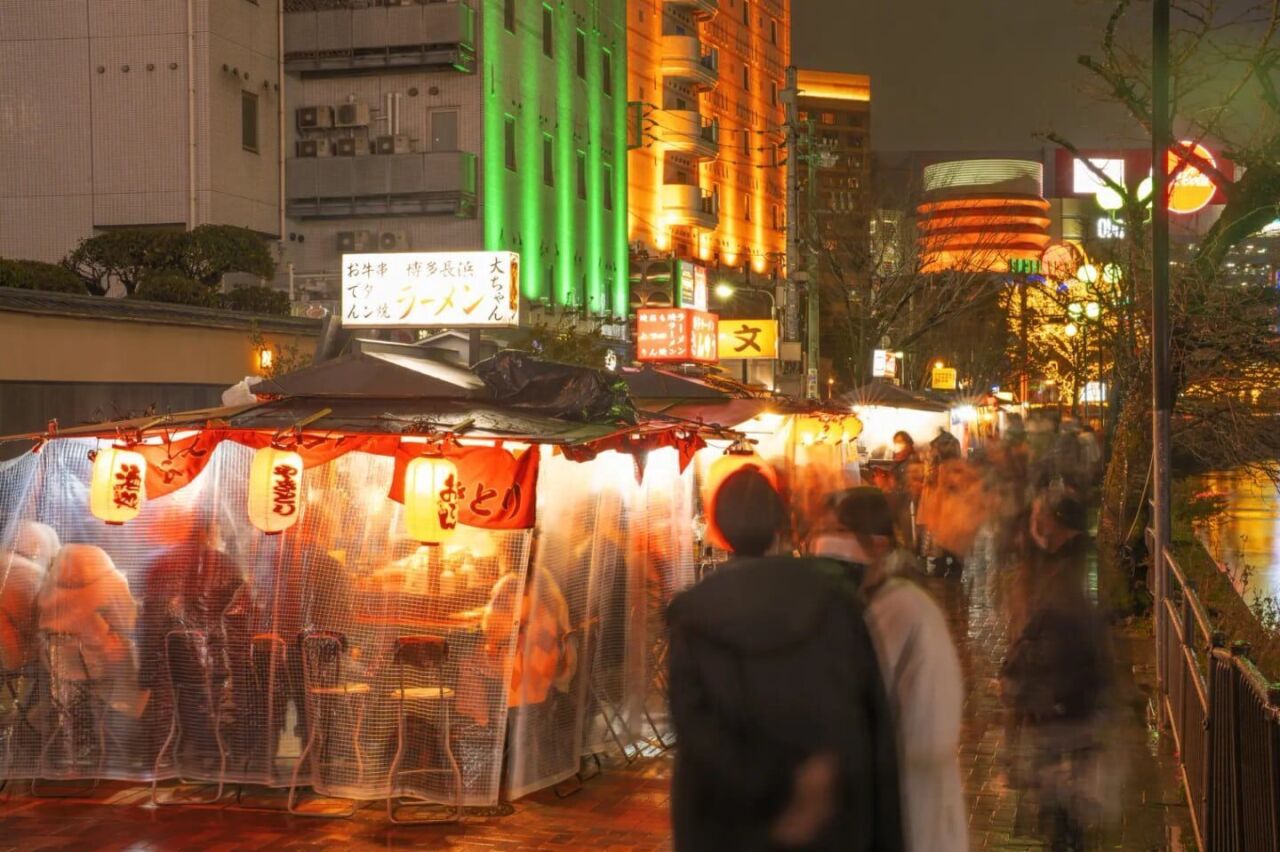
As soon as dark falls, Fukuoka’s sidewalks sprout a whole row of glowing stalls.
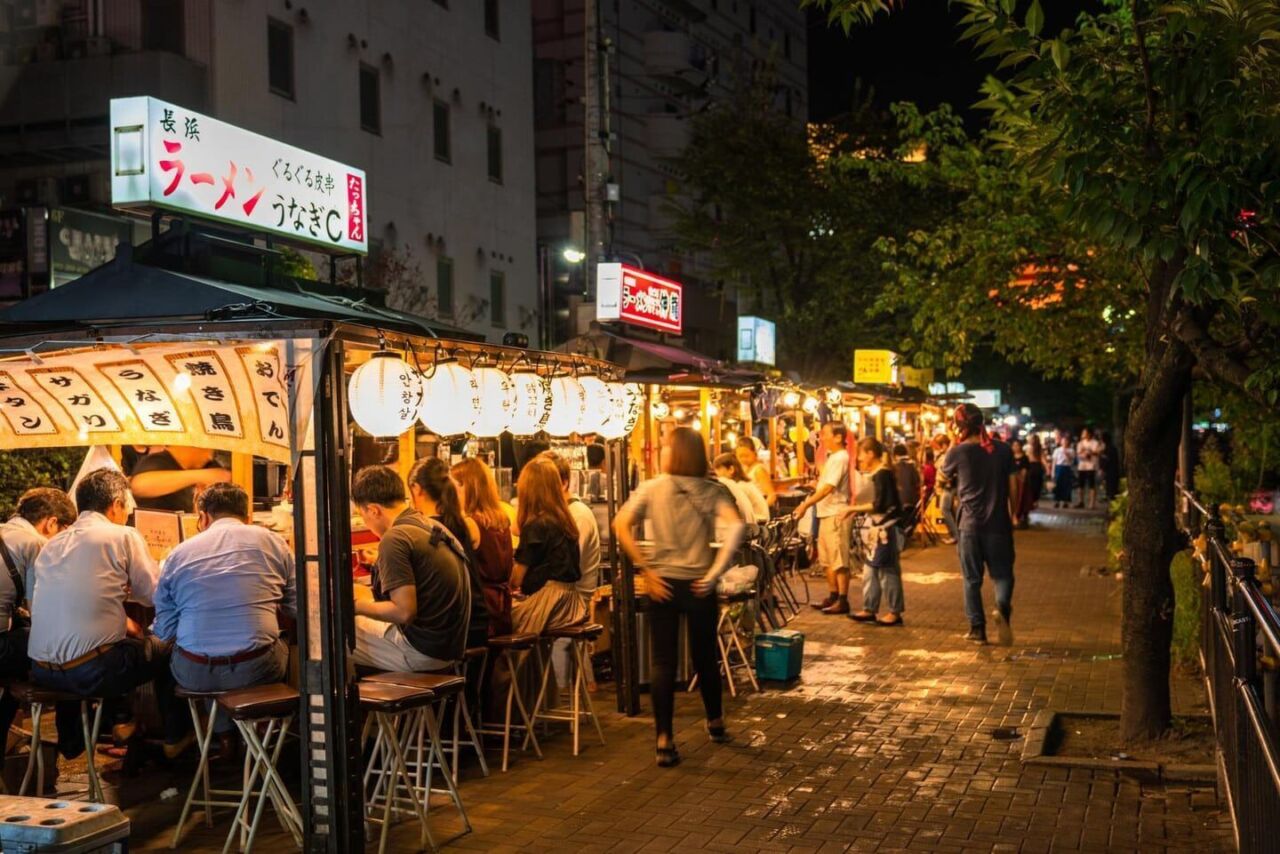
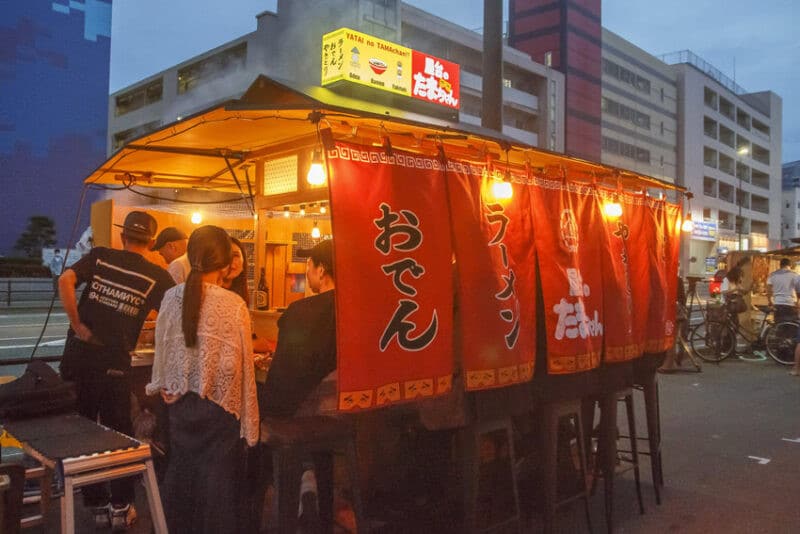
Yatai (屋台) are small mobile food carts that are stored in warehouses during the day, then wheeled out in the evening, with a canvas pulled up and bulbs lit, ready for business. Yatai across Japan almost all vanished under postwar regulation, and only Fukuoka kept them. More than a hundred licensed yatai still operate across the city, the vast majority in all of Japan, and they are a city calling card written into Fukuoka’s tourism policy.
Yatai are concentrated in three districts: the Nakasu area, the Tenjin area and the Nagahama area. The three have completely different characters, and picking the wrong one makes for a very different experience. Here is a short introduction to each district and its most representative taste.
Nakasu Yatai Street: Neon Night Views on the Naka River and the Highest Density of Yatai
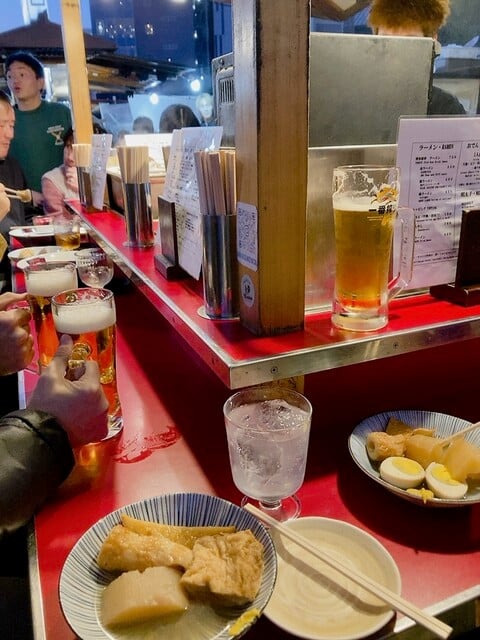
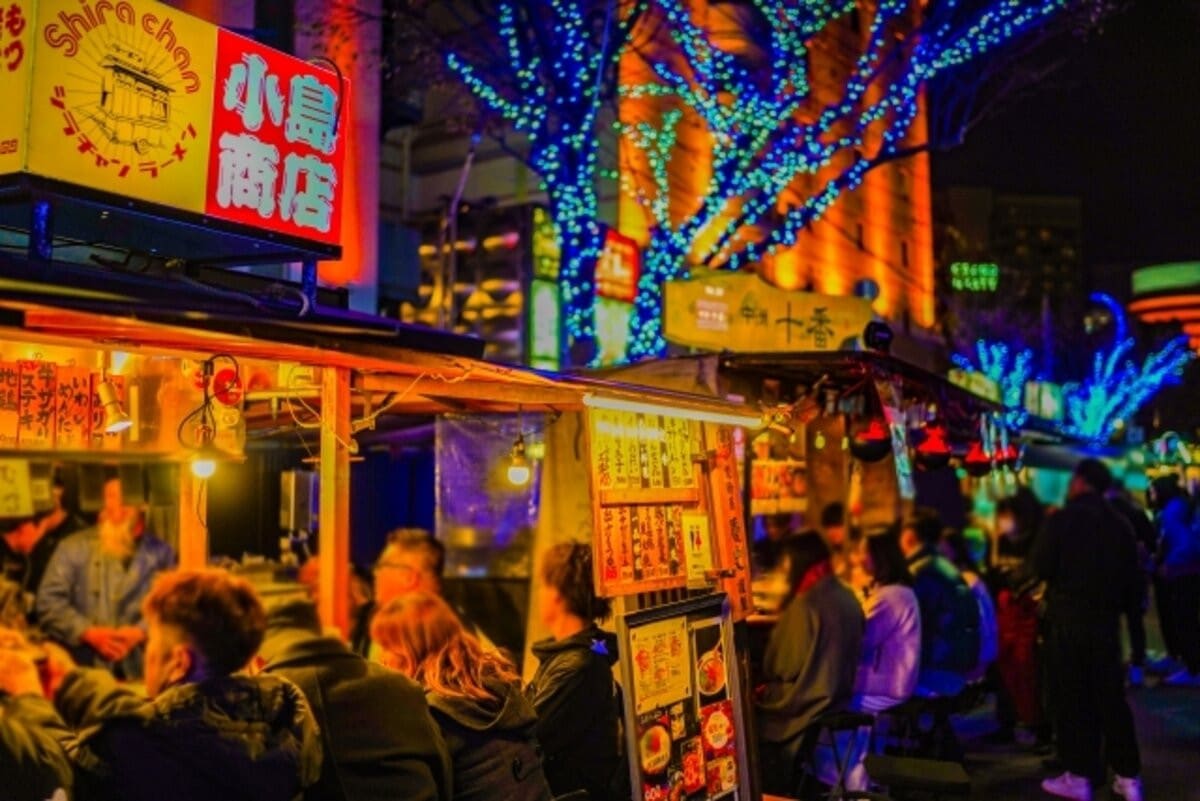
The Nakasu area has the highest density of yatai in Fukuoka, the “Nakasu Yatai Yokocho” you often hear about. The stalls along the Naka River line up along the water, with the neon across the river reflected on the surface, the scene that appears most in Fukuoka promotional photos. It has the strongest tourist atmosphere, with multilingual menus, picture menus and even cashless payment more common, so it is the safest place for first-timers to start with yatai.
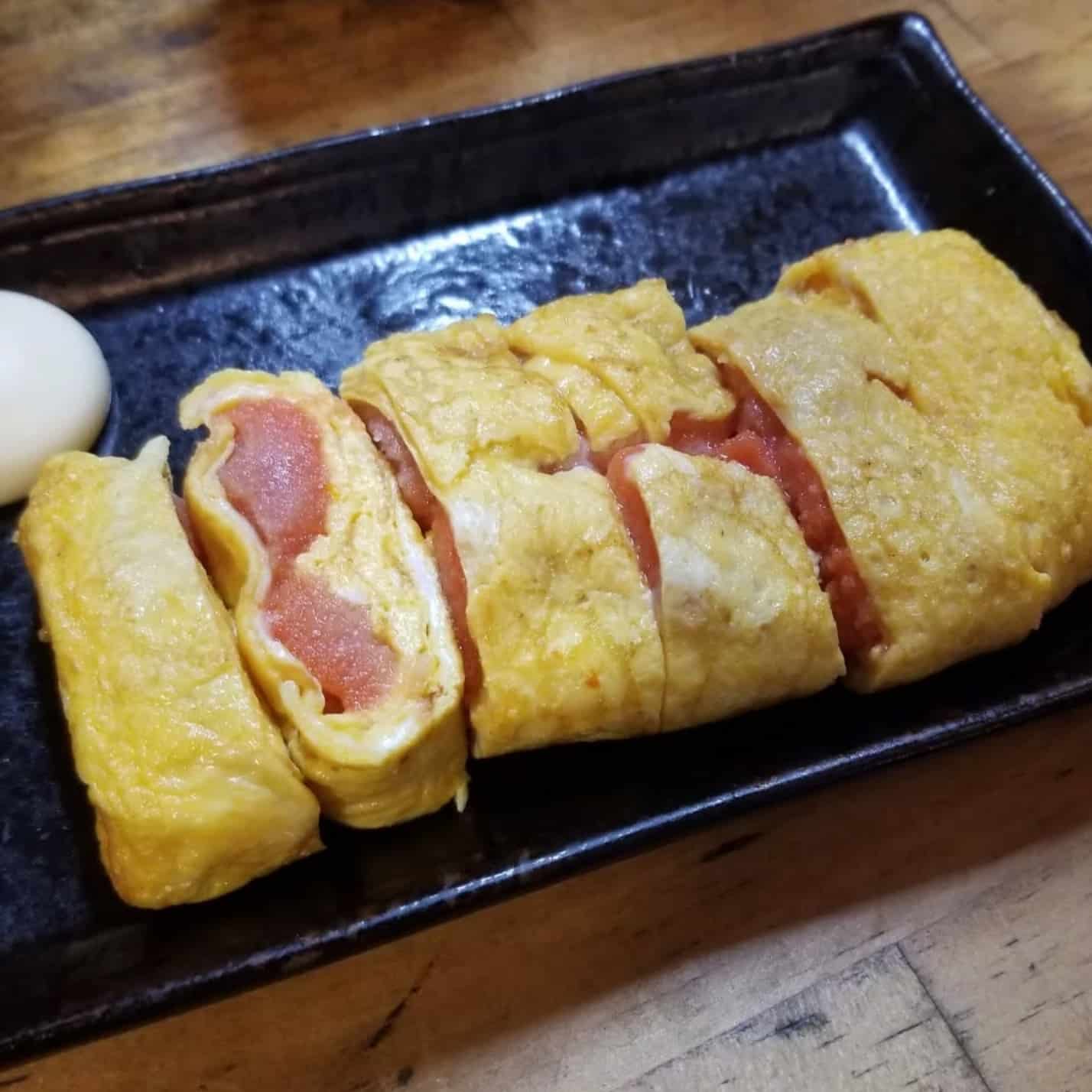
The representative taste is the Hakata ramen and mentaiko tamagoyaki at Kojima Shoten (小島商店). Rolled omelet made to order around a whole mentaiko, paired with a bowl of tonkotsu ramen for only about ¥800, is the most typical Nakasu yatai meal. The downside is long queues at popular stalls, and some stalls cost a bit more than in the other two districts.

Tenjin Yatai Street: After-Work Dining for Office Workers and the Birthplace of Yaki Ramen
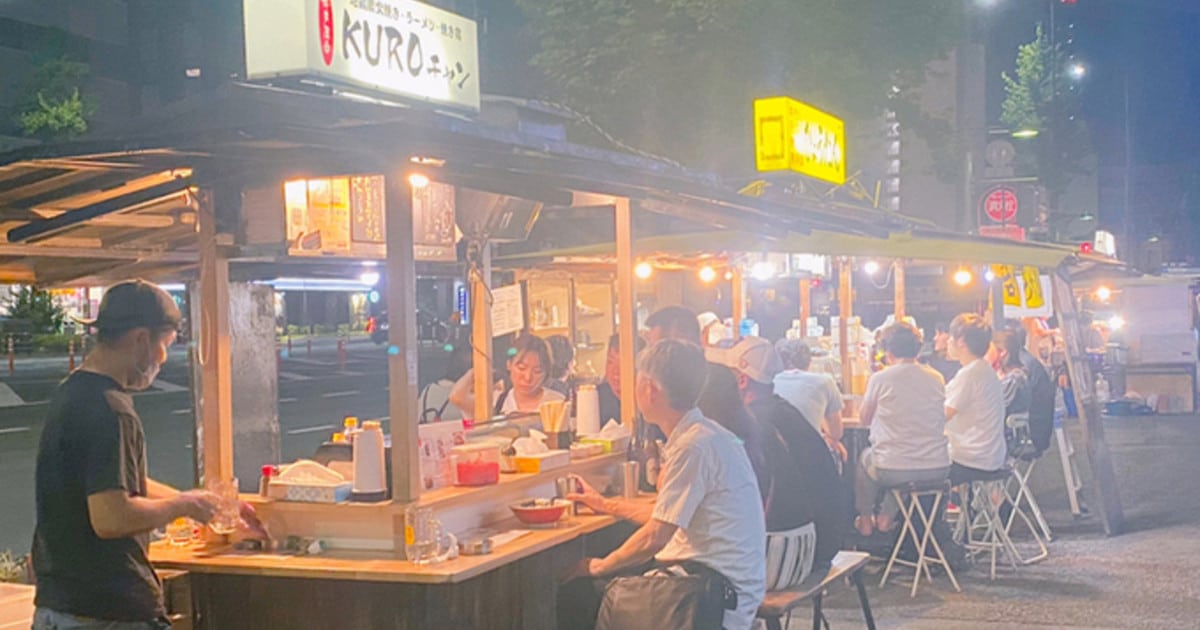
Tenjin’s yatai are scattered at the foot of office buildings and department stores, with local office workers as the main customers, and the atmosphere is quieter and more “grown-up” than Nakasu. The most interesting thing about this district is that the food is not limited to ramen at all: French, Chinese and Western dishes are all on offer, the most varied menus of the three districts.
Tenjin’s treasure is Koganechan (小金ちゃん), the birthplace of “yaki ramen” (焼きラーメン, stir-fried ramen) in all of Japan, in business since 1968 (Showa 43). Thin noodles are cooked down on the griddle with thick tonkotsu broth and finished with a special sauce before serving, ¥820 a plate, one of the few original yatai dishes you can only eat in Fukuoka.
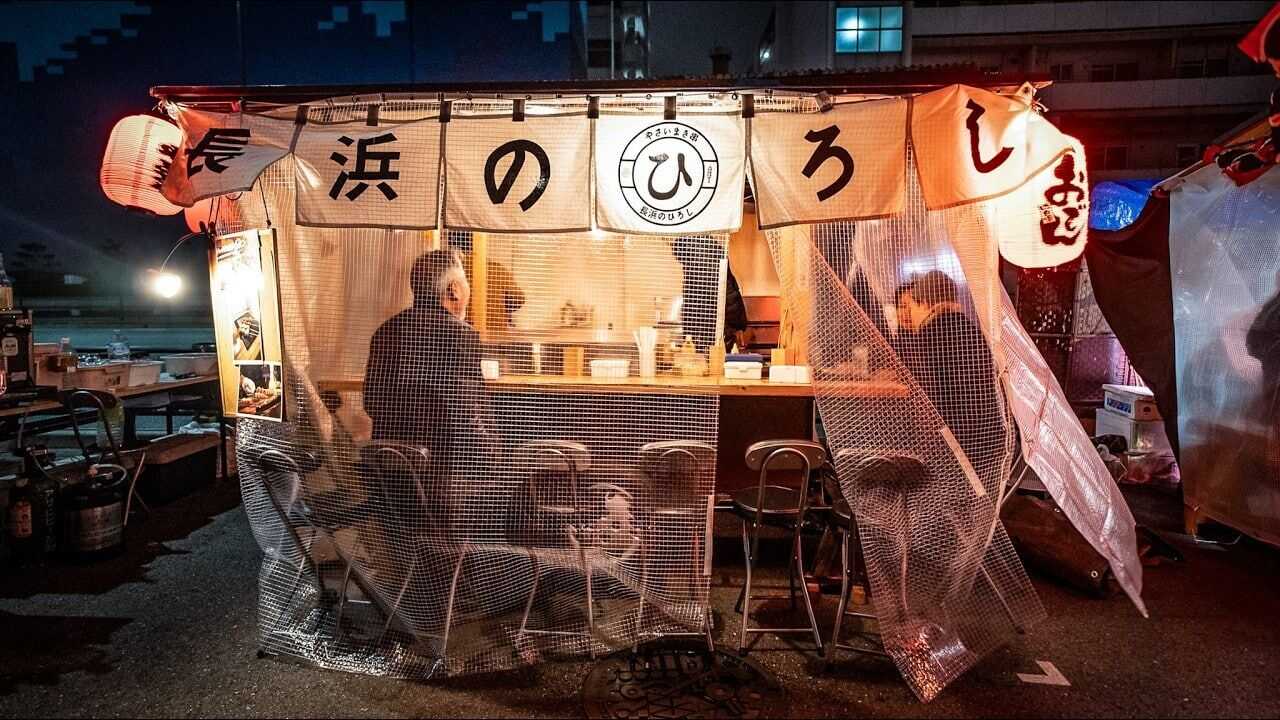
Nagahama Yatai Street: The Origin of Tonkotsu Ramen and the Most Heartwarming District
The Nagahama area is right next to the fish market and is the birthplace of the extra-thin-noodle “Nagahama ramen.” The noodles got thinner and thinner so that fish market workers could finish eating quickly, which is also how the “kaedama” (extra noodles) culture began. Nagahama Yatai Street once declined, and was revived in recent years when Fukuoka City reopened recruitment of stall owners. It now has the fewest tourists, the friendliest prices and the most chances to chat with the owner.
The district’s representative is Mentai Chudoku (明太中毒), Japan’s first mentaiko-specialty yatai. The signature mentaiko tororo hot pot (明太とろろ鍋) is ¥1,000 and the mentaiko spring roll is ¥700 (April 2026 prices), stacking Fukuoka’s two famous specialties, yatai and mentaiko, directly on top of each other. For the yatai that feels most like a local’s, Nagahama is the first choice.
What Local Foods Should You Eat at Fukuoka Yatai? 8 Signature Dishes and the Stalls to Match
Eat these 8 dishes and you will have run the whole spectrum of Fukuoka yatai.
Yaki Ramen (焼きラーメン): Yatai Koganechan
Yaki ramen is an original Fukuoka yatai dish that you can hardly find elsewhere, and Koganechan is its birthplace in all of Japan. Thin noodles are first tossed over high heat on the griddle with tonkotsu stock so they soak up the broth, then finished with the shop’s special sauce and the braising liquid from simmered dote-yaki. When it comes off the griddle, the sauce and pork fat aromas hit together, with a thick, slightly charred texture that goes perfectly with beer.
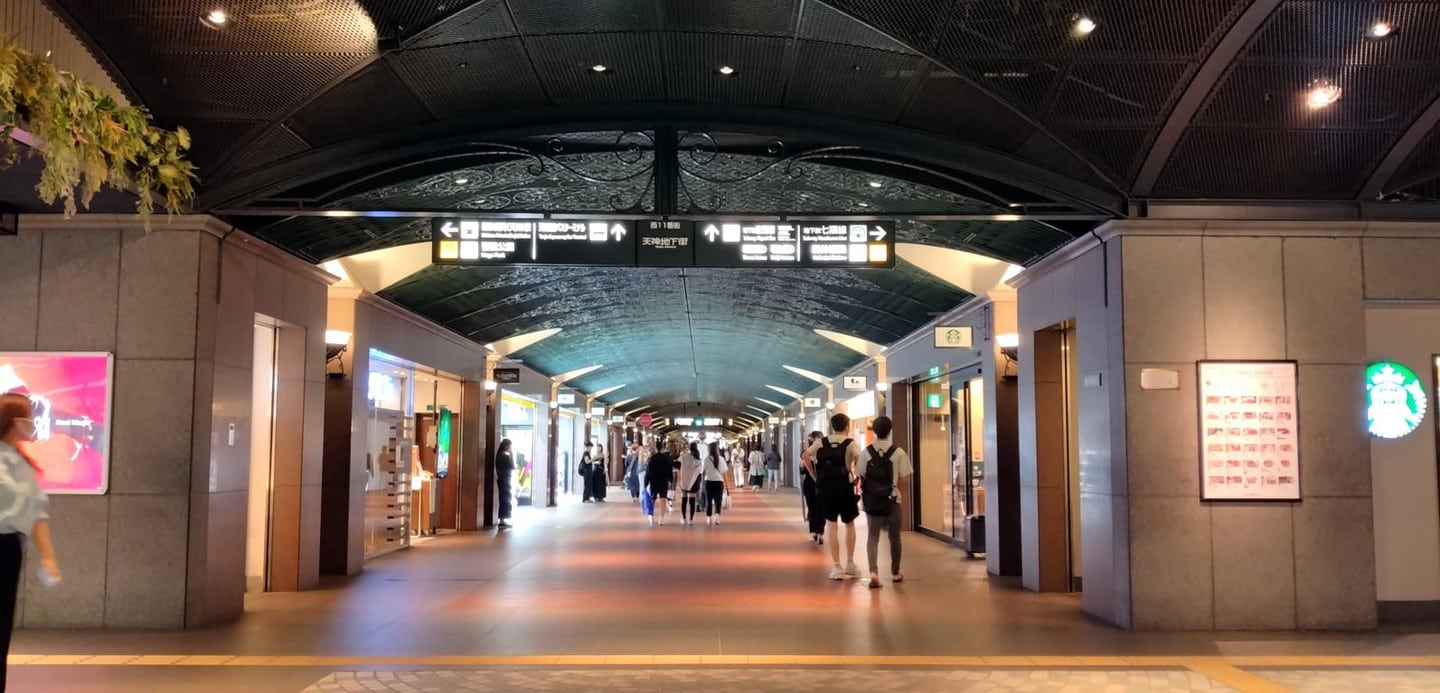
The menu has nearly forty dishes, and besides yaki ramen, dote-yaki (beef sinew stewed in miso) and mentaiko tamagoyaki are often ordered together. It is right on the main road beside Tenjin Station, and there is often already a queue before opening, so we suggest arriving at 18:30 when it opens.
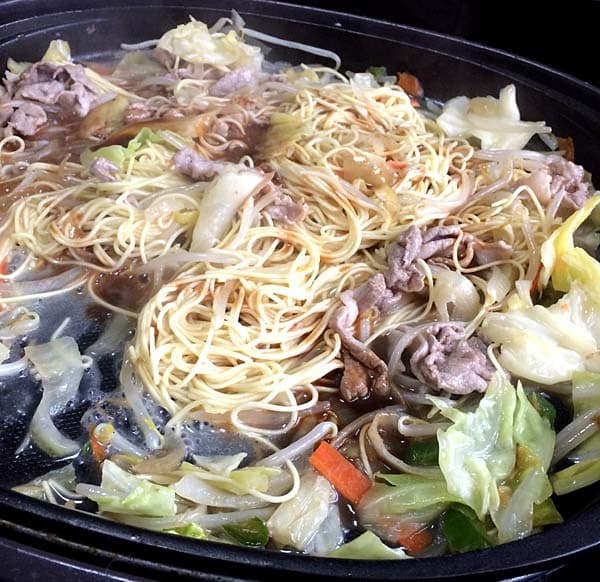
- 🍜 Must-order: Yaki ramen (焼きラーメン) ¥820, dote-yaki ¥730, mentaiko tamagoyaki ¥750
- 💰 Price: About ¥1,500-2,500 per person
- 🚉 Access: About a 2-minute walk from Exit 1 of Tenjin Station on the subway Kuko Line
Mentaiko Tamagoyaki: Nakasu Yatai Takechan fr Tsukasa
If you pick only one stall to take first-time family or friends to in Fukuoka, Takechan fr Tsukasa (たけちゃん fr 司) is probably the safest choice: multilingual menu, clear prices, no appetizer charge, and credit card and QR code payment support, which is quite rare in the nearly all-cash yatai world.
The signature is mentaiko tamagoyaki (rolled omelet) seasoned with tonkotsu dashi, with egg rolled around a whole mentaiko for a beautiful cross-section, moist egg and a savory taste with the sweetness of dashi. Pair it with a ¥700 Hakata tonkotsu ramen to finish, and one person can eat their fill for under ¥1,500.
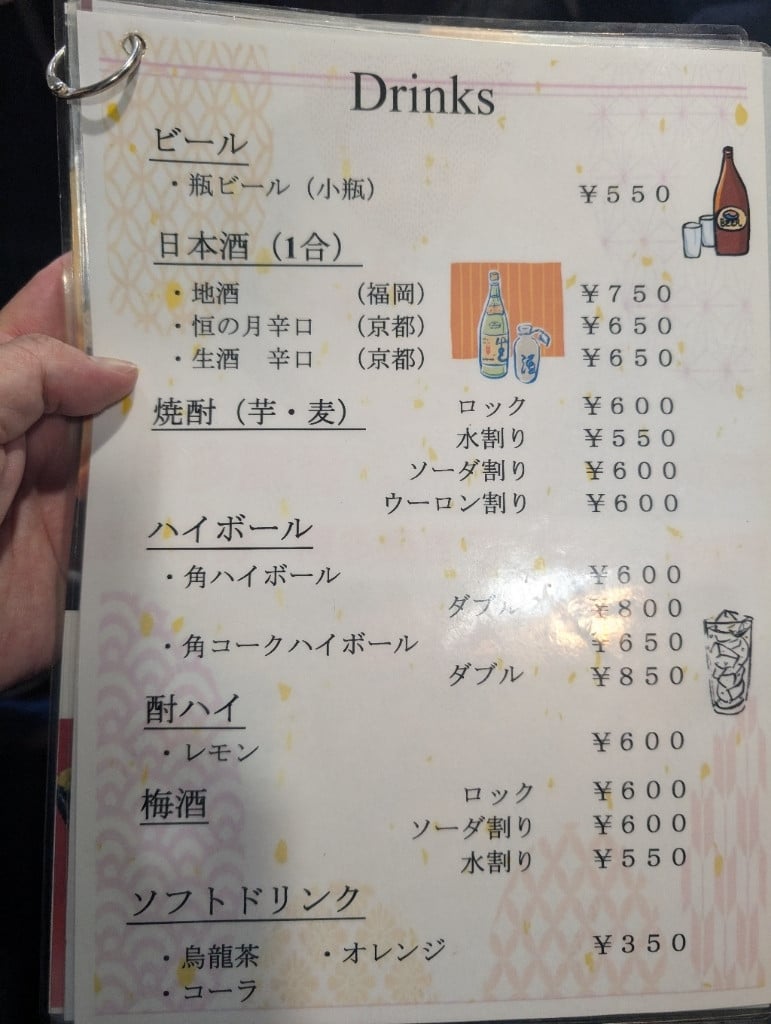
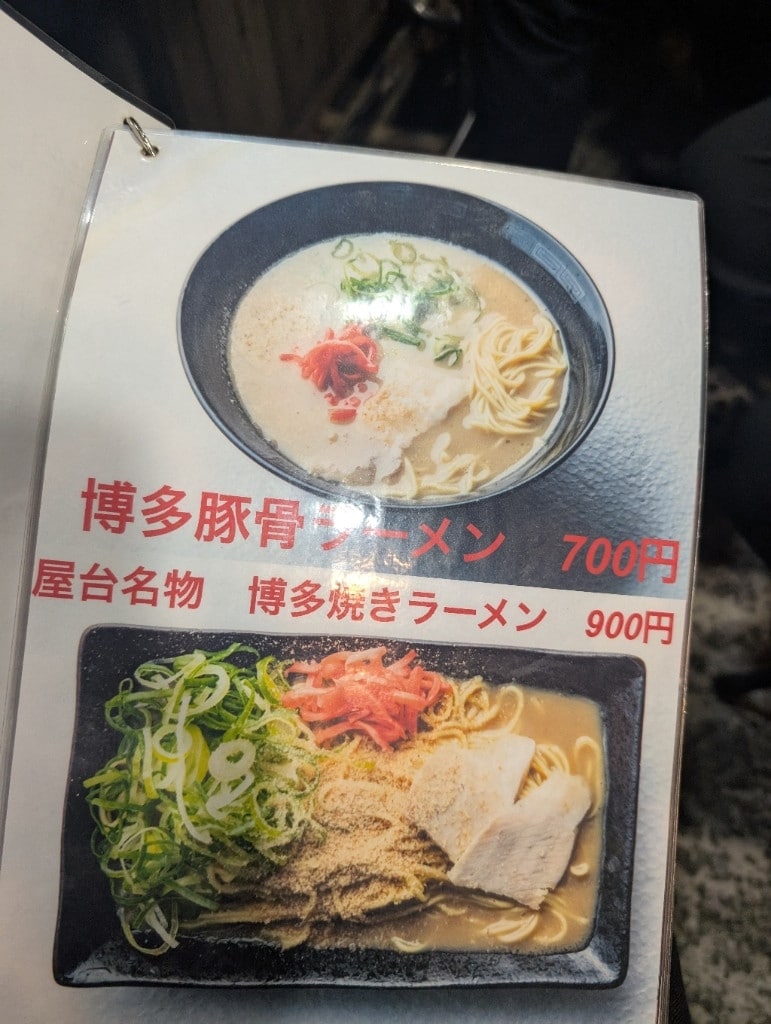
- 🍳 Must-order: Tonkotsu dashi mentaiko tamagoyaki ¥950, Hakata tonkotsu ramen ¥700, yaki ramen (焼きラーメン) ¥900
- 💰 Price: About ¥1,000-2,500 per person
- 🚉 Access: About a 5-minute walk from Nakasu-Kawabata Station on the subway Kuko and Hakozaki lines (Nakasu 4-1)
Hakata Tonkotsu Ramen: Kojima Shoten
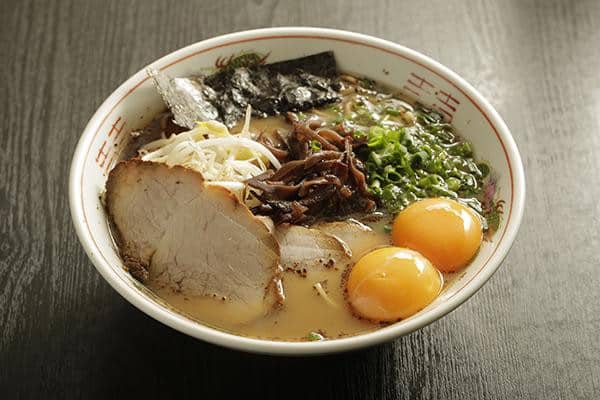
The biggest difference between yatai tonkotsu ramen and shop ramen is the open-air smoky atmosphere: the broth bubbles in a pot in front of you, the thin noodles come out after only a dozen seconds in the pot, and arrive steaming white. Kojima Shoten (小島商店) is on the riverside near Haruyoshi Bridge in Nakasu, where the young owner handles the heat with finesse, and it has been one of Nakasu’s consistently well-rated stalls in recent years.
Besides the ¥800 Hakata ramen, the tororo mentaiko teppanyaki is also popular, with whipped yam puree spread over the griddle, grilled until fluffy and slightly charred, then topped with squeezed mentaiko, a texture like a savory souffle. This stall also supports cashless payment and is open from about 19:00 to 2:00 a.m., closed Sundays.
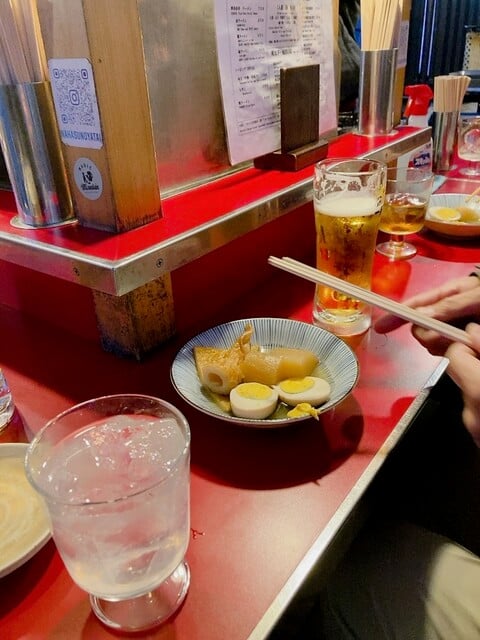
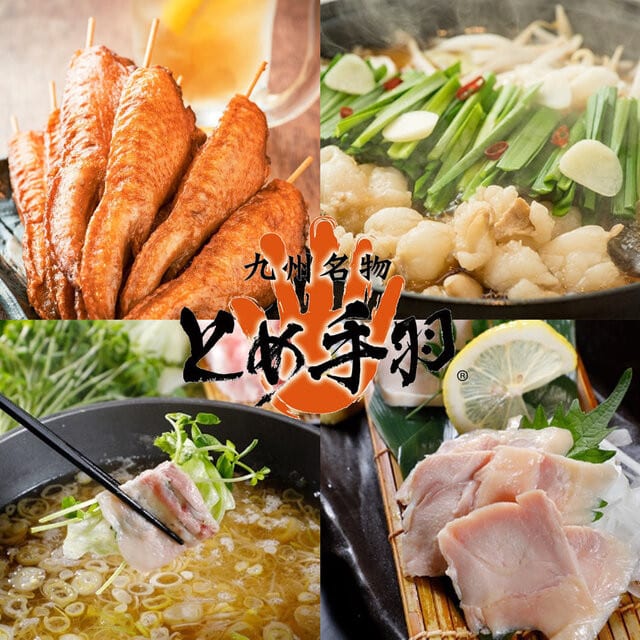
- 🍜 Must-order: Hakata ramen ¥800, mentaiko tamagoyaki ¥800, tororo mentaiko teppanyaki ¥950
- 💰 Price: About ¥1,500-2,500 per person
- 🚉 Access: About a 10-minute walk from Exit 1 of Nakasu-Kawabata Station on the subway Kuko Line, on the Naka River bank (Nakasu 1-8)
Creative Mentaiko Dishes: Yatai Mentai Chudoku
The first yatai in Japan to hang a “mentaiko specialty” sign is in Nagahama. The owner ties Fukuoka’s two most famous things, yatai culture and mentaiko, to the same menu, with everything from hot pots and fried dishes to noodles revolving around mentaiko, and mentaiko lovers will lose control.
The signature mentaiko tororo hot pot (明太とろろ鍋) has generous portions and holds nothing back on mentaiko. The shop also recommends a ¥700 mentaiko spring roll and an ¥850 mentaiko pork belly lettuce wrap, both good with drinks. Queues often form on weekends, so arrive early.
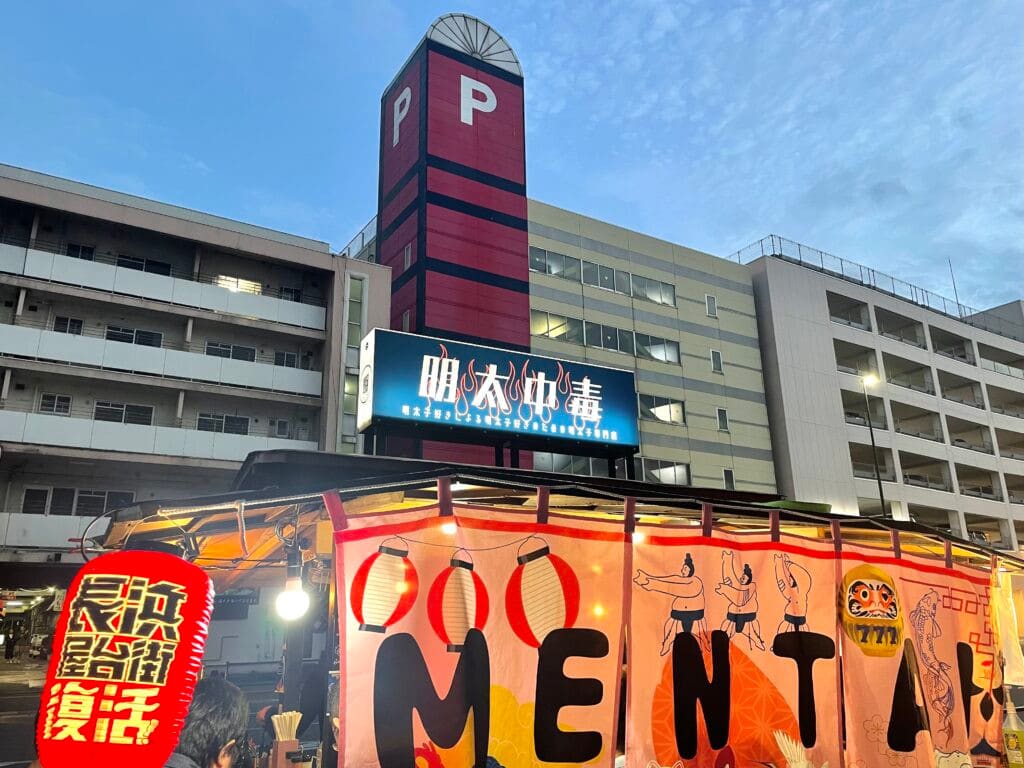
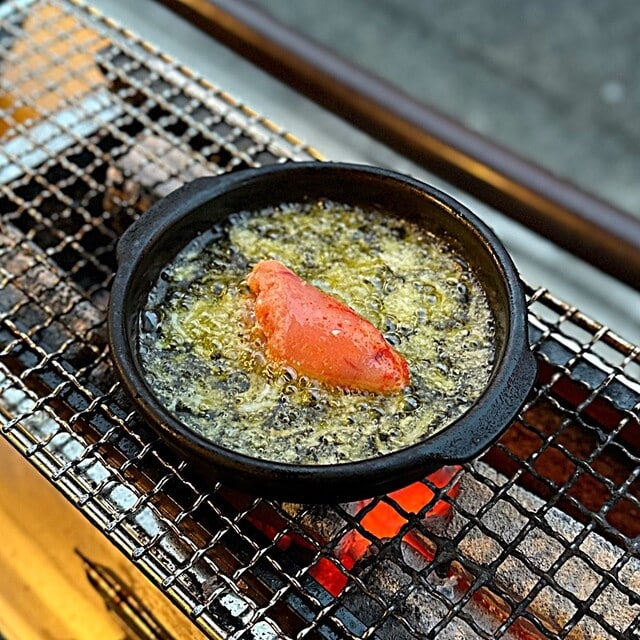
- 🌶️ Must-order: Mentaiko tororo hot pot (明太とろろ鍋) ¥1,000, mentaiko spring roll ¥700, mentaiko pork belly lettuce wrap ¥850
- 💰 Price: About ¥1,500-3,000 per person
- 🚉 Access: About a 10-minute walk from Akasaka Station on the subway Kuko Line (Nagahama 3-14, Chuo Ward, Fukuoka)
Hakata Bite-Size Gyoza: Handmade Gyoza Take-chan
Hakata gyoza are different from elsewhere: they are made especially small, one bite each, with thin crisp wrappers, so you can eat a dozen without tiring of them. This “hitokuchi gyoza” is uniquely Hakata. Take-chan is run by a family of three, and the gyoza deliberately go easy on garlic so you do not have to worry about your breath afterward, and almost every table orders them.
The shop serves homemade yuzu kosho, and a dab of it opens up the aroma, a pairing found only in Kyushu. The dote-nabe, which slow-simmers beef sinew, beef cheek and konjac in white miso, is rarely seen at other yatai and is this stall’s hidden strength, a good portion alongside the gyoza.
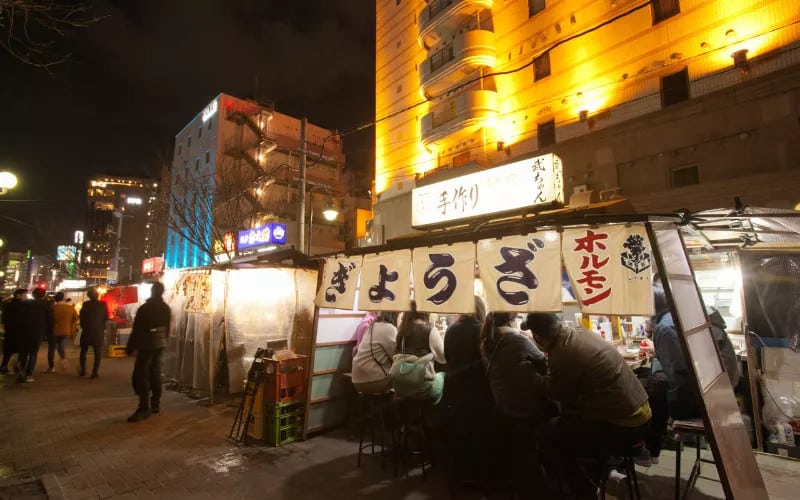
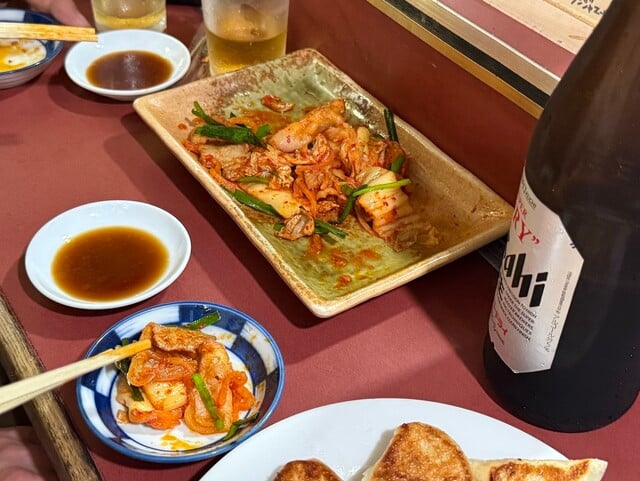
- 🥟 Must-order: Hakata bite-size gyoza (8 for ¥600, with homemade yuzu kosho), dote-nabe ¥600, horumon ¥900
- 💰 Price: About ¥1,500-2,500 per person
- 🚉 Access: About a 10-minute walk from Exit 1 of Nakasu-Kawabata Station on the subway Kuko Line, on the Naka River bank in Nakasu (Nakasu 1-8)
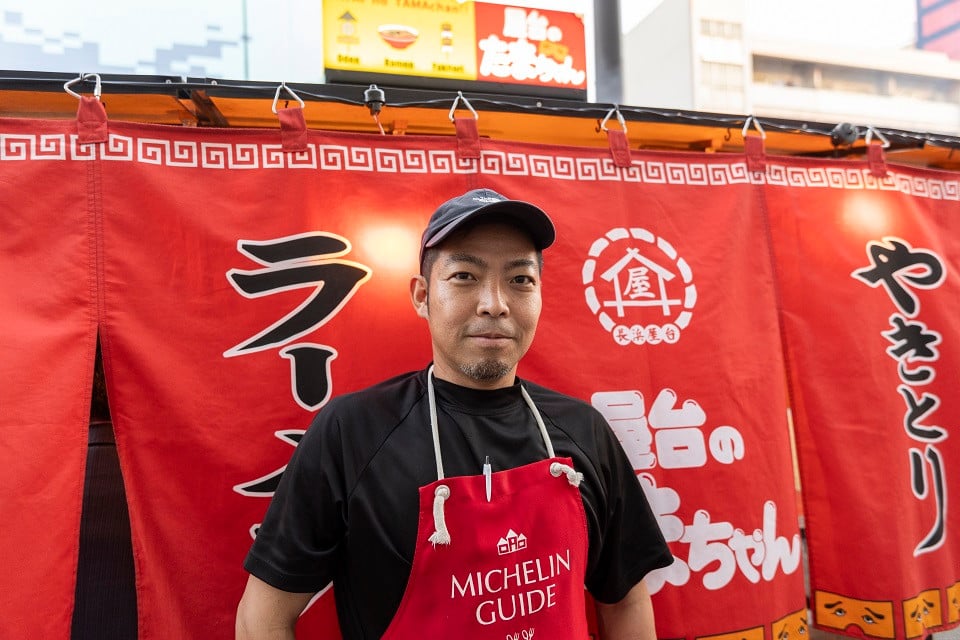
Charcoal-Grilled Beef Skirt Steak: Yatai no Tamachan
Tamachan is run by a well-known local yakiniku restaurant, so the grade of its meat is in a different class from ordinary yatai. The signature thick-cut charcoal-grilled beef skirt (sagari) is seared fragrant on the outside and stays pink in the center, a rare yatai meat dish that people make a special trip for.
Another must-try is “dashi-wari,” oden broth mixed into sake, savory and warming, especially satisfying at open-air seats in winter. To finish, there is also a bowl of pure tonkotsu ramen, recognized as above average for the area.
- 🥩 Must-order: Thick-cut charcoal-grilled beef skirt (サガリ), dashi-wari, pure tonkotsu ramen
- 💰 Price: About ¥2,000-3,500 per person
- 🚉 Access: About a 10-minute walk from Akasaka Station on the subway Kuko Line, inside Nagahama Yatai Street
French Baked Escargot: Yatai Remi-san Chi
A French yatai run by a French staff member who speaks Japanese and English, it is the most unexpected presence in Tenjin: on a roadside cart, sizzling baked escargot arrives in small cast-iron dishes. The ¥900 escargot (エスカルゴ) arrives with the sauce still bubbling, and the rich garlic butter smell carries two seats away.
Besides escargot, pumpkin gnocchi and French home-style stews are also made fresh. The owner and staff are talkative and the atmosphere lively, a great second stop on a yatai crawl to switch your taste buds to a different channel.
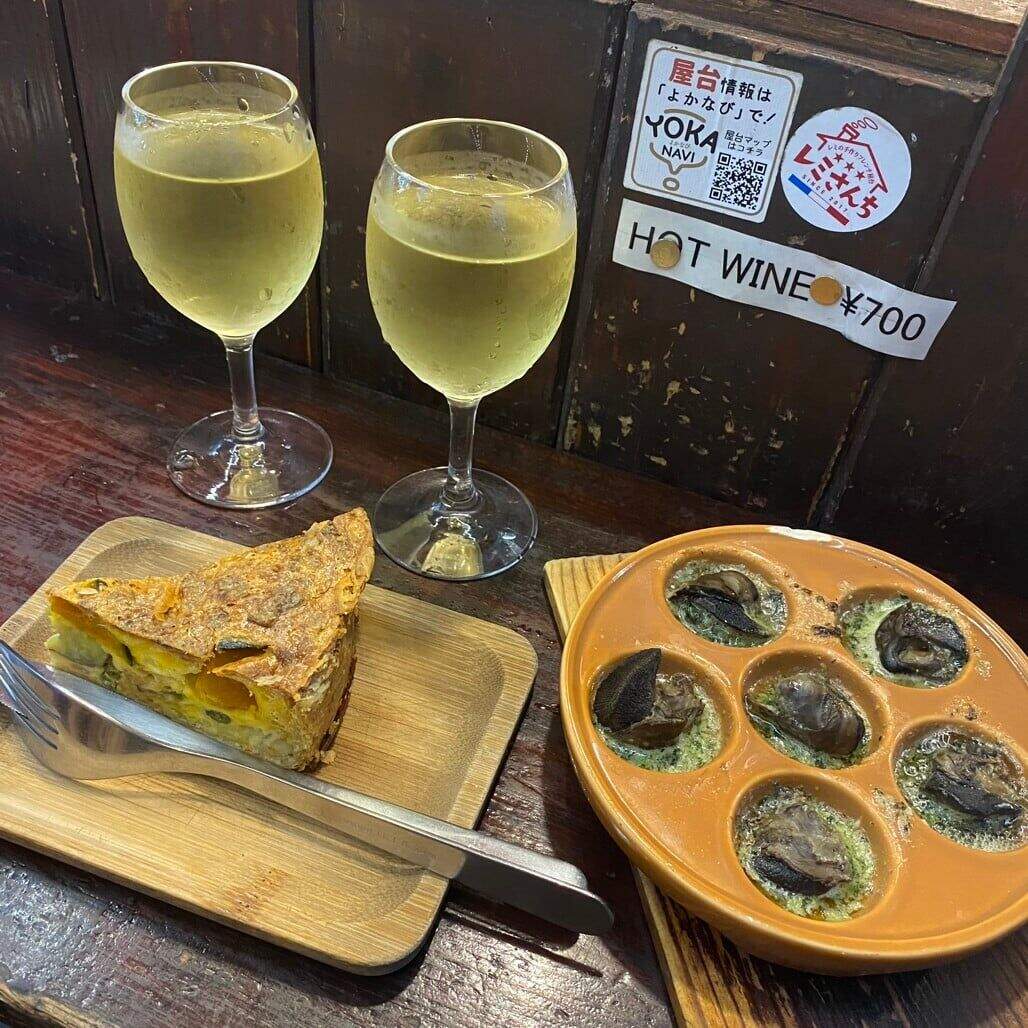
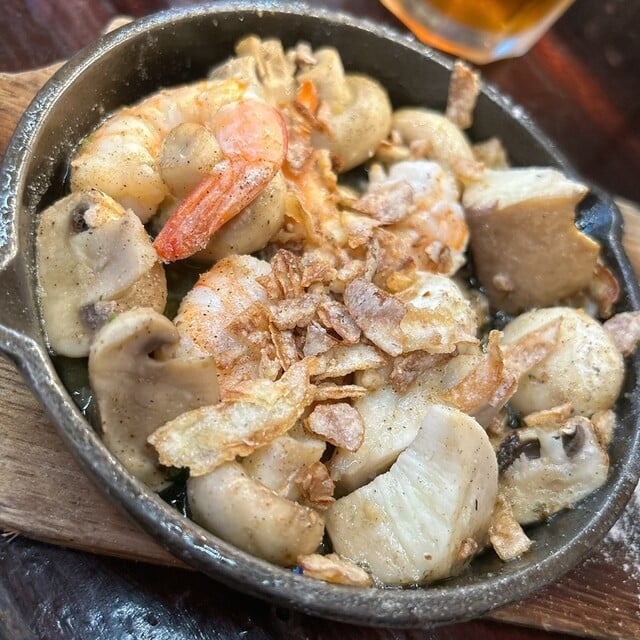
- 🐌 Must-order: Baked escargot (エスカルゴ) ¥900, French quiche (キッシュ) ¥700
- 💰 Price: About ¥2,000-3,000 per person
- 🚉 Access: About a 1-minute walk from the South Exit of Nishitetsu Fukuoka (Tenjin) Station (Watanabe-dori 4-9)
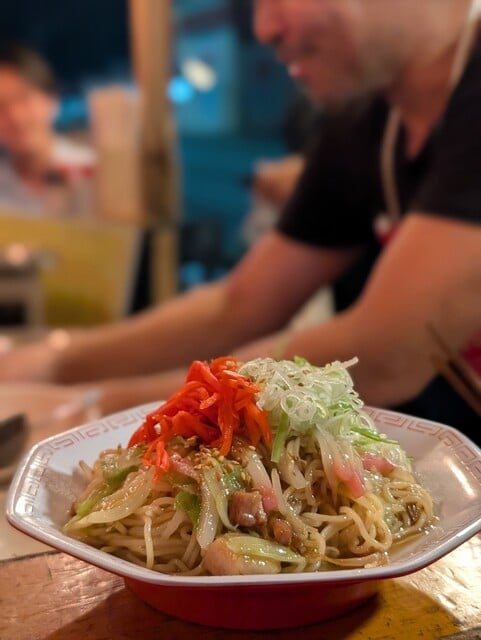
Chinese-Style Napolitan Spaghetti: Yatai Mamichan
Mamichan is a long-established Tenjin yatai, on the Showa-dori side of the Fukuoka Bank head office. The signature “Chinese Napolitan” (チャイニーズナポリ) was originally the staff’s meal, and customers who tried it found it so good that over time it became the signature dish.
It is made with udon noodles in place of spaghetti, stir-fried with seasonal vegetables in a Napolitan style, ¥950 a plate, with a springier texture than spaghetti and a thicker coating of sauce. The proprietress is talkative and friendly, so even solo visitors will not feel awkward, and for many Fukuoka locals it is the “archetypal yatai.”
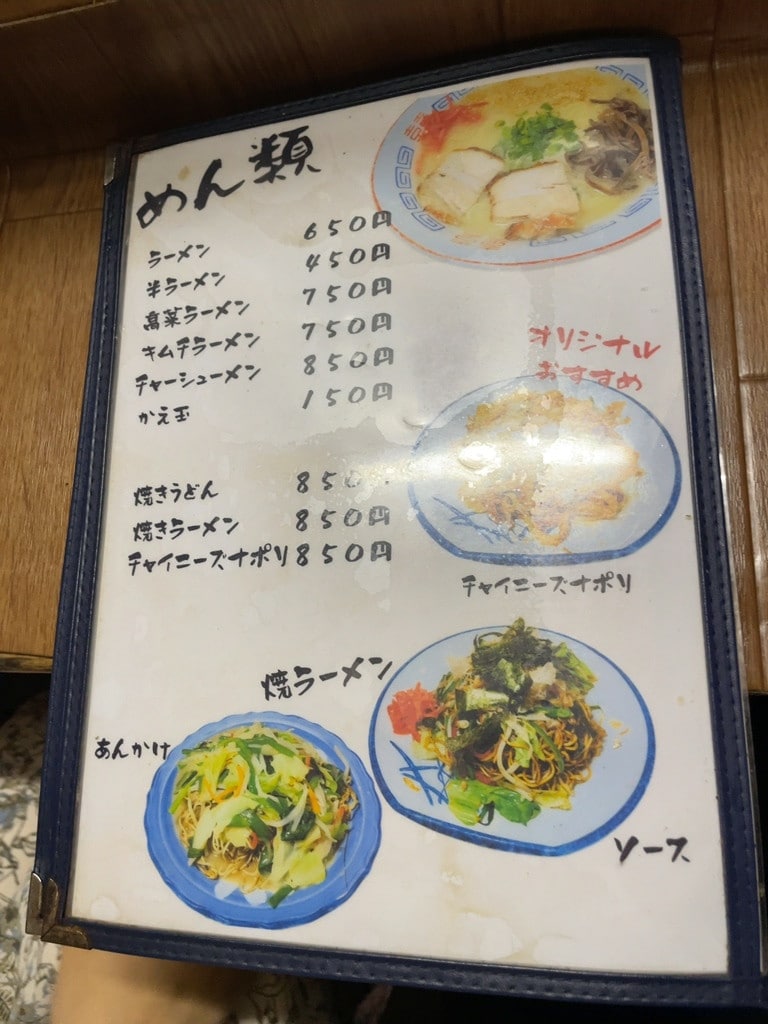
- 🍝 Must-order: Chinese Napolitan (チャイニーズナポリ) ¥950, tender stewed pork trotters
- 💰 Price: About ¥1,500-2,500 per person
- 🚉 Access: About a 2-minute walk from Tenjin Station on the subway Kuko Line, on the Showa-dori side of the Fukuoka Bank head office
Recommended Fukuoka Yatai: A Field List of Popular Yatai in Nakasu, Tenjin and Nagahama
The previous section picked “dishes”; this section picks “the stalls themselves,” each different in atmosphere, owner and suitable occasion.
Oden and Yakitori Mixed Yatai: Hakata Yatai Nakasu Juban
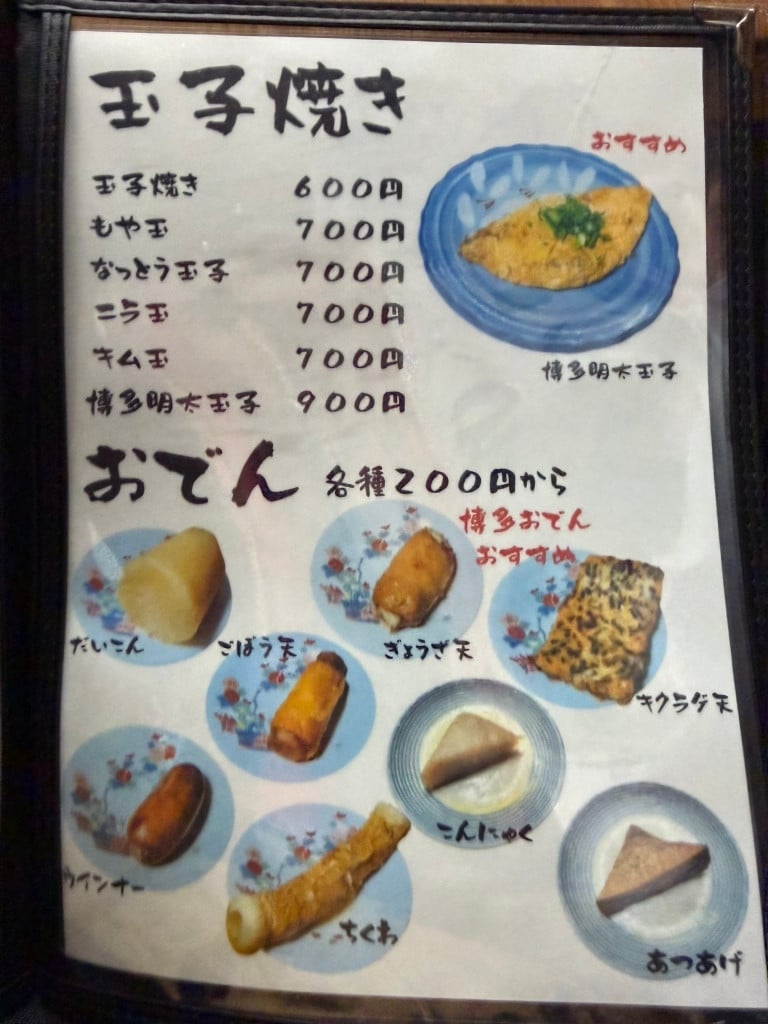
Nakasu Juban (中洲十番) is the kind of yatai where unfolding the menu makes choosing difficult: ramen, yaki ramen, yakitori, oden and tempura are all there, so a single stall can sweep through the representative dishes of Hakata yatai, ideal for an itinerary with only one night and no wish to hop around.
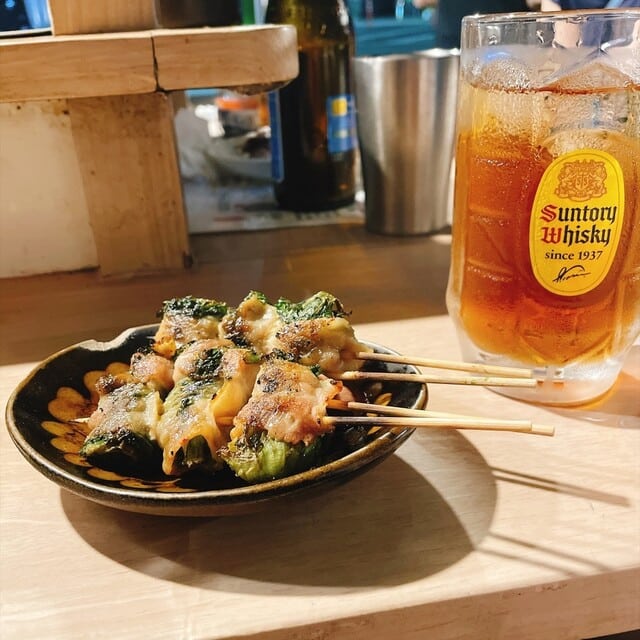
For oden we recommend daikon radish and beef sinew, plus the Kyushu-only oden item “gyoza maki” (餃子巻き), gyoza wrapped in fish paste and simmered, soft outside and crisp inside after soaking up the broth, which is excellent with a little yuzu kosho. For yakitori, we recommend pork belly skewers (豚バラ串), which are even more popular than chicken skewers in Fukuoka.
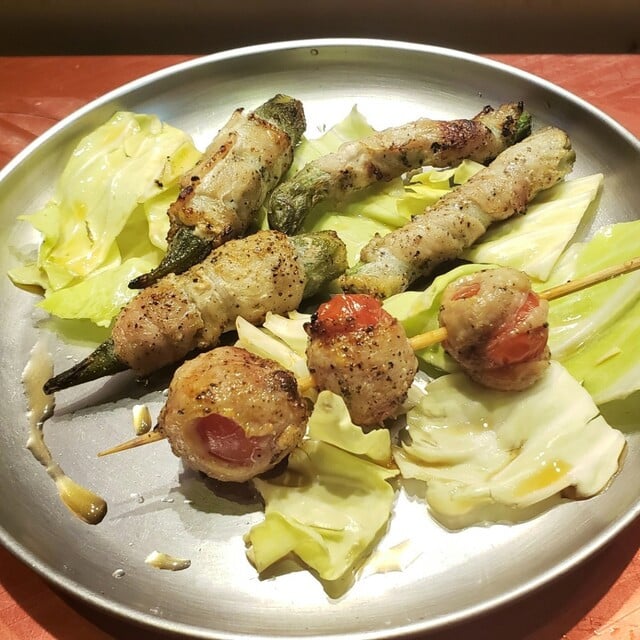
- 🍢 Must-order: Oden gyoza maki, pork belly skewers (豚バラ串), yaki ramen
- 💰 Price: About ¥1,500-2,500 per person
- 🚉 Access: About a 10-minute walk from Exit 1 of Nakasu-Kawabata Station on the subway Kuko Line, on the Naka River bank (Nakasu 1-8)
Mentaiko Cheese Gyoza: Yatai Shinryu
Shinryu (伸龍) has been in business in Nakasu for more than 30 years, run by a parent and child, and is a stall with a high rate of returning regulars. Its mainstay is solid tonkotsu ramen, with a rich broth and firm thin noodles, very much of the “Hakata” school. When ordering noodles you can simply say “katamen” (カタメン, firm noodles) and the owner will understand instantly.
What really made Shinryu famous, though, is the mentaiko cheese gyoza: gyoza stuffed with mentaiko and melted cheese, where one bite releases savory and creamy flavors together, a rare creative dish at a yatai that is also popular with families with children. The peak crowd comes after 20:00, so come early if you want to sit comfortably.
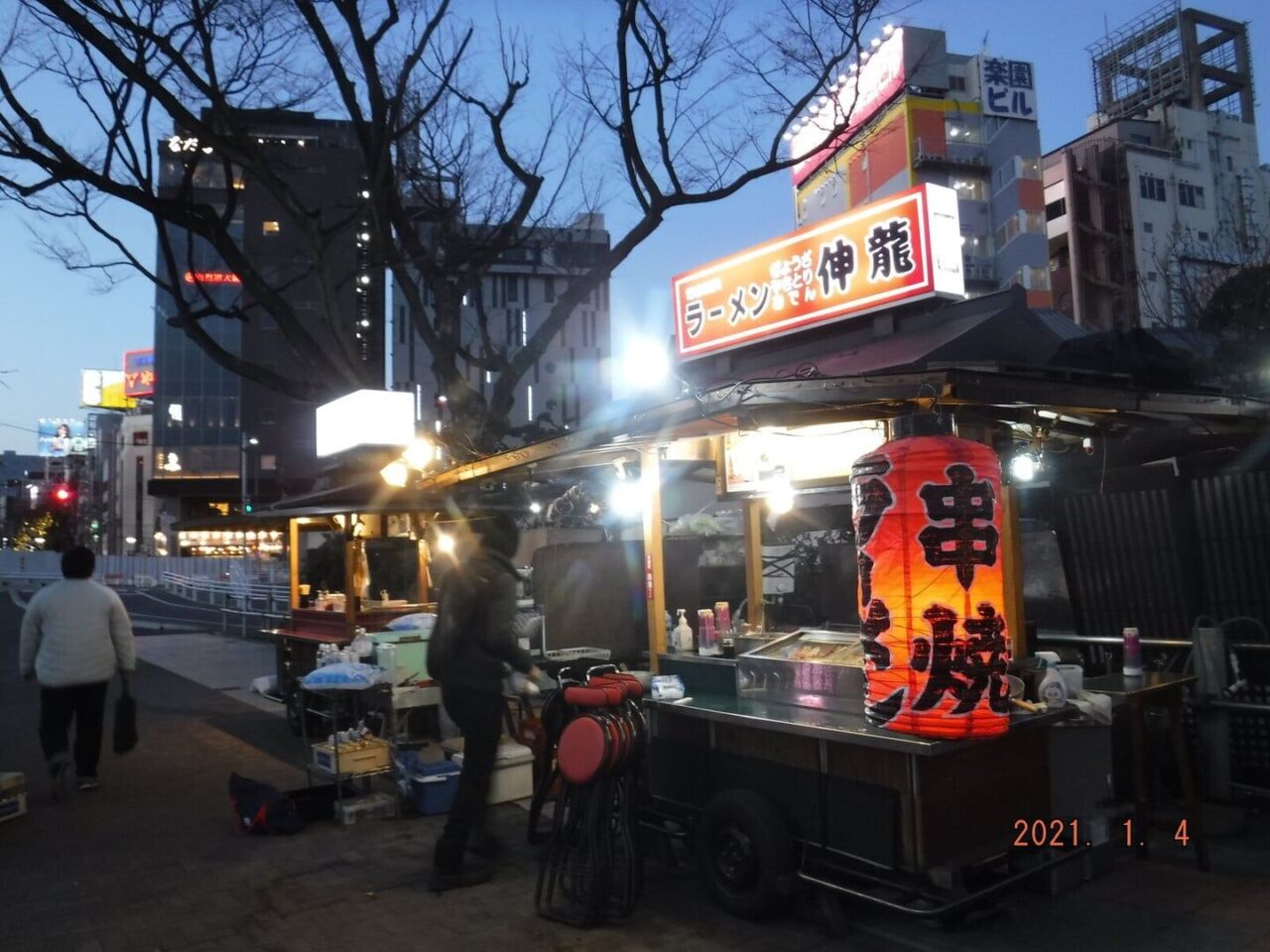

- 🥟 Must-order: Mentaiko cheese gyoza ¥750, tonkotsu ramen ¥750 (noodle firmness can be specified), yaki ramen (焼きラーメン) ¥950
- 💰 Price: About ¥1,500-2,500 per person
- 🚉 Access: About a 10-minute walk from Exit 1 of Nakasu-Kawabata Station on the subway Kuko Line, on the Naka River bank (Nakasu 1-8)
Must-Eats at Nakasu Yatai: The Three Things to Order First on Your First Nakasu Meal
What should you eat at Nakasu yatai the first time? Start with three things: the tonkotsu dashi mentaiko tamagoyaki (¥950) at Takechan fr Tsukasa, the Hakata ramen (¥800) at Kojima Shoten, and the mentaiko cheese gyoza (¥750) at Shinryu. All three stalls are within a 5- to 10-minute walk of Nakasu-Kawabata Station, so you can hop from one to the next in a single evening.
Tempura and Solo Drinks: Yatai Tonkichi
Tonkichi (とん吉) is on the edge of the Nakasu entertainment district, a hidden yatai that is “surprisingly quiet.” Compared with the noisy stalls on the main street, the atmosphere here is calm, and even solo visitors feel no pressure, ideal for travelers who want to take their time with a drink and chat with the owner.
The signature is a freshly fried tempura platter, with thin, crisp batter handed to you straight from the pan, and the yaki ramen is also well made. If the first stop on a yatai crawl is too noisy, putting Tonkichi second or third makes the rhythm of the whole night much more comfortable.
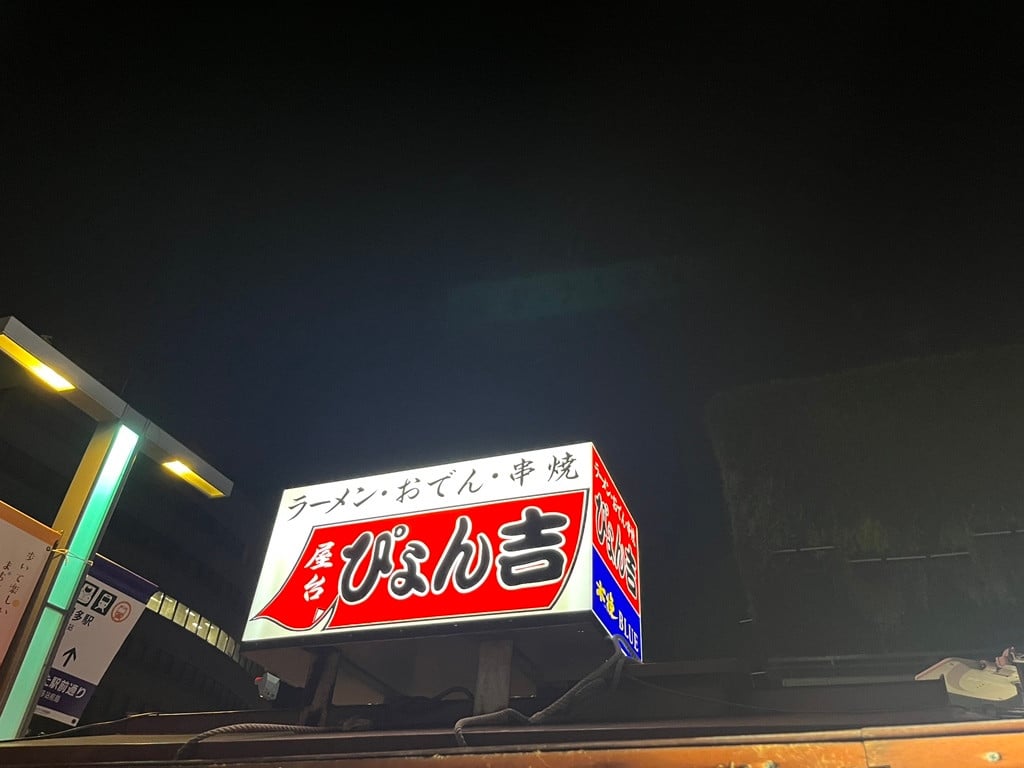
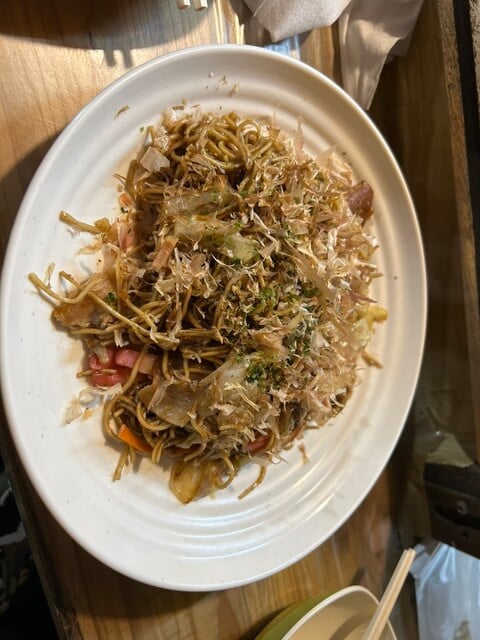
- 🍤 Must-order: Freshly fried tempura platter ¥1,300, horumon ¥900, yaki ramen ¥600
- 💰 Price: About ¥1,500-2,500 per person
- 🚉 Access: About a 3-minute walk from Nakasu-Kawabata Station on the subway (Nakasu Nakashima-machi)
Creative Dishes with Local Fukuoka Ingredients: Yatai Kiryu
Kiryu (喜柳) is in the Tenjin-Minami area and follows a “creative dishes using Fukuoka ingredients” approach, with a large menu covering seafood, vegetables and meat, and plating more careful than at an average yatai, showing that the owner has a restaurant background.
Because of the wide choice of dishes and flavors that are not heavy on salt or oil, this stall is especially good for two or three people who want to drink while slowly adding dishes. There are few seats, and on Friday and Saturday evenings it is full from the moment it fills until closing, so we suggest going on a weekday or at the 18:30 opening.
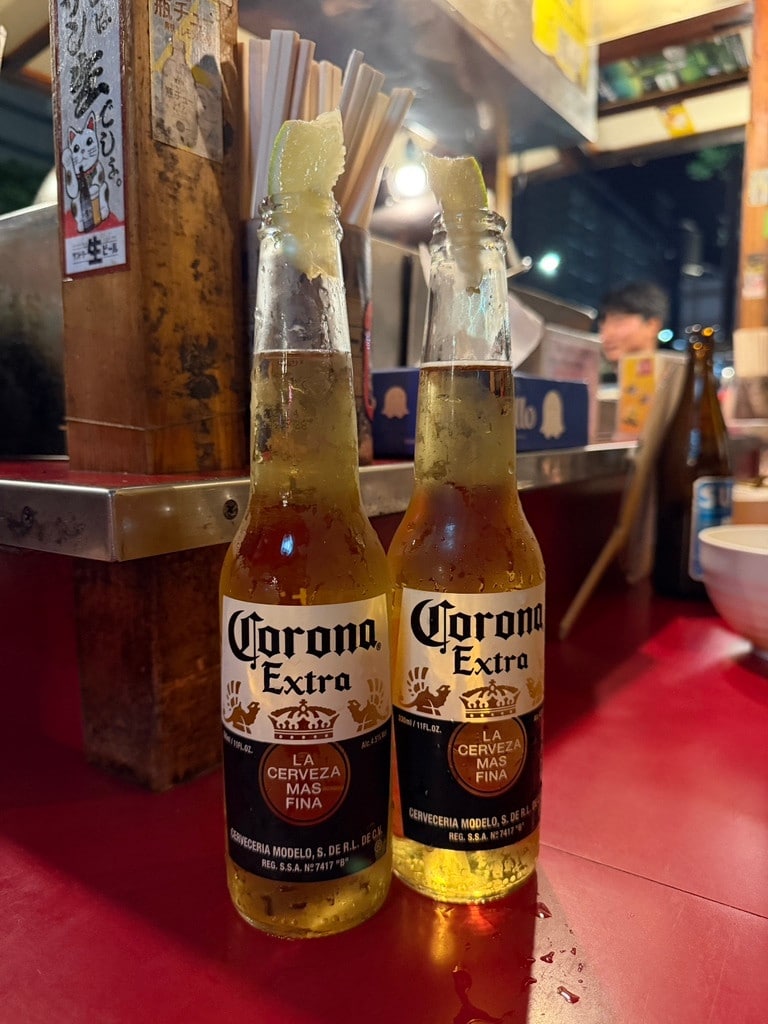
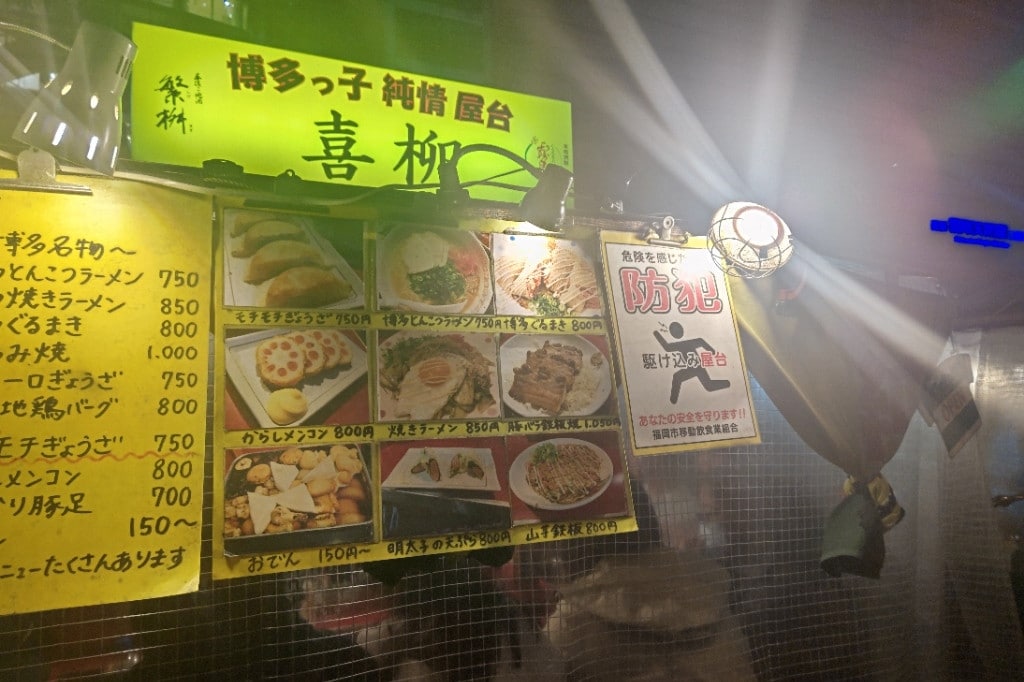
- 🍽️ Must-order: Chewy gyoza (モチモチ餃子) ¥750, Hakata guru-maki (博多グル巻き) ¥800, original dishes with Fukuoka ingredients
- 💰 Price: About ¥2,000-3,000 per person
- 🚉 Access: About a 5-minute walk from Tenjin Station on the subway Kuko Line (Tenjin 1-4-1, Tenjin-Minami area)
Fried Rice and Chinese Dishes: Tenjin Yatai So
So (宗) is a very popular stall around Watanabe-dori. Its signature “So fried rice” is stir-fried over high heat until every grain is separate, full of wok hei, one of the few fried rices at a yatai that people ask for by name. Ordering one as a late-night finish is more satisfying than ramen.
The owner learned Chinese cooking in Osaka, so beyond mentaiko tamagoyaki and yaki ramen, the Chinese dishes are especially complete, and it works fine for just eating without drinking. The stall has many regulars, with a lively but not noisy atmosphere, suited to travelers who want to experience “the yatai locals really go to after work.”
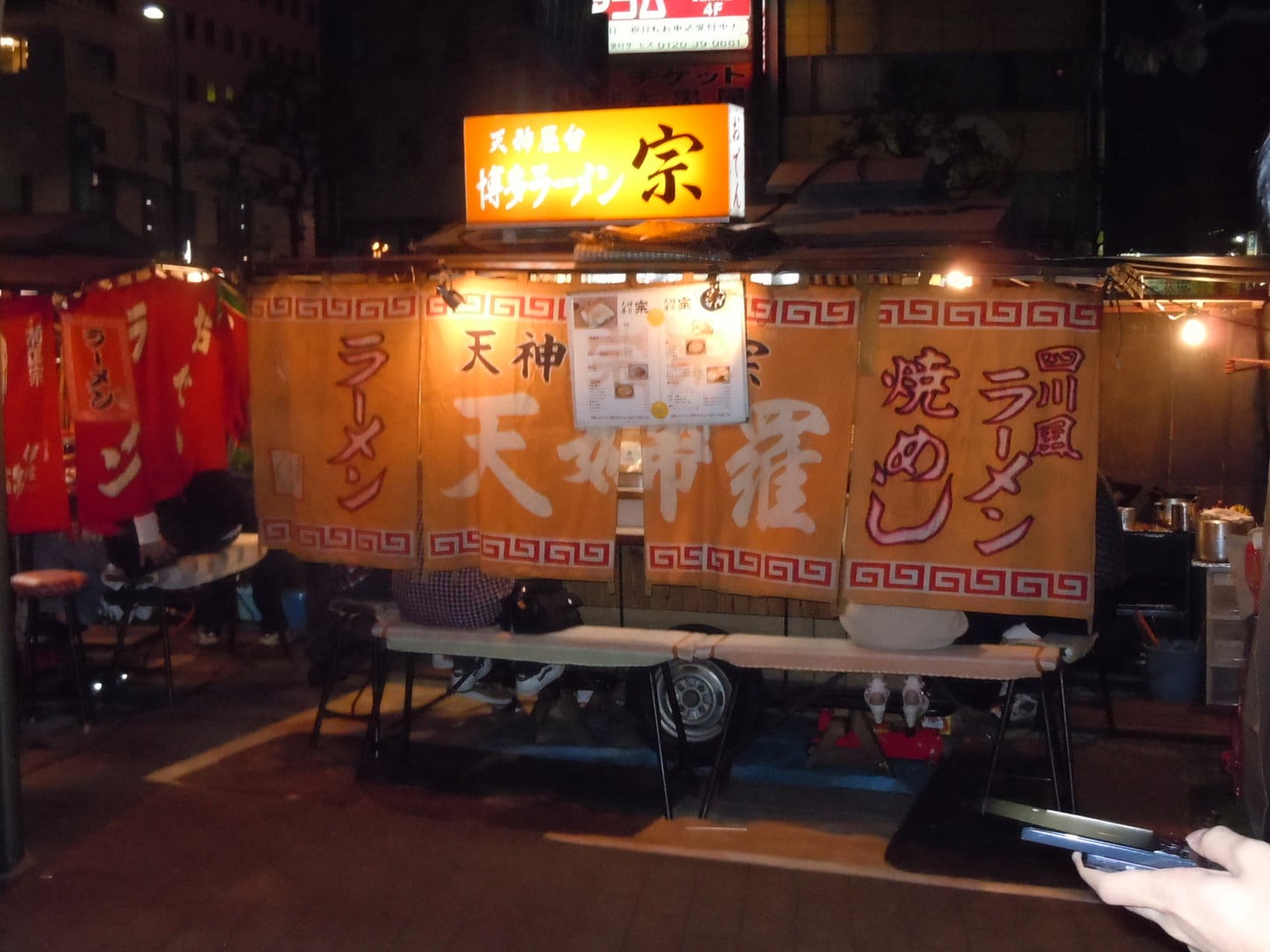
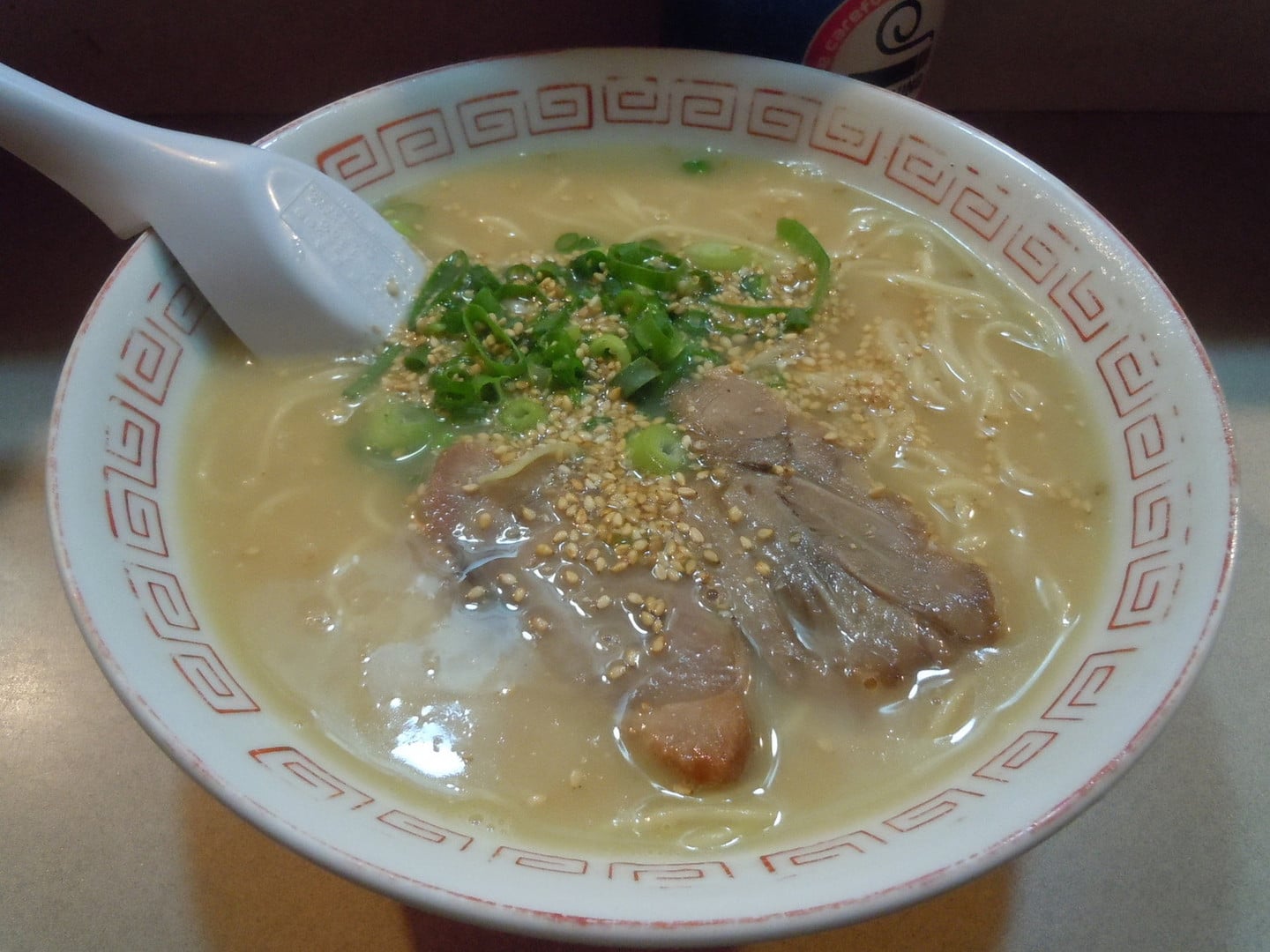
- 🍚 Must-order: Fried rice ¥700, mentaiko tamagoyaki ¥900, yaki ramen ¥900
- 💰 Price: About ¥2,000-3,000 per person
- 🚉 Access: About a 2-minute walk from Nishitetsu Fukuoka (Tenjin) Station (Watanabe-dori 4-chome)
Yatai Ramen Basics: Yatai Hidechan
Hidechan (ひでちゃん) is a long-running popular fixture on the Naka River bank in Nakasu, focusing on the most basic, unfussy bowl of yatai tonkotsu ramen: a milky, rich broth that is not overly salty, with firm, straight thin noodles that are just right to finish in one go.
If you want extra noodles, tell the owner “kaedama” (替玉, かえだま), a custom passed down from Nagahama ramen that works at yatai too. If you only want a bowl of the most authentic yatai ramen without being distracted by creative dishes, this stall is the most direct answer.
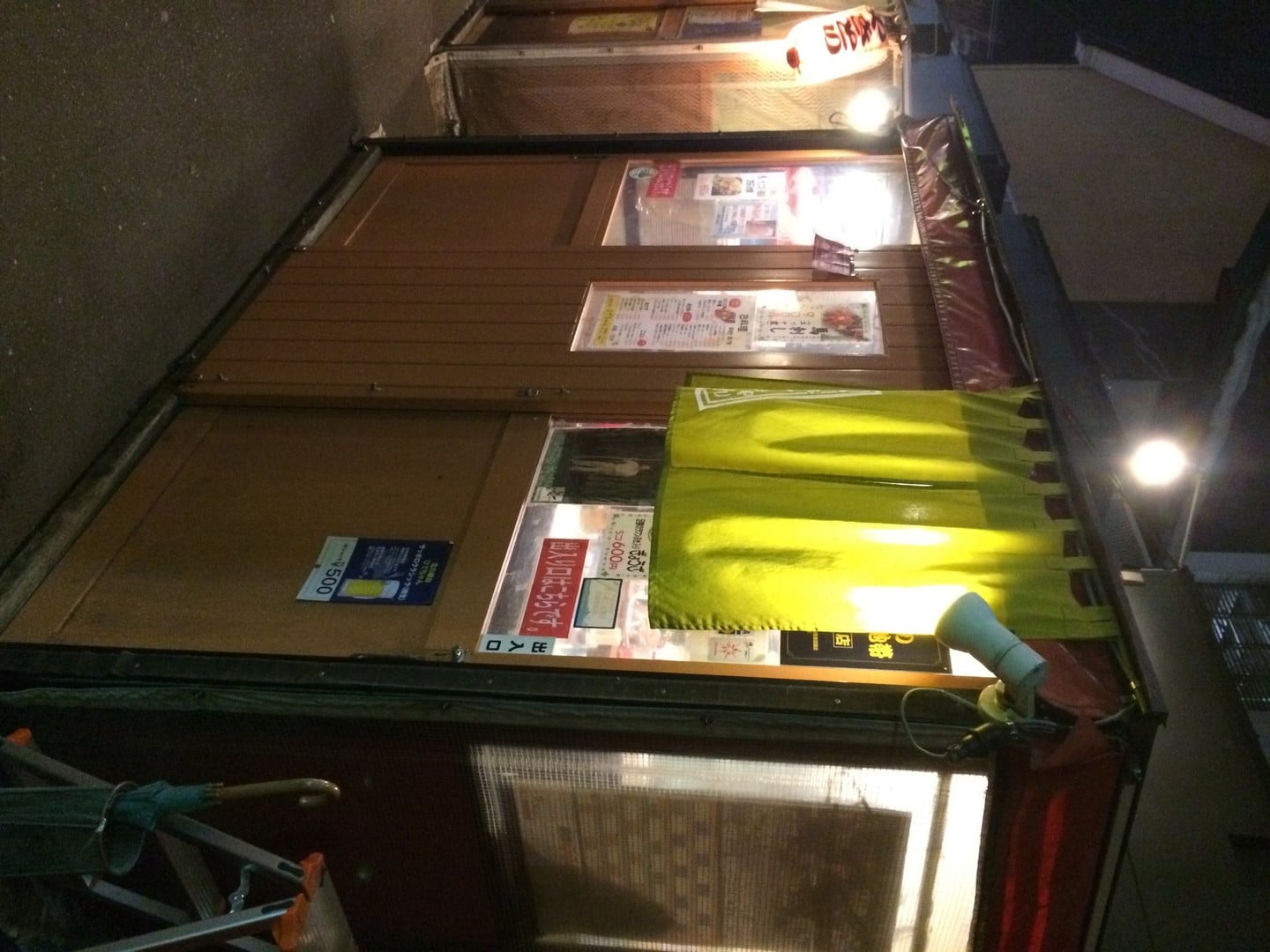
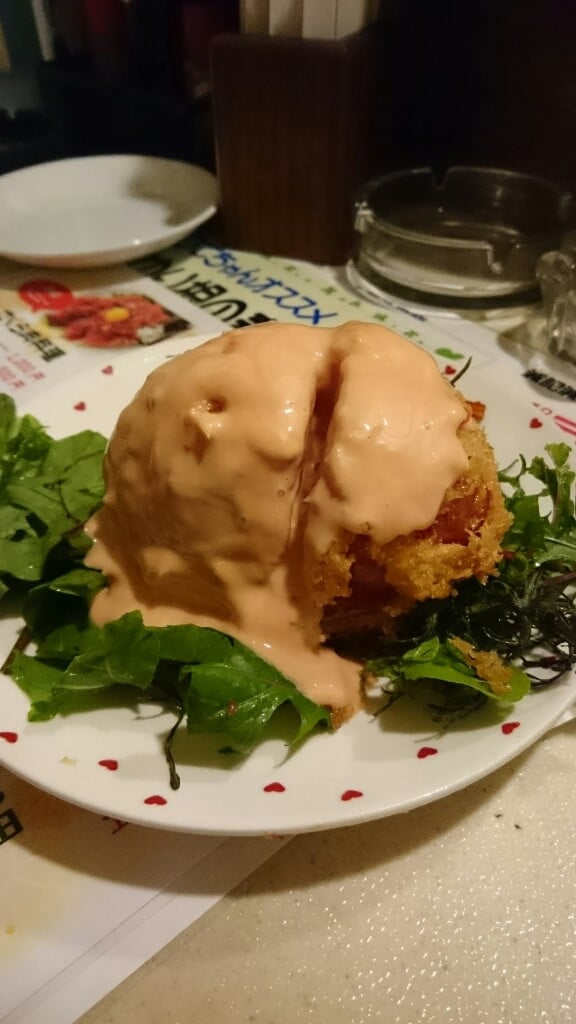
- 🍜 Must-order: Yatai tonkotsu ramen ¥770 (with optional “kaedama”), yaki ramen ¥1,100, gyoza ¥550
- 💰 Price: About ¥1,000-2,000 per person
- 🚉 Access: About a 10-minute walk from Exit 1 of Nakasu-Kawabata Station on the subway Kuko Line, on the Naka River bank (Nakasu 1-8)
Tenjin Yatai Picks: The Locations of Four Yatai Clusters and Representative Stalls
According to the yatai information on Fukuoka City’s official tourism site “Yokanavi,” Tenjin is roughly divided into four clusters: around the Fukuoka Bank head office (Koganechan, Mamichan, Genkai, Takachan, Barakamon); east of Fukuoka Mitsukoshi (Hitotsu Yane no Shita, Nakachan); near Exit 2 of Tenjin-Minami Station (Kiryu, Yataiya Pyonkichi, Yatai Onitaro); and Watanabe-dori outside the South Exit of Nishitetsu Fukuoka (Tenjin) Station (Remi-san Chi, So, Zonochan).
Barakamon: Nagasaki Flying Fish Dashi Tonkotsu Ramen
The owner, from Nagasaki’s Goto Islands, makes the broth with grilled flying fish (yaki-ago) from Shin-Kamigoto Town, adding tonkotsu soup and soy sauce, for a broth that is light yet has depth, quite rare among Fukuoka yatai. Credit cards accepted.
- 🍽️ Must-order: Ago-dashi tonkotsu ramen (アゴだし豚骨ラーメン) ¥900, yaki ramen ¥1,100, 5-skewer yakitori platter ¥1,090 (January 2026 prices)
- 💰 Price: About ¥2,000 per person
- 🚉 Access: About a 1-minute walk from Exit 4 of Tenjin Station on the subway Kuko Line
Yataiya Pyonkichi: Korean-Style Pork Belly Pokkum
The comical banter among the three staff, including the master, is the signature atmosphere, and the recommended dish is Korean-style spicy stir-fried pork belly (ポックム), with the leftover sauce stir-fried into fried rice the insider way, good for a livelier evening.
- 🍽️ Must-order: Pork belly pokkum (豚バラポックム) ¥1,100, ramen ¥750, yaki ramen ¥900 (May 2025 prices)
- 💰 Price: About ¥2,000 per person
- 🚉 Access: About a 1-minute walk from Exit 2 of Tenjin-Minami Station on the subway Nanakuma Line
Tomochan: Wagyu Beef Tongue and Charcoal-Grilled Steak
The ramen takes a light 100% tonkotsu, odor-free approach, while the main attraction is charcoal-grilled wagyu beef tongue, sagari and steak. The budget is higher than at an average yatai, suiting those who want meat and drinks at a yatai. Closed Mondays.
- 🍽️ Must-order: Ramen ¥750, wagyu beef tongue from ¥1,400, beef sagari from ¥1,300 (December 2023 prices)
- 💰 Price: About ¥4,000 per person
- 🚉 Access: About an 8-minute walk from Nishitetsu Fukuoka (Tenjin) Station (Tenjin 1-14)
Genkai: A Postwar Old Yatai That Sells Only Tempura
Making only tempura since the postwar years, with a style unchanged for decades, it also offers rice for a tempura set meal. The regulars are mostly elderly old-time Fukuoka residents, and hearing them talk about the old days of yatai is an experience in itself. Closed on Sundays and national holidays.
- 🍽️ Must-order: Freshly fried tempura, tempura set meal
- 💰 Price: About ¥2,500 per person
- 🚉 Access: About a 3-minute walk from Exit 1 of Tenjin Station on the subway Kuko Line
Tenjin Yatai Zonochan: Creative Mentaiko Dishes and Kyushu Wagyu
One of the new yatai from Fukuoka City’s fifth public recruitment, run by a married couple, specializing in creative mentaiko dishes and Kyushu wagyu offal. Come to this stall for something different from the old-established yatai. Closed Wednesdays.
- 🍽️ Must-order: Shiso mentaiko garlic fried rice ¥1,000, simmered pork belly and cartilage ¥700, Hakata bite-size gyoza ¥600 (April 2026 prices)
- 💰 Price: About ¥2,000 per person
- 🚉 Access: About a 5-minute walk from the South Exit of Nishitetsu Fukuoka (Tenjin) Station or Watanabe-dori Station on the subway Nanakuma Line (in front of BiVi Fukuoka)
Your First Time at Tenjin Yatai: How to Prepare for Language and Card Payment
Prices are the recommended-dish prices each shop has published on Yokanavi (with the year indicated), and the actual price is whatever you see at the stall. Yatai often close irregularly, so check the official page before you go. If it is your first time at Tenjin yatai and you are worried about language, stalls marked “multilingual menu” or “foreign-language service” on Yokanavi (such as Koganechan, Kiryu, Barakamon and Pyonkichi) are easier to speak up at. If you want to pay by card, consider Kiryu and Barakamon first, as most of the others are still mainly cash.
Street Snacks and Markets Beyond Fukuoka Yatai: Food Backups for Daytime and Rainy Days
Yatai open only at night and close in heavy rain, so you need to plan for daytime and backup itineraries too. The following six places cover early morning, daytime, rainy days and transfer gaps, filling in every time slot yatai cannot cover.
Freshly Fried Tempura and Mentaiko: Yanagibashi Rengo Market
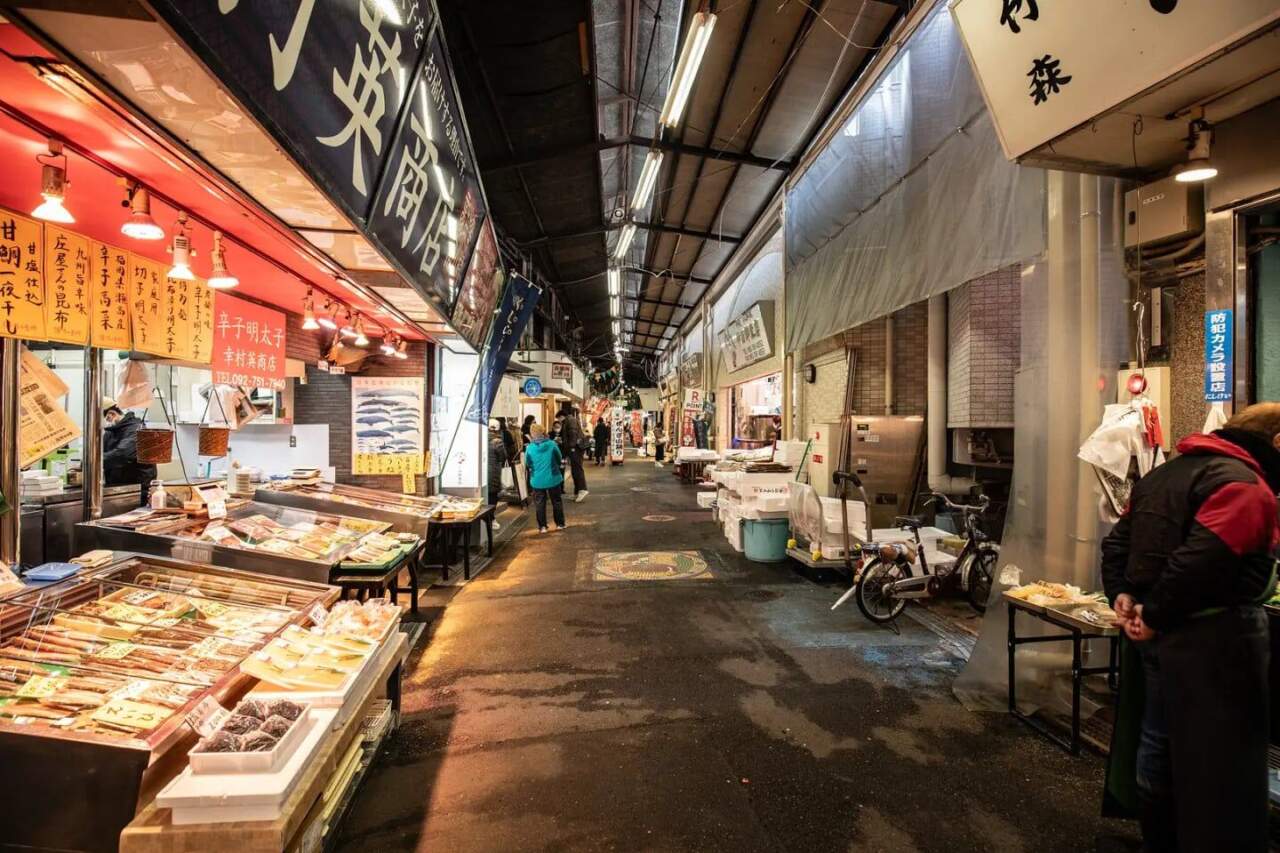
Yanagibashi Rengo Market, called “Hakata’s Kitchen” by Fukuoka locals, is an indoor market street with about a hundred years of history. In just over a hundred meters it packs dozens of stalls, selling fresh Genkai Sea fish, mentaiko, fish-paste tempura, croquettes and tamagoyaki, all made to order, and at many shops you can buy and eat standing right at the stall.
This is the daytime version of the yatai experience: the same face-to-face with the owner, the same chatting while they cook, but completely unaffected by weather. If you want to buy mentaiko as a souvenir, prices here are usually more reasonable than in department store basement food halls, and you can taste-compare the spiciness and grain texture of different shops.
The market is busiest in the morning, and most shops start closing after noon, so we suggest scheduling it for breakfast or lunch, then walking or taking one subway stop to Tenjin for shopping, a very smooth route.
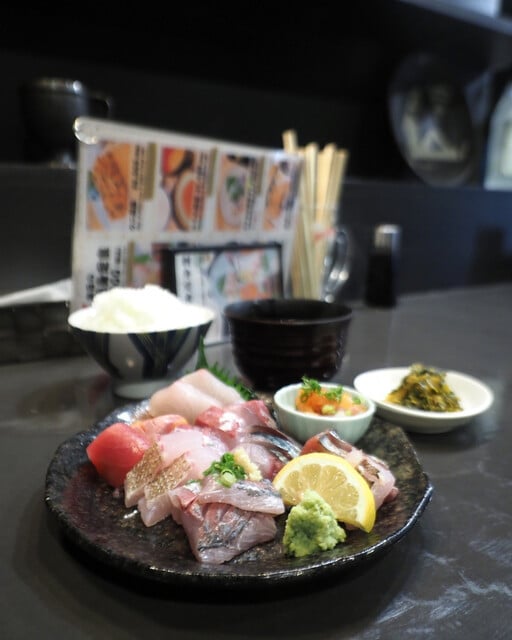
- 🐟 Must-order: Freshly fried fish-paste tempura, mentaiko, tamagoyaki, sashimi cut to order
- 💰 Price: About ¥1,000-2,000 per person
- 🚉 Access: About a 3-minute walk from Exit 1 of Watanabe-dori Station on the subway Nanakuma Line
Hakata’s Famous Red Bean Soup: Kawabata Zenzai Hiroba
Kawabata Shopping Arcade and Kawabata Zenzai Hiroba go together. Kami-Kawabata Shopping Arcade is Hakata’s oldest covered arcade, about 400 meters long, with shops on both sides from old-established wagashi shops to drugstores, and midway you will see the “Kawabata Zenzai Hiroba,” where a giant Yamakasa festival float hangs.
It sells Hakata’s famous red bean soup (zenzai), with smooth, creamy beans and a very substantial sweetness, and the salted kelp served alongside pulls the sweetness back just right. The space is an open seating area in the center of the arcade, and sitting down for a bowl when you are tired from shopping recharges you in ten minutes.
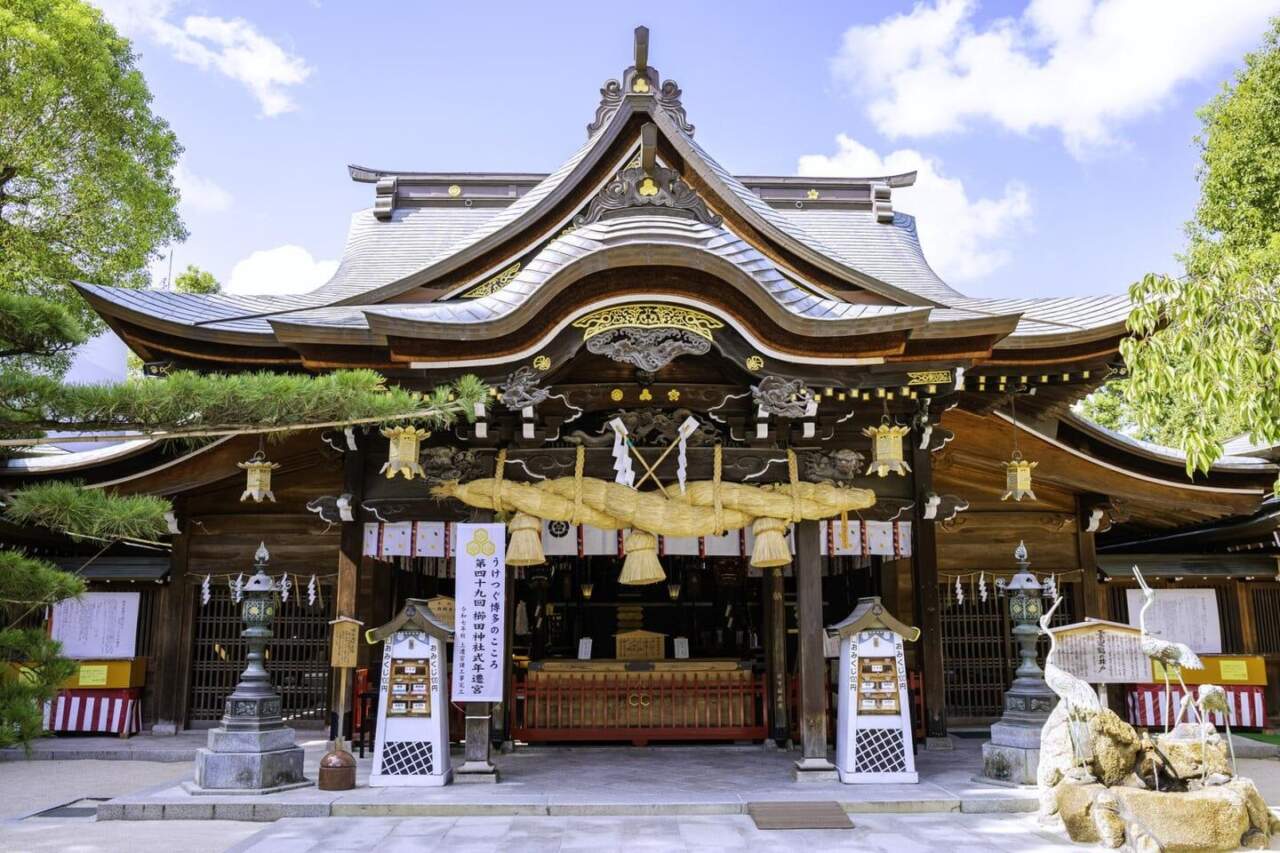
It is open on Fridays, Saturdays, Sundays and national holidays, and daily during the Hakata Gion Yamakasa period (July 1-15), so it is not open all year round, and we suggest confirming when planning. Just ahead are Kushida Shrine and Nakasu Yatai Street, so daytime shopping, evening worship and nighttime yatai flow seamlessly together.
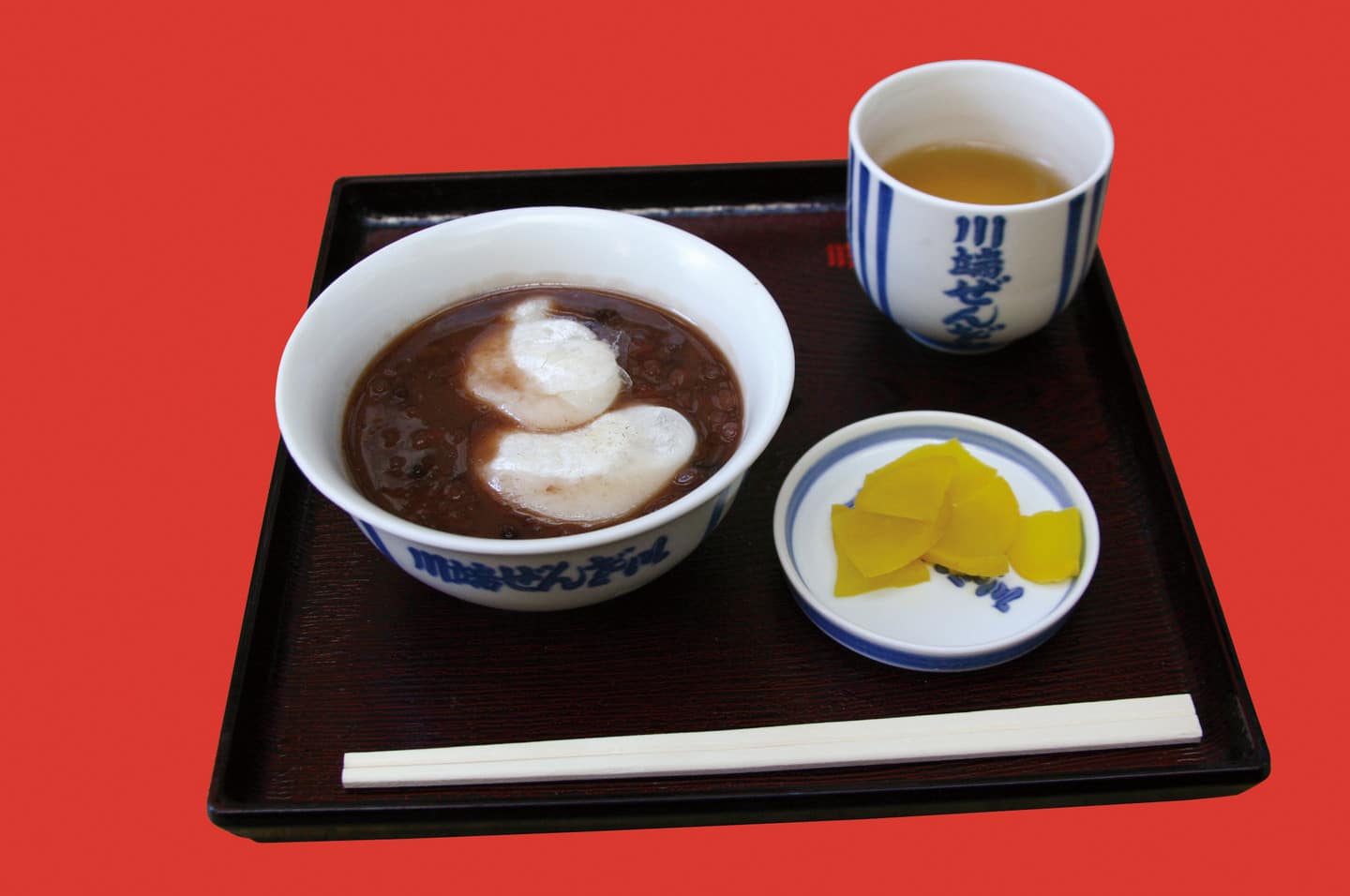
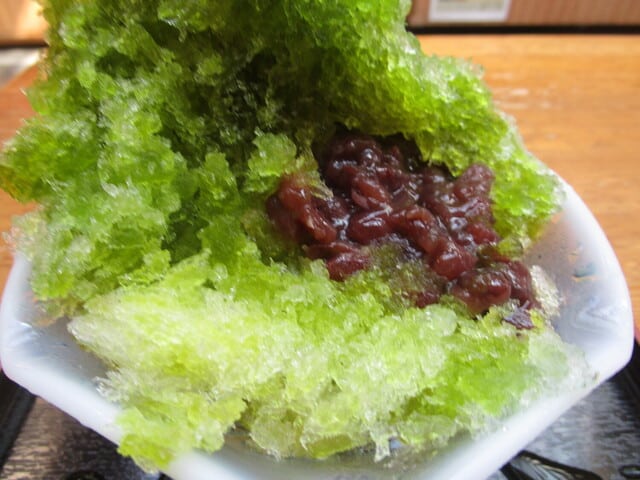
- 🍡 Must-order: Hakata zenzai (red bean soup, served with salted kelp)
- 💰 Price: About ¥500-1,000 per person
- 🚉 Access: Exit 5 of Nakasu-Kawabata Station on the subway connects directly to Kami-Kawabata Shopping Arcade
The Top Indoor Food Court for Rainy Days: Canal City Hakata
Canal City Hakata is the largest complex between Nakasu and Hakata Station, with a large food court, the “Ramen Stadium” (ラーメンスタジアム) on the fifth floor of Center Walk and several izakaya. With air conditioning, restrooms and seating all provided, it is the most useful Plan B when yatai close suddenly because of heavy rain or strong wind.
Hakata motsunabe (beef offal hot pot) and mizutaki, which yatai cannot serve because of sanitation regulations, can be had here at nearby restaurants. Famous motsunabe restaurants such as Hakata Motsunabe Oyama also have branches in Fukuoka City, especially handy when you are with older relatives or children.
The building holds a music fountain water show every half hour, perfect to watch after you eat. It is only about ten minutes’ walk from Nakasu Yatai Street, and if the weather clears you can add another stall, a stop that works both ways in your itinerary.
- 🍲 Must-order: Regional ramen from the eight famous shops at Ramen Stadium, Hakata motsunabe (beef offal hot pot), mizutaki
- 💰 Price: About ¥1,000-2,500 per person
- 🚉 Access: About an 8-10 minute walk from Gion Station or Nakasu-Kawabata Station on the subway
Hakata’s Early-Morning Flavors: Nagahama Fish Market Kaikan
Nagahama ramen was born to feed the people working at the Nagahama fish market. The noodles were made extremely thin so that busy fish market workers could finish in three minutes and get back to work, and the “kaedama” culture came from this too.
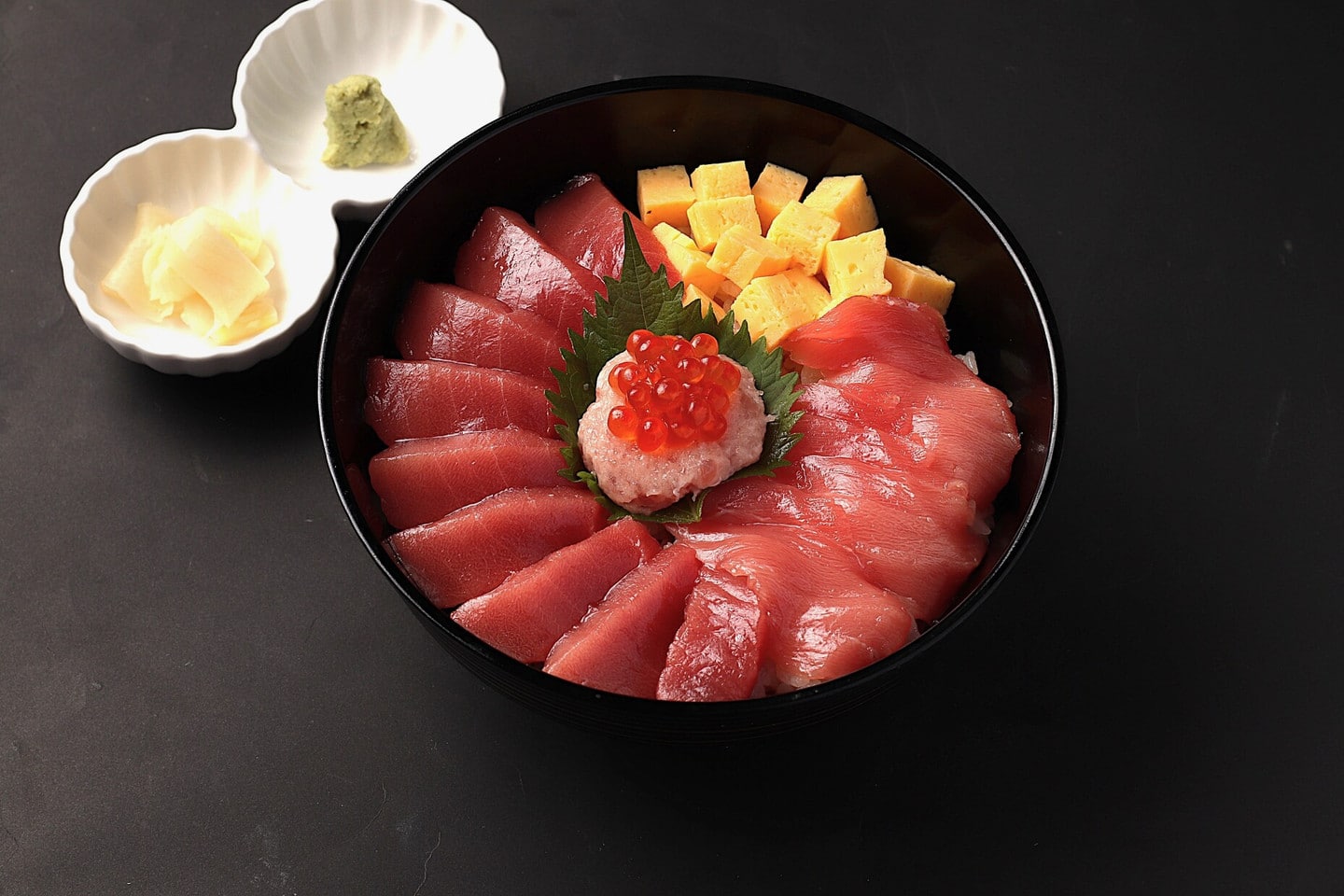
On the first floor of the “Fish Market Kaikan” beside the market are a cafeteria and seafood-related shops, where you can eat sashimi set meals and seafood rice bowls from that day’s catch at prices much more reasonable than city restaurants, the other half of the story that forms a day-and-night counterpart to evening yatai.
The market holds about six public-opening “Citizens’ Thanks Days” a year (the second-half 2026 dates are October 10, November 14 and December 12, with November tentative), when stalls and crowds surge and the atmosphere is very lively. On ordinary days it is mainly the cafeteria, open in the morning and closing around noon, so leave early if you want to eat.
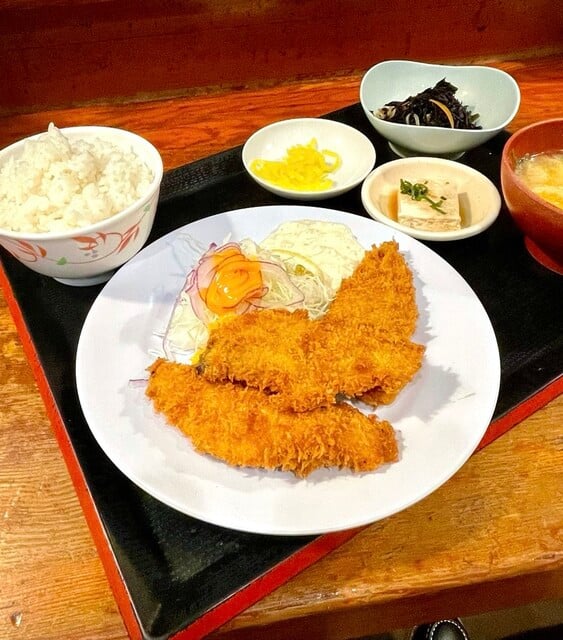
- 🍣 Must-order: Sashimi set meal from the day’s catch, seafood rice bowl
- 💰 Price: About ¥1,000-2,000 per person
- 🚉 Access: About a 15-minute walk from Akasaka Station on the subway Kuko Line, or take the Nishitetsu bus to the “Nagahama” stop
An Underground Food Street for Transfer Gaps: Hakata Ichibangai
Hakata Ichibangai is on the first basement floor of JR Hakata Station, an underground food street of ramen, set meals, cafes and desserts. Its biggest advantage is that you do not need to leave the station at all, so you can have a meal in the gap before taking the Shinkansen or heading to Yufuin or Kumamoto, and you can wheel your suitcase in.
Most shops here open from morning, filling the gap left by yatai being “night only,” and when you return to Hakata Station after a yatai crawl at night, some shops are still open, a stop useful at both ends of the trip.
If you only have thirty minutes, aim for quick-serving items such as ramen or a mentaiko set meal; if you want to sit longer and chat, head to the cafe and dessert area, where crowds are relatively lighter.
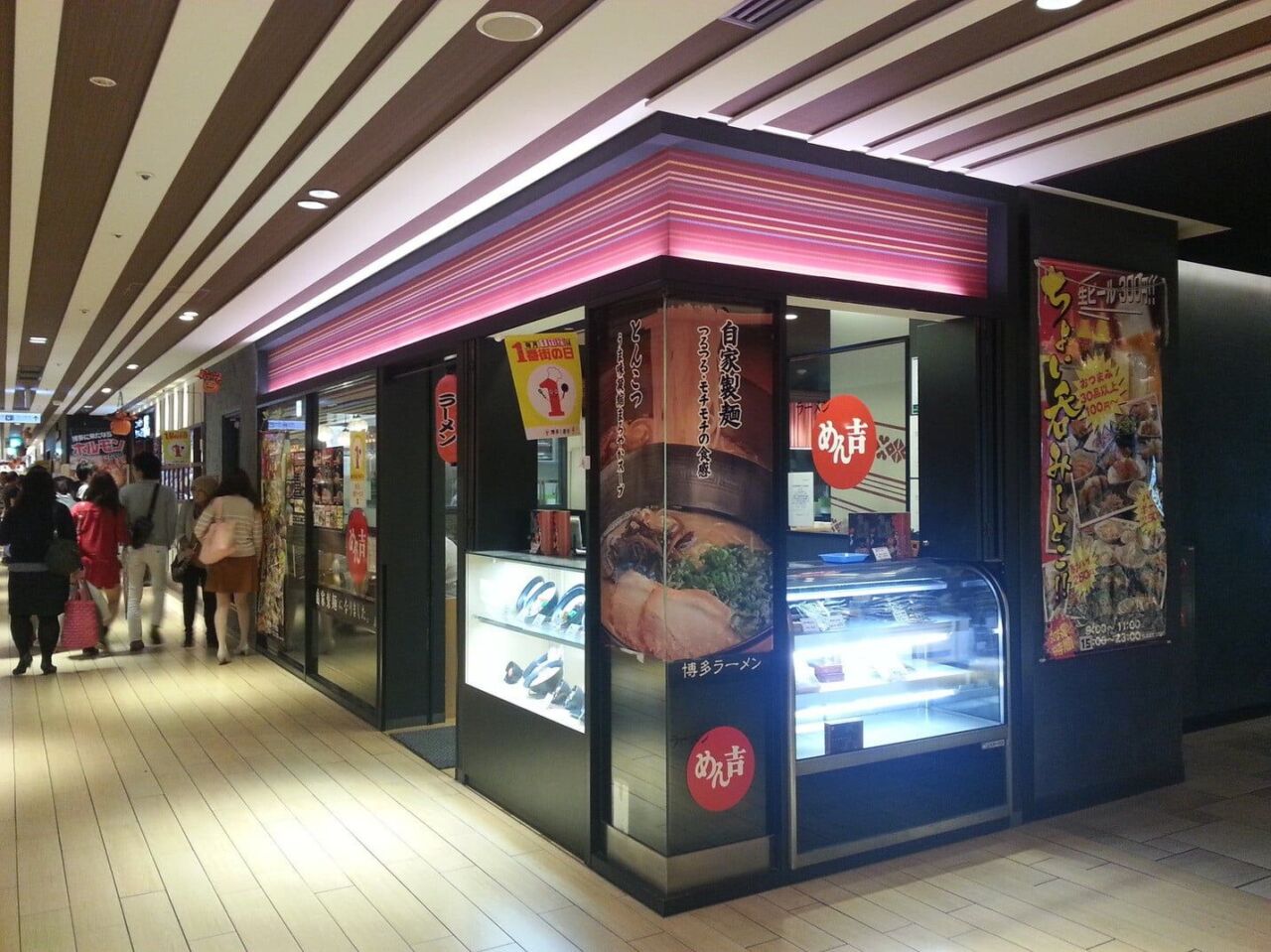
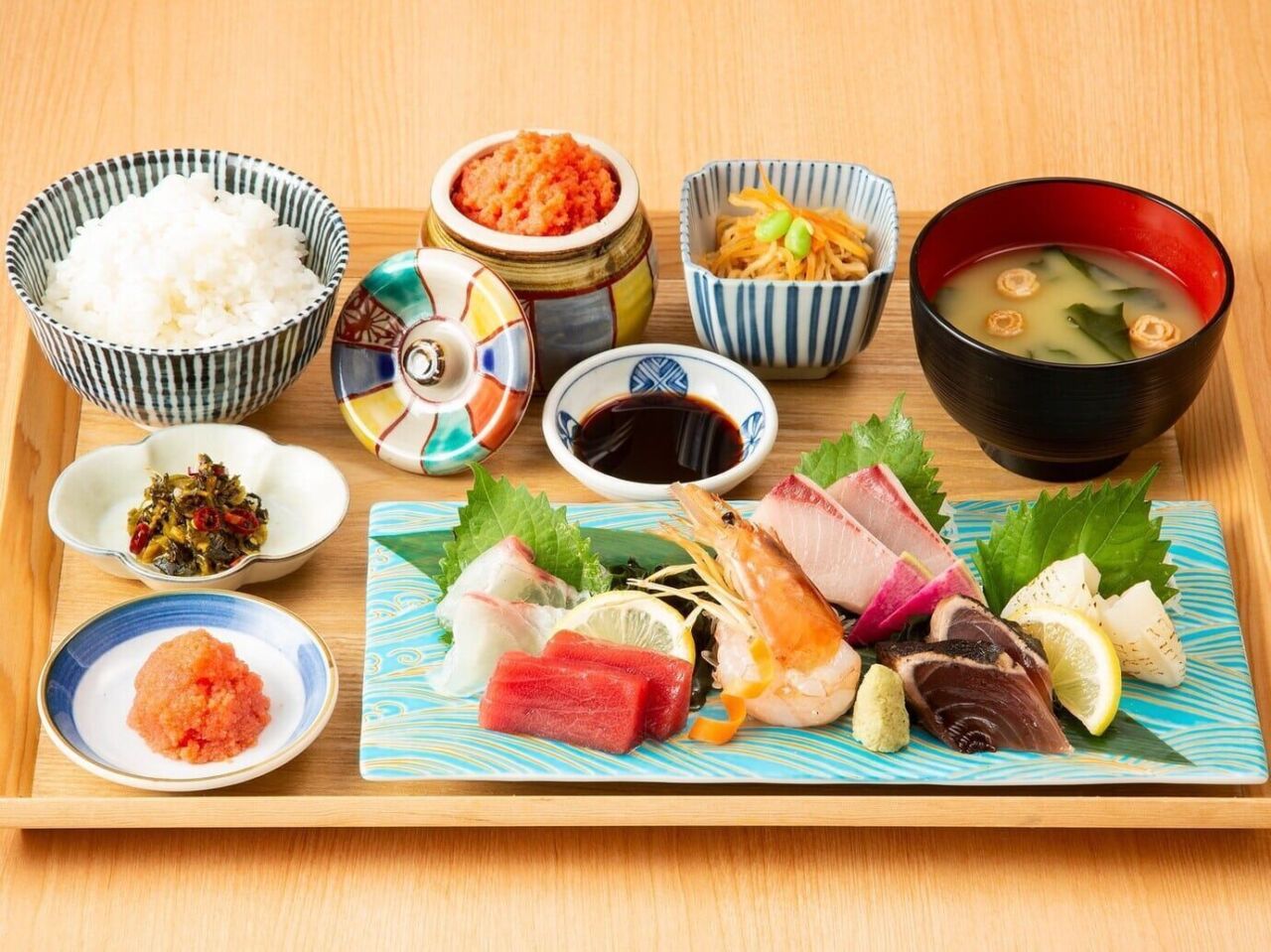
- 🍱 Must-order: Hakata ramen, mentaiko set meal, Kyushu local desserts
- 💰 Price: About ¥1,000-2,000 per person
- 🚉 Access: First basement floor of JR Hakata Station, directly connected inside the station without passing the ticket gates
Compare Twelve Noodle Shops at Once: Hakata Men Kaido (Hakata Ramen Street)
Hakata Men Kaido is on the second floor of “Hakata DEITOS” on the Chikushi Exit side of JR Hakata Station, gathering twelve popular noodle shops that cover Hakata tonkotsu ramen, Nagahama-style thin noodles, shoyu ramen, tsukemen and udon, so one corridor lets you compare Fukuoka’s whole noodle spectrum. It is the most convenient alternative on rainy days or late at night when yatai are closed.
Because it is near the ticket gates, many people schedule it as their last meal on the day they leave Fukuoka. Conversely, if you are too tired on your first night after arriving to walk to Nakasu, you can have a bowl here first as a base and then run the yatai seriously the next day.
Dining peaks are around noon and around 7 p.m., and popular shops queue. To avoid crowds, the gap around 3 p.m. is most comfortable, and most shops do not close in between.
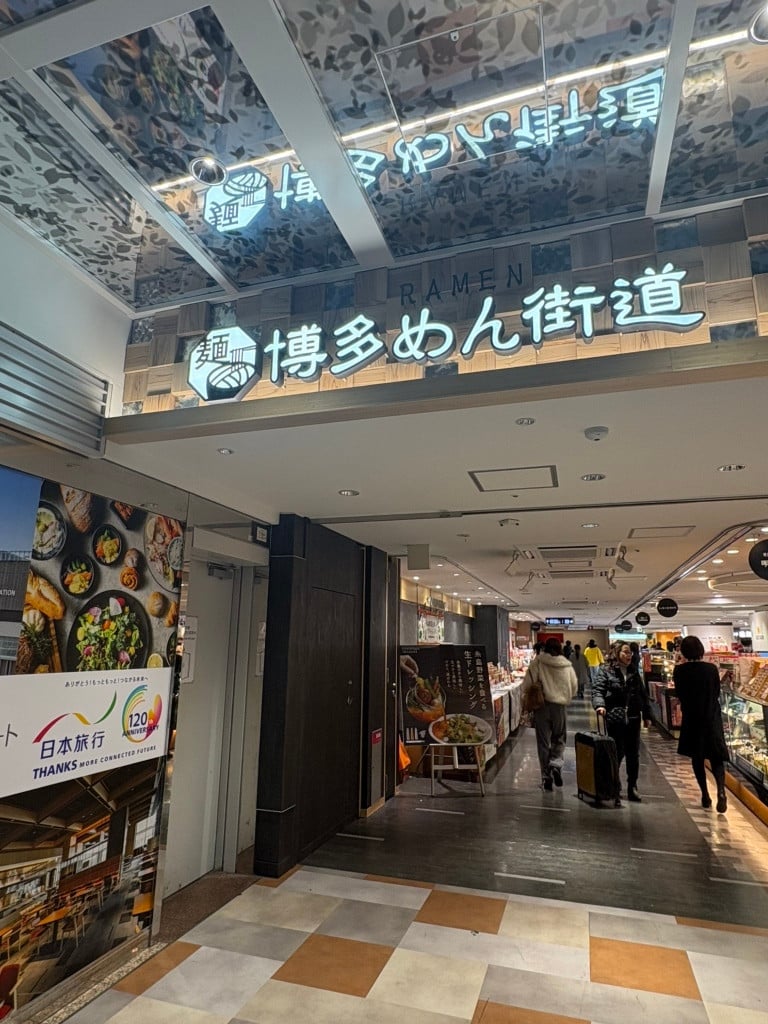
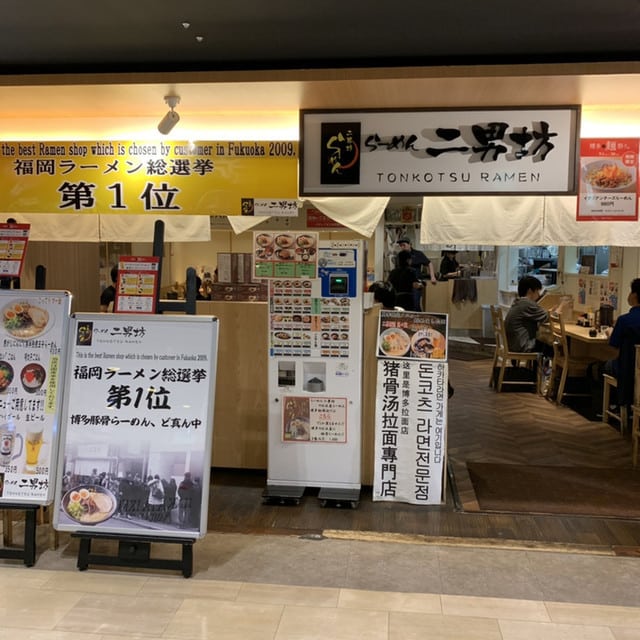
- 🍜 Must-order: Hakata tonkotsu ramen (with optional “kaedama”), Nagahama-style thin noodles, tsukemen
- 💰 Price: About ¥900-1,600 per person
- 🚉 Access: About a 2-minute walk inside the station to DEITOS 2F at JR Hakata Station
What to Know Before Going to Fukuoka Yatai: Unwritten Rules, Budget and Practical Info
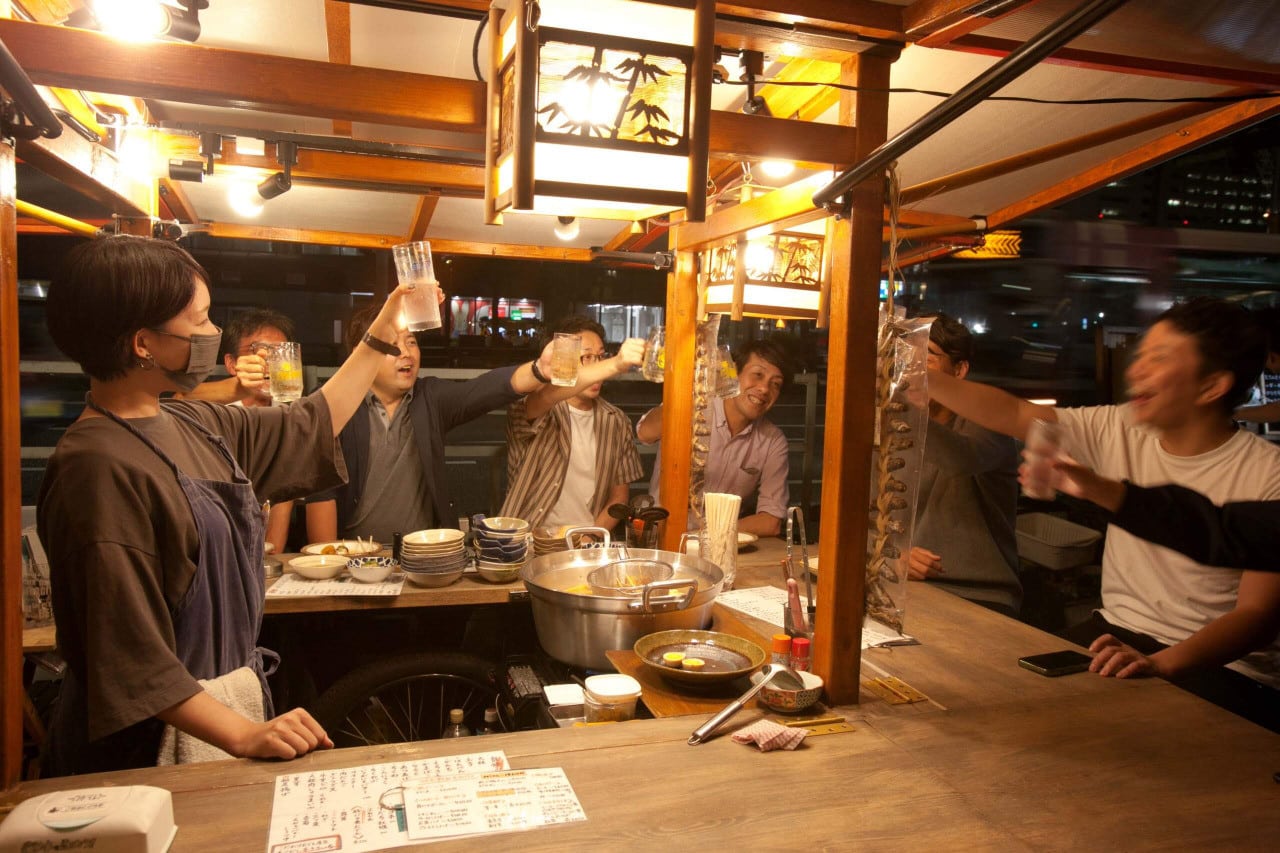
Yatai have a set of unwritten rules, and understanding them before you go makes everything go much more smoothly.
Seven Yatai Rules: Remember Them Before You Sit Down
Each yatai has only 7 to 15 seats and space is extremely limited, so here are the most commonly used yatai etiquette points. First, every person must order a drink, and if you do not drink alcohol, oolong tea or cola is fine, the basic courtesy for holding a seat; second, each person must order at least one dish, and you cannot have several people share one or two plates.
Third, do not occupy a seat for a long time. The essence of yatai is “hashigo-zake” (hopping from stall to stall), so when you have finished eating and drinking and others are queuing outside, pay and give up your seat, and if you want to chat, move to an izakaya. Also, because of Japanese food sanitation regulations, yatai do not serve unheated foods such as sashimi and raw salads, so do not find out after ordering that they are unavailable.
Cash, Luggage and Restrooms: The Three Most Common Pitfalls
Although a few yatai in recent years have introduced credit card and QR code payment (such as Takechan fr Tsukasa and Kojima Shoten), the vast majority of traditional yatai still accept only cash, so be sure to prepare enough yen in small bills before you go.
Luggage is also a common problem: there is no space at all inside a yatai for a large suitcase, so leave it at your hotel or a station locker first and keep a small bag on your lap. Finally, yatai have no restrooms of their own, so use one at a subway station, department store or convenience store before you start eating to save a lot of trouble.
The Best Timing and How to Estimate Your Budget: Leaving at 18:30 Works Best
Most yatai light up and open between 18:00 and 19:00 and stay open until one or two in the morning. We suggest arriving at your first stall at 18:30, which avoids the peak when office workers and tourists flood in after 20:00, with almost no queue; moving on to a second stall after 20:30 lands you in the liveliest period.
For a per-person budget, just a bowl of ramen is about ¥800 to ¥1,200; if you add drinks, small dishes and two or three more dishes, allow ¥2,000 to ¥4,000 per person to be safe. As for yatai meal tickets and reservations, most yatai neither issue common meal tickets nor accept reservations, and it is all walk-in queueing, first come, first seated.
Rain and Sudden Closures: Always Prepare a Plan B
Yatai are open-air carts, and in heavy rain, strong wind or a typhoon they simply close, and the owner may also close suddenly when unwell. This is part of yatai culture, not a sign of an irresponsible owner. If you bet your itinerary on a single stall, the chance of arriving to find it closed is actually not low.
Think through your rainy-day backups in advance: indoor izakaya, the ramen street at Hakata Station and the food court at Canal City Hakata are all alternatives within ten minutes. Also do not schedule yatai for the last night of your trip, in case bad weather leaves no second chance.
The Official Yatai Map and YATAI Concierge: Check Once Before You Go
Fukuoka City’s official tourism site “Yokanavi” has a dedicated yatai page where you can filter currently operating yatai by area, type of cuisine and whether a multilingual menu is offered, the most reliable source of real-time information, because yatai come and go with changes in the licensing system and old articles online are often out of date.
If you are already in Fukuoka, the tourist information desk on the first floor of the Fukuoka Airport international terminal has the “Fukuoka YATAI Concierge.” Please check Fukuoka Airport’s official announcements for its hours. You can ask directly which stalls are open that night and which area is less crowded, far more efficient than wandering blindly. One last note on photo etiquette: say hello to the owner before photographing a stall or food, do not capture other customers’ faces, and do not block the walkway to frame a shot.
Fukuoka Yatai Food Tours and Cooking Classes
If you do not speak the language, are visiting for the first time, or want to bring the flavors of Fukuoka home, going with a local guide or class makes things much easier. The following five bookable experiences address four needs: “afraid to walk in,” “cannot get local hot pot dishes,” “need to hop among three districts in one night” and “want a keepsake.”
Fukuoka Yatai Hopping Tour: A Local Guide Takes You Through Three Stalls in a Row
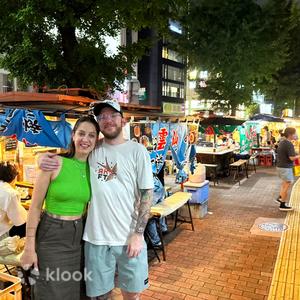
Yatai tours are usually led by local guides who speak Chinese or English, arranging 2 to 3 stalls in one evening for about 3 hours in total, mostly including designated drinks and several signature dishes, with actual prices as shown on the booking platform on the day.
Its biggest value is not saving money but solving the psychological barrier of “not daring to lift the curtain and walk in,” as well as the problems of not being able to read handwritten Japanese menus and not knowing how to speak up to order. The guide also steers around stalls that are closed or full that night, and adds yatai history and ordering phrases along the way.
Recommended for first-time visitors to Fukuoka with only one night, or travelers who want to interact more deeply with the owner but are held back by language. If you are traveling with older relatives or children, you can also ask the guide in advance to choose stalls with wider seating and multilingual menus.


Hakata Local Cuisine Cooking Class: Learn Mizutaki and Mentaiko Dishes
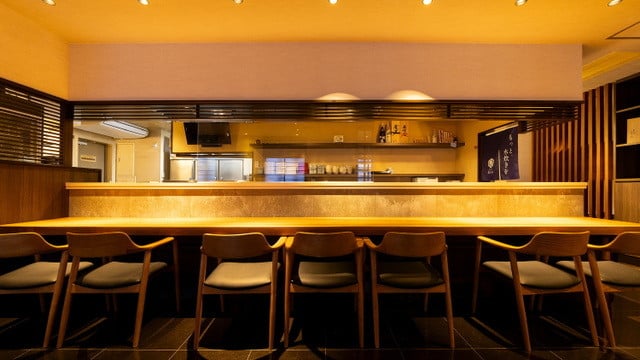
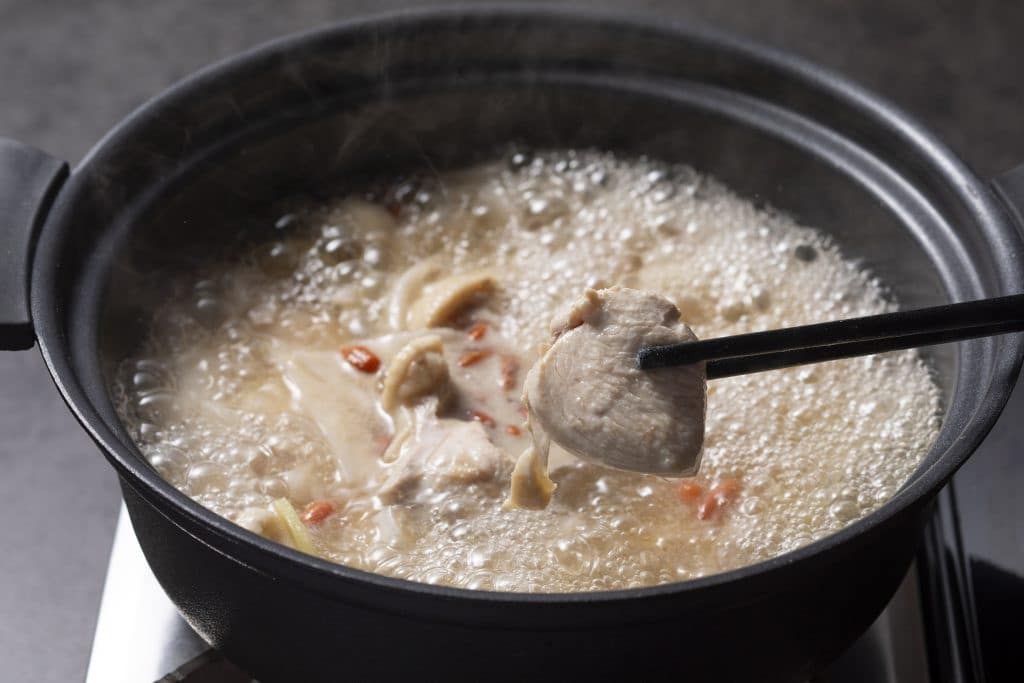
Hakata local dishes that yatai cannot serve because of food sanitation regulations can be made up for at a cooking class. Common themes for Fukuoka experience classes include Hakata mizutaki (chicken hot pot), motsunabe (beef offal hot pot) and mentaiko dishes, with a local teacher guiding you from prep and simmering the broth to serving, and you eat what you make as that day’s dinner.
Classes are mostly held in classrooms in the city center and last about 2 to 3 hours, with actual prices as shown on the booking platform on the day. They usually offer English explanations or translation, and some sessions can accommodate vegetarian requests or the omission of specific ingredients.
Suited to families with children, travelers who cannot visit yatai because of rain, or anyone who wants to bring Fukuoka flavors home and recreate them. Back home, as long as you can buy chicken bones and kombu, mizutaki is actually the easiest dish to recreate.
Fukuoka City Subway One-Day Pass: One Ticket Through All Three Yatai Streets
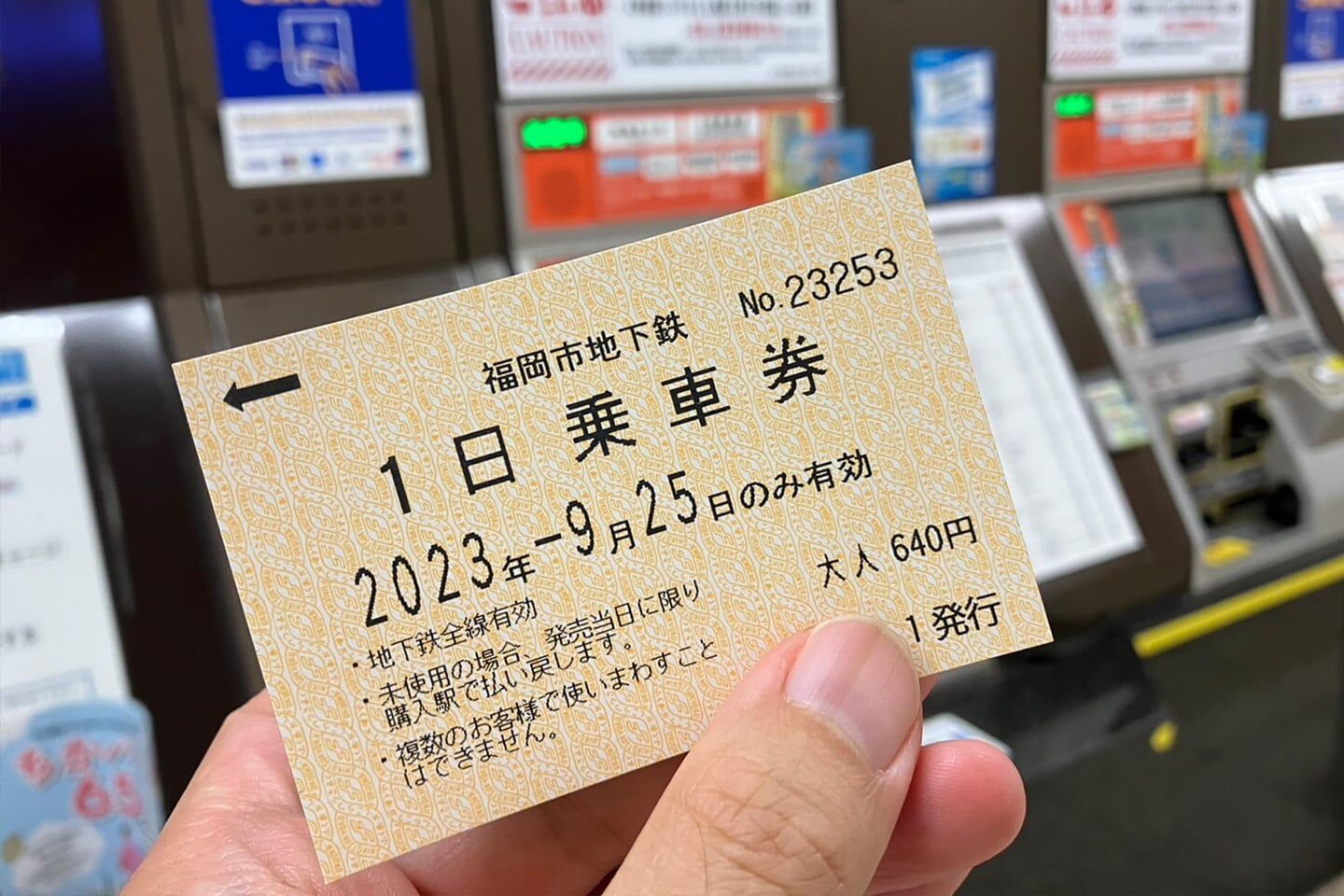
Although Nakasu, Tenjin and Nagahama are all in the city center, hopping among the three districts in one night is quickest by subway. The Fukuoka City Subway one-day pass allows unlimited rides on the Kuko, Hakozaki and Nanakuma lines, at ¥640 for adults, and it pays for itself after more than three rides.
The lines match up just right: Nakasu-Kawabata Station for Nakasu Yatai Street, Tenjin Station and Tenjin-Minami Station for Tenjin Yatai Street, and Akasaka Station as the entrance toward Nagahama, so one ticket strings the three major yatai clusters into one line.
With the one-day pass you also get discounted admission at some tourist facilities, so you can shop at Kushida Shrine and Canal City Hakata by day and go straight on to yatai at night, with no need to change tickets. Tickets can be bought at ticket machines at stations or at tourist information desks, and electronic versions are also available.
Hakata Bay Night View Cruise: Add Sea Breeze to Your Yatai Night
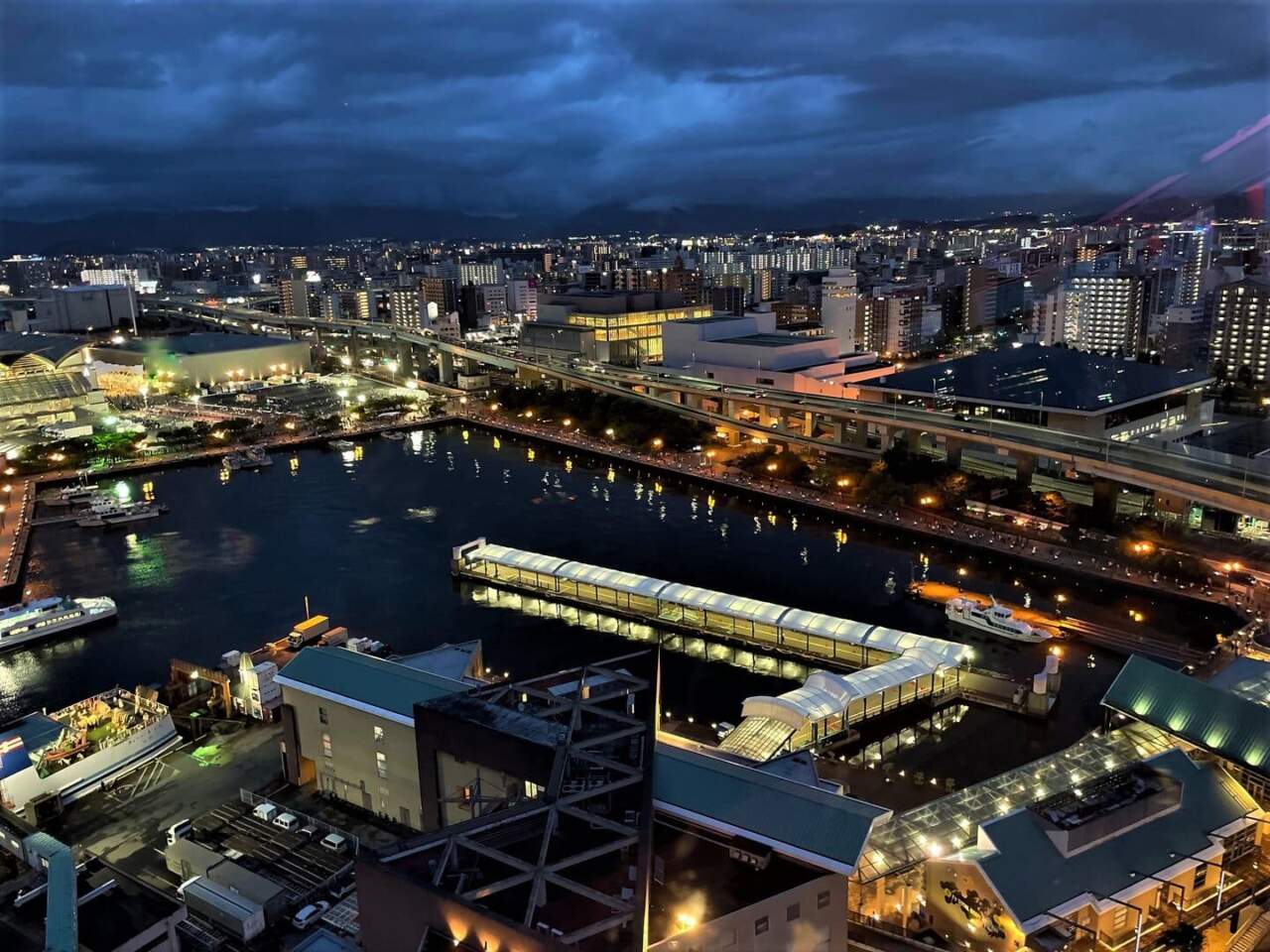
To add layers to your yatai night, you can arrange a Hakata Bay cruise in the early evening, watching the sunset and lights of Fukuoka Tower and the port area from the sea. The cruise usually takes 40 to 60 minutes, with prices per official announcements, and some sailings include a drink bar or live music.
The timing links up perfectly: you are back in the city at about 18:30, just as yatai light up and open, and after docking, the subway to Nakasu-Kawabata takes just over ten minutes, so you can connect seamlessly to your first stall.
This combination suits couples, travelers who want to photograph night views, or those traveling with older relatives who do not want to walk much. Sea breezes are strong in winter, so bring a windproof jacket, as it is quite a bit colder on deck than in the city.
Mentaiko Making Experience: Cure the Taste of Fukuoka to Take Home
Mentaiko is Fukuoka’s most iconic specialty, and several operators in the city offer a “mentaiko making experience,” where you spread the seasoning liquid on pollock roe yourself, seal it and take it away. The experience takes about 30 minutes to 1 hour, with actual prices as shown on the booking platform on the day.
During the session the teacher explains the curing principle of mentaiko, spiciness grades and the difference from Korean myeongnan-jeot, and the finished product usually needs one to two days of refrigerated aging, so it reaches its best state just as the trip ends.
This is a good rainy-day option and also suits families with children, as kids are most receptive to “something they made themselves,” and back home you can relive Fukuoka’s flavors with white rice. Check airline and customs rules before you go on whether fresh products can be brought home.
Let’s Eat! Run Through Fukuoka’s Three Major Yatai Streets in One Night
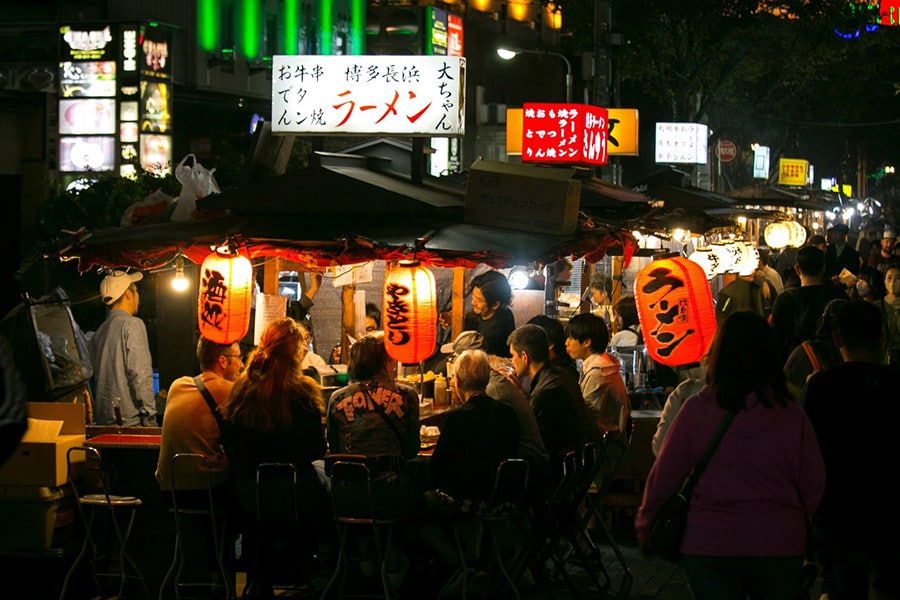
The real charm of Fukuoka yatai is not that any one dish is outstanding but the moment you sit down: you are only one griddle’s width from the owner, and the person beside you may be an office worker just off work or a traveler also looking at a phone for directions. Before the food arrives, you are already chatting. This density of “ichi-go ichi-e” (once-in-a-lifetime encounter) is something an indoor restaurant cannot give.
For the itinerary, the smoothest route is to start at 18:30 at Koganechan in Tenjin with a plate of yaki ramen as the staple; at 20:30 move to Nakasu for a second stop at Kojima Shoten or Takechan fr Tsukasa on the Naka River bank, taking the night view photos while you are there; and if you still have energy, head to Nagahama for Mentai Chudoku or Yatai no Tamachan, leaving the last stop in the district with the most human warmth.
Remember three things before you go: bring enough cash, leave large luggage first, and use the restroom beforehand; then check Fukuoka City’s official yatai page for which stalls are open that night, or ask at the YATAI Concierge at the airport. The rest is up to luck and the light behind the canvas: lift the curtain and sit down, and Fukuoka’s night begins.

Where to Stay Nearby
Fukuoka’s Nakasu and Tenjin yatai streets are both between Hakata Station and Tenjin Station, reachable on foot or a few subway stops away. Staying around Hakata Station, Tenjin or Nakasu makes walking back to the hotel after yatai the easiest.