
Kurokawa Onsen: Kumamoto’s Beloved Hidden Hot Spring Village in the Aso Mountains
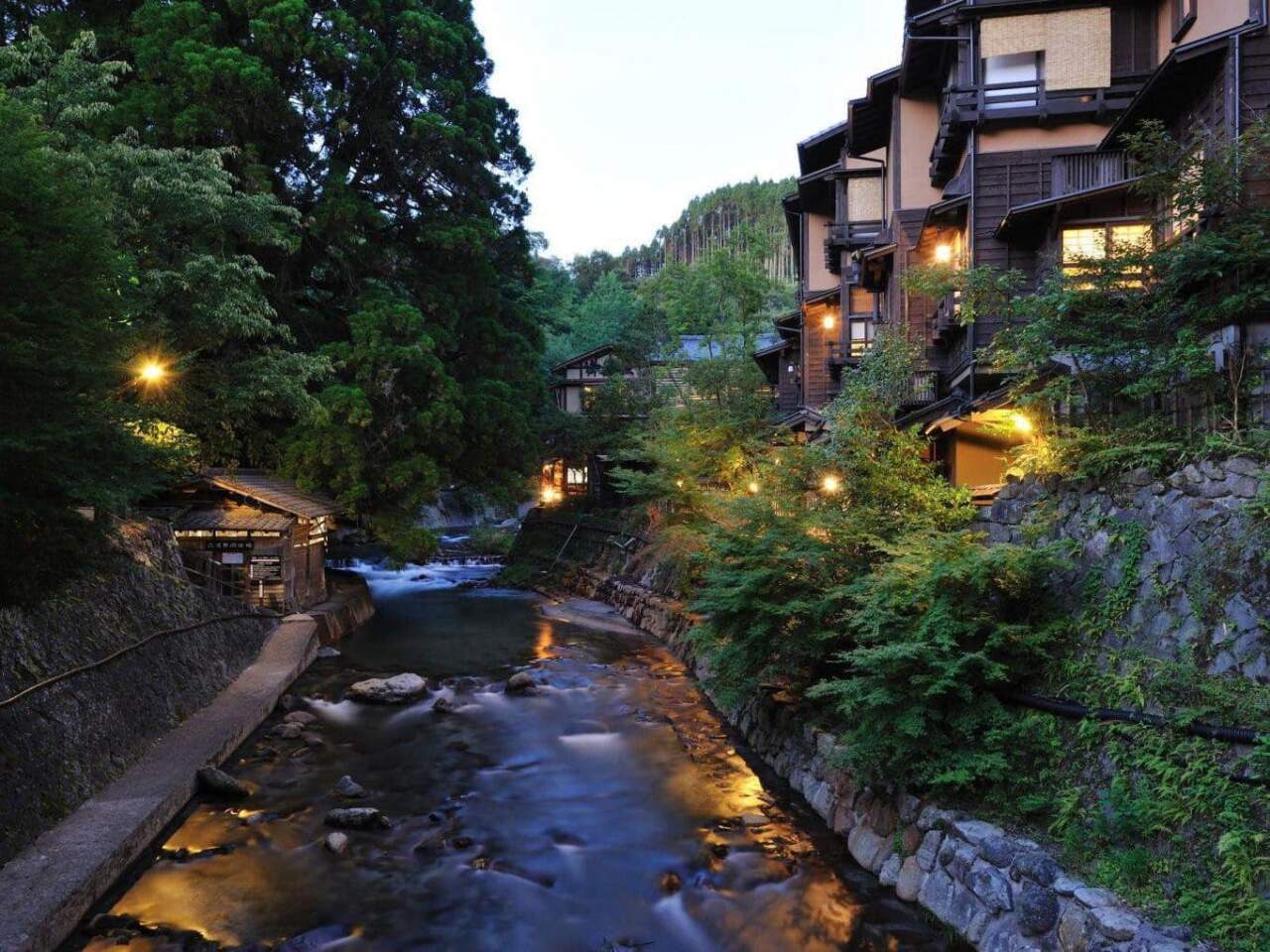
Kurokawa Onsen sits in a mountain valley in Minamioguni Town, Aso District, Kumamoto Prefecture, and received a two-star recommendation in the 2009 Michelin Green Guide Japan. It is often grouped with Yufuin and Beppu in Oita Prefecture on the same Kyushu itinerary, but note that Kurokawa belongs to Kumamoto Prefecture, a completely different administrative area.
What makes it special is not any single attraction but the look of the whole street. Decades ago, about thirty local inns agreed to take down jarring neon signs, unify the wooden facades and replant the woodland, running the whole hot spring village as “one big inn” in which each inn’s open-air bath is a shared bath for everyone. The famous Nyuto Tegata bath pass is a product of exactly this philosophy.
Kurokawa suits three kinds of travelers: bath-hopping fans who want to try three different open-air baths in a day, photographers who want to shoot the wooden old town in the stream valley, and in-depth travelers willing to stay a night to see the winter Yu-Akari bamboo lantern festival. The district is compact and can be covered entirely on foot, but there is no direct rail line, so transport depends entirely on express buses or driving, which is the first thing to sort out when planning.
One last reminder on a point that is often confused: Kurokawa Onsen is in Kumamoto Prefecture, while Beppu and Yufuin are in Oita Prefecture. Although the three are often placed on the same route, they belong to different prefectures and have completely different transport, so keep them straight when planning.
How to Get to Kurokawa Onsen: Buses and Driving from Fukuoka, Kumamoto and Yufuin
Kurokawa Onsen has no direct rail access and can only be reached by express bus or car, and most buses require reservations.
How to Get to Kurokawa Onsen: All the Transport Options at a Glance
The four main options compare as follows:
| Transport | Departure point and time | Practical tips |
|---|---|---|
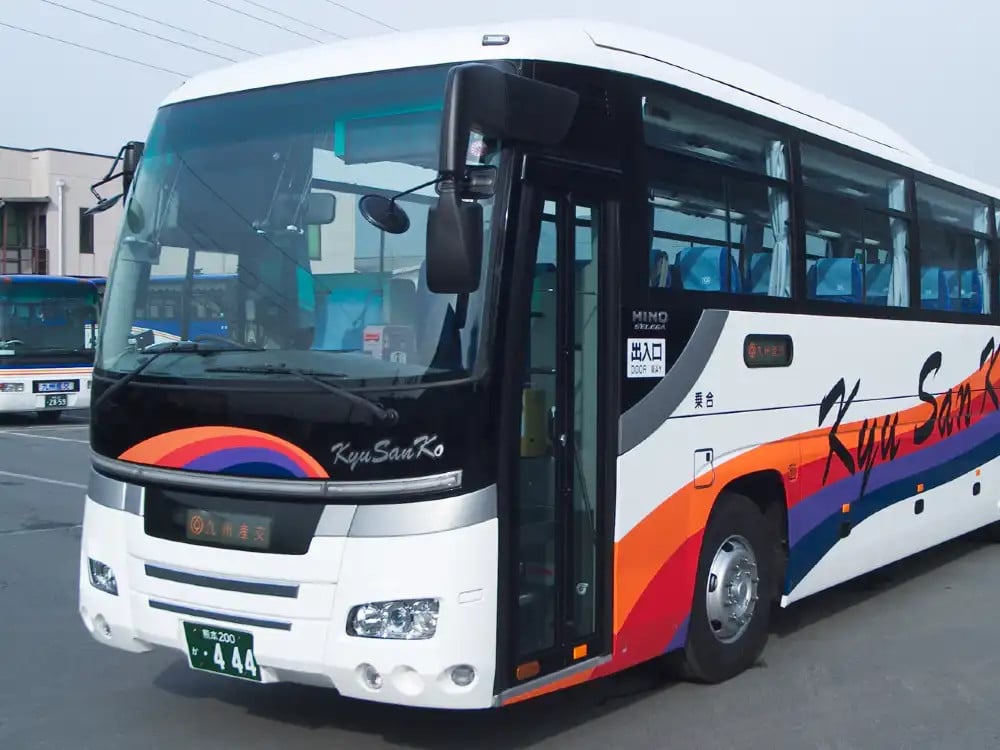
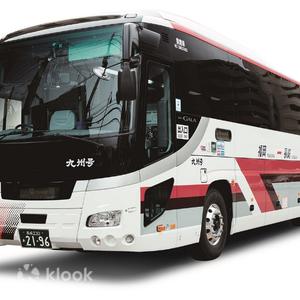
| Fukuoka direct express bus | Tenjin / Hakata Bus Terminal / Fukuoka Airport, about 3 hours | Reservation only; in peak season, book both outbound and return early |
| Kyushu Odan Bus (Kumamoto line) | Kumamoto Station / Sakuramachi Bus Terminal, about 2.5-3 hours | Some departures require reservations; passes through Aso on the way |
| Kyushu Odan Bus (Yufuin line) | Yufuin, about 1.5 hours | Best for linking the two big hot spring towns into one route |
| Driving | Kumamoto city or Aso, about 1-1.5 hours | Narrow mountain roads with many curves; watch for ice in winter and use snow tires |
| Inn free shuttle | Kurokawa Onsen bus stop to each inn | Almost every inn has one, but be sure to reserve when booking |
After you arrive at the “Kurokawa Onsen” bus stop, the old town is compact and can be covered entirely on foot, with no need to transfer again. Inns in the outer valleys, such as Sansuiki and Okunoyu, are reached by the inn’s shuttle. Drivers should note that the mountain roads are narrow and some inn entrances are steep, so slow down when passing other vehicles.
Overall, if you are coming and going from Fukuoka with only one day, the direct express bus is the easiest. If you want to link Yufuin, Kurokawa and Aso into one route, the Kyushu Odan Bus is the smoothest. Either way, return departures drop off noticeably after late afternoon, so check the last bus time before you leave.

單程票-Klook.jpg)


Kurokawa Onsen Highlights: 12 Key Points from Old Town Strolling to Bath Hopping
The following are ordered along a walking route: first the old town sights, then the inn baths worth making a special trip for.
Marusuzu Bridge: The Classic Postcard View of Kurokawa Onsen Town
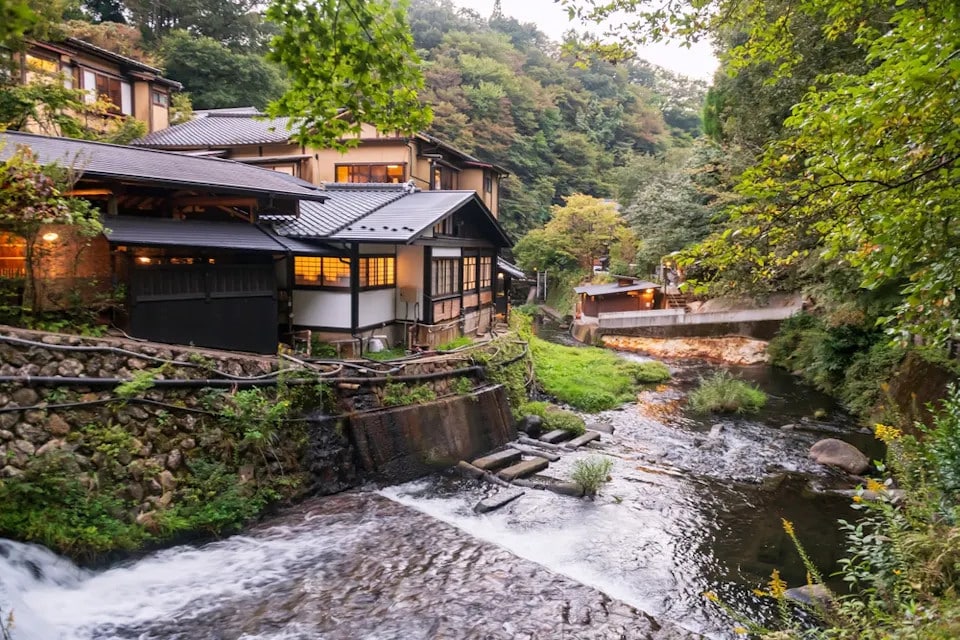
Marusuzu Bridge is a wooden bridge over the Tanoharagawa River and the spot that appears most often in Kurokawa Onsen’s promotional photos. Looking to either side from the bridge, you see a row of rustic wooden inns built along the stream valley, with layers of mixed woodland behind, so the composition works almost without framing.
The bridge matters because of Kurokawa Onsen’s town-building philosophy. About thirty local inns agreed decades ago to take down jarring neon signs, unify the wooden facades and replant the woodland, running the whole hot spring street as “one big inn,” and Marusuzu Bridge is the most tangible showcase of that idea.
The best times to visit are early morning and after dark. In the morning, a light mist rises from the valley and the light is soft. During the winter Yu-Akari bamboo lantern festival, the stream under the bridge is filled with lit bamboo lanterns, the most dreamlike moment of the year. Allow about 10 to 15 minutes.

Kurokawa Jizo Hall: The Hot Spring Origin Legend and a Place to Pray with Your Nyuto Tegata
The Jizo enshrined at Kurokawa Jizo Hall is regarded as the origin of Kurokawa Onsen. A local folk tale involving the head of the Jizo Bodhisattva says that the hot spring welled up after this legend. The hall is small, but it is the spiritual starting point of the whole hot spring street.
For visitors, the most special thing here is a long-standing custom: those who finish their bath tour hang their used Nyuto Tegata beside the Jizo Hall to pray, like ema plaques. The wall full of layered wooden discs is a sight in itself.
The Jizo Hall is in the center of the hot spring street, right on the main route, so no detour is needed. Visiting is free, and it takes about 10 minutes. If you want to keep your Nyuto Tegata as a souvenir, you can simply take it home instead of hanging it.
Kao-yu (Face Bath): A Free Natural Steam Facial Where You Put Your Face to the Hot Spring Steam
Kao-yu is a rather unique public facility at the edge of the Kurokawa hot spring street, a wooden trough that gives off white steam. Using it is simple: bring your face close to the opening of the trough and let the hot spring steam touch your skin directly for a natural moisturizing steam facial.
It is one of the few places in Kurokawa where you can experience the hot spring without undressing or paying, so almost every passing traveler stops to try it once. The steam is fairly hot, so adjust your distance slowly as you approach, and take off your glasses first if you wear them.
It is right on the walking route of the hot spring street, so you won’t miss it. The experience takes only three to five minutes and fits nicely into the gaps between moving from inn to inn. Travelers with sensitive skin or cardiovascular conditions are advised to keep it brief.
Kaze-no-Yakata: The Gateway to the Hot Spring Street for Nyuto Tegata and Bus Information
Kaze-no-Yakata is the base of the Kurokawa Onsen Ryokan Cooperative Association and the first place to go after arriving. It is the main place to buy the Nyuto Tegata, and it also provides maps in Chinese, which inns are open for day-use baths that day, and information about the express buses.
Because each Kurokawa inn has its own closing days and time restrictions, information on the website is not always up to date. Asking at the Kaze-no-Yakata counter which inns are open and which are full that day is the most efficient approach. Luggage can also be left here.
It is near the entrance to the hot spring street, a few minutes’ walk from the Kurokawa Onsen bus stop. Allow about 15 to 20 minutes; buy your tegata and ask about your route before starting the bath tour, and the whole trip will go much more smoothly.
Shinmeikan Cave Bath: The Starting Point of Kurokawa, Carved Out by Chisel and Axe
The cave bath at Yamanoyado Shinmeikan is the key to understanding why Kurokawa Onsen became what it is today. This long cave bath was carved out stroke by stroke by the inn’s owner, Tetsuya Goto, with an axe and chisel, over several years.
Inside the cave the light is dim and steam hangs in the air, and the depths seem to have no end. Bathing there gives a nearly primal sense of mystery, completely unlike ordinary, uniform hot spring facilities. The fame of this bath was the starting point of the “one village, one inn” town-building movement that later drove Kurokawa.
Shinmeikan is in the central area of the hot spring street and is one of the inns where the Nyuto Tegata can be used, so you can visit during day-use hours. Because it is so famous, there are waits at peak times, so avoid the 2 to 3 p.m. rush.
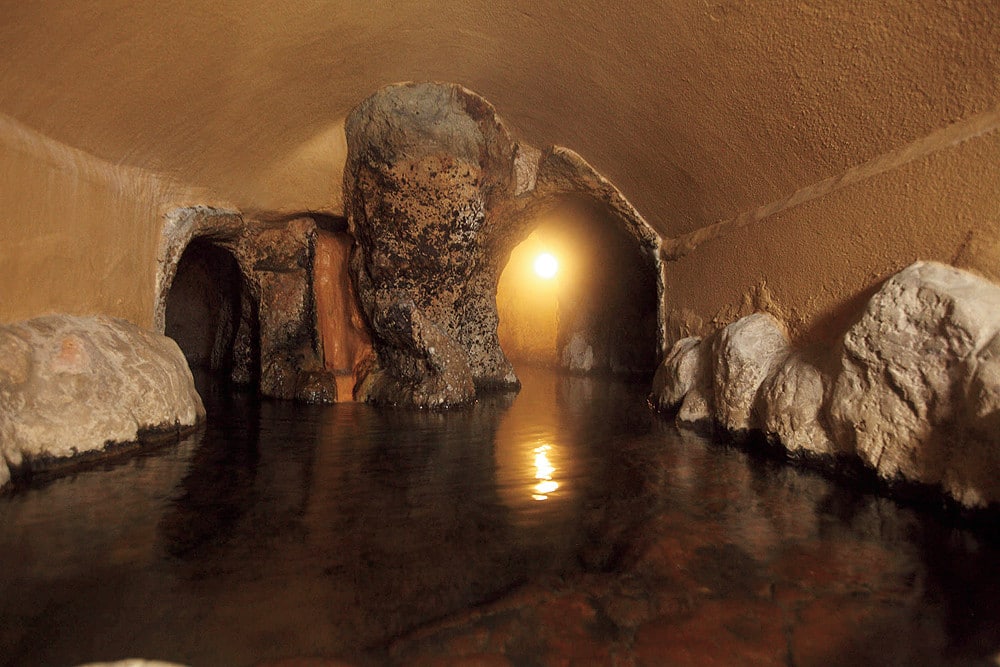
Ikoi Ryokan Standing Bath: A Standing Hot Spring About 1.3 Meters Deep
Ikoi Ryokan has been selected among Japan’s top hidden-gem hot springs, and its most famous feature is a “standing bath” about 1.3 meters deep. Because the water is too deep to sit, bathers must stand or float partially, with the water pressure wrapping from the soles of the feet up to the chest, which feels very different from an ordinary bath.
Besides the standing bath, there are as many as thirteen different types of baths, including open-air, indoor and “beauty” baths, making it one of the inns with the most bath varieties in Kurokawa Onsen. A single inn can keep you soaking for a long time.
It is in the central area of the hot spring street, within walking distance, and is also a Nyuto Tegata partner inn. At the entrance is a self-service hot spring egg basket, where 100 yen buys an egg with a faint sulfur aroma, a ritual for many after their bath.
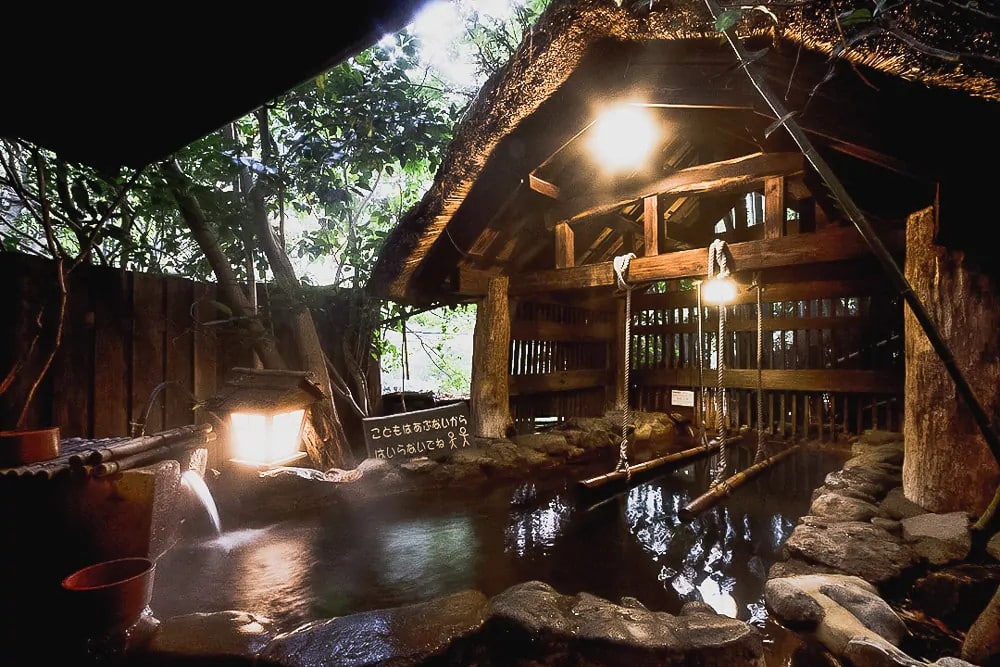
Sansuiki Riverside Open-Air Bath: A Forest Bath Built Right Beside the Stream
Sansuiki is rated by many as the best riverside open-air bath in Kurokawa Onsen. The bath is built almost right at the stream’s edge, so your eye level is nearly the same as the water surface while you soak, with the sound of the flowing water and a distant waterfall in your ears and a whole forest surrounding you.
The scenery differs greatly by season: fresh green in spring and summer, the whole valley turning red in autumn, and in winter you may watch snow fall on the stream while you soak. This experience of almost no barrier from nature is the image most often mentioned about Kurokawa.
The inn is in the mountain forest about two kilometers from the hot spring street, and a shuttle is available. It also accepts the Nyuto Tegata, but because it requires a round trip, we suggest scheduling a separate block of time for it rather than squeezing it in with the inns in the town.
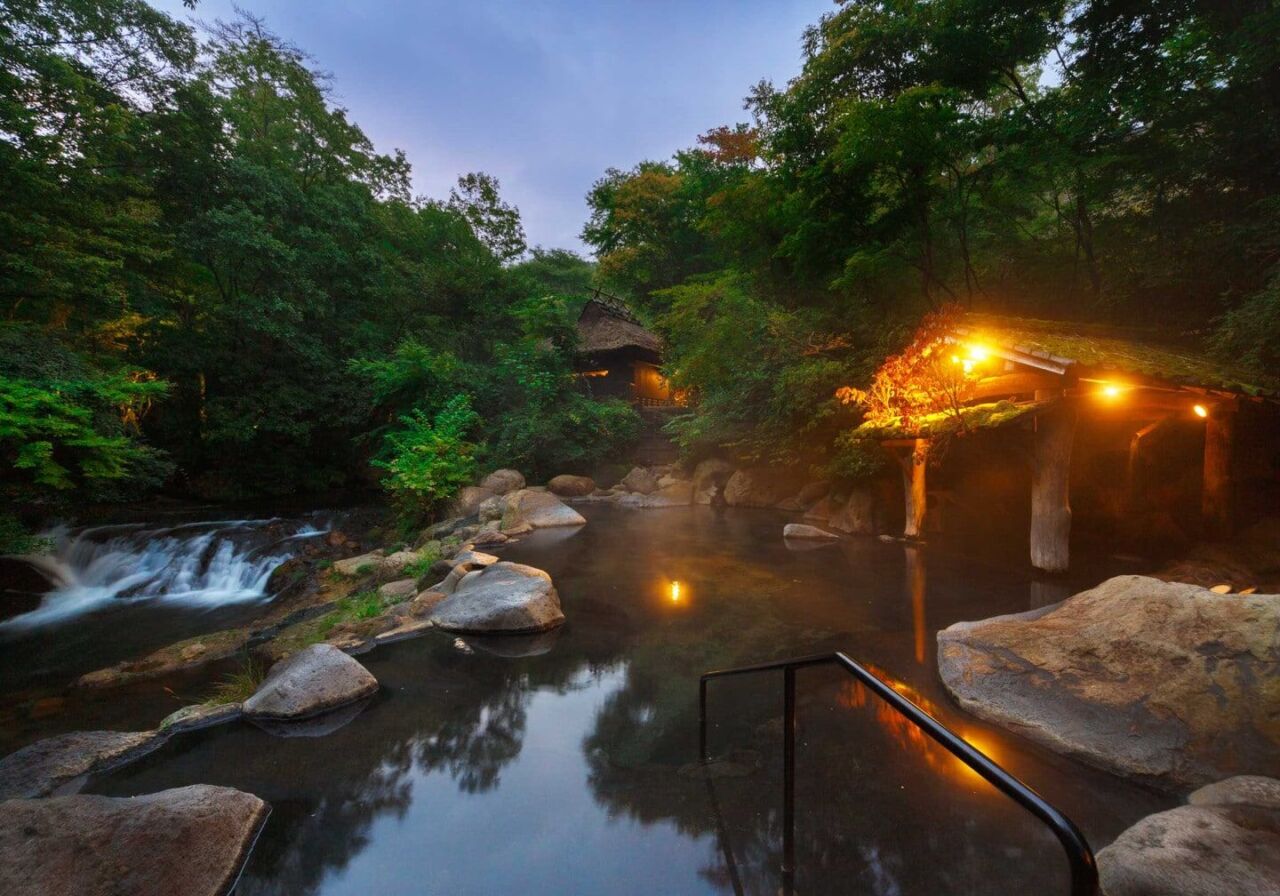
Okunoyu: A Family-Friendly Inn with a Hot Spring Pool and Free Private Baths
Okunoyu sits upstream on the Tanoharagawa River, a tranquil standalone inn with about 9 different baths, including a riverside open-air bath, a cave bath and three free-to-use private baths (Ajisai, Momiji and Take no Yu), plus a hot spring pool.
With such varied facilities and special friendliness to children, including children’s yukata and dedicated meals, it has long been a first choice for family trips. The dinner for a one-night stay with two meals centers on generous Higo beef dishes, with solid portions and quality.
It is in a valley on the outskirts of the hot spring street, with a shuttle service. If you are doing a day-trip bath tour, this one inn alone can take up plenty of time, so we suggest listing it as a leading candidate among your three picks for the Nyuto Tegata.
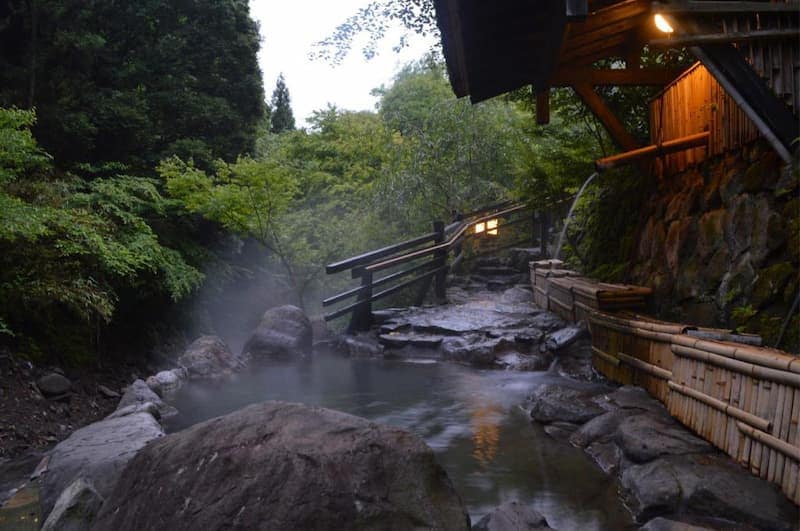
Ryokan Sanga: A Forest Hideaway Sitting on Two Spring Sources
Ryokan Sanga is tucked into the forest, a long-established hidden inn in Kurokawa Onsen. What is most special is that it sits right on the sources of two hot springs with different water qualities, so the inn can offer two baths with different feel and effects, and its medicinal bath is especially well reviewed.
The overall setting is rustic and pure, with almost no sense of commercialism, completely surrounded by greenery. Most rooms come with their own semi-open-air bath, with privacy among the best in Kurokawa, and the wagyu kaiseki dinner is also highly praised by guests.
It is far from the town and is a deep-mountain hideaway type, reached by shuttle or by car. It suits travelers who plan to spend the whole trip relaxing inside the inn, and is less suited to those who want to go in and out of the hot spring street often.
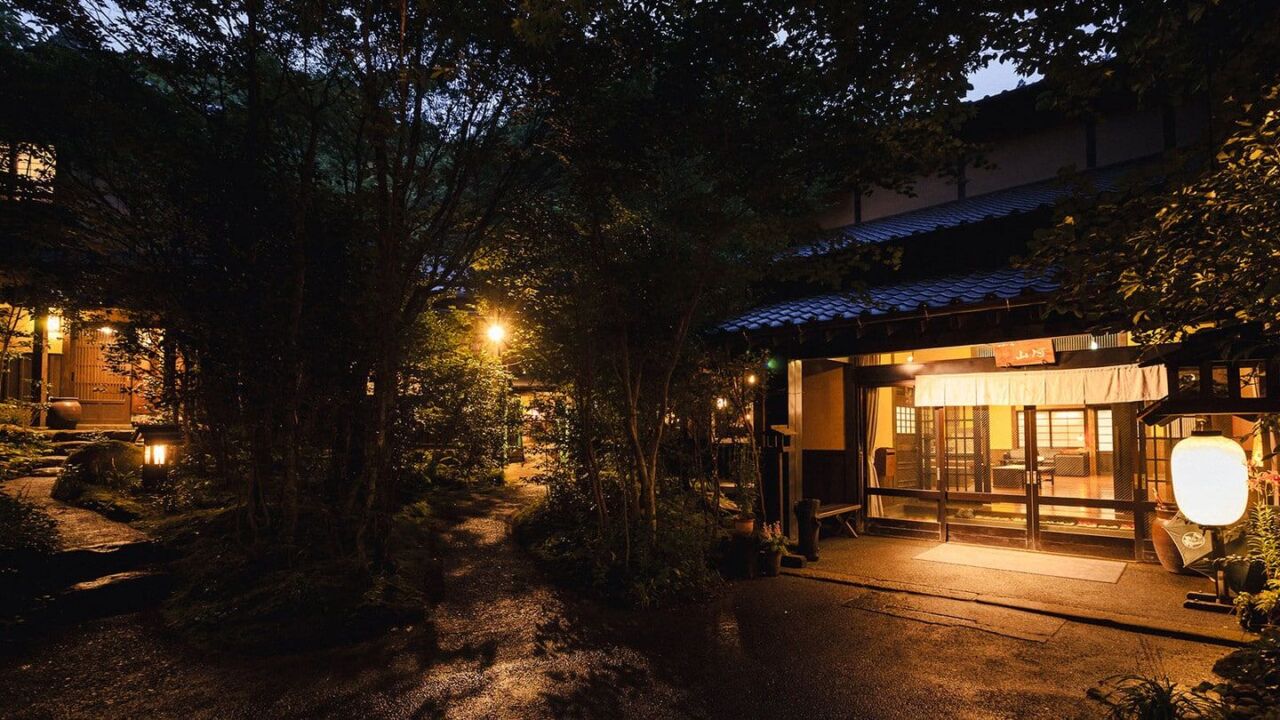
Tanoharagawa River Promenade: The Stream-Valley Path That Ties the Whole Street Together
The Tanoharagawa River is the main stream running through Kurokawa Onsen, and the paths on both sides link the scattered inns, shops and Jizo Hall. The Kurokawa district is actually very small; walking once around along the stream takes about thirty minutes, yet it is the best way to feel the atmosphere here.
Along the way you see almost no modern signs, replaced by wooden walls, stone steps and mixed woodland, the result of what the locals have deliberately maintained for decades. The sound of the stream, the steam and the stone path underfoot make up Kurokawa’s most representative sensory memory.
Parts of the path have slopes and stone steps, so pulling luggage or pushing a stroller is harder. During the winter Yu-Akari bamboo lantern festival, this streamside path is the main area where the bamboo lanterns are placed, so be sure to walk it again at night.
Yu-Akari Bamboo Lantern Festival: A Winter-Only Night View of Bamboo Lanterns by the Stream
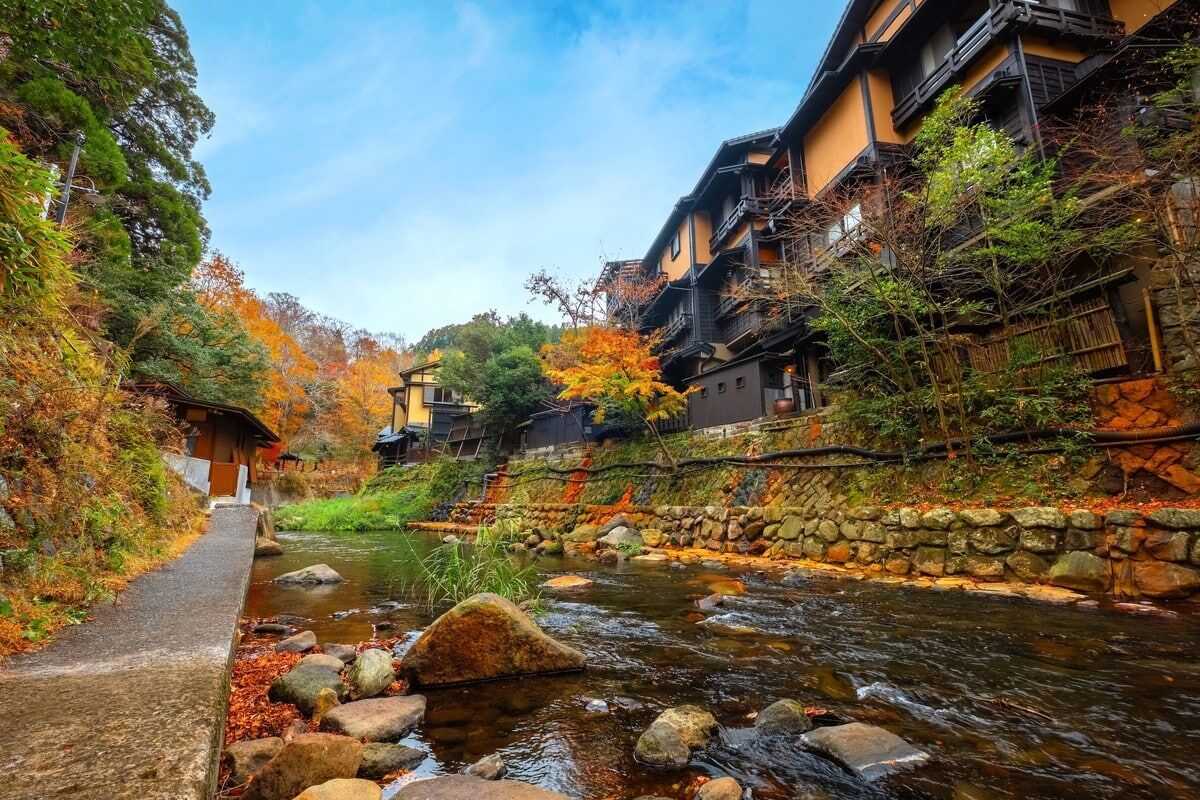
Yu-Akari (the hot spring bamboo lantern festival) is the main winter-only event at Kurokawa Onsen, held roughly from late December until the end of March the following year. Kurokawa Onsen has held it since winter 2012, making hand-crafted lanterns from bamboo thinned from neglected bamboo groves. About 300 spherical “temari lanterns” and cylindrical lanterns about 2 meters tall are set up from Marusuzu Bridge along Kawabata-dori, around Yamabiko Ryokan and at the Kurokawa Onsen bus stop.
After they are lit at night, the warm yellow light shines through the gaps in the woven bamboo and reflects on the stream, an extremely dreamy sight.
Yu-Akari 2025-26 Dates and Lighting Hours
Taking the most recent edition (2025-2026) as an example, the officially announced period was December 20, 2025 to March 31, 2026, with lighting from 17:00 to 21:30 every day and a “Yu-Akari Yokocho” event every Saturday. The dates and lighting hours for winter 2026 (2026-2027) have not yet been announced officially as of now, so check the website of the Kurokawa Onsen Ryokan Cooperative Association before you go.
Lighting hours are concentrated from evening to night, so staying guests can enjoy it most leisurely. If you are on a same-day round trip and want to see it, check whether you can still catch the return bus after the lights come on. Winter temperatures in the mountains are extremely low, so bring plenty of warm clothing and non-slip shoes.
Shiratamakko: Freshly Made, Chewy Japanese Rice Dumplings
Shiratamakko is one of the most representative sweet tea houses on the Kurokawa hot spring street, specializing in freshly made Japanese rice dumplings. The dumplings are boiled only after you order, so they arrive with a smooth outside and a distinctly chewy bite.
The most representative item is “Yuagari Shiratama”: shiratama dumplings served in hot water, which you scoop out yourself and coat in soybean flour or red bean paste. It pairs especially well after a hot spring soak. The shop also offers seasonal limited flavors: hanami shiratama in spring, iced shiratama in summer, a Japanese chestnut shiratama parfait in autumn and yukimi shiratama in winter.
It is on the main route of the hot spring street, within easy walking distance. It closes in the late afternoon, so day-trippers should leave dessert time for the earlier part of the afternoon rather than leaving it too late.
How Much Does a Trip to Kurokawa Onsen Cost? Nyuto Tegata and Bus Tickets Summarized
Kurokawa has no big admission fee; the main costs are the Nyuto Tegata and long-distance buses.
Nyuto Tegata: ¥1,500 for the Signature Open-Air Baths of Three Inns
The Nyuto Tegata is Kurokawa Onsen’s most famous way to play and the biggest difference between it and other hot spring towns. It is a wooden disc made from local Oguni cedar, priced at ¥1,500, and can be bought at the Kaze-no-Yakata visitor center or at participating inns.
You use it by choosing 3 of the roughly 25 participating local inns within its six-month validity and trying their signature open-air baths. The current rules are more flexible: you can also swap it for “2 hot spring baths + use for food or souvenirs.”
The reason to recommend it is straightforward: the day-use bath fee at a single inn is usually ¥500 to ¥800, so bathing at three almost always pays for itself. The stickers from baths you have completed can be placed at Kurokawa Jizo Hall to pray, and the wooden disc itself can be taken home as a souvenir.
Express Bus from Fukuoka: Reservation-Only Routes Direct from Hakata, Tenjin and Fukuoka Airport
Kurokawa Onsen has no direct rail access, and the most direct way from Fukuoka is the express bus. There are direct departures from Fukuoka Tenjin Bus Terminal, Hakata Bus Terminal and Fukuoka Airport, taking about 3 hours, with a few rest stops along the way.
This route is fully reservation-only, with no room to queue and board on the spot, so be sure to book in advance. Seats are competitive in peak season and on weekends, so we suggest booking both outbound and return as soon as your plans are set.
After arriving at the “Kurokawa Onsen” bus stop, most inns offer a free shuttle, but this also needs to be reserved in advance. When booking, remember to tell the inn your arrival bus time, so that you won’t find yourself unable to get a ride after getting off.
Kyushu Odan Bus: Linking Yufuin, Kurokawa and Aso into One Route
The Kyushu Odan Bus is the key route linking the hot spring towns on the Oita and Kumamoto sides. From Yufuin it takes about 1.5 hours to reach Kurokawa Onsen, and from Kumamoto Station or Sakuramachi Bus Terminal about 2.5 to 3 hours, passing through the Aso area along the way.
For travelers who want to see Yufuin, Kurokawa and Aso in one trip, this route saves a great many transfers. Departures are not frequent and some require reservations, so check the timetable before you leave and confirm whether seat reservations are needed.
This route also pairs well with the SUNQ PASS. If your itinerary is in via Fukuoka and out via Kumamoto, using the Odan Bus to link the three points in a straight line gives the smoothest and cheapest route.
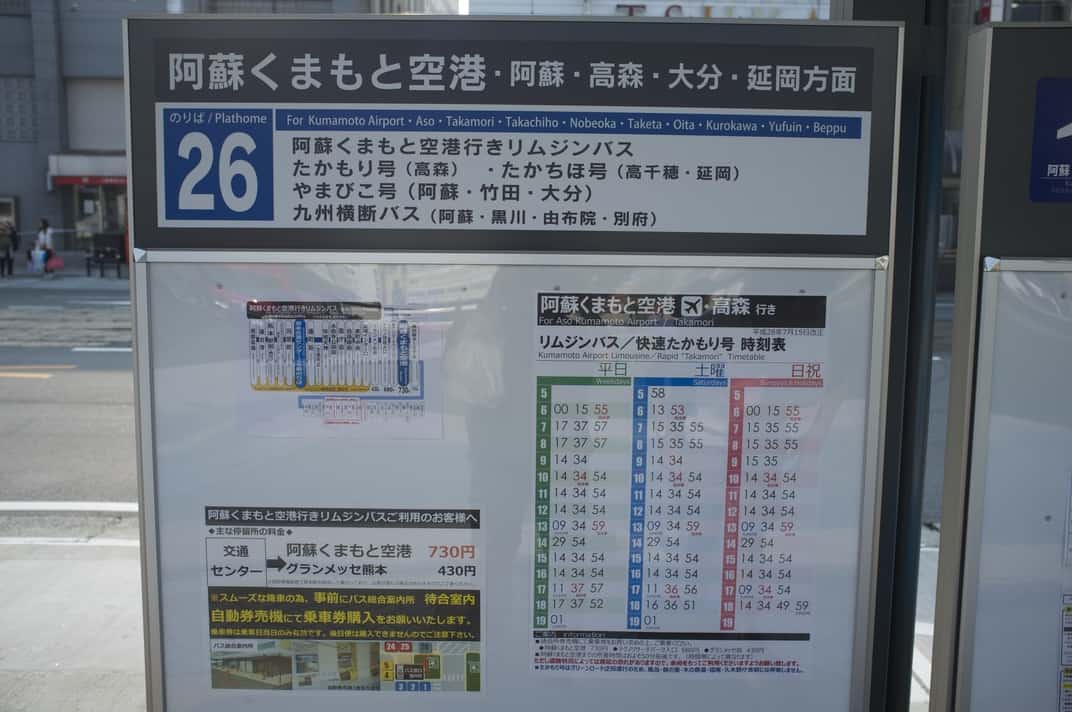
Kumamoto Airport to Kurokawa Onsen: About 2 Hours on the Kyushu Odan Bus
From Aso Kumamoto Airport you can take the Kyushu Odan Bus operated by Sanko Bus directly to Kurokawa Onsen without going into Kumamoto city first. In the officially announced timetable, departures from Airport Stop 3 toward Yufuin and Beppu are at 8:19, 9:19 and 13:04, taking about 2 hours, with stops including Ozu Station South Exit and Aso Station along the way. Departures and times may change and some departures are reservation-only, so check and reserve on the Sanko Bus official website (sankobus.jp).
SUNQ PASS: The All-Purpose Pass for Kyushu Hot Spring Towns Without Renting a Car
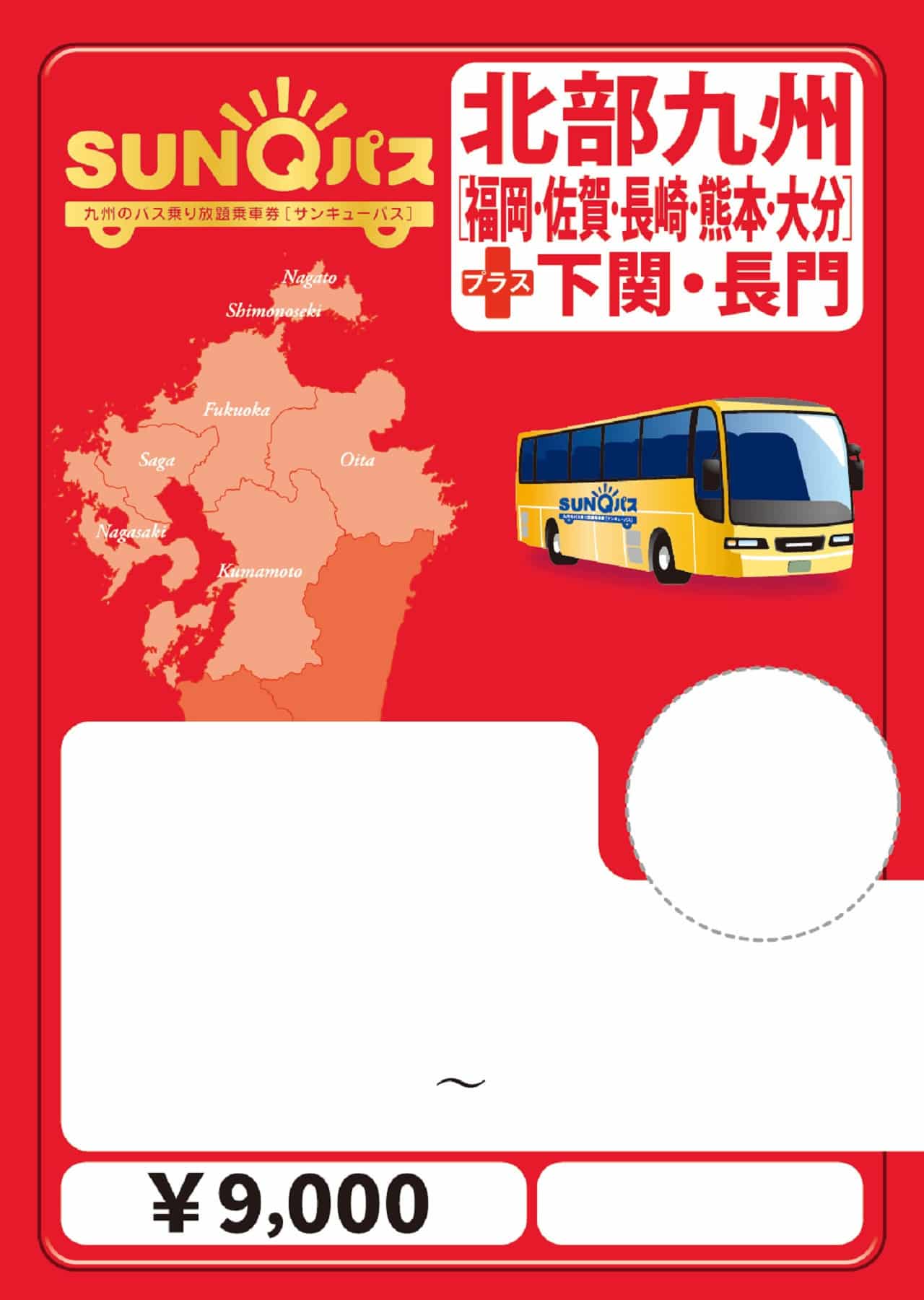
The SUNQ PASS is an unlimited-ride pass for expressway and route buses in Kyushu, available in different ranges such as all Kyushu and northern Kyushu and for different numbers of days. Because Kurokawa Onsen can only be reached by bus, this pass is especially worthwhile for this itinerary.
The Fukuoka to Kurokawa express bus, the Kyushu Odan Bus, and the Kamenoi Bus around Beppu and Yufuin mostly fall within its coverage. If your itinerary includes two or more long-distance bus legs, it usually pays for itself already.
Note that pass holders still need to reserve seats in advance on reservation-only routes, especially departures toward Kurokawa. After buying, we suggest going to the bus operator’s website and making all your seat reservations for every leg at once.
![[Limited-Time Offer] Kyushu Bus Ticket | SUNQ PASS North Kyushu / South Kyushu / All Kyushu 3-Day Pass (Mailed to Taiwan)](https://travel.williamlion.tw/wp-content/uploads/sites/7/2026/08/image-268.jpg)
Where to Stay Near Kurokawa Onsen: Suggested Areas
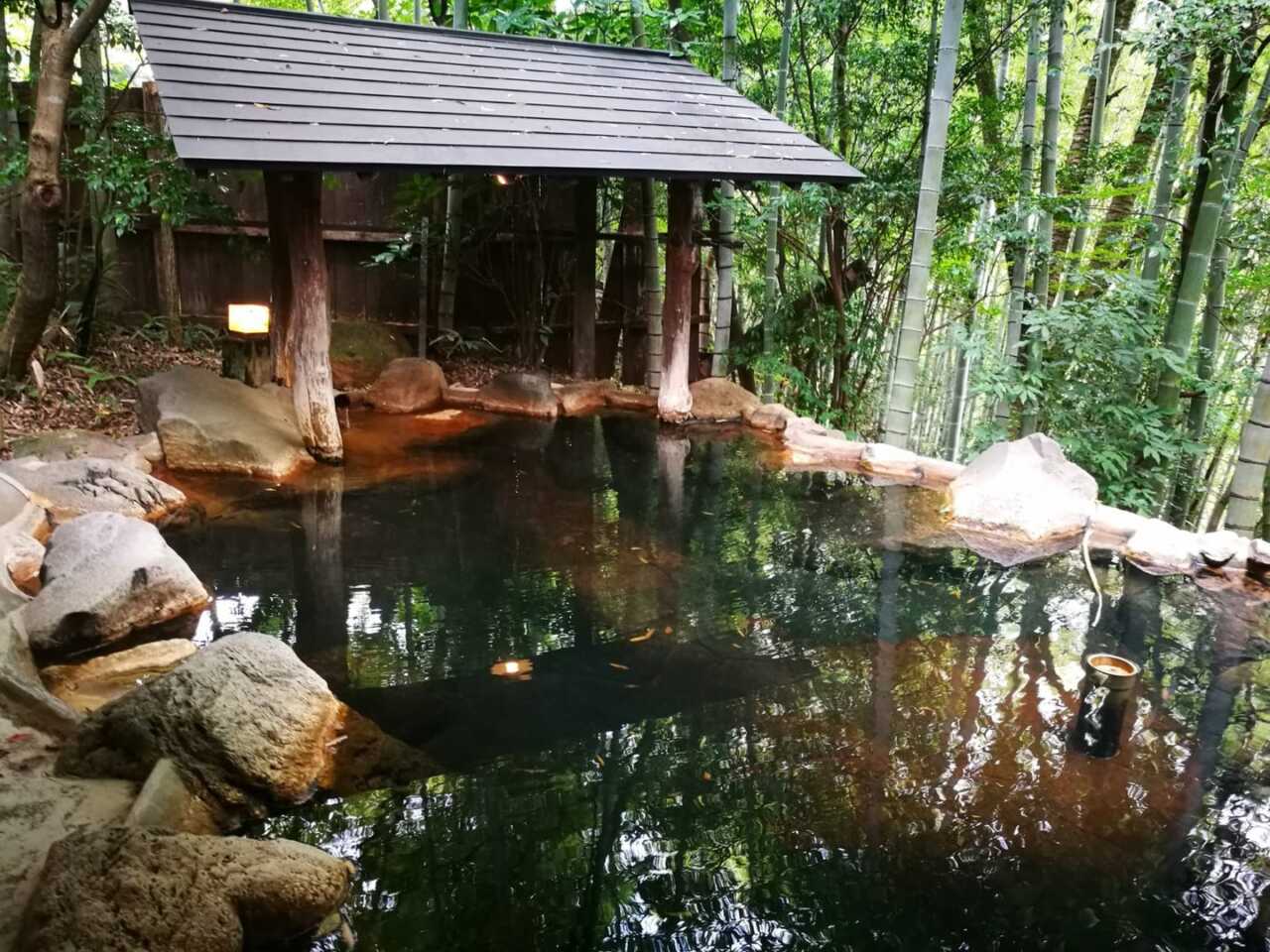
Almost all Kurokawa inns are one-night-with-two-meals, and you need to stay a night to experience the full Kurokawa.

Is Staying a Night at Kurokawa Onsen Worth It? How to Choose Among Three Areas
The best moments in Kurokawa come after the day-trippers leave: the bamboo lanterns by the stream on winter nights and the empty old town at dawn. If your schedule allows, we recommend staying one night.
Lodging areas fall roughly into three types. The first is the old town center, such as Shinmeikan and Ikoi Ryokan, where you step out the door onto the walking route and can still go for dessert after bathing; it has the best convenience. The second is the outer valleys, such as Sansuiki and Okunoyu, which offer the best views and privacy; both have shuttles but need advance reservations. The third is the deep-mountain hideaway far from the town, such as Ryokan Sanga, so quiet it feels almost cut off from the world, suited to travelers who will stay inside the inn the whole time.
Two reminders: Kurokawa has no convenience stores and few ATMs, most shops accept cash only and close in the early evening, so be sure to have yen ready beforehand. Also, Japanese hot spring inns add a bathing tax of about ¥150 per person per night at checkout, also usually paid in cash. Autumn foliage season is the traditional peak, so book early.
Kurokawa Onsen FAQ
Q: How do I use the Nyuto Tegata, and how much is it?
The Nyuto Tegata is a wooden tag made from Oguni cedar, priced at ¥1,500, available at the Kaze-no-Yakata visitor center or participating inns. Within its six-month validity you can choose 3 of about 25 inns for their open-air baths, or swap it for 2 baths plus use for food or souvenirs.
Q: Is a day trip to Kurokawa Onsen enough?
You can do it, but you’ll miss the best part. Day-use baths mostly end at 9 p.m., the winter Yu-Akari festival only lights up after dark, and the old town at dawn can only be seen by staying guests. If time allows, we strongly recommend staying a night.
Q: How do I get to Kurokawa Onsen? Is there a railway?
There is no direct railway. From Fukuoka Tenjin, Hakata or Fukuoka Airport, the direct express bus takes about 3 hours (reservation only); from Kumamoto, the Kyushu Odan Bus takes about 2.5 to 3 hours; from Yufuin it takes about 1.5 hours. Driving from Kumamoto city takes about 1 to 1.5 hours.
Q: What are the day-use bath opening hours?
Most inns’ day-use hours are 08:30 to 21:00, but the actual hours and closing days differ by inn and may change at short notice depending on the number of guests. Before you go, check the Kurokawa Onsen website, or ask at the Kaze-no-Yakata counter after you arrive to confirm that day’s status.
Q: Can I wear a swimsuit in Kurokawa Onsen? Are there tattoo restrictions?
Swimsuits are not allowed. Traditional Japanese hot springs are taken nude, and you must wash thoroughly at the washing area before entering the bath. Tattoo rules differ by inn; travelers with tattoos are advised to choose an inn with a private bath or check with the inn in advance.
Q: What season is Kurokawa Onsen most beautiful?
The autumn leaves from mid-October to November and the winter Yu-Akari festival are the most popular. The Yu-Akari festival runs from about late December to the end of March the following year, and after dark the stream is filled with lit bamboo lanterns. Mountain areas freeze easily in winter, so drivers need to prepare snow tires.
Q: What are the Yu-Akari lighting hours at Kurokawa Onsen? When is it held in 2026?
The previous edition (2025-2026) ran from December 20, 2025 to March 31, 2026, with lighting from 17:00 to 21:30 every day. The dates for winter 2026-2027 have not yet been announced officially; in past years it has usually started in late December, so go by the announcement on the Kurokawa Onsen website.
Q: Can I pay by credit card in Kurokawa Onsen?
Most shops in town accept cash only, and there are no convenience stores and few ATMs, with shops closing one after another in the early evening. The bathing tax of about ¥150 per person per night is also usually paid in cash on the spot, so we suggest withdrawing enough yen before leaving Fukuoka or Kumamoto.