
Yanagawa River Cruise: Gliding Through the “Venice of Kyushu” on a Traditional Wooden Boat
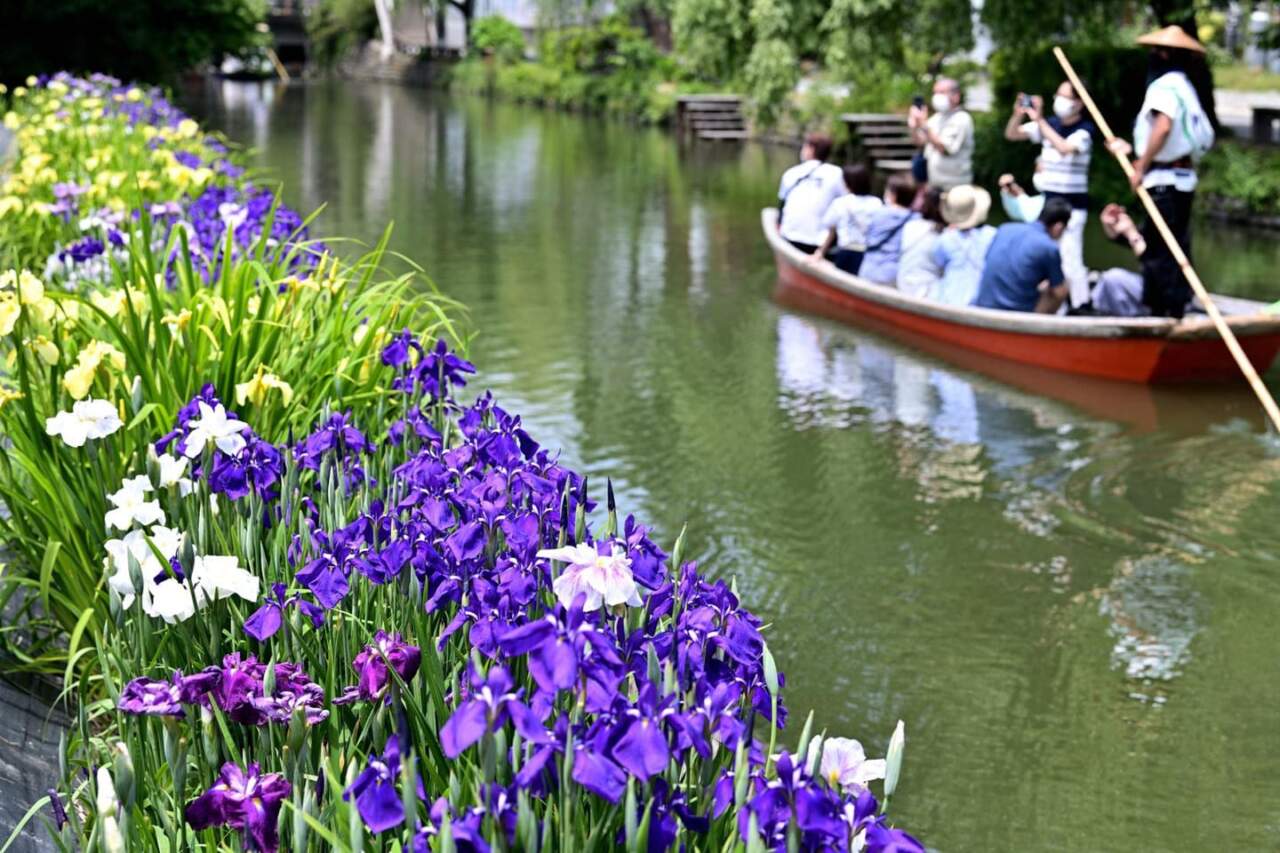
Yanagawa lies in southern Fukuoka Prefecture and keeps its criss-crossing Edo-period moat waterways. A drift down the canals on a traditional wooden boat, the “kawakudari,” takes about 60 to 70 minutes and is Kyushu’s classic water-town experience.
Where Is Yanagawa, and Why Is It Called the Venice of Kyushu?
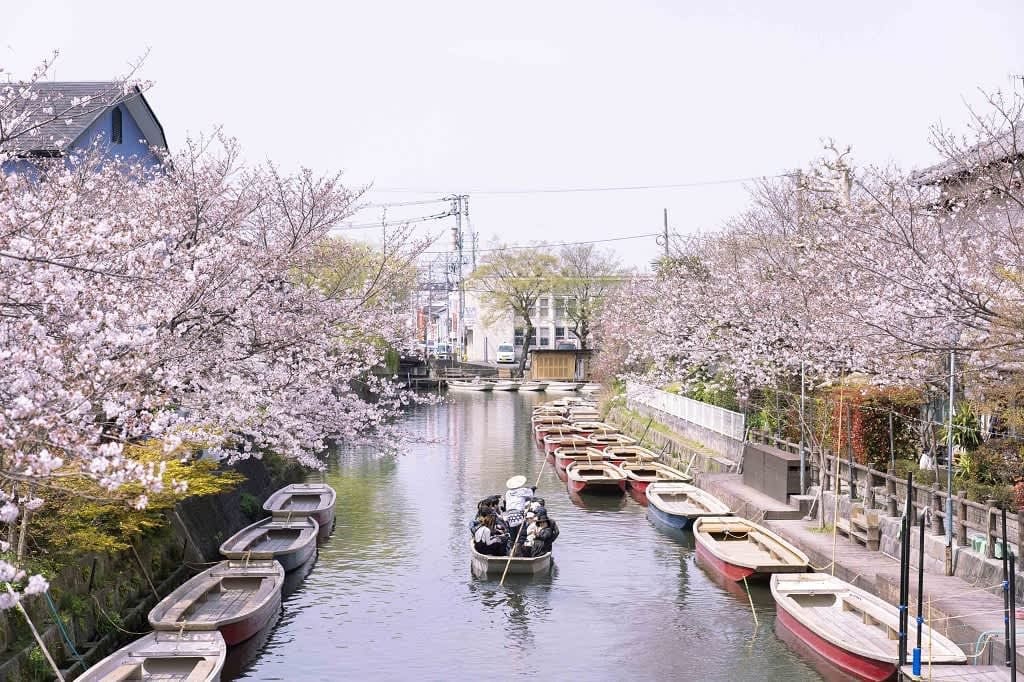
Yanagawa sits on a plain facing the Ariake Sea in southern Fukuoka Prefecture. It once prospered around Yanagawa Castle, and the moats and waterways dug in the castle-town era still cross the whole city today, over 400 kilometers in total. This network of water, together with Ogaki in Gifu and Omihachiman in Shiga, is counted among Japan’s “three great water towns,” which is how Yanagawa earned the nickname “Venice of Kyushu.”
Yanagawa is also the hometown of Kitahara Hakushu, a celebrated modern Japanese poet, and the water-town scenery in his writing is the willows, red-brick warehouses and low stone bridges you pass on today’s cruise. It takes under an hour from Fukuoka’s Tenjin by Nishitetsu train, making it the easiest day trip from Fukuoka, and it is often combined with Dazaifu Tenmangu on the same day.
Who Is the Yanagawa Cruise For? Choosing a Half-Day or Full-Day Plan
If you only want a taste of the atmosphere, choose the short 30 to 40 minute circuit route, add a stroll around Okihata and a meal of steamed eel rice in a steamer basket, and you are done in half a day. This suits people who plan to head back to Fukuoka city for shopping the same day or already have a packed itinerary.
For the full experience, pick the classic long route of 60 to 70 minutes, starting near Nishitetsu Yanagawa Station and drifting all the way down to Okihata, then visiting Ohana and Shotoen, the Kitahara Hakushu Birthplace and Okihata Suitengu after you disembark. The whole day takes about 6 to 7 hours. Yanagawa is especially good for families with older relatives or children, because a boatman steers the whole way and the sights after disembarking are all within walking distance, so you don’t need to keep riding transport.
Best Season for the Yanagawa Cruise and Seasonal Boats
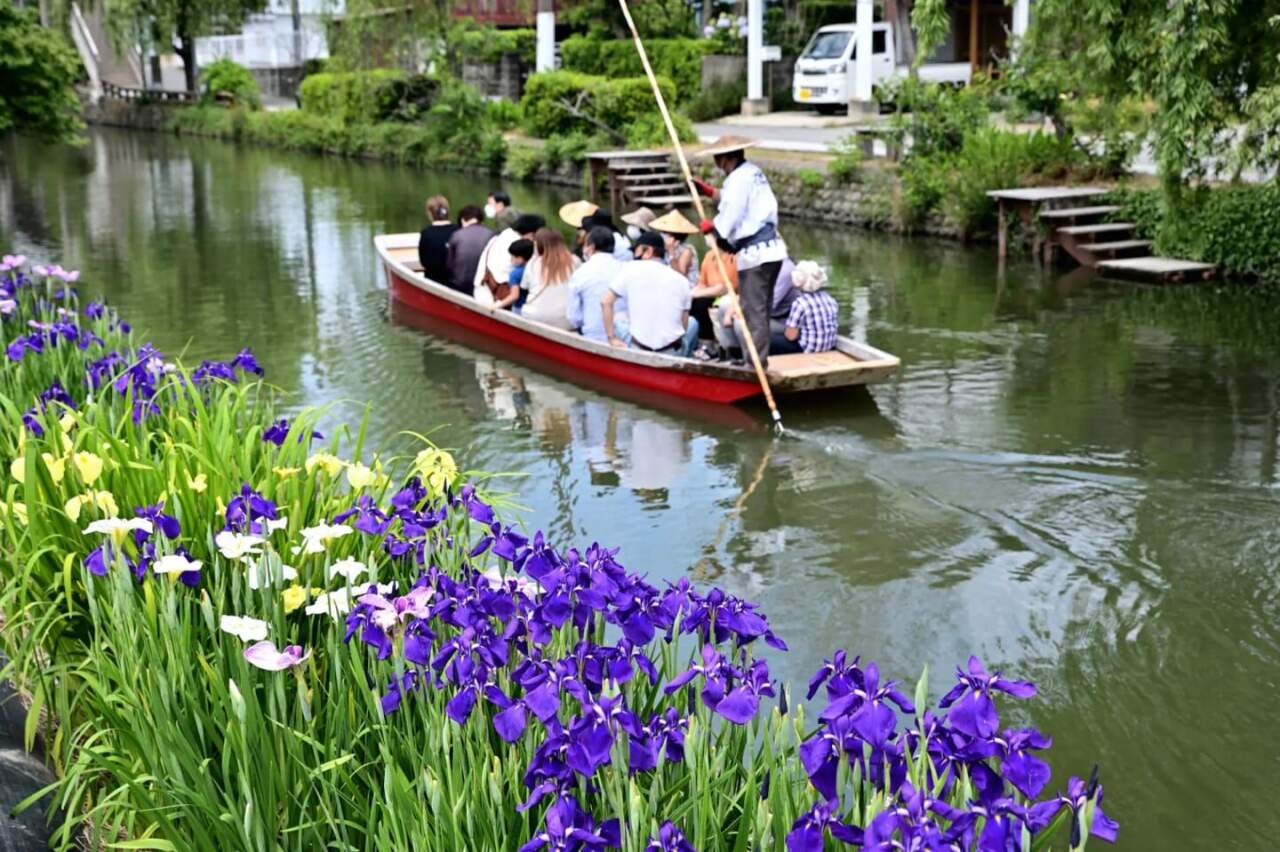
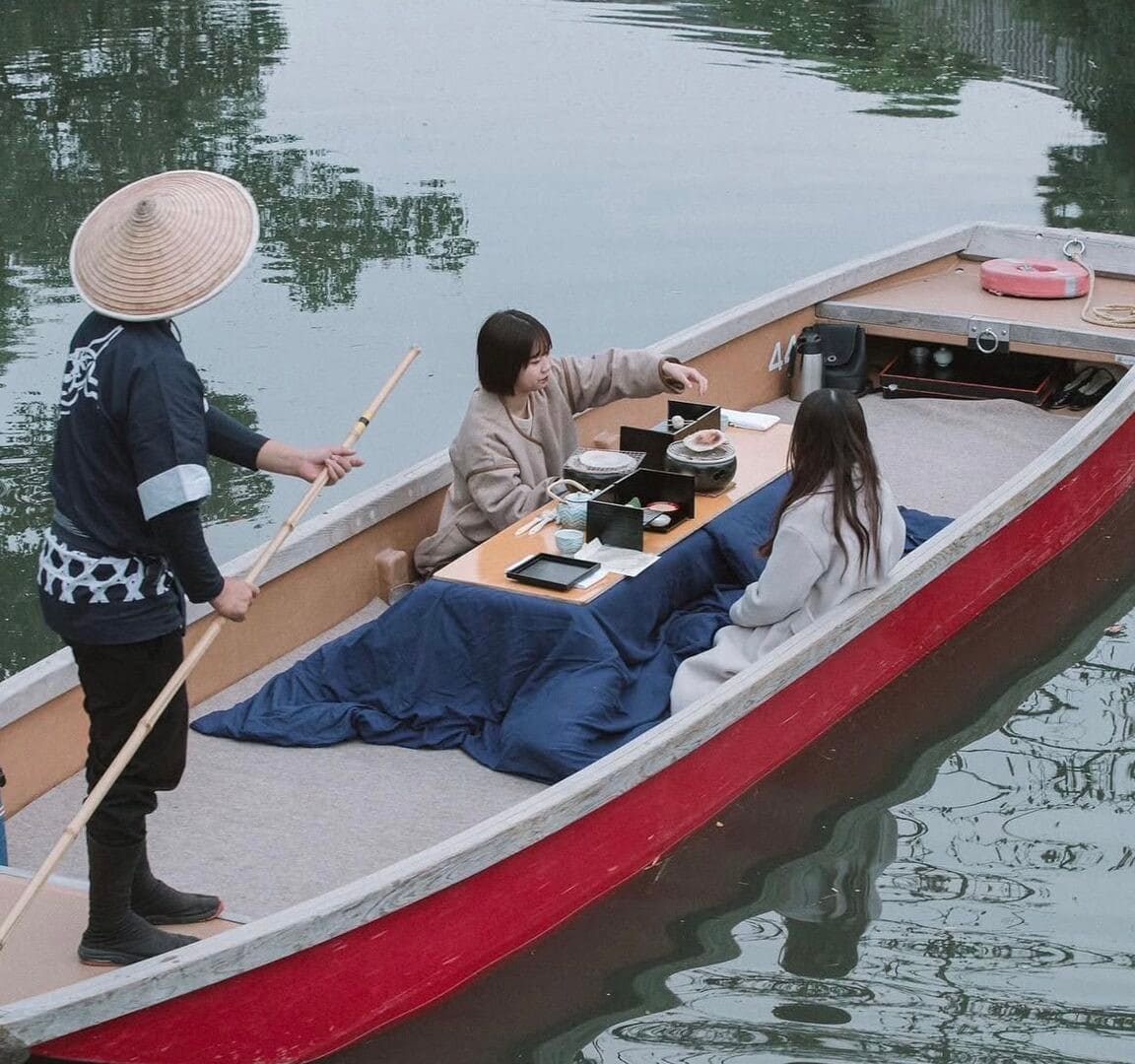
You can ride in Yanagawa all year, but the boat is completely different in each season. Summer (July to September) is muggy by day, so consider the “Akari-bune” lantern night boat that lights up after dusk. In winter (December to February) the boats are fitted with a kotatsu heated table (kotatsu-bune), so you can stay warm while watching the bare willows on both banks. It is Yanagawa’s most popular seasonal experience, though on rainy days it may be replaced by a chair boat without the kotatsu.
From mid-February to early April, Yanagawa holds its biggest festival, the “Yanagawa Hinamatsuri Sagemon Meguri,” when homes hang colorful ornaments and dolls, and the canal banks are especially lively. Note that during the “mizuochi” period in mid to late February, water is drained from the canals for cleaning and only a shortened route of about 40 minutes is offered, so if your trip falls in this window, check with the boat company first.
How to Get to Yanagawa: Transport, Costs and Passes
Yanagawa’s gateway is Nishitetsu Yanagawa Station on the Nishitetsu Tenjin Omuta Line, reached by limited express from Tenjin with no transfer.
| Transport | Reference cost | Time required |
|---|---|---|
| Nishitetsu limited express (direct from Nishitetsu Fukuoka (Tenjin)) | ¥960 | About 49 minutes |
| Dazaifu and Yanagawa Sightseeing Discount Ticket | Adult ¥3,730 | Valid for 2 days |
| JR Hakata to Setaka Station + taxi | About ¥1,300 + taxi fare | About 60 minutes |
| Yanagawa Station to boarding point (free shuttle / walk) | Free | 3–10 minutes |
Nishitetsu Tenjin Omuta Line Limited Express: The Fastest and Simplest Direct Route from Tenjin
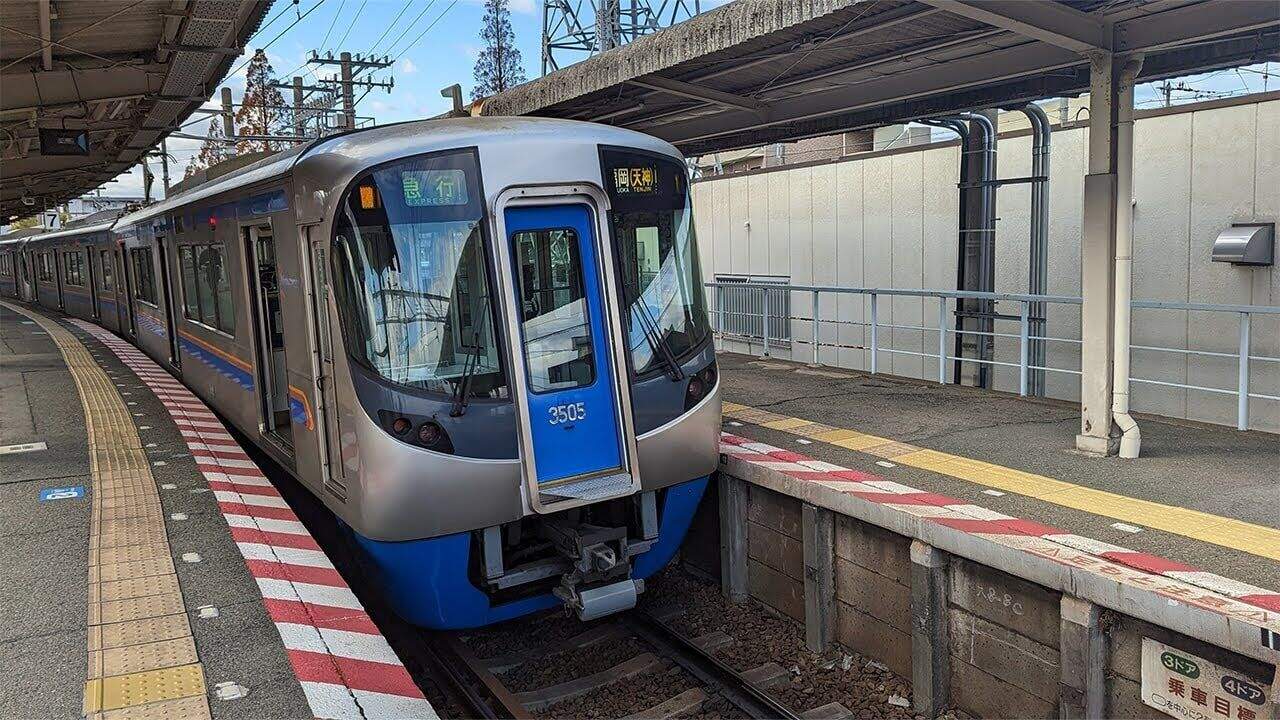
This is the most recommended way. Take a limited express on the Tenjin Omuta Line from Nishitetsu Fukuoka (Tenjin) Station and you reach Nishitetsu Yanagawa Station with no transfer. The ride takes about 49 minutes and costs ¥960, with trains roughly every 30 minutes during the day. Nishitetsu Fukuoka (Tenjin) Station connects to Tenjin Station on the subway, so from Hakata Station you just take the subway for about 5 minutes and transfer.
Note that Nishitetsu limited expresses need no separate limited express ticket. The fare is the ordinary fare, which is very different from JR. Sit in the front part of the train, and after arriving at Nishitetsu Yanagawa Station it is easiest to exit via the tourist information center on the 2nd floor. If you also plan to visit Dazaifu the same day, transfer to the Dazaifu Line at Nishitetsu Futsukaichi Station on the same route, with no need to backtrack.


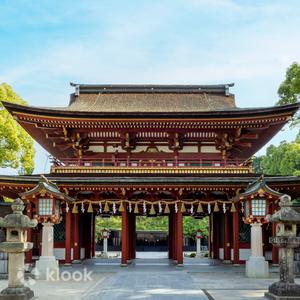
-Klook.jpg)
Dazaifu and Yanagawa Sightseeing Discount Ticket: Two Highlights in One
This combo ticket from Nishitetsu is sold at the ticket centers at Nishitetsu Fukuoka (Tenjin) Station or Yakuin Station. It includes round-trip train tickets for Tenjin, Dazaifu and Yanagawa plus a boat ticket for the classic Yanagawa route, at ¥3,730 for adults and ¥1,870 for children.
It is better value than buying separately, and you can board the boat by showing the digital or paper ticket, with no second line. The ticket is valid for 2 consecutive days from the first day of use. The suggested order is to visit Dazaifu Tenmangu and walk the Omotesando approach in the morning, reach Yanagawa before noon to take the boat, then eat steamed eel rice right after disembarking. The Yanagawa boarding point is the “Shogetsu boarding point” run by Yanagawa Kanko Kaihatsu, so confirm the last departure time with ticket staff when buying, to avoid missing it in the evening.
JR Transfers and Driving: Reaching Yanagawa from Directions Other Than Hakata
If you hold a JR Kyushu Rail Pass and don’t want to buy a separate Nishitetsu ticket, take the JR Kagoshima Main Line from Hakata Station to Setaka Station (about 60 minutes, about ¥1,300), then take a taxi or route bus about 15 minutes into Yanagawa city. This route has fewer trains and an inconvenient transfer, so it is not recommended unless pass considerations apply.
If you drive, take the Kyushu Expressway from Fukuoka city and exit at the Miyama-Yanagawa Interchange, reaching the Okihata area in about 15 minutes, for about 1 hour of driving in total. Paid parking lots are near Ohana and Okihata, but they fill up easily in cherry blossom season and during the Yanagawa Hinamatsuri peak, so set out early. Note that the classic long route is one-way downstream, so drivers need to take a shuttle bus back to the start to pick up the car after disembarking.
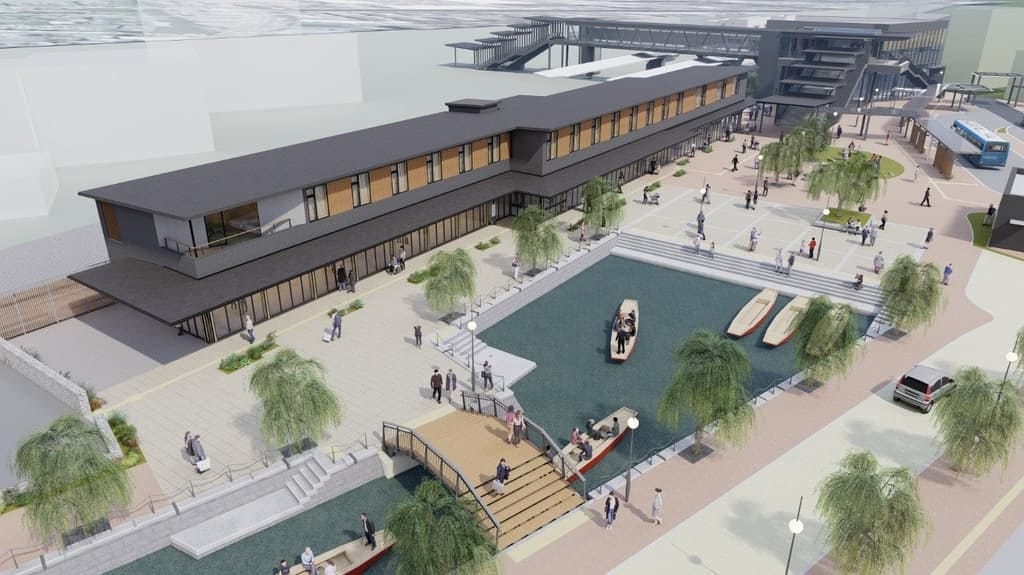
From Nishitetsu Yanagawa Station to the Boarding Point: Free Shuttle and Walking Routes
After arriving at Nishitetsu Yanagawa Station you still need to get to the boarding point. The nearest is that of Suigo Yanagawa Kanko, about a 3-minute walk from the station, good for people who don’t want to wait for a shuttle.
Most other boat companies offer a free shuttle bus from Nishitetsu Yanagawa Station. For example, Yanagawa Kanko Kaihatsu (Shogetsu boarding point), founded in 1961, has an office on the station’s 2nd floor and offers a free shuttle from Okihata back to the station after you disembark, the most seamless link. Check the departure time at the station office before riding, since you may have to wait for the next one when it is crowded. Also note that boat space is small and large suitcases are not allowed, so be sure to leave luggage in the lockers or at the service desk at Nishitetsu Yanagawa Station first.

What Are the Must-See Sights in Yanagawa? The Cruise and 11 Okihata Highlights
Following a “boat first, then stroll” route, here are the Yanagawa cruise itself and the sights to stroll after disembarking in Okihata, 11 highlights in all.
Yanagawa Kawakudari: Drift Through the Castle-Town Waterways on a Donko Boat
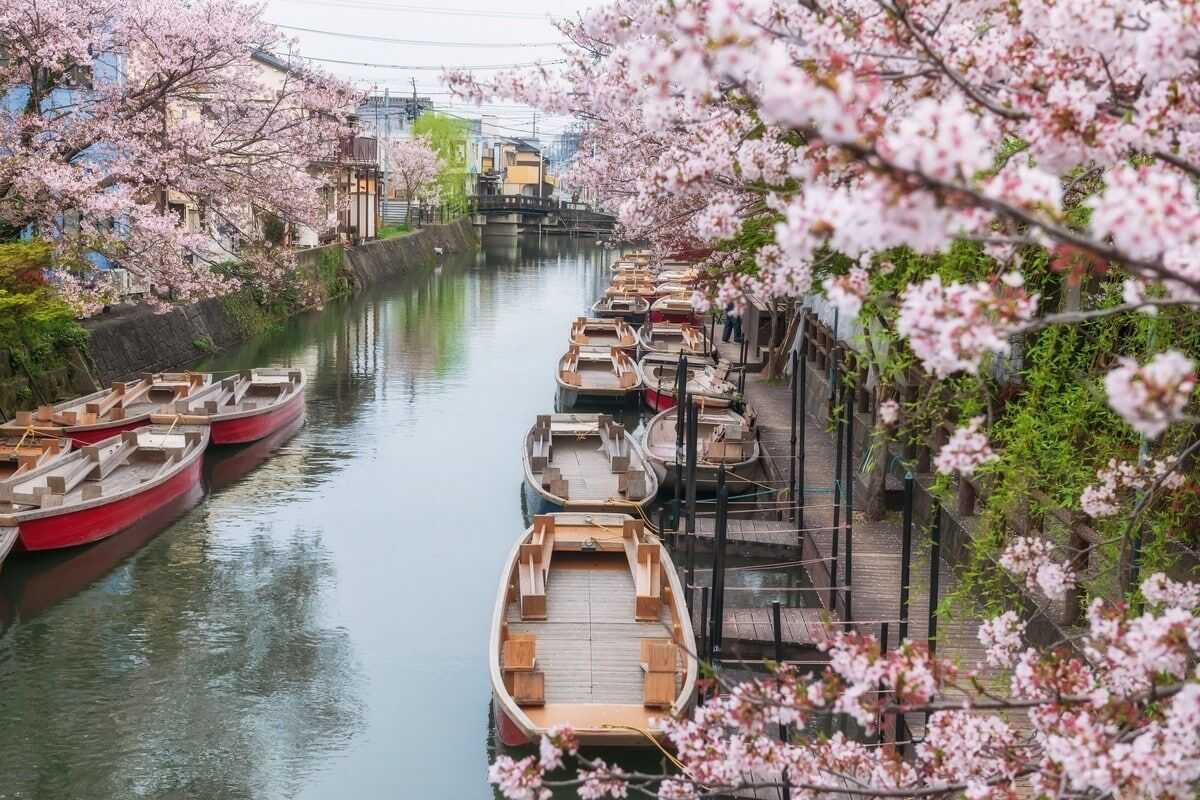
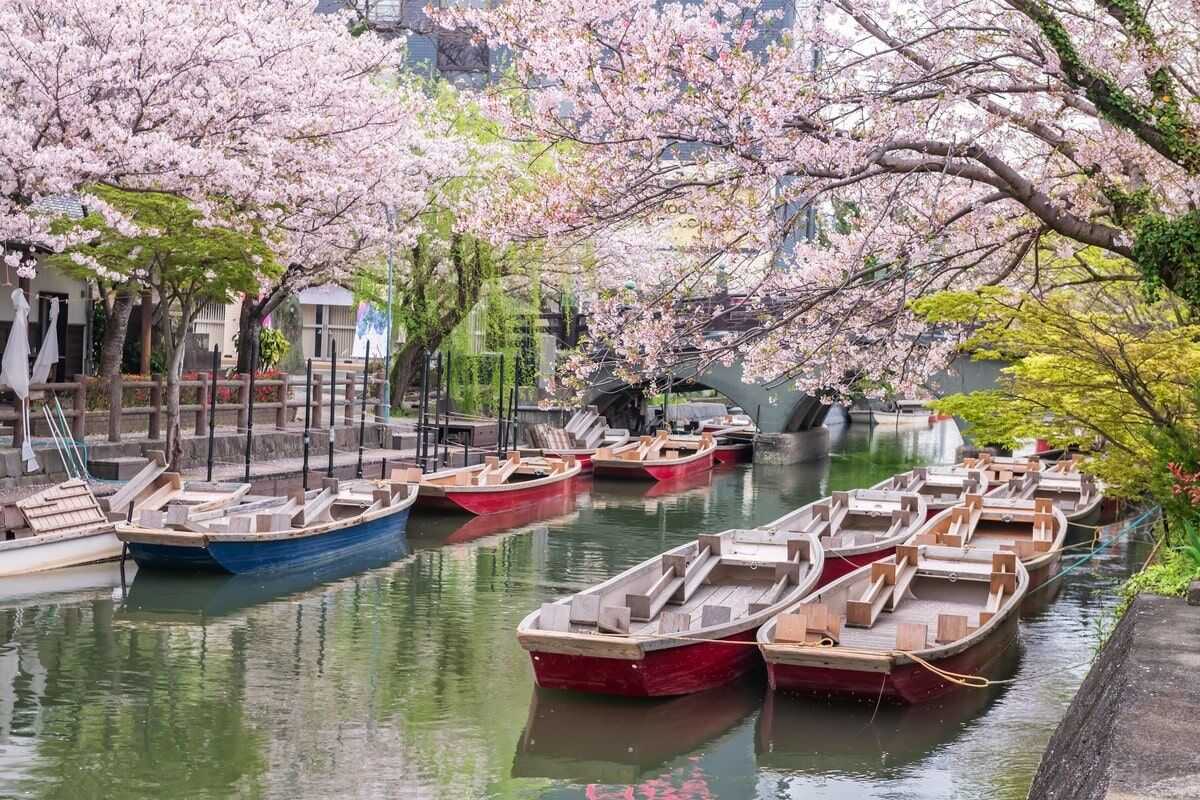
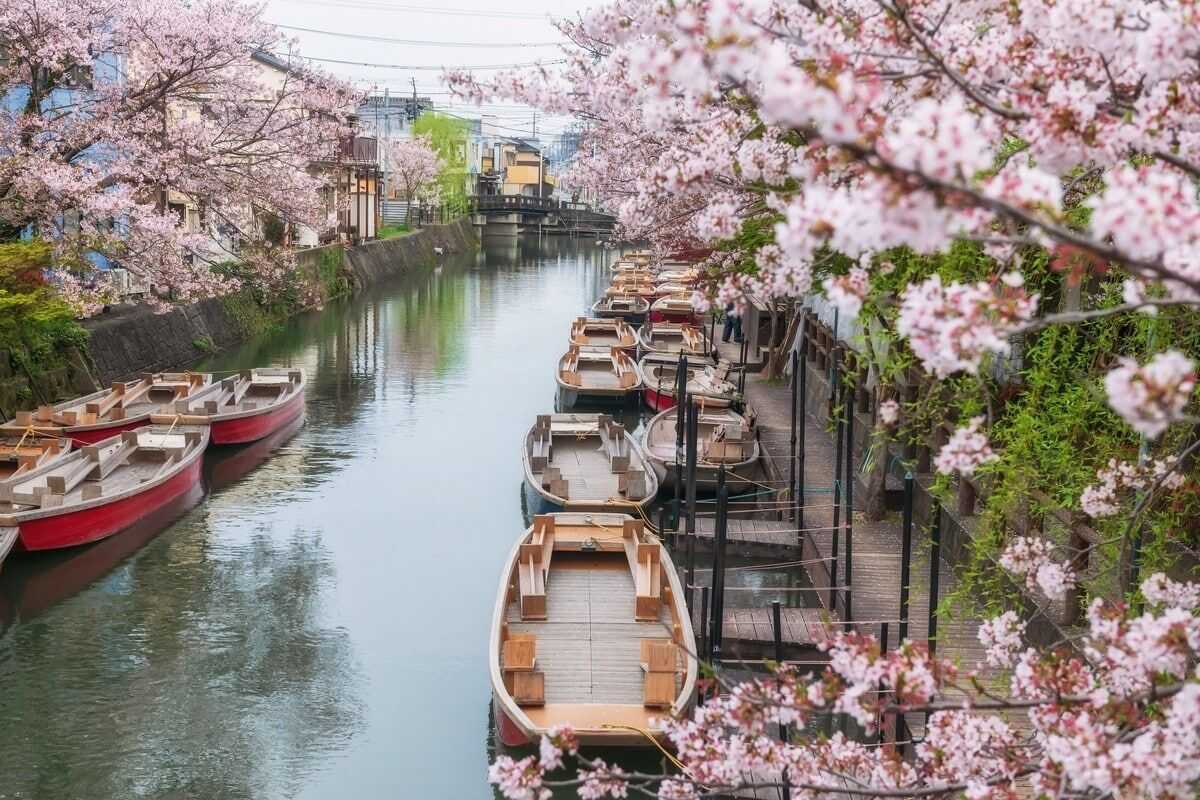
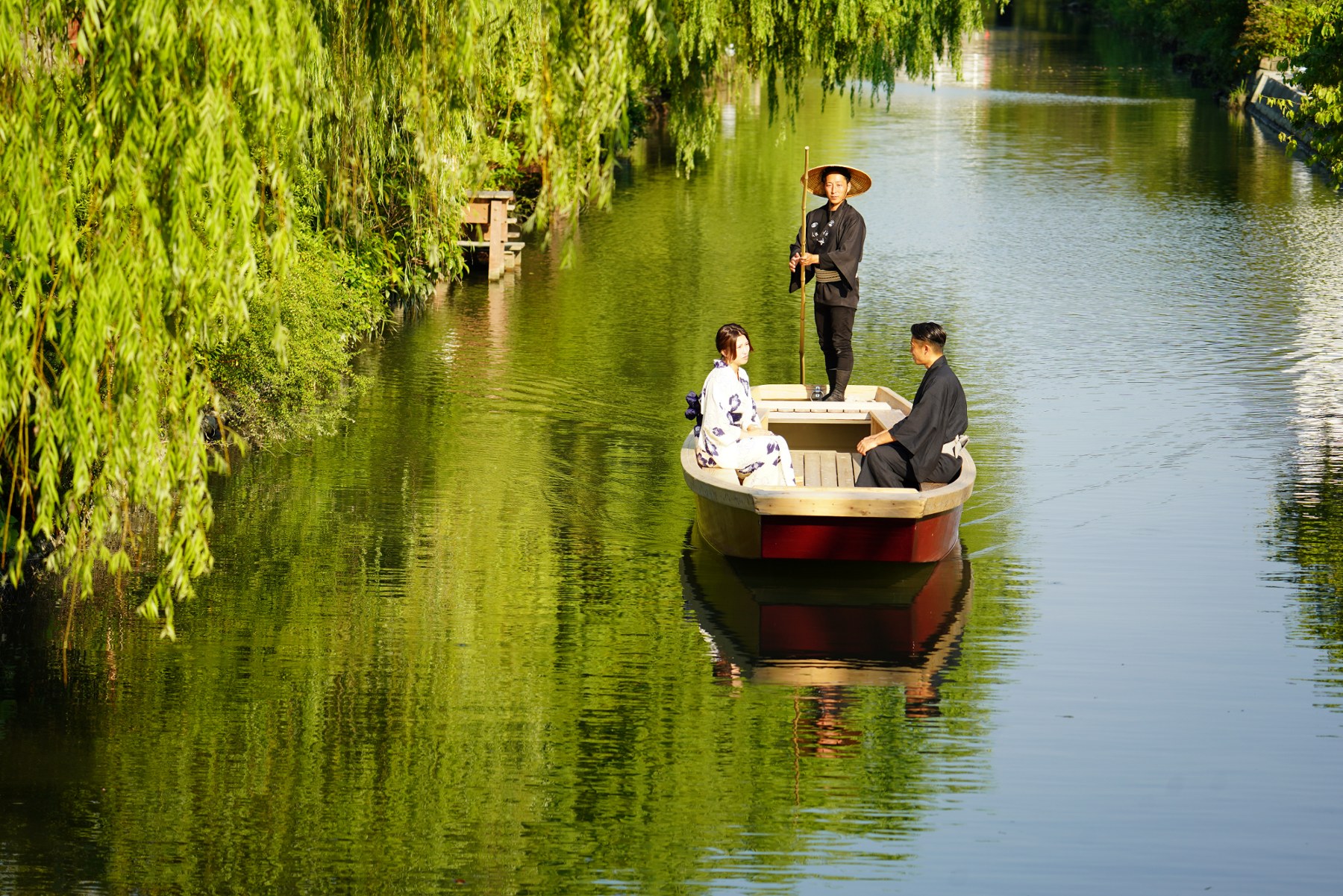
Yanagawa’s signature experience. A boatman poles a traditional flat-bottomed wooden boat called a “donko-bune,” carrying visitors downstream along the moat past weeping willows, red-brick warehouses and stone embankments left from the Edo period, and sometimes singing Yanagawa folk songs along the way. The classic long route (called the “regular rowing cruise,” or tsujo kawakudari, in Japanese) takes about 60 to 70 minutes, starting near Nishitetsu Yanagawa Station and ending at Okihata.
The route passes under several extremely narrow or low bridges, and when the boatman gives the signal you must duck low to avoid hitting your head, which is the most memorable part of the cruise. The boat has no roof, so in summer you can rent a straw hat for about ¥100 for shade (umbrellas are not allowed on board because they block the view for people behind), and in rain the boat company usually provides ponchos free of charge.

Yanagawa’s 7 Boat Companies: Choosing the Right One Shapes the Whole Experience
Yanagawa has 7 main boat companies, with adult fares of roughly ¥1,000 to ¥2,200 depending on route length. The classic long route is run by operators such as Yanagawa Kanko Kaihatsu (Shogetsu boarding point), Suigo Yanagawa Kanko and Daito Enterprise, while the short circuit is mostly handled by Yanagawa Yusen Marue Kanko, Jomon Kanko and Yanagawa River Kanko around Okihata and Ohana.
Each has clear differences. Yanagawa Kanko Kaihatsu is the original operator, founded in 1961, with an office on the 2nd floor of the station and a free return shuttle. Suigo Yanagawa Kanko is the closest to the station, offers discounts for booking on its website and supports Chinese and English. Daito Enterprise is the only operator offering both long and short routes. Hakushu Kanko’s boatmen are the best-reviewed for singing, and it offers a reservation-only night cruise running until 21:00 at the latest.
| Boat company | Main route | Features |
|---|---|---|
| Yanagawa Kanko Kaihatsu (Shogetsu) | Classic long route | Original operator founded in 1961, free return shuttle |
| Suigo Yanagawa Kanko | Classic long route | Closest to the station, website booking discount, Chinese and English support |
| Daito Enterprise | Long + short routes | The only one offering both routes, most flexible |
| Hakushu Kanko | Long route + night cruise | Famous for boatman singing, reservable night cruise |
| Marue / Jomon / River Kanko | Short circuit | Boarding points mostly around Okihata and Ohana |
Ohana, the Tachibana Family Residence, and Shotoen: A Feudal Lord’s Residence Designated a National Place of Scenic Beauty
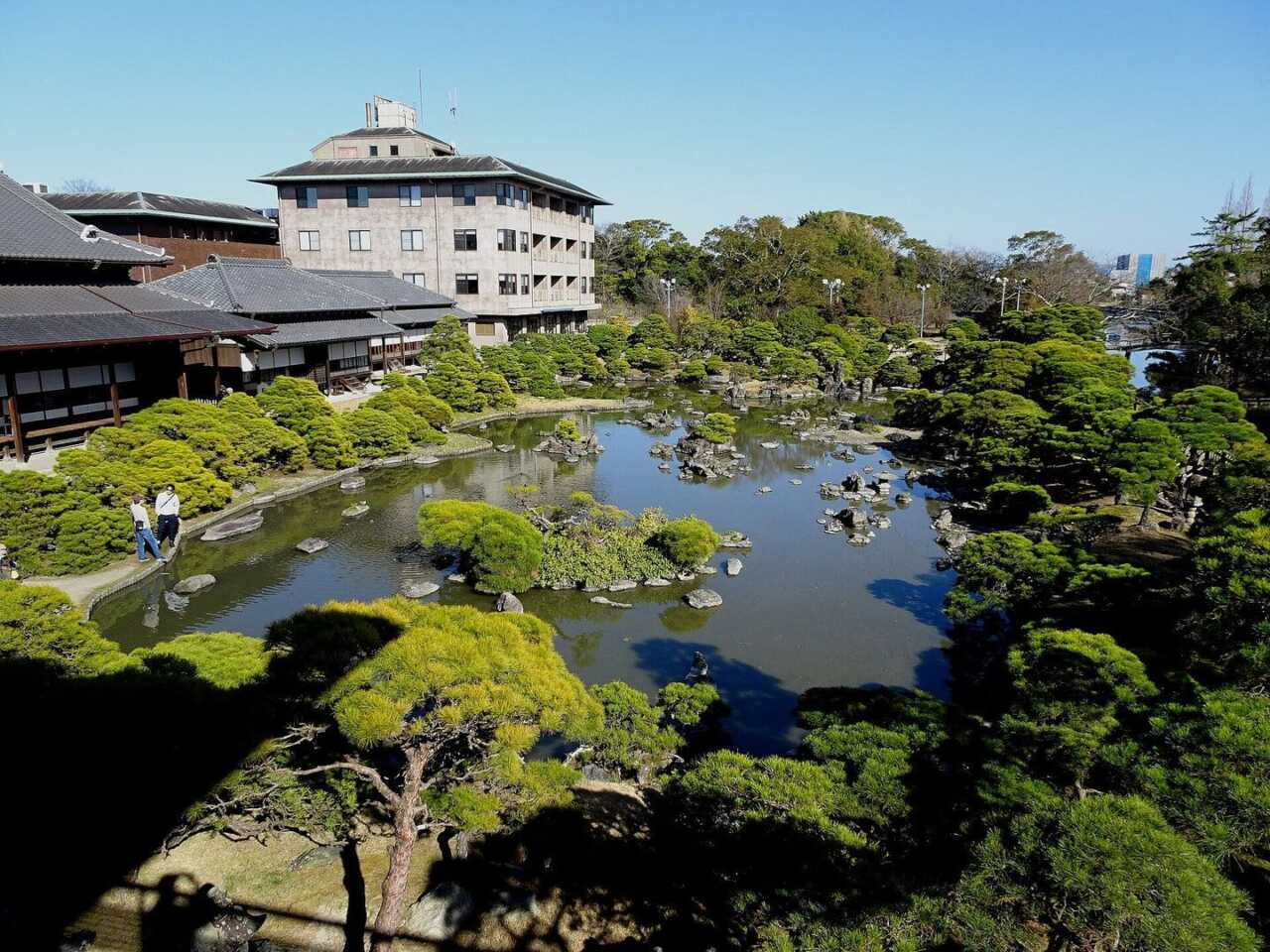
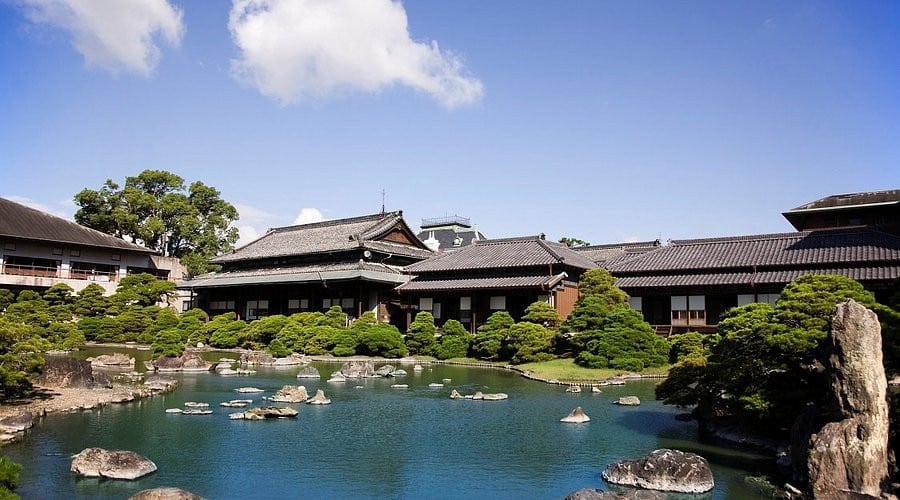
The residence of the Tachibana family, who ruled Yanagawa for about 400 years, is the most important sight around Okihata, where the cruise ends. From the Edo-period Japanese-style mansion to the Meiji-era Western-style building and great hall and the Japanese garden “Shotoen,” the whole approximately 7,000 tsubo estate is designated a national place of scenic beauty.
Shotoen is designed with the Ariake Sea as its motif, dotted with 280 black pines and strange rocks, and wild ducks come to winter there. Inside the Western-style building are armor, hina dolls and household items from the Tachibana collection, giving a full picture of how a daimyo family’s life moved from the late Edo period into the modern era. The estate also has a restaurant and lodging facilities. According to Ohana’s official website, admission is generally ¥1,200, ¥500 for high school students and ¥400 for elementary and junior high students, open 10:00 to 16:00, and you should allow more than 60 minutes.
Kitahara Hakushu Birthplace and Memorial Museum: The Origin of the Water Town in His Poetry
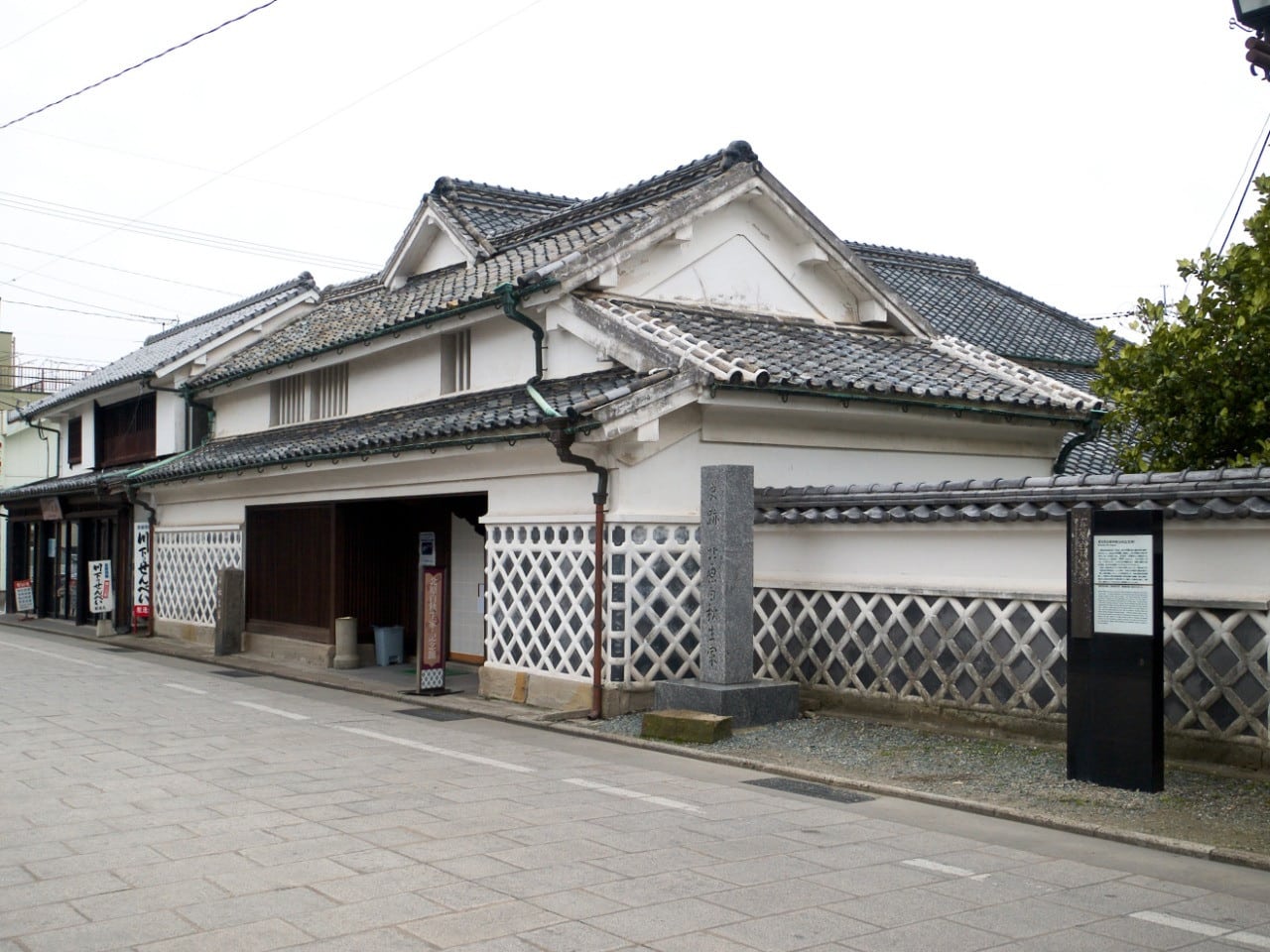
This is the former home of Kitahara Hakushu (1885–1942), the modern poet from Yanagawa. His family ran a sake-brewing business, and the merchant house with white plaster walls and lattice windows survives, with his manuscripts, letters and belongings on display inside. The neighboring Kitahara Hakushu Memorial Museum gives a fuller account of his achievements in poetry and children’s literature.
His best-known works are the children’s songs “Machiboke” and “Amefuri,” and the museum also explains in detail how Yanagawa’s waterway scenery fed his writing, so looking back on your boat ride afterward feels especially meaningful. It is in the Okihata area, a short walk from where you get off the boat, and you should allow 30 to 40 minutes.
Okihata Suitengu: Guardian of the Water Town and the Boat Festival
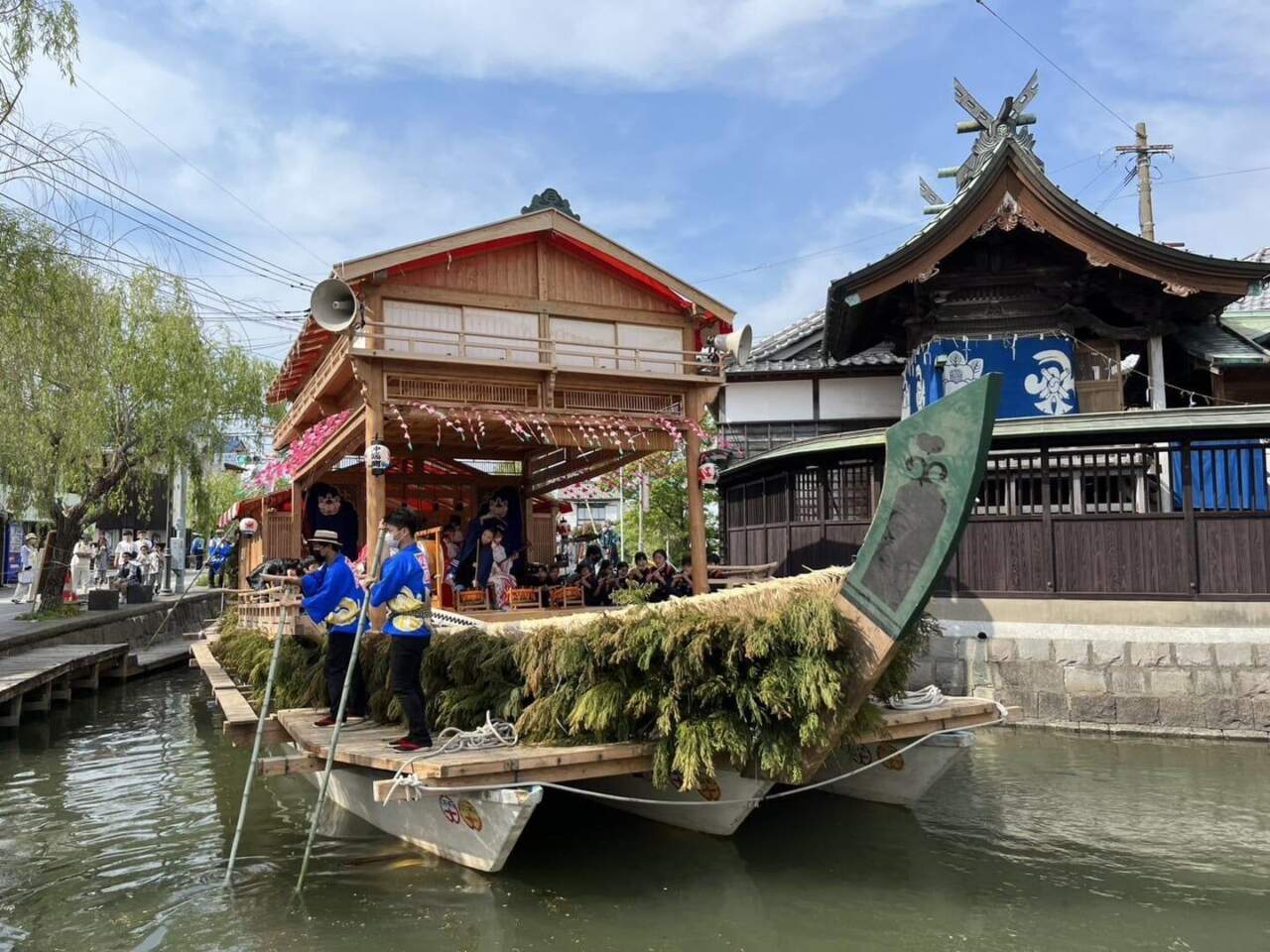
This shrine on the Okihata canal was formed in 1869 by combining three shrines: Kurume Suitengu, Inari Shrine and Yaken Shrine (Gion Shrine). It is part of the nationally designated Place of Scenic Beauty “Water Town Yanagawa” and has long been the guardian of boatmen and water transport workers. The grounds are small, but the red railings and stone lanterns right beside the waterway are among Okihata’s most photogenic corners.
The “Okihata Suitengu Festival,” held every year from May 3 to 5, is Yanagawa’s signature festival. A “Sanshin-maru” boat stage is set up on the moat for traditional hayashi performances, the banks fill with stalls and the streets are closed to become a pedestrian zone, making it the liveliest time of year. The shrine office sells omamori charms for protection from water accidents and traffic safety, and also issues goshuin stamps.
Mihashira Shrine: Yanagawa’s Chief Guardian Shrine Honoring Tachibana Muneshige and Ginchiyo
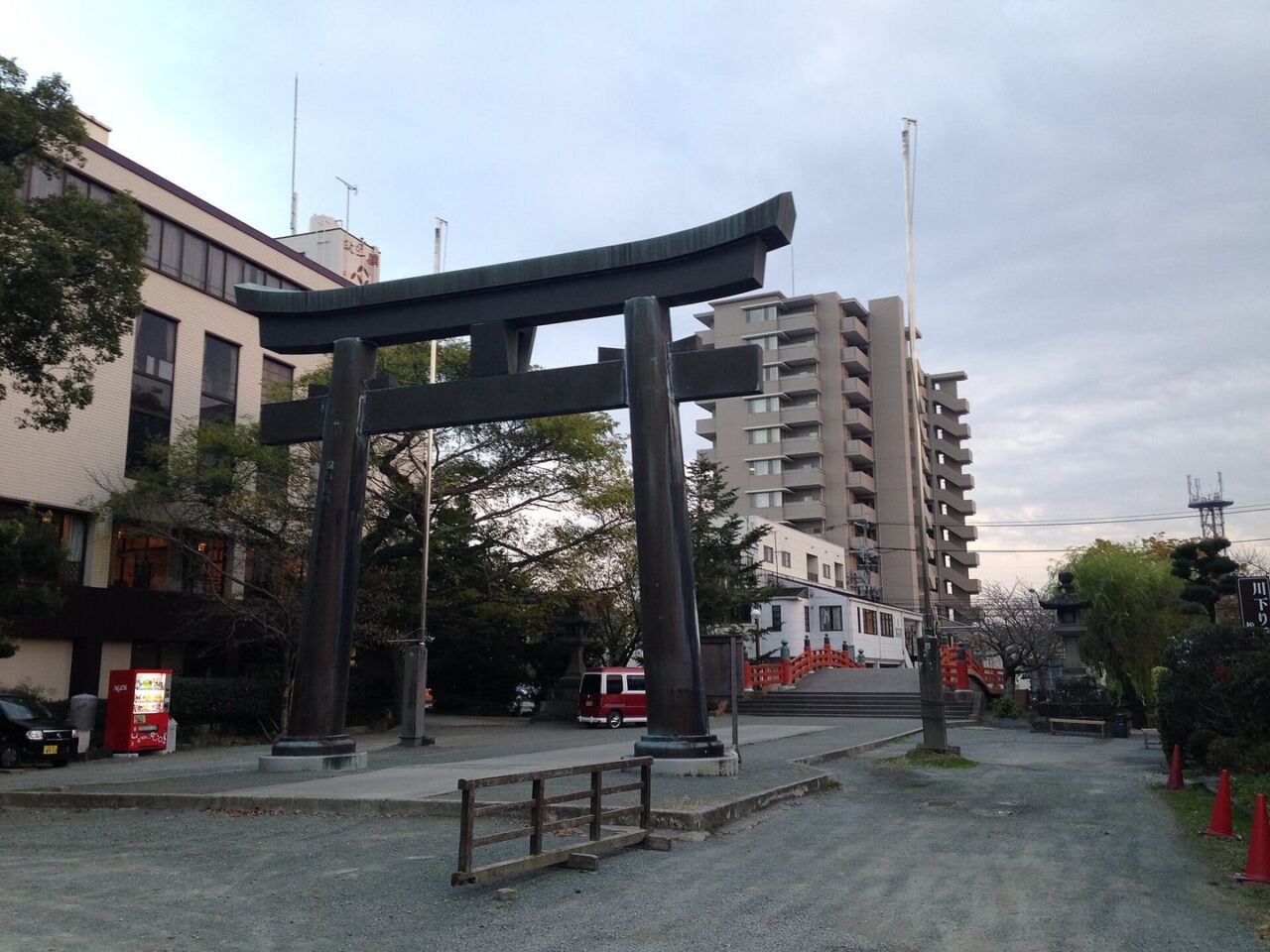
This shrine between Nishitetsu Yanagawa Station and the cruise boarding points was founded in 1826 when the 9th lord, Tachibana Akikata, relocated the Baigaku-gu shrine. It enshrines three people: Tachibana Muneshige, the first lord of Yanagawa, his wife Ginchiyo, and her father Otomo Dosetsu (Bekki Dosetsu), which is the origin of the name “Mihashira” (three pillars). The Sengoku-era couple Muneshige and Ginchiyo have grown much more popular in recent years thanks to a historical TV drama and video games, and have become a destination for history fans.
The grounds have a long approach and a large stone torii, and the cherry blossoms by the pond are impressive in spring. The autumn grand festival “Onigie,” held every October (October 10 to 12 in 2026), features float parades and dance groups and is Yanagawa’s largest festival after the Suitengu festival. You can get omamori charms for victory and good matches, and goshuin stamps are available. Allow 20 to 30 minutes.
Narabigura: Meiji-Era Red-Brick Warehouses Along the Canal
A row of three red-brick buildings standing along the waterway, these are Meiji-era miso brewing warehouses still owned by a local miso maker. The red bricks have taken on a century of weathering, and their reflection in the water is the composition that appears most often in Yanagawa’s promotional photos and postcards.
Narabigura is not a facility you can enter. The best way to see it is from the boat looking up from the water, and boatmen usually slow down here so everyone can take photos. To shoot from the bank, walk around along the waterside path in Okihata. It looks best in the front light from morning to before noon, and at dusk the brick walls turn warm orange for a different mood. Next to Narabigura is Okihata’s merchant quarter, so you can walk into the old street afterward. Allow 10 to 15 minutes.
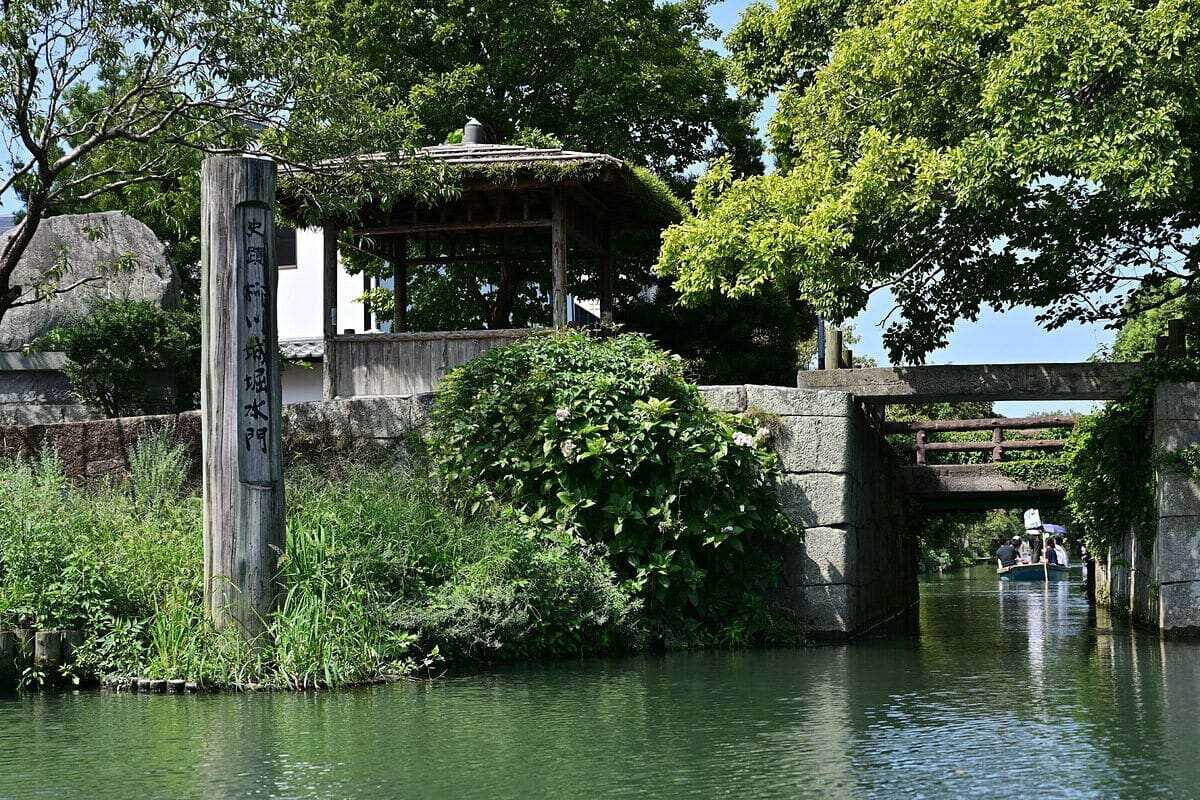
Yanagawa Castle Moat Sluice: The Edo-Era Stone Gate That Controlled the Water Town’s Lifeblood
This is the intake of Yanagawa Castle’s moat system, where a stone-built sluice gate draws water from the Yabe River into the castle-town waterway network. It is the key facility for understanding why Yanagawa has so many waterways, and it is now a historic site designated by Fukuoka Prefecture.
The sluice itself is small, but its layered stone masonry and the nearby water-level regulation facilities are well preserved and show the care of Edo-period flood control. Yanagawa’s waterways are not natural rivers but an artificial network deliberately dug for defense and farm irrigation, so seeing the sluice before boarding helps you understand the castle-town structure the boatman describes. It is on the north side of the city, so go by bicycle or car, and allow 15 to 20 minutes.
Yanagawa Castle Ruins: A Water Castle Reduced to Stone Walls and the Keep Base
Yanagawa Castle was a “water castle” that used its criss-crossing waterways as a natural moat. A fire in 1872 burned the keep and main buildings, and today the remains lie on the grounds of Yanagijo Junior High School, with only the stone walls and earthworks of the keep base left and a stone monument explaining the site.
Although nothing has been rebuilt, standing on the keep base lets you understand how Yanagawa Castle used water as its walls: with this waterway defense, the Tachibana clan made it one of Kyushu’s hard-to-take castles in the late Sengoku period. The nearby moat waterways bloom with cherry blossoms in spring, a local secret spot with clearly fewer visitors than Okihata. Because it is on junior high school grounds, avoid class hours and keep quiet when visiting. It is a sight aimed at history fans, so ordinary travelers can skip it depending on time, and about 15 minutes is enough.
Hiyoshi Shrine: Yanagawa’s Oldest Guardian Shrine and Its Two-Story Gate
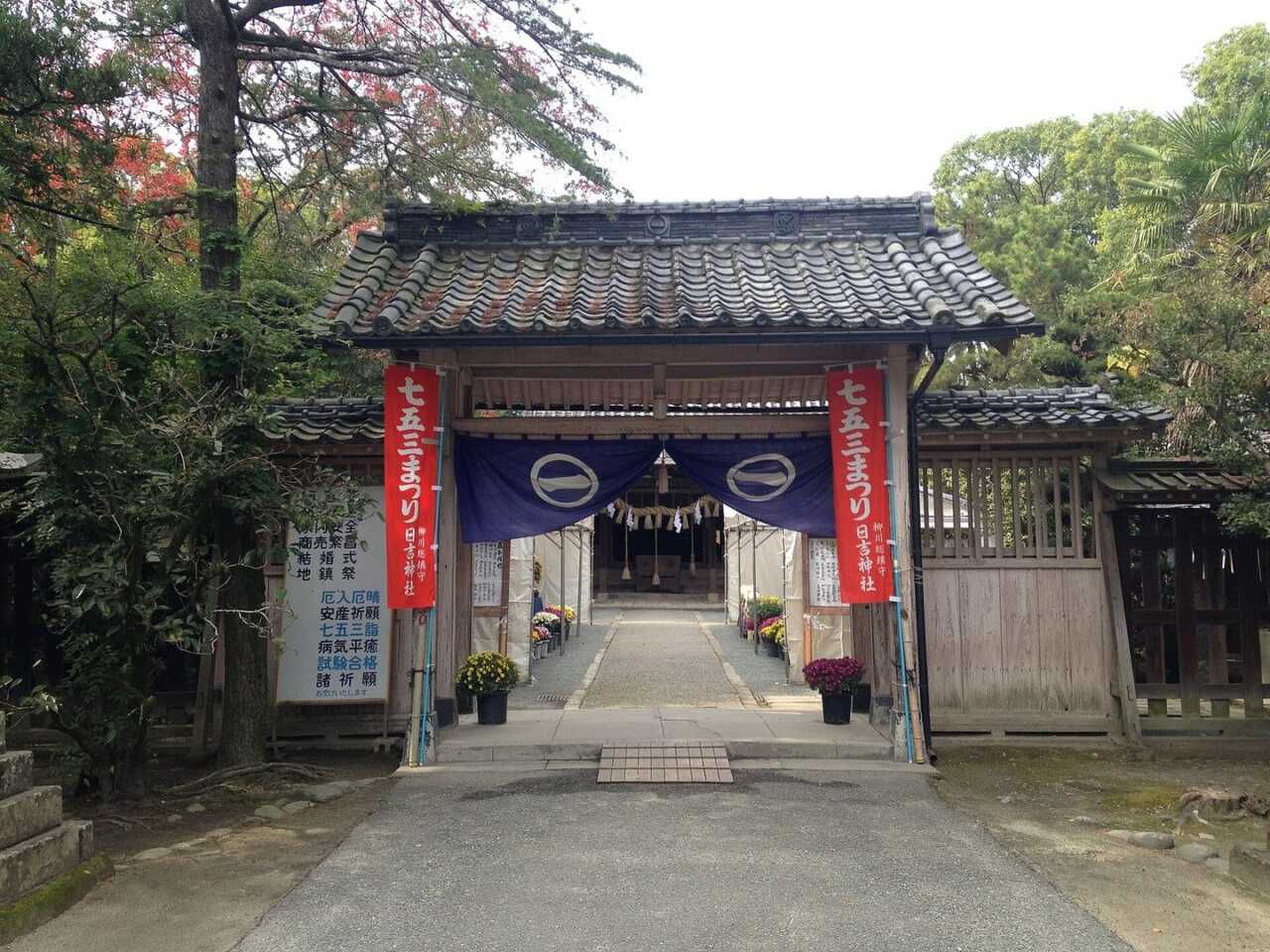
Tradition says the shrine was invited from Hiyoshi Taisha at Sakamoto in Omi in 1290, making it one of the oldest shrines in the city. Its main deity is Oyamakui-no-Kami, and it later became the guardian shrine of Yanagawa Castle, hence the title “Yanagawa Chief Guardian Shrine.” The two-story gate and main hall keep their Edo-period style and are designated tangible cultural properties of Yanagawa City.
Compared with the tourist-oriented Okihata area, Hiyoshi Shrine is much quieter, with tall camphor trees casting green shade, a good rest stop on a walk. A procession carrying the portable shrine through city streets takes place at the annual grand festival each November. The shrine is about a 15 minute walk from Nishitetsu Yanagawa Station and can be placed on the same walking route as Mihashira Shrine, so if you take an afternoon boat you can see both shrines in the morning. 20 minutes is enough.
Yanagawa Hinamatsuri “Sagemon Meguri”: The Water Town’s Biggest Spring Ornament Festival
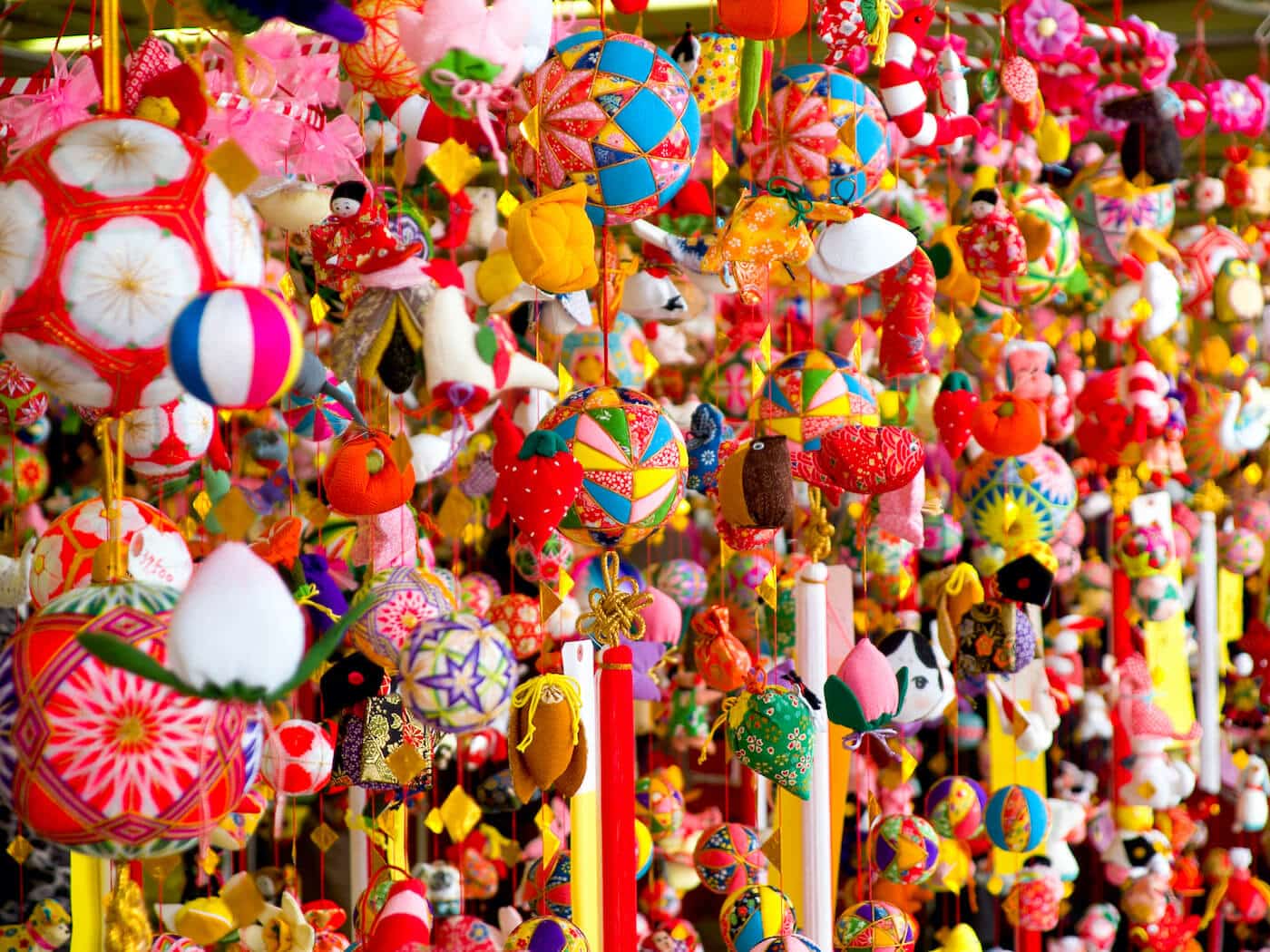
A Yanagawa custom: when a daughter is born, her grandmother and relatives sew cloth dolls, balls and trinkets by hand and string them into “sagemon” ornaments, hung on both sides of the hina dolls to pray for the child to grow up safely. From mid-February to early April, shops, inns and historic buildings across the city exhibit them together, filling the streets with colorful hanging ornaments.
During this period Ohana and the Okihata area are the main exhibition zones, and events such as a floating bridal procession on the water are held. This overlaps with the mizuochi period in mid to late February, when the cruise may switch to a shortened route, so check announcements from the Yanagawa City tourism association before you go. If you want to see the festival and also ride the full route, plan your trip for after mid-March.
How Much Does the Yanagawa Cruise Cost? Boat Tickets, Passes and Experiences
Costs in Yanagawa mostly come down to boat tickets and transport, and passes are usually better value than buying separately.
| Item | Adult reference cost | Time required |
|---|---|---|
| Classic long cruise (regular kawakudari) | About ¥1,800–2,200 | 60–70 minutes |
| Short circuit route | About ¥1,000–2,000 | 30–40 minutes |
| Dazaifu and Yanagawa Sightseeing Discount Ticket | Adult ¥3,730 | Valid for 2 days |
| Nishitetsu Yanagawa Tokumori Set (meal coupon included) | Sales suspended since August 2023 | — |
| Straw hat rental | About ¥100 | — |
Classic Long Cruise Ticket: The Full 60-Minute Water-Town Experience
The mainstream choice in Yanagawa, called the “regular rowing cruise” (tsujo kawakudari) in Japanese, costs about ¥1,800 to ¥2,200 for adults and about half for children, varying slightly by company. For example, the original operator Yanagawa Kanko Kaihatsu (Shogetsu boarding point) charges ¥2,200 for adults and ¥1,100 for children, with a trip of about 60 minutes. The route leaves from the boarding point near Nishitetsu Yanagawa Station and drifts one-way downstream for about 60 to 70 minutes, ending at Okihata.
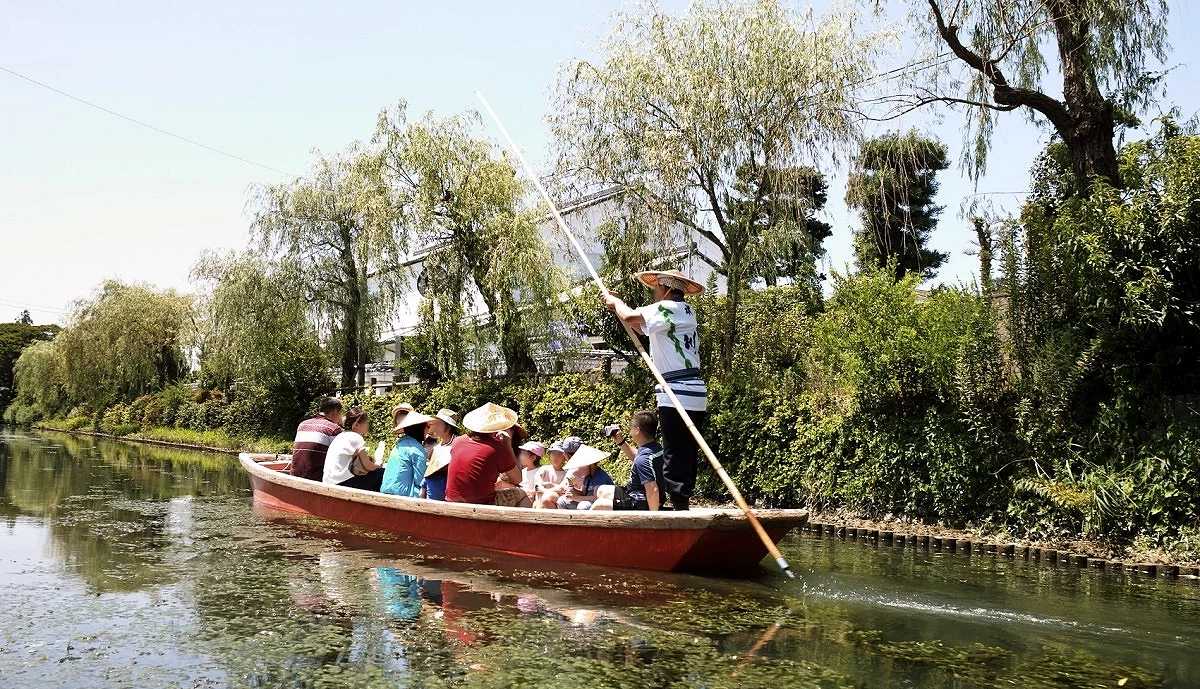
Throughout, the boatman poles and explains the castle town’s history while singing Yanagawa folk songs unaccompanied. Passing weeping willows, Meiji-era red-brick warehouses and many low bridges, you see the full scenery that the short route can’t show.
Because it is a one-way route, most boat companies offer a free shuttle bus from Okihata back to Nishitetsu Yanagawa Station, so confirm the return departure times and the last boat departure when buying a ticket. In peak season and on weekends, book ahead on the official website or by phone, as waiting on site can sometimes take over an hour.
Short Circuit Ticket: Classic Shots in Just 30 Minutes
This loops once around the Okihata area or Ohana and returns to the start, taking about 30 to 40 minutes. Adults pay about ¥1,000 to ¥2,000, and it is run by operators such as Yanagawa Yusen Marue Kanko, Jomon Kanko and Yanagawa River Kanko.
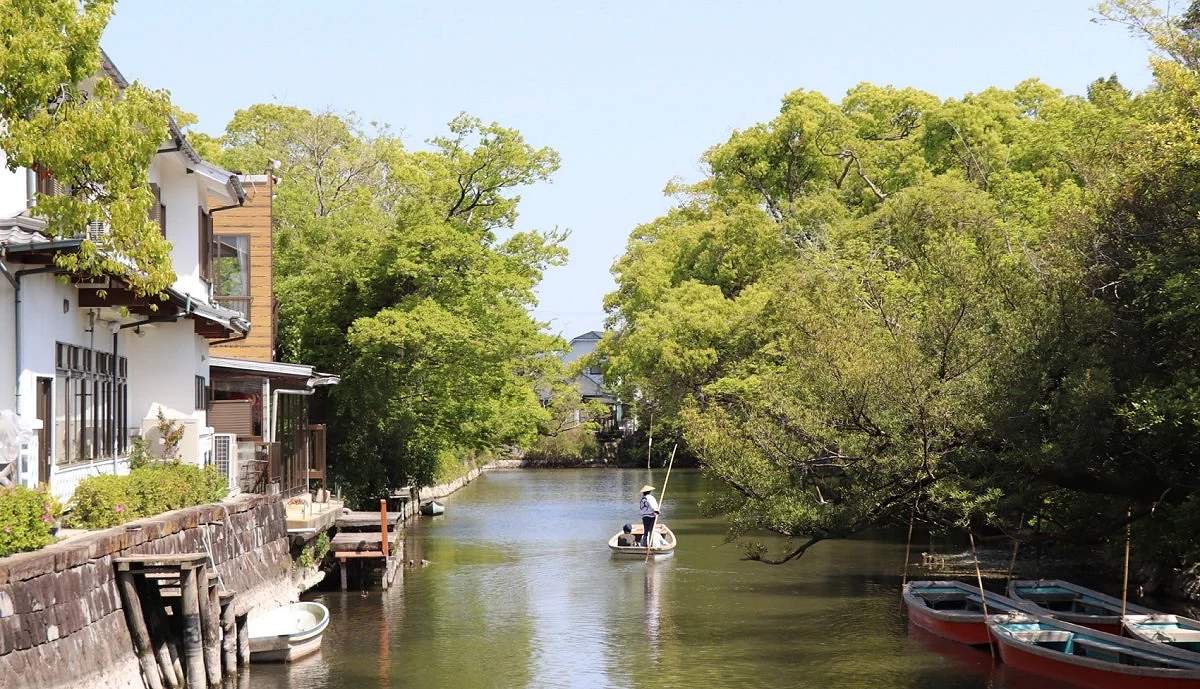
Although the trip is short, the highlights, the red-brick warehouses, low stone bridges and willow-lined canals, are nearly all packed into this stretch, so you won’t miss any of the shots you want, and some operators even have the boatman perform a “boat jump” to liven things up.
It suits tight itineraries when you want to save time for eel rice and Ohana, and also families with younger children, since 60 minutes is often too long for toddlers to sit still. Because the start and end are the same, you also skip waiting for a shuttle bus.
Dazaifu and Yanagawa Sightseeing Discount Ticket: Two Popular Spots in One Day
This combo ticket from Nishitetsu costs ¥3,730 for adults and ¥1,870 for children and includes round-trip train tickets for Tenjin, Dazaifu and Yanagawa and a boat ticket for the classic Yanagawa route, clearly cheaper than buying separately. You can buy it at the ticket centers at Nishitetsu Fukuoka (Tenjin) Station or Yakuin Station, and there are also digital ticket versions via my route and Paymul.
A suggested one-day plan: visit Dazaifu Tenmangu in the morning and walk the Omotesando approach for umegae mochi, take the train to Yanagawa before noon to board the boat, disembark at Okihata around 12:00 and eat lunch right away, then visit Ohana and the Kitahara Hakushu Birthplace in the afternoon.
The ticket is valid for 2 consecutive days from the first day of use, and you board the boat by showing the paper or digital ticket, with no separate line to buy a boat ticket. Note that boarding on the Yanagawa side is limited to Yanagawa Kanko Kaihatsu’s Shogetsu boarding point, so confirm the boarding point location when buying.
Nishitetsu Yanagawa Tokumori Set: Suspended Since August 2023, and How to Buy Most Cheaply Now
The “Yanagawa Tokumori Kippu” was originally Nishitetsu’s one-day Yanagawa set, including a train ticket, a boat ticket from Yanagawa Kanko Kaihatsu (Shogetsu boarding point) and meal coupons from partner restaurants. Sales were suspended from August 1, 2023, and most prices circulating online are old data from before the suspension.
From Fukuoka you can now buy the “Dazaifu and Yanagawa Sightseeing Discount Ticket” instead (paper ticket adult ¥3,730, digital ticket adult ¥3,620), which does not include meal coupons. Famous eel rice restaurants such as Ganso Motoyoshiya and Wakamatsuya often have lines at noon, and most restaurants close around 14:30 to 15:00, so arrive early.
-Klook.jpg)
Winter Kotatsu Boat: Yanagawa’s Most Memorable Seasonal Experience
Every December to February, each boat company fits its donko boats with a kotatsu heated table and lays blankets in the hull. Passengers put their legs under the kotatsu and stay warm while watching the bare willows and waterbirds on both banks. It is the most popular winter experience in Yanagawa, at the same price as the regular route.
If it rains that day, it may switch to a chair boat without the kotatsu, and during the mizuochi period in mid to late February the canals are drained for cleaning and only a shortened route of about 40 minutes is offered. Confirm both in advance.
Kotatsu boat spaces are limited and coincide with the Yanagawa Hinamatsuri tourist peak, so booking early on the boat company’s website is strongly recommended. The boat is still open-air, so bring your own coat, hand warmers and scarf.
Summer Lantern Night Boat (Akari-bune) and Reservation-Only Night Cruises: The Water Town After Dark
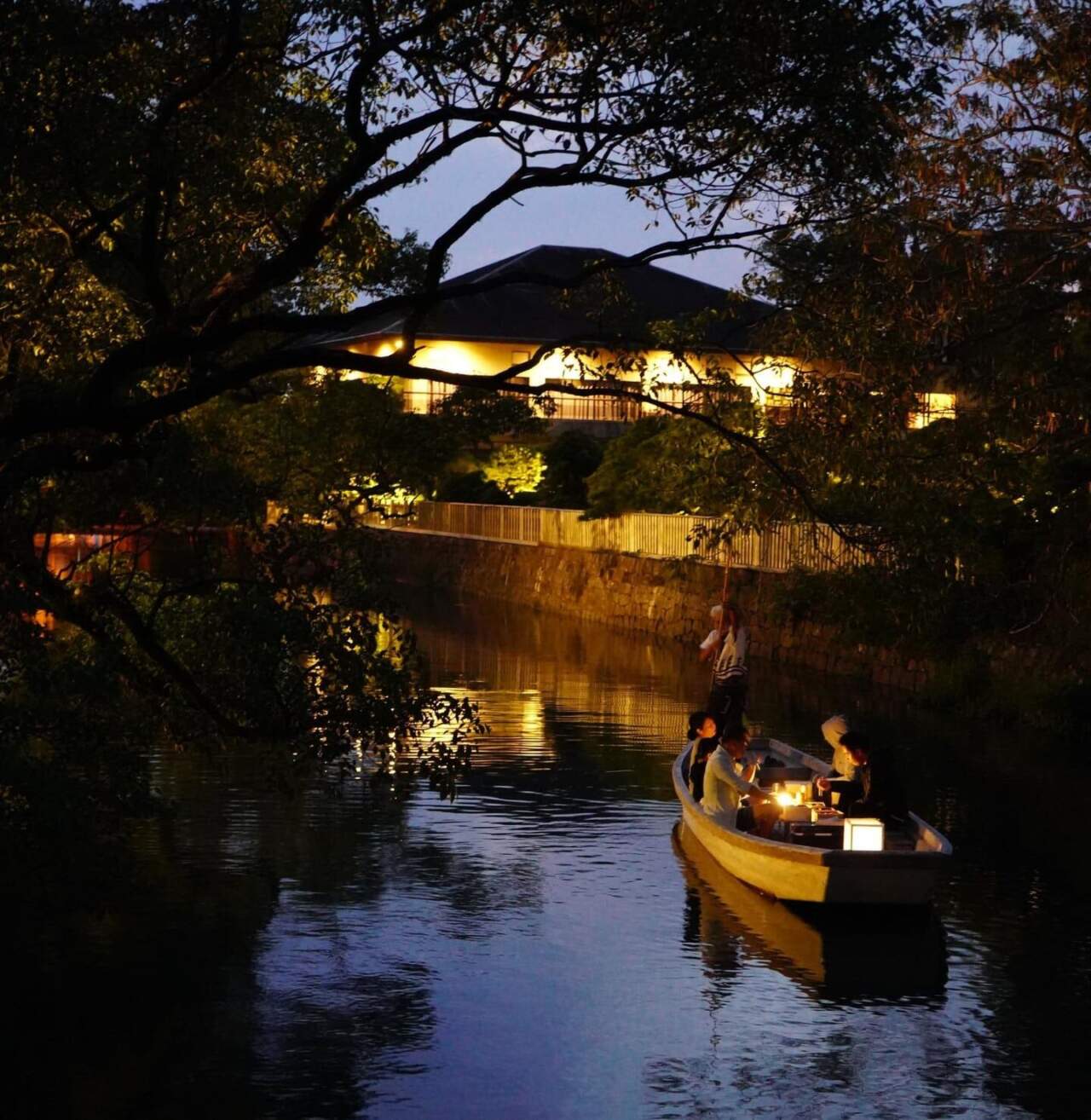
Yanagawa in July to September is quite muggy by day, so the “Akari-bune” lantern night boat that lights up after dusk is a more comfortable choice. With lanterns reflected on the water and the shadows of trees on both banks, the atmosphere is completely different from the daytime tour boats, and it is also the best time for photos.
Hakushu Kanko also offers a reservation-only night cruise running until 21:00 at the latest, and its boatmen’s singing is the best reviewed among the 7 operators, suited to couples or travelers who want a quiet night view.
In strong sun seasons you can rent a straw hat for about ¥100 for shade. Umbrellas are not allowed on board because they block the view of passengers behind. Night boats have more mosquitoes, so apply insect repellent before boarding.
Yanagawa Day Tours and Private Cars: The Easiest Option from Fukuoka
Travelers who don’t want to research transfers and reservations themselves can join a day tour from Hakata or Tenjin. Most link Dazaifu Tenmangu, the Yanagawa cruise and steamed eel rice into one full day, with a Chinese- or English-speaking guide throughout and boat tickets arranged by the agency.
Another option is a private car, suited to families with older relatives, strollers or more luggage. You can freely adjust the time at each stop to your energy, and you needn’t worry about waiting for the shuttle bus after the one-way route.
Prices for both vary by group size, vehicle type and season, with clear increases during Yanagawa Hinamatsuri and cherry blossom season, so compare prices and book early on travel platforms.
Where to Stay Near Yanagawa: Nearby Hotel Suggestions
Most people visit Yanagawa as a day trip, but staying a night shows you a completely different water-town night.

Okihata or Fukuoka City: Choosing Between Two Places to Stay
To explore Yanagawa in depth, stay at an established inn in the Okihata area or at Ohana’s lodging facilities, where you step out to the waterways and red-brick warehouses. In the evening and early morning after the day visitors leave, the water is as quiet as another city, and it is easy to get eel rice early without lining up. The drawback is very limited rooms, and during Yanagawa Hinamatsuri a room is nearly impossible to find, so book two to three months ahead.
If your trip also includes Dazaifu, shopping in Hakata or a transfer to the Shinkansen, staying around Fukuoka’s Tenjin or Hakata Station is far more flexible. Both areas have many hotels across all price ranges, and from Tenjin the Nishitetsu limited express reaches Yanagawa in about 49 minutes, which is plenty for a same-day round trip. This is especially recommended for travelers with large luggage, since large suitcases are not allowed on Yanagawa boats.
Yanagawa Cruise FAQ
Q: How much is the Yanagawa cruise? What is the adult fare?
The classic long route is about ¥1,800 to ¥2,200 for adults and the short circuit about ¥1,000 to ¥2,000, with children about half. If you also plan to visit Dazaifu, the Nishitetsu Dazaifu and Yanagawa Sightseeing Discount Ticket (adult ¥3,730, valid for 2 consecutive days) is the best value.
Q: How do I get from Fukuoka Tenjin to Yanagawa, and how long does it take?
Take the Tenjin Omuta Line limited express from Nishitetsu Fukuoka (Tenjin) Station straight to Nishitetsu Yanagawa Station, about 49 minutes for ¥960, with no transfer and no limited express ticket. From Hakata Station, take the subway to Tenjin first (about 5 minutes) and transfer.
Q: Do I need to book the Yanagawa cruise in advance?
On off-peak weekdays you can usually get a boat by buying a ticket on site, but on weekends, long holidays and during Yanagawa Hinamatsuri, book first on the boat company’s website or by phone, or you may wait over an hour on site. Some operators also give a discount for booking on their website.
Q: How long is the Yanagawa cruise? Is half a day enough?
The classic long route takes about 60 to 70 minutes and the short circuit about 30 to 40 minutes. The short route plus an Okihata stroll and an eel rice meal fits in half a day. To add Ohana and the Kitahara Hakushu Birthplace, plan a full day.
Q: What is the best season for the Yanagawa cruise?
Winter (December to February) has the kotatsu boat and summer (July to September) has evening lantern boats, each with its own appeal. Yanagawa Hinamatsuri runs from mid-February to early April, but in the mizuochi period in mid to late February the canals are drained for cleaning and only a shortened route of about 40 minutes is offered.
Q: What should I know before riding the Yanagawa cruise? Can I bring luggage?
Space on the boat is small and large suitcases are not allowed, so leave them at Nishitetsu Yanagawa Station first. The route passes under several low bridges, so duck low when the boatman instructs. Umbrellas are not allowed on board, and in summer you can rent a straw hat for shade.
Q: What should I eat in Yanagawa? What time should I watch for with eel rice?
The must-eat specialty is steamed eel rice in a steamer basket (seiro-mushi). Most restaurants close at 14:30 to 15:00 after lunch service, so schedule your boat between 10:00 and 11:00 and disembark around 12:00 to line up with lunch.