
Yufuin Onsen Town: A Relaxing Hot Spring Village at the Foot of Mt. Yufu
Yufuin is a hot spring town in Yufuin-cho, Yufu City, Oita Prefecture. The classic way to enjoy it is to stroll from Yufuin Station along Yunotsubo Street to Lake Kinrin, about 1.5 km and 20 to 25 minutes one way on foot. It is a different city from Beppu: Beppu is known for its volume of hot spring water and its “Hells” tour, while Yufuin is about town strolls and craft and general-goods shops. The two are often paired on the same Kyushu trip, but their character is completely different.
First, a note on names: “由布院 (Yufuin)” is the name of the JR Kyudai Main Line station and of the hot spring, while “湯布院 (Yufuin)” is the old town name. Both refer to the same place, and you will see both spellings online. The town sits at the foot of the twin peaks of Mt. Yufu, which rises 1,583 meters above sea level.
Yufuin suits three kinds of travelers: day-trippers who want to cover the highlights in half a day while eating along the way; photographers who want white-walled Japanese buildings framed with Mt. Yufu; and deeper travelers willing to stay overnight to see the morning mist on Lake Kinrin at dawn. We recommend arriving before noon, because many shops close between 5:00 and 5:30 p.m., and the busiest time for tour buses is 10 a.m. to 3 p.m. The earlier you arrive, the easier it is.
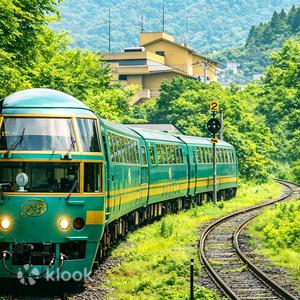

How to Get to Yufuin Onsen Town: Yufuin no Mori, Limited Express Yufu and Highway Buses
It takes about 2 hours 15 minutes from Hakata and about 1 hour from Beppu. Yufuin Station is right at the entrance to the onsen street, so you can start strolling as soon as you step off the train.
How to Get to Yufuin: Transportation at a Glance
There are not many ways to reach Yufuin, but each has trade-offs. Check the comparison table first, then decide:
| Transportation | Departure Point and Time | Practical Tips |
|---|---|---|
| JR sightseeing train “Yufuin no Mori” | About 2 hours 15 minutes from Hakata Station | All seats reserved. Tickets go on sale at 10 a.m. one month before the travel date on the JR Kyushu online booking site, and they go fast the moment sales open |
| JR Limited Express “Yufu” (including Yufu DX) | About 2 hours 20 minutes from Hakata Station | An alternative when Yufuin no Mori is sold out. More departures and easier to book |
| JR Limited Express Yufu (Kyudai Main Line) | About 1 hour from Beppu Station | The fastest way between Beppu and Yufuin, suitable if you stay one night in each place |
| Highway bus “Yufuin-go” | About 2 hours from Hakata Bus Terminal / Tenjin | A backup if you cannot get train tickets. Seat reservation required in advance |
| Kamenoi Bus | About 1 hour from Beppu Station | Fewer departures than JR; a good match with the SUNQ PASS |
Once you arrive at Yufuin Station, all the main sights are within walking distance and you do not need to transfer again. The tourist information center next to the station offers luggage storage and delivery to your hotel, at roughly ¥500 to ¥1,200 per piece depending on size. Leaving your luggage there as soon as you exit the station makes the day much easier. If you are driving, note that parking lots around Yufuin Station and Yunotsubo Street are mostly paid, and spaces are often hard to find in peak season, so arrive early or park on the outskirts and walk in.
Overall, if you are traveling in and out of Fukuoka and only have one day, a round trip on Yufuin no Mori is the easiest and most memorable choice. If you plan to combine Yufuin and Beppu into a two-day, one-night trip, the combination of the JR Limited Express Yufu and the Kamenoi Bus is the most flexible. The advantage of driving is that you can add spots such as the Sagiri-dai Observatory that public transport does not reach, but be prepared for the possibility of not finding parking in peak season. Departures drop noticeably after early evening, so always check the last service before you leave, especially if you are taking the bus.


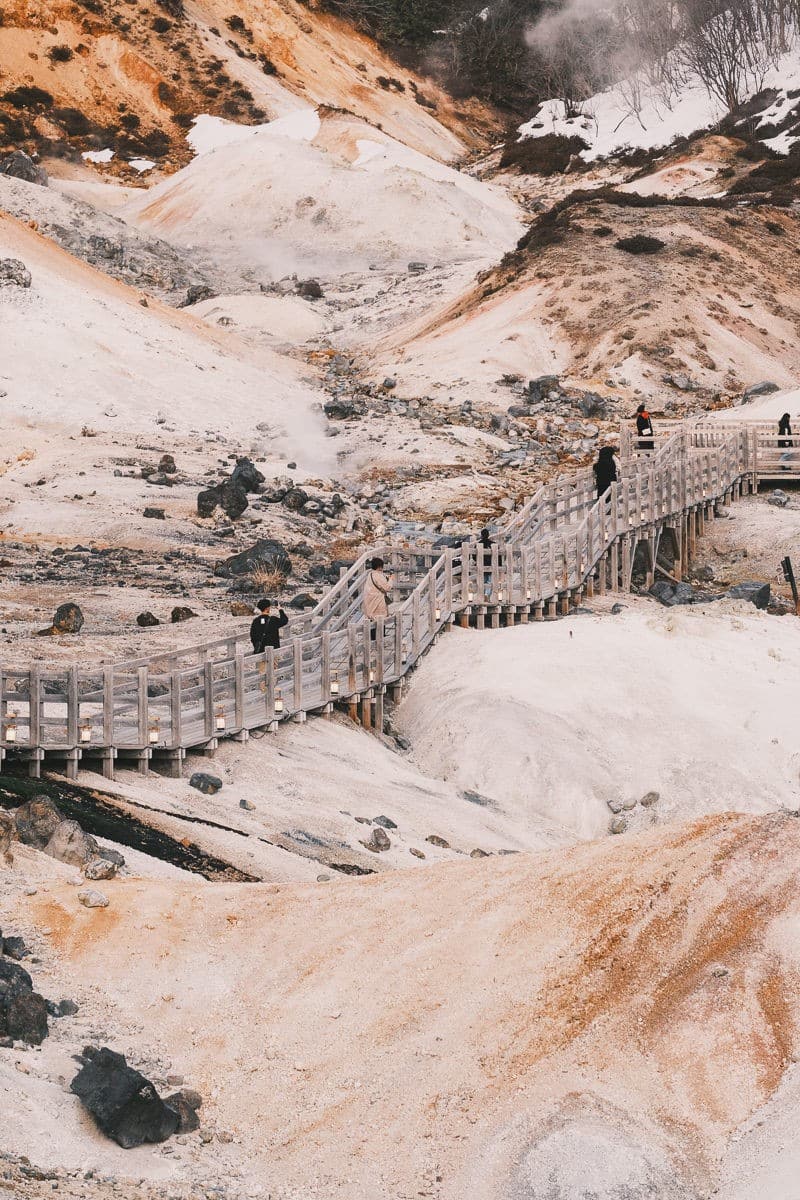
What Are the Must-See Sights in Yufuin Onsen Town? 12 Highlights Along the Walking Route
The sights below follow the walking route, from the station to Lake Kinrin, with a few extra spots that need a car at the end.
Yunotsubo Street Map and Walking Route: How to Plan the Walk from Yufuin Station to Lake Kinrin
The main walking route through Yufuin is actually quite simple. Follow the order below and you will not get lost, and there are signposts along the way. “YUFUINFO,” the official travel guide for Yufuin, Shonai and Hasama, offers a digital map, and the website of the Yunotsubo shopping association (ゆふいん湯の坪商店会) has a member map (57 shops in total, grouped into shopping, takeaway snacks, dining, lodging and more). Save it to your phone before you set out. At Yufuin Station you can also pick up a paper map in English at the tourist information center.
- Exit Yufuin Station: deal with your luggage first, then head straight toward Mt. Yufu along the “Yufumi-dori” street in front of the station.
- Shirataki Bridge: after Shirataki Bridge, turn onto Yunotsubo Street. From here begins the main shopping street of about 800 meters, where snacks, sweets and general-goods shops are concentrated.
- Yufuin Floral Village: about 100 meters along Yunotsubo Street toward Mingeimura, about a 15-minute walk from Yufuin Station. Open 9:30 a.m. to 5:30 p.m.
- Lake Kinrin: the end of Yunotsubo Street. The loop around the lake is quickly walked. On the way back, you can cut through a side lane and take the riverside path upstream along the Oita River to avoid the crowds on the main street.
Walking just from the station to the lake takes about 20 to 25 minutes one way. With snack stops, the Floral Village and photos, plan for about 3 hours. The Floral Village and most shops close in the early evening, so it is best to finish the walk before 4 p.m.
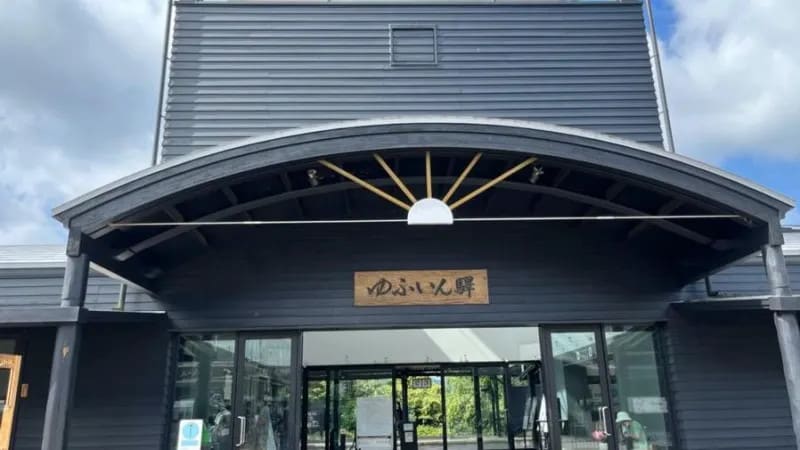
Yufuin Station: A Black Wooden Station Designed by Arata Isozaki, with a Platform Foot Bath
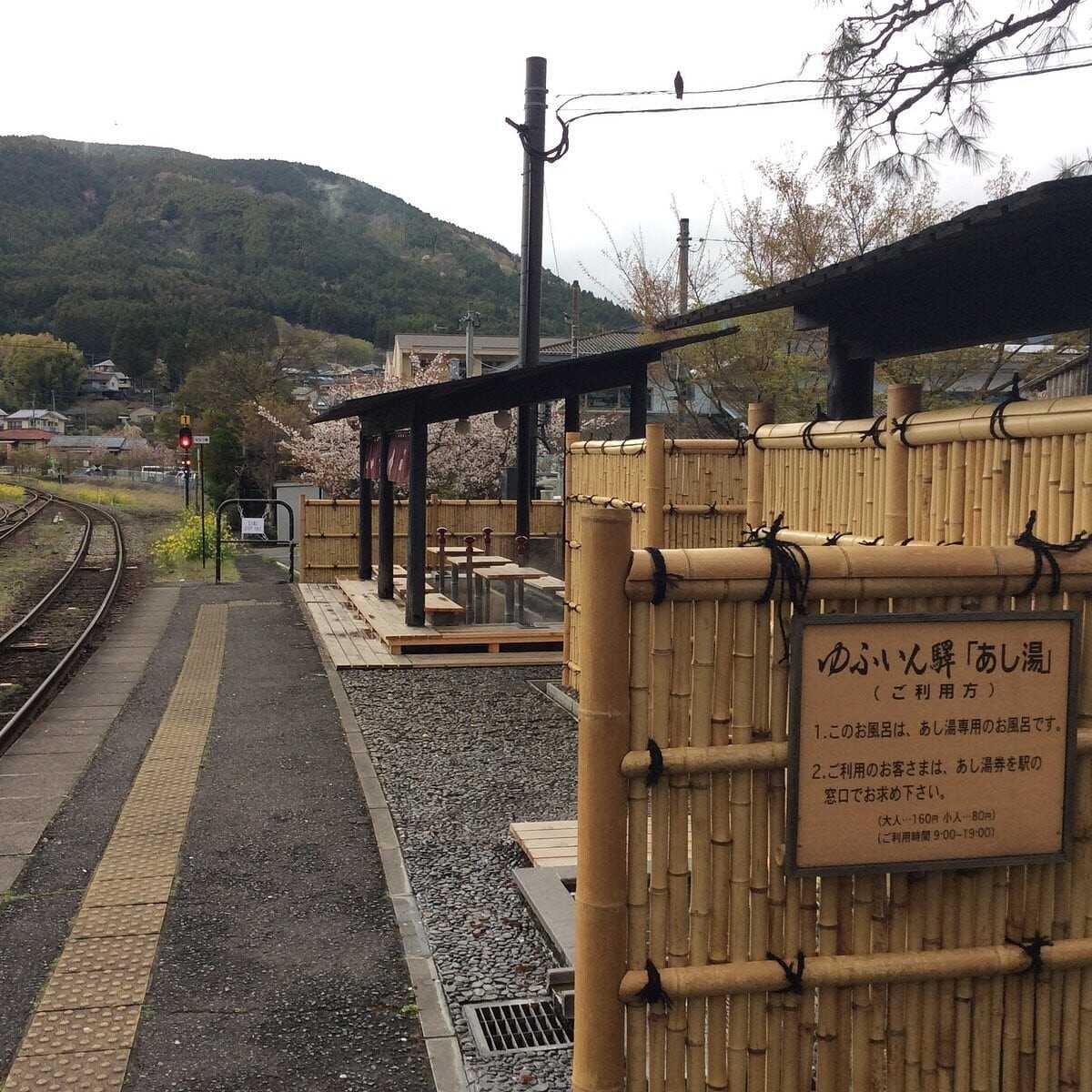
Yufuin Station is the starting point of this walk. Designed by Japanese architect Arata Isozaki, it is a rare all-black wooden building, and its high-ceilinged waiting hall makes generous use of natural light, making it a work of architecture in its own right. The station has an “ashiyu” foot bath, which requires a separate ticket that includes a dedicated towel, and it is the first stop for many travelers after they arrive.
From the end of the platform you can look straight out at the twin peaks of Mt. Yufu, a popular spot for souvenir photos on clear days. In front of the station are the departure point for the sightseeing carriage and the tourist information center, where you can store luggage and pick up maps. We suggest saving the foot bath for the return trip, when it feels even better after a full day of walking.

Yufumi-dori: The First Stretch of Avenue from the Station to the Onsen Street
The first main road after you leave Yufuin Station is Yufumi-dori, which points straight at Mt. Yufu and offers the most open views of the entire walk. Both sides are lined with Japanese confectionery shops, souvenir shops and cafes. It is a little less crowded than Yunotsubo Street further on, so it is a good place to warm up and compare prices.
This stretch is about 500 meters and takes roughly 8 minutes on foot, on a flat, easy surface. Early in the morning most shops have not yet opened, but with no crowds it is the best time to take the classic shot of Mt. Yufu at the end of the road.
Yunotsubo Street: Yufuin’s Core White-Walled Shopping Street
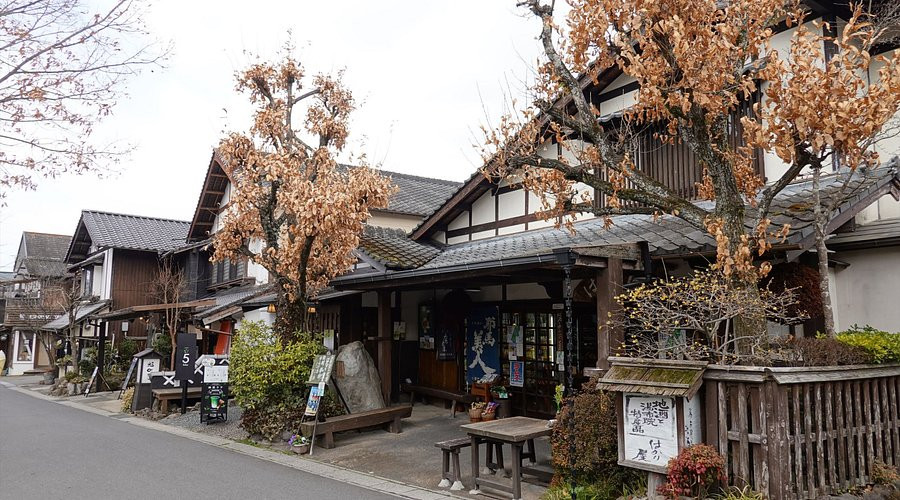
Yunotsubo Street is Yufuin’s liveliest street, lined with traditional white-walled Japanese buildings in a late-Edo style, with the majestic twin peaks of Mt. Yufu behind them. The composition looks great with almost no effort. More than fifty shops gather here, from stylish cafes and handmade goods to local-ingredient specialty shops.
The official Studio Ghibli shop “Donguri Republic,” the SNOOPY Chaya Yufuin shop and the Miffy-themed Miffy Sakura Kitchen are all on this street, must-stops for families and anime fans. The street is also home to Yufuin’s most famous street food, such as the original Kinshō Croquette shop, the legendary fresh-cream roll cake B-Speak, the half-baked cheesecake from Yufuin Milch, and Yufuin Kamameshi “Kokoro,” known for its Bungo beef kamameshi.
Note that most shops on this street close at 5:00 to 5:30 p.m., and many long-established shops accept cash only. The street is about 800 meters long, and with browsing and queuing for snacks, allow at least 1.5 hours.
How to Find Parking Near Yunotsubo Street: Driving and Parking Tips
If you drive to Yunotsubo Street, you can park in the coin-operated lots nearby. According to Times Parking search information, Times Yufuin (Kawakami 3021) is open 24 hours with about 67 spaces, and Times Yufuin Dai-2 (Kawakami 1024) has about 38 spaces and is also open around the clock. Rates differ between weekdays and holidays, with holidays higher, so check the sign at the lot for actual fees. In peak season the lots are often full around midday, so we recommend arriving before 10 a.m., parking, and then walking.
Yufuin Floral Village: An English Cotswolds-Style Fairy-Tale Village
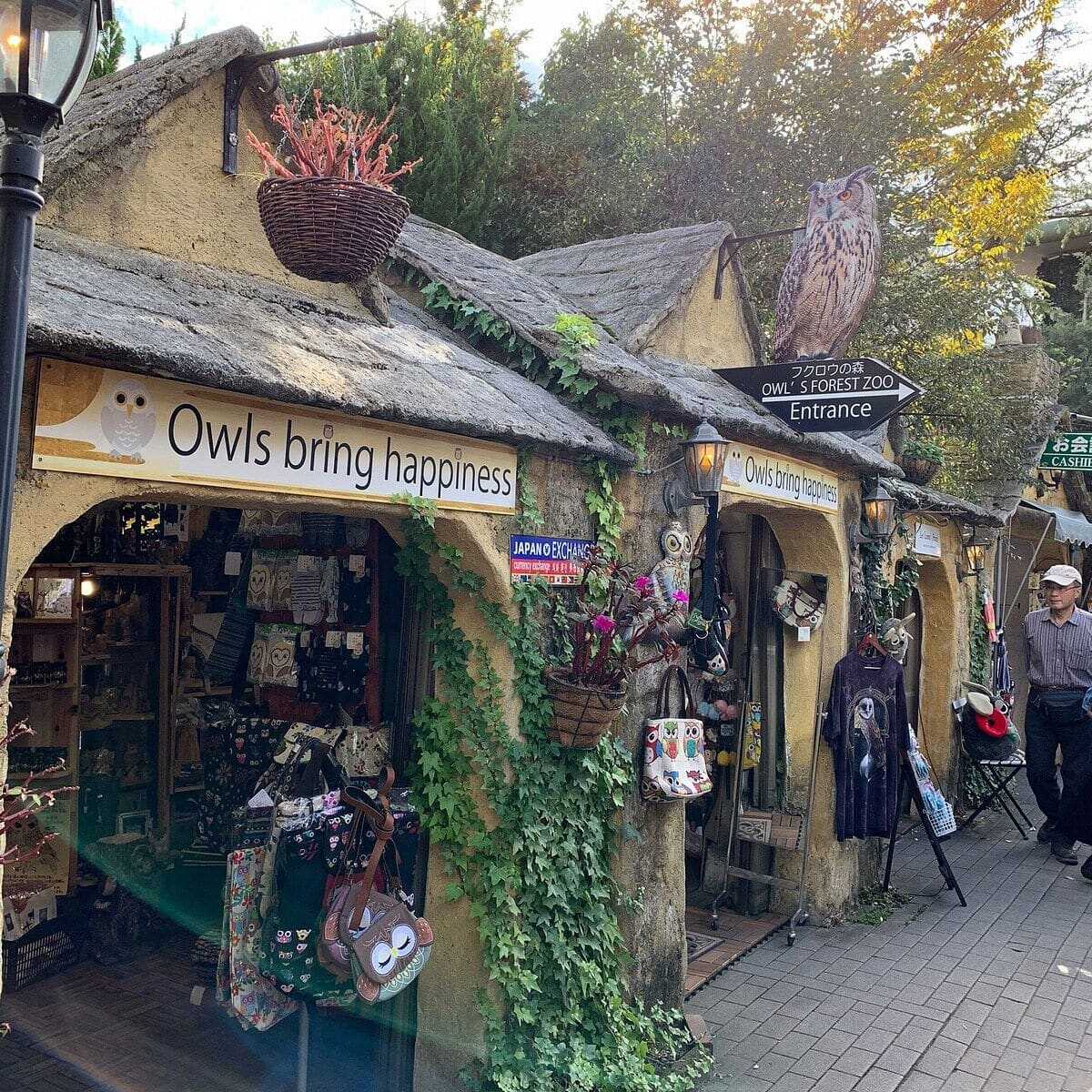
Yufuin Floral Village is located about 100 meters along Yunotsubo Street toward Mingeimura, a themed village built in the style of the English Cotswolds countryside. Bright yellow low stone houses, winding cobblestone paths and flower-covered walls make for a dreamlike scene, and admission to the village itself is free.
The village has themed shops such as Kiki’s Delivery Service and Peter Rabbit, plus indoor small-animal areas such as the Owl Forest (separate ticket required). Families with children usually spend the longest here. The area is small: just walking through takes about 30 to 40 minutes, or allow 1 hour for photos and shopping.
Because the grounds are small and the paths narrow, it is almost impossible to move during tour group peaks. We recommend going before 10 a.m. or after 3 p.m.

Lake Kinrin: A Lake Where Hot Spring and Fresh Water Both Well Up, Famed for Its Morning Mist
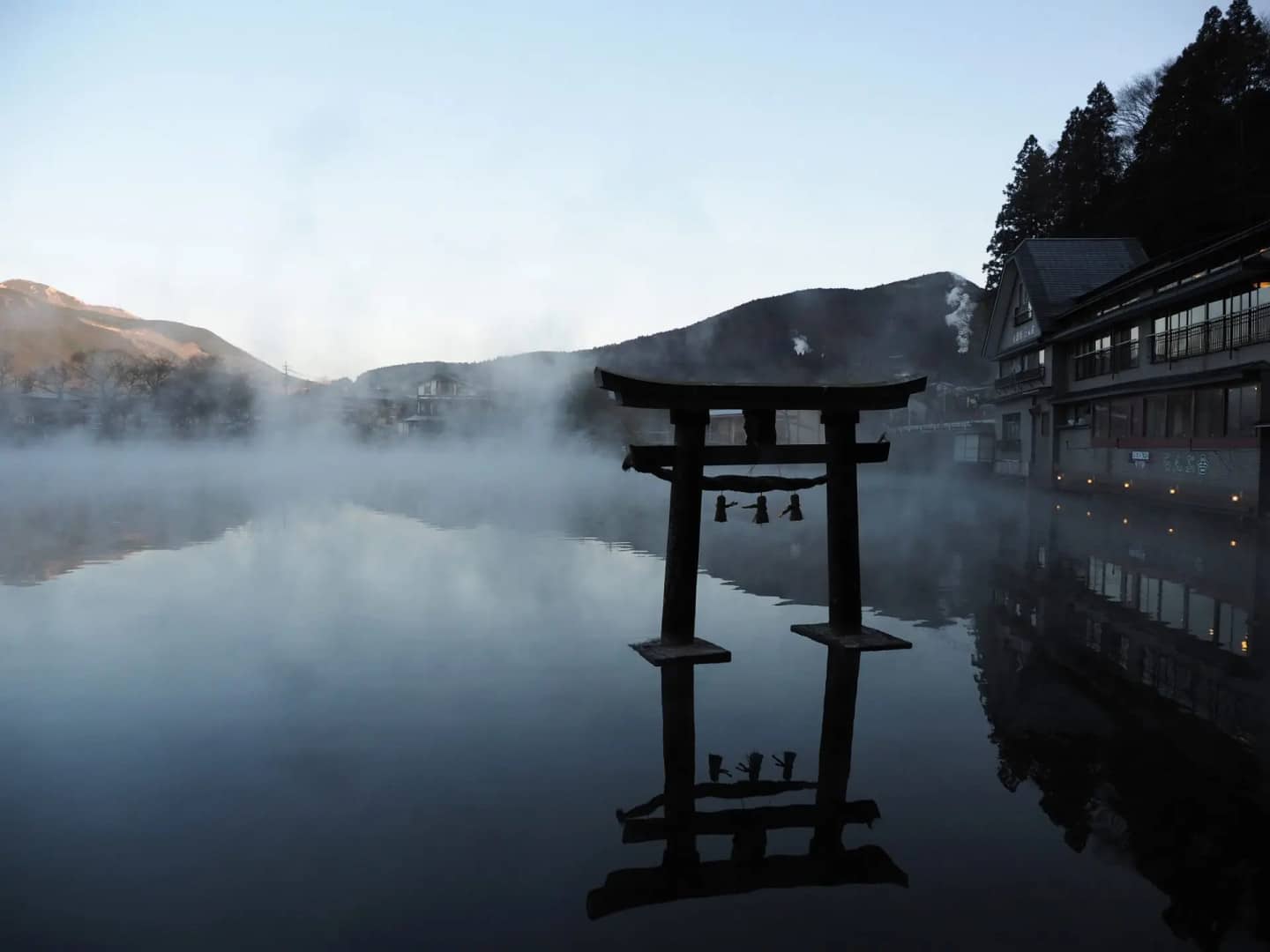
Lake Kinrin is Yufuin’s signature landmark and the end point of this walking route. What makes it special is that both hot spring water and fresh water well up from the lake bed. The meeting of warm and cold water keeps the lake relatively warm all year, and on autumn and winter mornings when the air temperature drops sharply, wisps of mist rise from the surface like a fairyland.
The lake’s name is said to come from the Meiji-era scholar Mori Kuso, who saw fish scales glinting gold in the setting sun. The path around the lake is gentle and quickly walked, with cafes and gallery spaces along the way, and Cafe La Ruche on the lakeshore is the most popular rest spot.
Seeing the morning mist requires only two conditions: autumn or winter, and a morning with a large temperature difference. That means day-trippers will almost never see it. You have to stay overnight locally and head out before dawn for a chance.
Amanosa Shrine: The Torii Gate in the Water at Lake Kinrin
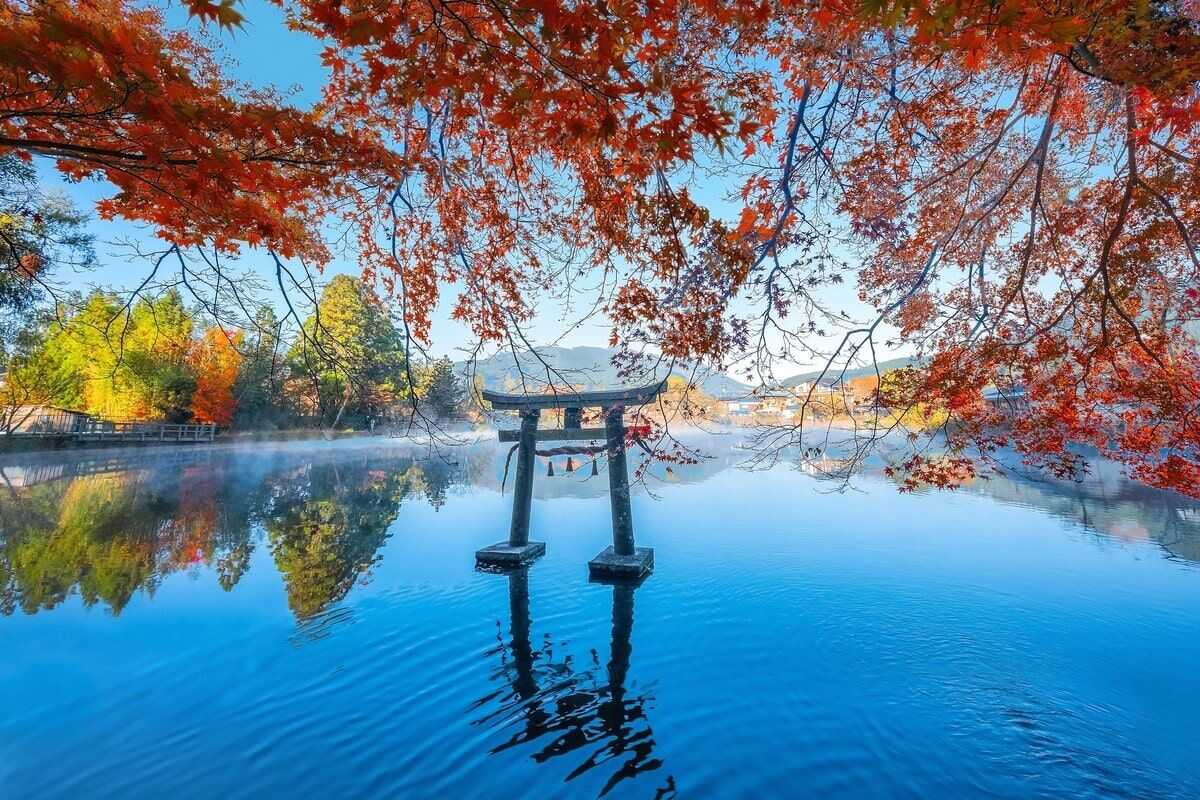
Amanosa Shrine stands on the shore of Lake Kinrin, a very small but serene shrine dedicated to Amaterasu Omikami. It is best known for the torii gate standing in the lake, half submerged in the water, which together with the trees behind and the morning mist is one of Yufuin’s most popular photo spots.
The grounds have a few old trees and a small worship hall. Few visitors come, so even in peak season the atmosphere stays relatively quiet. The shrine has no permanently staffed office, so amulets and goshuin stamps are not always available. If you want to collect them, we suggest going to Unagihime Shrine instead.
Allow about 10 to 15 minutes. Since it is right on the lakeside path, you can simply step in while walking around Lake Kinrin, with no need to set aside extra time.
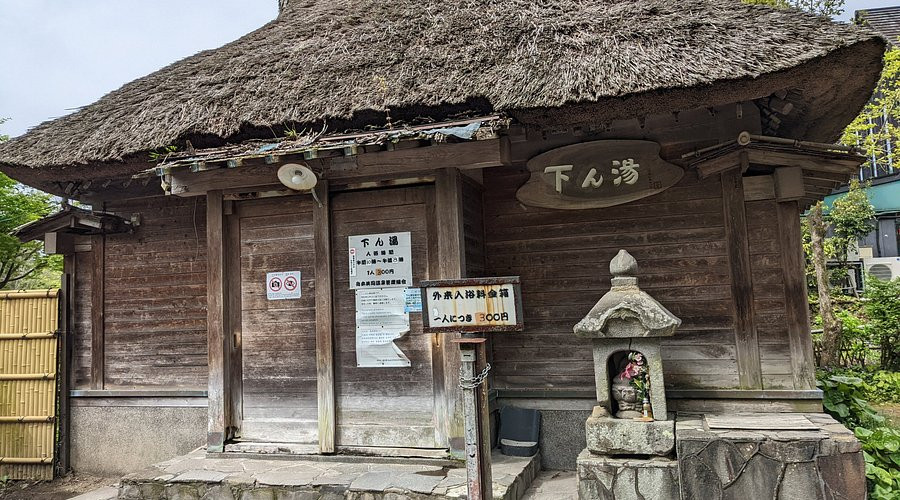
Shitan-yu: A Thatched-Roof Public Bath on the Shore of Lake Kinrin
Shitan-yu (下ん湯) is a public communal bath right next to Lake Kinrin. Its small wooden building with a thatched roof has real character, and it is one of the few outdoor baths in Yufuin that keeps its traditional form. You pay by dropping the fee into a box at the entrance, with no counter and no staff.
Inside there is an indoor bath and an open-air bath, fed by the source water that wells up from the lake bed, making for a very unusual bathing experience. Note that it is a mixed-gender bath, and the changing area is very simple with almost no partitions, so travelers sensitive about privacy should be prepared.
No towels or bath amenities are provided, so bring your own. Allow about 20 to 30 minutes. It suits travelers who want to experience the most original hot spring culture.
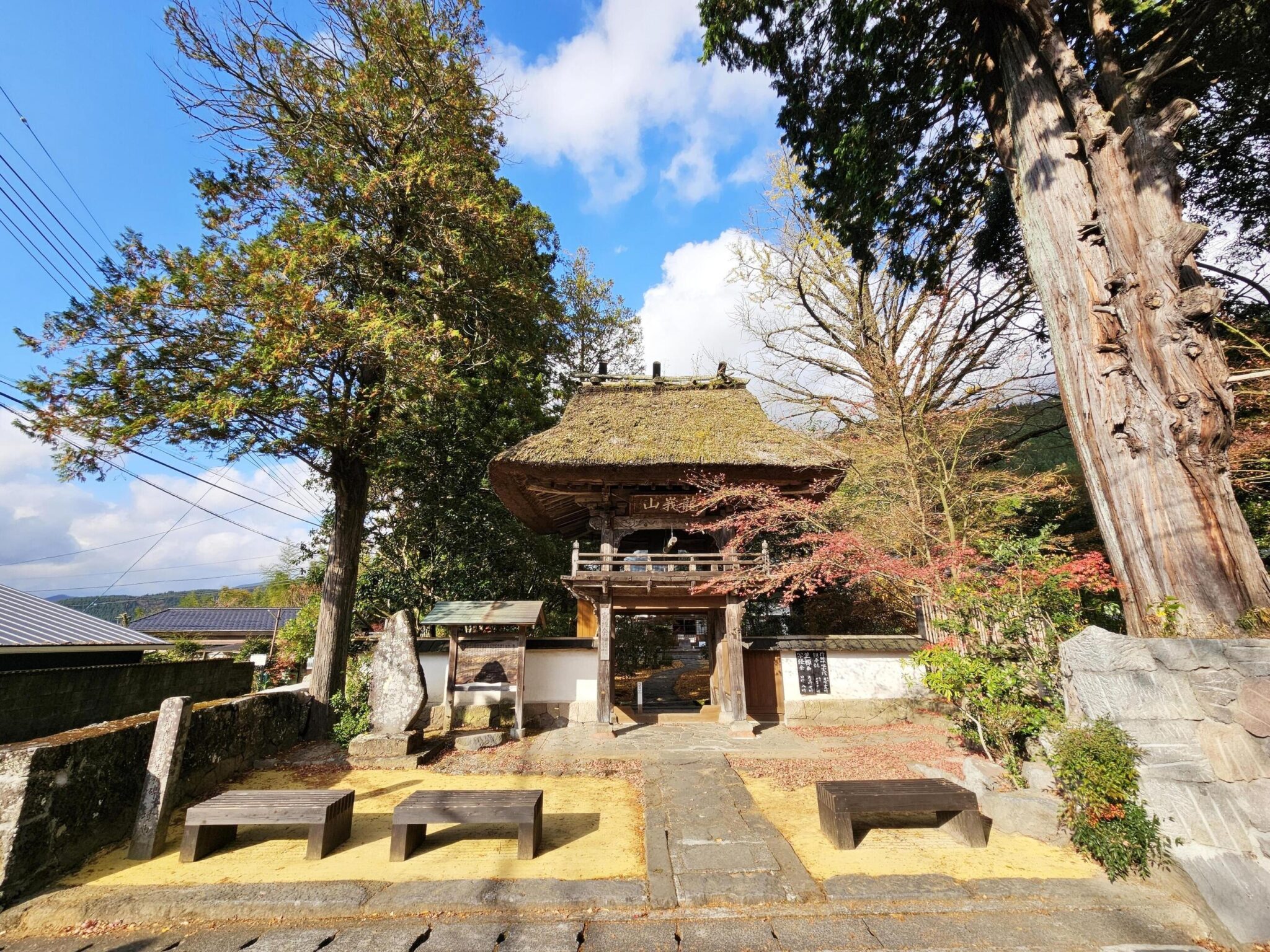
Butsuzan-ji: An Old Rinzai Temple at the Foot of Mt. Yufu
Butsuzan-ji is an old temple of the Myoshin-ji branch of the Rinzai school at the foot of Mt. Yufu. It is only a short distance from lively Yunotsubo Street, yet the atmosphere is completely different. The grounds are known for a thatched-roof gate and a tidy Japanese garden, surrounded by tall cedars, so quiet that you can hear birdsong.
Its best-known season is autumn, when the red leaves in the garden set off the thatched roofs, a spot photographers come for. Goshuin stamps are available at the temple, but note the service hours, as outside peak season you may occasionally find no one there.
It takes about 15 minutes on foot from Yunotsubo Street, and a visit lasts 20 to 30 minutes. It is well worth the detour for travelers who want to avoid the crowds and see another side of Yufuin.

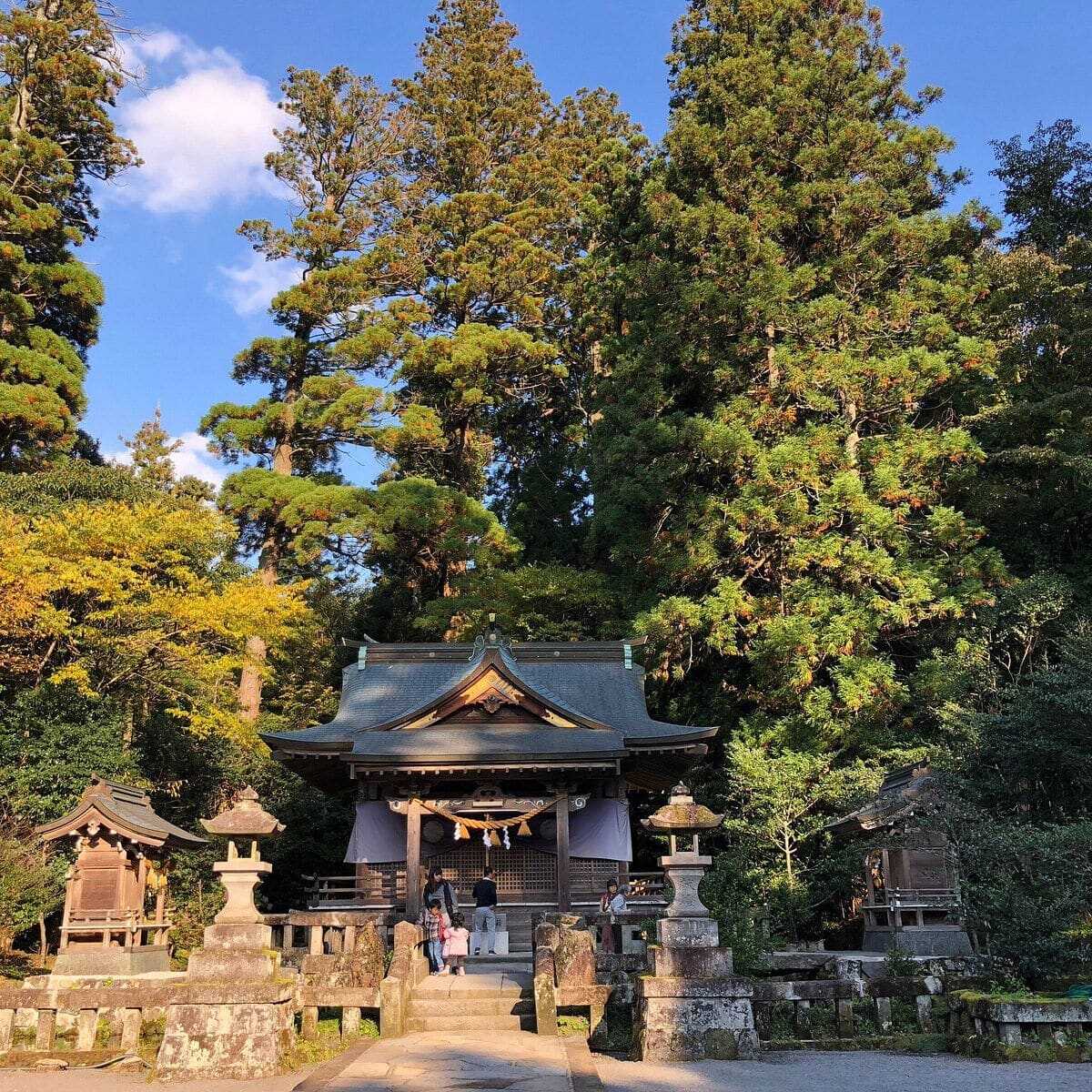
Unagihime Shrine: Yufuin’s Spiritual Center Among Towering Cedars
Unagihime Shrine is the local spiritual center of Yufuin, with a long history, and its enshrined deity Unagihime is linked to the legend of the settlement of Mt. Yufu. The most striking thing about the approach is the enormous cedars standing straight on both sides, with light filtering through the branches and a solemn atmosphere.
The grounds preserve several sacred trees hundreds of years old, which are also the shrine’s most representative sight. It has a shrine office where you can get amulets and goshuin stamps, making it the best shrine in the Yufuin area for collecting goshuin.
The sightseeing carriage route passes through this area. If you are not taking the carriage, it is about a 20-minute walk from Yufuin Station. We suggest staying about 20 minutes; the light is best early in the morning or in the evening.
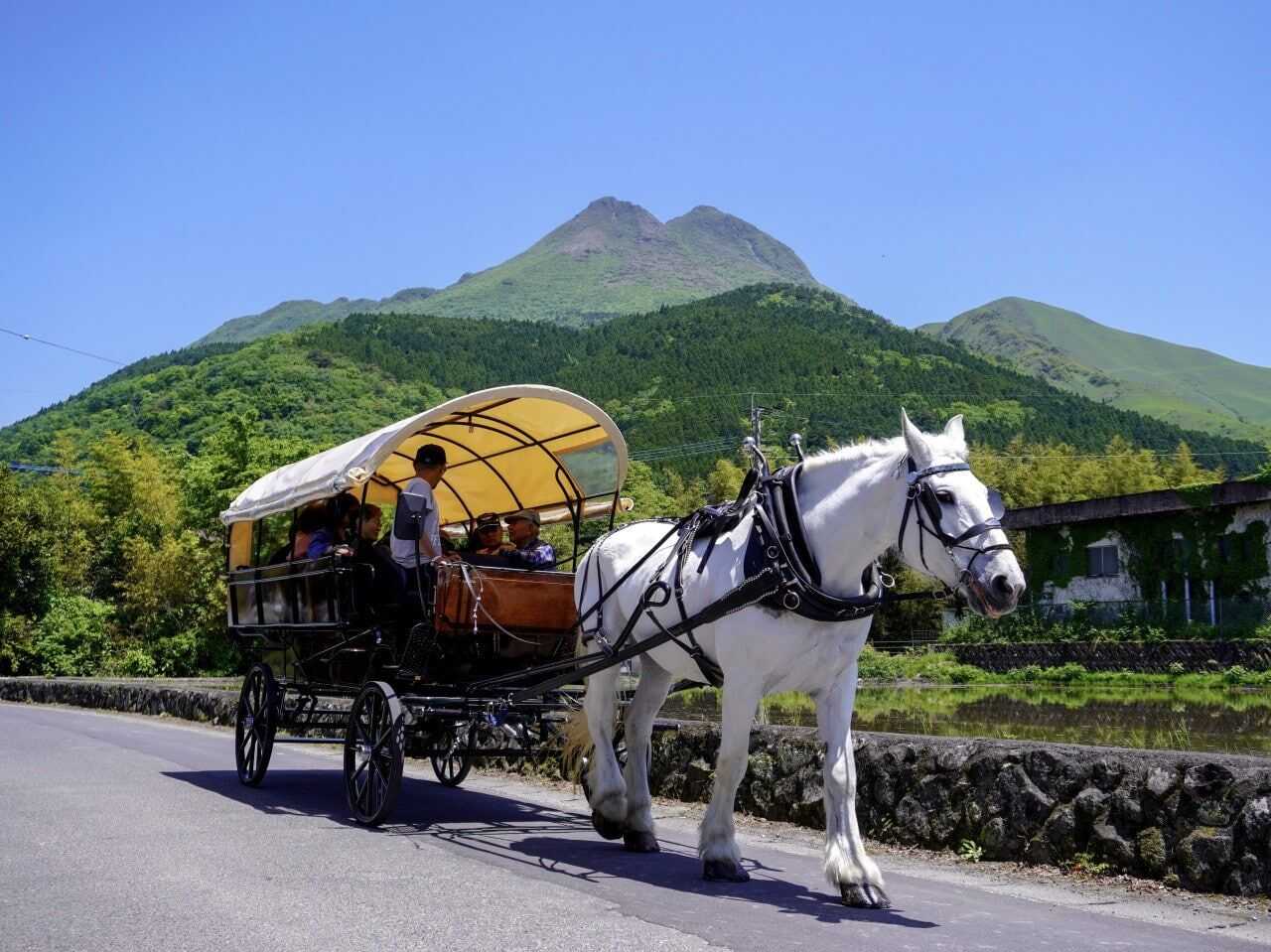
Yufuin Tsuji Carriage: A Retro Sightseeing Carriage Departing from the Station
The Yufuin Tsuji Carriage is a sightseeing carriage that departs from in front of Yufuin Station, pulled by real horses, and is one of Yufuin’s most representative experiences. The route circles country roads around Butsuzan-ji and Unagihime Shrine over about 50 minutes, and the driver explains local lore in Japanese along the way.
Tickets are handled on the day at the Yufuin Onsen Tourist Information Office in front of the station. In peak season places often fill up early, so we recommend registering as soon as you arrive. It does not operate from early January to March 1, and may also be suspended in the rain.
Rocking slowly past fields and Mt. Yufu in a wooden carriage offers a view you cannot get on foot, and it is especially good for travelers with elderly relatives or children.
Sagiri-dai Observatory: The Best Spot to Overlook the Morning Mist over the Yufuin Basin
Sagiri-dai Observatory is on the Yamanami Highway between Yufuin and Beppu, and is the best spot to overlook the whole Yufuin basin and Mt. Yufu. On autumn and winter mornings the basin is completely filled with thick mist, with only the summit of Mt. Yufu showing, forming a sea-of-clouds scene, which is where the name “Sagiri-dai” (mist platform) comes from.
The observatory has a parking lot and a simple viewing platform, and 15 to 20 minutes is enough. Kamenoi Bus timings are hard to match with the morning mist, so in practice going by car, taxi or chartered car is the most convenient, and it is the only spot in this route we recommend driving to.
In autumn this mountain road is also a well-known foliage route. If you already have a rental car, driving up on the way from Yufuin to Beppu involves almost no detour.

Kyushu Yufuin Mingeimura: A Craft Village of Old Farmhouses and Hands-On Workshops
Kyushu Yufuin Mingeimura relocates and restores old farmhouses from around Kyushu on a single site, forming a craft settlement you can walk into. The village has several workshops that display and sell traditional crafts such as pottery, glass, washi paper and indigo dyeing, and some workshops offer paid hands-on experiences.
For travelers who want to take home a one-of-a-kind souvenir, this place has more depth than the shops on Yunotsubo Street. It is about a 14-minute walk from Yufuin Station, and a full visit takes about 1 to 1.5 hours.
It is slightly off the main walking route, which suits travelers with a looser schedule or those looking for an indoor stop when it rains. In the rain, the old farmhouses and stone paths actually have even more atmosphere.
How Much Does a Trip to Yufuin Onsen Town Cost? Tickets, Experiences and Passes
Yufuin itself has no entrance fee, so the main costs are transport tickets and experiences, listed below in order of usefulness.
Yufuin no Mori Reserved-Seat Ticket: A Green Sightseeing Train Direct from Hakata
Yufuin no Mori is the most representative sightseeing train between Hakata and Yufuin. Its deep green retro body, wooden interior and raised viewing seats make the ride of over two hours part of the trip itself. The train has a sales counter offering limited-edition bento boxes, cakes from Yufuin Milch and merchandise, and the conductor also announces the scenery along certain stretches.
The ride from Hakata Station takes about 2 hours 15 minutes, and all seats are reserved, with no unreserved seating. Tickets go on sale at 10 a.m. one month before the travel date on the JR Kyushu online booking system, and popular dates often sell out the moment they open, so we suggest registering an account in advance and setting an alarm to book on time.
We recommend it because it solves both transportation and experience: you can cross Kyushu’s mountains without driving, and the forest and valley scenery along the way is something you do not see on an ordinary limited express. If you cannot get a ticket, the more frequent JR Limited Express “Yufu” will also get you there, just without the atmosphere of a sightseeing train.

JR Kyushu Rail Pass, Northern Kyushu Version: A Rail Ticket Linking Hakata, Yufuin and Beppu
The JR Kyushu Rail Pass, Northern Kyushu version, allows unlimited rides during its validity on Shinkansen (some sections) and limited express trains within northern Kyushu, including the Kyudai Main Line limited express “Yufu” and “Yufuin no Mori” to and from Yufuin. It comes in two durations, a 3-day pass and a 5-day pass, and suits itineraries built mainly around rail.
For the classic Kyushu route in and out of Hakata, linking Yufuin and Beppu, the fares for Hakata to Yufuin and back plus Yufuin to Beppu and back already come close to the price of the pass, so the break-even point is not high. Adding a section to Kumamoto or Nagasaki makes the value even clearer.
There are two points on usage. First, riding the all-reserved Yufuin no Mori still requires a separate seat reservation, and seats still have to be fought for. Second, we recommend buying an exchange voucher through an overseas channel before departure, since it is usually cheaper than buying on the spot after arriving in Japan, then exchanging it for the physical ticket at a JR Green Window or designated ticket machine after you arrive.
SUNQ PASS Kyushu Bus Pass: Explore Hot Spring Regions Without Renting a Car
The SUNQ PASS is an all-you-can-ride pass for highway buses and local route buses in Kyushu, available in versions by coverage area such as All Kyushu and Northern Kyushu, with options of 3 or 4 days. It is especially useful for travelers who do not plan to rent a car but want to link Yufuin, Beppu and even Kurokawa Onsen.
The “Yufuin-go” highway bus from Hakata to Yufuin, the Kamenoi Bus between Beppu and Yufuin, and the Kyushu Odan Bus toward Aso and Kurokawa are mostly covered. If you bought these routes as single tickets, the total could easily exceed the price of the pass itself.
Note that some popular long-distance routes are fully reserved-seat, so even with a pass you must reserve in advance, especially over long holiday weekends. After purchase, we recommend checking the bus operator’s website to confirm which segments need reservations and making all of them at once, so you do not arrive at the stop on the day to find it full.
Yufuin Tsuji Carriage Ticket: A Retro Carriage Tour of About 50 Minutes
The Yufuin Tsuji Carriage is the most recognizable experience in this hot spring town. A wooden carriage pulled by real horses departs from in front of Yufuin Station and loops through country roads around Butsuzan-ji and Unagihime Shrine over about 50 minutes. For the fare, refer to what is posted on the day at the Yufuin Onsen Tourist Information Office. The driver explains local lore and the legend of Mt. Yufu in Japanese along the way.
The biggest highlight is the speed: the carriage moves slowly, and the fields, irrigation channels and the twin peaks of Mt. Yufu pass at a pace you cannot get on foot, one frame at a time. It suits travelers with elderly relatives or children, who need not worry about walking.
How tickets are sold is the thing to watch most for this experience. Tickets are handled on the day at the Yufuin Onsen Tourist Information Office in front of the station, with a maximum of 15 departures a day, and in peak season places often fill up early. We recommend registering as soon as you arrive in Yufuin. It does not operate from early January to March 1.
Yufuin Station Foot Bath: Soak Your Feet Beside the Platform While You Wait
Beside the platform at Yufuin Station is a foot bath, one of the few hot spring facilities in Japan located inside a train station. A separate ticket is required, and the price includes a dedicated towel you can take with you. You can buy it at the window inside the station with no reservation needed.
The foot bath space is small but in a superb location: as you soak, you can watch the platform and Mt. Yufu in the distance, with trains pulling in right in front of you. For day-trippers who have no chance to stay at a hot spring inn, it is the most convenient way to experience Yufuin’s spring water.
The best time to use it is while waiting for your train home: after finishing the 1.5 km walk and when your feet are already sore, ten-odd minutes of soaking gives the clearest relief. Plan on 20 to 30 minutes, and keep an eye on your train time so you do not soak too long and miss it.
Luggage Storage and Delivery at Yufuin Station: Free Your Hands for Sightseeing
The tourist information center next to Yufuin Station offers luggage storage, and through “Yufuin Chikki” you can also have luggage delivered directly to partner hotels in town. Temporary storage costs about ¥500 to ¥800 per piece, and delivery to a hotel about ¥600 to ¥1,200 per piece, both charged by size. For travelers arriving by train from Hakata or Beppu with a suitcase, this is the first thing to do on arrival.
The walking route in Yufuin is about 1.5 km long, and parts of the later section of Yunotsubo Street and around Lake Kinrin have cobblestone and gravel surfaces, so dragging a large suitcase is tiring and hard to maneuver when it is crowded. Get your luggage taken care of first and the sightseeing experience will be completely different.
The center also provides English sightseeing maps and information on the carriage and various activities, and can help confirm the day’s hotel shuttle times. The delivery service has a cutoff time, and usually must be arranged before noon to guarantee same-day delivery, so please check the rules on the day when you arrive.
Where to Stay Near Yufuin Onsen Town: Recommended Lodging Areas for Your Trip
Yufuin’s best experiences happen early in the morning and in the evening, so staying one night is almost essential.

Is a Night in Yufuin Worth It? How to Choose Among Three Lodging Areas
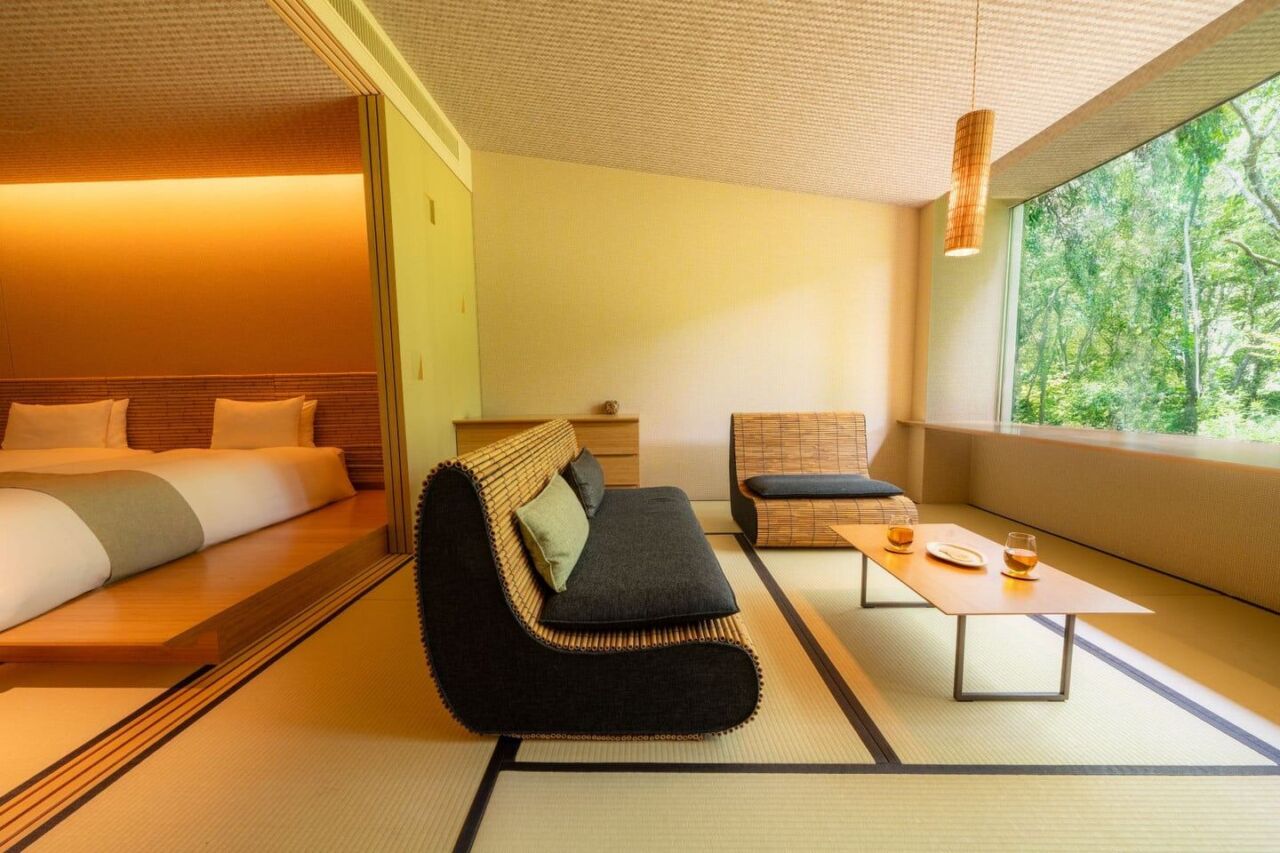
Yufuin’s two most beautiful moments come before the tour buses arrive and after they leave: the morning mist on Lake Kinrin at dawn, and Yunotsubo Street quieting down in the evening once the shops close. If your schedule allows, we recommend staying one night.
Lodging areas fall roughly into three types. The first is around Yufuin Station, the easiest for hauling luggage, suited to travelers who come by train and do not rent a car. The second is between Yunotsubo Street and Lake Kinrin, the prime location, where you can walk to see the morning mist in just a few minutes, but prices and booking difficulty are also the highest. The third is the detached-style inns scattered at the foot of Mt. Yufu, quiet and private, and mostly requiring a shuttle or a car.
Yufuin Booking Timing and Lodging Tips
Yufuin has few rooms, and during the autumn foliage season and Japanese holiday weekends they often fill up early, so book as soon as your plans are set. For rooms with a private bath or open-air bath, book even earlier. Most inns focus on stays with two meals, so please check whether your plan includes dinner when booking.
Some roads in Yufuin are gravel, which makes hauling a large suitcase harder. If you stay far from the station, check with the inn first whether there is a shuttle. Bathing tax and other charges, and payment methods, vary by inn, so confirm before checkout and have yen in cash ready.
Yufuin Onsen Town FAQ
Q: How long does it take to see Yufuin Onsen Town?
From Yufuin Station along Yunotsubo Street to Lake Kinrin is about 1.5 km in total, 20 to 25 minutes one way on foot. With browsing, queuing for snacks and photos, allow at least 3 hours, and if you want to add the Floral Village and Mingeimura, plan on half a day or more.
Q: How do I buy Yufuin no Mori tickets? When do they go on sale?
Yufuin no Mori is all reserved seating, and tickets go on sale at 10 a.m. one month before the travel date on the JR Kyushu online booking system. Popular dates often sell out the moment they open, so be ready on time; if you cannot get a ticket, take the more frequent Limited Express “Yufu” instead.
Q: What time do shops in Yufuin close?
Most snack and general-goods shops on Yunotsubo Street close at 5:00 to 5:30 p.m., much earlier than in typical Japanese tourist areas. If you plan a day trip, be sure to arrive before noon, since after early evening the street has almost only hotel guests and a few restaurants open.
Q: In what season can you see the morning mist at Lake Kinrin?
The morning mist mostly appears on autumn and winter mornings with a large difference between air and water temperature, and is usually most visible within an hour after sunrise. Day-trippers almost never see it, so you need to stay overnight in Yufuin and head to the lakeshore before dawn.
Q: Are Yufuin and Beppu the same place?
No. Yufuin is in Yufuin-cho, Yufu City, Oita Prefecture, while Beppu is the separate city of Beppu, about 1 hour apart on the JR Limited Express Yufu. Beppu is known for its volume of hot spring water and its Hells tour, while Yufuin offers town strolls and craft and general goods, and the character is completely different.
Q: Do I need cash in Yufuin?
Yes. Although many newer shops now accept electronic payments, traditional snack shops, the carriage ticket office and popular names such as Kamameshi “Kokoro” still take cash only, and hot spring inns also charge a bathing tax of about ¥150 to ¥250 per person per night at checkout.
Q: When is Yufuin least crowded?
From 10 a.m. to 3 p.m. is the peak for tour buses from Fukuoka and Beppu, and the streets are very crowded. We recommend arriving before 10 a.m., or staying overnight locally and scheduling the main sightseeing for early morning and evening.