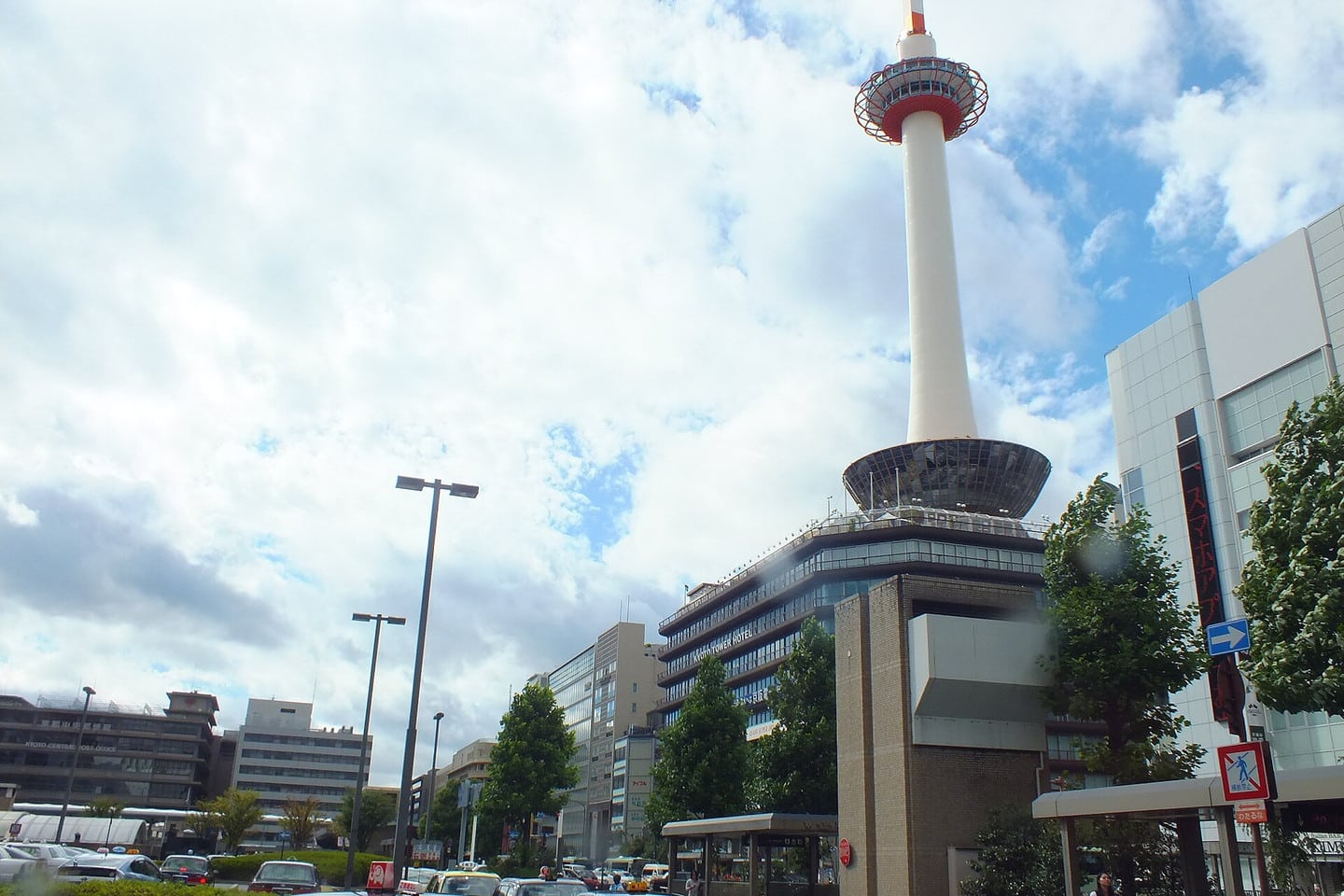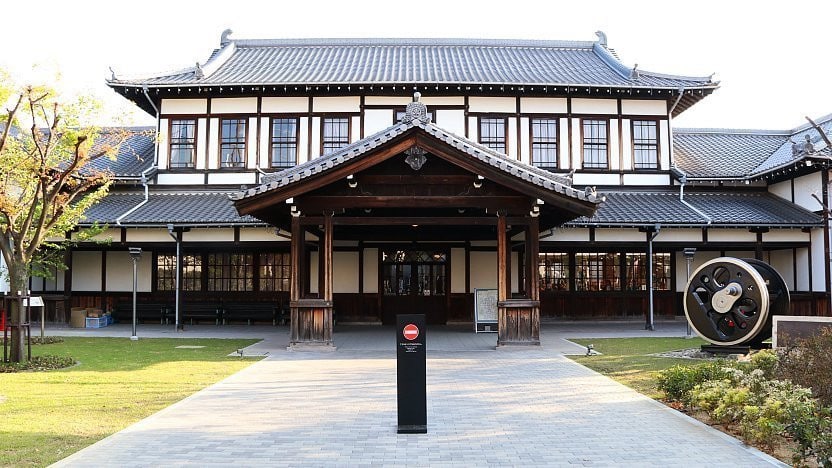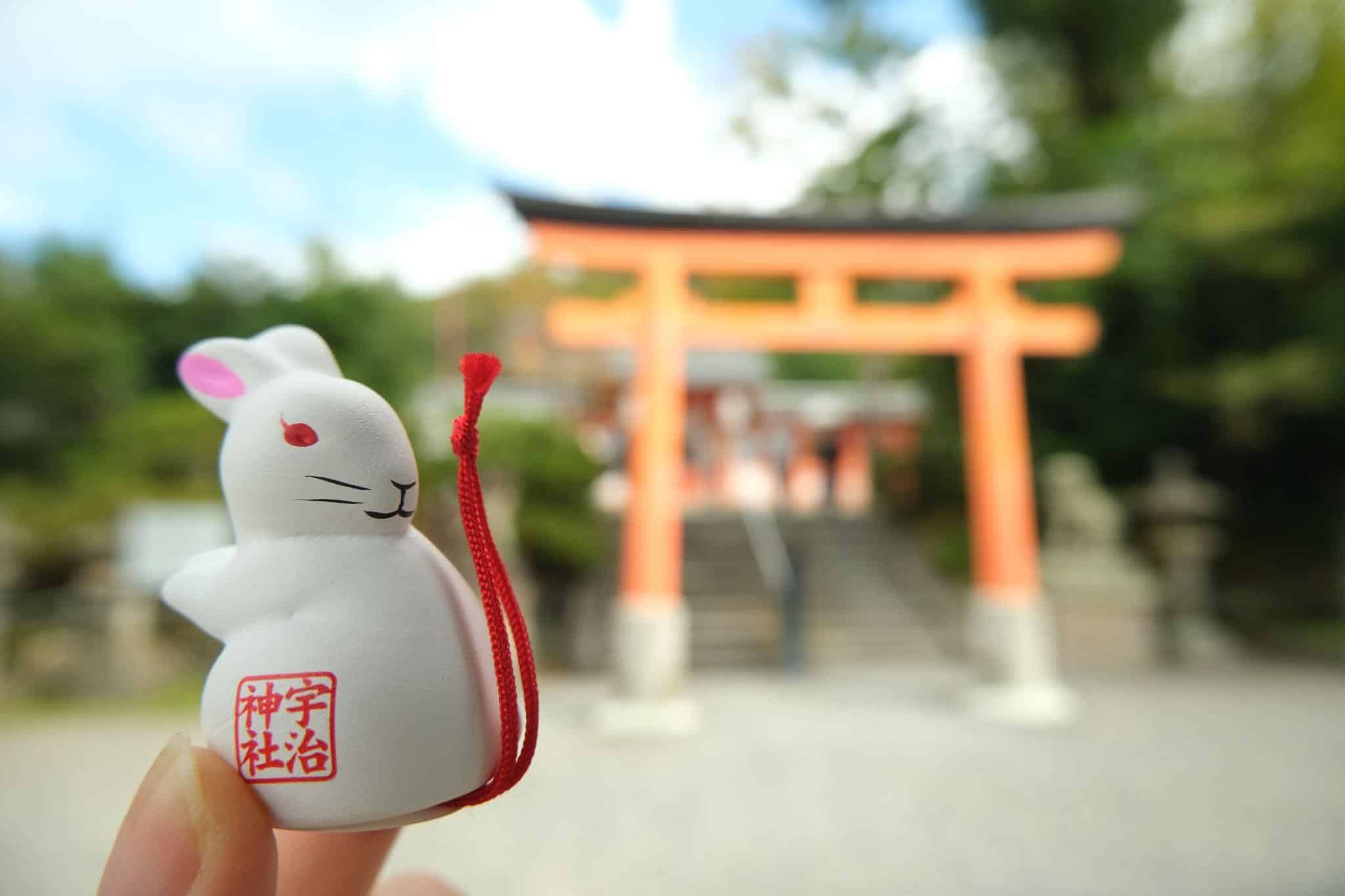

Kyoto Summer 2026 Travel Guide: Gion Matsuri and What to Wear: A Festival Trip in the Basin’s Muggy Heat
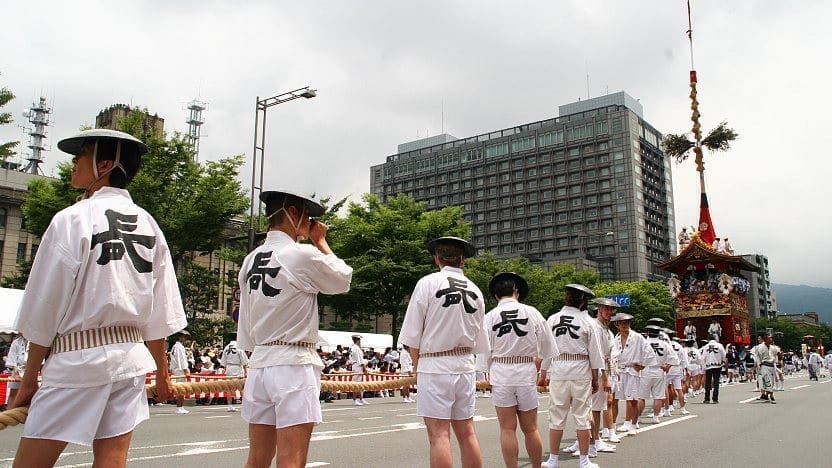
Kyoto’s summer centers on July’s Gion Matsuri. Temperatures often top 35°C with high humidity, so bring breathable clothing plus sun and rain gear to enjoy your trip fully.
The 2026 Gion Matsuri wrapped up in July. The schedule in this article gives the dates actually held in 2026 (Saki Matsuri Yamaboko Parade on July 17, Ato Matsuri Yamaboko Parade on July 24), which you can use as a reference when planning your next visit; before you go, rely on the latest announcements from the Kyoto City Tourism Association.
Kyoto Summer Climate Overview: Basin-Type Extreme Heat and High Humidity
In summer (July-September), the Kyoto Basin often tops 35°C with humidity above 70%, feeling like a steam room, and it is one of Japan’s three hottest cities. The rainy season runs from June to the end of mid-July, with localized heavy rain likely; after it ends, the sun beats down, and sudden afternoon thunderstorms (yudachi) are common, so carry light rain gear. Although September is autumn, there is still lingering heat in the daytime, around 30°C, with a growing gap between day and night, so dress in layers. July-August require the most heat precautions, and outdoor activities are best concentrated in the early morning and evening.
Gion Matsuri: A Core Place Among Japan’s Three Great Festivals
Gion Matsuri is the regular festival of Kyoto’s Yasaka Shrine, ranked with Osaka’s Tenjin Matsuri and Tokyo’s Kanda Matsuri as one of Japan’s three great festivals. It originated in the Heian period as the “Goryo-e” ritual to pray for the end of plague, has more than a thousand years of history, runs through all of July, and is the biggest highlight of Kyoto summer travel. During the festival, streets in the city center are closed and traditional craft floats called “yamaboko” parade through, showing Kyoto’s artisan craftsmanship and religious culture.
The festival’s core area is Yasaka Shrine and the Shijo-dori and Karasuma-dori area. Transport is convenient: take the Hankyu Railway to “Karasuma Station” or the Karasuma Subway Line to “Shijo Station” and walk from there.
What to Wear and Pack
We recommend cotton-linen or moisture-wicking fabrics such as Uniqlo AIRism, paired with a UV-blocking sun-and-rain umbrella, sunscreen and a hat, since 20 minutes under Kyoto’s strong sun can cause sunburn. Because buses and department stores are strongly air-conditioned, carry a thin sun-protection jacket to balance indoor and outdoor temperatures, and bring insect repellent for summer mosquitoes.
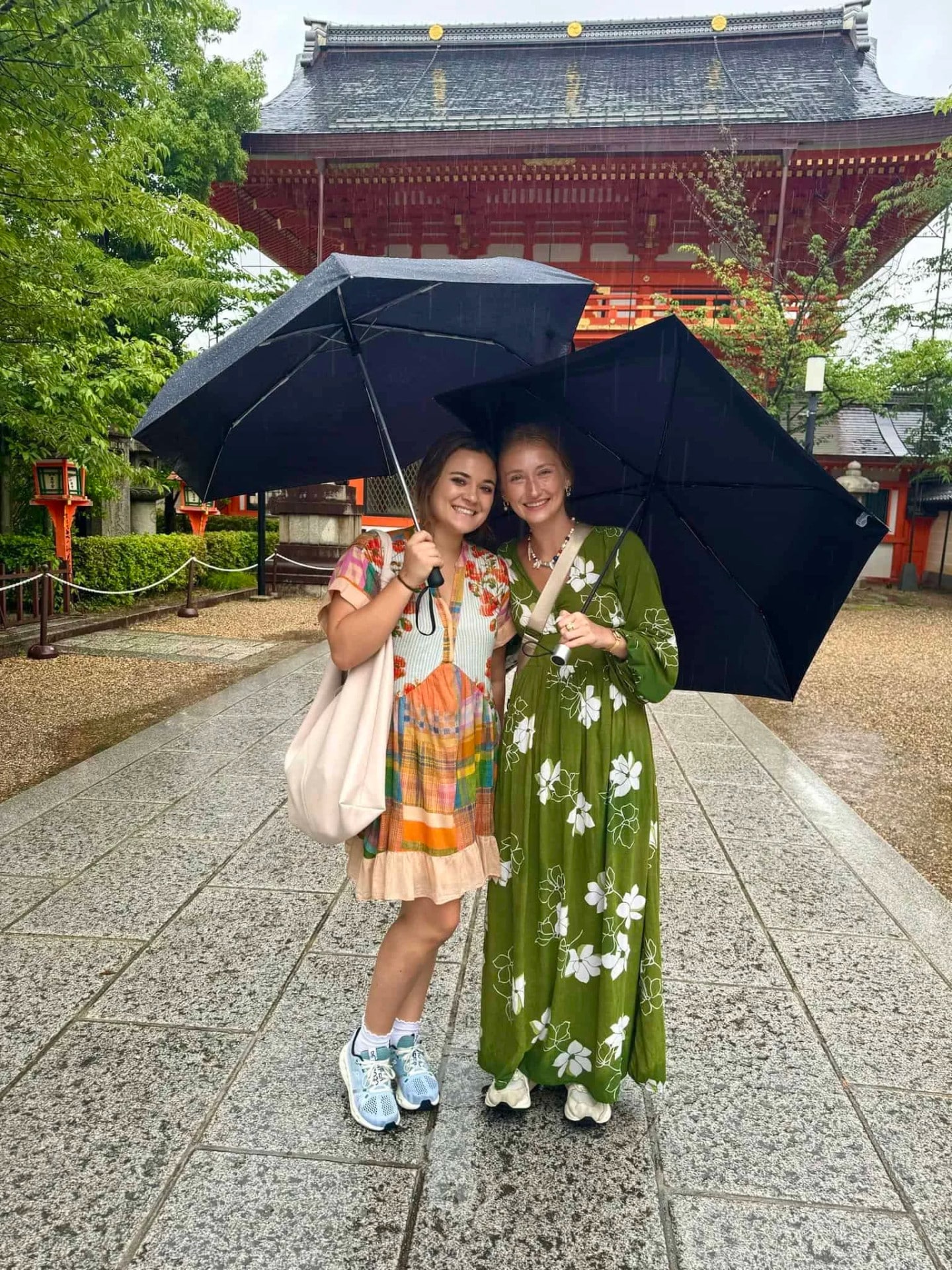
Umbrellas are prohibited inside the Gion Matsuri Yamaboko Parade control zone, to avoid poking others or blocking views. If it rains, wear a light rain poncho instead, an important detail for anyone planning to watch the parade.
New Highlights and Trends in Kyoto Travel for 2026
New buzzworthy spots in Kyoto in 2026 include the newly opened teamLab Biovortex Kyoto immersive digital art exhibition and the Nintendo Museum, which shows the history of Nintendo’s game culture, both becoming new pilgrimage destinations. In addition, the “Sea of Kyoto” area far from the city, covering spots such as Amanohashidate and the Ine funaya boathouses, is a popular day-trip choice for avoiding crowds and experiencing a different side of Kyoto, suited to one- or two-day itineraries.
How to Get to Kyoto in Summer 2026: Full Guide to Transport and Costs
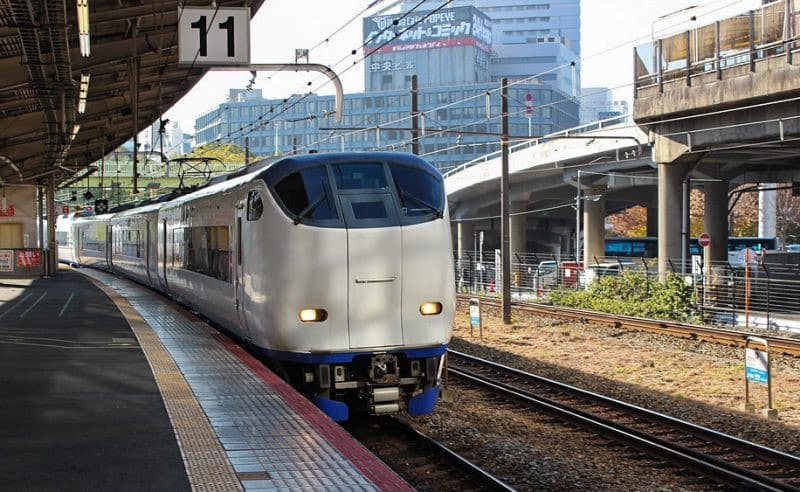
From Kansai Airport to Kyoto, we recommend the HARUKA limited express; within the city, the subway-bus day pass and an ICOCA card save the most time and effort.
How to Get Around Kyoto: Transport at a Glance
✈️ HARUKA limited express: Direct from the airport to Kyoto in about 70 to 80 minutes; visitors from abroad can buy the HARUKA discount ticket, and there is plenty of luggage space.
🚇 Kyoto Subway and Bus One-Day Pass: ¥1,100, more punctual than buses during the Gion Matsuri street closures.
💳 ICOCA card: Load from ¥2,000, tap to pass without queuing for tickets.
🚃 Keihan Railway: From ¥420, a 5-minute walk from Gion-Shijo Station to the festival’s core area.
🚋 Hankyu Railway: From ¥400, connected with the subway at Karasuma Station, the top stop for watching the Yamaboko Parade.
🚄 JR West: The Special Rapid links Kyoto, Osaka and Nara; Kyoto to Nara is about ¥720 and 45 minutes.



Kyoto Summer 2026 Travel Guide: Gion Matsuri and What to Wear: In-Depth Highlights and Must-Visit Spots
From thousand-year-old temples to the Yamaboko Parade scene, here are 12 selected summer highlights and festival points in Kyoto.
Origins of Gion Matsuri: A Heian-Era Prayer to End Plague
Gion Matsuri originated in 869 in the Heian period as the “Goryo-e” ritual. When plague broke out in Kyoto, people erected 66 spears, matching the number of provinces of Japan at the time, praying that Gozu Tenno, the deity of Yasaka Shrine, would end the disease. It later grew into the grand festival held every July and is one of Japan’s oldest.
The festival centers on Yasaka Shrine, with related rituals throughout July, opening with “Kippuiri” at the start of the month and closing with the “Eki-jinja Nagoshi Festival” at month’s end, fully reflecting the Kyoto people’s devotion to faith and tradition and making it the best window into Kyoto’s cultural roots.
Saki Matsuri Yoiyama: A Pedestrian Paradise on Shijo-dori
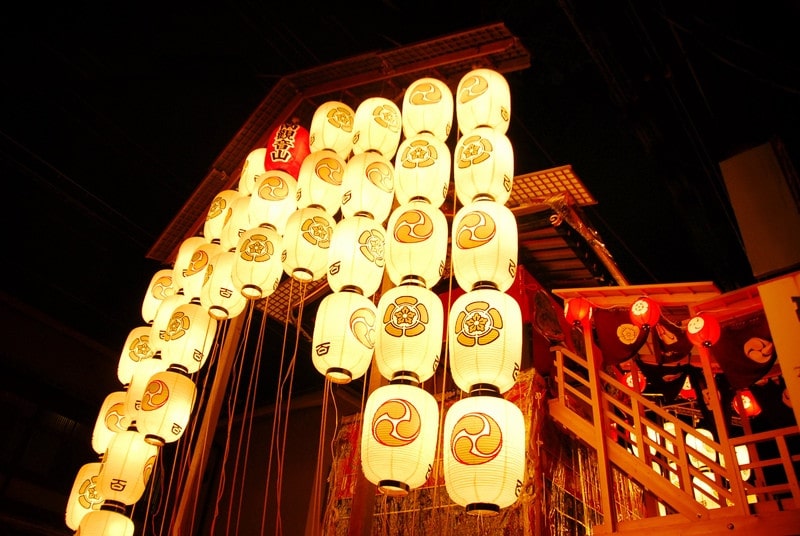
The Saki Matsuri Yoiyama runs from July 14 to 16, when Shijo-dori, Karasuma-dori and other downtown streets are closed and become a pedestrian paradise. Lanterns hang overhead, Gion-bayashi traditional music plays, and many yatai (food stalls) line the streets, creating a rich Japanese summer-festival-night atmosphere, the time when the most visitors come.
We suggest going after 5 p.m., when the heat eases and the lanterns are lit, the best time for photos and soaking up the mood. Because of the crowds, enter the venue on foot from Karasuma or Shijo Station and allow plenty of time to browse the yamaboko floats slowly.
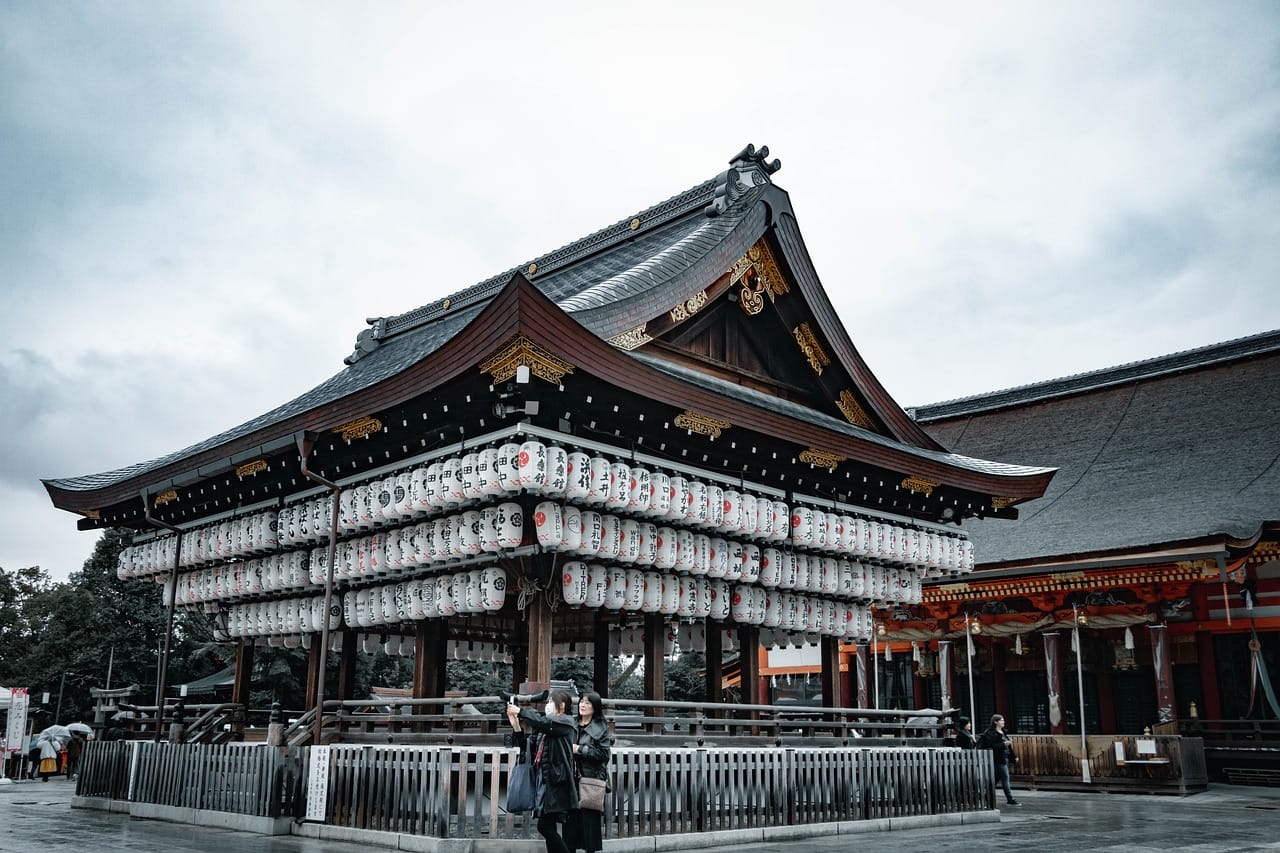
Saki Matsuri Yamaboko Parade: The Festival’s Climax on July 17
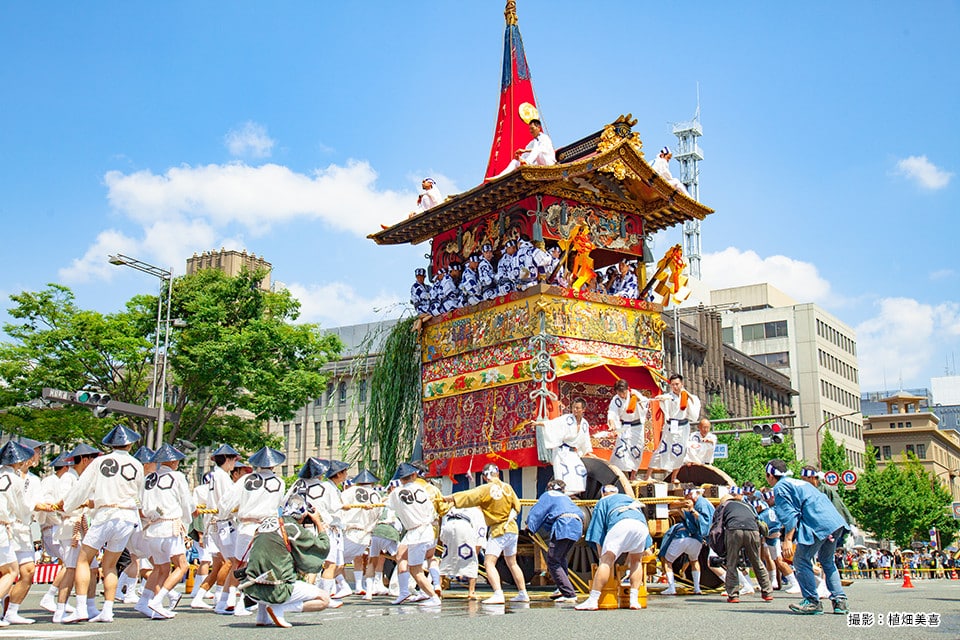
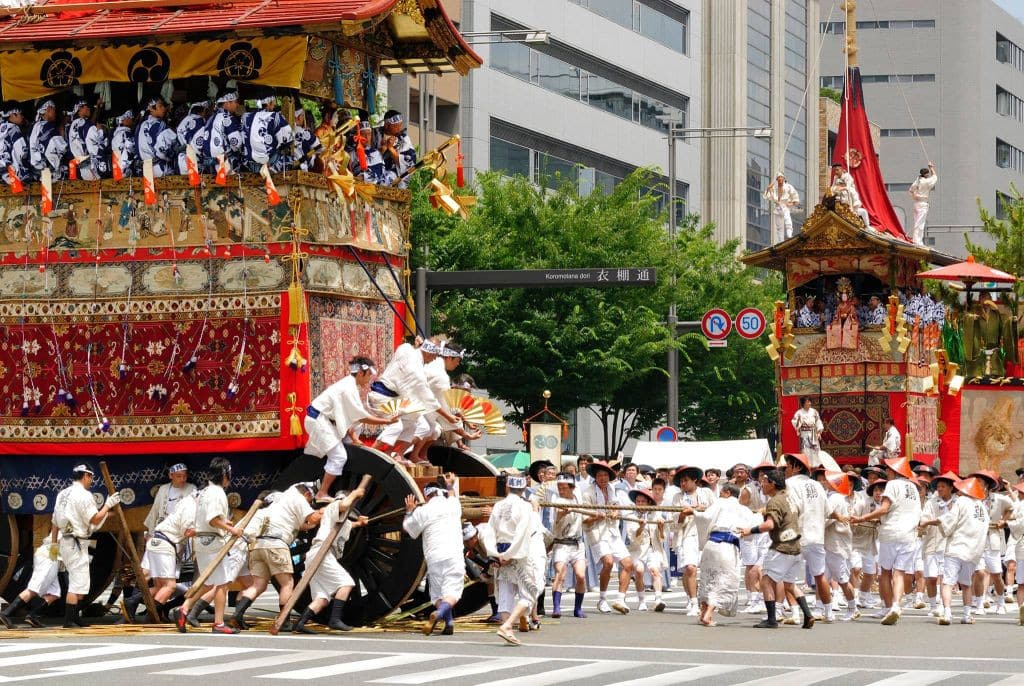
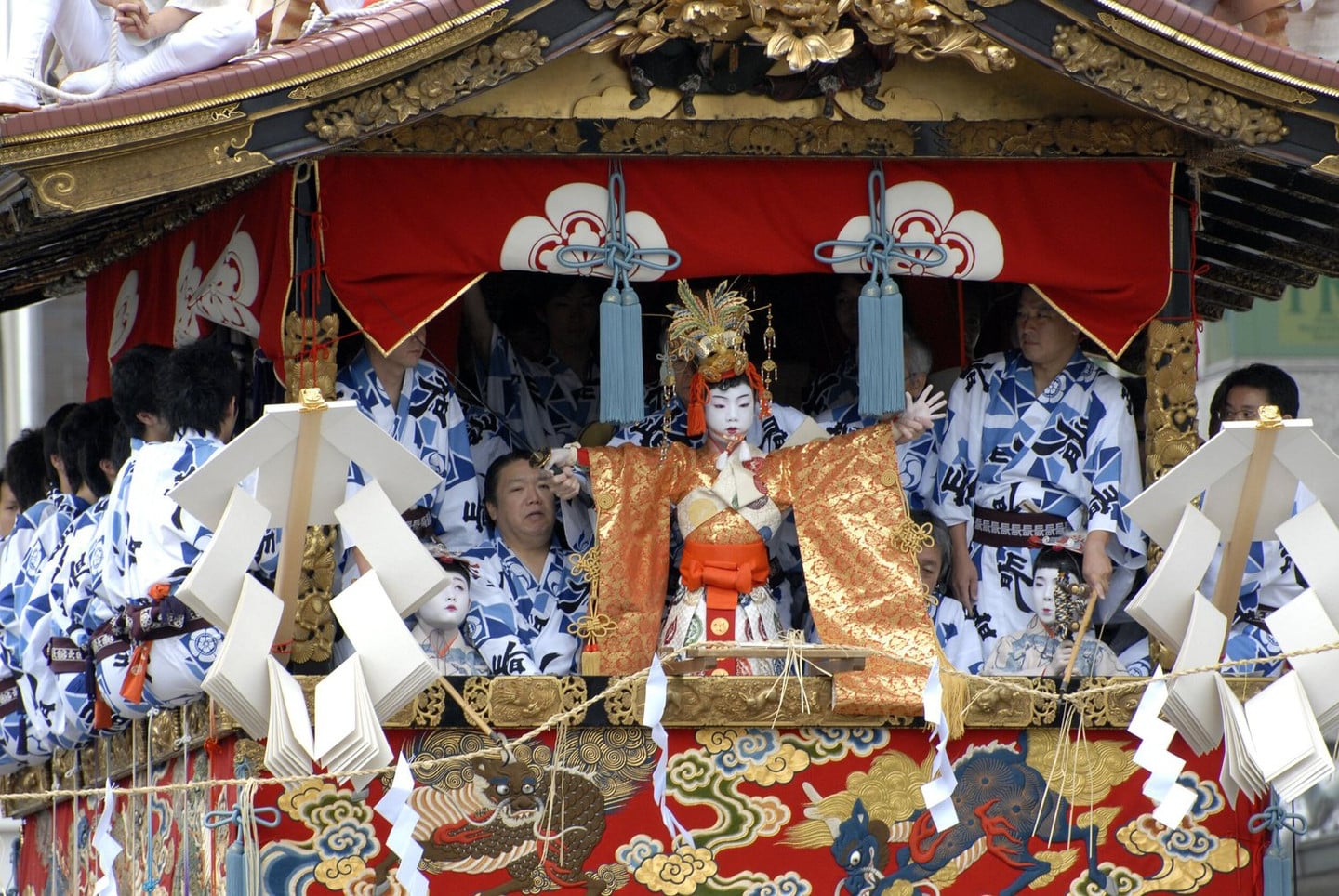
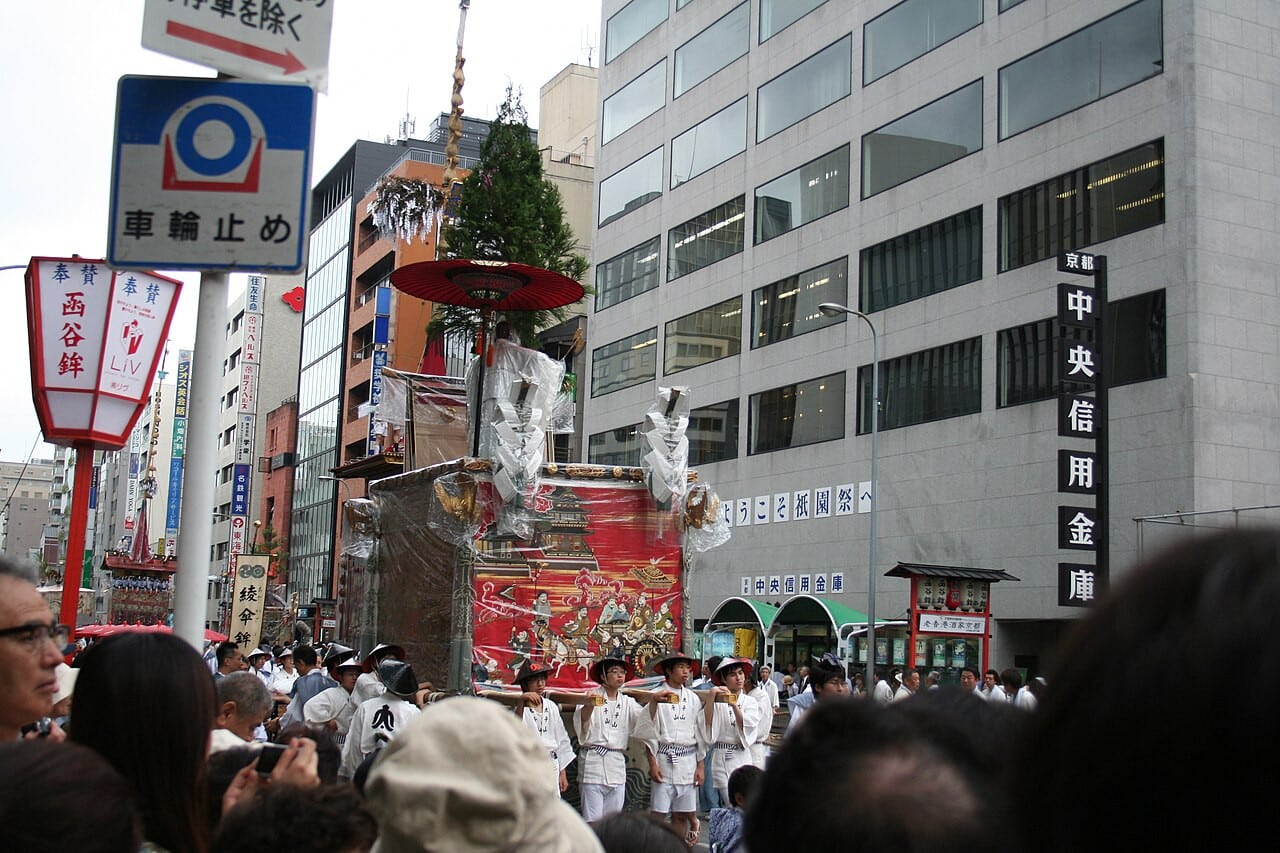
The Saki Matsuri Yamaboko Parade on July 17 is the main event of Gion Matsuri, with about 23 yamaboko floats hand-assembled using the “nawagarami” rope-binding technique, with no nails, parading through the city. A chigo (sacred child) performs the ritual cutting of the sacred shimenawa rope to open the gate to the sacred realm, and at corners, bamboo mats are laid and watered to help the huge wheels turn, a stirring scene.
Yamaboko come in types such as Hoko, Yama, Hikiyama and Kankoboko, each with its own themed decoration. We suggest claiming a spot an hour early along Oike-dori and Shijo-dori; paid viewing seats are also available.
Ato Matsuri: The Quality Choice with Fewer Crowds
The Ato Matsuri runs from July 21 to 24, with July 21-23 as the Yoiyama (no street closures and no food stalls), much quieter than the Saki Matsuri and suitable for travelers who like to appreciate yamaboko craftsmanship at leisure and don’t want to be packed in. The Ato Matsuri Yamaboko Parade is held on July 24, smaller in scale than the Saki Matsuri but equally refined, letting you study the float details and traditional costumes up close.
Because the Ato Matsuri has no food-stall street closures, visitors can wander the alleys more leisurely, enjoying machiya lanterns and the “Byobu Matsuri,” where residents display folding screens from their own homes, for a Gion Matsuri closer to local life, a favorite time for in-depth travelers.
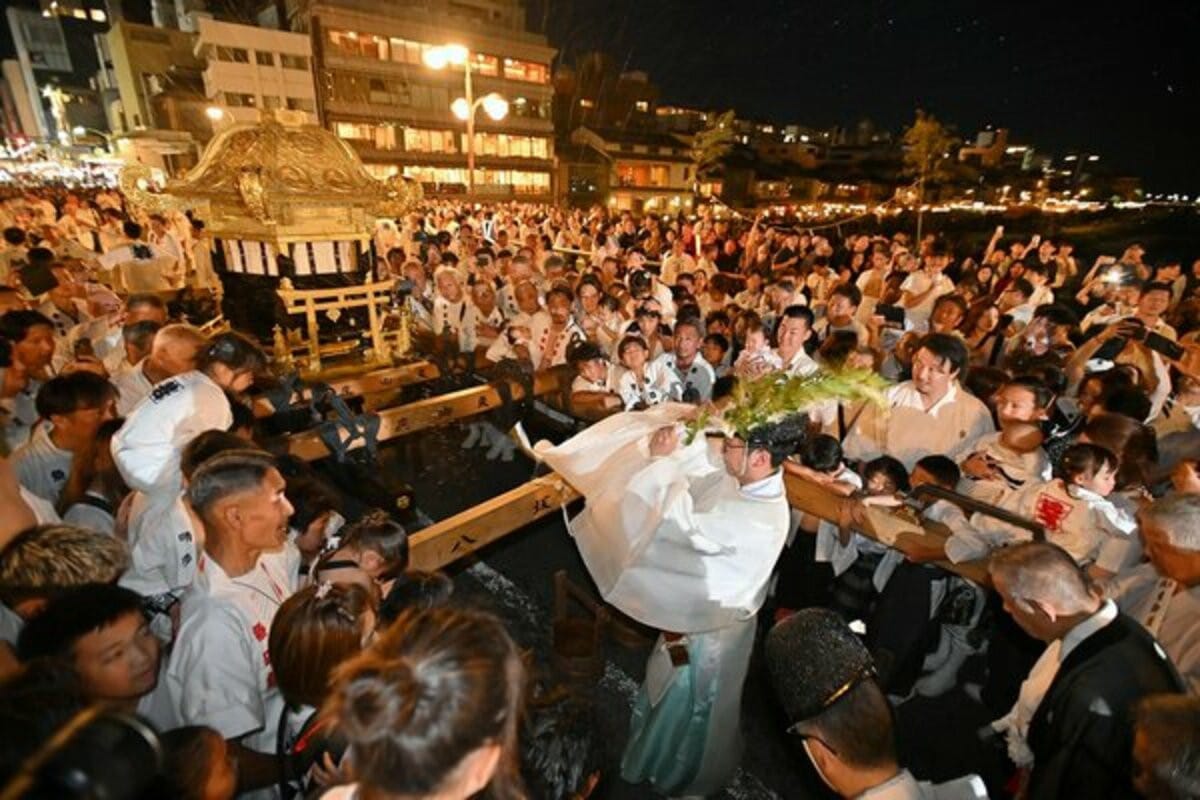
Closing Rituals: Thanks and Purification at the End of July
Gion Matsuri winds down at the end of July. On July 28 the “Mikoshi-arai” ritual purifies the portable shrine with Kamo River water at Shijo Ohashi Bridge, and on July 31 the “Nagoshi Festival” is held at Eki-jinja Shrine, symbolizing the festival’s completion. Though small in scale, these closing rituals keep the most original, pure sense of ritual and suit travelers who love in-depth cultural experiences. The whole July program runs from preparation at the start of the month, through the mid-month climax, to purification at month’s end, fully showing the rhythm of a month of religious life for Kyoto people, and visitors can plan their timing to taste.
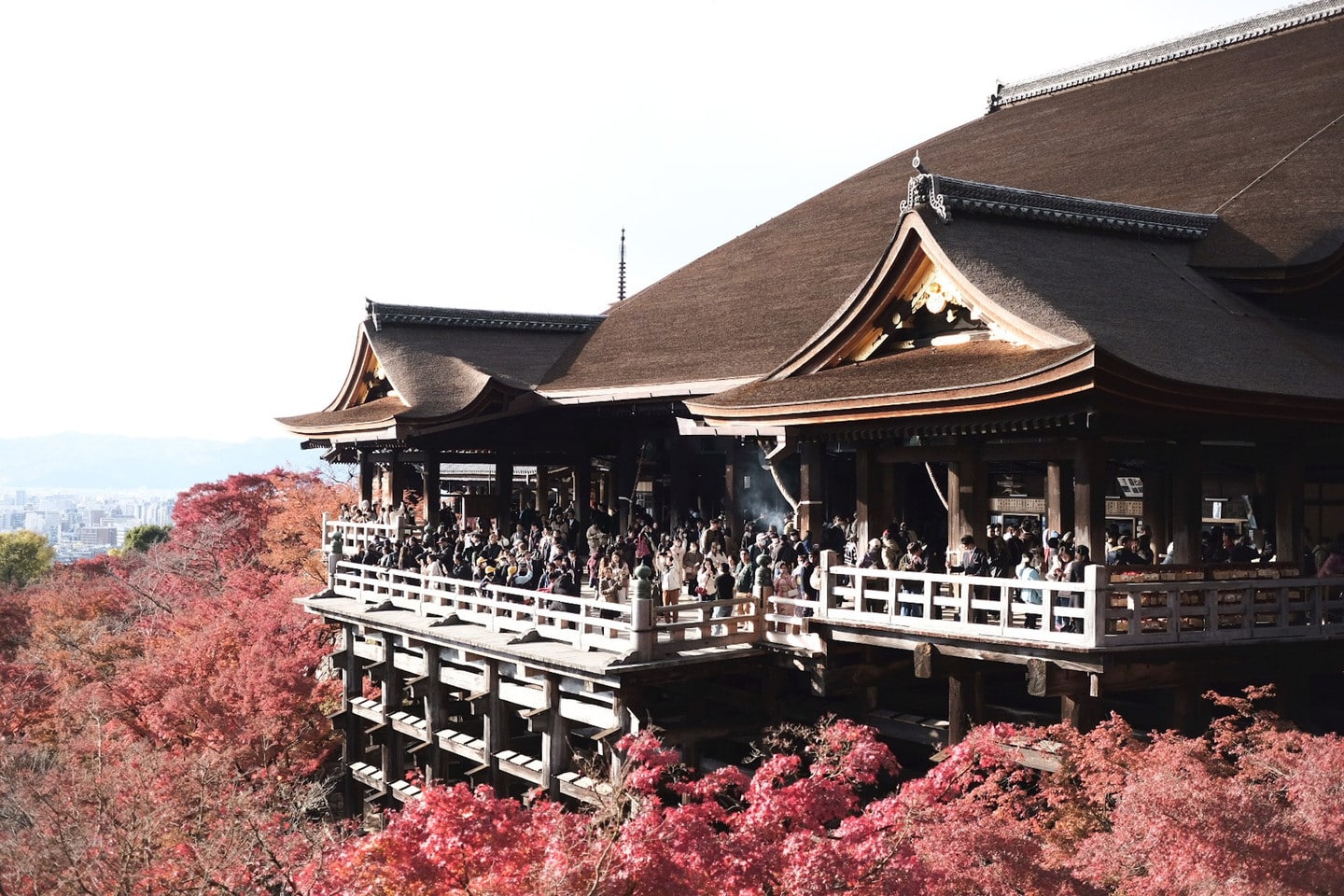
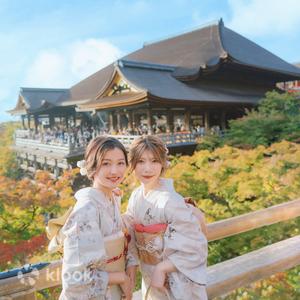
Kiyomizu-dera: Kyoto’s Oldest Wooden Stage
Kiyomizu-dera was founded in 778, and its main hall, the “Kiyomizu Stage,” is famous for its cantilevered wooden structure built without a single nail. From the stage you can look down over Kyoto and the Higashiyama scenery. The temple enshrines the Eleven-Headed Thousand-Armed Kannon and is a popular place to pray for romance and academic success; you can also buy omamori charms and goshuin stamps as keepsakes.
In summer, arrive before 7:30 a.m., when crowds are thinnest and temperatures cooler, avoiding the daytime heat and the crowded approach road. Admission is ¥500 for adults, open 6:00 to 18:00, and the three streams of the Otowa Waterfall on the grounds are also a must-try.

Fushimi Inari Taisha: The Faithful Path of a Thousand Torii Gates
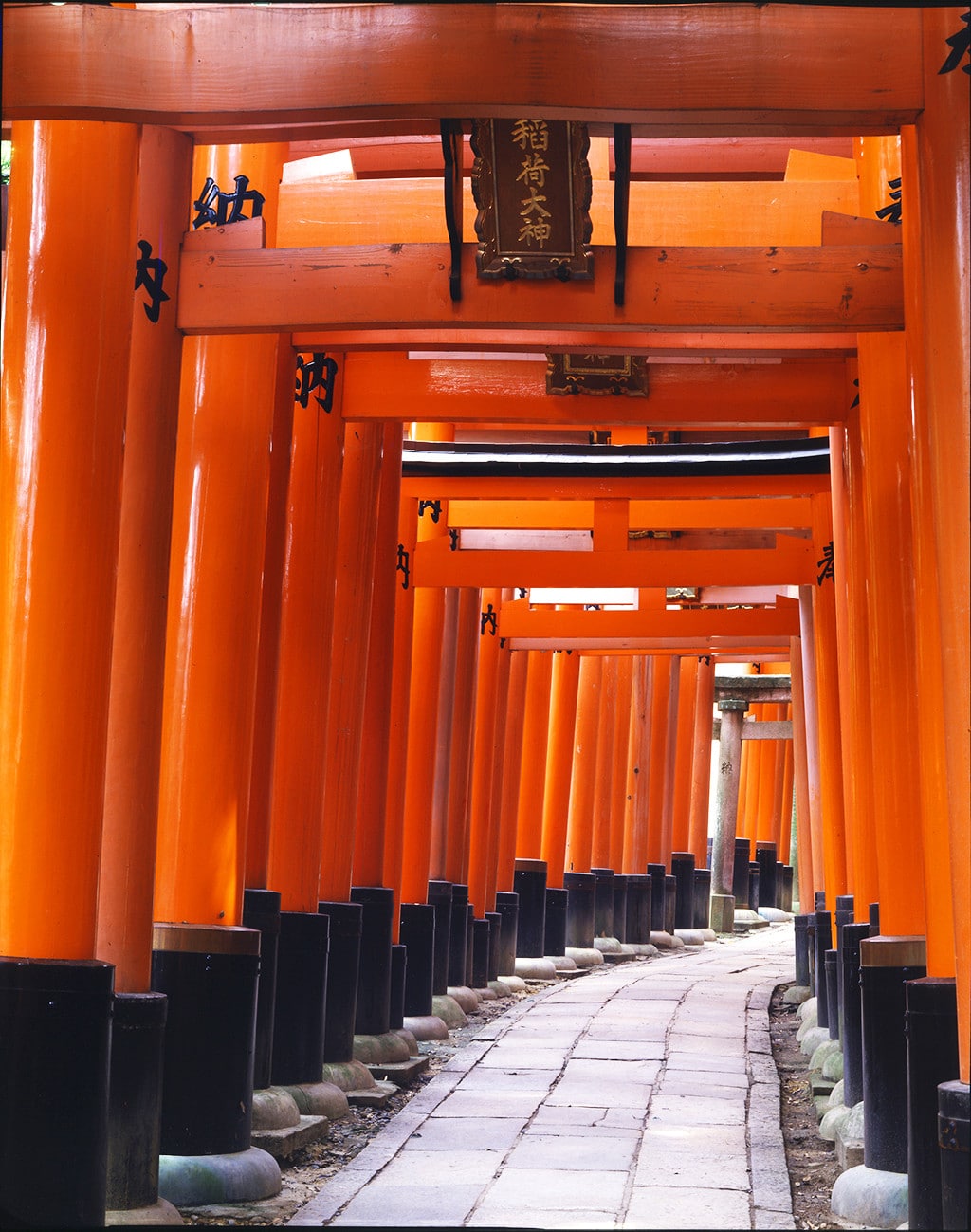
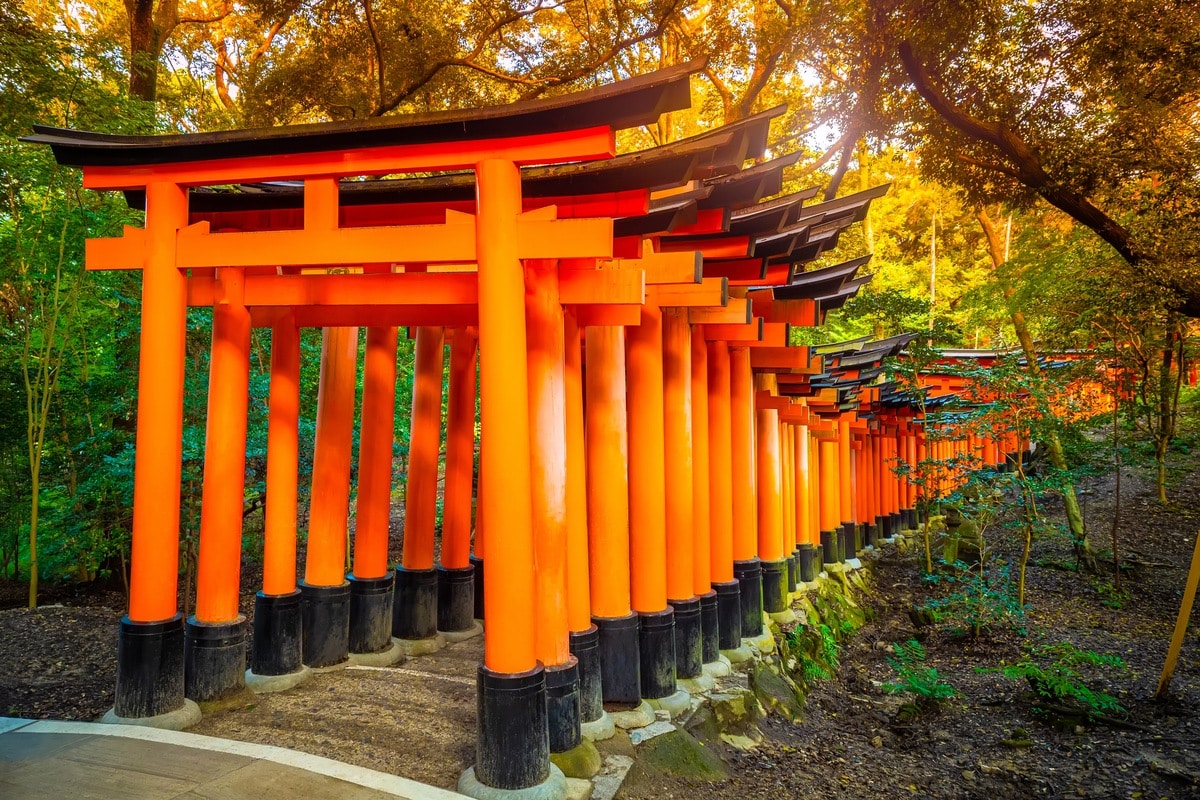
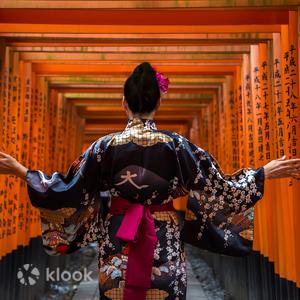
Fushimi Inari Taisha enshrines the god Inari and is famous for thousands of vermilion torii gates winding up the mountain. It is one of Kyoto’s busiest shrines, open 24 hours all year and free to enter. Climbing the Senbon Torii trail to the summit and back takes about 2 hours, with several small shrines along the way for worship.
We suggest visiting in the early morning or at dusk to avoid crowds and heat. On the grounds you can buy fox-shaped ema plaques and omamori charms, souvenirs unique to Fushimi Inari. Summer afternoons often bring thunderstorms, so carry rain gear and wear breathable, comfortable shoes for the climb.
Kinkaku-ji: A Gold-Leaf Roof Reflected in the Mirror Pond
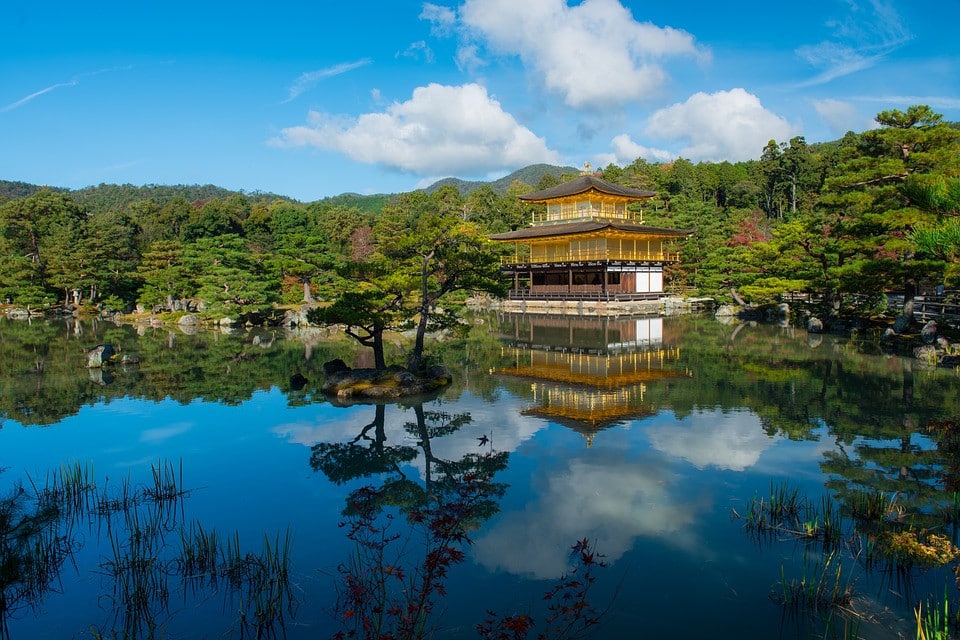
Kinkaku-ji, officially named Rokuon-ji, has a shariden (relic hall) decorated in pure gold leaf, reflected in Kyoko-chi Pond for a classic scene, and is one of Kyoto’s most representative World Heritage sites. Open 9:00 to 17:00, admission is ¥500 for adults, and the grounds have a place for omamori and goshuin.
In summer, avoid midday; entering right when it opens in the morning gives the best light and relatively few visitors. The path through the grounds takes about 30-40 minutes in all, and the Sekkatei tea house along the way is also worth a stop.
![Kyoto - [Kyoto Panorama Day Tour] Kinkaku-ji & Arashiyama & Nijo Castle & Senbon Torii & Fushimi Inari (from Osaka/Kyoto)](https://res.klook.com/images/w_300,h_300,c_fill,q_75/w_80,x_15,y_15,g_south_west,l_Klook_water_br_trans_yhcmh3/activities/acwifmo5hrx60iesdtko/【京都全景一日遊】金閣寺嵐山二條城千本鳥居伏見稻荷(大阪京都出發)-Klook.jpg)
Arashiyama Togetsukyo Bridge and Bamboo Grove Path: A Green Tunnel of Interlacing Light
Arashiyama’s Togetsukyo Bridge spans the Katsura River and is the best-known landmark of Kyoto’s western suburbs. In summer the riverbank is lush green, and you can take a Hozugawa river boat or a rickshaw to see the surroundings. The nearby Sagano Bamboo Grove Path forms a natural tunnel of towering bamboo, with sunlight filtering through the leaves, a must-visit for photography lovers.
We suggest arriving at the Bamboo Grove Path before 8 a.m., when visitors are fewest and the light is soft, for the quietest experience. A full visit takes about half a day, and you can combine it with Tenryu-ji and Nonomiya Shrine for a complete half-day Arashiyama itinerary.
Nijo Castle: Symbol of the Tokugawa Shogunate’s Power
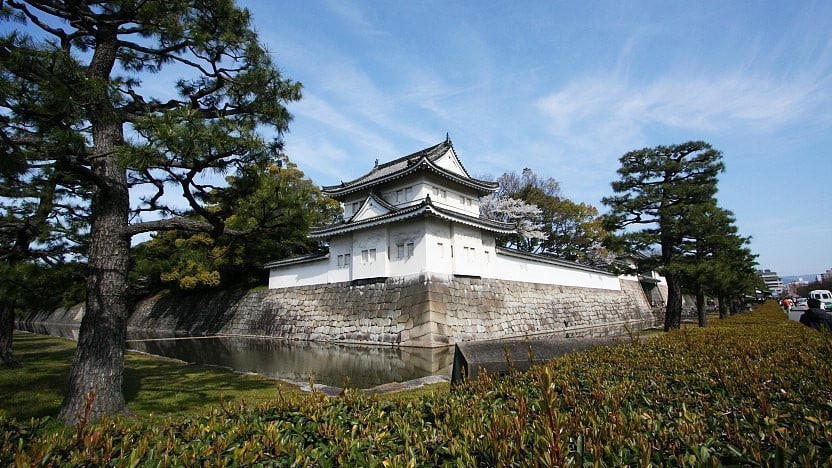
Nijo Castle was built by Tokugawa Ieyasu in 1603 as the symbol of the shogunate’s power in Kyoto. Inside the Ninomaru Palace is the famous “nightingale floor,” which chirps like a bush warbler when walked on, to prevent assassins from sneaking in. The moat and gardens show different views in every season and are lush green in summer.
Open 8:45 to 16:00 (castle closes at 17:00), admission including the Ninomaru Palace is ¥1,300 in total (adult, with discounted prices on certain dates). We suggest allowing about 2 hours for the visit, and you can buy a limited-edition “goshuin” castle stamp as a souvenir.
Nishiki Market: A Food Tour of “Kyoto’s Kitchen”
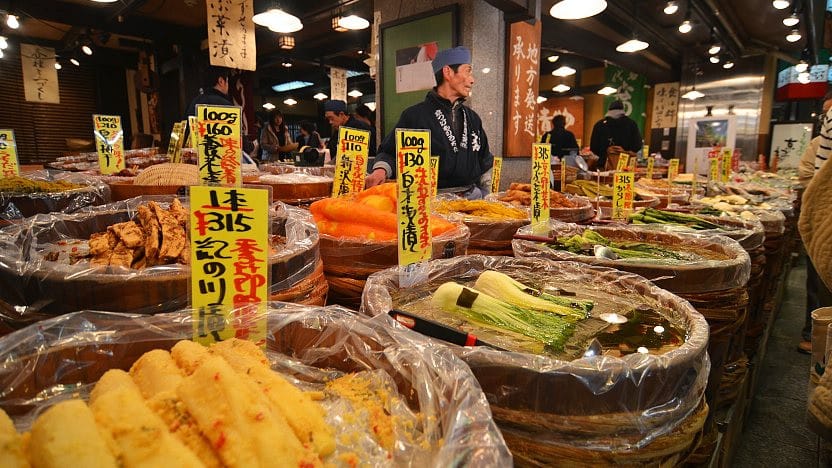
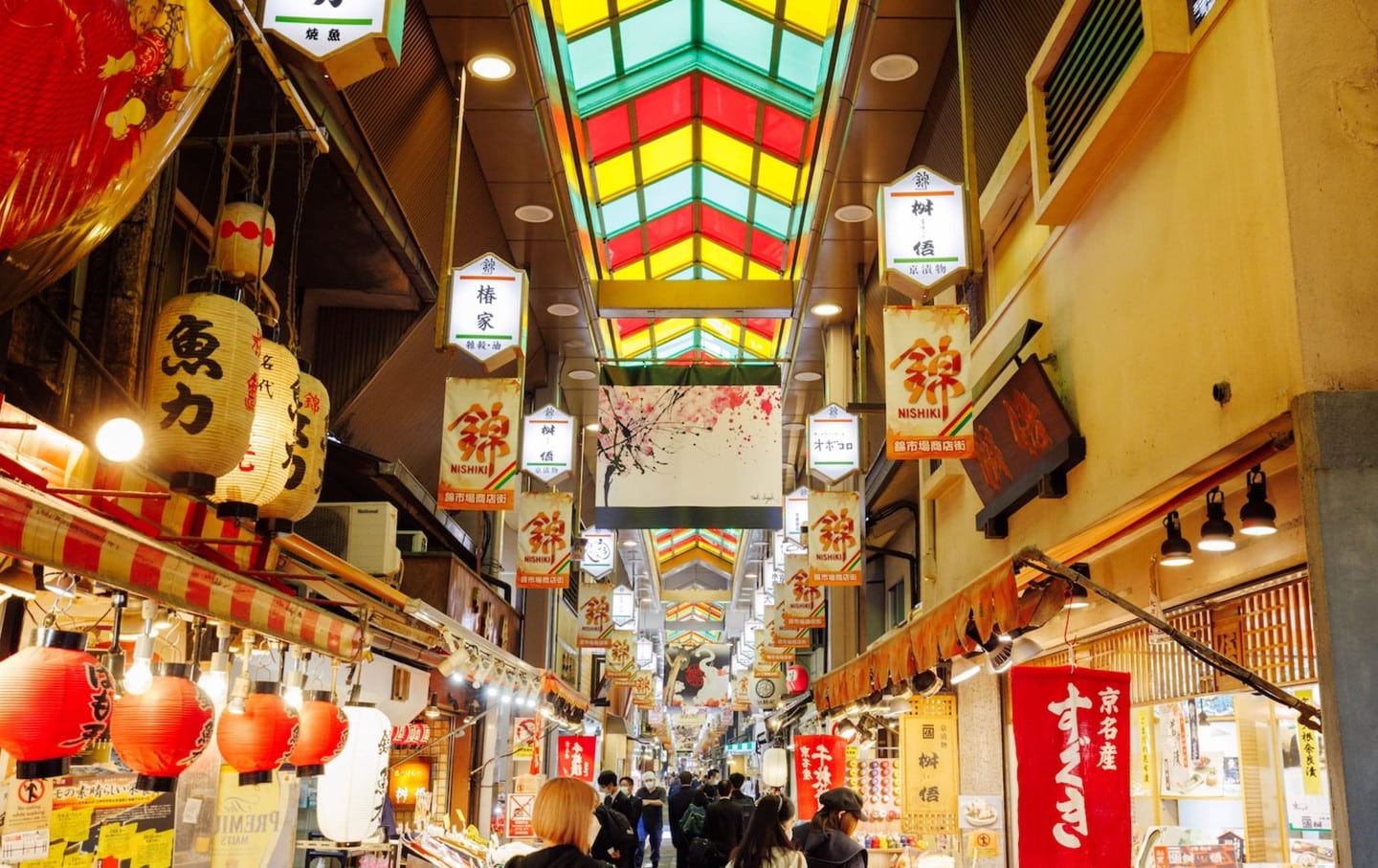
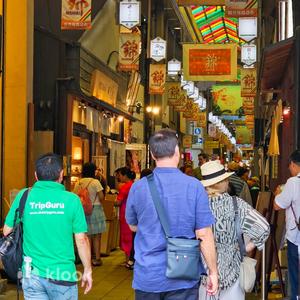
Nishiki Market is known as “Kyoto’s Kitchen,” a covered arcade about 390 meters long with over a hundred stalls selling Kyoto specialty ingredients and prepared foods, including pickles, tofu and seafood skewers, an excellent place to experience everyday food culture. In recent years it has become livelier with the influx of domestic and international tourists, and eating as you walk is the classic way to browse Nishiki Market.
We suggest avoiding the weekend midday peak; weekday mornings or evenings have fewer people. The market is near Hankyu Karasuma Station and Shijo Subway Station, easy to reach, and suits a stop before or after your Gion Matsuri plans.
Kifune Shrine: Riverside Cool and Kawadoko Dining
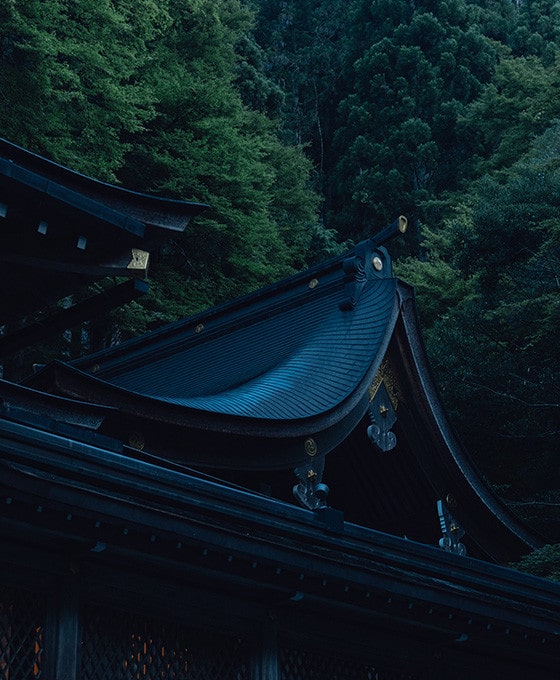
Kifune Shrine is in northern Kyoto, enshrines the water deity, and is a place to pray for romance and for rain. The approach’s red lanterns create a dreamy mood when lit at night. In summer, “kawadoko” dining is popular along the Kifune River, where eating on a platform over the stream is 5-10°C cooler, the locals’ top choice for beating the heat.
Getting there: Take the Eizan Railway to Kibuneguchi Station, then transfer to a bus. The shrine has love-matching omamori charms and water fortune slips (dip them in the sacred water to reveal the message). We suggest allowing half a day, and booking kawadoko meals in advance.
Kyoto Summer 2026 Travel Guide: Gion Matsuri and What to Wear: Tickets and Guided Experiences 2026
When visiting Kyoto in summer 2026, beyond planning sun protection and breathable clothing, choosing the right tickets and guided tours makes your Gion Matsuri trip far more efficient. Here are four of the most popular experiences among travelers, covering an in-depth Yamaboko Parade commentary, evening cooling-platform dining, an Arashiyama rickshaw tour and a kimono experience near Kiyomizu-dera, all of which can be booked in advance on platforms such as KKday and Klook to skip on-site queues, especially important at the mid-July festival peak.
Gion Matsuri Yamaboko Parade Chinese-Language Guided Tour: Feel the Spirit of a Thousand-Year Festival Up Close
For the Yamaboko Parade of the Saki Matsuri on July 17 or the Ato Matsuri on July 24, a Chinese-speaking guide leads tours around Shijo-Karasuma and Kawaramachi-dori, explaining the stories behind the floats and the craft of the miokuri-maku curtains. The tour takes about 3-4 hours, mostly meeting at 9 a.m., with headset commentary and light refreshments, delving into Yasaka Shrine’s faith. Prices vary by plan, and it suits first-time visitors, families and couples interested in festival culture. Guides point out places for shade and hydration to lower the risk of heatstroke. We suggest booking on KKday at least a month ahead, because mid-July festival slots are popular and often sell out early, which affects meeting-point arrangements.
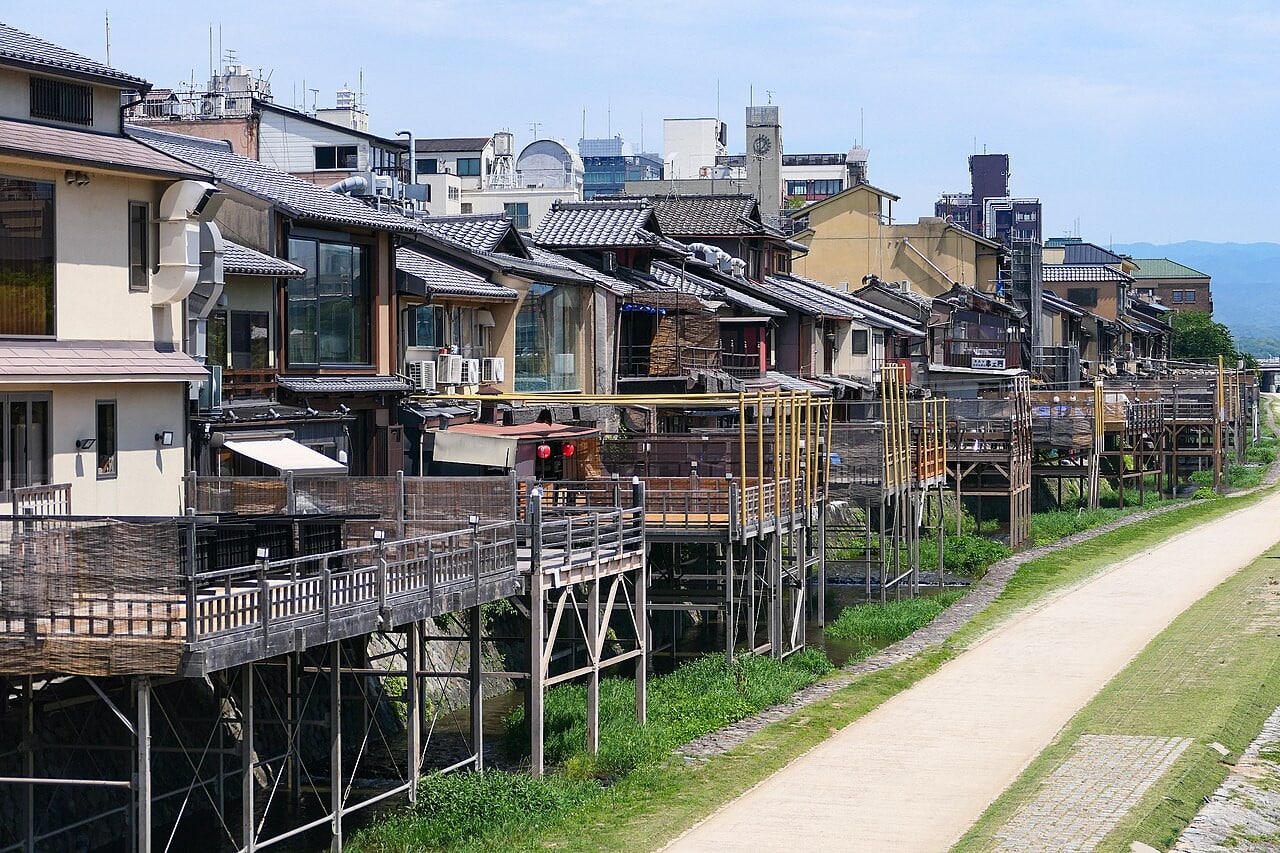
Kyoto Noryo-yuka Riverside Dinner Experience: Top Summer Cooling Choice in Pontocho and Kifune
Kyoto’s summer-only (May-September) noryo-yuka are raised platform seats set up along the Kamo and Kifune rivers, letting travelers enjoy Kyoto cuisine or hamo (pike conger) kaiseki in the breeze, a way to beat the summer heat. The experience usually includes a 2-3 hour kaiseki meal with Chinese menu explanations.
Prices vary widely with the restaurant and meal level; the Pontocho and Kifune yuka mostly serve lunch and dinner kaiseki, so confirm prices with the restaurant. For dinner, book 1-2 weeks ahead, and in peak season even a month ahead.
We recommend being seated after 5:30 p.m., when the heat fades and the river and sunset are romantic, avoiding the daytime stuffiness, a relaxing choice during Gion Matsuri.
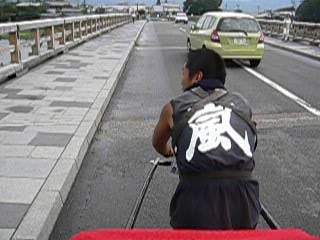
Arashiyama Bamboo Grove Rickshaw and Private Guide: An Elegant Early-Morning Escape from the Heat
The Arashiyama Bamboo Grove Path is crowded in the summer heat, so we suggest taking a rickshaw before 9 a.m. The driver takes you through the bamboo grove and introduces spots such as Nonomiya Shrine and Togetsukyo Bridge along the way, with a 30- to 60-minute ride of your choice.
Prices vary with the number of people and time, so confirm the price when booking. Most drivers can communicate in simple English or with a translation app, and some operators let you book a Chinese-speaking driver.
Early morning has low temperatures and soft light, good for photos, and also avoids the summer stuffiness; we suggest making this a priority experience of an Arashiyama day trip.
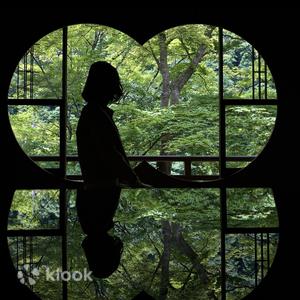
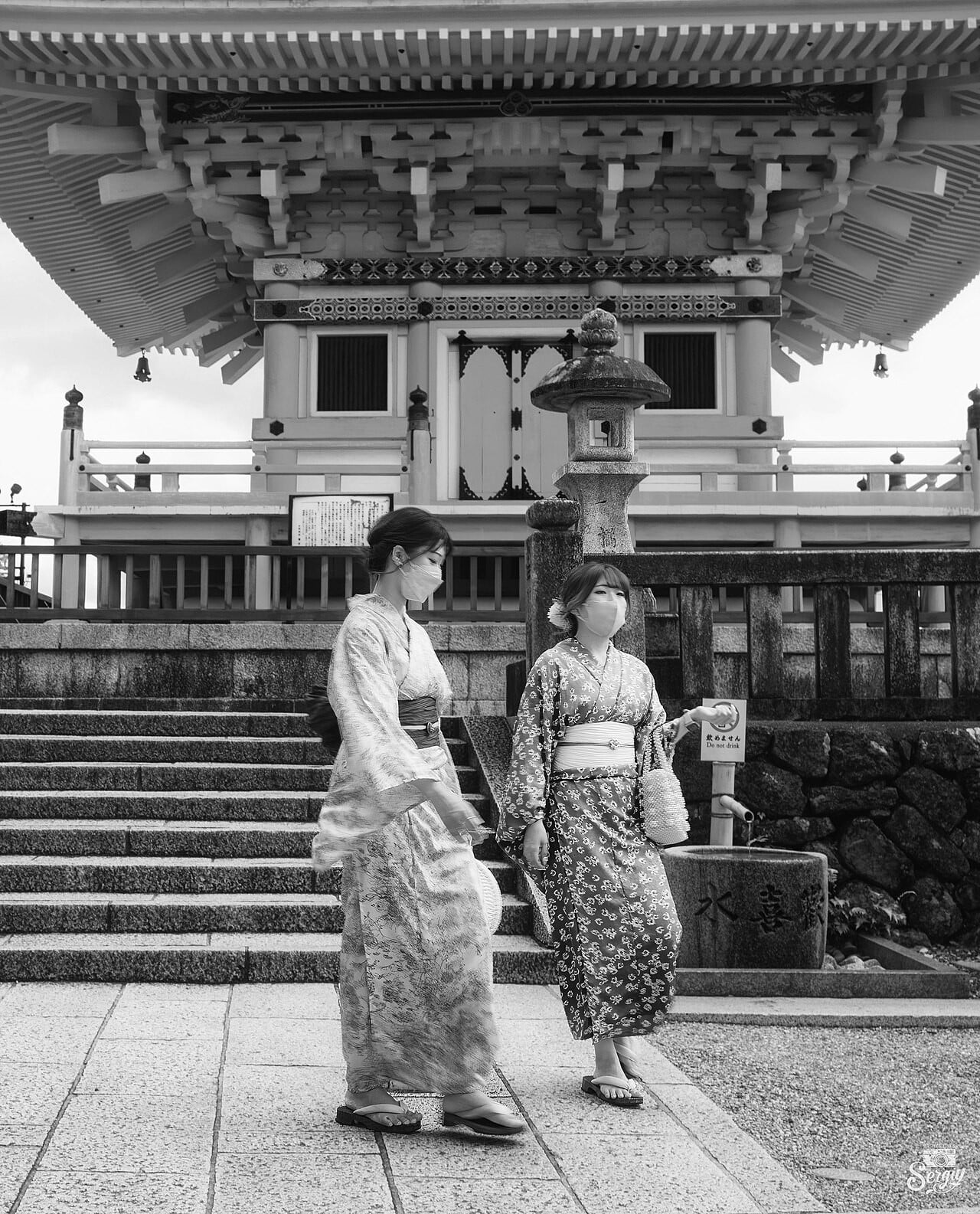
Kimono Experience and Private Guide Near Kiyomizu-dera: The Lightweight Summer Yukata Pick
The stone-paved lanes of Kiyomizu-dera, Ninenzaka and Sannenzaka are popular kimono photo spots. In summer, choose a breathable yukata; rental shops are mostly clustered along Kiyomizu-michi and Matsubara-dori, within walking distance of Kiyomizu-dera. Rentals include dressing, hairstyling and accessories, lasting 4-8 hours. Prices vary by plan; adding a Chinese-language guide explaining Kiyomizu-dera, Jishu Shrine and more costs extra. In summer, shoot before 10 a.m. or after 4 p.m., and carry the fan and sun-protection items the shop provides.
This experience suits photos during Gion Matsuri, and the thin, breathable yukata balances good looks with adapting to the climate.
Where to Stay Along the Way
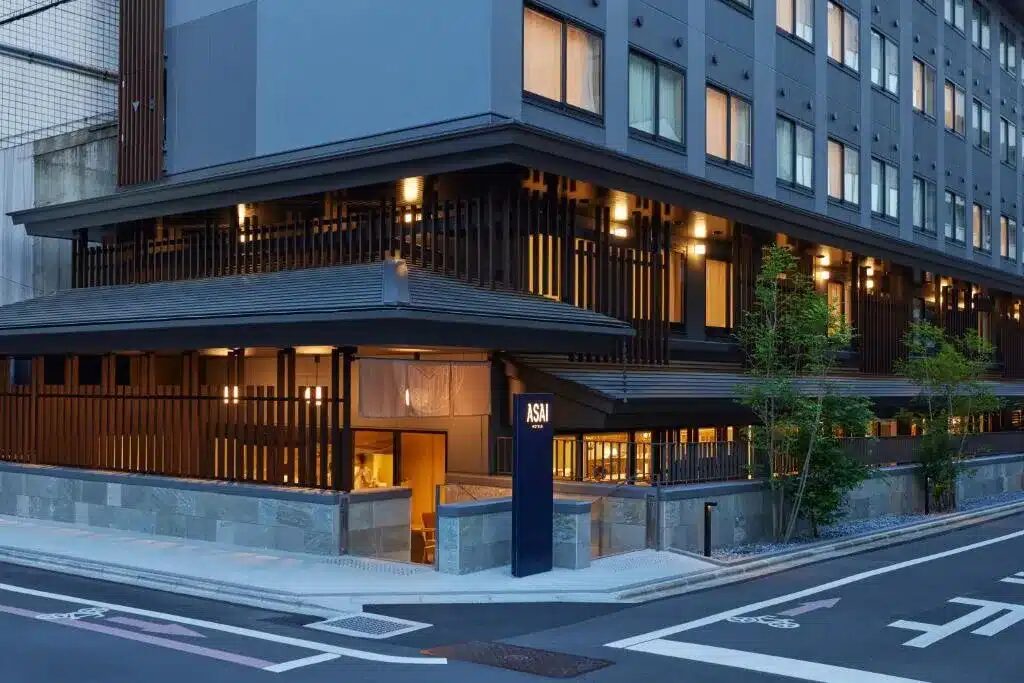
Gion Matsuri’s core area is around Shijo-dori and Karasuma-dori. Staying around Kawaramachi, Shijo-Karasuma or Gion lets you walk to the Yoiyama and the Yamaboko Parade route. Accommodation demand is high during the festival, so for your next visit book early and check the hotel’s position relative to the traffic-control routes.

FAQ
Q: When is the Gion Matsuri Yamaboko Parade held?
The Saki Matsuri Yamaboko Parade is on July 17 and the Ato Matsuri Yamaboko Parade on July 24, with Yoiyama events on the 14th-16th and the 21st-23rd respectively.
Q: Which month is hottest in Kyoto in summer?
July to September are the hottest, with July and August daytime temperatures often above 35°C, and September daytime still possibly near 30°C, so full heat precautions are needed.
Q: How much is the Kyoto bus day pass?
The Kyoto Subway and Bus One-Day Pass costs ¥1,100 for adults, allowing unlimited rides on the subway and city buses for one day, with discounts at some attractions.
Q: Can I use an umbrella in the Yamaboko Parade control zone?
No. Umbrellas are completely prohibited in the control zone to avoid poking others or blocking views; if it rains, wear a light rain poncho to take part.
Q: How long from Kansai Airport to Kyoto?
The HARUKA limited express takes about 70 to 80 minutes direct to Kyoto Station, and visitors from abroad can buy the discount ticket, with fares as announced by JR West, the fastest choice.
Q: What should I wear in Kyoto in summer?
We recommend cotton-linen or moisture-wicking fabrics such as AIRism, paired with a UV-blocking sun-and-rain umbrella, sunscreen and a thin jacket to balance indoor and outdoor temperatures.
Q: How can I plan to avoid the Gion Matsuri crowds?
Choose the quieter Ato Matsuri (July 21-24), or plan popular spots before 7:30 a.m. and after evening.