
Shitenno-ji Guide 2026: What Kind of Temple Is Japan’s Oldest Official Temple?
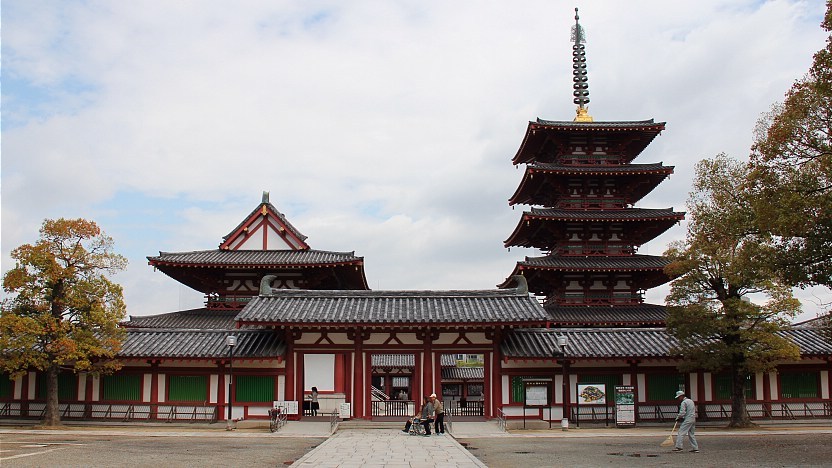
Shitenno-ji was founded in 593 by Prince Shotoku and is Japan’s oldest officially sponsored temple. It is known for its “Shitenno-ji style” layout and its five-story pagoda. Entry to the grounds is free, and it is worth setting aside half a day.
Prince Shotoku and the Founding of Shitenno-ji
Tradition holds that during the struggle with the Mononobe clan over the survival of Buddhism, Prince Shotoku carved statues of the Four Heavenly Kings and prayed for victory, vowing to build a temple to save the people if he won. After the war ended in 593, Prince Shotoku built Shitenno-ji on the present site, making it Japan’s first official Buddhist temple.
As the head temple of the “Wa school,” Shitenno-ji remains an important place of worship for believers in the Kansai region, and it is an essential first stop for anyone studying Asuka-period Buddhist architecture.
The Architectural Significance of the Shitenno-ji-Style Layout
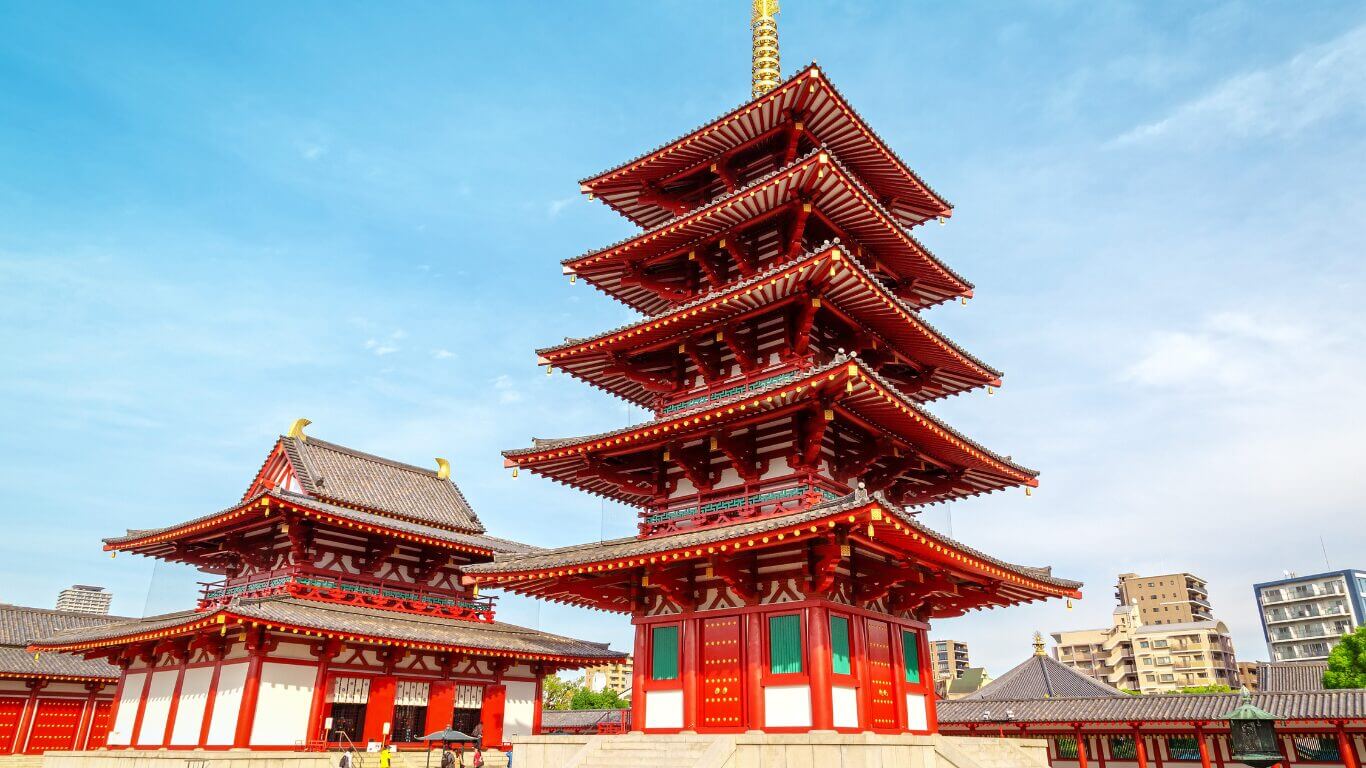
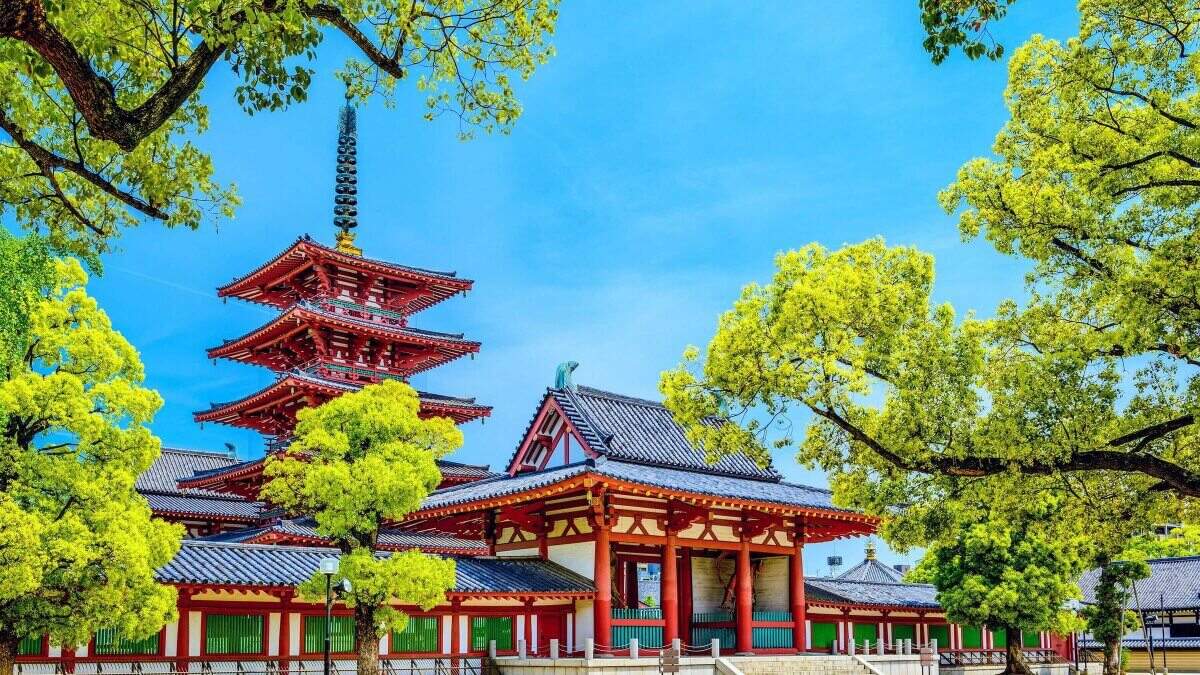
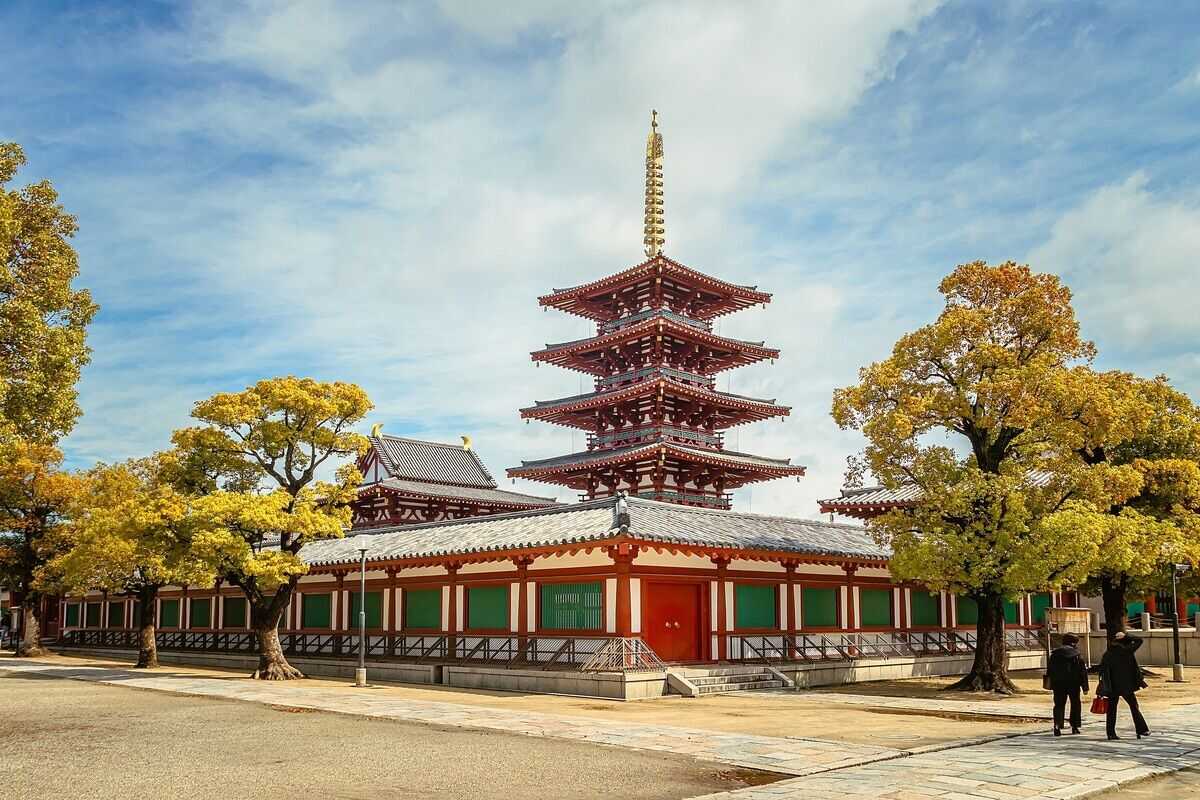
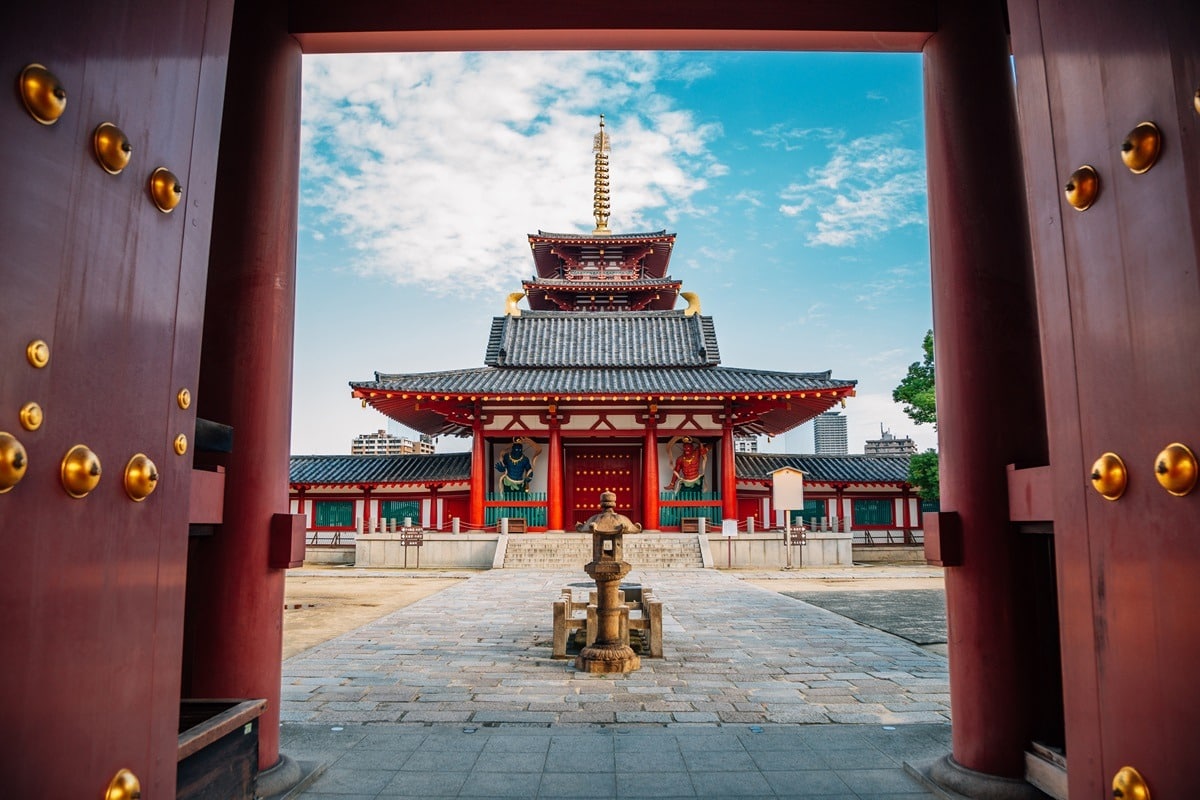
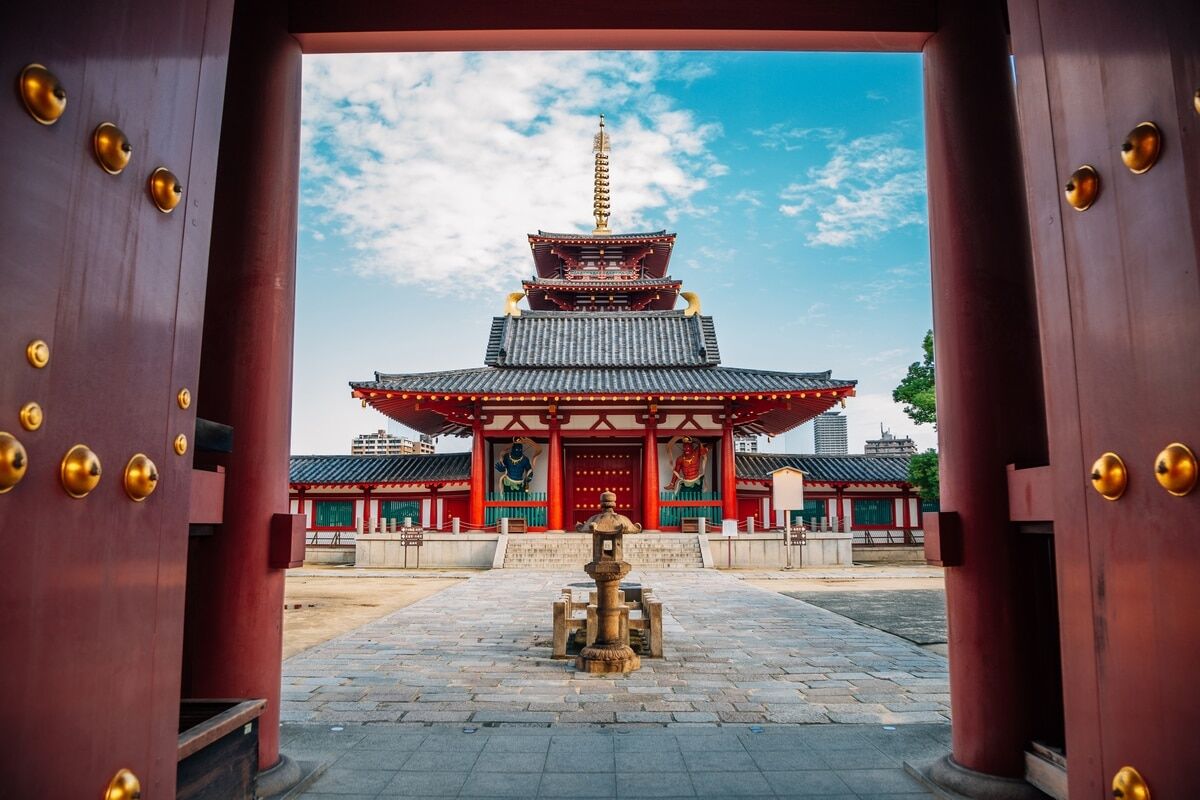
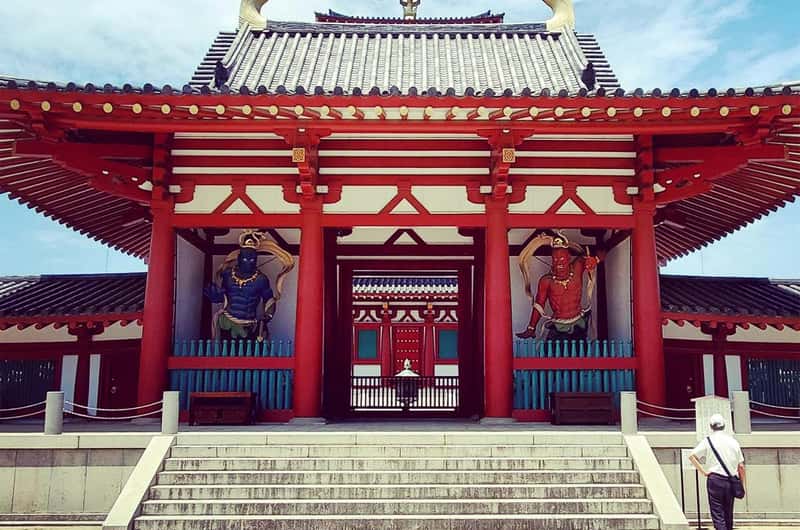
The Middle Gate, five-story pagoda, Golden Hall and Lecture Hall are lined up from south to north on a single central axis, surrounded by a covered corridor. This arrangement is called the “Shitenno-ji style” layout and is the oldest surviving model of temple architecture in Japan, which also influenced how many later official temples were built.
This clearly axial spatial aesthetic lets visitors feel an orderly, solemn atmosphere intuitively even without knowing Buddhist history, and it makes an excellent subject for photographers.
The History of Shitenno-ji’s Seven Rebuildings
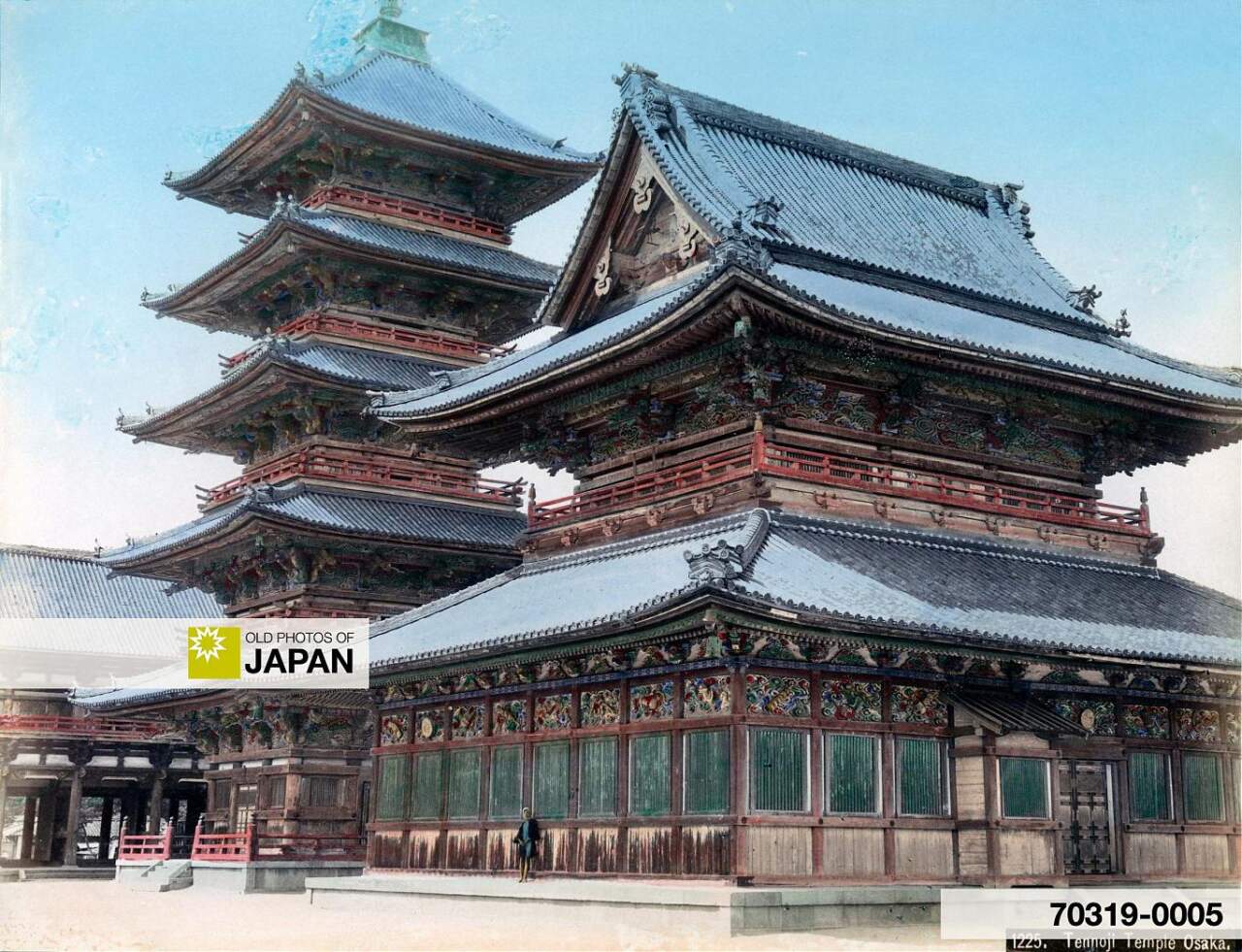
Since its founding, the temple has suffered many natural disasters and wars, including severe damage from the 1934 Muroto Typhoon and the air raids of World War II. The current central cloister was rebuilt after the war in reinforced concrete, restoring the Asuka style.
Although they are not the original wooden buildings, each rebuilding followed historical records strictly to restore the layout and proportions, so you can still fully experience the spatial arrangement and grandeur of an Asuka-period official temple.
Planning a Half-Day or Full-Day Trip to Shitenno-ji
Simply worshipping at the central cloister and the five-story pagoda takes about 1 to 1.5 hours. Adding the Honbo Garden, the Treasure Museum and the nearby market, we suggest allowing half a day. On the 21st and 22nd of each month, the ennichi market days, browsing the market plus worship can fill a whole day.
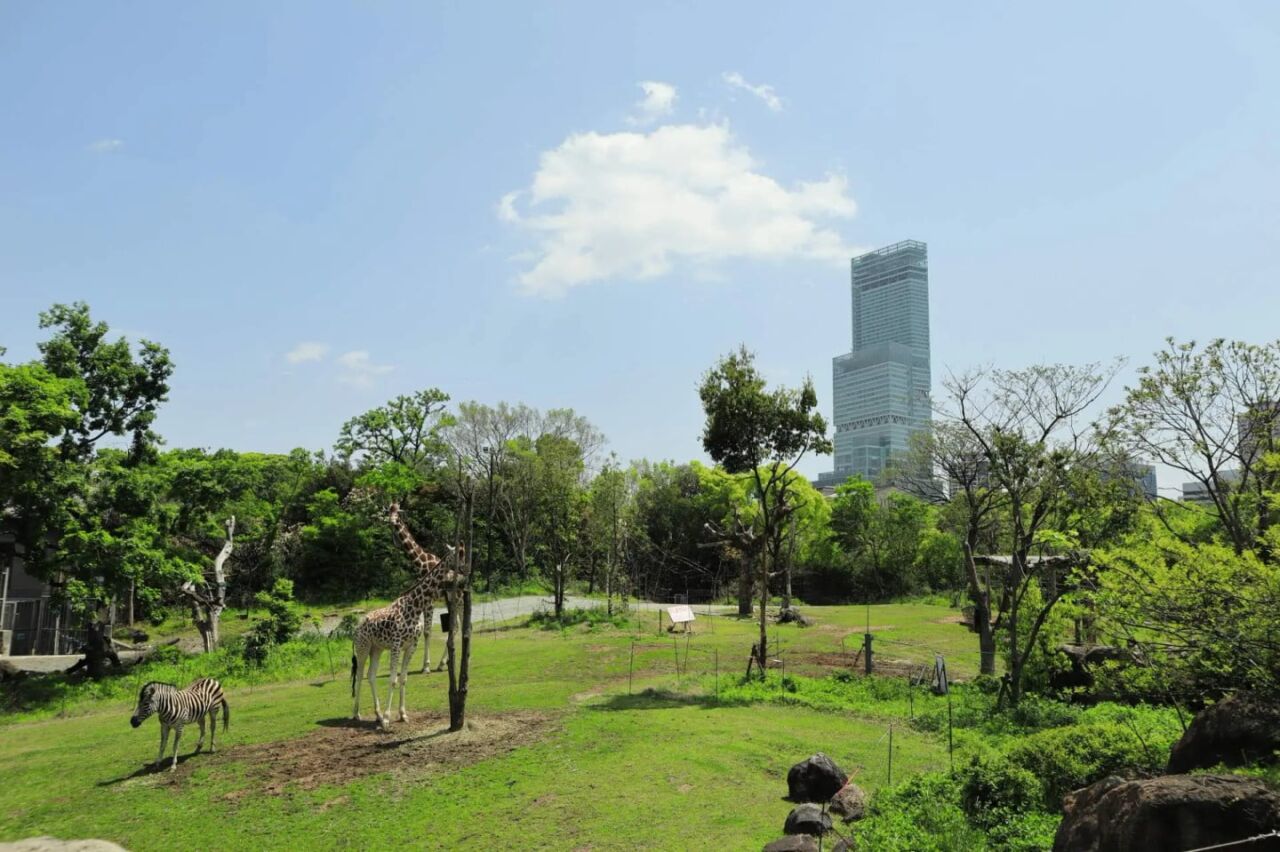
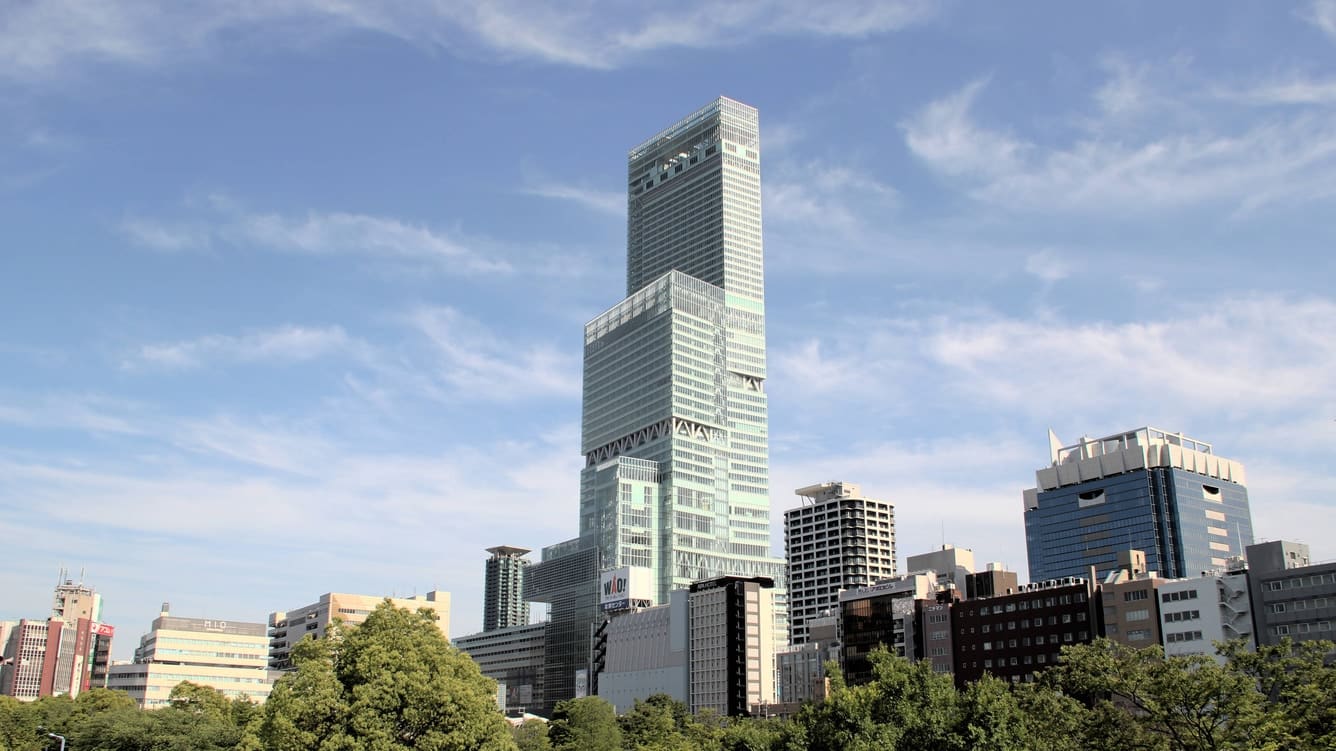
Close to Tennoji Park and Abeno Harukas, it is about a 12-minute walk from JR Tennoji Station and fits well as one stop on a day trip around central Osaka.
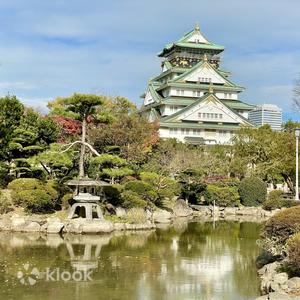

How to Get to Shitenno-ji? A Complete 2026 Guide to Transport and Costs
Shitenno-ji is close to Tennoji Station and very convenient to reach: take the Osaka Metro Tanimachi Line to Shitennoji-mae Yuhigaoka Station and walk south about 5 minutes from the exit; or take the JR Osaka Loop Line to Tennoji Station and walk about 12 minutes.
What Are the Must-See Sights at Shitenno-ji in 2026? The Five-Story Pagoda, Central Cloister and Gardens Explained
The grounds are free to enter, while the central cloister, the Honbo Garden and the Treasure Museum each require a separate ticket. Here are the must-see highlights.
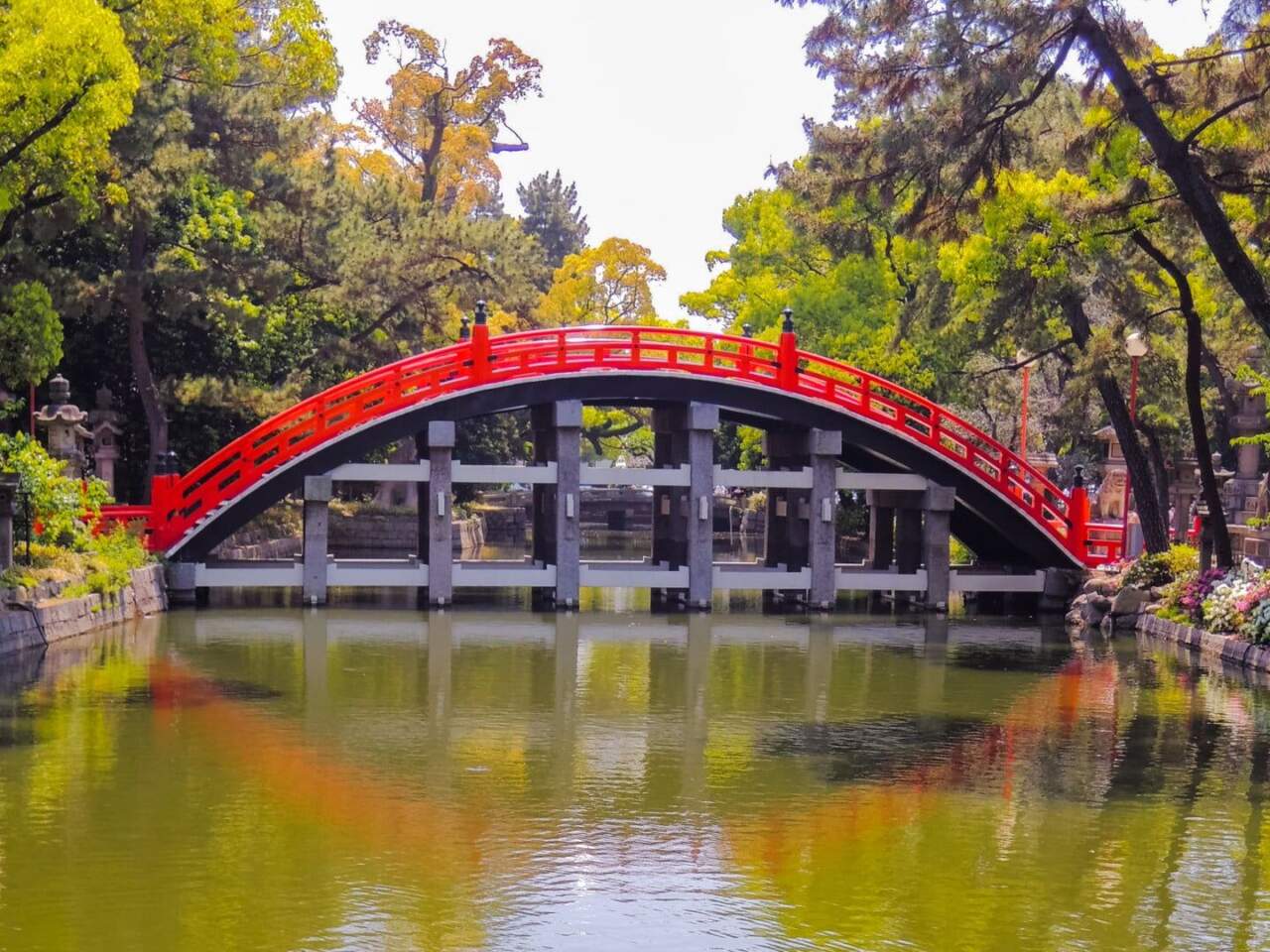
Five-Story Pagoda
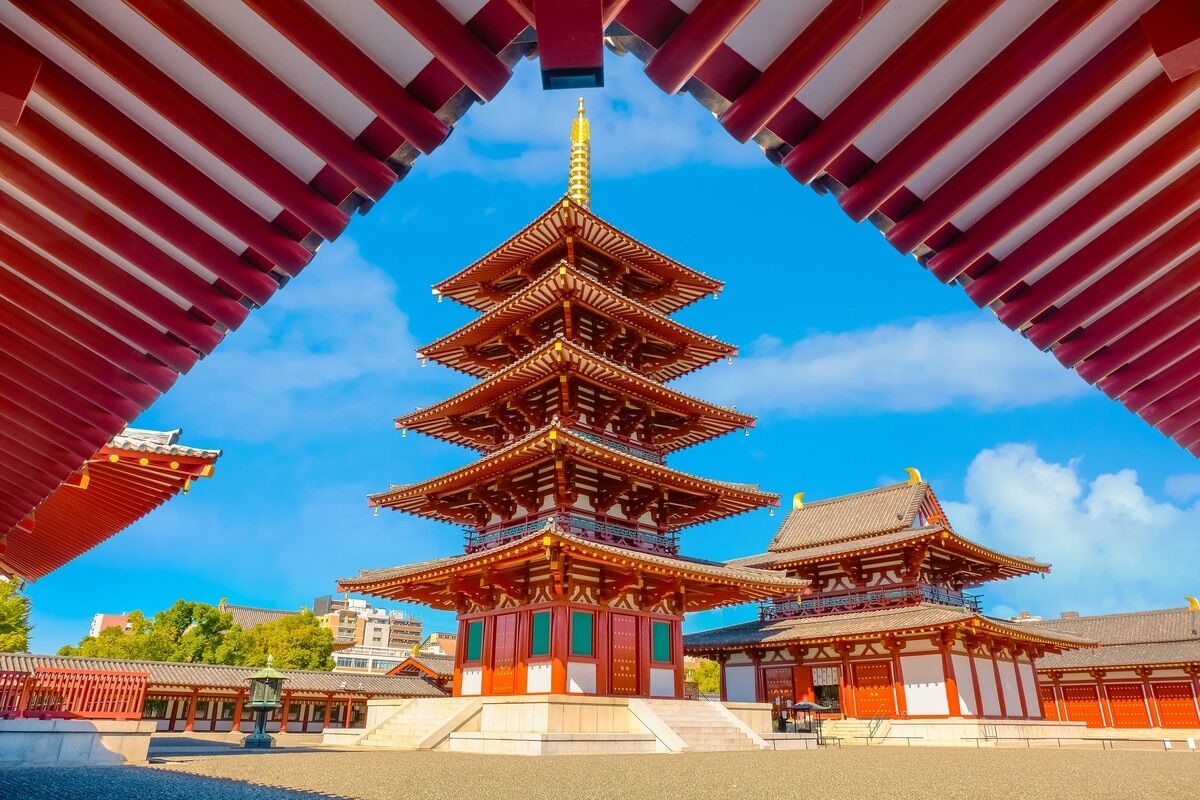
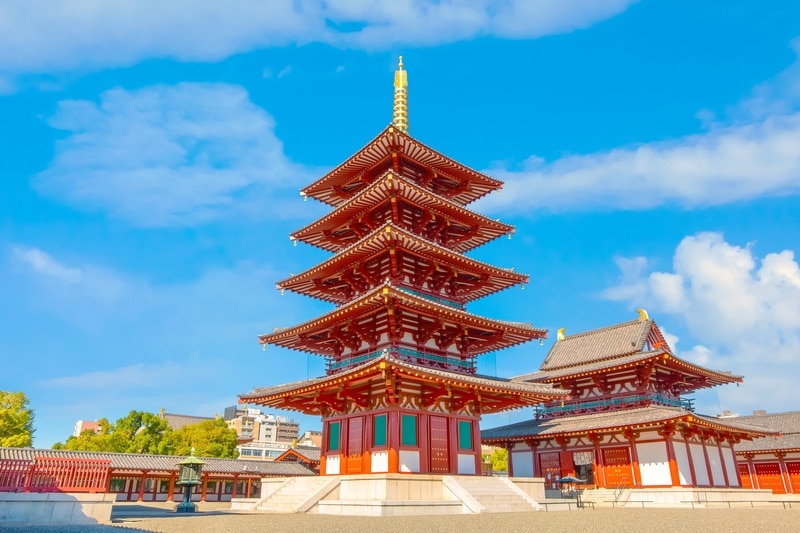
The five-story pagoda stands about 39 meters high and is Shitenno-ji’s most conspicuous landmark and the core building of the “Shitenno-ji style” layout. Visitors can enter the pagoda and look out from the upper level over the streets around Tennoji.
The stairs inside the pagoda are narrow and steep, so we suggest wearing shoes that are easy to walk in. Entering the pagoda requires a central cloister ticket, ¥500 for adults, and we suggest staying about 20 to 30 minutes to appreciate it slowly.
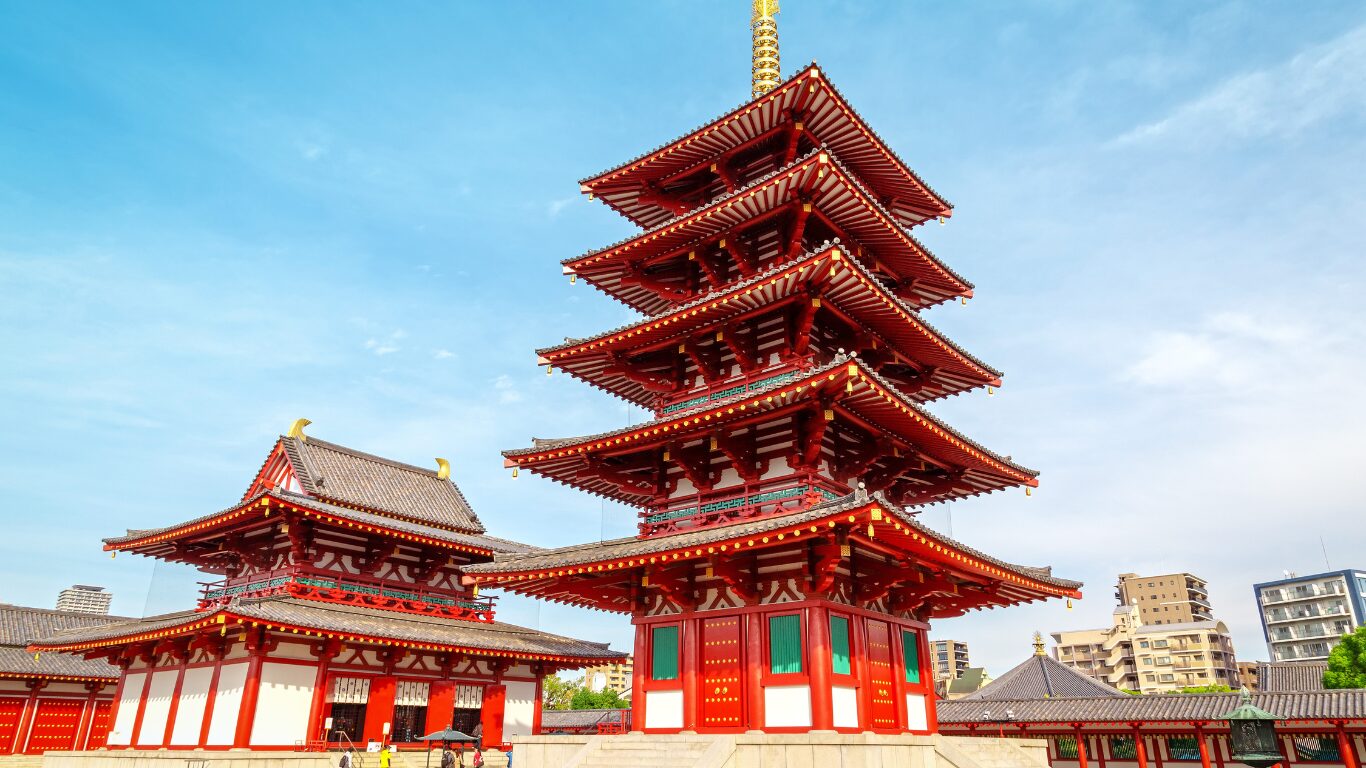

Central Cloister
The central cloister at the heart of Shitenno-ji has the Middle Gate, five-story pagoda, Golden Hall and Lecture Hall arranged along a north-south axis, surrounded by a covered corridor, showing the aesthetic of the Asuka-period “Shitenno-ji style” layout and forming the highlight of the whole temple. Admission is ¥500 for adults and ¥300 for high school students, open 08:30 to 16:30 from April to September and until 16:00 from October to March. We suggest staying 30 to 45 minutes to savor the solemn atmosphere of the symmetrical central axis.
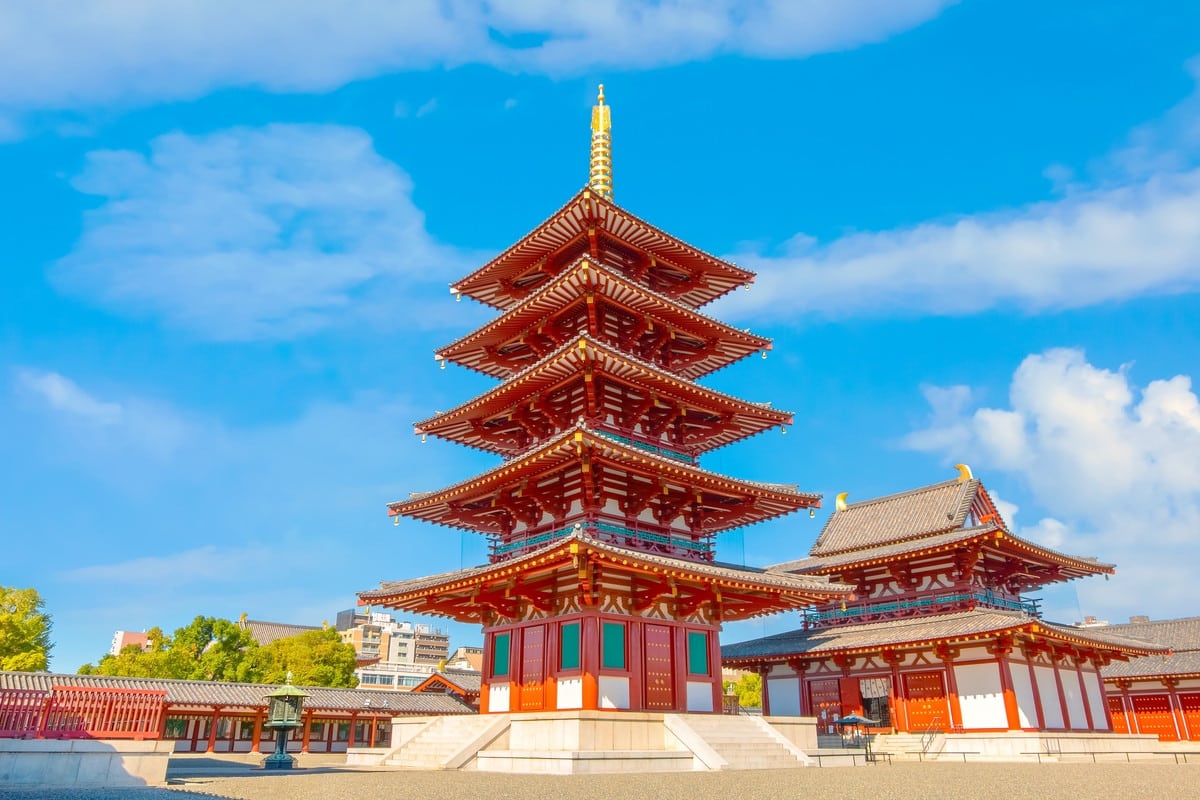
Golden Hall and Lecture Hall
The Golden Hall enshrines the principal image, Guze Kannon Bodhisattva, and its vermilion exterior is solemn and eye-catching, the building with the strongest religious atmosphere in the central cloister. The Lecture Hall is where monks study and practice, and today it also hosts Buddhist services and cultural events from time to time.
Both buildings stand on the north side of the central axis, right behind the five-story pagoda. We suggest visiting in order of the Middle Gate, five-story pagoda, Golden Hall and Lecture Hall to feel the full layered sequence of the cloister’s space.
Stone Torii
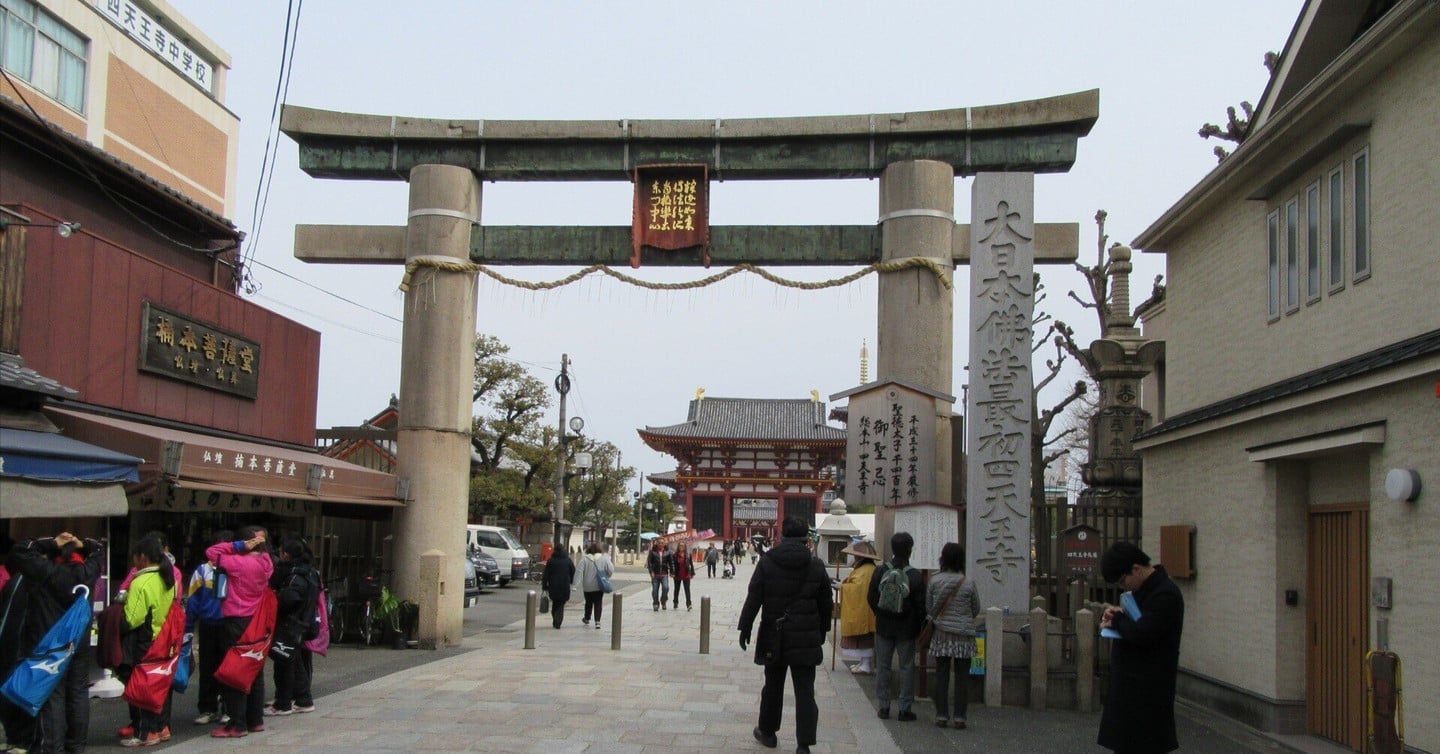
The stone torii on the west side of the temple (built in 1294 in the Kamakura period) is an Important Cultural Property and a rare relic of the Shinto-Buddhist syncretism at Shitenno-ji, echoing the ancient central axis and showing the blending of religions. Behind the torii the view faces due west, and at sunset you can watch the sun set through the very center of the torii, the practice known as “Nissokan.” The best viewing period is around the spring and autumn equinoxes each year, drawing photography enthusiasts.
Shitenno-ji’s Nissokan: The Sunset Ritual at the Spring and Autumn Equinoxes
Nissokan is a Pure Land Buddhist practice of contemplating the setting sun and imagining the Western Pure Land of Bliss. On the middle day of the Higan period at the spring and autumn equinoxes each year, looking west from the stone torii outside Shitenno-ji’s west gate, the sun sets in the center of the torii and sinks to the horizon between the Rokko mountains and Awaji Island. The temple holds a Nissokan service on this day, and worshippers face the setting sun and chant the Heart Sutra. If you want to watch, we suggest arriving early in the west gate area to claim a spot.
Gokuraku Jodo Garden (Honbo Garden)
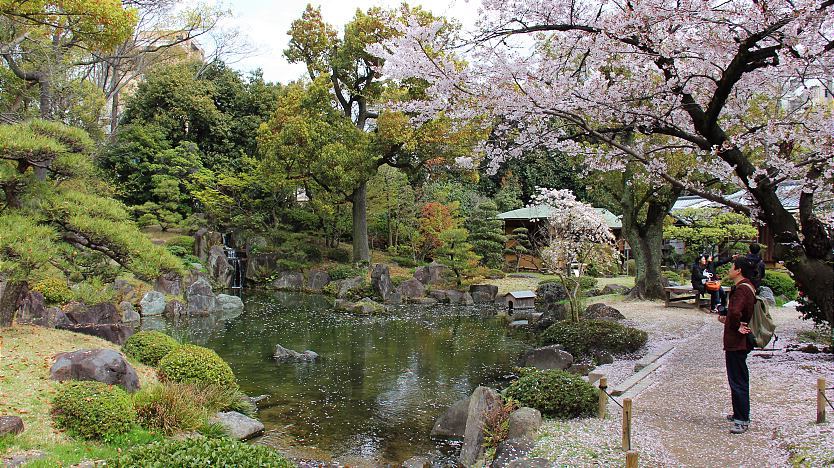
The Honbo Garden is designed around the Buddhist concept of the “Western Pure Land of Bliss” and is a pond-strolling garden, with small bridges and flowing water and seasonal flowers and trees all around. The scenery is especially charming in the cherry blossom season in spring and the autumn leaf season, and it is one of the few tranquil corners of the grounds.
Admission is ¥300 for adults, ¥200 for high school students and ¥200 for elementary and junior high school students. We suggest buying it together with the central cloister ticket. A stroll to enjoy the view takes about 30 minutes, and it suits those who want to slow down and savor the beauty of the garden.
Turtle Pond
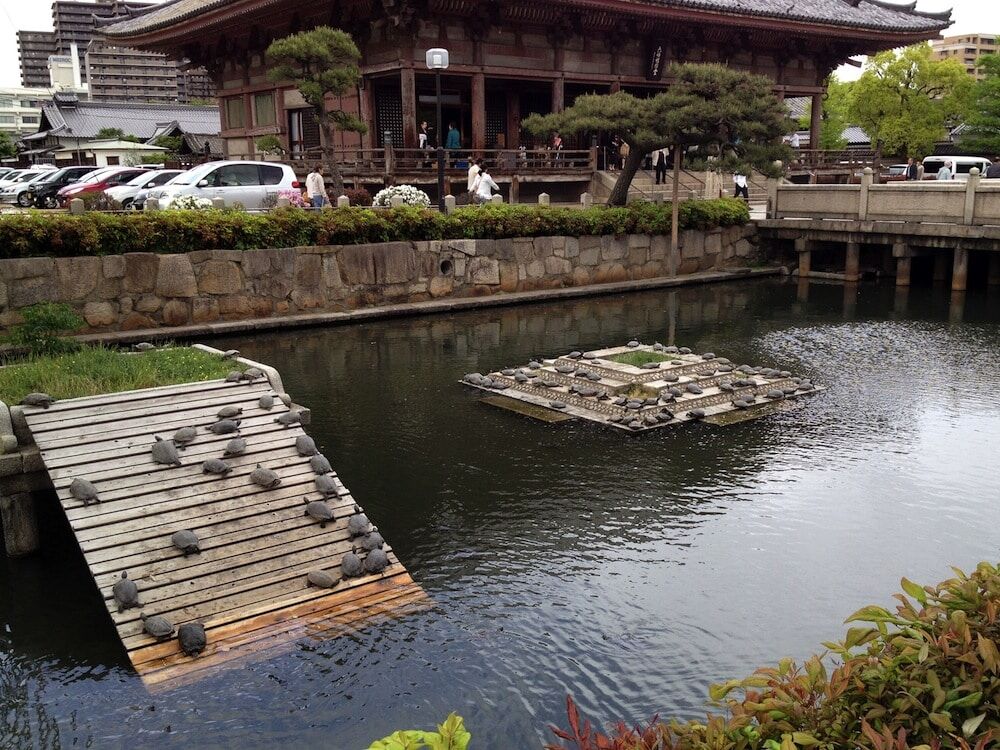
The Turtle Pond on the grounds gathers large numbers of turtles, which you can often see sunning themselves in groups or swimming in the water. It is one of the temple’s famous relaxed scenes and a corner where families and older visitors like to stop.
There are seats by the pond, so you may want to take a short rest here during your visit and feel the rare relaxed atmosphere within the temple. It is open year-round and free, and makes an atmospheric photo spot.
Rokujido Hall
Rokujido is one of the few Important Cultural Property buildings at Shitenno-ji that preserve an earlier style. It enshrines Yakushi Nyorai and is named for the sutras chanted and blessings prayed for in each of the six periods of the day. It is an important place of worship on the grounds for those praying for good health.
Rokujido is open about 8:30 to 18:00 and free to visit. The square in front of the hall often has worshippers lighting lamps and making wishes, and it is also one of the areas with the densest market stalls on the 21st and 22nd of each month, with a lively atmosphere.
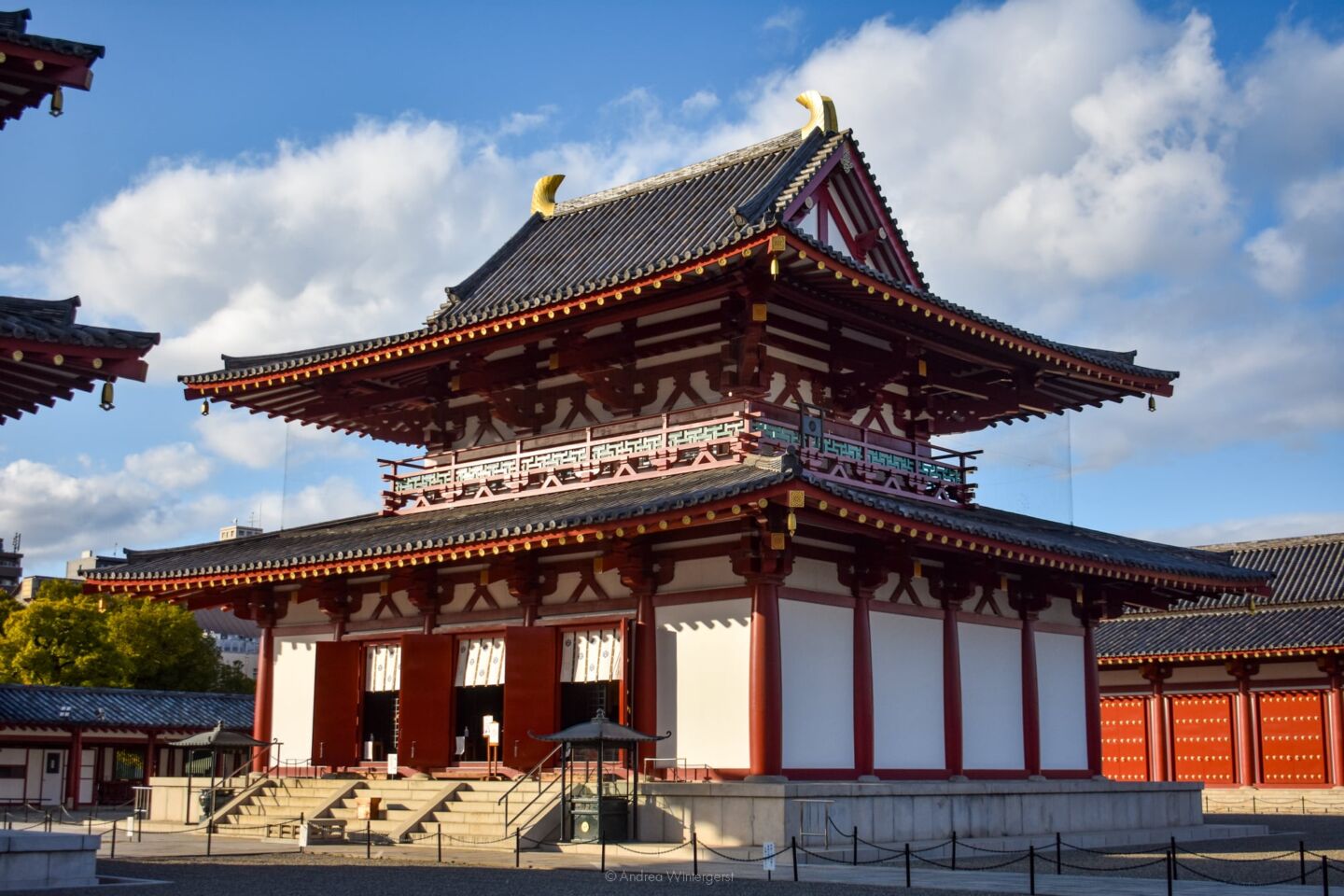
Treasure Museum
The Treasure Museum houses National Treasures and Important Cultural Properties from throughout Shitenno-ji’s history, including the National Treasure “Senmen Hokekyo Soshi” (the Lotus Sutra on fan-shaped paper) and several Buddhist paintings and ritual implements, suitable for those interested in Buddhist art history and artifacts.
Admission: ¥500 for adults, ¥300 for high school students. Exhibits change with periodic themed special exhibitions, so please check the official Shitenno-ji website first (shitennoji.or.jp). A visit takes about 20 to 30 minutes.
Stone Stage
The Stone Stage is designated an Important Cultural Property. Every year on April 22, the “Shorye Bugaku Grand Service” is held here with gagaku and bugaku performances, recreating the solemn scene of ancient court music and dance, a cultural event unique to Shitenno-ji.
On ordinary days the Stone Stage is mainly a static display, and the pond and stone bridge make a pleasing picture. Even without a performance it is worth stopping to appreciate its antique craftsmanship and the surrounding garden landscaping.
Shitenno-ji Ennichi Market
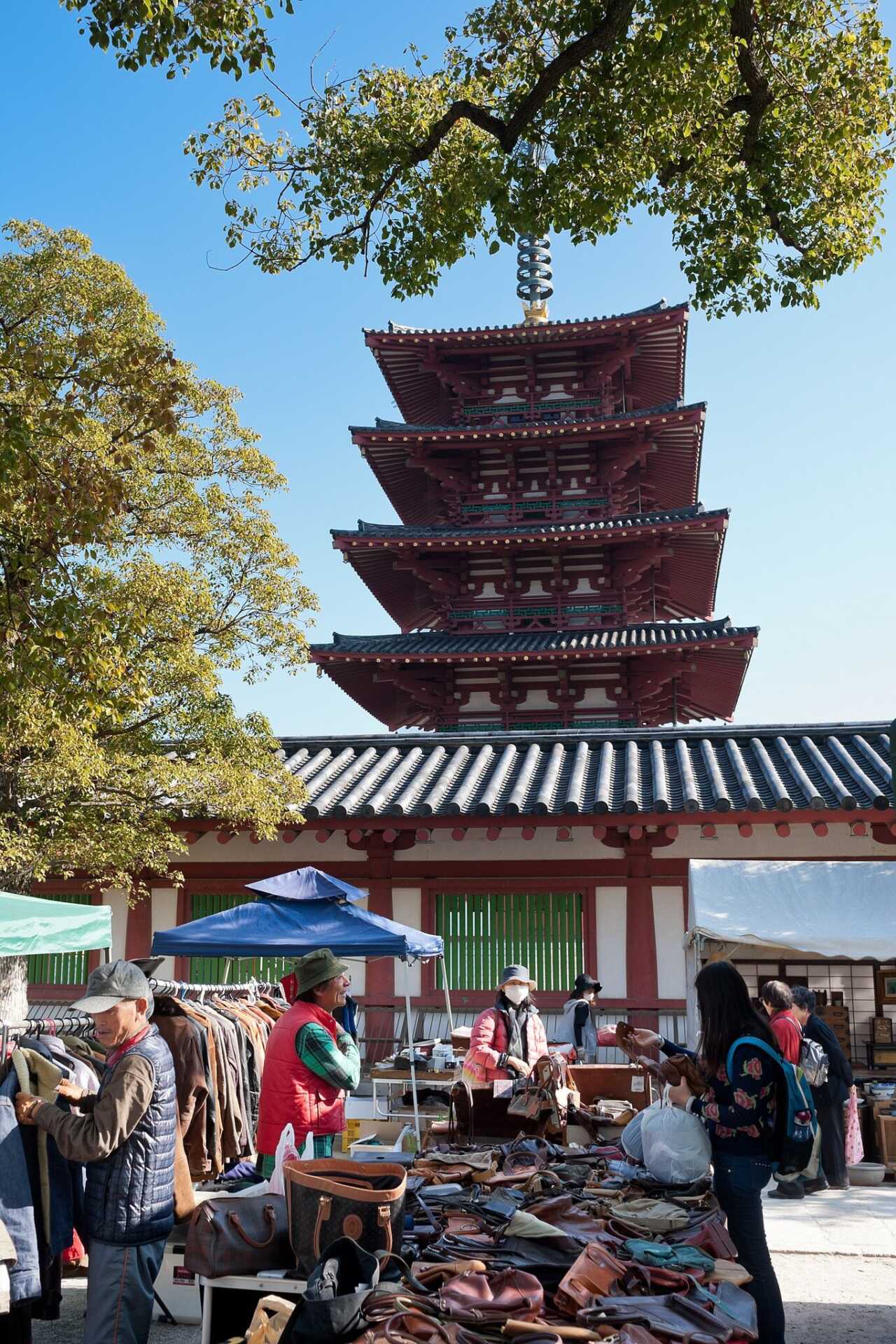
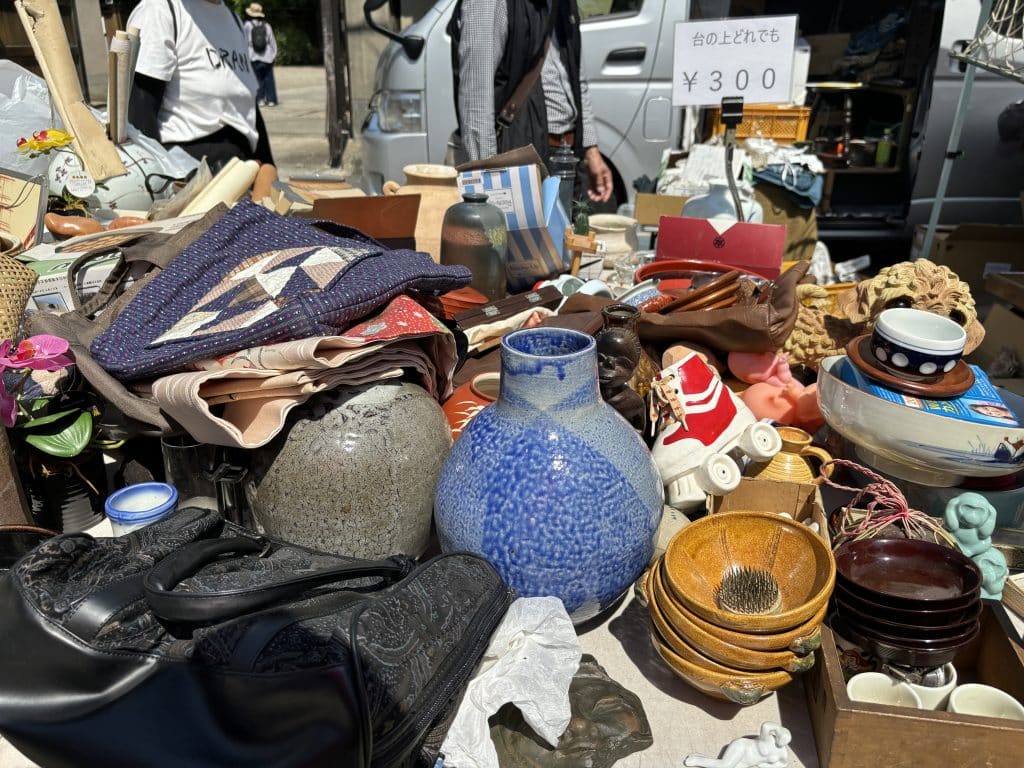
The 21st (“Daishi-e”) and the 22nd (“Taishi-e”) of each month are the liveliest times at Shitenno-ji, when hundreds of antique, general goods and snack stalls gather, making it one of the largest flea markets in the Kansai region. We suggest going in the morning when crowds are thinner, giving you a better chance of finding the old item you want; browse the market first and then worship at the temple. On the 21st, opening hours start earlier, at 8:00.
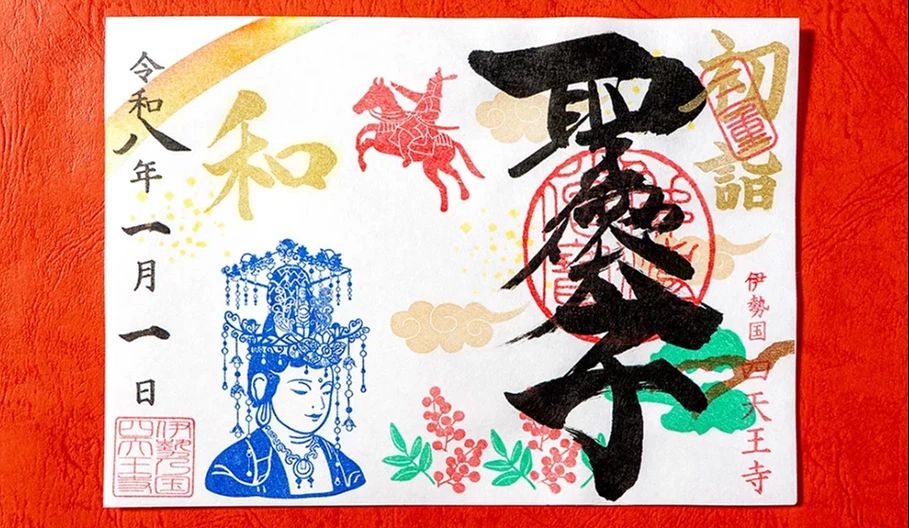
Omamori and Goshuin Office
The amulet offices are mainly near the entrance to the central cloister and around the Middle Gate, offering omamori purchases, goshuin seal writing and various prayer services. Actual service hours are as announced on site.
On the 21st and 22nd market days and on weekend and holiday long weekends, crowds are larger and getting a goshuin often means waiting in line. We suggest going early and watching for changes in service hours announced on site.
How Much Does Shitenno-ji Cost? Tickets, Tours and Experiences
Worship on the grounds is free; only the central cloister, the Honbo Garden and the Treasure Museum charge fees, and you can buy them individually or as a combination ticket as needed.
| Ticket Type | Adult Price | Notes |
|---|---|---|
| Central Cloister | ¥500 | Includes climbing the five-story pagoda |
| Honbo Garden | ¥300 | Pond-strolling garden |
| Treasure Museum | ¥500 | Displays the National Treasure Lotus Sutra on fan-shaped paper |
| Combined ticket for all three | About ¥900 | Better value than buying separately |
| Osaka Amazing Pass | From ¥2,800 | Free entry to the central cloister and garden |
Shitenno-ji Central Cloister and Five-Story Pagoda Ticket
The central cloister ticket lets you enter the five-story pagoda and visit the Golden Hall and Lecture Hall. At ¥500 for adults and ¥300 for high school students, it is Shitenno-ji’s core paid experience, and we recommend that every visitor not miss it.
It can be bought on site at the ticket office beside the Middle Gate or the West Gate, with no advance reservation needed, and is open 08:30 to 16:30 from April to September and until 16:00 from October to March. There is usually no line.

Honbo Garden Ticket
The Honbo Garden is ticketed separately, at ¥300 for adults, ¥200 for high school students and ¥200 for elementary and junior high school students. It suits travelers who like Japanese garden scenery and viewing flowers and autumn leaves, and buying it together with the central cloister ticket is better value.
The garden entrance is near the Honbo and is ticketed separately from the central cloister, but it is not far away, about a 3-minute walk to switch your route. The garden occasionally has temporary closure days, so please check the official website before you go.
Treasure Museum Permanent and Special Exhibition Tickets
Treasure Museum admission is ¥500 for adults and ¥300 for high school students, showing the National Treasure-class “Senmen Hokekyo” (Lotus Sutra on fan-shaped paper) and several Buddhist art objects, with themed special exhibitions rotated periodically.
It suits in-depth travelers interested in historical artifacts, and we suggest checking the current exhibition information on the official website before you go to avoid a wasted trip or missing limited items.
Osaka Amazing Pass Package
The Osaka Amazing Pass for 2026 has changed to a mobile QR ticket, with a 1-day pass at ¥3,500 and a 2-day pass at ¥5,000, including unlimited rides on Osaka Metro and designated city routes, plus free entry to about 40 facilities. Whether Shitenno-ji is among the free facilities is as stated on the official facility list.
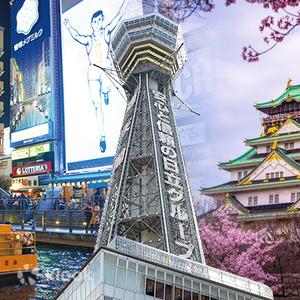
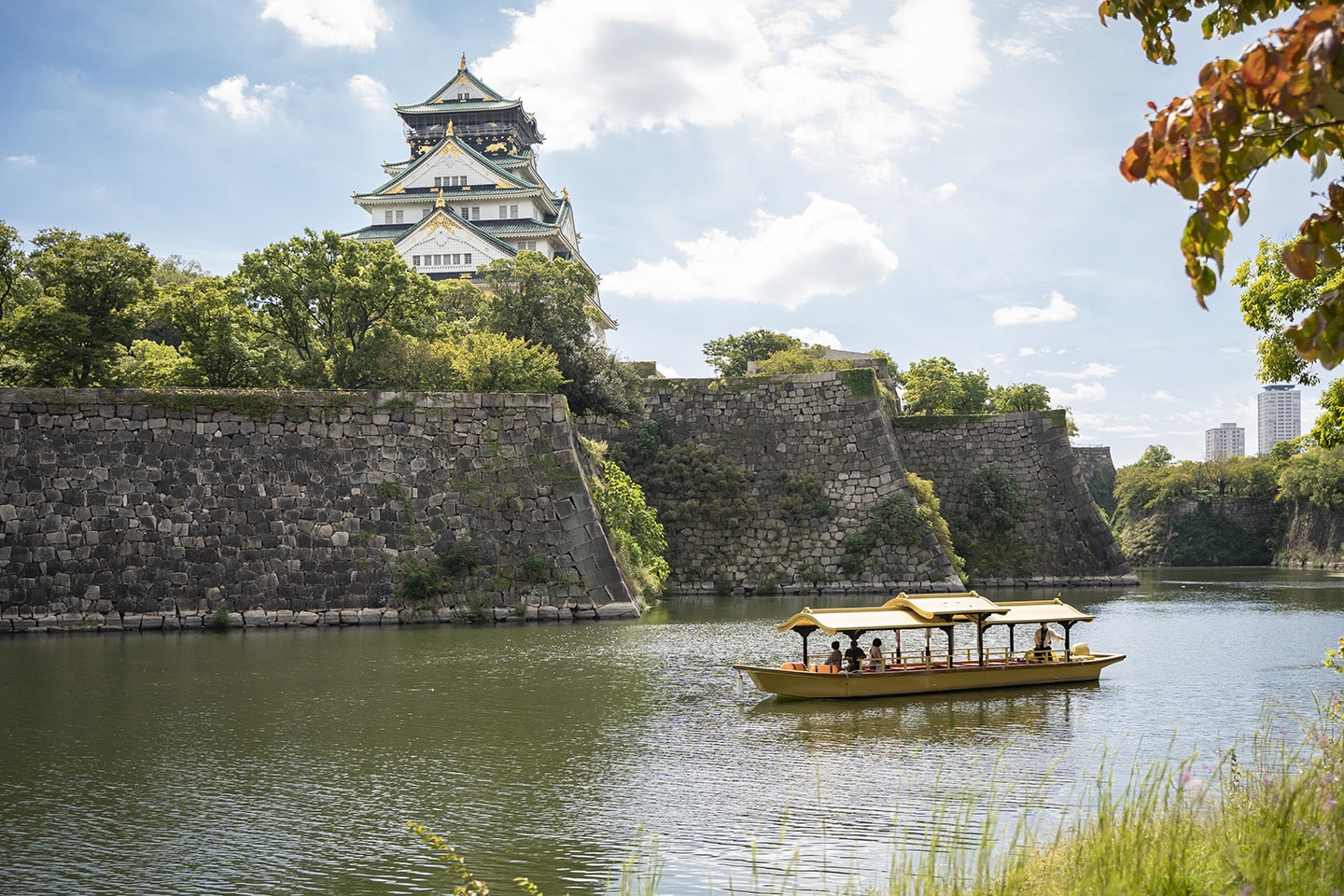
The pass also comes with free-entry offers for many of Osaka’s popular attractions, so if you also plan to visit places such as Osaka Castle or Tsutenkaku that day, the pass is usually better value than buying individual tickets.

Treasure Hunting for Antiques at the Shitenno-ji Ennichi Market
The ennichi market on the 21st and 22nd of each month needs no ticket, but we suggest making the most of those two days to enjoy the fun of antique hunting. The stalls cover old goods, kimono and vintage clothing and street food, an excellent chance to get a deeper feel for local life and culture.
Browsing the market costs nothing extra; just bring cash to buy items you like. We suggest arriving before 9 a.m. to avoid crowds and get the best chance to choose.
Where to Stay Nearby
Shitenno-ji is in the Tennoji area, about a 5-minute walk south from Shitennoji-mae Yuhigaoka Station on the Osaka Metro Tanimachi Line, and about a 12-minute walk from JR Tennoji Station. Staying around Tennoji and Abeno makes it easy to travel to central Osaka and Kansai Airport, and it also suits an early start for the ennichi market on the 21st and 22nd of each month.

FAQ
Q: How much are tickets to Shitenno-ji?
Worship on the grounds is free. The central cloister is ¥500, the Honbo Garden ¥300 and the Treasure Museum ¥500, all available individually; high school students pay ¥300 each for the central cloister and the Treasure Museum.
Q: What are Shitenno-ji’s opening hours?
Daily 08:30 to 16:30 (April to September) and until 16:00 from October to March, opening earlier at 8:00 on the 21st of each month. Actual service hours depend on the day’s announcement, so we suggest checking in advance.
Q: What is the most convenient way to get to Shitenno-ji?
Take the Osaka Metro Tanimachi Line to Shitennoji-mae Yuhigaoka Station and walk south about 5 minutes from the exit. This is the fastest way.
Q: When is the Shitenno-ji ennichi market?
On the 21st (“Daishi-e”) and the 22nd (“Taishi-e”) of each month, hundreds of antique and snack stalls appear inside and outside the grounds, the liveliest time to visit.
Q: When is the best season to visit Shitenno-ji?
Cherry blossoms in spring (March to April) and autumn leaves in November are the most recommended, when the Honbo Garden is at its most beautiful, and you also avoid the midsummer heat and winter winds.
Q: What should I be aware of when visiting Shitenno-ji?
The grounds are a religious site, so please keep quiet and respect worshippers. When the ennichi market is crowded, watch your belongings, and you can check the official website for the day’s announcements before you go.
Q: Where can I get a goshuin at Shitenno-ji?
You can get one at the amulet office near the entrance to the central cloister. Service hours are as announced on site, and on market days when it is crowded we suggest going early.