
Arashiyama Guide 2026: Kyoto’s Most Beautiful Natural Sights Explained
Arashiyama is one of Kyoto’s most representative scenic areas, known for its magnificent bamboo grove, the clear Hozu River and beautiful temple gardens. Whether for cherry blossoms, autumn leaves or a plain day out, Arashiyama is a must-visit in Kyoto. This guide covers Arashiyama’s transport options, must-see sights, food recommendations and places to stay, helping you plan a perfect one-day trip to Kyoto’s Arashiyama.
How to Get to Arashiyama: Routes from Kyoto Station, Kawaramachi and Osaka, and Ticket Comparison
Arashiyama has three stations on different systems: JR Saga-Arashiyama Station, Randen (Keifuku Electric Railroad) Arashiyama Station and Hankyu Arashiyama Station. Their locations and fares differ, and choosing the wrong one means quite a bit more walking. Below are the most practical routes by starting point.
From Kyoto Station: The JR Sagano Line Is Fastest
From Kyoto Station, the JR Sagano Line (San’in Main Line) to Saga-Arashiyama Station takes about 15 minutes and costs about ¥240 one way, the fastest and simplest route. From the station, walk west about 10 minutes to reach Arashiyama’s main street and Togetsukyo Bridge. Those taking the Sagano Scenic Railway also transfer here, as the Torokko Saga station is right next to JR Saga-Arashiyama Station.
From Kyoto Kawaramachi and Karasuma: Hankyu to the Arashiyama Line
Travelers staying around Kawaramachi and Shijo can take the Hankyu Kyoto Line to Katsura Station and transfer to the Hankyu Arashiyama Line, then arrive at Hankyu Arashiyama Station in about 7 to 8 minutes. The whole trip takes about 25 minutes and costs ¥240. Hankyu Arashiyama Station is on the south bank of the Katsura River, and after exiting you walk across Togetsukyo Bridge into the main scenic area, which suits visiting Horin-ji first and then heading north.
Taking the Randen: A Budget Way to Link Kinkaku-ji and Ninna-ji
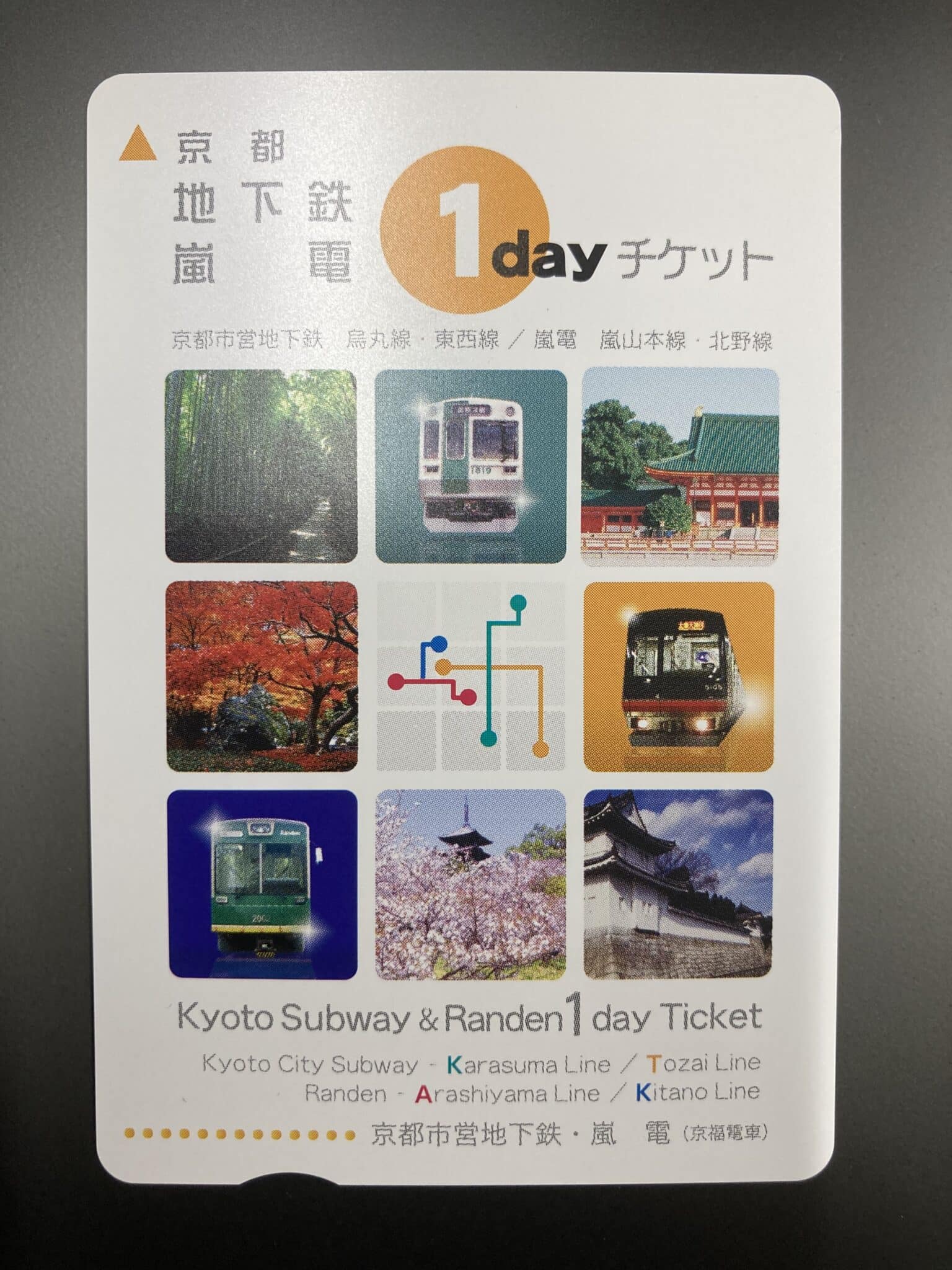
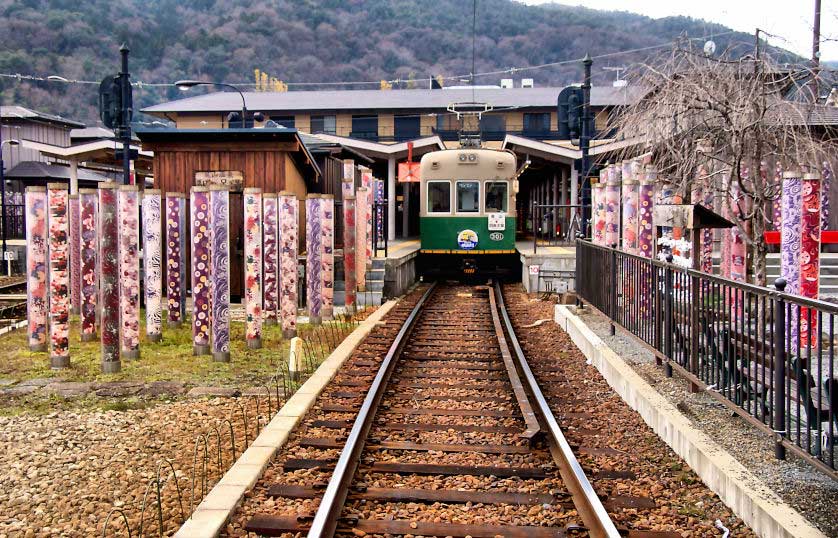
The Randen from Shijo-Omiya Station to Arashiyama Station takes about 24 minutes, with a flat fare of ¥250 for adults and ¥120 for children (age 6 to under 12) across the whole line. If you also plan to visit Ryoan-ji, Ninna-ji and Kinkaku-ji that day, the Randen 1-Day Pass (¥700 for adults, ¥350 for children) is usually better value than single tickets. Randen Arashiyama Station is itself an attraction, with the Kimono Forest light poles and a foot bath right beside the ticket gates.
Another route recommended by the City of Kyoto is to take the Karasuma Line subway from Kyoto Station to Karasuma Oike, transfer to the Tozai Line to Uzumasa Tenjingawa Station (about 20 minutes), then take the Randen to Arashiyama (about 15 minutes, ¥250). Combined with the Kyoto Subway and Randen 1-Day Pass (¥1,300, adult tickets only), one ticket covers the whole subway and Randen network, suiting itineraries that put Arashiyama and city sights on the same day.

Sagano Scenic Railway: The Key Connection Going Up to Kameoka and Taking the Boat Down
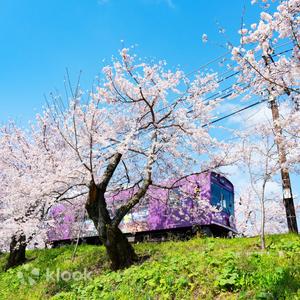
The Sagano Scenic Railway runs 7.3 km over Torokko Saga – Torokko Arashiyama – Torokko Hozukyo – Torokko Kameoka, taking about 25 minutes one way, with a flat fare of ¥880 for adults and ¥440 for children (age 6 to under 12). It operates from March 1 to December 29 each year, with no service on Wednesdays during that period (it runs as usual if Wednesday is a public holiday). Reservations are available on the official website (sagano-kanko.co.jp), and tickets often sell out in peak cherry blossom and foliage seasons; same-day tickets are sold at station counters while they last.
What Are Arashiyama’s Must-See Sights? Highlights by Area
Arashiyama is a famous Kyoto tourist destination with rich natural scenery and history. Whether you want cherry blossoms, autumn leaves or a stroll through the bamboo, Arashiyama meets different visitors’ needs. This article introduces Arashiyama’s must-see sights and highlights by area to help you plan a perfect Arashiyama trip.
Tenryu-ji

![[In-Depth Kyoto] Nijo Castle + Kinkaku-ji + Fushimi Inari Taisha + Arashiyama Tenryu-ji & Bamboo Grove One-Day Tour | Choose Departure from Osaka/Kyoto](https://res.klook.com/images/w_300,h_300,c_fill,q_75/w_80,x_15,y_15,g_south_west,l_Klook_water_br_trans_yhcmh3/activities/aew0lufrgslqkfff00eg/【京都深度遊】二條城+金閣寺+伏見稻荷大社+嵐山天龍寺竹林小徑一日遊|可選大阪京都出發-Klook.jpg)
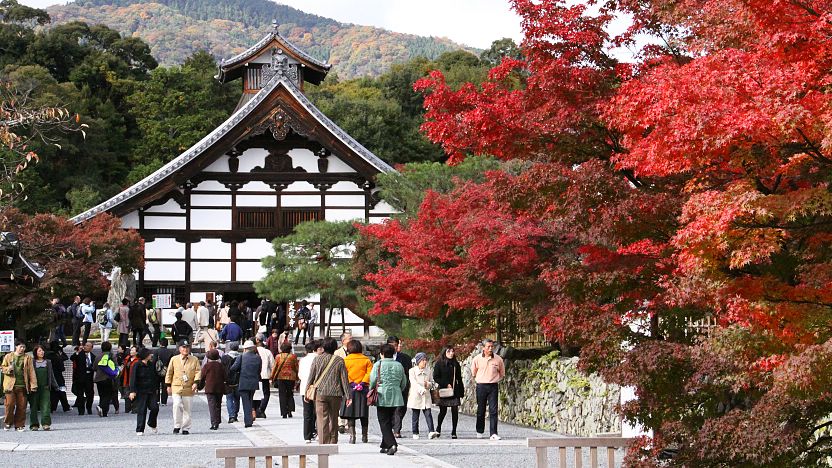
Tenryu-ji is in the Arashiyama area and is a famous Zen temple in Japanese history and a World Heritage site. Founded in 1339, it was built by Ashikaga Takauji to mourn Emperor Go-Daigo. Its official website is tenryuji.com. The temple has beautiful gardens and many cultural treasures such as stone carvings and Buddha statues.
The most notable feature of Tenryu-ji is its garden, with a beautiful pond, stone bridges and carefully pruned trees, an ideal place for foliage and flowers. Visitors can stroll through the garden and enjoy the scenery of each season.
The Tenryu-ji garden (Sogenchi Garden and Hyakkaen) is open 8:30 to 17:00 (ticket sales until 16:50). Admission is ¥500 for high school students and above, ¥300 for elementary and junior high school students, and free for preschool children. To also see the Daihojo, Shoin, Tahoden and other halls, you need an additional ¥300 on top of the garden ticket (accepted until 16:30). The “Cloud Dragon” painting in the Dharma Hall is a separately charged special viewing at ¥500 per person, and in principle is open only on Saturdays, Sundays and public holidays. We recommend staying 1-2 hours, and the temple offers amulets and goshuin.
Arashiyama Bamboo Grove
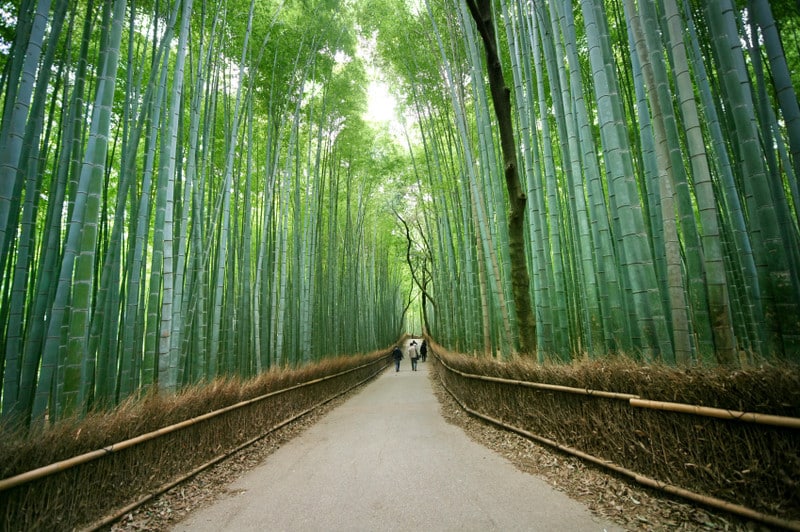
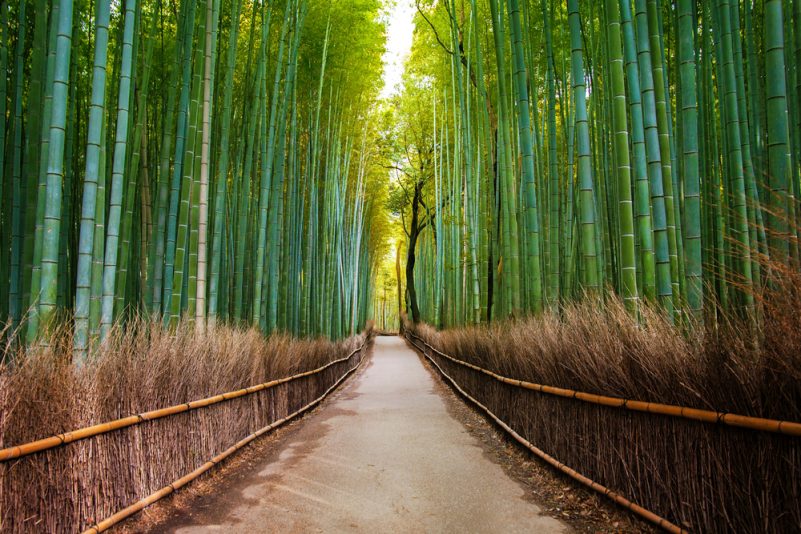
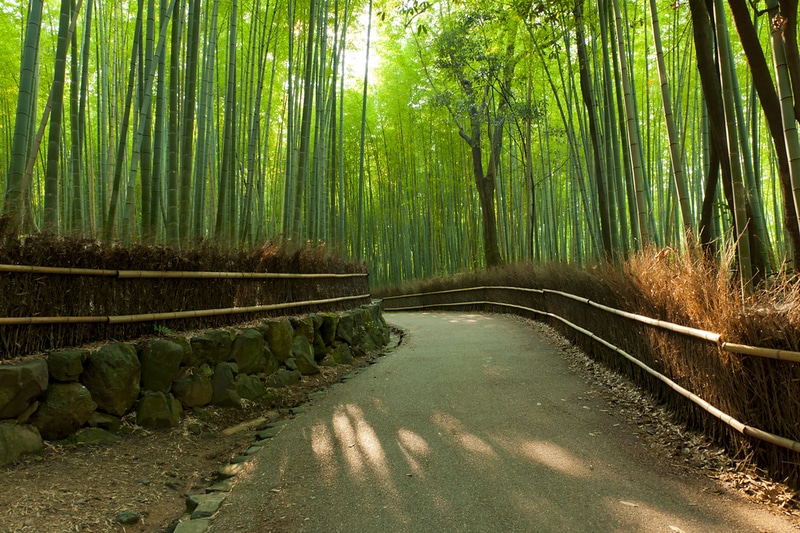
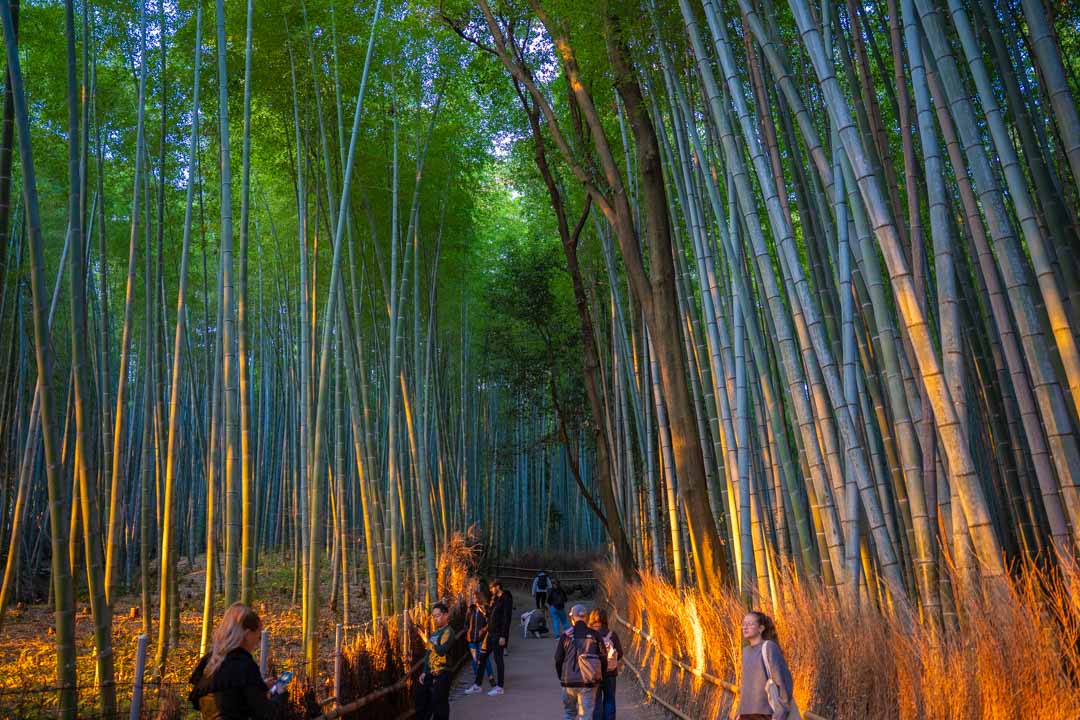
The Arashiyama Bamboo Grove is one of Arashiyama’s most representative sights, a vast stand of bamboo. Tall bamboo rises on both sides of the path, lush and green, giving a quiet and mysterious feeling.
The best time to visit the Arashiyama Bamboo Grove is early morning or late afternoon, when there are fewer people and you can better enjoy the scenery. Visitors can stroll along the bamboo path and feel the tranquility of the grove and the breath of nature.
The Arashiyama Bamboo Grove is free to enter, and we suggest staying about 1 hour. Note that it can be rather damp inside the grove, so wear comfortable shoes and clothing.
Togetsukyo Bridge
![[Osaka & Kyoto Sights One-Day Tour] Katsuo-ji Prayers & Kinkaku-ji Visit & Arashiyama Togetsukyo Bridge & Kimono Forest & Bamboo Grove & Nonomiya Shrine (from Osaka or Kyoto)](https://res.klook.com/images/w_300,h_300,c_fill,q_75/w_80,x_15,y_15,g_south_west,l_Klook_water_br_trans_yhcmh3/activities/mop79jaiwtwxhwjheqdb/【大阪京都名勝景點一日遊】勝尾寺祈願金閣寺巡禮嵐山渡月橋和服森林竹林小徑野宮神社(大阪或京都出發)-Klook.jpg)
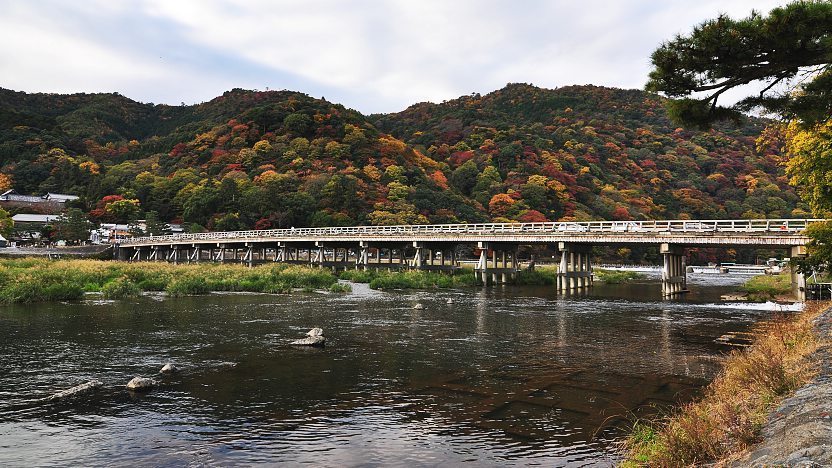
Togetsukyo Bridge is a famous bridge in Arashiyama spanning the Katsura River. From the bridge you can enjoy beautiful views of the Katsura River and the surrounding mountains, an ideal place for photography.
Togetsukyo Bridge is said to have first been built by the monk Dosho in the early Heian period, and for many years was a wooden bridge. The current bridge was completed in 1934 (Showa 9) and is actually a steel-reinforced concrete structure about 155 meters long, but its railings deliberately follow a wooden lattice style to harmonize with the Arashiyama landscape. Note that Togetsukyo Bridge is part of Kyoto Prefectural Road 29, so cars and large tour buses still cross it and the sidewalks are not wide. When taking photos, stay to the side and watch for vehicles and crowds.
Togetsukyo Bridge is open all day and free to visit. We suggest staying 30 minutes to 1 hour. The bridge is an ideal place to enjoy Arashiyama’s scenery, especially in cherry blossom season or when the maple leaves turn red.
Randen Arashiyama Station
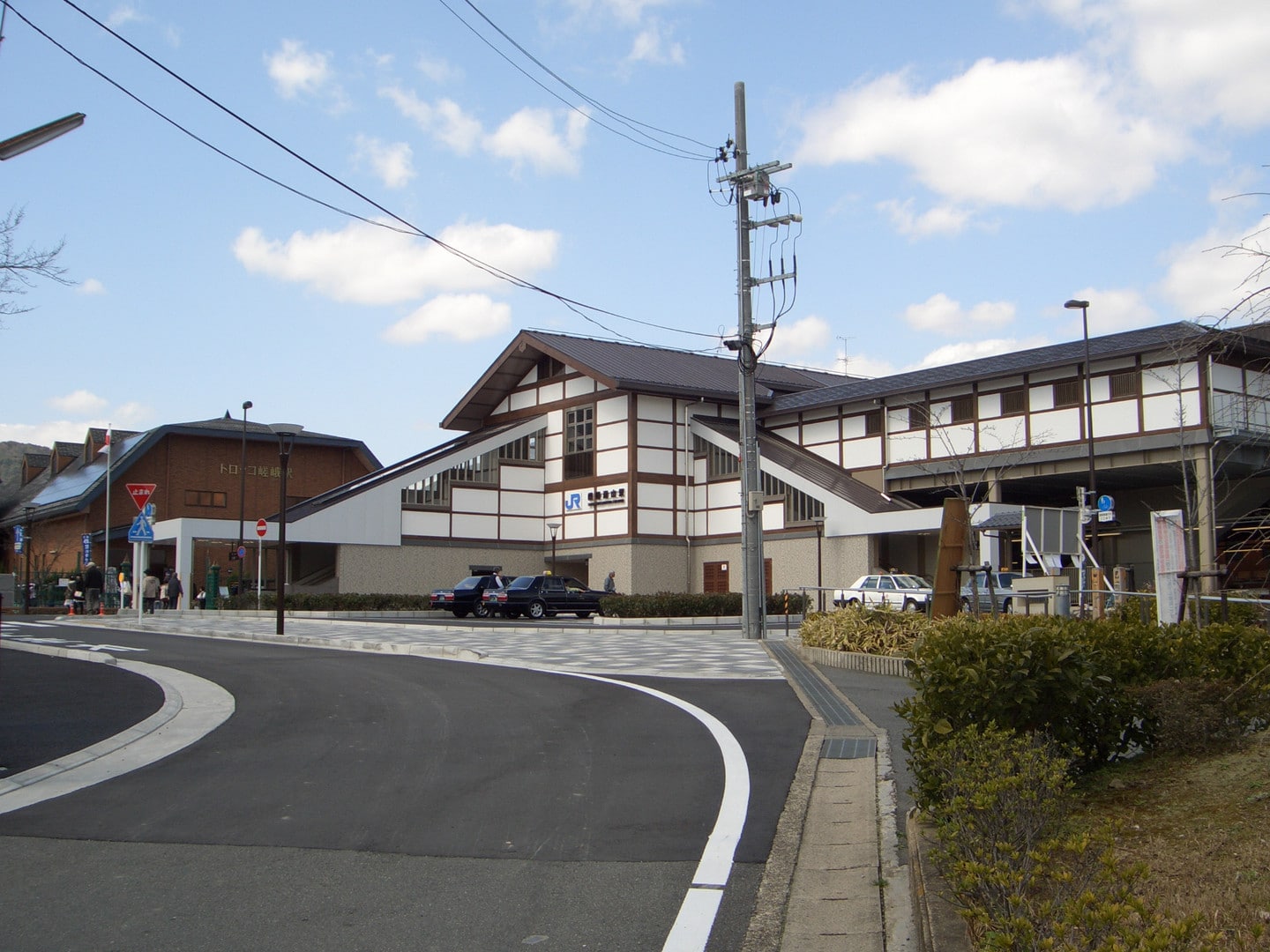
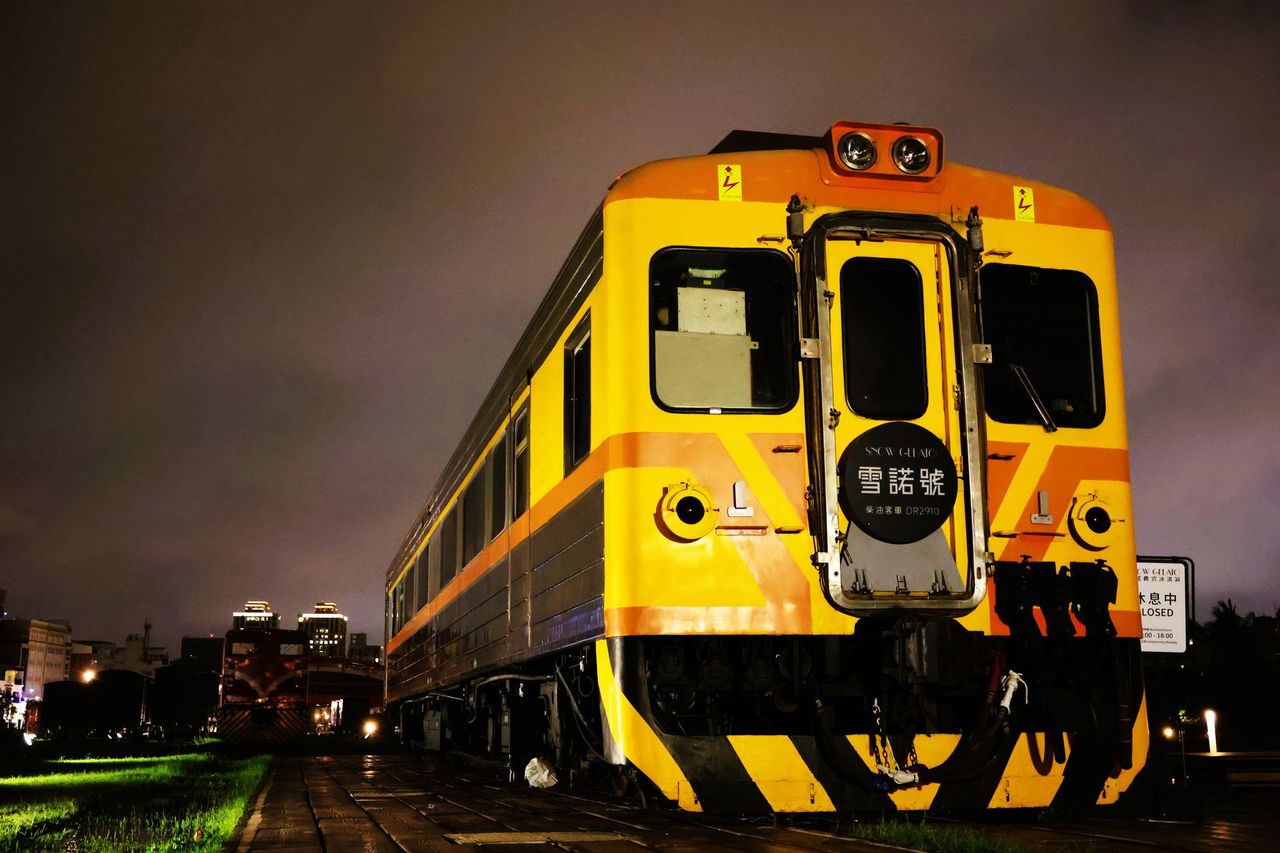
Randen Arashiyama Station is the terminus of the Keifuku Electric Railroad Arashiyama Line and a nostalgic railway station. The station keeps its early architectural style, giving a retro feel.
Around Randen Arashiyama Station there are many shops and restaurants, where visitors can buy souvenirs or try local food. The station also has many displays about Arashiyama’s history and culture, helping visitors learn more about Arashiyama.
Randen Arashiyama Station is open all day and free to visit. Visitors can ride the Arashiyama Line from here to other attractions, or walk to nearby sights.
Arashiyama Park
Arashiyama Park is a large park in the Arashiyama area with beautiful gardens, ponds and walking paths. The park is an ideal place for cherry blossoms and autumn leaves and attracts large numbers of visitors every year.
Arashiyama Park has many historic remains and cultural facilities, such as old tombs and stone monuments. Visitors can stroll through the park and learn about Arashiyama’s history and culture.
Arashiyama Park is open all day and free to visit. We suggest staying 1-2 hours. The park has many benches and pavilions where visitors can rest and enjoy the view.
Horin-ji
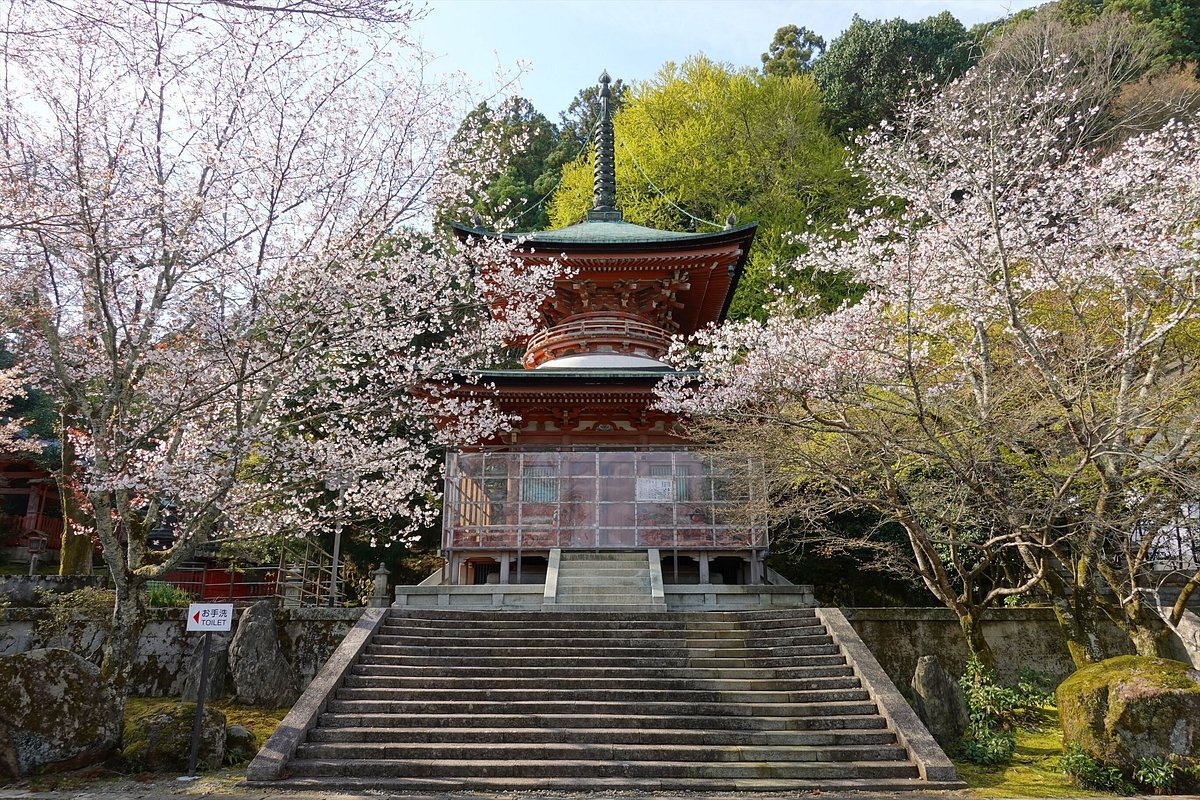
Horin-ji’s formal name is “Kokuzo Horin-ji.” It sits on the hillside south of Togetsukyo Bridge and enshrines the Bodhisattva Kokuzo, and locals usually call it “Saga’s Kokuzo-san.” The temple has gardens and many cultural treasures such as Buddha statues and stone carvings.
Horin-ji’s history goes back to the 8th century, making it one of the oldest temples in the Arashiyama area. The temple offers amulets and goshuin, and visitors can buy amulets to pray for safety and good fortune.
Horin-ji is open 9:00 to 17:00, every day of the year, and entry to the grounds for worship is free. It is known for the traditional wisdom-seeking rite “Jusan-mairi,” and the grounds also have the “Denden-gu,” a rare shrine in Japan that protects the electrical and radio industries. The stage next to the main hall overlooks Arashiyama and the Kyoto cityscape, with relatively few visitors, making it a rare place in Arashiyama to catch your breath. We suggest staying 1 hour, and please keep quiet while worshipping.
Katsura River
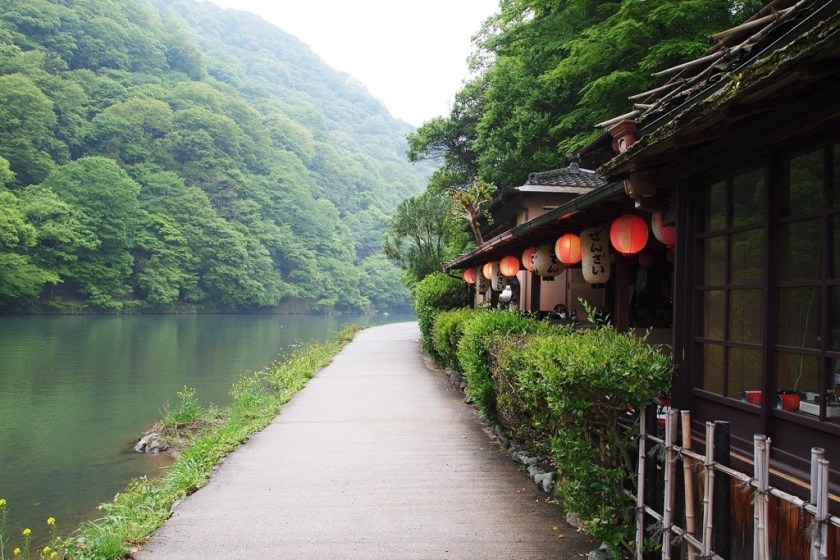
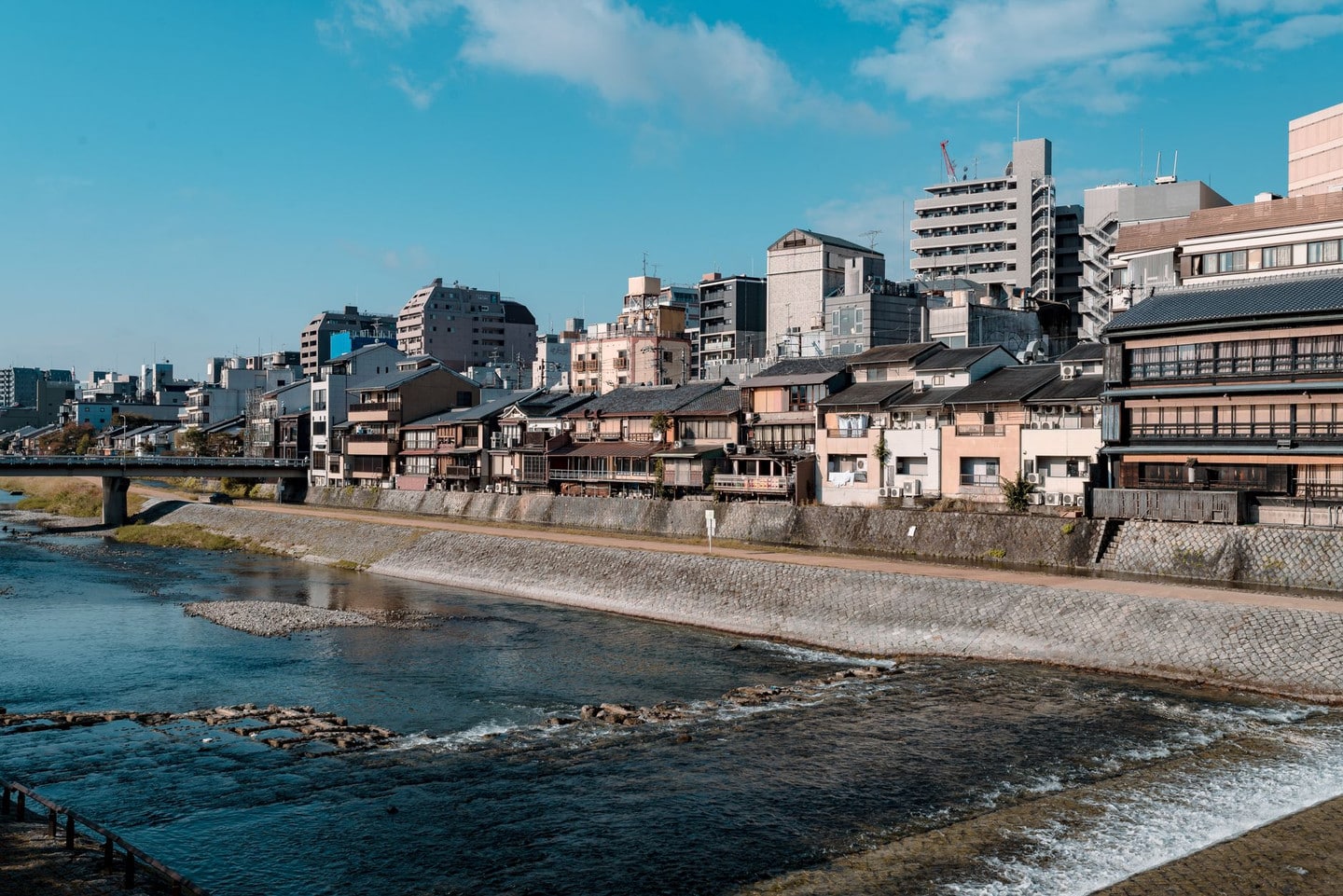
The Katsura River flows through Arashiyama with clear water and beautiful scenery. Visitors can stroll along the riverbank and enjoy the river and the surrounding mountain views.
The best time to visit the Katsura River is spring or autumn, when the scenery is most beautiful. Visitors can try local food and drinks at restaurants or cafés along the bank.
The Katsura River is open all day and free to visit, and we suggest staying 1-2 hours. Around the Oi River upstream of Togetsukyo Bridge, “Arashiyama Tsusen” runs hand-rowed rental boats, limited to 3 people per boat at ¥2,000 per hour. You can board on the spot or reserve, another way to look up at Arashiyama from the water.
Arashiyama Shopping Street
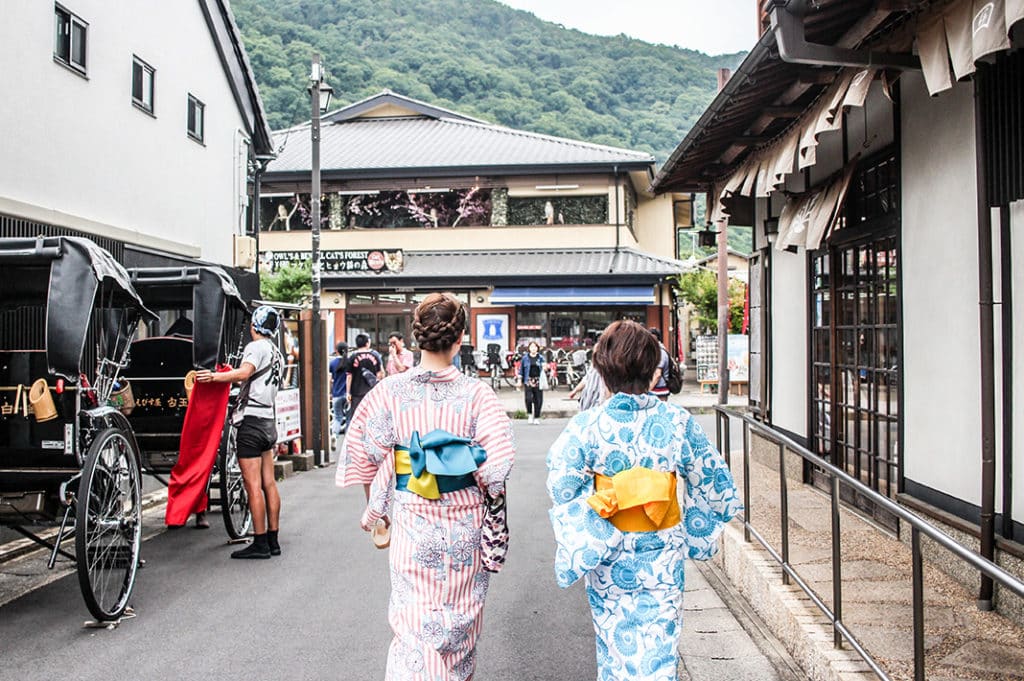
Arashiyama Shopping Street is a famous shopping street in the Arashiyama area with many shops, restaurants and cafés. Visitors can buy souvenirs and local specialties and try local food here.
Arashiyama Shopping Street sells a wide variety of goods, from traditional crafts to modern fashion. Visitors can also try local specialty snacks and drinks here.
Arashiyama Shopping Street is open all day and free to visit. We suggest staying 1-2 hours. Visitors can find many unique souvenirs and gifts here.

What Activities Should You Try in Arashiyama? Selected Travel Products
Arashiyama is one of Kyoto’s most famous tourist destinations, with rich natural scenery and cultural heritage. Visitors can experience traditional Japanese culture here and enjoy the beauty of each season. Below are selected must-try Arashiyama activities so you can fully enjoy this beautiful land.
Arashiyama Half-Day Tour: Bamboo Grove and Tenryu-ji
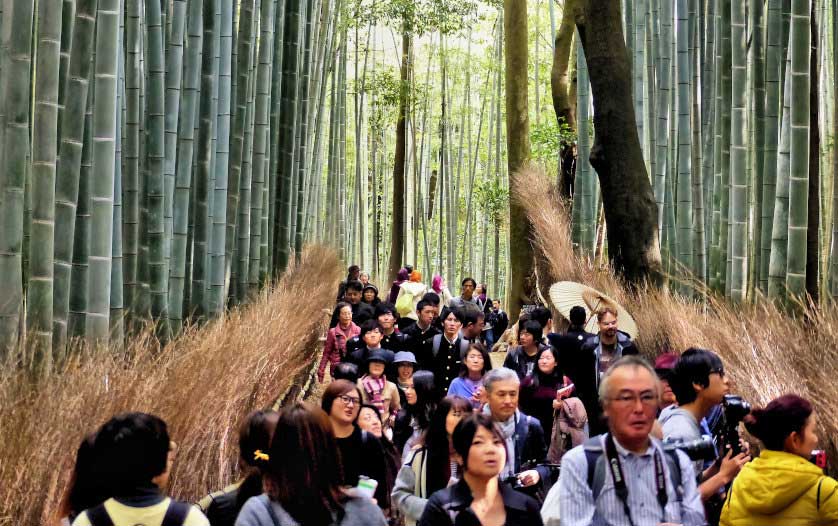
This half-day route takes you deep into Arashiyama’s bamboo grove to feel its peaceful natural atmosphere. You will visit the famous Tenryu-ji, a World Heritage temple with beautiful gardens and historic buildings.
Itineraries mostly start from JR Saga-Arashiyama Station (the official JR station name is “Saga-Arashiyama,” and there is no JR station called “Arashiyama,” so don’t confuse it with the Randen and Hankyu Arashiyama stations), exploring the bamboo grove, Tenryu-ji, Arashiyama Park and more on foot. Along the way you can enjoy Arashiyama’s natural beauty and historic buildings and learn about local culture and history.
This route is mostly on foot and takes about 3 to 4 hours for a half day. Apart from the Tenryu-ji garden ticket (¥500 for high school students and above), it needs almost no extra spending. If you want a guided tour, check the real-time information on the KKday and KLOOK platforms below for actual contents and prices. Recommended for visitors who like nature and history.
Arashiyama Boat Ride: Hozu River Cruise
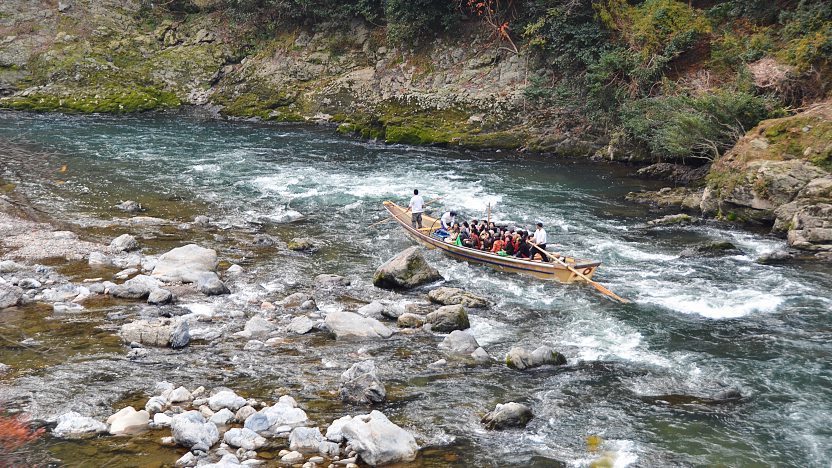
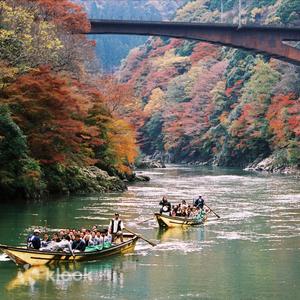
Experience Arashiyama’s unique boat ride, drifting down the Hozu River and enjoying the scenery on both banks. During the ride you can see Arashiyama’s natural beauty and historic buildings up close, a distinctive way to sightsee.
Note that the Hozugawa River Boat Ride does not depart from Arashiyama. Boats leave from the Kameoka boarding point upstream and float downstream for about 16 km, finally arriving beside Togetsukyo Bridge in Arashiyama. Along the way you pass the odd-shaped rocks and several rapids of Hozu Gorge, with the boatmen explaining the terrain and its stories. The classic way is to take the JR Sagano Line or the Sagano Scenic Railway up to Kameoka first, then drift back to Arashiyama by boat, which neatly forms a loop trip.
Boat tickets are ¥6,000 for adults and ¥4,500 for children (elementary school age and under). The trip takes about 2 hours, and is shortened when the water level is high. From March 10 to December 13, 2026, regular boats depart hourly between 9:00 and 15:00; from mid-December to early March the next year they switch to heated boats. See the official website for details. It is often full in peak season, so reserve on the official website in advance. Suited to visitors who like water activities and photography.
Arashiyama Craft Experiences: Traditional Crafts and Food
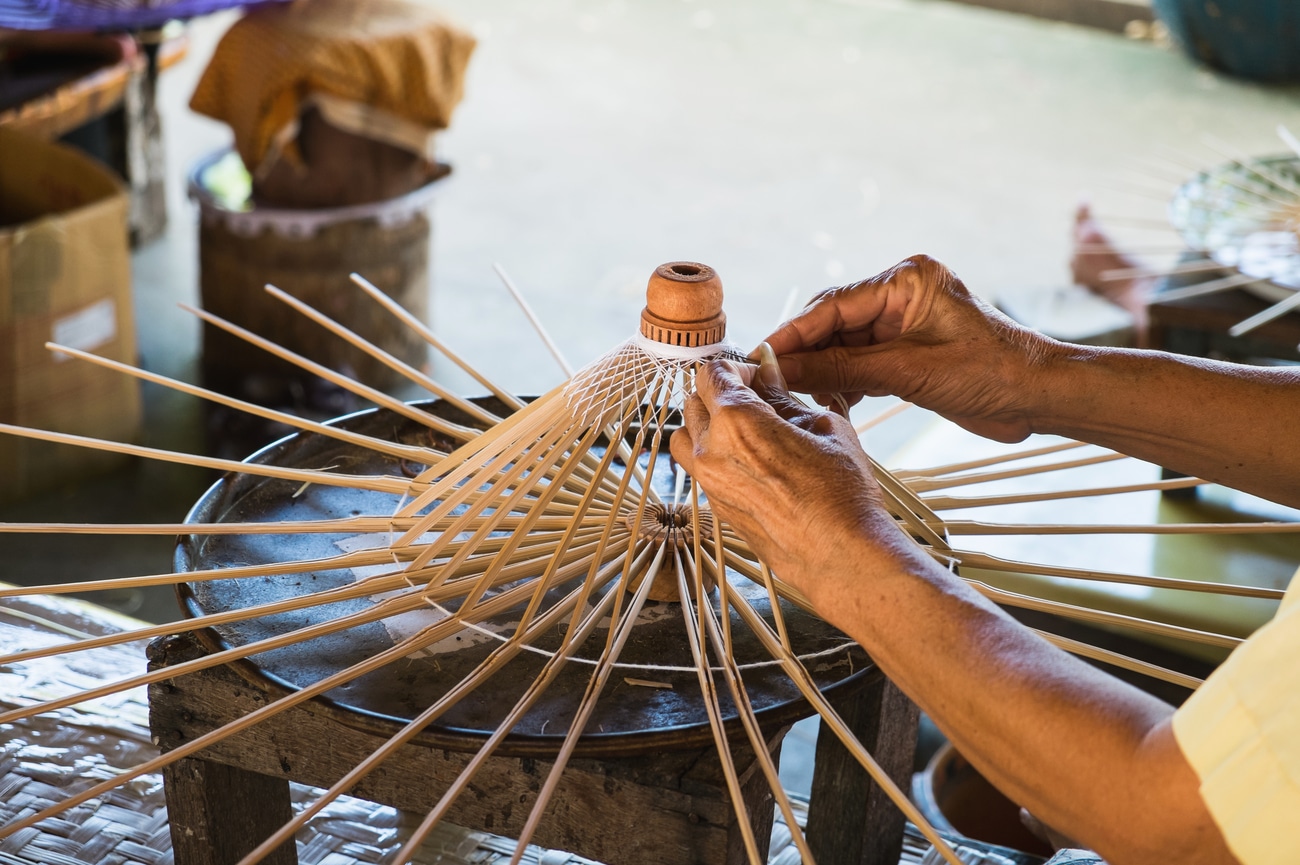
Join a craft experience in Arashiyama and make traditional Japanese crafts by hand, such as wooden crafts or a kimono experience. You can also taste local specialties and learn about traditional making techniques.
Activity locations are mostly in central Arashiyama, not far from JR Saga-Arashiyama Station or Randen Arashiyama Station. After signing up, you will receive professional guidance and make your own souvenir by hand. The activity also includes tasting local specialty snacks, such as Arashiyama’s famous products.
Arashiyama has many craft and kimono experience shops, and plans, duration and prices vary widely, so we suggest checking the real-time information on the KKday and KLOOK platforms below before booking. Recommended for visitors who like crafts and experiencing traditional culture.
Arashiyama Sunset Viewing: Arashiyama Park
Arashiyama Park is one of the best places to watch the sunset. You can climb to the park’s high ground to enjoy a magnificent sunset over the Arashiyama area, with the surrounding nature and historic buildings looking even more beautiful in the setting sun.
The park has several viewing platforms and walking paths, letting you stroll leisurely and enjoy the view. After dark the park shows another side, suited to visitors who like photography and a romantic mood.
Entry is free, and the park is open every day of the year. Recommended for visitors who like nature and romance.
How to Plan a One-Day Arashiyama Trip? Classic, Half-Day and Family Routes
Arashiyama’s main sights are concentrated within about a 20-minute walk between Togetsukyo Bridge and the bamboo grove, but the scenic train and Hozu River boat require a round trip to Kameoka, stretching the time considerably. Whether the itinerary works depends on whether you include the train plus boat.
Classic One-Day Trip: Train Up, Boat Down in a Loop
In the morning, arrive at JR Saga-Arashiyama Station and take the Sagano Scenic Railway to Kameoka (about 25 minutes), then transfer to the Hozu River boat and drift back to Arashiyama (about 2 hours). After lunch on Arashiyama’s main street, spend the afternoon at Tenryu-ji, the bamboo grove and Nonomiya Shrine, and finish at dusk watching the sunset by Togetsukyo Bridge. This route covers almost all of Arashiyama’s highlights in one go, but both the train and the boat require keeping to their schedules, so book both in advance.
Compact Half-Day Route: The Walking Circuit Only
If time is limited, skip the train and boat and do a purely walking route: start at Randen Arashiyama Station, then Togetsukyo Bridge, Arashiyama’s main street, Tenryu-ji (garden ¥500), the bamboo grove and Nonomiya Shrine, which takes about 3 to 4 hours at a relaxed pace. To avoid crowds, the most commonly mentioned tip in travelogues is to visit the bamboo grove around 7 a.m.; between 11 a.m. and 2 p.m., especially on weekends, the bamboo grove entrance often has a queue.
Family Route: The Scenic Train and the Monkey Park
If you bring children, the Sagano Scenic Railway and the Arashiyama Monkey Park Iwatayama south of Togetsukyo Bridge are the most popular. The park is at 61 Arashiyama Nakaoshita-cho, Nishikyo-ku, Kyoto, open every day of the year, and may close in bad weather. Check the official website (monkeypark.jp) for admission fees and opening hours. The park is on a mountain, and the walk uphill from the entrance to the summit viewpoint takes about 20 minutes, which is hard going with a stroller.
What Is Good to Eat in Arashiyama? Must-Try Restaurants Around Togetsukyo Bridge and the Main Street
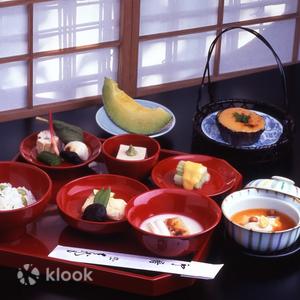
Arashiyama’s dining is concentrated on the main street between the north bank of Togetsukyo Bridge and Randen Arashiyama Station, mostly yudofu (hot tofu), soba noodles and takeaway snacks. Here are a few shops that have long been on Arashiyama lists:
- % ARABICA Kyoto Arashiyama: beside the Oi River by Togetsukyo Bridge, mainly takeaway coffee, with floor-to-ceiling windows facing Arashiyama and a regular on Arashiyama’s queue lists.
- Oimatsu Arashiyama: a long-established Kyoto Japanese confectionery shop with an attached tea room, Genni-an. Its signature “natsu-mikan” candy is a seasonal item from March to July, while the warabi-mochi is available all year.
- Nakamuraya Sohonten: a long-established butcher shop whose freshly fried croquettes at the storefront are Arashiyama’s most famous walking snack. It is about a 2-minute walk from Randen Arashiyama Station and about 10 minutes from JR Saga-Arashiyama Station.
- Tofu Chaya Saga Tofu Sanchu: at the corner on the way to Nonomiya Shrine and Jojakko-ji, with outdoor self-service seating at friendly prices, good for a light refuel before or after the bamboo grove.
For a more complete list and each shop’s character, see our related article: 2026 Arashiyama Food Guide: Hand-Cut Soba, Top-Tier Unagi Rice and Popular Local Shops.
Where to Stay Nearby
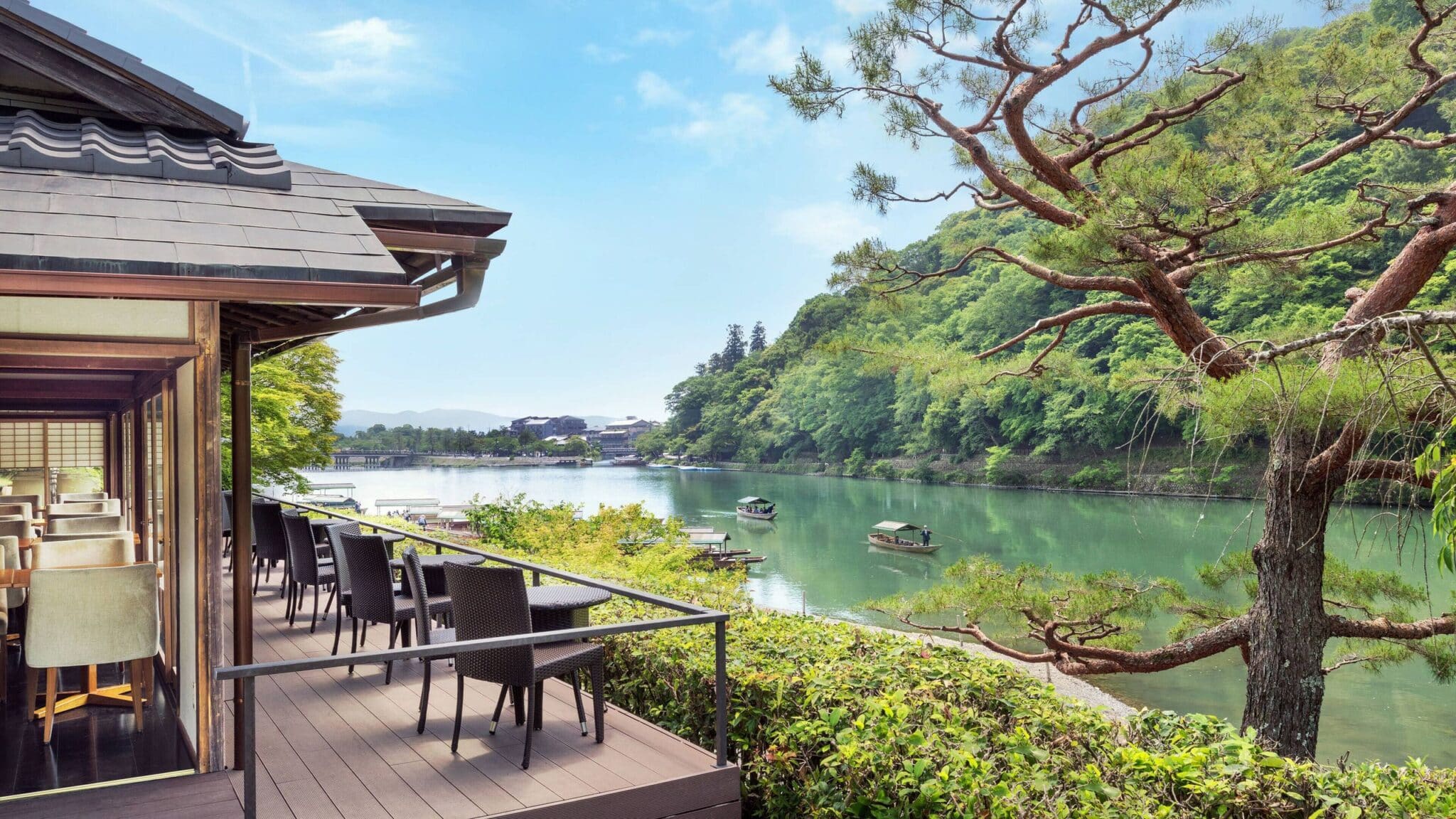
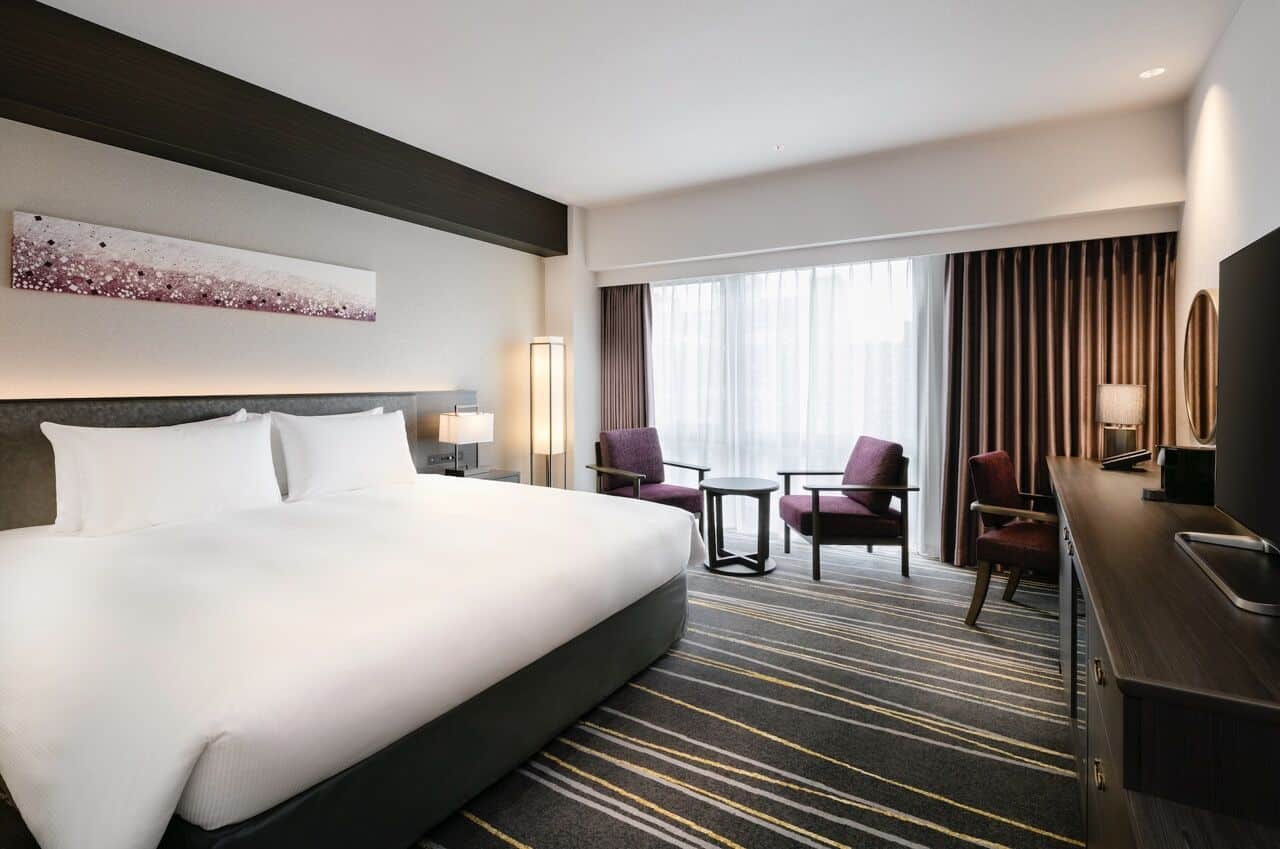
Accommodation around Arashiyama centers on Togetsukyo Bridge and Randen Arashiyama Station, and is limited in number. If you stay near Kyoto Station, the JR Sagano Line reaches Saga-Arashiyama Station in about 15 minutes; if you stay around Kawaramachi and Shijo, you can transfer via Hankyu and reach Hankyu Arashiyama Station in about 25 minutes, so the round trip is easy either way.

FAQ
Q: What is the fastest way from Kyoto Station to Arashiyama?
The JR Sagano Line to Saga-Arashiyama Station is fastest, about 15 minutes and about ¥240 one way, followed by about a 10-minute walk into the main scenic area. You can also take the Hankyu or Randen depending on where you stay.
Q: How long does a one-day Arashiyama trip take?
The walking circuit alone (Togetsukyo Bridge, Tenryu-ji, the bamboo grove, Nonomiya Shrine) takes about 3 to 4 hours. Adding the Sagano Scenic Railway and the Hozu River boat takes about 3 hours for those two alone, so plan a full day.
Q: Do I need to reserve the Sagano Scenic Railway?
Reservations are available on the official website, and tickets often sell out in peak cherry blossom and foliage seasons; same-day tickets are sold at the station counters while they last. The flat fare is ¥880 for adults and ¥440 for children. It operates from March 1 to December 29, with no service on Wednesdays during that period.
Q: Where do I board the Hozu River boat? How much is a ticket?
It departs from the Kameoka boarding point upstream and floats about 16 km downstream, arriving in Arashiyama after about 2 hours; it does not depart from Arashiyama. Tickets are ¥6,000 for adults and ¥4,500 for elementary school age and under. Reserve on the official website in advance in peak season.
Q: When is the bamboo grove least crowded?
The bamboo grove is open 24 hours with no closing time, and is least crowded around 7 a.m. Peak times are between 11 a.m. and 2 p.m., especially on weekends and holidays, when the entrance often has a queue.
Q: Is the Arashiyama Hanatoro still held?
No. The Kyoto-Arashiyama Hanatoro was held from 2005, and the edition from December 10 to 19, 2021 was the last. The organizers said it ended because the gap between off-peak and peak periods had narrowed and private lighting events had increased. It has been replaced by the “Arashiyama Tsukitoro,” held every day from 18:00 to 21:00 from September 30 to November 8, 2026. The bamboo grove area charges admission: same-day tickets are ¥1,500 (cash only), and ¥2,000 advance tickets can also be reserved through JR Tokai’s “EX Tabi Sakiyoyaku.” Before you go, check the organizers’ announcement.
Q: How much is admission to Tenryu-ji?
The garden (Sogenchi Garden and Hyakkaen) is ¥500 for high school students and above, ¥300 for elementary and junior high school students, and free for preschool children, open 8:30 to 17:00. Adding the Daihojo, Shoin, Tahoden and other halls costs an extra ¥300; the Dharma Hall “Cloud Dragon” painting is charged separately at ¥500 and in principle is open only on Saturdays, Sundays and public holidays.
Q: What are the must-eat foods in Arashiyama?
% ARABICA coffee by Togetsukyo Bridge, the natsu-mikan candy and warabi-mochi at Oimatsu Arashiyama, the freshly fried croquettes at Nakamuraya Sohonten and the yudofu at Saga Tofu Sanchu have long been Arashiyama favorites.