
Ginzan Onsen Overview: A Taisho-Era Hot Spring Town Protected by Rules
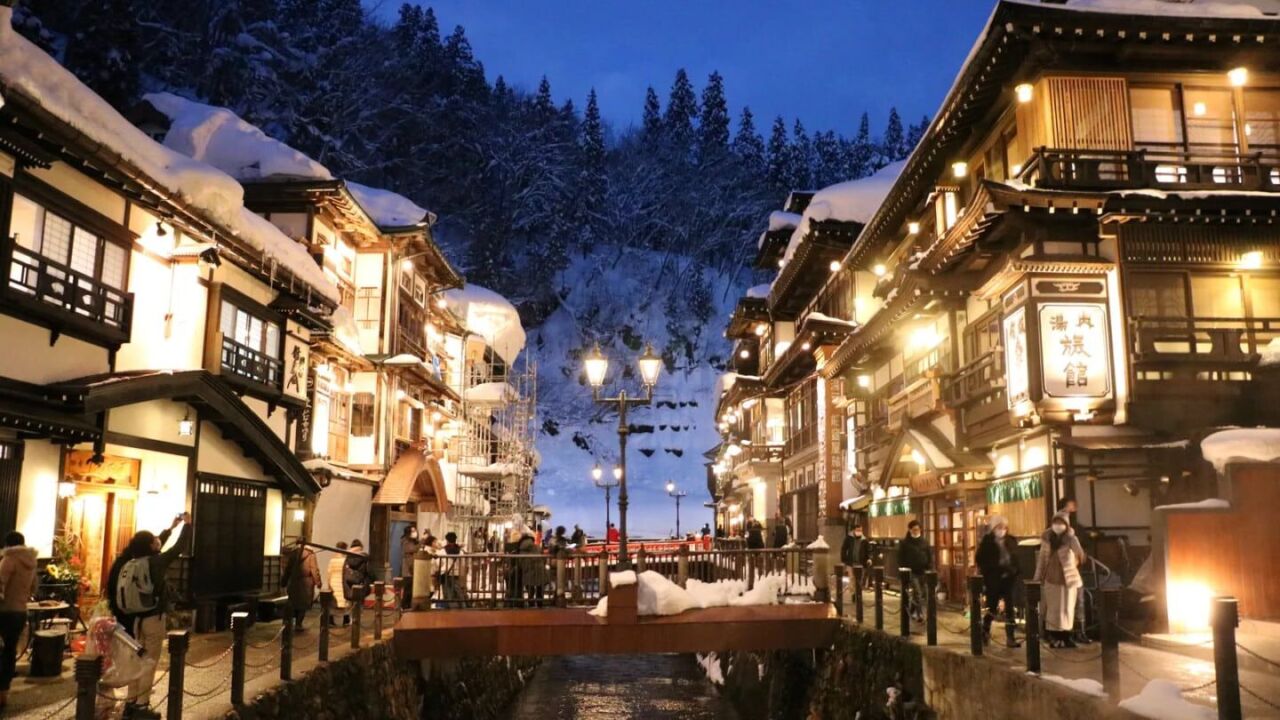
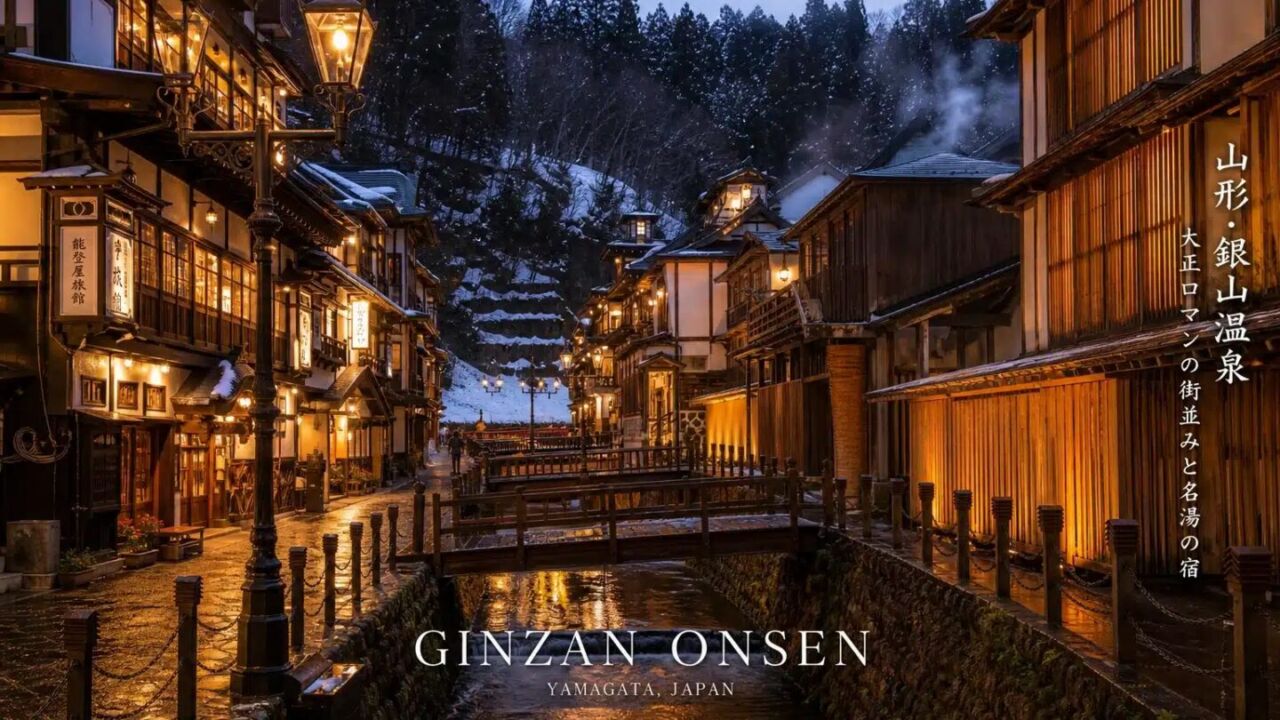
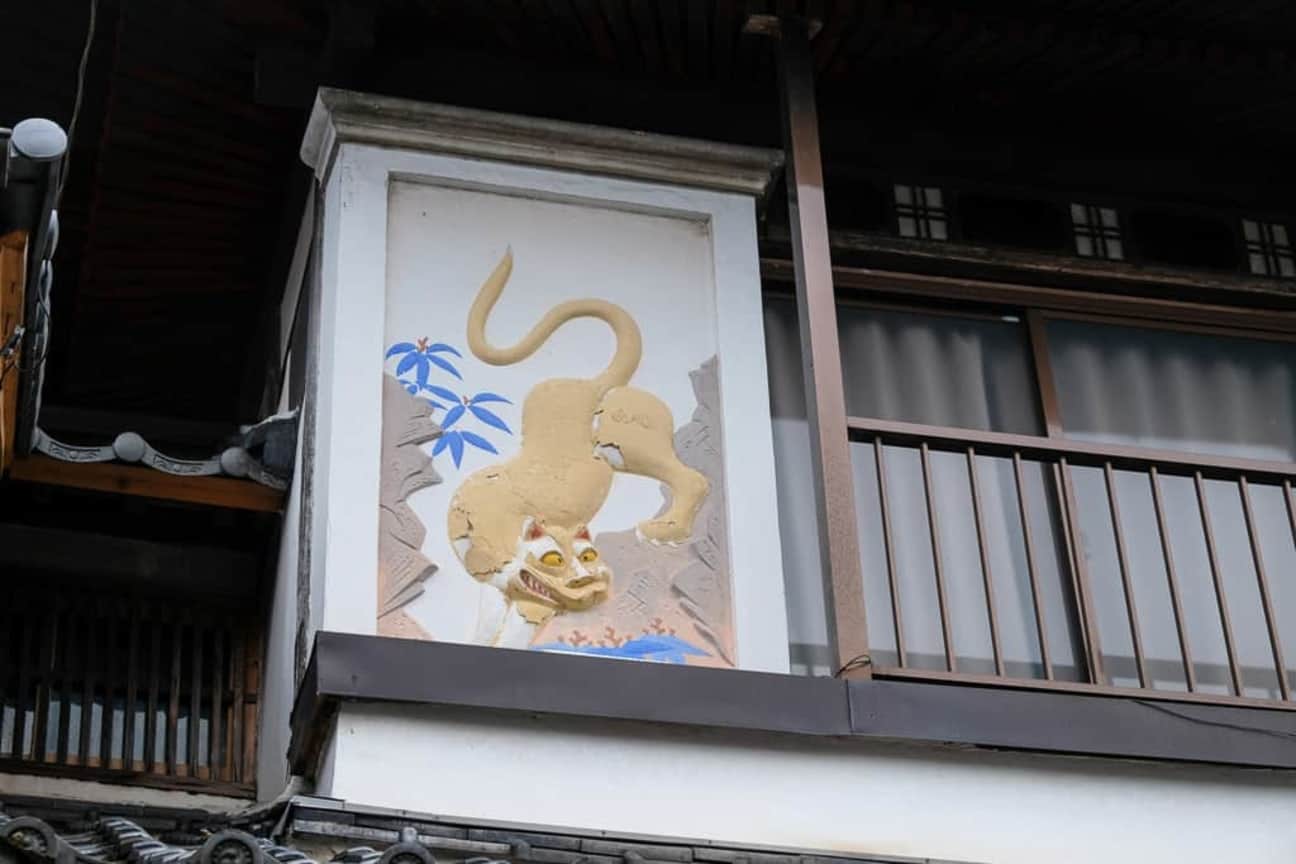
Ginzan Onsen sits in a mountain valley in Obanazawa, Yamagata Prefecture, an old hot spring street that runs along both banks of the Ginzan River. Its name comes from the silver mine of the Edo period; when the mine was abandoned, the hot springs remained. The three- and four-story wooden inns rebuilt in the Taisho era are still in business today, and their walls still carry “kote-e” plaster reliefs sculpted by craftsmen of the time.
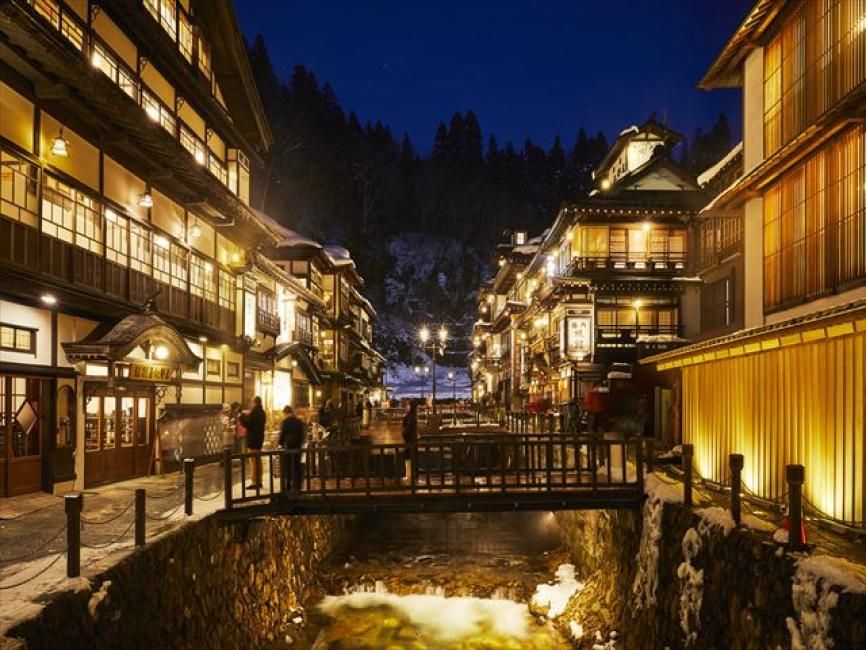
What made it famous around the world is the night. After dark the gas lamps along the street come on, warm yellow light falls on the wooden buildings and the snow, and the river reflects two rows of lamplight. The scene hardly needs an explanation. Because it became so popular, this street of only a few hundred meters gets packed in snow season, and Obanazawa City has introduced traffic and entry controls as a result.
So the homework for Ginzan Onsen is a little different from other destinations: the question is not “what is there to see” but “when can I get in, where do I park, and when do I have to leave.” This guide explains those rules first, then walks you through 12 must-see spots and how the town changes through the seasons. The controls are announced year by year, so be sure to check the latest rules for the current season before you go.
Getting to Ginzan Onsen: Winter Restrictions, Shuttle Buses, and How to Get In
This is the most important section of the whole article. Ginzan Onsen’s transport rules are completely different in winter and outside winter, so read them carefully before you book tickets.
The short version: winter 2026 is expected to bring traffic restrictions and shuttle bus reservations again.
- Expected period: December 2026 to early March 2027; final dates depend on official updates
- Where to park: Taisho Roman-kan at the foot of the mountain, then transfer to the shuttle bus
- How to reserve: reserve a “priority boarding pass”; the official announced price is ¥1,000 to ¥1,500 (reservation link in preparation)
Winter Car Restrictions: Regular Vehicles Cannot Enter the Hot Spring Town
This is the single most important rule at Ginzan Onsen. During winter (roughly mid-December to early March each year), private cars, unauthorized chartered cars, and taxis are all prohibited from entering Prefectural Route 188 leading to the hot spring town. The restricted stretch runs about 2 km from the former Bunnoichi checkpoint site to the town. Note that the system is still an annually announced “demonstration experiment”; it has run for two seasons, 2024 and 2025, and the 2025 season’s restrictions ended on March 1, 2026. The official website of the Ginzan Onsen Association has announced that the restrictions will continue in winter 2026-27, expected from December 2026 to early March 2027, and will be updated once the official schedule is confirmed.
All travelers who drive or take a chartered car must park at “Taisho Roman-kan” at the foot of the mountain, then take the paid official shuttle bus up. The reason is simple: the road is narrow and steep, vehicles struggle to pass each other once snow piles up, and mixing people and cars is extremely dangerous.
Time Limits for Day Visitors: You Must Enter Before the Last Bus
During the restricted period, day visitors are bound by the shuttle bus schedule: the last bus into the hot spring town leaves Taisho Roman-kan at about 18:00, and the last return bus leaves the town at about 19:30. Miss it and there is no other way down.
This rule affects the itineraries of the most people, because the town’s famous gas lamp view only appears after dark, and winter sunset falls between about 16:30 and 17:00. That leaves day visitors only a short window to see the night view, and it is also exactly when the crowds are thickest. The only way to enjoy the view at leisure is to stay overnight, since guests of the inns in town are not subject to the entry time limit. Actual times follow the announcement for the season.
Shuttle Buses and Fast Passes: Without One, You May Queue in the Snow for a Long Time
The shuttle bus runs between Taisho Roman-kan and the hot spring town three times an hour (on the hour, at 20 past, and at 40 past), carrying up to about 180 people per hour in each direction. Fares vary by time slot, roughly ¥500 to ¥1,000, and are usually higher during the popular evening hours. Children (elementary school age and under) generally ride free, but check the announcement for the season. In winter the shuttle only goes as far as “Ginzanso-mae,” and from there it is still about a 10-minute walk along a snowy road to the entrance of the town.
The organizers also offer a “shuttle bus fast pass,” which must be purchased online in advance on the official reservation site (credit cards only; individual tickets go on sale about 13 days before the travel date and close at 17:00 the day before). It costs about ¥1,000 to ¥1,500, includes the shuttle fare, and guarantees a seat on the specified time slot. In 2025-26 it applied only to the outbound trip (Taisho Roman-kan to the hot spring town), and arriving early or late voids it with no refund. For 2026-27 the officials have announced that the return trip will also have designated departures. If you do not buy one, you will be given a designated boarding time at the counter and can wait inside the building, though waits can grow long in peak season. Buying one in advance is especially recommended for holiday weekends. Actual departures, prices, and sales methods follow the announcement for the season.
2026-27 Winter Restrictions and Shuttle Bus Reservations: Dates and Prices Announced by the Officials
The Ginzan Onsen Association website has posted its 2026-27 winter transport guide, which is still marked as provisional and will be updated once finalized. The key points announced so far are as follows.
- Period: expected December 2026 to early March 2027
- Parking: park at Taisho Roman-kan in all cases, then take the shuttle bus at the designated time
- Planned priority boarding pass prices: ¥1,300 for outbound trips 9:00 to 10:40, ¥1,000 for outbound trips 11:00 to 13:40, and ¥1,500 for outbound trips 14:00 to 18:00, with a bus every 20 minutes
- How to reserve: the official reservation link currently shows “in preparation,” and same-day spots are expected to be very few
- From this season the return trip also has designated departures: in principle 1 hour 20 minutes after the outbound trip
- Lunch time: those entering between 11:00 and 14:00 can choose a return departure before 15:20
- No walking: the officials clearly warn against walking up the mountain from Taisho Roman-kan in winter
The officials say prices and schedules are on the same terms as last season but not yet finally confirmed, so check the official website again before booking.
Looking back at how the previous season (2025-26) worked:
- Restricted period: December 20, 2025 to March 1, 2026
- Organizer: Obanazawa City from December 20 to January 31, then the Ginzan Onsen Association from February 1
- Fares during the city’s experiment period: ¥800 from 9:00, ¥500 from 11:00, ¥1,000 from 14:00
- Priority boarding pass: ¥500 on top of the fare, no queueing, board the bus for your reserved slot directly
- Those without a reservation: wait on site at Taisho Roman-kan
In January 2026 the Ginzan Onsen Association also announced that chartered cars, taxi plans, and regular bus tours cannot drive directly into the hot spring town and must all transfer to the shuttle bus at Taisho Roman-kan.
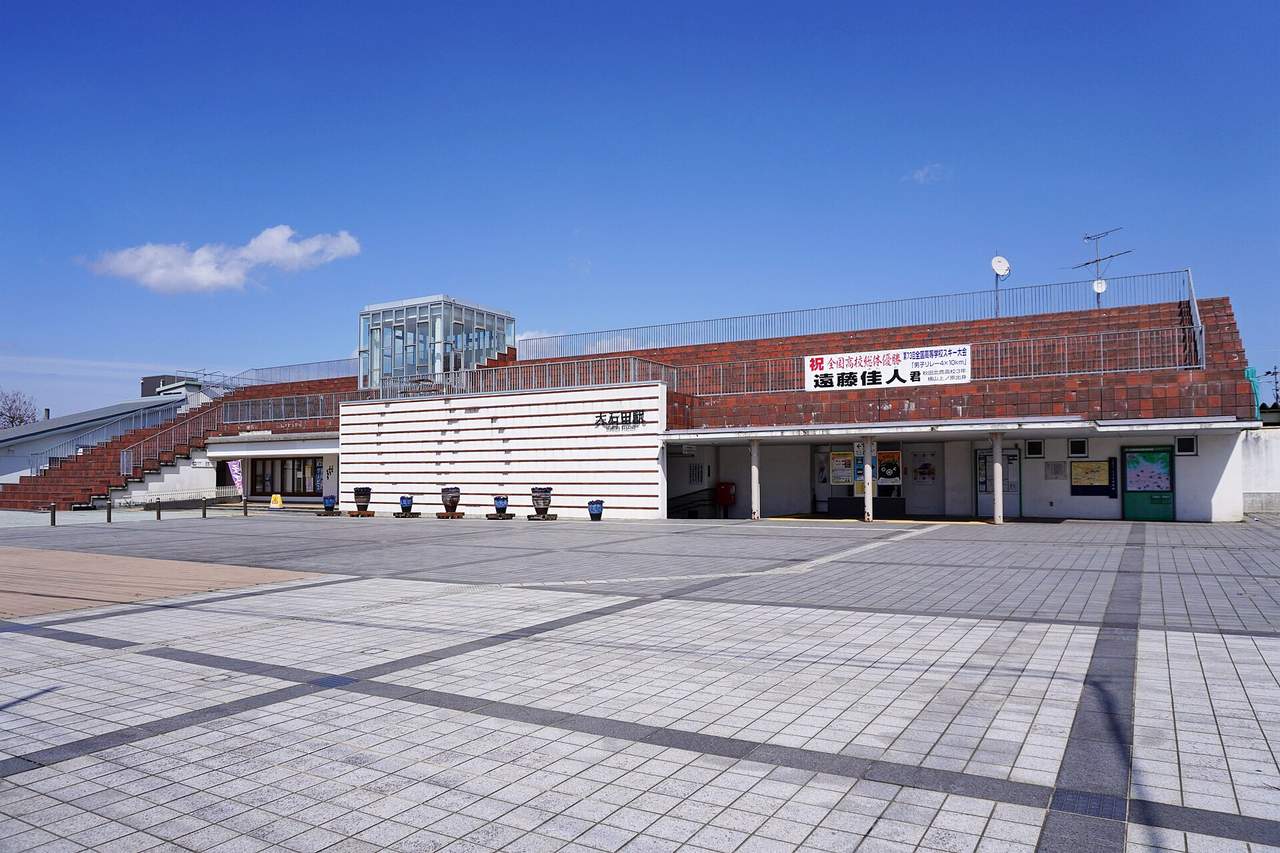
Rail travelers have one more official option: the “Winter Ginzan Onsen Stroll Round-Trip Bus Tour,” run by Ginzanso Planning and recommended on the Ginzan Onsen Association website, which goes directly from the west exit of JR Oishida Station to Ginzanso with guaranteed entry. The 2025-26 edition ran from December 3, 2025 to March 10, 2026 in two departures (leaving Oishida Station at 15:30 and returning from Ginzan Onsen at 17:50, or leaving at 16:50 and returning at 19:20), at ¥5,500 per person (children occupying a seat pay the same), online reservation and credit card payment only, closing at 24:00 the day before, with a maximum of 27 people per departure. Those who have already booked a stay in the hot spring town do not need to reserve this plan. Whether it continues in 2026-27, and at what price, depends on the announcement on the Ginzan Onsen website.
Without a Car: Taking a Bus from Oishida Station Is the Main Route
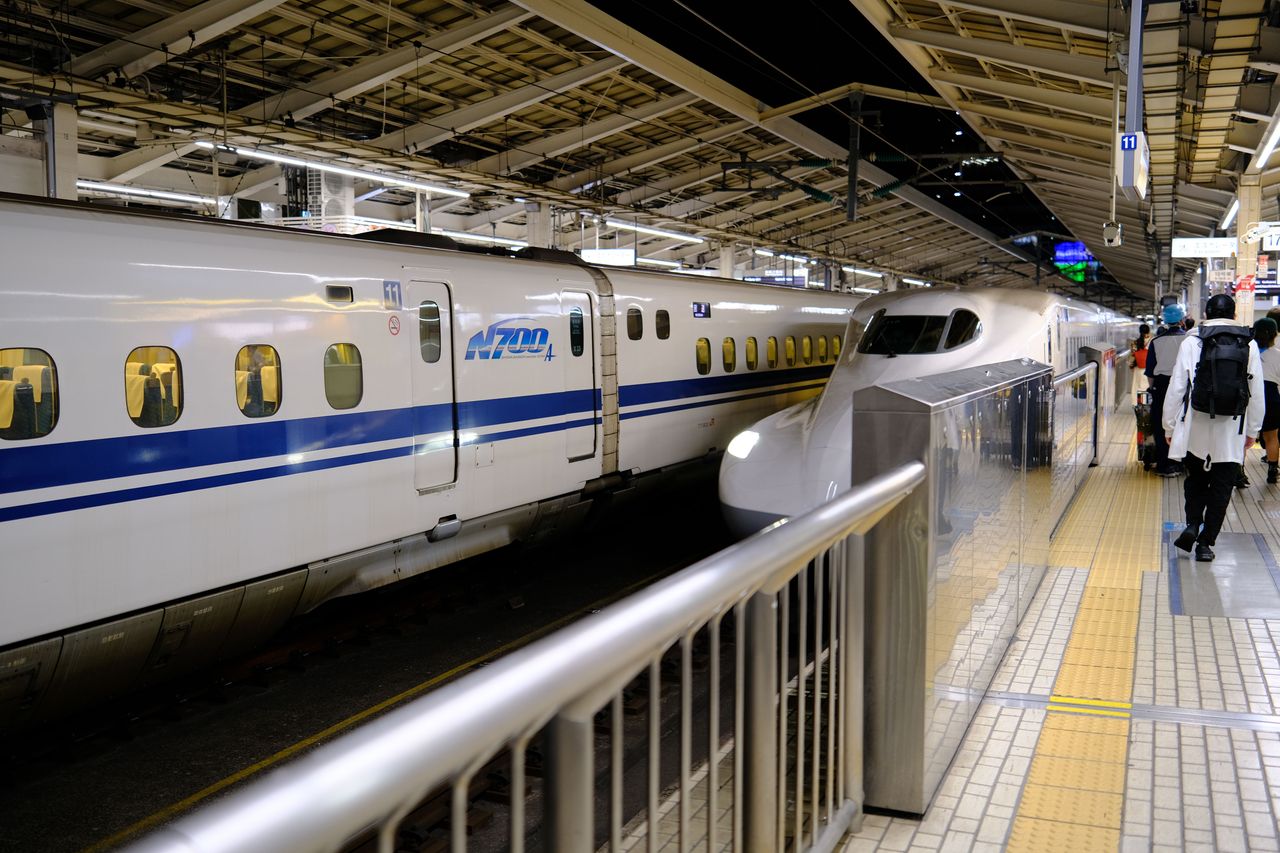
The standard public transport route is to take the JR Yamagata Shinkansen to “Oishida Station,” then transfer to a route bus bound for Ginzan Onsen (the Ginzan Line / “Ginzan Onsen Hanagasa-go”), a ride of about 40 minutes; in winter, from December to March, there are also seasonal direct services.
The biggest problem is the schedule: there are very few runs a day, they cannot be reserved, and in peak season buses are often full. Be sure to check the outbound and return timetables first and work backward from the return time to decide how long to stay. Another option is a day-trip charter tour from Sendai Station or Yamagata Station, which guarantees a seat and spares you the snowy queue, but its stay time is fixed and you usually have to leave with the group by evening. Actual schedules and fares follow the operators’ announcements.

Travel Light: Leave Big Luggage at Sendai or Yamagata Station
Space on the shuttle bus is limited, and the hot spring town has snow-covered stone-paved streets and a few flights of stairs, so wheeling a large suitcase is nearly impossible. Day visitors should leave big bags in the lockers at Sendai Station or Yamagata Station and bring only a small bag up the mountain. Overnight guests can check with their inn first about how luggage is carried.
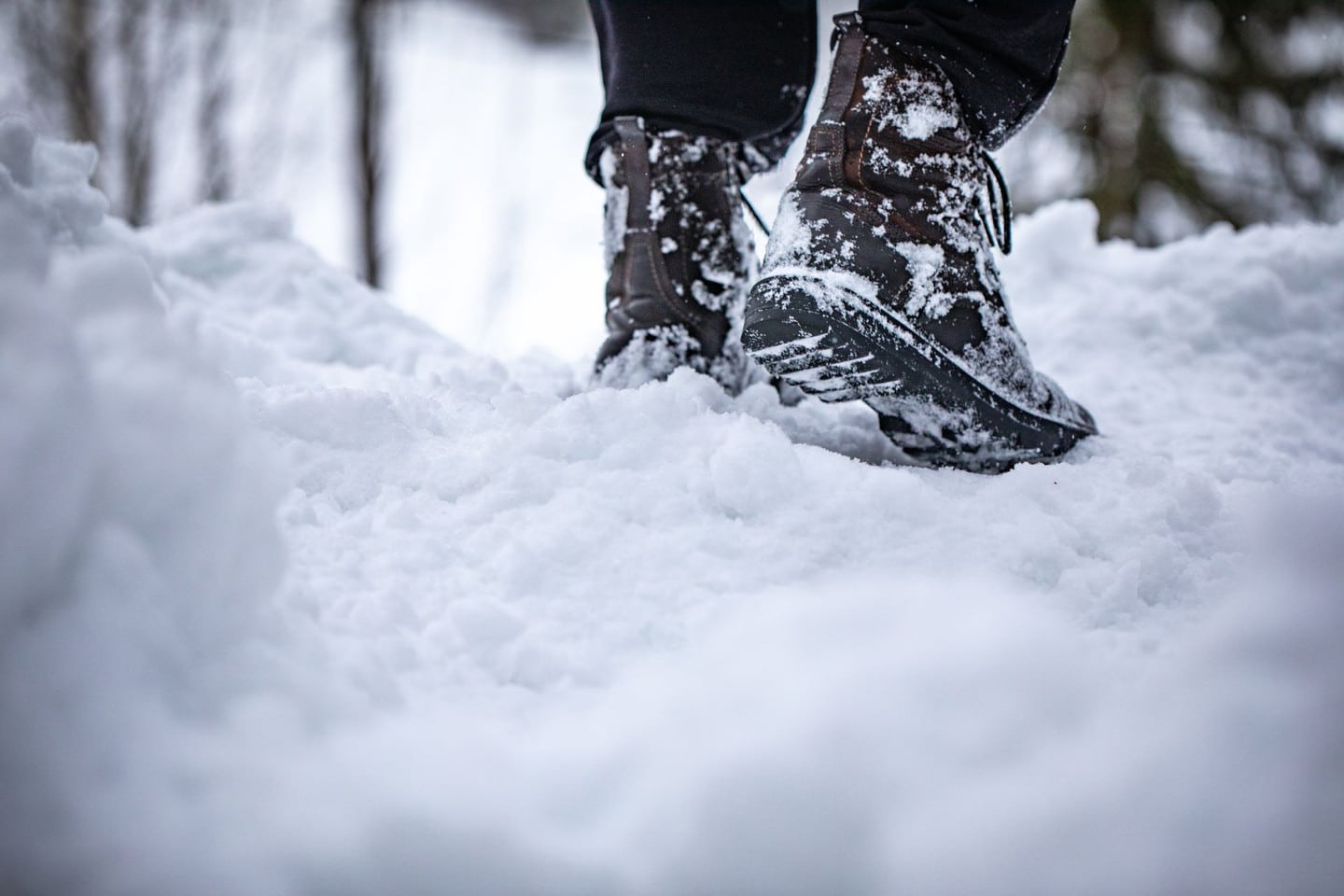
As for clothing, waterproof, non-slip boots that cover the ankle are a must; ordinary sneakers are very dangerous on icy stone paving. Standing still while waiting for the shuttle makes it feel much colder than you expect, so bring a knit hat, windproof gloves, and hand warmers. On the morning of your trip, be sure to check the official website for that day’s weather and the latest road conditions.


What to See at Ginzan Onsen? 12 Highlights from the Gas Lamp Night View to the Silver Mine Tunnel
The hot spring town itself is only a few hundred meters long. Of the 12 items below, about half are on the street and half require walking upstream or down the mountain.
The Gas Lamp Night View: Ginzan Onsen Belongs to the Night
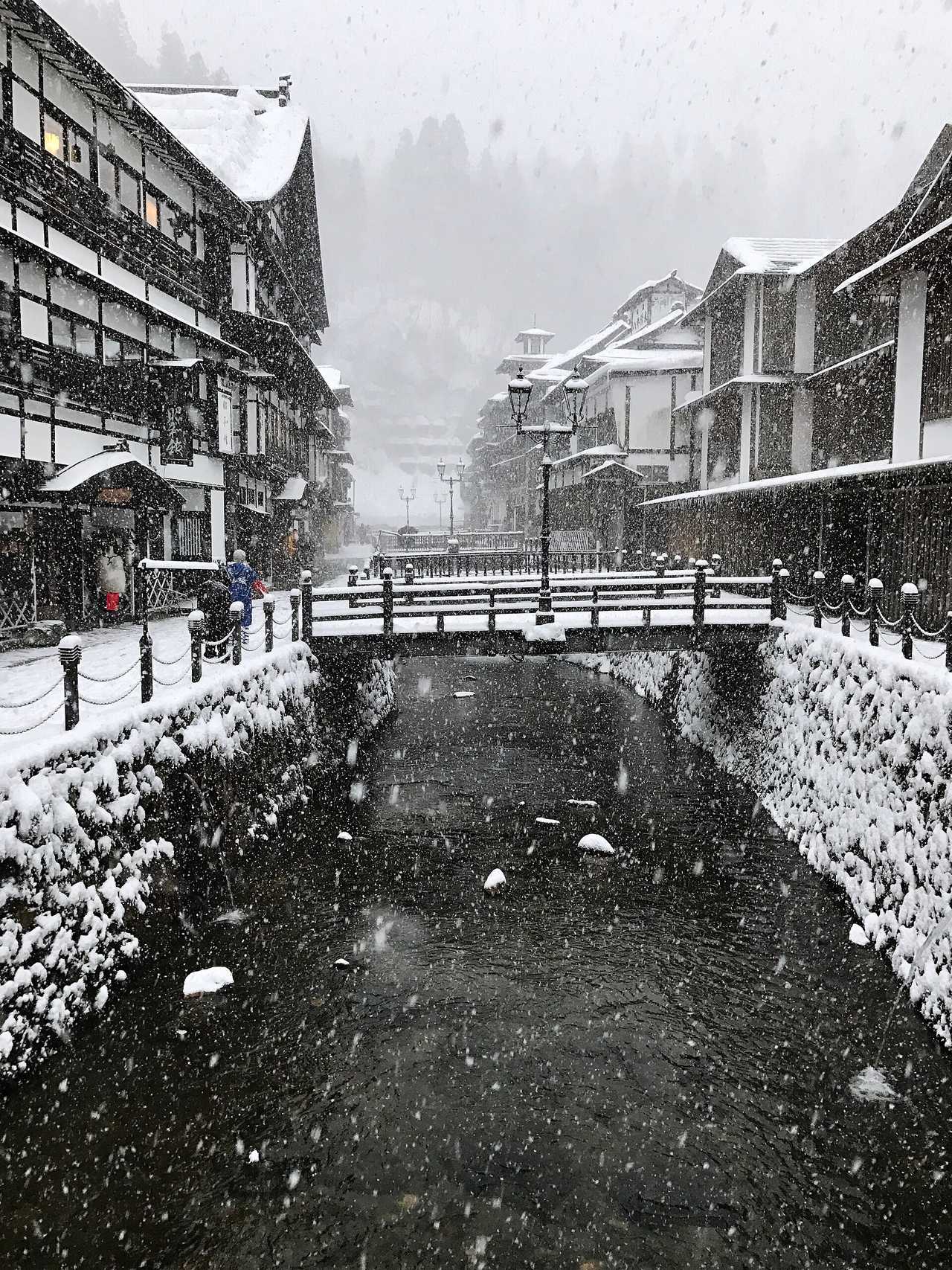
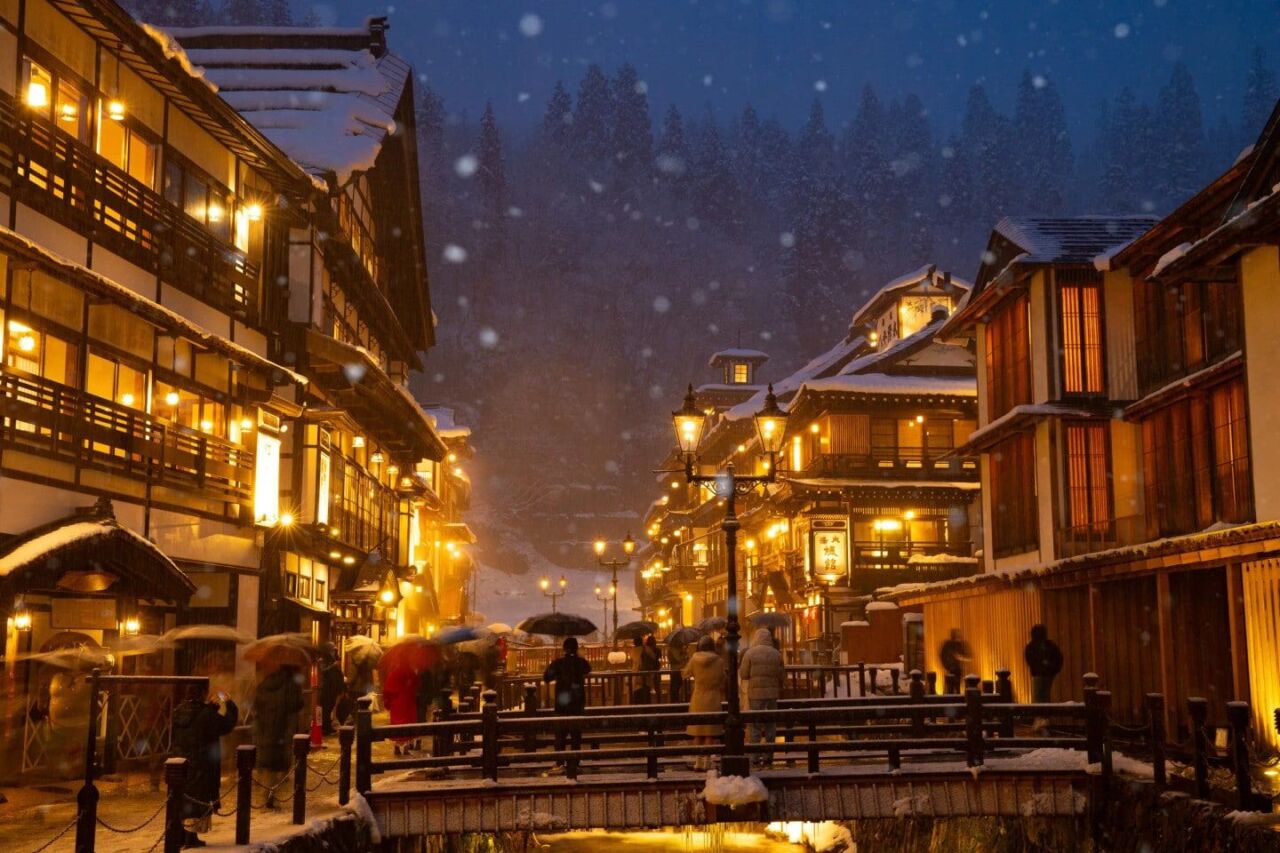
This is the core reason to come to Ginzan Onsen. After sunset the gas lamps on both sides of the street light up one by one, warm yellow light falls on the walls of the wooden buildings and the snow, and the water of the Ginzan River stretches out the reflections until the whole street becomes a glowing corridor. No photo captures it fully; you have to stand there yourself.
The best spots are the small bridges across the Ginzan River, where you can take in both rows of buildings and their reflections on the water at once. Winter sunset is around 16:30 to 17:00, and the lighting time shifts with the season. Ginzan Onsen officially does not publish a fixed lighting time; the gas lamps come on in the evening as the sky darkens. The Ginzan Onsen Association specifically notes that the town starts to get dark about an hour before sunset, so if you want a shot with the sky still blue and the lamps just lit, arrive before sunset. Remember that this is a hot spring town where people actually live and work, not a set; when taking photos, please do not block inn entrances or step into private areas.

Notoya Ryokan: The Landmark of the Whole Street and a Nationally Registered Tangible Cultural Property
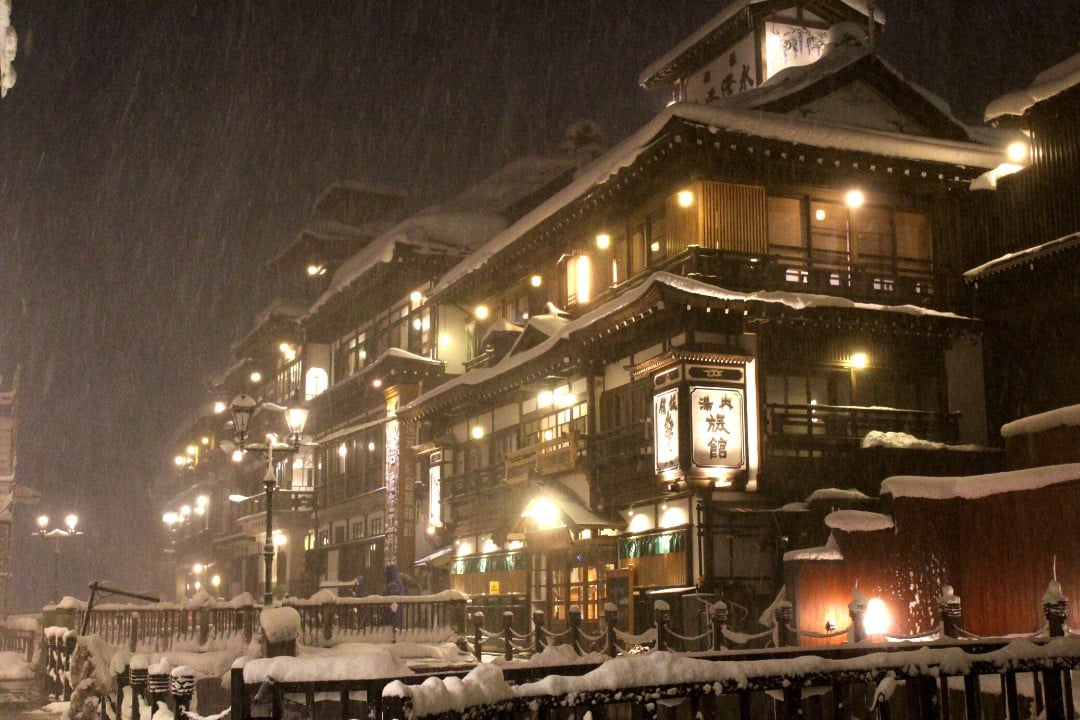
The most recognizable building in the hot spring town, founded in the Meiji era. The current main building is a three-story wooden structure built in Taisho 14 (1925), topped with a small lookout tower, and was registered as a national tangible cultural property in 1997. Almost every representative photo of Ginzan Onsen features it.
The kote-e decoration on the exterior walls is the highlight: three-dimensional patterns sculpted from plaster, the work of Taisho-era craftsmen, and it is hard to find such a complete row of them elsewhere. Inside, there is an observation bath with a view of Shirogane Falls, though it requires climbing a long flight of stairs. Non-guests can only admire the building from outside; entering the inn and bathing follow the inn’s own rules.
The Taisho Buildings and Kote-e: The Whole Street Is a Complete Specimen of an Era
What is truly rare about Ginzan Onsen is that it is not just one old building but a whole row. Three- and four-story wooden inns rebuilt between the late Taisho and early Showa periods stand side by side along both sides of the river, almost identical in height and facade, forming a complete streetscape that is now very rare in Japan.
Don’t just look at the whole; look up at the details. The kote-e on the exterior walls use white plaster to model figures, flowers and birds, and family crests, and each inn’s design is different, a trace of how the inns competed with each other back then. The woodwork of the window frames, railings, and eaves is also worth stopping to look at. Details are clearest in good daylight, an experience completely different from the atmosphere at night. This stretch is entirely free and has no opening hours, so you can walk it at any time.
Shirogane Falls: A Curtain of Water Dropping Straight Down a 22-Meter Cliff at the End of the Town
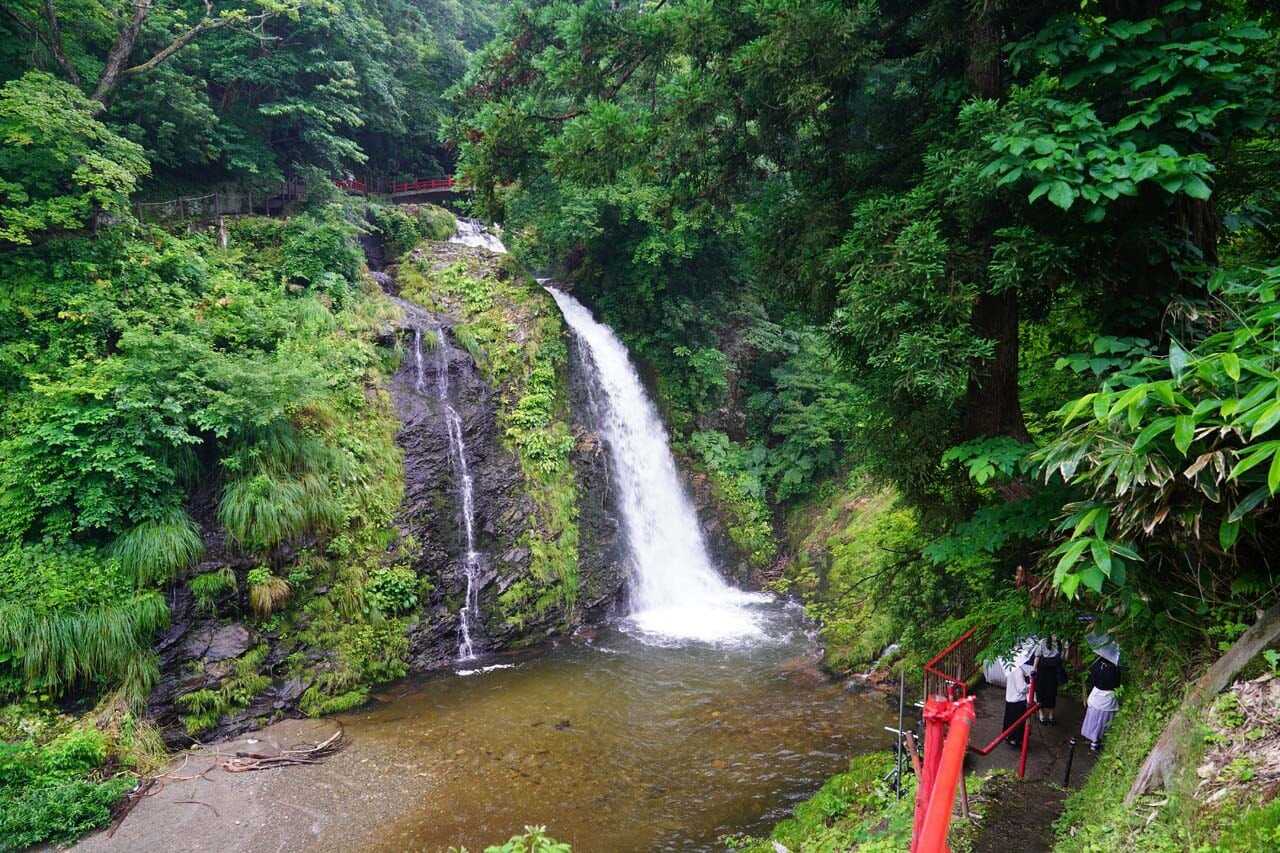
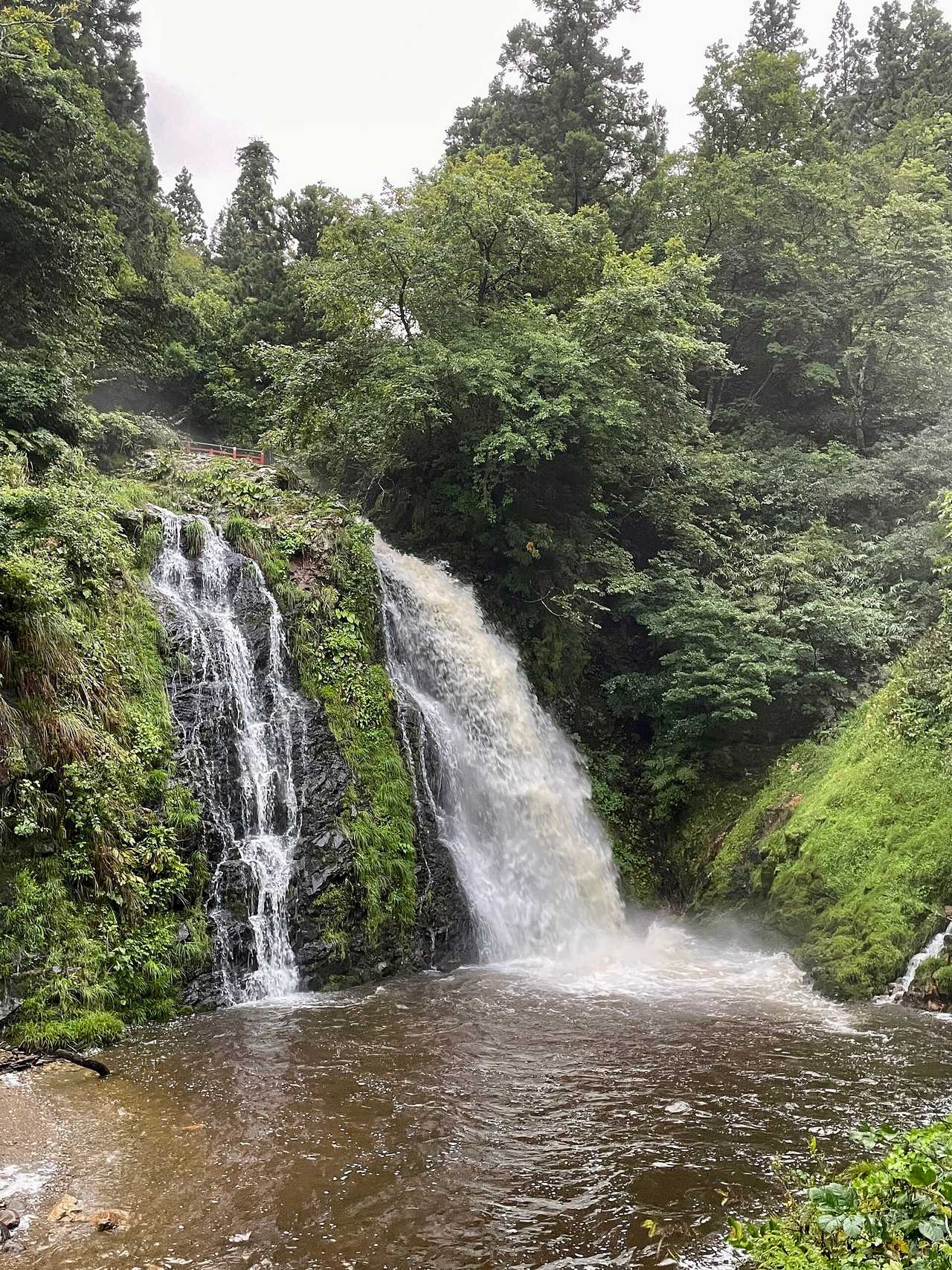
Walk upstream along the hot spring town to the very end and you will see it, water falling straight down the rock face right beside the path, with no mountain climbing needed. It is the most easily reached natural sight on the street, and about twenty minutes is enough for the round trip including photos.
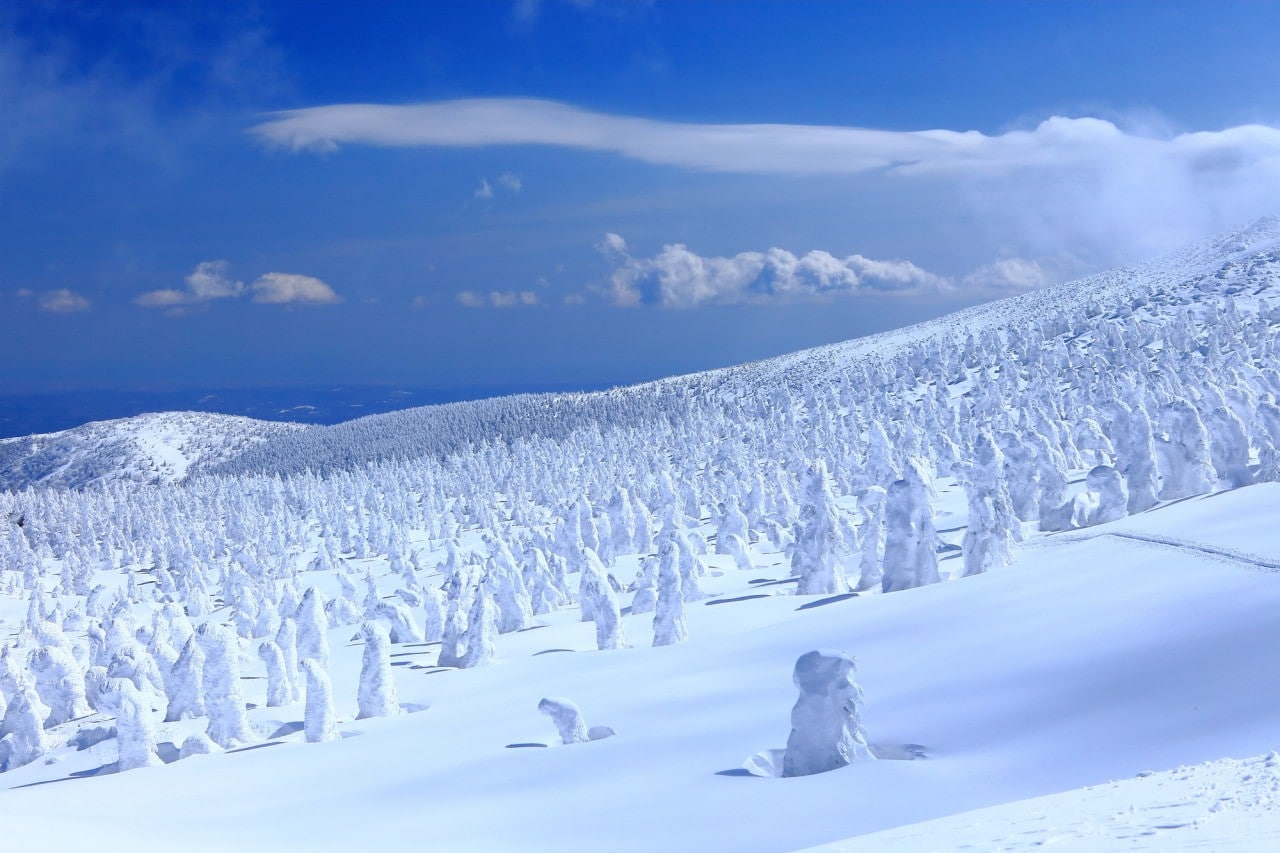
It looks very different in each season: in summer the water is abundant and the spray is cool, in autumn the red leaves on both sides make it most beautiful, and in winter it often freezes into one large ice fall that looks impressive against the snow. The path is icy and slippery in winter, with the area beside the railing especially dangerous, so wear non-slip shoes and hold the handrail. It is free to visit with no opening-hour limit. It takes only a few minutes to walk from the innermost bridge of the town, and it is the endpoint everyone walks to. The space in front of the falls is small, so expect to queue a bit for photos in peak season.
Shirogane Park Trail: Looking Down on the Whole Hot Spring Town from Above
The hillside behind Shirogane Falls has been developed into a park with several walking paths of varying length. Walking up lets you look back at the whole hot spring town and river valley from above, one of the few places where you can capture the “full panorama.”
The routes vary in difficulty; the shortest loop takes about twenty to thirty minutes, and longer ones go around to the side of the mine ruins. Note that besides being closed by snow in winter, the Obanazawa City website announced that since May of Reiwa 7 (2025), parts of Shirogane Park have been closed long-term for rockfall and fallen-tree clearance, so be sure to check the city’s announcements before you go. In summer the woods are cool, making it a good place to escape the crowds on the street. It is free to enter; the park has signposts but poor phone reception, so look at the route map beforehand. Some sections of the trail are boardwalk and dirt path that get muddy after rain, so choose comfortable shoes.
Ginzan Mine Tunnel (Nobezawa Ginzan Ruins): Where the Street’s Name Comes From
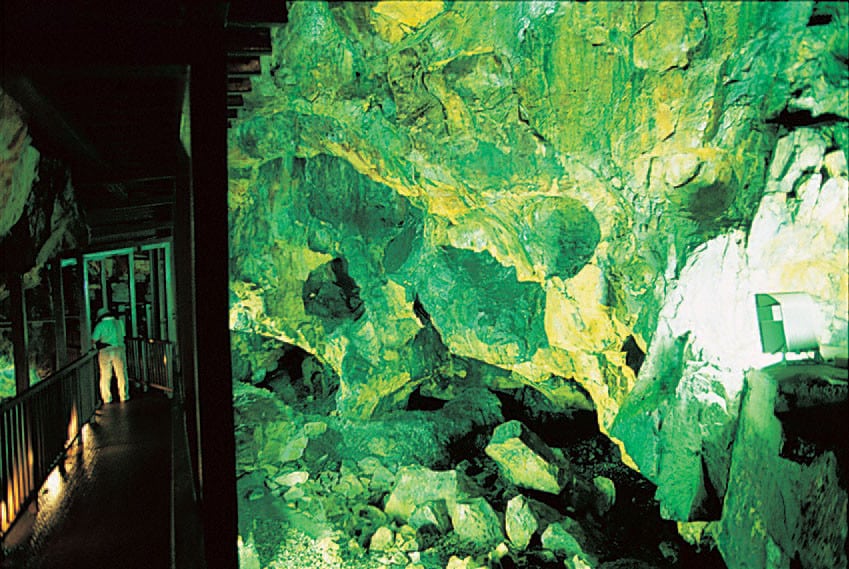
From the Shirogane Park trail you can walk to the tunnel ruins of the Edo-period silver mine. This is the source of the name “Ginzan” (silver mountain): in the 17th century this mine was an important silver producer in Japan, and after the veins ran dry the settlement turned into a hot spring town, which gave rise to what you see today.
The tunnel is not long, and the section once open to visitors shows the marks of the rock face cut by hand. The Obanazawa City website announced that since May of Reiwa 7 (2025) the silver mine tunnel has been fully closed to passage “for the time being” for rockfall and fallen-tree clearance, so it cannot currently be entered; please check the city’s announcements before you go.
Warakuyu Foot Bath: The Free Foot Bath on the Street
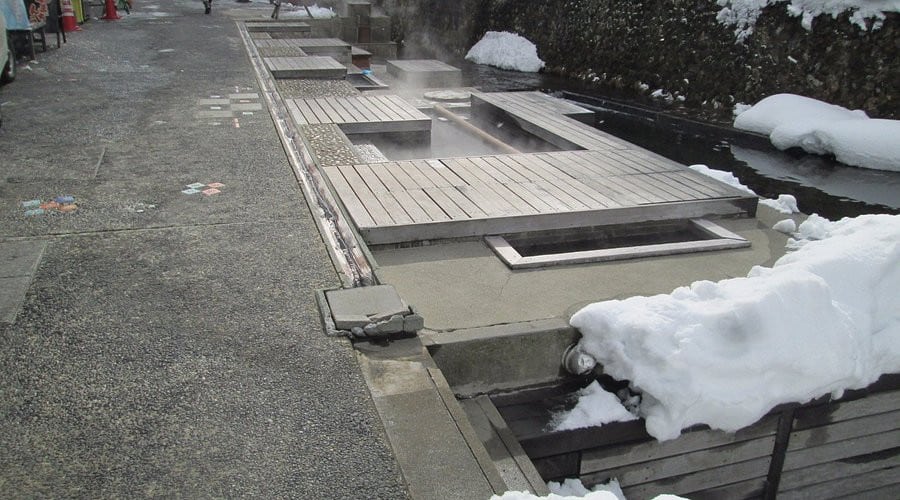
A free foot bath in the middle of the hot spring town facing the Ginzan River, open every day from 6:00 to 22:00 at no charge. The “Waraku” in its name means relaxing in the bath, and it is the most practical rest stop on the street.
It is especially valuable for day visitors: after walking through snow in winter, your feet can go nearly numb, and five to ten minutes of soaking brings you back to life. Bring your own towel to dry your feet; shops on the street sell them. The location faces the center of the town’s scenery, so while you soak your feet you have the best viewing spot. Seats are limited in peak season, so you may need to wait. Also remember that the foot bath is a public facility; please wipe the area dry after use and do not take up neighboring seats with luggage or coats.
Shirogane-yu: The Public Bath Designed by Kengo Kuma
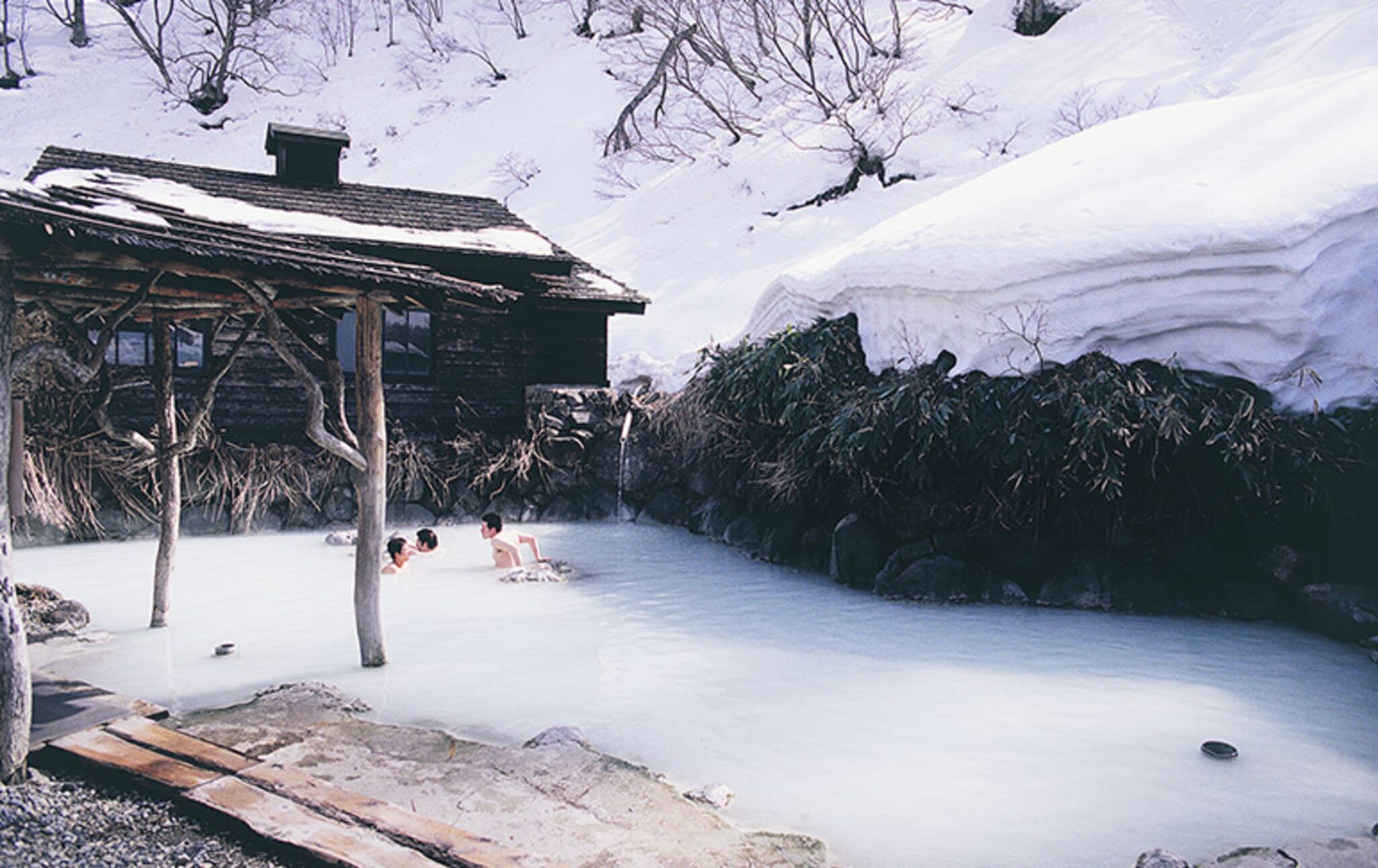
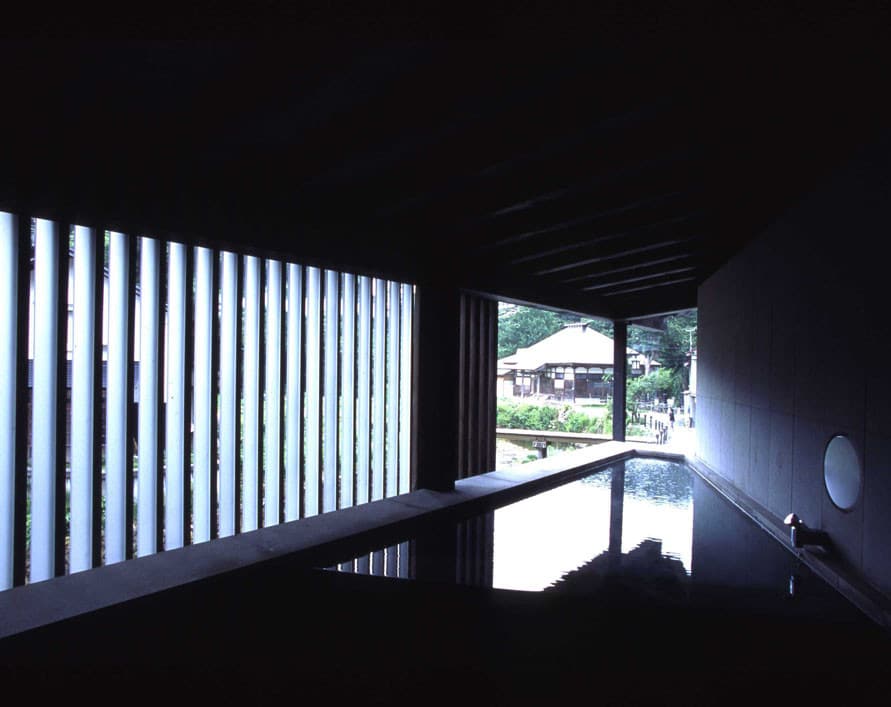
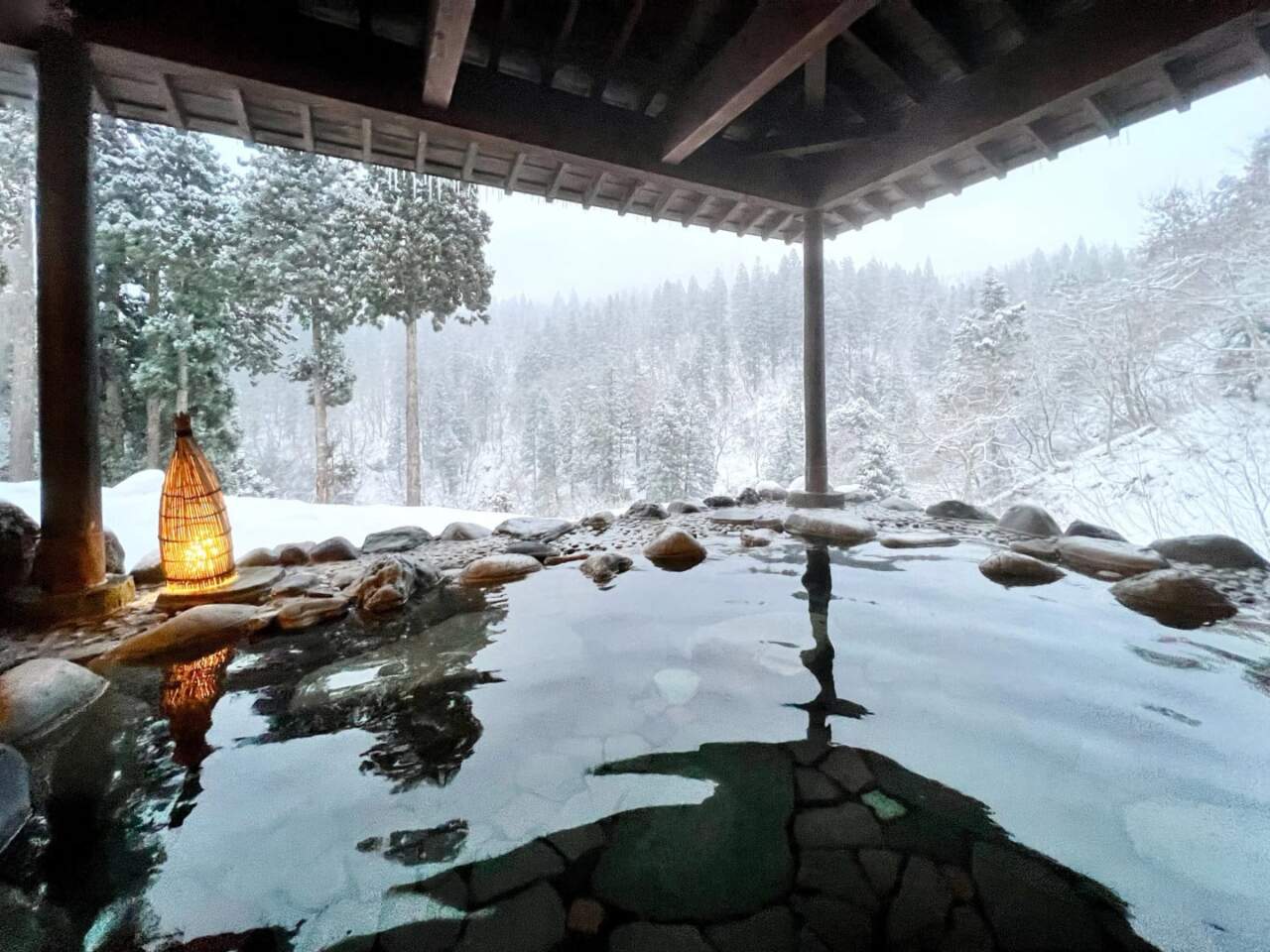
The public bathhouse on the street, designed by architect Kengo Kuma, with a slender facade of vertical wooden lattice that fits surprisingly well beside the neighboring Taisho buildings. This is the easiest place for day visitors to bathe in Ginzan Onsen’s source water.
The entrance fee is about ¥500. The space inside is small, with a single bath and no extras, a purely public bath, so bring your own bathing supplies. The officially listed spring quality is sodium-chloride and sulfate spring, and the water is a milky white. Because it is small, it is often full in peak season and requires waiting. Note that it is only open until the afternoon (about 9:00 to 16:00, with last admission around 15:30, plus irregular closures), so plan your soak around midday rather than leaving it until evening. Actual fees and hours follow the current announcement. Rules for people with tattoos differ from bath to bath, so check at the door if it concerns you.
Ginzan Onsen Curry Bread: The Street’s Most Famous Snack
The most famous snack on the street. The dough uses Yamagata-grown wheat flour “Yukichikara,” the crust is fried crisp and the inside fluffy, wrapped around a noticeably spicy curry filling, and it is still hot in your hand when freshly fried.
It is a staple of almost every guide. Note that the original shop, “Haikara-san Dori,” is currently closed for relocation and renovation; it is now sold at “Kashidokoro Meiyuan” on the street and at “Taisho Roman-kan” at the foot of the mountain, so confirm before you go. A frozen version can be shipped, but the texture is very different from freshly fried. Eating it as you walk in winter is just right for warming your hands, but be careful, as the filling is very hot. Actual sales locations and prices follow each shop’s current announcement. The street also has freshly grilled dango and tofu products to try, but curry bread is still the best known.
Taisho Roman-kan: The Shuttle Starting Point and a Shelter While You Wait
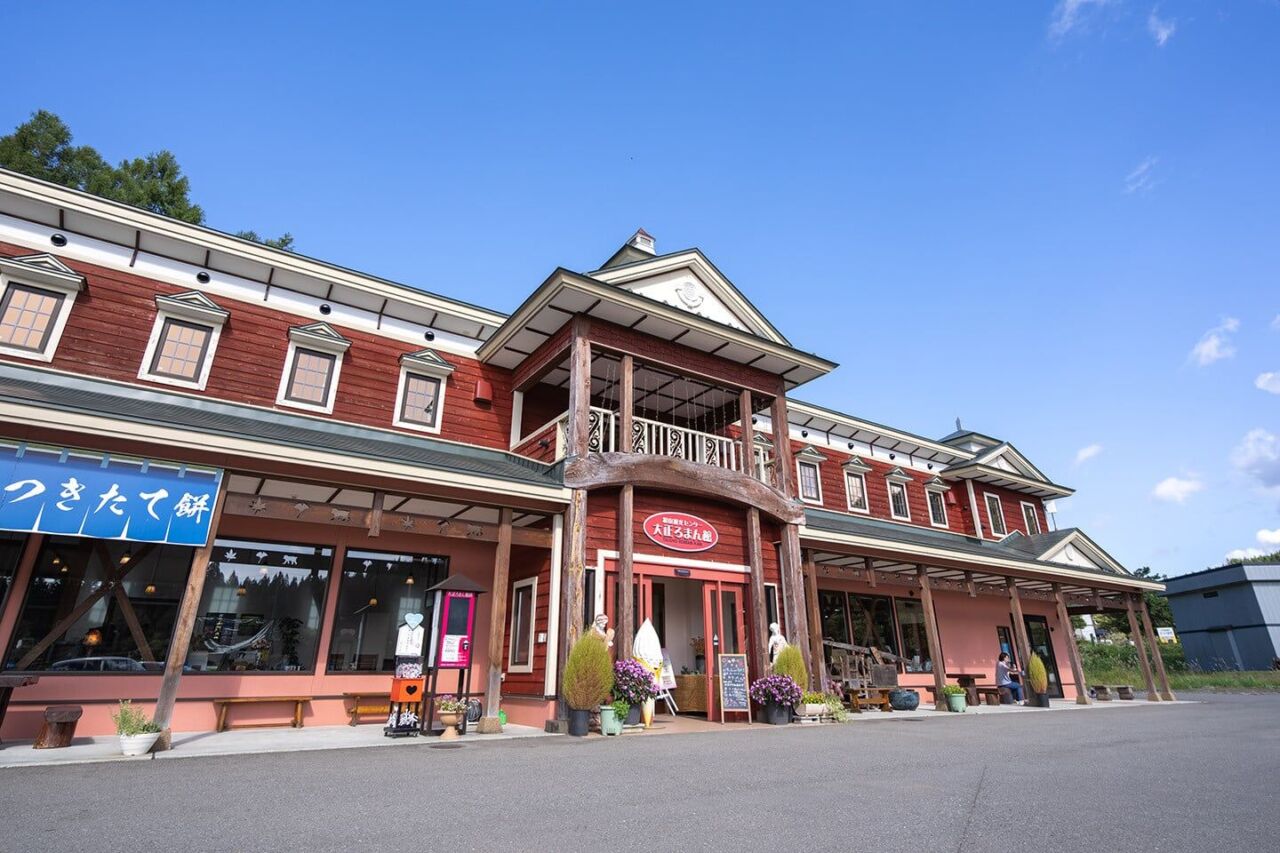
A tourist center and parking lot at the foot of the mountain. During the winter restrictions all drivers must park here first and then transfer to the shuttle bus, so it is both the start and the end of the whole trip.
The building itself is a Taisho-style Western-style hall with a souvenir shop and dining area, where you can buy Obanazawa watermelon products and Ginzan Onsen curry bread. In practice its most important function is that “you can wait indoors”: queueing outside for the shuttle in winter is very cold, so going in to buy something to warm up and then coming out to queue is a practical approach. There is a parking lot and restrooms outside, and it is the last place before the mountain where you can use the toilet at ease, since public restrooms in the hot spring town are limited.
Day-Trip Bathing at the Inns: Soak in Each Inn’s Waters Without Staying
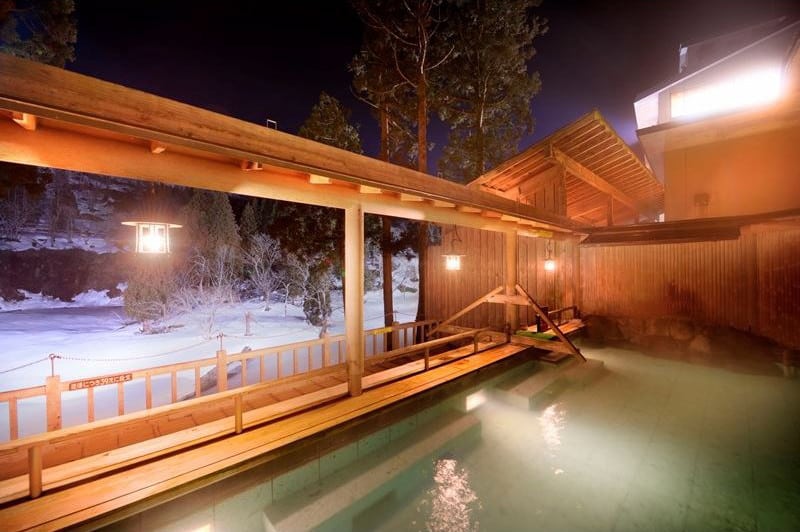
Besides the public bath, some inns in the town also let non-guests bathe for a fee, so you can enjoy each inn’s own bath, including some open-air baths with valley views, a much fuller experience than the public bath.
But there are a few limits to know first: the open hours usually avoid guests’ meal and cleaning times and are mostly between noon and 3 p.m.; they are often suspended in peak season and on weekends; and some require reservations. Because day visitors are bound by the last return bus, time is tight, so ask as soon as you arrive in the town. Actual open hours and fees follow each inn’s current announcement. Also note that most old inns have small baths, and they close to outside visitors once guest check-in time begins.
Side Trip to Obanazawa and Oishida: Home of Soba Noodles and Watermelon
Oishida Station, where you transfer, is more than a stopover. Along the national highway here runs a “soba street,” where several long-established shops serve thick hand-cut noodles made with local buckwheat flour, in big portions with a strong buckwheat aroma, very different from the delicate Kanto style, and the most worthwhile meal to have while waiting for a bus.
Obanazawa City itself is famous for watermelon and is one of Japan’s major producing areas; in summer (roughly July and August) many roadside direct-sales stands appear. Winter is the other extreme: this is one of the heaviest snow regions in Japan, where snow depth is often measured in meters. Take the seasonal difference of this stretch of the journey into account when planning. Oishida Station also has a tourist information counter inside the station where you can confirm bus times and the day’s road conditions.
Tickets and Tours: What to Book in Advance for Ginzan Onsen
Ginzan Onsen itself charges no admission, but a few things in winter must be handled first.
Shuttle Bus Fast Pass: Nearly a Must-Buy in Winter Peak Season
The price is about ¥1,000 to ¥1,500 including the shuttle fare, and it must be purchased online in advance on the official reservation site (credit cards only), guaranteeing a seat on the outbound bus for the specified time slot.
It solves a very specific pain point: without a pass you can only take a number and wait inside the building, and in peak season it may be a while before your turn; with a pass you are guaranteed the designated departure. In terms of the price difference, what this money buys is certainty. For holiday weekends, book online early. Actual prices, sales methods, and applicable time slots follow the announcement for the season. Also note that the pass is usually tied to a time slot and is not valid all day, so decide beforehand what time you plan to go up and come down. If your plans change, rules for rescheduling and refunds differ from year to year, so read them carefully before buying.
Day Trips from Sendai or Yamagata: The Most Worry-Free Solution
Charter or sightseeing bus tours departing from Sendai Station or Yamagata Station take care of transport, parking, and shuttle transfers all at once, guarantee you a seat, and spare you from studying the sparse route bus schedule. For first-timers visiting in winter, this is the lowest-risk way.
The drawback is a fixed stay time: most tours must leave with the group in the evening, so you won’t see the full lighting period. Tours are by reservation with a minimum number of participants and may also be canceled in winter because of heavy snow. Actual content, fees, and departure conditions follow each operator’s announcement for the season. Before signing up, confirm the actual time you will have in the hot spring town; some tours stop for only an hour and a half, which leaves almost nothing to do after walking. Meeting points are mostly near the stations, so allow time to find your way in winter.
Public Bath Admission: Just Pay on the Spot
The admission fee for the public bath on the street is about ¥500, with tickets bought on site and no reservation needed. Bathing supplies and towels are not provided, so bring your own or buy them at shops on the street.
Note that the space is very small and you may have to wait in peak season, and it is only open until 16:00 (last admission about 15:30), so it is already closed by evening. The street also has other baths such as “Oyu (Kajika-yu),” and their operating status follows the current announcement. If you just want to experience the water quality, this is the cheapest and fastest way; for a bath with a view, you need to take a day-trip bath at an inn or simply stay a night. Also note that storage space in the town is very limited and large luggage cannot be brought into the bathhouse, which is one reason we recommend traveling light. Hair easily freezes after bathing, so remember to wear a hat when you go out in winter.
Snow Experiences Nearby: Treat Winter as the Itinerary
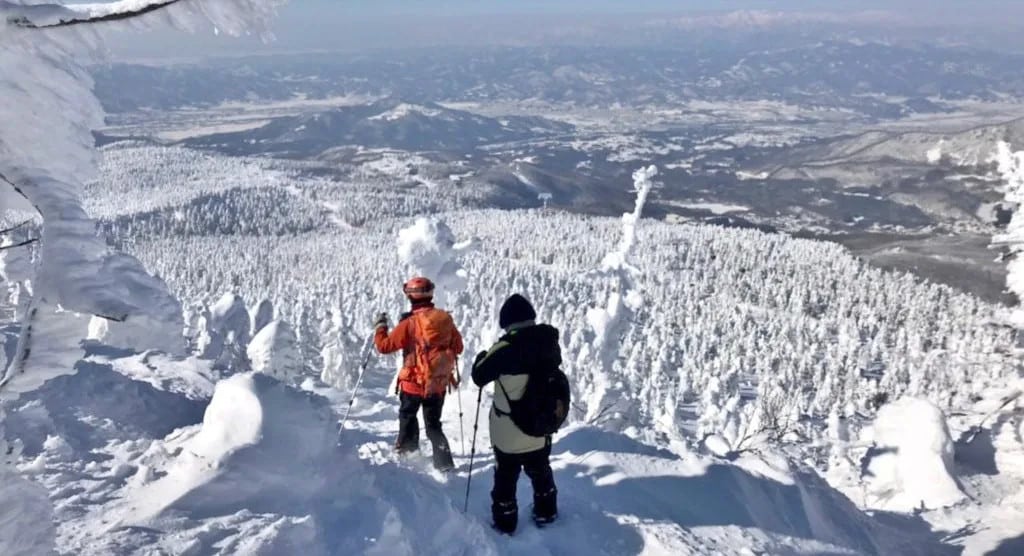
The Obanazawa area is a heavy-snow region, and in winter there are often snowshoe hiking, snow activities, and snow-hut experience tours, most requiring advance reservation, and some bundled with accommodation plans.
These activities are strongly affected by weather and are canceled in heavy snow, so don’t treat them as something certain to happen. Equipment is usually provided by the operator, but you need to bring your own waterproof jacket and gloves. Actual activity content, periods, and fees follow each operator’s announcement for the season. Also, these tours mostly take place in snowfields at the foot of the mountain or nearby, not inside the hot spring town, so ask clearly about transport connections. If you are traveling with older people or children, confirm age and fitness limits before signing up, as some activities have minimum requirements.
Where to Stay: To See the Full Night View, Stay in the Hot Spring Town
Ginzan Onsen is one of the few places where whether you stay overnight decides how complete your experience is.
Stay in the Hot Spring Town, or at the Foot of the Mountain and in Obanazawa City?
If seeing the night view is your main reason for coming, stay in the hot spring town. Guests are not bound by the day visitors’ last return bus, so after dinner you can stroll out slowly, and once the day-trip crowds have been taken away by the last shuttle, the whole street suddenly goes quiet, which is the best time at Ginzan Onsen. Inns in the town are mostly old wooden houses with few rooms and usually offer one night with two meals, and in peak season they are often fully booked half a year in advance.
But rooms in the town really are hard to book and not cheap. A compromise is to stay in the hot spring area at the foot of the mountain, in the Obanazawa or Oishida area, or even use central Yamagata as a base and go in during the day. You won’t see the most complete night view, but prices and the difficulty of booking are much friendlier. For a detailed comparison of each inn, see the separate accommodation guide.
Ginzan Onsen FAQ
Q: Can I drive straight to the Ginzan Onsen town?
Not in winter. During the restricted period from about mid-December to early March each year, regular vehicles are banned during the day from entering Prefectural Route 188 leading to the town, and drivers must park at Taisho Roman-kan at the foot of the mountain and transfer to the shuttle bus. Outside the restricted period you can drive in, but the town itself has very few parking spaces, so we still recommend parking at the foot of the mountain and walking in. Restricted periods and hours are announced every year, so check again before you go.
Q: Can I see the gas lamp night view without staying overnight?
During the winter restricted period it is tight. The last shuttle into the town leaves Taisho Roman-kan at about 18:00 and the last return bus leaves the town at about 19:30, while winter sunset is around 16:30 to 17:00, so there is indeed a window in between when you can see the lamps lit. The problem is that it is exactly when the crowds are largest, and you have to watch the return departure while enjoying the view. To enjoy it at leisure, staying a night is the only way.
Q: Will there still be traffic restrictions in winter 2026? Where do I reserve the shuttle bus?
Yes. The officials have announced that restrictions will continue in winter 2026-27, expected from December 2026 to early March 2027, with the official dates not yet finalized. The reservation method is the “priority boarding pass,” with an announced price of ¥1,000 to ¥1,500 for the outbound trip depending on the time slot, and the reservation link is currently in preparation. Those without a reservation queue on site at Taisho Roman-kan, and same-day spots are expected to be very few. From Oishida Station, last season you could reserve the Ginzan Onsen Association’s round-trip bus plan, which guaranteed entry. We recommend checking the Ginzan Onsen website again around November.
Q: How do I get to Ginzan Onsen by public transport?
Take the JR Yamagata Shinkansen to Oishida Station, then transfer to a route bus bound for Ginzan Onsen, a ride of about 40 minutes. The biggest problem is that there are very few runs, they cannot be reserved, and in peak season they are often full. Be sure to check the outbound and return timetables first and work backward from the return time to decide how long to stay. If you don’t want to take the risk, a day-trip charter from Sendai or Yamagata is the safer option.
Q: How long should I stay at Ginzan Onsen?
The hot spring town itself is very short; about two hours is enough to walk it slowly, including Shirogane Falls. Adding a foot bath, curry bread, and a soak in the public bath, three to four hours is comfortable. If you want to see the night view, it becomes a one-night, two-day trip. In terms of sights alone it is not large; the real time sink is transport, as transfers and shuttles alone can eat up half a day.
Q: What season is best for Ginzan Onsen?
Winter snow with gas lamps is its most famous look, but it is also when it is most crowded, the controls are strictest, and transport is most troublesome. To avoid that, autumn is a good choice: the red leaves with the wooden buildings look just as good and there are no traffic restrictions, though some sections of the Shirogane Park trail are still closed for rockfall. Summer is cool and lush with relatively fewer crowds; spring, during snowmelt, has muddy paths and is the least recommended time.
Q: What should I keep in mind when taking photos and strolling?
The most important point: this is a hot spring town where people actually live and work, not a photo set. Please do not block inn entrances, do not walk into private areas, and do not photograph guests or staff. The bridges are the most popular photo spots, so in peak season take your shot and make room for others. Also, in winter the stone paving is covered with packed snow and ice, so looking at your phone while walking makes it very easy to slip; stand still before taking out your camera.